Tag: Gordon Brown

  • Gordon Brown – 2008 Speech in Doha

    Gordon Brown – 2008 Speech in Doha

    The speech made by Gordon Brown, the then Prime Minister, on 2 November 2008.

    Can I say first of all what a privilege it is to be in Qatar, to be able to congratulate the Emir and the Prime Minister on their leadership, their leadership in Lebanon where they have brought about peace, their leadership in Sudan and Darfur where they are leading the way, their leadership in the development round where the Doha Conference will take place in a few days, and that is as a result of the Emir and the Prime Minister. And I want to thank them on behalf of all the citizens of the United Kingdom.

    I am delighted to be visiting Qatar because I believe that this great country is leading the world in so many different ways. The diversification out of oil into other products is something that is being sponsored by innovation that is taking place here, and I had the privilege of visiting the Qatar Foundation and being able to see its work and I do congratulate the Foundation on its cultural and intellectual projects round the world.

    I think cooperation between our two countries is growing.  I am very pleased that we are able to announce the new Investment Fund that is being created today, that is the Clean Technology Investment Fund which is worth  £250 million, a joint fund between Qatar and the United Kingdom, £140 million from Qatar, the rest from the Carbon Trust and the private sector, and this will be funding for investment in companies developing a wide range of low carbon technologies, and it is right that we cooperate on how we can make the energy resources of our countries do better for us in the future.

    This relationship between Qatar and Britain is also being extended by university cooperation. Oxford University, Cambridge University, the University College London, Imperial College, are all parts of projects that are now developing here, and many businesses are here with us today with an interest in developing strong relations for the future.

    We talked also, as the Prime Minister has said, about how we can work together to deal with the world’s financial difficulties.  I believe it is only by cooperation internationally that we can best solve the problems that exist at the moment. And whatever the causes of the problems, the most important thing is that we cooperate to find the solutions to the benefit of our people, people who are worried about their savings, worried about mortgages, worried about their small businesses, people who are worried about the cost of their bills, I think it is important that world leaders come together.  And I believe we share an understanding of what needs to be done and that will go forward into the international arena where we are determined to work together for a solution to the problems that exist.

    Once again let me praise the Prime Minister of Qatar who has been so instrumental in bringing about peace in Lebanon and is also working to bring about peace in Darfur and Sudan, as well as running one of the more successful economies in the world.

  • Gordon Brown – 2008 Podcast on the Ongoing Economic Crisis

    Gordon Brown – 2008 Podcast on the Ongoing Economic Crisis

    The text of the podcast made by Gordon Brown, the then Prime Minister, on 2 November 2008.

    I wanted to speak to you about what’s happening with the economy because I know that these events around the world can seem totally bewildering.

    When we talk about 25 trillion dollars being wiped from global share prices these are figures just too big to comprehend. But what isn’t hard to understand is that it means that things are going to get tougher for all of us.

    When I’ve been speaking to people around the country what they really want to know is whether they can get on with ordinary life in the midst of these extraordinary times. people have been asking if their pension savings are safe and whether they’ll be able to afford a normal family Christmas this year.

    One woman wrote to me to say that the day we made the announcement about protecting British savers in Icesave was the first time she had been able to sleep in four days.

    And so if you only remember one thing I say today I want it to be this: I’m prepared to do whatever it takes to keep you and your family safe.

    This Government will always stand by the side of people on modest and middle incomes.

    So let me tell you a little bit about what we’ve already done and why.

    First we’ve taken fast action to save British banks. We haven’t done that to help the bankers, but to help people like you who put away money in the bank, or need a loan to buy a house or start a business.

    Basically what happened was the banks lost confidence, and so they stopped lending to each other and then on to you. The system got frozen so we needed a big injection of liquidity to get money moving around the system again.

    The next thing we did was to provide new capital for the banks, making 37 billion pounds of investment. That’s not public spending like the money we spend on schools and hospitals, but a stake we have bought in the banks that provides a double return.

    Firstly it works in the public interest because the banks can keep on doing their job – lending to businesses who want to expand and families who want to buy a home – and secondly, because we’ve made the investment on commercial terms and will get a fair share of any return.

    We’ve done our bit, so we’re determined the banks will do theirs.

    All banks getting public money need to pass some tough hurdles – that they won’t reward the executives who have gotten them into this mess in the first place, that there will be no cash bonuses this year for people sitting on the board of banks we are supporting.

    So that’s what we’ve done to strengthen the banking sector so it can keep on lending to families and businesses.

    The second thing we’ve done is to design a package to help small businesses. We’ve been meeting the chief executives of banks to make them lend to small businesses, we’ve made a pledge as government that every bill we owe to small businesses will be paid within ten days and we’ve secured four billions of funding for small businesses to help tide them over.

    The third thing has been to act to protect homes. We’ll be giving more and faster help with the mortgage payments to those who lose their jobs and judges have issued new guidance so they can’t order a repossession of your home unless all other avenues have been examined.

    That means they look at options like extending the terms of your mortgage, or changing what kind of mortgage you have, or looking at a way of deferring payment, before they can even consider forcing you to sell your home.

    So whatever we can do as one country, we have done. but when

    · dubious mortgages in America can bring down banks in Europe
    · or a Scottish bank can be brought to its knees by out of kilter assets right across the world
    · or when bad investments out of Iceland can affect the whole of Eastern Europe

    then we know that we’re in this together. And so we also need a fourth plan of action: a strategy that brings the world together.

    There are International Financial Institutions that are supposed to protect us.

    Next month I’m going to go and represent Britain in the first of a series of world summits to push the proposals that Britain has been arguing in favour of for some time.

    We need

    · transparency, so we know what each bank is doing
    · integrity, responsibility, so people can’t take reckless risks with your money then walk away
    · sound banking, so people can’t take risks they can’t afford, and
    · better world governance, so that the rules aren’t just national when we know that the behaviour is international.

    I’ll level with you – getting through all this isn’t going to be easy.

    And I want you to know that I’m always thinking about what is best to protect you and your families.

    Thanks for listening.

  • Gordon Brown – 2008 Comments Following Barack Obama’s Election Victory

    Gordon Brown – 2008 Comments Following Barack Obama’s Election Victory

    The comments made by Gordon Brown, the then Prime Minister, on 5 November 2008.

    I would like to offer my sincere congratulations to Barack Obama on winning the Presidency of the United States. I would also like to pay tribute to Senator McCain who fought a good campaign and has shown the characteristic dignity that has marked a lifetime of service to his country.

    The relationship between the United States and the United Kingdom is vital to our prosperity and security. Barack Obama ran an inspirational campaign, energising politics with his progressive values and his vision for the future. I know Barack Obama and we share many values. We both have determination to show that government can act to help people fairly through these difficult times facing the global economy. And I look forward to working extremely closely with him in the coming months and years.

  • Gordon Brown – 2008 Press Conference on EU Council Meeting

    Gordon Brown – 2008 Press Conference on EU Council Meeting

    The text of the press conference with Gordon Brown on 7 November 2008.

    Good Morning. Well thank you very much for joining me this morning.

    I go to Brussels today for the important meeting of the European leaders, and over the last few days I have been talking to world leaders from every continent.  This morning I have spoken to Premier Wen of China, yesterday I spoke to Kevin Rudd, the Prime Minister of Australia.  I have spoken this week to President Medvedev of Russia, I will be meeting President Sarkozy and Chancellor Merkel and Prime Minister Berlusconi in Brussels later today, as well as President Barroso.  I also spoke yesterday to President Bush and President-elect Obama to discuss how we will work with the US administration in the weeks and months ahead.

    This is a decisive moment for the world economy.  The decisions that we make now will affect our world for a decade or more to come. And people now recognise that this is a global crisis that requires a global solution. That is the reason why I have been speaking to other world leaders to build agreement on what we can do together to solve the problems, and that is why this is not a time for business as usual.  If we are to solve the economic crisis and get our economies moving, then we need as a world community to take action together on a number of different fronts.

    We have seen cuts in interest rates yesterday.  I believe that it is important that these cuts in interest rates are passed on to mortgage holders and to small businesses.  I believe that we have seen also cuts in interest rates in the European Union and will see cuts in interest rates around the world, and I believe that cooperative action on interest rates should be complemented by action on fiscal policy with monetary policy supported by fiscal policy.  We have already cut taxes this year, with the £120 tax cut for basic rate taxpayers, we have got a stamp duty holiday for a large number of people and a fuel duty freeze, and we have made it clear that this is the wrong time for short term cuts in investment in public spending. And I look forward to discussing with other colleagues around the world how fiscal and monetary policy can work together to make sure that the world economy can begin to grow again.

    I also am sure that there is a growing consensus about rooting out the abuses in the financial system where irresponsibility and excess has caused many of the problems we have had to face. And I believe there is now increasing agreement on the need for greater transparency, integrity, responsibility and sound banking principles and increased agreement now also about the international coordination that has got to be adequate to deal with a global economy with global flows of capital.

    And there is agreement also about two other things:  that we need an international support  mechanism to stop the spread of contagion, particularly from eastern Europe and an enhanced facility that will enable us to support economies in distress. And we need to back up the proposals on world trade by rejecting protectionism and hopefully moving forward to a world trade deal over the next few weeks and months.

    Now these are proposals that I am putting to world leaders, these are proposals that will be discussed in the European Union today.  I believe that when we go to Washington next Friday and Saturday for the meetings that will include twenty of the world’s leading countries, there is a growing consensus that the world must work together to solve the problems we face and the proposals that we have put forward, starting with the recapitalisation and strengthening of the banking system, are gaining support in many other countries.

    I will continue my efforts over the next week to enlist support for proposals that I hope will be common to every continent as we reach Washington next weekend.

    Question:

    Prime Minister can you explain to people struggling to pay their mortgages, what is your Plan B if the banks do not pass on the interest rate cut in full?

    Prime Minister:

    We have done two things already:  we have given liquidity to the banks so that they have if you like the money to keep their normal operations going;  we have now recapitalised the banks and that is to provide strength to the banks so that their capital base, their shareholdings are being taken, in some cases by the government.  £50 billion is being injected into the banks, that is part of a conditional agreement we have with these banks that they will have lending at the same level through the availability and marketing of it as 2007.

    And so we are determined not only that the interest rate cuts are passed through, we are also determined that lending resumes so that home owners looking for mortgages, small businesses looking for cashflow, families looking for the normal practices of banking to help them as they go through their lives, that that is properly resumed by the banking system.  We are having talks today with the bankers, we will continue to press our case upon them, and I think there is now an understanding that the government has done what it can, the Bank of England has done what it could yesterday by reducing interest rates, and it is now up to the banks to take their lead seriously in what they have to do to resume lending and to do so at rates that are appropriate, and not rates that are excessive.

    Question:

    Prime Minister there are reports this morning that British troops, the majority of British troops, will be withdrawn from Iraq by April.  You have said there will be a fundamental change in mission in the early part of next year, when can British soldiers and their families expect to hear the details of that plan and will they be out of Iraq by April?

    Prime Minister:

    Well I want to be absolutely clear that there is no change in our policy.  Our policy was set out in July, it is to continue and to finish the work that we have agreed to do in Iraq, that is training the Iraqi troops, we are training thousands of Iraqi troops and thousands of Iraqi policemen and women, we are pursuing a strategy to give people in Basra, the area in which we are involved, a stake in the economic future of that area and we are involved in a great deal of economic development there.

    We are trying to make sure that local elections take place so that local leaders are in place, and that is the task that we are carrying out at the moment and there is no change in our position from what I announced last July that until we have done these things there will not be the fundamental change in mission.  Once we have done these things, there will be that fundamental change in mission.

    Question:

    You have talked about the need to have a fiscal stimulus as well as a monetary solution to the downturn, how important as part of that stimulus are tax cuts as well as borrowing increases?

    Prime Minister:

    Well interestingly enough we have already made a tax cut, we made sure that the personal allowance delivered people £120 for basic rate taxpayers, money that some people have already received, £60, another £60 to come.  We froze fuel duty, we changed the basis of stamp duty so that half the houses in Britain, if they are sold, don’t face a stamp duty rise, and we have also made it clear that this is the wrong time to make cuts in public spending and investment projects that are necessary to build for our future.

    So I think we have shown, as other countries are now showing, that we will take the necessary action in monetary policy with cuts in interest rates and in the action we have taken on taxes and spending to ensure that we can come through this downturn. And all the decisions we are taking are to be fair to hard working people.  In other downturns, working people, hard working families, people on middle and lower incomes have not had the support that we are now prepared to give, and trying to give over this difficult period of time. And I repeat, my undivided attention is on taking people through this difficult downturn, but taking people through it fairly by giving real help to people in tough times.

  • Gordon Brown – 2008 Speech at the Lord Mayor’s Banquet

    Gordon Brown – 2008 Speech at the Lord Mayor’s Banquet

    The speech made by Gordon Brown, the then Prime Minister, at the Guildhall in London on 10 November 2008.

    My Lord Mayor, my late Lord Mayor, your Grace, my Lord Chancellor, your Excellencies, my Lords, Aldermen, Sheriffs, Chief Commoner, ladies and gentlemen.

    These last weeks and months will be studied by generations to come.

    Historians will look back and say this was no ordinary time but a defining moment: an unprecedented period of global change, a time when one chapter ended and another began – for nations; for continents; for the whole world.

    To us falls the challenge of leading Britain through the first financial crisis of this new global age and, as reflected in the huge volatility in the price of commodities, its first resources crisis too.

    But these crises reflect underlying and unprecedented transformations in our world:

    · the rise of Asia and the shift of global manufacturing power;
    · growing resource pressures – from oil to food
    · the undeniable reality of climate change;
    · and new political instabilities and conflicts

    All accompanied by the growing gap between rich and poor countries; and of course by the impact of new technology and the rise of the internet giving millions of people for the first time the ability to communicate, do business and organise across frontiers.

    The range, complexity and impact of these forces underline just how much we are taking the first tentative steps towards what i will call a global society. And that what is at stake now is not just the success and legitimacy of our global economy but ultimately the prosperity and security of nations and communities in every corner of the world.

    The decisions we make now will re-shape our societies ——in all probability for decades and more.

    And we have a choice: to retreat or advance; to turn inwards or to look outwards; to be cowed by our fears or led by our hopes.

    The world today can seem a daunting place – and when people feel buffeted or bewildered by the scale of the changes it can seem easy to retreat into the outworn and failed responses of yesterday — to a time of pessimism, protectionism and retrenchment.

    But we could make a far better choice.

    I want this to become the moment when together we rise to the new challenges by purposeful visionary and international leadership, leaving behind the orthodoxies of yesterday and embracing new ideas to create a better tomorrow: not as victims of history but as shapers of an open, free trade, flexible globalisation that is also inclusive and sustainable.

    For while today so much looks grey or dark in the global economy we should not forget that we are in the midst of an economic transition to a new global age: whatever happens now, it is likely that in the next two decades the world economy will double in size. And that means twice as many opportunities for good businesses and twice as many opportunities for men and women with new ideas to market.  And as many as one thousand million new jobs for skilled workers will be created.  So this is the other side of globalisation – not just the insecurities we know about but the opportunities, the promise it holds for tomorrow.

    And it is, indeed, possible to see the threats and challenges we face today as the difficult birth-pangs of a new global order – and our task now nothing less than making the transition through a new internationalism to a more collegial, collaborative and opportunity-rich global society, not muddling through as pessimists but, as optimists, making the necessary adjustment to a better future

    Since the financial crisis began it has dominated the agenda. I have travelled perhaps more than i had planned to. But all in the protection of the British economy, British jobs and firms, British living standards —-knowing the livelihoods of British families and businesses are shaped in an ever more interdependent world.

    And so we can see this year as definitive in another way: the year where we not only came to recognise our deep and irreversible interdependence, each nation with other nations, but acted upon it:  nations agreeing not just on high aspirations but on practical actions; governments ready to act collectively and quickly to take radical – indeed previously unthinkable – measures to avert global meltdown; discovering a common purpose amid the necessity of dealing with the financial crisis; a common approach forged first to deal with the financial crisis but one that will, I believe, enable us to respond  positively also to climate change, conflict and poverty.  And in doing so to build the confidence in the future that is key to bringing back confidence today.

    So, while I see a world that is facing financial crisis and still diminished by conflict and injustice, I also see the chance to forge a new multilateralism that is both hard-headed and progressive. And I believe that in our international co-operation on finance, climate change, terrorism and ending conflict, there is evidence of this new multilateralism at work in the world: fairer, more stable, and more prosperous because it is rooted in cooperation and justice.

    And if we learn from our experience of turning unity of purpose into unity of action, together we can seize this moment of profound change to create, for the first time, the age of the truly global society —-one where progressive multilateralism, not narrow unilateralism, is the norm; one where people find that what unites them is far greater that what ever divided them; and where it is co-operation, not confrontation, that flourishes in answer to age-old challenges:

    · the challenge to reassert our faith in the advance of democracy as the most effective weapon in our arsenal against terrorism and tyranny.

    · and — as we mark armistice day tomorrow and remember the sacrifices made in darker times – the challenge to build for peace

    · the challenge to build consensus for a new global financial system

    · the need to confront the realities of global climate change by building a sustainable low carbon economy

    · and to make a reality of the vision of a global society by creating global partnerships across public, private and voluntary sectors to address poverty and move toward economic justice.

    I believe that we in the west should approach these great challenges of our time with some humility. The west certainly does not have all the answers to them. We need more than the G8 – for the time when just a few powers could sit around the table and set the global agenda is over.

    Quite rightly, the emerging powers of the 21st century will want to – and must – play their part. And so the G8, the IMF and the World Bank must change to meet the new realities.

    But my central argument this evening is that the alliance between Britain and America – and more broadly between Europe and America – can and must provide leadership in this, not in order to make and impose the rules ourselves, but to lead and broaden the global effort to build a stronger, secure and more equitable international order.

    Rightly people talk of a special relationship: but that special relationship is also a partnership for a purpose. The transatlantic relationship has been the engine of effective multilateralism for the past 50 years. Together

    · we faced down aggression and dictatorship;
    · in a few short years we built the great international post-war institutions – the World Bank, the international monetary fund, the United Nations.
    · and we led the drive for trade, enterprise and dynamic markets.

    Now unprecedented events have brought a turn of history that few would once have foreseen or expected.

    Just days ago, across the Atlantic, our closest ally gave new meaning to its founding creed that all “are created equal.” Gave new strength to the notion that the american dream is for all Americans.

    More than 140 years after the abolition of slavery; and more than forty years on from the civil rights and voting rights acts; America has chosen Barack Obama to be President.

    And – as we have seen from reaction in America, Europe and around the globe – whatever one’s politics, it can surely only be a source of hope and inspiration that a nation which once would have looked at Barack Obama and defined him only by his colour today sees in him the man they want to be their President and Commander-in-chief.

    And when Barack Obama four months ago followed in President Kennedy’s footsteps and went to Berlin he called on the world to stand together as one.

    Winston Churchill described the joint inheritance of Britain and America – as not just a shared history but a shared belief in the great principles of freedom and the rights of man – of what Barack Obama described in his election night speech as the enduring power of our ideals: democracy, liberty, opportunity, and unyielding hope.

    And as America stands at its own dawn of hope – so let that hope be fulfilled through a pact with the wider world to lead and shape the twenty-first century as the first century of a truly global society.

    And i believe that with the farsighted leadership we have in Europe, the whole of Europe can and will work closely with America and with the rest of the world to meet the great challenges which will illuminate our convictions and test our resolution.

    First – we must reassert our faith in democracy and be confident in our belief that open, plural, diverse societies are those most likely to stay rich, strong and free.

    So we must step up and win the battle of ideas against terrorism and extremism not by sacrificing the liberties that they scorn but by securing new international means of achieving stability, reconstruction and democracy in failed and fragile states.

    And we must promote greater tolerance and understanding within and between communities. Later this week I will join King Abdullah of Saudi Arabia alongside president bush and other World Leaders for his interfaith dialogue at the United Nations – deepening understanding between religions and countering extremist ideologies.

    Second let us move quickly to complement the role of peacekeepers and aid workers through civilian as well as military assistance, to rebuild conflict-ridden and fragile states.

    Just as we will continue to offer immediate help and advance the cause of peace in Darfur, Burma and Zimbabwe, and stand up for the democracies of Georgia and Ukraine, we will stand by the people of the Democratic Republic of Congo as they face new conflict and turmoil. We will get aid to those who need it. We will protect those who are threatened ——by ensuring that UN peacekeepers, already the largest force of its kind in the world, are properly led, trained and enabled. And we will work relentlessly to build the political settlement that is the only guarantee of long term peace.

    Ultimately our shared security should be based not on the increased use of weapons but on their reduction. At this same occasion last year, I described the leading role I saw for our country in reducing the proliferation of weapons.

    I am pleased that one hundred countries have joined us in banning cluster bombs; and that the idea of a multinational fuel bank to help non-nuclear states acquire nuclear energy is gaining support.

    And working with our allies we are ready to do more: having extended export prohibitions on trafficking in small arms, we are ready to promote a new arms trade treaty. And I say to Iran which has signed the non proliferation treaty: in these new circumstances rejoin global society and benefit from help in acquiring civil nuclear power – or face new sanctions –and growing isolation.

    Conflict in the Middle East and the failure to restore a Palestinian state is a festering wound that has for generations poisoned relations between the west and the Arab and Islamic world. But I believe, and I have heard for myself, that the elements that can constitute a settlement are now well understood by those on all sides who want to come together to end the divisions of the past. It has often been said that an historic hard-won and lasting peace is now within our grasp. But what I do know is that building on the work of President Bush, that durable and just settlement is an urgent priority for the new us administration – and the UK will stand firm in support.

    A Middle East settlement has the potential to transform the future of the Middle East. In Iraq we continue to defend a new democracy and last summer we set out the remaining tasks to be achieved there to make possible a fundamental change of mission and the transition to a long term bilateral partnership with Iraq, similar to the normal relationships which our military forces have with other countries in the region. And we are making good progress with each of our objectives.

    And I welcome the reaffirmed commitment from both president bush and President-elect Obama to defend a stable and democratic future for Afghanistan and to review the best ways of achieving this through better burden-sharing: America at its best – leading a broad international effort underpinned by shared values, working more effectively with the grain of Afghan society including the tribes; working with our allies to double the size of the Afghan army, working with President Karzai to tackle corruption and supporting the democratic Afghan government in its slow but steady attempts to build peace. And we will support the Afghan and Pakistan governments in working together to tackle the security issues across the border which the last decade has shown are crucial to our own security at home.

    Afghanistan is a test the international community cannot afford to fail. And we will not fail.

    Third – seventy-five years ago at a time of recession nations met in London in a World economic conference- and because the talks broke up in failure the world entered a long decade of protectionism and retrenchment.

    In Washington this weekend, the British government will work with its G20 partners to establish consensus and begin to build a new bretton woods with a reformed, modern, IMF that offers, by its surveillance of every economy, an early warning system and a crisis prevention mechanism for the whole world.

    This will require:

    · The recapitalisation of banks and their resumption of lending to families and businesses

    · Immediate action to stop the spread of the financial crisis to middle income countries, building agreement for a new facility and new resources for the IMF

    · urgent agreement on a trade deal and rejection of beggar-thy-neighbour protectionism that has been a feature in turning past crises into deep recessions

    · a restoration of confidence by addressing the root causes of the instability through reform of the global financial system based on the principles of transparency, integrity, responsibility, sound banking practice and global governance with co-ordination across borders and every nation playing its part

    · better International coordination of fiscal and monetary policy – recognising the immediate importance of this coordination for stimulating economic activity.

    At the heart of this is a growing agreement that at a time of change and massive uncertainty, people look to governments for action. This is no time for conventional old thinking or tired old orthodoxies.

    In Britain, we have already cut taxes to help families this year. And as the chancellor has said, we will maintain our essential public investments while continuing to increase the value for money of every pound spent. This is no time for the old approach of short-term spending cuts in a downturn that would hurt families and businesses today and damage the long-term productivity of the economy.

    Since this is a global downturn it requires a global solution. As was the case with the bank stabilisation plan, the benefits of any individual country’s fiscal actions will be all the greater if this is part of a concerted and fairly distributed international response to maintain global demand.

    There is now a growing international consensus that, especially for those countries with low debt like the UK, maintaining essential public investment is the right and sensible approach, while allowing a temporary and affordable increase in borrowing to support economic growth.

    Yesterday China announced that it was injecting almost $600 billion to support its economy. The European Union has said that flexibility in the stability pact to recognise exceptional and temporary conditions will be used. Last week, Germany announced their plans for a fiscal stimulus. President-elect Obama has already signalled his intention to do likewise. With Britain continuing to lead the debate, economic recovery will work better if we all work together.

    The fourth imperative is tackling climate change.

    For it is clear now that if left unchecked, climate change will have catastrophic worldwide effects on our future prosperity

    The G8 has already agreed we must at least halve global emissions by 2050.  But this also means emissions must peak by 2020.

    So we cannot afford to put climate change into the international ‘pending’ tray because of the present economic difficulties, as some might urge.

    On the contrary, we must use the imperative to act for our future prosperity through the transition to a low carbon economy and reduced oil dependency as a route to creating jobs and economic opportunity for our peoples today.

    This is why as we prepare for an ambitious post 2012 climate change agreement in Copenhagen, for which I pledge our governments unbending commitment,  the European Union must, and I believe will, agree in December its ‘2020’ programme for energy and climate change and show European Leadership at its best. And I want the World Bank to become a bank for the environment as well as for development, helping developing countries move towards sustainable energy paths of their own.

    And a truly global society cannot of course exist without the vital humanitarian and development assistance and support for self sustaining growth that keeps millions of people alive and meets basic needs for education, food and health. For we cannot claim to be a truly global society, or one world, when 30,000 children die every day from diseases we know how to cure.

    This is not the time to abandon helping the poorest countries. For now more than ever it is both our duty and in our interest to help meet the millennium development goals. For we cannot solve climate change without Africa; nor can we solve the food crisis without Africa.  We need a fully financed ‘energy for the poor’ initiative; where commercial sources of capital dry up support from the international institutions; and we need to support agricultural development. In Africa in the past, “feed the world” meant that we helped to feed Africa.  In future, if we do things right, we will do best by enabling Africa to feed the world.

    And I am proud that, even as the world came to terms with the financial crisis, Britain has continued to drive forward the vital effort to meet the Millennium Development goals.

    Tonight I have argued that uniquely in this global age, it is now in our power to come together, confer, and decide and that we must be guided by one clear truth: that we need solutions that can no longer be defined in terms of us and them, but can be achieved only together: as us with them.  I believe that people do not only co-operate out of need. There is a human need to cooperate. But I believe also that all our efforts reflect what people find when they can communicate across continents with each other; that there is a shared moral sense that we are responsible each to the other  – country to country as much as person to person. And because of this no injustice can last for ever, and even in the most desperate of circumstances people can journey with hope.

    So my message is that we must be:

    · internationalist not protectionist

    · interventionist not isolationist

    · progressive not paralysed by events

    · and forward-thinking not trapped in the solutions of the past

    And if we do so 2008 will be remembered not just for a financial crash that engulfed the world but for the decisiveness and optimism with which the world faced the storm, endured it and prevailed. And remembered too for how in doing so we discovered and refashioned the global power of nations working together.

    President Roosevelt famously said “the only thing we have to fear is fear itself.”

    When fear overwhelms our perceptions of reality the effect is paralysing; it leaves people frozen into inaction – helpless at a time of great risk — and even at a time of great opportunity too.

    But confidence in the future –that most precious asset of all – is the key to bringing back confidence today. It is dynamic, it heralds action.

    And – for reasons I have laid before you this evening – I am confident.

    Confident that we can seize the moment, grasp it together, and use it to lay the foundations – optimistic, multilateralist and inclusive – on which we can build the first truly global society.
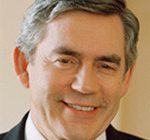
  • HISTORIC PRESS RELEASE : Pakistan and UK agree to step up efforts against extremists [December 2009]

    HISTORIC PRESS RELEASE : Pakistan and UK agree to step up efforts against extremists [December 2009]

    The press release issued by 10 Downing Street on 3 December 2009.

    Gordon Brown and the Prime Minister of Pakistan have agreed to take further action against extremists operating on Pakistan soil.

    During a meeting at Downing Street this morning, the Prime Minister and his counterpart, Yusuf Raza Gilani, discussed working together on the economy, support for education in Pakistan, and agreed to enhance security co-operation against extremism.

    The PM said the UK will also help with reconstruction and stabilization, and he confirmed the offer of a further £50 million to back Pakistan’s plans for long-term stabilisation in the country’s border regions.

    Gordon Brown announced that £120 million of the UK’s development programme in Pakistan would support the government in reducing poverty, improving education and providing better healthcare.

    “We hope to help put 4.7 million children into primary school; reduce the number of underweight children under five by 100,000; and help provide access to clean water for nearly 40 million people.”

    The Prime Minister said the UK would also continue to support Pakistan’s economic development.

  • Gordon Brown – 2009 Podcast on Harnessing the Power of Technology

    Gordon Brown – 2009 Podcast on Harnessing the Power of Technology

    The text of the podcast made by Gordon Brown, the then Prime Minister, on 5 December 2009.

    All our lives are being transformed by the digital revolution.

    For many the internet and mobile phones are now seen as indispensible as electricity, gas and water.

    And the wealth of information instantly available – literally at our fingertips – is giving you enormous power over the choices you make for you and your families. Whether it is where to do the weekly shop; which utility company to use; or who insures your car.

    And in this new world, you rightly want a bigger say and more accountability in all the decisions that affect you.

    Rightly, you also demand more control over public services – and the same level, the high standards, that you expect as consumers on the high street.

    And that is why this government will ensure that each citizen has new guarantees and new rights: for example the personal guarantee that you will see a cancer specialist within two weeks and the guarantee that your son or daughter will have one-to-one tuition if they need it in English and Maths.

    And in these challenging times it is vital that we protect those front line services which we all pay for, which we all value, and on which we all rely.

    We value them because they are always there to teach our children; look after us when we are sick; and protect us from harm. They are part of our everyday lives but we should never take them for granted.

    This is not a time for reckless experiments. We will harness the power of technology to further improve our hospitals, schools and police forces at the front line.

    But the power of technology also allows us to secure better value for money. Already some GPs send text messages to remind people of upcoming appointments. This is helping the NHS save a substantial amount of the £600 million annual cost of missed appointments.

    We are committed to giving parents of secondary school pupils guaranteed online access so they can see what their child is learning and how they are getting on – saving the cost of expensive materials.

    There’s evidence to show that using online instead of sending paper through the post can save councils £12 a time; and using it instead of the phone up can save up to £3.30 a time.

    Switching services online also frees up more staff to provide personal support and advice – including face-to-face, where it is most needed.

    The opportunities for enhanced services and better value for money are enormous. So over the next five years we will make as many services as we can available to you online. And this has the potential to save at least £400 million a year.

    It all means that you get a better service and the costs are kept down – so you win as taxpayers and users of public services.

    And we are going to help more people to get online. There are now 6,000 public places with internet access in England, including every library, where there are more than 30,000 terminals, many community and adult education centres; and even some pubs.

    But clearly some people are still excluded. So we will reach out particularly to mothers, older people, the unemployed and those who lack skills to ensure that they can use all the facilities that will be available. The savings we will make in this way are considerable but we will also need to do more.

    And in the pre-budget report this week we will tell you how we will make the further savings needed to protect our front line services; cut the budget deficit and go for growth.

    As always, our decisions will reflect our deepest values of fairness and responsibility. That is why we have raised the top rate of tax on those earning in excess of £150,000 in order to pay down the deficit and contribute to public services.

    We are proud of what we have achieved over the past 12 years. And we are proud of the real help we’ve given people over the past 12 months.

    But we will not sit back. And next week we will set out our bold and radical plans for ensuring a fairer, prosperous and sustainable future for Britain.

  • Gordon Brown – 2009 Speech to Christian Tea Party

    Gordon Brown – 2009 Speech to Christian Tea Party

    The speech made by Gordon Brown, the then Prime Minister, on 7 December 2009.

    At the centre of our society, perhaps more so than any other country I know in Western Europe, is the belief that churches and faith have a role. At the centre of our society is the belief that the legitimate public debate is how we interpret our Christian values and our faiths to make for a better society. At the centre of that is also a sense that families are important. What we can do to support family life in this country is absolutely crucial.

    While there may be controversies about individual issues, where I am happy to join the debate and look at anything that people think needs to be changed to make for a better society, let us not forget that this is a country where the Christian values that were so important over all the centuries are still right at the centre of our national life. Never forget that, when we are reading newspapers or watching television, whatever you see day to day, there are issues far more important than the day-to-day coverage of individual events. They are the basic values that underpin our society.

    Of all the faiths of the world, each one of them has at its centre this sense that we have responsibility to other people. We have a duty to treat people fairly and are our brothers’ and sisters’ keeper. That is as true for what we do in our local neighbourhoods and communities as it is for the duties that we owe to people in the poorest parts of the world.

    All of us, in our own different ways, for the largest of causes, can make a difference by what we do as individuals. As climate change, debt relief or tackling poverty prove, it is not about leaders and politicians, or people who are an elite or separate from ordinary people. It is about all of us doing this together.

  • Gordon Brown – 2009 Speech to the British Racing Drivers’ Club

    Gordon Brown – 2009 Speech to the British Racing Drivers’ Club

    The speech made by Gordon Brown, the then Prime Minister, on 7 December 2009.

    Prime Minister:

    Ladies and gentlemen, let me say first of all what a great pleasure it is to be here today. Indeed, it is a great privilege to be here today. The first person I want to thank is the President of the British Racing Drivers’ Club for all the work he does not only on behalf of motor racing, but on behalf of Britain. Damon Hill, thank you very much for everything that you do. I want to acknowledge here a very good friend of mine who has done a huge amount, not just in Britain but in every part of the world, to promote sport: Sir Jackie Stewart. Jackie, thank you for everything that you do. There is another champion here who has done so much over so many years for the sport, and is seen as a legendary figure right across the country, Stirling Moss. It is a great pleasure to have you here today, and to thank you for everything that you do.

    It is a particular privilege for me to be here on the day when we are announcing that Silverstone, the first racing track to have a world championship race in 1950, will now have for another seventeen years the British Grand Prix. I believe that all those who have contributed to that success and to that announcement today deserve our praise. It puts Britain right at the centre of world racing for seventeen years to come. Thank you all for what you’ve achieved.

    Now it is a particular honour and privilege to be back for the second year running, to be able to say that we have a British world champion in motor racing, and to say how proud not only those who are sportsmen and sportswomen feel, but how proud our whole country feels. Motor racing is one of the sports. Since I was young, I have followed the fortunes of Jim Clark, and then Stirling Moss, and then Graham Hill, and then Jackie Stewart; more recently, James Hunt, Nigel Mansell, Damon Hill – all the great motor racing drivers that we have had, and there are many more.

    What motor racing does is combine the great sporting talent of individuals, who are the drivers themselves, with the brilliant teamwork for which Britain is famous as well: the engineering and the team genius that makes up for a successful motor racing team.

    Jenson Button had probably one of the most difficult starts to a season that a driver could ever have had. He had to fight back against the loss of his team to start with. He took a salary cut. He fought back, and then had a brilliant start to the season, and then went on to win at the Brazilian motor racing championship, the World Championship, for the first time. Jenson, we are so proud of everything that you have achieved.

    We are proud of the brilliant boys at Brawn winning the Constructors’ Championship too. For many years, Formula 1 has been a beacon of the UK’s engineering and innovation capabilities. That is why we are so proud of everything that is achieved. Jenson and Lewis Hamilton will be working together next year, and to be able to say today that we have a world champion in whom we have so much pride, who fought back against all the odds, who achieved something when some people thought at the beginning of the season it was impossible: Jenson, the whole country is proud of you, and I ask you to come to the stage to receive the trophy, the Richard Seaman trophy. You are a brilliant ambassador for British sport, and I thank you for what you are doing.

  • Gordon Brown – 2009 Hanukah Message

    Gordon Brown – 2009 Hanukah Message

    The message issued by Gordon Brown, the then Prime Minister, on 11 December 2009.

    As Britain’s Jewish community joins Jews all over the world in celebrating Hanukah I wanted to pass on my own warm wishes for this festival of lights. As you gather round the menorah, may you draw strength from the Hanukah story of how light and faith can endure the toughest of times.

    The story of Hanukah has been passed from generation to generation for thousands of years – may it be retold to bring hope for thousands of years to come.