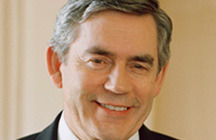
Tag: Gordon Brown

  • Gordon Brown – 2006 Speech to the CBI

    Gordon Brown – 2006 Speech to the CBI

    The speech made by Gordon Brown, the then Chancellor of the Exchequer, to the CBI Conference held on 28 November 2006.

    Let me say first of all that what a pleasure it is to be able to thank you John for your Chairmanship, and you Richard, for starting your new role as director general in a way that has impressed the whole country, and most of all at this the tenth CBI conference in a row I have had the privilege to address as Chancellor, let me thank all you, the business leaders of Britain for the success you have achieved in a challenging last year and for the contribution you as business leaders make every year to the economy – and through your work also in corporate social responsibility, the well being of our country.

    The CBI’s presence is global – indeed I opened your office in Beijing – and I am delighted this conference’s speakers are global, and the theme of this conference is that globalisation is a fact and here to stay. The real question not whether it exists or not, but whether it is well managed or badly managed, and one of my themes today is that it is for us to be evangelists for globalisation, taking on the anti-globalisation and protectionist forces who fail to recognise today’s economic truth that free trade, open markets and flexibility are preconditions of modern economic success across our global economy.

    Such are the contradictions of those who are simply anti-globalisation that a few months ago when I went to Washington I found demonstrators waiving a banner:

    Worldwide campaign against globalisation

    I believe that, instead, we need a worldwide campaign for globalisation and its benefits

    And there is no better person to work with on such a campaign than – and I am pleased to join John in welcoming to this conference – a great friend of Britain, Hank Paulson, formerly Chairman and CEO of Goldman Sacks, and now the US Treasury Secretary.

    Now today Asia is producing more than Europe:

    China is producing 50 per cent of the world’s computers and textiles, 60 per cent of digital cameras and mobile phones;
    over the next fifteen years up to half the worlds future growth will come from China and India alone;

    by 2020 our G7’s share of growth – once the majority of global growth – will fall to just one third.

    And there is a real question about what is the destiny of Britain and what we want our destiny to be in a world where globalisation means that you can buy and service almost anything from almost anywhere and that we succeed now, not by protecting our markets, but only if we out-innovate, out-think and out-perform our competitors.

    My passion is that our country, Britain, be the great global success story of this century.

    As you know, every company that is successful has a clear mission.
    You as successful chief executives and business leaders know what you are aiming for; a determination to turn the new realities of globalisation into an opportunity; a clear sense of purpose led clearly from the top; a culture and commitment to take what are often tough decisions; to be both far sighted in your vision but very much living in the present tense when making sure things get done and get delivered.

    It’s the same for our country. We must also have a mission, strong sense of direction, clear and ambitious objectives: the same confidence to take difficult decisions, to reform and restructure, to focus and give priority to what we can do best.

    And that’s my theme today:

    how we as a nation do what companies are already doing and continuously rise to the challenge of globalisation;

    how we enhance our commitment that government work more effectively to support business at every level; and

    how, on a concern which affects every advanced industrial economy, including the USA, regulation – and building on what Tony said yesterday, we create a real and effective push back. And here I want to share with you some fresh thinking that could be the basis of a real change in our approach.

    Two years ago at this conference, I asked whether it was possible to build an agreed national consensus: a shared purpose about what we as a nation have to achieve.

    Since then I have been asking businesses this question as I have visited every region of Britain meeting people, touring round companies and firms, talking with people at universities and colleges, meeting business leaders and young entrepreneurs;

    I’ve seen how in every city – from Bristol to Liverpool, and Manchester to Birmingham to Leeds, from Cardiff and Belfast, to Newcastle and Edinburgh – financial, retail, education and creative industries – in manufacturing and services – are bringing new life and prosperity;

    I’ve witnessed the remarkable growth of financial services here in London and been to East London to see how a derelict but massive plot of land can be transformed into the scene of not just an Olympic games but of urban renewal and regeneration;

    and just a few days ago at the Treasury’s business summit we tested ideas with many of your companies

    And my conclusion is that there is a strong, shared view, indeed agreement, about what Britain can be, and Britain can do, in the global economy – and the priorities we must pursue.

    And there is a strong sense that we have the talent, the ability and the determination to do what we have to do to succeed – to out-innovate and out-perform other countries and that to do so, we need to upskill our economy.

    I have found a shared view among business that the priority for any advanced economy like ours, meeting the global challenge, is:

    to be stable seeking always low inflation and low interest rates;

    to be for free trade and open markets;

    to be flexible and champion entrepreneurship; and

    as a nation, to make the necessary long-term investments in education, innovation and infrastructure.

    These are the ways we are agreed that we will out-think, out-perform and out-compete other countries – and find our destiny as a nation.

    All the best British companies are successful because this is what they actually do – in the DNA of your companies, and in your forward planning, is to be outward looking, entrepreneurial, competitive, adaptable, challenging the world and investing heavily in innovation and skills.

    So are we as a country well placed for what we need to do?

    And what are the next steps so that we can do better?

    We are well placed as a nation because our fundamentals are strong.

    First, our monetary and fiscal reforms, which have turned us from a stop go economy to one of the most stable economies in the world are the foundations on which we can support continued growth and continued prosperity.

    And I will continue with my programme of making government decisions long-term, and independent of short-term political pressures by making not just interest rate decisions independent, but also competition policy, statistics policy and much of industry policy.

    We will entrench out stability, keep public sector pay under control, maintain discipline in public finances, and my watchword will be stability, now, tomorrow, and into the future.

    Second, we are well placed for globalisation not just because we are among the most stable economies in the world but because we are the most open economy. Britain is the pioneer of free trade – we have constantly advocated openness above protectionism and our openness extends to embracing new ideas, and new influences – as proven by the strength and diversity of our economy, from the City of London, to our science, and our universities.

    Third, we have more global reach than almost any other country – seeking out trade in every continent, deep links with the European Union, the Commonwealth – and as we celebrate today – the United States of America.

    Fourth, from the industrial revolution right up to the internet, the human genome project and stem cells in the 21st century, our historic commitment to liberty of thought has given us faith in the importance of discovery through science and creative innovation, more so I believe than any other country.

    And because innovation is what is driving the dynamic sectors of the global economy, we – Britain – are well placed in the fastest growing high valued added manufacturing and services from IT and aerospace to pharmaceutical, and of course financial and business services, education and the creative industries, which account for a larger share of our economy than in any other G7 country.

    So, all of these qualities – our stability, our openness, our reach, our innovation and our scientific and creative strength – make me convinced that of all countries, Britain is one of the best placed to step up to the next stage of globalisation – if we make the right long term decisions now.

    In other words they give us the platform on which we should build.

    And because the challenge for Britain is to out perform our competitors, the answer to the jobs lost through offshoring is to upskill, and the answer to outsourcing is to out innovate.

    It is to meet this supreme challenge, the economic challenge of our generation, that a year ago I commissioned a number of your colleagues in business to work with me, to look at Britain ten years from now, and to analyse in depth how we can equip ourselves better in areas critical to our future:

    in transport infrastructure, Sir Rod Eddington;

    and planning, your former Chief Economist, Kate Barker;

    on skills, Lord Leitch;

    on intellectual property, Andrew Gowers; and

    on innovation, Sir David Cooksey’s report on scientific and medical advance.

    So today I want to discuss with you what we must now do.

    Innovation

    You, the leaders of business alongside our scientists and universities are Britain’s innovators.

    The task ahead is to have a seamless and effective progression from pure scientific invention to the commercialisation of innovation in small medium and large companies.

    Our role as government is to give you the best support we can.

    And the recommendations of Andrew Gowers and Sir David Cooksey will be important in this.

    I want to encourage our universities to become more dynamic knowledge centres which are linked up to business and the economy.

    I want to offer, within an affordable framework, business the best regimes of fiscal incentives for research and development

    I want to give modern manufacturing and the smaller high tech and innovative companies the benefits of access to capital through a range of financial instruments from venture capital trusts to enterprise capital funds.

    I want to give more support to new technologies in manufacturing and services from IT and the biosciences through to environmental technologies, because as we now know they provide new ways to create new wealth.

    And, in a world where piracy and stealing copyright is becoming more of a problem, I want Britain to lead in the digital age as the secure home of intellectual property.

    And so I can promise that next week’s Pre Budget Report will build on our decision to double investment in science to over £3 billion a year and to modernise our support for innovation.

    Skills

    Second, I invite you to become partners with us in building the very excellence in education we need to compete globally.

    There is today a global market for skilled people.

    China and India are turning out 4 million graduates a year, Britain 250,000; and these people are not only raising skills in their countries, but challenging us Britain and other advanced nations in a race to the top.

    If we are to succeed in global economy, it is clear that we will have to make more of the potential of our own people.

    Let’s face it: the number of new computer scientist graduates Britain produces has quadrupled to 37,000 since 1997; but China now produces 150,000. The number of engineers has doubled also to 37,000; but this compares to the 375,000 of China and India.

    And, as a result of the advent of Asia, there has been an astonishing 400 per cent in increase in the numbers of unskilled workers, most of them offering their labour at 5 per cent of the cost of Britain’s.

    So, for today’s 6 million British adults without basic skills there are now jobs for only 3 million of them – and by 2020 there will probably be jobs for only half a million.

    So, either we will have to bear the social security costs, or they will have to gain new skills.

    Some people ask if we can afford to invest in skills. The actual truth is we cannot afford not to.

    This is a task that cannot be met by government on its own or business on its own, but by government and business in partnership together:

    responsible employers;

    responsible employees; and

    responsible government.

    How do I see it working?

    Raising standards in our schools, not least in specialist schools and city academies, and with our new 14 – 19 vocational path, where we want you to engage on how we train our young people and to take a bigger role in setting the agenda for our further education colleges.

    And on apprenticeships, how many of you know that in 1997 there were just 75,000 and now there are 250,000, and that the numbers of manufacturing and construction apprenticeships have risen from 27,000 to 110,000. We must build on this momentum in economically relevant crafts and trades.

    And because 70 per cent of the workforce of 2020 is already in work today, there is a special reason why government and business need to work in partnership.

    Employees taking responsibility to upskill, employers offering time off, government paying for the basic training, and I am grateful to you for helping 1 million learners by 2010 and I hope after the Leitch report we can chart the way forward.

    Flexibility

    But, greater investment in innovation and education must be combined with greater flexibility all round. And I know we have more to do.

    On pay, we must do more to encourage local and regional pay flexibility.

    On infrastructure and planning, it is to make our system more flexible and more responsive that next week Kate Barker will set out the challenges we still face – to which I can say we will rise.

    On transport, the Eddington review will be the basis on which the public and private sectors can work together to meet our long term investment priorities.

    On tax, I have read the most recent international tax survey by Price Waterhouse Coopers comparing countries. It says our corporate tax rates are lower than the rest of the G7, and because of capital allowances and interest rate deductibility, so too are the effective rates of tax paid. And just as in the past we have been ready to cut long-term capital gains tax from 40p to 10p, corporation tax from 33p to 30p and small business tax from 23p to 19p, I promise that we will continue to look with you at the business tax regime.

    On Europe, where will continue to resist removing the opt-out from European working hours legislation, as well as promoting greater deregulation across Europe, we will stand up for an approach that is pro-Britain, pro-business and pro-European single market – for a Europe which is outward looking, reforming, liberalising and lighter touch in its regulation. And I am today publishing the report I commissioned last year from Lord Davidson who has identified ten areas where we can work together to prevent unnecessary goldplating of European directives.

    And let me say this about regulation more generally: whenever I go to the USA – and Hank I am sure will verify this – businesses express the same frustrations about regulation and the same hopes about reducing burdens as you do here.

    Last year when I spoke to you, I set out the risk based approach we are pioneering in Britain.

    The priority now is delivery.

    First, we are introducing new early rulings by HMRC, quicker binding decisions, and for large firms, risk assessment. So, if you are making an investment and you want early advice you will no longer be told you cant be given it; when you ask for certainty you will get it within a standard 28 days; and where there is an issue to resolve, you can have the confidence that only the areas of high risk will be looked at, so they can be concluded more quickly.

    Second, most inspection is done by local authorities. So we are today publishing details of how the risk based approach will be applied to all their inspections, with enforcement based on your feedback of what you experience locally; and for firms who have outlets round the country less inspection where there is low risk. And to make immediate progress, we will extend to 70 areas the pilots in Bexley and Warwickshire that have already cut retail inspections by a third.

    And our approach will now be backed up by professor Richard MacCrory’s recommendation of a proportionate system of penalties because its right to distinguish between the rogue trader who should be pursued and the good company who should not.

    You know the old regulatory model, the implicit principle from health and safety to the administration of tax and financial services has been, irrespective of known risks or past results, 100 per cent information requirements, 100 per cent form filling and, if resources allow, 100 per cent inspection, whether it be premises, procedures or practices.

    The risk based approach of the future that Britain is now pioneering is founded on a different view of the world – trust in the responsible company, the educated consumer and the informed employee, with then on a risk basis the goal should be a fraction of forms, a fraction of information requirements and a fraction of inspections needed.

    And over time this new model of regulation should not only apply the concept of risk to the enforcement of regulation, but also to the design and indeed to the decision as to whether to regulate at all.

    But throughout, the crucial test I will apply is action: concrete results in what you experience as companies on the ground.

    Internationalism

    Among the discontents of globalisation that together we must address is the threat of protectionism. And with this old enemy that is not outside our gates, but across the continents, now inside our gates, I believe we, the 19th century pioneers of free trade, must become the 21st century protagonists for free trade. And there can be no greater signal of our commitment to openness than our support as businesses and government – as Hank and I said in the Wall Street Journal yesterday, for an urgent resumption of the stalled talks on a new world trade deal.

    Hank and I are meeting today to discuss trade but also energy and the environment, the global economy, and how we tackle terrorist finance.

    And our discussions are founded on shared values we celebrate that bind our two countries ever more closely together and it is for that reason – the common destiny our two continents share – that I welcome this friend of Britain to the CBI today.

    Indeed since becoming Treasury Secretary he has broken new ground: not just in his backing for trade and his recognition that protectionism does not work, but on our relationship on China, and with his approach to regulation.

    It has been a pleasure to work with him on these issues where we are at one, and also in our broader determination to make globalisation work.

    I know that we share the same approach – that a successful globalisation will match a commitment to openness and flexibility with investment in education, and innovation and to equip those in danger of being left behind both in our own countries and the developing world.

    I want globalisation’s children – the coming generation – to enjoy the vastly increased opportunities it brings.

    And I believe Britain, and America so strong in the ties that bind us, not just the shared history but the shared values that link us together and give us shared purpose, can play a unique role in making globalisation work.

    So it is my privilege and my pleasure to ask you to welcome America’s Treasury Secretary, a great friend of our country, Hank Paulson, and invite him to address our conference today.

  • Gordon Brown – 2007 Speech to Government Leaders Forum Europe

    Gordon Brown – 2007 Speech to Government Leaders Forum Europe

    The text of the speech made by Gordon Brown, the then Chancellor of the Exchequer, at the Scottish Parliament on 31 January 2007.

    My theme today is how we, the advanced industrial world, make globalisation and it’s technological advances – many of them the innovations of Bill Gates – work for not just some of the people, but all of the people. For what Bill Gates is achieving in building a partnership between rich and poor countries that addresses the health and educational needs of the poor, is now at the very core of what the Prime Minister of India has called an ‘inclusive globalisation’.

    Two centuries and more ago, the very idea of globalisation – of a wholly global interconnected economy – was anticipated by Adam Smith, the great Scottish economist, who was born in my home town of Kirkcaldy.

    Brought up by the waterfront, looking out from his window over the North Sea, witnessing a hundred and more ships coming in and out of Kirkcaldy to trade, he could see with his own eyes how trade was the engine of wealth creation, that an increasingly specialised division of labour would drive nations to seek their comparative advantage through innovation and trade, and his book ‘The Wealth of Nations’ explained the foundations of the world’s first industrial revolution starting here in Britain.

    And now today, driven by the same dynamic of technology and trade that Adam Smith observed, but this time with global and not just national or continental flows of capital and labour as well as of goods and services, we are at the birth of the creation of a new world order, as dramatically different for the 21st century as the growth of the industrial revolution was for the 19th century.

    It took just 40 years for the first 50 million people to own a radio;

    Just 16 years for the first 50 million people to own a PC;

    But just 5 years for the first 50 million to be on the Internet.

    Today one hundred million people are using online communities such as MySpace or YouTube. On the Internet, one million new postings are made every day, and one new blog is created every second – a world so interdependent and connected that we talk now, not just as Adam Smith did, of the wealth of nations, but of the wealth of networks.

    And with technological change – the falling costs of technology and telecommunications – has come also a dramatic restructuring of manufacturing and services and an even more dramatic shift in power:

    Asia now out-producing Europe;

    China today producing half the world’s computers, half the world’s clothes, and more than half the world’s digital electronics;

    And India home to three quarters of the world’s outsourced services.

    In the 1980s, before the rise of Asia and before the full scale of the technological revolution became known, people talked of a world order dominated in politics by the cold war and in economic policy by what had replaced the Bretton Woods system of fixed exchange rates, what was called the Washington Consensus – represented by the primacy of Europe and America.

    Today, twenty years on, wherever we now look we can see very clearly a new global paradigm: a new world economic political and social order, driven forward not just by considerations of military fire-power, but of economic power too.

    John F Kennedy once summoned the American people to recognise a new age of interdependence.

    The old declaration of independence had to be superseded, he said, by a declaration of interdependence.

    And it is because global public goods on which we depend, such as health – as we see with the threat of avian flu – energy, natural resources, environment and the fight against terrorism, can only be secured through partnerships and alliances across borders, that we need to act upon our interdependence.

    Instead of a retreat into the old isolationism, progress forward through partnership and cooperation:

    Cooperating together to meet energy needs and climate change;

    Cooperating to tackle global terrorism;

    Cooperating together to manage the global economy;

    The means by which through restructuring our international institutions the benefits of this new world order can be shared by not just some but all.

    I happen to believe that there is a common sense world view of an inclusive globalisation founded on free trade, open markets, flexibility and matched with investment in equipping all people to master change – including environmental change – in both developed and developing countries.

    Yet we have to recognise that with the rise of protectionism and national champions in Europe, nativism in the USA, populism in Latin America, a real sense of unfairness amongst the youthful populations of poor countries, there are many round the world who, seeing globalisation as unfairness, want to stop the clock, to shelter their jobs and industries, to close their borders, to insulate themselves from change.

    I remember when I was in Washington facing demonstrators at a recent IMF meeting, I saw a banner saying worldwide campaign against globalisation – men and women feeling like victims rather than beneficiaries, even when benefiting from lower consumer prices and low interest rates, as a result feeling like losers rather than winners.

    So instead of feeling beneficiaries from cheaper goods from low cost imports from Asia, many men and women in Europe and America are feeling like victims, seeing only lost manufacturing jobs:

    Instead of feeling like winners, seeing lower inflation and lower interest rates, and seeing also the opportunities for travel, people are thinking of themselves as losers, worried about immigration;

    Instead of wanting to embrace the opportunities of globalisation, many view globalisation as a threat, they see the risks associated with globalisation shifting from institutions who used to help them with job security, pensions and, in the USA, health care to individuals who feel on their own.

    And so instead of recognising, and indeed celebrating, our interdependence and our connectedness as people and nations, people resort to demanding protection and shelter against change and the erection of new barriers.

    This is even when we know that anti-globalisation protectionist rhetoric offers an illusory safety and no long term security at all: a promise to stop the clock, to save redundant jobs, to avoid essential upskilling, to hold back scientific change that cannot genuinely be honoured, when it is clear all nations have to raise their game and out-compete others on quality and quantity.

    The answer for all throughout Britain, up against large countries with vast pools of not only unskilled labour, but also now millions of graduates, is not protectionism – an attempt to stop the clock that will fail – but to invest in science, technology and the creative industries so we have world leading products and services to sell, and to continuously upskill the entire population: recognising that by developing the talent of each of us we ensure the prosperity of all of us.

    And so – and this is the purpose of this conference – if we are to make a success of globalisation we cannot afford to ignore the potential of any child, waste the talent of any young person, write off or discard the skills of any adult.

    As Bill Gates said last year at this international conference when held in Cape Town:

    “your salary, which historically was mostly determined by what country you were in, in the future will not be determined by that, but rather will be determined by what education you’ve had.”

    Almost 500 years ago, Scotland led the world with the vision that every child in every village every town and every city should have the right to schooling.

    Now, today in 2007, liberating technology makes it possible for us to say that every person can, and should, enjoy the opportunities of life-long education, permanent education, recurrent education – opportunities not a one-off, pass-fail, life-defining event at 11 or 16, but education for any person, any place, any time.

    But what’s new also is not just what we do to respond to globalisation, but how we do it to build agreement: that we cannot succeed in making globalisation work by top-down commands, pulling levers from the centre, orders and dictats from on high. We can succeed only with the British people themselves involved in discussing and agreeing, as a long term national purpose, the priority to invest in education.

    So our task as government leaders – and this why the theme of this conference is so timely – is to engage the citizens of our countries in discussing, and then implementing with their active engagement, the new policy programme that ensures that the benefits of the emerging new world order can be shared by not just some, but all.

    But if the best economic policy is a good education policy, and if in ten years we have moved from where we were – below average – to where we now are – above average – now the challenge today is to move from being above average to being at all times truly world class.

    It is vital because across Britain and the advanced industrial economy, globalisation is creating a crisis of unskilled work. Of 3.4 million unskilled jobs today, by 2020 we will need only 600,000. So unless you have skills you are at risk of being unemployed.

    Highly skilled jobs must and will replace lower skilled jobs. The 9 million highly skilled graduate jobs of today must become, by 2020, 14 million: instead of 25 per cent of jobs, 40 per cent of all jobs.

    So Scotland’s First Minister, Jack McConnell, is right to make the Scottish Parliament’s world-class education the centrepiece of his programme for the next Parliament.

    Scotland is today leading Britain and Europe in three areas:

    First, Scotland is creating more jobs, with unemployment today lower than London;

    Second, Scotland is reducing child poverty faster, removing one of the main barriers to young people’s life chances;

    Third, Scotland has seen Europe’s fastest rise in educational investment since 1997.

    But it is now time, with new investment and the new technology discussed today, to set our sights even higher, raise our ambition in every area to the best world class standards:

    Every child should have the best start in life – so we will no longer tolerate failure at school. Our aim – learning from reading recovery programmes in Scotland, and special projects like those in Dumbartonshire and the Every Child a Reader programme in England – that all who can do so leave primary school with basic literacy and numeracy;
    Every young person who leaves full time education should have a pathway to a career – so we will not tolerate a culture of low aspirations and dead end qualifications – our aim that all leave education with a pathway to a career;
    And every adult should have access to training throughout their working lives – so that instead of education as a one-off, pass-fail event which for millions ends at 16, all in the workforce have second and, if necessary, third chances to retrain.

    And life-long education should start with the world-class ambition that we raise the education leaving age to 18:

    Universal education from 5 to 11 was achieved in 1893;

    Universal education from 5 to 14 in 1918;

    From 5 to 15 in 1947;

    From 5 to 16 in 1972.

    But during 30 years when globalisation has been transforming the importance of education, the span and reach of education remained the same.

    But the coming generation should have the chance not just to start education at 3, but to continue in education or training until 18, with second and, if necessary, third chances to follow.

    If every young person after 16 had part-time or full-time schooling college or work-based training there would be over a quarter of a million more young people training for qualifications.

    Over one and a half million more young people in education and training over the next ten years.

    So we should start now with a roadmap to life-long learning starting with changes at 16 to 18 – a nationwide campaign persuading young people to stay on at school or in education, and persuading parents of the risks that being an unskilled and unqualified young person today is a recipe for being an unemployable worker in future.

    To tackle this crisis of the unskilled, to address also the growing unacceptable gap in performance between boys and girls, and to offer every young person new chances I am ready:

    First, to consider new incentives to help people stay on in education, building on educational maintenance allowances, now paid to 480,000 people at up to £30 pounds a week;

    Second, to introduce new transitional arrangements for young people who have fallen through the net with new opportunities for training alongside tougher obligations, including compulsion, to take part in education; and matching similar initiatives in Scotland 21 areas will pilot “work-focused” programmes designed to motivate about 5,000 young people most at risk of dropping out, and we will pilot schemes that make out-of-education teenagers ready to come back;

    Third, to double quality apprenticeships to 500,000 in the UK, almost 50,000 in Scotland;

    Fourth, to develop, like the proposed new skills academies, new routes into apprenticeship, with the widest range of enhanced vocational opportunities in earlier years;

    Fifth, to learn more from the model of US community colleges to transform further education, driven forward by more employer engagement, more individual choice, simpler routes from college courses to degrees, and, where necessary, merging or taking over failing colleges;

    Sixth, to invite forward-looking employers to join with us in partnerships, to ensure access for 16 and 17 year olds to work-place training – such as the innovative programme agreed yesterday between Microsoft and the Scottish Executive – as we also expand the number of adults learning basic workplace skills in our Train to Gain programmes from 100,000 last year to 350,000 a year by 2011.

    Our ambition for education: to raise the floor and to remove the ceiling, a higher floor for all to build from, with no ceiling for anyone to be held back, no limit to potential, no cap on aspiration.

    What makes our ambitions possible is to apply the transformative power of technological innovation to learning – enabling technology to be what it has the potential to be: the great liberating force in providing opportunity to all.

    Capital investment per pupil has grown from £100 per pupil in 1997 and by 2011 we will be spending per student over £1,000 per year, a ten-fold increase. In the past 10 years IT investment has increased sevenfold, interactive whiteboard- and IT-based learning helping the teacher be more than a lecturer and a tutor as well.

    But we cannot achieve an educational revolution without a new culture emphasising the importance of education: parents, pupils and teachers leading as the agents of change.

    And I want parents, pupils and teachers involved, wholly engaged in the national mission that is my passion, my priority, and will be given pride of place to be a world power in education, so that, just as in the past we led the globe as pioneers of schooling for all, we lead the globe now as pioneers of life long education for all.

    Overall, an inclusive globalisation, because alongside free markets, open trade and flexibility, globalisation is driven forward by an empowering vision of opportunity for all – the insight that by unlocking the talent of each of us, we ensure the prosperity of all of us.

    And today we can be more optimistic than ever.

    More optimistic that talents once held back and thwarted can be realised, and that new technology, new investment and a new commitment as a country to be truly and permanently world-class in education can make us the first generation which, instead of developing only some of the potential of some of the people, we develop all of the potential of all of the people.

    Education supported by new technology: the great liberator, the pathway in the modern world to opportunity and the gateway prosperity not just for some, but for all.

  • Gordon Brown – 2007 Mansion House Speech

    Gordon Brown – 2007 Mansion House Speech

    Below is the text of the speech made by Gordon Brown, the then Chancellor of the Exchequer, on 20 June 2007.

    My Lord Mayor, Mr Governor, my Lords, Aldermen, Mr Recorder, Sheriffs, ladies and gentlemen.

    Over the ten years that I have had the privilege of addressing you as Chancellor, I have been able year by year to record how the City of London has risen by your efforts, ingenuity and creativity to become a new world leader.

    Now today over 40 per cent of the world’s foreign equities are traded here, more than New York:

    over 30 per cent of the world’s currencies exchanges take place here, more than New York and Tokyo combined, while New York and Tokyo are reliant mainly on their large American and Asian domestic markets, 80 per cent of our business is international, and in a study last week of the top 50 financial cities, the City of London came first.

    So I congratulate you Lord Mayor and the City of London on these remarkable achievements, an era that history will record as the beginning of a new golden age for the City of London.

    And I believe the lesson we learn from the success of the City has ramifications far beyond the City itself – that we are leading because we are first in putting to work exactly that set of qualities that is needed for global success:

    openness to the world and global reach,

    pioneers of free trade and its leading defenders,

    with a deep and abiding belief in open markets,

    champions of diversity in ownership and talent, and of flexibility and adaptability to change, and

    a basic faith that from wherever it comes and from whatever background, what matters is that the talent, ingenuity and potential of people is harnessed to drive performance.

    And I believe it will be said of this age, the first decades of the 21st century, that out of the greatest restructuring of the global economy, perhaps even greater than the industrial revolution, a new world order was created.

    When my predecessors spoke to this event a century or more ago, the world order of the nineteenth century they described was defined by the balance of military power, and saw European empires dividing the world between them from 1945 to 1990 when my predecessors of the post war years spoke to you. The world order was defined by the high-stake stand-off of the cold war years, these were orders ultimately reflected by political weight and military strength.

    Today with Asia already out-producing Europe, India and China are becoming part of this new order, principally because of their economic strength and potential.

    And while military and political power retain their status, future strength will depend much more on economic strength.

    Indeed success will flow to, and the next stage of globalisation will be driven by those countries:

    which are open and not closed, stable, pro competition and flexible, able to adjust quickly to change, and
    can as a result find – through their social and political cultures – the best means of developing and creating wealth through the scientific, creative, and entrepreneurial talent of their people, not least through being world class in education and skills.

    So why am I more optimistic than ever about the future of our islands, just one per cent of the world’s population, in this new era of globalisation?

    By your efforts Britain is already second to none:

    for our openness, pro Europe, pro free trade,

    a world leader in stability, and we will entrench that stability, by ensuring Britain’s macroeconomic framework remains

    a world benchmark, and

    we are flexible, and in being vigilant against complacency, we must be, as I believe we are ready to become even more flexible.

    So let me say as I begin my new job, I want to continue to work with you in helping you do yours, listening to what you say, always recognising your international success is critical to that of Britain’s overall and considering together the things that we must do – and, just as important, things we should not do – to maintain our competitiveness:

    enhancing a risk based regulatory approach, as we did in resisting pressure for a British Sarbannes-Oxley after Enron and Worldcom, maintaining our competitive tax regime, and having cut our main rate of corporation tax to again the lowest in the G8, today we are publishing the next stage of implementing Sir David Varney’s recommendations for a more risk based approach to the administration of the system, with greater certainty on tax matters when it’s needed most; and ensuring a modern planning system, that balances our economic and environmental needs with a more predictable and accountable decision making process, including that for major infrastructure projects.

    And because I recognise the benefits Crossrail would bring to the City, we are using every effort to find a solution to its affordability. I will ensure this work is stepped up but as you know the only financing solution that will work will require all parties – public and private – contributing significantly.

    But most importantly of all in the new world order, as the City bears witness, Britain’s great natural resource are our people – resourceful, enterprising, innovative – the foundation on which we will compete successfully.

    The financial services sector in Britain and the City of London at the centre of it, is a great example of a highly skilled, high value added, talent driven industry that shows how we can excel in a world of global competition. Britain needs more of the vigour, ingenuity and aspiration that you already demonstrate that is the hallmark of your success.

    We are unquestionably an enormously talented and creative country. Historically, we’ve been one of the most inventive nations in the world. And as the City shows with its high skills, if we are to be what I want Britain to be – the great global success story of this century – our first priority, and this is the theme of my final speech to you as Chancellor, must be to use the talents of every individual in our country far better than we do today by ensuring we become world class in education.

    But if we fail to equip people successfully for the future and then as a result of them being left behind by our competitors, they start to see themselves as the victims not beneficiaries of globalisation, I have no doubt that open markets, free trade and flexibility will be challenged by protectionist pressures.

    Indeed this is what we are already seeing in the USA, parts of Europe and Asia.

    So the choice is for me clear: invest in education, to prevent protectionism.

    It is investment in education that when combined with free trade, open markets and flexibility makes for the virtuous circle of an inclusive globalisation:

    the key to prosperity for all as well as to opportunity for all,

    the key to making globalisation work, and

    to become world class in education is our mission.

    And so I believe it is time for all of us, and particularly businesses who recruit skilled people, to usher in a national debate on how we, Britain, can move to becoming world class in education.

    But for me the necessity for this national debate is fundamental. Because unless we widely engage people in the debate about being world class in education – and show how people themselves must now be involved in an endeavour that is essential to secure our common future prosperity – then that future prosperity is at risk.

    Let me give one example.

    Today there are in Britain 5 million unskilled people. By 2020 we will need only just over half a million. So we must create up to five million new skilled jobs and to fill them we must persuade five million unskilled men and women to gain skills, the biggest transformation in the skills of our economy for more than a century.

    And we will need 50 per cent more people of graduate skills. Yet, while China and India are turning out 4 million graduates a year, we produce just 400,000.

    Quite simply in Britain today there is too much potential untapped, too much talent wasted, too much ability unrealised.

    And so despite all the progress we have made, there is no place in the new Britain we seek for complacency and no room for inadequate skills, low aspirations, a soft approach to discipline or for a culture of the second best.

    Other countries aren’t standing still, rather they are pushing forward the frontiers – showing what a 21st century education system can offer. There are many good examples:

    in Finland every teacher now has a masters degree and many have PhDs,

    in Ireland 55 per cent now go on to higher education and their target is for 90% to stay in education until 18,

    in France every pupil now learns a second language in primary school, and

    in Singapore the consistently high quality of classroom teaching has led them to be world leaders in maths and science.

    The global competition to create highly skilled, value added economies is fierce and can only get fiercer.

    I am passionate about education because I want a Britain where there is no cap on ambition, no ceiling on talent, no limit to where your potential will take you and how far you can rise. A Britain of talent unleashed, driving our economy and future prosperity.

    And because schools are the foundation, we need to ensure all schools are committed to high standards and are at the same time centres of creativity, innovation and enjoyment. Ready to challenge and inspire – fostering scholarship, inquisitiveness and independence of thought, teaching facts and imparting knowledge – of course. But doing far more than that – nourishing all forms of talent – because that is the future of our nation.

    The foundation of our new approach is that for the first time young people in Britain will be offered education to 18 and for the first time also a clear pathway from school to a career: either through college or university and then a profession, or through an apprenticeship and skilled work. Diplomas such as engineering or for others a young apprenticeship with an employer. For those who need more support we will provide pre-apprenticeship courses as a stepping stone to a full apprenticeship of which there will, over time, be 500,000.

    And I believe that taking private and public investments together, advanced industrial countries will have in future aspire to invest not 5-6-7-8 per cent of their national income, on education science and innovation but 10 per cent, one pound in every ten.

    And to mobilise all the energies of our country – the Secretary of State for Education and I propose a National Council for Educational Excellence – bringing together leaders in business, higher education, and the voluntary sector, alongside school heads, teachers and parents, all who can play their part.

    It is good for our country that we have businesses involved in some schools, and I can congratulate companies who are. In future every single secondary school and primary school should have a business partner and I invite you all to participate, every secondary school should have a university or college partner, every school should work directly with the arts and cultural and sporting communities in their area, every school should work with other local schools to raise standards for all.

    I am pleased that Sir Terry Leahy, Sir John Rose, Richard Lambert, Bob Wigley and Damon Buffini have agreed to join the Council.

    The Council will be advised by Sir Michael Barber, Julia Cleverdon, Head of Business in the Community, has agreed to report on how more businesses, small medium and large, can play a bigger part in support of our schools.

    We have asked Steve Smith, Vice-Chancellor of Exeter University to report on what more universities and colleges can do to help our schools.

    We have asked Edward Gould, former chair of the Independent Schools Council and Steve Munday, Principal of Comberton Village College to work jointly to identify how in areas such as sports science and languages private and state funded schools can work together to raise standards to the benefit of all.

    We would like this new Council to promote national debate, that I invite you to be part of, about our ambitions for our education system in the years to 2020: today we invest £5,500 in the education of a pupil in the public sector and £8,000 or more in the private sector, 50 per cent per pupil less, and my aim is, over time, to raise our public investment towards that £8,000 figure.

    First, our future education policy must and will champion aspiration and excellence with a renewed focus on standards and rigour in teaching methods, particularly in literacy and by reviewing fundamentally the teaching of numeracy.

    So my proposal is for a far-reaching new nationwide programme that will empower head teachers to provide individual guidance and support for every child in Britain:

    for each pupil, a personal learning guide or coach to help them make the right curriculum choices and to act as an easy point of contact for parents,

    to back this up, for pupils at risk of falling behind, early intervention and special support to help them catch up. This is already underway with the ‘Every Child a Reader’ programme for literacy, which is now being matched with the ‘Every Child Counts’ initiative for numeracy, alongside one-to one tuition for up to another 600,000 children, for all secondary school pupils, starting with a pilot this year, access to after-school small group tuition in subjects areas they have special interest in,

    for pupils who show a special aptitude or talent, extra support through growing our gifted and talented programme,
    for young people at risk of disillusion or dropping out, a mentor – often from a local business – to help them raise their sights, and

    to ensure that those on low incomes receive the support they need, I would also like to pilot a new learning credit which they, their parents and the school can agree will be spent on extra provision in order to make the most of their potential.

    And because this personalised approach to learning is at the heart of the next stage of education reform, we need a renewed focus on setting by ability in the key subjects essential to our competitiveness like maths, English, science and languages as the norm in all our schools; we need pupils increasingly assessed on these subjects by stage, when they are ready to move to the next level; and we need schools held to account for ensuring that every child makes progress.

    Second, in order to achieve excellence in the classroom, future educational policy must and will champion greater diversity, the best way of both encouraging innovation and meeting the different and individual needs of every child. Already we are close to every school being either a specialist, trust or academy school – like the City of London’s own academy in Bermondsey I recently visited with Lord Adonis, and applaud and like so many is flourishing. And we will now consider reduced cash contributions for universities and colleges to make it easier for them to play a fuller part in the expansion of academies.

    And we should also be willing to consider new proposals for: combined all-through primary and secondary schools, employer-led skills academies to transform the quality of vocational provision, and studio schools that motivate dis-engaged pupils by allowing them to learn the curriculum alongside a chance to work in and run a real business based in the school.

    Third, future education policy must and will champion excellence in teaching. Excellent standards require excellent teachers and hence greater status and respect for the difficult job they do. So we need to give heads the freedom they need to lead schools and respect the professionalism of our teachers – helping them to train and retrain, and become expert tutors and subject specialists. We also need to attract more of the most inspirational graduates from the best universities into our schools. So we will expand our ‘Teach First’ programme for the best graduates and complement it with a new ‘Teach Next’ programme, encouraging men and women of talent to move mid or late career into teaching.

    And fourth, future education policy will champion discipline. I know parents and employers expect us to do more to help schools recognise this vital role in developing children and young people and they are right to do so. I want teachers to be in control in every classroom, so we will work with the profession not just to ensure that teachers can make maximum use of tough new powers, but to emphasise the priority of setting boundaries on what is acceptable and unacceptable, I will ask Ofsted to consider raising the bar on what is satisfactory and unsatisfactory behaviour. And we will take further steps not just to stamp out bullying in and outside the school but give parents rights of appeal.

    And alongside discipline there are broader educational goals that have had too little attention: good behaviour, decent manners, the ability to communicate well and work in a team – these soft skills that help a young person’s character develop, that are critical for their employability, and are the essential complement to the hard skills they gain from higher standards.

    And we’ll do this by encouraging parents to work with schools and organisations in the community that have a reputation for fostering children’s character, like the cadets and skill-force; and by building a new offer of national youth community service for young people.

    I have spoken about education this evening.

    Only with investment in education can open markets, free trade and flexibility succeed.

    And the prize is enormous. If we can show people that by equipping themselves for the future they can be the winners not losers in globalisation, beneficiaries of this era of fast moving change, then people will welcome open, flexible, free trade and pro-competition economies as an emancipating force.

    If we can become the education nation, great days are ahead of us.

    While never the biggest in size, nor the mightiest in military hardware, I believe we are – as the city’s success shows – capable of being one of the greatest success stories in the new global economy.

    Already strong in this young century, but greater days are ahead of us.

    Britain the education nation,

    Britain a world leader for its talents and skills,

    So tonight in celebrating the success of the talents, innovations and achievements of the city let us look forward to working together for even greater success in the future.

  • Gordon Brown – 2005 Speech at TUC Annual Conference

    Below is the text of the speech made by Gordon Brown, the then Chancellor of the Exchequer, at the TUC Annual Conference on 13 September 2005.

    Let us today on this day of celebration for a great English national sporting success congratulate the England cricket team. And let us congratulate London on winning for Britain the Olympics for 2012.

    And let me add a personal note. This is a time when we also remember men and women who have served the trades union movement and our country – in particular this year Ron Todd and Jim Callaghan – and only a month after their unexpected and early deaths, I know all will want to join me in paying tribute to two other titans of the labour movement – both of whom died tragically and unexpectedly, both who died in their fifties far too young, both who died after distinguished careers working for causes close to the heart of the trades union movement, two who died with such a huge contribution still to make.

    Mo Mowlam was the people’s minister – an inspiration to women everywhere – and let us agree that there must now be a fitting memorial to her work and achievement.

    And the passion of Robin Cook’s commitment to social justice was and is an inspiration to all who were influenced by him and in every continent. Inspired by Robin’s example let us affirm, as he did, that whenever there is injustice, we will seek to eradicate it, wherever there is poverty we will fight a war against it.

    And Tony Blair and I want to thank each one of you for your efforts and achievement in putting right at the centre of the agenda causes which Tony and I share with you:

    The cause of full employment

    The central importance of manufacturing

    The moral and economic case for decent universal and free public services available to all

    And – as the Warwick agenda to which we jointly committed demonstrates – fairness to all in the workplace.

    And I am here today to tell you that Tony Blair and the Government will, as a priority, put into place this year and next the legislation honouring in full the Warwick agreement.

    So let me assure you that we will implement our agreement that no-one should see their health or safety recklessly put at risk in the workplace and so we have announced legislation outlawing corporate manslaughter.

    Let me assure you that on gangmasters we will licence and regulate employment so that we protect lives by rooting out dangerous abuses.

    Let me also tell you that we are legislating for enhanced rights at work with the eight-week rule extended to twelve. And on holidays and working hours, we are moving to add Bank Holidays to four weeks paid holiday.

    Fairness at work means fairness to the low paid and it is because of your efforts and the initial commitment of John Smith and then of Tony Blair that Britain now has a minimum wage; one that I am pleased to report will rise again this year – rising by 40 per cent since it was introduced – and again next year. And the legal minimum wage is now extended for the first time to all 16 and 17 year olds.

    And because Britain has historically neglected child care we are now implementing, as a result of Warwick, a new national child care strategy. And because women’s rights and women’s equality have been unacceptably neglected for far too long we are even now studying recommendations from Margaret Prosser, chair of the Women and Work Commission. Our aim: to move to ending once and for all the gender pay gap.

    Having introduced the first winter fuel payment of £200 for the first time, free TV licences worth £100, the first pension credit paid to over two and a half million people, free local bus travel, we will, as we said at Warwick, – and this is the debate we should have when the Pension Commission completes it work – respond to the new Pension Commission investigation into the capacity and limits of the current voluntarist system by seeking to make sure that not just some but all workers have the chance of security and dignity in retirement.

    And let me add because it is morally wrong that when firms go under, workers through no fault of their own lose their pensions too, so in partnership we have set up the new Pension Protection Fund, and for pension funds that have previously gone under we have already put aside £400 million.

    Most of all on the future of our economy – and this is the central theme I want to discuss with you today – since 1997 we have been building a Britain that is not only more stable than at any time for a generation, but a Britain that has used its stability for a purpose –  unemployment the lowest for 30 years, long-term youth unemployment once 350,000 young lives written off, now less than 7,000 – restoring  full employment to the  centre of economic policy  and bringing us closer to full employment than at any time in our generation.

    I tell you I will never forget how, starting as an MP in 1983, in a constituency with thousands unemployed, I met hundreds of coal miners, steel workers, shipbuilding craftsmen thrown out of their jobs at fifty who expected never to work again, young couples who having lost their jobs lost their homes too, youngsters once bright eyed and hopeful, rejected and dejected even before they had a first pay cheque.

    So none of us must forget how the experts wrote off three million unemployed, how the commentators fell for unemployment as an inevitability. Let us remember how many lost heart and succumbed to the propaganda that as manual tasks were mechanised, as digital and computer technology replaced the jobs of skilled workers, that we should bury for ever the idea that we could ever have an economy founded on full employment.

    But we never lost heart, we never fell for this defeatism, we never surrendered our goal of full employment. And when we passed resolutions for jobs, marched for jobs, rallied for jobs, campaigned for jobs, we were upholding to the world ideals we still uphold to this day. We were arguing not only that mass unemployment is unfair and inefficient, but sending out an even bigger message, the philosophy I grew up with in a mining and industrial community in Fife: that we do not pass by on the other side, that our mission is to build communities where we look out for each other, feel each others sorrows and share each others pain. It is a belief that injustice should not happen to us: injustice should not happen to anyone, principles we taught each other in hard times, of solidarity not selfishness and as relevant today as ever.

    So when people tell us again that the impact of global change, the rise of China and Asia, mean we have to lower our aspirations, when they tell us that as manufacturing becomes global, we must accept that full employment and good decent paying jobs are now not there for all who need them, I tell you: in the same way that together we met the challenge of mass unemployment by applying our principles in the New Deal and went on to create in eight years an unprecedented two million jobs, we should agree now that – as long we make the the right long term decisions we can meet and master an even greater challenge – the challenge of globalisation.

    Let me tell you the scale of the global challenge.

    In the last eighteen months the doubling of oil prices is just one visible sign of the scale and speed of global economic change: Asia’s manufacturing output now greater than Europe; Asia now consuming 30 per cent of world oil and China almost 10 per cent; once only responsible for 10 per cent of world manufactured exports, Asia and developing countries will soon produce 50 per cent. On its own china already produces 30 per cent of the world’s television sets, 50 per cent of cameras, 70 per cent of photocopiers, even 90 per cent of children’s toys – and perhaps soon 60 per cent of all the world’s clothing.

    At no point since the industrial revolution has the restructuring of global economic activity been so dramatic; at no point has there been such a shift in production, Asia moving from the fringes to the centre of the new world economic order; and at no point in our whole history has the speed and scale of technological change been so fast and pervasive.

    Think back only to 1997: no digital TV, no DVDs, no video phones, no broadband, virtually no texting. Just eight years ago: only ten per cent people were on the internet and only ten per cent had mobile phones.

    So if in only eight years since 1997 we have seen such dramatic technological and scientific change, then think of the impact in the next eight years of technology on occupations, industries, businesses and jobs.

    And this is not, as is sometimes said, a race to bottom with China and India that can be met by protecting our home industries, shutting foreign goods out, and hoping the world will go away.

    Because they aspire not to race us to the bottom but to be high skill, high technology economies, China and India are now turning out more engineers, more computer scientists, more university graduates – four million a year, more than the whole of Europe and America combined. And so the answer lies not in protectionism, hoping Asia will go away, but in radically upgrading our skills, science and technology

    For me, nothing in the next years is more important than preparing and equipping our nation for meeting and mastering these global challenges ahead. And I do not disguise the scale of changes ahead so that we British working people can instead of being the victims of globalisation, be its beneficiaries.

    And I want us now to work together on a long-term economic reform plan for global success. And today I issue an invitation to the TUC and trades unions here, as well as business, to enter into a discussion with the Treasury and the Government in detail on how a more skilled, more adaptable and more enterprising Britain, can make the right long-term decisions and succeed in the next stage of the global economy – so that facing future economic challenges greater than since 1945, mastering technological and trading changes more dramatic than in any century of our industrial history, we can – working together in the interests of prosperity, not for some but for all – ensure that we can turn global change from a threat into an opportunity.

    Our education system geared to empowering young people with training and skills opportunities for realising their potential they never had before; our welfare state reformed to ensuring adult men and women can move from low skills to high skills, matching flexibility with fairness; and our science infrastructure upgraded so British inventiveness leads the world; European economic reform to open up markets for British firms. Every part of our infrastructure transport and communications geared up to the challenge of global change.

    Our whole focus: to stand up for Britain, to ensure that Britain does not once again relapse into decline and failure.

    Let me tell you – and particularly our manufacturing unions – that the global challenge strengthens rather than lessens the case for investment in manufacturing and in our regions.

    As we agreed with you at Warwick, we will give new support to manufacturing by investing in science, technology, our transport and infrastructure and in the manufacturing advisory service. And the manufacturing forum – now up and running with full trade union representation – is today, at your request, looking at public procurement so that British companies are no longer unfairly denied contracts and markets across key sectors of the European economy and that British workers and Britain industry secure a fair deal.

    Honouring our promise that manufacturing should not be seen as part of the old economy but that together we build modern manufacturing strength for the future.

    And if China and India are turning out four million graduates a year, then we cannot afford to waste the talent of any child, write off the potential of any young person, discard the abilities of any adult.

    It is because the skills of workers are the new commanding heights of the economy, it is because the skills of working people are now the most critical means of production, it is because increasingly it is the skills of working people that gives companies value and gives nations comparative advantage, that new principles must guide education and training in ensuring good well paying jobs for the future: education should no longer be from five to sixteen but on offer from three to eighteen, every teenager should have the right to further education, and every adult the guarantee of training in basic skills.

    So let us salute – in each of the unions – today’s trade union pioneers of the new skills revolution: the 12,000 men and women who are trade union learning representatives rightly bargaining for skills, the 100,000 who have been helped back into learning in over four hundred trade union learning centres, over two million workers succeeding in learn direct and the skills for life programme, and the employer training pilots which are breaking with the old failed voluntarism of the past and ensuring that in return for time off, workers have the financial support to obtain the new skills they want and need.

    And I can tell you today that to support the new trade union academy we will provide over the next two years £4.5million – part of a total investment of £8billion a year in skills, showing we will answer the Asia challenge, not by becoming resigned to a Britain of low skills and high unemployment, but by creating a Britain of new skills and new jobs.

    And I tell you straight: Britain can win in this global economy. We will win because we will not compete on low pay but on high skills; we will win because we will not respond to globalisation by lowering our standards in the workplace but by raising them; and we will win because we will not adjust to global change by protectionism and neglecting investment but by investing more and for the long term.

    This is nothing less than the economic battle for Britain’s future and upon winning this battle by focusing rigorously on the priorities that matter most – the future financing of our public services, the war on poverty, the potential for full employment in the years to come depends.

    And I also tell you straight – in the face of that global challenge from which there is no hiding place, no safe haven other than equipping ourselves better for our future – if we are to succeed there must be no return to the fiscal irresponsibility, the economic short termism, the  inflationary pay deals and the old conflicts and disorder of the past; there can be no retreat from demanding efficiency and value for money as well as equity as we renew and reform public services; there is no future for a global trading nation like ours in trying to erect protectionist barriers with the rest of the world. And just as we need stability in inflation and interest rates, we need stability in our industry policy, stability in industrial relations, and stability in our trading relationships with the rest of the world, and we build this stability for a purpose: for it is the one sure route to full employment for our generation and to prosperity for all.

    And at every time we must act to tackle the risks to stability and growth, risks that are today already reducing European growth rates to one per cent and raising European unemployment beyond twenty million, risks that now have risen from the doubling of world oil prices.


    Global challenges need global solutions.

    It is because we understand the problems faced by hauliers, farmers and motorists at a time of doubling oil prices and because we will never be complacent that the first action we must take is to tackle the cause of the problem: ensuring concerted global action is taken to bring down world oil prices and stabilise the market for the long term. And in the last few days alone I have discussed our plans with thirty of the world’s Finance Ministers and spoken to representatives of all the world’s leading economies.

    First, because this is, at root, a problem of demand outstripping supply, OPEC must respond at its meeting on 19 September to rising demand by raising production.

    Second, lack of transparency about the world’s reserves and plans for their development undermine stability and cause speculation. The world must call on OPEC to become more open and more transparent.

    Third, from the additional $300billion dollars a year in revenue OPEC countries are now enjoying and the additional $800 billion available to oil producers there must be additional new investment in production and global investment in refining capacity.

    Fourth, the search for alternative sources of energy and greater energy efficiency is urgent to ensure both the maintenance of economic growth and tackling climate change, and the World Bank should set up a new fund to support developing countries investing in alternative sources of energy and greater energy efficiency.

    Fifth, poor countries and poor people should not ever be left defenceless against oil and commodity price shocks and the International Monetary Fund (IMF) should agree, as a matter of urgency, to create, a new facility for countries hit by these shocks.

    And because we have a special duty to help not just the immediate needs but the long-term prospects of the poorest of the world, oil producers should now agree to use their windfall revenues to create a special trust fund where oil producers help debt ridden poor countries write down their unpayable debts.

    At each point willing to take the tough long term decisions.

    And it is by securing economic prosperity and insisting the benefits go not just to the few but everyone, that we will achieve another goal – to build world-class public services in Britain.

    Let me say, that because of our commitment to public services and their renewal we are extending the local government agreement right across the public sector to bring to an end the two-tier workforce.

    And let me here, publicly from this rostrum, thank Britain’s public servants who – in those anxious hours facing the terrorist threat on 7 July and beyond rose to the challenge and worked tirelessly – showing bravery, dedication and commitment to tending the wounded, comforting the bereaved, protecting the anxious and serving the public first.

    Let me take this opportunity to say publicly what is often left unsaid and taken for granted, and thank all our emergency public services. Workers in our hospitals, from the doctors nurses and nursing auxiliaries to porters, ambulance men and women, cleaners, and catering staff – men and women who show not only exceptional skill and professionalism but every day also demonstrate extraordinary care, compassion and friendship.

    Teachers and the teaching assistants, the school dinner ladies and caretakers who at their very best show with their dedication day in and day out that every child and every child’s future counts.

    And in our communities, public servants and local government workers pioneering new services from child care and job-help to neighbourhood wardens, carers whose unbelievable compassion and support can transform despair into hope, home helps and support staff whose commitment and humanity show that public service can be a calling and not just a career.

    And proving that Britain can be a beacon to the world for high standard free universal public services.

    For there is, indeed, a second reason for winning the battle here in Britain for our generation for universal free public services, so that not just British people benefit but that we can offer new hope to developing countries too.

    For, as Tony Blair, Jack Straw and Hilary Benn will tell the world at the special UN Summit that starts tomorrow on making poverty history, it is only by building universal free schooling and creating free universal health care that the people of Africa and developing countries can begin to eliminate illiteracy disease and poverty.

    In my eight years as Chancellor I have visited some of the poorest parts of Asia and Africa. I have seen the faces of people crushed by poverty upon whom all the troubles of the world bear down; I have met mothers in Asia who in using every ounce of their energy to save the lives of their new born infants are about to lose their own; I have heard children in Kenya demonstrating and chanting the demand for  ‘free education’; I have met mothers in Mozambique who waved their pay cheques at me demonstrating that no matter how hard they worked they could not afford to pay the fees for schooling  their children; I have met some of the twelve million aids orphans excluded from both education and any health care; and I met only a few weeks ago in Tanzania an Aids victim  who could not afford a visit to a hospital or to a doctor or to pay for any drugs to relieve his pain saying  to me – “I know I am despised but are we not all brothers?”

    I tell you for the one hundred and twenty million children who did not go to school today and for the 30,000 children who face avoidable death from disease today, there is not a chance to escape disease, illiteracy and poverty if they are charged for health care or if there are fees for education, no hope at all for the poorest communities and the poorest people without free and universal public services.

    Make Poverty History is the theme chose by your President for this week. And let me thank you, Brendan, who spoke at that weekend Make Poverty History rally we attended in Edinburgh and let me thank every trades union for your work, in the finest internationalist traditions of your movement, as a driving force in the Make Poverty History coalition.

    And let me congratulate you for your key role in winning at Gleneagles for the first time in our history one hundred per cent multilateral debt relief; in exposing agricultural protectionism and the scandal and waste of the common agricultural policy; in securing a commitment not just to double aid to Africa but from eleven European governments to 0.7 per cent of their national income spent on development – demonstrating the truth of the belief on which our movement was founded that as individuals we are not powerless but, acting together we have the power to shape history.

    But I say to you today: as we look to the future, and recognise not just what we have done together but must now campaign upon in the coming years, let the new demand from trades unionists, from churches and faith groups, from make poverty history campaigners all over Britain and all over the world be that to truly make poverty history, Africa must win the battle we have had to fight and win in Britain: there must be universal and free schooling and health care as the beginning of justice for the poorest countries of the world.

    And when people say financing free universal health care and schooling for the worlds poor is an impossible dream, I say: two hundred years ago people said an end to slavery was an impossible dream; one hundred years ago people once said a British welfare state free schooling and a free NHS in Britain was an impossible dream; just twenty years ago people said Nelson Mandela’s release and the end of apartheid was an impossible dream; and just a year ago the same kind of people said one hundred per cent debt relief for the highly indebted countries was an impossible dream.

    Our ancestors knew how much easier it was to be unambitious rather than to aim high: simpler to be conservative than to seek change; less difficult to take your own share than fight for everyone to have a fair share; more comfortable to see progress as moving up on your own than ensuring everyone moves up together; less demanding to succumb to vested interests than take them on. But instead our pioneers held fast to the vision that progress is everyone moving forward together.

    And as we look at the challenges ahead – building in this new global economy full employment, modern manufacturing strength, ending child and pensioner poverty, the best public services and, yes, the elimination of poverty around the world – let us agree that the finest traditions of our movement is not to settle for second best, but to reach high, never to lower our sights but to strive to make once unrealisable dreams come true.

    In the spirit of the highest ideals of our movement, let us acknowledge the great causes worth fighting for.

    A society founded on equality

    Driven forward by a commitment to justice

    Dedicated to fairness for all

    A Britain worthy of our pioneers

    A Britain true to our ideals

    And we achieve our ideals best when we achieve them together.

  • Gordon Brown – 2005 Speech at SCIAF 40th Anniversary Lecture

    Below is the text of the speech made by Gordon Brown, the then Chancellor of the Exchequer, at the SCIAF 40th Anniversary Lecture in Edinburgh, Scotland on 7 October 2005.

    We have always said action on debt and aid must be matched by action on trade. Indeed if it is not matched by action on trade, it undermines all the work on debt and aid. And we know the difference trade can make.

    If you think back 40 years ago John F Kennedy said that the purpose of the 1960s trade round was the opportunity to help developing countries like Japan – and so it did as Japan grew to become a mighty economic power.

    Now the purpose of this trade round is to help today’s developing countries flourish and lift millions more out of poverty.

    We are but nine working weeks away from the world trade talks.

    And the right action needs to be taken not just as Ministers arrive in Hong Kong, but in the vital weeks and days that lie ahead in the run up to Hong Kong.

    A few days ago Pascal Lamy told me that this was a development round to be judged by its impact not just on the richest countries but on the poorest.

    So as we prepare for and then resume the talks on world trade, our job, Europe’s job, America’s job, is to be on the side of opening the markets of the rich to the poorest of the world.

    And if we are to avoid the debacle of Seattle and the disappointments of Cancun the richest countries must agree to move. The key to progress is progress on agriculture, for most of the worlds poor still depend on agriculture for their livelihood.

    We must address the trade rules that not only prevent poor people from throwing off the shackles of poverty, but shackle poor people and poor communities still further – put an end to what people in the poorest countries rightly see as our hypocrisy of developed country protectionism.

    So our test at Hong Kong will be holding to the commitment we made in our election manifesto: to press for the conclusion of an ambitious trade deal that will completely open markets to exports from poorer countries.

    Because we know that every dollar paid in aid to help the poor is cancelled out by 6 dollars paid in trade subsidies to the rich and that three quarters of exports by farmers from Sudan to Tanzania to Uganda compete with subsidised goods in rich countries, we must expose the waste of the Common Agricultural Policy and our test at Hong Kong will be setting a 2010 timetable to end agricultural export subsidies.

    Because we know that European agricultural tariffs are on average four times higher than for manufactured goods and that meat farmers seeking to import into Europe face 300 per cent tariffs, our test at Hong Kong will be that these tariffs be cut.

    Because we know even with fair access it will take time for poor countries to compete globally and that trade reforms must fit with a country’s own development programs – our test will be agreeing there can be no forced liberalisation, but instead to allowing poor countries the flexibility to decide, plan and sequence their reforms.

    And because we know we know that it is not enough to simply open the door, but that we must help  people and communities cross the threshold, and that today the World Bank estimates that for traders in 24 of the world’s poorest there is neither the infrastructure nor the communications to compete fairly, that costs for Africans transporting goods from village to town to port are twice those for Asians and that telecommunication charges for people calling from poorest countries to the USA five times those of a developed country, our test will be equipping them, through investment, with the capacity to compete, so companies – like the sugar factory I visited in Mozambique – can take advantage of trade with the rest of the world.

    And let me say that Britain will contribute to increased investment and I call on other countries to do the same – so we send a clear message that the trade round which started as the development round should end with the richest countries making it possible for the poorest countries to benefit from trade.

    But building capacity to trade is about more than investment in infrastructure, it must also be about investment in people and their education and health. And the test of whether the richest countries will keep this year’s promises for the doubling of African aid, the test of the 11 countries moving to 0.7 per cent, the test will be precise and concrete: whether education and health in Africa and developing countries is properly funded and we move forward to meet our millennium education and health goals, schooling for all children by 2015 and eliminate avoidable infant deaths

    And so what I want to argue for this evening is a distinct advance in the way we campaign over the next two years and what we campaign for.

    For visiting Africa and Asia has brought me to the view there will be no schooling for millions of Africans unless there is universal free schooling, and confirmed my view that there can be no effective health care that will genuinely come to the aid of the poorest of Africa unless it is universal free health care.

    What are my most vivid memories of visiting Africa earlier this year?

    I tell you: scores of mothers, sugar factory workers, in Mozambique waiving their pay cheques and demanding to know how they could ever afford, no matter how hard they worked for their family, to pay the fees for their chidlrens education.

    In Kenya, children chanting slogans “free education, free education”.

    In Tanzania a 12 year old girl standing over her brother suffering form HIV/AIDS, wanting to become a doctor to help cure him. Bright-eyed with huge potential, but instead of the chance of medical education, about to be thrown out of her school education because her family could not afford the school fees

    Outside Dar es Salaam a town meeting when teenage boys with determination to study that had accosted me demanding to know why with the ability they had they could not get help for the fees to stay on at school and obtain qualifications.

    User fees for education – sometimes as much as a quarter of the annual income of a poor household – are the single biggest barrier to increasing the number of children in education across sub-Saharan Africa.

    And when we do abolish school fees, we see the difference it makes.

    Think of 2003 when, because of aid, Kenya made primary school free on just one day more than one million children turned up to enrol for school for the first time; one million children who the day before had no education; one million chidlrens who on that day started to learn, develop, grow flourish, started to fulfil their potential.

    And when in 2004 fees were abolished in Malawi because of higher aid, enrolments increased by 50 per cent.

    In Uganda making education free because of debt relief increased the numbers of school pupils from 3 million to over 5 million.

    So let no one say aid and debt relief don’t make a difference and politics never works – what doesn’t work is doing nothing

    The total cost of bringing free primary education to all children in Africa and South Asia is just  $10 billion a year – the best investment the world could ever make. Just think: for every person in the richest part of the world it is less than two pence a day.

    And we should think long term about education too: long term consistent sustained and predictable funding for buildings, equipment and teachers.

    And that is why by using the international capital markets to borrow for the long term and raise more money for the investments we need now, our proposed International Finance Facility – which would pay for the extra $10 billion a year we need for education, indeed raise total aid immediately by $50 billion a year – is so important.

    Breaking free of the stop go and halting sporadic approach to aid which prevents countries planning ahead: frontloading investment in education; guaranteeing it for the long term; achieving in our time the dream, of universal free decantation for every child. And so enabling children to break from the vicious cycle of dependency to a virtuous cycle of skills and self-sufficiency.

    Friends the difference between free education and charges is between opportunity offered and opportunity denied. But we all know that the difference between free health care and health user charges can be between life and death.

    And because to be effective, health care has to be available on a predictable and sustainable basis, new funds – perhaps $20 billion a year – needed to tackle HIV/AIDS, malaria, tuberculosis and to build the capacity of health care systems through our International Finance Facility is the best way forward for health care too.

    And here we must with innovative long term finance mechanisms seize not squander the new opportunities that medical breakthroughs offer us to save lives.

    In Mozambique I have visited the factory where in a clinic they are successfully testing the first ever anti malaria preventive vaccine. But because no African country can afford the costs of the vaccine, 2 million people will continue to die painful deaths every year unless we the rich countries fund the development and distribution of this vaccine.

    And I have talked to doctors and scientists trying to find a vaccine that could prevent HIV/AIDS, but I know that the only way the world can underwrite this research fund anti retroviral drugs and as we have promised by 2010 treat all AIDS sufferers is to fund free medicine

    But let me tell you about why our idea that the world can come together with the long term finance required need no longer be a distant prospect.

    Let me tell you about the pathbreaking International Finance Facility for Immunisation, launched just a month ago with the gates Foundation, European Governments like ours and a great woman to whom the world owes so much – Gracha Machel. And on which I am pleased Shriti Vadera – who many of you will know has worked tirelessly on these issues both at the Treasury and until recently as a trustee of Oxfam – will play a key role in advising GAVI (the Global Alliance for Vaccines and Immunisation and the Vaccine Fund over the next few months.

    In five years GAVI has inoculated more than 90 million children. Part of a great life giving movement that has virtually eradicated polio and small pox

    Yet today over 10 million children die each year from diseases like malaria and tuberculosis that could be prevented.

    So we have agreed to borrow long term creating an International Finance Facility for Immunisation which will, by frontloading aid, immediately invest an extra $4 billion of funds in vaccines.

    And let me tell you what that facility will do.

    Remarkable but true.

    In the next ten years with this one facility we will save the lives of 5 million children and adult, 5 million who would otherwise have died.

    And in the years after 2015 another 5 million more.

    And if by one small fund in some small area of health, with one intervention of vaccination, we can achieve this – save 10 million lives – then think of what, by working together, underwriting medical advance, public private partnerships for research, exchanging staff and ideas building capacity an International Finance Facility with far more money can do for the relief of poverty, illiteracy and illness and I appeal for your support in moving this idea forward.

  • Gordon Brown – 2002 Speech at UNISON Conference

    gordonbrown

    Below is the text of the speech made by Gordon Brown, the then Chancellor of the Exchequer, to UNISON Conference on 20 February 2002.

    I am delighted to be here today at this discussion of the future of public services – not just because this meeting allows me to set out some of the considerations that led to the Government’s Budget decisions and some of the conditions including reform that will lead to our decisions in the Spending Review to come, but as important because this forum allows me to set out the beliefs which have shaped the Government’s decisions.

    First, in Britain a well established ethos of public service – so important to the delivery of our public services – rightly runs deep in our history, determines the character of our country, defines Britain’s uniqueness to the world, and in our Budget decisions we aim to sustain and renew that ethos of public service.

    Second, I will suggest that the case for a health care system free to all at the point of need is stronger today – when the costs of new technology in health are far greater than ever – than in 1948 when the National Health Service was first created, and we should aim to make the NHS the best insurance policy in the world.

    Third, our approach to public services will always be built upon a foundation of delivering economic stability, a discipline from which we will not depart.

    And, fourth we will not hesitate to press ahead with modernisation so that at all times resources are matched to reform to ensure the best delivery and results.

    All of us can tell our own story about the importance to us and to Britain of the ethos and traditions of public service in our country.

    We think of our own teachers and the extraordinary power of teachers to make a difference to our lives.

    We know nurses, doctors and health service staff who everyday can make the difference between life and death.

    Social workers and care staff, who can transform hopelessness into hope.

    Home helps and care assistants who for the frailest and the weakest make public service the mark of civility.

    Street orderlies and ancillaries who show by their commitment why public service is about improving the quality of life.

    And if you’ve ever been involved in an emergency you remember the calm unflappable skill, the professionalism, and self-sacrifice of all our public services.

    Each time good is done it sends out a message that duty, obligation and service are at the heart of our country’s sense of itself. And it is from these acts of selfless dedication inspired by higher ideals that the ethos of public service is continuously renewed and the very character of our country as a community with its shared needs and linked destinies is shaped.

    And many will look back like me and recall that so many of the opportunities we have had – the best schooling, the best of health care when ill, for many of us the best chances at university – so many of the opportunities we have enjoyed – owe their origin to the decisions of past Governments to create a welfare state that takes the shame out of need, to fund a National Health Service free to all, to build decent public services worthy of a civilised society.

    That is why through public investment built on a platform of stability we have new more ambitious objectives in our generation.

    Not just to build the best modern transport, health, education and housing our country can afford, but through tackling child and pensioner poverty to ensure every child has the best start in life and every pensioner dignity in retirement.

    And through raising standards in education to ensure that for the first time not a minority but a majority of young people can attend university and so education, once the preserve of the minority, can become the hope and aspiration of the majority of our citizens.

    For me the National Health Service is a clear, enduring and practical expression of these shared values which shape our country: the NHS built upon the conviction that the health of each of us depended upon a contribution by all of us and that it was the mark of a modern caring society, compassion in action, that we moved from the patchwork of uneven voluntary, charitable, private and municipal pre-war provision, and ensure universal access to health care, regardless of ability to pay: health care as a fundamental human right, not a consumer commodity.

    And the question for Britain is whether the consensus that endured on a tax funded health care system for the last fifty years should be renewed for the next fifty. And it was right for us to examine other systems. The Government has examined the case for funding healthcare by private insurance where, in the case of the US, family premiums average around £100 a week and are set to rise next year on average by £13 a week, and because of its costs insures only some of the people for some of their care.

    We have examined the case for funding by social insurance whose narrower base for contributions means – in France for example – the typical employer paying £60 a week per employee and where the direct relationship between insurer and insuree usually means less investment in public health preventive health and community health services.

    And the Government has examined the case for charging for clinical services which also means patients paying rising bills for individual operations and treatments – costs ranging from £6,000 for a hip replacement to £10,000 for a heart by-pass on the BUPA price list – basing our healthcare system on medical charges would mean, in effect, the sick pay more for being sick.

    There is another consideration as we look to the long-term.

    In 1948 when the NHS was founded, much of what could be offered was a standard, and in practice rather modest, service. At that time, the scientific and technological limitations of medicine were such that high cost interventions were rare or very rare.

    There was no chemotherapy for cancer, cardiac surgery was in its infancy, intensive care barely existed, hip and knee replacement was almost unknown.

    Now, the standard of technology and treatment is such that unlike 1948 some illnesses or injuries could cost £20,000, £50,000 or even £100,000 to treat and cure.

    Because the costs of treatment and drugs are higher than ever, the risks to family finances are greater than ever, and therefore the need for comprehensive insurance cover of health care stronger than ever.

    Insurance policies that, by definition, rely for their viability on ifs, buts and small print can cover only some of the people some of the time.

    Because none of us ever know in advance whether it is you or your family that will need that expensive care – for acute or chronic illness – the most comprehensive insurance cover is the best policy to cope with unpredictability.

    And this is true for the most comfortably off members of our society as it is for the poorest.

    Why? Because charges for any one of these treatments could impoverish individuals, households, and families far up the income scale, it is now not just in the interests of a lower income family but those on middle or higher incomes to be insured in the NHS’ comprehensive way.

    Some present the current NHS system of funding as an ideological hand-me-down from the immediate post war era to be supported only out of sentiment rather than hard headed calculation.

    Others dismiss the NHS funding system as an impossible dream – “fine in principle, a failed experiment in practice”.

    But far from being a hangover from a distant age or an unrealisable vision, the NHS system of funding – comprehensive and inclusive insurance with treatment free at the point of need – is demonstrably the modern rational choice. Not just for poor or low-income families in Britain, but for the vast majority of families in Britain. Not just for today but for tomorrow too.

    And far from it being valid for the needs of the 1940s but not for now, a tax funded system offering the most comprehensive insurance is Britain’s better way forward for coping with the three challenges facing health care: the rising costs of new technology, the increase of 3 million by 2020 in the elderly population, and the ever rising expectations for higher standards of personal care.

    So it is our view that the NHS system of funding with comprehensive cover available for all is not just the most equitable but that a reformed NHS, by offering the most comprehensive insurance policy to meet the rising costs from medical advances – the best insurance policy in the world – can give the British people the greater security they need.

    Yet the Budget debates have revealed an astonishing and dramatic break with a fifty year long all party consensus on the NHS system of funding – that the NHS would be free to all at the point of need.

    Where health care is universal it would not, for them, be free and where it was free it would not be universal – with severe consequences for all: a huge growth in means testing of low income families on American Medicaid lines; the bills literally sent to middle Britain which would have to pay charges or insurance premia for its health care; and because forcing people to pay would be the biggest assault on the family finances of middle England, those advocating this must now explain what would be the cost of a hospital stay, a GP visit, or an operation under their policies.

    This Government rejects those visions of some privatised future where the healthcare you’re guaranteed for your children and your family is the healthcare you insure privately or pay for and where poverty bars the entrance to the best hospital, and we reject the dogma of those whose dislike of public services is such that they would prefer a private sector working inefficiently to a public service working well.

    It is because we recognise the unpredictability of health needs, the rising costs of health technology, and the equity and efficiency of the NHS tax funded system that, for us, the NHS will remain a National Health Service – a public service free at the point of use with decisions on care always made by doctors and nurses on the basis of clinical need.

    The foundation for improved public services is an economic stability that can sustain increases in public investment in health, and let me say something about the background to our public spending decisions.

    When I became Chancellor in 1997 I said that without stability first, without stability as the precondition of growth – and without, therefore, the first tough two years – we could not build the foundation for sustainable rises in public investment.

    So since 1997, we have taken tough decisions to deliver economic stability, starting with Bank of England independence and cutting borrowing to bring the public finances under control.

    Having in six budgets since 1997 entrenched economic stability and fiscal discipline; cut unemployment and debt, releasing new resources to invest in the NHS and vital public services; and, insisted that strings are attached to match new resources to better results, we have managed to set in place a modern and more long-term framework for better public services.

    When we reformed public spending in 1997 we moved on from the Plowden principles that had dominated public spending decisions since the 1960s.

    The Plowden approach was annual, input driven, ad hoc and incremental, departmentalist, consumption dominated and remote from the private sector.

    In its place our approach to public spending is long term, with a three year not one year cycle.

    It is results driven with targets for outputs.

    Spending decisions are based on in depth policy review, not simply on last year’s figures.

    Spending decisions are based not on the old departmentalism but on interdepartmental reviews as to whether across Government there is sufficient co-ordination so that overall objectives are being achieved.

    Investment has been restored to its proper place so that we can tackle major long-term infrastructure problems, and a backlog of under-investment.

    And we have ended the sterile war for territory between public and private sectors and see public and private now working together for public interest objectives.

    So we have a new spending regime which has now allowed us the largest sustained rises in public investment the country has seen.

    Just as we have taken tough decisions to reform our monetary and fiscal regime to secure stability for the economy, we must now take equally tough decisions to ensure investment in public services delivers results.

    For just as schools exist for school children, and the NHS exists for patients; public services exist not for the public servant but for the public who are served.

    And our aim must be that every classroom has the best teacher, every school the best staff, every operating theatre the best doctors and staff, every police station the best police men and women – that every public service has the best public servants.

    And those of us who believe passionately in public services have a special responsibility to ensure their effectiveness, understand that there can be no blank cheques, that the days of something for nothing are over in our public services. And know also that we can only deliver world class public services if strings are attached and we change, update and modernise, to ensure that public services can best serve the public.

    Just as we cannot serve the public if investment is low, staffing poor and conditions unacceptable, we cannot serve them either if service is poor, if performance is faulty, if there is resistance to necessary change.

    And behind the modernisation of delivery are a set of principles that will dominate decisions not just on NHS spending but in our public Spending Review.

    First, an emphasis on national standards with proper audit and accountability to ensure standards are met;

    Second, “front line first”, with local devolution and delivery;

    Third, greater flexibility to achieve greater results; and

    Fourth, extended choice.

    First, we are setting national standards with proper accountability – working with hospitals, schools, police forces and local government to agree tough targets, and to see performance independently monitored so people can see how their local services compare.

    The Spending Reviews and the Public Service Agreements that we have introduced reflect a much needed culture change in focusing Government on results. In the coming Spending Review, there will be even more of a focus on standards based on evidence of customer satisfaction – delivering through a system of clear accountability the improvements that make the most difference to citizens’ actual experience of their services.

    Performance targets have an important role to play in measuring how far these standards are being met. School and NHS trust performance tables, local authority and police performance indicators, all offer the public the chance to see how well their local school, hospital, council or police force compares with others in the country.

    There were, for example, no national standards of treatment of coronary heart disease in 1997 even though it is the biggest cause of premature death in the UK.

    To tackle this problem, we published the National Service Framework for Coronary Heart Disease in March 2000 to ensure national standards in prevention, treatment and care. Heart operations are now up by around a quarter and the use of cholesterol-lowering drugs is up by over a third.

    The National Service Framework for Coronary Heart Disease has been followed up with similar frameworks for tackling cancer, providing services for the elderly, and delivering mental health services.

    So we can meet our objective of genuine opportunity for all, a national strategy to assist secondary schools in driving up standards of achievement for 11–14 year olds is being rolled out, to complement the literacy and numeracy targets succeeding in primary schools.

    So a majority of young people can enjoy university education, challenging targets have also been set to increase higher education student numbers, and the newly-established adult learning inspectorate is helping raise standards of teaching and learning.

    A new Police Standards Unit has been established, to measure performance, enable clear and fair comparisons to be made and, in partnership with Her Majesty’s Inspectorate of Constabulary, help every police force aspire to the standards of the best.

    And so that our local government service can rival the best, the Local Government White Paper sets out how the “Best Value” framework is being streamlined and strengthened, to enable councils to use it as an opportunity for radical challenge, and to engage citizens and staff in improving services.

    And for the first time for modern public services we have insisted on a separation of responsibility for standards and of the responsibility for audit, inspection, scrutiny of users’ complaints and reporting to the public.

    So the public will now have the right to know what is happening, how money is being spent, whether standards are being achieved, how targets are being met, what people’s complaints are and the link between the money they invest and the results achieved.

    The second modernisation is the policy of front-line first: local devolution so the money gets down to the local level. Moving far beyond the old days of ‘the man in Whitehall knows best’. Central Government has had to learn to let go and give successful front-line professionals the freedom to deliver.

    Learning from the success of devolution to date, in the context of well-defined accountability, the Government is determined to devolve and delegate further. Local government will be released from unnecessary restrictions and controls and in the police service, basic command units should have the freedoms they need wherever possible to meet the demands of the public on the ground.

    Demanding standards and devolution need to go together. The best way in which a national standard can be met is by recognising local and often individual differences, and giving service providers the flexibility to shape services around the needs and aspirations of customers and communities.

    Our best NHS hospitals have asked the Government to explore new models of service delivery which would see them fully part of the public sector NHS with new freedoms and flexibilities the idea of ‘foundation hospitals’ is to move from a top down management system to a system based on a few key rules within which organisations have much greater flexibility over managing their resources and designing services. This innovation is part of our move to devolve responsibility to the frontline and improve accountability to patients and the public.

    And so that our local services can be the best, the Local Government White Paper proposes that high-performing councils should be given a wide range of freedoms and flexibilities, including the right to trade and raise forms of income.

    The third modernisation is flexibility to achieve results – removing the artificial barriers that prevent staff delivering service improvements.

    A key part of devolving power and responsibility will be the removal of needless rules that are a hangover from the era of centralisation. And if local managers are to be freer to innovate, they need greater freedom of movement.

    There must be responsibility in pay agreements. Just as sustained economic growth demands responsibility in setting private sector pay, so a sustained commitment to better public services demands responsibility in setting public sector pay. Discipline will be our watchword.

    Central to better results is an end to the sterile dispute between public and private sectors. We want to see public and private working together for the public interest. In transport, for example, we will maintain our £180 billion ten-year plan to modernise our transport infrastructure – a doubling of transport investment. And we will continue our programme of public private partnerships.

    Let me give the example of the Underground.

    Prior to 1997, the average public investment in London Underground was just £395 million a year. In the next 15 years the public investment in trains, track and stations will total £16 billion – investing at three times the old rate – the biggest single investment in the Underground in its history. More investment by the public sector in the next 15 years than we saw in the last hundred years.

    And when billions of your money are being invested you would want us to ensure not only best value for money but the best possible public service.

    So to construct the new infrastructure that will increase the Underground’s capacity by 20 per cent to 1.3 billion travellers each year, the construction and engineering companies will simply continue to do the work as they always have in digging the tunnels, building the infrastructure and replacing the track. But now for the first time they will have to take responsibility for what they deliver. So they will have to pay for the overruns, the delays, the faults in the construction and the mistakes that lead to extra maintenance.

    So that we do not have another Jubilee Line fiasco – two years late, massive overruns – which if repeated in the new Underground investment programme would cost us two billion pounds.

    And while the private sector directs its skills and expertise in risk and project management towards maintaining and improving the infrastructure, the public sector in the Underground – and public sector staff – will operate the track, run and provide signalling, run trains and stations on every line, set service levels, set the standards and ensure safety, and be in charge of an integrated tube network from 5.00am to 1.00am.

    At all times safety paramount with the London Underground and the safety inspector the final decision-maker on what needs to be done for a safe transport system.

    And we will work with the approval of the Health and Safety Executive on the highest of safety standards.

    Our choice is clear. Not a return to the old ways, not the short-termism of the past, but an approach that makes sure that the billions we invest provide the best service for the public.

    The fourth modernisation is extending choice. In designing services around citizens, it is important to be clear about their requirements. In some cases, we all want pretty much the same service – the bin to be emptied regularly, the street to be swept clear of litter. But in others, citizens increasingly want to be able to choose the service which best fits their requirements. They might want to choose the GP surgery that is most convenient for them to get to. They might want to be able to choose the hospital with the shortest waiting times or the most experienced specialists.

    It is the Government’s task to ensure that everyone can make appropriate choices, regardless of income. This means that customers need better quality information on their public services and, in particular, how these services match up against the standards that matter most to them. And where standards are not being met, citizens should be able to seek effective redress.

    A key area where these reforms are being put into practice is the NHS. And let me tell you what has been happening with the budget.

    I said at the time of last November’s Pre-Budget Report that the precondition of new resources was reform, and the Secretary of State for Health, Alan Milburn, has announced vital new reforms to ensure extra money secures results:

    – new financial incentives for hospital performance;

    – greater freedoms for high performing hospitals and trusts;

    – powers and resources devolved to front-line staff in Primary Care Trusts;

    – reform of social services care for the elderly; and

    – a series of measures increasing choice for patients.

    In order to make sure that money invested yields the best results, for the first time in the history of the NHS, we will enshrine in statute, independent audit, independent inspection, and independent scrutiny of patient complaints – with a duty to account and report to the public on money spent and standards achieved.

    It is right however to show where money is spent and the results achieved and in future an annual report to Parliament prepared by the new independent auditor, will account for the money allocated to the NHS, where it has been spent and what the results of the expenditure have been. This will be accompanied by local reports stating, for each local community, the link between money spent and results achieved.

    New incentives for individual members of staff will be matched with a new system of financial incentives on NHS organisations. The hospitals that can treat more patients will earn more money. Traditional incentives work in the opposite direction. Indeed it is often the poorest performers who get the most financial help.

    We will therefore introduce a new system for money to flow around the health service, ending perverse incentives, paying hospitals by results. The incentive will be to treat more NHS patients more quickly to higher standards.

    And patient choice will drive this system. Starting with those with the most serious clinical conditions, patients will have a greater choice over when they are treated and where they are treated.

    From this summer patients who have been waiting six months for a heart operation will be able to choose a hospital – whether it is public or private – which has capacity to offer quicker treatment.

    Reductions in waiting times to get into hospital must be matched by cuts in waiting times to get out. Older people are the generation who built the NHS and who have supported it all their lives. This generation owes to that generation a guarantee of dignity and security in old age. Bed blocking denies both.

    In recent months the extra resources we have made available has reduced the numbers of elderly patients whose discharge from hospital has been delayed. But the long-term solution is not just investment. It must be matched by reform.

    So in order to bridge the gap between health and social care we intend, as they have done in Sweden and elsewhere, to legislate to give local councils responsibility from their 6 per cent extra real terms resources for the costs of beds needlessly blocked in hospitals.

    Councils will need to use these resources to ensure that older people are able to leave hospital when their treatment is completed.

    If councils reduce the current level of bed-blocking so that older people are able to leave hospital safely when they well, they will have freedom to use these resources to invest in extra services. If bed blocking goes up councils will incur the costs of keeping older people in hospital unnecessarily. There will be similar incentives to prevent hospitals seeking to discharge patients prematurely. In this way we will provide local councils with the investment and the incentives to improve care for older people.

    So on the basis of reform and modernisation I set aside money for public spending in last week’s Budget. I propose to raise current public spending from £390 billion this year to £420 billion next year, to £444 billion in 2004-5 and £471 billion in 2005-6.

    And I propose to raise our historically low levels of net public investment that were at 0.6 per cent in 1997 to 2 per cent by 2005-6. Taken together, the largest sustained investment for better services in our history.

    And in last week’s Budget, I announced plans to raise UK NHS spending on average by 7.4 per cent in real terms each year – an annual cash rise of 10 per cent – not just for three years but for five years.

    With year on year rises, UK health spending will grow from this year £65.4 billion to £72.1 billion to £79.3 billion to £87.2 to £95.9 billion and then to £105.6 billion in 2007-8: even after inflation a 43 per cent rise over five years. Since 1997, a real terms doubling in health service investment.

    UK health spending will rise from 6.7 per cent of national income in 1997 and 7.7 per cent of national income this year to 8.7 per cent by 2005-6 and to 9.4 per cent by 2007-8 – rises year on year well into the next Parliament.

    Last year we invested £2,370 for the average household on the NHS.

    By 2007-8 we will be investing £4,060 pounds per household: after inflation, a 48 per cent real terms increase.

    And let me spell out exactly what this new investment will deliver:

    35,000 more nurses

    15,000 more doctors

    40 new hospitals

    500 primary care centres.

    Upholding and improving the NHS not just because it is an institution that is part of our history and our shared values but because, reformed and renewed, it can be the most efficient and equitable guarantee of health care for millions, provide the better choices and service they need and become, for the British people, the best insurance policy in the world: the best for each of us and the best for all of us.

    Let us be clear about the choice in this Parliament on our great public services.

    This is a battle for nothing less than the future of the National Health Service, and our public services.

    It is a battle to demonstrate that in the 21st century we can build strong public services, there when people need them.

    I started by saying that at their best our public services represent the best ideals of Britain.

    Indeed our public service ethos – the emphasis on service, duty, obligation and not profit at the heart of health care provision – marks Britain out from the rest of the world.

    With the new investment in public services to tackle underlying long-term problems in our country, that public service ethos can bring out the best of Britain to root out the worst of Britain.

    It is because we all benefit from reformed, modernised public services that let us join together in this crusade for renewing the National Health Service and our public services.

  • Gordon Brown – 2002 Speech at Commonwealth Parliamentary Association’s Conference

    gordonbrown

    Below is the text of the speech made by Gordon Brown, the then Chancellor of the Exchequer, to the Commonwealth Parliamentary Association’s Conference at Lancaster House, in London, on 12 March 2002.

    Your Majesty, Your Royal Highness, fellow parliamentarians, ladies and gentlemen.

    This meeting – of parliamentarians from every part of the commonwealth – is a very special one:

    It celebrates Your Majesty’s fifty years as Head of the Commonwealth;

    And it launches – in honour of that – a new ‘Commonwealth Education Fund’.

    From the Pacific Islands to the British Isles, from the Caribbean to Central Africa, the Commonwealth is a community which spans the reach of global geography and the entire breadth of the economic spectrum – a community united in its vast diversity by a common heritage and shared values of democracy and human rights.

    Today we take an historic step to advance those values.

    This Tuesday morning, when almost every child in Britain is in school, there are in the Commonwealth 75 million children who are not because they have no schools to go to.

    Children who will never enjoy even the most basic primary education;

    Children thus destined to fail almost before their life’s journey has begun.

    With the new Commonwealth Education Fund – and other funds – we aim to ensure that, by 2015, no child is left out and that every child in the Commonwealth will receive primary education.

    And, Your Majesty, we believe that it is an altogether fitting tribute to your fifty years of service to plant, across the Commonwealth, seeds that will still bear fruit in another half century.

    I think of the five year olds who, as a result of this new Education Fund, will be given opportunities they would never otherwise have both in learning and in life – a chance that will transform their own lives immediately … and lift the life of their nations for the next half century and beyond.

    Since 1997, the International Development Secretary has committed £650 million to support progressive governments determined to achieve, high-quality primary education, mainly in sub-Saharan Africa and South Asia. And she will significantly raise our commitment to overseas development over coming years and its share of national income.

    The new Commonwealth Education Fund which will build on these British efforts will be a proud and permanent legacy of this Jubilee year.

    The UK government will provide an initial £10 million.

    And we will match pound for pound contributions from businesses and members of the public – in particular through this year’s Comic Relief campaign – “Sports Relief”.

    Most of this money will be channeled through charities and NGOs to help the Commonwealth’s poorest countries open the doors of learning to all their children – most of all the most vulnerable and disadvantaged street children, child soldiers and aids orphans.

    And I hope that this lasting legacy of the Jubilee Year will also be felt here in the UK.

    At the moment around 870 schools from the Commonwealth are ‘twinned’ with British schools. I visited one of those schools this morning and saw myself how it is helping British children to gain a better understanding of other cultures.

    The Commonwealth Education Fund will widen and deepen such ties, raise the awareness of international poverty and development in our schools and build new bridges between young people in Britain and across the Commonwealth.

    In so doing, I hope that our children will grow up with a new consciousness of their responsibilities as global citizens – and a real sense that deprivation and despair anywhere diminish all of us everywhere.

    There are threats we must face and defeat – from terrorism to exploitation to the easy temptations of indifference. But before us there is also an unprecedented possibility of progress.

    We have in our hands the power and obligation, never given to any other generation at any other time in human history, to banish ignorance and poverty from the earth.

    Every time we lift one child out of the slums and the destitution and squalor of living above open sewers…

    Every time we cure one child afflicted by disease, and give her the chance of learning…

    Every time we rescue one child soldier impressed into combat…

    We are making a difference.

    But if, through education, we can lift not just one child, but 75 million children out of poverty and hopelessness, we will have achieved a momentous victory for the values of the Commonwealth and the cause of our common humanity.

    2002 is a momentous year for Your Majesty. And for your honour and ours, let it also be a momentous year for the Commonwealth

    I can think of no tribute and no legacy that would better mark Your Majesty’s Jubilee Year than a promise, a commitment, that every child will at least have a decent start in life.

    By opening the doors of learning to all of them, we can secure a stronger, fairer, more prosperous future, not just for them but for all our nations and peoples.

  • Gordon Brown – 2002 Speech at Social Market Foundation

    gordonbrown

    Below is the text of the speech made by Gordon Brown, the then Chancellor of the Exchequer, to the Social Market Foundation in London on 20 March 2002.

    The challenge of next month’s Budget is not just to build a stronger more enterprising economy but to put the National Health Service on a solid foundation for the long term.

    Our five Budgets since 1997 have pursued a consistent course: to entrench economic stability and fiscal discipline; to cut unemployment and debt, releasing new resources to invest in the NHS and vital public services; and, by insisting strings are attached that match new resources to better results, to set a proper framework for better public services.

    The Secretary of State for Health has already shown – and will continue to show in the coming months – how, to put patients first, there will be new national standards and improved accountability, devolution to front-line services and greater choice and flexibility.

    My role as Chancellor is to ensure not just that our public services are properly funded, but that funds are raised in a fair and efficient way which ensures value for money.

    We have not come this far to put our hard-won economic stability and fiscal discipline at risk – and with low inflation and low unemployment again today – we will not compromise on our economic stability.

    The something for nothing days are over in our public services and there can be no blank cheques.

    Our ambition for the Budget and Spending Review is to put the NHS on a sound long-term financial footing. And this must be based on tough choices between and within Departments, matching resources with reform.

    In the coming Budget and Spending Round, before committing the Treasury to additional expenditure, we will need to know of Health and all Departments whether extra spending is a priority, whether there is a clear strategy of reform to deliver value-for-money, and the track record of increased resources leading to improved results.

    Today – in the run-up to the budget and spending review – I want to advance the debate on how we finance healthcare. It is a debate crucial to the wider debate on the future shape of our public services. Indeed it is a debate about what kind of country we are, because it is a debate not just about the technicalities of finance but about the national values we – the people of Britain – hold to be important.

    It was because of our concern about the demographic, technological and other pressures on health care services in Britain that in 2000 the Treasury announced a major review on long term health finance needs and appointed Mr Derek Wanless to conduct it.

    Having received his interim report at the time of the Pre-Budget Report, the Government urged that a national debate should take place.

    In the same way there was a national consensus after 1948 on the funding of the NHS, a new national consensus should be sought for the future funding of health care, one that matches greater reform and modernisation of the NHS with greater resources.

    I said at the time of the Wanless Review that for me the NHS is a clear, enduring and practical expression of our shared values as a country – that all our citizens should have decent health care and that an NHS with quality service for all, based on need irrespective of income, should represent the realisation of this ideal.

    Indeed I was brought up to believe that the NHS reflected what Professor Richard Titmuss called the “gift relationship”, giving practical effect to people’s altruistic as well as self interested impulses – a unique British institution that has marked Britain out in the world.

    My own experiences have confirmed that instinct and that belief: that the uniqueness, indeed the greatness, of the NHS as a British institution is that – with its dedicated and expert staff – it is designed to be there when you need it, open to all, no matter what your circumstances.

    And there is evidence that this view of the NHS is shared by the majority of British people too.

    But at a time when its values, its affordability and even its right to existence are being questioned, it is proper – indeed essential – for us to examine all our assumptions about the future of health care and its funding here in Britain.

    At the time of the Pre-Budget Report, I asked those who advocate a different way to pay for health care in Britain to come forward with their specific proposals.

    Today, having examined the main alternatives – user charges, private insurance and social insurance – I want to set out the Government’s own analysis.

    And I want to set out our views not just by reference to the past and the present. For what we need is not just a funding system able to meet the health care needs of today but one that meets the challenges of the long term future – particularly the increasing cost of technology, demographic change and rising expectations.

    Let me explain.

    There was an assumption after 1948 that once healthcare was free at the point of delivery demand would fall as the backlog was cleared.

    But for a whole range of reasons, that did not happen.

    In 1948 the NHS offered 400,000 operations in NHS hospitals and one million outpatients were seen.

    Today there are 6.5 million operations each year, with over 40 million outpatient appointments.

    The first reason for this is the growth in availability of new treatments and drugs as a result of technological advance.

    It has been suggested that this huge expansion in technology and in its costs calls into question the entire nature of the health service.

    Over the last half-century technology has opened up vast new areas of diagnosis and treatment. We know more, we can do more, so we can deal with many more illnesses and save many more lives.

    And as a result of the progress of the last fifty years, many illnesses and injuries that were not then survivable can now be treated with confidence and a new certainty of success.

    So the medical miracles of a generation ago are commonplace occurrences today.

    And of course the rate of accumulation of new knowledge – and new abilities to intervene – continues to increase. We are in the midst of a pharmaceutical and biomedical revolution with – looking to the future – new techniques from genetics to stem cell therapy and new drugs to prevent, alleviate or cure conditions like Alzheimer’s and HIV/Aids.

    But costs are increasing too. For while a maturing technology often brings rising cost effectiveness, each emerging technology that is proved effective brings new demands for its use.

    Many new technologies, like minimally invasive surgical procedures, are cheaper than the old technologies which they replaced – largely because they are less traumatic and hospital stay has fallen accordingly – but their convenience has substantially increased referral and uptake leading to greater costs too.

    And as drug efficacy and acceptability improves, more patients will be treated over the longer-term to prevent harm and disease: for example with statins to lower cholesterol – where the numbers using them are expected to rise dramatically from one million to over six million by 2010 – or anti-hypertensives to reduce the likelihood of strokes.

    Overall, the average annual increase in the cost of medicines, dressings and appliances dispensed in the community rose by nearly 10 per cent per year during the 1990s. Some drugs – such as those used to treat metabolic disorders – can now cost up to 8,000 pounds per prescription.

    We should never lose sight of the overwhelming trend: the good – even great – news that many more lives can be saved, many more diseases cured, many more serious and complex injuries survived.

    But what challenges us is that the same new treatments, surgical procedures and curative and preventive drugs carry costs from which – in other countries – individuals and families are not protected: costs that can overwhelm family budgets, bringing poverty and bankruptcy simply from paying for health care.

    After more than fifty years of the NHS, it is easy for us in Britain to forget that for an individual or a family unprotected by a system such as ours the cost of catastrophic illness or an acute condition can be – and often is – literally catastrophic. And many would suggest that the last thing people who have the anxiety and fear of being sick need is the added anxiety and fear of whether they can pay for treatment.

    The second challenge to healthcare systems is changing demography, and with long term care increasingly an issue of concern there is a case for looking at health and social services together.

    The British population is not only larger than in 1948, rising from 50 million to nearly 60 million, but older. And these trends are set to continue.

    The population is forecast to grow by one fifteenth to 64 million over the next 20 years with the number of the people over 65 increasing by nearly a third over the same period to 12.5 million.

    We know that because much of ill-health is age-related, health care costs rise with age and that the average annual cost to the NHS of a person aged over 85 is approximately six times the cost for those aged between 16 and 44.

    But because such systematic evidence as is available suggests that, as life expectancy rises, people will be less severely ill for longer at the end of their lives, Derek Wanless suggested in his interim report that, overall, demographic pressures will only add around 1 per cent a year to Britain’s total health care bill.

    The third challenge is the increase in expectations about standards of care in hospitals and healthcare generally – and an increasing demand for patient choice.

    We know of health gaps between Britain and our main European comparators in life expectancy, infant mortality, premature mortality and survival rates from cancer and heart disease.

    And recent surveys show what we all know: that as well as safe, high-quality treatments, taxpayers rightly expect improvements in the quality of service the NHS offers. They want improved use of new technology, shorter waiting times, more time with their GP, a more joined up service, and better accommodation and facilities. In fact, to move towards meeting these needs, one third of beds in new hospitals will be in single rooms.

    All this reflects the fact that people want greater choice with services designed around their individual needs – the end of a one size fits all approach.

    Changing technology, demography and expectations provide the context within which we are considering the twenty year funding needs of the health service.

    It is within this context that I want to test each possible system of healthcare funding – user charging, private insurance and social insurance – on their capacity not just to meet today’s needs but future needs.

    And I will suggest that those who use rising expectations and new demographic and technological demands to make the case for user charges or private insurance are conveniently misusing new challenges to pursue ancient prejudices.

    Of course, most countries rely on a mix of different funding streams for healthcare but most are based predominately on one financing system. And I will examine in detail the case of those who contend that a different system would be better for Britain.

    There are those who argue that the NHS, while valid for the more basic needs of the 1940s, is out of date for the more sophisticated needs of today. But I will argue that the future impact of new technology makes the case for a revenue-funded National Health Service even more valid today than it was in 1948.

    User Charging

    The first alternative to examine is user charging – requiring patients to pay directly for all or part of the cost of a particular treatment or service.

    In Britain we already have user charges for dentistry and prescriptions but in other countries this phenomenon is much more extensive.

    At the heart of the theoretical case for widespread charging in health is the assumption that health care is a commodity to be purchased like any other – individuals paying the full price for what they consume, each household freely choosing their pattern of consumption, with the supply of health care permanently and rapidly adjusting to the pattern of preferences: a pure free market position.

    But many influences impact upon demand in healthcare in a way that is different from an ordinary market.

    Health consumption is, of course, unpredictable and can never be planned by the consumer in the way that – for example – weekly food consumption can. It does not reflect free choice in the way that consumer demand does for other commodities: we demand healthcare not principally because we want it but because we need it.

    And, unlike a conventional market, the consumer will normally have less information and less expert knowledge to seek out the best product at the lowest price than in an ordinary buyer and sellers arrangement. Patients are not doctors and they generally have less knowledge than in other markets to make informed judgments about what care they need, where to obtain that care, or easily compare the price and quality of the services on offer.

    At the most extreme, there could be an added danger where the professional whose expertise the patient relies on for medical judgment also has the power to set the price of their service.

    Moreover, there is clearly a public interest question that means healthcare cannot be treated like a normal market.

    “tackling contagious diseases cannot be left to the ordinary operation of supply and demand”, Anuerin Bevan said in 1948, “the maintenance of public health requires a collective commitment”.

    And whether it is in preventing contagious diseases and other risks to public health or, more generally, in advancing the economic benefits of a healthy workforce, governments have an interest in ensuring that individuals receive treatment which may have a small personal benefit but a large social gain.

    There is strong evidence that not only would charges discourage people from using preventive care – and divert demand to other areas of the health system where charges aren’t levied – but that they would discourage some people, particularly the least well off and the elderly, from seeking treatment altogether.

    According to a recent survey in New Zealand – where there is a system of charges for GP visits – 20 per cent of respondents said they had a medical problem but did not visit a doctor due to cost, compared to 3 per cent in the UK. 14 per cent didn’t get a test, treatment or follow-up care due to cost, compared to 2 per cent in the UK.

    About 80 per cent of patients in France – where GPs charge around £20 per visit and hospitals £6.50 a day – take out supplementary insurance to pay for the charges. Until 2000, the other 20 per cent who couldn’t afford private insurance were left to pay the charges themselves and one in four people surveyed said that they were put off seeking care for financial reasons. In response to this inequity, the French Government now provides free supplementary insurance for those on low incomes.

    If people are discouraged from seeing the doctor, they may simply end up back in the system at a later time with more severe health problems that require more intensive and costly treatments – a result which is potentially more painful for the individual and less cost effective for national health care.

    So exemptions would have to be introduced to ensure those with a clinical need are not discouraged or prevented from receiving treatment.

    But these exemptions would inevitably make a charging system even more complicated and less efficient, with higher administration and collection costs.

    In New Zealand hospital charges were introduced but eventually dropped because the large number of exemptions and high administration costs meant that the scheme raised less than 0.5 per cent of total health service costs in extra revenue.

    In his interim report, Derek Wanless concluded that there could be cases where the use of charges did not result in such significant equity or efficiency problems but did give greater choice. He suggested that this might be the case with charges for non-clinical services, such as access to computer facilities or digital TV in hospital rooms.

    But we in Britain reject user charges for GP and hospital care because of the effects they would have on the poorest and most vulnerable in our society. Put starkly, user charges would mean the sick pay for being sick.

    So making health care reliant on charges is not a road we will take.

    Let me turn now to the three other alternative funding systems – private insurance, social insurance and general taxation.

    The fact is that none of us know when we will be in a position to need healthcare. We don’t know in advance what all our health care needs will be, or when we are going to be sick. It is to deal with precisely these risks that individuals, families, and entire societies seek to insure themselves against the eventuality of being ill. And why most systems of financing healthcare – either public or private – are based primarily around the insurance principle.

    The essential idea of insurance is always the same – the pooling of risks – but the reach of the insurance and the method of finance determine whether health care is treated as a commodity or as a right.

    Before discussing public insurance models, I want to examine the advantages and disadvantages of the second funding system – private insurance.

    Private Insurance

    To move to a British health care system reliant on private insurance would mark a dramatic shift for our country.

    Like most of Europe, Britain has never had a strong tradition of private insurance in health. Even today only 3 per cent of adults buy their own insurance and with company schemes only 11 per cent have it.

    And the advisability of making such a change would have to be tested against considerations of equity – the large number of citizens who, in other countries, cannot afford such schemes – and efficiency, including the higher administrative costs of private schemes.

    As with charges, the paradox of healthcare systems based on private insurance is that the people who need healthcare the most are the least likely to be able to afford it.

    We know that the poorer and older someone is, the more likely they are to fall ill. And in the United States – as with private insurance more generally – the less healthy pay the highest insurance premiums, with premium costs climbing sharply with age. According to the American Consumers’ Union, the sickest 10 per cent of the American population spends six to seven times what the average person does on healthcare.

    As a result, over 26 per cent of families in the US report that they have foregone necessary medical treatment over the last year because of prohibitive medical costs and about 250,000 people each year give up insurance for cost reasons.

    In total, 18 per cent of adults of working age and 12 per cent of children do not have any insurance in the US – over 40 million people in all. 80 per cent of these are in working families, many of them in small businesses or self-employed. The elderly and very poor are covered through public insurance schemes – Medicare and Medicaid.

    So adopting private insurance as the UK health care system would clearly fail to help those with the greatest needs, but paradoxically it is also likely to fail to deliver for those on higher incomes.

    Even comfortably off families in the United States can be faced with huge additional bills because insurance packages tend to exclude high cost chronic care altogether and have co-payments of 20 per cent or more. Someone with a private insurance policy covering 80 per cent of charges can face additional costs of nearly 2000 dollars for hospitalisation for childbirth and up to 5000 dollars for a heart bypass operation.

    In Germany where people on higher incomes have a choice between the public insurance offered by sickness funds and private insurance, two thirds choose the public option because it is considered to be cheaper and less risky.

    No private scheme covers every treatment an individual might need for life at a price they could afford. Private insurance policies currently on offer in the UK usually exclude primary care and emergency care – which currently accounts for over 90 per cent of patient contact – including GP visits, outpatient drugs and dressings, and hospitalisation for childbirth, as well as treatment for HIV/Aids or other pre-existing or chronic conditions. Indeed the UK website for Medi-Broker states:

    “in general, private medical insurance plans do not cover chronic or critical illness which cannot be cured. For example, multiple sclerosis, asthma or diabetes.”

    Rising knowledge of genetics also seems likely to further exacerbate the problems already present in private insurance systems.

    People with a predisposition for a particular disease will be open to discrimination and may face excessive premiums, reductions in coverage or find it impossible to obtain private insurance altogether.

    In fact, advances in genetics makes the case for the widest possible pooling of risk. The more accurately you can predict risks the greater the case for risk pooling.

    But does private insurance meet the test of efficiency?

    Because of poor cost control, fragmentation of service and high management and administration costs, private insurance systems in other countries are consistently more expensive for both consumers and taxpayers than publicly funded health systems.

    In the United States, the cost of private insurance premiums are high and rising. In April 2001, it was estimated that annual premiums for employer-sponsored plans were over 2,500 dollars for single coverage and over 7,000 dollars for family coverage with employees paying between 50 and 70 per cent of these costs. During 2001, premiums rose in price by 11 per cent, compared with general inflation of only 3 per cent, and are forecast to rise by a further 13 per cent in 2002.

    Administrative costs in the US are twice as high as in Canada – a system based predominately on general taxation – largely due to the cost of insurance companies selling and handling policies, processing claims and pre-approving procedures, in some cases overruling doctors and denying needed care.

    Of course there are models of best practice in the private sector from which we can learn – such as Kaiser Permenante in California. But the evidence suggests that Kaiser offers a better service not because it is funded through private insurance but because of its innovative use of resources including IT, the wider range of treatment offered in primary care settings and the co-ordination of health and social care. These are lessons which can be applied in the public as well as the private sector.

    And simply moving towards a private insurance system is not guaranteed to reduce the amount of money spent by the state on publicly funded healthcare. Despite a large private insurance sector, the public sector cost of healthcare in the US is still significant.

    Medicare and Medicaid cost 400 billion dollars a year, and with tax relief for private insurance, US public expenditure on health is 500 billion dollars a year, about 7 per cent of national income.

    The irony is that the United States spends nearly as high a share of national income covering some of the health needs of some of its people as the United Kingdom spends on covering all the health care needs of all its people.

    At the end of the day, 90 per cent of private insurance policies in the united states are taken out by employers for their employees – costing employers nearly 100 billion dollars a year.

    And there is evidence that workers themselves are reluctant to change jobs for fear of losing cover. This leads to a less flexible and less mobile workforce, with subsequent knock-ons to the economy as a whole. In different US surveys at least 10 per cent and up to 30 per cent reported that they or a family member remained in a job at some time because they did not want to lose health insurance coverage.

    So private insurance fails the equity test. It does not pass the efficiency test, what of choice?

    Although the United States probably has the most market driven system of healthcare – which in theory should give consumers greater choice – in practice the position is less clear cut.

    To ensure that the cost to the employer is minimised, many companies enroll their employees in health maintenance organisations, or managed care plans. These narrow the choices patients have about the doctors and hospitals at which they can be treated.

    So far from the issue being – as some imply – the statist NHS denying choice versus the pro choice private systems, the private insurance systems are essentially managed systems which restrict consumer choice.

    Currently, private insurance does play a part in providing some supplementary cover for a small minority in Britain so even if there is not a case for a wholesale shift to compulsory private insurance, is there a case for extending tax relief for those who wish to take up private insurance – either generally or for elective surgery – on a voluntary basis?

    A study was conducted by the Treasury and the first and significant cost is a deadweight cost – at least £500 million – of providing tax relief for those who would take out private insurance policies anyway.

    Even when tax relief was available in the UK during the early 1990s it wasn’t particularly successful in encouraging people to subscribe to voluntary health insurance. It cost one billion pounds in subsidies but the number of people with private insurance rose by only 50,000 in seven years – an increase of 1.6 per cent.

    As the then chancellor Nigel Lawson said at the time the tax relief was introduced, “if we simply boost demand…by tax concessions to the private sector without improving supply, the result would not be so much a growth in private healthcare but higher prices…. increasing demand in the private sector pushes up prices and therefore pay. That would inevitably spread across all staff costs in the NHS and we would end up getting less value for money”.

    Social Insurance

    The third alternative funding system is social insurance – the model in France, Germany and the Netherlands.

    There, healthcare is predominately financed by compulsory contributions from employers and employees, calculated as a proportion of earned income, paid into and managed by independent, not for profit, sickness funds.

    Fifty years ago, Bevan rejected a system funded in this way. He said that a contributory system which would have denied some a full range of benefits; endless anomalies, he said, resulted; and such restrictions or exclusions were out of place for a national scheme. He said it would create a two-tier NHS.

    Some countries still have a two-tier social insurance system which restricts equity of access. In Belgium, 88 per cent of people are included in a scheme which provides comprehensive benefits and 12 per cent in the alternative scheme for the self-employed where the benefits package cover major risks only.

    And in France reforms were introduced in 2000 as a response to fears that the previous structure was harming access to care amongst low income groups. The Universal Health Coverage Act entitles everyone legally resident in France to public health insurance, regardless of their contribution status. The Act also provides free supplementary insurance for those on low incomes.

    So even insurance based systems, which nominally link benefits to contributions, have had to find ways – financed through general taxation – of tackling the two-tier system and including the uninsured.

    Those in favour of social insurance argue that it encourages people to pay more for their healthcare because the sickness funds are independent from government, giving a greater sense of ownership and therefore greater support for the system as a whole.

    But in fact, it is often employers who end up footing much of the bill. In France employers contribute 12.8 per cent of their earnings – on average, around 60 pounds per week per employee. And in Germany, they contribute around 7 per cent, with average weekly payments per employee of around 30 pounds.

    Of course, it is right for employers to contribute on the grounds that ill health could have significant effects of the productivity of their business. But it should be noted that one advantage of the National Health Service is that employers are not expected to pay all or most of their own employees health care costs.

    Furthermore, introducing local insurance funds could not easily be done in the UK where our national service represents a very different tradition of healthcare from Germany, the Netherlands and France whose insurance has been regionally and locally based. It was to move from a patchwork of local provision that in 1948 a unified national service was created.

    Indeed while some theorists argue that Britain should move from a tax funded system towards social insurance, in practice countries such as France are moving from social insurance towards greater use of general taxation, in part because of concerns about people being excluded but also to widen the revenue base of the funds.

    In these circumstances, it would be perverse to go through the administrative upheaval of totally reorganising along continental social insurance lines.

    As the French funding system moves towards Britain, it would seem strange for the British funding system to move towards the French.

    Finally, some argue that social insurance systems give people greater choice – first, because they can choose between social insurance or opt out and, second, because they can choose between funds within the social insurance system.

    In fact, apart from in Germany, very few people have the choice of opting out of the state system – and in some cases, such as the Netherlands, higher income groups are simply compulsorily excluded.

    And the choice provided between different funds within the social insurance system can, in practice, be constrained. In Germany, for example, there are over 400 different insurance funds but what they cover is strictly defined in law leaving little room for choice.

    In addition to our findings on social insurance, we have so far found that charging fails both the equity and efficiency tests.

    And we have discovered that because of the exemptions, restrictions and its partial coverage, private insurance fails the equity test without being either more administratively efficient or, in practice, as conducive as might appear in principle to choice.

    So let me now turn to the NHS.

    The National Health Service

    The question is whether in a reformed NHS the system of NHS funding is, in principle, sound for today’s and tomorrow’s world.

    In the original document sent to every citizen in 1948 the promise was unequivocal: the new health service will “provide you with all medical and nursing care” it said. “everyone – rich or poor, man, woman or child – can use it or any part of it. There are no charges, except for a few special items. There are no insurance qualifications. But it is not a “charity”. You are all paying for it, mainly as taxpayers, and it will relieve your money worries in time of illness”.

    There could be no clearer statement of the principle of equity: the NHS was built around the cornerstone of universal access to health services, regardless of ability to pay. And at its core is the recognition of health care as a fundamental human right, not a consumer commodity.

    But in the intervening years between 1948 and now Britain did not invest as other countries invested in health care. Indeed, Derek Wanless pointed out in his interim report that between 1972 and 1998 a cumulative £220 billion less was invested in UK healthcare compared to the European Union average.

    But while the idea has been underfunded, is the NHS idea of funding universal access and universal provision itself still valid? Do we still support a health service free at the point of use, available to all, based on ability to pay not just out of sentiment but as the rational choice for Britain’s future?

    While other models of insurance involve different levels of coverage for different individuals, the unique value of the NHS idea is that, no matter your circumstances or needs, risks are universally pooled and everyone is included.

    There is no doubt that the NHS is a good deal over the life cycle. Healthcare costs are most expensive in the last years of an individual’s life – at precisely the time when people generally have less money than during their working lives. Unlike private insurance, where premiums rise with age, the way the NHS is financed means that elderly people actually contribute significantly less for healthcare than those of working age.

    While private insurance – as we have seen – involves exclusions, access and provision by the NHS is designed to be more comprehensive than any other covering GP visits, GP house calls, nurses, health visitors, the whole primary care team, elective surgery, accident and emergency cover and the medical costs of catastrophic illness.

    While private insurance covers some of the people some of the time, the evidence is that what people want is a health care system that covers all of the people all of the time.

    So people want the NHS at its best to combine the universality of access with universality of provision – and thus offer the best insurance policy in the world, without the ifs and buts and small print of private insurance policies but with, as far as possible, everything and everyone covered.

    And just as the principles of access to the NHS are fair and equitable, so is the system of funding it.

    80 per cent of the NHS is funded from general taxation, which means the charge for the NHS is broadly-based not falling on one particular group.

    Unlike systems of charging, it does not charge people for the misfortune of being sick.

    Unlike systems of private insurance, the NHS does not impose higher costs on those who are predisposed to illness, or who fall sick.

    And unlike social insurance systems, while the NHS does rightly ask employers to make an additional contribution in recognition of the benefit they receive from a healthy workforce, it does not demand that employers bear the majority burden of health costs.

    In France, the amount contributed by employers to healthcare is around £60 a week for an employee on average earnings; in Germany it is around £30 a week.

    The amount contributed by UK employers to healthcare through national insurance is around £5 a week for an employee on average earnings. Even taking into account the contribution made by employers through general taxation, this would be no more than £10 a week per employee.

    So the NHS scores well on equity, what of efficiency?

    Some people say that the cost of equity is inefficiency, indeed abuse. Because, for example, GP visits are free of charge, the system is abused.

    Even with a free GP system, the number of GP visits per person tend to be lower in the UK than in America, France or Germany. With the GP system an essential gatekeeper for access to the rest of the NHS – doing so by coordinating a wide provision of primary care with its hospital based services – the NHS avoids much of the inefficiency of systems based much more on open access to hospital specialty care.

    Moreover, while those who advocate charging argue that they would make financing healthcare more efficient because they would encourage the more responsible use of resources the truth is that, most of the costs of healthcare are initiated by the doctor, not the patient.

    As we have also seen, the fragmented nature of other systems of funding, particularly private insurance, is a source of additional administrative costs.

    Of course, the NHS can be more efficient and productive. As Derek Wanless has already pointed out in his interim report, NHS productivity could be far higher than it is. For example, with the right investment in IT and the reforms Alan Milburn is making, including improved triage schemes, better use of nurses and booked admissions, designed to make greater efficiency and productivity possible.

    But the key point is that there is no reason to think that the funding system for the NHS itself makes for a less efficient service.

    Finally, choice.

    As we have seen, all systems in fact restrict choice – even private insurance systems.

    I would argue that greater choice will increasingly become possible in the NHS as we improve its capacity, and that is what the Alan Milburn’s reforms are designed to achieve.

    That is why we are committed to increasing not just the number of GPs but improving their premises and facilities as well.

    Patients will not simply be empowered with greater information, but also be given more choice than in the past.

    As we made clear in our election manifesto, by the end of 2005, every hospital appointment will be booked for the convenience of the patient, making it easier for patients and their GP to choose the hospital and consultant that best suits their needs.

    And finally, there is already some degree of choice about non-clinical services – people can pay for a single room for maternity services, for example. So I believe the evidence suggests that the NHS can accommodate greater choice and expectations in the future.

    But some say that the NHS will be overwhelmed in the future, in particular by the costs of new, high-tech treatments.

    However, I believe that these rising costs actually make the NHS system of funding more valid today than at its creation.

    In 1948 the argument for common funding and pooled risk centred on the unpredictability of health needs and the expense of health care.

    At that time, much of what could be offered was a standard, and in practice, rather modest service.

    At that time, the scientific and technological limitations of medicine were such that really high cost interventions were rare or very rare.

    There was no chemotherapy for cancer. Cardiac surgery was in its infancy, intensive care barely existed. Hip and knee replacement was almost unknown. A whole range of diagnostic and treatment techniques that today we take for granted were simply not available.

    Now – because the more effective treatments that can be offered today are far more expensive and because, of course, we still do not know when we or members of our family will need health care – the argument for common funding and pooled risk is in my view stronger than ever. And immeasurably stronger than it was in 1948.

    Look at what is possible medically – and what, in the absence of the NHS, would too often be impossible financially for almost every family. Treatments ranging from serious heart abnormalities in a new born baby to the cost of care for longer-term problems, such as behavioural disorders, diabetes and HIV/Aids.

    Many of these illnesses and injuries come unexpectedly.

    No one budgets for them, and very few could.

    The standard of technology and treatment is now such that unlike 1948 some illnesses or injuries could cost £20,000, £50,000 or even £100,000 pounds to cure.

    Because the costs of treatment and drugs are higher than ever, the risks to family finances are greater than ever, and therefore the need for comprehensive insurance cover of health care needs stronger than ever.

    Because none of us ever know in advance whether it is you or your family that will need that expensive care – for acute or chronic illness – the most comprehensive insurance cover is the best policy to cope with unpredictability.

    Insurance policies that, by definition, rely for their viability on ifs, buts and small print can cover only some of the people some of the time.

    In a world of expensive treatments and even more expensive drugs, charging is simply making the sick pay more for being sick.

    So more than ever families need a system of funding that insures everyone as comprehensively as possible against the risks of huge medical bills.

    And this is true for the most comfortably off members of our society as it is for the poorest.

    Why? Because charges for any one of these treatments could impoverish individuals, households, and families far up the income scale, it is now not just in the interests of a lower income family but those on middle or higher incomes to be insured in the NHS’ comprehensive way.

    Some present the current NHS system of funding as an ideological hand-me-down from the immediate post war era to be supported only out of sentiment rather than hard headed calculation.

    Others dismiss the NHS funding system as an impossible dream – “fine in principle, a failed experiment in practice”

    But far from being a hangover from a distant age or an unrealisable vision, the NHS system of funding is demonstrably the modern rational choice. Not just for poor or low income families in Britain, but for the vast majority of families in Britain. Not just for today but for tomorrow too.

    And far from it being valid for the needs of the 1940s but not for now, a tax funded system is Britain’s better way forward for coping with the three challenges facing health care: the rising costs of new technology, the increase of 3 million by 2020 in the elderly population, and the ever rising expectations for higher standards of personal care.

    If we can match reform and results to resources, our Budget and Spending Round offer an historic opportunity to put NHS funding on a sustainable footing – not just for a year or two but for the long term. Upholding and improving the NHS not just because it is an institution that is part of our history and our shared values but because, reformed and renewed, it can be the most efficient and equitable guarantee of health care for millions, provide the better choices and service they need and become, for the British people, the best insurance policy in the world: the best for each of us and the best for all of us.

    This is the time for people to join the debate.

    I believe that, following this debate, we can build a national consensus around making the NHS the best insurance policy in the world.

  • Gordon Brown – 2002 Speech to the British American Business

    gordonbrown

    Below is the text of the speech made by Gordon Brown, the then Chancellor of the Exchequer, in New York, United States, on 19 April 2002.

    I am delighted to be here in this great city – speaking to this great new transatlantic organisation – to inaugurate this lecture series in honour of a truly great man, Winston Churchill.

    And let me start by paying tribute to you – the British American Business Inc – the work you do, the service you give, and the contribution you make – not just promoting British-American trade but strengthening the historic links between our two nations.

    Being back here in New York and seeing its recovery at first hand moves me.

    In the seven months since the tragic events of September 11th – like many people in Britain – I have been struck by the resilience and bravery in the face of tragedy that so many living here have shown.

    New York is a city of such global reach – the meeting point of a hundred nationalities and more – that it is a human monument to our interdependence.

    And this interdependence is clearly demonstrated by the alliance we have forged against terrorism since the events of September 11th. An alliance that confirms the profound and pervasive truth that in the new global economy we are, all of us – the richest countries and the poorest countries – inextricably bound to one another by common interests, shared needs and linked destinies.

    Nowhere can this be more clearly seen than in the relationship between Britain and the United States. Travelling to New York from London reminds me of how both America and Britain are stronger because of the shared history that shapes our countries – and because of the shared values that bind us even more closely together.

    Indeed for centuries, your land and the islands of Britain have been linked not only by history but by ideals: a passion for liberty and opportunity for all; a belief in the work ethic and in opening enterprise to all; and a commitment to being open not isolationist – a commitment which in our day and for our generation increasingly depends on the shared convictions that economic expansion through free trade and free markets is the key to growth and prosperity.

    Last autumn, there was widespread pessimism about the global economy, with fears of a global slowdown or even a global recession.

    There was a real danger that each of us would turn inwards and focus on our own country’s domestic concerns at the expense of global cooperation. And some said that globalisation was leading to instability and that we should reign back on our programmes of reform – that it was not the time for change.

    But the last six months have demonstrated that these fears have not being realised.

    Independent forecasters now expect the world economy to grow faster than they did a few months ago.

    And we have seen globally a forward-looking, coordinated response to the events of September 11th, with interest rates brought down and cooperation in the fight against terrorist financing.

    Because terrorists intended to bring the world’s financial system to a halt, to undermine the very prospect of global prosperity, we – Governments and business on both sides of the Atlantic and around the world – must continue to show that we will not succumb or surrender to their threats.

    I believe that now is the time more than ever to push forward the agenda to improve the stability and confidence of the global economy.

    And just as there is growing agreement that as we work together to fight terrorism and to strengthen the international economy, so there is increasing recognition that we must work together to address the causes of poverty – not just because to do so is central to long term national security but because to do so is right – a moral imperative, an economic necessity and a social duty.

    In 1946, here in New York, Winston Churchill spoke about the changing relationship between the US and Europe:

    “nothing can prevent our nations drawing ever closer to each other”, he said, “and nothing can obscure the fact that, in their harmonious companionship, lies the main hope of the world instrument for maintaining peace on earth and goodwill to all men.”

    His words ring with relevance in our own times.

    And later, in 1963 in Washington, he said:

    “I contemplate with high satisfaction the constant factor of the interwoven and upward progress of our peoples. Our comradeship and our brotherhood in war were unexampled. We stood together and because of that fact the free world stands. Nor has our partnership an exclusive nature: the Atlantic community is a dream that can well be fulfilled to the detriment of none and to the enduring benefit and honour of the great democracies.”

    So, as Winston Churchill made clear, it is more than commerce that binds us.

    Increasingly, in this age of globalisation, our national goals are shared international goals, our responsibilities are shared responsibilities, and our opportunities are shared opportunities.

    And we must not underestimate the good that can be done for the whole world, not least for developing countries, if the relationship between Europe and America is deepened.

    So there are continuing challenges that I will focus on today:

    How we entrench our new won and hard won stability: we must lead the process of labour, capital, and product market reform in Britain and in Europe and build a new, more open, market across the Atlantic; and

    How, at the same time, we meet the challenges of globalisation: we must reform the architecture of global economy to secure prosperity and growth for all.

    Stability and enterprise in Britain

    The indispensable imperative is stability.

    Every time in recent decades when the British economy has started to grow, Governments have taken short?term decisions which too often have created unsustainable consumer booms, and sacrificed monetary and fiscal prudence.

    In 1997, Britain needed a wholly new monetary and fiscal framework based on clear policy rules, well established procedures, and an openness and transparency not seen in the past. Hence the independence of the Bank of England, the new fiscal rules, the open letter system, the symmetrical inflation target and our new code for fiscal stability.

    And this new framework makes us far better placed than before to cope with the ups and downs of the economic cycle.

    That is one reason why in the last five years while other countries have suffered recessions the British economy has maintained economic growth. Last year Britain was the fastest growing economy in the industrialized world, with the lowest unemployment since the 1970s and the lowest interest rates for nearly 40 years.

    Having weathered the storm I am cautiously optimistic. And while risks remain and we will maintain our disciplined and forward looking approach, I am more optimistic now than when the IMF last met last autumn and believe that this is a time of real opportunity and challenge for not just the British but the global economy.

    As I stated in my Budget earlier this week, we will continue to pursue a symmetrical inflation target of 2.5 per cent. And monetary policy will continue to be backed by a sound and long-term approach to fiscal policy. In order to meet our fiscal rules and fund sustained improvements in our health care over the next five years, I have raised National Insurance from next year, but the Government has insisted on a programme of radical reform in health and social services to ensure the public experiences and sees better care services.

    But we all know a truth – a truth increasingly understood across the world – that our shared aims for long-term prosperity and social justice with strong public services depend upon rising productivity, growth and economic reform.

    We need across the economy to accelerate the productivity improvements that will increase output, jobs and wealth.

    So – far from deferring our enterprise agenda – this is exactly the time to press ahead with reforms to encourage new investment and higher productivity.

    Building on our supply-side reforms to remove barriers to growth – a new competition policy, a new approach to physical planning policy, new rules for work permits, our education reforms – my focus in the Budget was on measures that encourage higher levels of innovation and investment; and to help small and growing businesses:

    – a new research and development tax credit for large companies;
    reform of substantial shareholdings and tax relief on intellectual property;

    – historic cuts in Capital Gains Tax to 10 per cent for business assets held for 2 years;

    – new cuts in Corporation Tax so that small companies with taxable profits of less than 10,000 pounds pay no corporation tax;

    – simplification of the VAT system and help for small businesses to bring their payroll systems online;

    – and new measures to promote skills.

    Stability and enterprise in Europe

    But it is not just in Britain but in Europe as a whole that both a modern route to economic stability and a more entrepreneurial economy is needed.

    At the European council in Barcelona, Britain pressed for the reforms of product, labour and capital markets that we believe are essential:

    – to complete the single market in financial services – boosting EU GDP by as much as 0.5 per cent per year – we set a rigorous timetable for reform;

    – to open up the European energy market, all member states have agreed to liberalisation of their non-domestic gas and electricity markets by 2004;

    – to adopt a more strategic approach to research and development, we will improve the use of intellectual property rights;

    – and to boost enterprise – because the EU has much lower survival rates for new businesses than the US – we will reduce red tape for firms and improve consultation with business.

    And over the coming months, we will continue to drive forward these reforms to ensure that we see concrete results, for both business and consumers.

    As in Britain, the euro area has also been establishing a new framework for economic stability.

    Our approach on Britain’s membership of the European single currency is – and will continue to be – considered and cautious: one of pro-euro realism.

    Pro-euro because, as we said in 1997, we believe that – in principle – membership of the Euro can bring benefits to Britain.

    Realist because to short-cut or fudge the assessment of the five tests we have set out, and to join in the wrong way or on the wrong basis without rigorously ensuring the tests are met, would not be in Britain’s national economic interest.

    Around the future of the Euro there is, of course, an ongoing and wider debate on the future of Europe: a debate on economic reform amidst the challenge of globalisation; enlargement into the east; and the wider agenda for 2004, to make decision-making in Europe more open, accountable and relevant to the population as a whole.

    At one time the case for Europe was simply peace – the opportunity to set aside old enmities and feuds, to contribute to a mission that has helped secure half a century of peace in western Europe, and is now helping to cement peace and democracy in central and eastern Europe as we have done in the west.

    But today the case for Europe must be not only that, working together, we can maintain peace but that, working together, we can maximise prosperity.

    Indeed the more Europe extends its single market, the better it is for the prosperity of Europe and the world.

    The more Europe embraces economic and institutional reform, the better it is for all.

    The more Europe looks outwards, the better it is for all.

    And indeed the more Europe and America work closely together, the better it is for Europe, America and the world.

    And we must not let slip the unique opportunity we have to build stronger relationships.

    Let me explain.

    The transatlantic relationship

    In the post-1945 period the shaping of the European Common Market took place in the shadow of war, as our predecessors resolved to move forever beyond the recurring and devastating conflicts of the past.

    Today, there is a second reshaping of Europe happening not just as a result of the internal forces making for enlargement, but in response to vast global changes.

    Over the last 30 years, world trade has increased from around $300 billion to $6,000 billion: a twenty fold increase; the amount of international capital from around $250 billion to over $24 trillion: a ninety-six fold increase. And foreign investment has increased from around $10 billion to over $1,000 billion: a one hundred fold increase.

    One particularly astonishing change has been the growing economic interdependence between Europe and the US. The annual two way flow of goods, services, and foreign direct investment between the United States and Europe is now nearly a trillion dollars. One fifth of total US merchandise exports, and one third of total US services exports go to the EU. And in one decade direct European investment in the USA has increased more than ten fold.

    But are we making the most of these opportunities?

    With the seismic shifts brought by the Cold War’s end – and the new challenges symbolised by the events of September 11th – all nations had to reconsider the geopolitical landscape, reassess their positions, and rethink their relationships in this very new world.

    That is a smart, sensible and essential thing to do.

    But it would be tragic indeed if the annals of the future record that the late 20th century, when history turned towards freedom, was succeeded in the early 21st century by a regressive period in which those who had carried the cause of freedom turned inwards.

    So I want to answer those voices on both sides of the Atlantic who believe that detachment is preferable to partnership; that isolation is more secure than a wider and deeper alliance. In short, all those who wrongly believe that somehow in the post-Cold War world, Europe and America need one another less, not more.

    I could not disagree more profoundly – not merely with such arguments as expressed but with their very premise.

    Neither America nor Europe has fully grasped the moment for a new age of economic interdependence – the full realisation of Winston Churchill’s vision.

    But I believe that the conditions now exist for the expansion of our economic partnership – not just incrementally, but comprehensively increasing the trade and commercial links between the EU and the USA.

    So instead of the end of the Cold War and the advent of new challenges inviting a weakening of transatlantic ties, this is the time for a new era of enhanced engagement between America and Europe – a new transatlantic alliance for prosperity.

    We in Britain and Europe plainly disagree with the new restrictions the United States have imposed, unjustifiably in our view, on steel imports. The EU is taking our case to the WTO.

    But we must not let steel, however strongly we feel; banana exports, however strongly the United States has felt; or, to cite another example, the genetically modified product – become sad symbols of a frayed transatlantic trade relationship. Nor must we let one dispute over a merger, however large, or another dispute over a sector, however important, obscure the scale of two-way investment and trade across the Atlantic which amounts to over $2 billion each and every day.

    It has been estimated that the annual income gain to the EU from a transatlantic marketplace would be of the order of 1.1 per cent of EU GDP – or $140 billion – and for the US 0.5 per cent of GDP, the equivalent of the estimated US gain from NAFTA.

    And the gain together for the EU and the US if we also eliminate industrial tariffs on an MFN basis could be as high as $150 billion a year – a figure that means more prosperity and more jobs for both continents.

    So there are potential gains in total of nearly $350 billion.

    I believe that what we need now is a programme to turn this vision into reality.

    Specifically, we must establish a framework for deeper integration. In 1988, when Europe was at the outset of the huge project to move towards deeper economic and trade integration via the creation of a genuine single market, we commissioned the so-called Cecchini Report that examined in depth, and quantified the economic potential that a single market entailed. The figures were so impressive that European policy-makers saw the necessity of moving forward, and could explain to their citizens what was at stake in terms of growth, jobs and prosperity from changes which, at the time, looked dauntingly difficult.

    I believe what we need now is a Cecchini-style report that investigates the potential benefits for growth, prosperity and jobs on both sides of the Atlantic from a wide-ranging effort to tackle all the remaining barriers to a fully open trading and commercial relationship between Europe and America.

    Preliminary studies show that removing bilateral tariff and non-tariff barriers in goods and services could raise employment by 1.3 million in the EU and cut EU prices by at least 2.5 per cent. And even by only removing tariff barriers on protected goods the US could gain up to 300,000 jobs.

    With high level political commitment we can then make a wide-ranging effort to end the remaining industrial tariffs multilaterally, achieve deeper liberalisation of trade in services, remove unnecessary non-tariff barriers, increase competition and develop more effective ways of pre-empting damaging transatlantic trade disputes.

    Because in some areas reform cannot wait, we must, without delay, implement a rolling programme of initiatives, endorsed by both sides. I have discussed this with EU trade Commissioner Lamy and I particularly welcome his and US Trade Secretary Zoellick’s efforts to draw up a list of priority issues. We must launch this process by agreeing our priorities at the EU-US summit in May.

    Action in areas such as financial services, common accounting standards, e-customs, trademarks and public procurement should be pursued now.

    To take one example – in the area of financial services we should establish a new EU/US structure for regular consultation on bilateral issues. This “financial services dialogue” should promote better understanding, seek to avoid future conflicts, address bilateral market access and regulatory issues, and examine possibilities for mutual recognition, such as in the electronic delivery of financial services.

    And we must extend the transatlantic economic agenda to regulatory cooperation so that domestic regulations do not put up new barriers to trade. If we do not act now, regulatory disputes will become the greatest strain on our economic relationships.

    The same is true also of direct investment. We must continue to look for opportunities to remove barriers to investment, cutting legal and administrative burdens for business; and we must also continue to guard against new legislation that erects new barriers.

    So we need more cooperation between our Governments to assess the impact on trade and investment before legislation is introduced, and we need better early warning mechanisms to alert us to possible conflicts. When disputes do occur we must move away from damaging old style retaliation and move to a rational system of compensation in the form of tariff cuts as the first choice remedy. That is the best way to balance domestic regulation with transatlantic economic integration.

    But deepening the transatlantic economic relationship should not be and must not be at the cost of an ambitious multilateral agenda.

    Indeed the scale of our interdependence makes the case that Europe and America together not only create the stability and growth upon which the world economy depends, but that it is possible by common endeavour for that stability and growth to be enhanced to benefit not just our nations and regions, but all nations and all regions.

    So our first great challenge is to move forward the economic reform agenda – both at home and abroad – and take advantage of the opportunities offered by a strengthened transatlantic relationship.

    But our second challenge – what I want to discuss in the remainder of my speech today, in advance of the spring meetings of the IMF and World Bank in Washington this weekend – is to forge a new deal for the global economy: a new strategy for prosperity based on new obligations but also new opportunities for developed and developing countries, the international financial institutions and the private sector.

    The ideals of Bretton Woods

    In Churchill’s time, more than half a century ago, leaders who were still engaged in global war took the time to prepare for global peace and prosperity. In a breathtaking leap into a new era, the world created not just new international institutions – the IMF, the World Bank, as well as the UN – and a whole set of new rules for a new international economy, but gave expression to a new public purpose based on high ideals.

    A generation of leaders who had known the greatest of depressions and the greatest of wars knew also that just as peace could not be preserved in isolation, prosperity could not be maximized in isolation.

    Bretton Woods defined a new public purpose characterised by high ideals. The conference was about more than exchange rates, the mechanics of financial arrangements or even new institutions. As the American Secretary of the Treasury said at the very start of the opening session:

    “prosperity has no fixed limits it is not a finite substance to be diminished by division. On the contrary the more of it that other nations enjoy the more each nation will have for itself.

    “prosperity like peace is indivisible. We cannot afford to have it scattered here or there amongst the fortunate or enjoy it at the expense of others…”

    So the post-war arrangements were founded on the belief that global action on a new and wider stage could advance a new and worldwide public purpose of high ideals rooted in social justice: to achieve prosperity for all by each co?operating with every other: new international rules of the game that involved a commitment to high levels of growth and employment. In short, the job of every economy was to create jobs for all.

    The challenge for us today

    What our predecessors did for the post-war world of distinct national economies we must now do for the global economy where economically no nation is an island and where the social and political dimension of economic crises can be far reaching.

    Our aim must be an international financial system for the 21st century that recognises the new realities – open not sheltered economies, international not national capital markets, global not local competition. It must be one that captures the full benefits of global markets and capital flows, minimises the risk of disruption, maximises opportunity for all and lifts up the most vulnerable – in short, the restoration in the international economy of public purpose and high ideals.

    Some critics say that the issue is whether we should have globalisation or not. But in fact the issue is whether we manage globalisation well or badly, fairly or unfairly. And we have a choice.

    Managed badly, globalisation can – and will – leave millions of people in the developing world marginalised. But managed wisely, it can lift millions out of poverty and become the high road to a just and inclusive global economy.

    Many benefits have already been secured from globalisation – since 1970, life expectancy in developing countries has increased by nearly ten years, child mortality has almost halved and the proportion of people who can’t read or write has reduced by a quarter.

    But millions are still excluded – half the world’s people live on less than $2 a day, one in five children don’t go to school and preventable diseases like malaria and TB kill seven million children every year.

    But whatever our concerns about the sheer scale of the challenge of globalisation, we must reject the false choice between retreating from globalisation to old protectionist ways or clinging to the discredited laissez faire of the 1980s. To succumb to either temptation would hurt both the powerless and the prosperous.

    Instead, the way forward is not to cut cooperation across the world but to strengthen that cooperation, modernising our international rules and reforming the institutions of economic cooperation to meet the new challenges. And in doing so create a global economic system which recognises the rights and responsibilities of all the parties involved.

    So we need to step up the reforms that will help create a new stability and purpose in the international financial system, focusing on challenges in three main areas.

    First, a new framework for better economic decision-making and crisis prevention, based on greater openness, transparency and increased surveillance;

    Second, effective, speedy and decisive procedures for crisis resolution; and

    Third, helping the poorest countries compete and engage in the global economy by creating the right conditions for trade and investment, and putting in place mechanisms for a decisive transfer of additional resources from the richest to the poorest countries.

    In short, we need a new deal for the global economy which seeks to build a virtuous circle of stability, growth and development.

    First, a new framework for maintaining stability and preventing crises

    In a world of ever more rapid financial flows, we know that capital is more likely to move to environments, which are stable and least likely to stay in environments which are, or become, unstable. And such flows today are swifter than ever they have been before. And we know that countries who need capital most are, at the same time, the most vulnerable to the judgements and instabilities of global financial markets.

    So for every country, rich or poor, macroeconomic stability is not an option but an essential pre-condition of economic success. And I have become convinced that it is in the interests of stability – and of preventing crises in developing and emerging market countries – that we seek a new rules-based system: a reformed system of economic government under which each country, rich and poor, has a responsibility to adopt agreed codes and standards for fiscal and monetary policy for the financial sector and for corporate governance.

    This adoption of clear transparent procedures – essentially new rules of the game – in monetary and fiscal decisions – for example, presenting a full factual picture of the national accounts, usable central bank reserves, foreign currency borrowings, and indicators of the health of the financial sectors – would improve macroeconomic stability, deter corruption, provide to markets a flow of specific country by country information that will engender greater investor confidence and reduce the problem of contagion.

    The adoption of codes and standards is not, as some have argued, a modern version of imperialism – demands from the rich countries on the poor in the interests of the rich. For all countries – rich and poor – would be responsible for operating the codes and standards and they are a means to fairness for all – with markets working more effectively in a more secure and transparent environment, advancing the public interest, and securing growth and prosperity.

    Codes can also support countries along the way to liberalisation of their capital markets, helping to avoid destabilising and speculative inflows. A dash to full capital liberalisation was once thought of as the best signal of a modernising economy. But we know that instability often followed. Our approach – the introduction and operation of transparent codes and standards with proper sequencing of capital liberalization – is a better guarantee of both an investment friendly environment and long-term stability.

    Implementing these codes will mean radical changes in the way governments and financial markets operate. So just as I believe that – over time – the implementation of the codes by individual nations should be a condition for IMF and World Bank support, I also believe that the international community has a responsibility to offer direct assistance and transitional help for early implementation.

    And where countries do operate transparent and effective systems, fully monitored by the international community, they have the right to expect the support of the international community if hit by financial contagion. These rights and responsibilities are now enshrined in the IMF’s contingent credit line: a commitment to countries implementing sound economic policies that the international community will stand by them if the markets turn against them.

    The CCL should be seen as an attractive tool to help country’s prevent crises and the IMF should take a more pro-active approach to encourage countries to benefit from this facility:

    – assessing, through the surveillance process, which countries are in a position to benefit from the CCL; and

    – explaining the benefits of the CCL and encouraging countries to take the steps needed to advance to a position where they can benefit.

    But I believe we need to go further. The IMF should review the design and operation of the CCL, and consider how it can be enhanced to encourage maximum take-up, to ensure it becomes, as intended, a cornerstone of the IMF’s crisis resolution capacity.

    Codes and standards will only work if there is an effective surveillance mechanism to monitor implementation so that the public has confidence in the transparency on which stability depends.

    In the past we have seen the IMF as firefighters. Now with the codes and standards and countries required to report all the relevant information, the IMF’s role and responsibility will be to identify potential difficulties before they become major problems.

    The crises of the 1990s in Latin America and Asia – and now Latin America again – have demonstrated that surveillance and vigilance cannot be based on ad hoc arrangements.

    The IMF Article IV surveillance process is already an invaluable international asset – indeed it has some of the characteristics of a global public good. And it has a crucial responsibility to identify the policy environments that are likely to prove unsustainable – poor financial regulation, an inappropriate exchange rate regime, a government budget or balance of payments deficit in danger of spiraling out of control – and identifying them early so preventative action can be taken.

    Over recent years we have seen greater openness in publishing Article IV assessments and their press notices; set up the independent evaluation office; and established the Article IV process at the centre of the monitoring of codes and standards.

    But there is a case for doing more.

    Enhancing the IMF’s role in Article IV surveillance of the world economy – making it more transparent, more independent, more accountable and, therefore, more authoritative – would contribute to greater stability and ensure it is seen to be providing impartial advice independent of the inter-governmental decision-making process. Whilst governance of the IMF and decisions about financial support for countries are, of course, matters for its board, there is now a case for enhancing the IMF’s surveillance and monitoring functions so that surveillance is – and is seen to be – independent of decisions about crisis resolution.

    I believe we must implement reforms to promote:

    – greater independence: ensuring the fund applies objective, rigorous and consistent standards of surveillance to all member countries, and that there is a clear separation between surveillance and lending activities;

    – greater transparency: introducing the presumption that all surveillance reports by IMF staff will be published when they are presented to the board; and that concluding statements will be published at the end of each surveillance mission; and
    greater accountability: with the IMFC setting a surveillance remit;

    – IMF management reporting each year on the Fund’s performance; and an annual assessment by the IMFC of the effectiveness of Fund surveillance.

    This weekend we shall call on the Fund to prepare concrete proposals to strengthen surveillance and report back to this year’s annual meetings.

    But in the modern world of global capital flows, surveillance needs to look beyond national boundaries.

    To tackle national financial sector problems which have international repercussions, the Financial Stability Forum – which brings together the combined expertise of the IMF and key regulatory authorities – should evolve into an effective early warning system.

    These new responsibilities for openness and transparency must also apply to the private sector. Building on the international standards of best practice for multinational companies drawn up by the OECD, on the global compact – introduced by Kofi Annan in 1999 – and on the global reporting initiatives – through which one hundred major companies already report their activities – multinational companies should assess and make public their economic and social impact in developing countries.

    But crisis prevention depends not only on spotting problems early but on providing the right incentives for lenders to take responsible decisions and minimise the risks of self-fulfilling crises of confidence which can do untold damage. When trouble hits an economy, or one of its neighbouring economies, private sector investors must be prepared to do more than simply pull money out and accelerate the panic.

    So with codes and standards the foundation, and more effective systems for surveillance built upon them, including new responsibilities – for governments to be open, for the IMF to scrutinise and for the private sector to engage – there is a real opportunity now to provide a guarantee of both an investment friendly environment and long-term stability.

    Our second challenge is crisis resolution

    Because however successful we aim to be at avoiding crises, we should recognise that, from time to time, crises will happen, so we need to ensure there are effective methods in place for crisis resolution, in a way that will ensure the burden of adjustments is not placed on the poorest and most vulnerable.

    Each time the international community encounters a national financial crisis, it is faced with the dilemma of either standing aside or putting taxpayers money at risk bailing out lenders. There is a better way.

    The IMF is now meeting the call from Governments, academics and debt campaigners, for a new system to deal with unsustainable private debt in vulnerable countries.

    The way forward is both clear and urgent.

    We need radical reform of the contractual arrangements for debt. Debt contracts which specify the arrangements for collective action to re-negotiate terms when it is clear that a restructuring is necessary can help countries reach a speedy resolution with their creditors, protecting against rogue creditors and vulture funds. The UK Government has already agreed to include collective action clauses in our own foreign currency denominated debt. I call on other countries to follow this lead, to agree new standards for international best practice in sovereign debt contracts and a strategy for encouraging their adoption worldwide.

    Next – since there will be extreme circumstances in which countries will be unable to meet their obligations even over time, and a voluntary agreement with creditors is not possible, despite best efforts – the international community should be prepared, where other reasonable options have been exhausted, to support a country that must impose temporary capital controls, or a standstill on its debts, as part of an orderly process of crisis resolution.

    We also need to be much clearer about the normal limits to IMF financing, and set more transparent and objective criteria for going above the limits. We cannot send a message that bad decision-making by lenders is encouraged by the expectation of an unlimited bail-out by taxpayers, or bad policies by debtor countries will be condoned by more financial support by the international community. We must provide more certainty about the respective roles of the private and official sectors in a crisis situation.

    Finally – as the IMF’s First Deputy Managing Director has proposed – we need to continue work on a new, more comprehensive, legal framework – an international bankruptcy procedure. While much can, and must, be achieved in the absence of legal changes, we know from our experience of corporate bankruptcy arrangements that an independent process for adjudication is necessary for an orderly and comprehensive resolution to occur.

    Under this new framework, it should be the duty of countries to inform, the duty of international financial institutions to monitor and make public and the duty of the private sector and the official community to engage.

    In this way we can move from letting crises happen and then intervening to a new paradigm:

    – systems that in themselves diminish the likelihood of crises;

    – earlier awareness as difficulties arise; and

    – more measured orderly responses when crises have to be resolved.

    But stability is only the precondition.

    Our third challenge is to ensure that the poorest countries have the capacity to compete and engage in the global economy so they can earn a fair share of the benefits of global prosperity

    Open, transparent and accountable national policies, internationally monitored, are the foundation for macroeconomic stability. But to ensure growth and development, we must also take steps to promote investment and make progress on trade.

    The least developed countries suffer a double handicap of low foreign investment – around $35 a head compared with $805 in higher income countries – and low domestically generated savings and investment.

    To encourage greater investment – both domestic and foreign – developing countries must work to establish a more favourable business environment. Already the country-owned poverty reduction strategies – imaginatively led by Horst Köhler at the IMF and Jim Wolfensohn at the Work Bank – are focusing on creating the right domestic conditions for investment and have highlighted the importance of:

    – investment in infrastructure;

    – sound legal processes that deter corruption;

    – and the creation of an educated and healthy workforce.

    As good practice emerges, the lessons learned from country-by-country experiences can region-by-region be applied. I therefore propose investment forums, bringing public and private sectors together to share best practice, examine the current barriers to investment and seek to build consensus on how to secure higher levels of business investment and intra-regional trade.

    In the last forty years, those developing countries that have managed to be open and trade have seen faster growth rates than closed economies. Indeed, it is a matter of record that in the last half century no country has managed to lift itself out of poverty without participating in the global economy.

    Full trade liberalisation could lift at least three hundred million people out of poverty by 2015. Even diminishing protection by fifty per cent in agriculture and in industrial goods and services would increase the world’s yearly income by nearly $400 billion: a boost to growth of 1.4 per cent. All countries and regions stand to benefit, with developing countries gaining an estimated $150 billion a year and higher than average increases in GDP growth.

    That is why we strongly welcome the WTO agreement in Doha to launch a new trade round focused on development. And in the next phase we must take forward the agreements to open up trade in agriculture, build the capacity of developing countries to participate more effectively in the negotiations and open up greater access to medicines.

    Indeed all developed countries should offer access to all but military products from the least developed countries and by banning export credit guarantees for unproductive expenditure discourage and diminish the diversion to arms expenditure of resources needed for education and health.

    Codes and standards, investment and trade all play a part, but there cannot be a solution to the problems developing countries face without a substantial increase in development aid to those nations most at need and willing to focus on the fight against poverty.

    Huge progress was made at the UN Financing for Development conference in Monterrey last month. The European Union agreed to increase the proportion of its national income going to development assistance from an average of 0.32 per cent to 0.39 per cent, generating an extra $20 billion in total between now and 2006 and at least an extra $7 billion a year thereafter.

    And we welcome President Bush’s announcement of $10 billion more in aid between 2004 and 2006, and an additional $5 billion a year thereafter – a fifty per cent increase in US aid levels.

    Together, these pledges mean that, from 2006 onwards, the US and Europe will be contributing an additional $12 billion a year for education, health and anti-poverty programmes in our poorest countries.

    But more must be done.

    The Zedillo Report, whose authors included several prominent Americans, costed meeting the Millennium Development Goals – including halving world poverty, cutting child mortality by two thirds and guaranteeing every child primary education – at a total of $50 billion a year up to 2015, including $20 billion for anti-poverty programmes and nearly $10 billion for education.

    We must agree a new development compact that will ensure that no developing country genuinely committed to poverty reduction, good governance, investment in human capital, economic reform and private sector development, should be denied the chance to progress because of lack of finance.

    Key to this is for both developed and developing countries to increase aid effectiveness.

    Developing countries have an obligation to show that the funds they receive are properly and effectively used. As a condition of aid, they must end corruption, meet their obligations to pursue stability and create the conditions for new investment, and ensure that resources go effectively and efficiently to fighting poverty.

    And, by insisting on untying aid by developed countries from the award of contracts, more effective in-country use of aid and better collaboration among donors, current aid could be made fifty per cent more efficient, releasing substantial extra funds for anti-poverty programmes in the poorest countries.

    At the same time, developed countries have a responsibility to move from providing short term aid just to compensate for poverty to a higher and more sustainable purpose, that of aid as long term investment to tackle the causes of poverty by promoting growth.

    But this alone will not be enough. We need a new and creative way to reach the $50 billion target.

    By channeling the extra resources promised at Monterrey internationally – possibly through an International Development Trust Fund, with national government offering a guarantee – either through callable reserves or appropriate collateral as security – additional aid contributions could be levered up to raise extra funds.

    For every dollar contributed to the Trust Fund, it would be possible to lever in two or three dollars more. In this way each year $50 billion could be made available to the poorest countries for investing in economic development.

    These proposals are challenging but they are achievable.

    This weekend at the spring meetings of the International Monetary Fund and World Bank, I will be asking each country to accept their responsibilities and go further than they have been prepared to go in the past.

    Conclusion

    Not since Bretton Woods has a generation had so broad a challenge in the global economy – and such profound responsibilities.

    We each have a part to play:

    – as Governments keeping our economies in order and reaching out to the wider world;

    – as businesses fully engaging in the global economy as reliable and consistent partners and adopting high corporate standards;

    – and as an international community which now more than ever, must become a forum not just for debating issues but for reaching decisions and implementing them.

    The challenge is immense. But in the Bretton Woods spirit, the answer is not to retreat from globalisation.

    It is not for Britain to stand off from Europe, or for Europe and America to withdraw from each other, or for the advanced nations to neglect those left behind.

    Instead we must build an integrated transatlantic market while advancing economic reform and social justice on a global scale to the benefit of all. And we must do so with more global cooperation not less, and with stronger not weaker international institutions.

    We must realise Winston Churchill’s vision of interdependence – which once seemed a distant vision, but in truth saw so clearly into the future. And we must extend its possibilities not because it will benefit some but because it will benefit all.

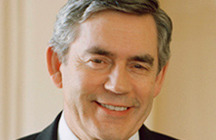
  • Gordon Brown – 2002 Speech at Odyssey Centre in Belfast

    gordonbrown

    Below is the text of the speech made by Gordon Brown, the then Chancellor of the Exchequer, at the Odyssey Centre in Belfast, Northern Ireland on 2 May 2002.

    It is a great privilege to be back in Northern Ireland, to be in Belfast with the Prime Minister, and to congratulate all those who throughout the troubles, through dark days and dark years, have kept alive the dream of peace with prosperity: men and women of courage and foresight who have invested in Northern Ireland, who have built up businesses; men and women of courage and foresight who have worked together to tackle social tensions in some of the worst-hit unemployment areas of Northern Ireland and who through their actions have brought hope.

    And it is a result of the hard work, the enterprise, and the commitment of thousands of men and women at work in Northern Ireland – mangers and employees – that since 1997 Northern Ireland has grown by 10 per cent, inward investment has continued to expand, and 22,000 new jobs have been created with employment today at record levels, and unemployment half what it was five years ago and at its lowest since the mid 70s, after the largest fall of any region in the UK.

    I would like to thank the First Minister, David Trimble, and the Deputy First Minister, Mark Durkan, and the work of the Northern Ireland Executive together with the Secretary of State, John Reid, through their determination and hard work in partnership with the men and women of Northern Ireland for making – what may have seemed a distant dream 4 years ago – a reality.

    And today I wish to reinforce your efforts for prosperity with an economic settlement for Northern Ireland that backs up the political agreements you have reached: a new economic settlement that in the spirit of devolution:

    – releases new funds for economic developments that you wish to make;

    – offers the Northern Ireland Executive new powers to lead in ensuring greater prosperity;

    – sets up new economic institutions that can advance economic prosperity;

    – and proposes a long term strategic way forward for Northern Ireland’s public services.

    First, ex-army bases and prisons scar Northern Ireland’s landscape and symbolise the period of conflict.

    We want these sites to symbolise peace and prosperity and become the engine of economic and social regeneration in local areas.

    I can announce that the Maze Prison, Ebrington Barracks, Crumlin Road Gaol; and security bases at Magharafelt and Malone Road Belfast will be transferred to devolved control within Northern Ireland, free of charge to be redeveloped.

    In place of the symbols of the old conflict and despair, there will be symbols of the new progress and hope — barracks and prisons of the past replaced by businesses and prosperity for the future.

    Later this year I will announce the Government’s spending settlements for the three years up to 2006.

    But in advance of this announcement and in addition to it, and as a special initiative to accelerate the development of the social and economic fabric of Northern Ireland now, we are today making available £200 million for reinvestment and reform in public infrastructure in the following way.

    The Northern Ireland Executive will, for the first time, have new powers to borrow on its own account – raising spending power and offering greater economic freedom to make important decisions about new investment in infrastructure and public services.

    And in the spirit of devolution, it will be for the Executive to decide how far and how fast to make use of this new flexibility.

    But over the next two years they will be able to finance borrowing of up to £125 million from what is already raised from Northern Ireland ratepayers. A further £75 million will be made available from the Northern Ireland Executive in un-allocated resources for new investment in infrastructure.

    And I hope that consistent with the peace process there will be particular emphasis on cross community projects. Not only communities working together and sharing in the prosperity of Northern Ireland, but shared facilities developed to foster, for example, partnership between Protestant and Catholic schools.

    Third, setting plans for the long term.

    Too often we have had to take short-term decisions for short term and immediate reasons.

    It is now time to take a long-term view – breaking from the short-termism of the past to set economic plans for the long-term, for an era of peace and prosperity.

    And it is time to put in place a mechanism that will not only prepare the ground for a Northern Ireland of greater prosperity but also send a signal round the world that the economic focus for Northern Ireland is one of building for the future together.

    In the last few months we have been working with the First and Deputy First Ministers, on behalf of the Executive, to help develop plans that would bring together all the necessary skills, management and finance expertise to ensure not only best value from the additional investment being made available, but enabling Northern Ireland to make public funds go further: drawing on best value, allowing public and private sectors to work together for public interest objectives.

    The First Minister will be setting out the Executive’s plans in more detail. But I can announce that with their agreement we will make provision for a Strategic Investment Body for Northern Ireland responsible for:

    – clearing the backlog of urgent work necessary;

    – offering a strategic and fully coordinated approach to infrastructure investment in public services;

    – bringing together, within one centre of excellence, the best expertise available;

    – working in partnership with the private sector matching new investment with modernisation and reform to achieve best value
    helping to raise growth and competitiveness to the benefit of the people and business community of Northern Ireland.

    But this new momentum for reinvestment must be matched with reform.

    And just as in Britain we are demanding modernisation to match investment to achieve the best results in health care – so too here in Northern Ireland we know that reinvestment, including in our public services is to be matched with reform. Through more efficient use of resources and better managed services, delivering best value for money and high quality investment for the people of Northern Ireland.

    This initiative represents a further example of devolution: the centre letting go in the interests of local power – local people making local decisions about local needs. Not just for health, social services and education but about the development of the Northern Ireland economy in the years to come.

    The message is: if you want to develop in Northern Ireland, grow your business in Northern Ireland, invest in Northern Ireland we are on your side, ready and willing to help you, as we ourselves invest in the long term future of Northern Ireland.

    The Good Friday Agreement offered peace for Northern Ireland – a way out of 30 years of violence. The economic settlement we are announcing today – a new economic settlement that in the spirit of devolution releases new funds; offers new powers to lead in ensuring greater prosperity; sets up a new economic institution; and proposes a long term strategic way forward – is a concrete demonstration of what can be achieved with devolution and offers faith in the future: the chance to build peace with prosperity, and to create an economy of opportunity for all.

    So we can look forward with new hope to an era of opportunity, leading Northern Ireland to a new age of achievement.