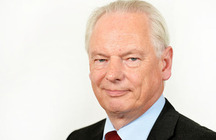
The speech made by Francis Maude on 28 November 2005.
Eight years ago Tony Blair understood something rather important. He understood that people want Britain to have a government committed to a strong and competitive economy, to first class public services, and to a cohesive society where no one is left behind or left on their own. There was indeed such a hunger, and he persuaded them that his would be such a government. Now people feel let down, and there is now widespread disillusion with politics.
The task facing the Conservative Party under its new leader is to show that we are a credible and appealing alternative Government that both wants and is capable of delivering the objectives set out by Tony Blair, and which his Government has failed to deliver, largely because Gordon Brown has blocked the way. The means we propose to deliver these objectives must be authentically Conservative measures, based on well-tried principles, but applied to contemporary Britain.
I want to talk tonight about the second objective. The first is pretty obvious really. There is today a more competitive global economy than ever. The statistics are well known to the point of triteness: China’s insatiable appetite for half the world’s steel, cement and cranes; the opening up of China’s heartland when ocean-going ships can trade a thousand miles up the Yangtze in a few years’ time, with an almost infinite source of cheap labour; the one million engineering graduates being produced every year in India. We all have our favourite lists.
The simple fact is that Britain’s competitive position is deteriorating. The World Economic Forum and other league tables of competitiveness are not some kind of random guesswork. They reflect real factors and real considerations. Gordon Brown seems to have had a disarmingly naive view that if Labour accepted the outlines of the Thatcher/Major economic reforms and gave the Bank of England independence, then Britain’s economic future was assured. An optimal state of economic efficiency would have been attained and additional tax and regulatory burdens could be painlessly absorbed.
But just as there is no successful business today that believes that optimal efficiency is ever achieved, that steady-state management is ever an option, we should not delude ourselves that anything other than continuous economic reform can give Britain a serious economic future. Britain needs constant supply side reform to ensure that we are able to compete. It is no good simply assuming that because Britain is currently more competitive than much of the EU therefore its position is forever secure. The competitive gap against our EU partners is closing, and against the rest of the world is widening.
This is not the time or place nor am I the person to set out detailed policy prescriptions. But the questions to be addressed are clear. What is the right tax framework to attract investment to Britain? What needs to be done to ensure that the Labour market is as flexible as it can be? How do we constrain the apparently ineluctable flow of new regulation so that the regulatory burden on business is no worse than proportionate to the risks being protected against? What needs to be done to ensure that the level of research and development is high and sustainable and that new products, services and processes are exploited commercially in Britain rather than elsewhere? There are many other questions, and Britain needs good answers if we are to flourish.
I turn now to public services. First class public services are essential for so many different reasons. We want excellent health care because we don’t want to be sick or in pain, and we want to live longer. We want good education because it leads to a more fulfilled and rewarding life. But these things are important also because poor health care and inadequate education mean an economy that is held back.
It is not seriously disputed now that the way we provide state-funded healthcare and education in Britain is seriously flawed. Monopolistic, egalitarian, paternalistic in the worst sense, it urgently needs reform. There is no single silver bullet answer. The MacDonald’s approach of uniform franchises stamped out across the country according to some Whitehall-designed template belongs to yesteryear. Its origins were in the egalitarianism that was an inviolable dogma for so long. This egalitarianism dictated that for some to have access to a better education or better healthcare than others was unfair and wrong.
So there must be a uniform National Health Service lest local differences benefit some communities and patients more than others. There must be only comprehensive schools lest excellent grammar schools increase the disadvantage suffered by the less able. It was better to remove the advantages enjoyed by some rather than create better opportunities for the rest.
As we now know, this thesis was deeply flawed. It was never possible to have uniformly good standards of healthcare or educational attainment across the country. There are at least as great disparities today as before egalitarianism caught hold. Thirty years ago two thirds of Oxbridge entrants were from state schools. Today it is just over one-half.
So what is the direction of reform now needed to give this first world country first world healthcare and education? What about this for starters?
“We need to explore the usefulness of choice and contestability [competition] to extend opportunity and equalise life chances…We must develop an acceptance of more market-oriented incentives with a modern, reinvigorated ethos of public service. We should be far more radical about the role of the state as regulator rather than provider, opening up healthcare for example to a mixed economy under the NHS umbrella, and adopting radical approaches to self-health. We should also stimulate new entrants to the schools market, and be willing to experiment with new forms of co-payment in the public sector.”
Or this:
“…it is only by truly transferring power to the public through choice, through personalising services, through enhanced accountability, that we can create the drivers for continuous improvement in all our services.”
Or this:
“In both the NHS and in education, there will in one sense be a market. The patient and the parent will have much greater choice.”
Yes, you guessed it. Not some ideologically driven worshipper at the shrine of Friedrich Hayek, some geeky devotee of market theory. But that most pragmatic of party leaders, and the most electorally successful in recent years: Tony Blair. These excerpts come from speeches made in the last three years. Just look at the ideas he promotes here. The creation of markets within publicly-funded healthcare and education. Co-payment, the polite word for charging for public services. The treatment of patients and parents as red-blooded consumers, with full-on choice made available to them. Allowing private, even for-profit, providers to compete with the conventional public sector providers to create real choice for these consumers.
I do understand why it’s so difficult for many Conservatives to support Mr Blair when he makes this kind of speech. After all when the last Conservative Government was introducing reforms along these lines, Mr Blair’s Labour opposition opposed them root and branch. They deployed every trick of rhetoric and deception to persuade people that these were measures born of extremist dogma, intended to enrich fat cats, and without any regard to the interests of the weakest in society. Then his Government when in office reversed many of the measures, such as GP fund-holding and grant-maintained schools, just when they were beginning to yield real benefits for patients and pupils.
Because Mr Blair’s Labour Party in opposition, from the most cynical and opportunist motives, behaved in this manner, it is indeed tempting for us to play the same game: tit for tat. It is precisely that kind of game-playing approach that has engendered in the public such a dangerous degree of cynicism about and disengagement from politics. We must eschew it.
We have not always done so. When the Blair Government introduced legislation to create foundation hospitals we opposed it. Not because we were against the idea; we had ourselves introduced something similar when Ken Clarke was Health Secretary fifteen years previously. The Blair scheme was compromised and flawed, for sure, but the idea that hospitals should be given a much greater degree of independence and autonomy was one we all strongly supported. Our justification for opposing the legislation was that it didn’t go far enough. It was better that there should be no bread than half a loaf. Another reason for opposing these reforms was that they might not work and therefore we shouldn’t be associated with them.
Both these are bad reasons, and it did us harm. Harm because it looked opportunistic and self-serving. Harm because it lacked authenticity. People rightly felt that these were measures in a direction that a Conservative Government could easily have introduced itself, so how could it be authentic for the Conservatives to be opposing them? The result of course is people saying of us: “We don’t know what you stand for.”
The second example has to be the introduction of top-up fees for higher education. Again the Blair Government’s approach was compromised and flawed. There was an absurdly interventionist regulator created to do what it was already in universities’ interest to do: to find and attract the brightest of students whatever their background and social circumstances. The scheme was so adulterated that the additional financial benefit to British universities to enable them to compete worldwide will be minimal. There was an arbitrary target for the number of school-leavers who should go into higher education.
Nonetheless the core elements of the scheme were ones with which most Conservatives would feel comfortable. It introduced a price mechanism, albeit very truncated in effect. It will encourage students to look carefully at what value they expect to get out of a degree. Stripped of the regulator, it could make universities much more independent of the state, dispersing power to create independent institutions in a way Conservatives over the decades would approve. It fosters personal responsibility in students. It extends co-payment.
In short it felt like the sort of direction that Conservatives could plausibly have wanted to travel, embodying values that Conservatives tend to proclaim as their own. Many Conservatives were deeply unhappy to be whipped to vote against the Bill. And again much of the public simply felt confused about what the Conservatives were up to. We were saying we were for the smaller state and for bigger citizens. Yet here was a measure that although flawed was demonstrably a smaller state measure, which enhanced personal responsibility and thus seemed to create bigger citizens, yet the Conservatives were against it. No wonder people scratched their heads trying to figure out what we stood for.
Now Tony Blair is planning measures to introduce greater consumer choice, more plural provision, and greater institutional autonomy in schools and in the NHS. The proposals have been criticised, rightly, for being pale and timid reforms that conspicuously fall below the level of the rhetoric I quoted earlier. There will be a debate whether the Conservative Party should support the legislation in principle, assuming it does actually take reform in the broad direction we favour. There will be a particular concern that our support might be the deciding factor whether the reforms go through at all, given the high levels of dogmatic opposition in Tony Blair’s own Labour ranks. That Labour opposition will be stirred up covertly by Labour’s own institutional roadblock, the Chancellor, Gordon Brown.
So what should be the Conservative stance? Combine with the Labour left to shore up Gordon Brown, or combine with genuine reformers of whatever party to promote reform? Should we be tactical or strategic? Should we, regardless of our own narrow partisan interests, engage in building a long term alliance across the party divide in favour of serious public service reform?
For we should be in no doubt that people are hungry for realism and hungry for change. Poll after poll shows that people no longer believe that the problems of poor healthcare and education can be solved simply by throwing more money at them. They are willing to be persuaded that even quite radical reforms are needed. But they are deeply suspicious of the motives behind the grand schemes of politicians. They impute the worst of motives to any schemes of reform. They are inclined to see them as flowing from dogma and ideology, or designed to benefit the few rather than the many, or aimed at enriching sinister business interests.
Neither should we underestimate the difficulty of persuading people that radical reform is needed. There is no automatic view that choice is an obvious good. We know what people tend to say: “we don’t want choice; we just want the schools, hospitals etc to be better”. It is not immediately obvious to most people that encouraging more diverse providers into the system, voluntary organisations, not-for-profits, even commercial providers, will improve things for service users. We who agree with Tony Blair’s arguments that I quoted earlier know that choice, diversity and pluralism work. But convincing the public that the uncertainty and disruption that certainly flows from such change is worth while is a very tough call, let alone persuading them of the merits of the sort of co-payment that Tony Blair has argued for. These are the hard yards of political debate.
It is unlikely to be achieved by one party working alone. And it doesn’t need to be. There are Labour MPs, admittedly of the dreaded Blairite persuasion, such as Alan Milburn and Stephen Byers, who share the analysis and are willing to argue publicly for it. There is a growing number of LibDem MPs, including the brightest among them, the “Orange Bookers”, who know that this is where the future lies. And the simple truth is that the most important thing for this country, after delivering strong economic growth, is to create public services that are worthy of its citizens. This is a central contribution to delivering social justice for them all.
We must work together in a broad alliance with whoever shares the broad diagnosis and prescriptions to win a broader consensus with the public. If we can do that we will be ready to serve in Government. More than that, we will be worthy of it.
Below is the text of the speech made by Francis Maude, the then Minister for the Cabinet Office, at the Chivas Strathisla distillery in Banffshire on 5 March 2015.
It is a real pleasure to be here with you today to discuss one of the highlights of my job – raising awareness of the great social enterprise work that goes on in the UK.
To be at a whisky refinery at the start of spring only enhances that feeling, so many thanks to Chivas for hosting this event! I would also like to commend Chivas on their global statement which champions social enterprise as a force for good in business.
One of the appeals of social enterprise is that, as a concept, it is so very simple – and yet the possibilities are endless.
Take two of the finalists of Chivas’s ‘Venture’ who are here today – one is a courier company that helps disabled, disenfranchised and long-term ill people to return to employment and the other a brewing company that gives some of its profits to Prostate Cancer UK.
Two completely different operations united by a common desire to make a difference. It’s something we’re beginning to see more and more of across the country – 1 in 5 UK businesses now have a social mission at their heart, and we are fast becoming the centre for social enterprise globally.
This means that our social enterprises contribute £55 billion annually to the UK economy and their growth has been a key part of this government’s long-term economic plan.
This is a phenomenal achievement and as a government we are working hard to drive more and more of this kind of venture, with policies designed to nurture social investment and get it onto the global agenda.
Our goal is simple – we want the UK to be the global hub for social enterprise, social investment and social finance.
Social enterprise support
We are committed to creating the right environment for these innovative and life-changing organisations to grow so they can support communities in the UK and across the globe.
To do this, social enterprises need access to finance and investment, which is why we introduced the world’s first social investment tax relief to drive more investors to put their money into organisations that do more than make profit.
And we set up the world’s first social investment bank, Big Society Capital, which has already seen over £180 million of investments to the frontline, supporting over 100 ventures across the UK.
These ventures once again highlight the diversity of what social enterprise can achieve – from £150,000 going to a skate park in Dundee which provides young people with peer-to-peer education and stewardship, to £10 million to support housing for people with a learning disability so that they have more choice about their living arrangements.
We’ve also provided non-financial support in the form of initiatives like the Buy Social Directory, which lists over 10,000 social enterprises so that business and government can easily find the services they need.
The social economy is a great UK success story. We’ve seen how well it works here and we want to export our success to other countries, share the lessons we have learnt and drive investment from abroad into social ventures at home.
When the G8 met in Northern Ireland in 2013, we put social investment right at the heart of our agenda. And last week in New York we launched a global drive as part of the GREAT Britain campaign to highlight why the UK is the number 1 destination for social investment.
To date, the GREAT campaign has delivered a return to the economy of over £1 billion and is now active in 144 countries. It is this scale of ambition that we want to bring to the UK’s social economy.
Society
As you can see, we’re doing our best to create the right environment for social enterprise both at home and abroad. But in reality, government is only laying the groundwork for socially-minded business, investors and consumers to make the difference.
The UK is a nation of entrepreneurs and capitalists but we also have a fantastic heritage of philanthropy and social reform. Too often we think of these traditions as being separate, when it should be perfectly possible for people to invest in a way that makes good business sense while also supporting good causes.
It’s about combining financial hard-headedness with altruism and social concern – allied together these can be an incredibly powerful and effective force.
Look at issues like homelessness, reoffending or long-term unemployment – these complex problems aren’t new, but the solutions have eluded successive governments for decades.
Government doesn’t have all the answers, and social ventures are often better able to tailor services around the needs of communities and individuals; they can be more responsive and agile and can help find the kind of lasting and comprehensive solutions that are necessary.
The examples of social enterprises I have met so far have been truly inspiring and initiatives like Chivas’s ‘Venture’ show how traditional business models can mix with good causes to make a real difference in society.
And if you won’t take my word for it, perhaps Jamie Oliver can convince you otherwise.
Below is the text of the speech made by Francis Maude, the then Shadow Foreign Secretary, on 6 June 2001.
I was, almost literally, born into the Conservative Party. My father went into politics in 1950, having spent some of his prime years as a prisoner of war. I and my brother and sisters grew up believing that politics is a high calling; built on deep beliefs and high principles. In my family the idea that you went into politics for yourself was laughable.
So it was pretty easy for me to be a Conservative. My brother and I went to a direct grant school; a school independent of the state but where most of us were paid for by the state: a real public/private partnership.
I grew up with the notion that a strong society is one bound together by the bonds of mutual obligation; that the strong have a duty to help the weak. Family tragedy can bring home to you how much we depend on each other.
Is it bad that we have a hospice movement that is supported by the voluntary work of families and communities, rather than depending on the government?
I was proud to serve in Conservative Governments that were prepared to be unfashionable; that were ready to take on the received wisdom. We may not have got everything right but we always did what we thought right. We did what we did not for ourselves but for our country.
And I find it hard to understand why you would come into politics if you don’t believe in your country. I spent part of my childhood in Australia; and when I was on my sabbatical from politics in the mid-nineties I lived the global economy as an international investment banker. I know better than most how interconnected today’s network world has become. Britain can never be isolationist; can never turn her back on the world.
We must be an internationalist country, yes. But we must above all be a country. How can we remain a proud independent country if we have lost the power to govern ourselves? When we have become nothing more than a province of a United States of Europe?
In the sixties and seventies people like my father resisted the sad assumption that Britain was condemned to an inevitable decline. They fought the defeatist notion that the socialist ratchet was irreversible. It is for our generation to resist the sense that it is inevitable that we lose our power of self-government. It is for our generation to fight for the return of some powers from Brussels, to reject the idea that the ratchet of EU integration can never be reversed at all.
It is for our generation to fight for it. And we will.
Below is the text of the speech made by Francis Maude on 4 October 2000.
Speakers today have all shown that they believe in Britain, they believe our country can be best in world. You all do; so do my team: Richard Spring and Cheryl Gillan in the Commons, who carve up the world between them. Stephen Day, our unsleeping Whip. Patricia Rawlings, who does terrific work in the Lords, and a special welcome, leading our Front Bench team in the Lords, to David Howell. It’s wonderful to have David back in the front line.
I’m a very lucky chap to have such an experienced and talented team. We’re all part of one team. William’s team. We’re ready to govern. And I tell you: we’re raring to go.
Ten years ago I served as one of Margaret Thatcher`s Foreign Office Ministers. Quite a year, that was: the Berlin Wall came down; the Cold War ended, and the shape of the world changed. I don`t want to take all the credit. But in the ten years since then the world has changed out of all recognition.
It’s actually less stable than it was; the Cold War lent a grim predictability to life. Ours is a swirling, tempestuous world; a world bursting with opportunity; a world of lightning information flows. Truly a network world.
People travel more; they know more about the world. Twenty or thirty years ago a trip round Europe was pretty exciting. Today it’s like a trip across town. Today young people in their gap years can span the world – and they do. And they want to make a difference in the world – themselves – they don’t think it’s all down to governments.
If we believe in ourselves, Britain can flourish in this new network world. Just look at the assets we have. The world’s fourth largest economy. The second biggest overseas investor. The greatest international financial centre. English, the language of the internet, and of global exchange. Armed Forces admired throughout the world. Membership of the EU. At the heart of NATO. The transatlantic relationship. At the centre of the Commonwealth – and our new Commonwealth Commission is mapping out a big new role for it in the network world.
In this new world, we aren’t on the edge of anything. Britain can be at the centre of it all. Our foreign policy must be for this new world. We have to look outwards, not inwards. And it shouldn’t be difficult. The British were globalists before the word was invented. We’re committed to global free trade by 2020. That’s the best hope for developing nations. Britain never has sought isolation. It never should. And under the Conservatives it never will.
So yes, Britain can be at the centre of the new network world. We will use that position to serve British interests. We’ll do so honourably and – yes – ethically.
Talking of ethics: did you hear Robin Cook last week, going on about ‘a miserable, shrivelled and shrunken thing’? Up and down the land, people were saying ‘there he goes, talking about himself again. For him, ethics might just as well be a county east of London. There’d be a big change, said Robin Cook. Britain’s foreign policy would have an ethical dimension. Who does this man think he is?
This country, that spread freedom, law and democracy across the globe. That twice last century fought for all Europe against tyranny. That most recently helped liberate millions of our fellow Europeans from the iron hand of Communism. Where was Robin Cook when we were fighting that battle? Posturing in his CND badge. While we never let up, he wanted Britain to slink, weaponless, from the world stage.
Foreign policy is about strength. Strength and honour. We`ll use Britain’s strength in the world. We’ll use it for peace and stability: whether in Kashmir, or Cyprus or the Middle East. We pray today that those caught up in conflagration in Gaza and the West Bank see that peace, not conflict, is the prize. We sincerely hope that the talks in Paris bring this violence to an end.
We’ll use our strength to promote democracy and the rule of law. The verdict of the ballot box must be respected. Mugabe and Milosevic: it’s over. You tried to rig it – and you failed. Give up – and get out.
And – yes – we`ll use British strength to promote the interests of Britain – and Britons.
For we believe in Britain. It isn’t obsolete. In the new network world, nations will matter more, not less. Globalisation means people need to be able to identify with their country more, not less.
Last week I was in the Caucasus. I was meeting people who only regained their nationhood eight years ago. They’re not about to give it up. Go to Kosovo, and talk to people, as I did: nationhood is their dream.
And it makes sense: in this fast-moving world, governments need to be flexible, and responsive. Countries, today more than ever, need the power to govern themselves.
And I just don’t understand why Tony Blair’s given up on it. He claims we either give up more and more powers. Or we condemn Britain to a lonely isolation. What a sad, outdated, defeatist view. Where’s the vision? Where’s the leadership? Where’s the conviction?
All round Europe, there is a really serious debate about its future. We agree with some bits, disagree with others, but it’s a real debate, with real convictions. There’s only one leader with nothing serious to say. Tony Blair. No leadership, no vision.
It’s different behind closed doors. He’d happily take Britain into a European superstate. He’d love to scrap the pound. But he wants to do it by stealth. It’s the Love That Dare Not Speak Its Name. He knows that most people, the mainstream majority, want no truck with it.
The mainstream majority want to be in Europe, not run by Europe. That’s why last year, against all expectations – perhaps even against our own – we won the European elections. The winners, under Edward’s leadership, have been hard at work. We work together – one team. In the last few days they’ve tabled the largest number of amendments to the European budget anyone can remember, aimed at cutting waste and eradicating Euro-propaganda.
There’s still a lot to sort out. The Commission needed a man of sharp intellect, decisive action and few words to put their house in order. They chose Neil Kinnock. Why do I think there’s still some distance to go?
Well. Here’s a pointer. The day I was in Brussels last month, Labour MEPs drove through a directive on…how to climb a ladder. That’s right – there really is an EU way to climb a ladder. It says this: ‘Ladders shall be so positioned as to ensure their stability during use.’ ‘Mobile ladders shall be immobilised before any person steps onto them.’ Well, thank you.
Then they agonised over whether to permit ‘The holding of a ladder by another person as a safety measure.’ And there let us leave them, these Labour MEPs: up their ladders; off their trolleys.
You really couldn’t make it up, could you? Tony Blair says we do make it up. He says it’s all fantasy. ‘No one I know wants some overblown United States of Europe’, he says.
Really? You know the German foreign minister, don’t you, Mr Blair? He wants ‘the transition … to … a European Federation.’ ‘We must put into place the last brick in the building of European integration, namely political integration’, he said.
You know Mr Prodi too, don’t you? Didn’t you appoint him? ‘Step by step … the European Commission … behaves like a growing government’, he says – and he means it, too – he approves of it.
And you must have met the French Prime Minister? He claims he’s met you, anyway. He talks of the EU crossing ‘a milestone towards the creation of a united political Europe’.
We may not like what they’re saying. But at least they’re honest. Why can’t Tony Blair tell the truth? Why can’t he be honest?
So let me be clear. If some others decide to integrate more, we won’t stand in their way. That’s their sovereign right. But a Conservative government will not – not – do the same.
And no, we won’t be ‘left behind’, or ‘isolated’; we’re not missing any boats. Two simple things came out of last Thursday’s Danish pasting. No more one size fits all. And nothing inevitable about scrapping the pound. People want to be in Europe but keep the pound. They know they can. And with a Conservative government, they will.
For the mainstream majority agrees with us. They’re not anti-European – and nor are we. If we weren’t committed to stay in Europe, why bother trying to change it? And the first change is that for Britain, integration has gone far enough. We will oppose any further loss of the British veto over EU laws. We will oppose the job-destroying Charter of Rights. And we will oppose the creation of an EU defence force outside NATO.
It’s so clear now that the public agree with us that I suspect Tony Blair may be getting a bit fussed. So don’t be deceived if he tries to water down the Nice Treaty this December. He hasn’t suddenly seen the light. He knows there’s another treaty in the pipeline. A treaty to create a European constitution for a European superstate. A treaty planned for – yes, after the next election. That’s why the stakes are so high: that’s why we’ve really just got to win.
Today I make two commitments. We will legislate so that further transfers of power can only take place after a referendum. Yes, Mr Blair: the people. Remember them?
And we are all fed up with seeing the European Court extending the EU into areas of national government well beyond those that Parliament intended to transfer. So we will legislate to create ‘reserved powers’. Beyond the powers we intended to transfer, EU law will not override the will of Parliament. Never again will the Treaties be extended by un-elected EU judges.
We’re not going to break our treaty obligations. There is no question of that. We honour Britain’s obligations. But why shouldn’t Britain enjoy the same constitutional protection as France, Germany and Italy already do? If it’s good enough for them, it should be good enough for us.
Next, we’ll insist on a flexibility clause; outside the single market and core areas, let countries be free to accept only those new Euro-laws which meet their needs.
And let’s be blunt: some Brussels policies just aren’t working. The aid programme. The Common Agricultural Policy. The Common Fisheries Policy. They all waste money – they’re failing relics. They don’t need to be run from the centre. More can, and more should, be run by the nation states.
It’s eleven years since that momentous November night when the Berlin Wall came tumbling down, and the Iron Curtain was shattered. The EU has a historic duty to embrace the whole family of European nations. It’s taking far too long. If we want enlargement – and we do – we need a flexible Europe, a network Europe. We not going to take lectures from those who were nowhere to be seen while the West won the Cold War and made enlargement possible.
Mr Chairman, Europe’s strength is the diversity of its nation states. It’s their very sense of nationhood. This is the basis for our vision of Europe, a flexible and enlarged European Union. It’s the vision for which Conservatives have long argued, under Margaret Thatcher and John Major and William Hague.
For us believing in Britain isn’t just a phrase. It’s what we’re about. Yes, we believe in this United Kingdom – we believe it really can be the best place in the world. Yes, we believe in Britain, because we believe in the British people. Today people know more; they want to do more – themselves – not just for themselves, or by themselves; but together, and for others.
For others not just here at home, but abroad too. You see, like us they don’t think it’s all down to Governments. They’re sceptical about politicians, even suspicious; they just don’t believe today that the answer is ever higher taxes and an ever bigger state.
They long for leaders who are honest with them, who respect their intelligence. They long for a party that is in tune with their hopes and fears, for themselves and for their country. They long for a Government that earns their respect by speaking the truth.
We are such a party and, under William Hague, we will be such a Government. And if we hold fast to our beliefs and fight for them with every sinew, we will not just win the chance to serve. We will be worthy of it.
Below is the text of the speech made by Francis Maude, the then Shadow Foreign Secretary, on 8 June 2000.
1. INTRODUCTION
Anniversaries are a time for taking stock. The fiftieth anniversary of the Schuman Declaration is no exception.
On any audit of achievement, the European Union has much to be proud of. Working together through trade and co-operation, behind the NATO shield that made it possible, has helped to make war between member states unthinkable. The prosperity of Europe`s citizens has improved greatly, with the biggest single market in the world and with free trade in a continent previously more prone to protectionism and national insularity. The opportunities open to millions have expanded, with travelling, working or studying across Europe now easier than ever before.
We should relish these benefits. So in this spirit, let me reaffirm: membership of the European Union is of real value to Britain.
It contributes to our prosperity and, as one of a number of networks to which Britain belongs, it contributes to our influence in the world. So for those who may be anxiously analysing the nuance of every phrase to detect a shift in the Conservative Party’s European policies, this will be fruitless. Lurches – in either direction – are emphatically out.
A year ago this week, the Conservative Party won the European election in Britain. We did so comprehensively. And we did so because we campaigned on a view of Europe – that Britain should be in Europe, not run by Europe – which is shared by the mainstream majority of the British people. We have always wanted to see a stable, prosperous, outward looking, free market and democratic Europe.
We have always wanted to see such a dream realised – and spent a good many lives in maintaining that vision. We have no intention of moving from this ground, in either direction; rather we are building on it. So there is nothing new, no change of direction, in upholding that dream. We want to see an open Europe of free, democratic and independent kingdoms and republics, stretching from the Brest on the Atlantic coast, to the Brest on the border of Belarus, co-operating closely but flexibly.
For as I will show, it is becoming increasingly apparent – to many who have a very different perspective from mine – that the EU model of endless uniform supranational integration has got to change.
For, on this fiftieth anniversary, by far the EU’s greatest challenge is not to look back but to look forward. So today I will set out a positive vision for the EU. For a relentless process of ever closer political union should no longer be seen as the only, or indeed the best, way to bind peoples together.
In the network age a rigid and centralised model of European power will not just be inappropriate – it will be a recipe for division and fracture. We now have the duty to be every bit as imaginative and every bit as forward-looking as was Robert Schuman, and every bit as attuned to the needs of our age as he was to his.
2. THE FORK IN THE ROAD
Enlargement
For the world is changing. The EU has not begun to catch up with that change.
With its enlargement to cover the post-Communist states, as well as Cyprus, Malta and eventually Turkey, the Union will begin to reach out to the whole continent. This is a solemn obligation, not a choice.
Enlargement is a cause at least as noble as that which prompted the founding of the Union fifty years ago. We who have benefited from the security and prosperity that have accompanied European construction have an obligation to extend it to our European neighbours. Nations once bound up – against the will of their peoples – in the shackles of Soviet control see EU membership as the end point of their journey to freedom and free enterprise. We should be welcoming them with open arms. Hungary. The Czech Republic. Poland. Estonia. These countries are an integral part of Europe.
Taking full part in the family of European nations is their birthright. Yet, eleven years after the fall of the Berlin Wall, the haggling over membership continues. With the sole exception of the former East Germany, each of the former communist states is still waiting in line.
And why this shameful delay? It is that the EU hides, ostrich-like, from the implications of enlargement.
Implications of Enlargement
For enlargement points up stark choices; choices we would face before long anyway. Our fast-changing world would see to that. Enlargement means decision-time has now arrived.
Don’t just take my word for this.
“The simple but fundamental question is how the Union is to operate effectively when it has 20, 25 or even 30 members”.
So states the European Commission in its submission to this year’s inter-governmental conference. It continues:
“Decision-making in a Union of 28 members is clearly not the same thing as decision-making in a Union of 15. The Union will inevitably become less homogenous; the economic, cultural and political differences between the Member States will be more pronounced than ever before in the history of European integration”.
In his seminal speech to this University last month, the German Foreign Minister raised some pertinent – and fundamental – questions.
“Just what”, he asked, “would a European Council with thirty heads of state and government be like? How long will Council meetings actually last? Days, maybe even weeks? How, with the system of institutions that exists today, are thirty states supposed to balance interests, take decisions and then actually act? How can one prevent the EU from becoming utterly intransparent, compromises from becoming stranger and more incomprehensible, and the citizens’ acceptance of the EU from eventually hitting rock bottom?”
I believe these are the right questions. But, of course, the real issue is getting the right answers. The most dangerous course of all would be to pretend these issues don’t need answers; to pretend that the EU can go on as it has up to now. Yet this is precisely the approach taken by the British Government.
For domestic political reasons, it refuses to participate in the debate raging in Germany and across Europe, or even to acknowledge its existence. That is not the act of a good European. That’s why the Inter-Governmental Conference is so badly needed.
This IGC is no unnecessary distraction. For the EU now faces an historic choice. Its response will set its course over the next fifty years just as surely as Robert Schuman and his colleagues determined its course over the last fifty.
The Fork in the Road
The EU today has reached a fork in the road. It must choose one of two routes.
Only if we have the right vision will we make the right choice.
One route at this fork leads to an open, flexible, free-enterprise Europe; a Europe which celebrates diversity. This can be a “network Europe”, a Europe of nation states co-operating together.
But there is another route at the fork. The route of uniformity and uniform integration.
An EU where the national veto is all but abolished. An EU with eyes bigger than its stomach – starting tasks but not completing them; with a tangle of subsidies and protective practices still in place; an unreformed budget; and agricultural and fisheries policies that belong to a bygone era.
An EU with its own government, its own taxes, its own foreign policy, its own criminal justice system, its own constitution and its own citizenship, as well as its own currency.
This would be “bloc Europe”, a single European superstate.
Both these routes could overcome the danger of gridlock in an enlarged Europe. But bloc Europe, superstate Europe, would imperil exactly the security, prosperity and unity that Schuman dreamed of.
The Changing World
Why do I believe so fervently that the first – the network – route is right? The first reason is the one given by the Commission, in the extract I read earlier about enlargement:
“The economic, cultural and political differences between the Member States will be more pronounced than ever before in the history of European integration”.
The wide diversity, in culture, ethnic background, language, history, outlook and perspective, is one of Europe`s major strengths, not a threat to be submerged.
The British philosopher JS Mill identified the dangers of uniformity in his essay “On Liberty” a full century before the EU was conceived:
“What has made the European family of nations an improving instead of a stationary portion of mankind? Not any superior excellence in them, which, when it exists, exists as the effect, not as the cause; but their remarkable diversity of character and culture. Individuals, classes, nations, have been extremely unlike one another: they have struck out a great variety of paths, each leading to something valuable…Europe is, in my judgement, wholly indebted to this plurality of paths for its progressive and many-sided development”.
An EU of six might have got by with the bloc model of rigid uniformity. It barely works for one of fifteen.
Low turnout in European elections; falling support in opinion polls. Bloc Europe is failing the public, and the public knows it. To expect it to work with almost 30 is optimistic in the extreme. Especially in today’s globalising world.
Replacing the world of blocs and hierarchies is a world of nations and networks; networks between people, commercial networks, networks between nations. Trade and competitiveness is more global and less local. The EU’s tariff wall is absurd and obsolete.
In this new world, nations and groups of nations can choose whether succeed or fail. The EU can choose whether to join the fast world or slow. Whether to be future or past.
Of course some believe we can simply rest on our laurels. Europe can sit back and admire its history as it watches the world go by. But I don’t believe that is its destiny. We must lift our sights higher than that. If we want to succeed, we need agility, adaptability, flexibility, a light touch from the state. Europe has no opt-outs from these universal laws.
A democratic Europe needs flexibility and diversity. Its nations need freedom and choice. With this IGC, there is a tremendous opportunity to start to fashion just such an EU. We must not let it pass.
3. THE FEDERALIST ROUTE AND THE IGC
The Wrong Route
Tragically, we are in danger of doing just that. Too many of the statements from Europe’s institutions and Europe’s leaders still seem wedded to the old dogmas of the bloc era, and to the false safety of the old introspective, integrationist, regulatory orthodoxies. And as the EU heads in the wrong direction, Tony Blair timidly tags on behind.
“The concept of Europe as a superstate”, says Foreign Secretary Robin Cook, “is one that is deeply unfashionable”.
He still claims that “Maastricht was a high water mark of integrationism”. But events disprove him every day.
Meanwhile the French Prime Minister says the EU must harmonise more of our taxes and reduce the national veto, the German Foreign Minister calls for a European Parliament and a European government to exercise real legislative and executive power within a Federation, and the Commission President says the Commission behaves like a growing government, “step by step”.
The tide of federalism on the continent of Europe is still inexorably rising.
The Treaty of Nice
So what actually is going on in the IGC?
We hear nothing of substance from British Ministers; the agenda is “minimalist”, they say; it is just a matter of mopping up the leftovers from Amsterdam, it insists; all in all, the Treaty will be of little consequence to the future of the nation state. The reality is rather different.
Qualified Majority Voting
For one thing is certain: the IGC looks set to agree, extending qualified majority voting, to scrap the legislative veto in yet more areas. The British Government conceded this principle before the discussions had even begun. It will be considered case by case, it says. Case by case, stage by stage, step by step. That is how the one-way process of integrationism proceeds.
We are all too familiar with the pattern by now – under governments of both colours. First the veto is conceded in a seemingly innocuous area of policy. Ministers claim that there is no legislation planned and that the concession is therefore cost-free. Then when harmful legislation does appear, it’s too late.
Then the cycle repeats itself at the next IGC. Case by case. Step by step. Stage by stage. This process of uniform one-way integrationism has got to stop. Any further loss of the legislative veto would be highly damaging. Of course, it would make it easier to decide things. But it would do so by overriding national interests.
There should be no further extension of QMV on European legislation at all.
Charter of Fundamental Rights
But that’s not the only step towards the superstate likely to be taken at Nice. The Charter of Fundamental Rights is now taking on a life on its own.
Of course it is important that countries co-operate together to protect citizens from the unnecessary diminution of their rights by the European institutions. But that is not what this Charter is achieving. Instead, it is emerging as a route for further interference in national life. It will not be binding, we’re told. It’ll just be in an Annex to the Treaty. We know that is tantamount to being fully incorporated. It mustn’t happen. Otherwise step by step, stage by stage, fewer decisions get taken by nation states and more taken by European institutions.
The risk is that this charter would lock Britain into the steel handcuffs of the old continental social model, at the very time when countries like Germany are seeking to escape it.
Defence Identity
The third part of the integrationist package likely to emerge from Nice is the Common European Security and Defence Policy. We strongly support greater European defence co-operation, and a stronger European commitment to NATO. Indeed, it was a Conservative Government which started the process, with the Petersberg tasks. There is a crying need for the European nations to step up their capability, to share more of the burden.
But this doesn’t do that. Indeed, nearly all EU countries are cutting their defence budgets. All this does is to construct new institutional architectures, autonomous from NATO and within the EU, which threaten to encase European defence in committees, bureaucracy and the creeping embrace of the EU institutions.
There is absolutely no military case for giving the EU a role in Europe’s defence. The case is purely political – a challenge to supposed American dominance of NATO, the establishment of a rival power bloc, the move towards what Romano Prodi habitually calls a European army.
It is designed by people who are concerned first with endowing the EU with another of the trappings of statehood. In a speech last month M. Jospin talks of a “single European defence structure”, of the “pooling” of Europe`s armies. If this were done the EU would have “crossed a milestone towards the creation of a united political Europe”.
Not about creating a superstate?
It would be folly to lock Europe’s defence forces into a single structure when it is inconceivable that Europe will have a single foreign policy. NATO already provides the ideal flexible structure for different combinations of European nations to move together on a particular mission. At its worst ESDP is a visible expression of a chilling, and growing, anti-Americanism in some parts of Europe.
This mindset is worse than simply being unrealistic and vain. It is actively harmful. If it encourages America to turn its eyes further westward to the powerful allure of Asia, we will have inflicted a devastating blow at the basis of our security, the Atlantic Alliance. We must not allow the cancer of anti-Americanism, now growing in some parts, to get hold.
Summary
We have no doubt, then, that the integrationist agenda for the Nice IGC is damaging and wrong:
More qualified majority voting on EU legislation.
A Charter of Fundamental Rights eventually incorporated in the Treaties.
An EU defence identity, autonomous from NATO.
Three integrationist solutions – each one of them giving the wrong answer to some important questions.
Yes, the EU needs to adjust to enlargement. But it should do so through greater flexibility, not through a further loss of the national veto.
Yes, Europe needs to reassure the public. But it should do so by ensuring that more decisions are taken at national level, not through a binding Charter that threatens yet more interference.
And yes, of course Europe’s nations should co-operate more closely on defence. But they should do so through NATO and through greater co-operation between the nations of Europe, not by setting up new competing bureaucracies.
Ratification
So the Conservative Party will campaign strongly against an integrationist Treaty containing such measures. Such a Treaty should not be ratified by the British Parliament without the people first having their say, either in the general election or in a referendum.
And I make it clear: a Treaty which had won the support of the public neither in a referendum nor in an election could not be left unchanged. After the election we would insist on revisiting its provisions.
4. THE CONSERVATIVE VISION FOR EUROPE
Support for Europe
Our view of the future shape of Europe is drawn strongly from our long history of dogged support for British membership of the EU for 40 years. Unlike Labour, we have never wavered in our support. We have perhaps been boringly consistent.
And it is precisely because Britain’s place is within the European Union, that we want it to be a success.
Vision for the Future
Just as Conservatives believed that British entry into the EU was right in the 1970s; just as we helped to press for the internal market in the 1980s and 1990s; so today, we must set out our vision of how the EU must adapt to the new century.
For, if enough vision and imagination is shown, this year can be just as clear a milestone in Europe’s development as was 1950. It can have just as profound an impact on preparing our continent for the half-century ahead, this time fashioning a flexible network of nation states. This doesn’t need a dramatic big bang “fundamental renegotiation”.
The new Europe will be a Europe of constant adjustment, continuous change.
Closer Co-operation
Some change may be towards closer co-operation.
Single Market
We have long called, for example, for the completion of the single market, and the full implementation of the four freedoms: free movement of people, goods, services and capital.
We have long sought a strengthening of public procurement rules, so that taxpayers can be assured of value for money and businesses can compete on even terms.
Environment
In the field of the environment, air and water pollution are no respecters of national sovereignty. We would look favourably on moves to co-operate more closely on these issues.
It does not require a loss of the national veto for such co-operation to occur.
For example, the Commission could ensure that every state has its own environmental inspectorate. It could be chasing up those states which do not meet their Kyoto commitments on reducing CO2 emissions. It could enforce existing directives, such as the Urban Waste Water Directive.
Defence
Nor does it require integrationist solutions to co-operate in the area I have already mentioned: defence. The EU is certainly the wrong vehicle; but there is still something serious to be done.
Looser Arrangements
Equally, in a constantly changing Europe, there are areas where the next steps forward would sensibly be to loosen arrangements – with more decisions taken at a national level.
The need for such reform is becoming more and more apparent. Last year’s fraud crisis showed how the EU’s institutions have been biting off far more than they can chew. Some £3 billion from the European Union’s annual budget is unaccounted for.
It is because the EU’s ambitions over-stretch themselves; its reach exceeds its grasp.
Part of the answer is that it should do what it does better. But the main part is that it should do less.
Tony Blair’s challenge at this IGC is to start to work for this better EU. Here’s where he could start.
Common Agriculture Policy
An IGC intended to clear the way for enlargement cannot leave unchanged the biggest impediment to enlargement that there is – the CAP. Born out of honourable motives, with the aims of ensuring support for farming and eliminating the threat of food shortages, the world has moved on since then. As my colleague Tim Yeo has argued, these aims can better be achieved today by giving greater flexibility to Europe’s nation states.
CAP reform will provide an opportunity to examine whether some decisions currently taken at EU level would be better taken by the Governments of individual member states.
Today’s CAP is indefensible socially, economically, ecologically, environmentally and morally. It needs drastic change.
No-one seriously believes that a centrally controlled policy for agriculture makes sense today. If it doesn’t make sense for fifteen members, how much less will it for twenty or twenty-five?
In Britain, moving to greater national responsibility would allow us to guarantee farmers the same level of support as at present, while still providing a dividend for taxpayers and consumers.
So here’s Mr Blair’s first challenge: to press for a fundamental modernisation and loosening of the CAP.
Common Fisheries Policy
If the CAP is today indefensible, then the Common Fisheries Policy is more so. A policy designed to conserve fish stocks that results in hundreds of tons of dead fish being thrown back into the sea each year doesn’t have too many friends. Tony Blair should be pressing for national or local control to be established over our own waters, through zonal management, coastal management or in some other way.
The Common Fisheries Policy currently applies in neither the Baltic nor Mediterranean Seas. It is not obvious why our waters should be different.
International Development
In few areas has EU policy failed so badly as in the area of international development. Listen to this.
“Anyone who knows anything about development knows that the EU is the worst agency in the world, the most inefficient, the least poverty-focused, the slowest, flinging money around for political gestures rather than promoting real development”.
Strong words – perhaps stronger than I might use myself. So said Britain’s International Development Secretary.
No-one disputes that there’s a problem. Commissioner Patten has announced welcome reforms. But the core problems may be political, not administrative.
In almost every case bilateral aid provides better value for money than EU aid programmes. There is a clear case for looking again at this issue.
The EU should have one year to sort out its aid budget. If it fails, a large part of its development budget should be left with member states for them to disburse bilaterally.
So Tony Blair should seek changes at the IGC that would give ministers the freedom to do this.
Flexibility
So these are three specific policy areas – the CAP, the CFP, the aid budget – where Tony Blair should be pressing for specific reforms at the IGC.
Building a diverse EU
But there is today a more fundamental choice to be made about the future shape of the EU. As the Economist said recently:
“the EU’s main modus operandi – that all should move together, or not at all – looks unworkable. Different countries have different aims, and for perfectly good reasons, not the least of which is that their electorates feel differently about the whole process of European integration…. A multi-system Europe, in which groups of countries proceeded to integrate and co-operate in different ways according to their different choices, would offer a more stable and viable way to run a large, liberal community of 30 or more countries”.
I agree with that analysis. Others are heading in the same direction. Herr Fischer said in his recent speech:
“Precisely in an enlarged and thus necessarily more heterogeneous Union, further differentiation will be inevitable”.
Valéry Giscard d’Estaing and Helmut Schmidt, in their recent article in the Herald Tribune, came to the same conclusion:
“It is obvious that full integration is not a realistic goal for thirty countries that are very different in their political traditions, culture and economic development. To attempt integration with that many countries can only lead to complete failure.”
I think it is time that in Britain we accepted that among much of the political class on the continent the federalist drive towards full political union is alive and well. For years we have tried to persuade ourselves that “Europe is coming our way”; that federalism has reached its “high water mark”.
I profoundly wish it were so. But it isn’t. Nor should we take any satisfaction in endlessly railing against those who seek it. There is nothing dishonourable or evil in such a desire. It is simply a desire that very few in Britain share.
A modern European Union must accommodate those who wish to retain their nationhood, while accepting that others may wish to abandon their own. I could not support the Commission’s proposal for “reinforced co-operation” to be created by QMV. That would allow smaller groups of member states, as few as a third, to proceed with schemes of closer co-operation on their own, using the EU’s institutions.
It would be rash to give up the veto on such schemes of new integration. But I will say this: that I would expect the presumption to be against Britain exercising its veto, save where necessary to protect our national interests.
A readiness to allow others to proceed in this way would of course provide the opportunity for those countries concerned to retain a robust national independence to develop such a relationship within this more heterogeneous Union. Joschka Fischer’s view is that such an arrangement would allow a hard core, built around France and Germany, to forge ahead alone. I believe this is unlikely.
The notions of inner circle and outer tier, of concentric rings, of first and second class members; these belong to yesterday. Far more likely an outcome is the gradual development of a Europe of interlocking and overlapping groupings, of nations, as the Economist predicts, combining in different combinations for different purposes and to different extents. Europe has already edged in this direction, with the Maastricht opt-outs, Schengen and the single currency. John Major’s speech at Leiden in 1994 foreshadowed such a Europe.
But if such a hard core did emerge, perhaps based around the Euro 11, however much we might regret it, it is not obvious that people who believe in the sovereign right of nation states to decide their own destiny should be seeking to prevent other nation states from dissolving themselves. Some may fear that accepting condemns Britain to being forever on the edge, excluded from the heart of Europe. This misses the point.
A network Europe in a network world would not have a centre for anyone to be “at the heart” of. Equally there may be some in Britain who reject such an idea simply because it is supported by prominent pro-Europeans on the Continent; who see in it some dark plot. This is old-think.
There are some who might oppose it on the grounds that there is always a tendency for countries to give up their opt-outs. But we must point out that no country has ever been compelled to give up an opt-out; when Britain signed the Social Chapter, it was a democratically elected Government that exercised a free choice to do so.
There is nothing inevitable about an opt-out being subsequently surrendered, as the continued robust health of the single currency opt-out in Britain and Denmark amply attests. So greater flexibility would reduce the constant tension between those countries which feel the process of integration is going too slowly and that others are holding them back, and those which feel they are being dragged against their will into a superstate.
In short, a diverse and flexible Europe would be a Europe able at last to be at ease with itself.
Accession arrangements
If this flexibility is to be the shape of the future Europe, then we should start today to shape enlargement appropriately.
Labour should press at the IGC for the accession states to be given the opportunity, if they choose to take it, to have exemptions from some Community law – the “acquis communautaire” – outside the areas of the single market and core elements of an open, free-trading and competitive EU.
The candidate countries may not be pressing for this publicly. They have been made to feel that any request for derogations will be treated as an admission that they are not “ready” for membership. Accepting the full acquis is seen as some kind of test of a country’s machismo; query it and you’re derided as seeking only to be a “second class member””. But it simply doesn’t make sense for countries that have only recently escaped from the yoke of supranational domination to be required to accept burdensome centrally imposed obligations that have nothing to so with fair trading and everything to do with outdated collectivism.
Future legislation
In addition, outside the areas of the single market and core elements of an open, free-trading and competitive EU, the Government should also press for a new Treaty provision which would allow countries not to participate in new legislative actions at a European level which they wish to handle at a national level.
There is growing hostility to the way in which extra burdens can be imposed by a majority of states on a dissenter. This inevitably creates strains and tensions. They need to be allayed.
We regard such a clause as being an essential component of an acceptable Nice Treaty. A more flexible EU would be good for jobs and prosperity, allowing countries to reject new regulations which eroded our ability to compete in the new world economy. And it would reinforce the link between government and the taxpayer by supporting democracy, with governments accountable to their electorates for their decisions.
5. REASSURANCES IN BRITAIN
Reserve powers
Changes along these lines would start to create new Europe fit for a fast-changing world. And just as we accept that the European Union is the appropriate level at which to take certain decisions, so there are some matters where the supremacy of our national Parliament ought to be recognised.
There is a great deal of concern in the United Kingdom that the institutions of the EU – and in particular the European Court of Justice – have sometimes extended their competence beyond what was set out in the Treaties. In order to prevent such “Treaty creep”, the next Conservative Government will amend our domestic legislation in order to guarantee the supremacy of Parliament over certain areas of policy. This is not to say that Britain would then be precluded from joining common European initiatives in these areas.
But such participation would come about only after a deliberate decision by Parliament, and not as the result of some imaginative re-reading of the law by the Luxembourg court. By creating reserve powers, we should in effect be bringing ourselves into line with other member states, where such powers are enshrined in written constitutions.
This would prevent EU law from overriding the will of Parliament in those areas which are currently excluded from the Treaties – for example defence matters and the armed forces, education, health and direct taxation. It could also prevent EU law override where the Treaty specifically required unanimity, but where treaty creep has permitted a proposal to be passed under majority voting.
For example, under this provision it would simply not be possible for a measure such as the Working Time Directive, which was of a type explicitly reserved for unanimity in the Single European Act, to override the will of the domestic Parliament having been passed n the Council of Ministers by qualified majority voting.
Such a change would reassure our voters that their parliament remains accountable to them. By giving them the same reassurance that other Europeans have, we would Britain a more confident, and thus an easier, partner in Europe.
Scrutiny
The second change to be brought about by the next Conservative Government will be to provide for better scrutiny at Westminster of European legislation and its implementation.
It has been too easy for the implementation of EU directives to become a cloak for the imposition of domestic regulation going well beyond what is required. This gold-plating should stop. Both Houses of Parliament need much greater power to scrutinise such measures. There needs also to be better scrutiny of decisions in the Council of Ministers as well.
6. CONCLUSION
All these measures will help to safeguard the EU and Britain’s place within it.
They have the aim of finding a way of allowing the EU to develop much more diverse and flexible structures in the future, while safeguarding some extraordinary benefits that the European Union has delivered. We must shed at last the illusion that the EU can only change in an integrationist direction.
Such a trend is neither ‘inevitable’, as some defeatists argue, nor is it the badge of good Europeanism, as others suggest. The EU should not feel like a one-way street taking us deeper and deeper into a superstate of full political union.
That old one-size-fits-all dogma belongs to yesterday. Down that road lies discord and disharmony, as national interests are overridden, as diverse nation states are forced into rigid uniformity.
There is a better way, a flexible Europe, where nations have greater freedom to match policy to their own requirements, in a diverse and fast-moving world. Then and only then will we have a Europe open to all, and an EU in which all its members feel at ease.
Below is the text of the speech made by Francis Maude, the then Minister for the Cabinet Office and Paymaster General, on 17 January 2012.
Everyone is a localist now. But Localism is not just letting go of power, as if all you would have to do is open your hands and it will flow away. You have to push it away. With localism you really have to mean it.
We need a culture change, that’s not just about how politicians and Ministers behave. We have done a great deal – we are giving more freedom to local government. There is less money but you get more freedom in what you do with it. But we’re always pushing power beyond local government and right down to communities. This doesn’t happen overnight, it’s a long term movement. We need to encourage and support people.
We have one of the most centralised Western democracies in the world.
I don’t need convincing that people care about what their neighbourhood looks like; the quality of their local services; and the future of their high streets. That’s why we have Neighbourhood Watches, local campaigns, residents’ associations.
But Whitehall has stifled local enterprise over the years. And people are frustrated about not being able to make a difference in communities in which they live – especially in deprived areas.
Our role in central government is to free and empower individuals, communities and councils to find local solutions to local problems, instead of trying to impose uniform solutions on different communities with no understanding of their unique issues.
We have recruited the first of 5000 people to be trained as Community Organisers to tackle problems on the ground.
They are being trained to learn the skills they need to identify local leaders and bring people together to act on what matters to them.
And this summer 12 National Citizen Service pilots gave over 8000 16-year-olds across the country the opportunity to engage deliver social action projects which they were most passionate about.
NCS empowers young people to take ownership and make a genuine difference within their local communities, whilst arming them with essential life skills.
This year up to 30,000 young people will have the chance to get involved and by 2014 – 90,000 places will be available.
We have also set up an £80million Community First fund to provide small grants to community groups and local social action projects.
Below is the text of the speech made by Francis Maude, the then Minister for the Cabinet Office and Paymaster General, at the World Bank on 30 January 2012.
Introduction
Transparency is tricky.
Governments across the world have long been very reluctant to do it – perhaps with the conviction it was washing dirty linen in public.
It’s a law of nature that Oppositions are very much in favour of open, transparent governments. And once in office this carries on for at least the first 12 months when new governments are all for exposing their predecessors’ failings.
After that enthusiasm drains.
Governments of every time and place have always collected and hoarded vast quantities of information about their land and their people – from weather patterns to the marriage certificates.
After he had conquered England in 1066, William the First sent men all over the country to find out how much each landholder had in land and livestock and what it was worth. The ‘Domesday Book’ – as this survey became known – was designed to find out what taxes were owed and where money could be raised.
Information, as they say, is power. Which rulers have never been very keen on sharing with the ruled – even in the most Liberal democracies.
But in the last twenty years something momentous has occurred; the world has opened up. Today citizens across the globe are demanding their data. And they are getting it.
For the first time the technology exists to make the demand for greater openness uncontainable, irresistible.
And in the UK transparency and open government is a defining passion for our government.
We believe that opening up will expose what is inadequate and drive improvement. We believe opening up will give people choices over public services that they’ve never had before.
And we believe opening up will drive economic and social growth by putting vast tracts of valuable raw data in the public domain.
Open Government Partnership
We are at the beginning of global movement towards transparency. And it’s forcing governments out of their comfort zone. By enabling citizens to hold them to account on a day to day basis not just at election time.
There is nothing soft or fluffy or cosy about transparency.
I was in New York last September when the Open Government Partnership was launched by Presidents Obama and Dilma Rousseff of Brazil.
History may come to see this as a turning point. We now have over 50 members signed up to making a reality of transparency and participation for their citizens.
And we are seeing transformational examples of what open government can achieve.
In Mongolia they now publish all their mining contracts that were previously siphoned into the offshore bank accounts of a mafia clique. The result has been increasing investment in education and health.
Latvia is one of many countries developing new modes of citizen engagement by encouraging citizens to participate online in drafting new legislation.
Transparency can also transform the effectiveness of overseas aid. In Britain we want our development budget, which has been expanded to meet the UN target of 0.7% to be spent to maximum effect.
So we have brought the principles of the Open Government Partnership into our aid programme to ensure when deciding whether governments will receive UK budget support, progress against Open Government Partnership will be an important factor.
Exposing data to the harsh sunlight of transparency isn’t easy. Herbert Agar the American writer once wrote that “the truth which makes men free is for the most part the truth which other men prefer not to hear”.
In Liberia the struggle to publish government contracts with the forestry industry prompted mafia reprisals.
In some parts of India where internet access is not available officials paint spreadsheets of welfare payments on village walls so local people can judge if the claimants are real or fraudulent.
Brazil now requires officials to post expenses within 24 hours to reduce corruption and improving public confidence in government. And as a result President Dilma dismissed six ministers in 2011 linked to corruption scandals.
Governments are finding transparency risky, difficult and uncomfortable. But transparency sticks – it’s irreversible once you start. And I believe transparency will become the defining characteristic of future public policy.
Transparency in the UK
The UK takes over the co-chairmanship of the OGP this April and this is an exciting moment for us. I believe we have a lot to offer. And that we can export transparency best practice to all corners of the globe.
The theme of our leadership will be transparency driving prosperity and combating poverty.
On one side of the transparency coin there is holding government to account; exposing waste, rooting out corruption and driving efficiency.
On the other side there is putting out raw data in the public domain for entrepreneurs and businesses to work with. Creating an information marketplace. And this is where I believe the UK is leading the way today.
Data sharing is underpinning everything we do to improve public services and to drive new waves of growth.
Firstly by making public sector data increasingly available we are giving citizens choices over services that simply haven’t existed before. Indeed how can you make a choice when you don’t know what the options are?
A few years ago the heart surgeon Sir Bruce Keogh made history when he persuaded his colleagues to publish comparable data on their individual clinical outcomes – a global first.
Seven years later dramatic improvements in survival rates are reported – with more than a third of patients living when they might have previously expected to have died in some procedures.
This bold act of professional transparency simply transformed the results of heart surgery in this country.
Secondly we are giving a new generation of innovative data entrepreneurs an opportunity to exploit large tracts of valuable data that governments would previously have left under-analysed and under-used.
And the potential prize here is considerable. A recent report estimated the current total direct and indirect economic value of public sector information at €140 billion per year for the EU27 (Vickery/ EU Commission, 2011). This suggests that similar information in the UK is already worth in the region of £16 billion a year.
Our open data commitments cover health, education, transport, criminal justice – as well as central government spending. We’ve already publicised 7,800 data sets on data.gov.uk – the largest resource of its kind in the world.
Last autumn we made world-leading commitments to open up more public sector data that will make travel easier and healthcare better, and create significant growth for industry and jobs in the UK.
At the heart of what we are doing is building is a two way data relationship between the state and individuals.
We are releasing public data – where the state is a source of information to citizens. This is generally large routine datasets from real-time transport data to routine hospital activity data.
And releasing this has the twin effect of driving more efficient public services and boosting the new mass market for smart consumer technology.
For example there are parts of the UK where the National Health Service has published data on local medical practices – this is stimulating discussion and enhancing choice for thousands of patients.
Companies large and small are also using the data to create innovative, products and applications.
Already we’re aware of 47 independent app developers working in the UK giving information to rail passengers through their smartphones – in a market that has for the most part open up in only a few major cities.
London commuters can now use their phone apps to decide whether to rush for the train or get a cup of coffee thanks to greater transport data.
To give another example a small UK-based firm started using live data from local councils to help drivers identify free car parking spaces. The firm called Parkopedia have grown to become the world’s leading source of parking information covering more than 20 million spaces in 25 countries.
The second part of the data relationship is user data – we are releasing information that enables the citizen to be a source of information for the state.
For example we are set to improve medical knowledge and practice with world-first linked-data services which will enable healthcare impacts to be tracked across the entire Health Service and improve medical practice.
And we believe this service will put the UK in a prime position for research investment
There is also a third core public data asset being release – ‘My data’, personal information that will empower each individual.
Our ambition is to transform high tech consumer information markets through provision of online citizen access to personal data including medical records online.
In short, open data is not just a grand sounding theory that is, in practise, academic. It is making a difference in all kinds of ways – from saving lives, to improving public services to simply making life more convenient.
Of course there are challenges. As we open data up we are finding some of it has been in the dark so long it’s not fit the light of day. But again exposing these inadequacies is stimulating improvement.
Our priority is to design a safe, high quality culture of data sharing which poses no risk to individual confidentiality.
We are keen to share what we consider to be the building blocks of transparency and open government with the world. I believe a lot of what the UK is doing is exportable.
And I hope to hear from you about how we might work with the World Bank to take this to other nations and offer our support.
The Future
These are the first formative years of this new age of open data. And there are risks and challenges ahead. But the prize is effective personalised 21st century democracy.
Transparency will create empowered citizens that can expose corruption, get the best value out of their governments and have equal access to valuable raw data.
So what are our ambitions going forward?
We need a much better international source book that supports Open Government Partnership members engaging with transparency.
We should be importing and exporting our transparency techniques, our open data challenges and the lessons we have learnt from our mistakes.
And finally we are moving from open government to an open society.
There is increasing pressure on businesses and voluntary groups and charities to be open and transparent. At home we are currently debating whether businesses should publish executive pay.
But businesses and other organisations have much to gain from releasing their data. Many are already finding that outsourcing data to academics and developers for free will gain them cutting edge techniques and new perspectives.
I am sure this is true of the World Bank where I know you have made your data and knowledge available to the world online.
The age of data silo is passing. As McKinsey in their big data study made clear, there is a big advantage to integrating a range of data sources and gaining new knowledge you might not have expected.
One of the co-directors of London’s new Open Data Institute for supporting businesses to use public data is Professor Sir Tim Berners-Lee, inventor of the World Wide Web.
Sir Tim has pointed out that: “One of the reasons the Web worked was because people re-used each other’s content in ways never imagined by those who created it. The same will be true of open data.”
In the future as we face challenges including climate change, energy use, security, aging populations and migration we need our critical infrastructure and services to be more aware, more interactive and more efficient. Open data will be crucial in making this happen.
And I have no doubt as we become increasingly data rich we will all look back and wonder how we ever tolerated such collective ignorance in the past. There is no turning back on transparency – the future is open.
Below is the text of the speech made by Francis Maude to the Conservative Spring Forum held on 4 March 2001.
Thank you, Edward, for your introduction. As you say, we at Westminster and the MEPs have never worked so closely together. We’re part of one team. Working together for our high common purpose, under William’s leadership.
We must never again allow our party to disable itself by infighting and division. You, our party in the country, would never forgive us if we did. And I pay tribute to Edward’s leadership in Brussels. Never-resting, ever-working; you and your team of MEPs just don’t let up. Probing, questioning, amending; spearheading Conservative plans for real Brussels reform. And you’re a daily reminder to us all.
Back in 1999, before the European elections no one gave us a prayer. The pollsters and the pundits: they were all the same. But we never gave up. Calmly and relentlessly we carried our message out to the public. And we won a terrific victory. We confounded the pollsters then. We showed – all of us working together – that we can do it – and, yes, we can do it again.
By God we need to. Because this wretched Government has let the country down so badly. Remember Labour’s promises back in 1997? Robin Cook and his so-called ethical foreign policy. How Labour were going to stand up for Britain in Europe. Tony Blair’s love for the pound. His promise to slay the dragon of the European superstate. They failed to deliver.
Well, it didn’t last long, did it? It was – yes, it really was – all spin and no delivery. Ethical foreign policy. Take Robin Cook’s famous ethical foreign policy. I spent last weekend, in Zimbabwe. I met some of the bravest people it has ever been my privilege to meet. I met residents in Harare’s high density areas who see their freedoms and jobs disappearing. I met farmers who have been thrown casually thrown off their farms. I met their workers who have been dispossessed of their homes and livelihoods. I met lawyers, and let’s face it, Zimbabwe’s judges are the last redoubt of the rule of law. I met Morgan Tsvangirai, the leader of the Opposition Movement for Democratic Change, whose offices have been bombed, whose activists are beaten up and murdered, who himself lives in daily threat of his life.
I saw a desperate Zimbabwe. Yet all we hear from this Labour Government is the sound of silence. Their silence is Britain’s shame. Ethical foreign policy? Labour have squandered Britain’s moral authority.
I tell you this: I think Britain should stand for something in the world. I think Britain should stand up for the rule of law, stand up for free speech, stand up against tyranny.
So we will speak out. We will lead international opinion, work with Zimbabwe’s neighbours. We will target those people who keep Mugabe in power. We will push for a travel ban on Mugabe’s associates and a freeze on their overseas assets. We will instigate international investigations into their history of murderous wrongdoing. The message will once again ring out across the world: Britain does not appease dictators.
No one who heard James Mawdsley earlier could have any doubt: the love of freedom and hatred of tyranny burns as strongly in British hearts as it ever has.
And we will revive that great global network of shared history and common values, the Commonwealth. Conservatives are proud of the Commonwealth. It covers a third of the globe; it unites people of different races, creeds and continents. Our Commonwealth Commission is examining ways in which it can be transformed into a modern and dynamic network organisation, promoting the values of the rule of law, the open economy and democracy.
We’ll support our American allies in developing a missile Defence system that will give us protection against the Saddam Husseins of this world. And we will ensure that Britain’s armed forces, among the best in the world, are not hamstrung by the faddish imposition of political correctness. Somehow, I just feel that anyone who suggests that to Iain Duncan Smith will get a pretty brisk response.
Labour: all spin, and no delivery. Tony Blair’s love for the pound? It was a love that didn’t even survive election day morning. Standing up for Britain? So far, at Amsterdam and more recently at Nice, Labour have scrapped Britain`s veto in no fewer than 54 areas. In a rare moment of honesty, Tony Blair admitted that the Working Time Directive was `over the top`. Now, thanks to him, there’s nothing we can do about it. Because Britain no longer has a veto. Because when it comes to it, Tony Blair and his colleagues simply don’t believe in Britain. They don’t understand how Britain can survive and thrive as an independent self-governing country. So they went along with a European Army entirely separate from NATO. Nothing wrong with greater European defence co-operation. We strongly favour it. But it should be within NATO, not outside it. As the Americans now realise, what is being constructed here threatens the future of NATO. We will never allow that.
And Labour say none of it matters. The European Army is not an army. No? With 60,000 soldiers on standby? Expected to operate as far away as Central Asia? It’s anchored in NATO, they claim. Absolutely untrue, as anyone who examines the documents will confirm. They’ve created an EU Military Committee, an EU Military Staff. Nothing to do with NATO. Indeed, the agreement makes crystal clear that Euro Army operations must remain under EU control at all times. Romano Prodi, as so often, let the cat out of the bag. The European Army, he said, is ‘a milestone in the creation of a united political Europe’.
And Labour have agreed a Charter of Fundamental Rights, binding in law, which will enable the Luxembourg Court to impose changes in British law without our consent. The Charter of Rights is no more important than the Beano, says the egregious Mr Vaz. Yes, Mr Vaz, we’re really going to take your word for it. Happily the European Commission have been a bit more honest. They say, and they’re right, that it will be mandatory.
So don`t believe a word Labour says. It’s all spin. They don’t deliver. And they’ll never deliver. Because they simply don`t believe in Britain.
And no-one should have any illusions about what Labour would do if they won a second term. First, they’ll scrap the pound as soon as they think they can get away with it. And let no-one be taken in with the promise of a referendum. There is as much chance of this being a even-handed referendum as there is of Robin Cook winning an award for humility. With the rules rigged to ensure that the campaign to scrap the pound is allowed to spend millions more than the campaign to keep the pound; with the watchdog Commission being prevented from insisting that the question is fair? Forget it.
There’s only one way to be sure of keeping the pound. It’s by voting Conservative.
And that’s not all. Another Labour Government, eagerly backed up by their LibDem lapdogs, would take Britain ever further down the one way street towards the European superstate.
Here’s an early indication of what’s in store. On 8 May, the Party of European Socialists, of which the Labour Party forms part, will launch a new group. Its name? The New Federalists. Its aim? The Political Union of Europe, and a federation of its states and peoples. Lucky we spotted that one, because something tells me that we wouldn’t have heard about it from Robin Cook or Tony Blair.
So it’s clear what Labour would do. And it’s not what the British public want. The mainstream majority agree with us. The mainstream majority believe in Britain. They want to be in Europe, not run by Europe. But they think we’re already run by Europe more than they like. There are people who think it’s somehow inevitable that Britain will lose more and more of her powers. That we can only go further and faster down the road to the European superstate. It doesn’t have to be like that. It is only inevitable if Britain lets it happen.
A Conservative Government will stop the slide to the superstate. And we’ll make sure that in future Britain is run by Europe less than we are today. After all, what other organisation in today’s world is centralising more and more? What business, what international organisation today thinks that the answer is to force more and more decision through the same central meatgrinder?
We have to move away from the old outdated one size fits all dogma. That belongs to the era of the Cold War, the bloc era. This is the age of the network. We have to reform the EU to make it a modern network organisation. We need a modern multi-system European Union, with different countries working together in different combinations for different purposes.
So at the first European summit after the election, William and I are going to have a pretty full agenda. Working to bring the European army back within NATO. We will not undermine the military alliance that has kept our world safe and free for fifty years. We make you this pledge. The next Conservative Government will only allow British troops to serve in a European Rapid Reaction Force if it operates within NATO’s command structure.
Then starting to renegotiate the Common Agricultural Policy. It is absurd that everything still gets decided at EU level. There is growing support in Europe for our policy that much more should be decided at national level. The same with the Common Fisheries Policy. This outdated failure of a policy has got to change. Why should the management of the North Sea fisheries be decided by Greece and Italy, when the Mediterranean isn’t even part of the CFP?
And, yes, we’ll renegotiate the Nice Treaty. We will not ratify a treaty that gives away Britain’s veto. We want enlargement of the EU, and we want it more quickly. The first wave should be admitted by 2004. It’s a scandal that more than 11 years after the fall of the Berlin Wall it hasn’t even started.
And we’ll insist on a common sense Flexibility Clause that will make the EU function better. That’ll speed up enlargement, too. It is absurd to require every member state in an EU of nearly thirty countries to sign up to every dot and comma of every EU law there is. Outside the single market and other core areas, countries should be able to decide for themselves whether EU laws make sense for them.
And there’ll be an end to the continual intrusion of the EU into areas beyond what Parliament agreed. In the first Parliamentary Session after the election, we will enact a Reserved Powers Bill that will guarantee that beyond the powers we intended to transfer, EU law will not override the will of Parliament.
We don’t have to go ever further down the one-way street towards the superstate. Britain can choose. We can choose to keep the pound. We can choose that Britain will be in Europe. And really will be run by Europe less than we are today.
This has been a tremendous gathering. A great party has met, knowing that on its shoulders rests the destiny of a great nation. A great nation, and a great people. A people sickened by a government that has abused their trust. A people who are crying out for leaders who deal fairly, who speak the truth. A great English poet once wrote ‘Smile at us, pay us, pass us. But do not quite forget. For we are the people of England, and we have not spoken yet.’
Before long the people of Britain will speak. We will be their champions. We will be their voice. With William as our leader, we will be a government of which Britain can again be proud.
Below is the text of the speech on the Open Government Partnership made by Francis Maude, the Cabinet Office Minister, in Paris on 24th April 2014.
It’s a great privilege to speak here in Paris about open data and transparency.
And it’s a particular pleasure to be the first to welcome Minister Lebranchu’s announcement that France is joining the Open Government Partnership (OPG). This is a major step forward for the OGP and one that we see as important to the long term viability of this growing but still fragile organisation.
We now have all but 1 of the group of 7 nations as members or committed on the path to membership. It’s no secret that I very much hope that that we can soon welcome an announcement of an intention to join OGP from the remaining great global economy, whose voice has so far been absent around the table.
Last year I was here in Paris and met with Minister Lebranchu to discuss a different area of our common responsibilities – civil service reform. Her insights, and those of her officials, were a powerful influence on the development of our programme of Whitehall reform. I also had a stimulating discussion with the team at Etelab and then met with the then Minister for SMEs, Innovation and Digital Economy, the impressive Madame Fleur Pellerin. And in October we welcomed the French team to London at our OGP summit.
I look forward to building on our legacy of cooperation and co-working. As close allies and close neighbours who share so much, there’s a great deal we can achieve together. France I suspect will come to play a central role in the global movement for transparency and I hope it’s not too long before we will be welcomed back in this amazing city for an OGP summit meeting.
To paraphrase a great Parisian, Victor Hugo, nothing is more powerful than an idea whose time has come. And transparency is an idea whose time has definitively come. In the past 2 and a half years, OGP has developed in a way that is little short of overwhelming. Starting with just 8 members in 2011, there are now 64 of us – embracing a third of the world’s population.
We’re all at different places along the path to greater openness, but we come together so we can support and learn from one another. I’m delighted France is now part of this. I know there is much we can learn from your experience.
From Australia to Ukraine, Bulgaria to Sierra Leone, Chile to Tunisia, OGP is spreading the message that transparency is a friend of the reformer.
And it’s vitally important that this message is heard by those countries that have gone through the biggest changes – and so the world can see that openness is a path to democracy and stability and prosperity. It’s also crucial that openness is baked in to the very fabric of government.
Attitudes to openness
In the UK we have a Frenchman to thank for our first ever exploration of the power of data collection.
After the Norman invasion of 1066, William the Conqueror – as he’s known on our side of La Manche – sent his emissaries to every corner of England to assess the value of property and livestock held by each landowner.
William’s Domesday Book was about consolidating information – and by extension power and wealth – in the hands of the privileged elite. And that set the pattern for most of what followed.
Governments have tended to hoard information. It was kept under lock and key, away from sight: never open; never shared; never scrutinised.
But in the 21st century, those in power can no longer take such an approach.
The networked, decentralised spirit of the internet age has started to permeate how we work, how we socialise and how we think. Technology has revolutionised the relationship between citizens and the state; it should both compel and empower governments to work in new ways.
Even the Domesday Book is now freely available online as open data.
At the same time, governments around the world are wrestling with how to respond to long term demographic and economic challenges, and rising public expectations.
In the UK – and throughout Europe – austerity in public finances will be a fact of life for some years to come. I recently met with an energetic selection of my counterparts in Madrid, including Minister Lebranchu, to discuss these very challenges. There will continue to be pressure on governments – of all political colours – to deliver more for less. Two paths are possible: the low road of salami slicing departmental budgets to impose top-down savings; and the high road of redesigning public services from the bottom up. Governments owe it to the public to take the high road. And that calls for a complete transformation of how we design and deliver public services and how we interact with citizens. And transparency needs to be central to that transformation.
5 principles for public sector reform
Our thinking in the UK led me to propose 5 principles for public service reform to help us meet these challenges. To be frank, we didn’t start out with these ideas. I come from the JFDI school of government – Just Do It. And just doing it has worked in the UK. For the first time ever we have secured real folding-money efficiency savings – an unprecedented £10 billion from central government in 2012 to 2013, the last year for which we have audited figures.
Out of this action we’ve started to distill some theory. And that’s these 5 ideas:
The first is tight control from the centre over common activities – such as property, IT and procurement – because this reduces costs and encourages collaborative working. This accounts for the lion’s share of the efficiency savings we made in the UK last year.
The second principle is looser control over operations: shifting power away from the centre and diversifying the range of public service providers. We strongly support staff-owned mutuals, joint ventures and social enterprises which raise productivity, improves services and cuts costs. These are alternatives to red-blooded privatisation and empower the very people who know best how to drive up standards.
Third, we need a properly innovative culture, so public servants have permission to try sensible new ideas, moving away from the risk aversion that has tended to hold back progress. I’ve seen for myself how Californian ideas such as ‘move fast and break things’ or the Israeli start up culture of failing – but failing fast and learning from it – underpin a truly creative environment.
An innovative culture means listening to different and non-traditional voices when making policy. One of the great things about the Open Government Partnership is it allows government and civil society to sit around the same table and learn from one another.
Fourth, digital by default. If a service can be delivered online, then it should only be delivered online, because as well as being cheaper, online services can be faster, simpler and more convenient for the public to use.
And the fifth principle – the most directly relevant to OGP – is openness. Because being transparent and publishing open data makes government more accountable to citizens and strengthens our democracy; it informs choice over public services; and it feeds economic and social growth.
Accountability
Too often, transparency is a fair weather friend. In opposition all politicians think transparency is a great idea. When they come to power they continue to think it’s a great idea for the first 12 months while all they’re doing is exposing what their predecessors did. And then they tend to get less keen.
But transparency shouldn’t be an optional extra, an add-on, or something that’s ‘nice to have’: it’s a fundamental part of good governance.
People should be able to see the inner workings of their government – after all, it’s supposed to work in their interests and act in their name.
Equally, taxpayers have a right to see where and how their money is spent.
And ultimately, public data belongs to the citizen, not the state.
It’s why in the UK we now publish all central governmental spending over £25,000. We also publish Quarterly Data Summaries to give a snapshot of how each of our departments spends their budget and they use their workforce.
And we publish all government contracts over £10,000 on our Contracts Finder website.
Of course, transparency can be very uncomfortable for governments where it exposes waste or highlights failure. But you can’t just cherry-pick the bits you want to be transparent about. It has to be all or nothing, otherwise it doesn’t work.
Because if you’re open about problems as they arise and you tell people when things go wrong, then they’re far more inclined to believe you when things are working and you want to talk about your achievements. Over time, being open builds trust.
This is the experience we had in the UK when we decided to publish assessments of the progress of our major projects, everything from new railways to transforming welfare.
When we first suggested including ‘traffic light’ ratings – red, amber, green status updates – some inside government were horrified. To be honest; some still are.
And, for sure, there were a number of bad headlines to begin with – but, when the dust settled, actually we got quite a few plaudits. People could see we meant what we said when we talked about being transparent and ultimately we got the credit for being open.
Open data
But transparency isn’t just a noble concept. It’s a practical tool for improving public services – delivering measureable results for citizens and for taxpayers.
Better performance information can help you to see where to save. Mastodon C is an example of a big data start-up company, incubated at our Open Data Institute and working with Open Health Care UK. By using prescription data from across England, variations in spending on different classes of drugs can be identified. It is then possible to calculate the potential savings to be achieved by moving from prescribing branded drugs to generic drugs. From statins alone, we could save around £200 million per year. When extended to all classes of drugs, the total potential savings could amount to £1.4 billion per year.
Similarly, transparency leaves no hiding place for failure. The release of NHS heart surgery performance data, for instance, has helped bring about dramatic improvements in survival rates.
But there is something more fundamental at work. Because giving people more information is another way of giving them more control. Transparency is about putting people in charge of the services they use and giving them a greater role and a louder voice in deciding what’s best for them.
Publishing exam results lets parents see whether their local school is improving so they can make the right choice for their children.
And publishing local crime statistics helps homebuyers to decide which neighborhood to move to – and empowers communities to demand more from their local police forces.
It’s a chance to create truly 21st century services, responsive to people’s individual needs and delivered in a way that’s convenient to them.
Over the last 4 years, the UK government has committed to release more and more public data to give our citizens real choice over their public services.
Our web portal, Data.gov.uk, is to transparency what the Louvre is to art. There are over 14,000 data sets there already, it’s the largest resource of its kind in the world, and more information is being added all the time.
Growth
On this scale, open data can be a raw material for economic growth – just like iron and coal were to the industrial revolution. It supports the creation of new markets and jobs – businesses of the future, which can help deliver lasting growth.
Every day more and more data is being generated, while new types of computing power give the ability to reap its true value. McKinsey has said that across Europe data could be worth £250 billion – the EU says £140 billion. Either way it’s an eye-watering amount. And to think – all this time governments had data sitting unused, when it could have been stimulating economic growth and innovation, or scientific research.
So we launched our Open Data Institute, to incubate new start-up companies that could use this data as a raw material.
The Open Data Institute, started in London by Sir Tim Berners-Lee and Sir Nigel Shadbolt, is now operating here in Paris too. It’s a great example of how much we can do together. By operating across different countries, it can unlock the best supplies of data, generate demand and enhance our knowledge of its potential to address common issues.
We also set out our commitment to a ‘right to data’.
Our default presumption is that everything should be published as a matter of course – there must be a compelling reason to withhold it.
It’s easy to be open about things that don’t really matter. But what really counts is being open about the things that do matter and releasing the information that people and organisations want to have so it can cultivate new enterprises and new jobs.
Through the Open Data User Group, individuals and businesses can request data to be released as open data. And many government departments now have dedicated transparency sector boards of their own, which challenge them to publish more data.
I know that France too is setting an example to other nations when it comes to making public sector data available.
The French government’s new open data platform, launched in December, represents a radical – and to date unique – direction for government data portals. It has been designed to publish submissions and contributions from anyone, not just from central government but from corporations, citizens and non-profit organisations too. This is a real rallying cry in terms of citizen engagement and encouraging others to enhance their efforts. It’s innovative, it’s exciting and I look forward to following its progress.
Last year, the governments of the then G8 came together under the UK Presidency to agree a landmark Open Data Charter – once again, the role of France in the development of this was crucial and your eagerness to stretch the ambition of this work enabled us to set strong principles for the release and re-use of data and for its accessibility. These principles on openness are a critical element in encouraging growth and ensuring consistency, helping governments and businesses to operate more closely together. I hope to see this adopted across the world and know many of you here share that ambition.
Conclusion
So, in conclusion, openness is not a soft option. It takes governments out of their normal comfort zone and requires tough decisions.
Countries like the UK and France have made a meaningful commitment to transparency through the Open Government Partnership.
It doesn’t mean following a set of absolute standards. Transparency means different things to different countries and each must find its own path.
It’s a trajectory – it’s about demonstrable progress toward greater openness, and, ultimately, better government and greater prosperity. And once you start on that path, it becomes an unstoppable and irreversible journey.
I’ve said it before and I’ll say it again: transparency is an idea whose time has come.
Below is the text of the speech made by Francis Maude, the Cabinet Office Minister, to the Oakeshott Memorial Lecture on 25th March 2014.
Introduction
It’s a great privilege and a pleasure to be invited to deliver this lecture today and to be a guest of the Employee Ownership Association and really a genuine honour to deliver the 2014 Robert Oakeshott Memorial Lecture.
It’s great to see representatives from John Lewis, Arup, Gripple, and some of the other amazing private sector success stories here today.
It’s also a pleasure to be at the ICAEW, itself a mutual albeit a membership mutual rather than a staff one. But a great deal of symmetry.
Robert Oakeshott lived through one of the most polarised eras in political history, yet his own place in that order was never a fixed one. His party political affiliations were broadly with the centre-left but he wrote widely, and his writings found expression across the pages of the Spectator, the Economist and the Financial Times.
Independent-minded, he was a man of very strong beliefs. Today his name has become synonymous with this cause above all others – the cause of employee ownership.
Historically, employee ownership has never really had a fixed ideological abode: it was often shunned by the left because of their dogmatic commitment to state ownership; down-played by the right in favour of what some saw as classic red-blooded capitalism.
I was remembering just last week when reading Tony Benn’s obituaries how in the 1970s he tried to save three companies by turning them into workers’ cooperatives, notably the Triumph motorcycle works at Meriden. It was an experiment really in syndicalist industrial reorganisation; and the failure of those ventures I think set back the cause of employee ownership and cooperatives by some years.
Public sector productivity
So how does all of this bear on the reform of public services? In 2010 when the coalition government was formed we faced a public service crisis. We faced the biggest budget deficit in the developed world; we faced rising public expectations relating to the quality of services; and we faced a stagnant economy.
Between 1997 and 2010, according to the Office for National Statistics, productivity in the public sector flat-lined. Yet in the private services sector – the nearest equivalent – over the same period productivity rose by nearly 30%. Even a back of the envelope analysis suggests that if productivity had risen by the same amount in the public sector, the annual deficit could have been at least a quarter smaller – probably much more – a cut of around £50 billion; or the economy larger by a minimum of £2,000 for every household. However you calculate it, the absolutely inescapable conclusion is that our economic and fiscal position would have been radically different.
So how do we drive up productivity in the public sector? There have been plenty over the years who didn’t believe you could. As a Treasury Minister in the early 1990s, I was charged with developing the Citizen’s Charter, an early programme concerned with the systematic improvement of public services. I faced what felt like a tacit conspiracy of defeatism. The Treasury struggled with the idea that services could be improved without departments constantly demanding more money. And departments themselves, faced with demands for better quality, entirely predictably confirmed the Treasury’s gloomy prognosis by – yes – demanding more money.
Absent from both sides was any recognition that productivity could be improved; that more could be achieved for the same amount; that the same could be achieved for less money; least of all the proposition that we are now amply proving on a monthly basis: that you can deliver more for less. This was the defeatist consensus that has held back public services for too long.
That approach reached its nadir in the last decade. The NHS budget more than doubled, but productivity if anything deteriorated. The apparent age of plenty seemed to have relieved the public sector of the need to be creative. And then suddenly one morning there was no money. As sir Ernest Rutherford famously is alleged to have said: “We’ve run out of money. Now we must think”.
Public service reform – 5 principles
Our thinking led us to propose public service reform which has followed 5 principles.
The first of those principles is openness, because transparency sharpens accountability, improves choice for the public, and it raises standards. So first, openness.
Second, digital by default. If a service can be delivered online, then it should only be delivered online because as well as being an order of magnitude cheaper – 30 times less than by post and 50 times less expensive than face to face – services delivered online can be faster, simpler and more convenient for the public to use. So second principle is digital by default.
Third, a properly innovative culture, so public servants have permission to try sensible new ideas, moving away from the risk aversion that has tended to hold back progress.
Fourth, tight control from the centre over common activities – like property, IT and procurement – because it reduces costs and encourages collaborative working. These tight central controls account for two thirds of the £10 billion we saved for the taxpayer just last year in central government spending alone.
The fifth principle is loose control over operations, which is where employee ownership steps in. The people who know best how to deliver public services best aren’t the politicians in Westminster or the bureaucrats in Whitehall and in town halls, but the professionals working on the frontline. Tight control over the centre must be matched by much looser control over operations.
Opening up public services
For too long, delivery of public services has been shackled by a top-down, Whitehall-knows-best attitude. Public sector workers were left feeling alienated: dispossessed from effective control over their ability to shape the services they had responsibility for delivering.
Too often there seemed to be a binary choice: either the public sector as a bureaucratic in-house monopoly provider; or on the other hand, full-blown red-blooded commercial privatisation or outsourcing.
Happily, that’s changed and there are now alternatives. Social enterprises. Joint ventures. Voluntary and charitable organisations. And, of course, public service mutuals.
And it’s this last – public service mutuals – that is the fastest growing alternative, which is arousing most interest among governments abroad and which will I believe will increasingly be the way of the future.
Creating a new sector
Why? Because creating a mutual releases creative energy and entrepreneurialism. And that’s the problem many critics have with this programme. They either don’t believe entrepreneurs exist in the public sector. That it’s solely the domain of stuffy bureaucrats. Or they don’t think entrepreneurialism should be allowed to mix with the public service ethos, lest it contaminates the purity of this ethos. Both I believe are wrong. There are loads of latent entrepreneurs in the public sector. They may not think of themselves as entrepreneurs, but they have all of that spirit of enterprise, the willingness to back their ideas, and invest their energy and creativity to make things happen.
It doesn’t mean they all want to be Branson-type millionaires and billionaires. In most spinouts the staff themselves have chosen that the entity should be a not-for-profit company or organisation. They didn’t need to make that choice – they would have had the opportunity to make it a for-profit organisation – but for the most part that’s the choice they made.
Yes you can get improved productivity through conventional outsourcing. That will often be the right option to take. But rarely in my experience does it deliver the almost overnight improvement that mutualisation can stimulate.
The last government started down the path of mutualisation. But their approach was in my view and that of others, too top-down, too prescriptive and bureaucratic; and resulted in no more than a handful of new mutuals.
I decided against this approach. And I want to do something at this stage that ministers too rarely do which is to pay a tribute to the civil servants who worked with me on this programme during this period led by Rannia Leontaridi. This is a team of officials who have been creative, dedicated, incredibly hard working, incredibly effective in making things happen. So I’d like to say a very big thank you to you Rannia and all of your team who have supported me during this programme. So we decided against the top-down approach. So there was no White Paper; no all-encompassing strategy; no big bang media launch. It was what I know think of as the JFDI school of government – the just do it school of government. We didn’t start with the theory and move on to the practice. We did it the other way round. We decided we’d find a hundred flowers and build a hothouse around them so they can bloom and grow.
So the first thing was to identify groups of workers who wanted to spin out from the public sector. As Pathfinders, we gave intensive support to these organisations, who in return shared their experiences with us and with others. Many of these Pathfinders are now among the country’s best performing mutuals.
Next, we made £10 million available through our Mutual Support Programme. It’s not a lot of money – I know that. But we’ve made it go a really long way. The funding isn’t allocated directly. Instead it’s used to build the capability of these new businesses – as that’s what they are – through professional expertise and advice. That’s the way the government can negotiate the best deal and, over time, we’ve built up a valuable set of tools and templates which upcoming spinouts can access and draw upon for free.
And there’s no “one size fits all” approach, no one size fits all format. Some mutuals are conventional companies; some are companies limited by guarantee; some are community interest companies; some choose to be charities. Some have 100% employee ownership; but to qualify there must be no less than 25% employee ownership so that staff can exercise at least negative control over the entity. So there’s a whole spectrum of different models available, and each group must select the right course for their particular horse. Each spinout is a journey for and by its own staff. They’re the ones in the driving seat, leading the change.
Progress so far
And our approach is working.
4 years after the last general election, the number of mutuals has increased tenfold to nearly 100. Between them they employ over 35,000 people, delivering around £1.5 billion worth of services. They’re in sectors ranging from libraries and elderly social care to mental health services and school support. They range in size from a handful of staff to upwards of 2000 staff.
Neither is this confined to any one region – it’s certainly not a London niche – it’s a national success story. The map of mutuals shows them spread across Britain. The results are spectacular. Waste and costs down. Staff satisfaction up. Absenteeism – a key test or morale and productivity – is falling and falling sharply. Business growing.
Staff engagement surveys bear out the simple truth that service improves and productivity rises when the staff have a stake; when they feel they belong; and that their individual voice and actions count.
Our latest data shows that after an organisation spins out as a mutual absenteeism falls by 20%; staff turnover falls by 16%. Take City Healthcare Partnership based in Hull as an example. 91% of staff said they now feel trusted to do their jobs – and this level of empowerment has had a knock-on effect in the quality of care they give. Since they left the NHS in 2010, there has been a 14% increase in patients who’ve rated their care and support as excellent, and 92% say they would recommend the service to family and friends.
No wonder City Healthcare came 46th in the Times 2014 Top 100 Not for Profit Companies to work for.
At SEQOL in Swindon, a groundbreaking mutual formed by integrating in one entity intermediate healthcare activities from the PCT with some social care activity from the council, staff proudly showed me the stockroom, where a nurse had painstakingly attached stickers with the unit price of each item. “Why did you do that?” I asked the nurse showing me round. “To make us more aware of the cost so we could save money”, was the response. “But why?” I persisted. “You’re a not for profit organisation and none of you will benefit financially from the savings you make”. “No. But every pound we save makes us more competitive. And it’s a pound we can put straight back into better patient care”.
And that’s the point. There’s absolutely nothing wrong with better financial reward for public servants. But it’s not the biggest driver of better productivity. It’s the satisfaction people get from putting their ideas into action, and seeing swift results. It’s the sense of pride that it’s their organisation that is delivering the service. That they can make improvements quickly, taking responsibility for making things happen, without new ideas getting bogged down in bureaucratic treacle. Just looking at the Baxendale Awards for Employee Owned Businesses this year, you can see the spinouts dominating the innovation category. So in a mutual, public servants can give effect to their public service ethos with immediate and gratifying speed.
Whenever I visit a mutual – which I do a lot, it’s a drug, it’s addictive – I always ask the same question of staff: “Would you go back to work for the council/health authority/ministry?”
The answer is always “No”. “Why not?” “Because in a mutual we can do things”.
That’s the essence of it. People can see how things can be done better and do it. They can give effect and take responsibility and pride for making things happen. People typically say they are working harder than they were but they are enjoying it more, it’s more rewarding, more fulfilling. That’s why I think the public service mutual is the way of the future.
Growth
Of course, the public service ethos remains front and centre. But it doesn’t have to be at the expense of strong commercial instinct.
Spinouts are winning new business – and winning new business fast. A study from Boston Consulting Group projects an average increase in revenues of 10% this year.
MyCSP, which is responsible for administering the Civil Service Pension Scheme, was the first mutual joint venture to spin out from central government. Under its contract the cost of the service to the taxpayer will halve over eight years. The private sector partner has taken on the transformation and IT costs that would otherwise have fallen to the Exchequer. Under its innovative equity structure, the Government retains a 35% stake. The staff, with a 25% stake, all received a first year dividend of nearly £700. And in its first year of operation it gained 47 new clients. This is a growth business.
Social AdVentures in Salford saw a growth in revenues last year of no less than 262%.
3BM in London increased their business by over 25% in their first year as a mutual.
Since spinning out in July 2011 – in the middle of the economic downturn – Allied Health Professionals in Suffolk has increased its number of staff from 63 to around 100; its turnover from just over £2 million to £3 million – all on the back of winning new contracts.
And in Norfolk, East Coast Community Healthcare’s first year profit was 40% ahead of plans.
The point is that each of these new mutuals represents a new and dynamic enterprise in the market economy. They are all incentivised one way or another to improve and grow. They all strengthen the market for their services and they make the market deeper, wider and more competitive. And as we have seen all too clearly in the last year, public service commissioners had become too dependent in too many areas on too limited a range of suppliers. Every new mutual helps to remedy that deficiency to improve the depth and dynamism of the market.
Argument
So – cutting costs; improving quality; supporting economic growth and jobs: what’s not to like about all that?
I had a really interesting experience recently when successfully negotiating in the European Parliament some much needed changes to EU public procurement rules. We wanted to have a provision that would shield future new public service mutuals from the immediate full panoply of EU regulations while they established themselves as businesses. We had brilliant support from British Conservative and Liberal MEPs. But beyond them? Well, the Socialists thought that it was promoting privatisation by the back door. And some on the centre-right thought it was a scandalous erosion of the pure milk of the competitive free market.
Well let’s examine both contentions. Is mutualisation equivalent to privatisation? Technically yes. Mutuals are spinouts from the public sector into the private or social sectors so they get classified as non-public sector. It’s certainly not privatisation by the back door though. It’s as open a process as you could want.
On the other hand does mutualisation by negotiation frustrate competition? Well actually not at all. It promotes it. It opens it up a broader hybrid economy with a wider range of suppliers – there’s a place for mutual spinouts, joint ventures and charities and voluntary organisations, alongside private companies and the public sector. So it’s just worth asking ourselves why is such a small proportion of public service delivered by suppliers outside the public sector? Because I think part of it is conventional outsourcing and privatisation is fraught with political and industrial relations risk. It can look ideological and dogmatic, and can arouse the hostility of the staff. It makes managers anxious because of the fear that the contract will be overpriced leading to excess profits and uncomfortable hearings at the Public Accounts Committee.
But mutualisation can square all these circles. If it is driven by the staff and is a not-for-profit then where’s the problem? And if it’s for profit then why not keep a stake for the state? Then the taxpayer benefits along with the staff and managers. And often the alternative to a mutual joint venture is a straight outsourcing. And I don’t come across many public servants who, if their operation is going to move out of the public sector, wouldn’t prefer themselves to have a stake and some control over the new entity.
So for the staff it can feel like a lower risk alternative to straight privatisation and for managers a way of harvesting productivity gains without the downside of immediate competition. Because in nearly all situations, a negotiated spinout into a mutual or mutual joint venture must be followed after a few years by an unfettered competition, where the mutual will have the advantage of a track record and incumbent advantage but will staff to go up against the competition.
Next steps
But while we have come a long way since 2010, we’ve only reached the end of the introductory chapter of this story. For many years to come the state is going to be facing, here and across the world, the same combination of tight budgets, rising expectations and challenging economic circumstances.
We’re going to continue to be expected to deliver more for less; so the transformation can never cease – spreading deeper and wider, further and faster. Public service mutuals should be front and centre of that transformation. So we now need to move on the next chapter in this story.
First, I want to remove the blocks that obstruct motivated staff from spinning out from public sector control.
I can announce today plans to establish a peer review scheme to support staff and local authorities interested and involved in developing mutuals. Working with the Local Government Association, we’re looking to establish a voluntary programme that will offer best practice advice and examine perceived barriers to spinning out.
And our new Commissioning Academy will continue to build among commissioners across the public sector knowledge and confidence in how to support and negotiate new spinouts.
Second, I want to encourage even more spinouts in those areas where significant numbers of mutuals have already been created, such as healthcare.
Next month, following his review of staff engagement in the NHS, Chris Ham will provide a set of recommendations to government. Chris’ review has looked at how to give staff a stronger role in their organisations, including through mutual models. This included looking at Circle’s incredibly successful strategy for empowering and engaging staff at Hinchingbrooke NHS Trust and supporting frontline staff in delivering service change.
And we’re also working with the Department of Health to explore options for increasing staff control across the NHS, including expanding the Right to Provide.
Third, we’re going to focus our efforts on sectors with the greatest potential. I have spoken about the potential in youth services and adult social care where there are huge opportunities for mutualisation. We are also working to expand the offer in children’s services and in acute trusts. I have ensured that the current probation reforms have mutuals as a serious delivery option. We’ve even had expressions of interest from fire brigades about mutualising fire services in 1 or 2 areas. Fourth, because what we’re seeing here is the creation of a whole new sector of organisations, I want to ensure that their progress and successes are recorded and underpinned by quality data which is freely available.
So far we’ve done much of the research in-house, in keeping with the kind of start-up nature of this programme. But as with any successful policy, maturity is marked by the state taking a step back.
I am pleased to announce that Cabinet Office we’re working with the Employee Ownership Association to set up a networked centre that brings together all the data on spinouts into one place, allowing everyone to see how they’re performing and what they’re achieving. That’s the next chapter in this story.
Beyond the public sector
The potential for growth is echoed in the private sector experience too. The employee owned sector has been one of the quiet success stories of the British economy in the last 20 years. Companies which are employee owned, or which have large and significant employee ownership stakes, now account for over £25 billion in total annual turnover. And they’re helping to lead the economic recovery, by growing at a rate 50% higher than the economy at large.
So support for employee ownership across both sectors has been and will remain a priority for this government and a core part of our long-term economic plan, a point reinforced by the Chancellor in last week’s Budget, which confirmed 3 new tax reliefs to encourage and promote employee ownership; I’m sure you all look forward to seeing more detail on these in the Finance Bill being published I think later this week. This had a nostalgic resonance for me. I recall as Financial Secretary to the Treasury working on the tax measures to support employee ownership that appeared in the 1991 Budget! This will always, I suspect, be a work in progress.
Conclusion
So, to conclude, 35 years on from Robert Oakeshott creating the Employee Ownership Association, now is the time to put employee ownership right at the heart of our public services.
Shifting power away from the centre and diversifying the range of public service providers is a historic opportunity to redesign how public services are delivered – not just to reduce costs, but to improve service, increase staff morale and stimulate growth.