Tag: Enoch Powell

  • Enoch Powell – 1978 Speech on MP Salaries

    Below is the text of the speech made by Enoch Powell, the then Ulster Unionist MP for South Down, in the House of Commons on 28 July 1978.

    I am not opposed to the third of the three motions which are being considered together in this debate, but I am opposed to the first and the second. Although I suspect, from divers indications, that there may be general support for them in the House and, indeed, for propositions more far reaching, it is perhaps right that a contrary view should be stated.

    My opposition is upon two separate grounds, the one narrower, the other ​ broader. The narrow ground is that Members of this House of Commons ought not, even when they decide that it is right and necessary to increase the remuneration of Members of Parliament, to do so in such a way as to benefit themselves in this present Parliament. We, who alone have control of the public purse, ought not to vote money to ourselves. If we think the remuneration should be increased, let us make that decision for subsequent Parliaments—for those whom the electorate shall decide to return here in future; but let us not be seen to be using our power to benefit ourselves who sit here in this present Parliament.

    That argument would, in my view, be valid quite apart from one of the principal reasons which brings us here, time after time, with this question, as the hon. Member for Fife, Central (Mr. Hamilton) said. Part of the reason is inflation. What we are doing is voting ourselves, or seeking to vote ourselves, an offset to the deterioration in the value of money for which we ourselves are responsible.

    I shall not attempt to divert this debate into an economic discussion; but the Prime Minister believes that it was the profligacy of the previous Administration which, by increasing the money supply, caused the inflation of 1975 and 1976. That is the official view of the Government. So, at any rate on that view, we stand self-accused of being the cause of the inflation which has been inflicted upon the country. When that is so, it is an addition of shamelessness to use our power of the purse to vote ourselves an offset to see that we are all right, Jack. That is the narrower ground why I consider this to be a shameful thing that we are doing in the form in which we are doing it.

    But the wider ground is that we have the whole idea of remuneration of Members completely and dangerously wrong. The right hon. Member for Taunton (Mr. du Cann) said that the financial position of Members had slipped. He assents to my quotation. Of course, all these comparisons very much depend upon the starting point which one takes. But I shall take a starting point which is not arbitrary from my point of view. The House and the country may be interested in the ​ financial comparison between the year 1950 and the year 1978.

    I belong, as others still here do, to the generation which came into the House after the war. It was a generation which longed to find a place in this House. To say the worst of it, those who came in at the General Election of 1950, the first General Election after the cessation of hostilities, were not the least distinguished generation of hon. Members to have entered this House and to have served in it.

    The salary then was £1,000. It may surprise hon. Members to recall that a single Member of Parliament, who had no other income, paid £344 in tax out of that £1,000. In 1950 one was “passing rich” on £1,000 a year, if I may misquote Oliver Goldsmith. With a gross income of £1,000 in 1950, an unmarried Member of Parliament had a net income of £656.

    Many of us who threw ourselves with the utmost enthusiasm into the work of this House were in some demand for journalism, broadcasting and in other ways. But the majority of those of whom I am thinking were, while Members of Parliament, mainly dependent upon that remuneration.

    I have ascertained the net income which would correspond today to £656. It is £3,589 in purchasing power. I have ascertained further what at today’s rates of tax the remuneration of a single Member of Parliament would have to be to yield the same net purchasing power after tax as the salary in 1950. That sum is £4,782, somewhat larger than the salary payable at the beginning of this Parliament, which some of us still draw and which was £4,250.

    A salary of £4,782 would be the equivalent in purchasing power, net, after tax, of the remuneration on which the post-war generation of Members of Parliament, who against heavy competition managed to find a place in this House, in some cases very marginally, did their duties here nearly full time in many cases and reared families and provided by insurance for their old age or the other events which might befall their families. I thought the House might like to be reminded of those facts.

    Mr. James Lamond (Oldham, East)

    I have been following the right hon. Member’s argument very closely, and it is extremely interesting. But there is a factor which he has not taken into consideration. It is that the general standard of living in the country has increased considerably since 1950. The standard of living has increased, and the expectations of all the people have increased since that time, including those of Members of Parliament.

    Mr. Powell

    The desire to be in this House has neither increased nor diminished, so far as I observe. However, there were factors that I had omitted, and I shall proceed to mention them.

    At that time, there were none of the perks of all kinds which we receive today. I apologise, Mr. Deputy Speaker. That is not the right word. I should have said “allowances, reimbursements and facilities.” As the hon. Member for Fife, Central said, except for correspondence with local authorities and Ministries, we stamped our own letters, as our constituents did theirs to us. There was no secretarial allowance.

    Let me spend a moment on that, since one of these motions relates to payment for a secretary. The majority of hon. Members in this House do not need a secretary for the proper discharge of their duties.

    Mr. William Hamilton

    Oh, come.

    Mr. Powell

    Very well. One of the privileges which we have in this House, according to the right hon. Member for Taunton, is that of free speech. During the first 18 years that I was a Member of this House I had no secretary. In those years many complaints were made of me; but one complaint that was not made was that I neglected my correspondence or my duties to my constituents; nor was it urged against me that I was failing in diligence in applying my mind to the matters which successively were put before this House.

    Has the volume of constituency correspondence increased? [HON. MEMBERS: “Yes”.] That is curious. I am well aware of Parkinson’s law; and I dare say that it operates in all sorts of areas. But my recollection is pretty clear about the volume of constituency correspondence ​ when I came into the House in 1950. Of course, we could have some statistics about this. But I depose that in my own case the volume of correspondence which I received as the hon. Member for Wolverhampton, South-West was higher then than it was 25 years later. That is one hon. Member’s testimony.

    Mr. Peter Bottomley rose—

    Mr. Powell

    I see that a new hon. Member wants to intervene.

    Mr. Bottomley

    The right hon. Member is not putting forward an argument; nor is he giving any general information which may be of use to the House or the country. Has he sought information from the House of Commons post office to confirm his impression about the volume of incoming correspondence to Members of Parliament?

    Mr. Powell

    If hon. Members wished, I am sure that an investigation could be made. I am not suggesting it but, if hon. Members wished, I am sure that we could have an investigation made of the number of constituents’ letters received by hon. Members per diem and per week. But in the absence of those figures we must state our own experience, opinion and, in the case of those who have a considerable length of service, our recollection.

    I now have 90,000 constituents and a very considerable correspondence otherwise. I find at present, taking one week with another, that a half-time secretary meets my needs. I am not saying that she is not a very good secretary. I am not saying that I am not a very fast worker. But it is perhaps a little local colour which is worth contributing to a debate in which we are enhancing further the allowance to enable every hon. Member of this House to employ a full-time secretary if he wishes.

    Mr. William Hamilton

    He will not be paid it if he does not.

    Mr. Powell

    The hon. Member for Fife, Central says that he will not be paid it if he does not employ a full-time secretary. Well, we are all hon. Members in this House and, therefore, what he says must be true.

    I shall not pile on the agony by referring to research assistants, although it sometimes strikes me to wonder what most ​ Members of Parliament could possibly do with a research assistant, considering the excellent services, very much better than 25 or 30 years ago, that we can receive in the House of Commons Library without additional cost to the public purse.

    When I said that the equivalent remuneration to 1950 is £4,782, that was an overstatement. It would probably be truer to say that, taking one thing with another—I have not mentioned all the details such as reimbursement for travel by car and so on which did not exist 28 years ago—the real remuneration of hon. Members who are now on £4,250 is the same as the real remuneration of hon. Members in 1950, the post-war generation on £1,000.

    What, then, is the case for a higher remuneration? What is the case for the figure of nearly £7,000 as proposed in the motion, let alone the case for the much higher figures which have been mentioned?

    Mr. William Price

    As I understand it, the first part of the right hon. Gentleman’s speech was devoted to the belief that I had no right at all to introduce any provision today. He has been consistent in that view, and I respect him for it. I understand him to be saying that we should not have any increase within an existing Parliament. Does it follow from that that he accepts my right to introduce something in the next Parliament? If so, what should that figure be?

    Mr. Powell

    I was at that moment about to come to the question whether there was any justification for the real remuneration of an hon. Member of this House being increased above the traditional figure, if I may so roughly describe what it stood at for several years before or after 1950, with adjustment for the deterioration in the value of money.

    The hon. Member for Fife, Central, in comparing our remuneration with that of a police constable and other worthy members of the community, said that we get the respect we deserve, and he seemed to think that we should increase the respect we get by increasing our remuneration. He even went so far as to say that it was our inadequate remuneration which ​ was the cause of our not being sufficiently respected.

    I wish to state the opposite view. I do not believe one can make oneself respected by putting up one’s income—certainly not by voting oneself an increase in income. It may or may not be right to do so; but the notion that we should be more respected because we put ourselves on the basis of an assistant secretary in a Government Department or a county court judge is something which this House should unite in repudiating.

    It is inherently impossible to discover an analogue outside for a Member of Parliament. This is a unique House and the Members of it fill a unique position, and a uniquely honourable position. Whatever analogue one chooses, it is still absurd to say that the remuneration of a full colonel—or a field marshal perhaps?—a county court judge or a stipendiary magistrate or what one pleases is an analogue for the remuneration of a Member of Parliament.

    Our position is unique, this House is unique by reason of our unique position, and we alone fix arbitrarily what remuneration we believe is defensible and what remuneration we believe will be to the future benefit of this House; for when we take decisions on this kind of subject we are taking decisions about the future of this House of Commons and about the quality of those who will sit here.

    Mr. Michael English (Nottingham, West)

    The right hon. Gentleman said that there are no analogues in this respect. There are analogues, but not in this country. If we look over the water to the United States Congress, where there is a large estate but where the Members have fewer responsibilities because they are responsible only for federal government, we see that they fix their pay on the simple basis that no civil servant should be paid more than a member of the legislature. I am reliably informed that the civil service trade unions in the United States are among the strongest advocates of an increase in pay for representatives there.

    Mr. Powell

    The right hon. Member for Taunton said earlier that modesty is our characteristic in this House. He was heard without dissent. But in one respect, ​ at any rate, I am not modest—and that is in regard to this House. I regard no other assembly in the world as in any way comparable with this House of Commons. I have nothing but contempt for those who would argue that we should conduct ourselves in such and such a way, or remunerate ourselves in such and such a way, because the assemblies in France or the United States or some other part of the world do this or do that.

    Mr. Ivan Lawrence (Burton)

    It could be done for nothing.

    Mr. Powell

    There is a very good case for doing it for nothing Our honour and the honour of this House is derived from the view that is held of our motives. It is upon that, and that only, that our honour rests—namely, on our motivation. If we pay ourselves in this House a salary such as a person of reasonable talents and education might aspire to if he gets to be a county court judge or a full colonel, if we arrange for ourselves allowances for the expenses we decide to incur such as an employee in a Government office would have, if we provide ourselves with a pension so as to make a career with retirement to look to afterwards, we shall be valued at the valuation we put upon ourselves—as hacks, as people who have come into the job which offered us the best return for our limited talents and who wish to make a career of it, intending to hang on as long as possible until we disappear into a relatively comfortable retirement.

    It ought always to be a privilege, and a privilege that demands some sacrifice—that is a word that has been used already in the debate—to belong to the House. There has been talk about hon. Members having undergone sacrifices in receiving the remuneration that has been available to them over the past 25 years. They did not seem to be conscious of the sacrifice they were undergoing when they sought to be re-elected.

    We ought to be worthy of our honour and tradition. We should claim no more than that minimum remuneration on which any, high or low, can find the means, if that is his ambition, of serving in the House so long as the electors return him. If we alter that basis, we shall become a career assembly, we shall become an assembly that is not one ​ which men compete to belong to for the sake of belonging to it whatever they have to lose elsewhere in order to do so. We shall become an assembly that will be valued by the scale suggested by the hon. Member for Fife, Central—in accordance with the money that we pay ourselves.
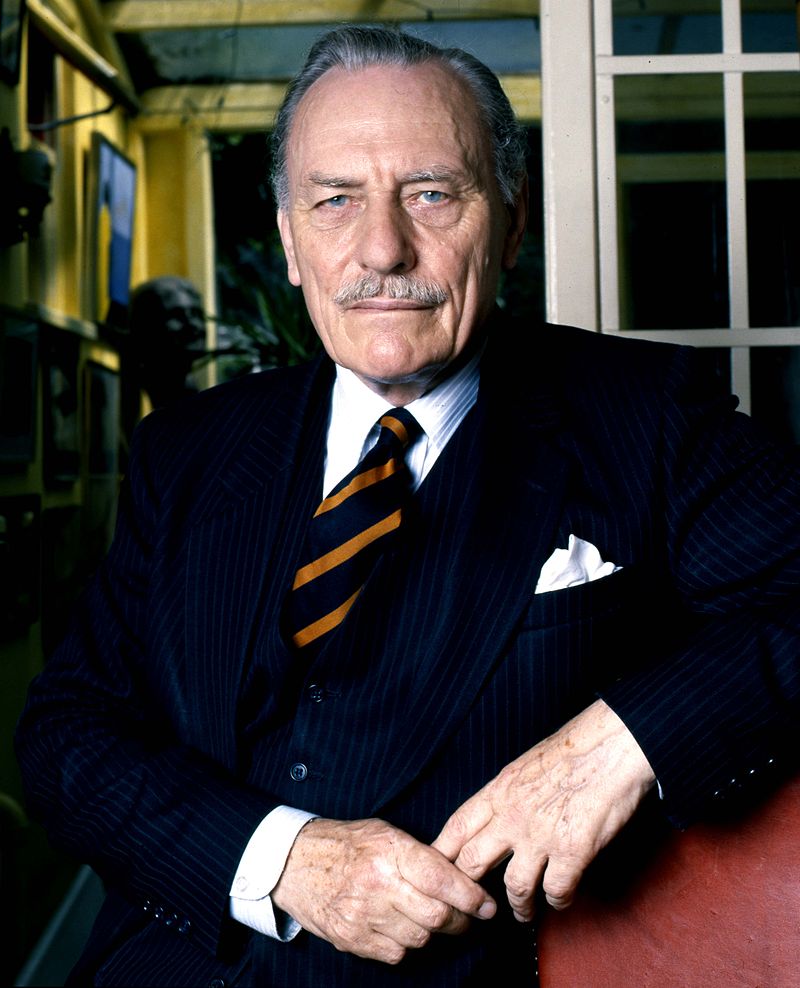
  • Enoch Powell – 1950 Maiden Speech in the House of Commons

    By Allan warren - Own work, CC BY-SA 3.0, https://commons.wikimedia.org/w/index.php?curid=13721986
    By Allan warren – Own work, CC BY-SA 3.0, https://commons.wikimedia.org/w/index.php?curid=13721986

    Below is the text of the maiden speech made by Enoch Powell in the House of Commons on 16 March 1950.

    There is no need for me to pretend those feelings of awe and hesitation which assail any hon. Member who rises to address this House for the first time, but I trust I shall receive the indulgence which is usually accorded to one undergoing that ordeal. I wish to address myself to the same problem as the hon. Member for Coventry, East (Mr. Crossman), but to address remarks to it expressed rather in the form of manpower than, as he did, in that of finance.

    To anyone who reads the White Paper on Defence, the one outstanding feature is the staggering burden in terms of manpower which this country is called upon to shoulder. How great that burden is may be seen by a simple comparison with pre-war commitments. Our Defence Forces are today approximately double the size they were in 1938, but it is an under-estimate to say that our burden has only doubled, for the difference between our pre-war manpower in defence and our present manpower is filled by the National Service man, or conscript. The expenditure of manpower in the form of conscript service is the least efficient and the most dislocating to the national economy of any use of manpower. Therefore, it is fair to say that in so far as we have been obliged to double our burdens by taking upon ourselves the burden of conscription, that burden has more than doubled and any hon. Member in any part of the House must seriously address himself to the question whether that burden can be borne in its present weight and otherwise in what way it can be diminished.

    In examining that, I wish to address myself particularly to the Army. There is good reason for doing so. The Minister of Defence concentrated attention on the Army requirement in manpower when dealing with this aspect of the question, and in any case two-thirds of our conscripted manpower are called for by the Army, so that if we focus our minds upon those causes which have doubled our commitments in respect of the Army, we may find some indication of the direction in which relief is to be sought.

    Upon a rough comparison, we may say that we had serving with the Colours in the Army in 1938 200,000 men—actually the figure was slightly lower. The figure at which the Government aim by April, 1951—which is a figure, one gathers from the White Paper, they do not expect will thereafter diminish, or at any rate will not rapidly diminish—is approximately 350,000. We have a contrast between a pre-war Army of 200,000 and a post-war 1951 Army of 350,000. It is not, however, correct to assume that the commitments which our Army is meeting have increased in that ratio, because the 150,000 or 160,000 conscripts serving in the Army are not doing the work of 160,000 Regulars.

    Approximately one-third of the service of a National Service man is not of practical utility because he is undergoing his initial training. There is the question of transport to his overseas station and transport back, and so forth. Besides that, we have an extra demand upon our Regular Forces for the training of the National Service man. I think it more than fair to say that the 150,000 or 160,000 conscripts in the Army are fulfilling the demand of approximately 100,000 Regulars, so that in broad terms the change which has taken place is an increase in our commitments of the order of some 200,000 to 300,000.

    Before analysing the reasons for that increase, may I point out that it is upon the commitment for troops with the Colours that we must fasten our attention. The Minister of Defence was right in saying that there are two grounds on which the case for a conscript force rests—the meeting of current commitments and the formation of a Reserve. But no one will assert that if our current commitments could be met with Regular troops, we could not find more effective methods, more successful and economical methods, than the present system of National Service for forming the Reserve forces which we need.

    We therefore have to ask what are these additional commitments which have enforced upon us the requirement of an Army of the equivalent of 300,000 as against 200,000 before the war. If we examine the distribution of our Army now and in 1938, we shall perhaps be surprised that the number of troops abroad, outside Europe, is no larger today—in fact it is rather smaller—than it was in 1938; but we should be very wrong to jump to the conclusion that therefore there had been no increase in our extra-European commitment for one simple reason. My right hon. Friend the Member for Woodford (Mr. Churchill) pointed out that in those 90,000 British troops who were outside Europe in 1938 were included the 55,000 British component of the Indian Army. Those 55,000 men were not merely, not even mainly, fulfilling an Indian commitment. They were a strategic reserve for the whole of the Middle and Far East and also, if need were—and on two occasions this was realised in fact—for Europe itself.

    Therefore, if we now find ourselves obliged to station outside Europe as many men as before the war, that means that we have an increased commitment of the order of 50,000 men for the Middle and Far East, and have at the same time lost the mass of manoeuvre, the strategic reserve of our British and Indian component of the lost Indian Army. So we find in these facts the first great change which has come over our position. It is a change which follows from the loss of the Indian Army and the intensification of the threat to the Middle and Far East.

    The remainder is attributable to the greater threat in Europe, which may be measured in numerical terms, perhaps, by comparing the small forces of occupation present in Germany five years after the First World War with the 70,000 or 80,000 stationed in Germany today. So we find that these two great changes, the loss of the Indian Army coupled with the increased threat to the Middle and Far East, and on the other hand the increased threat in Europe, are the reasons which entail upon us far more than anything else this doubling of our manpower commitment for defence.

    Is there any escape? As the hon. Member for Coventry, East, asked in other terms, must we continue to stagger under this burden until it weighs us down and breaks us, or is there some escape? I suggest that there are two directions in which we could look. The first has already been suggested in my analysis of the causes of our difficulties. We have lost the greatest non-European army which the world has ever seen, an Army which made possible, as did no other institution in the world, the active and affectionate co-operation of European and non-European. I do not intend to go into the reasons for or justification of that event, but it is lost.

    If we are an Empire defending the Empire, we must draw far more than we do on the vast reserves of Colonial manpower which exist within the Empire. The virtues which enabled British officers and British administrators to create the Indian Army are not dead. The virtues which made the Indian Army so great an instrument, although some of them are perhaps peculiar to the martial races of India, are paralleled in other parts of the world. Not only is it not impossible, it is imperative that we should create from the other parts of His Majesty’s Dominions a replacement for that which we have lost.

    Thinking in these terms, one is shocked to see from the Army Estimates that in the last 12 months there has been a decrease of 15,000 in the Colonial manpower serving with the Colours outside Europe, and an increase in the British manpower. Surely we are moving in the wrong direction. It is not to the point to say that this is also a question of finance. After all, Nepal does not pay for the Gurkhas but we are very fortunate indeed to be able to supplement our British manpower with the assistance of Nepalese manpower. Exactly the same argument applies to the manpower which can be afforded by our Malayan or our great African territories.

    That is the first direction in which we ought to look—the replacement of the Indian Army. The demand that we shall do so rests ultimately upon the conception that what we are defending, His Majesty’s Dominions as a whole throughout the world, are in reality a whole, and that the manpower of those Dominions has a right and a duty to come to their defence. I do not think that we are applying that principle to the maintenance of the European forces which defend His Majesty’s Dominions. It is far from my mind to criticise or appear to criticise the Governments of the Dominions, but it is the fact that the populations of Australia, New Zealand and Canada together amount to between one-third and one-half of the population of the United Kingdom, whereas the proportion of their manpower which is engaged in the tasks of defence is less than one-eighth of our manpower.

    If what we are defending is indeed a unity—and the Tory Party at all events asserts that it is a unity—the duty of this defence is equally incumbent upon what we call the Dominions and upon the United Kingdom. We require, instead of mere consultation, mere machinery of co-operation, usually left somewhat vague, a real recognition of a truly joint responsibility amongst all His Majesty’s Governments for the defence of His Majesty’s Dominions. I am well aware that such a demand raises far reaching political implications. I am not afraid of those implications, indeed I desire them, for I am certain that unless we summon to the defence of this worldwide Empire all its resources, be they European or non-European, we shall fall under the load which we are attempting to bear.

  • Enoch Powell – 1977 Contribution to the Scotland Bill

    Enoch Powell, referring to the comments made by Tam Dalyell, coined the phrase “The West Lothian Question”. The comments were made on 14th November 1977.

    Mr. J. Enoch Powell (Down, South)

    I was deeply moved, in the speech of the right hon. Member for Cambridgeshire (Mr. Pym), to hear him enunciate the principle that should apply to this Bill – namely, that a constitutional change of this importance should not be passed through a deeply divided House of Commons and that, if these changes are to be made, they should be made with as near full-hearted consent – the phrase was not originally mine – as can be achieved. I take it as a sign of grace in the right hon. Gentleman, who was the Chief Whip in 1972, when an even greater constitutional change than is proposed in this Bill was carried through by a majority of only eight, that he now speaks for so many in saying that that is not the atmosphere and not the way in which such changes should be made.

    There is inevitably a certain repetitiveness in this debate after those which took place a year ago. We recall that the Bill of last year, containing a Scottish Bill Mark I, received a substantial majority on Second Reading, but that three months later it foundered on what was in form a procedural motion but was well understood by the House to be a verdict on the Bill itself.

    What was the reason for that apparently striking change between a majority for the principle and then, after a number of sittings in Committee, the dismissal of the same principle, the dismissal of the Bill itself? It was, I believe – I think that this will be supported by a number of hon. Members who lived through those days of debate – because the House had come to see that there were deep, unresolved, and perhaps unresolvable, questions which the Government had not answered and had shown no indication of being able to answer. That is where we are again this afternoon.

    This afternoon the Secretary of State for Scotland showed himself unable to explain what would be the function of Scottish Members in this House. But behind there looms the much larger question not of the function of Scottish Members in this House in regard to Scottish affairs, but of the whole functioning of this House, when 71 of its Members come from a part of the United Kingdom where the responsibility for a great range of legislation, and consequently of policy, is borne by elected representatives elsewhere.

    This is the question with which, by an iteration for which he should be praised rather than blamed, the hon. Member for West Lothian (Mr. Dalyell) has identified himself. It is not the fault of the hon. Gentleman that the Government cannot answer the question. Nor does it answer his question to say that if he goes on asking it he will not be allowed to vote. Nor does it solve the question, or resolve the dilemma, to tell the House that the measure is to be whipped through on a three-line Whip, or to whisper outside the Chamber about votes on matters of confidence.

    The fact that the question has never been answered is the evidence that we are in this legislation attempting to do something which runs contrary to a principle established by common sense, by experience and by endless debate over decades, namely, that it is not possible within a unitary parliamentary State to devolve widespread legislative authority to an elective Assembly in one part of that State unless the State itself is to be resolved into a federation. The question as to the position of Scottish Members after such a change as this Bill proposes, the question whether they are all to vote or none is to vote, or half of them are to vote, is not a conundrum or a trick question. It is a theorem which illustrates an underlying principle which time and again we are seeking ways to affront. I repeat that experience – painful experience, experience attended with tragic results – has shown that there is no means of circumventing the logic of the question which the hon. Member for West Lothian has so insistently posed.

    I expect that the right hon. Gentleman the Lord President of the Council, if he does me the honour to notice my remarks when he replies to the debate –

    Mr. Millan

    My hon. Friend the Minister of State, Privy Council Office, will be replying.

    Mr. Powell

    Well, if I am not to have that honour, then there will be others who will deploy the same argument. At all events, the Lord President has frequently thrown back the precedent, as he would fain claim it to be, of the government of Northern Ireland between 1922 and 1972. He understands, of course, perfectly well what is the answer to his question, but it is well that it should be understood generally and that there should be no suggestion that there is any way out, or any resolution, offered by the experience of Northern Ireland.

    There is in the first place, as has often been observed, the entire difference of scale. It is one thing for 71 Members, or half that number – especially in Parliaments where majorities may be narrow – to hold the balance on great issues of policy. It is quite a different thing, during decades in which such narrow majorities have been unusual, for a very small number of Members to have been tolerated in this House and for the adherence of the majority of them to one of the great parties to have been overlooked, not without criticism, by those who belonged to other political parties.

    But I will not rest upon the matter of scale, though in itself the de minimis rule applies – Northern Ireland has been de minimis in this matter over the last 50 or 60 years. But that does not go to the heart of it. Does anyone who knows anything about the story of the 1920s really imagine that Home Rule was forced upon the people of Northern Ireland, as forced it was, in order to strengthen the United Kingdom; that it was done in order to tighten the ties between that Province and Great Britain? On the contrary, it was done in order to achieve by two steps, since one step proved for the time being to be impracticable, what people already then knew was the true meaning of Home Rule – the separation of the island of Ireland from the United Kingdom. It was only the fact that the motivation of the majority in the Province was not nationalist, that their overwhelming desire was so to use the institutions they had been given that the union would not be disturbed or threatened, which during all that period prevented the inherent consequences of devolved legislation in a unitary State, even upon that tiny scale, from becoming evident.

    But, of course, it is something quite different which is proposed in the Bill, and the Government themselves recognise that it is something different. The Government recognise it in the Bill itself by the crass contradiction between Clause 1 of the Bill – with its bland assertion, which flies in the face of experience and of common sense – and Clause 81, which appeals to the popular will as expressed by referendum, not in the United Kingdom but in Scotland. Why, Mr. Speaker? If this is a constitutional reform, a reform which, as the Government assert, will leave the United Kingdom intact, but undoubtedly a constitutional reform which will put one part of the United Kingdom in an entirely new and – dare I say? – privileged position, then, if this is a United Kingdom Bill, if it is a measure which recognises and sustains the union, to whom, if not to this House, to whom beyond this House, ought that issue to be submitted? Not to the people of one part of the United Kingdom but to the people of the United Kingdom as a whole.

    There is only one set of circumstances, there is only one context, in which it is right and logical to go to a part of the people of the United Kingdom and say “Do you agree with this or not?” Those are the circumstances in which such a question was put in 1973 to the people of Northern Ireland, namely, when the question is: “Do you want in or out?”

    The reason why this referendum is to be limited to the people of Scotland is that the Government recognise – it is an implicit admission – that what is at stake in this Bill is the separation of Scotland from the rest of the United Kingdom, on which, of course, it should be the people of Scotland, and ultimately the people of Scotland only, who should have a voice.

    This is a Bill by which the whole Kingdom is affected, by which every hon. Member of this House is affected, by which every constituent of every hon. Member of this House is affected. There is a list set out in Part I of Schedule 10 of the subjects on which the Scottish Assembly will be empowered to legislate. Hon. Members might do worse than spend part of the time between now and 11 pm reading Part I of Schedule 10 of the Bill. As they do so, hon. Members representing constituencies in England should say to themselves “On all these questions it is even chances that the decisions in the future as to the law which is to apply to my constituents will be taken by the deciding vote of Scottish Members of the House of Commons, Members who in that context are irresponsible; that is, who have no corresponding responsibility upon that subject to their own constituents.”

    On housing, planning, health and all the rest, the law for England is to be made by an assembly in which often enough the decision will be in the hands of Members representing Scottish constituencies, by the majority within the 71. What would the Government not have given in the last three years for the difference between the minority and the majority among 71 Members of the House? Occasionally they have been eased round a difficult corner by a very much lesser margin than would be available from 71 Members.

    Mr. Raison

    Would not the right hon. Gentleman also stress that it is not only the law of England that will be so affected but the law of Wales and the law of Northern Ireland, and that Members representing constituencies in Wales and Northern Ireland should also bear these facts in mind?

    Mr. Powell

    That is certainly true. I did not mention the Welsh in this context, because we are to come to them tomorrow, and I confess that I thought I might be engaging in de minimis if I associated little Northern Ireland with England in the injustice which we shall jointly suffer, and which our constituents will jointly suffer under a constitution of this type.

    The Lord President of the Council and Leader of the House of Commons (Mr. Michael Foot)

    I want to get quite clear from the right hon. Gentleman how he seeks to remedy the injustice. I do not want to misunderstand his amendment in any way. The amendment is “That this House declines to give the Scotland Bill a second reading so long as Northern Ireland, an integral part of the United Kingdom, remains deprived of any devolved or local administration above the level of district councils.” If we were at some future date to be able to get, say, a devolution for Northern Ireland on the same scale as is proposed in this Bill for Scotland, would that overcome the right hon. Gentleman’s other constitutional objections to the Bill?

    Mr. Powell

    I cannot really believe that the right hon. Gentleman has read our amendment so myopically, or that he is unaware that whereas in Scotland they have regional administration and district administration, we in Northern Ireland have democratic control over only the most minimal subjects. In our amendment we are concerned with what those in Scotland already possess, with local administration of the general policies and laws which are decided for the kingdom as a whole. Let us by all means devolve, and devolve to democratic assemblies, the administration of the laws which are made in this House and of the policies which are framed in this House. That we can do without incurring the curse which this Bill incurs. But if we go beyond that, there arises again the West Lothian question, to tell us “In that event you must resolve the Union into a federation unless you are to end up in inextricable contradictions and injustices in the House of Commons, which is the essence of our Parliamentary Union.”

    Mr. Foot

    Will the right hon. Gentleman apply his mind to this question? Did not the West Lothian question – I perfectly agree with him that he was entitled to call it that – apply during that period earlier when we did have the devolved constitutional situation in Northern Ireland? Is he advocating the restoration of a position in which the West Lothian question would still be applied to Northern Ireland?

    Mr. Powell

    In answer to that, perhaps I might read words from the policy statement of my own party, which it arrived at three years ago in what was called the Portrush Declaration: “we do not believe that devolution itself would be appropriate. A British federal system would serve the dual purpose of maintaining the Union and ensuring the democratic rights of the entire Ulster people.” From the beginning to the end of this question, from the days of Isaac Butt in the 1860s right the way through to the present, the theorem has been understood, by those who had the patience to understand it and were not blinded by what they thought were contemporary political necessities, that one cannot in a unitary State devolve legislative power to the representatives of a part of that State unless one resolves the State itself into a federation.

    Of course, if there be found some way, after all these years, some way which has escaped 100 years of British politicians, or if there is to be a British federation, a federation of the United Kingdom, we in Northern Ireland shall claim – I use words which we reiterate – the same rights as are enjoyed by any other part of the kingdom. But our supreme interest is in the maintenance of the unity of the United Kingdom. We do not claim to be a nation; we claim to be a province of this nation. So we of all who come to this House have a vested interest, perhaps greater than any, in the preservation of the parliamentary Union. It is because we believe that the parliamentary Union would inevitably be eroded and then dissolved if such a measure as this were to be forced into operation that my hon. Friends and I, as we did last Session, will vote against this measure at every stage until it is destroyed.

    Mr. Norman Buchan (Renfrewshire, West)

    I have no intention of following the argument of the right hon. Member for Down, South (Mr. Powell) relating to Ireland. However, I accept that the West Lothian question, if that is what it is to be called, is a central weakness of the proposals before us. I am not at all sure that it is a central weakness which is soluble merely by the application of logic. I do not think that it can be answered only in these terms. It can be seen and answered only within the context of not only these proposals but the reasons for these proposals and, above all, the background of these proposals.

    The truth is that if we were to examine any constitution we would find it full of flaws. I shudder to think of what the right hon. Member for Down, South would make of the British constitution if we were to try to write it out in full legislative form and analyse it clause by clause. I can think of no constitution that would be more shot through with flaws – as the right hon. Gentleman claims this is, on one particular and obvious point. Would any of us have devised a British constitution in which we would have failed to take action on the sovereignty of the elected Parliament and then said “By the way, we shall have a chamber at the end of the corridor which can delay and overturn these measures”? What nonsense. What denunciations we would have received from the right hon. Member for Down, South.

    Therefore, we have to look at this in the perspective of the weakness of all constitutions. We have to say, given a constitution which will have flaws, can that constitution operate because the will of the people is such that it should operate? One thing that we have to devise here is precisely the kind of solution which will command the support of the general will behind it. That is the only reason that this place works, and it is the only reason that the proposed Assembly and the new structures, both of this place and in the Assembly, will work – if there is the general will to make it work.

    It is no use saying that Northern Ireland was exceptional because of the de minimis argument. I accept this, but what this is saying is that there was a flaw in the situation which was tolerated and which worked. It worked for half a century, however badly, because it was a de minimis situation. That, at least, was deserting logic. That was at least dealing with the practicalities of the situation – that there was a general acceptance that it should work for a period until a flaw developed. If I were sure that the Assembly proposals would work comfortably for half a century, during that process I think that we could find the necessary change and, above all, the modus vivendi which would allow it to operate.

    There was a deep political reason – not the logical reason – for its failing in Northern Ireland. It was a political reason. It was the presence of partition. It was that which caused the breakdown in Northern Ireland, and not the illogicality of the constitution.

    Mr. Powell

    The hon. Member is entirely right in saying that, apart from the de minimis argument, it worked only because of the determination of those concerned, under constant threat as they were, not to use the powers which they had in any fashion which would differentiate them from the rest of the United Kingdom. The hon. Member has the point.

  • Enoch Powell – 1968 Rivers of Blood Speech

    By Allan warren - Own work, CC BY-SA 3.0, https://commons.wikimedia.org/w/index.php?curid=13721986
    By Allan warren – Own work, CC BY-SA 3.0, https://commons.wikimedia.org/w/index.php?curid=13721986

    Below is the text of the speech made by Enoch Powell on 20 April 1968 in Birmingham.

    The supreme function of statesmanship is to provide against preventable evils. In seeking to do so, it encounters obstacles which are deeply rooted in human nature. One is that by the very order of things such evils are not demonstrable until they have occurred: at each stage in their onset there is room for doubt and for dispute whether they be real or imaginary. By the same token, they attract little attention in comparison with current troubles, which are both indisputable and pressing: whence the besetting temptation of all politics to concern itself with the immediate present at the expense of the future. Above all, people are disposed to mistake predicting troubles for causing troubles and even for desiring troubles: “If only,” they love to think, “if only people wouldn’t talk about it, it probably wouldn’t happen.”

    Perhaps this habit goes back to the primitive belief that the word and the thing, the name and the object, are identical. At all events, the discussion of future grave but, with effort now, avoidable evils is the most unpopular and at the same time the most necessary occupation for the politician.

    Those who knowingly shirk it deserve, and not infrequently receive, the curses of those who come after. A week or two ago I fell into conversation with a constituent, a middle-aged, quite ordinary working man employed in one of our nationalised industries. After a sentence or two about the weather, he suddenly said: “If I had the money to go, I wouldn’t stay in this country.” I made some deprecatory reply to the effect that even this government wouldn’t last for ever; but he took no notice, and continued: “I have three children, all of them been through grammar school and two of them married now, with family. I shan’t be satisfied till I have seen them all settled overseas. In this country in 15 or 20 years’ time the black man will have the whip hand over the white man.”

    I can already hear the chorus of execration. How dare I say such a horrible thing? How dare I stir up trouble and inflame feelings by repeating such a conversation? The answer is that I do not have the right not to do so. Here is a decent, ordinary fellow Englishman, who in broad daylight in my own town says to me, his Member of Parliament, that his country will not be worth living in for his children. I simply do not have the right to shrug my shoulders and think about something else. What he is saying, thousands and hundreds of thousands are saying and thinking – not throughout Great Britain, perhaps, but in the areas that are already undergoing the total transformation to which there is no parallel in a thousand years of English history. In 15 or 20 years, on present trends, there will be in this country three and a half million Commonwealth immigrants and their descendants. That is not my figure. That is the official figure given to parliament by the spokesman of the Registrar General’s Office. There is no comparable official figure for the year 2000, but it must be in the region of five to seven million, approximately one-tenth of the whole population, and approaching that of Greater London. Of course, it will not be evenly distributed from Margate to Aberystwyth and from Penzance to Aberdeen. Whole areas, towns and parts of towns across England will be occupied by sections of the immigrant and immigrant-descended population.

    As time goes on, the proportion of this total who are immigrant descendants, those born in England, who arrived here by exactly the same route as the rest of us, will rapidly increase. Already by 1985 the native-born would constitute the majority. It is this fact which creates the extreme urgency of action now, of just that kind of action which is hardest for politicians to take, action where the difficulties lie in the present but the evils to be prevented or minimised lie several parliaments ahead.

    The natural and rational first question with a nation confronted by such a prospect is to ask: “How can its dimensions he reduced?” Granted it be not wholly preventable, can it be limited, bearing in mind that numbers are of the essence: the significance and consequences of an alien element introduced into a country or population are profoundly different according to whether that element is 1 per cent or 10 per cent. The answers to the simple and rational question are equally simple and rational: by stopping, or virtually stopping, further inflow, and by promoting the maximum outflow. Both answers are part of the official policy of the Conservative Party.

    It almost passes belief that at this moment 20 or 30 additional immigrant children are arriving from overseas in Wolverhampton alone every week – and that means 15 or 20 additional families a decade or two hence. Those whom the gods wish to destroy, they first make mad. We must be mad, literally mad, as a nation to be permitting the annual inflow of some 50,000 dependants, who are for the most part the material of the future growth of the immigrant-descended population. It is like watching a nation busily engaged in heaping up its own funeral pyre. So insane are we that we actually permit unmarried persons to immigrate for the purpose of founding a family with spouses and fiances whom they have never seen. Let no one suppose that the flow of dependants will automatically tail off. On the contrary, even at the present admission rate of only 5,000 a year by voucher, there is sufficient for a further 25,000 dependants per annum ad infinitum, without taking into account the huge reservoir of existing relations in this country ñ and I am making no allowance at all for fraudulent entry. In these circumstances nothing will suffice but that the total inflow for settlement should be reduced at once to negligible proportions, and that the necessary legislative and administrative measures be taken without delay.

    I turn to re-emigration. If all immigration ended tomorrow, the rate of growth of the immigrant and immigrant-descended population would be substantially reduced, but the prospective size of this element in the population would still leave the basic character of the national danger unaffected. This can only be tackled while a considerable proportion of the total still comprises persons who entered this country during the last ten years or so. Hence the urgency of implementing now the second element of the Conservative Party’s policy: the encouragement of re-emigration. Nobody can make an estimate of the numbers which, with generous assistance, would choose either to return to their countries of origin or to go to other countries anxious to receive the manpower and the skills they represent. Nobody knows, because no such policy has yet been attempted. I can only say that, even at present, immigrants in my own constituency from time to time come to me, asking if I can find them assistance to return home. If such a policy were adopted and pursued with the determination which the gravity of the alternative justifies, the resultant outflow could appreciably alter the prospects.

    The third element of the Conservative Party’s policy is that all who are in this country as citizens should be equal before the law and that there shall be no discrimination or difference made between them by public authority. As Mr Heath has put it we will have no “first-class citizens” and “second-class citizens “. This does not mean that the immigrant and his descendent should be elevated into a privileged or special class or that the citizen should be denied his right to discriminate in the management of his own affairs between one fellow-citizen and another or that he should be subjected to imposition as to his reasons and motive for behaving in one lawful manner rather than another.

    There could be no grosser misconception of the realities than is entertained by those who vociferously demand legislation as they call it “against discrimination”, whether they be leader writers of the same kidney and sometimes on the same news papers which year after year in the 1930s tried to blind this country to the rising peril which confronted it, or archbishops who live in palaces, faring delicately with the bedclothes pulled right up over their heads. They have got it exactly and diametrically wrong. The discrimination and the deprivation, the sense of alarm and of resentment, lies not with the immigrant population but with those among whom they have come and are still coming. This is why to enact legislation of the kind before parliament at this moment is to risk throwing a match on to gunpowder. The kindest thing that can be said about those who propose and support it is that they know not what they do.

    Nothing is more misleading than comparison between the Commonwealth immigrant in Britain and the American negro. The negro population of the United States, which was already in existence before the United States became a nation, started literally as slaves and were later given the franchise and other rights of citizenship, to the exercise of which they have only gradually and still incompletely come. The Commonwealth immigrant came to Britain as a full citizen, to a country which knew no discrimination between one citizen and another, and he entered instantly into the possession of the rights of every citizen, from the vote to free treatment under the National Health Service. Whatever drawbacks attended the immigrants arose not from the law or from public policy or from administration, but from those personal circumstances and accidents which cause, and always will cause, the fortunes and experience of one man to be different from another’s.

    But while, to the immigrant, entry to this country was admission to privileges and opportunities eagerly sought, the impact upon the existing population was very different. For reasons which they could not comprehend, and in pursuance of a decision by default, on which they were never consulted, they found themselves made strangers in their own country.

    They found their wives unable to obtain hospital beds in childbirth, their children unable to obtain school places, their homes and neighbourhoods changed beyond recognition, their plans and prospects for the future defeated; at work they found that employers hesitated to apply to the immigrant worker the standards of discipline and competence required of the native-born worker; they began to hear, as time went by, more and more voices which told them that they were now the unwanted. They now learn that a one way privilege is to be established by act of parliament; a law which cannot, and is not intended to, operate to protect them or redress their grievances is to be enacted to give the stranger, the disgruntled and the agent-provocateur the power to pillory them for their private actions.

    In the hundreds upon hundreds of letters I received when I last spoke on this subject two or three months ago, there was one striking feature which was largely new and which I find ominous. All Members of Parliament are used to the typical anonymous correspondent; but what surprised and alarmed me was the high proportion of ordinary, decent, sensible people, writing a rational and often well-educated letter, who believed that they had to omit their address because it was dangerous to have committed themselves to paper to a Member of Parliament agreeing with the views I had expressed, and that they would risk penalties or reprisals if they were known to have done so. The sense of being a persecuted minority which is growing among ordinary English people in the areas of the country which are affected is something that those without direct experience can hardly imagine. I am going to allow just one of those hundreds of people to speak for me:

    “Eight years ago in a respectable street in Wolverhampton a house was sold to a negro. Now only one white (a woman old-age pensioner) lives there. This is her story. She lost her husband and both her sons in the war. So she turned her seven-roomed house, her only asset, into a boarding house. She worked hard and did well, paid off her mortgage and began to put something by for her old age. Then the immigrants moved in. With growing fear, she saw one house after another taken over. The quiet street became a place of noise and confusion Regretfully, her white tenants moved out.

    “The day after the last one left, she was awakened at 7am by two negroes who wanted to use her phone to contact their employer. When she refused, as she would have refused any stranger at such an hour, she was abused and feared she would have been attacked but for the chain on her door. Immigrant families have tried to rent rooms in her house, but she always refused. Her little store of money went, and after paying rates, she has less than 2 per week. She went to apply for a rate reduction and was seen by a young girl,.who on hearing she had a seven-roomed house, suggested she should let part of it. When she said the only people she could get were negroes, the girl said, ‘Racial prejudice won’t get you anywhere in this country.’ So she went home.

    “The telephone is her lifeline. Her family pay the bill, and help her out as best they can. Immigrants have offered to buy her house ñ at a price which the prospective landlord would be able to recover from his tenants in weeks, or at most a few months. She is becoming afraid to go out. Windows are broken. She finds excreta pushed through her letter box. When she goes to the shops, she is followed by children, charming, wide-grinning piccaninnies. They cannot speak English, but one word they know. ‘Racialist’, they chant. When the new Race Relations Bill is passed, this woman is convinced she will go to prison. And is she so wrong? I begin to wonder”

    The other dangerous delusion from which those who are wilfully or otherwise blind to realities suffer, is summed up in the word “integration”. To be integrated into a population means to become for all practical purposes indistinguishable from its other members. Now, at all times, where there are marked physical differences, especially of colour, integration is difficult though, over a period, not impossible. There are among the Commonwealth immigrants who have come to live here in the last 15 years many thousands whose wish and purpose is to be integrated and whose every thought and endeavour is bent in that direction. But to imagine that such a thing enters the heads of a great and growing majority of immigrants and their descendants is a ludicrous misconception, and a dangerous one.

    We are on the verge here of a change. Hitherto it has been force of circumstance and of background which has rendered the very idea of integration inaccessible to the greater part of the immigrant population – that they never conceived or intended such a thing, and that their numbers and physical concentration meant the pressures towards integration which normally bear upon any small minority did not operate. Now we are seeing the growth of positive forces acting against integration, of vested interests in the preservation and sharpening of racial and religious differences, with a view to the exercise of actual domination, first over fellow-immigrants and then over the rest of the population. The cloud no bigger than a man’s hand, that can so rapidly overcast the sky, has been visible recently in Wolverhampton and has shown signs of spreading quickly. The words I am about to use, verbatim as they appeared in the local press on 17 February, are not mine, but those of a Labour Member of Parliament who is a minister in the present government “The Sikh communities’ campaign to maintain customs inappropriate in Britain is much to be regretted. Working in Britain, particularly in the public services, they should be prepared to accept the terms and conditions of their employment. To claim special communal rights (or should they say rites?) leads to a dangerous fragmentation within society. This communalism is a canker; whether practised by one colour or another it is to be strongly condemned.” All credit to John Stonehouse for having had the insight to perceive that, and the courage to say it.

    For these dangerous and divisive elements the legislation proposed in the Race Relations Bill is the very pabulum they need to flourish. Here is the means of showing that the immigrator communities can organise to consolidate their members, to agitate and campaign against their fellow citizens, and to overawe and dominate the rest with the legal weapons which the ignorant and the ill-informed have provided. As I look ahead, I am filled with foreboding; like the Roman, I seem to see “the River Tiber foaming with much blood”. That tragic and intractable phenomenon which we watch with horror on the other side of the Atlantic but which there is interwoven with the history and existence of the States itself, is coming upon us here by our own volition and our own neglect. Indeed, it has all but come. In numerical terms, it will be of American proportions long before the end of the century. Only resolute and urgent action will avert it even now. Whether there will be the public will to demand and obtain that action, I do not know. All I know is that to see, and not to speak, would be the great betrayal.