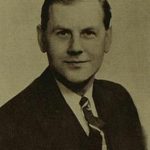
Below is the text of the speech made by Emlyn Hooson, the then Liberal MP for Montgomery, in the House of Commons on 1 November 1978.
Although he is not in his place at present, I wish to add my congratulations to the right hon. Member for Anglesey (Mr. Hughes), who is an old friend of mine both in and out of the House, for the way in which he moved the Loyal Address. It bore the combination of that humour and charm which is characteristic of the man, allied to his great parliamentary experience.
I wish now to deal with the content of the Gracious Speech. The Speech reminds me of nothing more than a large sedative. The first part of the Prime Minister’s remarks recommended the Speech in his best bedside manner. However, the first part contrasted a great deal with the second part. I thought that the sedative he offered was appropriate for a large, well-fed, healthy patient who needed reassurance. One would have thought that it was intended for a highly prosperous nation with nothing more than a few ripples which needed to be smoothed out here and there, and not a nation, as the Prime Minister described it, which was at the crossroads in its history and which could go to boom or bust depending on which direction its affairs took.
I thought that the second part of the Prime Minister’s speech was in marked contrast. I was most impressed by the way in which he put forward his views on the dangers of inflation. I entirely agree with him. It is foolish for people to pretend that there is one simple remedy in the fight against inflation. If we had a total monetary policy, presumably that would bring down inflation to nil but would bring the country to its knees at the same time. There must be a balance in all these factors.
The issue on which I should like enlightenment from the Government relates to the question whether the Labour Party is backing the Prime Minister. It is all very well for the Prime Minister to say what he did today, and it was extremely reassuring to hear him, but I must emphasise that the Government have offered no reassurance to the British people on how to control inflation. The Prime Minister has expressed his views, but we must remember that his party is totally opposed to those views. The Labour Party conference did not support the Prime Minister on those views. There is no statutory backing for the 5 per cent. policy. The Prime Minister would agree that at best it is a rough and ready policy.
The right hon. Gentleman has exploited it most skilfully, and he has done so to a large extent against great pressure from his own party. But it does not have statutory backing, and already there are major settlements which breach the 5 per cent. limit. I refer to the hospital supervisors as one example. That settlement refers to the public sector, not to the private sector, and the settlement in that case appears to me to be 15 per cent.
Is the Cabinet itself backing the Prime Minister? Clearly, the Prime Minister’s determination, adumbrated in his remarks today, has not been matched so far by the determination of either his Cabinet or his party. Obviously there are great deficiencies in the nature of the policy. Nevertheless, along with the right hon. Member for Sidcup (Mr. Heath), we consider it a better policy, so far as it goes, than the policy which the right hon. Lady the Leader of the Opposition is offering in its place.
It was noticeable today that the right hon. Lady did not once use the term “free collective bargaining”, as though it was a term to be used by her only at the Tory Party conference. Free collective bargaining within recent experience is a recipe for expensive collective unemployment, and nothing more. Everybody can see that. We do not want the economy of the jungle in which the fittest survive, the strongest receive the largest increases, and the weakest go on the dole. Let us make no mistake about it: free collective bargaining is nature red in tooth and claw let loose in the workplace. It is a recipe for disaster.
Many people have learned a good deal from experience. The Conservative Government in 1970—Selsdon man—put forward free collective bargaining as one of the two great recipes that would lead to the prosperity of this country. That policy ended in disaster. In 1974 the right hon. Member for Huyton (Sir H. Wilson), backed by the present Prime Minister, virtually said that we must return to free collective bargaining. That, too, was a disaster.
There is no point in playing political games and pretending that nobody has learned from our experience in these matters. That policy clearly has not worked. Therefore, it was astonishing to hear the Leader of the Opposition again putting that policy forward. However, today she displayed definite signs of trying to resile from it. She appeared to me as though she was standing on a skateboard in a skate park trying to execute a difficult balancing act in an effort to regain the balance which she so obviously lost at the Conservative Party conference.
Yet not only do the right hon. Lady and the Conservative Party want such a policy, but the Labour Party wants it as well. Despite the brave words of the Prime Minister this afternoon, one wonders whether he will be able to carry out his policy. Small businesses will be particularly badly hit by free collective bargaining since they find it hardest to compete in a free-for-all wage climate. Unemployment will rise and monopoly wage interests will see themselves getting richer and richer, while the rest of us will suffer.
In her speech today, the right hon. Lady the Leader of the Opposition said that there was a deep division of principle between her views and those expressed by the Labour Party. I did not gather that from her speech. She said that the Labour Party was now a party of great battalions, as though her own party was not. Of course, they are great battalions. The one generates the other and it is a matter of action and reaction.
The truth is that the right hon. Lady now finds herself in accord with the view on incomes held by the leader of the Transport and General Workers Union. These are the circumstances in which the country now finds itself. The most senior of the American trade union leaders, reacting this morning to President Carter’s programme, said that the American workers would prefer a statutory prices and incomes policy. He thought that the measures put forward in a rough and ready way by President Carter—emulating to a considerable degree the views of the right hon. Member for Sidcup and the actions taken by our own Prime Minister—were not going down well with the American workers.
I also think that a statutory incomes policy which applies to everybody, so that ordinary people do not have to go on supporting the inflationary excesses of the Ford car workers, or British Oxygen workers holding the country to ransom, is fairer in the long run. Such a policy should make provision for genuine productivity deals, instead of many of the sham deals which we have seen to date.
This also applies to profit sharing. Surely the best way for a worker to take a share in prosperity is to participate in profit sharing. There is a good deal to be said in non-capital-intensive companies for having a rough and ready rule that the first 10 per cent. of profits should be distributed to shareholders and that the remaining profits to be distributed should be split fifty-fifty between the work force and the shareholders. If we are to have rough and ready rules, that seems to be a more sensible way of proceeding.
If the Government’s stated commitment to industrial democracy is genuine, it is to be welcomed as at least a step towards the ending of confrontation politics which we have seen in this House and which is expressed in that ghastly phrase “both sides of industry”.
I am sure that we are all aware that many people who listen to our debates think that the differences between parties are often synthetic. People of good sense who have good will towards the country generally agree on the need for certain basic requirements of policies, whether we have a Labour or a Conservative Government. For example, I am sure that the Prime Minister and the right hon. Member for Sidcup more truly represent the views of the vast majority of people in this country than did the Labour Party in its expression of view on incomes policy at its conference or does the right hon. Member for Finchley (Mrs. Thatcher), representing the Tory Party. The large vested interests of the two parties of the great battalions prevent this breaking through as general support throughout the country.
Mr. Robert Kilroy-Silk (Ormskirk)
Given what the hon. and learned Gentleman has said about the views of the Prime Minister and the right hon. Member for Sidcup (Mr. Heath) representing best what the country wants and what he said earlier about the difficulties he envisages the Prime Minister having in getting the 5 per cent. policy accepted in the country, may we take it that the hon. and learned Gentleman and his colleagues will be supporting the Government in that policy?
Mr. Hooson
Not at all. We shall deal with all these matters as they come up. There is no agreement between the Liberal Party and the Government. I said that I applaud the attitude taken by the Prime Minister in the second part of his speech. It remains to be seen whether that attitude is matched by the determination of the Cabinet and his own party to support him or whether he will be pushed off course by his party.
The Gracious Speech is also deficient on the question of Europe. The Government have once again failed to define their position on Europe, except for the blandest of statements about continuing to work within the EEC. We shall challenge the Government and the Conservative Party to make clear their attitudes on the future development of a united Europe. In the opinion of my party, this will be one of the great issues of this Parliament. In many ways, the European elections are more important in the long term than are any elections to this House or to an Assembly.
The Government have said nothing about the European monetary system and it looks as though we shall again be standing on the sidelines as the only member of the Community not to join. It is said that the Prime Minister has been greatly influenced by the Chancellor of West Germany in his attitude to this matter, but again he will find great difficulty in carrying his party with him.
When we look back at our relationship with Europe, we see that the shortsightedness of the two main parties meant that we joined a Community in the design of which we took no part. The Conservative Government withdrew from the Messina Conference after we had been invited to it and we have since suffered the consequences. We joined the Common Market at the time it had come to the end of its first great cycle of prosperity, and this caused many difficulties for this country. No one can doubt that if Britain had been a founder member of the Community we would have enjoyed many more of the advantages of membership and suffered far fewer of the disadvantages.
Yet are we not hell bent on doing the same thing again? Of course there are technical difficulties about creating a common European currency. There are always difficulties in brave and radical measures. The EMS is not a European monetary system; it is a step in the direction of a system. Unless we take part in meaningful negotiations on this matter, we shall be forced, sooner or later, to accept a system which we shall have had no part in shaping. Make no mistake about it: if there is eventually a system, or even if the ECS goes part of the way towards it, we shall be forced to join it—and probably in the same way as we eventually joined the Common Market. We could have been there from the start shaping it, but we went in as the poor relation.
Once again, the Prime Minister is not supported by his own party. He was criticised a great deal when he was on the Continent discussing this matter.
Mr. John Lee (Birmingham, Handsworth)
Is not the hon. and learned Gentleman suffering from amnesia? My recollection is that he was the only anti-Marketeer in his party. All credit to him, but what has happened since then?
Mr. Hooson
That shows how wrong the hon. Gentleman can be. If he had been here longer, he would know that I was always in favour of joining the Common Market on the ground floor, but that I believed that when the right hon. Member for Sidcup took us in it was at a time which was extremely disadvantageous to this country. I said at that time that the Common Market had reached the end of a cycle of prosperity.
A united Europe is not just about economic and monetary self-interest, however important that may be. My colleagues and I look to the Queen’s Speech to see what steps are to be taken to strengthen the European pillar of NATO. We look forward to that pillar playing an increasing role in defence against possible Soviet aggression and, even more, against Soviet influence arising from the steady growth in Russian military power, backed by economic power. Europe will have to learn to be less dependent upon the American pillar which dominates NATO at present, and this can come about only if we have a united states of Europe.
It is interesting that what is missing from the Queen’s Speech is in many ways more important than what is in it. It is obvious that there has been a dredging of the Whitehall Departments to find out what measures are available to which no one can take great exception. Anything really controversial has been hurled out.
There is no mention in the Queen’s Speech of the prison service, which is surely facing a catastrophic breakdown. The report of the prison department published on 27th July this year shows the highest average prison population recorded during this century. The total of 41,570 includes a record 1,358 women. I do not think that it is generally appreciated that more than 15,400 men share single cells and that, of these, more than 5,000 live three to a cell.
Anyone who visits prisons knows that conditions are, in many cases, appalling and insanitary. Some institutions provide only 20 bathing places for 1,000 inmates. In some places, chamber pots have to be slopped out in rotation because if they were not the nineteenth century drains would block up.
But prisoners’ living conditions are the prison officers’ working conditions, and they have had enough. They are threatening industrial action on 5th November. It is astonishing that there is nothing in the Queen’s Speech that deals with this matter. It is said that the Home Secretary would be making a statement this week about the immediacy of the problem, but surely we need more basic reform than can be indicated in a simple statement. There has been a serious riot at Gartree over the alleged misuse of drugs and the prison governors told the Home Secretary:
“If the present trend continues, there will be a serious loss of control which has to be quelled by armed intervention by another service. In such circumstances there is a probability of both staff and prisoners being killed.”
It is interesting to note that the governors referred to that being a probability rather than a possibility, yet the Government have proposed nothing to alleviate the situation.
There is clearly a need not only for a full public inquiry into the problems of the prison service—my hon. Friend the Member for the Isle of Wight (Mr. Ross), who has a number of important prisoners in his constituency, has written to the Home Secretary asking for such an inquiry—but there is an urgent need to reduce the prison population.
The Government’s review of criminal justice policy has pointed out the inconsistency between the publicly avowed policy of using custody only as a last resort for serious offences or dangerous offenders and the practice of the courts.
There are many people in prison who should not be there. One of the great complaints of prison officers is that many of those suffering from psychiatric disabilities are sent to prison. They cause enormous problems. It is only too easy to imagine the problems caused by somebody with a psychiatric disability sharing a cell with two other prisoners who do not.
I shall say a few words about the national scandal of secure accommodation. I begin with the issue of provision for psychiatric offenders. Such offenders should not be in ordinary prisons that cannot cope with them. However, nearly all of them are sent to ordinary prisons.
The Government allocated moneys for secure accommodation with psychiatric facilities. I shall quote some figures that I obtained from Questions asked during the previous Session. In 1976–77 the Trent regional health authority received £510,000 as a special allocation for the provision of secure facilities. Not a penny of that sum was spent for that purpose. Instead, the money was distributed as general revenue.
The South-East Thames health authority received £403,000 for the same purpose. It spent £4,000—a miserable 1 per cent.—and the rest was distributed as general revenue. The South-West Thames health authority received £325,000 and used almost all of it to offset overspending of overall revenue.
That is a national scandal. There has been a clear misappropriation of public funds by public bodies.
Mr. Kilroy-Silk
There was an allocation of £5 million.
Mr. Hooson
I know that the hon. Gentleman has taken a great interest in these matters. It is true that over £5 million has been allocated. It is also true that not one-tenth of it has been spent on the purpose for which it was allocated. That means that, instead of having secure accommodation to which psychiatric offenders may be sent, the courts have no option other than to let these people free to go where they will or to send them to prison. That is one of the deficiencies about which prison officers are rightly complaining.
The Government must announce whether they have abandoned their aim of providing secure accommodation for psychiatric offenders. If they do not, when is the money to be spent for the purpose for which it was provided, as well as a great deal more? I appreciate that this is a relatively small matter for the Prime Minister to concern himself with, but it is of the greatest concern to the country as a whole.
Mr. Kilroy-Silk
I apologise for intervening again in the hon. and learned Gentleman’s speech. However, as he says, this is an important subject and one in which I take a great deal of interest. It is fair to observe that the Government have done their part. The £5 million special allocation was provided by the Government to ensure that we do not have the offenders to whom he refers cluttering our special hospitals, our psychiatric hospitals or our prisons when they should be in the interim secure units that were recommended as long ago as 1974. Responsibility lies with the area health auhorities that have refused to provide what they see as locally unpopular projects in their areas, desperately necessary though they are.
Mr. Hooson
The Government appoint those bodies. I think that the hon. Member for Ormskirk (Mr. Kilroy-Silk) will agree that the £5 million was only a first instalment. In itself it is completely inadequate to deal with the problem. Almost all of it has been spent for other purposes. That is a scandal.
Last year 2,500 people were sent to prison for offences of drunkenness. These are normally social inadequates who pose no threat to society. It is lunatic to put them in prison at a cost of about £90 a week.
Seven years ago, a Home Office working party recommended detoxification centres for habitual drunken offenders. Such centres are provided in many other countries. Seven years later, what is the position? Only two small units have been established. There is one in Leeds with 45 places and one in Manchester with 15 places. However, we have 2,500 people sent to prison for offences of drunkenness, thereby adding enormously to the burden of prison offices and to the problems of the prison population.
Similar criticism may be made of the imprisonment of fine defaulters. No fewer than 16,000 were sent to prison last year. What is solved by sending these people to prison? How is society served by taking that course? Why not force people who do not pay their fines to perform community service? They should be subject to community service orders as an alternative to imprisonment. That would take the pressure off the prison system and off the prison staff. It would mean that something positive was being contributed to society by those who did not pay fines.
The same may be said for maintenance defaulters. Last year no fewer than 2,500 maintenance defaulters went to prison. How is that supposed to help their families or those they are bound to maintain? The alternative of the community service order would appear to be appropriate.
Britain has one of the largest prison populations in Western Europe. It has a crime rate that is no better than that of other European countries. It is time for a radical rethink. The truth is that it is unpopular to spend money on prisons and on the probation service. That is not vote-getting expenditure. Almost all parties are hypocritical about these issues.
When it is close to an election, the Conservative Party raises the issue of law and order. Its spokesmen say that we must spend more on the prison service and on the police. However, very often that is not done when the Conservative Party is in government. In the past decade the only period when prison staff numbers fell was in 1972–73. That was during one of the financial squeezes of the Conservative Government.
There is an enormous problem, and the answer is for the House to determine. We are still lumbered with enormous Victorian prisons. We send to them far greater numbers than they were ever intended to hold. The House has to make up its mind and do something about it. It is one of the top priorities for expenditure. Our expenditure on criminal justice services, including prisons, accounts for a mere 2 per cent. of total public expenditure. If we want an economically effective and humane system, we should be putting our money where our mouths are.
I have referred to what must be one of the most glaring omissions from the Gracious Speech. I am sure that the British people are well aware of what would happen if there were a serious riot in our prisons. The prison governors think that another service—namely, the Army—would have to be called in, and that it is a “probability” that prisoners and prison staff would be killed. Surely it is time that the Government shook themselves up and did something about it. It is one of the worst deficiencies that could be found in a Gracious Speech. It amazes me that this Gracious Speech makes no reference to it.
I hope that the Prime Minister, who has been kind enough to listen to what I have had to say, will consider the matter with a view to the Government making a strong statement of intention very shortly.