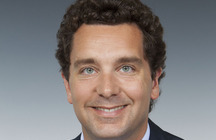
Tag: Edward Timpson

  • Edward Timpson – 2023 Parliamentary Question on the Backlog in the Criminal Justice System

    Edward Timpson – 2023 Parliamentary Question on the Backlog in the Criminal Justice System

    The parliamentary question asked by Edward Timpson, the Conservative MP for Eddisbury, in the House of Commons on 1 February 2023.

    Edward Timpson (Eddisbury) (Con)

    What assessment she has made of the effectiveness of the Crown Prosecution Service in tackling the backlog of cases in the criminal justice system.

    Jerome Mayhew (Broadland) (Con)

    What assessment she has made of the effectiveness of the Crown Prosecution Service in tackling the backlog of cases in the criminal justice system.

    The Solicitor General (Michael Tomlinson)

    First, I would like to pay tribute to my hon. and learned Friend the Member for Eddisbury (Edward Timpson) for his work as Solicitor General. From that work, he will know the significant amount of funding in the criminal justice system to help improve waiting times for victims. Both the Attorney General and I have seen that at first hand in our visits to regional Crown Prosecution Service areas.

    Edward Timpson

    I thank the Solicitor General for his answer. Further to the point raised by the hon. Member for Kingston upon Hull East (Karl Turner), in the first three quarters of 2022 there have been 235 ineffective Crown court trials caused by prosecution absence—the highest annual total since 2014—compared with just 19 in 2019. The recent uplift to defence fees has meant there is now more money in defending than in prosecuting, and consequently the CPS is struggling to find enough prosecutors for trials. What timescales is my hon. and learned Friend working to in order to address this situation?

    The Solicitor General

    I am grateful to my hon. and learned Friend for raising this point. Of course, I recognise the importance of ensuring that all those who work in the criminal justice system—both defence and prosecution—are paid and rewarded appropriately. He will have heard my answer earlier, and it is right that the Treasury has agreed to consider the CPS funding position. Discussions are ongoing, and I know that he will keep pressing.

    Jerome Mayhew

    The police are doing an excellent job in Broadland. They have just opened a new response centre at Postwick, improving response times and housing some of the many additional officers that this Government have provided. The CPS is the next line in the criminal justice journey. The CPS inspectorate undertook a report on local provision in March 2022. Can my hon. and learned Friend provide an update to the House on the performance since that date?

    The Solicitor General

    I recognise my hon. Friend’s expertise and interest in this matter. The inspection report for the east of England praised the quality of the work in the area, and the latest data suggests that performance continues to be strong. The area is now making all crime charging decisions more quickly than it did previously. My hon. Friend will be pleased to know that, in the face of the backlog, the conviction rate for the CPS in his region remains reassuringly high at 85%.

  • Edward Timpson – 2022 Comments on the Resignation of Liz Truss

    Edward Timpson – 2022 Comments on the Resignation of Liz Truss

    The comments made by Edward Timpson, the Conservative MP for Eddisbury, on Twitter on 20 October 2022.

    I am genuinely sorry for the instability and concern caused by the question of the Conservative Party leadership in recent months.

    As an MP for a constituency such as Eddisbury, which has so much to offer to—and so much to gain from—a good government, I have also found this deeply frustrating, including as one of Her Late Majesty’s law officers during that interim period.

    I am pleased that Liz Truss has recognised this uncertainty cannot continue.

    I am grateful that a new Prime Minister will take office so quickly, with the aim of rectifying the economic and cost-of-living challenges the last several weeks have highlighted to the British people and markets.

    Periods of flux can also be opportunities for Members of Parliament to make their case for their constituencies even more strongly.

    Cheshire residents can be assured that I will be doing so on crucial issues including broadband rollout, healthcare, bus connections and agriculture that I promised them I would advance in 2019.

    Whatever the Westminster maelstrom, I have always kept my head down, and those who elected me uppermost in my thoughts. That will not be changing.

  • Edward Timpson – 2022 Speech on the Down Syndrome Bill

    Edward Timpson – 2022 Speech on the Down Syndrome Bill

    The speech made by Edward Timpson, the Conservative MP for Eddisbury, in the House of Commons on 4 February 2022.

    It is a real pleasure to follow my right hon. Friend the Member for North Somerset (Dr Fox), who, in a more modest way than I normally remember, has established an important part of what has made this Bill possible: his energy, enthusiasm and drive to get it to this stage in this shape and at such speed.

    Many of us in this House will have different personal and professional reasons for supporting this Bill. For me, I must go all the way back to the early 1980s: believe it or not, I was alive and about seven or eight years of age. My parents had started fostering a few years before, and ended up doing so for about 30 years. During that period from the early ’80s to the mid-’80s, we as a family looked after Down syndrome babies, who came to live with us for weeks and sometimes months. We also offered respite care once a month for a long weekend for a Down syndrome boy in his early teens, to give his parents a much-needed break from an incessant and stressful time. Despite the love they had for their son, they needed a pressure valve in order to maintain their ability to look after him and keep their energy levels up.

    We were as happy as could be to provide that respite care. I recall it vividly, because it captured some of the most enjoyable images of our time in fostering. I recall many occasions with that young teenager, who had a couple of obsessions that infiltrated our household. The first was with the recording artist Shakin’ Stevens, who I am sure is also a favourite of all those present. That young boy was a fanatic follower of Shakin’ Stevens, and whenever he came to join us for a weekend, the first thing he would do was to put on our Shakin’ Stevens tape, and we would all dance together in the kitchen with real abandon. I remember it as an extremely happy time.

    That teenager was also fixated on the wrestling on “World of Sport” with Dickie Davies on a Saturday morning. He used to sit very close to the screen, because he did not have great eyesight, but he was transfixed by the bouts that were shown. Often, an hour or so would go by and he would not have moved.

    There was one scarier moment when we took him to a local swimming pool, where he was very keen to put on a mask and snorkel, go underwater and have a go at swimming. Unfortunately, it became apparent very quickly that he could not swim, so someone who was on duty had to jump in, fully clothed, and rescue him. However, the fact that he wanted to do those things and that he was given the opportunity was important, because, as my right hon. Friend said, we must ensure that the rights people with Down syndrome have are the same as for everybody else. That includes all those opportunities that we come across in our lives.

    That experience has led me to want to speak to the Bill—unfortunately, I was not on the Committee—as I am extremely supportive of what it seeks to achieve. There is clearly a lot of crossover between the reforms to the special educational needs and disabilities system, which I brought forward as children’s Minister, and this private Member’s Bill. As a learning disability, the estimated 47,000 people who have Down syndrome will potentially benefit from that system.

    The diagnosis will come extremely early in people’s lives, so there is no reason why an education, health and care plan cannot be put in place as early as possible. A focus on outcomes, whether educational, social or employment-related, can be built into those plans, which can go up to the age of 25. As we know, the life expectancy of those with Down syndrome has increased dramatically from the days when we were looking after Down syndrome children, so there is every reason to ensure that those outcomes are brought to fruition.

    In publishing the guidance that the Bill brings in, there is an opportunity to ensure that the reforms to the special educational needs and disabilities system, particularly to the code of practice and the local offer that must be published in every local area to explain the services available for those with special educational needs and how to access them, marry up with what is already out there. That will ensure that there is a clear pathway for parents and carers to know what is available and how they can access it.

    The level of support that those with Down syndrome need throughout their lives will vary considerably. It is important to remember that they are people with different individual needs, although there are certain services that they are more likely to need than others, such as speech and language therapy, physiotherapy or optician or hearing specialists. Therefore, the Bill is an opportunity to pull together the different routes to accessing key services.

    It is vital, however, that those children, young people and adults with Down syndrome have a sense of agency and that they feel that those things are being done not to them but with them, so that they have a stake in their future. For example, with the increased life expectancy of those with Down syndrome and some outliving their parents, they are having to be cared for by other means. There are recent instances of people ending up in an elderly care setting that is not necessarily as appropriate for them as it could be, which may have stymied the possibility of them reaching out to a more individual lifestyle and having support in the community.

    The Bill presents an opportunity to ensure that the guidance reflects the fact that those with Down syndrome need to be very much part of what they need for their future, so that the services that are built around them reflect that and ensure that the outcomes that they know they are capable of are reached. Although we have the Equality Act 2010 and the reasonable adjustments that go with it, they need more focus and definition through this Bill, for all the reasons that the Down’s Syndrome Association has illustrated so well in the case studies that it set out and that show the difference that will make.

    I accept the point about other conditions, but doing all that will provide a blueprint for how each individual person, irrespective of their condition, can be provided with guidance, support and wraparound services. We need to use the Bill as a way to demonstrate our commitment not just to those with Down syndrome, but to all those living with a learning disability for whom we know we can do better by bringing together the services that already exist more effectively. With medicine and our understanding of conditions improving, we can ensure that the way that we build services reflects the needs of all those who require them.

    I am hugely supportive of this Bill, for the personal and professional reasons I set out, and I very much hope and expect it will make a significant difference to many lives. It truly is the landmark that my right hon. Friend the Member for North Somerset suggests.

  • Edward Timpson – 2020 Speech on Universal Service Obligation for Broadband

    Edward Timpson – 2020 Speech on Universal Service Obligation for Broadband

    The speech made by Edward Timpson, the Conservative MP for Eddisbury, in the House of Commons on 8 October 2020.

    I am grateful to Mr Speaker for granting this debate and to the Under-Secretary of State for Digital, Culture, Media and Sport, my hon. Friend the Member for Boston and Skegness (Matt Warman), for extending his Front-Bench stint to respond to it.

    As someone from the last generation to be brought up in the analogue age, when pay phones, posted letters and patter by the water cooler were our default ways to communicate, Channel 4 was a novelty, and bookcases were full of books that we actually read, mobile phones and the onset of the internet age have been nothing short of a revelation to me. To the list of essential public utilities—water, gas, electricity and so on—can now be added broadband. It has rapidly become a critical part of our national infrastructure, reshaping the way we do business, access information and interact socially with the world around us.

    Yet the speed, reliability and affordability of broadband across the UK are still playing catch-up with the new-found demand, leaving some communities, often rural, falling on the wrong side of what is termed the digital divide. That divide has been exposed and exacerbated further by the pressure put on all our broadband connections at home since the covid-19 outbreak in March. As the Minister said in the previous debate, up to 60% of the UK’s adult population were working from home during lockdown, as well as the millions of students who shifted to learning online.

    It is therefore a real concern that despite the extensive efforts of those working in the telecoms industry and elsewhere, a recent survey revealed that a third of UK households are still struggling with inadequate broadband speeds, and that as banking and Government services increasingly move online, some communities have found themselves cut off from essential facilities.

    In rural areas, including much of my Eddisbury constituency, continued poor connectivity represents a huge missed opportunity for economic development, let alone for help on other important and growing issues such as isolation and access to education. In 2018, 11% of rural premises, where more than 1 million small businesses are based, could not get a 10 megabits per second fixed-line connection, which is the speed required to meet a typical household’s digital needs—this is often named the “Netflix test”—and 24% could not get a 30 megabits per second, or superfast broadband, connection.

    Let me put that into a local context. As of May 2020, Eddisbury had 2,162, or just under 5%, of all premises unable to receive “decent broadband”—this was two and a half times the national average. Drilling down further reveals figures of 9% for those living in Churton, Farndon and Malpas, 11.1% for those living in Dodleston, Tattenhall and Duddon, and 12.3% for those living in Audlem, Bunbury and Wrenbury. Depending on the subject matter, being 59th on a list of 650 constituencies can be a cause for celebration, but when the list is of which has highest proportion of residents unable to get good broadband it is not one to shout about.​

    That is why I was pleased to stand on a manifesto that committed a Conservative Government to delivering nationwide gigabit-capable broadband by 2025, which was backed up by the 2020 Budget statement, which confirmed a total of £5 billion to roll out full fibre across the country. Progress is being made. On 10 September, the telecoms regulator, Ofcom, revealed that more than 4.2 million homes—about 14%–across the UK were now able to access faster, more reliable full fibre services, which is an increase of 670,000 since January. But it remains a real challenge to accelerate the extension of fibre to those hard-to-reach locations where there is an inherent lack of digital infrastructure.

    Andy Carter (Warrington South) (Con)

    Does my hon. Friend agree that although organisations such as Connecting Cheshire have done a tremendous amount of good in constituencies such as mine, we still have villages that are isolated and cut off? Higher Walton, just outside Warrington, has no fast broadband at all. Organisations such as Connecting Cheshire can really make a difference in getting those sorts of villages really plugged into the network.

    Edward Timpson

    My hon. Friend is right on that. We live not far from each other, and suffer some of the same problems in our constituencies, particularly in some of those black spots, where residents sometimes do not know where to turn. Having a way of co-ordinating that effort to bring together some of the solutions for their poor broadband is a way of trying to ensure that no one misses out as we deliver on our manifesto commitment.

    The Government have rightly sought to address this situation, through their gigabit voucher scheme, which I will leave the Minister to explain in more detail, and, as of March this year, through the new legal right to request a decent, affordable broadband connection from BT under the new universal service obligation for broadband. That is defined in law as a service with a download speed of at least 10 megabits per second and an upload speed of at least 1 megabit per second. Ofcom has also determined that a USO-compliant service must cost the customer no more than £46.10 per month. If the existing fixed-line or mobile solution does not allow that level of service, the USO also requires BT to upgrade the connectivity to meet or exceed those requirements, at no cost to the customer, as long as the necessary works cost less than £3,400. On the face of it, that is a significant step forward in ensuring that no household or business is left behind, but it is also fair to say that its implementation has brought with it some serious issues that threaten to undermine its laudable aims, not least in those cases where the cost of delivering on the USO far exceeds the £3,400 threshold.

    Let me illustrate that. Where an individual household meets the criteria to trigger a USO broadband service, an installation quote is pulled together by BT to establish the work costs. Where they exceed £3,400, the additional costs must be met by the customer, and herein lies one of the fundamental limitations of the current set-up. Legally, the USO works quote can be calculated only for each individual household that has applied. The subsequent bill therefore cannot be shared out among a wider number of neighbours who would otherwise benefit from the upgrade if it was carried out. The total amount still falls on the shoulders of the original single applicant.​

    If that sum only dribbled over the £3,400 threshold, there may be some wider level of acceptance of that approach, but we know that quotes are landing on doormats, or, where possible, via email, significantly in excess of that number. For example, in Eddisbury, we have seen five-figure sums. My hon. Friend the Member for Clwyd South (Simon Baynes), the constituency next door, shared with me a quote for a resident in Llangollen of over £85,000. My hon. Friends the Members for North Norfolk (Duncan Baker) and for North West Durham (Mr Holden) and other colleagues have provided similar stories, not forgetting the well-publicised case of Mr Roberts in the Lake District, who was asked to contribute just over half a million pounds.

    While accepting that the situation is often a result of the major engineering and planning work required to connect the hardest-to-reach premises, it still means that overall an estimated 60,000 premises will cost up to 30 times more to connect, with residents still having to fund the excess and some facing waits of up to 24 months to be connected. In the absence of a facility to spread the cost, this is asking the impossible for what should be the legally obtainable.

    Eddisbury residents have also told me of not having had the USO properly explained to them, it not being clear who was responsible, and being told they were not eligible when they in fact were. I know that this was not and is not the intention, and I am very aware of and grateful for the work and commitment of the Minister in trying to resolve these issues, but it would be helpful to hear from him this afternoon how the Government are working, and propose to work, with BT, BT Openreach, the wider industry, Ofcom and others to formulate a new approach that does not penalise the consumer in this way, especially those in more remote areas, in the development and roll-out of digital solutions for every house in the UK.

    In that spirit of collective effort, may I propose some ways of doing just that? For instance, it seems a nonsense that each individual household should be treated as a discrete case when surrounding houses could also be eligible or, if not, could significantly benefit from an upgraded broadband connection where costs are more equitably distributed. The irony of all this is that if someone were not to go down the USO route but to band together with their neighbours by way of a community fibre partnership or similar model, while also accessing the gigabit voucher scheme, they may well get their 10 megabits per second download, if not much faster, for nothing, or at least a much more realistic price.

    The truth is that broadband is not an optional extra anymore in this digital world and rural consumers should not be expected to pay excessive amounts to be connected. Surely the way to go is to allow properties to share the costs under the USO, ultimately to help rural residents, and, depending on how many individuals are involved, to bring the cost below the current cost cap. To that end, it was encouraging to hear from BT that it is developing a way to enable customers to share excess quotes among their neighbours who would also benefit, where there are other nearby households that will share the upgraded infrastructure. Under this, customers would retain the legal right to trigger network build by paying all excess costs, but they would also be given the opportunity to meet the costs together with others. How that is communicated will also be crucial as, at the moment, ​someone receiving a jaw-dropping quote is only likely to have their confidence eroded in the belief that the system is fair and the market is functioning rather than failing. It may also be worth considering the impact of the obligation to charge VAT at 20% to those who do pay an excess cost on USO work—something that is not generally applied to publicly funded network infrastructure bills.

    Will my hon. Friend the Minister update the House on what discussions are taking place and what progress is being made with BT, Ofcom and other key players to ameliorate the problems in the implementation of the USO, break down the financial and logistical barriers getting in the way of better broadband, and deliver a decent, affordable connection for all? Is he able to say more about the not insignificant £5 billion that will be spent to make this achievable and as timely as possible? Above all, can he reassure my constituents and many more across the country that this is an absolute priority for this Government between now and 2024—and, I hope, beyond?

    There is no doubt that our national digital infrastructure has the potential to make or break many of the opportunities and challenges that we as a nation have lying ahead of us. The past seven months have simply magnified and accelerated the necessity for every house in every part of the UK to be able to play its part. It can be done, and I am confident that the Government will ensure it is done, but what my Eddisbury constituents want, whether through the USO or other means, is every support possible to help to make it an affordable reality. If we start getting nostalgic for the analogue age, we have not lived up to that perfectly reasonable request.

  • Edward Timpson – 2020 Speech on the Retirement Age of Magistrates

    Edward Timpson – 2020 Speech on the Retirement Age of Magistrates

    Below is the text of the speech made by Edward Timpson, the Conservative MP for Eddisbury, in the House of Commons on 7 July 2020.

    I beg to move,

    That leave be given to bring in a Bill to amend section 13 of the Courts Act 2003 to change the retirement age for magistrates from 70 to 75; and for connected purposes.

    Magistrates, or justices of the peace, are ordinary people hearing cases in court in their community, and have been a fundamental feature of our judicial system since 1361. They continue to be chosen from people of good character, commitment, social awareness and reliability—those who can communicate effectively and are capable of making sound choices when sitting in judgment on their peers.

    I had the pleasure of appearing in front of many magistrates while practising on the then Chester and north Wales circuit as a criminal and family barrister in the late ’90s and the noughties. My rose-tinted spectacles remind me that, more often than not, my clients got the rub of the legal green, but I also had to accept that I and the bench did not always have a meeting of minds—in other words, I lost.

    The one constant, however, was the selfless and enduring dedication on display by so many of our fellow citizens to the fair and equitable dispensing of justice. I want to take this opportunity to thank all of them, particularly those who have contacted me about this Bill and shared with me their experiences, for their public service. I should add that their overall number includes at least 10 fellow current Members of Parliament.

    However, the constant reliable recruitment and retention of our magistracy across England and Wales is under serious strain. The number of magistrates has decreased dramatically over the last decade or so, from about 30,000 to less than 13,000, with the number actually sitting thought to be substantially lower. That has had a profound impact on the case backlog, which is now up to nearly half a million in the magistrates courts; on delays, and even on the way justice is delivered. For example, during 2017-18 there were benches of just two magistrates, including for some trials, in nearly 40,000 court sessions—15% of the total. Inevitably, the covid-19 pandemic has both exacerbated the problem and catalysed the urgency of action, with recruitment and training on hold.

    To illustrate this at a more local level, Paul Brearley JP, chairman of the Greater Manchester branch of the Magistrates Association, provided me with details of how the current chronic shortage of magistrates is affecting what is the largest single bench in England and Wales. At its creation in 2014, the bench size was approximately 1,100. As of 24 June this year, the number stood at 792.

    From this figure should be deducted 188 justices who are currently on covid-19-related leave of absence and 47 justices appointed but not yet sworn in, leaving just over 550, or about half of the original number, in active service. During the pandemic, no more justices have been appointed, despite the fact that the retirements have continued—15 since lockdown.​

    Sadly, it is the same story across the country, as other examples I have received from the chairs of the West Yorkshire, north-west Wales and Herefordshire benches bear testament, with the latter seeing a fall from 127 magistrates in 2008 to only 47 in 2020, nine of whom are due to retire in the next 18 months. As we emerge from lockdown, the pressure on our court system has never been greater, and with more police officers on our streets and additional resources for the Crown Prosecution Service, we can expect even more cases, requiring even more capacity.

    The measures introduced by the Ministry of Justice to tackle the considerable and escalating delays are welcome, including extending court hours and widening the use of technology where appropriate. Yet much of this will still rely on the human resources— otherwise known as people—working in our courts to meet ever-growing demand. That is irrefutable proof that we desperately need more magistrates as quickly as possible. Any judicial restoration also needs to ensure that it delivers as great a diversity as possible, especially regarding age, ethnicity and social status. As the former chair of the Magistrates Association, Malcolm Richardson, has said:

    “The magistracy must reflect the community it serves if courts are to be perceived to be procedurally fair, command public confidence and help civic engagement.”

    To that end, I was pleased to hear the Under-Secretary of State for Justice, my hon. Friend the Member for Cheltenham (Alex Chalk), who is sitting on the Front Bench, tell the House only last week that the magistrates recruitment and attraction steering group held its first meeting in February, with a particular focus on increasing diversity, regardless of age.

    Despite such laudable and important efforts, recruitment will not, of itself, fix the problem, because the fact remains that nearly 7,500 magistrates—more than half of all current magistrates—will reach the age of 70 in the next decade, and, under current legislation, will be forced to retire. Losing these magistrates at 70 is a triple whammy. First, they are often the most experienced. Secondly, they represent a high proportion of presiding justices—those in the court chairs—in this group. Thirdly, they are likely to be retired from work and so more able to accept extra sittings, including at short notice. Paulette Huntington JP, chair of the West Yorkshire branch, tells me that her magistrates who have retired at age 70 generally tend to be high sitters as they have more time to give, with many clocking up between 50 and 100 sittings per year, and some even more than that due to the volume of work—well over the minimum 26 required. In contrast, it is proving difficult to entice those with work and family commitments to the bench, with fewer employers seemingly content or in a position to sanction regular absences.​

    While every effort should continue to be made to boost recruitment, simply replacing retiring magistrates would be a significant challenge, and given current shortages would not, in itself, be sufficient. Indeed, this year the number of magistrates recruited is expected to be less than the number who retire, partly due to the need for rigorous selection, mentoring and support of newly appointed magistrates. It is worth noting, too, that these difficulties apply to all jurisdictions—adult, youth, and family. The senior judiciary, including the Lord Chief Justice, the senior presiding judge and the president of the family division, are all aware of the seriousness of the situation, as are, I know, the Minister and the Lord Chancellor.

    It need not be this way. Jurors are now selected up to the age of 75, doubtless to enable justice to be delivered by people with wide experience of life. You may also have noticed, Madam Deputy Speaker, that the head of the Supreme Court is aged 75 and the almost 73-year-old Roy Hodgson seems to be doing a reasonable job at Crystal Palace. So why should magistrates be deemed incompetent simply because they have hit an arbitrary age?

    There are other sound, compelling reasons to apply such logic. First, people live longer. The current retirement age of 70 was set in 1968, when life expectancy was just 72, and it is now nearly 81. Secondly, people work longer. Thirdly, people retire later. As they say, 70 is the new 50. To ensure ongoing competency beyond 70, the recognised and recently updated system for appraisal of all magistrates and retained registrates would need to be extended, but this should not be a block to progress. As John Bache JP, chairman of the Magistrates Association, told me:

    “We are rapidly heading for the perfect storm in the magistrates court. The backlog is increasing while the number of magistrates continues to fall, yet we are discarding those magistrates most able and willing to address this crisis”.

    I know that my hon. Friend the Minister, on behalf of the Government, is very sympathetic to these arguments and is keen to make progress sooner rather than later, so I urge the Secretary of State, the Lord Chancellor, for whom I have the utmost respect, to grasp this nettle now and give the magistracy the opportunity through this Bill, especially at this vital time of greatest need, to do what it has done for over 650 years, and deliver timely, fair justice for the communities it serves.

  • Edward Timpson – 2014 Speech at BASW Conference

    Below is the text of the speech made by Edward Timpson, the then Children’s Minister, at the BASW Conference on 10 June 2014.

    Thanks, Bridget [Bridget Robb, BASW Chief Executive], it’s a pleasure to be here.

    Many of those speaking here today will, quite rightly, pay tribute to what an incredible, inspiring, life-changing job all of you do – and I can only add my own gratitude and admiration.

    But social work has a personal resonance for me that goes beyond politics, beyond my role as a minister.

    Having grown up with around 90 foster children – 2 of whom we adopted – and worked as a family lawyer in the care system for 10 years, I’ve seen up close and personal the pressures that social workers are under – and also the wonders they can work in the most desperate circumstances. It’s something I always remind myself of when I see social workers being pilloried.

    I remember, as a young child, social workers coming to our home so regularly that on occasion I naively thought they were family friends. But what I also saw were social workers (as I now know them to be) coming round irrespective of the time day or night, to settle in a new foster child fulfil a long-distance contact arrangement or deal with another emergency on their watch.

    And I’ll never forget the look of sheer relief on the face of a social worker who arrived at our house to drop off 9-month-old triplets having ended a desperate search for a suitable placement. An example of never knowing what the life of a social worker and a foster family can throw at you.

    And later, in my work in the family courts, there were many times I sat alongside social workers making difficult and momentous decisions that would change lives and having to justify them both in and out of court. Often cooped up in a stuffy conference room for most of the day, planning, negotiating, resolving conflict, seeking legal advice, seeking out a sandwich, all whilst trying to juggle the other cases outside of court they were responsible for. A tough environment and a tough job.

    So I understand better than most what you’re up against and the hard work and dedication it takes to deliver for our most vulnerable children. Now I’m not in the business of ignorantly criticising the social work profession. Yes, I think it needs improvement. Yes, I think we can do better. And yes, I think the structures you work in are often outdated and don’t support you as they should. But I’m not negative about the profession as a whole.

    Because, as the Prime Minister has also acknowledged, you carry out some of the most important work in our society – work that’s on a par with other front-line professionals – doctors, nurses, police and firefighters – who save lives.

    But, as we know, too often you only get public recognition for the bad things – when things go wrong. I’m keen to work with you to break this cycle, to build public confidence in the profession so you can get on with doing what you came into social work to do: your best for our most vulnerable families.

    It’s why we’ve supported Frontline and Step Up, programmes which both, in their way, are changing the image of social work; making it an aspirational profession rather than one which has too often been viewed by the public as a last-choice career. So it’s hugely encouraging that Frontline received 2700 applications for its first 100 posts, all of them from top graduates. That shows that we can change the image of the profession.

    But it isn’t just about image, as you all know well. I also want to change the way social work operates. It’s right to say that we’ve made some progress already in reducing red tape and freeing you from unduly restrictive assessment timescales. But as social workers I’ve met on recent visits have told me, there’s no point us telling you we’ve removed a timescale if you’re spending your life filling in forms.

    And there’s no point claiming that our new graduates to the profession are going to change the way we do things, if they end up operating in the same old unchanged structures of the past – undersupervised, overwhelmed by the responsibility of individual case-holding, exhausted within a few years and looking for a way out.

    The All-Party Parliamentary Group on Social Work’s Inquiry into the State of Social Work, published by BASW last December, rightly picks up some of these themes too.

    And that’s why our innovation programme is so important. It’s our attempt to free you from traditional structures which I believe have held the social work profession back.

    We want to trust you to innovate and raise standards – as we do other professionals in health and in education – and not just when things are going wrong, but when they’re going right.

    This isn’t about privatisation, as I’ve read a couple of times. If we wanted to privatise failing local authority children’s social care departments, we already can. The legislation already exists. But the fact is that we’ve never done it.

    The innovation programme isn’t about failure. It’s about improving the adequate and the good – making them better, good, even great. It’s about letting you show us what you can do to raise standards if we liberate you from the same old structures that social work has operated in for so long. I want to see new partnerships with the third sector, with the private sector too if they can find a role to play – but driven by you, social workers and councils. This isn’t something that’s going to be imposed from the top. It’s the front line that needs to be in the driving seat, helping design services that are unashamedly geared towards the interests of children.

    Look at Kingston and Richmond – an entirely new community interest company set up outside the local authorities to deliver social care for children in the two boroughs. This has been set up in the interests of children – and only for their benefit.

    But I’m alive to the debate within the sector – and I know BASW’s own consultation response highlighted several concerns – and we will look carefully at what we can do to take account of concerns raised about profiteering by the private sector, but without limiting too far the freedom I want to give you.

    Because, this freedom we’re trying to offer to social workers to create new, innovative modes of service delivery is an expression of our faith in you.

    Why can’t social workers – like the ground-breaking Evolve YP practice, or local authorities – be trusted with any flexibility, any freedom at all in how they deliver services?

    Family doctors – independent contractors to the NHS – are trusted with it. Academies – free to innovate subject to the same inspection regime as other schools – are trusted with it. But why not social workers? I find it frustrating that this case still needs making, so would welcome, really welcome it if the profession did more to stand up for itself here. And if you do, you have my support.

    Because what we’re doing is freeing you, but yes also challenging you as never before, to do what you do even better. Which is why the proposals have been supported by the LGA, by SOLACE and to a large extent by ADCS – none of them exactly market radicals!

    Anyway, I’m sure we’ll be hearing much more of this debate in weeks to come so I won’t labour it any more today, but I would ask you all to think about it and ask yourselves: why shouldn’t we be trusted with greater flexibility? Why does innovation have to be imposed from the top down and only when local authorities have failed, rather than us being allowed to develop it from the bottom up, to make good services better?

    Isabelle Trowler, our Chief Social Worker, who spoke at the BASW AGM in April, worked from the bottom up in Hackney to transform services there. Reclaiming Social Work has been an effective model and offers an approach which others are considering around the country. We’ve had a number of bids into the innovation programme aiming to do similar things, and I‘m encouraged by that.

    Isabelle’s now leading the work recommended by Sir Martin Narey, working with children and family social workers to identify and define what a children’s social worker needs to know and be able to do. We’ll be consulting on this in July, and I’m sure that BASW will wish to contribute.

    And we’ll be piloting around the country the licence to practise, to see whether that is a better way of testing the high skills levels needed in the toughest areas of child and family social work which are critical to secure safer, better lives for children.

    I’m also pleased to announce today that we’re supporting another cohort of Step Up to Social Work as well. It will begin in January 2016.

    Step up has been a big success – producing 415 new social workers, with another 304 currently undergoing training in 75 local authorities.

    According to an evaluation by Kings College London, an impressive 93% of those who completed the course have got a job in social work. And a whopping 97% of this second cohort of trainees, who come from varied backgrounds, tell us that the combination of intensive hands-on experience, academy study and close supervision left them well prepared to begin work. To quote a Step Up trainee Jessica, a manager with a background in youth work:

    I’ve been raving about Step Up to all my friends and family, I’m really impressed and grateful to be on such a high quality course with such dedicated staff supporting us.

    Jessica had previously been considering a move into social work, but wasn’t sure if she had the relevant skills and how she could cope financially with a more traditional entry route. Step Up has proved to be the perfect fit. We’ve had teachers and Samaritans, nursery nurses and legal executives, even a forensic examiner, joining the course.

    So it’s hardly surprising that, as with Frontline, demand for places is high; with an unprecedented 3,633 applications for a little over 300 places in 2013. We receive over 200 inquiries a week about joining. So for this fourth cohort starting in January 2016, I’d like to encourage councils who haven’t yet participated to join in. We’ll be contacting all the local authorities currently participating – so if you want to join, please contact us.

    Because, aside from the benefits for its trainees, Step Up stands out thanks to the way in which it gives councils the opportunity to take the lead on training social workers and raising standards.

    But it’s worth remembering that when it launched in 2010, Step Up was seen as controversial and ground breaking. A bit of a daring leap.

    And that’s exactly the leap I’m asking you to make when I urge you to contribute to the new children’s social care innovation programme. There’s £30 million available this financial year, and there’ll be more the following year, if the ideas are there to merit it. We want your proposals for how to develop and spread new, more effective ways of supporting vulnerable children. They don’t have to involve delivering services outside of the local authority – in fact we expect very many of the projects we fund will be about transforming things within local authorities.

    We want people from every area – local authorities, social enterprises, companies, not-for-profit bodies – to come forward with their most ambitious, most adventurous ideas.

    We’ll help develop, test and look to expand the most promising schemes; providing whatever tailored support is needed.

    And although we welcome proposals for all areas of care, we’ve decided to focus particularly on two: rethinking support for adolescents in or on the edge of care, and rethinking how children’s social work operates.

    But the innovation programme isn’t just about supporting a bright idea here and there.

    It’s about creating the conditions where innovation can thrive throughout the system. Increasing incentives to excel. Removing blocks that stand in your way. And allowing the best in the field to expand and spread what works.

    This isn’t – as you may have read – about ideology. It’s about what works.

    We do hope that some people will ask how we can “combine the skills of local authorities with the best of the voluntary and commercial sector”.

    These aren’t my words. They’re the words of Alan Wood, President of the Association of Directors of Children’s Services (ADCS) and also Director of Children Services in Hackney.

    Frankly, I couldn’t have put it better myself.

    So, let me stress again, this isn’t about privatisation and nor is it about centralisation. It’s not about the government taking decisions and overriding local decision making.

    It’s not about government letting giant contracts to big companies and losing sight of what – or rather who – really matters: the children.

    But it is about saying to councils that they can decide how best to manage their children’s social care – by removing artificial restrictions. It’s the outcomes you achieve, not the structures you work in, that matter.

    Some of our major children’s charities have welcomed the initiative, though I accept that several are anxious about private sector involvement and are keen for more discussion about the practical implications. And that’s absolutely right that that happens.

    As Javed Khan, Barnardo’s’ new chief executive has said:

    The future has got to be about how you invite an organisation like Barnardo’s to the table of the thinking, the planning, the rethinking and then service commissioning.

    It is organisations like Barnardo’s that are big enough, experienced enough, knowledgeable enough about what the right thing to do is from the frontline that can be part of that right at the start as a strategic partner.

    So my conclusion is simple. I want to do whatever it takes to help you to put children’s needs first. But you have to seize the opportunity here. It won’t be there forever – the money behind the innovation programme is only available for two years although we hope its impact will last a lot longer than that. So we’ll be seeking to spread the best ideas around the country and embed them in practice.

    I’m under no illusions about the pressures you’re under to meet ever-growing demand for your services and I am genuinely grateful for all that you do. I only need to cast my mind back to some of the almost impossible situations social workers involved with my own family had to try and resolve over the last 30 years to appreciate the sacrifices you make in the pursuit of giving every child the protection, care and bright future they deserve.

    But I’m also challenging you to do better, and offering you help and support if you want to step up and take it.

    My hope is that we can work together to do this and give the most vulnerable children in our society what we want for own children – nothing but the best.

    Thank you.

  • Edward Timpson – 2012 Speech on the Catalysation of Childhood

    Below is the text of the speech made by Edward Timpson, the then Children’s Minister, on 17 October 2012.

    Thanks for that kind introduction Mark. It’s a pleasure to be here.

    This morning I want to concentrate on some of the big challenges facing parents, politicians and industry leaders in making sure advertising and media doesn’t catalyse children into adults too quickly.

    Some of these challenges are still very new to us. We don’t know what impact they’ll have on children in the years ahead. Others are far more familiar. These are the age-old issues that parents have been fretting over for decades and continue to fret over today.

    So on the one hand we have the march of weird and wonderful – sometimes frankly bizarre – technologies that are transforming the way our children access information and socialise. I read an article in The Telegraph the other day about a puffer jacket that automatically expands to give you a hug when someone likes your Facebook status. I’ve resisted the temptation to buy one…

    On the other hand, we have what might be classified as the ‘bad penny’ challenges. The ones that keep on turning up over the years. Issues over the messages young people are exposed to in the home or in the street. Swearing, violence, sex or inappropriate imagery.

    Neither challenge – whether originating in the 21st century or 20th – is remotely simple to deal with.

    So I’d like to offer my real appreciation to the Advertising Association, and its members, for their thoughtful, positive engagement with Government on the Bailey Review over the last year.

    It is very difficult for those not directly involved – and I have to include myself here – to appreciate fully the very fine judgements involved in regulating advertising and media.

    Arbitrating over matters of public taste and decency is not remotely straightforward: particularly when opinion varies so subtly between the regions, sexes and generations – even between parents. One person’s supreme indifference can easily be another’s grave concern.

    In this context, I must applaud the industry as a whole – including major brands and retailers – for their intelligent approach over the last year in tackling the commercialisation and sexualisation of childhood.

    Thanks to your leadership, we are now making steady progress against most of Reg Bailey’s major recommendations. Better than that, we are making swift progress.

    In the space of a few short months, you have made it simpler for parents to navigate media regulation with the launch of Parent Port. Only a year after its launch, a good proportion of parents already know about it. A great achievement.

    On top of this, the ASA has issued new guidelines on outdoor ads: aimed at reducing children’s exposure to provocative on-street advertising.

    Internet Service Providers are making it easier for parents to police the material their children see online.

    The Advertising Association has been working with Media Smart to develop the excellent new Digital Adwise Parent Pack – which is being previewed today ahead of its public launch later this month – to give parents invaluable guidance on digital advertising.

    And the industry is meeting parents’ expectations better when it comes to pre-watershed TV, with new guidelines issued for TV and radio.

    These achievements deserve considerable fanfare and fireworks. So my thanks again for your positive engagement with government – and my congratulations.

    Over the last year, we have seen that advertising in the UK has some of the most rigorous protections for children in the world. It is exceptionally well regulated. It is responsive. It is effective. It is regarded globally as the gold-standard for all others to follow.

    From a personal perspective, I have no desire at all to rock this particular boat. I am firmly of the belief that heavy handed and unnecessary government regulation of the ad industry is to be avoided.

    But looking ahead, it’s vitally important that advertisers and the wider business community continue to contribute towards, and lead, this debate. I’m very keen on the ‘work together’ approach espoused by today’s conference.

    So it is encouraging to see so many major brands here, alongside advertising agencies and the media. And to see them put pen to paper on improved ways of working.

    The industry’s pledge, led by the Advertising Association, on reducing commercial pressures on children – restricting the recruitment of under-16s as brand ambassadors or peer-to-peer marketers – is a case in point: embraced by global brands like Coca-Cola, Microsoft and Unilever.

    On top of this, it is refreshing to see so many of the UK’s leading high street chains drawing up their code of good practice – through the British Retail Consortium – on appropriate retailing to children, including the design, materials and display of children’s clothes.

  • Edward Timpson – 2011 Speech about Children in Care

    Below is the text of the speech made by Edward Timpson, the Conservative MP for Crewe and Nantwich, in the House of Commons on 10 February 2011.

    Mr Speaker, I should like to begin by thanking you for granting this short but none the less invaluable and timely debate on improving outcomes for children in care. With Eileen Munro’s final report on child protection due out in April, the spotlight on looked-after children in this country is rightly intensifying, as we strive to narrow not the gap but the chasm that still exists between the life chances of children in care and others. As chairman of the all-party parliamentary group on looked-after children and care leavers, I was disappointed not to be able to contribute to the recent excellent Backbench Business Committee debate on disadvantaged children, which was opened with great force by my hon. Friend the Member for East Hampshire (Damian Hinds). I am therefore delighted to have this opportunity to speak up for all those children and young people in care.

    I also declare an interest as a non-practising family law barrister specialising in care cases and, perhaps more importantly, as someone who shared their home for more than 30 years with 90 foster children and two adopted brothers. I have no doubt that that experience not only shaped and hardened my strong sense of social justice but propelled what some would argue was my misplaced desire to come to this place and fight for better outcomes for children in care. Indeed, I had no hesitation in using my maiden speech almost three years ago to do just that.

    I want to pay a warm—and, I stress, in no way sycophantic—tribute to the Under-Secretary of State for Education, my hon. Friend the Member for East Worthing and Shoreham (Tim Loughton), who is replying to the debate today. He has shown a profound interest in and deep knowledge of this subject. In government, he has embarked on the direct, purposeful, common-sense programme of reform that he advocated in opposition. As he has said, the programme is committed to

    “infusing the entire care system with a culture of aspiration, hope and optimism for each young person”.

    I am sure that his recent appearance before the all-party group, when more than 100 passionate young people came to Parliament to make their views known directly—and, on occasion, quite forcefully—to the Minister, did not put him off his stride. Instead, I am sure that the experience provided him with ample proof of the importance of the work that he has undertaken.

    I am sure that much of what I am about to say will sound as though I am teaching the Minister to suck eggs, but I hope to persuade him that, in supporting his efforts, there is even more we can do to help children in care to overcome the odds that are still so heavily stacked against them. Let us look at the facts. Looked-after ​children are four times more likely than others to receive the help of mental health services, nine times more likely to have special needs requiring assessment, support and therapy, seven times more likely to misuse alcohol and drugs, 50 times more likely to end up in prison, 60 times more likely to become homeless, and 66 times more likely to have children of their own who will need public care. As if that were not enough, there are four times fewer children in care getting five good GCSEs including English and maths than their peers.

    The financial and societal cost of those appalling statistics is heavy. According to Demos’s recent report “In Loco Parentis”, published last year, a young person who leaves care at 16 with poor mental health and no recognised qualifications could cost the state more than five times as much as one who leaves care with good mental health and strong relationships and who goes on to university or an apprenticeship and finds a job. The costs to society are, perhaps, immeasurable.

    I recognise that there are a number of counter-arguments to the picture that I have just painted. We must exercise a degree of caution about making direct, unqualified comparisons between children who have been through the care system and those who have not. In too many cases, children who enter the care system are already deeply damaged by their early-life experiences, which even the best possible care might be unable to unravel and overcome by the time they reach adulthood. We must therefore be careful to view such children’s outcomes in that context.

    We must also acknowledge the tremendous amount of fantastic care and support that is benefiting thousands of children in care every day. I have seen it and lived with it myself; I have witnessed at first hand what good parenting and appropriate emotional support can achieve. We should not forget that there are many children whose time in care was an enriching life-changing experience that led to a successful career and a fulfilling personal life. We need to be better and more open about accentuating the positive work that is done and not drag all those who work in the care system down with the structural failures within it.

    In many ways, we do not have a single care system, but more of a fragmented patchwork of care systems where good practice thrives in some parts of the country, despite the design of the system. In other areas, however, as noted in the Select Committee report on looked-after children during the last Parliament:

    “The quality of experience that children have in care seems to be governed by luck to an…unacceptable degree”.

    Let us be clear. As I know the Minister accepts and appreciates, there is no quick fix. This is going to require a cross-party commitment over a generation to build a care system that is proactive, responsive, joined up and brimming with high-quality multidisciplinary support, giving a real and enduring priority to improving outcomes for children both in and on the edge of care.

    As Sean Cameron and Colin Maginn lay down in their paper of March 2007:

    “The challenge for social work is to provide the quality of care and support that is to be found not just in the average family home, but also in the most functional of families.”

    So how do we achieve that end?

    Based on strong body of evidence and research by Demos, the three main factors associated with achieving the most positive experiences of care and the best ​outcomes for looked-after children are: first, early intervention and minimal delay; secondly, stability during care; and, thirdly, supported transitions into independence. This is backed up by Mike Stein of the Joseph Rowntree Foundation, who similarly identified the priorities for ensuring resilience and well-being for looked-after children in later life as preventing children entering the care system through pre-care intervention, improving their care experience and supporting young people’s transitions from care.

    The fact is that we need a comprehensive response at all stages of childhood, but there is unquestionably in my mind, amid a growing consensus, the need for a strong emphasis on and commitment to early intervention and prevention, which are absolutely key. The hon. Member for Nottingham North (Mr Allen)—a standard bearer for all things early intervention—said in his latest report, which was commissioned by my right hon. Friend the Prime Minister, that

    “we need to rebalance the current culture of ‘late reaction’ to social problems to help create the essential social and emotional bedrock for all children to reap the social, individual and economic rewards.”

    To that end, I welcome the Government’s financial commitment to that programme through the early-intervention grant, the expansion of family nurse partnerships and the widening of free nursery care for two-year-olds. Like others, I would also want to highlight the superb work done by Home-Start in my Crewe and Nantwich constituency and across the country to help families struggling with the demands of very young children. They deserve proper and longer-term support, so I look forward to the Minister taking the opportunity today to reiterate that to local authorities in no uncertain terms.

    By getting in early before problems become entrenched, Action for Children and the New Economics Foundation have calculated a potential saving to the economy of £486 billion over 20 years—imagine that. Just as relevant would be the transformation of life chances for so many young people. The brutal truth is, however, that even with more targeted and consistent preventive work, there will still be children who need the state to intervene in their lives. For them, stability is the foundation stone.

    Young people who experience stable placements providing good-quality care are far more likely to succeed educationally, to be in work, to settle in and manage their accommodation after leaving care, to feel better about themselves and to achieve satisfactory social integration into adulthood than young people who have experienced further movement and disruption during their time in care. With stability comes the security as well as the time for children to develop those all-important secure attachments, but much of that is undermined by frequent and disruptive moves, which are too often a feature of a child’s experience in care. As one year 8 child in care put it:

    “What was the point in trying to please people, because you would just get moved on again?”

    Children need and want a sense of belonging, of family, to feel reciprocal emotional warmth and to have someone who loves them unconditionally and believes in them.​

    It is true that in recent years there has been a small drop in the number of looked-after children with three or more placements during the year, but there is still a long way to go. We are short of about 10,000 foster carers. Given that foster placements make up about three quarters of all care placements, and given that in 2010 the number of looked-after children stood at 64,400—up 6% on 2009—a relentless recruitment and retention drive for foster carers remains crucial if we are to increase the prospect of providing every child with the right placement, rather than providing the right child for the placement.

    However, foster carers are only part of the stability equation. The recruitment and retention of social workers continues to cause concern, which is the driving force behind the Government’s new “step up to social work” scheme. With a high staff churn rate comes more instability for the child. That is not new. Lord Laming, Moira Gibb and, most recently, Eileen Munro have produced reports in the last few years that pinpoint the tick-box culture that has spread its tentacles across social work and has sapped the morale and professional judgment of social workers. Eileen Munro hit the nail on the head when she said:

    “Compliance with regulation and rules often drives professional practice more than sound judgment drawn from freed up social workers spending meaningful time interacting and building a trusting relationship with children, young people and families.”

    As the Minister has said previously, taking a child into care is not a science but a subjective judgment. To be able to make that and other judgments correctly requires experience, consistency, and the time and space that make it possible to really understand the needs of a particular child. A change of social worker every five minutes will not lead to good child-focused decisions. But it does not have to be that way.

    I am conducting a cross-party inquiry into the educational attainment of looked-after children, with the welcome support of the hon. Member for Wigan (Lisa Nandy) and Lord Listowel. A few weeks ago we visited Hackney children’s services to observe the way in which children’s social care in the borough had undergone a complete shift in the culture of practice and management by reclaiming social work through the establishment of social work units. There are teams consisting of a social worker, a family therapist, a children’s practitioner, a unit co-ordinator who takes all the red tape out of the hands of the social worker, and a consultant social worker who, under the old system, would have gone into management and had little or no contact with children of families, but is now using his or her experience on the front line.

    The results have been dramatic. We have seen a reduction in the number of looked-after children from 470 to 270, a reduction in the number of agency staff from 50% to just 7%, a 50% reduction in sickness levels, a 5% reduction in overall costs, high levels of morale, and a strong increase in academic achievement among the children in the care of those teams. That example of best practice shows what is possible at a lower cost. Other local authorities have shown an interest in copying the model, but let us make sure that they all know about it. The Government have rightly embarked on a trial of flexible assessment time scales enabling social workers to exercise their professional judgment more effectively, and I note that Hackney council is among those taking part.​

    Despite those welcome initiatives, the lines of accountability in local authorities remain cluttered, blurred and confusing. Local safeguarding children boards, directors of children’s services, children’s trusts, children in care councils, virtual school heads, corporate parenting boards, independent reviewing officers and others are all there to champion the voice of the vulnerable child, but, as Roger Morgan, the children’s rights director, will confirm, many children in care feel that their voices are lost in the myriad management decisions being made in their name. The problem needs to be sorted out. I would welcome a commitment from the Minister to look formally into how the voice of children in care can be better and more clearly represented, so that all who act as corporate parents have them constantly at the forefront of their thoughts, words and deeds.

    I mentioned my current inquiry into the educational attainment of looked-after children. I do not want to pre-empt its outcome, but the very fact of its existence demonstrates the central role that education plays in improving outcomes for children in care. Evidence that the inquiry has taken from young people in or leaving care suggests strongly that when they have had a stable educational experience not only are their prospects of future employability and independent living greatly enhanced, but their self-esteem, confidence and belief in themselves are significantly boosted. That is why I am reassured by the Government’s guarantees that all looked-after children will receive the pupil premium, and that that additional money will be attached—metaphorically speaking—to all children wherever their education is taking place. However, it would be remiss of me not to add a further plea to my hon. Friend the Minister. If it is right that the personal education allowance is to be rolled into the pupil premium, I urge him to make robust representations to his ministerial colleagues in the Department and the Treasury and to put to them the compelling case for looked-after children to receive an additional sum—a pupil premium-plus, as it were—to reflect their often acute problems, and therefore their heightened need for one-to-one support, psychological input such as cognitive behavioural therapy and other specific interventions relevant to ensuring their prospects at school are not compromised in any way by their looked-after status.

    Good quality support does reap rewards. We need only look at the achievements of the Horizon centre in Ealing, which was opened by the Minister and which I recently visited. Through offering young people in and leaving care a safe space where they can get financial, emotional and psychological support, and education and training, the centre has helped to increase the number of children in Ealing borough going to university from 7% to almost 20%. It is an example to others that the transition from care into independence can be successful with the right level and length of support. The so-called cliff-edge that many children leaving care face needs to become a thing of the past, and be replaced by an appropriate and incremental release of support backed up by a safety net when needed, something their peers—who on average do not now leave home until the age of 25—often take for granted, me included. Why should looked-after children be any different?

    If time had allowed, I would have wanted to cover much more ground, but before giving the Minister his opportunity to reply, there are four specific issues I want him to respond to in detail, if not today, then at a ​later date. First, we need to widen the range and choice of care. At present, about 14% of looked-after children are in a residential setting. That may be too high, or it may be too low; I simply do not know. Yet in Denmark and Germany more than half of looked-after children are in residential care. Why the huge difference? Is residential care in our country now seen as a placement of last resort? As my hon. Friend the Minister has said, there is scope for seeing whether a greater use of children’s homes is appropriate. The Select Committee report on looked-after children to which I have referred stated that

    “the potential of the residential sector to offer high quality, stable placements for a minority of young people is too often dismissed. With enforcement of higher standards, greater investment in skills, and a reconsideration of the theoretical basis for residential care, we believe that it could make a significant contribution to good quality placement choice for young people.”

    Indeed, the New Economics Foundation report, “A False Economy”, estimated that for every pound invested in providing an appropriate residential placement leading to good outcomes, a return of between £4 and £7 was created for the economy. With the continued shortage of foster carers and the hit-and-miss aspect of matching children to the right placement still prevalent, I invite the Minister to consider seriously the case for a full and proper national review of residential care, to ensure we can be confident that we are offering children the right placement for them, not simply the only placement available.

    Secondly, on looked-after children in custody, I urge the Minister to look urgently at ending the continuing and unjustified anomaly whereby, unlike a child placed under a care order, a looked-after child who was voluntary accommodated prior to custody loses their looked-after status on entering custody and therefore the support of their social worker and other key professionals. I know that people’s minds have been on prisons for another reason today, but this is a serious issue that merits action. I know that my hon. Friend the Minister spoke in favour of putting this discrepancy right during the Committee stage of the Bill that became the Children and Young Persons Act 2008, so I hope that now he is in a position to do something about it, he will do so.

    Thirdly, I echo the words of Sir Nicholas Wall, president of the family division, who has called for the prioritising of children’s cases in court above all other family law proceedings, especially judicial decisions on placement in care and adoption. I am aware that there is currently a review of all aspects of family law, so I hope this plea from our most senior family judge does not go unheeded.

    Fourthly, more than 3,000 unaccompanied asylum-seeking children are being looked after by local authorities, but there continue to be concerns about their access to fundamental services such as education, as well as their vulnerability to trafficking. I know the Minister is vexed by this issue and trust he will look into it closely.

    I do not doubt that this Government and all previous Governments of whatever political hue have been, and are, determined to improve outcomes for children in care. So am I. With the tightening of purse-strings, the temptation for some will be to continue on a course of crisis management. My message to the Government, local authorities and all those who work with children in care is this: “Be bold, be smart and, above all, show you really care.”​

  • Edward Timpson – 2015 Speech to the Centre for Adoption Support

    timpson

    Below is the text of the speech made by Edward Timpson, the Minister of State for Children and Families, on 6 March 2015.

    Hello everyone.

    I’m very sorry to Delyth [Evans, Post-Adoption Support Project Manager at Adoption Matters] and everyone from Caritas and Adoption Matters that I can’t be with you today. But I hope the Max Headroom digital version of me makes up for it.

    It’s been a real pleasure to see how far the Centre for Adoption Support has come in just 1 year.

    Determining how long an adopted child will need extra support for is like asking “how long’s a piece of string?”

    But, sadly, as someone with adopted siblings myself, and as all adopters will know – it’s impossible to know how long it will take to work through trauma and neglect that can be deeply embedded in a child long after the day they enter care. For new parents, this can be a confusing and overwhelming time.

    Parents need somebody with a deep understanding, who can train them to develop strategies, and to work therapeutically with their child. That’s why experience is so important, and – with a combined 140 years between them – families coming into contact with Caritas and Adoption Matters North West are in safe hands.

    Yours is a fantastic partnership for this corner of the country, demonstrating that partnership working, combined with the will of local authorities, is the way forward for adoption support.

    The answer to how long a child needs support for is “as long as it takes”, and with the Adoption Support Fund, you’ve started to spread that ethos.

    Now, your strong focus on education has been a really progressive part of the work you’re doing.

    In January, I was delighted to be able to write to 11 schools who were successfully nominated by parents for the Adoption Friendly Award.

    These schools have gone the extra mile to ensure the needs of adopted children are being met within the school environment.

    Nominated schools have celebrated adopted pupils’ uniqueness, and helped them feel like valued members of their school.

    Doing well at school is key to a child’s future life chances – which is why we’ve given adopted children priority admission to the school of their choice – and with £1,900 of pupil premium available for each adopted child, these schools can help them to achieve just as much as their peers.

    Let’s hope we see more schools following your humbling example. Because the challenge ahead remains substantial.

    Today, as I speak to you, there are more than 3,470 children waiting to be adopted.

    And, although it’s a truism to say so, the only thing that’s going to change that is by recruiting more adopters.

    To do that, we need the best system of adoption support in place to show potential parents that they’ll have a safety net.

    Because an adoption order is often just start of the journey, not the end – and problems don’t just disappear as the ink on the legal papers dry.

    Research by Adoption UK shows that a quarter of parents report major challenges in their placement – and in research by DfE and University of Bristol the majority of parents were very critical of the support they had received.

    We know more than ever about early brain development and the effect of neglect and abuse – so the system needs to respond to that evidence.

    That’s why, from 1 May, following a successful pilot in 10 areas, the Adoption Support Fund (worth £19.3m) will be rolled out across the country enabling adopters who could benefit from therapeutic services to get the help they need when they need it.

    Already 160 families in the 10 pilot areas have accessed over £1m in funding from the Adoption Support Fund, which is making a real difference to their families.

    And so I would encourage adopters in the audience who think they could benefit from therapeutic services to contact their local authority now and ask for an assessment of their needs and, where appropriate, apply to the fund.

    I know that in the North West, families have access to a roster of services, including iMatter and the Nurtured Heart Approach. And the Centre for Adoption Support has become a real beacon for how to work in partnership across the North West region successfully, and it’s great to hear you are now working closely with the Maudsley Hospital.

    We’ve helped fund your work to date and we want to continue to support the excellent work you are doing. I’m pleased you have been successful in reaching the negation stage to secure grant funding for the coming financial year. I hope the negotiations are fruitful and you continue to build on the excellent progress you’ve made.

    A lack of support leaves adopted children in touching distance of a ‘happy ending’ – but never quite able to grasp it.

    And when it comes to supporting some of our most vulnerable and troubled young people in society, there’s no magic wand.

    There is, however, an adoption passport.

    With the right specialist therapeutic support – and, let’s be clear, many placements will not succeed without it – that child will finally be able to embrace the new life ahead of them.

    A life not beset by limitation – but empowered by boundless opportunity.

    Their parents deserve nothing less than our unwavering support. As the saying goes, “you can’t choose your family”.

    But, given the choice, I’m certain that children in the North West would choose the humility and kindness of their devoted adoptive parents a thousand times over.

    To the social workers and staff of the centre, thank you for building them up and being there for them. And to the parents, thank you for being those people.

    Without you, without people like my own parents, many children across our region would be struggling to see beyond their own horizons. But with you, they have, can and will reach higher and further than they ever dreamed possible.

    Thank you.

  • Edward Timpson – 2016 Speech to Virtual School Heads

    timpson

    Below is the text of the speech made by Edward Timpson, the Minister of State for Children and Families, in York on 22 March 2016.

    Thanks Alan for that warm welcome. The first thing I want to do is reassure you that I do really exist! Those of you who have attended this event before will know that my presence at your more recent annual conferences, for reasons beyond my control has, perhaps ironically, been virtual and through a pre-recorded message.

    So, it’s a particular pleasure to be here with you today, a little croaky, but genuinely in the flesh and at a time when, having already achieved a significant amount as a body of professionals, you’re looking to be even more ambitious for your role and for the education of children in care.

    I’d also like to take the opportunity to join others in thanking York St John’s University for hosting this conference and to everyone, especially Alan and Jane, who’ve been beavering away to make sure we have such a rich and varied programme on offer throughout the day.

    From the sneak preview I’ve had of the next presentation, I can see that you’ve not let the grass grow under your feet since your role became statutory. As I’d expect, your 7 priorities are rightly ambitious.

    And how exciting to be a virtual school head at a time when we’re planning and now delivering a raft of reforms to improve children’s social care more widely.

    In January, we announced the setting up of a new social work body to ensure social work education supports a world-class social work profession.

    We’re also developing a new Partners in Practice programme with the country’s best performing council and leaders, and we’re establishing a What Works Centre, so that social workers and others across the country, can learn from the very best examples of frontline social work.

    And in all of this, you, as virtual school heads, have a key role to play in helping realise our ambitious once in a generation programme of whole system transformation of children’s social care.

    Given the theme of today’s conference – “what can we learn from research and each other?” – it seems entirely appropriate it’s happening in a university. It’s true that we know more than we once did about the factors that impact on the educational outcomes of children in care

    But, as the paper researched jointly by the Rees Centre and University of Bristol last year demonstrated, we need to know and understand more. So I’m encouraged that research and development feature in 2 of the 7 priorities the national body of virtual school heads has set itself over the next 12 months.

    The importance of the virtual school head role

    But why is this so important? Well, as many of you will know, virtual school heads are a passion of mine. And so is helping every child in care get the chance to fulfil his or her potential.

    I know only too well from my own experience of growing up with foster siblings how easy it was for children in care to get lost in the system, for their education to take a back seat while other parts of their life were prioritised, something my father John decided to highlight in his agony uncle column in the business section of a national newspaper only yesterday – a shameless plug!

    As virtual school heads you are changing that. I know that on so many occasions it’s you, as the virtual school head, who’s been that parent with sharp elbows, the educational advocate a child has needed.

    It’s why as soon as I was elected to Parliament almost 8 years ago, I made it my mission to push the plight of children in care’s education to the top of the policy pile. And it’s why one of the first things I did as the Children’s Minister was to implement my own recommendation from a cross-party report and make the virtual school head role statutory – only the sixth statutory post that a local authority was required to have. It’s also why we introduced the pupil premium plus and gave the responsibility for its management to virtual school heads.

    Celebrate virtual school head achievements

    At your 2014 conference, the then Children’s Commissioner laid down a gauntlet at your feet. She asked you what you were going to do with your statutory status.

    Your response? Well, you’ve risen to that challenge, both as individuals and as a professional body, to affirm loud and clear that we all have a responsibility to help looked-after children have high aspirations and to succeed, and you’ve also put some grease on those sharp elbows.

    Within 2 years, your national body has taken you from a loose network of professionals that was not universally understood, to one where you have real currency and clout.

    You’ve forged a working partnership with Ofsted at both a national level and across the 9 regional networks. And, although I know it may feel like a mixed blessing when Ofsted comes knocking to inspect local authority children’s services, they now want to know about the work of virtual school heads.

    The work you’ve done over the last 2 years to foster links with Ofsted is significant and can only help in increasing your profile and status across children’s services and beyond.

    You’ve also been building strong links with the Association of Directors of Children’s Services, and it was encouraging to see the joint policy paper you published with ADCS and the National Consortium for Examination Results, setting off a national conversation about improving outcomes for children in care.

    I’m also pleased this work is being embedded through a new virtual school head website that will be a hub for good practice and robust peer review, 2 key elements to achieving an excellent service.

    In the last few years you’ve also made much needed progress in raising awareness in schools about understanding children’s attachment and its impact on learning. Mike Gorman’s partnership work with Bath Spa University in this area has been nothing short of inspirational, and through the great work of Tony Clifford, the virtual head in Stoke, you’ve directly influenced the development of NICE guidelines on attachment.

    And not only do virtual school heads now get invited to the Education Select Committee to give evidence on the mental health of looked-after children; it seems that the virtual school head model is being embraced by other countries – I know that, Ian Wren, the virtual school head from Melbourne, Australia is here, eager to share experiences and learn more from your endeavours.

    So I wanted to be here today to pay tribute to your achievements, for your passion, your energy, your belief in making sure everyone does his or her very best to give children in care the support they deserve. It warms my heart to know that in every corner of the country there are dedicated professionals and carers championing their cause.

    Conscious there is more to do

    But of course – and you don’t need a minister to tell you this – there’s always more to do. None of us believe we’ve cracked it, making our roles redundant. Far from it.

    So in reflecting on the theme of today’s conference I’d like to talk about 2 areas where I believe it’s possible to make even more of a difference: the first is understanding and applying research and evidence to practice – building on the learning from today’s conference; the second is increasing the focus on what it means to be a great corporate parent.

    Using evidence-based research

    We all know that the reasons why children who come into care don’t perform as well as their peers are both complex and enduring.

    So if we’re serious about improving their educational outcomes, and helping them reach their potential, we need to avoid over simplistic conclusions and ensure that our policies and decisions are based on strong, reliable evidence.

    Yes, some of the statistics surrounding the outcomes of children and care seem stark and troublesome at first glance, but we need to go much deeper to really understand what lies behind them.

    That’s why I was so pleased to be at the launch of the joint research by the Rees Centre and University of Bristol last November on the educational progress of looked-after children in England. It was the first major study in England to explore the relationship between education outcomes and the care histories and characteristics of the young people looked after.

    I’m sure you’ll have discussed the findings in your regions just as we’ve been discussing them with ADCS. I could talk about them all at great length as my officials know to their cost! But in the time, I have I’ll highlight 3.

    Firstly, it appears that children who’ve been in care longer do better than those who have been in short-term care, therefore suggesting that care can provide a protective factor educationally. This is not the perceived wisdom out there in the public arena, an orthodoxy we now need to challenge.

    Secondly, and this comes as no surprise, the research shows that stability is a strong indicator of educational attainment. In particular, the research revealed that:

    – each additional change of care placement after the age of 11 was associated with one third of a grade less at GCSE

    – young people who changed schools in years 10 and 11 scored over five grades less than those who didn’t

    Serious food for thought, not just for virtual school heads, but the wider children’s social care workforce.

    And thirdly, the other stand-out message for me in the research – one that on the face of it is blindly obvious but nonetheless under-appreciated – was that schools doing well for other pupils do well for children who are looked after.

    That explains why the choice of school for every child in care is so important, and why that decision can have such profound consequences for that child in our care.

    So what are the policy and practice implications from this comprehensive study for virtual school heads?

    For me, research like this is all about helping you use the levers at your disposal to greatest effect.

    You’ve got the pupil premium plus, looked-after children get priority admission to schools, and you’re one of the handful of statutory roles a local authority is required to have. Therefore I urge you to reflect on the research, and use this power – as I know you do every day – to bring about real, transformative change in the lives of children in care.

    The good news is: we’ve already seen some outstanding, innovative, ground-breaking practice from virtual school heads restless in their pursuit of educational excellence for their children, refusing to accept watered down, tokenistic commitments from other professionals, prepared to use their powerful positions to push the boundaries of possibility.

    That’s fantastic, but to help you achieve more for our looked-after children, I appreciate you need a sharper way of measuring the progress these children are making. So, for me, another significant conclusion from the report was that it would be better to measure the educational progress of looked-after children relative to those with the same prior attainment, rather than in relation to absolute attainment. I’m pleased and relieved to say that this conclusion reflects the policy position we’ve ourselves reached.

    So, to take our thinking forward on this and on other strands of work emerging from what the research evidence is telling us – and in the spirit of working alongside each other – we’ve established an education working group co-chaired by a DfE official and Debbie Barnes, chair of the ADCS educational achievement policy committee.

    That group, which also includes Alan Clifton as the chair of the national group of virtual school heads, and representatives from the voluntary sector, has already met twice and is establishing a joint workplan. A significant strand of its work will be focused on how we can use data better to help understand and measure improvements in what children in care achieve – and therefore, of course, track the impact of what we’re doing, and target our energies at the highest impact interventions. Because we all want to know that our efforts are achieving the maximum return in the form of outstanding outcomes for children in care.

    Building partnerships with others

    Another significant area for the group is around how you as virtual school heads, can work more closely with teachers and other school staff, and importantly with foster carers, to develop your understanding of the role they have to play in driving educational aspiration for looked-after children.

    And, to that end, I was struck that the young people participating in the Rees Centre research said that teachers provided the most significant educational support to them. Yet teachers themselves felt they needed more training to do this effectively, particularly in supporting children’s emotional and mental health.

    So I’m delighted that some virtual schools, like the Tri-borough, are rolling out training programmes to schools, something I would strongly support and encourage all of you to do too.

    There’s also good work been going on in London through the Greater London Assembly Fostering Achievement as well as in other parts of the country to help foster carers develop the necessary confidence to engage with schools. After all, foster carers are the parent at the school gate, the parent able to reinforce at home what goes on in the classroom, the parent who can give you an invaluable insight into children under your wing.

    I’m also pleased the government is funding a £3 million joint pilot between the Department for Education and NHS England for training single points of contact in schools and specialist mental health services.

    Through 27 clinical commissioning groups and 200 schools the pilots will ensure that children have timely access to specialist support where needed.

    And virtual school heads should quite rightly be at the heart of these developments, central to modelling the way in which their local authority, schools and even health professionals should live and breathe the principles of every good corporate parent:

    – promoting a culture of high aspirations

    – ensuring stability, and

    – making sure everyone understands and is deeply committed to their role in helping every child in our care to succeed

    Embracing new challenges

    Looking a little further over the horizon, the eagle-eyed will have seen that schools white paper published last Thursday announced that we’ll consider changing legislation to extend your current role and the role and responsibilities of the school designated teacher for looked-after children to support children who have left care under an adoption order. Like children in care, adopted children face unique challenges at school. We know they often struggle to keep up with their classmates and I’ve followed with interest what some local authorities are already doing to support adoptive parents and their children.

    Of course, you won’t be their corporate parent and so your role for this group would be quite different, more one of providing information and advice. But, we believe this is not only the next logical step, but the right thing to do.

    In thinking hard about your future role and remit, I don’t doubt the scale of challenge in what’s being asked of you as individuals and as a collective professional body of virtual school heads, whether that’s spotting opportunities to tap into innovation, or trying to make meaningful links across professional disciplines and agencies.

    But, I believe your very own National Association of Virtual School Heads (NAVSH), puts you in a strong position to take on those challenges and more.

    Yes, you’ve set them an ambitious to do list: to commission and disseminate research that drives change; provide an independent and consistent voice for the people who know the most about children in care and to provide strong links between virtual schools across the country.

    But it’s a vision I commend, because it’s one that’s about getting it right for virtual school heads so that you can get it right for children in care. It’s empowering, isn’t it, to know you can be agents of real, meaningful and life-long change for some of our most vulnerable children. It’s why we do what we do – to see before our very eyes a child’s life chances transform from what might otherwise be a hopeless, hapless future, to one full of possibility, positivity and purpose. Not that you need it, but you have my permission to go out there and make it happen!

    Thank you.