Tag: Ed Davey

  • Edward Davey – 2013 Speech at the Royal Society

    eddavey

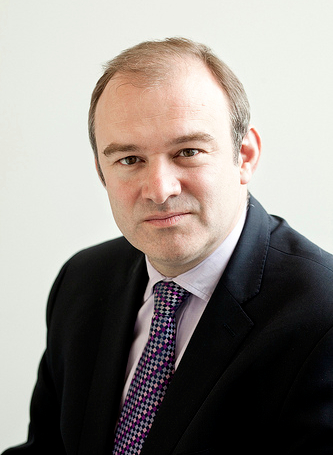
    Below is the text of a speech made by the Secretary of State for Energy, Ed Davey, on 12th February 2013 at the Royal Society.

    Let me start by congratulating all those involved in the AVOID programme on their hard work over the last four years:

    Highlighting the challenge we face in tackling climate change;

    Identifying the potential impacts.

    This has been a unique multi-disciplinary research programme.

    Including the Met Office, the Walker Institute, the Tyndall Centre and the Grantham Institute among others.

    And it has been an impressive demonstration of successful collaboration between academia and Government.

    And it has had concrete outcomes.

    For example, materially supporting the UK’s international engagement and informing our negotiating position at Copenhagen and beyond;

    Contributing to the UN’s Environmental Programme with robust, credible and timely research;

    And supporting the setting of our carbon budgets.

    Listen to the experts

    It is fair to say that trust in politicians is not something the public has in abundance.

    That is why, when it comes to climate change, it is so important that all the rigours of the scientific method are applied.

    That it is the science that drives policy.

    And that we hear loud and clear from the experts.

    When the scientists tell us that the evidence proves that smoking is addictive and can cause a whole host of deadly medical conditions from emphysema to heart disease, we believe them.

    We try to give up, we hope our children never start.

    When scientists tell us to that prolonged exposure to the sun’s ultra-violet rays can lead to cancer, we believe them, because their views are based on strong evidence.

    We take precautions, we avoid sun burn, we cover up, use sun cream.

    So if we have this trust in scientific evidence, why would we make an exception when it comes to the science of climate change?

    When it comes to assessing the health of our planet’s eco-system – we should listen to the scientists – and we should believe them.

    The message of the science

    We heard earlier from the Chief Scientist Sir John Beddington, and from other distinguished guests about the overwhelming scientific evidence for climate change.

    Overwhelming evidence, yes.

    But of course there are uncertainties.

    You are scientists.

    You know that good science is all rightly cautious.

    Not jumping to conclusions based on weak evidence, but identifying uncertainties and from them learning more about how systems work and change.

    So, I understand that, what we don’t know is at least as important as what we do.

    Good science is questioning, sceptical, analytical – testing theories and understanding risks.

    Two hundred years of good science – teasing out uncertainties, considering risk – has laid the foundation of what we now understand.

    It screams out from decade upon decade of research.

    The basic physics of climate change is irrefutable.

    Greenhouse gases warm the atmosphere and cause changes to the climate.

    Human activity is significantly contributing to the warming of our planet.

    Sir John talked about some of the impacts that are already being felt.

    While we would not want to attribute every extreme weather event to climate change – the pattern is building and the costs are rising – the human costs and the financial costs.

    The costs of the 2012 floods here in the UK could easily top £1bn.

    And last month the US Congress passed a $50bn bill for relief for those affected by Superstorm Sandy.

    As President Obama said last month:

    “Some may still deny the overwhelming judgment of science, but none can avoid the devastating impact of raging fires and crippling drought and more powerful storms.”

    And Sir John also talked about how our hope must be to limit climate change – preventing us passing a potentially catastrophic tipping point – a great threat to life.

    Because the stark fact is this – climate change is happening.

    We can’t reverse it, but we can limit it.

    AVOID highlights the importance of keeping temperature increases below 2C

    To do so global emissions need to be reduced urgently and sustained deep cuts are required long term.

    This points to the importance of a comprehensive global deal in 2015.

    It may be as I mentioned earlier that the art of politics is not greatly revered.

    But we will need every piece of political artistry we can bring to bear to make sure that we translate this scientific understanding into concrete and effective action to keep climate change within manageable levels.

    Action based on the science, the risks and the impacts.

    Action to deliver a low carbon way of life.

    Rewiring the global economy, becoming more resource efficient while continuing to deliver the economic growth that improves people’s lives.

    So let me turn to the actions we are taking, first, here in the UK, and the actions we are taking with our European partners on the world stage.

    Getting ahead in the green global race

    Over the last decade in the United Kingdom, there has grown and solidified, a political consensus for domestic action to curb our emissions, and for seeking a legally binding international treaty to provide for the same at a global level.

    What we have done here in Britain has been quite an immense achievement.

    It has not been easy and it has been a long journey in which all political parties have, at times, shown courage and leadership.

    We can all be proud of the Climate Change Act of 2008 – the first comprehensive economy wide climate legislation of its kind.

    Committing the UK to achieve at least an 80% cut in carbon emissions by 2050.

    With 5 year carbon budgets to help us stay on track.

    And robust accountability with independent auditing through the Committee on Climate Change.

    The latest estimates for the UK’s greenhouse gas emissions in 2011 show a 7% fall compared to 2010.

    Yearly figures can fluctuate depending on a number of factors from the state of the economy to the state of the weather.

    But the overall trajectory is in the right direction, recording emissions reductions of more than 25% since 1990 – the base year measure for the Kyoto Treaty.

    The real prize, the real prize, is to design in long-term emissions reduction through systemic change.

    Designing out carbon.

    And that is where this Coalition Government has been building on the framework created by the last Labour Administration.

    Putting muscle and flesh on the bones of the Climate Change Act.

    Turning theory into practice.

    Taking forward the practical polices that will create a low carbon economy.

    Maximising energy efficiency by overhauling the housing stock through the Green Deal.

    Setting up the Green Investment Bank to leverage private sector investment into low carbon.

    And now before Parliament a new Energy Bill – an ambitious long-term plan for a major reform of our electricity market to help ensure we deliver on our emissions reductions commitments, and attract the right investment for low carbon infrastructure – creating jobs and growth in the process.

    Too often, we are told that those who go low-carbon first will sacrifice their competitiveness.

    But as the Prime Minister set out last week, reaffirming our shared commitment to being the greenest government ever:

    “We are in a global race and the countries that succeed in that race, the economies that will prosper, are those that are the greenest and the most energy efficient.”

    The real danger we face is being outpaced by other countries who are investing in clean, low-carbon economies.

    This is a boom market of £3.3 trillion, growing at 3.7% a year, with investment in renewables outpacing that in fossil fuels.

    For our businesses this means opportunities, for our governments tax revenues, for our people jobs, for our societies insulation from the volatility of fossil fuel prices.

    So this drive for low-carbon energy is a real engine of growth for hard-pressed economies around the world.

    We are not alone

    The UK is not alone – we are not somehow risking our competitive edge because others aren’t doing their bit.

    Over the next year, I will be part of a concerted push by like-minded countries at EU level to commit to a 30% reduction target in 2020 and to agree a further strong emissions reductions target for 2030.

    And looking wider than Europe, I recently attended the GLOBE International legislators summit.

    The GLOBE study catalogues the action already being taken in over 30 countries.

    South Korea creating the legislative framework for emissions reduction targets, cap-and-trade, carbon tax, carbon labelling, carbon disclosure, and the expansion of new and renewable energy.

    Australia’s Clean Energy Act, and now linking its emissions trading system to the EU’s.

    China adopting targets to decrease both the energy intensity and the carbon intensity of its economy by 2015.

    And I am encouraged by President Obama’s inauguration address in which he challenged America to claim the promise brought by low carbon technology – new jobs, new industries, economic vitality.

    So those who advocate the view that ‘no one else is doing anything, so why should we’ have not opened their eyes to the real world.

    2015

    Of course incremental, nation specific action is very welcome, but we need to sustain and increase the emissions reductions on a global scale over the long-term.

    AVOID has shown that to achieve a 50% chance of limiting warming to 2°C, global emissions need to peak in the next few years and be followed by rapid long-term reductions.

    Some look at the negotiations for a legally binding successor to the Kyoto Treaty and despair.

    I am given hope: The Doha conference in December 2012 has re-affirmed the international commitment to reaching a 2015 agreement.

    I am given hope, by the actions taking place all around the world in developed and developing economies, that we can agree a global, binding treaty, because it will be the next obvious, natural step to consolidate the actions we’re already taking.

    And I am given hope by our human ingenuity – to find a way through problems and develop solutions.

    And this brings me back to the politics and the science.

    We now have three critical years leading to the end of 2015 to get the international politics aligned.

    To bring into agreement those representing the huge mega economies of Europe, America, China, Russia, India, Brazil, Japan – those representing developed countries and developing countries, those representing the most threatened by climate change, and those who believe, quite wrongly, they are cushioned from the impact.

    Politicians have to make balanced choices.

    Meeting their responsibility to look after the interests of those they directly represent, while trying to work for the greater good.

    The result is rarely clean and neat.

    But it is much easier to come to a reasonable and altruistic position if the technological challenge is in hand and the results are beginning to show.

    So my message is this.

    We can’t leave this to the politicians to save the planet.

    This has to be a whole of society effort, and no contribution will be more crucial than that of the scientific community.

    Conceiving solutions, engineering new efficiencies, bringing new energy sources to the market.

    We share a positive vision of a green, clean energy and transport – and a better, healthier way of life.

    And the progress of science will help us get there.

    Conclusion

    Thanks to programmes like AVOID the science, the risks, the impacts and the way ahead have never been clearer.

    You know, when I am confronted by some of the most dogmatic and blinkered people who deny that climate change is happening, I am reminded of the sentiment of the famous USA Today cartoon.

    “If we really are wrong about climate change, we will have created a better world for nothing”.

    In reality, those who deny climate change and demand a halt to emissions reduction and mitigation work, want us to take a huge gamble with the future of every human being on the planet, every future human being, our children and grand children, and every other living species.

    We will not take that risk.

    Thank you.

  • Edward Davey – 2012 Speech at CBI Breakfast

    eddavey

    Below is the text of the speech made by Ed Davey, the then Secretary of State for Energy, on 18th October 2012.

    Introduction

    I want to thank our hosts for bringing everyone together this morning.

    The CBI has been on a journey, much like Government policy, as both have grappled with how to decarbonise the economy and tackle climate change while ensuring the UK remains competitive and energy affordable.

    The CBI is a strong and powerful advocate for the green economy and I very much welcomed the report, The Colour of Growth, which drew attention to the vital role energy can play in terms of investment, jobs, and growth.

    The case for EMR

    Today I want to focus on the reforms that I know CBI members understand are critical if we are to attract the massive investment we need in our energy infrastructure and secure a supply chain for low carbon technologies in the UK. Neil has outlined how important regulatory certainty is to investors and we believe our energy reforms can achieve that certainty.

    The challenge is well known. Demand for electricity is set to double, as economic growth returns and then as we use more electric cars and heating. But a fifth of our power plants are closing because they are too old or too polluting.

    So with supply reducing and demand increasing over the next decade and beyond, we need massive investment: investment at double the current rate, a total of around £110bn between now and 2020. That’s a huge investment in new, low-carbon electricity generation and grid infrastructure – representing around half the UK’s infrastructure investment, the equivalent of seven Crossrails.

    It will make sure we keep our homes heated, our industries and consumer electronics powered and our lights on. It will diversify our energy mix – with gas, renewables, CCS and nuclear all playing their part – and thereby protect our energy security and insulate business and domestic consumers from fossil fuel price spikes. It will help us meet our legal obligations on climate change, including our emissions and renewables targets.

    And it present a big opportunity for jobs in every nation and region of the UK, and a boost to the supply chain, giving British business opportunities both at home and in export markets.

    This opportunity for growth and jobs comes now, when we need it, not a decade down the line. The CBI’s report said that the UK’s green business grew in real terms by 2.3% in 2010-11, beating even the global green business growth rate to take a share of over £120 billion in the global market of £3.3 trillion.

    The Government is looking to support this through sector-specific strategies, which will ensure there is sufficient supply chain capacity to support growth sectors including nuclear, renewables, oil and gas.

    I want Britain to be the best place in the world to invest in new, clean energy infrastructure. But Britain’s electricity market, as it stands, cannot deliver investment on the scale we need. That’s why we’re reforming it, and why we’re introducing the Energy Bill within weeks.

    We’ve had pre-legislative scrutiny, we’ve listened to industry and others, and today I intend to announce a little more detail in some key areas.

    And today I can also confirm we will be publishing the Energy Bill, as we always planned, next month, for second reading before Christmas. So given that imminent publication, I wanted to use today to make my case for electricity market reform.

    Contracts for Difference

    For the ultimate goal, let me reassure you, has nothing to do with Government intervention. Quite the contrary. Eventually I want to see low-carbon power sources competing on cost alone. But we can’t just flick a switch and make that happen instantly. So our energy reforms will come in four phases.

    Let’s start by admitting that the current arrangements – phase zero, you might say – are actually quite dirigiste. We have the Renewables Obligation; we negotiate bilaterally on potential new nuclear power stations; we have the competition led by my Departtment for commercial-scale carbon capture and storage.

    There’s a good case for that statist approach now, but our reforms are explicitly intended to move to a market-based, price-discovery model.

    So in phase one, we’ll introduce a mechanism that will offer reliable contracts, delivered in a way that is trusted by investors. That mechanism is the Feed-in Tariff with Contracts for Difference. Prices will be set administratively, aiming to bring all technology groups down in cost and begin levelling the playing field.

    Here’s how it works. We set a fair price for low-carbon electricity. The generator sells its electricity in the market, and is paid a variable premium to top up if necessary. And if the market price is higher than the strike price, the generator pays back the difference.

    The key thing here is certainty. Contracts for Difference can help smooth out market volatility, not only minimising costs to the consumer, but also making investment and financing decisions easier. And because energy still needs to be sold in the market, there are still powerful incentives to encourage operational efficiency.

    Global fund managers have told me that the uncertainty of the current arrangements has put them off investing. And they prefer the long term contracts we are proposing – because they would give them the predictable revenue streams they need to invest in big projects, and with lower costs of capital. In a contract.

    Of course, we don’t want a hiatus in investment pending our reforms taking full effect in 2014. So I’ve undertaken to explore what form of comfort might be given to keep investments on track for project developers looking to make progress over the next 15 months or so.

    We are talking to EDF about what this can do to help bring forward new nuclear at Hinkley, but let me stress that this offer is intended to benefit all low-carbon technologies.

    My department has been approached by some half dozen renewables developers, in wind and biomass, to understand how the availability of early comfort could help them.

    So I can announce that I will seek powers in the Energy Bill to give the market certainty on these arrangements and demonstrate our commitment to supporting new investment.

    In phase two, as different technologies mature and become more widely deployed, we’ll see the first technology-specific auctions where prices will be set competitively by the market and (for example) onshore wind generators will start to compete with other onshore wind generators, as early as 2017.

    Then in phase three, when most current technologies have matured, we’ll move to technology-neutral auctions. So in the 2020s, low-carbon technologies should start to compete with each other in a true low-carbon electricity market.

    Finally, when all technologies are mature enough, and if the carbon price is high enough and sustainable enough, all generators could compete without any intervention.

    The move from price setting to price discovery will be complete, with low-carbon electricity sources competing on cost to provide clean, affordable, secure energy for UK consumers.

    And through this 4 staged reform, we will ensure that demand-side response, and additional storage and interconnection, can all play an increasingly important role in Britain’s reformed electricity markets, helping to manage supply.

    So the reforms in the Energy Bill are about building a framework for a new, competitive electricity market – bringing down the cost of capital, unlocking a huge amount of investment, and all the time moving our energy mix towards the diverse, low-carbon mix we need for our energy security and to meet our climate goals.

    So as we prepare to introduce the Bill to Parliament next month, we’re already taking practical steps now to make the electricity market reforms a reality.

    Just this month National Grid published its Call for Evidence , which is the first step in establishing the first strike prices for Contracts for Difference.

    Decarbonisation target

    At the same time, I believe a strong case has been made by many investors in energy infrastructure for a decarbonisation target range for the power sector. Such a range would help make clear our continued commitment to our climate goals. Believe me when I say that no one would be happier to see the politics taken out of energy policy. What could make life easier for the Energy and Climate Change Secretary than political consensus? So

    I hear your message Neil and I can say with confidence that the coalition is united behind these energy market reforms.

    Security of supply

    As well as stimulating low-carbon investment, I am determined to ensure the long-term security of our electricity supplies.

    Our market has, to date, delivered us a high level of electricity security. But the picture is changing, and we cannot be complacent.

    Over the coming decade, a large proportion of our existing capacity is set to close, and more low-carbon plant will enter the system.

    That means that other types of capacity will run less often, and can be less sure of revenues. That increased uncertainty could threaten the investment in non-intermittent capacity that we need, and run the risk of shortfalls – for example, during cold, windless periods.

    So we need to be ready to act to secure our electricity supplies for the long-term. This was underlined by Ofgem’s recent assessment of future capacity margins, which clearly set out the potential for capacity margins to decline from their current high levels.

    Many of the actions that we are taking – securing investment in low-carbon generation, reducing demand through the Green Deal, enabling consumers to manage their energy use actively through smart meters – will help to reduce the risks. But these actions may not be sufficient to ensure security of supply in the long-term.

    That’s why we are intending to legislate for for a Capacity Market – which will ensure that we have the right long-term incentives to provide us with the reliable capacity that we need.

    The Capacity Market would work by guaranteeing a steady payment for providing reliable capacity, giving developers of new power stations the certainty they need to invest. And it would work for households and businesses by securing their electricity supplies and insulating them against the steep price spikes that can occur in very tight markets.

    Many investors in gas plant have made clear to me that they see the capacity market as important. . Gas is crucial to the UK’s security of supply, and will continue to play a major role in our electricity mix over the coming decades, alongside use of carbon capture and storage technology and of course with significantly increasing renewables and nuclear.

    But the Capacity Market is not just about traditional generation – we are designing it so that other approaches such as demand side response and storage capacity can also participate.

    So we will, later this year, set out more of the detail of the scheme – giving investors the certainty they need to take decisions.

    Liquidity

    To secure the best value from our reforms we also need a diverse and competitive wholesale market.

    The liquidity of our wholesale power market is low relative to some other major European power markets and to international commodity markets. The issue is particularly pronounced in the forward markets, which are important for independents.

    We all know that liquidity helps competition and entry in any market, and allows participants to manage their risks. Independent electricity generators and suppliers are no exception. It is also crucial to the efficient functioning of the Contracts for Difference.

    That’s why I support Ofgem’s objectives as it takes forward potential reforms. I am keen to see swift and appropriate action from the regulator.

    The industry itself has also taken steps to improve transparency and day-ahead liquidity. I welcome those efforts too, and would encourage industry to move further and faster, especially with respect to liquidity in the forward markets.

    And, while supporting the efforts of the regulator and industry, I do believe Government needs to stand ready to step in and act if those efforts are not promoting competition to the benefit of consumers.

    So I want you to feel confident that Government is ready to act if necessary. So as we complete the fine details of the electricity market reform, we will make sure they promote competition at every stage. And we are looking closely at backstop powers in the Energy Bill to promote market liquidity and improve competition for long-term contracts, particularly with independent renewable generators.

    CfD Payment Model & Allocation

    The Energy Bill will set out our choice of payment model for Contracts for Difference and, alongside the Bill, the allocation process for Contracts for Difference. Developers and investors in the renewables sector in particular have told us that they want a single strong counterparty to these contracts, and earlier certainty of their contract allocation and strike price, and I want to assure you that we are listening.

    Of course, Contracts for Difference will provide much earlier certainty than is available currently, with developers entering into legally binding contracts, with set levels of support, potentially years ahead of when pricing certainty is achieved under the Renewables Obligation.

    But in response to feedback on our initial proposals, I am attracted to the idea of giving developers much earlier certainty on allocation of contracts than we previously proposed. In particular, a process that would allow developers to enter into a Contract for Difference as soon as relevant planning approvals and grid connections are agreed, so long as the developer ALSO commits to progress their project at a reasonable pace.

    This could better match the needs of developers, whilst also giving Government appropriate comfort that the available budget will be used effectively and protecting energy consumers.

    We have listened to the concerns industry raised about the CfD payment model – in particular the need for a robust counterparty to the contracts. I have taken the concerns on board. I know this is a key issue for developers and others in the sector, and central to unlocking the investment we need.

    We have been looking at these concerns over the summer and have been assessing the benefits and workability of creating a single counterparty, probably a company owned by Government, which could give the certainty you need to come forward and invest.

    My Department has this very week finalised our plan and when we announce it next month I believe we will show that Government has worked constructively with the industry to address your concerns.

    Growth and Infrastructure Bill

    I’d like to turn to two measures closely related to our energy strategy and reforms which we propose to introduce through the Growth and Infrastructure Bill, which the Chancellor is introducing in Parliament today.

    You may know that Ofgem planned to launch in April 2013 a Network Innovation Competition in the gas industry, which would have seen industry invest £160m over an eight-year period in innovation and greater efficiencies in the grid.

    But Ofgem found itself unable to move forward because of a legal ambiguity in the Gas Act 1986 which threatened the planned funding mechanism. Ofgem has therefore proposed to delay the Competition until this issue can be resolved or another funding mechanism can be found.

    I know that the gas network companies and Ofgem are disappointed by this, and I think they are right.

    So I can announce that we will remove this regulatory barrier altogether in the Growth and Infrastructure Bill so that the Competition can go ahead at the earliest opportunity.

    The second measure relates to Section 36 of the Electricity Act 1989. Planning decisions on major energy infrastructure projects were examined under this section of the Electricity Act, before the Planning Act came into force.

    There remain around 9 projects still awaiting a decision from Ministers under Section 36, and around 30 projects that have consent but have not made a final decision to build.

    Unlike Planning Act consents, section 36 consents are inflexible. Once given, a developer must build its new plant to the specification permitted by the consent.

    For example, currently if a biomass developer with Section 36 consent wanted to change the type of fuel it burns type, or a wind farm developer with consent wanted to add a couple more turbines, they would have to submit a completely new application to the Planning Inspectorate under the Planning Act – a process which could take over a year.

    I see that as unnecessary red tape, and we will use the Growth and Infrastructure Bill to cut it.The changes we will make will mean that developers wishing to apply for changes to to their projects Section 36 consents will in most cases need to undertake only a 3 month consultation on those changes. This could unlock investment decisions across a range of technologies, bringing thousands of new jobs and billions of pounds of investment to the UK economy.

    The recent good news that the Carrington gas power plant near Manchester has confirmed financing and will now go ahead might have come significantly earlier if this reform had already been in place.

    Demand-side reforms

    A key issue raised in Parliament, during scrutiny of the draft Energy Bill, was that the Government should be driving permanent reductions in electricity demand. I agree that this is a crucial issue and we will be shortly setting out our ideas alongside our energy efficiency strategy.

    That’s in addition to the measures we’re already taking on energy efficiency, including of course our flagship Green Deal programme, which will enable homes and businesses to pay for energy efficiency improvements through savings on their fuel bills.

    The Green Deal will save money, save carbon – and make a real contribution to economic growth: supporting new jobs and businesses, and unlocking unprecedented choice for consumers. It’s a programme that will to run not for years but for decades, and should establish a vibrant new market in energy efficiency, one that could attract over £10bn of new energy efficiency investment in the residential and business sectors over the next decade.

    Conclusion: CBI’s six tests, and consumer benefits

    Reform is always controversial.

    You may have heard or read criticism of various types: that our reforms are too complex, possibly deliberately so to conceal some secret subsidy for new nuclear; that we’re abandoning our climate goals in favour of a new dash for gas; or that we’re replacing a market-based approach with an illiberal, statist one.

    Those critics are all a long way wide of the mark. I prefer the six tests – six entirely sensible tests in my view – which the CBI has said it will use to evaluate electricity market reform.

    I hope that it’s clear from what I’ve set out today that our plans will indeed:

    – one, remain market-oriented – indeed, in the longer term, we are blazing a trail to pure competition;

    – two, remain technology-neutral – a diverse generation mix remains at the heart of our strategy;

    – three, safeguard existing investments – indeed, we are committed to the principle of no retrospective changes and I’m acting to help existing investments out of the pipeline and into delivery;

    – four, be politically durable – the very heart of Contracts for Difference is that they are long-term, stable contracts that provide certainty to industry;

    – five, minimise the cost on energy users – and I’ll come back to this;

    – and six, enable sufficient investment in low-carbon power generation and supporting technologies: that’s the driving force behind the reforms.

    The fifth test – the need to minimise the cost on energy users – is a test through which I put all policy in my department.

    Our reforms will stabilise consumer prices. With the increased diversity in the energy mix they herald and the long-term contracts for suppliers, we will shift decisively away from the current situation where volatile global gas prices determine the market electricity price.

    So our reforms are good news for consumers, including for business consumers. They are long overdue.

  • Ed Davey – 1997 Maiden Speech in the House of Commons

    eddavey

    Below is the text of the maiden speech made by Ed Davey in the House of Commons on 6th June 1997.

    It is a pleasure to follow the hon. Member for Hendon (Mr. Dismore), although a daunting prospect because he gave us such an entertaining and interesting speech. I congratulate him on making such an erudite maiden speech.

    I would also like to offer the hon. Gentleman my sympathy and condolence for having the hon. Member for Hartlepool (Mr. Mandelson) in his constituency. This obviously brings a new meaning to the big brother state. I hope that the health service in the hon. Gentleman’s constituency improves, because having the hon. Member for Hartlepool looking over his shoulder all the time might not be good for his health.

    From listening to Labour Members and to my hon. Friend the Member for Southwark, North and Bermondsey (Mr. Hughes), it is clear that a great consensus is emerging on the new government for London. That consensus spreads to the wider community—the business community, as the Minister said, in the boroughs, and in the population of London as a whole. The need to remove the quango state that was introduced by the previous Government, and the need for a strategic authority that is democratically accountable to the people and will take a strategic perspective on issues such as employment, transport and the environment—issues that affect the daily lives of our constituents—is crucial.

    There is a genuine debate, however, about the suitability and appropriateness of having a directly elected mayor. My hon. Friend the Member for Southwark, North and Bermondsey described our position clearly. I am concerned that we will have some very odd hybrid if we have an elected authority and a directly elected mayor. The mandates will clash. It will be a recipe for confusion, and the only way around that—perhaps a separation of powers model—is a recipe for gridlock.

    I see no merit in a directly elected mayor. Indeed, I endorse the remarks of the hon. Member for Brent, East (Mr. Livingstone). Why are we not going for the tried and tested model of party competition for the new strategic authority? That seems sensible. I would support a strategic authority that was elected in a proportionally representative system. I urge the Minister not to be affected by “manifestitis” and to be open to the idea of having a multi-question referendum.

    I am very grateful for having this early opportunity to make my maiden speech. I am the first ever Member of Parliament for the new constituency of Kingston and Surbiton. It was formed from the old Surbiton seat and from the southern part of the old Kingston upon Thames seat and covers a number of communities, from Malden Rushett, Chessington and Hook in the south, through to Tolworth, Berrylands, New Malden, Norbiton and Worcester Park. It covers three quarters of the royal borough of Kingston, which through its long and distinguished history has previously returned only Conservative Members of Parliament to the House, so I am especially pleased that the royal borough is now represented on the Liberal Democrat Benches, by me and my hon. Friend the Member for Richmond Park (Dr. Tonge). It is a great responsibility, but I look forward to meeting the challenge.

    My predecessor in the Surbiton seat, Richard Tracey, was first elected in 1983. He has a long history of public service and, on behalf of my constituents, I thank him for all his work over the years for the people who live in the Surbiton area. I trust that his experience in the media as a former BBC presenter will suit him well as he embarks on a new career.

    My predecessor in the Kingston upon Thames seat was perhaps better known in the House. I recommend that hon. Members who want to inquire about how he is getting on go to my hon. Friend the Member for Harrogate and Knaresborough (Mr. Willis), from whom I understand that Mr. Lamont is doing very well. He is remembered affectionately by many of his constituents, whom he helped.

    In a former life, I was an avid reader of his speeches as I used to assist my right hon. Friend the Member for Berwick-upon-Tweed (Mr. Beith) in his many battles with the former Chancellor, but it is not Mr. Lamont’s speeches as Chancellor that I reflected on in making my maiden speech and wanting to pay tribute to him. I looked back at his very good maiden speech, which I recommend to other hon. Members. I should like to quote one or two phrases from it because they reflect interestingly on recent debates.

    For example, Mr. Lamont said early on in his speech: I have to admit that for some years I have been strongly pro-European. Hansard does not record whether he said that sotto voce, but he went on: I hope that everyone will agree that by making an uncompromisingly European speech I am being as non-controversial as it is possible to be. If only that were still the case. I recommend the speech because it talks about the advantages of European governance. He said: At least in the Community there is nothing secret about the way in which the Commission’s thinking is developing. It is a shame only that, when he took office, he did not reflect on those views and still kept, unfortunately, the Budget purdah. I hope that this Government will be a little more open.

    My favourite part of the speech is when the former Chancellor discussed the foreign exchange markets. He referred to currency volatility in the early 1970s and stated: One wonders how much of last year’s currency upheaval could have been avoided had there been a joint European strategy”.—[Official Report, 13 July 1972; Vol. 840, c. 1887–92.] How times have changed since 1972.

    I do not, however, want to dwell on the past. My constituents’ main concern is education—our future. Kingston schools are extremely popular, and teachers, parents, governors, councillors and council officials work very hard to deliver high-quality education in our area, but in recent years their efforts have been thwarted by cuts imposed by central Government, which have led to huge overcrowding and some of the largest class sizes in the country.

    Efforts to absorb those cuts from central Government have proved impossible within the current draconian system of local government finance, so, unfortunately, some of the cuts have been experienced in schools. To meet previous cuts, the authority had to run down its reserves, which are now at the minimum prudential level, yet in the past three years the grant has been cut by £15.1 million.

    The authority has worked hard to make efficiency savings to try to meet that challenge and has achieved savings of nearly £4 million, but last year’s cut was just one too many and schools felt it badly. In looking to next year, my concern is that the Chancellor of the Exchequer will somehow be able to escape from the trap on public spending in which he has put himself. I am filled with dread when I hear him reiterate the Labour party’s manifesto commitment to keep the previous Government’s public spending controls for the next two years. When one talks to professionals, one realises that the claim that money from the abolition of the assisted places scheme will fill that gap insults their intelligence. More money is needed.

    Cuts have been made not only in schools but in further and higher education. In Kingston college, last year’s settlement means that 20 teachers—10 per cent. of the staff, in one college, in one year—may face redundancy.

    I hope that there is a plan to escape that trap somehow. Liberal Democrats will make no apology for returning to this issue time and again, because it is at the heart of the education debate. Until we have more resources for schools and colleges, sanity will not return to the education system.

    If the Government put education at the top of their agenda, as they said they would, we shall be helpful, and make suggestions. In that spirit, as they prepare for the future, I would like to offer them an idea for their welfare-to-work proposals. In my constituency we have Hillcroft college, which presents a unique example of the type of programme that the Government should have in mind.

    Hillcroft is the only adult education institution in the country geared solely to the needs of women. Over many years it has helped women who missed out on their first chance of education; women who as single parents are trying to find a path back into the workplace; and women who had previously been dependent on the social security system.

    In a recent visit to the college, I was most impressed by the way in which the college supports individual women’s needs, as some try to repair some of the self-confidence that was shattered by some of the previous Government’s policies. I recommend that Ministers come to my constituency, visit Hillcroft and use it as an example in their deliberations on the Government’s welfare-to-work proposals.

    In Kingston and Surbiton there is a wealth of examples of policy initiatives that the Government could usefully study—some to follow and some to forget. Kingston university has expanded tremendously over the past few years, and I hope that the proposals in the Dearing report will enable that process to continue.

    Unfortunately, many problems have been caused by police cuts in Kingston. In the past two years we have lost more than 40 officers.

    The need for a strategic transport policy is one of the subjects of the debate today. In Kingston we certainly have not had such a policy. Moreover, South West Trains has made appalling cuts in services, and the recent infamous cuts have caused many problems for my constituents.

    The accident and emergency department in Kingston hospital experiences queues every day of the week. Unfortunately, until there is more capital funding to build a new accident and emergency department there, those problems will continue.

    One Kingston policy is highly germane to the debate, and I recommend it to the Government. For the past three years the borough council has pursued the policy of devolution of power to neighbourhoods. The neighbourhood system has been a huge success. In the past, central committee meetings were held at the guildhall, and a few political aficionados used to attend and listen to the debates. There was little participation, and the general public did not know what was going on.

    Now, seven neighbourhood committees have been set up round Kingston, which is the smallest borough in London. Many people come to the meetings and participate, and democracy has flourished in our borough. The efficacy of policy decisions, too, has improved because of the public participation.

    The success of the neighbourhood system, that revolution in decentralising power within a borough, has become so famous that many people have come to Kingston to study it. After the first two years of its implementation, the previous Government’s district auditor produced a glowing value for money report on it.

    The report said: Communications between officers and with citizens appear to have improved as a result of the neighbourhood structure”, and there is real value in local diversity … for many service areas, there is clear justification for delegation to achieve a local focus”. The extra marginal cost was found to be minimal, and the auditor also noted that the royal borough of Kingston operated on staff numbers that were among the lowest for outer London borough councils.

    The district auditor was not alone in praising the value of the neighbourhood system. In a recent document entitled “Innovative models of local authority working”, the local government management board said: Kingston has achieved much and is a good example of clear devolution plans being carefully implemented in a very limited timescale. Its experience is well worth considering and drawing upon.

    We have heard today about the powers of the strategic authority and how it will be elected, but I hope that any Green or White Paper will refer also to the inter-relationship between the strategic authority and the borough councils—and between councils themselves, and within councils—so the debate is not just about the strategic authority; it is about all aspects of the future governance of London.

    I would like an assurance from the Minister that any future Green or White Paper will allow scope to discuss models of how power can be decentralised within, and to, boroughs. Taking power from the centre to empower communities and citizens was what the neighbourhood system in Kingston was all about. If that is the goal of the Government’s proposals for the governance of London, they will be a great success and improve the lives of the people of London. After all, it was the Prime Minister who, in the John Smith memorial lecture on 7 February 1996, said: I want to enable local communities to decide more things for themselves through local councils. I agree, and I hope that the Government’s proposals for the future governance of London follow that statement.