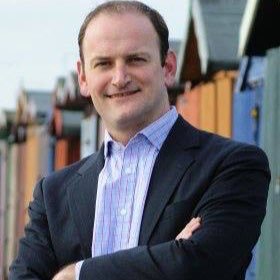
Tag: Douglas Carswell

  • Douglas Carswell – 2015 Parliamentary Question to the Ministry of Justice

    Douglas Carswell – 2015 Parliamentary Question to the Ministry of Justice

    The below Parliamentary question was asked by Douglas Carswell on 2015-09-16.

    To ask the Secretary of State for Justice, what the reasons were for which each emergency protection order was granted to a local authority in England and Wales in (a) 2010, (b) 2011, (c) 2012, (d) 2013, (e) 2014 and (f) January to March 2015.

    Caroline Dinenage

    This information is not held centrally and could only be obtained at disproportionate cost.

  • Douglas Carswell – 2015 Parliamentary Question to the Department of Health

    Douglas Carswell – 2015 Parliamentary Question to the Department of Health

    The below Parliamentary question was asked by Douglas Carswell on 2015-02-10.

    To ask the Secretary of State for Health, what alternative provision his Department is offering to the users of the Epping Chase Surgery, Clacton for access to primary care in response to that surgery’s closure.

    Dr Daniel Poulter

    The provision of primary medical services is a matter for NHS England.

    NHS England’s Essex Area Team advises that, since February 2014, the Epping Close Surgery has been temporarily relocated on Kennedy Way, Clacton, following a serious water leak at its original premises.

    To date, there have been no complaints from patients about the relocation, which has enabled the practice to continue to provide healthcare to patients.

  • Douglas Carswell – 2015 Parliamentary Question to the Department of Health

    Douglas Carswell – 2015 Parliamentary Question to the Department of Health

    The below Parliamentary question was asked by Douglas Carswell on 2015-02-10.

    To ask the Secretary of State for Health, if he will take steps to increase the number of practice staff working in GP surgeries in North East Essex Clinical Commissioning Group.

    Dr Daniel Poulter

    There are now 36,294 full-time equivalent general practitioners (GPs) working and training in the National Health Service, an increase of 1,051 (3.0%) since September 2010 and a commitment to train and retain 5,000 additional GPs by 2020.

    NHS England is working with the North East Essex Clinical Commissioning Group, and Health Education East Of England to increase the number of practice staff working in GP surgeries across north east Essex.

    NHS England is also working with the Royal College of General Practitioners, and the British Medical Association nationally to produce a 10 point action plan to increase the size of the general practice workforce, which this Government has supported with £10 million of funding.

  • Douglas Carswell – 2014 Parliamentary Question to the Department of Health

    Douglas Carswell – 2014 Parliamentary Question to the Department of Health

    The below Parliamentary question was asked by Douglas Carswell on 2014-06-16.

    To ask the Secretary of State for Health, what steps he is taking to ensure GPs are accessible to patients.

    Dr Daniel Poulter

    Through the Prime Minister’s Challenge Fund, more than 7.5 million people in England will start to be offered increased access to local general practitioner (GP) services, including seven-day opening and appointments outside of office hours. The Fund is supporting over 1,110 practices covering every region as part of a pilot scheme.

    The PM Challenge Fund is for one year and patients are expected to see positive changes from services from June/July onwards. An interim evaluation report is due in November this year. The full and final report is expected to be published in the early part of 2015-16. There will be a rolling programme of feedback on the pilots with case studies available from the summer onwards to help spread best practice across the country.

    In addition, the new GP contract introduced a new Enhanced Service, which includes a commitment to same day phone consultations with a professional in the GP surgery where necessary for the most at risk in the population.

  • Douglas Carswell – 2014 Parliamentary Question to the Department of Health

    Douglas Carswell – 2014 Parliamentary Question to the Department of Health

    The below Parliamentary question was asked by Douglas Carswell on 2014-06-16.

    To ask the Secretary of State for Health, what guidance his Department issues on the ratio of GPs to patients; and what that ratio is in Tendring.

    Dr Daniel Poulter

    The Department does not issue guidance on the ratio of general practitioners (GPs) to patients. It is for each GP practice to ensure they are able to provide services to all their patients as set out in their contract with NHS England.

    The ratio of GPs to patients in Tendring is not collected centrally. Figures for North East Essex Clinical Commissioning Group, which includes the district of Tendring, are shown in the following table.

    Patients per full time equivalent GP

    All GPs full time equivalent per 100,000 population

    North East Essex

    1,715

    60.8

    Sources: The Health and Social Care Information Centre General and Personal Medical Services Statistics; Office for National Statistics: Mid-Year Population Estimates

  • Douglas Carswell – 2014 Parliamentary Question to the Department of Health

    Douglas Carswell – 2014 Parliamentary Question to the Department of Health

    The below Parliamentary question was asked by Douglas Carswell on 2014-06-16.

    To ask the Secretary of State for Health, what steps his Department is taking to train and recruit more GPs in (a) Linton and Walton and (b) nationally.

    Dr Daniel Poulter

    The Department set up Health Education England (HEE) to deliver a better health and healthcare workforce for England. HEE is responsible for ensuring a secure workforce supply for the future balancing need against demand, taking into account factors such as the age profile of the existing workforce, the impact of technology, and new drugs.

    The Department has recognised the need to increase the general practitioner (GP) workforce and between September 2010 and September 2013, the number of full time equivalent GPs has risen by 1,051. Additionally, the Department has included in the HEE mandate a requirement that “HEE will ensure that 50% of trainees completing foundation level training enter GP training programmes by 2016”.

  • Douglas Carswell – 2014 Parliamentary Question to the Home Office

    Douglas Carswell – 2014 Parliamentary Question to the Home Office

    The below Parliamentary question was asked by Douglas Carswell on 2014-06-17.

    To ask the Secretary of State for the Home Department, whether police and crime commissioners will be able to decide on the applicability of the adoption of her Department’s new guidelines on the use of stop and search by police to the area they represent.

    Damian Green

    It is for Chief Constables and Police and Crime Commissioners to make decisions about whether and when to adopt the scheme.

  • Douglas Carswell – 2014 Parliamentary Question to the Home Office

    Douglas Carswell – 2014 Parliamentary Question to the Home Office

    The below Parliamentary question was asked by Douglas Carswell on 2014-06-17.

    To ask the Secretary of State for the Home Department, what representations she received from the Essex Police and Crime Commissioner on changes to guidelines for police stop and search.

    Damian Green

    Essex Police have acknowledged receipt of the Home Secretary’s letter sent to Chief Constables on 30th April and have advised that they will submit a formal response in due course.

  • Douglas Carswell – 2017 Statement on Leaving UKIP

    Below is a statement published by Douglas Carswell, the MP for Clacton, on 25 March 2017.

    It has been an extraordinary achievement. UKIP, my party, which was founded in 1993 in order to get Britain out of the European Union, has now achieved what we were established to do.

    On Wednesday, the Prime Minister is going to trigger Article 50, beginning the formal process of withdrawing our country from the EU. By April 2019, Britain will no longer be a member of the EU. After twenty-four years, we have done it. Brexit is in good hands.

    UKIP might not have managed to win many seats in Parliament, but in a way we are the most successful political party in Britain ever. We have achieved what we were established to do – and in doing so we have changed the course of our country’s history for the better. Make no mistake; we would not be leaving the EU if it was not for UKIP – and for those remarkable people who founded, supported and sustained our party over that period.

    Our party has prevailed thanks to the heroic efforts of UKIP party members and supporters. You ensured we got a referendum. With your street stalls and leafleting, you helped Vote Leave win the referendum. You should all be given medals for what you helped make happen – and face the future with optimism.

    Like many of you, I switched to UKIP because I desperately wanted us to leave the EU. Now we can be certain that that is going to happen, I have decided that I will be leaving UKIP.

    I will not be switching parties, nor crossing the floor to the Conservatives, so do not need to call a by election, as I did when switching from the Conservatives to UKIP. I will simply be the Member of Parliament for Clacton, sitting as an independent.

    I will leave UKIP amicably, cheerfully and in the knowledge that we won.

    At the hundreds of meetings and action days I have attended as a UKIP activist across the country since I joined in August 2014, I have met some truly remarkable people. You are heroes! Thank you and well done. I wish you all well.

    When first elected to represent Clacton in 2005, I promised to do all I could to help ensure that Britain left the EU. To the consternation of my then party whips (some of who, I’m delighted to see, are now ministers helping make Brexit happen), I made my intentions on that front plain in my maiden speech. Job done.

    I will be putting all of my effort into tackling some of the local problems affecting the NHS in our part of Essex, including GP shortages and the threat to our local Minor Injuries Unit. In that spirit, I called a Westminster Hall debate last week about the future of primary care in our part of Essex. Local comes first.

    Cheer up! The days when small elites can try to arrange human social and economic affairs by grand design are coming to an end. Change is coming – Brexit is just the beginning.

