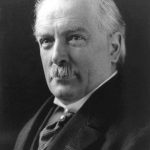
Tag: David Lloyd George

  • David Lloyd George – 1928 Speech at the National Liberal Federation

    David Lloyd George – 1928 Speech at the National Liberal Federation

    The speech made by David Lloyd George, the former Prime Minister, on 12 October 1928.

    I have to apologise for interrupting your agenda and for taking up a part of your morning conference, and I should not do so if I had not what is known in Parliamentary language as a definite matter of urgent public importance to put before you.

    We are on the eve of what may turn out to be one of the greatest and most momentous general elections in the history of the country, and there are questions which arise before the election and in reference to the conduct of the party after the election with regard to which it is well we should take counsel.

    We have had the group system in the Parliamentary affairs of this country for some time. It is difficult to predict what may happen in the future, but it looks as if it were to become an integral part of the democratic machinery of this land, at any rate, for a long time to come. Extremists to the Right and extremists to the Left will probably always have their separate organisations, and there will always be a body of sane opinion in the middle that will also seek definite expression. The problem in front of us is what will happen to us in the next Parliament if none of those groups is able to secure a definite majority that will enable them to form an Administration and to carry through their task during the lifetime of that Parliament.

    There has been a good deal of discussion on the subject. The Prime Minister, addressing a meeting in Yarmouth, issued a challenge to the Liberal Party as to what we should do if we were in a minority. Would it not be better that he should have answered that question himself? Is he not just as likely to be in a minority as any other party? If he is, will he support a Liberal Government or a Labour Government? I know which he would prefer, but he dare not say so. But we are just as entitled to ask the question of him as he is to address it to us.

    And the Socialists have been very busy discussing the same question, and rightfully so. It is a matter of growing urgency, and may become a very urgent problem in June of next year. It is right we should all be in a position to give our answer when the time comes. On the last occasion, owing to the action of Mr. Baldwin, that crisis was precipitated upon the parties without our being ready, and we had to come to our decisions in a hurry. Now we have plenty of time to think about it. Let us do so.

    Some of the Socialists are discussing it in a manner which is temperate, courteous, and fair. There are others who are exceedingly offensive. They rudely refuse invitations that were never extended to them. It will be time enough for them to answer, to refuse offensively, when they get a card from the Liberal Party with R.S.V.P. written on it. It has not been issued yet, but that does not prevent us from being alive to the importance of discussing it among ourselves, or clearing our own minds so that when the crisis arises leaders will have the mind of the party upon the subject, and will be able to come to a clear, definite decision.

    A Question that must be Faced

    During the last few weeks more particularly the leaders of the party have been meeting to discuss the matter between themselves, and what I say about it will not be the expression of my own opinion, but the collective opinion of the leaders of the party. I know it would be very easy to shirk giving the answer. There is the famous answer given by Abraham Lincoln when he was asked what he would do in a certain contingency. He did not particularly want to answer, so he said: ‘I never cross the Fox river until I come to it.’ Well, I do not think that will do now. Candidates are being asked what we mean to do in certain contingencies. Liberal electors want to know, and the general electorate of this country, especially the wavering electorate which is terrified of Socialism, want to know what Liberals will do before they make up their minds. We propose to answer them, and I am going to ask your patience even if I refer more than I am in the habit of doing to notes, because this is an important occasion, and I want not only to weigh my words, carefully, but to give as careful expression to them as possible.

    Let us review the possibilities of the next general election. I am much too old a hand to commit myself to a forecast, especially under present conditions. If it were a straight fight I would predict to you that the Tory Party would not get 200 members in the next Parliament. But it will not be a straight fight.

    There are three predictions I will make. The first is that there will be an overwhelming majority of votes recorded in condemnation of the present Government. They are in a minority of a million now. There will be many more millions against them the next time. It will be an avalanche. The next prediction I make is that there will be an enormous accession of strength to the Liberal poll; and the third is that whatever party will be in a majority it will not be the Socialists.

    Our Grotesque Electoral System

    But even if there is a sweeping reduction in the Tory poll and a doubling and trebling of the Liberal vote, that is no guarantee as to the composition of the next Parliament, and that is the new element of doubt which has been introduced. We have an anomalous, unjust, and grotesque electoral system which is a fraud and a mockery of democracy. Just look at it. In the present Parliament there is one Tory member for every nineteen thousand votes recorded at the last election. There is a Socialist member for every thirty-six thousand votes. There is a Liberal member for every seventy thousand votes. Under those conditions no one can judge what will happen with a system of that kind. In the South of England, as everybody knows, there are eleven counties, and for four hundred thousand votes recorded for the Liberals there is only one Liberal member. And if it had worked in the same sort of way in the rest of the country there is no reason why the remaining two and a half million votes should not have only four members. We were lucky enough to get forty. Really we might have got five.

    Under this system in the next general election nobody can tell which way it will work, whether for Liberals, whether for the Socialists, whether for the Conservatives. In 1923 there was one Liberal member for Manchester for every fourteen thousand Liberal votes and one Tory member for one hundred thousand votes. You never know how this special Providence will work.

    Next time the Liberals may have only a third of the members they would be entitled to in proportion to their votes, but they might have twice as many as they are entitled to. You cannot predict under those circumstances. This is not government, it is a gamble and, next time, who can tell? When that little ball stops rolling it may drop in the Liberal number. At the by-elections the Liberal strength is growing and the Conservative is waning, and the Labour strength is something in between the two. One of the most encouraging features of the last two years is that we have won five by-elections in triangular contests. The tide is rising. We were stranded on this sandbank in 1924, but the tide of sanity is rising, and next time it will enable the Liberal craft to float over the sandbanks and the reefs of the electoral system.

    They say, ‘There is a difference between a by-election and a general election.’ Don’t I know it! There will be a difference this time, and I want to tell you why. When you come to a general election the electorate will be face to face with deciding who is to govern them for the next five years; whether they are going to renew the mandate, the trust, the authority of the people who have let the country down so badly, who have done nothing to pull it through our great trade emergency, and who have thoroughly muddled the cause of peace and disarmament in the world. They will hesitate, and they will look round, and they will say, ‘What is the alternative?’ They will look at the Socialists, and one look will be enough. They will pass by on the other side. And if the Socialists were the only alternative, I honestly believe the electors of this country would say, “Well, all we can do is to put the other fellow in again and trust to Providence; a Providence that has extricated this old country very often from the muddles made by its Ministers and its statesmen, and which may help us through in spite of these muddlers”.

    The Alternative Government

    But there is another alternative, and we have got to present it – the alternative in policy, the alternative in programme, the alternative in a definite scheme of practical work to extricate the nation out of its difficulties. And I should like you to allow me one word on that. We do not dwell on our assets. We are a modest party. But I want to say this, that Liberalism can command a larger number of men of high distinction who can point to unchallenge­able success in responsible spheres of activity for their country than any other party in the State.

    I will just run over a few of the names. Lord Reading, one of the most successful leaders that this country ever had at a very critical moment. To his financial advice we owe more than I can tell you. As Viceroy in a critical moment he pulled us through very grave difficulties. There are men like Lord Beauchamp and Lord Buxton, who showed wisdom in positions demanding judgement, tact, and dexterity as Governors of some of our greatest Dominions. There is Sir Herbert Samuel, who achieved such success as the first Governor of probably the most renowned country in the world. And if you will allow me to say so, there is nothing I am prouder of than the fact that as Prime Minister I had the honour of recommending him to that post to the Crown. There is Sir John Simon, the greatest lawyer in the British Empire, who has been chosen by the present Government, who have on a second occasion shown their confidence in the Liberal leaders. In the first place, they did it for Sir Herbert Samuel and now for Sir John Simon by appointing him at the head of the Commission to decide, I should say, one of the most delicate and difficult problems of the Empire today. I had the pleasure of consulting him about this statement before he left for India, and he is in full accord. And then we have men who have held very high offices in the State, like Lord Grey, Mr. Runciman, and our Chairman (Sir Chas. Hobhouse), Mr. Macpherson, Dr. Macnamara, who was responsible for the whole present system of unemployed insurance, which, in my judgment, has saved a vast amount of suffering, and, I think, saved this country probably from revolution. And if there were testimonials required for another Liberal leader I could get a sheaf of them signed by some of the most distinguished members of the Tory Government today as to the services rendered by him to the Empire.

    There is no other party which can call together such an assembly of men for the direction of the affairs of the nation, who can show such a record of successful achievement in exalted and highly responsible positions. I challenge any of them to point to any Ministers either in the present Government or its predecessor who can show such a record. I can point to many who can claim honestly a record of failure which in its magnitude compares with the record of success of some of the gentlemen I have mentioned. So that superior people who write off the chances of Liberalism in a light-hearted way forget that these facts will be present to the minds of the electors of this country when they come to choose next time.

    That is why, as we approach the general election, in spite of one or two setbacks due to the group system, there is a growth of Liberal strength, especially the last year or two. I have never seen a horse race in my life, but I am going to do so next week for the first time. But I will tell you what I am told. There are men who can check me if I am wrong. Sometimes there is a great surprise; the horse that the knowing ones think will win is a way behind, and another horse not supposed to be in the running comes cantering in – owing to atmospheric conditions. There are certain conditions where stamina tells and the flashy ones are no good. You can see the horse at first a long way behind, nobody taking any note of him. You can see him coming along, coming along, and at last passing them one after the other, and getting past the winning-post first, to the dismay of all the experts. That is the Liberal horse. And the electioneering bookies are going to be let down pretty badly. In the last two years he has already passed the Labour horse; our figures are above it. Even in Cheltenham we left him a long way behind. Whatever happens in Tavistock, we shall have left the Labour horse behind. We will soon leave the other one behind.

    Possible Results of the Election

    So I am not one of those who say that the Liberal Party has only to consider what it will do if it is only a little handful holding the balance between the other two parties. The other parties will have to consider what they propose to do with their balancing power. And there is another factor to which I would like to call your attention, which is encouraging. The larger the number of aggregate votes which a party gets the better its proportion of members. The Tory Party had more votes than anybody, the result was that it secured one member for every nineteen thousand. The Socialists come next with one member for thirty-six thousand. We come third in our aggregate poll, and we have only got one member for every seventy thousand votes, which means that if you increase the aggregate of your votes you increase the chances of getting a larger proportion of members.

    Let us have the possibilities. There are roughly only two possibilities: either one party will have a majority over all the others or no party will have a majority, and those are the only two alternatives. There is a third possibility, or I should say certainty, and that is that one of the parties without having a majority will have a larger following than either of the other two.

    Let us say that the Liberal Party get the largest number of votes. Then we will have a Liberal Government, and we shall have Liberal measures. We shall have a Liberal spirit in administration at home and abroad. We shall have national and international peace dealt with on Liberal lines. We shall have a policy of peace and disarmament, of economy in expenditure, of development of our national resources leading to the permanent enrichment of the land, and at the end of five years the nation will bless the chance that gave them a Liberal Government.

    If Liberals have the largest party they will also form the administration and submit their policy and their programme of work to the judgment of Parliament and the country. And if they are turned out by a combination of Tories and Socialists they will know what to do. Believe me, if there is a combination of Socialists and Tories in the next Parliament it will not be the first time you have had it, either in Parliament or out of Parliament. You will not hear very much said about that, but it would be the realisation of a dream of Mr. Ramsay MacDonald, who once upon a time said he had a natural affinity for the Tories because they were gentlemen. And if there is a Liberal Government in power those gentlemen of England, Tories and Socialists together, will march arm in arm through the lobby to turn it out. I should like to see that.

    Now, these considerations can apply to any party that has a majority or is the largest party. If the Tories have a majority they will form a Tory Government, and we will have to put up with it and survive it as best we can, and if they have the largest party and will form a Government the same thing applies to the Socialists. So that therefore there is no difficulty about these things. The one difficulty is the case of deadlock.

    What if there is a Deadlock?

    What the nation wants to know is what will be the attitude of Liberalism in that event – if you had a complete deadlock in Parliament. The Socialists have already given their answer. They have made it clear that under no conditions will they associate or co-operate or enter into any compact or understanding with Liberals unless they swallow Socialism, horns, hoofs, and all. We say at once we are not there, we never shall be there, unless we cease to be Liberals. Socialists are not equally emphatic about what they will do with the Tories.

    A Socialist leader the other day said that if the Socialists entered into any compact with the Liberals, that is the straight way to Fascism. That is wrong historically. How did Fascism arise? It has its lesson for us in certain eventualities. There was a failure of the groups in the Italian Parliament, and notably of the Progressive groups, to form a Government at all. There were gaps and intervals of weeks, and that led straight to a dictatorship. Liberals have the supreme trust of safeguarding democracy, and they must see that does not happen.

    There can be no doubt as to the attitude of the Liberal Party under those circumstances. The Liberal Party may be relied upon in that case to determine its course in reference to one consideration and one only, and that is what will be best in the interests of the country. It will realise that the King’s Government must be carried on and that there must be no paralysis of the Government of this country. In the highest, and not in the blatant, sense the Liberal is a patriotic party. It does not wrap itself in the Union Jack or stick its plum puddings with little flags. Nevertheless, it is essentially a patriotic party, and when another party claims a monopoly of patriotism we regard it as a piece of impertinence. We have a special reason as Liberals for pride in Britain and her Empire. What is best, what is noblest, what is most enduring in that Empire is something that was brought into it by the efforts of three hundred years of Liberalism in its free institutions, in its free trade, in the condition of the people and the relation of one part of the Empire to another and to the Mother Country, in the very fact that our great Dominions are in the Empire at all. The pillars of British strength have been hewn out of the Liberal quarry by Liberal hands. It is a Liberal Empire, and Liberals therefore have a special responsibility to see the structure is not impaired by any friction or any partisanship on their part.

    And, whatever Parliamentary conditions may be, as far as lies in the power of the Liberal Party they will see that the King’s Government is carried on. If they cannot form a Government of their own, and if, unfortunately, the alternative should be either a Tory or a Socialist Government, although I am not so much concerned with which of these parties is in power – it is only a choice of two evils in the end – our main concern will be what they will do or fail to do. We are neither Socialists nor Tories, but Liberals, and as such are equally opposed to both, and have no particular preference for either. There are historical cases of men showing great anxiety as to the method of their execution, but if the prosperity and well-­being of this country is to fall into the hands of either of these two Governments – well, Liberals will have very little to choose between strangling prosperity with a rope of tariffs or drawing and quartering it with Socialism. And therefore our task will be to do our best to minimise the amount and circumscribe the area of the mischief which they will render and to do all in our power to extract the maximum of good out of an unpropitious situation.

    But I am not without hope that if there be a deadlock the common sense of this nation, which is, after all, the greatest democratic community in the world and the one country in the world that thoroughly understands democratic institutions, that its common sense will prevail over all party considerations, and that we shall always realise the gravity of the emergency through which the country is passing. We cannot, of course, whatever befall us, enter into any understanding, formal or informal, with another party under any circumstances to advance measures or policies in which we disbelieve and which we in our hearts know to be detrimental to the interests of our country.

    For instance, whatever Government is in power we shall resist every effort to overthrow the great fiscal system upon which the trade and commerce of this country have been built. In spite of its depression, it has the greatest international trade in the world. Other nations at Geneva admit regretfully that our policy is the right one, but they cannot get their feet out of the tariff stocks.

    We shall resist every attempt to set up what is known as a Socialist State and to substitute the nationalisation of all the means of production, distribution, and exchange for private enterprise. This we shall resist.

    The Conditions of Co-operation

    But I am not blind to the fact, and I even rejoice in it, that even if a Liberal Government as such were not obtainable next Parliament owing to the operation of our electoral system, there is a vast and fertile territory common to men of progressive minds in all parties which they could, at any rate during this interval, agree to cultivate together without abandoning any of the principles and ideals which they cherish. But under these circumstances the conditions of co-operation and understanding must be honourable to all and humiliating to none. Those who were in the 1924 Parliament know what I mean. But let me say for once and for all, as far as I am concerned – and this is the view of the Liberal leaders I have consulted – we shall decidedly and emphatically decline to admit the possibility of the experiment of 1924 which proved so disastrous. It was only justifiable as an experiment, and history may or may not say it was necessary as such. It was no fault of ours that it failed. But it cannot be repeated.

    In my judgment the Socialist leaders, by their ineptitude then, threw away the last chances they will get in this generation of forming and carrying through a Socialist Administration. They have no reasonable hope of securing a Socialist majority in our time, and I cannot see Liberals, after the unfortunate experience of the past, again taking the risk of committing the life and fortunes of their party so completely to the keeping of any other party, be it Tory or Socialist.

    A prominent Labour leader, in one of his articles the other day, made it clear what he thinks will happen. He assumes that if we are in a minority we will help the Socialists into power, but once they are there this great Government will introduce measures of such beneficence that we dare not resist them, and we shall be unwillingly chained to the Socialist chariot to the end of Parliament and then will be comfortably put away. In vain is the net spread in the sight of a bird caught in the same net before and escaping with his life, but leaving a good many of his feathers behind. That is my answer to that gentleman.

    An Independent Party

    The question of our best course to pursue in a particular juncture, or in a particular Parliamentary situation, or on a particular Parliamentary occasion must be left necessarily to consultation amongst the chosen leaders of the party at the time. You cannot dictate or decide this in advance. We must judge them at the time. It would be folly to try now to determine. We can only make our general position clear. We shall fight the general election as an independent party. We shall act together in the next Parliament as an independent party. Our main concern will be to consider the best method of advancing certain ideas and promoting certain practical measures which we regard as being essential to the well-being of the nation, the advancement of the cause of peace, the pressing of a general measure of disarmament as the only security for peace, the grappling with the national emergency with a view to the improvement of trade and employment. This will include comprehensive measures for reconditioning the country, the development of our national resources in and under the soil, the cleansing of the land of slums, the solution of the problems of transport, and measures of temperance reform. We shall claim the full and free right to censure incompetent Ministers either by speeches or by votes in the lobby, whatever the consequences may be, and whether it be Tory or Socialist or anybody else.

    And we shall certainly insist with all our strength upon the next Parliament dealing with the outrageous electoral system, which robs millions of good citizens in this country of their fair share of government. We must have a system to enable the will of the people to be fairly expressed in the House. We claim nothing but justice. Quite frankly, neither of the other two parties understands political justice. The Tories and the Socialists alike laugh when we present our case for redress – the fact that we cannot get one-fourth of representation for our voters that the Tories get, who have one man for every nineteen thousand voters, while we must have seventy thousand Liberals to return one Parliamentary representative. They know it is unfair, but they profit by it. Fair play! It is quite unknown to either where their interests are involved. They are both essentially class parties. That is their strength, that is their weakness; both fighting for class advantages and privileges. Socialists are not fighting for the working classes. They are fighting for that proportion of the working classes that vote Socialist.

    The Liberal Party will Fight to Win

    And I want to say one thing further. After my close observation of what has been going on in the country and in Parliament we must expect no quarter from either of those parties, and we do not ask for it. I can see them conspiring and intriguing, separately and together, to destroy Liberalism in Parliament and out of Parliament. I have seen it in the House of Commons these last four years. We have a small party. We are only entitled to very limited opportunities for raising discussions. I have seen the Tory Party and the Socialist Party meeting behind the Speaker’s chair to deprive our little party of the limited opportunities they have for discussion. And the meaner of the two is the Socialist. I have seen where the Socialist and Tory Whips agreed together to closure a debate on an important financial matter imposing new taxes merely to prevent Liberals from taking part in that discussion. I have given the challenge. If they deny it I will give several illustrations. I throw the challenge out here and now.

    In the country there is no doubt they are working together. Why do I say that? If you notice the seats where the Liberals in a straight fight would have an absolute certainty of winning, and both the other parties know they would win, what happens? Even although the Labour Party knows perfectly well they have no chance of getting anywhere near, they put up a candidate to wreck our chances, and the Tories return the compliment by putting candidates in places where they have no chance. In Middles­brough, in Halifax they had no chance, and the Tory Party preferred letting Labour in. Why are they playing into each other’s hands? I can see it in my own county. There is a Labour candidate in the county seat who has no chance in a straight fight, and so the Tories, who will barely escape without paying a forfeit and who have not the ghost of a chance, are putting a Tory candidate up to help him. And there can be no possible purpose except to put the Labour man in instead of the Liberal for that constituency. In my constituency Labour returns the compliment by putting up a candidate to help the Tory win that seat.

    They are playing into each other’s hands like this all over the country, and the Socialists and the Tories say, ‘Look at those Liberals; they cannot last.’ They are people who like to talk like that. They are conspiring all over the country in and out of Parliament.

    I have seen it in Tavistock, their abuse of Liberals and their respect for Labour leaders. They are combining to attack the Liberals because they think that they will then get Liberalism out of the way, and that it will then be Tory Government, Socialist Government, Socialist Government, Tory Government, and no Liberals to interfere with mismanagement, muddle, wrong policies. The country will have a choice of muddlers with no Liberals to interfere. And they say to each other, ‘Keep it up. This party will disappear.’

    They tried that game, the Tories did, with Nonconformity. No careers for them, no bench of magistrates, nor any offices in the House of Commons, no entrance to the university, and even to this very hour there are thousands of schools maintained exclu­sively out of the rates where no Nonconformist can become even a pupil teacher. What did they say? ‘Keep it up and Nonconformity will vanish.’ Its altars call for the devotion of more millions than ever. We have got the same game with Liberalism. They said: ‘Keep them out of Parliament, keep them out of office. See they do not get in. You play the game here and we will play the game there, and in some places we will play it together. We will squeeze them out.’ No they will not, ever. They do not understand the breed of Liberalism. We shall fight in the next election, we shall fight in the next Parliament. If necessary, Liberals will go on fighting one, two, three Parliaments, yea twenty, if necessary. In the end they will triumph, for their cause is the cause of right and of reason.
  • David Lloyd George – 1921 Speech on the Irish Free State

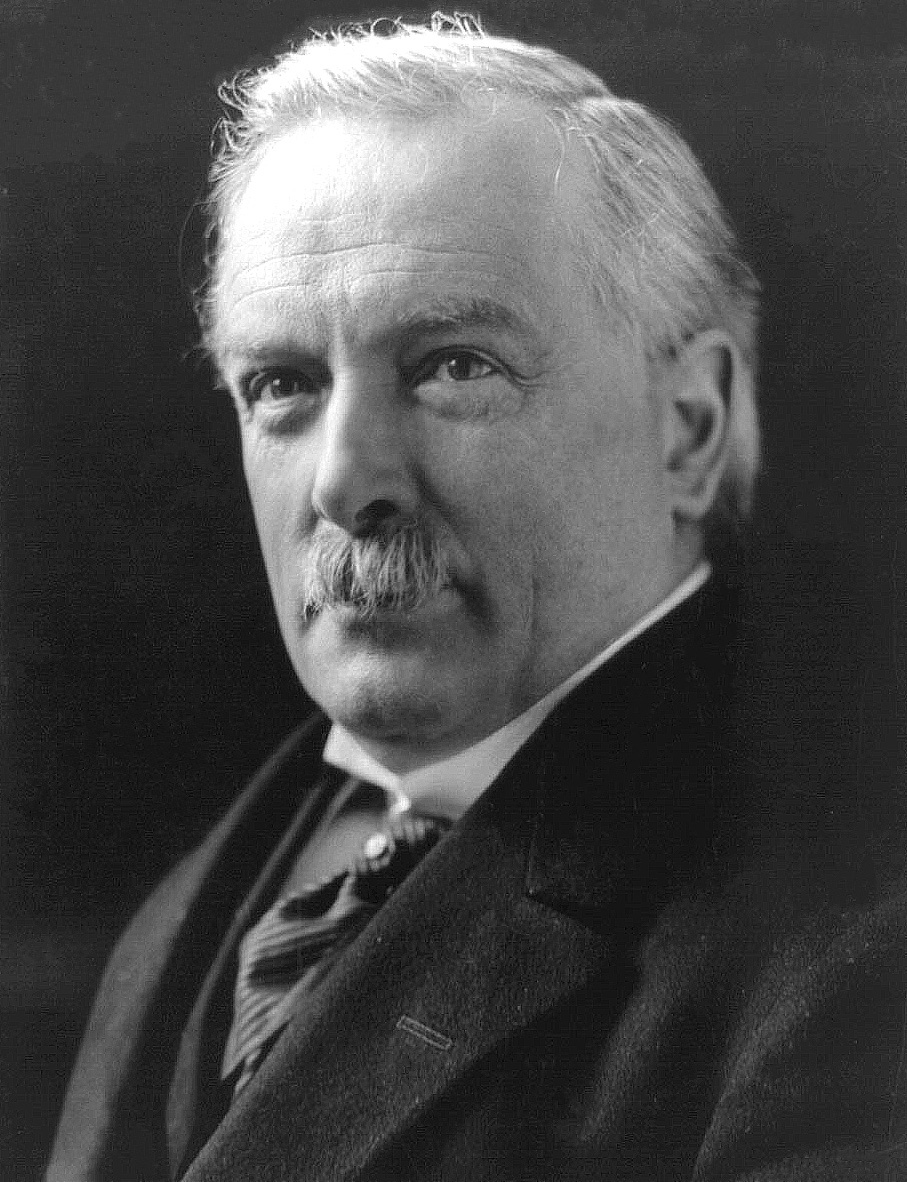
    David Lloyd George – 1921 Speech on the Irish Free State

    The speech made by David Lloyd George, the then Prime Minister, in the House of Commons on 14 December 1921.

    We generally select for the moving and seconding of the Address Members of what I may call budding promise; but we regarded this occasion as being so exceptional that it was thought desirable to select men whose promise had matured into reputation and respect in the House. My hon. and gallant Friend who moved, and my right hon. Friend who seconded, have made speeches worthy of the reputation which they have already won in this House—well-considered, thoughtful, prudent, discreet. There were many difficulties which they avoided. They realised that it was necessary, not merely to carry these Articles in this House, but also to secure the assent of the Irish representatives as well; and all those who take part in this Debate must necessarily be hampered by that knowledge. These Articles of Agreement have received a wider publicity than probably any treaty that has ever been entered into, except the Treaty of Versailles. They have been published in every land.

    No agreement ever arrived at between two peoples has been received with so enthusiastic and so universal a welcome as the Articles of Agreement which were signed between the people of this country and the representatives of the Irish people on the 6th of this month. They have been received in every quarter in this country with satisfaction and with relief. They have been received throughout the whole of His Majesty’s Dominions with acclaim. I saw that they were characterised in some quarters as “a humiliation for Britain and for the Empire.” The Dominions of the Crown are not in the habit of rejoicing over acts of humiliation to the Empire, for which they have sacrificed so much. Every article was telegraphed to them as soon as the Treaty was signed and, without a dissentient voice, Governments and Parliaments not merely sanctioned and approved, but expressed satisfaction and joy at the transaction. Every Ally sent through its leading Ministers congratulations to the British Government on the accord—tried friends of ours, not in the habit of being glad when we are humiliated. At home, in the great Dominions of the Crown, among our Allies, throughout the whole of the civilised world, this has been received not merely with satisfaction, but with delight and with hope.

    I am very much obliged to my right hon. Friend (Sir Donald Maclean) for the kind words he used in reference to the part which I took, but let me say at once that, in so far as this Agreement has been achieved, it would not have been done without the most perfect collaboration among all the members of the British Delegation. Every one of them worked hard; each of them contributed from his mind and from his resource. The same thing applies—and here I am in cordial agreement with my right hon. Friend—to the part played by the representatives of Ireland. They sought peace, and they ensued it. There were some of my right hon. Friends who took greater risks than I did in signing this Treaty. It will be remembered to their honour. There were men on the other side who took risks. The risks they took are only becoming too manifest in the conflict which is raging at this hour in Ireland, and all honour to them. Not a word will I say—and I appeal to every Member in this House not to say a word—to make their task more difficult. They are fighting to make peace between two great races designed by Providence to work together in partnership and in friendship.

    It is very difficult on an occasion like this to knew exactly what to say, what to dwell upon, what one ought to elaborate, what needs elucidation, what you can just leave to the mere Articles to speak for themselves; and there is no greater difficulty for a man who has been immersed in a business for months than to know exactly what to explain. That is the difficulty I am experiencing at the present moment. If the House will put up with me, I propose to expound the general effect of the Articles of Agreement, leaving it to those who take part later in the Debate to answer any criticisms or respond to any inquiries, or to clear up any obscurities which may appear in the mind of any Member of this House. I understand that an Amendment will be moved which traverses practically the whole of these Articles of Agreement, and there will certainly be another opportunity for my right hon. Friend, and probably for myself, to say a few words later on.

    The main operation of this scheme is the raising of Ireland to the status of a Dominion of the British Empire—that of a Free State within the Empire, with a common citizenship, and, by virtue of that membership in the Empire and of that common citizenship, owning allegiance to the King.

    Mr. R. McNEILL

    “Owning allegiance”!

    The PRIME MINISTER

    And swearing allegiance to the King. [Interruption.] My hon. Friend can make his observations later on.

    Mr. J. JONES

    They will not be worth much, if he does make them.

    The PRIME MINISTER

    I will explain as best I can the nature and extent of this transaction. What does “Dominion status” mean? It is difficult and dangerous to give a definition. When I made a statement at the request of the Imperial Conference to this House as to what had passed at our gathering, I pointed out the anxiety of all the Dominion delegates not to have any rigid definitions. That is not the way of the British constitution. We realise the danger of rigidity and the danger of limiting our constitution by too many finalities. Many of the Premiers delivered notable speeches in the course of that Conference, emphasising the importance of not defining too precisely what the relations of the Dominions were with ourselves, what were their powers, and what was the limit of the power of the Crown. It is something that has never been defined by an Act of Parliament, even in this country, and yet it works perfectly. All we can say is that whatever measure of freedom Dominion status gives to Canada, Australia, New Zealand or South Africa, that will be extended to Ireland, and there will be the guarantee, contained in the mere fact that the status is the same, that wherever there is an attempt at encroaching upon the rights of Ireland, every Dominion will begin to feel that its own position is put in jeopardy. That is a guarantee which is of infinite value to Ireland. In practice it means complete control over their own internal affairs, without any interference from any other part of the Empire. They are the rulers of their own hearth—in finance, administration, legislation, as far as their domestic affairs are concerned—and the representatives of the Sovereign will act on the advice of the Dominion Ministers. That is in as far as internal affairs are concerned. I will come later on to the limitations which have been rendered necessary because of the peculiar position of Ireland in reference to Great Britain, and the Army and Navy more particularly.

    I come now to the question of external affairs. The position of the Dominions in reference to external affairs has been completely revolutionised in the course of the last four years. I tried to call attention to that a few weeks ago when I made a statement. Since the War the Dominions have been given equal rights with Great Britain in the control of the foreign policy of the Empire. That was won by the aid they gave us in the Great War. I wonder what Lord Palmerston would have said if a Dominion representative had come over here in 1856, and said, “I am coming along to the Conference of Vienna.” I think he would have dismissed him with polite disdain, and wondered where he came from. But the conditions were different. There was not a single platoon from the Dominions in the Crimean War. It would have been equally inconceivable that there should have been no representatives of the Dominion at Versailles or at Washington. Why? There had been a complete change in the conditions since 1856. What were they? A million men—young men, strong, brave, indomitable men—had gone from all the Dominions to help the Motherland in the hour of danger. Although they came to help the Empire in a policy which they had no share in passing, they felt that in future it was an unfair dilemma to impose upon them. They said: “You are putting us in this position—either we have to support you in a policy which we might or might not approve, or we have to desert the old country in the time of trouble. That is a dilemma in which you ought never to put us. Therefore, in future, you must consult us before the event.” That was right; that was just. That was advantageous to both parties. We acceded to it gladly.

    The machinery is the machinery of the British Government—the Foreign Office, the Ambassadors. The machinery must remain here. It is impossible that it could be otherwise, unless you had a Council of Empire, with representatives elected for the purpose. Apart from that, you must act through one instrument. The instrument of the foreign policy of the Empire is the British Foreign Office. That has been accepted by all the Dominions as inevitable. But they claim a voice in determining the lines of our future policy. At the last Imperial Conference they were there discussing our policy in Germany, our policy in Egypt, our policy in America, our policy all over the world, and we are now acting upon the mature, general decisions arrived at with the common consent of the whole Empire. The sole control of Britain over foreign policy is now vested in the Empire as a whole. That is a new fact, and I would point out what bearing it has upon the Irish controversy.

    The advantage to us is that joint control means joint responsibility, and when the burden of Empire has become so vast it is well that we should have the shoulders of these young giants under the burden to help us along. It introduces a broader and a calmer view into foreign policy. It restrains rash Ministers, and it will stimulate timorous ones. It widens the prospect. When we took part in discussion at the Imperial Conference, what struck us was this, that, from the mere fact that representatives were there from the Pacific and the Indian Ocean, and from other ends of the world, with different interests, the discussion broadened into a world survey. That was an advantage. Our troubles were Upper Silesia, the Ruhr Valley, Angora and Egypt, and they came there with other questions—with the problems of the Pacific, Honolulu, the Philippines, Nagasaki, and Pekin. All these problems were brought into the common stock, and a wide survey was taken by all the representatives of the Empire, who would honour the policy decided upon, and support that policy when it was challenged. They felt that there was not one among them who was not speaking for hundreds of thousands and millions of men who were prepared to risk their fortunes and their lives for a great Empire.

    That is the position which has developed in the last four years. If any one will take the trouble—which I took a few days ago—to read Pitt’s speeches on the Union, he will see how this development within the last four years has altered the argument about Union. What was Pitt’s difficulty? His one great difficulty was this: He was in the middle of a great war, a Continental war, which was not going too well, and no doubt our power was being menaced, and menaced seriously. What did he find? He found two co-ordinating Parliaments, each with full, equal powers to declare peace and war, to enter into treaties and alliances, and he said: “This is a danger.” There had been recent rebellion. He never knew what peril might develop out of that state of things. Had he had the present condition of things to deal with, does anyone imagine that that is the course he would have pursued? Had he found that the question of treaties, alliances, peace and war were left, as they are now, to a great council of free peoples, each of them self-governing, and coming together with the Motherland to discuss their affairs and decide upon their policy, what he would have done then would have been to invite Ireland to come to that Council Chamber, to merge her interests and her ideals with the common ideals of the whole of those free peoples throughout the Empire. That is the position.

    Ireland will share the rights of the Empire and share the responsibilities of the Empire. She will take her part with other Free States in discussing the policy of the Empire. That, undoubtedly, commits her to responsibilities which I have no doubt here people will honour, whatever may ensue as a result of the policy agreed upon in the Council Chamber of the Empire. That is a general summary of the main proposition which is involved in these Articles of Agreement.

    It is all very well to say “Dominion Home Rule” or “Dominion Self-government.” The difficulties only begin there—difficulties formidable and peculiar to Ireland. There are multitudes of people in this country to-day who are made happy by the thought that they have settled the Irish Question, and they are happy because they said a year or two ago that the way to settle it was by Dominion Home Rule. “That settles it.” I can assure my right hon. Friends opposite that they are not alone in this sense of self-satisfaction. But it does not settle it. You do not settle great complicated problems the moment you utter a good phrase about them.

    Mr. J. JONES

    “I am the man who knows.”

    The PRIME MINISTER

    Oh, yes, I do. Certainly I do. I have discovered it. There are innumerable letters, resolutions and speeches which have all said: “Try Dominion Home Rule!” They had all one defect in common. They ignored all the obstacles and, therefore, they gave us no counsel as to how we were to overcome them. It is no use giving a general prescription in complicated cases. You may find the same symptoms, but you cannot ignore the constitution of the patient, his temperament, and, above all, his history, because you may find that there are evils in his system which have been left there by earlier imprudences. Therefore, it is no use going to a chemist, and ordering one general prescription. You have to deal with the complications, and you have to deal with the complications in Ireland, attributable to its history and to the imprudences of statesmen. [HON. MEMBERS: “Hear, hear!”] Yes, of both sides.

    These are the things that make a settlement in Ireland difficult, and we found them very difficult of solution. I hope we have found the solution. I never like to be too confident or too sanguine when I am talking of Ireland. Therefore, I am not going to say that we have found the specific at last. It has been said so often, but we must try. At any rate, I can see nothing better.

    What were the difficulties? There was the preliminary difficulty that the parties were not ready to come together. There was the difficulty that arose from the geographical and strategical position of Ireland. There was no use saying, “You must treat Ireland exactly as you treat Canada or Australia.” There was Ireland, right across the ocean. The security of this country depends on what happens on this breakwater, this advance post, this front trench of Britain. We knew that, and that was one of the greatest difficulties with which we had to deal. There was no use saying: “Apply Dominion Home Rule fully and completely.” We had to safeguard the security of this land. I am only now enumerating the difficulties. The next difficulty was the question of the National Debt and pensions. Every Dominion has its war debt and its pensions. Unless you make some arrangement with Ireland now, Irishmen in Ireland would be the only Irishmen who would escape contribution to the Great War. Irishmen in this country, Irishmen in the Dominions, Irishmen in the United States of America, are all paying their share. Unless there were conditions in our Agreement that Irishmen in Ireland should also bear the same burden as Irishmen anywhere else, they would escape.

    The third was the difficulty which arose from rooted religious animosities. I am sorry to use the word “animosities” in connection with religion, but there they are. It is no use ignoring them. They produce fears, I think exaggerated fears, but it is a great mistake to imagine that exaggerated fears are not facts because they are exaggerated. Even the exaggeration is a fact which you have got to deal with as long as it is rooted in men’s minds, perhaps extravagantly accentuated by recent events in North and South. There were the attacks on Protestants in the South. There were the difficulties about turning men out of shipyards in the North. There were these facts, which accentuated old differences, and added new fuel to old flames and stirred up embers. Then there was the question of protective tariffs and of the accessibility of the ports, the possibility of the exclusion of British ships from the coastal trade of Ireland, just as they are excluded in other Dominions. But the greatest difficulty of all was undoubtedly that created by the peculiar position of the north-eastern end of Ireland itself. That had wrecked every settlement up to the present. Those are roughly the peculiar difficulties, the difficulties which are Irish, which are not Dominion difficulties, and before you applied Dominion status you had to deal with each and all of these complicated troubles rooted in the past history of Ireland.

    Now I will deal with them. First in regard to allegiance. If anyone challenges what I am saying—and I understand it is going to be challenged—I will defer what I intend to say until an Amendment is moved on that subject. But for the moment I will confine myself to the statement that there has been complete acceptance of allegiance to the British Crown, and acceptance of membership in the Empire and acceptance of common citizenship. I come to the first of the great difficulties—the security of this country if full and complete Dominion Government were conferred upon, Ireland. My right hon. Friend the Member for Paisley (Mr. Asquith) pointed out in his letter to the “Times” that, that meant that they would have complete control over their army and the navy. They could raise any army they liked and any navy they liked. I pointed out over a year ago what that meant. I said that they could in these circumstances raise an army of half a million men. I think that that was rather ridiculed at the time. I have only got to point out two or three facts. The first is that Australia, with practically the same population, has sent that number of men overseas. The second is that during the War Great Britain raised very nearly one-sixth of its population to put under arias. That would have meant 700,000 in Ireland, and my recollection is that Scotland actually raised, with the same population, something like 700,000 men.

    There are two objections, apart from the security of this country, to that being permissible. I say that, even from the point of view of the security of this country, there was an element of danger, but there are two objections apart from that. This country has, since the War, taken the leading part in the disarmament of land forces, and taken a leading part in America in the disarmament of naval forces. We were the first power to put an end to conscription. We took a leading part in imposing the abolition of conscription upon our enemy countries in the Treaty of Peace. We could do so because we were setting the example ourselves. But these problems of the disarmament are the problems of the immediate future. How could the British Empire exercise the weight which it ought to exercise in pressing on other countries the importance of reducing these great forces, which had so much to do with provoking and precipitating the war, when in partnership side by side near us we had a country with forces numbering perhaps 500,000 of men all trained for war? That is the international objection.

    The second objection is of a different character. If Southern Ireland trained all its young men, and raised these big forces, one can imagine the apprehension that would fill the hearts of men in the North-East of Ireland. They would be driven, if only to give their people a sense of protection, to pursue the same course. You, therefore, would have all the young men of the North-East of Ireland enrolled, trained, and equipped as fighting forces of the North. What would happen? You would have two rival powers, with menacing conditions, and in those conditions an attitude of defence is apt to be distorted into a gesture of menace. Those are conditions in which conflict always begins. It was desirable, in the interests of the Empire, in the interests of the world, in the interests of Ireland herself, that there should be a limitation imposed upon the raising of armaments and the training of armed men within those boundaries.

    I now come to the other side, which is put forward by those who think that we ought not to have allowed any armed forces at all. Let my hon. Friends who think that consider what it means. You cannot guarantee law and order in a country unless you have, to support your civilian forces, a certain number of armed men. We think of Ireland as a country concerned merely about Nationalist questions, concerned merely about these conflicts which have been raging during the last few years. But Ireland has exactly the same problems that we have at bottom. In Belfast there were strikes some time ago, and a considerable number of armed men had to be sent there to maintain peace. In my own country, in Wales, we had a great strike. [HON. MEMBERS: “Lock out!”] We had a stoppage of work, an involuntary stoppage of work. A certain number of extreme men were threatening sabotage. The Government felt compelled to send a considerable number of armed men there to maintain order and protect property. You cannot have a Government responsible for law and order, unless you also equip them with the right to raise a certain number of armed men to support the civil authority. That is all that has been done.

    The limit is not beyond what is necessary for the purpose. If you take the most sanguine view, the numbers will not exceed, for the whole of Ireland, 40,000 men. That is not an extravagant figure for the maintenance of order in North and South, with all the possibilities of conflict which may arise. I know exactly what the idea of my friends in the North of Ireland is as to the numbers they require, and if they require these numbers in the North of Ireland, it is not too much to say that it would be unfair to say that the Government in the South of Ireland responsible for law and order should get something corresponding, on the population, to those figures.

    Sir F. BANBURY

    How do you propose to enforce the limit?

    The PRIME MINISTER

    That is the Treaty—which is the only question now before us. My right hon. Friend enquires, if this Treaty be broken, what shall we do to enforce it? I am quite willing to face that. It is not a question of one Article. It is a question of the whole of the Articles. If Ireland break faith, break her Treaty—if such a situation has arisen—the British Empire has been quite capable of dealing with breaches of Treaties with much more formidable Powers than Ireland. But we want to feel perfectly clear that when she does so, the responsibility is not ours, but entirely on other shoulders.

    I now come to the second force—the Navy. With regard to the Navy we felt that we could not allow the ordinary working of Dominion status to operate. Here we had the experience of the late War, which showed how vital Ireland was to the security of this country. The access to our ports is along the coasts of Ireland. For offence or defence, Ireland is a post which is a key in many respects, and though I agree that Ireland is never likely to raise a great formidable Navy which will challenge us upon the seas, I would remind the House that minelayers and submarines do not cost much, and that they were our trouble mostly in the War. Then as to naval accessibility to the ports of Ireland. The use of coastal positions for the defence of our commerce and the British Islands in time of war is vital. We could not leave that merely to good will, or to the general interpretation of vague conditions of the Treaty. Good will has been planted, but it must have time to grow, and it must not be exposed too much to the winds of temptation. Therefore, we felt that where the security of these islands was concerned, we must leave nothing to chance. My right hon. Friend the Member for Paisley has charged me with having stigmatised Dominion Home Rule as lunacy. I never did so—never. My right hon. Friend, had he taken the trouble to read the speech before criticising it, would have seen that. He said some rather unkind things about me recently, but I think that to force him to read my speeches would be too severe a penalty. I am not complaining, except that I think that if he does criticise my speeches, he is in honour bound to read them.

    Mr. ASQUITH

    I have read them.

    The PRIME MINISTER

    Then my right hon. Friend’s memory must be very bad indeed. I never stigmatised Dominion Home Rule as lunacy. What I did say was that to allow Ireland the right to raise unlimited forces, which would provoke civil war there, and be a menace to us, to allow Ireland to raise a navy and any craft she chose, when Ireland was so vital to our defence, was lunacy, and I still say so.

    Mr. ASQUITH

    It is quite clear that the right hon. Gentleman did not read my speech.

    The PRIME MINISTER

    If my right hon. Friend says now that he did not say that I characterised Dominion Home Rule as lunacy, then I at once withdraw, but his followers certainly have done so, and I understood that he did also. At any rate, let me make it clear, for the benefit of his supporters that I never did say that. I confined the statement purely to the unlimited raising of forces and to the raising of an independent navy.

    Mr. ASQUITH

    Which I have never proposed or sanctioned.

    The PRIME MINISTER

    I have read within the last 24 hours a letter which my right hon. Friend wrote to his organ, the “Times.” I will bring it here tomorrow. He will find there a passage in which he makes it perfectly clear that he would leave the army and navy in the same position in Ireland as in Canada.

    Mr. ASQUITH

    No.

    The PRIME MINISTER

    For the moment we will postpone the duel till to-morrow. All I say is that if my right hon. Friend did not say so, and assuming that I am right, such a proposal was sheer lunacy. That is only a kind of provisional characterisation of his speech. So much for the military forces of the Crown. What we have done there is this: We felt that the defence of these islands by sea ought to be left to the British Navy. That is better for Ireland and better for England. There is the inherited skill, there is the power, there is the tradition of the Navy, so that the first thing we provided for was that, in the case of war, we should have free access to all the Irish harbours and creeks. If there be war, we cannot wait for discussions between Governments as to whether you can send your ships here or land men there. The decision must be left to the discretion of the men who conduct the operations.

    That is safeguarded by these Articles of Agreement. That does not mean that we do not contemplate that Ireland should take her share in the defence of these islands, the defence of her own coast, and by defending her own coasts helping us to defend ours. In five years we propose to review the conditions, and we trust it will then be possible to allocate a certain proportion of defence to Ireland herself. But that is a matter for discussion and agreement. We shall welcome her co-operation just as we welcome the co-operation of the great Dominions in naval defence and in all the other defence that is necessary for the Empire. If there are any questions to be put upon it, I shall be very glad to answer them.

    I now come to the question of tariffs. Here I confess that I was very reluctant to assent to any proposition which would involve Ireland having the right to impose tariffs upon British goods, although undoubtedly it was a Dominion right. Ultimately, and only very reluctantly, we assented to this, for the reason that Ireland is more dependent upon Britain in the matter of trade than is Britain upon Ireland. For Irish produce, especially agricultural products, England is substantially the only purchaser. That is certainly not the case in the opposite way. Therefore, the danger of any menace to our trade and commerce from this quarter is one which is entirely in our own hands; but I did think it was very important that there should be a protection against any legislation which would exclude British ships from the coastal trade with Ireland, and that was inserted in the Agreement.

    I come now to the more vexed question of Ulster. Here we had all given a definitely clear pledge that, under no conditions, would we agree to any proposals that would involve the coercion of Ulster. That was a pledge given by my right hon. Friend the Member for Paisley when I served under him as my chief. I fully assented to it. I have always been strongly of the view that you could not do it without provoking a conflict which would simply mean transferring the agony from the South to the North, and thus unduly prolonging the Irish controversy, instead of settling it. Therefore, on policy I have always been in favour of the pledge that there should be no coercion of Ulster. There were some of my hon. Friends who thought fit to doubt whether we meant to stand by that pledge. We have never for a moment forgotten the pledge—not for an instant. That did not preclude us from endeavouring to persuade Ulster to come into an All-Ireland Parliament. Surely Ulster is not above being argued with. You cannot hold that arguing a question, and saying that a person ought to take a certain course, is coercing him. If you threaten—if you say you will use the forces of the Crown, that is coercion; but if you say that in your judgement it is in his interests, in the interests of the whole of Ireland, and in the interests of the British Empire, in the interests of the minority in the South, that Ulster should come in, surely that is an argument which we are entitled to use, and entitled to press?

    Mr. R. McNEILL

    If you use it fairly.

    The PRIME MINISTER

    I claim that we have used it fairly—quite fairly. We have used every argument in favour of it. I have heard from the benches where the hon. Member for Canterbury (Mr. R. McNeill) sits my right hon. Friend Lord Carson set forward as the ultimate ideal—the unity of Ireland. I have never heard an Ulster leader challenge the proposition that that was the ultimate ideal. I meant to have the quotation before me, but I did not think that would be doubted. If that be the ultimate ideal, was it unfair to Ulster to recommend that they should consider the question? That is all we have done. The refusal of Ulster even to enter into discussion, as long as an all-Ireland Parliament was a subject of discussion, raised artificial barriers in the way of an interchange of views. We could not have agreed to withdraw the discussion of an all-Ireland Parliament from the Conference without breaking it up, and we should not have been justified in breaking it up upon a refusal even to enter into a discussion of the desirability of the proposal. The responsibility was too great, and we could not accept it.

    What is the decision we have come to in this Treaty? Ulster has her option either to join an All-Ireland Parliament, or to remain exactly as she is. No change from her present position will be involved if she decide, by an Address to the Crown, to remain where she is. It is an option which she may or may not exercise, and I am not going to express an opinion upon the subject. If she exercise her option with her full rights under the Act of 1920, she will remain without a single change except in respect of boundaries. We were of opinion—and we are not alone in that opinion, because there are friends of Ulster who take the same view—that it is desirable, if Ulster is to remain a separate unit, that there should be a readjustment of boundaries.

    Mr. LYNN

    No.

    The PRIME MINISTER

    I stated that there are people who express that opinion, and I think it is wise. Just see what it means. There is no doubt—certainly since the Act of 1920—that the majority of the people of two counties prefer being with their Southern neighbours to being in the Northern Parliament. Take it either by constituency or by Poor Law unions, or, if you like, by counting heads, and you will find that the majority in these two counties prefer to be with their Southern neighbours. What does that mean? If Ulster is to remain a separate community, you can only by means of coercion keep them there, and although I am against the coercion of Ulster, I do not believe in Ulster coercing other units. Apart from that, would it be an advantage to Ulster? There is no doubt it would give her trouble. The trouble which we have had in the South the North would have on a smaller scale, but the strain, in proportion, on her resources would be just as great as the strain upon ours. It would be a trouble at her own door, a trouble which would complicate the whole of her machinery, and take away her mind from building. She wants to construct; she wants to build up a good Government, a model Government, and she cannot do so as long as she has got a trouble like this on her own threshold, nay, inside her door.

    What we propose I think is wise for Ulster, namely, that you should have a re-adjustment of boundaries, not for the six counties, but a re-adjustment of the boundaries of the North of Ireland which would take into account where there are homogeneous populations of the same kind as that which is in Ulster, and where there are homogeneous populations of the same kind as you have in the South. If you get a homogeneous area you must, however, take into account geographical and economic considerations. For instance, there is a little area, I believe, of Catholics, right up in the North-East of Antrim, cut off completely from the South. Nobody proposes, because the numbers there would be in favour of joining the South, that that should be taken away from the North and put into the South. You must have regard to economic considerations as well; but taking into account all these considerations, I believe it is in the interest of Ulster that she should have people who will work with her and co-operate with her, and help her along, and not make difficulties, not merely inside her boundaries, but difficulties with her neighbours as well. For those reasons we have recommended a Boundary Commission. It is not for me to say what the result will be, whether it will mean that the area of Ulster will be diminished or increased. There are those who think both, but at any rate, we propose to set up an arbitration. There will be a nominee of the. Northern Government, a nominee of the Irish Free State, and there will be a Chairman appointed by the Government, and we will take care to get a man of distinction and a man whose impartiality will commend itself to all parties alike.

    Mr. ASQUITH

    This is a very important point. I would like my right hon. Friend to tell us, is the operation of this proposed Boundary Commission to be by counties, or by any specific areas, or merely an enumeration of population?

    The PRIME MINISTER

    No, no! If my right hon. Friend will take the actual terms, he will find that we avoid giving specific directions of that kind to the Arbitrator. He is there to adjust the boundaries, and he can take into account these considerations.

    Mr. ASQUITH

    The boundaries as between North and South?

    The PRIME MINISTER

    As between the Northern community and the Southern. He takes into account the wishes of the inhabitants, but, as I pointed out, if that were the sole criterion, you might take away a little corner of North-East Antrim. Therefore, you have also got to take into account geographical considerations and economic considerations. You have also got little islands of Protestants in Catholic areas, and you must undoubtedly take into account whether a given place is an economic centre for one area or the other. I think I have dealt with the difficulties with which we were confronted.

    I now come to the question of machinery, of how these provisions can be carried into effect. There are permanent and provisional arrangements to be made. With regard to the permanent arrangements these must be formulated by the Irish representatives themselves. Here we are going to follow the example which has been set in the framing of every constitution throughout the Empire. The constitution is drafted and decided by the Dominion, the Imperial Parliament taking such steps as may be necessary to legalise these decisions. Any proposal in contravention of this Agreement will be ultra vires. The position of the Crown must, therefore, be assured. Relationship to the Empire must be established, the rights of Ulster safe-guarded, and likewise provisions for the protection of religious minorities must be incorporated. Provisions as to the Army and Navy must also be inserted. Within these limits, Ireland herself determines the constitution of her own Government. Written assurances have been given by the plenipotentiaries that before they do so they are to take into full consultation the representatives of the Southern minority. I believe there have already been interchanges of views between them of the most friendly character. They are most anxious—I am convinced they are most anxious—to do everything in their power to retain the minority within their area. They want their experience, they want their training, they want the help which they can give to reconstruct the Ireland to which they are all attached; and I am convinced that the leaders of the majority in Ireland mean to do all in their power to make it not merely possible for the minority to live there, but to make it as attractive as possible for them to continue their citizenship among them.

    Then there are the provisional arrangements. What is to be done before the Constitution is set up? There are two ways of dealing with that.

    One would be the status quo, leaving the forces of the Crown there to operate. But that is obviously undesirable once we have arrived at an agreement. There is a danger of incidents occurring which might imperil the whole Agreement. We therefore propose that a Provisional Government should be set up with such powers as are now vested in the Crown. That Government must represent the existing majority of Irish representatives. As soon as that is arranged, the whole responsibility for the Government of Ireland outside the Northern Province would be handed over to this Provisional Government and the Crown forces will be withdrawn.

    That is the substance of the Agreement we have entered into. There are such questions as Acts of Indemnity which are vital. We do not want questions to be raised on one side or the other which would involve the courts for years, and which would provoke controversies between the two countries. There must be an Act of Indemnity, and a Bill will be introduced into this House. It is only proposed now to take the ratification or sanction or assent or approval of this document; but a Bill will have to be introduced in another Session to ratify the arrangement, and give it statutory effect. If anything has been overlooked, if anything has to go into this Agreement, that must be agreed to between the various plenipotentiaries. But the introduction of Amendments without assent would undoubtedly break the Treaty, because the other party would not be bound by any alteration made either in one Parliament or the other. What applies to this Parliament equally applies to the Parliament of Southern Ireland. I have no doubt at all there will be Amendments moved there to leave out certain restrictions and limitations and qualifications. Once they are inserted, the Treaty goes. The same thing applies to any Amendment in this Parliament. Unless the wisdom of our entering into this Agreement is seriously challenged, it would only be a waste of the time of this House to enter into a defence of it.

    So far there have been but two criticisms, and I will deal very briefly with them. The first is that this is a surrender to rebellion, and is therefore a derogation from the dignity of the Crown and the prestige of the Empire. The best answer to that is the effect which the agreement has had throughout the whole civilised world, and notably in the Dominions. The part played by the Monarch has added dignity and splendour to the Throne.

    Sir W. JOYNSON-HICKS

    On a point of Order. I am exceedingly sorry to intrude on the Prime Minister. I did not raise this point of Order when two previous speakers were addressing the House, because they were moving and seconding the Address. I now ask your ruling, Sir, as to whether the name of the Monarch can be introduced into a Debate in this House. I submit with great deference that it is one of the oldest and longest standing Rules of Order of this House that no reference whatever should be made to the personality of the Crown or the action of the Crown. In these circumstances, I ask whether it is in order for the right hon. Gentleman or for any other Member in this Debate to refer to the action of the Crown in regard to this matter?

    Mr. SPEAKER

    I think the hon. Baronet has stated the position of this House just a little too broadly. In moving the Address in reply to the Speech from the Throne, it is not possible to avoid using the name of the Sovereign. Our rule—a very sound one—is that the name of the Sovereign should not be brought into Debates to influence decisions.

    The PRIME MINISTER

    It is only to that extent I propose to go, and, having regard to the terms of the Address, it is essential I should make that reference. The prestige of the Empire has been enormously enhanced by this Agreement. It has given the Empire a new strength. There was a very remarkable communication which came the other day from an able correspondent at Washington, and I think it worth reading to the House:

    “Regarding the Irish settlement strictly from the American standpoint, its effects must be beneficial on Anglo-American relations and ought to bring about a close and firm friendship between England and the United States, which hitherto has been impossible, because all attempts at amity were defeated by Irish malcontents in this country. Ireland has long been an issue in American politics. It has affected elections and controlled policies. It has divided parties. It has defeated treaties, agreements, and co-operation between England and the United States because of the terrorism exercised by the Irish.”

    It ends up:

    “The ‘New York Times,’ voicing the general approval, states that some politicians in this country will lament that their source of reputation and of livelihood has been taken from them, but nothing can really abate the deep satisfaction with which the entire world will receive the news.”

    That is the Washington correspondent of the “Morning Post.” There is a lack of co-ordination there, but it is very creditable to the news columns of that paper. There is no doubt at all that he is one of the ablest correspondents which any paper has got in America at the present time, and that is very well known. It has added to the conviction which the world already possessed that Britain somehow or other always gets over her difficulties. It is dangerous to discuss the ethics of rebellion.

    Lieut. – Commander KENWORTHY

    Hear, hear!

    The PRIME MINISTER

    I meant no personal reflection. Is it to be laid down that no rebellion is ever to be settled by pacific means? If the terms are good, are they never to be negotiated with rebels? Whom else could we have negotiated with? This House is the last authority in the world to maintain that proposition. It owes its greatest rights and privileges to concessions made to successful rebels. And may I also point out that the most ruthless repression of any Irish insurrection was effected by the greatest English rebel in history, leading an army of rebels, on behalf of a rebel government, to crush the Irish who had rallied to their legitimate Sovereign. If you take the greatest battle in Irish history—and I am sure my friends from Ulster will forgive me if I allude to it; you might have thought sometimes it was fought only yesterday—it was a battle fought by a British army led by a revolutionary King against an Irish army led by a King who had been deposed by an English revolution. There were more than half, I believe, of the English aristocracy who still believed him to be the rightful occupant of the Throne. There are considerations when you come to discuss rebellion in Ireland which are very difficult to disentangle, and we had better not say too much about them. The same arguments were advanced when there was appeasement of Canada. One of the Bills that was carried through this House was characterised by the “Morning Post” of that day as the “Rebels Reward” Bill. I make my hon. Friends a present of that. That “Rebels Reward” Bill, 70 years later, brought over 500,000 valiant men to our aid in our greatest trouble. The Earl of Chatham when dealing with rebellion in the United States of America, moved a Resolution which ended like this:

    “Fully persuaded that to heal and to redress will be more congenial to the goodness and magnanimity of His Majesty and more prevalent over the hearts of generous and free-born subjects than the rigours of chastisement and the horrors of civil war.”

    That is equally true to-day. He said, in the course of the speech in which he commended that to the House of Lords:

    “It is difficult for a Government, after all that has passed, to shake hands with defiers of the King, defiers of Parliament, defiers of the people. … Mercy cannot do harm. It will seat the King where he ought to be, throned in the hearts of his people; and millions at home and abroad now employed in obloquy and revolt would pray for him.”

    Therefore I do not shrink from this settlement. There are those who say we might have done it a year or two ago. Who can say? It is easy for you to see clearly what you can propose, but you must choose your time in proposing it. Statesmanship consists not merely in the wisdom of your proposals, but in the choosing of the right moment. My right hon. Friend the Member for Paisley and I belong in different ranks to the same profession. I belong to the lower and working ranks, and consequently the less remunerated. He knows what it is to settle an action, and he knows it depends upon your choosing exactly the moment. You must not choose it when the parties are full of fight, when they are confident they are going to win, when they are confident, not merely in the justice of their case, but in the invincibility of their counsel. Who can stand against it? That is not the time to settle. You have got to wait until difficulties have cropped up which they had never foreseen, when doubt begins to enter their minds as to the completeness of their victory, when the costs are mounting up, and the only smile is on the face of the solicitor, when they are tired out by pleadings and counter-pleadings and all the delays and wearing mechanism of the law. That is the time. But if you propose too soon, it means not merely that you fail then, but that you interpose obstacles in the way of settling at the right time. You cannot repeat exactly the same terms which have already been rejected—and terms which may be excellent to-day would not have been looked at a year ago—but you cannot repeat them once they have been thrown over. Every counsel knows that, and every statesman ought to know it.

    In 1917 we tried a settlement. Representatives of Sinn Fein would not come to the Convention, and for the rest one party would not agree to the unity of Ireland and the other party would not look at anything without it. The result was division. What was ultimately agreed to was not carried by a majority of that Convention. There were moments when we all feared that we proposed a Conference too soon, and if any of those who think that we might have done it a year ago could have just peeped through and seen the last hours which ended in agreement, they would have wondered whether, on the whole, we might not have waited a little longer. You have done it, but only just. I believe that it could not have been done had you not faced Ireland with the accomplished fact of the rights of Ulster. That accomplished fact—by legislation, by the setting up of the Government, by the operation of the Government—it was there to deal with, not in the abstract, not in an argument, not in contention across tables, but in an actual living Government. There are those who still think it could have been done a year or two ago. We do not think so.

    Mr. CHAMBERLAIN

    Hear, hear!

    The PRIME MINISTER

    We have got in support of our view this agreement, and can anyone say it could have been reached a year ago? I do not believe it could. But it has been done. I invited here time and again conferences, and those invitations were not accepted. The fact of the matter is that public opinion on neither side was quite ripe. It was only when it came to be realised by everybody that prolonging the agony would only mean more loss, devastation, irritation, and trouble that the moment came when men of reason on both sides said: “Let us put an end to it.” You could not have done it earlier; but here it is, as far as it has gone. We have got this document. [An HON. MEMBER: “A scrap of paper!”]

    On the British side we have allegiance to the Crown, partnership in the Empire, security of our shores, non-coercion of Ulster. These are the provisions we have over and over again laid down, and they are here, signed in this document. On the Irish side there is one supreme condition—that the Irish people as a nation should be free in their own land to work out their own national destinies in their own way. These two nations, I believe, will be reconciled. Ireland, within her own boundaries, will be free to marshal her own resources, direct her own forces—material, moral and spiritual—and guide her own destinies. She has accepted allegiance to the Crown, partnership in the same Empire, and subordinated her external relations to the judgement of the same general Council of the Empire as we have. She has agreed to freedom of choice for Ulster. The freedom of Ireland increases the strength of the Empire by ending the conflict which has been carried on for centuries with varying success, but with unvarying discredit, for centuries. Incidents of that struggle have done more to impair the honour of this country than any aspect of its world dominion throughout the ages. It was not possible to interchange views with the truest friends of Britain without feeling that there was something in reference to Ireland to pass over. This brings new credit to the Empire, and it brings new strength. It brings to our side a valiant comrade.

    During the trying years of the War we set up for the first time in the history of this Empire a great Imperial War Cabinet. There were present representatives of Canada, Australia, South Africa, New Zealand, and India, but there was one vacant chair, and we all were conscious of it. It was the chair that ought to have been filled by Ireland. In so far as it was occupied, it was occupied by the shadow of a fretful, resentful, angry people—angry not merely for ancient wrongs, but angry because, while every nation in the Empire had its nationhood honoured, the people who were a nation when the oldest Dominion had not even been discovered had its nationhood ignored. The youngest Dominion marched into the War under its own flag. As for the flag of Ireland, it was torn from the hands of men who had volunteered to die for the cause which the British Empire was championing. The result was a rebellion, and, at the worst moment of the War, we had to divert our mind to methods of dealing with the crisis in Ireland. Henceforth that chair will be filled by a willing Ireland, radiant because her long quarrel with Great Britain will have been settled by the concession of liberty to her own people, and she can now take part in the partnership of Empire, not merely without loss of self-respect, but with an accession of honour to herself and of glory to her own nationhood.

    By this agreement we win to our side a nation of deep abiding and even passionate loyalties. What nation ever showed such loyalty to its faith under such conditions? Generations of persecution, proscription, beggary and disdain—she faced them all. She showed loyalty to Kings whom Britain had thrown over. Ireland stood by them, and shed her blood to maintain their inheritance—that precious loyalty which she now avows to the Throne, and to the partnership and common citizenship of Empire. It would be taking too hopeful a view of the future to imagine that the last peril of the British Empire has passed. There are still dangers lurking in the mists. Whence will they come? From what quarter? Who knows? But when they do come, I feel glad to know that Ireland will be there by our side, and the old motto that “England’s danger is Ireland’s opportunity” will have a new meaning. As in the case of the Dominions in 1914, our peril will be her danger, our fears will be her anxieties, our victories will be her joy.

  • David Lloyd George – 1918 Speech on Press Relations

    davidlloydgeorge

    Below is the text of the speech made by David Lloyd George, the then Prime Minister, in the House of Commons on 11 March 1918.

    I will endeavour to answer as concisely as I can the two or three points in reference to the Press relations with the Government which have been recently raised.

    There are two Ministers who, when they joined the Government, had control of newspapers — Lord Rothermere and Lord Beaverbrook. Lord Northcliffe holds no Ministerial office; I will state later what his position is. In every great Allied country — America, France, and Italy — there are journalists and newspaper proprietors who hold high office in the Governments of their respective countries, and if it be suggested that owners or editors of newspapers are disqualified by reason of their ownership or profession from holding Ministerial positions in this country, I must challenge that contention. But the rule which applies to all company directors and professional men joining the Government must be applicable also to newspaper men, and as soon as the two Ministers were appointed they gave up all direction of their papers.

    As to the fitness of these gentlemen for their offices, they are both men of exceptional ability. One of them — Lord Rothermere — had already reorganised an important Department of the War Office, which had previously been criticised severely by two Committees appointed at the instance of the House of Commons. His administration of that Department, according to the testimony of the Secretary of State, has been an unqualified success. The other Minister —Lord Beaverbrook — had, at the request and on behalf of the Canadian Government, organised a Canadian propaganda, which is acknowledged to be amongst the most successful, perhaps the most successful, piece of work of its kind on the Allied side. When, for reasons of health, Lord Beaverbrook some time ago intimated his desire to give up his direction of the Canadian propaganda, the Prime Minister of the Dominion urged him to reconsider his decision — in a letter which has been placed before me, giving the warmest recognition to the services he had rendered.

    As to Lord Northcliffe, he is one out of hundreds of great business men, who, in this great national emergency, have voluntarily and gratuitously given their services to assist the State in the work for which their experience has especially qualified them. The Government had come to the conclusion that the important Department of offensive and defensive warfare connected with propaganda, which the enemy have used with such deadly effect in Russia and Italy, was far from being adequate to its task, and we had reluctantly come to the conclusion that it was impossible to make it efficient without a complete reorganisation of the direction. The late Government had appointed two journalists and a Foreign Office official to direct the work. Without in the least disparaging their professional ability, not one of them had the necessary experience in the acquisition and distribution of news in foreign countries. The present Government supplemented their efforts by appointing a Committee of distinguished newspaper proprietors and editors to assist. We found this quite insufficient to attain the desired end, as the Committee could exercise no real authority. It was therefore decided to put men experienced in this class of work in charge of the different branches of activity.

    Lord Northcliffe, who, in addition to being a great news organiser, has made a special study during the War of conditions in enemy countries, was invited to take charge of that branch. He consented to do so without any Ministerial position. No man better qualified for that difficult task could, in my opinion, be found in the Empire, and the Government. are grateful to him for undertaking it. Propaganda in all the other Allied countries and in Germany is conducted almost exclusively by experienced newspaper men, and in spite of all the inevitable prejudices which we apprehended might be excited, the Government came to the conclusion that they must follow that example as the only means of securing an effective presentation of our case in Allied, Neutral, and enemy lands.

    Let me add most emphatically that lay one object in making these, as all other appointments in the Government, is to secure the men who, in my judgment, are the best qualified to do the work efficiently for the country. As to the suggestion that I was in any way responsible for attacks on admirals and generals, I have already stated in this House that that charge is untrue. As to the suggestions which have been made that an official on my staff had inspired paragraphs attacking admirals and generals, I have thoroughly investigated that matter, and have no hesitation in saying that the imputation is absolutely without foundation, and constitutes a gross injustice to an able Civil servant. [AN HON. MEMBER: “What about Northcliffe?”] Should there be any further explanations required, I shall be pleased to give them in Debate this afternoon, but I propose to wait until I have heard all that hon. Members have to say on the matter before replying.

  • David Lloyd George – 1918 Statement on the War

    davidlloydgeorge

    Below is the text of the speech made by David Lloyd George, the then Prime Minister, in the House of Commons on 19 February 1918.

    I beg to move, “That Mr. Speaker do now leave the Chair.” In moving that you do now leave the Chair, I have a statement to make to the House on a matter in which not merely the House of Commons but the country are very deeply interested. In doing so, I would like to say that I hope, whatever may be said to-day, this matter will be treated as a question of policy, and not of personalities. If there has been any delay or apparent hesitation in the announcement of any decision by the Government it is not because there is any doubt in their minds in regard to that policy, but because they were very anxious that the decision, when it was announced, should be free from any element of complication about personalities. The Government were extremely anxious to retain the services of Sir William Robertson as Chief of Staff as long as that was compatible with the policy on which they had decided, in common with the Allied Governments, after prolonged consultation at Versailles. It is a matter of the deepest regret to the Government that it was found to be incompatible with that policy to retain the services of so distinguished a soldier. If the policy be right, no personalities should stand in the way of its execution, however valuable, however important, however distinguished. If the policy be wrong, no personalities and no Government ought to stand in the way of its being instantly defeated.

    What is the policy? I have already explained to the House—I am afraid rather imperfectly on the last occasion, but to the best of my ability—what is the policy of the Government in this respect. It is not merely the policy of this Government. It is the policy of the great Allied Governments in council. There is absolutely no difference between our policy and the policy of France, Italy, and America in this respect. In fact, some of the conclusions to which we came at Versailles were the result of very powerful representations made by the representatives of other Governments, notably the American Government. That policy is a policy which is based on the assumption that the Allies hitherto have suffered through lack of concerted and co-ordinated effort. There was a very remarkable quotation in yesterday’s “Manchester Guardian,” which, if the House will permit me, I will read, because I think it gives the pith of the whole controversy: Some great soldier once said that to find the real effective strength of an alliance you must halve us nominal resources to allow for the effect of divided counsels and dispersed effort Our purpose and our policy has been to get rid of that halving of the resources of the Allies, so that, instead of dispersion of effort, there should be concentration and unity of effort. There is a saying attributed to a very distinguished living French statesman, which is rather cynical—that, The more he knows of this War, the less convinced he is that Napoleon was a great soldier, for the, simple reason that Napoleon had only to tight coalitions all his life. I ventured some time ago to make an excursion into the general history of the War, in order, without blaming anyone, to point out what the Allies have suffered in the past from lack of co-ordination of effort. You have only to look at 1917, to find exactly the same set of circumstances inevitably affecting, or rather diminishing, the power of that concentration which otherwise would have been possible, in order to counteract the efforts which were made by the Germans, and to counteract the collapse on the Russian front. Anyone who examines closely the events of 1917, as well as the events of the previous year, will find plenty of argument for some change of machinery in order to effect greater concentration than has hitherto been achieved in the direction of the Allied resources. That is the reason why, after the Italian defeat, the Allied Governments, after a good deal of correspondence and of conference, came to the conclusion that it was necessary to set up some central authority, for the purpose of co-ordinating the strategy of the Allies. At the last Conference at Versailles it was decided, after days of conference, to extend the powers of that body.

    In discussing the action at Versailles, I am necessarily hampered by the Resolutions arrived at, not merely by the military representatives, but by the separate Governments, that it was not desirable to give any information in regard to the general plan which was adopted. But I think I can, within these limits, make quite clear where controversy has arisen, and ask the judgment of the House on the action of the Government as to the merits or demerits of the dispute. The general principle laid down at Versailles was agreed to whole-heartedly by everybody. I will come later to where controversy arose. There was no controversy as regards policy, but only as to the method of giving effect to it. This obviates the necessity for me to discuss the plan itself, because the House may take it that as far as the plan itself was concerned, there was, and there is now, as far as I know, the most complete agreement. Had there not been, I am sorry to say I could not have gone into it; but it is not necessary. There was agreement as to policy. There was agreement that there must be a central authority, to exercise the supreme direction over that policy. There was agreement that the authority must be an Inter-Allied authority. There was complete agreement that the authority should have executive powers. The only question which arose was as to how that central authority should be constituted. That is the only difference. There was no difference about policy; no difference about the plan; no difference about executive powers; no difference about it being necessary to set up an Inter-Allied authority with control; and no difference about its having executive powers. The only difference was as to how that central authority should be constituted. That was the whole issue. In my judgment—and I will give the facts later—agreement was reached at the Conference, even in regard to that.

    Let me give the stages of discussion at the Conference. Several proposals were put forward. We sat for days, and examined those proposals very carefully. I am sure that no one went there with a preconceived plan in his mind. Everybody went with a full desire to find the best method, and not to advocate any particular proposal. All these various proposals were, one after the other, rejected, until we came to the last. I will explain these various proposals, because I can do that without in the least giving, away the plan of operations. The first proposal was favoured in the first instance by the French and the British General Staff. I do not think the American— that is my recollection—or the Italian Staffs took quite the same view; but the French and British Staffs were in favour of the proposal by which the central body should be a council of chiefs of the Staffs. That was the first proposal. I want to show that the very proposal over which controversy raged later was examined at that Conference, and it was the first proposal examined. It was most carefully considered, and I will give the House the case put forward for it, as I want the House to hear on what grounds it was recommended.

    It was essential that each of the representatives should be in intimate touch with his own War Office. He must know the man-power, the state of morale, the-medical equipment, shipping, and Foreign Office information, and nobody could know this so well as the Chief of the Staff. Therefore, the new body ought to consist of the Chiefs of the Staffs. It was also naturally felt that there were serious constitutional objections to any system which implied that an Inter-Allied body was to come to decisions affecting the British Army. That is the case which was put forward for a body consisting of Chiefs of the Staffs. The Council examined that very carefully, and discussed it; and let me point out to the House of Commons that this was not a discussion between politicians, but a discussion where all the leading generals were present. The Commanders-in-Chief were there, except the Italian Commander-in-Chief; the French, British, and American Commanders-in-Chief and the Chiefs of the Staffs, as well as the military representatives at Versailles, and the representatives of the Government. It was a free discussion, where generals took part with exactly the same freedom as Ministers. There was no voting; in fact, there was no question of voting. I have no hesitation in saying that, on examination, the proposal completely broke down, and was rejected on the ground of its being unworkable.

    I will give the House the reasons why it was regarded as unworkable. The first reason was that the members of the Council felt that the members of the new Executive body which was going to have this great control over co-ordinating the forces of the Allies must not only know about their own armies and their own fronts, but must also be informed of the conditions on all fronts and in all the armies of all the nations, because you are not dealing merely with the British Army, you are dealing with four great armies, and you have to get information from every quarter. Versailles has become a repository of information coming from all the fronts—from all the Armies, from all nationalities, from all the Staffs., from all the Foreign Offices—and that information is co-ordinated there by very able Staffs; and I have no hesitation in saying that they have information there for that reason that no single War Office possesses, because you have information from all the fronts co-ordinated together.

    What is the second reason? We felt that this Executive body, in face of the serious dangers with which we have been confronted this year, must be in continuous session, in order to be able to take decisions instantly required. Nobody could tell where a decision would have to be taken. The men who take the decision ought to be within half-an-hour’s reach. Eight hours, ten hours might be fatal. We felt it was essential that whatever body you set up should be a body of men who were there at least within half-an-hour of the time when the Council would have to sit, in order to take a decision. Nobody knows what movement the Germans may make, There may be a sudden move here or there, and preconceived plans may be completely shattered by some movement taken by the enemy. Therefore, it was essential that the body to decide should be a body sitting continuously in session.

    The third reason was this: Not merely have they to take decisions instantly, but they ought to be there continually sitting together, comparing notes, and discussing developments from day to day, because a situation which appears like this to-day may be absolutely changed to-morrow. You may have a decision in London, and telegraph it over to Versailles, but by the time it reaches there you may have a complete change in the whole situation. Therefore, we felt it was essential that these men should be sitting together, so that whatever change in the situation took place they could compare notes, discuss the thing together, and be able to come to a decision, each helping the other to arrive at that decision.

    There is a further reason. A Council of Chiefs of the Staffs involved the creation of another and a new Inter-Allied body conflicting with Versailles. This point was put by the American delegation with very great force, and it became obvious to everybody there the moment we began to examine the proposal—although on the face of it it looked very attractive—that the functions which the Executive body was to exercise could not be properly performed by a body of Chiefs of the Staffs stationed” in the various capitals. On the other hand, if the Chiefs of the Staffs sat in Paris, it meant that the Governments would be deprived for long periods of their principal military advisers, at a critical time, and at a time when action on other vital matters on other fronts might be required. Therefore, I have no hesitation in saying that the moment it came to be examined— although we examined it with the greatest predisposition in its favour—it was found to be-absolutely unworkable, for the simple reason that the moment the Chief of the Staff went to Paris, he would cease to be the chief military adviser of the Government, and either Versailles would have to be satisfied with a deputy who could not act without instructions, or the Governments would have to be satisfied with a deputy who was not their full military adviser. For that reason, the Supreme Council rejected that proposal with complete unanimity. I think I am right in saying that the proposals were withdrawn. It was felt even by those who put them forward that, at any rate, without very complete changes, those proposals were not workable.

    Then it was suggested by the French Prime Minister that it would be desirable for each national delegation to think out some other plan for itself, and to bring it there to the next meeting, and that was done. It is very remarkable that, meeting separately, and considering the matter quite independently, we each came there with exactly the same proposal the following morning, and that proposal is the one which now holds the field. I hesitated for some time as to whether I should not read to the House the very cogent document submitted by the American delegation, which put the case for the present proposal. It is one of the most powerful documents—I think my right hon. Friends who have had the advantage of reading it will agree with me—one of the ablest documents ever submitted to a military conference, in which they urged the present course, and gave grounds for it. I think it is absolutely irresistible, and the only reason I do not read it to the House is because it is so mixed up with the actual plan of operations that it will be quite impossible for me to read it without giving away what is the plan of operations. I only wish I could. I hesitated for some time, being certain if I read that to the House of Commons, it would not be necessary for me to make any speech at all, because the case is presented with such irresistible logic by the American delegation that I, for one, do not think there is anything to be said against it, and that was the opinion of the Conference.

    What happened? We altered it here and there. There was a good deal of discussion. It was pointed out that there was a weak point here, and a weak point there. Then someone suggested how to improve it. It took some hours, but there was not a single dissentient voice so far as the plan was concerned. Everybody was free to express his opinion —not merely Ministers, but generals. The generals were just as free to express their opinions as the Ministers, and as a matter of fact Field-Marshal Sir Douglas Haig did call attention to what we admitted was a weak point in the proposal. I think he called attention to two points. We soon realised that there were weak points, we promised to put them right, and some of the time occupied was time occupied in adjusting the arrangements arrived at at Versailles to meet the criticisms of Sir Douglas Haig. They were points in regard to the Army and the Army Council, constitutional points, not points that went to the root of the proposal itself. I want the House again, at the expense of repeating myself, to recollect that this passed the Versailles Council without a single dissentient voice as far as all those who were present are concerned, and, as far as I know, it was completely accepted by every military representative present. I reported to the Cabinet as soon as I returned the terms of the arrangement. I am not sure that it had not been circulated beforehand. I rather think it had, and then I made my report to the Cabinet. Sir William Robertson was present, and nothing was then said or indicated to me that Sir William Robertson regarded the plan as either unworkable or dangerous.

    Therefore, I think I was entitled to assume that, although some of the military representatives at the beginning of the Conference would have preferred another plan, that they, just like our-selves, had been converted by the discussion to the acceptance of this plan. There was nothing to indicate that anyone protested against the plan which was adopted at Versailles. During the week— that is, the week after I returned from Versailles—the Army Council considered the arrangement, and made certain criticisms from the constitutional point of view. I considered these very carefully with the Secretary of State for War, who has throughout put Sir William Robertson’s views before the Cabinet with a persistent voice, and I considered very carefully with my colleagues all these constitutional points. Having considered them, we made certain arrangements, with a view to meeting the constitutional difficulties of the Army Council. I will give substantially the arrangements which we made, and which I understood from the Secretary of State for War completely removed the whole difficulties experienced by the Army Council in the carrying out of the arrangements. I was naturally anxious that this arrangement should be worked whole-heartedly by the whole of the military authorities, whether here or in France. I was specially anxious that the Commander-in- Chief, who is more directly concerned in the matter than even the Chief of Staff, because it affected operations, perhaps, primarily in France, should be satisfied that the arrangements that were made were such as would be workable as far as he was concerned. Therefore, before I arrived at this arrangement, I invited him to come over here. I had a talk with him, and he said that he was prepared to work under this arrangement. I will give the arrangement: The, British permanent Military Adviser at Versailles is to become a member of the Army Conicl— That is, in order to get rid of the constitutional difficulty that someone may be giving an order about British troops who is not a member of the Army Council. He was, therefore, made a member of the Army Council. That was agreed to on all hands.

    He is to be in constant communication with the Chief of the Imperial General Staff, and is to be absolutely free and unfettered in the advice he gives as a member of the Board of Military Representative; at Versailles. It would be idle to send a man there simply with instructions in his pocket that he is to agree to certain things and to nothing else. If he goes there, he must go to discuss with his colleagues, who are equally free and unfettered, to consider the facts, and to give advice according to what he hears from the others, as well as on the facts submitted to him— He is to have the powers necessary to enable him to fulfil the duties imposed upon him by the recent Versailles decision. The Chief of the Imperial General Staff is to hold office under the some conditions and with the same powers as every Chief of the Imperial General Staff up to the appointment of General Robertson, remaining the supreme military adviser of the British Government. I want the House to take in that fact. It was part of the arrangement that the Chief of the Staff was to remain the supreme military adviser of the Government— He is to accompany Ministers to the meetings of the Supreme War Council as their adviser, and is to have the right to visit France and consult with any or all of the military representatives of the super me War Council. What does that mean? It means that the representatives at Versailles must have the most perfect freedom to discuss plans and to recommend plans. If the Commanders in Chief do not approve of them—because, by the arrangement they were to consult, and be in constant communication with, the Commanders in Chief—or, if there was any difference of opinion among the various representatives, the Governments were to decide. There is no derogation of the power of the Government—none. In that case, who is to advise the Government? The advice to the Government would be given by the Chief of the General Staff, so that if there were a meeting of the Supreme War Council to decide differences of opinion between either the military representatives or the Commanders -in-Chief, the Government decide upon the advice of the Chief of the General Staff. Do not let anyone imagine that differences of opinion are going to begin now. I do not want to go into the matter, but difference of opinion is inevitable. It is no reflection upon them. They are men of independent mind, they are men of strong character; they are men of definite opinions, and, of course, there are differences of opinion, and when there are differences of opinion now, there is no one to decide but the Government, and the Chief of the Imperial Staff is still to be the supreme adviser of the Government in any differences that may in these circumstances arise. That is the position as far as the decision at Versailles is concerned.

    We were under the impression that all the difficulties, the constitutional and technical difficulties, had been completely overcome by this document, which had been shown to Sir Douglas Haig. Sir William Robertson, unfortunately, was away at the time—I think he was at Brighton—I am sorry now to learn that he was ill. At any rate, he was away, otherwise he would have been present at the Conference. We were under the impression—I certainly was under the impression—that the last of the difficulties had been removed, and, having been removed, as I was under the impression that Versailles had become the more important centre for decision, the Government decided to offer the position to Sir William Robertson. It was only afterwards that, at any rate, I realised that Sir William Robertson was unwilling to acquiesce in the system, and that he took an objection, not on technical grounds or on constitutional grounds, but on military grounds, to the system which Versailles had decided unanimously to adopt. I certainly had not realised that he took that view. We offered him, first of all, the position at Versailles. He could not accept it. We then offered him the position of the Chief of General Staff, with the powers adapted to the position which had been set up at Versailles. That, I am sorry to say, he also refused. He suggested a modification of the proposals, by making the representative at Versailles the Deputy of the Chief of Staff. We felt bound, after consideration, to reject that proposal, for two reasons. It involved putting a subordinate in a position of the first magnitude, where he might have to take vital decisions, under instructions given him beforehand, before the full facts were known, before either had heard what the other representatives had got to say, before he even knew what alternative plans might be put forward by the representatives, or by altering those instructions after consultation with the Chief, who was a hundred miles away, and who was not in touch with the every-day developments, or with the arguments that had been advanced at that particular Conference — an impossible position for any man to take up.

    The second reason is this: If you send a deputy there, the representative of the British Army would be in an inferior position to any other member of the Council, and he could not, therefore, discuss things on equal terms. We felt it was, essential that the British representatives should be equal in responsibility and authority to the representative of any other country on that body. I know it is said that General Foch was put on that body. General Foch is within twenty-five minutes of Versailles, and, if any emergency arose, within twenty-five minutes he could be present. That is not true of any other Chief of Staff. He can be at his office in the morning, and in twenty-five minutes he can be at Versailles. There is no other Chief of Staff to whom that would be in the least applicable. Travelling under any conditions from here to Paris involves time, and it is not so easy to do it now. You have got to consider a good many things when you consider what time you can go. You cannot say, start now and be there in eight hours. In a war that makes all the difference—it is vital. Therefore, we considered that it was a totally different position.

    The French felt so strongly that you cannot do your business by deputy that they took away the man they had, and put General Foch there. They knew that you cannot have deputies acting on the Board. You have to get the man himself, whoever he is, to take the position. I am sorry to take up the time of the House, but I want to give a very full explanation, as full as it is compatible with not giving away information to the enemy. Sir William Robertson came to the conclusion that, under the conditions laid down, he could not accept either position, and the Government, with the deepest and most genuine regret, found itself obliged to go on without him. We had to take the decision, and it was a very painful decision, of having to choose between the policy deliberately arrived at unanimously by the representatives of the Allied Powers, in the presence of the military advisers, and of retaining the services of a very distinguished and a very valued public servant.

    When it came to a question of policy of such a magnitude, we were bound to stand by the arrangement to which we had come with our Allies. Let me say at once that I do not wish in the least to utter a word that would look like a criticism of the decision of Sir William Robertson that he could not see his way to carry out the arrangement. There is not a word to be said about the decision to which he came. It is better that it should be carried out by those who are thorough believers in the policy concerned. With great public spirit, he has accepted a Command which is certainly not adequate to the great position he has occupied, and I wish there had been something else that would be more adequate to his great services. I would like to say just one word about Sir William Robertson. He has had a remarkable and a very distinguished career, and he is now in the height and strength of his powers; in fact, they are only in the course of development. He has great capacity and great strength of character, he is a man of outstanding—and, if I may say so, as one who has been associated with him for two or three years—not merely outstanding, but a most attractive personality. During the whole of those two years, so far as our personal relations are concerned, not merely have they been friendly, but cordial. During the whole time of this final controversy not a bitter word has been said on either side, and at a final interview—where I did my best to urge Sir William Robertson to take one or other of these alternatives—we parted with expressions of great kindliness. It is a matter of very deep regret to me. All the hesitation that has taken place has taken place because the Government were trying this and trying that, in order to secure Sir William Robertson’s acceptance; and although I knew it was laying the door open to the criticism that the Government did not know its own mind, I preferred that to anything which would lay us open to the charge that we were in the least hustling Sir William Robertson. I do not regret that the delay has taken place.

    I have always recognised the difficulties in the way of securing co-operation between Allies. There are practical difficulties— genuine practical difficulties. You have to reconcile the unity of the Allies with the unity of the Army. There were some friends of ours who undoubtedly had honest misgivings that the arrangement we made, whereas it might secure the first, was imperilling the second. That would be a misfortune. You would not help the former in that case, and I fully realised that. Let me say this, if the House were to accept the Government’s explanation to-day, I would not regard it as a mandate not to take all the necessary steps compatible with the main purpose of Allied unity to remove every legitimate cause for anxiety on that score. Quite the reverse. I propose to invite from the highest military authorities suggestions for the best means of removing any possible anxiety in the mind of anyone that in any scheme put forward in order to secure concert and combined action between Allies, you are not doing something to impair the efficiency and command of your own Army. Therefore, we shall certainly pursue that course, and if any suggestion comes from any military quarter to make the thing work even better from that point of view, certainly not merely shall we adopt it, but we shall seek it, and we mean to do so.

    There are other difficulties, not merely practical difficulties—there are difficulties due to national feeling, to historical traditions. There are difficulties innate in the very order of things. There are difficulties of suspicion—the suspicion in the mind of one country that somehow the other country may be trying to seek some advantage for itself. All these things stand in the way of every Alliance. There are also difficulties due to the conservatism of every profession—I belong to a profession myself, and I know what it means—the conservatism of every profession, which hates changes in the traditional way of doing things. All these things you have always to overcome when there is any change that you make, and they ought not to be encouraged too much on these lines. I agree that reasonable misgivings and reasonable doubts ought to be removed. If there be real difficulties, those ought to be examined and surmounted. But suspicion, distrust— those ought to be resolutely discouraged among Allies. Trust and confidence among the Allies is the very soul of victory, and I plead for it now, as I have pleaded for it before.

    We have discussed this plan, and re-discussed it with the one desire that our whole strength—our whole concentrated strength—should be mobilised to resist and to break the most terrible foe with which civilisation has ever been confronted. I ask the House to consider this: We are faced with terrible realities. Let us see what is the position. The enemy have rejected, in language which was quoted here the other day from the Kaiser, the most moderate terms ever put forward, terms couched in such moderate language that the whole of civilisation accepted them as reasonable. Why has he done it? It is obvious. He is clearly convinced that the Russian collapse puts it within his power to achieve a military victory, and to impose Prussian dominancy by force upon Europe. That is what we are confronted with, and I do beg this House, when you are confronted with that, to close down all controversy and to close our ranks.

    If this policy, deliberately adopted by the representatives of the great Allied countries in Paris, dose not commend itself to the House, turn it down quickly and put in a Government who will go and say they will not accept it. But it must be another Government. But do not let us keep the controversy alive. The Government are entitled to know, and I say so respectfully, to know to-night whether the House of Commons and the nation wish that the Government should proceed upon a policy deliberately arrived at, with a view to organising our forces to meet the onset of the foe. For my part—and I should only like to say one personal word—during the time I have held this position, I have endeavoured to discharge its terrible functions to the utmost limits of my capacity and strength. If the House of Commons to-night repudiates the policy for which I am responsible, and on which I believe the saving of this country depends, I shall quit office with but one regret—that is, that I have not had greater strength and greater ability to place at the disposal of my native land in the gravest hour of its danger.

  • David Lloyd George – 1917 Speech on Supreme War Council

    davidlloydgeorge

    Below is the text of the speech made by David Lloyd George, the then Prime Minister, in the House of Commons on 14 November 1917.

    The best way for me to answer this question is to read to the House the actual terms of the agreement between the French, Italian, and British Governments for the creation of a Supreme War Council for the Allies.

    1. With a view to the better co-ordination of military action on the Western Front, a Supreme War Council is created, composed of the Prime Minister and a Member of the Government of each of the Great Powers whose Armies are fighting on that front. The extension of the scope of the Council to other fronts is reserved for discussion with the other Great Powers.

    2. The Supreme War Council has for its mission to watch over the general conduct of the War. It prepares recommendations for the decision of the Governments, and keeps itself informed of their execution, and reports thereon to the respective Governments.

    3. The General Staffs and Military Commands of the Armies of each Power charged with the conduct of military operations remain responsible to their respective Governments.

    4. The general War plans drawn up by the competent military authorities are submitted to the Supreme War Council, which, under the high authority of the Governments, ensures their concordance, and submits, if need be, any necessary changes.

    5. Each Power delegates to the Supreme War Council one permanent Military Representative, whose exclusive function is to act as technical adviser to the Council.

    6. The Military Representatives receive from the Government and the competent military authorities of their country all the proposals, information and documents relating to the conduct of the War.

    7. The Military Representatives watch day by day the situation of the Forces, and the means of all kinds of which the Allied Armies and the Enemy Armies dispose.

    8. The Supreme War Council meets normally at Versailles, where the permanent Military Representatives and their Staffs are established. They may meet at other places as may be agreed upon, according to the circumstances. The meetings of the Supreme War Council will take place at least once a month.
    From the foregoing it will be clear that the Council will have no executive power, and that the final decisions in matters of strategy and as to the distribution anti movements of the various Armies in the field will rest with the several Governments of the Allies. There will be, therefore, no Operations Department attached to the Council. The permanent Military Representatives will derive from the existing Intelligence Departments of the Allies all the information necessary in order to enable them to submit advice to the Supreme Allied Council. The object of the Allies has been to set up a central body charged with the duty of continuously surveying the field of operations as a whole and, by the light of information derived from all fronts and from all Governments and Staffs, of co-ordinating the plans prepared by the different General Staffs, and, if necessary, of making proposals of their own for the better conduct of the War. Should the House desire an opportunity of discussing this important subject and my Paris speech, the Government would propose set aside Monday next for the purpose.

  • David Lloyd George – 1917 Speech on Russia

    davidlloydgeorge

    Below is the text of the speech made by David Lloyd George, the then Prime Minister, in the House of Commons on 19 March 1917.

    The incidents in connection with what I believe will prove to be one of the landmarks in the history of the world have followed each other with such dramatic suddenness that it has not hitherto been possible, and it is not possible to-day, to give to the House of Commons a detailed account of what has actually occurred.
    There has for some time been deep discontent in Russia, of which there have been several manifestations, due to the inefficiency of the Government in the conduct of the War. On Friday, the 9th, some riots, due to the scarcity of food, occurred in the streets of Petrograd. This was, however, the occasion rather than the cause of the Revolution which immediately followed.

    The soldiers who were commanded to take action against the rioters refused to obey orders, and gave their support to a committee, of which the President of the Duma was the head, which had been suddenly formed for the purpose of preserving order, and the control of the Government passed largely into the hands of this committee. Subsequently a strong Provisional Government was formed, of which Prince Lwoff is the head, and the Proclamation of this Government, as well as that of the Czar announcing his abdication for himself and his son, and that of the Grand Duke Michael, have appeared in the Press, and also the refusal of the latter, while placing his services at the disposal of the new Government, to accept the Throne unless called to it by the voice of the people, expressed in a constituent assembly. So far as our information goes, the Revolution has been brought about with very little bloodshed, and the new Government is receiving the support both of the country as a whole and of the Army and Navy. Our information, however, does not enable us to say that all danger is over, but it is satisfactory to know that the new Government has been formed for the express purpose of carrying on the War with increased vigour.

    I have only to add, on behalf of the Government, that they believe that the Russian people will find that liberty is compatible with order, even in revolutionary times, and that free peoples are the best defenders of their own honour and safety.