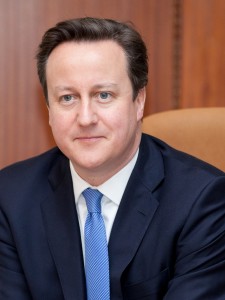
Tag: David Cameron

  • David Cameron – 2016 Speech in Davos

    davidcameron

    Below is the text of the speech made by David Cameron, the Prime Minister, in Davos, Switzerland on 21 January 2016.

    Thank you ladies and gentlemen for that welcome. It’s very good to be back in Davos. It’s good to be back being able to report on a British economy that is growing at more than 2% last year and this year. A British economy where we’ve taken an 11% budget deficit that I inherited in 2010 and we’ve cut it by 2 thirds. And to report back on a British economy where we’ve created, since I’ve been Prime Minister, 2.3 million more people in work.

    Yesterday we announced that there are more people in work in the British economy than ever before in our history and more women in work than ever before in our history. So we’ve got some economic challenges that, of course, everyone is talking about here in Davos, but we’re going to continue to deliver the strong and resilient economy that we were elected to deliver.

    And it’s good to be back in Davos with a new political mandate. We held an election and I have a mandate, a majority government, with a mandate to complete the job that we set out in terms of our economy. A mandate to deliver security for the people who elected us and for the British people as a whole. But also crucially a mandate to deliver reform in Europe and to put the question of Britain’s place in Europe and answer that question comprehensively during this Parliament. And that’s what I want to speak about today before trying to answer your questions.

    And I want to be absolutely clear about the aim that I want us to achieve. I want to be clear about what needs to change in order to make that happen and I want to be clear about the debate that I think we need to have, including business and non-governmental organisations and others who care about this issue.

    So let me start with the aim. My aim is absolutely clear. I want to secure the future of Britain in a reformed European Union. I believe that is the best outcome for Britain and the best outcome for Europe. Now, some people ask me, ‘Well, why are you holding a referendum?’ Let me explain why I believe this referendum is so crucial. For years Britain has been drifting away from the European Union. The European Union has become increasingly unpopular in Britain. And added to that, the succession of politicians, after treaty after treaty after treaty has passed, have promised referendums, but never actually delivered them. And I think it’s absolutely essential to have full and proper democratic support for what Britain’s place should be in Europe and that’s why we’re holding the referendum.

    And we also need the referendum in order to address the concerns that people have in Britain about Europe. The idea that there is too much rule‑making and bureaucracy. The idea that this could become too much of a single-currency-only club. The idea that Europe is really about a political union, a political union that Britain has never been comfortable with. So I believe holding the referendum, answering these questions, but with the end goal of securing Britain’s place in a reformed European Union, can give Britain and can give Europe the best of both worlds.

    Now let me explain what it is that I think needs to change. And I’ve set out the 4 things, the 4 areas that I think are so crucial. And just want to run through them. First of all, it is about competitiveness. When I look at the single market of 500 million people, I think it is an absolute thrilling prospect. This is a quarter of the global economy. But we have to be frank when we look at Europe’s single market. We’re still lagging behind America in technology; we’re lagging behind in productivity. We could be doing so much more to add to the competitiveness of our businesses and our economies rather than taking away from it.

    And that’s why what I want to see, what I believe we will see, is clear measures to cut the bureaucracy that there is in Europe and to cut the rule‑making. I want to see clear measures to complete the single market in digital, in services, in energy which will be of huge benefit to countries like Britain, but right across Europe in terms of jobs and prosperity.

    And crucially, I want to see Europe sign trade deals with the fastest-growing parts of the world. For instance, our trade deal with Korea has been fantastically successful for Korea, but even more successful actually for the countries of the European Union. And people will want to know in Britain that the European Union is signing trade deals as fast as and more significant than we could ever sign on our own. So I want to hardwire competitiveness into the European Union so it benefits countries; not just Britain, but I think it will benefit all of Europe and that’s why I think it’s important that we put this on the table.

    Now the second area I want to see change is I want to make sure that this organisation is good for those countries that are members of the eurozone, but also good for those countries, like Britain, that don’t want to join the euro. Because the truth is this: for many, many years, and in Britain’s case, I suspect forever, the European Union is going to have more than one currency. And we should be frank about that. And let me be clear: I want the eurozone to succeed. The eurozone is our biggest trading partner. I don’t want to stand in the way of things that need to be done to make the eurozone a success. Indeed, I would encourage eurozone members to take those necessary steps. But in a sentence, what we need is an organisation that is flexible enough so that you can be a success if you’re not in the euro, or a success if you are in the euro, and fair rules between the two.

    Let me give you just one example of what I mean. During last summer, in order to help with the Greek situation, there was a moment when the eurozone countries were going to spend money out of a fund to which Britain contributes, to help bail out Greece. That’s completely unacceptable, to use the money of a non-eurozone state to solve a eurozone crisis. Now, we fixed that problem, but frankly we shouldn’t have to fix problems like that on an ad hoc basis. What we need is a clear set of rules and principles, so that if you’re not in the eurozone, you suffer no disadvantage, you’re not discriminated against, and there’s proper fairness between the systems. I think that is achievable, and again, I think that will be good for Britain, but I also think it will be good for all the countries of the European Union, whether they are in the eurozone or not.

    Now the third area I think we need to see change, change for Britain, but again I would argue, good change for Europe, and that is in the area of sovereignty. Britain has never been happy with the idea that we are part of an ever-closer political union. We’re a proud and independent country, with proud, independent, democratic institutions that have served us well. We’re also bound up in the European continent, of which we are an important part, and we need to get that relationship right. And sometimes people think Britain is a very reluctant European. And I would say, no. If you look at things like completing the single market, you will find no more dedicated a country than Britain to get the job done. If you look at issues like coming together on foreign policy challenges to make sure we take robust action, it was Britain that led the charge on sanctions against Russia because of its actions in Ukraine. It was Britain that led the charge on making sure we had those crucial sanctions against Iran that helped to bring Iran to the table that brought about that non-nuclear deal. So we’re not reluctant in that sense, but if Europe is about ever-deepening political union, with ever-deepening political institutions, then it’s not the organisation for us. So I want to be absolutely clear that we want to carve Britain out of the idea of a closer union. We will be enthusiasts for the economic cooperation, for foreign policy cooperation, for working together on challenges like climate change, but we’re never going to be comfortable in something that insists that Britain should be part of an ever‑closer union. We’re not comfortable with that, and we need to sort that out.

    The fourth and final area is perhaps the most difficult of all, and that is this issue of migration and welfare. Now Britain is, I would argue, one of the most successful multi-racial, multi-faith, multi-ethnic democracies anywhere on Earth. We are a very diverse nation, a very diverse and successful nation, but the pressures that we face from migration in recent years have been too great. Our population is growing anyway, even before this migration is taken into account, but the figures are simple. Today, net migration into Britain is running at 330,000 a year. That means adding as many as 3.5 million people to our population across a decade. And that’s what the concern is about. It’s not a concern about race, or colour, or creed. It’s a concern about numbers and pressure. And it’s the British people’s number one concern. And I don’t think for one minute they’re being unreasonable having this concern, indeed I share this concern because the pressure on public services, the pressure on communities has been too great. Now, of course, we need to do more to control migration from outside the European Union, and we’re doing that. But we do need to look at the situation within the European Union. Now I want to be clear: I support the idea of free movement. Many British people take advantage of free movement to go and live and work in other European countries. But I think where this has gone wrong is that the interaction of our welfare system with free movement has actually set up very large pressures on our country, and that is what needs to change.

    And that is why I put on the table the idea, the proposal that you should have to live or work in Britain for 4 years before you get full access to our in‑work benefits system. Because the way it works today – because Britain has a non-contributory system, one you can access straight away – you can train as a nurse in Bulgaria, and actually it would pay you to come and work in manual labour in Britain because of our top‑up welfare system. And in the end, that isn’t really right for Bulgaria and that isn’t really right for Britain.

    And I think, when enthusiasts for the European Union look at this issue, they should stand back and look at the facts and the figures. When the founding fathers of Europe came together, did they ever really believe that a million people were going to move from Poland to Britain, or that 1 in 20 Lithuanians would make their home in Britain? Now, those people make an incredible contribution to our economy, and I welcome that, but the scale of the movement, the scale of the pressure, is something that we need to address. And I think, when in Europe we look at the issues we face today – whether it’s the migration crisis, whether it is the issues that Britain’s putting on the table – it would be far better to address these issues, to try and solve these problems, rather than try and look our electorates in the eye and say we’re simply not going to listen to what you’re doing.

    So what I’ve tried to set out is 4 things; not outrageous asks that can’t be achieved, but 4 practical sets of steps that, if achieved, would actually answer the concerns that Britain has about Europe.

    Now, let me just say a last couple of words on the debate I think that we need to have on the timing of how this should work, and what I believe the end point of all this should be.

    Now, in terms of the timing, I very much hope that we can, with the goodwill that is clearly there, reach an agreement at the February European Council; I would like that. I want to confront this issue, I want to deal with it, I want to put that question to the British people in a referendum, and go out and campaign to keep Britain in a reformed European Union. If there is a good deal on the table I will take it, and that’s what will happen.

    But I do want to be very clear: if there isn’t the right deal, I’m not in a hurry. I can hold my referendum at any time up until the end of 2017, and it’s much more important to get this right than to rush it. But of course, I think it would be good for Europe and good for Britain if we demonstrated that we can turn the goodwill that there is into the actions that are necessary to put this question beyond doubt, and get the answer from the British people.

    Now, in terms of the debate I think we need to have, obviously the politicians are going to play a big role in this debate, and I hope to play a big role myself. But I hope that business, NGOs and other organisations won’t hold back. I would say: don’t hold back right now. Even though the question isn’t settled, I think that if business backs my reforms – if you want to see the competitive Europe; if you want to see the flexible Europe; if you want to see a Europe where you can be in the eurozone and win or out of the eurozone and win – I would argue: get out there and support those things.

    I think it’s important that with this, which is such a massively important generational question for Britain and for Europe, the sooner you can start to look at your own businesses, and come up with the examples and the ideas about the benefits, and the problems, that there are with Europe, the more that you are able to help to explain and set the context for this vitally important question for Britain and for Europe.

    Now, where do I hope this all ends? Well, let me just say this: even if I’m successful in getting this reform package and holding this referendum, and Britain decides to stay in a reformed Europe, at no stage will you hear me say, ‘Well that is perfection; this organisation is now fixed.’ There are many things that are imperfect about the European Union today, and there will be many things that will be imperfect about the European Union even after this negotiation. We do need reform in Europe: to make sure Europe works for the countries of Europe, for the peoples of Europe, for the businesses of Europe; for all the people who want to work and have security, and get on and make something of their lives. The reform will not be finished.

    Second thing I’d say about the end of all this, is you’re never going to hear me say that Britain couldn’t succeed outside the European Union. Britain is the fifth largest economy in the world. We’ve got a huge amount of talent and resources and brilliant people and we’re members of many important organisations in our world. I’m never going to talk Britain down, but I think the question is not: could Britain succeed outside the European Union? The question is: how will we be the most successful? How will we be the most prosperous? How will we create the most jobs? How will we help the most number of livelihoods in our country? And how will we keep our country the most secure? Those are the questions that, to me, are absolutely vital.

    Now the end of all this, for me, I think, is quite simple: that there is an enormous prize for Britain and for Europe if we can achieve these reforms and win in this referendum. And it will be having that single market of 500 million people; having that sense of cooperation and working together on common problems and recognising that when a country like Britain has problems and issues that need to be addressed, we get out there and sort them out and address them. And to British people I would say, there is the prospect of the best of both worlds. And let me explain by that what I mean by that.

    Britain’s membership of the European Union is already different to many other countries, for important reasons of history and politics and our approach to certain issues. And by the best of both worlds I mean that we will be in the single market, and benefitting from that, but not in the single currency, keeping our own currency, the pound; that we’ll be benefiting from being able to travel and move around Europe, but we will maintain our own borders. We never went for the approach of taking down our borders and we never should, and in my view, we never will. And we’ll have more of the best of both worlds because we would be part of an organisation where we can bring benefits to it and benefits to us, but we would not be part of an ever-closer union. We would be absolutely clear that, for us, Europe is about independent nation states coming together to cooperate, to work together for their mutual benefit, but it is not an ever-deepening political union which the British people do not want and would not sign up to. I think that is a huge prize. I think that is a prize worth fighting for; it’s a prize worth negotiating for; if necessary, it’s a prize that we will have to be patient in order to achieve, but it’s a prize I’m determined to deliver in this, my second term as Prime Minister. Thank you.

    Question

    As it stands with the renegotiation deal, has the EU moved at all in terms of demands on immigration? And, as it stands right now, would you accept it? Because the French Prime Minister [inaudible] on it this morning.

    Prime Minister

    Well look, I would say we’ve made good progress. I mean some people said to me – first of all, people said before the election, ‘You’ll never actually legislate on the referendum. That’s just a promise that a politician won’t keep.’ Well we’ve kept our promise and it’s the law of the land. The next thing people said is, ‘Well, you’ll never actually get a proper renegotiation going, that won’t be possible.’ Well there is the proper renegotiation going and already it’s made very good progress. Are we there yet? As my children say when we’re driving to some long lost destination, no, we’re not there yet but I think there is the prospect, there is the possibility of getting these issues sorted by the February Council, if there’s goodwill and real movement on all sides. So I think it is achievable, it is doable, but we are certainly not there yet but I’m satisfied that my European partners and everyone is working hard to get this done.

    And the crucial thing is not whether I’m happy with the deal now. Of course I’m not happy, we haven’t done it yet, but the crucial thing will be: is there a deal that I think answers the questions that the British people have put? That’s the question and we’ll know that in February. And, as I say, if there’s a good deal on the table, I’ll take it, and I will campaign for that with everything I’ve got. But if there isn’t, I’m patient.

    Question

    Prime Minister, you couldn’t have chosen a more receptive place to give this speech about staying within the EU. I mean, I can’t imagine there’s anyone in this audience, or indeed in Davos in general, who is in favour of Brexit. But doesn’t that underline the gap between what you have in places like Davos, and in places like Brussels, where people do believe in internationalism? And then what a lot of people are feeling in the UK: they feel disenfranchised, they feel there’s a big distance from what is being decided here and what they’re feeling in their pockets, both with the EU and with the economy. What do you say to them?

    Prime Minister

    Well, what I would say to everybody is the same thing; I don’t make one speech in Davos and another speech if I’m in rural England. I say the same thing, which is: if we can get the right deal, it’s right to stay in a reformed European Union. And if we don’t, then I rule nothing out, because you’re right, there is a disconnection. People feel that they want a European Union that is on their side. They want one that is going to help business, jobs and prosperity in our country. They want one where you don’t have to join the single currency, but your interests are protected. They want one which understands that the pressure of migration in Britain recently has been too high. Now I would say these aren’t purely British issues and British problems. I think you’re much better in politics – rather like in business, if you’ve got issues you need to resolve, have a strategy and a plan to resolve them, rather than just pushing them away and hoping they’ll go away.

    Now that is my approach, and I think that is one that I’m grateful my European colleagues have answered the need for these changes, but I think if we make these changes, it will actually bring Europe closer to people and it shows that this is an organisation that’s flexible enough to solve problems that people have.

    And I think we’re going to need more of that frankly, if we look at what’s happening with the Syrian refugee crisis. Again, we’re going to need to look at new answers. And I think that’s going to be crucial to demonstrate that Europe is flexible enough to respond to people’s concerns.

    Question

    Prime Minister, I think most people completely agree about your reform agenda and the British option. But don’t we also have to stress a little bit about the common values within the European Union? That together we can do things, not just economically, but on security, like the sanctions against Russia which you were at the forefront of that we couldn’t do by ourselves and that actually, does quite a lot of good in the European Union.

    Prime Minister

    I only had half an hour, so I gave you the speech about the 4 things that need to change. But there are 2 things I’d add to what you’ve said. First of all, you know, Britain is a country that has incredible connections, relations with all of the other European nations in the European Union. And there’s a lot that we have in common. You know, we believe in democracy, in tolerance, in rights, in freedoms, and those things, we are better able to promote if we try and promote them together.

    And while, when you sit in the European Council, as I’ve done 43 times, I think, there are times when you can have frustrations and arguments, but you never forget that this is group of countries that used to fight each other and kill each other, and have actually now come together in a common endeavour based around some values that we in Britain are very proud of, in terms of committing to democracy and freedom and rights and all the rest of it.

    The second thing I would say is that, I think, for many, Europe has, in Britain, has been principally an economic argument – and there are very strong economic arguments, including the ones I put across today. But I think in recent years, there are quite strong security arguments too. When you’ve got Russia acting as it did, destabilising Ukraine and trying to re‑write the borders of Europe; when you’ve got, in the Middle East, the death cult of Daesh, and the terrorist threat that we see on our own streets and in our own cities, then actually there is a strength and safety in numbers.

    There is an important element of working together against these foes, not just in terms of a solidarity that we should show to each other as we face down these threats, but there are also some practical steps. You know, we’ve recently got the victory of having proper passenger name records in Europe, so when people get on planes between European countries and try to come to Britain, we can find out where they bought the ticket, what credit card they used, whether they might be linked to some problem organisation, all the rest of it. That action makes us safer.

    And you know, I would just say, I think for years, many in Britain thought, well, the economy – that’s connected to the European Union. Security, that’s about NATO and our partnership with America, and the Five Eyes intelligence partnership. I think that view is still valid – those things are absolutely vital. But actually, there are things that we can do with European partners in terms of finding out when criminals are crossing borders, being able to chuck them out of our countries when they come, having better intelligence in the exchange on terrorism, and facing up to some of the threats that we face in our world.

    So I think there is a security argument – a strong security argument – but all these things are going to rely on us getting an agreement to the problems and the issues that I’ve put on the table. And as I say, I don’t think any of the things I put on the table are impossible to achieve. I’m a practical person. I don’t want to go into a negotiation with 8 things I want and settle for 4; I’m very practical. These are the things that we need to fix. And I think we’re on our way to fixing them, but we haven’t got it sorted yet.

    Question

    Prime Minister, I wonder what you’d say to your critics who suggested this is a dangerous and cavalier question to be asking [inaudible] going on [inaudible] you know, terrorism, to the refugee crisis, to the [inaudible] global economic recovery.

    Prime Minister

    Well, I’m a believer in democracy. I’m a believer that my authority comes from the people who elect me. And I set out very clearly, three years ago, that it was time for a renegotiation; it was time to put this question beyond doubt, and hold that referendum. I set out that proposal. I talked all round Europe about it. I put it in my manifesto. The British people elected me on that basis, and I’m going to deliver exactly what I promised. And I think, in the end, think how Europe has changed since we last had a vote in 1975. You know, the single currency has been a huge driver for change in Europe. Now we’ve got to show that you can have that driver for change that’s going to change what the single currency countries do. And frankly I think they do need closer integration and more steps and measures to make a success of that currency. But Britain is not going to join that currency. If we’re going to work inside this organisation, we need the relationship between the two fixed.

    As I say, I don’t think you do your country, or indeed Europe, a service by pushing these issues to the margin and hoping they go away; I think the right thing is to confront them by having a strategy, by having a plan, by working with your partners, by being very clear about what you’re going to do, and then going out there and doing it. I think we’re well on the way to doing that and I will accept the judgement of the British people when I put that question before them.

    But I’ve always felt, many people in Britain are – so we’ll just hold a referendum. Just have – you know, put it in front of the people now. I would argue that’s a terrible choice to put to people: stay in an organisation that has got flaws and faults and need to be sorted out, or leave altogether. I want to put the question in front of the British people, here is a reformed European Union, and a European Union that’s addressed specific challenges that Britain’s put on the table. Now you can choose between staying in that or leaving. That’s what we’re doing. So I would say it’s the opposite of what my critics would suggest. I’d say it’s a very carefully thought through plan, and one that can bring great benefits not just for Britain, but for Europe.

    Question

    Prime Minister, you said that migration is the most important issue for the British people. If there is no deal on welfare curbs for immigrants from the EU into Britain, is there no deal at all?

    Prime Minister

    I’ve always said we need to have action on all 4 of the areas I’ve identified, and so this migration welfare question is absolutely crucial. People want to see progress on that.

    I made 4 promises in the election on this front. I said that if people came to Britain, came to Britain from Europe, looking for a job, they couldn’t instantly access unemployment benefit. We’re well on the way to fixing that; you don’t get the benefit for the first 6 months.

    The second thing I said is that if after 6 months you can’t find a job, then you have to return to the country you came from. This is a freedom of movement to work, not a freedom of movement to claim. And we’re well on the way to achieving that. The third thing I said is you can’t come to Britain, leave your family at home, and get British levels of child benefit. And again, I think we’re well on the way to solving that one. The fourth thing I said is that you should have to wait 4 years before you get full access to our in‑work welfare system.

    And as I’ve said, that proposal remains on the table. I know that some other countries have difficulties with it. I’ve said that if there are alternatives people can come up with that are equally potent and powerful and important, I’m prepared to look at them. But we do need action on this front if we’re going to get the reform that Britain needs, that Europe needs, and bring this question successfully to a conclusion.

  • David Cameron – 2012 Speech with Turkish Prime Minister

    davidcameron

    Below is the text of the speech made by David Cameron, the Prime Minister, and Recep Tayyip Erdogan, the Turkish Prime Minister, on 30 July 2012.

    Prime Minister Cameron

    It is very good to welcome Prime Minister Erdogan here to Number 10 Downing Street. The relationship between Britain and Turkey has always been strong. I have been keen to strengthen it.

    As Prime Minister, it was one of the first countries that I visited. We set some aggressive targets for our trade, exports, imports and investment; I think we are well on track to meet those targets as our relationship deepens.

    It is not just an economic relationship. There is also a very strong political relationship. We continue to support Turkey’s membership of the European Union; we hope we can make good progress with that over the months and years to come.

    We have had good discussions today, and we have spent a lot of our time clearly discussing the appalling situation in Syria and the very real concerns that we have that the regime is about to carry out some truly appalling acts around and in the city of Aleppo. This would be completely unacceptable. This regime needs to realise it is illegitimate, it is wrong and it needs to stop what it is doing. The international pressure against this regime and against Assad is only going to build until he finally goes.

    But a very warm welcome to my good friend and colleague, Prime Minister Erdogan.

    Prime Minister Erdogan

    Let me start by saying that I am very pleased to be in London on the occasion of the Olympics. I am very pleased that my friend David has found the time, in what must be a very busy time for him, to meet and talk to me. I thank him very much for that.

    Of course, relations between Turkey and Britain have always been very strong in the military aspect, politically, in trade, in culture and in economics. Economically speaking, at a time when there are great difficulties in Europe, we have seen our trade grow and rise from $10 billion to $14 billion. This shows that we are well on track of achieving the $20 billion that we have set in our bilateral trade as a target for 2015.

    We are also always very thankful to the UK for the support that your country has given to Turkey in Turkey’s process of accession to the European Union. I would like to take this opportunity to thank you, your country and your nation, for this support.

    Of course there are many important developments in the world and we have had time to discuss some of them. The most important, which we have seen arise more recently, is the situation in Syria where what is happening is very important and very dangerous. There is a regime there that kills and massacres its own people; we must do what we can together, in the United Nations Security Council and also in the Organisation of the Islamic Countries and the Arab League, to make sure that we can make some important progress in trying to avert this appalling situation.

    There is a build up in Aleppo and the recent statements, with respect to the use of weapons of mass destruction, are actions that we cannot remain an observer or spectator to. Steps need to be taken jointly within the United Nations Security Council, the Organisation of Islamic Countries, the Arab League, and we must work together to try to overcome the situation.

    One last point, I would also like to draw your attention to the situation in Myanmar where we see hunger, we see massacre and a lot of devastation. This is a place where there are a lot of things that no human being should be subjected to. They live in very difficult conditions and we must also make sure that there is peace and freedom everywhere in the world; we must work to achieve that.

    For that, I also hope that the Olympics in London 2012 will be a good opportunity to continue to promote the message of peace. I wish to thank you for your very successful hosting of the Olympics. I would also like to take this opportunity to express the best wishes of the Turkish people to the British people.

  • David Cameron – 2012 Speech at Global Health Policy Summit

    davidcameron

    Below is the text of the speech made by David Cameron, the Prime Minister, on 1 August 2012.

    It’s an honour to join you at such a significant event, especially in an Olympic month when we are welcoming so many people to Britain.

    Before anything else I’d like to thank Ara and Imperial College London for bringing together this stellar group of global clinicians, policy makers, investors and entrepreneurs.

    I would also like to thank in particular Her Highness Sheikha Moza of Qatar, whose home country will be hosting the 2013 Global Health Forum.

    Today, we are here to discuss the consequences of extraordinarily rapid change in health care.

    It’s an area where Britain has an incredibly proud tradition and a proud future, too.

    We’ve always been a leader in medical science.

    Take the structure of DNA discovered by Watson and Crick in Cambridge an achievement being built on today at the world-leading Sanger Institute and the new £650m Francis Crick Institute.

    Or penicillin discovered in a laboratory in St Mary’s Hospital, London and first used to cure patients in Sheffield before going on to change lives around the world.

    Or the first test-tube baby, Louise Brown born in Oldham General Hospital, and celebrating her 34th birthday last week.

    Or the MRI scanner – a British scientist helped invent it, a British company made the first commercial product and now a factory in my Witney parliamentary constituency is a leading producer of scanning magnets.

    It’s a remarkable list.

    Things that were worked on in Britain and which we’ve shared with the world.

    But it’s not just research where we are strong.

    We’ve always been a leader in health care provision, too.

    Our National Health Service was the first to offer care to every citizen, free at the point of use, based on need not ability to pay.

    And we cherish that tradition today.

    I am a champion of the founding goals of our National Health Service in Britain and will always defend its principles even as we improve the way it works, so that is it diverse, flexible and tailored to individual needs.

    And we have always been a leader in working with others to improve health around the globe as well.

    Not just in the developed world, but in countries where for many people health care barely exists.

    For instance we’ve committed to provide £384 million to the Global Fund to Fight Aids, Tuberculosis and Malaria over the next three years.

    And we’re putting £1.5bn into the Global Alliance for Vaccines and Immunisation by 2015, saving an estimated 1.4 million lives.

    So this country has so much to offer the world.

    And that’s why – among all the amazing things happening in London this month – I particularly wanted to speak here today.

    Because event is about encouraging innovation and drawing on the very best, wherever it comes from.

    There’s lots Britain can learn.

    For instance, in Mexico, Medicall Home uses mobile networks to provide primary care to 1 million people.

    In Sichuan Province, China, ‘smart hospitals’ deliver care using remote technologies.

    And in South Africa the Vitality scheme provides direct incentives for people to live healthier lifestyles.

    But there’s so much this country has got to offer, too.

    And so if you suspect I’m here to sell what’s great about Britain – I’m sorry, but you’re right.

    I’m proud of what we have.

    We’ve got great scientists and fantastic universities.

    Amazing life science companies.

    A pro-business culture.

    A national asset in the NHS.

    And a ground-breaking approach to freeing up research data.

    I want you to know about all this, I want you to help invest in all this, I want you to help work with us in all this.

    These are the five key strengths I want us to share with the world.

    Let’s start with Britain’s first, fundamental strength – in science and universities.

    Our scientists have won 34 Nobel prizes for medical research – and counting.

    The Laboratory of Molecular Biology in Cambridge alone has produced 13 Nobel Laureates.

    Our scientists work with the world – nearly half their papers are written with partners abroad.

    They are also counted the most productive of any G8 country and they publish more top research than anywhere outside the USA.

    This great research base is underpinned by one of the strongest university systems in the world, with four universities in the global top 20.

    The UK produces more science, maths and computing graduates than any other country in the European Union.

    And the government I lead has been bold about supporting this.

    We’ve protected the science and health care budget from reductions in spending required in some other areas.

    And we’re reforming university finance to give our world-class research institutions the strengths and freedoms they need.

    Our second key strength is our life sciences sector.

    Pound for pound, it’s the best on the planet.

    It accounts for 165,000 jobs and over £50bn of turnover in this country alone.

    But it’s not just the scale that counts. It’s the unique skills, too.

    Major players such Astra Zeneca and GlaxoSmithKline are headquartered here.

    Global giants like Novartis and Lilly have cutting edge R&D based here.

    And crucially we’ve also got a fantastic base of smaller firms too, leading in innovation.

    Take Oxford Nanopore, who are developing incredible new technology that could radically reduce the cost of sequencing a human genome.

    Or the dynamic and fast-growing companies you find in the Babraham Science Park just outside Cambridge and in other life science hotspots like Liverpool, Oxford and London.

    And right now, innovation like this is vital.

    Because in life sciences, the pace of development is extraordinary.

    Where once a single new drug might serve millions of patients with a range of different conditions now treatments are increasingly targeted at patients with specific genetic characteristics.

    Indeed, it may well be the case that within a decade, the idea of treating major diseases without reference to a patient’s genetic blueprint will be unthinkable.

    The benefits can be huge. But to make the most of them we need to change the way we work.

    That means open innovation, more collaboration with universities and start-ups, and a greater emphasis on data analytics and genomics than ever before.

    We get it.

    I’d like all of you to leave today with the knowledge that the UK is changing fast too.

    And that leads directly to the third strength I want to tell you about.

    In Britain we have got a pro-business government that backs investment in innovation and life sciences.

    Some of this is about building an environment that supports business, instead of holding companies back.

    That’s why we have cut the top rate of income tax why we are cutting our corporation tax rates to the lowest levels in the G20 and why we have hugely generous Research and Development tax credits to support companies that are investing in innovation.

    You will not find a more stable and attractive environment in Europe for business investment than the UK.

    However, I know that companies in the life sciences sector have specific needs.

    So in addition to everything we’re doing to make the UK as business friendly as possible, we’re also taking bold action to support life science investment in particular.

    For the first time we are creating a Patent Box here in the UK.

    The Patent Box means that if a company creates intellectual property in the UK, it will pay a corporation tax rate of just 10% on any profits generated by those patents.

    Let me say that again: 10% corporation tax on patent profits – among the lowest in the developed world.

    GlaxoSmithKline has already announced new investment here in response.

    In March, it confirmed it will invest more than £500m at its sites across the UK, including a new manufacturing facility.

    In the words of Sir Andrew Witty, who spoke earlier, “the patent box has transformed the way GlaxoSmithKline views the UK as a location for new investments”.

    There’s a fourth strength which makes the UK a great place to invest in life sciences.

    Our National Health Service.

    To some, it might seem a bit of a monolith.

    But it gives us a unique capability.

    With patient records for 60 million people, and purchasing power unmatched anywhere else, the NHS is perfectly placed to accelerate life science innovation.

    So I’ve made this task a priority.

    We are bringing in value-based pricing, to encourage innovation and reward the most effective products.

    And ours is the first health service in the world where we have introduced a legal duty to promote research.

    That means we can get new treatments to patients faster than ever before.

    And this adaptability really matters because the life science industry is becoming more open and collaborative with a greater emphasis on partnerships between early stage companies and big pharma.

    We want to help more of those partnerships emerge in the UK.

    That’s why we have created the £180 million Biomedical Catalyst Fund to help British life science start-ups find the risk capital they need to get off the ground.

    This will help ensure that the UK has a fantastic pipeline of early stage companies producing next generation drugs and heath technologies.

    We know that regulations mean it can take a decade or more from the discovery of a drug to getting it to market.

    That’s not good for industry, taxpayers or patients.

    So we are consulting on an early access scheme.

    If patients are in the advanced stage of a disease and if there are no other treatments available they will be able to use innovative medicines much earlier in their development.

    In the technical parlance, the NHS will be able to purchase drugs before they have market authorisation.

    This will mean that as soon as brand new discoveries prove they can be tolerated and beneficial, they will be available to patients who have no alternatives here in the UK more widely than ever before.

    There’s a fifth British strength I’m keen to tell you about, too.

    The way we are going to use the incredible knowledge base offered by the NHS.

    Drug development relies more and more on real-time data.

    The UK is going to be the world leader when it comes to making this kind of data available and we’re going to do this by harnessing the incredible data collected by our National Health Service.

    We are about to consult on changing the NHS constitution so that the default setting is for patients’ data to be used for research unless the patient opts out.

    This will make anonymised data available to scientists and researchers on a scale never seen before.

    And it will help make the UK the best place in the world to carry out cutting edge research.

    I want this research to bring breakthroughs in long-neglected areas like dementia where the burden of the disease is immense but the obstacles to prevention and cure are equally large.

    That’s why I launched a Challenge on Dementia back in March – doubling the dementia research budget and supporting all researchers.

    From those discovering the biological mechanisms of the disease through to the social scientists establishing what helps people live well with dementia.

    It’s this spirit of collaboration and open innovation, nationally and internationally, that has inspired a great new project that I’d like to tell you about today.

    It starts with technology and expertise used to test athletes for drugs at London 2012.

    When the games close, all this incredible equipment and expertise will be used to establish a new Phenome Centre for research into biological markers of health and disease.

    This will take advantage of the extraordinary opportunities that lie in combining genetic data with the results of medical tests on tissues and blood.

    It will allow us to understand the characteristics of disease and how these link into genes and our environment.

    It’s an impressive example of collaboration between top-class research, the NHS and industry.

    It will produce new forms of drugs – and it will lead the world in the development of precision medicine.

    And it’s an example of the way I think the future of health care is headed.

    Around the planet, we are seeing a fundamental shift away from one-size fits all treatments towards a new age of individually-tailored medicine.

    We need to face up to the growing impact of non-communicable diseases, things like obesity.

    And we can only rise to meet these challenges by working together and driving forward innovation.

    That’s my message today.

    Britain is open for business, open for partnership and open to ideas.

    I am determined that this country becomes the best place in the world to invest and innovate in life sciences.

    And I am putting in place the policies to make it happen.

    Thank you for coming, thank you for listening – and enjoy the Olympics.

  • David Cameron – 2012 Meeting with Vladimir Putin

    davidcameron

    Below is the text of the speech made by David Cameron, the Prime Minister, at this meeting with Vladimir Putin, the Russian President on 2 August 2012.

    Prime Minister

    Thank you everyone for coming. It has been very good to welcome President Putin back to Number 10 Downing Street, and to see this steady growth in British-Russian relations.

    We have discussed cooperation over these Olympics and the Sochi Olympics in 2014, which we hope will be a success. We have discussed our commercial relationship, where British exports to Russia have been increasing rapidly over the last two years, and we want to see further growth in trade, investment, and exports.

    We have discussed cooperation in areas such as energy, in addition, and we have also had a discussion about the situation in Syria. While of course there have been some differences in the positions that we have taken over the Syrian conflict, we both want to see an end to that conflict and a stable Syria. We will continue to discuss with our foreign ministers how we can take this agenda forward.

    Today has been about a further strengthening in our relations and having these important dialogues, even in areas where we do not always agree, so that we can understand each other’s positions.

    President Putin

    For my part, I would like to thank the distinguished Prime Minister for the invitation to come to London to meet him, and to attend the Olympic Games.

    I would like to start my statement with congratulations to the United Kingdom, all the nationals of the UK, the distinguished Prime Minister, with regard to the wonderful and unforgettable opening ceremony of the Olympic Games. It was quite a spectacle. It was a wonderful holiday, a wonderful feast presented by you to mankind.

    We will organise the Sochi Olympics, Winter Olympics, in 2014, and while organising such large-scale events very many problems may crop up. This is why we would be quite interested in learning from the experience of our British colleagues.

    We devoted a great portion of today’s conversation to discussing economic issues; during such a dramatic period that the global economy is undergoing, such meetings and such discussions are in demand.

    Last year we had an increase in our mutual trade by 35-40%, and we have agreed today to find new areas, spheres and sectors to promote and enhance our economic, trade and investment cooperation.

    We also spoke a lot about Syria. We made note of the fact that there are some things on which we see eye-to-eye, and we agreed to continue working to find a viable solution on that matter. We agreed to entrust our foreign affairs ministries to go on with that search for a viable solution.

    I thank you for your invitation Mr Prime Minister.

  • David Cameron – 2012 Speech at Munich Memorial Event

    davidcameron

    Below is the text of the speech made by David Cameron, the Prime Minister, on 6 August 2012.

    This evening we mark the 40th anniversary of one of the darkest days in the history of the Olympic Games. A sickening act of terrorism that betrayed everything the Olympic movement stands for and everything that we in Britain believe in.

    So as the world comes together in London to celebrate the Games and the values it represents, it is right that we should stop and remember the 11 Israeli athletes who so tragically lost their lives when those values came under attack in Munich 40 years ago.

    It was a truly shocking act of evil. A crime against the Jewish people. A crime against humanity. A crime the world must never forget.

    We remember too the six Israeli holiday makers brutally murdered by a suicide bomber in Bulgaria just last month.

    And let me say that we in Britain will do everything we can in helping to hunt down those responsible for that attack.

    Britain will always be a staunch friend of Israel. And we will stand with the Jewish people – and with all victims of terror around the world, whoever they are and wherever they are from.

    The British people know only too well what it is like to suffer at the hands of terrorists. In July 2005 our euphoria at winning the right to host these Olympics was brutally shattered within just 24 hours when terrorists targeted the London transport system and 52 innocent men and women were murdered.

    But our two countries, Britain and Israel share the same determination to fight terrorism and to ensure that these evil deeds will never win.

    Seven years on from 7/7, I am proud that as we speak, this great city of London, probably the most diverse city in the world, is hosting athletes from 204 nations. And I am delighted that a strong Israeli team is among them.

    We remember them today, with you, as fathers, husbands, and athletes. As innocent men. As Olympians. And as members of the People of Israel, murdered doing nothing more and nothing less than representing their country in sport”.

  • David Cameron – 2012 Speech at Hunger Summit

    davidcameron

    Below is the text of the speech made by David Cameron, the Prime Minister, at the Hunger Summit on 12 August 2012.

    Prime Minister

    Thank you very much everyone for coming and for giving up your Sundays for something which I think is very, very important. A warm welcome to all of you.

    While we’re holding these Olympic Games – and I think they’ve been a huge success – and while the eyes of the world are looking at the United Kingdom, I wanted to make absolutely sure we weren’t just thinking about who was going to win the next gold medal, but also we spent some time thinking about some of the biggest problems that people face in our world. And while lots of us are able to think about the next gold medal, there are millions of people in our world who are thinking about whether they are going to get a meal, whether they will go to bed hungry, whether they can get the proper food and nourishment they need to stay alive and to develop. And that’s what today’s conference is all about.

    I’ll say some remarks in a moment, but first of all, I wanted to ask Mo Farah and then Haile Gebrselassie to say some words about how important this issue is to them. Mo, you stunned us all with those two amazing runs, and it’s very good of you to give up this time for something I know you care about deeply as well.

    Mo Farah

    Thank you for inviting me. It’s a great pleasure to be here. It’s really important as an athlete to get it right, and I got it right at this championship. But mainly, the reason why I am here is I’m lucky to have set up a new life here, and grown up here. I originally came from Somalia as a little boy and didn’t know the situation out there. It’s not great. And there are kids out there who need opportunities in hunger, starving, so we must do something about it, and it’s really important that we give back something to those kids.

    As a parent, for me, luckily I’m going to have twins, and they’re going to get the right things and everything they need. But there are kids out there who need our help and hunger, and are not able to get anything. So it’s important that we give back something, and it’s great to be here. And we must do something all of us.

    I’ve set up the Mo Farah Foundation, and that’s also going well. And the reason why I set up something is just the hunger and the situation out there. We must do something and to give something back to those kids, particularly. It really touches my heart.

    Haile Gebrselassie

    First of all, I would like to say thank you to the Prime Minister of the UK and Vice President of Brazil today, and for their leadership to take on under-nutrition around the world. Last month, I delivered a petition on behalf of the ONE campaign to Africa’s leader, signed by over 55,000 African citizens and ONE members calling for action to tackle hunger. So I am delighted to now be here in London at this global event that will also focus on these opportunity issues.

    We have all watched a great performance by athletes at this Olympics. Congratulations. What a wonderful Olympics, with the best performance for the UK team: amazing, especially my friend Mo here. Congratulations to you and your people here, to host such a wonderful Olympics. That’s my witness, because I’ve been in all the last five Olympics Games, and saw many good things at this one. It’s amazing, especially the crowd in the stadium.

    I understand the pain of malnutrition. In my home country of Ethiopia, I have seen lives blighted through extreme poverty and hunger. We have seen some great performances from Ethiopian athletes in the Olympics. My country has won three golds. Only Mo won two and the UK 28, wonderful; congratulations again for that.

    Throughout the year we have seen Ethiopia put out performances and outstanding athletes from all over the world, but at home, half of our children are affected by malnutrition. Just imagine what my country could have achieved on the athletics field if half of our children weren’t suffering chronic malnutrition, if all children escaped the long-term consequence of stunting, and could grow and reach their full potential. So I am pleased today that we are trying, and we are turning the world’s attention to malnutrition, which continues to affect so many around the world.

    When I speak to young athletes, I tell them that becoming an Olympic champion takes commitment, discipline and hard work. Without hard work, there is no achievement. I want to say the same to you here today. This is a very important mission, and it will take hard work and commitment to succeed in our goal. I have faith, looking at experts gathered at this conference today, that we can make progress to saving millions of children from stunting. I wish you all the best. Thank you very much.

    Prime Minister

    It matters a lot that you do this because you are enormous role models to people not just in the United Kingdom, but around the world. And you raising the profile of this issue will mean that more will get done, more lives will be saved, fewer children will grow up to be malnourished. So thank you very much for your contribution.

    I can update you on one point. You said we had 28 gold medals; we’ve just won a 29th in the heavyweight boxing, so I just had to get that in. That was today. That was just as we were gathering.

    But I know that Mo, you can’t stay because you have many other commitments, but thank you very much for coming. I want to thank everyone again for coming, and particularly Vice President Temer of Brazil, and for all of you for coming today.

    When we won the right to host these Games, we promised two things. We said we’d stage the greatest Olympics ever here in London, and I hope it’s not too much boasting to say we think we’ve come close to doing that, if not doing it. And second, we said we’d make sure the Games weren’t just a one-summer, one-off wonder, but we wanted to create something that would last. And that’s what we’re here to talk about today.

    Now you’ve heard from Mo Farah. A week ago, and last night, the whole country cheered Mo Farah to gold in the Olympic stadium. But a year ago, the country of his birth, Somalia, was suffering in that terrible famine. Now, I’m proud of the fact that Britain led in the response to the famine in Somalia and the Horn of Africa, with over £129 million of aid from the British government, and an incredible £79 million of individual donations from the British people. And I’m proud too that through the London conference that we held earlier this year, we helped to play a part in the international response that means today, Somalia is a place of some growing hope rather than despair.

    But while people around the planet have been enjoying and competing in these Games, there is another world where children don’t have enough to eat and never get the start in life that they deserve. The figures are truly shocking. One in three child deaths are linked to malnutrition, and 171 million children are so malnourished by the age of two that they can never physically recover. That is the terrible thing about this – what we would call a ‘silent crisis’ – that it harms for life. Even if malnourished children are able to fight off the sickness and the infection in their earliest years, their bodies and their minds never fully develop. And it’s a tragedy for them, it’s a tragedy for the societies that they live in, because children who could grow up to become doctors, farmers, engineers, entrepreneurs, or great Olympians, are simply left behind.

    The problem repeats itself generation after generation, and it doesn’t stop just when they’re older. Just under one billion people across the world go to bed hungry every single night. Now, we’ve got a responsibility to tackle this, but the hard truth is – and it needs to be said – that while we’ve made great strides in the last decade on things like education, malnutrition rates have actually stagnated. I’m determined that we try and help change this, which is why I wanted at the end of this Olympic fortnight to hold this hunger event, and it’s why between 2011 and 2015, Britain will reach 20 million children under the age of five and pregnant women with nutrition programmes. That is our own contribution to this challenge.

    But the ambition I want to set today is for the world to rise together to make a difference, between now and between the start of the Rio Olympics in 2016. And I think that’s appropriate because Brazil is actually making huge progress on this issue.

    Now, what is my answer to this challenge? Well, let me start another way. Here are two things I think we shouldn’t do. First of all, we shouldn’t just throw food aid at the problem and hope for the best. And second, we shouldn’t pretend there is one single fix. This is a complex problem; it requires a complex set of solutions.

    The challenge of malnutrition isn’t just about food. That is obviously the symptom, but we need to tackle the underlying causes. If you take, for example, the Democratic Republic of Congo, it’s a country that exports food but where millions are still undernourished; or if you take Africa as a whole, which has almost 60% of the world’s uncultivated land, but where malnutrition is chronic.

    So the problem is partly a failure of government. Farmers can farm, traders can trade, but without the rule of law, without property rights, without peace, you can’t get your product to market. You can’t sell your crops. And without things like decent sanitation, accessible healthcare, and basic education, malnutrition grows. So Britain’s response is to fund these things, as one of the most generous aid donors in the world. It’s precisely why we’re sticking to our commitment to 0.7% of our income spending on aid, even at a time of economic hardship.

    The problem is also, I believe, partly a failure of the private sector. Rising food prices leaves the poor hungry, but if the private sector can help farmers in Africa and Asia to grow more and get their crops to market at a fair price, then there can be opportunity too. So Britain’s response is to work with businesses like those here, like Unilever, GSK, Britannia Foods, to produce and distribute food that contains all the nutrients that young children need.

    And there’s another thing Britain can do here as well, and that is, use science to produce nutritionally enriched, resilient crops, and make sure everyone gets access to these seed types, not just farmers in rich countries. So we’re backing agricultural research and innovation to enable around half a million poor households across Africa to grow better crops, benefiting up to three million people.

    Finally, and I think this is very important, it’s important that we have meetings like this during Olympic fortnights like this. We’ve got to keep the promises that we make when we have meetings like this. Data on progress needs to be transparent. It needs to be put in the hands of our citizens so they can monitor what governments and businesses say they’re going to do, and then what they actually do.

    Now, I’m not claiming to have all the answers. This is a challenge for everyone round the table. I’m looking forward to hearing people’s contributions. But I do believe it’s a challenge the world can meet, and I know it’s one we have a duty to meet. We’ve all signed up to the World Health Organisation target to cut stunting from malnutrition by 40% in 2025, and it’s now time to put that into practice. That would see something like 70 million children have access to proper nutrition. It is doable and deliverable if we make these commitments and meet these commitments.

    Now, we’ve just seen in the Olympics what the world can do when it puts its mind to a task. We’ve got political leaders, we’ve got great Olympians here, we’ve got the leading charities and organisations that care deeply about this issue. We shouldn’t turn away from this issue. In my view, we won’t. Now, I’m going to hand over to the Brazilian Vice President to talk about his country’s contribution, and what you plan in the run-up to 2016, before opening up to other contributions.

    Michel Temer (Vice-President of Brazil)

    I should like to take this opportunity first of all to say that I’m going to be speaking in Portuguese, and secondly, to thank the Prime Minister very much for hosting this event, and also to thank him for taking the leadership jointly with us to pursue this thing that, as he just said a short while ago, was committed to silence; it was something that was not observed. And so I think it is something that is very laudable and it’s something that we need to pursue in earnest. And in Brazil, we do have a great experience in fighting hunger, and this is one of the great pillars of our development.

    Therefore, combating hunger in Brazil is not only a government policy but it is a state policy, because it is enshrined in our own constitution that establishes that there is a right to food. It is a social right that we have.

    It does not only determine that we should be fighting hunger within our own country domestically, but also to assist and aid those countries that are still struggling with this major challenge.

    Brazil has already employed a great and important fight against the scourge of hunger over the past ten years, both domestically and externally, counting on the support – and the very determined support – of the United Kingdom, of and the system of the United Nations that is currently here represented by various agencies.

    As a matter of fact, the Brazil conquests are internationally acknowledged in the field of food security with the reduction of extreme poverty over the past five years when, compared to the Millennium Development Goals, the timeframe was 25 years.

    And this did happen with the contribution of the civil society in Brazil, a very organised society that engaged with this in a very earnest manner; so much so, that this fight could be pursued very much so that we all know that both in Brazil and all the world, there is no lack of food. So what is lacking? There is lack of access, and over a billion people do not have access to proper food.

    In Brazil, at the same time that we sought to redistribute the income, we also prepared a set of public policies that are geared towards food security, food and nutritional security, which has encompassed things such as school meals, gardens, vegetable gardens in schools and community gardens, food banks, local purchase of family agriculture, credit to smallholders, farmers, public depots, agricultural insurance, food banks, and popular restaurants.

    In this manner, we succeeded in reducing by 11% the levels of malnutrition in our country, and then we came to become a point of reference for other countries that have similar difficulties, challenges of poverty.

    I should like to give you two examples. For example, the Brazilian school meal programme feeds currently 47 million pupils on a daily basis. It is based on the right to food, and does not discriminate even positively. All have the right to school meals.

    And what we did as well with the National Congress, we approved the Bill which requires that 30% of the food needs to be bought from family agriculture, family farmers; that is, those smallholders that produce food locally, so that they provide the food for this school programme. And by the same token, this constitutes a very significant social integration programme: people engage with this and they supply it at a local level.

    And it is this very experience that we are now sharing with other countries, helping them to organise their own small family farming or smallholders, their crops, and also the manner that they purchase this produce, the crops, for students and other people that are in a situation of food insecurity.

    So within this trajectory, we counted on the very generous interest of the United Kingdom, with which we have established a partnership for a project for local purchase of food in five African countries, each one situated in a macro-region of Africa; that is, Mozambique, Malawi, Ethiopia, Niger and Senegal, organising the farmers and the production in the form of partnership with the Food Agriculture Organisation (the FAO), and buying the produce for the programmes, for the school meal programme, and for people that are currently in food insecurity situations through the World Food Programme.

    And I would like to also take this opportunity to point out that during the recent Rio+20 conference in Rio de Janeiro, the Secretary General of the United Nations, Ban Ki-moon, and also the Deputy Prime Minister of the United Kingdom, Mr Nick Clegg, did mention our programme, the food purchase programme that we have, as an example of horizontal cooperation.

    And within this cooperation, the Brazilian Agricultural Research Corporation (EMBRAPA) has created a number of initiatives. The chairman of EMBRAPA is present here, he is going to take part in these discussions this afternoon. He’s going to describe the various initiatives that EMBRAPA has been pursuing in order to provide this cooperation.

    And our very well-known, broadly known strategy, which is called Zero Hunger, is exactly the fruit of this practice of participatory and redistributive democracy, and that, of course, encompasses all the emergency elements. And I am extremely delighted to announce here on behalf of President Dilma Rousseff and myself a new donation that Brazil is making of $120 million in food for the World Food Programme. That was the most important part of my speech, of course.

    And this is just to say that not only did Brazil look after its own domestic problems and challenges that we had with hunger, but it also has a major concern to fight hunger all over the world, as well as malnutrition all over the world.

    And of course, all of these three aspects that I have just mentioned are based on three pillars of sustainable development, the social pillar, the economic pillar, and the environmental pillar, which are firmly grounded in the inalienable human right to food for all citizens throughout the world – that they have to have the right for good food and nutrition.

    And to close, I should like to express my gratitude to Prime Minister Cameron for inviting us to co-host this event here on combating hunger. Thank you very much indeed.

    Prime Minister

    Well thank you for co-chairing this event, and thank you for that contribution to the World Food Programme. And also, thank you for those good examples, including the school food programme, about how to tackle the shortage of nutrition and food security in some countries. That was very positive, thank you very much.

    We’re going to have, if we can now, three-minute contributions from the key speakers, the headline points they want to make about how we best tackle this crisis, before we go into the sub-groups.

    Enda Kenny (Taoiseach of the Republic of Ireland)

    Thank you, Prime Minister. I’m from Ireland. In the 1840s, we lost half our population with the Great Hunger, principally caused by blight on the potato crop, which was the sustainable crop for our people. It instilled in us a sense of real interest in dealing with hunger, and it’s given us an intense interest in foreign aid, in dealing with hunger, malnutrition, and standing by the most vulnerable and the poorest of the world.

    The eradication, therefore, of hunger in a world sense is a cornerstone of the foreign policy of our country. We’re not as big and as powerful as many others, but we’ve got a very long tradition of being involved in other countries in these areas.

    The figures are enormous, and they are obscene, and they are a testament to failure. One billion suffer from hunger; two billion suffer from malnutrition and under-nourishment, and yet all of the research, all of the capacity, all of the potential, exists to deal with these problems. I’m not here to talk about that particular issue. What I do want to say is this: sometimes the political process doesn’t actually know what to do. That’s why the collective energy and the collective experience and the collective wisdom of all of the agencies, organisations, food producers, and so on, is needed, to understand what the particular problem in any location in the world might be, and how it should be dealt with.

    For me, as the Prime Minister of my country, we assume the presidency of the European Union on 1st January next year. This will be our seventh presidency. We intend to make hunger, nutrition and climate justice a particular issue during that presidency. In April of next year there will be a major conference hosted in Ireland on hunger, nutrition and climate justice and we will obviously make an issue of this.

    But it is also important to understand the very strong relationship that exists between Ireland and Britain, which has evolved to an unprecedented extent following the visit of Her Majesty to Ireland last year, which means that the Prime Minister, when he assumes the chairmanship of the G8 next year, is also in the position to influence the issue of climate justice, hunger and nutrition in a way that is paralleled by Ireland assuming the presidency of the European Union for the first half of next year. So we pledge ourselves to work together in these interests.

    We are one of the few countries that have actually – no more than Britain -stood by our commitment in respect of foreign aid and despite the economic challenges that we face, maintained our fund in that regard and have already exceeded the 20% commitment of that programme in respect of hunger and nutrition, and we commit ourselves to continue to do that.

    So for the future, for us, it is a case of continuing to understand that we need to be in a different place if this problem is to be tackled and this challenge is to be met successfully because the old way will not work for the future; growing numbers, different issues in respect of climate change and climate justice which cannot be put off for the next decade or the next two decades or the next three decades. It needs to be tackled and tackled now.

    So in that regard, our own contribution – we were not able to give 120 million but we did give 3.5 million to the CGIAR research organisation this year, just this week actually, dealing with hunger and nutrition and we will continue in that regard. So for a country that is committed to this, where we will work with our colleagues in the Commission, our colleagues in the European sense, assuming the presidency next January, work with the G8: it is important that we use our collective wisdoms to understand what it is that has to be done and can be done.

    Leaving aside the question of politics in different countries, which is always a challenge and an issue, it is very commendable that Brazil says, ‘We have a programme where small agri-producers can produce and that food is bought, which is an incentive for them to continue to produce, and children can be healthy.’

    I commend Mo Farah and Haile Gebrselassie, a wonderful athlete, in your years. These Olympics have been outstanding, David. To you and all those wonderful volunteers, you’ve had a great two weeks for Britain, a great message from London, an example of how the spirit of sport can unify people around the world. Thank you.

    Prime Minister

    Thank you very much and thank you for that commitment to make this issue so high profile during your presidency of the European Union and it’s very good that we have the European Commission here, represented by Andris Piebalgs, who obviously has a very large budget to distribute in terms of aid and food security. I am going to be calling on you a bit later. But if we could now hear from Prime Minister Sheikh Hasina of Bangladesh, a very warm welcome to you. I know you are a member of the Scaling Up Nutrition movement and have had a lot of success in your own country tackling these issues, so I am very interested to hear from you. Thank you.

    Sheikh Hasna (Prime Minister of Bangladesh)

    Thank you, thank you very much, Right Honourable Mr David Cameron, Prime Minister of United Kingdom and Northern Ireland, excellencies, distinguished guests, ladies and gentlemen, good afternoon to you all. Today we are here to discuss hunger and malnutrition, a huge challenge facing us. Hunger is a painful experience that destroys the body and demeans the soul. Malnutrition is the largest single contributor to physical and mental underdevelopment and disease.

    I want to thank Prime Minister David Cameron for holding this event. I hope it will secure international commitment to meet the challenges.

    A billion hungry and undernourished people populate our planet with 98% in developing countries. South Asia has the highest child malnutrition in the world. Bangladesh has 6% of global childhood under-nutrition. Our pragmatic policies and measures to address this issue have succeeded in increasing dietary caloric intake. During our governance, a three and a half years’ period, under-nutrition has been reduced from 42% to 36% and stunting from 43% to 41%. We expect our children to be at 36% in 2015. In two years we are on track to attain the hunger target of MDG1.

    In Bangladesh, one third of women are undernourished and a lower proportion of pregnant women are anaemic. Macronutrient deficiencies are also a major concern. We are focusing on the first thousand days of life: that is from conception to 24 months of life. We are also promoting delayed marriage to improve the nutritional status of adults and girls, and lowering incidences of low birth weight babies and subsequent malnutrition.

    Our overall multi-sectoral efforts have succeeded in reducing poverty by 10% because we have many programmes for social safety net. And we also distribute free foods to the poorest of the poor people. Our aim is to lift deprived people out of poverty, hunger and malnutrition.

    By MDG timeframe of 2015, we have many pragmatic programmes. Our efforts have so far achieved GDP growth rate of 6.5% during our government’s tenure, increase of per capita income, attainment of MDG4 on infant mortality and MDG5 on maternal mortality. This was possible despite external vulnerability and challenges of global warming and sea level rises.

    Poverty and hunger are not just national issues. The ensuing global crisis – that is economic, energy, food, fresh water – calls for unified global approaches for solutions. A global consensus is also required to effectively respond to over-speculative transactions and financialisation of commodity markets. There is also a need for balance between government protection and regulation of institutions. All these have direct bearing on the effectiveness of domestic policies and programmes, on hunger and under-nutrition.

    Food security is imperative. During out last tenure from 1996 to 2001, we became self-sufficient in food for the first time. In recognition of this, FAO awarded the Ceres Medal to Bangladesh in 1998. Unfortunately, the years following, our government saw Bangladesh again reduced to a food importing country; that time we were not in power, it was the other party.

    During our present tenure, our reserves have led to the development of high-yielding nutritious rice varieties, also resistant to salinity, drought and rising water level. Today, we are again self-sufficient in food. We are not only growing food, we also make sure that food should reach the poor people.

    For sustainment of this achievement against climate change impacts we need concerted internal and global actions like regional buffer food grains and the imposition of export ban on imports of net food importing countries. It is predicted that climate change will adversely affect food grains in terms of yield, price, consumption, etc. This will reduce calorie intake and increase child malnutrition.

    Bangladesh is already feeling impacts of climate change, losing as much as 3% to 4% GDP growth which otherwise would have supported our efforts on health and nutrition.

    For nutrition, we also ensure health services for our people, especially for women. We have already established 12,000 community heathcare centres; through that, we are assisting our people.

    Excellencies, ladies and gentlemen, today on the backdrop of the London Olympic 2012 Games, athletes are excelling with all vigour and vitality for honours for their nations. Let us for a moment wonder on the position of others of our family, passing their days in hunger and poverty with many hoping that they were part of the Games. It should be enough if we bear compassion in our hearts to make a place today to open all doors, raise all barriers and combine all our resources as one family to eliminate hunger, malnutrition and poverty, and thus leave the world a better place for our future generations.

    I thank Prime Minister Cameron again for arranging this meeting and many of you will make some comments on that. We can get some new directions, new methods or new experiences which we can use for our people and our country. Thank you.

    Prime Minister

    Thank you very much indeed. I now call on the Prime Minister of Kenya, Prime Minister Odinga, to speak to us about his experience and his items for the future. Thank you very much, Prime Minister.

    Raila Odinga (Prime Minister of Kenya)

    Thank you very much, David. I really want to begin by thanking the Prime Minister for this initiative, for getting all these brains together during the London Olympics; that we don’t just celebrate medals but we also think of those millions who are out there and who have nothing to eat. If it had been during the French Revolution, Marie Antoinette would not have made those remarks and maybe there would never have been a revolution.

    We all know how critical it is to be blessed with good health, particularly in childhood, and here we are talking about what they call the one thousand day corridor during the formative period of a child, when the brain needs nutrients to grow. Malnourished children actually face many risks. They will likely grow up to be unemployed and frustrated because they are stunted if they don’t get their requisite nutrients early enough. And that means that basically they will become a source of discontent and social and political instability in the country rather than a demographic dividend for the country.

    But as we speak now, the statistics don’t look very good for us in Kenya. An estimated 39% of our children are undernourished. This proportion is much higher, particularly in what we call arid and semi-arid parts of our country. The economic costs are equally large. It is estimated that about $2.8 billion of our GDP is a drag, I mean, goes down as a result of vitamin and mineral deficiencies.

    What additional measures should we, the Kenyan government, take? One, we believe that it is critical to enhance the intake of vitamin A, zinc, iron and other essential nutrients by the vulnerable children and pregnant mothers. Two, iron fortification of staple foods and universal salt iodisation is also essential. Then three, we need to urgently scale up the school base warm meal programme to cover all children in the affected areas. We are about to launch this expansion with the support of the Children’s Investment Fund. Four, we should rapidly extend the free distribution of insecticide-treated bed nets. The aim will be to provide bed nets to more than one half of our children who still sleep without the treated bed nets. Five, many girls get married when they are just 12, and they are also undernourished. They then bear children who are also born weak and undernourished. Thus, the vicious cycle continues. All girls must be protected by society to ensure that they reach at least 18 years of age before they get married.

    Now we face two additional, major challenges. One is the influx of a very large number of Somali refugees, many of whom are children. Mo already left early, but he would have been happy to hear about this. We are right now hosting the biggest refugee camp in the world. About 600,000 people in one camp alone, but taken together there are nearly one million refugees as a result of political instability in Somalia. These children arrive with their mothers in the refugee camps, and when they come they are weak and malnourished. The other one is the issue of climate change. Droughts, floods and extreme, irregular weather are a common occurrence. The drought of the Horn of Africa in 2010 and 2011 affected thousands of children and mothers. We had the worst drought in over 60 years.

    So ladies and gentlemen, the resolution of these challenges requires collective actions by all concerned: that is governments, international agencies, NGOs and the private sector. This is why we endorse this Scaling Up Nutrition (SUN) movement. We particularly appreciate the eminent roles expected of the private sector under the category innovations within the SUN movement. The private public partnership (the PPPs) will be a very key component of our solution. Sales of nutrient-fortified foods and milk products on commercial networks and direct deliveries to the refugee camps are some of the many good possibilities of such PPPs. That is, that food is fortified before it is delivered, whether it is sugar, whether it is salt, whether it is maize, or even rice: it is fortified first so that the children are able to get their requisite nutrients out of those foods when they are distributed. The government of Kenya is ready to play its part. I want to conclude by saying, ‘Let us work together so that the goals for the 2016 Rio Olympics that we will set at this meeting will be fully achieved.’ Thank you very much.

    Prime Minister

    Thank you very much for that very specific set of measures you’re taking, and also the common theme emerging about the importance of family planning as a good example of how this is not just about nutrition, it’s about things that lead to poor nutrition. And clearly, having children too early can be part of that.

    Krishna Tirath (Indian Minister for Women and Children)

    Good afternoon to all of you. I congratulate the Right Honourable David Cameron, Prime Minister of the UK, for organising this global nutrition event.

    Nutrition is being given the highest attention and priority under the leadership of our Prime Minister of India, Dr Manmohan Singh, who has noted the high prevalence of under-nutrition with deep anguish in the country. The PM’s Nutrition Council has taken several key decisions to address the issues, some of which I would like to highlight.

    The Integrated Child Development Services (ICDS) scheme is reaching about 80 million children under six years and 20 million expecting and nursing mothers through a network of 1.3 million centres called Anganwadis. It’s being strengthened and restructured with programmatic, institutional and managerial reforms along with the enhanced financial commitment from an annual average of US$3.5 billion to over US$6.5 billion. The investment will improve the infrastructure, professional management, monitoring, community participation and accountability of the programme. Real-time monitoring and service as well as the knowledge resources of nutrition are also being strengthened through the use of ICT.

    Simultaneously, the healthcare component and system, through the National Rural Health Mission, is being extended and strengthened for micronutrient supplementation, the management of childhood illness, immunisation, and protocol for the treatment of severely undernourished, underweight children. Further, a more intensive, coordinated and convergent effort in the Multi-sectoral Nutrition Augmentation Programme in 200 high burden districts is being considered. A National Food Security Bill 2011 is also under the consideration of our parliament. A nationwide awareness campaign is to be launched soon to accelerate the fight against malnutrition.

    Special schemes for the empowerment of adolescent girls have been initiated, and especially a maternity benefit scheme for women. A national mission for the empowerment of women has been launched for inter-sectoral convergence of schemes and services towards the social and economic development of women.

    All these policies and programmatic measures would reinforce evidence-based interventions. The next five years are going to be extremely challenging for us, and we are determined and committed to achieve the goal to have a healthy generation. We value the support from DFID, UNICEF and other development partners. India applauds the efforts of the UK and the global community for bringing the issue of malnutrition to centre stage to coincide with the exhibition of great human prowess during the Olympics. India stands firmly committed to reducing the burden of under-nutrition and achieving the full potential of our children. Thank you very much.

    Prime Minister

    Thank you very much for that contribution and for the action you’re taking particularly in the poorest states in India that have the greatest challenges, which is where I’m sure you’re right to focus and where others should help you to focus.

    Krishna Tirath

    And we are ready to fight for this, all these challenges.

    Prime Minister

    Thank you.

    Chris Cooper-Hohn (Children’s Investment Fund Foundation)

    Thank you, Prime Minister Cameron and Andrew Mitchell for convening today’s event and I sincerely applaud their leadership on international development and addressing malnutrition.

    Ten years ago, my wife and I co-founded the Children’s Investment Fund Foundation (CIFF) to help address the obscenity of hundreds of millions of children whose lives are permanently blighted by malnutrition in the form of macronutrient deficiency, stunting and wasting.

    Today, CIFF is one of the largest foundations in the world with assets of US$3.5 billion but neither we nor other donors have enough resources to solve the problem alone. I have no doubt that climate change, drought and population growth will relentlessly increase food insecurity and food prices, leading to future catastrophic levels of child malnutrition in many countries. Without committed leadership, greater urgency and significant co-funding from the governments of developing countries themselves, we and other donors will never be able to solve the malnutrition scourge. Governments must share the responsibility to care for their own children and end the wilful neglect of child malnutrition. Countries must scale up nutrition programmes and mainstream them within health and social systems. Measuring and tracking the success of these programmes is essential. We must measure and publicise the reality of micronutrient deficiency, stunting and wasting of children, and collectively hold ourselves, including heads of state, accountable for progress each year.

    The CIFF foundation is currently granting and working on proposals in four areas. First, stunting, through the support to the World Food Programme in Malawi and Mozambique, and directly with the government of Rwanda. Second, community treatment of severe acute malnutrition at a large scale in Nigeria, in partnership with UNICEF and the national government, as well as in some Indian states. Third, micronutrient supplementation programmes in Bangladesh in partnership with GAIN and the private sector. Fourth, developing new formulations for therapeutic foods, to reduce prices for de-worming programmes in Kenya and diarrhoea programmes in India.

    Fundamentally to address root causes of malnutrition, CIFF must fund programmes in family planning and is extremely active in climate change work. Our foundation, CIFF, stands ready to make investments of tens of millions of dollars immediately and annually to address malnutrition in partnership with those countries and donors such as DFID that show a genuine commitment to addressing child malnutrition. Thank you.

    Prime Minister

    Thank you very much indeed for that.

    Paul Polman (Unilever)

    Thank you, Prime Minister, and Andrew. Congratulations on a wonderful two weeks, to start with: it’s been enjoyable to live in London, to be honest.

    Unilever are one of the biggest food companies. We sell to about two billion people a day, operate in 90-plus countries. So food security and nutrition go to the heart of our business. We could not function if the world didn’t function, obviously, and we’ve always had that as an important part. In fact, we’re spending probably about 300 million a year in reinforcing our products, be it iodine in salt, or be it in our Knorr products in Africa with vitamin A, or be it in our drinks, and the list goes on. For us, it’s just the normal thing to do: working with multilateral agencies like the World Food Programme – which fortunately is present here – or simply working with the 1.5 to 2 million small-hold farmers, providing them training in agricultural techniques.

    But it’s also very clear that we don’t reach the bottom of the pyramid; there are too many excluded, and many of you have referred to that already. That’s why there is a different partnership needed. Now, I’m very encouraged coming out of Rio and having participated in the Los Cabos meetings leading the Food Security Task Force, that there is an increasing number of what I call responsible businesses willing to participate at a different level than they’ve done. We simply cannot do it alone. I call it moving from a licence to operate to a licence to lead, and there is no better time in society to do that.

    Now, there are some wonderful initiatives. The G8 pledged the L’Aquila fund, about $20 million came out of that with specific projects for Grow Africa. We got what I call responsible business to participate for $3 billion, so we need to capitalise on that and there are 26 projects coming out already. In Los Cabos, with the G20, most of the Food Security Task Force’s recommendations would have nutrition prominently written in it, we’re adopting it in a declaration. We have commitments from major food companies of 10 to 15 billion to participate in that. The New Vision for Agriculture now has 17 projects going, we need to capitalise on that.

    And David, my friend, is here on the Scaling Up Nutrition. His goal of 35 countries and I’m glad that Prime Minister Odinga is the new one signing up today. Business is fully behind that and there’s no clearer focus than what David brings to the Scaling Up Nutrition. And then you have the initiatives that we’re doing here with GAIN and many others, the multi-sector and public private partnership initiatives. Obviously, DFID is heavily involved with GAIN as well, and the Bill and Melinda Gates Foundation that are present here as well, and many of the companies around the table, projects like Project Laser Beam in Bangladesh, helping your beautiful country, or what we do in other countries, like AIM (the Amsterdam Initiative against Malnutrition), they’re all taking hold. And the reason I mention all these products is that we don’t need to invent too many. We just, as you rightfully said, need to focus on making many of these projects now come alive, as real momentum is building up. I’m also honoured, David, to be part of this high-level panel for the development of the Millennium Development Goals after 2015, and I hope that nutrition and food security will play a prominent part in that as well under your encouragement.

    And I was glad we had the meeting at Lancaster House the other day with the food industry, and you were gladly participating on that. Eidon told me, preparing for that meeting, that the UK has 3,000 food companies here; it’s about 10% of the UK economy, and it’s one of the largest industries globally, actually, here. So your rallying cry, which you rightfully did, of how we can challenge the UK food and drinks industry to play a more prominent role behind these initiatives, is obviously spot on.

    With DFID, and with GAIN, Unilever organised about two weeks ago in our offices exactly with that purpose, a conference of some of the major businesses. You’ve referred to that already, the Associated British Food, Scargill, DSM, GSK and some others were present, together with, obviously, DFID and London School of Hygiene and Tropical Medicine, as well as Save the Children and some others. And it’s very clear coming out of that meeting that there is appetite, not frankly to invent too many new things, but to really build on some of these initiatives and to play a part in some of that very specific food security and nutrition, very specific, clear, well-defined projects, very specifically making the research and development available – that is very rich in the UK, I may add – and very specifically working on some hard output measures. So I’m very encouraged with that.

    I would say under your encouragement in the next few months, we should really summon these companies together, hold them accountable a little bit, and put some energy behind these initiatives. As we’re in this building, I found a nice quote of Winston Churchill, who said actually that, ‘The era of procrastination, of half-measures, of delays in coming to a close, is coming to a close. If no action is taken, we risk entering a period of consequences.’ And I think if we don’t take the actions that you rightfully champion, we risk these periods of consequences that we don’t want to face. So I thank you for the initiative.

    Prime Minister

    Thank you very much, Paul. Finally in this introductory session, I’d like Commissioner Piebalgs to speak, and then I’ll say some very brief remarks to sum up this opening session.

    Andris Piebalgs (European Development Commissioner)

    Prime Minister, thank you for your invitation and thank you for your leadership. Development cooperation is rather a complicated area, and sometimes seems very patchy. But I would like to congratulate you, particularly for this leadership on nutrition, and for family planning. Because when you address complex issues of development, there are some issues that somehow do not allow us to reach full-scale development cooperation. And family planning and nutrition are exactly the ones that can be overlooked for political difficulties, sometimes, and sometimes because we haven’t had enough courage to address it.

    Since this European Union has moved on nutrition for the last five and seven years, we have taken important decisions like one under EU Millennium Development Goals initiatives. The Commission has allocated €225 million to projects targeting food security and nutrition in the most vulnerable countries.

    Also, for biofortification of crops, we will invest €3 million to support harvests during this year, and most importantly, of the development strategies that are now adopted in the European Union, nutrition and food security are our top priorities.

    It is important to take goals, and usually we come up with very many inputs and fewer outputs. But also, I think from logic, we should put our targets and pledges on the goal sheet, what we would like to achieve; I would say that our European Union takes the pledge to at least 10% of the target of reducing the number of stunted children by 70 million by 2025, so that it can be done by our programme. So it means we would take a pledge to decrease the number of stunted children by 70 million through EU programmes, and partially also working with all other colleagues, doing everything to make the number of stunted children decrease. Because decreasing 70 million, if there are some places that increase, could not be too helpful. So we are taking this pledge. Thank you very much.

    Prime Minister

    Thank you very much. I think it’s been a very good opening session. Just three concluding points from me, from listening to people’s contributions. The first is about the priority we give this issue and the commitment that we make. I think everyone has been clear: this is the right issue to prioritise. The figures are horrific in terms of the number of malnourished children, and it is not improving at the moment. So we need to make real changes.

    In terms of the commitment we make, a number of dates and things have been mentioned, which I think are important to put into context. I think we all need to reassert the WHO target of 2025 for a 40% reduction of malnourished children: that would mean 70 million children. I think we should re-emphasise that. I think we should use between now and 2016, the Rio Olympic Games, as a sort of waypoint where you can measure how far we’ve got and how we are doing. We can use the Irish presidency of the EU for the European Union to play its part. We can certainly use the British presidency of the G8, just as the US did last year, to emphasise the importance of food security and nutrition. And I think, as Paul has said, where there are a number of us serving on the high-level panel Ban Ki-moon has set up, to make sure we emphasise this issue through those processes. So that’s the first point, the priority we give, the commitment we give, and the priority that we add to it.

    The second point I would make from listening to everyone’s contributions: of course, this is a multi-faceted problem. It’s very complex, because lots of things contribute to malnutrition. But I think it would be worth trying to pick some of the things people mentioned the most, and focus on those.

    A number of people talked about the first 1,000 days of life, pregnancy and post-birth. I think it’s absolutely vital to focus on that. I think the issue of family planning is absolutely linked to the issues of nutrition. I think what was said by the Minister from India about focusing efforts on the poorest people in the poorest areas, those where we can make the biggest difference.

    Third point is that this is, as Chris said, a shared responsibility. We won’t solve this by just the private sector improving crops and improving markets, we won’t do it just through government programmes; it is both these things and others beside. It is a shared responsibility, and I was particularly struck by what Commissioner Piebalgs said about making sure we are transparent about the aid that we give, the measures that we take, what government does, what the private sector does, and how we challenge private-sector companies. So it is a shared responsibility, but one where we should be transparent in our aims and goals.

    I’d like to thank everyone again for coming, and wish you well in the next set of sessions that will be chaired by my Secretary of State for International Development. But once again, very many thanks for your contributions, and thank you for coming today.

  • David Cameron – 2016 Speech on Life Chances

    davidcameron

    Below is the text of the speech made by David Cameron, the Prime Minister, on 11 January 2016.

    Introduction

    This government is all about security.

    It’s that security that underpins our long-term economic plan: in a world of risks, we want to ensure the British economy, and British families, are secure.

    It’s security that drives our defence policy and strategy to combat extremism: in dangerous times, we know our first duty is to keep our country safe.

    And it’s our national and economic security that is front and centre of my mind as I renegotiate a better deal for Britain in Europe.

    Security is also what drives the social reform that I want this government to undertake in my second term.

    Individuals and families who are in poverty crave security – for them, it’s the most important value of all.

    But those who are struggling often have no security and no real chance of security.

    The economy can’t be secure if we spend billions of pounds on picking up the pieces of social failure and our society can’t be strong and cohesive as long as there are millions of people who feel locked out of it.

    So economic reform and social reform are not two separate agendas they are intimately connected to one another.

    And that social reform begins – as I set out 3 months ago in Manchester – with an all-out-assault on poverty.

    Today, I want to explain how we can transform the life chances of the poorest in our country and offer every child who has had a difficult start the promise of a brighter future.

    We should begin by recognising our real achievements in fighting poverty.

    We’ve seen huge progress over the past 50 years, with rising living standards and big improvements in terms of people’s incomes, health, employment, education and in child mortality rates.

    And of course we’ve made progress in the last 5 years, too.

    Since 2010 alone, the number of children growing up in workless households is at a record low; down by 480,000.

    And because of our strong economy, we can do more.

    But we know that, despite the good news in our economy, there are still people left behind.

    In particular, too many are held back because of generational unemployment, addiction or poor mental health.

    Of course, it isn’t so much the dreadful material poverty that was so widespread in decades gone by – though of course some still exists.

    Today, it is more often the paucity of opportunity of those left behind that is the greatest problem.

    And some in our country don’t just get left behind; they start behind.

    Today in Britain, around a million children are growing up without the love of a dad.

    In Britain, a child born in a poor area will die an average of 9 years earlier than their peers.

    In Britain, there are more young black men in our prisons than there are studying at a Russell Group university.

    These problems – they have been years in the making, and will take time to tackle.

    But I am convinced it doesn’t have to be like this, and we can make a real difference.

    In the spring, we will publish our Life Chances Strategy setting out a comprehensive plan to fight disadvantage and extend opportunity.

    Today, I want to set out the principles that will guide us.

    In doing so, I want to make a big argument.

    We will only ever make a real dent in this problem if we break free from all of the old, outdated thinking about poverty.

    And I want to explain how, by applying a more sophisticated and deeper understanding of what disadvantage means in Britain today we can transform life chances.

    20th century thinking

    The old thinking on fighting poverty – what I would call 20th century thinking – still dominates political debate in Britain.

    There are two schools of thought that have traditionally defined our approach.

    The first is the leftist, statist view – built around increased welfare provision and more government intervention.

    I am not against state intervention.

    I’m the Prime Minister who started the Troubled Families programme – perhaps the most intensive form of state intervention there is.

    And I support the welfare state.

    I believe the creation of those vital safety nets was one of the outstanding achievements of post-war Britain.

    But we know too that this approach has real limitations, and these have become badly exposed in recent times.

    This fixation on welfare – the state writing a cheque to push people’s incomes just above the poverty line – this treated the symptoms, not the causes of poverty; and, over time, it trapped some people in dependency.

    Frankly, it was built around a patronising view that people in poverty needed simply to be pitied and managed, instead of actually helped to break free.

    The second approach is the more free market one – the idea that a rising tide will lift all boats.

    I believe the free market has been, by far, the best tool ever invented for generating prosperity and improving living standards.

    And actually applying its principles of more choice and competition to our public services has, I believe, helped the most disadvantaged.

    But some people get left behind, even as the market transforms our economy and the rest of society with it.

    They haven’t been equipped to make the most of the opportunities presented to them – and a chasm exists between them, and those who have been able to take advantage.

    Now I believe in self-reliance and personal responsibility – I think that’s absolutely correct.

    But we have to recognise that this alone is not enough – so if we want to transform life chances – we’ve got to go much deeper.

    A more social approach

    So it’s clear to me the returns from pursuing these two old approaches to poverty aren’t just diminishing, in some cases they’re disappearing in the modern world.

    And we need to understand precisely why.

    Both approaches had one thing in common. They focused on the economics, and ignored the social.

    They missed that human dimension to poverty: the social causes, the reasons people can get stuck, and become isolated.

    Let me put it another way.

    Talk to a single mum on a poverty-stricken estate: someone who suffers from chronic depression, someone who perhaps drinks all day to numb the pain of the sexual abuse she suffered as a child.

    Tell her that because her benefits have risen by a couple of pounds a week, she and her children have been magically lifted out of poverty.

    Or on the other hand, if you told her about the great opportunities created by our market economy, I expect she’ll ask you what planet you’re actually on.

    Of course the economy is absolutely vital.

    That’s why seeing through our long-term plan isn’t optional.

    We will never defeat poverty unless we manage the economy responsibly because in the end it’s always the poorest who suffer most when governments lose control of the public finances.

    And of course, we will never defeat poverty unless we back businesses to create jobs.

    Work is – and always will be – the best route out of poverty and with welfare reform, Universal Credit, tax cuts and the introduction of the National Living Wage, we are making sure that it always pays to work.

    And we’ll continue to tackle the scourge of worklessness in Britain including by reforming the way we support people who fall ill, so that they can stay in work and aren’t just consigned to a life stuck on benefits.

    And because the evidence shows that families where only one parent is in work are more at risk of poverty we are going to back all those who want to work.

    That’s why our offer for working parents – of 30 hours a week of free childcare for 3 and 4 year olds – is so important.

    But to really defeat poverty, we need to move beyond the economics.

    We need a more social approach.

    One where we develop a richer picture of how social problems combine, of how they reinforce each other, how they can manifest themselves throughout someone’s life and how the opportunity gap gets generated as a result.

    Above all, we need to think big, be imaginative not just leaving behind the old thinking, but opening ourselves up to the new thinking.

    For instance, the pioneering research that shows us why some children from poor families can climb right to the top while others seem condemned almost from birth to a life of struggle and stress.

    And there are four vital, social insights that I believe must anchor our plan for extending life chances.

    First, when neuroscience shows us the pivotal importance of the first few years of life in determining the adults we become, we must think much more radically about improving family life and the early years.

    Second, when we know the importance not just acquiring knowledge, but also developing character and resilience there can be no let-up in our mission to create an education system that is genuinely fit for the 21st century.

    Third, it’s now so clear that social connections and experiences are vitally important in helping people get on.

    So when we know about the power of the informal mentors, the mixing of communities, the broadened horizons, the art and culture that adolescents are exposed to, it’s time to build a more level playing field with opportunity for everyone, regardless of their background.

    And fourth, when we know that so many of those in poverty have specific, treatable problems such as alcoholism, drug addiction, poor mental health we’ve got to offer the right support, including to those in crisis.

    This is what I would call a life cycle approach – one that takes people from their earliest years, through schooling, adolescence and adult life.

    And I believe if we take the right action in each of these 4 areas combined, with all we are doing to bring our economy back to health, we can make a significant impact on poverty and on disadvantage in our country.

    At the same time, it’s right that we move away from looking simply at income-based poverty measures and develop more sophisticated social indicators to measure success.

    So let me set out in more depth some of the steps we will take in each of these four areas. Apologies for the length of what I’m going to say but I wanted to bring together in one place all the things that we are doing.

    Families and the early years

    First, family and those crucial early years.

    Families are the best anti-poverty measure ever invented.

    They are a welfare, education and counselling system all wrapped up into one.

    Children in families that break apart are more than twice as likely to experience poverty as those whose families stay together.

    That’s why strengthening families is at the heart of our agenda.

    We’ve significantly increased the help we offer on childcare, introduced shared parental leave so families can be there for one another at the most stressful time – the birth of a child.

    We’ve backed marriage in the tax system and 160,000 couples have taken up the preventative relationship support that we have funded over the last 5 years.

    And I can announce today that we will double our investment in this Parliament, with an extra £35 million to offer even more relationship support.

    We’ll also to do more to help people save – and help build families’ financial resilience.

    Those with no savings at all have no buffer – no shock absorber – for when unexpected events hit.

    Saving is a habit that should start early – so we are going to expand the Church of England’s LifeSavers project which helps primary schoolchildren to manage money and learn how to save and we will look at what more we can be done on this vital area.

    So I can announce today that we intend to bring forward a ‘help to save’ scheme to encourage those on low incomes to build up a rainy day fund, and full details of this scheme will be announced at the Budget.

    All of this will help to prevent the relationship strain that can be caused by financial difficulties.

    But when it comes to life chances, it isn’t just the relationship between parents that matters.

    What is just as important is the relationship between parent and child.

    Thanks to the advent of functional MRI scanners, neuroscientists and biologists say they have learnt more about how the brain works in the last ten years than in the rest of human history put together.

    And one critical finding is that the vast majority of the synapses the billions of connections that carry information through our brains develop in the first two years.

    Destinies can be altered for good or ill in this window of opportunity.

    On the one hand, we know the severe developmental damage that can be done in these so-called foundation years when babies are emotionally neglected, abused or if they witness domestic violence.

    As Dr Jack Shonkoff’s research at Harvard University has shown, children who suffer what he calls ‘toxic stress’ in those early years are potentially set up for a life of struggle, risky behaviour, poor social outcomes, all driven by abnormally high levels of the stress hormone, cortisol.

    On the other hand, we also know – it’s common sense – how a safe, stimulating, loving family environment can make such a positive difference.

    One study found that by the age of three, some toddlers might have heard 30 million more words in their home environment than others. That is a staggering statistic.

    The more words children heard, the higher their IQ, and the better they did in school down the track.

    So mums and dads literally build babies’ brains.

    We serve, they respond.

    The baby-talk, the silly faces, the chatter even when we know they can’t answer back.

    The closeness of contact – strengthening that lifelong emotional bond between mother and baby.

    This all matters so much for child development: the biological power of love, trust and security.

    And yes, while bad habits can be passed on to children, we know too that the secret ingredients for a good life character, delayed gratification, grit, resilience, they can be taught by parents, not just caught from them.

    So I believe if we are going to extend life chances in our country, it’s time to begin talking properly about parenting and babies and reinforcing what a huge choice having a child is in the first place, as well as what a big responsibility parents face in getting these early years right.

    Of course, that must begin by helping those most in need.

    That’s why I’ve made it such a priority to speed up the adoption process and improve child protection and social services.

    I think these will be landmark reforms of the next 5 years.

    But there’s a lot more we can do.

    Our Troubled Families programme has worked with 120,000 of the hardest to reach families in the country, helping turn their lives round, by getting parents a job or the child into school and ending truancy, dealing with the problems that they face.

    Over the next 5 years, we will work with 400,000 more families.

    As we do that, I want us to be much bolder.

    It’s tragic that some children turn up to school unable to feed themselves or use the toilet.

    Of course this is a clear failure of parenting, but by allowing poor parenting to do such damage for so long, it is also state failure of social services, of the health service, of childcare – of the lot.

    So I can announce today as we scale up the Troubled Families programme, we’ll ensure that parenting skills and child development become central to how it is both targeted and how it is delivered.

    In the end though, getting parenting and the early years right isn’t just about the hardest-to-reach families, frankly it’s about everyone.

    We all have to work at it.

    And if you don’t have a strong support network – if you don’t know other mums or dads having your first child can be enormously isolating.

    As we know, they don’t come with a manual and that’s obvious, but is it right that all of us get so little guidance? We’ve made progress.

    We’ve dramatically expanded the number of health visitors, and that is crucial.

    But it deals with one particular part of parenting – the first few weeks and months.

    What about later on, when it comes to good play, communication, behaviour, discipline?

    We all need more help with this – because the most important job we’ll ever have.

    So I believe we now need to think about how to make it normal – even aspirational to attend parenting classes.

    We should encourage the growth of high-quality courses that help with all aspects of becoming a great mum or a great dad.

    And we need to take steps to encourage all new parents to build a strong network, just as brilliant organisations like Family Action or NCT already do for some parents.

    So I can announce today that our Life Chances Strategy will include a plan for significantly expanding parenting provision.

    It will examine the possibility of introducing a voucher scheme for parenting classes and recommend the best way to incentivise parents to take them up.

    Education

    Now if families fail, it is even more critical that schools do not – and that of course is the second part of our strategy.

    When a child has had a difficult start, what could they need more than a place of sanctuary, warmth, challenge, escape, liberation and discovery?

    Now if they’re lucky, they can find it in an outstanding school with dedicated, inspiring teachers.

    So what we need to take ‘luck’ right out of the equation.

    That’s what our reforms have been all about – bringing the best schools to some of our most deprived neighbourhoods, as well as bringing real rigour – like phonics – back into the classroom. I remember the battle we had to get phonics taken up, it reached something of an apogean success for me when picking my 5 year old up from school and I was actually told by the teacher, do more phonics practice at half term, and I thought, yes, this reform really is fully embedded in our country.

    But there are, today 1.3 million more children in good or outstanding schools today, compared with 2010.

    Over the coming weeks, I will set out in more detail our second term education reform agenda.

    But let me explain some of the thinking that will underpin it and how, in particular, we want to help the most disadvantaged children.

    We now understand far more than we used to about how we take in information and learn, what it takes to be a great reader and even be creative.

    Much of the answer is knowledge; we understand new information in the context of what we already hold.

    As Kahneman, Daniel Willingham and others have described, the more information is stored in our long term memory the better our processing power – our working memory – can be employed.

    It is by knowing the past that we can invent the future.

    That’s why it is so absurd to call a knowledge–based curriculum ‘traditional’.

    It is utterly cutting edge – because it takes real notice of the great advances in our understanding of the last few decades.

    Dismissing knowledge is frankly dismissing the life chances of our children and that is exactly what people like the General Secretary of the NUT are doing when they say, as she did last weekend, that children don’t need to learn their times tables because they can use their phone instead. That is utterly the wrong thinking.

    All the things knowledge helps infuse – innovation, creativity, problem solving – are the qualities our employers want.

    That is why the Ebacc – which puts the core subjects of English, maths, science, history and geography at the centre of what students learn is such a massive move for social justice.

    It will give every the vast majority of children – not just the wealthy – the education that gives them the opportunity for great jobs.

    We also understand something else.

    Character – persistence – is core to success.

    As Carol Dweck has shown in her work at Stanford, no matter how clever you are if you do not believe in continued hard work and concentration, and if you do not believe that you can return from failure you will not fulfil your potential.

    It is what the Tiger Mother’s battle hymn is all about: work, try hard, believe you can succeed, get up and try again.

    It is if you like, the precise opposite of an ‘all must have prizes’ culture that permeated our schools under the last government.

    Put simply: children thrive on high expectations: it is how they grow in school and beyond.

    Now for too long this has been the preserve of the most elite schools.

    I want to spread this to everyone.

    So as we reform education further, we’ll develop new character modules so that all heads are exposed to what the very best schools do.

    We’ll learn from new schools like the Floreat primary schools in Southall and Brent that will teach character virtues like curiosity, honesty, perseverance and service.

    We’ll commission great trainers, teachers and youth workers to share and create materials, and make sure they are available to every school in the country.

    We’ll also do more on sport – one of the extra-curricular activities most associated with high academic achievement.

    Our new sports strategy extends Sport England’s remit to cover 5 year olds and upwards, meaning more children taking part in sport – and experiencing the highs and let’s be frank, often lows of competition – inside school and out.

    And when it comes to formative experiences that build character, there can be few more powerful examples than National Citizen Service.

    NCS is becoming a rite of passage for teenagers all over Britain, helping them mix with people from different backgrounds and learn to work together – pushing themselves further than they ever thought possible.

    NCS is about showing young people the power of public service, and not just self-service.

    And I can make a major announcement on this today: we are going to provide over a billion pounds for NCS over the next 4 years meaning that by 2021, NCS will cover 60% of all 16 year olds.

    It will become the largest programme of its kind in Europe.

    And to get there, we’ll now expect schools to give every pupil the opportunity to take part, and tie NCS into the national curriculum.

    This is a significant investment in future generations – and because it will help build a stronger, more integrated and more cohesive society, it is one I believe will make us all very proud.

    Opportunity

    The third part of our life chances strategy must be to make opportunity more equal.

    Not just continuing to reduce youth unemployment, getting more people to university and reducing the scourge of discrimination.

    Of course we should do all of that.

    That’s why for instance, just a few weeks ago, I persuaded leading businesses, universities and organisations from across the public sector to adopt ‘name-blind’ applications, because I want every young person in Britain to know that they will be judged according to merit, not and inaccurate lazy stereotypes.

    But I’m talking about something more subtle, and no less influential, for life chances.

    There’s a book called Our Kids, by Bob Putnam, which is dominating the American political debate on poverty.

    It seeks to explain why the college-educated, professional classes continue to move ahead while those at the bottom can remain stuck.

    It describes a whole series of advantages that those at the top have but can be lacking in others.

    The informal networks of support, the mentors, the social connections, all helping to give young people the soft skills and extra advantages they need to navigate the fast-moving seas of the modern world.

    And when you add all these advantages up, it’s no surprise that there’s an opportunity gap between the rich and poor.

    The work that active, demanding parents do is fantastic – passing on life-enriching experiences to their children, and rightly being unapologetic about helping them get ahead.

    It’s only natural that parents use our experience, social networks and connections to give their kids the best start in life.

    So my starting point is not to ask “how can we stop some parents giving their children a brilliant start?” What motivates me is helping the most disadvantaged kids to catch up.

    Let me give you a few examples.

    Work experience for schoolchildren can be a transformative opportunity.

    It gives children the chance to experience work and talk to adults who aren’t just authority figures like parents and teachers.

    At its best, it could really help teenagers establish a network and encourage them to think completely differently about their future.

    It often does that for those lucky enough to arrange a great placement.

    But for so many, it either doesn’t happen at or all, or it is just a wasted week – often spent locally, just watching the clock, never getting kids out of their comfort zone or raising their sights in the slightest.

    We can change that – and later in the spring, we will set out a plan for using work experience more creatively, especially for the most disadvantaged young people.

    There is also the opportunity of culture.

    Britain is blessed with some of the most awe-inspiring cultural treasures on the planet.

    Our museums, theatres and galleries, our exhibitions, artists and musicians, they are truly the jewel in our country’s crown.

    And culture should never be a privilege; it is a birth right that belongs to us all.

    But the truth is there are too many young people in Britain who are culturally disenfranchised.

    And if you believe in publicly-funded arts and culture – as I passionately do, then you must also believe in equality of access, attracting all, and welcoming all.

    Rich and poor, culture vultures and first-timers, in London and outside London.

    That doesn’t mean just opening up a few times to children from a deprived area, it means taking all creativity and ingenuity of those who work in the arts, and applying it to this vital challenge.

    And we can learn from those organisations that already do an excellent job in reaching out to marginalised groups.

    So our Life Chances Strategy will address this cultural disenfranchisement directly, and with a new cultural citizens programme, ensure there is real engagement by arts organisations with those who might believe that culture is not for them – meaning that many more children can have the doors opened to their wonderful cultural inheritance.

    Mentoring should also a big, big part of our plans.

    Many people can look back at their younger selves and can point to someone, or remember, perhaps a parent or teacher, a sports coach, or their first boss, and say “that’s the person who really found my passion. They’re the ones who made the difference for me.”

    But if you haven’t ever had someone in your life who really believes in you, who sees your potential and helps bring it to the fore, the sands of time can drain away, and your talents can remain hidden.

    So I can announce that we are going to launch a new national campaign led by Christine Hodgson, Chair of Capgemini UK and of the Careers and Enterprise Company and it will work with business, charities and the public sector to build a new generation of high-quality mentors.

    We’ll direct £70m towards careers in this Parliament, principally to the Careers and Enterprise Company, who will lead this major new effort to recruit mentors for young teenagers, with a focus on the 25,000 about to start their GCSEs who we know are underachieving or at risk of dropping out.

    I’ve seen this happen, in some London state schools, one I went to a couple of years ago where every single child coming up to GCSE had a mentor and I think we can be far more ambitious about what is possible in this area.

    So by finding inspirational role models and encouraging them to give up some time, I believe we really can help young people make big plans for their future.

    There is also an important issue of community that we must address – and that’s some of our housing estates.

    Some of these places, especially those built after the war, actually entrench poverty, because of the way they isolate and entrap so many families and communities.

    Within these estates, behind front doors, families build warm and welcoming homes just like everyone else.

    But step outside and you’re often confronted by concrete slabs as if dropped from on high, brutal high-rise towers and linked walkways that become a gift to criminals and drug dealers.

    These places actually design in crime, rather than out.

    Decades of neglect have spawned ghettos, gangs and anti-social behaviour.

    And poverty has become concentrated, because let’s face it – few who could afford to move would want to stay.

    Of course, these estates also lead to social segregation, meaning people from different backgrounds just don’t mix together as much as they used to.

    And that isn’t good for anyone.

    I think it’s time to be far more ambitious about solving this problem.

    So I can announce today: we’re going to tear them down.

    We are going to work with 100 housing estates across the country, aiming to transform them.

    We’ll work in partnership with residents, housing associations, local authorities, social enterprises and private developers, and sweep away the barriers that prevent regeneration.

    For some estates, it will mean simply knocking them down and starting again.

    Developers will rebuild often at a higher density, increasing housing supply throughout the country.

    And to help us get there, we’ll appoint an advisory panel whose first job will be to establish a set of binding guarantees for tenants and homeowners, so that they know they are properly protected.

    With massive estate regeneration, tenants protected, land unlocked for new housing all over Britain, I believe we can truly consign the term ‘sink estate’ to history.

    Treatment and support

    The final part of our plan must be to get the right treatment and support to those who are in crisis.

    Some people with mental health problems today are almost guaranteed to live a life in poverty.

    And the number of people who suffer from poor mental health is larger than you might think.

    One in five new mothers develop a mental health problem around the time of the birth of their child.

    Up to one in four of us will have a problem – perhaps a form of depression or anxiety – this year alone.

    There is the terrible fact that suicide has become the leading cause of death for men under 50.

    And the challenge is that, all too often, people are just left to get to crisis point either because the health service simply can’t cope, or because they’re worried about admitting to having a problem in the first place.

    We have got to get this right.

    Mental illness isn’t contagious.

    There’s nothing to be frightened of.

    As a country, we need to be far more mature about this.

    Less hushed tones, less whispering; more frank and open discussion.

    We need to take away that shame, that embarrassment, let people know that they’re not in this alone, that when the clouds descend, they don’t have to suffer silently.

    I want us to be able to say to anyone who is struggling, “talk to someone, ask your doctor for help and we will always be there to support you.”

    But that support has to be there.

    And that poses a big challenge for government in terms of services and treatment.

    We have to be equal to it.

    That’s why last March, we announced an unprecedented £1.25 billion investment in mental health treatment for children and young people.

    This is already improving talking therapy services for children across the country.

    And we will use that money to intervene much earlier with those suffering from poor mental health, so we can stop problems escalating.

    I can announce today a £290 million investment by 2020, which will mean that at least 30,000 more women each year will have access to evidence-based, specialist mental health care during or after pregnancy.

    Crisis doesn’t hit at convenient times, but people with mental health problems are 3 times more likely to turn up at A&E than those without.

    So today I can commit a further £250m to deliver 24/7 psychiatric liaison services in A&E departments, ensuring that people with mental ill health receive assessment and treatment whatever the reason for their attendance at A&E.

    We’ll also invest £400m to enable teams across the country to deliver 24/7 treatment in communities and homes, as a safe and effective alternative to hospitals.

    We’ll deliver a guarantee that more than half of patients with psychosis – the most serious cases – will be treated within 2 weeks.

    And for teenagers suffering from eating disorders like anorexia, we are introducing the first ever waiting time standard, so that more people can get help within a month of being referred, or within a week for urgent cases.

    With these announcements, by breaking the mental health taboo, by working with businesses and charities, and by taking forward the recommendations of the independent mental health taskforce that will report soon, I believe we can lead a revolution in mental health treatment in Britain.

    There’s another big issue we need to address: addiction.

    Alcoholism and drug addiction can happen to anyone.

    People with wonderful families, great careers, a million good reasons to stop.

    In Westminster, we were reminded of this all too painfully last summer.

    Charles Kennedy was not just a brilliant MP with so much more to contribute to our politics, he was also a kind, lovely man, brimming with wit, warmth and humanity. He was starting a new life in a place that he loved. He had everything to live for. But at just 55, he was gone.

    Are we getting it right here? Are we looking after each other as we should?

    I really don’t think we are.

    Let’s be honest: when we hear the words ‘drug addict’ or ‘alcoholic’, there is still such a stigma that comes attached.

    Still a view that addiction is simply a question of will, a sense that it’s simply about self-control, a feeling that it’s somehow shameful if we admit to having a problem.

    We see it as weakness.

    It isn’t.

    Seeking help is strength.

    Now let me be clear: I believe profoundly in personal responsibility.

    Personal responsibility means facing up to problems and seeking treatment – doing everything you can to get back on the right track.

    We must always emphasise that.

    And we should never make excuses for addicts’ behaviour, especially when they commit crime to support a habit, or hurt those around them.

    But when we know more as we do now, about how addiction works, how it changes your brain structure and brain chemistry, how some people are genetically more susceptible, how stress and depression can make you more likely to develop a problem, we can understand why this is so difficult.

    We have got to start treating people with the compassion that we would want to receive if it was one of our own family who had fallen into difficulty.

    That’s why we’ve already changed our approach so that recovery – not maintenance – is now the key goal of drug treatment.

    And I can announce today that we will create a new social investment outcomes fund of up to £30 million, to encourage the development of new treatment options for alcoholism and drug addiction, delivered by expert charities and social enterprises.

    I think this could unlock around £120 million of funding from local commissioners, and up to £60 million of new social investment, to expand the kind of treatment we know can work, including those vital residential rehab places.

    Conclusion

    So this is how I believe we can rescue a generation from poverty and extend life chances right across our country.

    Backing stable families and good parenting, because we know the importance of those early years in setting children up for a good life. It’s about improving education, so those who’ve had the toughest starts have every chance of breaking the cycle of poverty.

    It’s about building a country where opportunity is more equal, with stronger communities and young people who have the experiences and the networks to get out there and take on the world.

    And providing high quality treatment, as we eliminate once and for all the damaging stigma that surrounds addiction and mental health.

    All of this – delivering our Life Chances Strategy – it starts with that fundamental belief that people in poverty are not liabilities to be managed, each person is an asset to be realised, human potential is to be nurtured.

    Since I got to my feet here this morning, 40 babies have been born in our country.

    New-borns being bundled up and handed to proud parents in maternity wards all across Britain.

    There’s so much hope in those rooms, so many quiet wishes being made by mums and dads – rich and poor alike – for their child’s life.

    Sometimes we can make politics sound very complicated, but for me it all comes back to a simple ambition.

    To give every child the chance to dream big dreams, and the tools – the character, the knowledge and the confidence, that will let their potential shine brightly.

    So for people in Britain who are struggling today, our mission as a government is to look each parent and child in the eye, and say, “Your dreams are our dreams. We’ll support you with everything we’ve got.”

    And with the steps I’ve outlined today, with our Life Chances Strategy, I am confident that we can deliver.

  • David Cameron – 2016 Speech on Estate Regeneration

    davidcameron

    Below is the text of the article written by David Cameron, the Prime Minister, in the Sunday Times on 10 January 2016.

    I believe we are in the middle of a turnaround decade for Britain. And it all comes back to one word: security. I want this to be the decade where we deliver the economic security that working people and British businesses need to flourish; and where our national security is preserved as we strengthen our defences and defeat the scourge of Islamist extremism for good.

    There’s another crucial dimension to our plans: social reform – bringing security to families who currently have none at all. As I said 3 months ago in Manchester, a central part of my second term agenda is to wage an all-out assault on poverty and disadvantage. And tomorrow, I will set out our plan to extend life chances across Britain, and really get to grips with the deep social problems – the blocked opportunity, poor parenting, addiction and mental health problems – that mean so many are unable to fulfil their potential.

    There’s one issue that brings together many of these social problems – and for me, epitomises both the scale of the challenge we face and the nature of state failure over decades. It’s our housing estates. Some of them, especially those built just after the war, are actually entrenching poverty in Britain – isolating and entrapping many of our families and communities. I remember campaigning in London as far back as the 1980s in bleak, high-rise buildings, where some voters lived behind padlocked and chained-up doors. In 2016, for too many places, not enough has changed.

    Of course, within these so-called sink estates, behind front doors, families build warm and welcoming homes. But step outside in the worst estates, and you’re confronted by concrete slabs dropped from on high, brutal high-rise towers and dark alleyways that are a gift to criminals and drug dealers. The police often talk about the importance of designing out crime, but these estates actually designed it in. Decades of neglect have led to gangs, ghettos and anti-social behaviour. And poverty has become entrenched, because those who could afford to move have understandably done so.

    One of the most concerning aspects of these estates is just how cut-off, self-governing and divorced from the mainstream these communities can become. In some places, there is severe social segregation, and it damages us all when communities simply don’t come into contact with one another. And that allows social problems to fester and grow unseen. The riots of 2011 didn’t emerge from within terraced streets or low-rise apartment buildings. As spatial analysis of the riots has shown, the rioters came overwhelmingly from these post-war estates. Almost 3 quarters of those convicted lived within them. That’s not a coincidence.

    As we tackle this problem, we should learn the lessons from the failed attempts to regenerate estates in the past. A raft of pointless planning rules, local politics and tenants’ concerns about whether regeneration would be done fairly all prevented progress. And if we’re honest, there often just wasn’t the political will and momentum in government to cut through all of this to get things done.

    So what’s our plan? Today I am announcing that we will work with 100 housing estates in Britain, aiming to transform them. A new Advisory Panel will help galvanise our efforts and their first job will be to build a list of post-war estates across the country that are ripe for re-development, and work with up to 100,000 residents to put together regeneration plans. For some, this will simply mean knocking them down and starting again. For others, it might mean changes to layout, upgrading facilities and improving local road and transport links.

    The panel will also establish a set of binding guarantees for tenants and homeowners so that they are protected.

    To finance this, we’ll establish a new £140 million fund that will pump-prime the planning process, temporary rehousing and early construction costs. And we’ll publish an Estates Regeneration Strategy that will sweep away the planning blockages and take new steps to reduce political and reputational risk for projects’ key decision-makers and investors.

    There’s a second critical by-product of our plan. Tomorrow a report from Savills will show that this kind of programme could help to catalyse the building of hundreds of thousands of new homes in London alone. This is because existing estates were built at a lower density than many modern developments – poorly laid-out, with wasted open space that was neither park nor garden. So regeneration will work best in areas where land values are high, because new private homes, built attractively and at a higher density, will fund the regeneration of the rest of the estate.

    For decades, sink estates – and frankly, sometimes the people who lived in them – had been seen as something simply to be managed. It’s time to be more ambitious on every level. The mission here is nothing short of social turnaround, and with massive estate regeneration, tenants protected and land unlocked for new housing all over Britain, I believe that together we can tear down anything that stands in our way.

  • David Cameron – 2016 Speech in Bavaria

    davidcameron

    Below is the text of the speech made by David Cameron, the Prime Minister, in Bavaria, Germany on 7 January 2016.

    Well thank you very much Gerda [Hasselfeldt] for the warm welcome that you have given me and let me send my thanks as well to the Minister-President and also to Angela Merkel who I had an excellent meeting with last night.

    It’s a great pleasure to be back here in Bavaria and looking around, I can understand why Bavarians feel they are particularly blessed with this beautiful landscape.

    It has been a pleasure to come, the relationship between Britain and Germany is so strong and so important. We look at the world in so many of the same ways. We know you have to earn money before you can spend it, we know the importance of backing enterprise and business to create jobs, we know the importance of the Atlantic Alliance for our security. We know how important it is, as we enter 2016, that we confront Islamist extremism and terrorism and that we do so together.

    So our relationship is very deep and very strong as members of the European Union, as members of NATO and also the relationship between our parties as parties of the centre-right, has also been very strong and will continue to be strong in the future.

    I really enjoyed the discussions here today and the presentation I was able to make. My aim is very clear – I would like to secure the future of Britain in a reformed European Union but this reform is vital.

    Britain does have real issues with the way that the European Union works today and my negotiation is about dealing with each of those issues. Making sure that we’re in Europe for cooperation and to work together, that we’re not part of an ever-deepening political union, making sure that Europe is adding to the competitiveness of countries like Britain, and indeed Germany, rather than holding back our competitiveness. Making sure there are fair rules for both countries that are inside the eurozone and countries like Britain that won’t join the eurozone but want the eurozone to be a success. Who want to make sure that outside the eurozone there are no disadvantages, that we’re not called upon to support the eurozone financially.

    These are important issues, as is the issue of migration and movement across Europe. Britain supports the concept of free movement. Many British citizens can go and live and work elsewhere in Europe but we want to make sure that the welfare systems – and particularly our welfare system – is not an unnatural draw to Britain because we do feel the pressure of excessive migration that we’ve had in recent years.

    We believe that all these issues can be dealt with. The discussions are going well. They’re hard, they’re tough, these are difficult issues but I’m confident that with goodwill – and there is goodwill on all sides – we can bring these negotiations to a conclusion and then hold the referendum that we promised in our election manifesto and we’ve now legislated for in Parliament.

    In the end, the choice will be for the British people but I want to make sure they have the very best choice of staying in a reformed European Union, giving Britain the best of both worlds.

    A part of Europe for trade and cooperation, working together on the security challenges that we face, helping to keep our people safe, particularly in the difficult and dangerous world that we face. But not joining the Euro, the currency that many have in the European Union, not being part of the Schengen no borders agreement – we’ll keep our own borders in Britain and strengthen those borders. And making sure we address each and every 1 of the 4 issues that I’ve raised.

    I’m even more confident after the excellent discussions I’ve had here in Bavaria with colleagues in the CSU that these things are possible, not just good for Britain but good for Europe. Not simply because other European countries will benefit by Britain continuing to be a member of Europe but I think its important that this organisation shows it has the flexibility of a network and can address concerns of individual members, rather than the rigidity of a bloc.

    I’m confident we can reach good conclusions but it’ll take a lot of hard work. I’ve been very heartened by the goodwill I’ve felt from the fellow sister party members in the CSU here in Bavaria today and let me once again thank you for the warmth of your welcome. I remember coming 7 years ago and its been even more pleasurable to come back again and have these discussions with you.

    Thank you.

  • David Cameron – 2016 Speech in Hungary

    davidcameron

    Below is the text of the speech made by David Cameron, the Prime Minister, in Budapest, Hungary on 7 January 2016.

    Well thank you very much and thank you Viktor [Orbán] for the warmth of your welcome and for your friendship and your support. As you say, it’s a decade since a British Prime Minister has been to Hungary. That’s far too long and I’m delighted to be here today.

    I came to your country as a student in 1985. I came as a young man a couple of times, actually, in the 1990s and later, and it’s great to be back here as Prime Minister and to see the incredible progress of this country and to see your Prime Ministership and economy that is growing, unemployment that is low, and a very successful Hungarian economy it is. And thank you for what you said about Britain’s investment. It is a strong economic relationship we have, and a number of British companies are operating here, and I would like to see that number increase.

    Britain and Hungary have important and close relations. We’re both members of NATO, enthusiastic members of NATO. We’re both members of the European Union. And we’ve worked together very closely. I think we share a lot of the same perspectives about Europe. We want a Europe that works, but we want a Europe that respects nation states, and a Europe that does not try to do everything, that recognises the role of nations states and believes in subsidiarity, that there are many things that are better left for countries to do themselves. But we should cooperate where we can achieve goals that suit us all.

    We’ve discussed at some length the European reform agenda that I’ve put forward and the 4 points, the 4 areas where we think there needs to be progress. We want to see a Europe where, of course if some countries want to integrate further, they can, but for Britain this is not an ever-closer union. This is a cooperation over economics, over things we share in common, over policies where we can advance our mutual interests, but we don’t believe in an ever-deepening political project for Britain.

    We want, as you said, a Europe that adds to our competitiveness, not that takes away from our competitiveness. We want a Europe that’s signing trade deals with the fastest-growing areas of the world, that’s completing the single market in energy, in services and digital; things that can drive the growth in jobs that we want to see in our countries. We want a Europe that has fair rules for those countries that are in the eurozone and those countries that are outside the eurozone. And this is, I think, an area where Britain and Hungary can make common cause. We want to make sure, yes, that the euro is a success. That is important for my economy, important for your economy. But we need to make sure that those of us outside the eurozone suffer no disadvantage, suffer no discrimination. And I think it’s important we get that right in the discussions we have.

    And finally we have discussed the issue of welfare and of the movement of people. Let me be clear, I support the free movement of people. People in Britain welcome the fact they are able to go and live and work in other European countries. But what matters is that we deal with the scale and the pressures that sometimes that movement can create. And Britain’s welfare system has provided something of an additional draw in terms of movement of people, and it’s that that my proposal of the 4-year wait for welfare benefits is designed to address.

    So we’ve had good discussions. We obviously now have a limited time between now and the February European Council, but I’m confident that, if we work hard with goodwill on all sides, we should try for an agreement at that Council. But as I have said, I only have to hold my referendum by the end of 2017. If it takes longer to make an agreement, then obviously what matters to me is the substance rather than the timing.

    We’ve also discussed the important issues of mutual concern. The migration crisis into the European Union, where I think we have many common perspectives. We agree we have got to solve these problems upstream. We need a peace deal in Syria. We should go on supporting, as Britain does very generously, Syrian refugees in Lebanon, in Turkey, in Jordan and indeed in Syria itself. I quite agree with Viktor that Europe needs strong external borders and those that help provide those strong external borders I believe are doing very much the right thing.

    We talked about the crisis in Syria and how we can work together. We’ve talked about the work that we’re doing to confront Daesh and Islamist extremism, and the very welcome contribution that Hungarian forces are making as part of the coalition. And we’ve also discussed relations with Russia and the importance of Europe working together, particularly over implementing the Minsk Agreement with respect to Ukraine.

    So it’s been a very good meeting. Viktor and I have worked together now for many years. I look forward to working with you for many more years in the future, and I think there are important perspectives that we share, not just on Europe, but on defence, on NATO, and on these broader issues too. So thank you for the welcome, it’s very good to be back and I promise it won’t be another 10 years before a British Prime Minister, indeed this British prime minister, comes back to Hungary.

    Thank you.