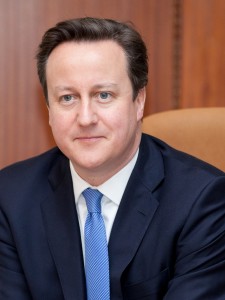
Tag: David Cameron

  • David Cameron – 2012 Speech in Leeds on Start-Up Britain

    davidcameron

    Below is the text of the speech made by David Cameron, the Prime Minister, in Leeds on 23 January 2012.

    Thank you. Thank you very much for that introduction. Good afternoon everyone. Sorry to break up the speed networking – that sounds like a lot more fun than listening to a speech from me. I think we should probably introduce speed networking into the European Union and then those Council meetings, instead of being nine hour dinners, we could probably crack on and get them done in 90 minutes.

    Delighted to be here and delighted to be launching this initiative. I said earlier this month that 2012 has got to be the year when we go for it. The year that we light new fires of ambition in our economy. The year when we get behind Britain’s grafters, do-ers, hard workers and entrepreneurs.

    This isn’t something we’d quite like to do; this is something we’ve absolutely got to do because enterprise is critical to this country’s future.

    As so often, Winston Churchill put it best. He said some people regard private enterprise as a predatory tiger that needs to be shot. Others look on it as a cow that should be milked but not enough people see it as a healthy horse pulling a sturdy wagon. In other words there is only one sensible and sustainable way to grow your economy and that is through brave people starting and growing businesses, employing people and creating wealth. Now some might say, ‘Well we agree with that but shouldn’t we just try to consolidate our success stories in big business and let them be the ones to drive recovery?’ And yes of course those businesses are vitally important but more important still is the small business, the new, the young – the businesses that haven’t even been born yet. Because over and over again studies show that small, high-growth firms are the engine of new job creation and they punch way above their weight. So if we want to make our economy stronger, this is where we’ve got to focus our fire power, on encouraging more people to start up and helping small businesses to grow.

    Now we’ve made a start. We’re rolling back the bureaucratic, anti-business culture we’ve had for too many years in this country and we’re creating in its place a real climate for enterprise. Corporation tax has been cut and we’re cutting it further. Red tape has been cut and we’re cutting it further. Enterprise zones have been rolled out including here in Leeds to get the best and the brightest to start up. Entrepreneur visas have been brought in to get the brightest in the world to come here with great business ideas. And of course there’s entrepreneur relief so that those who start their own company can keep a bigger slice of their gains. Now since the election more than half a million jobs have been created in the private sector but this is not, and never can be, a case of job done. So today I want to tell you about two new things that we’re doing.

    First, through 2012 we’re running a big national campaign to encourage more people to start up a business. Its core message is simple: there is a business in everyone. So what is the business in you? We need many more people to see themselves as entrepreneurs. To understand that each success story starts with a first step. Anita Roddick – she began The Body Shop from her kitchen. Richard Branson’s mother found a necklace on a train, clearly didn’t give it back to lost property, but sold it for £300 – interesting story – and that was the start-up capital for Virgin. Starbucks kicked off when three academics, probably with four or five opinions between them, wanted a good cup of coffee in their neighbourhood and they invested a few thousand dollars in a cafe.

    Now of course it’s not enough just to exhort people to start up; we’ve got to give them practical help and that’s what this campaign and that’s what StartUp Britain is all about. If you talk to anyone who is starting a business, and they’ll tell you the number one thing they need is obviously money. Now we get that. That’s why we put in place agreements with the banks and targeted government schemes to get more cash flowing to small businesses. The trick is connecting that money to those who need it and that’s what our new online finance finder is going to do. It’s a very simple, very useful tool. Just answer a few questions about your business and the finance finder will tell you where to go to get the money you need.

    Another thing entrepreneurs need is good advice. Starting a business is one of the hardest, most stressful things that anyone can do and it’s invaluable to know someone who’s been there and taken those risks themselves. That’s why we lined up thousands of mentors across the country and this campaign is going to connect them with the people who need their advice. But beyond those practical things, what entrepreneurs really need is the inspiration to keep on going when things get tough, as they inevitably do. So thanks to StartUp Britain, a campaign, as has been said, run by entrepreneurs, for entrepreneurs, they’re going to be able to log on and hear the stories of people who’ve done it all before. Now all this is coming together in one place in one campaign online and it’s going to be a real shot in the arm for enterprise in this country.

    Now the second thing we’re announcing today is a very simple, very practical idea. It’s about using the spare space that we have in the public sector, in the government sector, to help businesses to grow in the private sector. We’ve heard from so many people who say, ‘Well I’ve got a great idea, I’ve got a little bit of start-up capital, I’m desperate to get it off the ground but I can’t find the space’. Or, people who say, ‘I can find the space but we’ve got to sign a three-year lease and we just can’t afford it’. And then of course you’ve got many people working in business during the day – or in government during the day – wanting to start a business but not wanting to misuse their office facilities or office computers and so what we need is additional space for them, sometimes space at the end of the day or even overnight. What we need is the British equivalent of the Silicon Valley garage – spaces that are cheap, flexible and available right now.

    Some of these places are already opening up around the country – in fact I gave a speech in one of them last week. It’s called Hub Westminster. It’s at the top of the building that homes – that houses New Zealand House and you can rent an evening desk space there for just £40 a month. Then if you decide to take the plunge, maybe quit your job, start your own thing, you can start renting a full-time desk space and hire more as your business grows. So this is a brilliant idea and we want to help expand it.

    Now, the British government has got a huge stock of buildings at our disposal. The first priority for the ones we aren’t using is obviously to sell them off, but in the meantime many are going to be sitting idle. So let’s match the capacity we’ve got in government with the need that is out there. Let’s provide office space where we can to those who can use it. So we’ve sent a message right across the public sector to government departments, to agencies, saying, ‘Give us your unwanted space. That office that has lain dormant for years; the shop that’s been boarded up; the rooms no one ever uses – the answer is out there: give that space to entrepreneurs for business creation.’

    Now the Department of Communities and Local Government have said they’ve got two floors of an office block in Leeds, a large vacant building in Birmingham, another one in Plymouth. In London the Department for International Development has also found some space, so we’re throwing open the doors of government and letting the entrepreneurs in. And frankly this won’t just be good for the entrepreneurs and the business people involved; I’m hoping it’s going to be good for government too.

    We’ll have civil servants who will then be sharing the water coolers, the lifts, the corridors with entrepreneurs and entrepreneurs that their policies will affect and I think this will be a good connection between public and private sectors. It could even be that the building we’re in today is available for use. So if you’re in Leeds and you’ve got an idea for a business it could start right here. This is the very epitome of a roll your sleeves up government; not waffling on about the theory of how we can help business or shuffle a bit of money around, but doing something practical that will really help.

    So we’re doing all this with optimism and confidence because Britain is a country with enterprise running through its veins. I found this on New Year’s Day when my daughter got me out of bed and said, ‘I want to make mince pies’. We made some mince pies and she sold them to my protection team for £1 a time. She’s only eight years old; I thought that was a good spark of enterprise! Some of them are still recovering, but nonetheless…

    But this is the country that led the agricultural revolution, that led the industrial revolution, that helped to kick start the technological revolution. We’re the country that invented the jet engine, the DNA, the World-Wide Web, Viagra – almost everything you think of, most of the sports you’ve ever heard of. We’re the country that sells tea to China, vodka to Poland and yes, cheese to France. Enterprise is what we do in Britain so this is the year that more than ever we’ve got to go for it and with StartUp Britain’s help and with all your help, that is exactly what we’ll do.

    Thank you very much for listening.
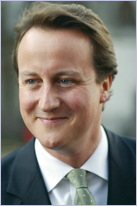
  • David Cameron – 2012 Speech on the European Court of Human Rights

    davidcameron

    Below is the text of the speech made by David Cameron, the Prime Minister, on 25 January 2012.

    Once in a generation, each member has the honour of leading the Council of Europe.

    Today, I want to speak about the once-in-a-generation chance we have, together, to improve the way we enhance the cause of human rights, freedom and dignity.

    We have an ambitious agenda for the coming months…

    …to reinforce local democracy…

    …to combat discrimination…

    …to strengthen the rule of law across Europe.

    But the focus of our Chairmanship, as you know, is our joint effort to reform the European Court of Human Rights.

    The role of the Court has never been more challenging.

    As the Council has expanded, more and more people have applied to seek justice.

    We need to work together to ensure that throughout these changes, the Court remains true to its original intention: to uphold the Convention and prevent the abuse of human rights.

    So today, I want to explain why I believe the Court needs reform and set out some of the proposals on the table.

    UK Commitment to Human Rights

    First, I want to make something clear.

    Human rights is a cause that runs deep in the British heart and long in British history.

    In the thirteenth century, Magna Carta set down specific rights for citizens, including the right to freedom from unlawful detention.

    In the seventeenth century, the Petition of Right gave new authority to Parliament; and the Bill of Rights set limits on the power of the monarchy.

    By the eighteenth century it was said that:

    “This spirit of liberty is so deeply implanted in our constitution, and rooted in our very soil, that a slave the moment he lands in England, falls under the protection of the laws, and with regard to all natural rights becomes instantly a free man”.

    It was that same spirit that led to the abolition of slavery…

    …that drove the battle against tyranny in two World Wars…

    …and that inspired Winston Churchill to promise that the end of the “world struggle” would see the “enthronement of human rights”.

    As he put it, victory in that war was the “victory of an ideal founded on the right of the common man, on the dignity of the human being, and on the conception of the State as the servant, not the master, of its people”.

    These beliefs have animated the British people for centuries – and they animate us today.

    When the Arab Spring erupted, the UK was a principal supporter of resolutions at the UN Human Rights Council.

    We are leading EU partners in maintaining pressure on Syria.

    We have played a key role in securing EU sanctions against Iran.

    Through the UN, we are working to empower women in Afghanistan, Iraq and the Middle East.

    We have pledged additional money to the Special Fund for Torture Prevention.

    And we are contributing to the Council of Europe’s own Human Rights Trust Fund.

    All these are clear signals of our belief in fundamental human rights.

    And if called to defend that belief with action, we act.

    When the people of Libya were reaching for the chance to shape their own destiny, Britain stepped forward with our allies to help.

    Visiting Tripoli a few months ago, seeing the crowds of people who were jubilant and free, I was reminded of what Margaret Thatcher once said:

    “The spirit of freedom is too strong to be crushed by the tanks of tyrants”.

    It is our hope that this spirit of freedom spreads further – and we will continue to support those reaching for it across the Arab world.

    We are not and never will be a country that walks on by while human rights are trampled into the dust.

    This has a lot to do with Britain’s national character – a love of freedom and an instinctive loathing of over-mighty authority.

    But it is also about our national interest – to live, travel and trade in a more open, secure world.

    When a government respects its citizens’ human rights, that makes for a more stable country – and that is good for all of us.

    It was that great champion of freedom, Vaclav Havel, who said it best:

    “Without free, self-respecting, and autonomous citizens there can be no free and independent nations. Without internal peace, that is, peace among citizens and between the citizens and the state, there can be no guarantee of external peace”.

    In other words, a commitment to human rights is both morally right and strategically right.

    Achievements of the Council and the Court

    So I want no one here to doubt the British commitment to defending human rights…

    …nor the British understanding that the Council of Europe, the Convention and the Court have played a vital role in upholding those rights.

    But believing these things does not mean sticking with the status quo…

    …because as we are agreed, the time is right to ask some serious questions about how the Court is working.

    Over sixty years ago the Convention was drafted with very clear intentions.

    It was born in a continent reeling from totalitarian rule…

    …shocked by the brutality of the holocaust…

    …sickened by man’s inhumanity to man.

    Its purpose was clear: to spread respect for vital human rights across the continent – for life, liberty and the integrity of the person.

    It has achieved some vitally important things over the decades: exposing torture; winning victories against degrading treatment in police custody; holding heavy-handed states to account.

    And since the Berlin Wall fell, it has played a major role in strengthening democracy across central and Eastern Europe.

    Of course, we should remember that oppression and brutality are not just facts of Europe’s past.

    As we sit here today, in Belarus there are people being thrown into prison for their political beliefs.

    Dissidents’ voices are being silenced and their rights are being crushed.

    What is happening less than a thousand miles from here underlines the continuing importance and relevance of the Council, the Convention and the Court.

    It reminds us that now, more than ever, we need a Court that is a beacon for the cause of human rights, ruthlessly focussed on defending human freedom and dignity, respected across the continent and the world.

    It is in that spirit that I have come here to speak to you today.

    Because today, the ability of the Court to play this vital role is under threat.

    As I see it, there are three inter-linking issues that should cause us concern.

    Too many cases

    First, the Court is being compelled to do too much, and that threatens its ability to do what is most important.

    We have seen a massive inflation in the number of cases.

    In the first forty years of its existence, 45,000 cases were presented to the Court.

    In 2010 alone, 61,300 applications were presented.

    This has created a huge backlog – more than 160,000 cases at its peak.

    There can still be a delay of some years before cases are heard, which means tens of thousands of people with their lives on hold.

    These will inevitably include some of the most serious cases: of detention; torture; people who have had their fundamental rights denied.

    Let me be clear: impressive steps are already being taken to filter out inadmissible cases more quickly.

    The Court should be congratulated on that – but a new problem is emerging.

    More and more of the backlog is now made up of admissible cases that, according to the current criteria, should be heard in full.

    Again, the Court is doing good work to deal with this.

    A system to prioritise the most important cases is in place.

    But the sheer volume risks urgent cases being stuck in the queue.

    That means the very purpose of the Court – to prevent the most serious violations of human rights – is under threat.

    Court of the fourth instance

    This flood of cases is linked to the second issue.

    The Court is properly safeguarding the right of individual petition – and it’s a principle the UK is committed to.

    But with this, comes the risk of turning into a court of ‘fourth instance’…

    …because there has already been a first hearing in a court, a second one in an appeal court, and a third in a supreme or constitutional court.

    In effect that gives an extra bite of the cherry to anyone who is dissatisfied with a domestic ruling, even where that judgement is reasonable, well-founded, and in line with the Convention.

    Quite simply, the Court has got to be able to fully protect itself against spurious cases when they have been dealt with at the national level.

    A good start has been made with Protocol 14, which makes clear that cases aren’t admissible if there is no significant disadvantage to the applicant.

    The initial case where the protocol has been used shows exactly the kind of thing I mean.

    The applicant was taking a bus company to court for 90 Euros compensation, because they felt their journey from Bucharest to Madrid hadn’t been as comfortable as advertised.

    One of the matters at issue was that they didn’t provide fully-reclining seats.

    The domestic courts had turned him down, and he was taking his case to the Court.

    Now I think we can all agree that fully-reclining seats would be very desirable on a trip from Bucharest to Madrid…

    …but we can also agree that this is a completely trivial case, and is not the kind of case that should be heard here.

    The Court agreed – and quite rightly rejected the claim.

    But this case just underlines how important it is for the Court to have that consistent power to control the cases it admits.

    Slim margin of appreciation

    The third issue is that the Court is, quite rightly, determined to make sure that consistent standards of rights are upheld across the 47 member states…

    …but at times it has felt to us in national governments that the ‘margin of appreciation’ – which allows for different interpretations of the Convention – has shrunk…

    …and that not enough account is being taken of democratic decisions by national parliaments.

    Let us be frank about the fall-out from this issue.

    As the margin of appreciation has shrunk, so controversy has grown.

    You will know that in the UK there is a lively debate about the way human rights law works, and how our own national courts interact with Europe.

    Yes, some of this is misinterpretation – but some of it is credible democratic anxiety, as with the prisoner voting issue.

    I completely understand the Court’s belief that a national decision must be properly made.

    But in the end, I believe that where an issue like this has been subjected to proper, reasoned democratic debate…

    …and has also met with detailed scrutiny by national courts in line with the Convention…

    …the decision made at a national level should be treated with respect.

    Another example of this – and one we can all agree on – is in the area of immigration.

    At Izmir, we collectively invited the Court, “to avoid intervening except in the most exceptional circumstances.”

    All states agreed that the Court was, in some cases, too ready to substitute its judgment for that of reasonable national processes and all agreed that that was not its role.

    In other words, it should not see itself as an immigration tribunal.

    Protecting a country from terrorism is one of the most important tasks for any government.

    Again, no one should argue that you defend our systems of rights and freedom by suspending those freedoms.

    But we do have a real problem when it comes to foreign national who threaten our security.

    In Britain we have gone through all reasonable national processes…

    …including painstaking international agreements about how they should be treated…

    …and scrutiny by our own courts…

    …and yet we are still unable to deport them.

    It is therefore not surprising that some people start asking questions about whether the current arrangements are really sensible.

    Of course, no decent country should deport people if they are going to be tortured.

    But the problem today is that you can end up with someone who has no right to live in your country, who you are convinced – and have good reason to be convinced – means to do your country harm.

    And yet there are circumstances in which you cannot try them, you cannot detain them and you cannot deport them.

    So having put in place every possible safeguard to ensure that ECHR rights are not violated, we still cannot fulfil our duty to our law-abiding citizens to protect them.

    Together, we have to find a solution to this.

    These concerns are shared by many member states.

    And at the heart of this concern is not antipathy to human rights; it is anxiety that the concept of human rights is being distorted.

    As a result, for too many people, the very concept of rights is in danger of slipping from something noble to something discredited – and that should be of deep concern to us all.

    Upholding and promoting human rights is not something governments and courts can do alone…

    …it is something we need all our societies to be engaged with.

    And when controversial rulings overshadow the good and patient long-term work that has been done, that not only fails to do justice to the work of the Court…

    …it has a corrosive effect on people’s support for human rights.

    The Court cannot afford to lose the confidence of the people of Europe.

    Right moment for reform

    Taken together, these issues threaten to shift the role of the Court away from its key objectives.

    The Court should be free to deal with the most serious violations of human rights; it should not be swamped with an endless backlog of cases.

    The Court should ensure that the right to individual petition counts; it should not act as a small claims court.

    And the Court should hold us all to account; it should not undermine its own reputation by going over national decisions where it does not need to.

    For the sake of the 800 million people the Court serves, we need to reform it so that it is true to its original purpose.

    Already 47 members are agreed on this, and great work has been done.

    Now we would like to use our Chairmanship to help progress that work.

    This is the right moment for reform – reforms that are practical, sensible and that enhance the reputation of the Court.

    Our proposals

    So we are looking to improve the efficiency of the Court.

    New rules could enable it to focus more efficiently and transparently on the most important cases.

    We want to improve the procedures for nominating judges.

    The Assembly needs consistently strong shortlists from which to elect judges – and clear guidelines on national selection procedures could help with that.

    And we are hoping to get consensus on strengthening subsidiarity – the principle that where possible, final decisions should be made nationally.

    It is of course correct that the Court should hold governments to account when they fail to protect human rights.

    In these instances it is right for the Court to intervene.

    But what we are all striving for is that national governments should take primary responsibility for safeguarding their citizens’ rights – and do it well.

    Subsidiarity is a fundamental principle of the Convention, and at Izmir, we were all clear that more needed to be done to give it practical effect.

    For that reason, we will shortly set out our proposals for pushing responsibility to the national system.

    That way we can free up the Court to concentrate on the worst, most flagrant human rights violations – and to challenge national courts when they clearly haven’t followed the Convention.

    Of course, re-balancing this relationship is a two-way street.

    The other side of the deal is that members get better at implementing the Convention at national level.

    That is why, in the UK, we are investigating the case for a UK Bill of Rights, and thoroughly examining the way our liberties are protected.

    Parliaments also have a key role – and we are proud of the role that our own Joint Committee on Human Rights plays.

    And of course, this Assembly makes a vital contribution, helping states to honour their obligations.

    Together, through these institutions, we can reduce the number of violations and ultimately ease the burden on the Court.

    Conclusion

    Let me finish today by saying this.

    With this Chairmanship we have a clear opportunity to agree a practical programme of reform.

    Built on the noble intentions of the Convention.

    Forged through consensus.

    Driven by a belief in fundamental human rights and a passion to advance them.

    This is undoubtedly a challenge – but it is a challenge we can meet together.

  • David Cameron – 2012 Speech in Davos

    davidcameron

    Below is the text of the speech made by David Cameron, the Prime Minister, in Davos, Switzerland on 26 January 2012.

    We meet today at a perilous moment for economies right across Europe.

    Growth has stalled. Unemployment is rising. The prospect of Europe getting left behind is all too apparent.

    While China grows at 8%, India at 7% and Africa at 5.5%, the European Commission forecasts the EU will grow by just 0.6 per cent in the whole of 2012 – and even that is assuming the problems in the Eurozone get better not worse.

    Yesterday in Britain we had the official figures for the final quarter of last year – and they were negative.

    Other large economies of Europe are forecast to have a similar outcome.

    In just four years Government debt per EU citizen has risen by 4,500 euros. Foreign direct investment has fallen by around two-thirds.

    And in more than half of EU Member States, a fifth of all young people are now out of work. So this is not a moment to try and pretend there isn’t a problem.

    Nor is it a moment to allow the fear of failure to hold us back. This is a time to show the leadership our people are demanding.

    Tinkering here and there and hoping we’ll drift to a solution simply won’t cut it any more. This is a time for boldness not caution.

    Boldness in what we do nationally – and together as a continent.

    In Britain we’ve had to be bold.

    We were faced with the biggest budget deficit in our peacetime history more than 10 per cent of our GDP.

    We had the most leveraged banks, the most indebted households and the biggest housing boom. To be cautious would have been catastrophic.

    Instead we were bold and decisive. We formed the first Coalition government for 70 years.

    We legislated for a fixed-term, five year, Parliament which has helped to give people the confidence of stability and credibility.

    We put forward an aggressive set of plans to get to our economy back on an even keel. £5.5 billion saved in the first financial year.

    Welfare bills – cut.

    The cost of government – cut.

    Public sector pay – frozen.

    The state pension age – increased.

    Let me give you one example – reform of public sector pensions. This is a difficult issue for any government.

    We want public servants to have good pensions. We’ve ensured that’s the case but at the same time cut the long term cost in half.

    By taking bold decisions to get to grips with the debt, Britain has shown it’s possible to earn credibility and get ahead of the markets.

    Our borrowing costs have fallen to the lowest for a generation.

    We will be equally bold in meeting our key ambition: supporting enterprise and making Britain the best place in the world in which to start or grow a business.

    So we’re pursuing an unashamedly, pro-business agenda.

    Scrapping needless red tape, simplifying planning and reviewing all regulation. Creating the most competitive business tax regime in the developed world. Making bold investments in new infrastructure, including high speed rail.

    And while we may be fiscal conservatives, we are monetary radicals injecting cash into the banking system and introducing credit easing measures to make it easier for small businesses to access finance.

    So my message to you – in this special Olympic year for Britain – is that we are a country that is absolutely committed to enterprise and openness.

    Come to Britain. Invest in Britain.

    Be part of this special year in a truly great country.

    So yes, in Britain we are taking the bold steps necessary to get our economy back on track.

    But my argument today is that the need for bold action at European level is equally great.

    Europe’s lack of competitiveness remains its Achilles Heel.

    For all the talk, the Lisbon Strategy has failed to deliver the structural reforms we need.

    The statistics are staggering. As measured by the World Economic Forum, more than half of EU Member States are now less competitive than they were this time last year while five EU Member States are now less competitive than even sclerotic Iran.

    For every euro invested in venture capital in the EU, five times as much is being invested in the US.

    The single market remains incomplete. And there are still a colossal 4,700 professions across the EU to which access is regulated by government.

    And that’s not all. In spite of the economic challenge, we are still doing things to make life even harder.

    In the name of social protection, the EU has promoted unnecessary measures that impose burdens on businesses and governments, and can destroy jobs.

    The Agency Workers Directive, the Pregnant Workers Directive, the Working Time Directive.

    The list goes on and on. And then there’s the proposal for a Financial Transactions Tax.

    Of course it’s right that the financial sector should pay their share. In the UK we are doing exactly that through our bank levies and stamp duty on shares. And these are options which other countries can adopt.

    But look at the European Commission’s own original analysis.

    That showed a Financial Transactions Tax could reduce the GDP of the EU by 200 billion euros cost nearly 500 thousand jobs and force as much as 90 per cent of some markets away from the EU.

    Even to be considering this at a time when we are struggling to get our economies growing is quite simply madness.

    We can’t go on like this. That is why Britain has been arguing for a pro-business agenda in Europe.

    And this is not just a British agenda. Over the last year we have spearheaded work with 15 other member states across the EU – both in and outside of the Eurozone.

    This weekend Chancellor Merkel joined me in calling for a package of deregulation and liberalisation policies.

    And our ideas now lie at the heart of what the European Commission is promoting too.

    Together we’re pushing for the completion of the single market in services and digital which could alone add €800 billion to EU GDP and leading the drive to exempt micro-businesses from excessive regulation – both new and existing.

    But we need to be bolder still. Here’s the checklist.

    All proposed EU measures tested for their impact on growth. A target to reduce the overall burden of EU regulation.

    And a new proportionality test to prevent needless barriers to trade in services and slash the number of regulated professions in Europe.

    Together with our international partners, we also need to take decisive action to get trade moving.

    Now I’m not going to give you the standard speech on Doha.

    Last year, at this very forum, world leaders called for an all out effort to conclude the Doha round in 2011. We said it was the make or break year. It was. And we have to be frank about it. It didn’t work.

    But let’s not give up on free trade. Let’s step forward with a new and ambitious set of ideas to take trade forwards.

    First, rather than trying to involve everyone at once, let’s get some bi-lateral deals done.

    Let’s get EU Free Trade Agreements with India, Canada and Singapore finalised by the end of the year.

    Completing all the deals now on the table could add 90 billion euros to Europe’s GDP.

    And let’s also look at all the options on the table for agreement between the EU and the US, where a deal could have a bigger impact than all of the other agreements put together.

    Next, let’s be more creative in the way we use the multilateral system.

    Far from turning our back on multilateralism, we need the continued work of the WTO to prevent any collapse back to protectionism to ensure we take account of the interests of the poorest countries and to ensure the WTO framework is fit for 21st century trade.

    And it means going forwards, perhaps with a coalition of the willing so countries who want to, can forge ahead with more ambitious deals of their own, consistent with the WTO framework.

    There are some proposals out there already – like the Trans-Pacific Partnership – but why not also an ambitious deal between Europe and Africa? Or even a Pan-African Free Trade Area?

    This is a bold agenda on trade which can deliver tangible results this year. And I am proposing that we start work on it immediately.

    Of course, the most urgent question of all facing Europe right now is how to deal with Eurozone crisis. And this is where I believe Europe needs to be boldest of all.

    Vital progress has been made. The European Central Bank has provided extensive additional support to Europe’s banks.

    Many Eurozone countries are taking painfully difficult steps to address their deficits and to give up a degree of sovereignty over the governance of their economies in the future.

    And of course there was the agreement to set up the firewall. These are welcome and necessary steps.

    And I don’t under-estimate the leadership and courage that has got us this far. But we need to be honest about the overall situation.

    The crisis is still weighing down on business confidence and investment.

    A year ago bond rates were 5% in Spain, nearly 5% in Italy, and more than 7% in Portugal.

    Today they are still 5% in Spain, up to 6 % in Italy and 14% in Portugal.

    So we still need some urgent short term measures.

    The October agreement needs to be fully implemented. The uncertainty in Greece must be brought to an end. Europe’s banks recapitalised.

    As the IMF has said, the European firewall needs to be big enough to deal with the full scale of the crisis.

    And Chancellor Merkel is absolutely right to insist that Eurozone countries must do everything possible to get to grips with their own debts.

    But we also need to be honest about the long-term consequences of a single currency.

    Now, I’m not one of those people who think that single currencies can never work.

    Look at America. Or the United Kingdom. But there a number of features common to all successful currency unions.

    A central bank that can comprehensively stand behind the currency and financial system.

    The deepest possible economic integration with the flexibility to deal with economic shocks.

    And a system of fiscal transfers and collective debt issuance that can deal with the tensions and imbalances between different countries and regions within the union.

    Currently it’s not that the Eurozone doesn’t have all of these it’s that it doesn’t really have any of these.

    Now clearly if countries are close enough in their economic structure, then tensions are less likely to arise.

    But when imbalances are sustained and some countries do better than others year after year, you can face real problems.

    That’s what the current crisis is demonstrating. Of course private capital flows can hide these problems for a while.

    In the Eurozone that’s what happened. But once markets lose confidence and dry up you are left in an unsustainable position.

    Yes, tough fiscal discipline is essential. But this is a problem of trade deficits not just budget deficits.

    And it means countries with those deficits making painful decisions to raise productivity and drive down costs year after year to regain their competitiveness.

    But that does not happen overnight. And it can have painful economic and even political consequences. Nor is it sufficient.

    You need the support of single currency partners – and as Christine Lagarde has set out, a system of fiscal integration and risk sharing, perhaps through the creation of Euro area bonds to make that support work.

    As Mario Monti has suggested, the flip side of austerity in the deficit countries must be action to put the weight of the surplus countries behind the euro.

    I’m not pretending any of this is easy. These are radical, difficult steps for any country to take.

    Knowing how necessary but also how hard they are is why Britain didn’t join the Eurozone.

    But they are what is needed if the single currency, as currently constituted, is to work.

    Of course some people will say, it’s all very well Britain making these points, but you’re not in the euro and last month you even vetoed adding a new treaty to the EU.

    Let me answer that very directly.

    I understand why the Eurozone members want a treaty inside the EU but if they do, there have to be safeguards for those countries in the EU but who have no intention of joining the single currency.

    I didn’t get those safeguards so the treaty isn’t going ahead inside the EU.

    But let me be clear. To those who think that not signing the treaty means Britain is somehow walking away from Europe let me tell you, nothing could be further from the truth.

    Britain is part of the European Union. Not by default but by choice.

    It fundamentally reflects our national interest to be part of the single market on our doorstep and we have no intention of walking away.

    So let me be clear: we want Europe to be a success.

    And all the measures we’ll be proposing for next week’s European Council can help achieve that success.

    But we want Europe to succeed not just as an economic force. But also as a political force: as an association of countries with the political will, the values and the voice to make a difference in the world.

    When that political will is there, we can make a decisive difference.

    Together with President Sarkozy, Britain led the new European sanctions on Iran’s oil exports so the world does not have to confront a nuclear armed Iran or a wider military conflict.

    In Syria, we have taken a lead against Assad’s repressive violence and we will not let up until he steps aside.

    And of course in Libya we secured a UN Resolution and put together a multinational national coalition faster than at any time in history.

    British and French pilots led the way in the early hours when the fate of Benghazi was at stake and together we saw it through, helping the Libyan people overcome tyranny and secure their own future.

    So I’m proud to work with my European partners.

    And I’m proud of what we can achieve. I stood on this platform only a year ago and said that Europe could recover its dynamism.

    I still believe we can. But only if we are bold. Only if we fight for our prosperity. Get to grips with the debt.

    Take bold decisions on deregulation, on opening up the single market, on innovation and trade and address the fundamental issues at the heart of Eurozone crisis.

    All these decisions lie in our own hands.

    They are the test of Europe’s leaders in the months ahead.

    Yes, the stakes are high, incredibly high.

    But there is nothing about the current crisis that we don’t understand.

    The problems we face are man-made and with bold action and real political will we can fix them.

  • David Cameron – 2016 Press Conference with Enda Kenny

    davidcameron

    Below is the text of the press conference between David Cameron, the Prime Minister, and Enda Kenny, the Irish Taoiseach held in Ireland on 25 January 2016.

    Well, good afternoon everyone. I’m pleased to welcome the Taoiseach Enda Kenny, my good friend, here today. But before I talk about the importance of our bilateral relationship I’d like to take a moment to express my deep sadness on learning of the death of Cecil Parkinson. He was the first big political figure that I ever worked for and got to know. He was a man of huge ability. He was passionate that what he was doing, and the team of ministers that he worked with was about transforming Britain in the 1980s by improving industrial relations, by reforming the trade unions, by making sure the business was in the private sector, by encouraging entrepreneurship. He was passionate about those issues and a very effective minister.

    And he was someone I really enjoyed working with and he taught me a great deal. He was part of a great political generation that did really extraordinary things for our country. He’ll be hugely missed by many on all sides of the political divide and my thoughts are with Cecil’s wife, Ann, and their family at this very sad time.

    Turning to today’s meeting our bilateral relationship with Ireland has never been stronger. We’ve spoken about the good progress we continue to make in reforming the UK’s relationship with the EU to address the concern the British people have about our membership. And we’ve also spoken about the migration crisis, and the importance of using our strong bilateral relationship to work together to address it, including through the Syria Donors Conference that I’ll be hosting here in London next month. And I want to say a word about each of these.

    Firstly, our bilateral relationship. UK–Irish relations have never been stronger or more productive than they are today. This year we’ll reach the halfway mark in our decade of joint cooperation which we first announced together in 2012. Our trade relationship is growing with trade between our countries now worth more than €1 billion every week. Ireland is now our fifth biggest market for goods and our sixth biggest for services. And the strength of the Irish economy, in particular its growth in recent years, underlies why Ireland is such an important partner for the United Kingdom.

    Over 3 million Brits visit Ireland each year. In Northern Ireland, the Executive has now delivered its first budget since the Fresh Start agreement, a result that is in no small part down to the hard work of the parties in Northern Ireland, but of course supported by both the British and Irish governments. The UK government remains fully committed to working alongside the Irish government to build a brighter, more secure future for the people of Northern Ireland. We want to help them to deliver the peaceful and prosperous society that they deserve.

    Now we’ve spoken today about the importance of strengthening the external border of the Common Travel Area, something I consider to be vital. And of course 2016 also marks the centenaries of important events in our shared history. We’ll mark them as we should in a spirit of mutual respect, inclusiveness and friendship.

    On EU reform, as I’ve said before, we need to fix the aspects of our EU membership that cause so much frustration in Britain, so we get a better deal for our country and secure our future, but also a good deal for all in Europe too. Throughout we’re driven by one consideration: what is best for Britain’s economic and national security. In the end, the British people will decide whether we’re stronger and better off with our European neighbours as part of the European Union or on our own. That’s because we made a promise – and we kept it – to deliver an in/out referendum.

    Today we’ve discussed the areas I set out where we need to see reform, on economic governance, on sovereignty, on competitiveness and of course on welfare. The UK and Ireland share a strong desire to make the EU more competitive, and to prioritise free trade agreements with the fastest growing markets across the world. We’re making progress in our negotiations and I’m confident that, with the right political will, we can secure the reforms that will address the concerns of the British people.

    We’ve also discussed the terrible humanitarian situation caused by the Syria crisis and what more we can do as an international community to help. Next month I will bring together world leaders in London to talk about just how we do that. We need to agree concrete action that will give hope to so many: jobs, so people can provide for their families; and education for their children. We need to act now to help refugees in the region as well as enabling them to play a leading role in Syria’s reconstruction in the future. This is not just in the interests of Syria and her neighbours; it’s in the interests of the refugees and Europe too. The more we do to enable people to stay in the region, the less likely we are to see them making the perilous journey to Europe.

    So thank you very much, Enda, for the discussions today. Thank you for your support and help, and I very much look forward to working with you in the months and, I hope, years ahead.

    Enda Kenny

    Thanks David. First of all, I want to say that it’s a privilege to be back here again at Downing Street. I really wanted to come over to talk about the issue of Europe and the referendum with the Prime Minister. I have to say that I do that following on the very positive approach and the encouragement that there was at the European Council meeting in December.

    People are aware that President Tusk will table a paper, probably next week in regards to the four issues that the Prime Minister put on the table. I actually believe that all of these are solvable in a really positive sense because you know our position in Ireland, Europe will be much stronger with Britain as a central and fundamental member.

    So it’s a vital issue for Europe, it’s a vital issue for Britain, but it’s also a critical issue for Ireland. And that’s why earlier today I spoke down at McCann FitzGerald, one of the leading legal firms here in London, to make the important point that British business needs to make this point very positively, that we can be a stronger union, a stronger Britain, a stronger Ireland, by making changes that reform Europe in a way that helps everybody.

    So I want Britain to remain a central member of the European Union because from our – Ireland’s point of view, this is a really critical issue. And I say that in the spirit of real positiveness, because I do believe that the four baskets that were put on the table by you at December are all issues that can be concluded successfully and strongly in the interests of everybody throughout the Union.

    We also discussed the question of the – which David referred to – the 1916 centenary commemorations, and we have a very comprehensive, inclusive, sensitive whole series of things this year. I’ve invited the Prime Minister to come over himself at some time during the course of the year if that’s appropriate, and obviously he will consider that in due course.

    We discussed the Fresh Start in Northern Ireland. We agree now that the issues that were decided upon and agreed upon by the parties of Northern Ireland, that we can give impetus to that ourselves to see that these things will happen.

    So, from that point of view, clearly the question of migration is another one on the table. We discussed that, the implications and the difficulties of the challenge that Europe faces here in dealing with unprecedented numbers coming in.

    So I’m much better informed in respects of Europe, and obviously we’ll meet up again before the European Council meeting so that we give a really positive presentation to this, and in so far as we can help the Prime Minister and Britain here to have our European colleagues understand the importance of this, we will.

    Question

    A question for both of you if I can. Taoiseach, you said that you’re confident that negotiations can be concluded successfully and strongly. Do you think they can be concluded in February, and do you see a need for a hurry on this deal and for the referendum to happen as quickly as possible?

    And Prime Minister, the business community has come out today and expressed concerns and fears about the impact of Brexit on trade. It seems on the inside it’s about fears over trade, on the outside fears over migration. Could this whole Brexit referendum discussion descend into a kind of competitive project fear?

    Enda Kenny

    I’ve made the point on many occasion that, in the teeth of the recession, Ireland was the only country that had to vote on a referendum – by referendum on the Fiscal Stability Treaty, and actually it was the voice of Irish business that really convinced people not to take the risk of putting those jobs at risk.

    So, in the same way, British business here will have the opportunity to speak about the importance and the power of 500 million European Union being reformed to work more effectively in the interests of greater trade, of trade agreements, of the opportunity to cut unemployment, the opportunity to create employment, and so on.

    So whether it be finished on – at the European Council meeting on February, I just can’t say. I haven’t see President Tusk’s paper yet, and obviously the Prime Minter has pointed out himself his view on whether it’s absolutely necessary to do it in February or not. My belief is that, of the four issues that were tabled there, there are some complications clearly with one or two of those, but I think these are issues that can be sorted and that can be agreed. And I would hope, personally, that it might be possible to do it in February but then I can’t speak about all of the other countries around the table. But it’s an issue that needs to be dealt with. It’s a critical issue. We regard it as being very important for the relationship between Ireland and Britain but also between their continuing strength and functioning of the European Union with Britain continuing as a central member.

    Prime Minister

    My whole approach to this issue is one that is very positive. I mean, I think we should be focusing on the positive opportunity for Britain. Imagine the scale of the prize if we can remain a member of the single market with 500 million consumers, a quarter of the global economy, with a seat at the table and a say over the rules, and making sure that we do right by our business for jobs and investment and growth in the UK, combined with action to make sure we deal with the things that frustrate people about the EU.

    So that’s what I’m going to focus on in the run up to try to get this agreement and then, hopefully once we have this agreement, to win the argument about why Britain should stay in a reformed Europe. But we need to get that agreement. It is possible for it to happen in February. As I’ve said, if there’s a good deal on the table, I’ll take that deal, I’ll take it to the British people and explain why it’s the best of both worlds.

    But it’s got to be the right deal. If it’s not there, we’ve got plenty of time. We don’t need a referendum until the end of 2017. But I’m always keen to deal with these issues, and I’ve tried to approach this in a very sensible way throughout the last few months, travelling around Europe, explaining what needs to be done, putting very concrete and sensible proposals on the table, and if all of those get a proper and sensible response, we can do this in February. But if it’s not right, I’d rather get it right than do it in a rush.

    Question

    Could I start by asking the Prime Minister, how much of a help do you think that the Irish government will be to you ahead of next month’s summit?

    And also, to the Taoiseach, what contingency plans, if any, is the Irish government looking at, given that there could be a Brexit and potentially a referendum within the coming months?

    Prime Minister

    Well, let me answer the question first. I mean, Enda and the Irish government have been and I believe will continue to be hugely helpful, because Enda is very respected in the European Council. He’s someone with great experience, with great knowledge about how the organisation works. I think he knows that Europe would be better off if Britain stayed in, because of the contribution that we bring. Obviously the very close trading and economic relationships between Britain and Ireland play a part.

    So in terms of trying to get across why the issues that Britain’s put on the table matter so much, I think that we’ve had very strong support from the Irish government, and I think that has helped to get the message across about why these things need to change, and, as I’ve said, the size of the prize if they do change. So we worked very closely together, and the speech you made at the European Council in December when I made my presentation was extremely powerful, and I think a lot of people were very impressed by what he said.

    Enda Kenny

    Thanks. Obviously we’re focused on the positive end of this, as I’ve said, being a member and continuing to be a member of 500 million people. That’s where we need to be, so our focus is on helping Britain, but helping our colleagues in Europe to understand that everybody can benefit from more effective reforms. Prime Minister Cameron wrote many – a few years ago now, in respect of the single market and the digital market and opening up the trade agreements that we could follow through and cutting out red tape and useless administrative conditions, and that’s where we need to be, with a really effective, streamlined, competent and lean Europe. And I think out of this situation comes a brilliant opportunity to actually prove that the European Union can do what it’s supposed to do, and that it’s become a real powerhouse globally in terms of trade and economics and opportunities and jobs and employment, and all of these, being a world leader in setting down conditions and all of these things. So that’s what we’re focused on.

    To be fair about it, the Department of Finance did commission a report from the Economic, Social and Research Institute, which pointed out the possibilities that might happen were Britain to decide to exit. I don’t contemplate that, to be honest with you, but it did point out the impact on trade and on wages and salaries, and for people it should be really serious and not without a risk. So for us, it’s a critical issue, that’s why we’re here to have the best information from the Prime Minister to, in so far as I can, explain to our European colleagues the importance of all working together here at a time of great uncertainty internationally for a variety of reasons. Here is an opportunity, and the European Union founded on the principles arising out of war from peace and opportunity and all of these things, we can make this happen, and every one of the 28 have got to understand, where there’s a problem in any country, help that country to make it better for everybody.

    Question

    Prime Minister, a British court last week ruled that migrants in Calais are entitled to come to this country if they’ve got a family connection, under human rights laws. Have they got that right?

    And to the Taoiseach, are you concerned that a British vote to leave the European Union could jeopardise the peace process in Northern Ireland?

    Prime Minister

    On the issue of migration and Calais, I think it would be a very bad move to make Calais a magnet for even more people to come by saying there was some sort of direct access from Calais into the UK. That is the wrong approach.

    But factually, it is important to understand that, under the existing Dublin rules, if someone claims asylum in another European country – in France or in Italy or in Germany – and they can prove a direct family connection – a mother, or a father, or a sister, or a brother – then they are able, under the Dublin regulations, to come to Britain, which – I think that’s a different matter, and that’s when we talk about children who might be alone in Europe or elsewhere able to make that claim under the Dublin regulations so they can be reunited with their family. That’s a different matter, and something that is in the Dublin regulations that of course we support.

    Enda Kenny

    In respect of the point you made about the peace process in Northern Ireland: well, the guns are silent, and this has taken a great deal of work from so many people over so many years, and we’ve complimented the politicians who lived up to their responsibility in respect of the Fresh Start, which took ten weeks before Christmas to finalise, but I’m glad that that’s now moving and they’re getting on with implementing the mandate and the responsibility that they have.

    I think it’s important to say that the road out of inequality and the path out of that unfairness is employment and opportunity, and that’s why we have shared trade missions to a number of locations. There’s a great deal of cooperation both in respect of issues of economics and Europe and the agri-sector or trade or whatever else, so these are all shared, which means that the prosperity opportunities for Northern Ireland rise and increase. Chancellor gave the opportunity for the Executive, if they wish, to reduce the level of corporate tax rate in Northern Ireland, to that approaching the Republic. We share that view. Obviously it’s a matter for the Executive to implement in 2018, but that’s going to harmonise the economic opportunity for the island of Ireland.

    We should not put anything like that at risk. And from our perspective, it would create serious difficulties for Northern Ireland were that to happen. So I don’t want to see that happen, and, in so far as we can work, we work on the positive end of this future benefits and potential to come from a strong Britain being part of a strong Europe, and Ireland associated with that, north and south.

    Question

    Taoiseach, over the weekend, you repeatedly refused to rule out doing a deal with Michael Lowry post-selection. Are we going to return to the kind of parish pump deals that Fianna Fáil did with independent TDs if the numbers don’t stack up for Labour and Fine Gael?

    Enda Kenny

    Well, that’s why you want a strong and stable government that has a coherence about it in terms of the progress we have made over the last five years and where we want to be over the next five years. So I would say to people, when they reflect, when the election is actually called and when they start to deal with the issues here, we know where we can be, and obviously our plan is to set out opportunities for further employment, to make work pay, and to keep the recovery moving now, because it’s heading in the right direction. And the first opportunity for people to reflect on that will be when they go to the ballot boxes, and if they want a strong, stable and coherent government, they can vote for the candidates of the Fine Gael party and the Labour party.

    Question

    One follow-up, there, for yourself. Do you have any advice for Mr Kenny on getting a surprise overall majority?

    Prime Minister

    I wouldn’t give advice, but that last answer sounded to me like a long-term economic plan that was working for the people in the Republic. But we work very closely together. The Irish elections are a matter for the Irish electorate. All I know is that we work closely together and we’re looking forward to doing that in the, as I say, months and years to come.

  • David Cameron – 2011 Speech at London Conference on Libya

    davidcameronold

    Below is the text of the speech made by David Cameron, the Prime Minister, at the London Conference on Libya on 29 March 2011.

    Let me welcome you all to London.

    Foreign Ministers from more than 40 countries – from America to Asia – from Europe to Africa – from the United Nations to the Arab world. All here to unite with one purpose: to help the Libyan people in their hour of need.

    Today is about a new beginning for Libya – a future in which the people of Libya can determine their own destiny, free from violence and oppression.

    But the Libyan people cannot reach that future on their own.

    They require three things of us.

    First, we must reaffirm our commitment to UN Security Council Resolutions 1970 and 1973 and the broad alliance determined to implement it.

    Second, we must ensure the delivery of humanitarian aid where it is needed, including to newly liberated towns.

    And third, we must help the Libyan people plan for their future after the conflict is over.

    These are the three goals of this London Conference.Let me take each in turn.

    Reaffirming our commitment to the UNSCRs

    First, UN Security Council Resolution 1973.

    Just twelve days ago, following an appeal by the Arab League, the United Nations passed an historic resolution to protect the people of Libya from the murderous brutality of Qadhafi’s regime.

    At the meeting Nicholas Sarkozy hosted in Paris, we made the right choice: to draw a line in the desert sand, and to halt his murderous advance by force.

    Be in no doubt.

    Our action saved the city of Benghazi.

    It averted a massacre.

    And it has given freedom a chance in Libya.

    But be in no doubt about something else.

    As I speak the people of Misurata are continuing to suffer murderous attacks from the regime.

    I have had reports this morning that the city is under attack from both land and sea.

    Qadhafi is using snipers to shoot them down and let them bleed to death in the street.

    He has cut off food, water and electricity to starve them into submission.

    And he is harassing humanitarian ships trying to get into the port to do what they can to relieve their suffering.

    He continues to be in flagrant breach of the UN Security Council Resolution.

    That is why there has been such widespread support amongst the Libyan people – and in the wider Arab world – for the military action we are taking.

    It has saved lives, and it is saving lives.

    As one Misurata resident put it: “These strikes give us hope”.

    Today we must be clear and unequivocal: we will not take that hope away.

    We will continue to implement United Nations Resolutions for as long as is necessary to protect the Libyan people from danger.

    Humanitarian Aid

    Second, humanitarian aid.

    Just as it is essential that the international community works together to stop the slaughter, it’s vital that we get aid in to save lives. This has to happen now.

    And it is happening.

    Already we are seeing how the actions we have taken are helping to pave the way for humanitarian organisations to return to liberated cities.

    Even in Misurata, humanitarian agencies have managed to get some supplies in.

    In Benghazi, the ICRC, Islamic Relief and International Medical Corps are back in and are working hard.

    In Ajdabiya, thousands of people have fled, but the hospital is reported to be functioning – though it urgently needs more nursing staff and supplies.

    So supplies are getting in, but we need to redouble our efforts.

    The whole international community needs to work together.

    The UN’s has an absolutely critical role in ensuring that humanitarian aid gets through to those who need it, especially in the newly liberated towns.

    Building a stable peace

    When the fighting is over, we will need to put right the damage that Qadhafi has inflicted.

    Repairing the hospitals ruined by shells…

    …rebuilding the homes demolished by Qadhafi’s tank rounds…

    …and restoring the mosques and minarets smashed by his barbarity.

    It’s never too early to start planning co-ordinated action to support peace in Libya over the long term.

    It is surely the UN, working with regional organisations and the rest of the international community, who should lead this work.

    Repairing physical infrastructure…

    …ensuring basic services…

    …and helping Libyans restore functioning government at every level.

    Planning for the future

    Third, we must help the people of Libya plan now for the political future they want to build.

    Our military actions can protect the people from attack; and our humanitarian actions can help the people recover. But neither are sufficient to provide the path to greater freedom.

    Ultimately, the solution must be a political one – and it must be for the Libyan people themselves to determine their own destiny.

    That means reinforcing the UN sanctions to exert the greatest possible pressure on the Qadhafi regime.

    And it requires bringing together the widest possible coalition of political leaders…

    …including civil society, local leaders and most importantly the Interim Transitional National Council…

    …so that the Libyan people can speak with one voice.

    Our task in the international community is to support Libya as it looks forward to a better future.

    This will not be achieved in a matter of days or weeks.

    The coalition of countries and organisations gathered here today must commit to seeing this task through.

    I propose that today’s Conference should agree to set up a Contact Group, which will put political effort on a sustained basis into supporting the Libyan people.

    We should be clear about the scale of the challenge. It will mean looking afresh at our entire engagement with Libya and the wider region – from our development programmes, to our cultural exchanges and trade arrangements.

    All our efforts must support the building blocks of a democratic society.

    Freedom of expression

    The right to free and fair elections

    The right to peaceful protest.

    Respect for human rights and the rule of law.

    These aren’t values that belong to any one nation.

    They are universal.

    They are embedded in the Vision of a Democratic Libya set out by the Interim Transitional National Council today.

    And we should warmly welcome this commitment.

    Conclusion

    As this broad range of countries gathers here today in London, there are people suffering terribly under Qadhafi’s rule.

    Our message to them is this: there are better days ahead for Libya.

    Just as we continue to act to help protect the Libyan people from the brutality of Qadhafi’s regime so we will support and stand by them as they seek to take control of their own destiny.

    Their courage and determination will be rewarded.

    A new beginning for Libya is within their grasp and we will help them seize it.

  • David Cameron – 2016 Speech in the Czech Republic

    davidcameron

    Below is the text of the speech made by David Cameron, the Prime Minister, in Prague in the Czech Republic on 22 January 2016.

    Well thank you very much Bohuslav for those warm words.

    I’m delighted to be back here in Prague today.

    This visit has been an opportunity to discuss our strong bilateral relationship.

    Our 2 countries have a great history of working together. I think of the brave Czech airmen who flew with the Royal Air Force in World War 2, I think of our armies fighting side by side in Afghanistan and our shared commitment today to an open and competitive European Union and also, as you said quite rightly, fighting against terrorism and extremism which are the threats to our countries and our world.

    It’s also been an opportunity, as you said, to discuss the progress we are making in reforming the UK’s relationship with the EU to address the concerns that the British people have about our membership.

    And it’s also an opportunity to discuss the challenges posed by the migration crisis and how we can work together as European allies to address this crisis, including through the Syria donors conference I am hosting in London next month.

    Let me say a few words about each of these areas.

    Firstly, EU reform. We agreed at the last European Council that we would work to find solutions in each of the 4 areas I have set out – on economic governance, on sovereignty, on competitiveness and on welfare.

    The British people want to see a stronger role for national parliaments and an acceptance that ever closer union is not the aim of all.

    They want new rules to govern the relationship between those inside the eurozone and those outside.

    And they think, and I think, much more should be done to make the EU a source of growth and jobs – cutting back needless bureaucracy and driving forward completion of both the single market and trade deals with the fastest growing parts of the world.

    I support the principle of free movement and I greatly value the contribution that many Europeans, including Czechs, make to Britain.

    But the challenge British people have identified is the scale of the vast movement of people we have seen across Europe over the last decade and the pressure that can put on public services.

    That is the problem we need to address.

    It is hard work – because what we’re looking for is real and substantive change.

    But I firmly believe there is a pathway to an agreement.

    We’ve had very positive discussions about all of these things here today. And preparations for the discussion at the February European Council are now well underway in Brussels. So I’m confident that with the help of European partners, with good will, we will be able to get there and find genuinely mutually satisfactory conclusions.

    We have also discussed today the importance of continuing to work closely together to find a comprehensive solution to the migration crisis, of securing a stronger external EU border – and of doing much more to help the vulnerable refugees in the region.

    We agreed we need to continue to pursue a comprehensive approach that tackles the problem at source and stops migrants from making the perilous journey to Europe.

    This is a problem facing the entire region, and Europe needs to work in unison to tackle it.

    Britain is playing its full part, with over £1.1billion already committed to the humanitarian effort in Syria and the resettlement of over 1,000 Syrian refugees in the UK and plans to resettle 19,000 more.

    And of course I will be hosting the international Syria donors conference in London next month as I said.

    I hope we can all work together to raise funds for refugees in the region. And I want us to address longer-term issues around jobs and education, giving those vulnerable people real hope and opportunities for the future.

    Above all, thank you very much Prime Minister Sobotka for welcoming us here today.

  • David Cameron – 2012 Speech on Family Planning

    davidcameron

    Below is the text of the speech made by David Cameron, the Prime Minister, on 11 July 2012.

    We’re here for a very simple reason: women should be able to decide freely, and for themselves, whether, when and how many children they have.

    This is not something nice to have. Some sort of add on to our wider development goals.

    It’s absolutely fundamental to any hope of tackling poverty in our world.

    Why?

    Because a country can’t develop properly when its young women are dying from unintended pregnancies and when its children are dying in infancy.

    As a result of this Summit, in the next 8 years we will avert an unintended pregnancy every 2 seconds and 212,000 fewer women and girls will die in pregnancy and childbirth.

    That alone, frankly, is a good enough reason for us to be here.

    But there’s another reason why family planning is so important for development.

    When a woman is prevented from choosing when to have children it’s not just a violation of her human rights it can fundamentally compromise her chances in life, and the opportunities for her children.

    Without access to family planning, pregnancy will often come far too early.

    In Sierra Leone, for example, a UNICEF survey found that a staggering two fifths of girls give birth for the first time between the ages of 12 and 14.

    These young girls are not ready physically, emotionally or financially to become mothers.

    They don’t want to give up school or the chance to go on and run a business and build a better life for themselves.

    And yet suddenly their dreams are broken as they become trapped in a potentially life-threatening pregnancy.

    Even if they survive, many are left with catastrophic scarring.

    They struggle to bring up children that are healthy and educated and they are likely to have many more children than they have the resources to look after.

    It’s a simple fact that as countries get richer, women generally have fewer children.

    And by concentrating their resources on a smaller number of children those children are healthier, better educated and more likely get a job and build a prosperous future for themselves and their own children.

    Family planning helps that process along.

    The availability of contraception enables women to decide to have fewer children.

    And as fertility rates decline, having fewer children to support can help the economy to grow.

    We should be pragmatic about what works.

    In East and Southeast Asia, this reduction in children accounted for more than two fifths of the growth in per capita GDP between 1970 and 2000.

    In Matlab in Bangladesh, a 20 year study found that a family planning programme together with improved support for maternal and child health led not just to smaller, healthier families but also to women being better educated and earning more and their families owning more assets with the average value of an educated woman’s home as much as a fifth higher than for women in nearby villages where this programme hadn’t been introduced.

    So we know this works.

    So family planning works not just because smaller families can be healthier and wealthier but because empowering women is the key to growing economies and healthy open societies -unlocking what I call the golden thread of development.

    The UK government is taking a whole new approach to development.

    We know that in the long term we can not help countries develop just by giving them money.

    Development can not be done to the poor by outsiders.

    It has to be driven by the people who need the change.

    Our role is to help the poorest countries create the building blocks of private sector growth and prosperity.

    These building blocks are the same the world over.

    No conflict, access to markets, transparency, property rights, the rule of law, the absence of corruption, a free media, free and fair elections.

    Together these key enablers of growth make up the golden thread that runs through all stories of successful development across the world.

    And they are quite simply life changing.

    Curbing corruption means not having to pay a bribe to lease a plot of land.

    Transparency means that people can monitor whether revenue from natural resources like oil is being invested in roads or wells for their villages, or wasted.

    The rule of law means that a woman can go to court to settle a dispute knowing that her evidence will be given the same weight as a man’s.

    Free and fair elections mean that every citizen has a voice in their government and the opportunity to stand for office.

    But these vital building blocks of freedom and democracy can not be laid down without a transformation in the participation of women.

    Why?

    Because where the potential and the perspective of women is locked out of the decisions that shape a society, that society remains stunted and underachieving.

    So enabling women to have a voice is a vital part of improving governance and achieving sustainable and equitable growth.

    And this isn’t just the case in Sub-Saharan Africa.

    This is the case all over the world.

    A World Bank Study of 100 countries found that the greater the representation of women in parliament the lower the level of corruption.

    While one of the most powerful signs that real change was afoot in Egypt and Libya was when women turned up and made their voices heard, refusing to be confined to their homes while men decided their future.

    And one of the standards by which Egyptians will judge their new government must surely be the engagement and participation of women.

    Crucially, it is by empowering women that countries can unlock their economic potential.

    Studies show that limited education and employment opportunities for women in Africa mean annual per capita growth is almost a whole percentage point lower than it should be.

    Had this growth been achieved, Africa’s economies would have doubled in size over the last thirty years.

    Providing girls with just 1 extra year of schooling can increase their wages by as much as 20 percent.

    And that really matters because a woman who can decide when to have children, will go to school for longer and then invest her extra money in her own family.

    When women have opportunity, resources and a voice, the benefits cascade to her children, her community and her country.

    So family planning is just the first step on a long journey towards growth, equality and development.

    But it’s an essential step – saving lives and empowering women to fulfil their potential as great leaders of change.

    So I am delighted that Britain is taking the lead – together with the Gates Foundation – to tackle an issue that has been ignored for so long.

    Just like the money we gave last year through GAVI to immunise children against preventable diseases this aid is transparent and direct – it reaches the people who need it, and it doesn’t get caught up in bureaucracy.

    Last year’s vaccines summit is saving 4 million lives.

    This year’s family planning summit will prevent a further 3 million babies dying in their first year of life giving 120 million women and girls in the world’s poorest countries the chance to access affordable, lifesaving contraception for the first time.

    And I’m proud to say that Britain will contribute over £500 million between now and 2020 – doubling our annual investment in family planning.

    This alone will help 24 million women and girls preventing an unintended pregnancy every 10 seconds and saving a woman’s life every two hours.

    Of course there are some who will oppose this.

    There are those who will say we can’t afford to spend money on aid at a time like this.

    And there are those who might accept the case for aid, but who object to supporting family planning and the empowerment of women because they think it’s not our place to tell people what to do, or interfere in other cultures.

    I think it’s vital that we confront these arguments head on.

    Let me do so.

    First, it is morally right to honour our promises to the poorest in the world.

    Every 6 minutes a woman who did not want to become pregnant will die in pregnancy or childbirth. Every 6 minutes.

    So how many minutes do we wait?

    I say we don’t wait at all.

    But there’s not just a strong moral argument for keeping our aid commitment, there’s a second, more practical argument too.

    If we really care about our own national interest about jobs, growth and security we shouldn’t break off our links with the countries that can hold some of the keys to that future.

    For if we invest in empowering women in Africa as the key to driving trade and economic growth it’s not just Africa that will grow but Britain too.

    And that’s why I will always defend our spending on aid.

    As for those who say we shouldn’t interfere let me be absolutely clear.

    We’re not talking about some kind of Western imposed population control, forced abortion or sterilisation.

    What we’re saying today is quite the opposite.

    We’re not telling anyone what to do.

    We’re giving women and girls the power to decide for themselves.

    Yes family sizes need to come down but they come down not because we say they should but because the women who have children want them to.

    And to those who try to say it is wrong to interfere by giving a woman that power to decide I say they are the ones who are interfering, not me.

    I’m not dictating who runs her country.

    I’m not saying how many children she should have.

    What jobs she can do.

    How she can dress.

    When she can speak.

    It’s those who are imposing their values on women who are doing the interfering.

    I say that every woman should be able to decide her own future.

    And yes I say we should stand up against those who want to decide it for her.

    Because there are no valid excuses for the denial of basic rights and freedoms for women around the world.

    So what we are talking about today is the beginning of a much wider battle that will define our century.

    A fight for female empowerment and equality that can not be won by having special separate discussions on women every now and then but requires instead that women are at the table in every discussion on every issue.

    In Britain, we are scaling up and re-prioritising resources for women and girls in all of DFID’s 28 country programmes.

    We have made a commitment to help 6.5 million of the poorest girls in the world to go to school.

    We are standing up for women’s rights against horrific sexual crimes, including through the campaign to prevent sexual violence in conflict which William Hague launched in May with Angelina Jolie.

    We are determined to end the barbaric practice of female genital cutting making it illegal in Britain leading the way in countries like Somalia where it affects a staggering 98 per cent of women and supporting the brave leadership of the first ladies of Burkina Faso and Niger who are here today.

    And I will personally ensure that the fight for the empowerment of women is at the heart of the international process I am co-chairing to renew the Millennium Development Goals.

    Because we know today just how important that empowerment is for women, for the well-being of their families and the future growth and prosperity of the whole world.

    Just before I came onto this stage today I met Aslefe.

    Aslefe is an inspiring young woman from Ethiopia.

    She told me she is the captain of her village football team. She uses football matches to distribute materials, contraceptives and HIV prevention methods.

    She wants every woman and girl to have access to family planning and wants improved health systems in Ethiopia so girls her age no longer have to suffer.

    She has hope in her eyes.

    She has ambition in her voice.

    She gives you that sense that she believes things really can change.
    Today we are investing in that hope for Aslefe and for girls like her all over the world.

    Their future will determine our future.

    And we will help them fight for it.

    Today and every day until that battle is won.

    Thank you.

  • David Cameron – 2012 Speech with Afghanistan President

    davidcameron

    Below is the text of the speech made by David Cameron, the Prime Minister, with the Afghanistan President on 20 July 2012.

    Prime Minister

    Well thank you very much, Mr President. It is very good to be back here in Kabul with you, a strong ally and a good friend. It has been very good to have these discussions this morning.

    As you say, it was here two years ago, that we discussed the idea of establishing an officer training college in Kabul, part-run by the British. I am very pleased that within two years we have been able to sign this memorandum, and I hope it will be a lasting contribution from my country to the people of Afghanistan to help with the training and development of your officers and your army.

    Thank you very much for that, and thank you for the warm welcome. We met earlier this year; we met in Chicago in May and we have had good talks here today. We do share the same vision for Afghanistan: a secure, stable and democratic country that never again becomes a haven for international terror.

    We are working together to achieve it. We are building up Afghan forces, so that they can protect your citizens and keep out violent extremists, once the international forces leave.

    We are strengthening democracy and governance so that all Afghans can play their part in developing a more prosperous country. We are working with regional partners, because a stable Afghanistan is not just in the interest of Afghans but in the interest of their neighbours too. I look forward to the meeting we will have later today, with the Pakistan Prime Minister, between us.

    A year ago, when I last visited Kabul, British troops were the lead force responsible for keeping people safe in the three districts of Helmand. Now it is Afghan forces leading operations against insurgents in Lashkar Gah and in Nad Ali; Nahri Saraj will follow after Ramadan.

    In October there will be 350,000 Afghan security forces. When I first came to Helmand in 2006, there were almost no security forces at all. This is huge progress, and as I saw in Helmand yesterday, these are capable forces.

    Nationwide they are leading 40% of the convention operations and carrying out 85% of the training. I believe we are on track for 2014, when international forces will withdraw from their combat role.

    I think this is testament to the huge commitment and professionalism of British troops, their international partners, and the bravery and dedication of the Afghan army too.

    As Afghan forces grow in capacity and capability, British forces are shifting into a training and mentoring role. More of our troops will gradually return home. While we will no longer be fighting alongside Afghan forces, we will continue to support them.

    At the NATO summit, we agreed to commit £70 million – $100 million – as part of the $4 billion package to support and sustain the Afghan security forces long after 2014. I think this is very important. We will also continue to train these forces, as we have just discussed, through the training academy.

    The President and I also talked about the political process that Afghan needs to build a stronger and more stable state: more representative and inclusive politics and strong well-governed institutions.

    I welcome the President’s commitment to the elections in 2014 and to a peaceful and democratic succession, after your second term. The constitution and the leadership of the Afghan country are for the Afghan people to decide, but we both agree that these elections must be credible, inclusive and nationwide.

    Britain stands ready to assist the Afghan government and the independent electoral commission, to help in any way we can, to ensure this is achieved. We have already committed to maintain our development assistance to Afghanistan, at £178 million a year.

    Over the last three months, in Chicago and Tokyo, the international community has made clear our commitment to securing Afghanistan’s future and prosperity for decades to come.

    We want to work with you to transform the future together. I think this sends a very clear message to the Taliban, that you cannot wait this out until foreign forces leave in 2014, because we will be firm friends and supporters of Afghanistan long beyond then.

    Now is the time for everyone to participate in a peaceful political process in Afghanistan. All those who renounce violence, who respect the constitution, can choose to have a voice in the future prosperity of this country rather than continuing in fighting to destroy it.

    Afghanistan’s neighbours have a vital role to play, and I look forward to those discussions we will have with Prime Minister Ashraf and President Karzai shortly. Afghanistan and Pakistan have a shared interest in a stable Afghanistan. It is vital, not just for the future security of their citizens, but for their prosperity too.

    Britain is a strong partner of both countries, and I believe that both sides need to build trust and work together to build that safe and secure future; I look forward to those discussions we will have later today.

    Thank you once again for your welcome. It is very good to be back in your country and I look forward to further meetings that I am sure we will be having in the months and years to come.

    Question

    Thank you Prime Minister and thank you Mr President. In two and a half years, as you’ve just mentioned, British troops end their combat role in this country; and yet it appears that the peace talks with the Taliban are not making any meaningful progress.

    How worried are you, Prime Minister, about that? And Mr President, how committed are you personally to that process?
    And if I may, Prime Minister, on the Olympics you said to me yesterday that we should not focus on the negative parts of London 2012 – so I mean this question in the best possible way.

    How positive should we see the Border Force Union threat to strike during the Olympics? And Mr President, of course you’re most welcome, will you come to London 2012?

    Prime Minister

    First of all, on the issue of peace talks, I think we have to be clear that at one level there are fighters leaving the battlefield, who are giving up their weapons and giving up their fighting, and who want to be part of a successful future Afghanistan. So, that is happening on the ground.

    What I would say to the question, indeed to the Taliban, is that be in no doubt that there is a very clear and strong plan to transfer lead security responsibility from very capable ISAF forces, including British forces, to very capable Afghan forces.

    I am content that they will be able to defeat an insurgency and that Afghanistan will have a secure future. Of course we would make even further progress if there was successful political talks and if the insurgency was to come to an end in that way.

    But the Taliban should be in no doubt that we will be handing over to a very capable, very large, very well-equipped Afghan army, security forces, police forces, local police, and that that plan is on track and working well.

    Of course there are huge challenges, and as I said yesterday, the security challenges in Afghanistan will not end in 2014; they will continue. But I am convinced that we have the right plan for transition and that we can deliver on that plan.

    It would be improved by further political discussions, by better cooperation between Afghanistan and Pakistan; it would be improved by those things, but it is not dependent on those things.

    On the Olympics, I do hope people can be positive, I think it is going to be a great few weeks for Britain and a great few weeks for sport. I think there is also going to be a fantastic legacy in terms of the future of Britain.

    I am going to be very focussed on making sure we win new investment, new jobs, new businesses coming to Britain; there will be a whole series of investor conferences, all the way through the Olympic Games, and I will be playing a part in those.

    I think the question now is not just, ‘How do we have a great Games?’, but ‘How do we make the most out of the Games?’

    In terms of the ballot that took place yesterday, my understanding is that there was a 20% turn-out and a very narrow majority. So I hope that strike action will not take place; I do not believe it would be right; I do not believe it would be justified.

    I think what we see at our borders right now is actually, with the extra investment that has been put in, the contingency plans that were made, that Heathrow seems to be working and working well. So I am confident that we will deliver all the things necessary for a safe, secure and successful Games.

    I said to President Karzai, he would be very welcome. I know he has done a huge amount of international travel in recent months because we have had Chicago, we have had Tokyo: very important international gatherings. But he is always welcome in London, and indeed the rest of the United Kingdom; he has a particular love for some of the rural parts, and he is always very welcome.

    Question

    First of all, most welcome Mr Prime Minister to Afghanistan. My question is to His Excellency the Prime Minister. You spoke about the importance of the role of the neighbours of Afghanistan and you are also having a trilateral with the Prime Minister of Pakistan.

    The traditional relationship that you have with Pakistan, and that you have been enjoying with Pakistan; what role do you see that Pakistan can play in the peace process?

    And the threats that Afghanistan is facing from across the borders of course emanate from Pakistan. What would be your request and call on Pakistan, specifically on the threats?

    Prime Minister

    Thank you. I would just make this very clear point, which I have made to the President of Afghanistan and I will make to the Pakistan Prime Minister: the terrorists that are trying to wreck Afghanistan are, by and large, the same terrorists that are trying to wreck Pakistan.

    This is one fight that we all need to be engaged in, to save Afghanistan from Talibanisation, and from the Taliban and terrorism. We need to do the same to help Pakistan, which is threatened by a very similar terrorist threat.

    We should be together in one single fight, working as closely together, because it is in all our interests to have a stable, peaceful, prosperous, democratic Afghanistan and to have a stable, peaceful, prosperous, democratic Pakistan.

    Why is Britain so involved in this? Well, we have long-term relations with both countries, stretching back many, many years. We have huge ties with both countries; there are over a million people of Pakistani origin living in Britain.

    Also, we face a security threat. When I first started coming to Afghanistan, six years ago, over three-quarters of the terrorist plots that were threatening people in my country were coming from the Afghanistan, Pakistan area.

    Because of the work of ISAF, the work of President Karzai, the work that Pakistanis have done within their own country, the work of the Americans, that threat has – instead of three-quarters of the threats – it is now less than half.

    So, we are making progress and this is our fight, as well as your fight, as well as the Pakistanis’ fight. We need to secure both countries against this terrorist threat. As I say, it is not a terrorist threat that threatens one at the benefit of the other; it is a terrorist threat that threatens both.

    That is, I think, the very clear background to the discussions that we will have. Britain will do everything it can to try to encourage the strong joint working between Afghans and Pakistanis to face up to this threat together.

    It is in all our interests that we do so and that we do so rapidly, as we have this vital period in Afghan history as you take full control over the security of your country over these next two years.

    Question

    Prime Minster, what is your message to President Assad and President Putin after the last 48 hours in Damascus?

    Mr Cameron, if I may, there have been a whole load of new allegations about G4S incompetence, the need for many more troops and its Olympic guards being arrested as illegal immigrants. Do you think the company should be taking millions more pounds in management fees in these circumstances?

    Prime Minister

    First of all, on G4S, I made very clear yesterday if a company does not fulfil its contract then that company should be got after for that money. That is exactly what is going to happen in the case of G4S. I think it is very important that we allow them to try to carry out the role that they are contracted to deliver.

    But of course it is in the Government’s interest, the interest of the Olympic Games, the interest of everyone in our country, to make sure that whatever it is necessary to do to deliver a safe and secure and successful Games is done.

    We have always had contingency plans in place to deliver just that, and we activate those contingency plans as and when necessary to deliver that. I could not be clearer, we will do what is necessary and contracts that are not fulfilled will have consequences including pretty tough financial consequences. I think G4s, in apologising for their performance, have already made clear that they realise that fact.

    In terms of Syria, I would have a very clear message for President Assad, which is ‘it is time for him to go; it is time for transition in this regime’. Clearly, Britain does not support violence on either side but if there is not transition it is quite clear there is going to be civil war. That is the clear fact I think that we can all see on the ground.

    The regime has done some truly dreadful things to its own people. I do not think any regime that carries out acts, as they have, against their own citizens and continues to do so by the way, should survive; I think that regime should go.

    So the message to President Assad is, ‘It is time for transition; it is time for you to go.’ The message to President Putin, who I discussed this with at the G8 in Mexico, and the message to all those on the UN Security Council, it is time for the UN Security Council to pass clear and tough messages about sanctions, I believe, under Chapter Seven of the UN, and to be unambiguous in this.

    Obviously we are a UN Security Council with permanent members and permanent members that have vetoes. We cannot pass these things without everybody stepping up to the plate and taking the right action. I would appeal to those who, in the past, have held out against tough action against Syria, that ‘what more evidence do we need about a regime that has brutalised its own people?’

    As I say, the alternative to political transition at the top of Syria is revolution from the bottom in Syria. I think it is in everybody’s interests – the Syrian people, the region, the wider world, the fight against terrorism – it is in everybody’s interest that that transition takes place and that political transition takes place quickly. The sooner that happens, the sooner the people of Syria can be freed from the tyranny under which they are currently suffering.

  • David Cameron – 2012 Speech at LGBT Reception

    davidcameron

    Below is the text of the speech made by David Cameron, the Prime Minister, at an LGBT reception on 25 July 2012.

    I just wanted to say three things to you tonight. First of all, this party is really a celebration of the immense contribution that lesbian, gay, bisexual and transgender people make in every part of our country, in the arts, in media, in sport, in business, in finance – that’s what tonight is about and I want to thank you for the immense contribution that you make to our country.

    The second thing I wanted to say – there are a number of anniversaries – it’s the 40th anniversary of the first Pride march in London, the 40th anniversary of the foundation of the Jewish Gay Equality Group and I think it’s worth remembering the journey that politics has been on in terms of gay equality over the last forty years – the decriminalisation of homosexuality, the lowering of the age of consent to 18, the equalisation of the age of consent that the Blair government achieved, the introduction of civil partnerships – backed by my party and I just want to say I am absolutely determined that this Coalition government will follow in that tradition by legislating for gay marriage in this parliament. I make that point not only as someone who believes in equality but as someone who believes passionately in marriage. I think marriage is a great institution – I think it helps people to commit, it helps people to say that they’re going to care and love for another person. It helps people to put aside their selfish interests and think of the union that they’re forming. It’s something I feel passionately about and I think if it’s good enough for straight people like me, it’s good enough for everybody and that’s why we should have gay marriage and we will legislate for it.

    And I know there’s going to be some big arguments, there will be arguments obviously within political parties including my own, there will be arguments with many of the public that take a different view, although it is worth noting that opinion polls consistently show that the public support the case for equality and obviously there’ll be arguments within the Churches as well and I can say how great it is to see some Church men and women here tonight supporting this cause.

    I run an institution – the Conservative Party – which for many many years got itself on the wrong side of this argument, it locked people out who were naturally Conservative from supporting it and so I think I can make that point to the Church, gently. Of course this is very, very complicated and difficult issue for all the different Churches, but I passionately believe that all institutions need to wake up to the case for equality, and the Church shouldn’t be locking out people who are gay, or are bisexual or are transgender from being full members of that Church, because many people with deeply held Christian views, are also gay. And just as the Conservative Party, as an institution, made a mistake in locking people out so I think the Churches can be in danger of doing the same thing.

    The third point I wanted to make is, changing laws is important, legislating is important. But what is equally important – arguably now what is more important – is actually going to be changing culture; whether it’s on the football field, or in the rugby dressing room. Changing the culture whether it’s in the school playground, changing the culture in the workplace, changing the culture everywhere so that people can genuinely feel we live in an equal, fair and tolerant country. And changing the culture is much more difficult than changing the law, changing culture is much more subtle and difficult. But the promise I can make you is that this coalition government is committed to both changing the law and also working to help change the culture and the Conservative party absolutely backs that. This is something I personally feel very passionately about.

  • David Cameron – 2012 Speech at Global Investment Conference

    davidcameron

    Below is the text of the speech made by David Cameron, the Prime Minister, on 26 July 2012.

    Welcome to London, welcome to the greatest show on earth. Everything is ready, the stadia are ready and everything is looking good. We have even, at least for the business summit, managed to lay on the weather.

    Over the next two weeks the world’s greatest athletes will compete right here. Records will be broken, new champions will be crowned, history will be made. But I believe the legacy of these Olympics can be about many more things as well as great sport. For instance, the legacy should also be about great business too. At a time when it is global business partnerships, new investments and, vitally, start-up ventures that will help get the world back to growth, nothing symbolises the opportunity of partnership and collaboration more than the Olympics.

    Forging those partnerships and those investments is why we are all here today. So, yes, of course I want medals for Britain, and there will be no more passionate supporter of Team GB than me, but I have got another job to do this summer and a big part of that job is to get behind British business and do everything I can to help secure the trade and investment that will help get the world back to sustained, global growth.

    I am absolutely delighted to welcome you to the British Business Embassy. This is the biggest business summit any British government has ever hosted and I think it is also the biggest Olympic business summit in history.

    At this Conference alone we have more than 200 business leaders from 36 countries representing quite literally some of the greatest companies on the planet. And that is just the beginning. Over the next fortnight we are going to have 4,000 business leaders attending sector conferences on everything from energy to life sciences, aerospace to education and the creative industries.

    They will take part in country-specific days on China and Brazil, the previous and the next hosts of the Olympics and two of the most exciting and fast-growing countries in the world. And also I hope people will get stuck into venture capital events that will help to secure the vital resources needed to commercialise new inventions and, of course, exciting new start-up businesses.

    In order to make it in these difficult times, I think there is also a very tough and uncompromising message that all of us – politicians perhaps particularly – have to take on. And it is this: countries all around the world have to face up to some very hard truths and to take some difficult decisions. The global competitive race has never been faster; some countries will make it, some will not. The challenge is particularly great right here in our European neighbourhood.

    Since the financial crash the world economy has grown by 20 per cent, but Europe has hardly grown at all. The countries that make it will be those that step up to meet the big long-term challenges. Getting your debts under control; ensuring you have a welfare system that you can afford; making sure you have a great pensions system for older people, but making sure you have liabilities you can manage; building an education system that is going to produce some of the best graduates in the world; making your economy as competitive as it possibly can be; ensuring you are linked up to the fastest growing parts of the world and that your trade is delivering as many jobs as possible.

    By meeting these key challenges, I am absolutely determined that Britain will be one of the success stories of the next few decades. I want to take some of these key points in turn.

    The first thing you need as investors is confidence in the long-term stability of the economy that you are investing in. You need to know that the public finances are under control and that your businesses aren’t suddenly going to be crippled by uncertainty or by high interest rates.

    The coalition government that I lead in Britain inherited the worst deficit this country has had since the Second World War. But we have acted decisively to put in place a credible and steady plan to restore confidence in our public finances.

    That meant taking some very tough decisions. Increasing the state pension age, reforming public sector pensions – which has actually cut their long-term cost in half – and taking forward sweeping, long-term reforms of welfare.

    We have taken a series of bold decisions to sort out our public finances and to earn credibility in the markets. As a result, in just two years we have cut the deficit we inherited by more than one quarter and our market interest rates are less than 2%.

    My message today is clear and unequivocal. Be in no doubt: we will go on and finish the job, we will deal with the deficit, we will keep UK interest rates low and we will continue to take the tough decisions that are necessary for business leaders and investors to have confidence in the long-term future of the British economy.

    Getting our debts under control is clearly essential for growth. Fiscal discipline and growth are not alternatives – you need one to get the other – but sound finances alone are not sufficient. If Britain is going to be a success, we need a competitive economy. So we are absolutely focused on doing everything to support enterprise and make Britain the best the best place in the world in which to start or grow a business.

    We have listened to what business wants and we are delivering on it. Business said, ‘We want competitive tax rates’, so we are creating the most competitive corporate tax regime in the G20 and the lowest rates of corporation tax in the G7.

    Business said, ‘We want a simplified planning system’. Why? So companies can expand and invest more easily and grow and create the jobs that will put people into work. We have taken 1,000 pages of planning documentation and reduced it to just 52.

    Business wants tax credits for research and development so they can develop the high end products that future countries like ours need. We have got them.

    Business wants a radical patent box so that if you develop a patent in Britain and manufacture here you pay only 10% tax. Again, we have got that too. Companies like GlaxoSmithKline, AstraZeneca and international companies like Qualcomm have already announced new investments as a direct result of this.

    We have also listened to entrepreneurs. We are radically reducing the time it takes to start up a business, so instead of filling in endless forms you can now get online, set up a business and register for taxes – and see the taxes that you have paid and that you owe – all in one place.

    Last year, despite the tough economic climate, the number of new business start-ups was one of the highest in our history. We have created a 50% tax break for the first £150,000 invested in a start-up and more than doubled the limit on the amount of tax deductable funds that can be invested in a single company in a year.

    And in this Olympic year we are making an extraordinary – and, I think, unprecedented – offer. If you sell assets in this tax year and invest the proceeds in one of the businesses in our seed investment scheme, you will not pay a penny of capital gains tax on the assets that you have sold. Not this year, not next year, not any year. That is, I think, an incredibly pro-enterprise policy.

    We are supporting the rebalancing of our economy with bold new infrastructure investments. In a world in which too much investment has been high risk and short-term, there should be huge potential for a different approach.

    We are pioneering a new investment scheme, the Green Investment Bank, to bring in private sector funds to make the most of the green infrastructure that we will require. This is the first green investment bank in any advanced country, anywhere in the world. It starts with £3 billion of taxpayers’ money to get those projects going.

    We are making the biggest investment in our rail network since the Victorian era, retaining our status as a key global hub for air travel and expanding access to broadband, including through super-connected cities where citywide access to ultra fast 80 megabit broadband will give Britain twenty of the fastest and best connected cities anywhere in the world.

    And we are also – vital for all the countries that want to ‘make it,’ as I have put it – sorting out our financial system. Our financial system is a huge strength for our country, but we do need proper regulation. So we are going to have it properly regulated by the Bank of England with banks made to hold enough capital to keep them safe and a regime so that if they do fail, they can do so without the taxpayer picking up the bill. That resolution regime is already now in place.

    We are putting into law the ring-fencing of retail banking and its separation from investment banking, and introducing the most transparent rules on pay and bonuses of any major financial centre anywhere in the world.

    And we are building on the Kay report earlier this week, promoting greater trust and confidence by cultivating a change in corporate culture to focus management teams and investors on longer-term, sustainable value creation rather than merely short-term profit chasing.

    So we are making our economy more competitive but we are also taking a totally different approach to trade. I went into the Foreign Office on day one of being Prime Minister and I said to them, ‘You are, of course, the Queen’s diplomats, but you are also the sales force for Britain and for British industry’.

    We have set an ambition of doubling our exports to £1 trillion by 2020. That would get us in line with Germany and match their record level of exports last year. I believe it is absolutely achievable.

    Britain is already now exporting more goods to rest of the world than we are to the European Union, and if we could increase the number of small and medium sized firms in the UK that sell overseas at all from one fifth to a quarter that would add £30 billion to our economy, create 100,000 jobs and pretty much wipe out our trade deficit altogether.

    That is the power of trade to drive growth and it’s the same story the world over. That is why I have made advancing trade a personal priority. At the G20 in Mexico, I fought hard to advance a trade deal between the US and the EU, because when two continents that account for more than half of the world’s total trade liberalise their trade, the benefits to growth could be felt all over the planet.

    I discussed EU bilateral trade with the Brazilian president yesterday – she is here for the Games – and will do the same with the Russian president next week when he is here. We will be at the judo, so it may be a bit off-putting, but nonetheless, I know my major priority is to get those trade deals to get that investment and not to concentrate on what’s happening on the mat.

    I’ll keep up the pressure on the EU to conclude those new trade agreements with India, Canada and Singapore and to launch trade negotiations with Japan. I’ll continue to champion a free trade area in Africa, which could play such a vital role in lifting Africa further out of poverty. And I will make trade a core priority when Britain hosts the G8 here in the United Kingdom next year.

    I know some people think it is sort of grubby to mix money and diplomacy. Frankly, I couldn’t disagree more. This is about jobs. In the last year alone we’ve increased the number of British jobs created by trade and investment by a quarter. That means nearly 150 jobs created or safeguarded every single day. But for Britain to be a success, we need to do even better than that. So I will go on loading up aeroplanes with businesspeople and taking them to the great markets of the world. Already I’ve done that with India, China, Russia, Turkey, South Africa, Nigeria, Mexico, Japan, Singapore, Indonesia and Malaysia, and I’m delighted at the news today about one of the big deals we were pursuing when I was in Malaysia.

    Battersea Power Station is one of the iconic landmarks of the London skyline. Any fans of Pink Floyd in the audience will know it from the cover of the Animals album. That ages some of you, I know, but I expect there are a few Pink Floyd fans here. This site sits on 40 acres of land that is ripe for development, right by the River Thames, here in one of the most dynamic cities anywhere in the world. It is quite simply one of the most exciting opportunities for investment in Europe. So, we very much welcome the plans for an £8 billion development that will create 20,000 jobs, with 13,000 permanent jobs at the end, and it will protect those famous towers too.

    This all follows from the announcement yesterday of a further £2 billion investment into the UK energy sector by our long-term partner and good friends at Hutchison Whampoa. I hope these are just the first in a long line of deals that I hope we can do, with further billions of pounds of deals expected to be announced this summer, creating and safeguarding jobs across the UK.

    I’m passionate about what Britain can offer. We have a time-zone where you can trade with Asia in the morning and America in the afternoon. We have the English language, the language of finance and business, and increasingly – as I find in the European Union – of politics too. I sometimes say the single language is going a little bit better than the single currency, but it’s very important that we safeguard and promote both.

    We have the easiest access to the European market where 500 million consumers are generating €12 trillion in economic activity. We have some of the best universities in the world. We have products and services that people need. Here in the room, we have got British companies like WPP, the world’s largest advertising agency; Vodafone, the world’s most international mobile phone company; and ARM, the British company based in Cambridge that provides technology used in 90% of smart phones.

    There are British firms – and I have checked this out – exporting tea to China, vodka to Poland and cheese to France. There’s even a firm I found in Anglesey that sells canoes to the Eskimos. This year Britain has become a net exporter of cars for the first time in 35 years. That is the sort of badge that you think once you’ve lost, you will never get back. People in the 1970s and 80s I think wouldn’t have dreamed that 30 years on, with Honda, with Nissan, with Jaguar, we would be back as a net exporter of vehicles to the rest of the world, and we are. Jaguar Land Rover yesterday announced 1,100 new jobs in the West Midlands. Some of these companies are selling so fast into China they can hardly produce the cars fast enough.

    But it’s not just our car industry that’s strong. If you want modern medicines, we’ve got world leading pharmaceutical businesses. If you want energy technology, we are the home of some of the world’s leading energy companies: pioneers in exploring green technology, but also oil and gas recovery in some of the most difficult parts of the world.

    If you want a holiday here, you can even now think that the sun does occasionally shine, and we’ve got an extraordinarily vibrant tourist industry. And while you’re at it, of course, you fly in to Britain on the wings of an Airbus plane, designed in Bristol, made in North Wales, and powered by Rolls Royce engines, of course made in Derby.

    So, this is – I hope you can see – a personal mission for me. I mean it when I say to all those here: if there are barriers in your way preventing you from investing, tell me. If there are things the British government can do to help you invest, let me know. If there’s an opportunity you think we are not sufficiently seizing, get on to me about it. My office, or Stephen Green and all of the team at UKTI will help, and I will gladly speak personally with any of you who have a deal or an opportunity that will mean jobs and growth for Britain.

    My message today is very simple: Britain is back open for business and we are committed to supporting global growth with open trade between our nations. So invest in Britain, partner with Britain. Not just to invest in this country, but because I believe this will increasingly be seen as the place, as the hub, from which your company can grow and expand. So let’s make this Olympic year a great year for your business, here in Britain. Thank you.

    Question

    Mr Prime Minister, you talked about incentives for small business, and so much of the high tech industry is about creating that entrepreneurial environment and blowing away the road blocks, but a lot of it has to do with immigration policy and the duration of engineers and simulating concepts there. Could you say a little bit further on your policy regarding start-ups?

    Prime Minister

    First of all, a very warm welcome to Cisco Systems and congratulations on your acquisition of NDS, a great technology business here in Britain – really pleased to see that happen. Britain had an immigration system that I think was really not serving the country well. We had an enormous amount of unskilled migrant labour coming to Britain at the same time as having five or six million people living in Britain on out-of-work benefits.

    So the government has quite a mission of reforming welfare to get people off those benefits and into work, and proper control of immigration. But we do want to be an open, vibrant economy that welcomes the best and brightest to our shores. I think the offer we make, particularly to students, is pretty hard to match, and it’s very simple, so don’t believe all the myths.

    The offer is this: if you have the ability to speak the English language and a place at a British university, there is no limit on the number of people that can come. And having come and studied, there are opportunities to take part in a graduate job after you have left university. So you’ll read about immigration control in Britain – and it’s right we have proper immigration control – but there’s no limit on the number of students that can come and study and then work in the UK.

    We have also introduced some very growth-friendly immigration policies like the entrepreneurs visa, which is a special category of people. If they’ve got great entrepreneurial skills, or want to come to Britain and take advantage of some of those tax changes I have said, there is a special category, and it is very important that people understand that. There’ll be experts here from UKTI. If anyone’s got questions about immigration or visas, then please get on to them, because I don’t want that in any way to get in the way of the growth story here in the UK.

    Question

    I have been an investor here, and recently we have invested in the auto sector in Leeds. One of the suggestions I would make: if the uncertainty of taxation on the global wealth can be clarified, it will help quite a lot to bring in more investments in this country.

    Prime Minister

    Very good point. This is the – first of all, thank you for all of your investments in the UK over many years. In terms of the taxation of global wealth, there are two points I would make. First of all, obviously as well as cutting our corporation tax rates down to the lowest levels in the G7 – and you have seen a series of cuts, even though we have had to make tough spending choices with the 22% target at the end of this parliament – we are also changing the taxation for headquarters companies and we are seeing a number of headquarters companies now thinking of either coming back to Britain or coming to Britain for the first time.

    On the taxation of global wealth, obviously we do have this system in Britain of non-domiciled taxpayers, so people who don’t pay tax on their worldwide income in the UK because they’re domiciled somewhere else for tax purposes. We now charge people for having that tax status, but if they have that tax status they’re not taxed on their worldwide income, and I think that does encourage those people to make their homes, their businesses and their bases here in Britain, and that will continue.

    Question

    I wonder if you could give a commitment, Prime Minister, that you will be working with the devolved administrations of the UK on issues like economic development? And certainly, as you mentioned, on education in terms of qualifications and indeed the training of young people, including apprenticeships?

    Prime Minister

    Yes, absolutely. I mean, it’s great that the devolved countries – including the Welsh Assembly government – are here. I’d say to all international investors, you know, look at the whole of the United Kingdom. There are huge investment opportunities in Scotland, in Wales, in Northern Ireland. We have devolution in Britain, but we work together as a team when it comes to promoting investment in Britain, and frankly I think we can probably do more with the Welsh Assembly government and UKTI together to jointly promote what we have.

    In terms of the points you make, absolutely happy to work on all of those subjects with you. I think all of the countries of the United Kingdom have got to realise that getting education right is a huge challenge. If I had a challenge to the Welsh government, it would be that we are doing a lot in England to raise standards in schools and make sure we’re really creating a competitive and very much results-focused school system. I think we need to do that in Wales too.

    And in our universities, obviously we’ve had to make tough choices. We now have a fees-based system and this was a difficult decision the UK government made for English universities, but the strength of it is that one of the big challenges the whole world’s going to face is: who’s got the best universities? Who’s producing the brightest graduates? And frankly there’s only two places the money can come from: you can get it from taxpayers, or you can get it from graduates. We are now getting it from graduates, and that means the universities know they’re not going to have to wait in the queue behind healthcare and behind pensions and the rest of it. We’ve got well-funded universities guaranteed into the future, and I think that for businesses that’s a very, very positive message.

    Perhaps one last question, and then I’ve got to go off to the Olympic Park to welcome the foreign press.

    Question

    Good morning, Prime Minister. We’re just a little bit curious about the aviation policy of the coalition government in the United Kingdom. I know there are a number of options that have been presented to you, whether it’s the third runway at Heathrow or the expansion of the regional airports, and of course there’s the estuary project. Recently, you decided to postpone that review, or rather the results of the review. As a foreign carrier – and Emirates is quite a big one into Heathrow and other points in the United Kingdom – we’re particularly interested to see just where we’re going on this, or perhaps rather where the government’s going. Thank you.

    Prime Minister

    Well, be in no doubt, by the end of the year we will have both this review underway and the call for evidence about all the future options underway, and I think that’s vitally important. Both the coalition parties made a pledge not to have a third runway, and that’s a pledge that we made and that we will keep.

    But I do understand it’s vitally important that we maintain the sort of hub status that Britain has. There are lots of different options that can be looked at, but frankly I think we’ve discovered something in the last couple of weeks that I think business travellers and investors would welcome even more, which is if you really tool up and put the effort into running a good service at Heathrow you can reduce the border queues right down. And I don’t know what everyone’s experience was here – I won’t chance a show of hands – but my wife said when she came in from a business trip from Italy, she didn’t even have time to put her hand into her bag to get the passport out before it was being checked.

    So if you put the effort in, if you make sure there’s a real customer service ethos at our major airports, I think we can improve the welcome that we give people while having very important security checks.

    And we mustn’t underestimate that for one moment. You know, one of the most important things about this Olympic Games is, yes, of course, an enormous festival of sport, huge legacy, great opportunities for business deals, as I’ve spoken about, but actually making sure they’re safe and secure is vitally important, and our borders really matter for that.

    So I think we can deliver on making Britain have hub status, making it easy to get into and out of to trade with the rest of the world. Heathrow is still one of the busiest airports in the world, some people talk about Heathrow as if somehow it’s now sliding down the ratings. It’s a massively successful, busy and connected airport, but I think we’ve learnt something already this week about a real focus on customer service. We can do it better. Let’s do it better all the time, and not just during the Olympic Games.

    Can I thank you all again very much for coming. Thank you. I want to make a particular welcome to so many of the international bodies that are here: Angel Gurria from the OECD, Christine Lagarde from the IMF, Mario Draghi from the European Central Bank. You’re incredibly busy people, there are huge challenges on your time and resources. It’s great to have you taking part, and Mervyn King from the Bank of England as well. So thank you all very much for coming.

    I hope this is a great moment to come together, do some great deals, think of some great investments. Britain is there for you and we’ll give you a very enthusiastic welcome. Thank you very much indeed.