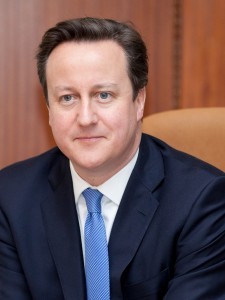
Tag: David Cameron

  • David Cameron – 2016 Statement in Copenhagen

    davidcameron

    Below is the text of the statement made by David Cameron, the Prime Minister, in Copenhagen on 5 February 2016.

    Thank you very much Lars, it’s very good to be here in Copenhagen today with you. We have a very good relationship, a very good friendship.

    Our discussions have focussed on 3 issues: on our bilateral relations, on EU reform, and on the migration crisis.

    And I just want to say a few words on each.

    Bilateral relationship

    Our bilateral relationship is particularly close. We are firm NATO allies – indeed HMS Ramsey is taking part in a NATO exercise here right now.

    We also co-operate closely on counter-terrorism and in the fight against Daesh.

    And I saw for myself the bravery of Danish soldiers as our 2 countries served alongside each other in very close quarters in Afghanistan.

    Trade in both directions between our 2 countries is worth £6 billion a year. And over 600,000 Brits visit Denmark annually.

    We work very closely together in the EU. And again, as you’ve just heard with a similar outlook. We share a lot in common. Proud nations. But outward-looking.

    EU reform

    On EU reform, as you know, I’m working hard to secure reform in 4 areas – economic governance, sovereignty, competitiveness and welfare.

    And on welfare, let me explain why the British people have concerns and what I’m trying to fix.

    I support the principle of free movement and I greatly value the contribution that many make when they come to Britain.

    But the challenge we’ve identified is the scale of movement we’ve seen from across Europe to Britain over the last decade and the pressure that has put on public services.

    Now these are problems that we can share.

    For example, I know as we’ve just heard that in Denmark you have concerns about paying child benefit for children not living here.

    And that’s why the reforms I’m seeking can benefit other countries too.

    I’ve now secured a commitment from the commission to address this.

    So the text the Council has put forward shows real progress in all 4 areas, including on protecting the legitimate interests of non-euro member states, which of course is so important to Denmark too.

    Now as Lars has just said, this deal must be legally binding. The Danish model – negotiated in 1992 – has set a powerful precedent for that. As the Prime Minister has just said, over 20 years later, it still stands.

    But as I’ve said, there is still important detail to be nailed down if we’re to get a deal in February.

    And that’s why the hard work continues.

    Migration crisis

    We’ve also discussed the Syria donors conference that I hosted yesterday with others in London.

    And I want to thank your Prime Minister and the Danish people for the very generous pledge that you made.

    I’m proud to say we brought together world leaders, we raised records funds and identified crucial long-term assistance through the creation of jobs and crucially the provision of school places for refugee children.

    This will give those in desperate need real hope for the future. But this should only be the beginning.

    The more we do to create the opportunity for people to stay in the region, the less likely we are to see them making the treacherous journey to Europe. A journey that has sadly resulted in so many deaths.

    So we’ve had good discussions here today and I want to thank you Lars again for giving me such a warm welcome.

  • David Cameron – 2016 Speech at Supporting Syria Conference

    davidcameron

    Below is the text of the speech made by David Cameron, the Prime Minister, at the Queen Elizabeth II Conference Centre in London on 4 February 2016.

    A warm welcome to London – and on behalf of my co-hosts Chancellor Merkel, Secretary General Ban Ki-moon, Prime Minister Solberg, and His Highness the Emir of Kuwait – thank you for your support today.

    We could not have a stronger gathering to address one of the worst humanitarian crises of our time. World leaders from 30 different countries, delegations from 60. Non-governmental organisations and civil society – the majority from within Syria. UN agencies, international financial institutions, multilateral development banks, and more – all here with us today.

    And if ever there was a moment to take a new approach to the humanitarian crisis in Syria – surely it is now. We are facing a critical shortfall in life-saving aid that is fatally holding back the humanitarian effort.

    And after years of conflict we are witnessing a desperate movement of humanity, as hundreds of thousands of Syrians fear they have no alternative than to put their lives in the hands of evil people-smugglers in the search for a future.

    Meanwhile Syria’s neighbours are struggling under the strain of hosting huge numbers of refugees, and trying to maintain services, and create jobs for their own people.

    Of course, the long-term solution to the crisis in Syria can only be reached with a political transition to a new government that meets the needs of all its people. And we must continue to work towards that, however difficult it may be.

    But while we pursue a solution to this horrific conflict, we can also take vital steps now which will make a real difference to people’s lives, both today and long into the future.

    We can provide the help that Syrians need now – with pledges of aid – food and medical supplies – that will quite literally save lives.

    We can provide refugees with the opportunities and skills they need to make a life for themselves and their families in host communities – giving them a viable alternative to remain in the region, and equipping them for the day they can eventually return home to rebuild their country.

    And, critically, we can support those host countries and communities which are showing such enormous generosity in providing refuge to Syrians with no choice but to flee destruction.

  • David Cameron – 2005 Statement on EU Policy

    davidcameronold

    Below is the text of the statement made by David Cameron, the then Leader of the Opposition, in the House of Commons on 19 December 2005.

    “This was the year Europe needed to change direction.

    This was the year the people of Europe rejected the constitution.

    And this was the year people called for the end to the obscenity of protectionism that damages the developing world.

    The Prime Minister rightly talked at the time of a crisis in European leadership.

    So the question for the Prime Minister is whether the British Presidency and the new budget even begin to measure up to those challenges.

    We warmly welcome the accession talks with Turkey and Croatia. We welcome what he said about Macedonia, and the EU partnership with Africa.

    But hasn’t progress elsewhere been desperately slow?

    On the budget, does the Prime Minister remember having three clear objectives?

    First, to limit its size, when almost every country in Europe is taxing and borrowing too much.

    Second, to ensure fundamental reform of the CAP.

    And third, to keep the British rebate unless such reform occurs.

    Isn’t it now clear that he failed in every single one?

    First, the Prime Minister said he wanted the size of the budget to be set at one per cent of Europe’s income.

    Can he confirm that the budget he’s just agreed is higher than that; higher than the compromise he tabled; and will actually mean £25 billion in extra spending?

    The Prime Minister says it’s to pay for enlargement. So will he confirm that Ireland, which is richer per capita than Britain, is getting more per head than Lithuania, Slovakia and Poland?

    Second, the Prime Minister wanted to change the things the budget was spent on.

    Isn’t it clear that he has failed to do that as well?

    Isn’t it the case that CAP spending will be higher next year, the year after that, and in every year up to 2013?

    The Chancellor said CAP reform was necessary to make poverty history

    The Prime Minister told this House in June that he wanted to `get rid’ of the CAP.

    Will he confirm that, four months later, his own Europe Minister said that the Government hadn’t put forward any detailed proposals to reform the CAP?

    Isn’t it the case that something which the Prime Minister thought was essential the entire Government spent four months doing nothing about?

    Will the Prime Minister be clear about what he has secured on the CAP?

    It’s a review. And it takes place in 2008.

    Can he confirm that in that year the Presidency will be held by France?

    Is he aware that the French Foreign Minister has said: `Jacques Chirac has secured that there won’t be reform to the Common Agricultural Policy before 2014′?

    Isn’t that the opposite of what the Prime Minister actually wanted?

    In other words he’s completely failed to deliver CAP reform.

    What about his third objective: if all else fails, keep the rebate?

    Well all else did fail.

    And the Prime Minister’s position was clear.

    He used to say the rebate was non-negotiable.

    He said at that Despatch Box in June: `the UK rebate will remain and we will not negotiate it away. Period’.

    The Chancellor said it was `non-negotiable’ and fully justified.

    Then the Prime Minister changed his mind. The rebate could be negotiated, he said, provided there was fundamental reform of the CAP.

    So it was clear Mr Speaker. The only circumstances in which the rebate would be given up was if there was a `commensurate and equal giving up’ of farm subsides.

    Now, that is not an unreasonable position.

    And at that time he knew about all the other considerations he mentioned today, including the importance of supporting enlargement.

    But what happened?

    The farm subsidies remain. And £7 billion of the rebate has been negotiated away.

    If this was always the Government’s plan, why wasn’t any reduction in the rebate in the Chancellor’s Pre-Budget Report?

    We are told the Chancellor didn’t even know about the final deal.

    Normally it’s the Chancellor who doesn’t tell the Prime Minister what’s in the Budget. This time the Prime Minister didn’t tell the Chancellor.

    Can he confirm that by 2011 the UK will be losing £2 billion a year – the baseline from which we will negotiate?

    Will he confirm that the amount he’s given up from the rebate is almost double our entire overseas aid budget this year?

    In June the Prime Minister told the House that no deal was better than a bad deal. `Europe’s credibility’ he said `demands the right deal—not the usual cobbled-together compromise in the early hours of the morning’

    Did he remember that as he was cobbling together this compromise in the early hours of the morning?

    Why did he give up £7 billion for next to nothing?

    And – vitally – how is the Chancellor going to pay for it?

    More taxes?

    More borrowing?

    Or cuts in spending?

    Which is it?

    A good budget deal would have limited spending.

    It would have reformed the CAP.

    And it would have helped change Europe’s direction.

    Isn’t it the case that none of those things happened under the British Presidency?

    Europe needed to be led in a new direction.

    Aren’t we simply heading in the same direction, but paying a bigger bill?

  • David Cameron – 2016 Speech on EU Renegotiation

    davidcameron

    Below is the text of the speech made by David Cameron, the Prime Minister, in the House of Commons on 3 February 2016.

    With permission, Mr Speaker, I would like to make a statement on progress of our renegotiation.

    The House has now had the chance to study the documents published by the European Council yesterday.

    I believe this is an important milestone in the process of reform, renegotiation and referendum that we set out in our manifesto and which this government is delivering.

    We have now legislated for that referendum and we are holding that renegotiation. So let me set out the problems that we are trying to fix and the progress we have made.

    Ever closer union

    First, we don’t want to have our country bound up in an ever closer political union in Europe.

    We are a proud and independent nation – with proud, independent, democratic institutions that have served us well over the centuries.

    For us, Europe is about working together to advance our shared prosperity and our shared security.

    It is not about being sucked into some kind of European superstate. Not now. Not ever.

    Mr Speaker, the draft texts set out in full the special status according to the UK and clearly carves us out of further political integration.

    And they actually go further to make clear that EU countries don’t even have to aim for a common destination.

    This is a formal recognition of the flexible Europe that Britain has long been arguing for.

    In keeping Britain out of ever closer union, I also wanted to strengthen the role of this House and all national parliaments.

    So we now have a proposal in the texts that if Brussels comes up with legislation we don’t want, we can get together with other parliaments and block it with a red card.

    And we’ve proposed a new mechanism to finally enforce the principle of subsidiarity – a principle dear to this House which states that as far as possible powers should sit here in this Parliament, not in Brussels.

    So every year, the EU has got to go through the powers they exercise, to work out which are no longer needed and should be returned to nation states.

    Competitiveness

    Second, I said we wanted to make Europe more competitive and deal with the rule-making and the bureaucracy that can cost jobs here in Britain and across the European Union.

    We asked for commitments on all the areas central to European competitiveness. We want international trade deals signed, the single market completed and regulation stripped back. All of these things are covered in the draft texts.

    There is a new proposal for specific targets to reduce the burdens on business in key sectors – this will particularly help small and medium sized businesses – and there is a new mechanism to drive these targets through and cut the level of red tape year-on-year.

    Single currency club

    Third, we are absolutely clear that Britain is going to keep the pound, in my view, forever.

    But we need to be just as clear, that we can keep the pound in a European Union that will be fair to our currency.

    Put simply: the EU must not become a euro-only club. If it does it would not be a club for us.

    So we called for a series of principles to protect the single market for Britain.

    We said there must be no discrimination against the pound. No disadvantage for businesses that use our currency, wherever they are located in the EU. And no option for Britain ever again to be forced to bail out eurozone countries.

    All of these principles are reflected in the draft text which is legally binding. And again there is a mechanism. Britain has the ability to act to uphold these principles and protect our interests.

    Now Mr Speaker, we should be clear British jobs depend on being able to trade on a level playing field within the European single market, whether in financial services or cars, or anything else.

    So this plan, if agreed, will provide ‎the strongest possible protection for Britain from discrimination and unfair rules and practices.

    For instance, never again could the EU try its so-called ‘location policy’. That the settling of complex trades in euros must only take place in eurozone countries. These principles would outlaw that sort of proposal.

    Now Mr Speaker, these are protections we could not have if Britain were outside the European Union.

    Immigration

    Now fourth, we want to deal with the pressures of immigration which have become too great.

    Of course, we need to do more to control migration from outside the European Union, we are doing that and we will be announcing more measures on that front.

    But we need to control migration from within the EU too.

    Now the draft texts represent the strongest package we have ever had on tackling the abuse of free movement and closing down the back-door routes to Britain.

    It includes greater freedoms for Britain to act against fraud and prevent those who pose a genuine and serious threat from coming to this country.

    It includes a new law to overturn a decision by the European Court which has allowed thousands of illegal migrants to marry other EU nationals and acquire the right to stay in our country.

    And it has been a source of perpetual frustration that we can’t impose our own immigration rules on third country nationals coming from the European Union.

    But now, after the hard work of the Home Secretary, we have a proposal to put that right.

    Mr Speaker there are also new proposals to reduce the pull factor that our benefits system exerts across Europe by allowing instant access to welfare from the day someone arrives.

    People said that Europe wouldn’t even recognise that we had this problem.

    But the text explicitly recognises that welfare systems can act as an unnatural draw to come to this country.

    Now Mr Speaker, our manifesto set out 4 objectives to solve this problem. I mentioned these at Prime Minister’s Questions. We had already delivered on 2 of them within months of the general election.

    Already EU migrants will no longer be able to claim Universal Credit – the new unemployment benefit – while looking for work.

    And if those coming from the EU haven’t found work within 6 months, they can now be required to leave. Now in these texts we have secured proposals for the other 2 areas.

    If someone comes from another country in Europe leaving their family at home, they will have their child benefit paid at the local rate, not at the generous British rate.

    And crucially, we have made progress on reducing the draw of our generous in-work benefits.

    People said it would be impossible to end the idea of something for nothing.

    And that a 4 year restriction on benefits was completely out of the question. But that is now what is in the text.

    An emergency brake that will mean people coming to Britain from within the EU will have to wait 4 years until they have full access to our benefits.

    And the European Commission has said very clearly that Britain qualifies already to use this mechanism.

    So with the necessary legislation we’d be able to implement it shortly after the referendum.

    Finally, let me be absolutely clear about the legal status of these changes that are now on offer.

    People said we would never get something that was legally binding. But this plan – if agreed – will be exactly that.

    These changes will be binding in international law, and will be deposited at the UN. They cannot be changed without the unanimous agreement of every EU country – and that includes Britain.

    So when I said I wanted change that is legally binding and irreversible, that is what I’ve got.

    And in key areas, treaty change is envisaged in these documents.

    So, Mr Speaker, I believe we are making real progress in all 4 areas. But the process is far from over.

    There are details that still need to be pinned down and intense negotiations to try and agree the deal with 27 other countries.

    It will require hard work, determination and patience to see it through.

    But I do believe that with these draft texts – and with all the work that we have done with our European partners – Britain is getting closer to the decision point.

    It is of course right that this House should debate these issues in detail.

    So in addition to this statement – and of course a statement following a Council later this month – the government will also make time for a full day’s debate on the floor of this House.

    Mr Speaker, as we approach this choice let me be clear about 2 things.

    First, I am not arguing – and I will never argue – that Britain couldn’t survive outside the European Union.

    We are the fifth largest economy in the world. The biggest defence player in Europe with one of the most of extensive and influential diplomatic networks on the planet.

    The question is not could Britain succeed outside the European Union, it is how will we be most successful? How will Britain be most prosperous? How will we create the most jobs? How will we have the most influence on the rules that shape the global economy and affect us? How will we be most secure?

    And I’ve always said the best answers to those questions can be found within a reformed European Union.

    But let me say again, if we can’t secure these changes, I rule nothing out.

    And second, even if we secure these changes, you will never hear me say that this organisation is now fixed. Far from it.

    There will be many things that remain to be reformed and Britain would continue to lead the way.

    We would continue to make sure that Europe works for the countries of Europe, for the businesses of Europe, for the peoples of Europe and crucially for the British people who want to work and have security and get on and make the most of their lives.

    So if we stay, Britain will be in there keeping a lid on the budget, protecting our rebate, stripping away unnecessary regulation and seeing through the commitments we have secured in this renegotiation.

    Ensuring that Britain truly can have the best of both worlds, in the parts of Europe that work for us, and out of those that don’t.

    In the single market. Free to travel around Europe.

    Part of an organisation where co-operation on security and trade can make Britain and its partners safer and more prosperous.

    But with guarantees that we will:

    – never be part of the euro

    – never be part of Schengen

    – never be part of a European army

    – never be forced to bail out the eurozone with our taxpayers’ money

    – and never be part of a European superstate

    That is the prize on offer.

    A clear path that can lead to a fresh settlement for Britain in a reformed European Union.

    A settlement that will offer the best future for jobs, security and strength for our country.

    A settlement which, as our manifesto promised nearly a year ago, will offer families in our country security at every stage of their lives.

    That is what we’re fighting for.

    And I commend this statement to the House.

  • David Cameron – 2016 Speech on EU Reform

    davidcameron

    Below is the text of the speech made by David Cameron, the Prime Minister, at Siemens in Wiltshire on 2 February 2016.

    It is great to be with Siemens, a business that believes so much in Britain and has invested so much in Britain and we want you to go on doing that.

    And as you say, today, I want to talk to you about this vital issue of Britain and Europe because we have had some difficult years in our economy in the years gone past, it hasn’t been easy, but we have been working to a plan, to get Britain to keep moving forward.

    We have got our economy growing, we have got the deficit coming down, we have got 2.3 million more people in work than when I became your Prime Minister, but it is a tough, difficult and dangerous world out there, and that is why it is so important we get this argument about Britain and Europe right and I am determined that we do.

    And as we do, I am very clear about the aim I have got in all this. My aim is for a country that is more prosperous, that is more secure, that gives people the chance to live that secure and decent and good life. That is what it is all about and my aim is to give Britain the chance to be in a reformed European Union.

    That is the aim.

    Why?

    Well, because Britain is a trading nation. We have got this market of 500 million people in Europe, the single market, a quarter of the world’s economy, and Britain has always needed those markets to be open and to play a part in those markets.

    So, if we can secure that future and deal with the problems we have had with Europe, that I think would be the best of both worlds. But we have had real problems, with the European Union and our membership of the European Union and so I think the right thing is to deal with those problems and give people the choice about whether to stay in a reformed European Union or leave and as Jurgen said, “go it alone”.

    That is the choice. But we have got to deal with the problems, deal with the issues.

    Now, what do you think?

    What do we think are the real problems we have got with Europe?

    Well, I would say there are 4, 4 that stand out the most clearly.

    The first is a question of sovereignty.

    Britain is a strong, proud and independent country with a great history, with strong institutions, and people believe – I believe – profoundly in our country and its institutions and its independence.

    So, for us Europe should always be about cooperation for prosperity and cooperation to make sure we are sure.

    Cooperation to make sure we can have a growing economy in the jobs and the prosperity that we want.

    It should never be about losing ourselves in some kind of European superstate.

    That might be for others but that is not for us.

    And I think that has not been clear enough up until now, that is problem number 1.

    Problem number 2 is we are a country, as I have said, that lives on its trade, its enterprise, its business, its industry, and so it is absolutely essential that Europe is open for business and as we work in Europe we are not adding bureaucracy and problems and lack of competitiveness to our businesses, we are taking them away and making sure that our businesses can succeed the world over.

    And let’s be frank, up until now yes, Europe has had some success economically, but there has been too much bureaucracy, too much regulation and too many rules.

    So, that is problem number 2 we have to deal with.

    Problem number 3 is that I think it is right for Britain to keep the pound as our currency, not just now, but frankly forever.

    The fifth largest economy in the world, and that’s what we are, should have our currency, to have our own flexibility to set our own economic policy.

    Now one of the biggest things to change in Europe in the last 30 years, has been the arrival of the euro.

    What we need to know in Britain is not just that we can keep our currency and we can keep it forever, but we can keep our currency while being in a European Union that will be fair to that currency.

    I think, that there has been a danger in recent years that this has looked a bit too much like a euro-only club.

    And so we need to fix that problem, not just keep our currency, but make sure we are treated fairly inside the European Union. That’s problem number 3.

    Problem number 4 is something that I think we all feel quite strongly about, which is that in recent years the pressures of migration from overseas and movement of workers from inside the European Union has put a lot of pressure on our public services, on schools, and on hospitals and on communities and look we are country that is in favour of people that come here who work hard, who make a contribution.

    Britain has succeeded through immigration not in spite of immigration and we do believe, I think, in the free movement within the European Union, that the British people get the chance to go to work and study and sometimes even retire in other European countries and we want those things but the pressure has been too great and we want that pressure to be dealt with.

    So that’s what I would say, the 4 things that need to be sorted out in Europe.

    We want to have a Europe where we are not subsumed into a superstate but that we can be proud and independent, we want a Europe that is competitive, we want a Europe that respects our currency and treats us fairly.

    Now I am sure that other people have other things that they would like to sort out, and maybe we can have a seminar on that in a minute, but I think that those 4 things go to the heart of what we need to fix.

    So that is why I said, “let us have a renegotiation, if I am elected”, as I said before the election we will start a renegotiation in Europe to reset these rules and get reform in Europe and then we will hold a referendum and give the British people a real choice if you want to stay in this reformed organization or would you want to go.

    And when I said let’s have a referendum I know there was a lot of scepticism, people sort of said “well these things are always promised, but politicians never actually deliver them”.

    Well, we have.

    We have legislated for a referendum, it’s the law of the land. It has to happen by the end of 2017 and my view, if we can get the deal we need, it should happen a good deal earlier.

    People also said, “you’ll never actually get a renegotiation, these other countries, they won’t really sit down and negotiate with you about these changes you want to make”.

    Well, that is exactly what has happened. We have had a series of discussions and negotiations and today the European Council has issued a whole set of documents about the things that should change in Europe, and pressing these British issues that we put on the table.

    Now of course, some people said to me, “don’t start a renegotiation being reasonable and being diplomatic, just kick over the table, storm out of the room and wait until they call you back in”.

    Well, I didn’t take that. I took the view that Britain, as the second biggest contributor to the European Union, a major player in the European Union, we should go about this in a proper, planned, measureable, measured and sensible way and that is what I have done these last 7 months, going to the individual European countries, meeting with the Prime Ministers, meeting with the Presidents, explaining the issues that Britain has, putting them on the table and saying we want to, with your consent, your agreement and consensus, we want to fix these issues.

    And I think that has been the right way to do it. So how have we got on?

    Today this document is coming out, it has come out now and you can get it online, you can see how we got on.

    So let’s go through those 4 problems that I identified.

    Problem number 1, Britain being a proud, independent country and not wanting to be in a superstate.

    Well for the first time ever, we have got now a specific carve out that says, while the other European countries might want to have an ever-closer union, that is not the path we are pursuing.

    We are carved out of ever-closer union in terms of the future. It even says very clearly we do not have to aim for the same destination.

    We are there for trade, we are there for cooperation, we are there to work together on the things that can make us more secure, we are there to work on things when there are problems like crime, or environment like pollution that crosses borders.

    We are not part of an ever-closer union.

    And we didn’t just get that we got something else.

    I said I wanted the national parliaments, our Parliament to be able to work with other national parliaments, to block measures they didn’t like.

    And if Brussels comes up with some crazy scheme, we can get hold of other parliaments and work together with ours and put a red light up and it doesn’t go any further.

    People told me I would not get that, and it is there in black and white in the document. I also said we wanted something else.

    For years Brussels has talked about this idea that the power should be flowing from Brussels back to the member states, rather than the other way around.

    They have a fancy word for it, its called ‘subsidiarity’, nobody knows what it means and I promise not to use it again but it is a very simple idea, Europe should look at what its powers are and if it is not using them is should give them back to nation states, that again is in the document.

    That is going to happen and there is going to be an annual discussion about powers that they are not using that should come back to Britain.

    So, that is the first issue, the sovereignty issue we were fussed about. I think, pretty good measures in this document.

    Now let me be clear.

    This is not finished yet, we have still got to negotiate and we still have to fill in all the details and have everyone else agree but I think that those proposals in that first area are pretty strong.

    The second area, making sure Europe is competitive, making sure we are helping our businesses not holding them back.

    How have we done there?

    Well I said what I wanted was for Europe to hardwire into its DNA, into its very make-up, the idea of being more competitive, to sign trade deals with the fastest growing countries in the world, not being a ‘fortress Europe’ but getting out there and helping business. How have we done on that one?

    Well there is a separate declaration about competitiveness with all the ideas that Britain has been pushing contained within it.

    Saying, ‘we have got to complete these single markets in Europe, these digital services, in services like legal services and others, in energy’, that is all there and there is something else as well, which is for the first time we are going to have targets to cut, not to decrease but to cut Brussels bureaucracy, in the key areas and they will be returned to year after year, after year.

    So, I think in terms of making Europe more competitive, that second key demand we had in Britain, we have made good progress.

    The third area, this issue of the euro and Britain wanting to keep the pound.

    Let me be absolutely clear, we want the euro to succeed.

    The eurozone countries are our biggest market, we want them to sort out economic problems, we want their economies to grow, we want to be able to trade and sell to them at the same time as keeping our own currency.

    Now the issue here is just making sure that there is fairness, making sure that Europe recognises that you can have more than one currency in the European Union and for the first time in these documents that is properly recognised.

    But more important than that there is a set of principles, that the European Union will have to stick to, and its says that when it comes to having another currency, like the pound sterling, there’s no discrimination, no disadvantage, no chance of us being asked to pay for eurozone projects, and if people think if this is somehow a fiction I have conjured up, last summer the eurozone countries got together and tried to use British money, to help bail out Greece.

    Now, we managed to stop it through some very hard diplomacy.

    But if this document is being published today becomes the law of the European Union that can never happen again, so these principles, no discrimination no disadvantage, no costs for non-euro countries to pay towards the euro are very important and added to that there is a mechanism, so if we are not happy with what is happening we can pull a brake, the issues get discussed properly, and Britain’s concerns as a country outside the eurozone will be properly taken on board.

    So that is the third vital area where we need change.

    What about the fourth one? This issue of migration and the pressure that has been put on Britain’s public services, health, education, housing.

    I think a real concern, it was at the election.

    You felt it on every doorstep, on every street.

    People want us to fix this issue.

    They don’t want no immigration, they want balanced immigration, and that’s what I want.

    Now of course, we have to take more action from outside the European Union, and we will, but inside the European Union, we do need to take action.

    Now what I said we needed to do, was to address the fact that our welfare system is something of a draw for people coming to work in the United Kingdom.

    That up to now we have given instant access to our in-work welfare system, to people that want to come here and work and make a contribution.

    So what have we got in this document?

    What we have got is basically something I asked for which is that people shouldn’t be able to come here and get instant access to our in-work welfare system.

    We should end ‘something for nothing’.

    What is proposed is an emergency brake, that means we don’t have to pay full rates of welfare for 4 years in the United Kingdom.

    Now I was told that I would never get a 4-year proposal, and yet that is what is in the document.

    That we don’t have to pay welfare in full for 4 years.

    And that the European Commission has said that as far as they are concerned, Britain qualifies for this emergency brake, right now.

    So, I think that is a very big change, something we were told we would not be able to achieve, it wasn’t possible but there It is in the document and that is not the only thing.

    I also said, I don’t think it’s right if people come and work here, but they leave their families at home that we should pay British rates of child benefits, to their families that might be staying in a much lower cost country.

    And so in this document is the proposal that if someone comes from another country in Europe, that they get the child benefit paid at the local rate, not at our very generous British rate.

    Now in the election, what I said was that I think there are 4 things in this welfare area that needed to be sorted out.

    Very simple, very straightforward and I think everyone will understand.

    I said firstly, if you come to Britain looking for work, you don’t get paid unemployment benefit.

    You come because you are going to get a job.

    If you haven’t got a job after 6 months you have to return to the country you came from.

    If you come and you work, you get the child benefit but paid at local rates and fourth you don’t get instant access to our welfare system, it takes 4 years before you do.

    Now, if you look at those 4 things; the first we have already done, you don’t get that unemployment benefit instantly; the second, if you don’t have a job after 6 months you have to go home.

    The third, yes there will be child benefit but only at your local rate, not at our national rate and fourth there is a 4-year waiting period before you get full in-work British benefits, so I think that is a very strong and powerful package.

    Now as I said none of this is agreed yet, none of the detail is fixed and there is more work to be done.

    This European Council doesn’t meet and discuss and debate all this for a couple of weeks but I think we have secured some very important changes, which go directly to the issues we raised as a member of the European Union.

    One last thing on this immigration and welfare basket as I have called it and that is for too long we have allowed sham marriages to take place, we have allowed people who come to our country that turn out to be criminals to stay in our country.

    We have allowed people to get married or use the system to get around our immigration controls and in this document is a very clear set of measures to put a stop to all of those processes.

    So I think if you take those 4 areas: is Britain a proud, independent country not part of superstate? Yes.

    Are we going to be in a more competitive Europe that helps us create jobs? Yes.

    Are we dealing with this potential unfairness between eurozone countries and non-eurozone countries? Yes.

    And are we taking the pressure off our immigration system through these welfare changes? Yes, I think we are.

    As I said, this is not a done deal and there is more work to be done over these next couple of weeks but I think strong, determined and patient negotiation has achieved a good outcome for Britain and sometimes people say to me, ‘if you weren’t in the European Union would you opt to join the European Union?’

    And I today that I can give a very clear answer.

    If I can get these terms for British membership, I sure would opt in to be a member of the European Union because these are good terms and they are different to what other countries have.

    A couple of last things from me before we have any questions.

    First thing and this is something our host said today. As we get into this referendum campaign, and I hope which will start soon.

    You will never hear me argue that Britain could not survive outside the European Union, of course we could, we are the fifth largest country in the world, in terms of our economy.

    We have got networks all over the world, we have great business, universities, of course we could succeed. The question is not whether we could succeed it is how we could best succeed, how will we maximise our prosperity, our jobs. How will we maximise the investment into our country.

    That is the question we have to address.

    The second and final thing from me. I am not going to argue, even after these changes, as important as they are, that somehow the European Union is a perfect and unblemished organisation.

    That is not the case.

    There is still the need for reform.

    There is still the need for Britain to be driving that reform.

    There will still be many imperfections and many frustrations that we will have with this organisation.

    But I think that if we can secure what is in this document, finish off the details and improve it still further that we will be able to show that on balance, Britain is better off, more secure, more prosperous, better chance of success for all our families and all our people inside this reformed European Union.

    Here is why.

    I think Britain will be better able to argue that Britain will have the best of both worlds.

    Because of course, after this agreement, after these changes, Britain will be a full member of the single market, better able to argue for all the things we need for our businesses to succeed.

    Britain will still be a full member of the European Council sat around the table making sure we take the tough action against Iran in order to stop them getting a nuclear weapon, or against Putin to make sure they don’t try and redraw the boundaries through force.

    We will still be a full member of the things that matter to us, but we will never be in the single currency, that is not for us.

    We will never be in the Schengen no borders agreement, that is not for us.

    We are going to keep our borders. We are never going to sign up to things like a European army.

    We are never going to sign up to an ever-closer union, we are going to make sure we maintain our independence as a country and I think we will be able to argue the best of both worlds.

    So we have only got now potentially a few months before we hold this referendum, if we get this agreement.

    If it goes through and we name the date for the referendum.

    And I think this best of both worlds, out of the single currency, out of the Schengen borders agreement, out of the ever-closer union but in the things that work for Britain, that give us jobs, that give us security, that give us the ability to make sure we have stronger and safer world, I think that is something worth fighting for, and I am delighted to come here today to tell you about that and to answer your questions, thank you.
  • David Cameron – 2013 Speech on the G20 Summit

    davidcameron

    Below is the text of the speech made by David Cameron, the Prime Minister, in the House of Commons, London on 9 September 2013.

    With permission, Mr Speaker, I would like to make a statement on the G20 Summit in St Petersburg.

    The meeting focused on 2 vital issues:

    – the crisis in Syria

    – the core business of the G20, which is the future of the global economy

    Let me take Syria first.

    Syria

    The G20 was never going to reach unanimity on what action is needed on Syria.

    But the case made by those countries who believe in a strong international response to the use of chemical weapons was I believe extremely powerful.

    Britain supported a statement, sponsored by the US and signed by 12 members of the G20:

    – which condemns the horrific chemical weapons attack

    – points to the clear evidence of the Assad regime’s responsibility for that attack

    – and calls for a strong international response to this grave violation of the world’s rules

    This statement from St Petersburg was reinforced on Saturday when the 28 EU Foreign Ministers unanimously condemned the chemical weapons war crime and called for strong response that demonstrates there will be no impunity for such crimes.

    I am clear that it was right to advocate a strong response to the indiscriminate gassing of men, women and children in Syria, and to make that case in this Chamber.

    At the same time I understand and respect what this House has said.

    So Britain will not be part of any military action.

    We will continue to press for the strongest possible response, including at the UN.

    We will continue to shape more urgent, effective and large-scale humanitarian efforts.

    And we will work for the peaceful, political settlement that is the only solution to the Syrian conflict.

    Let me just say a word about each of these 3.

    Chemical weapons

    On chemical weapons, we will continue to gather evidence of what happened and make it available so that those responsible can be brought to account.

    Along with 11 other G20 countries, we have called for the UN fact finding mission to present its results as soon as possible.

    We support efforts by the United States and others to reinforce the prohibition on the use of chemical weapons.

    And we will continue to challenge the UN Security Council to overcome the paralysis of the last 2 and a half years and fulfil its responsibilities to lead the international response.

    Humanitarian aid

    In terms of the humanitarian response, Britain is leading the world.

    This is the refugee crisis of our time.

    A Syrian becomes a refugee every 15 seconds – that’s 240 fleeing during the hour of this Statement alone.

    Inside Syria, 6.8 million are in need of humanitarian assistance.

    At the same time aid convoys simply can’t get through to areas under siege because of the fighting and most major routes between large populations are too insecure to use.

    So in St Petersburg, I organised a special meeting with the UN Secretary General, the EU, Japan, Turkey, Canada, France, Australia, Italy, Saudi Arabia and America.

    We agreed to work together through the UN to secure unfettered humanitarian access inside Syria.

    We agreed to increase the focus of that humanitarian assistance on dealing with the dreadful impact of chemical weapons – including medicines and decontamination tents.

    And we challenged the world to make up the financial shortfall for humanitarian aid by the time the United Nations General Assembly meets later this month.

    Britain, Canada, Italy and Qatar have made a start with contributions totalling £164 million.

    Working for a peaceful, political settlement

    Syria still needs a political solution – and that requires the Syrian opposition to stand up for the millions who want democracy, pluralism and freedom from terror and oppression.

    So we will continue to assist the moderate Syrian opposition with political support, non-lethal equipment and technical advice and training.

    The Foreign Secretary convened a meeting with Syrian opposition leaders in London last week to continue this work – and he has discussed all of these issues with the US Secretary of State today.

    As I discussed with several G20 leaders – including President Putin – Britain will also lead efforts to get both sides to the table to shape a political transition, building on last year’s agreement in Geneva.

    Because a political settlement is the only way to a stable, inclusive and democratic Syria.

    Global economy

    Mr Speaker, let me turn to the global economy.

    When I went to my first G20 Summit in Canada 3 years ago:

    – Britain had the most indebted economy

    – the most indebted households

    – and the most damaged banking system of any country around the table

    We’d also fallen out of the top 10 places in the world for the ease of starting a business.

    I vowed then that this government would take the tough action necessary to deal with our debts, repair our broken banking system and most importantly to deliver a private sector led recovery.

    3 years on that is exactly what we have done.

    We’ve cut the deficit by a third and cut the structural deficit by more than any other G7 country.

    We’ve reformed our banks so that they serve the economy not the other way round.

    And we’ve delivered that private sector led recovery with the OECD forecasting that Britain will be the fastest growing G7 economy in the fourth quarter of this year, and the IMF predicting we will have the strongest growth of any major European economy in 2014.

    Mr Speaker, this G20 Summit recognised our progress and explicitly singled out Britain’s return to growth in the Communiqué.

    More importantly, the whole G20 has endorsed our priorities for economic recovery.

    All 20 have signed up to the St Petersburg Action Plan which contains all the features of the plan we have been following in Britain since the coalition government came into office.

    In particular, it emphasises the importance of dealing with our debts the role of monetary policy to support the recovery and the need for long-term reforms to boost growth and trade and cut the red tape that too often holds back business investment and job creation.

    Mr Speaker, the Summit also took forward the agenda that I set at the G8 in Lough Erne – on what I call the “3 Ts” of tax, transparency and trade.

    On tax, the whole G20 adopted the Lough Erne vision of automatic sharing of tax information – with a single global standard to be finalised by February next year.

    On transparency, the whole G20 is now taking forwards international standards on company ownership.

    This means companies will know who really owns them and tax collectors and law enforcers will be able to obtain this information easily so people can’t avoid taxes by using complicated and fake structures.

    Britain has led this initiative and let me welcome, Mr Speaker, the progress made by our crown dependencies and overseas territories – each of which now has now published an action plan.

    On the third of the 3 Ts – trade – we also made significant progress not just maintaining the commitment to resist protectionist measures, but extending it by a further 2 years, to the end of 2016.

    This is a vital and hard-fought achievement which opens the way to more British exports, more orders for British companies and ultimately more British jobs.

    Finally, strong global growth also depends on helping the poorest countries to lift themselves out of poverty.

    And the G20 welcomed the vision for eliminating world poverty set out in the report from the UN High Level Panel that I co-chaired together with the Presidents of Indonesia and Liberia.

    Mr Speaker, from humanitarian aid in Syria to the plans for growth right across the G20 from tax, transparency and trade to the fight against global poverty Britain – now an economy turning the corner – made a leading contribution to this Summit.

    We may be a small island, but we are a great nation.

    And I commend this statement to the House.

  • David Cameron – 2012 Interview in Saudi Arabia

    davidcameronold

    Below is the text of the speech of David Cameron, the Prime Minister, on 13 January 2012.

    Interviewer (Arabic) – translator

    Why are you here in Saudi Arabia and what are the main issues that you’ve discussed with King Abdullah today?

    Prime Minister

    Well, the United Kingdom and the Kingdom of Saudi Arabia have always had a good and strong relationship, and I want to build on that relationship and that’s what my talks with His Majesty the King were about today. We’re both members of the G20. We’re both strong economic powers. We both have interests in seeing peace and progress and stability in this region. We both want to be successful in the fight against al-Qaeda terrorism, so there were many subjects for us to discuss. We’ve talked about what’s happening in Iran, what’s happening in Syria, Yemen, in Somalia and the importance of progress in all of those areas, and also the very strong trading and people-­to-­people relationship there is between the United Kingdom and the Kingdom of Saudi Arabia.

    Interviewer (Arabic) – translator

    How do you assess the Iranian regional threat, and do you think that Iran is militarily capable of closing the Strait of Hormuz?

    Prime Minister

    Well, first of all, I think there is a clear threat from Iran in terms of that country’s attempt to acquire nuclear weapons. I think that would be very bad for the region, very bad for the world and I think it’s right that all countries across the world step up the pressure on Iran to take a different path. And Britain has been leading the way in that regard within the European Union, arguing for sanctions, for travel bans, for asset freezes and we are now looking at this whole issue of having an embargo on Iranian oil to get that regime to think again; it can take a different path and stop destabilising the region and stop the march towards a nuclear weapon. But it needs to change direction. In terms of the Straits of Hormuz, it is in the interests of the whole world that those straits are open and I’m sure if there was any threat to close them the whole world would come together and make sure they stayed open.

    Interview (Arabic) – translator

    What’s your reaction to the speech which President Assad gave recently and what impact did you think his speech has had on the whole issue?

    Prime Minister

    Well, my view – our view in the United Kingdom – is that President Assad has lost the consent of his people, and that is not surprising when you see the appalling brutality that has been meted out by elements of the armed forces in Syria against ordinary civilians and people who are protesting. I think it is appalling what’s happened. To me one of the key points of what is happening in what I call the Arab Spring is that leaders have to show they have the consent of the people, that they’re offering people a job and a voice, that they’re in tune with what their countries want, and President Assad is not doing that. Again, I think that Britain has played quite a leading role. I pay huge tribute to the Arab League which has played the leading role in bringing this issue to the world’s attention. The Arab League is leading the way. The Arab League is showing the United Nations – in my view – what needs to be done and we stand ready as a permanent member of the United Nations Security Council to take fresh resolutions to that council based on what the Arab League is doing, or the Arab League is saying and daring others, if they want to veto those resolutions, to try and explain why they’re willing to stand by and watch such appalling bloodshed by someone who has turned into such an appalling dictator.

    Interviewer (Arabic) – translator

    It’s been a year into the Syrian crisis, what’s keeping the issue from reaching the United Nations and who’s got the authority to bring this to the United Nations Security Council?

    Prime Minister

    Well, clearly it’s been discussed at the United Nations Security Council, but we’ve been unable to make progress frankly because there have been some countries on the Security Council that have vetoed, or threatened to veto, proper resolutions on Syria. It’s the particular case with Russia, and I would urge Russians – the Russian government – even at this late stage to look really carefully at why it is proposing to do what it keeps doing with respect to Syria. This is appalling bloodshed, appalling murder on the streets of Syria. I think the whole Arab League has come together and said that what is happening is unacceptable, and I think other countries need to listen to that and act on that, including at the United Nations. Britain stands ready to do that; France stands ready to do that. I’m sure America does too, but the other permanent members need to do the same.

    Interviewer (Arabic) – translator

    Who’s got the authority to bring the issue to the Security Council? Is it the Assad opposition or the Arab League or the Security Council itself?

    Prime Minister

    I think the greatest authority would come from the Arab League itself. If we think of what happened in Libya – and of course Syria is a very different case to Libya, I’m not arguing that the same should happen there – but the Arab League provided such leadership over the issue of Libya that the world was able to come together and condemn what Colonel Gaddafi was doing through those Resolutions 1970 and 1973. And I think the more the Arab League can push the world through the United Nations to say ‘you must make clear the world’s revulsion about what is happening in Syria’ the better. As I say, Britain stands ready to help promote resolutions like that. We’ve done so in the past; we’ll do so in the future and I pay tribute to the members of the Arab League who’ve shown such unity and steadfastness in actually saying that what is happening in Syria is wrong.

    Interviewer (Arabic) – translator

    How do you assess the work of the Arab League mission so far in Syria – and do you think the Arab League is part of the solution?

    Prime Minister

    I think they can be part of the solution. To me what the Arab League has done is set out a series of things that need to happen in Syria. A series of things that I think with their own eyes they can see are not happening in Syria and so I think we have to wait for the next stage but it seems clear to me that what will need to happen is for the Arab League to say that what’s happening in Syria is not acceptable, cannot go on and therefore the world needs to make a clearer statement through the United Nations. I think that is the right sequence but again, I pay tribute to what the Arab League is doing because I think the rest of the world will stand up and listen even more if it is Arab countries themselves that are saying what is happening is not right.

  • David Cameron – 2012 Speech with President Mahmoud Abbas

    davidcameronold

    Below is the text of the speech made by David Cameron, the Prime Minister, on 16 January 2012.

    Well, it’s a great pleasure to welcome President Abbas back to Number 10 Downing Street. Britain and the Palestinian Authority have very good and strong relations and last year we upgraded our diplomatic relations with the Palestinian Authority.

    Britain wants to see a two-state solution come about. We are passionate about this; we do everything we can to push and promote this agenda at every available opportunity. I spoke to the Israeli Prime Minister after the New Year and I am delighted to have the Palestinian President here today.

    We believe the peace talks that have begun in Jordan do provide an opportunity – an opportunity we hope that both sides will pursue. We think this is absolutely vital.

    Obviously, as a friend of Israel and a friend of the Palestinian Authority and the Palestinian people, we want to see a strong, democratic, peaceful Israel alongside a strong, democratic and peaceful Palestine. We believe that is achievable, but we can’t achieve it without the two parties coming together and talking and discussing. In the end, this two-state solution can only come about from the two parties talking to each other. We cannot want it more than you want it.

    So, we wish you well. We will do everything we can to help promote these discussions. We think that time, in some ways, is running out for the two‑state solution unless we can push forward now, because otherwise the facts on the ground will make it more and more difficult, which is why the settlement issue remains so important.

    But we wish you well; we hope the talks can continue and we hope that the two-state solution that we strongly support can be achieved and we say that as a friend of Israel but also a very strong friend of the Palestinian people, the Palestinian Authority, and indeed as major donors to the Palestinian Authority and the institutions that you are so successfully building up. But President Abbas, you are very welcome here again.”

    President Mahmoud Abbas (via interpreter):

    Thank you. Thank you very much. Thank you very much Prime Minister. We are indeed very happy to be here and I would like to thank you for the invitation. And I would like to thank you also on behalf of the populace, on your stance vis-a-vis Palestine, on your support for the solution which we also – the two-state solution.

    You have indeed played a very, very important role in building our Palestinian institutions and this we can witness through the assistance that you have been offering us.

    Of course, nothing can be achieved without negotiations. As you know, there are negotiations going on right now because of the initiative that King Abdullah II of Jordan has taken. We are optimistic about those negotiations and at the same time we hope that there will be something tangible as a result of these negotiations.

    Of course, time is of the essence; there must be speed, we must be fast in achieving those things because the settlements and the whole thing will go on – seeing the settlements going on, is going to help everything; it’s what stands in the face of everything at the same time. So, settlements have to stop. Settlements have to stop in order for us to be able to continue our negotiations; to come to some sort of solution and a solution which will encompass the vision of the Palestinian state to come in the future.

    I personally know very well that you have a very balanced relationship, be that towards Israel or the Palestinian Authority. This at the same time is of great importance because you could play a political role, so to speak, so that we can find the balance that we all want to seek. We always need your help, sir. As we need your help and I am indeed very happy to be here with you.

  • David Cameron – 2012 Speech to Headteachers

    davidcameron

    Below is the text of the speech made by David Cameron, the Prime Minister, on 17 January 2012.

    Well welcome everyone. It’s great to have you here at Number 10 Downing Street. I’m always – bit terrified with Queen Elizabeth I looking down on me, prove that anything is possible in life. But a very warm welcome. We’ve got some extremely talented head teachers here, we’ve got my policy aide here. We’ve got Michael Barber who spent many years in this building working for a previous government and is helping us now, also working at Pearson. And obviously we’ve got the Secretary of State for Education on my right. Sir Michael Wilshaw who has kindly agreed to become Head of Ofsted and take on one of the toughest jobs there is in public life, but I think one of the most important and I’m really looking forward to working with you.

    The subject we’re going to look at today which I’m very passionate about is the issue of coasting schools. I think we’d all agree that the last government and this government taking very, very strong action to try to turn around schools that are failing. Also, I think this government is doing a lot to celebrate the excellence there is in the secondary state sector and the primary state sectors, really good schools that are powering ahead to show what can be done. But I think there’s a danger in all of this to miss what is in the middle in terms of some schools that are just above failing – they get left for too long – and also, I think this is a subject that doesn’t get addressed enough, schools that might be ranked as satisfactory or even actually might be ranked as good schools but that could actually do so much better.

    And I think one of the consequences of recent years where we’ve seen some extraordinary stories of turnarounds and new schools in relatively deprived areas and of course Michael for many years ran the Mossbourne Academy in Hackney which is a classic example – a brilliant example – of this. We’ve seen schools that were previously failing turned around with incredible results at GSCE and A-level. And that’s prompted me – but I’m sure many others as well – to ask the question: if you can do that in Hackney, if you can do that in inner city Manchester or inner city Birmingham, why aren’t we doing that everywhere across the country and actually striving for better results?

    Now it’s not just a question of the aspiration of head teachers, or the aspirations of teachers, it’s also about the aspirations of parents and I think our great allies in this agenda as well as – and we’ll hear about Ofsted inspections and what teachers and heads should do – I think our great allies in this should be well-informed parents who want their schools to do more and I think try to raise the rate of… the level of aspiration not just in schools but actually in the home and in society about schools is a very big part of this agenda. That’s enough from me.

    I’m going to ask Michael to set out what he’s talking about today and the proposal he’s making and then perhaps Michael will come in and we’ll open it up and please feel free to agree, disagree, challenge, promote, argue or indeed anything else. Mike, over to you.

  • David Cameron – 2012 Speech at Street League Reception

    davidcameron

    Below is the text of the speech made by David Cameron, the Prime Minister, at the Street League Reception on 17 January 2012.

    Good evening. Please come on through. Good evening and a very warm welcome to Number 10 Downing Street. It gives me real pleasure to welcome Street League here after such a successful year, but I am very, very nervous tonight because the last time we had a Street League party here at Number 10 Downing Street, I was standing next to Cesc Fabregas and I said, ‘I know what’s going to happen? It’s going to be the curse of Cameron. Five minutes after this party, you’re going to be off back to Spain.’ He said, ‘No, I’m not going to be off back to Spain.’ Five minutes after the party, he was. So, Robin – great to have Robin van Persie. I’ve told him he’s not allowed – I know it was a difficult day yesterday. Some pretty tidy football from Swansea, but I wasn’t going to mention that. But anyway, you’re not allowed to go anywhere after this, but thank you very much for what you’re going to do to help support Street League.

    That’s really what I want to say tonight, is just what a fantastic charitable organisation I think this is. I think it brings three really brilliant things together. The first is the idea of using the power of football and the power of sport to do real good in our country and to turn people’s lives around. I think it’s a brilliant idea and listening to some of the people who have been involved this year, some of the graduates – these are really inspiring stories about how Street League has come to town, it’s inspired people, it’s taken them on, it’s given them new hope. So, I think it’s a fantastic idea because it’s harnessing something that we are mad about in this country, football, and turning it to good use.

    The second thing I love about it is that it is also about social action, social enterprise. I’m really proud of the fact that Number 10 Downing Street, in spite of the fact that this can be quite a busy place, that around 40 people in Number 10 have taken part, partnering with Street League and put their time and their effort in to help young people. I said I wanted to help and everyone pointed out that I was completely rubbish at football, but I did a little bit of interview training, some mock interviews for people, and what was great about it was you would think that if you came to Number 10 Downing Street for a mock interview and your mock interviewer was the Prime Minister, it might just be a little bit intimidating, but actually it worked incredibly well. We had some great sessions and it was a huge privilege to take part.

    I think the third and the really key reason why this is such a great idea is what you really get from listening to the – there are, I think, 40 graduates here tonight, but there are 400 overall this year – is just hearing their stories about how this organisation gave them confidence and a chance to go on and do better things. I think that, in the end, is what it is all about: confidence and turning people’s lives around, and giving them a fresh start. It’s a brilliant idea and it’s a charity I’m very proud to be associated with. I want to thank all of the backers, and there are many of them here tonight. I want to thank all the staff who have been involved with Street League. I want to thank also the FA and everyone involved in football that has also partnered Street League. The FA have had a slightly better – and the football league, a slightly better record in terms of luck, because of course there was the first Street League international, which was when England played Spain in a friendly, and we won. It was probably because I wasn’t there, so I didn’t bring my normal curse. But thank you to everyone who has been involved.

    I think this is a fantastic organisation. I think it’s a great idea and it is turning young people’s lives around – 400 people this year, building on 370 last year. So, the question is: what are you going to do next year? How can you go on growing and expanding and building, and getting to more parts of our country? I am absolutely committed to doing what I can to help, as is everyone in Number 10 Downing Street and your other partner organisations. So, a very, very big thank you for what you do, and now I am going to hand over to the man of the match, who did, in spite, scored yesterday – Robin van Persie. Thank you very much.