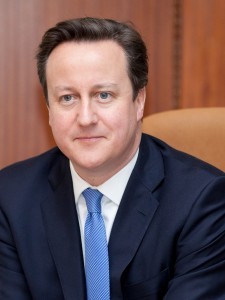
Tag: David Cameron

  • David Cameron – 2016 Press Conference after EU Referendum Result

    davidcameron

    Below is the text of the press conference held by David Cameron, the Prime Minister, in Brussels on 28 June 2016.

    Good evening everyone. I’ve been coming to these European Councils for 6 years now, and barring an emergency council, of which there have been many in the last 6 years, this will be my last one. They can often be long and frustrating and difficult, but when I’ve attended these councils I’ve always remembered that this is an organisation and this is a formula that has brought together countries that not that many years ago were in conflict, and in spite of all the frustrations I’ve always found it very reassuring that we had found a way to talk and to work together and to resolve our differences in dialogue and in argument. And so as I leave the European Council, probably for the last time, I pay tribute to all of the presidents and prime ministers and everyone who works here who have made these meetings as successful as they have been.

    Tonight obviously was an important meeting. It’s the first time that the European Council have met since the British people voted to leave the European Union, and there was universal respect for this decision, and this decision will be carried through in Britain and it is understood that it will be carried through here in the European Union.

    But of course the tone of the meeting was one of sadness and regret. Our partners in the European Union are genuinely sad that we are planning to leave this organisation, and that was very much the tone of the discussions at the dinner tonight. But they were very constructive discussions, they were very positive, they were very calm, they were very understanding that Britain should seek and Europe should seek the closest possible relations as Britain leaves the EU. Close relations over trade, over cooperation, over security. While Britain is leaving the European Union, it will not, it should not, and in my view it won’t turn its back on Europe.

    In many ways, I wish the people at home had been able to hear some of the discussion we had at dinner tonight. The countries, our partners, our friends, our allies, talking about the values that we share, the history that we share and the things that Britain has brought to Europe. The Estonian Prime Minister talking about how the Royal Navy helped to secure the independence of his country a hundred years ago. The Czech Prime Minister talking about how Britain had been a home for Czechs fleeing persecution in their own country in 1948, in 1968. Those countries of Eastern and Central Europe that feel such a debt to Britain for standing by them when they were suffering under communism and for supporting them as they joined the European Union. The French President, talking about the visit that we will be making later this week to the battlefields of the Somme, where British and French soldiers fought and died together for the freedom of our continent and for democracy and the values that we share. As I say, it was – the Maltese Prime Minister, talking about the extraordinary history between our countries. The Irish Prime Minister pointing out that between the 11th century and for centuries to follow, England and Ireland had been in conflict, but recently – and he said now – our relationship has never been closer, and that what a good partner we had been to them, both inside the European Union and today.

    So, as I say, a positive, constructive, calm, purposeful meeting about how we should now take forward this agenda of Britain leaving the European Union but wanting to have, I think rightly, the closest possible relationship that we can in future. There was a lot of reassurance that until Britain leaves, Britain is a full paying member of this organisation and so is entitled to all of the benefits of membership and full participation until the point at which we leave.

    I think there were some very important messages tonight. Obviously messages that the economic problems and challenges that we face in Britain are also problems and challenges that are going to be faced in the rest of Europe. A very important message that, while we seek the best possible partnership that we can after leaving the European Union, it is impossible to have all of the benefits of membership without some of the costs of membership. That is something the next British government is going to have to think through very carefully.

    And also, while I think what you might have read and seen about a clamour for Britain to trigger Article 50 without delay, that was not the mood of the meeting, that was not what the clear majority of my colleagues and partners said. But of course everybody wants to see a clear model appear in terms of what Britain thinks is right for its future relationship with Europe. That is work that I can start as Prime Minister today with the new unit that we’re setting up in Whitehall. We can examine all the different options and possibilities in a neutral way, and look at the costs and the benefits, but it will be for the next British Prime Minister to determine – and the next British cabinet to determine – exactly the right approach to take and the right outcome to negotiate, and that decision to trigger Article 50 will be for the next British Prime Minister and the next cabinet, I would suspect, after they’ve made that decision about the outcome they want to pursue.

    As I said earlier today, when I look around that table, when I think of Europe, I think of our neighbours, I think of our allies, I think of our friends, I think of our partners, and we should be trying to find the closest relationship we can from outside the European Union to work with them over the things that are in our joint interest. Trade, our economies, making sure that we can have prosperity and success for our citizens, keeping our countries safe, keeping our people safe, and it’s particularly important to say that tonight again when there has been another hideous terrorist attack in Turkey. Working together in all the ways that I suggested. That is what I think we should be aiming for.

    As I said at the start of this statement, this is probably my last European Council after 6 years of coming here. As I said, obviously there have been frustrations and councils that have been more successful than others, but I would say we’ve made huge progress on driving jobs and growth, and that has benefited the United Kingdom, as we’ve created over 2 million jobs in the last 6 years. We have actually managed to reduce the quantity of red tape and bureaucracy that is coming out of Brussels. When it has come to the foreign policy of building common positions, whether that is putting sanctions against Iran to prevent it having a nuclear weapon, a strong approach against Russian aggression in Ukraine, or indeed galvanising other European countries to help with the lead that Britain was taking in dealing with Ebola in Sierra Leone, there have been many good things that we have been able to drive forward that have been good for Britain, good for Europe, and I would argue good for the wider world.

    But let me finish again where I began. Britain will be leaving European Union, but we will not be turning our backs on Europe. These are our friends, our allies and partners. I feel that very personally with the people I’ve been working with for the last 6 years, and I’m sure that my successor will want to have a strong relationship with the European Union and strong bilateral relations with all those prime ministers and presidents who sit around the table. We have a huge amount in common with each other in terms of the values, of democracy and freedom, and human rights, and wanting to see progress and sharing the challenges that we face as European nations.

    Thank you very much for coming.

    Question

    Prime Minister, you’ve given a very clear defence of your decision to call this referendum, but given what’s happened since to Europe, to your country, to your party and to your career, is there a small part of you that wishes you’d never done it?

    Prime Minister

    Well, obviously I wish I’d won the referendum. That goes without saying. But I came to believe, for very good reasons, that this issue of Britain’s relationship with Europe and our position in the European Union was something that we needed to try and settle. It has dogged our politics, and I think it was right to, with this question, instead of leaving it to Parliament, to raise it to the people themselves. Because of course, in the time I’ve been active in politics, we’ve had the Nice Treaty, the Lisbon Treaty, the Amsterdam Treaty and all the rest of it. And you cannot go on changing the arrangements under which the British people are governed without asking them about whether they approve of those arrangements.

    Now, I’m sorry we lost the referendum. I think we made a very strong case. But you have to accept the result of the British people, accept the verdict. I’m a democrat, and so of course I regret the outcome, but I don’t regret holding the referendum. I think it was the right thing to do. I’ve been immensely proud to be Prime Minister of our country for 6 years. It’s been a huge honour. But at the end of the day, you fight for what you believe in, and if you win, good; if you lose, then you have to accept the verdict. And the verdict I accept is not only that Britain has voted to leave the European Union, but it is right for a fresh leader to come along and take on that challenge of the next chapter in our country’s story, that someone new needs to come and take us to the next destination. What I think I can do is provide the stability we need right now, and start the work of setting out what the options are, so the new Prime Minister can come in and make those decisions.

    Question

    There are young people at home right now who are very worried about what you and your party have done to the country. There are parents who are worried about what you and your party have done to their jobs. There are employers who are worried about what you and your party have done to their businesses. What would you say to them?

    Prime Minister

    Well, I would say that we had a very full debate about Britain’s future in Europe – whether to stay or whether to leave. I threw everything into that debate, and made the arguments I think as clear as I possibly could. But I’m a democrat and we are a democratic country and the British people have decided the direction in which we should go, and I think we have to accept that and put it into place. As we do so, we should make sure that Britain remains as close as it can to the countries and partners in the European Union, and that we act to provide the economic stability that we need. But at the end of the day, you know, you cannot simply leave to Parliament decisions about the nature of the way in which we’re governed; those are ultimately, I think, decisions for the people, particularly when there’s been so much change. And I’ll make that point that when Parliament actually had the opportunity to vote on the referendum, it voted by a margin of 6 to 1 to hold that referendum, and I think that’s an important point to make too.

    Question

    Did you go into any detail with your European partners on perhaps why you lost the referendum, and did you have any advice for them on perhaps areas that played a huge part in the campaign, such as immigration, freedom of movement, for the deal which your successor will now have to do?

    Prime Minister

    Yes, I did talk about what I think happened in the referendum. I think people recognised the strength of the economic case for staying, but there was a very great concern about the movement of people and immigration, and I think that’s coupled with a concern about the issues of sovereignty and the ability to control these things. And I think, you know, we need to think about that, Europe needs to think about that, and I think that is going to be one of the major tasks for the next Prime Minister.

    I think obviously it is a difficult thing, because the European Union sees the single market as a single market of goods and services and capital. These things go together.

    Question

    Can you give us any more indication of the timing for triggering Article 50? You said that it should be after the Cabinet has decided what the options should be. Do you see any sort of backstop of when that ought to be?

    Prime Minister

    Well, that would be a matter for the new Prime Minister. It’s a sovereign decision for Britain. The sense I was getting from our partners and colleagues upstairs was there’s a lot of understanding – of course there are some people who say, “look, this should be triggered straight away, it’s the only way to leave the European Union.” You know, there are 1 or 2 people saying that, and I totally understand that.

    But I’d say the overwhelming view is we need to get this right. We shouldn’t take too much time. Triggering Article 50 will really work better if both sides know what they’re trying to achieve in the negotiation that’s about to begin. And I think there does need to be some intensive work by first of all the Civil Service and myself, and then by the new Prime Minister, whoever he or she is, to then decide on what the negotiating aims are for Britain, the type of model that we want to achieve, and then it’ll be a decision for the British Prime Minister to take. So I can’t put a time frame on that, but I think that is the right approach, I think that makes sense.

    Question

    A friend of yours I believe, an ally of yours, Mark Rutte, the Prime Minister of the Netherlands, had a very stark verdict. He said, “England has collapsed politically, monetarily, constitutionally and economically.” What do you say to that?

    And can I ask you on a much more personal basis, having followed you all the years you’ve been Prime Minister, I sense this is a sad night for you personally. Do you feel a sadness, a wistfulness, perhaps even an anger and regret that when you leave tonight, for the first time in our nation’s history, there will be an empty chair, Britain will not be represented at a major international summit?

    Prime Minister

    Well, first of all of course, there won’t be an empty chair until Britain leaves the European Union. We remain full members all the way up to the point at which Britain leaves.

    In terms of your first question, we are the fifth largest economy in the world; we have fundamentally strengthened our economy over the last 6 years. We are members of the UN Security Council; members of NATO, which will be meeting shortly; members of the G7, which has just met; members of the G20 that’ll be meeting in September; a leading member of the Commonwealth, and of course we will be hosting the Commonwealth Conference in 2018. Britain is still one of the best connected nations anywhere in the world.

    Now, what we have to do is to work out, now we’re leaving the European Union, how we maintain a strong relationship both with the European Union and with the countries that make it up. And that’s going to be a challenge, it’s not going to easy, but it is perfectly possible to do. We have to obey the will of the British people and get that right.

    So, I mean, as I said, of course it’s a sad night for me, because I didn’t want to be in this position; I wanted Britain to stay in a reformed European Union, and that hard-won negotiation, which took a lot of hard work, that now is not operative. So getting out of ever closer union, getting a deal to restrict welfare for people coming into the UK, cutting bureaucracy and all the rest of it – those things aren’t going to happen, which obviously again I’m personally sad about, because I think that was a far better outcome than the status quo, and better than leaving.

    At the end of the day, I’m a democrat. I fought very hard for what I believed in. I didn’t stand back and say, “Well, either outcome is interesting, one’s slightly better than the other.” I threw myself in, head, heart and soul, to keep Britain in the European Union, and I didn’t succeed. And in politics, you have to recognise that you fight, and when you win you carry out your programme, but when you lose, sometimes you have to say, “Right, I’ve lost that argument, I’ve lost that debate, it’s right to hand over to someone else who’ll take the country forward.”

    Now, of course I’m sad about that, but frankly I’m more concerned about Britain getting its relationship right with Europe. That is a far bigger thing than whether I’m Prime Minister for 6 years or 7 years or what have you. Actually getting that relationship right is far more important. And one of the things I said to my colleagues tonight is that obviously I won’t be the Prime Minister that’s going to complete this negotiation, but I’ll certainly do everything I can with the relationships I have – with prime ministers and presidents in Europe and with the European Council and Commission, everything I can to try and encourage a close relationship between Britain and the European Union and the countries of the European Union, and I will do everything I can back in Britain to make sure that we argue for that close relationship.

    Now, that will involve compromises. I don’t want to set out what I think those will be – that’s going to be a matter for the next Prime Minister – but I think that whether you are listening to young people, or businesses, or constituent parts of the United Kingdom, or our friends and allies around the world from Bangladesh to New Zealand, all of those countries will want to see Britain have a strong relationship with the European Union, and we need to make those arguments in our own domestic politics, as well as around the chancelleries of Europe, and that’s something that I will certainly do even after I have stopped being Prime Minister.

    Can I thank you all very much indeed for coming. Slightly better attended press conference than some of the ones I’ve done over the last 6 years, but you’re all very welcome. Thank you.

  • David Cameron – 2016 Resignation Speech

    davidcameron

    Below is the text of the speech made by David Cameron, the Prime Minister, on 24 June 2016 following the referendum result to leave the EU.

    The country has just taken part in a giant democratic exercise – perhaps the biggest in our history. Over 33 million people – from England, Scotland, Wales, Northern Ireland and Gibraltar – have all had their say.

    We should be proud of the fact that in these islands we trust the people with these big decisions.

    We not only have a parliamentary democracy, but on questions about the arrangements for how we are governed, there are times when it is right to ask the people themselves – and that is what we have done.

    The British people have voted to leave the European Union and their will must be respected.

    I want to thank everyone who took part in the campaign on my side of the argument, including all those who put aside party differences to speak in what they believed was the national interest.

    And let me congratulate all those who took part in the leave campaign – for the spirited and passionate case that they made.

    The will of the British people is an instruction that must be delivered. It was not a decision that was taken lightly, not least because so many things were said by so many different organisations about the significance of this decision.

    So there can be no doubt about the result.

    Across the world people have been watching the choice that Britain has made. I would reassure those markets and investors that Britain’s economy is fundamentally strong.

    And I would also reassure Brits living in European countries and European citizens living here that there will be no immediate changes in your circumstances. There will be no initial change in the way our people can travel, in the way our goods can move or the way our services can be sold.

    We must now prepare for a negotiation with the European Union. This will need to involve the full engagement of the Scottish, Welsh and Northern Ireland Governments, to ensure that the interests of all parts of our United Kingdom are protected and advanced.

    But above all this will require strong, determined and committed leadership.

    I am very proud and very honoured to have been Prime Minister of this country for six years.

    I believe we have made great steps, with more people in work than ever before in our history; with reforms to welfare and education; increasing people’s life chances; building a bigger and stronger society; keeping our promises to the poorest people in the world, and enabling those who love each other to get married whatever their sexuality.

    But above all restoring Britain’s economic strength, and I am grateful to everyone who has helped to make that happen.

    I have also always believed that we have to confront big decisions – not duck them.

    That’s why we delivered the first Coalition government in seventy years to bring our economy back from the brink. It’s why we delivered a fair, legal and decisive referendum in Scotland. And why I made the pledge to renegotiate Britain’s position in the European Union and hold a referendum on our membership, and have carried those things out.

    I fought this campaign in the only way I know how – which is to say directly and passionately what I think and feel – head, heart and soul.

    I held nothing back.

    I was absolutely clear about my belief that Britain is stronger, safer and better off inside the European Union, and I made clear the referendum was about this and this alone – not the future of any single politician, including myself.

    But the British people have made a very clear decision to take a different path, and as such I think the country requires fresh leadership to take it in this direction.

    I will do everything I can as Prime Minister to steady the ship over the coming weeks and months, but I do not think it would be right for me to try to be the captain that steers our country to its next destination.

    This is not a decision I have taken lightly, but I do believe it is in the national interest to have a period of stability and then the new leadership required.

    There is no need for a precise timetable today, but in my view we should aim to have a new Prime Minister in place by the start of the Conservative Party Conference in October.

    Delivering stability will be important and I will continue in post as Prime Minister with my Cabinet for the next three months. The Cabinet will meet on Monday.

    The Governor of the Bank of England is making a statement about the steps that the Bank and the Treasury are taking to reassure financial markets. We will also continue taking forward the important legislation that we set before Parliament in the Queen’s Speech. And I have spoken to Her Majesty the Queen this morning to advise her of the steps that I am taking.

    A negotiation with the European Union will need to begin under a new Prime Minister, and I think it is right that this new Prime Minister takes the decision about when to trigger article 50 and start the formal and legal process of leaving the EU.

    I will attend the European Council next week to explain the decision the British people have taken and my own decision.

    The British people have made a choice. That not only needs to be respected – but those on the losing side of the argument, myself included, should help to make it work.

    Britain is a special country.

    We have so many great advantages.

    A parliamentary democracy where we resolve great issues about our future through peaceful debate; a great trading nation, with our science and arts, our engineering and our creativity respected the world over.

    And while we are not perfect, I do believe we can be a model of a multi-racial, multi-faith democracy, where people can come and make a contribution and rise to the very highest that their talent allows.

    Although leaving Europe was not the path I recommended, I am the first to praise our incredible strengths. I have said before that Britain can survive outside the European Union and indeed that we could find a way.

    Now the decision has been made to leave, we need to find the best way, and I will do everything I can to help.

    I love this country – and I feel honoured to have served it.

    And I will do everything I can in future to help this great country succeed.

  • David Cameron – 2016 Speech in Tribute to Jo Cox

    davidcameron

    Below is the text of the speech made in the House of Commons by David Cameron, the Prime Minister, on 20 June 2016.

    We are here today to remember an extraordinary colleague and friend. Jo Cox was a voice of compassion, whose irrepressible spirit and boundless energy lit up the lives of all who knew her and saved the lives of many she never ever met. Today, we grieve her loss and we hold in our hearts and prayers her husband Brendan, her parents and sister, and her two children, who are just three and five years old. We express our anger at the sickening and despicable attack that killed her as she did her job serving her constituents on the streets of Birstall. Let me join the Leader of the Opposition in his moving words praising Bernard Kenny and all those who tried to save her. Above all, in this House we pay tribute to a loving, determined, passionate and progressive politician, who epitomised the best of humanity and who proved so often the power of politics to make our world a better place.

    I first met Jo in 2006 in Darfur. She was doing what she was so brilliant at: bravely working in one of the most dangerous parts of the world, fighting for the lives of refugees. Her decision to welcome me, then a Conservative Leader of the Opposition, had not been entirely welcomed by all her colleagues and friends, but it was typical of her determination to reach across party lines on issues that she felt were so much more important than party politics. Jo was a humanitarian to her core—a passionate and brilliant campaigner, whose grit and determination to fight for justice saw her, time and time again, driving issues up the agenda and making people listen and, above all, act; drawing attention to conflicts in Sudan and the Democratic Republic of the Congo; helping to expose the despicable practice of rape in war; her work with Sarah Brown on cutting mortality in childbirth; her support for refugees fleeing the war in Syria. Quite simply, there are people on our planet today who are only here and alive because of Jo.

    Jo was a committed democrat and a passionate feminist. She spent years encouraging and supporting women around the world to stand for office, long before she did so herself. When she was elected as an MP, just over a year ago, she said to one of her colleagues that she did not just want to be known for flying around the world tackling international issues, but that she had a profound duty to stand up for the people of Batley and Spen, and she was absolutely as good as her word. As she said in her maiden speech, Jo was proud to be made in Yorkshire and to serve the area in which she had grown up. She belonged there, and in a constituency of truly multi-ethnic, multi-faith communities, she made people feel that they belonged too.

    Jo’s politics were inspired by love, and the outpouring and unity of the tributes we have seen in the past few days show the extraordinary reach and impact of her message, for in remembering Jo we show today that what she said in this House is true—and I know it will be quoted many times today:

    “we are far more united and have far more in common with each other than things that divide us.”—[Official Report, 3 June 2015; Vol. 596, c. 675.]

    This Wednesday, as the Leader of the Opposition said, would have been Jo’s 42nd birthday, and there will be a global celebration of her life and values with simultaneous events in New York and Washington, London, Batley, Brussels, Geneva, Nairobi and Beirut. She should of course have been celebrating her birthday by hosting her traditional summer solstice party. It reminds us that behind the formidable professional was a loving and fun mother, daughter, sister, wife and friend, with a warm welcoming smile and so often laughter in her voice. Jo brought people together; she saw the best in people and she brought out the best in them.

    A brave adventurer and a keen climber, Jo was never daunted. When most people hear of a place called the Inaccessible Pinnacle, they leave it well alone. Not Jo. She did not just climb it; she abseiled down it, and did so despite a bad case of morning sickness. It was her irrepressible spirit that helped to give her such determination and focus in her politics, too. A Conservative colleague of mine said this weekend:

    “If you lost your way for a moment in the cut and thrust of political life, meeting Jo would remind you why you went into politics in the first place.”

    There have been so many moving tributes in the past few days, but if I may I would like to quote someone already mentioned—the hon. Member for Wirral South (Alison McGovern):

    “We mourn your loss, yet know that all you stood for is unbreakable. We promise to stand up, even though we are broken. We promise that we will never be cowed by hate.”

    May we and the generations of Members who follow us in this House honour Jo’s memory by proving that the democracy and freedoms that Jo stood for are indeed unbreakable, by continuing to stand up for our constituents, and by uniting against the hatred that killed her, today and forever more.

  • David Cameron – 2016 Speech at easyJet on Staying in EU

    davidcameron

    Below is the text of the speech made by David Cameron, the Prime Minister, at easyJet in Luton on 24 May 2016.

    Thank you, it’s great to be here with you here in Luton, and I am a proud easyJet passenger. You’ve flown me actually all over Europe: Portugal, Majorca, France, Spain, and almost always on time, although I have to admit that I’m not always on time. Actually, as I drove in here this morning, I remember once when I missed a flight altogether and had a lovely night in the Ibis hotel on the way into the airport. So I’ve let you down more often than you’ve let me down.

    But it is actually, funnily enough, interesting point: very few people have I stopped on the street to tell them that I think that they’ve done an amazing thing, but actually your founder is one of them. I did do that once, because I think easyJet was a fantastic creation. And today, with whatever it is: 800 routes, 70 million passengers, supporting around 10,000 jobs in our country, this is a fantastic great British success story. So it is a pleasure to be here, talking to you about this vital issue and taking your questions.

    Because on 23 June, we’ve got to make a really big decision for the future of our country. General elections are important, of course I believe that, but actually I think this is more important than a general election. If you don’t like the result of a general election, 5 years later you can make a different decision and have a different team running the country. Obviously not something I’m looking forward to, but nonetheless that’s the way the system works.

    But this is a really big choice about Britain, and I’m arguing very clearly that we are safer if we stay in, because we can fight terrorism better if we’re part of this team. I think we’ll be stronger, because I think Britain gains from being in these organisations rather than losing by being in them. But crucially, I think we’ll be better off. And it’s not a complicated argument to make. It’s because we’re part of a market of 500 million people; the biggest single market anywhere in the world. And that is good for jobs, it’s good for companies, it’s good for investment, it brings businesses here to Britain. It means great businesses like this one can expand throughout the single market. It’s good for our economy, and so if we were to leave, it would be bad for our economy. It would mean less growth, it would mean fewer jobs, it would mean higher prices. It would mean, as we set out yesterday, a recession for our economy. So we’re better off if we stay in this organisation.

    And it’s not a static thing, because of course the single market is still expanding. It’s good we’ve got a single market in aviation; that has massively helped your business. I can remember days, I’m old enough to remember, when flying off on holiday meant getting on a sort of state owned aeroplane and going to a state owned airport in another country, and paying a very high price for it. And as Carolyn has said, prices have come down 40% since the single market has come about, and since the radical transformation that companies like easyJet have brought about.

    So I’m quite convinced that when it comes to this economic argument, we are better off if we stay in and we’re worse off if we leave. And as I said, it’s not static, because the single market is going to go into energy, it’s going to go into digital, where we’re a real leader, and it’s going to go further into services industries, which actually make up 80% of our economy. So for those reasons I think we’ll be better off.

    And today we’re talking about some quite specific things, some quite ‘retail’ things, if you like, which is what would happen to the cost of a holiday if we were to leave. If we were to leave, and the pound were to fall, which is what most people expect and what the Treasury forecast, that would put up the cost of a typical holiday for a family of 4 to a European destination by £230. It could, as Carolyn has said, put up actually the cost of air travel, because if you’re outside the single market, which is what those who want us to leave think, then you’d face all sorts of bureaucracy and restrictions that you don’t face today.

    Another very retail thing that is happening in Europe, and there are a few people with mobile phones right now – don’t worry, film away, this is all live anyway. We’re abolishing roaming charges in the European Union. It’s one of the most annoying things: you’re on holiday, you use your mobile phone, you get an enormous bill. Getting rid of roaming charges could mean on a 10 minute call back to the UK, you’re saving almost £4 on that 10 minute call. So I think there’s some very strong retail arguments about the cost of a holiday, the cost of food, the cost of using your phone, for staying in the European Union.

    Now, before I take your questions, I just want to make one other argument, because I think in this debate it’s very important to talk about the specifics, and we have, about jobs and prices and costs of holidays and costs of phone calls. But there is also, in my view, a bigger argument. I don’t believe those people who say, ‘Well, my head says we ought to stay in the European Union but my heart says somehow, we would be a prouder and more patriotic country if we were outside.’ I don’t think that is right. I think this is an amazing country. We are the fifth biggest economy in the world. We’ve done great things in this world. We’re a very interconnected country. What happens on the other side of the world matters to us. We care about tackling climate change; we care about trying to alleviate poverty in Africa; we know we need to have the world’s trade lanes open for British business and enterprise. And I absolutely believe, if you want a big, bold, strong United Kingdom, then you want to be in organisations like a reformed European Union, rather than outside of them. Britain is part of the G7, we’re part of the G20, we’re part of NATO, which helps to keep our defences strong. We are a very important part of the Commonwealth, which brings about a third of humanity together in one organisation. And we’re members of the European Union. Being in these organisations doesn’t diminish our standing and our strength in the world, in my view. It enhances it. So I think the big, bold, patriotic case is to stay in a reformed European Union, to fight for the sort of world that we want, rather than to stand back and be on the outside.

    And in a way, that’s sort of what easyJet has done. Here you are, a British based business, but a business that has decided to take on the world in terms of being competitive, running routes all over Europe and beyond, and recognising that is in your interests, your passengers’ interests, your shareholders’ interests, all the people in this room’s interests.

    And that’s my argument about Britain: let’s be the big, bold strong Britain inside the reformed European Union rather than voting to leave, and that’s the case I’m going to make every day between now and 23 June, with just under a month to go.

  • David Cameron – 2016 Speech on the EU Referendum

    davidcameron

    Below is the text of the speech made by David Cameron, the Prime Minister, at B&Q in Eastleigh on 23 May 2016.

    Thank you very much, thank you. Well, thank you for that and a very good morning. Great to be back at B&Q, and thank you all for coming today.

    This country has worked incredibly hard to recover from the recession of 7 years ago. Businesses have invested, people have taken risks, companies have come to this country, but above all the people of Britain have worked incredibly hard to get over that recession. And the 2 of us have worked together to try and put the right framework in place. Now we haven’t got every decision right, but the deficit is right down, the economy is growing, we’re creating jobs. Britain is making things again, and making its way in the world again. 2.4 million more people in work. We’ve got low inflation. We’ve almost got a million more businesses than when we first got our jobs in 2010. But yes, we still have a long way to go; yes, there is more to do. But I think there can be no doubt: Britain is on the right track.

    Now I don’t want us to do anything that sets us on the wrong track. After all, that’s really the job description of a Prime Minister: to safeguard the nation’s security. Exactly a month from today, we’re going to make a decision that will determine our future security. I believe that leaving the EU would put our security at huge risk, that it would be the wrong track for Britain.

    Why? Because, as we know, and as even Leave campaigners now freely admit, we’d lose full access to the European single market. We’d be abandoning the largest marketplace in the world, half a billion people. It’s a market which Britain helped to create, and which is the source of so much of our economic security. Inside that market, our businesses can trade freely and investors can invest here easily. That keeps our economy growing. That keeps our jobs safe, keeps the pounds strong, keeps our families secure. It means that a business from here in Eastleigh can get their goods to market anywhere in the EU, and get better access to all the places with which the EU has trade deals. So no Spanish importers saying to our manufacturers, ‘That doesn’t fit our regulations.’ No French minister saying to our farmers, ‘We don’t buy British beef.’ No tariffs, no barriers, just Britain doing what we need to do, getting out there and trading with our neighbours.

    Now leaving this arrangement, our special status in the EU, is a leap in the dark, because no one has said what we’d have in its place. Now we already heard last month, from the Treasury, that the long-term impact of leaving would be a cost to every household equivalent to £4,300. Today we publish analysis of what would happen in the short term, in the immediate months and years after a British exit. As businesses freeze up, confidence drains, uncertainty clouds over, and an economic shock shakes our nation.

    Now, the Chancellor will go into the details shortly, but I just want to focus on the impact it would have on your life, the job you do, the home you live in. Your weekly shop, your monthly bills. These things are all at risk. As the Bank of England has said, as the IMF has underlined, and as now the Treasury has confirmed, the shock to our economy after leaving Europe would tip the country into recession. This could be, for the first time in history, a recession brought on ourselves. As I stand here in B&Q, it would be a DIY recession. And it really matters to everyone.

    Someone actually asked, in this debate, the other day, you know, “That’s the economic case. What about the moral case?” But don’t they realise that the economic case is the moral case? The moral case for keeping parents in work, firms in business, the pound in health, Britain in credit. The moral case for providing economic opportunity rather than unemployment for the next generation. Where is the morality in putting any of that at risk for some unknown end? This government was elected just over a year ago to deliver security at every stage of life, to build a greater Britain out of a great recession, and, after all the pain, all the sacrifice of the British people, why would we want to put it at risk again? It would be like surviving a fall and then running straight back to the cliff edge. It is the self destruct option.

    So much of this debate is muddied and overshadowed by speculation about who says what about whom, and who’s in this camp or that camp. We need to strip away the drama, and focus on real life, because this isn’t about political parties or personalities or Prime Ministers. It’s about you, about your money and your life. The stakes couldn’t be higher, the risks couldn’t be greater, and, in my view, the choice couldn’t be clearer. Leave Europe and put at risk what we’ve achieved; stay in Europe, and stay on the right track.

    And now it’s time to hear that analysis of the short-term impact. So over to you, Chancellor.

    [The Chancellor’s speech is available here.]

  • David Cameron – 2016 Speech at World Economic Forum

    davidcameron

    Below is the text of the speech made by David Cameron, the Prime Minister, at the Mansion House in London on 17 May 2016.

    We’re obviously now 37 days and 37 nights away from this crucial EU referendum and I wanted to give you the opportunity to ask me questions about the issues that are coming up, about the arguments that are being made.

    I would argue that those of us who want to stay in a reformed European Union are giving a very clear and positive argument and positive vision about why that is right. Put simply, it’s right for our economy because we are part of a Single Market of 500 million people that is crucial for our businesses, crucial for our economic future. And, so that is our vision and we’ve heard a lot of voices backing that. Voices from small businesses, from entrepreneurs, from big businesses, from inward investors into the United Kingdom, from farmers not just in England but in Scotland and Wales and in Northern Ireland too.

    And I think what we’ve heard from the other side from those who want to leave is really quite a lot of vagueness, particularly on this issue of the economy. And what I wanted to do in my remarks this morning, before taking any of your questions or points is just to run through what I think are the biggest myths on the economy being put forward by those who want us to leave the EU.

    Now, myth number 1 is, they make this point, that only a small number of businesses actually trade with the EU and so it’s not really fair on everybody else. I think that is a myth because basically there are 3 million jobs in our country that are dependent in some way on trade with the Single Market. Now I don’t argue all those jobs would go but if we restrict our trade with the Single Market clearly they’re going to be affected. But I think there’s a deeper truth about this particular myth which is this – there are many, many businesses in our country that are part of the supply chain for those that do trade with the single market. Take for instance, our car industry. Hugely successful over the last decade, 150,000 people working in our car industry but actually 300,000 people who are in the supply chain and working with our car industry. So I think this a complete myth, the idea that only a little bit of business would be affected if we left the EU. It would have a big impact on our economy that is now being backed up by the OECD, by the IMF, by the Bank of England, by almost every senior economist that looks at it. So I think that is myth number 1.

    Myth number 2 is somehow that if we weren’t in the EU, we could sort of tear up the rule book and have a bonfire of regulations. I think this is a myth in a number of ways. First of all, any business that wants to go on trading with the EU even if we’re outside it has to meet every single rule and regulation of the Single Market and without having any say of what those rules are. Now that’s not a recovery of sovereignty that is actually losing sovereignty, so I think that is a very, very weak argument. And it’s even weaker when you ask people who want to leave the EU, ‘well which are the actual regulations you’d like us to get out of?’ Because the truth is in almost every international survey Britain comes out as actually a relatively lightly regulated and well regulated economy. And we’re not hearing from those who want to leave a whole list of regulations that they want to get out of. Even in the area of social regulations, Britain has actually chosen on things like holiday pay, maternity pay actually to do more than the minimum set out by the European Union. So, I think that is a total myth.

    Now, myth number 3 is a really important one, is that the EU needs us much more than we need them, so were we to leave, they would give us an absolutely tremendous trade deal or access deal. I wish this was the case but it absolutely isn’t the case and the figures are very clear.

    44% of what we export goes to the European Union. 8% of what the European Union exports goes to us. So, you don’t have to be a genius in negotiation to know that the process of negotiating, wanting to leave the EU and then get a good access deal back again, we would need them to agree much more than they would need us to agree.

    And it’s worth thinking as well about this, about another point, we may have a deficit in the sale of goods when it comes to the EU but we have a very large surplus when it comes to services and one of the things that I think we should fear is that of course if we left the EU, they might offer us a deal on goods but it might take a very long time before they offered a deal on services. And you could almost imagine the thrill and excitement of service businesses in Italy and France and Germany and elsewhere saying ‘okay, let’s cut a deal with Britain on trade and goods, but hold back the trade in services so we can fill all of those insurance and banking and other service industries at which Britain is so good’. So, I think that is a particularly pervasive and a particularly dangerous myth.

    Myth number 4, having made the argument that somehow they need us more than we need them, myth number 4 is that there is some great, automatic status you could find, like Norway, like Switzerland, like Canada, that gives you access to the Single Market on the basis that we have it now. And here the leave campaign have dotted around quite a bit. They started with Norway, because Norway does have an access deal to the Single Market, but of course Norway pays into the EU, as much per capita as we do, and it still has the free movement of people from other EU nations into Norway. But of course the Norwegians have absolutely no say over the rules of the Single Market. That is actually a poor status. To swap our status today, where we have a total say over those rules and regulations and full voting powers and voting rights, to swap that for not having a say would be an absolute step backwards.

    Switzerland’s deal doesn’t cover services. That would be hopeless for our economy. So then the people wanted to leave jumped onto the idea of the Canada free trade deal. Now, I’m a massive fan of the Canada free trade deal, I’ve been pushing it very hard, it’s very good for Canada. It would be very bad for Britain. First of all, 7 years of negotiation and it still isn’t in place. So imagine for Britain, being stuck for 7 years trying to negotiate a trade deal with a market where 44% of our trade goes and is only 20 miles off our coast. But even if you imagine it was done more quickly, the Canada trade deal doesn’t include all services, it does still include a number of tariffs, it has quotas on things like beef, which is a vital export for our farmers, so again it is not a good deal for Britain. So, I think that is a myth that there is something ready for us to pluck of the shelf. The Leave campaign have started talking about this sort of mythical free trade zone that includes places like Macedonia and Albania, and I think the idea of painting Britain as a greater Albania is really, that shows that you are losing the argument. And even the Albanian prime minister came out and said he thought that was a bad idea.

    Myth number 5, after they’ve been through these models, realise they’ve had to reject all of those, myth number 5 is, well we don’t really need trade deals, we’re just going to get our seat back at the World Trade Organisation. Well this is a myth, because first of all, we never gave up our seat at the World Trade Organisation. But more to the point, I think actually this is possibly the most dangerous myth of all. One of the Leave campaigners put it the other day which is why don’t we have a status when it comes to trading with the EU, just like the United States does. And if we actually stop and think for a minute about what Britain having a World Trade Organisation status with the EU would be like, it really is quite a chilling prospect.

    The United States actually sells less to the rest of the European Union than we do. Quite important fact that, given they are, you know, the biggest, most powerful economy in the world. But more to the point, they face 7,000 different tariff lines on goods and services that they sell. Many services they can’t sell at all. American Airlines can fly into a European country but they can’t fly between European countries. Think what that would do for EasyJet or for Ryanair.

    Many US cars can’t be sold into Europe because they don’t meet the standards. Cars that are sold have to pay a 10% tariff. You pay 12% on your clothes, you pay 17% on your shoes, you would have a quota for beef that you share with a number of other countries, so if they sell more you suddenly have to pay massive tariffs. So this idea that there’s a World Trade Organisation status for Britain trading with the European Union, that is freely available and good for us, is a complete myth. It would be hugely damaging for our economy. But nonetheless, that is where the Leave campaign currently are.

    Myth number 6. If we were outside the EU, we would be faster and better at signing our own trade deals with the rest of the world. Where I think this is such a myth is first of all the EU, I want it to sign more trade deals, but actually it has signed many more than the US, almost twice as many trade deals as the US and actually the EU trade deals cover a huge percentage of our trade. So yes, one of my arguments for staying in is I want to speed up the process of signing of TTIP, of signing of an EU-Canada, an EU-Japan deal, an EU-China deal and many others. But already the EU does better than many other trade blocs at signing these deals.

    But I think the real myth here is actually the Leave campaigners are not listening to what the rest of the world is saying. We heard it from President Obama, we heard it from the Prime Minister of Japan, we heard it from the Prime Minister of Australia, we heard it from the Prime Minister of New Zealand, and they are all saying they would rather sign a deal with the European Union because it would be a bigger, better and more comprehensive deal than signing a deal with Britain.

    But of course, Britain would have another problem outside the EU, which is that we’d have to work out what our trading relationship with the EU was first, before we could credibly get round and sign trade deals with the rest of the world. So I think that is a complete myth.

    Myth number 7 is this idea that industries like financial services and manufacturing, would somehow magically thrive if we weren’t in the EU. I think this is very easy to dismiss. Take the heart of our manufacturing industry, the automobile industry where we are doing so well, with Honda, with Nissan, with Toyota, with Jaguar Land Rover, with Vauxhall with Ford, we now make millions of engines in Britain that end up in BMW cars, we actually make more cars in the north east of England than is made in many years in the whole of Italy. This is a growing and successful industry, there isn’t a car manufacturer in Britain that believes we should leave the EU, and when it comes to the financial services industry a good point to make here in the City of London, crucially if you leave the EU and you leave the Single Market, you give up the vital passport that means that any bank, or financial services company based here in the UK can trade automatically through the Single Market. Giving that up, would in no doubt, destroy a huge amount of jobs, not just here in London but also in the financial services centres we have in our country, in Birmingham, in Manchester, in Bournemouth, in Edinburgh and in Glasgow, and the Head of the Stock Exchange recently said to me, he thought 100,000 jobs alone could go in the City of London alone because of that measure, so I think that is a complete myth.

    Myth number 8, that economists are somehow split over this issue, there’s a balance of opinion on either side of the argument. I think one of the things that has come out so clearly, already in this campaign, is the overwhelming weight of evidence from economic forecasters that we would be less well off, outside a reformed European Union. You have heard it from the Bank of England, from the OECD, from the IMF, from the Treasury, from the Office of Budget Responsibility and many others besides, and I think when very respected organisations are saying, as clearly as they are that output would be lower, growth would be less, unemployment would be higher, prices would be higher, we would see a hit to living standards, that there is a very clear consensus that leaving the EU would have not just a short-term effect on confidence and investment and growth but would actually have a longer-term effect as well.

    And that leads me to the ninth and final myth put around by the Leave campaign and Leave campaigners, that somehow that there might be a short-term shock, they sometimes suggest but they say there will be a longer-term benefit. That is not what the economic forecasters are saying and there is a very clear reason that it’s not what the economic forecasters are saying because one of the things that generates our productivity and generates our growth, that makes us a successful economy, is our access to the Single Market, and the openness of our economy, and that is why the Treasury analysis is so clear that the long-term effect on our economy would be to make our households at least £4,300 less well off, a 6% shock to our economy, so I think we have got here a very clear set of arguments that completely demolish the economic case for leaving the European Union, and we have a very strong argument for saying that the status quo isn’t just a sort of static, let’s stay in and keep what we’ve got, it is an argument that says, this Single Market is growing, it is expanding, it is going to cover energy, it is going to cover services, it is going to cover digital, and it is a key advantage to our economy to grow, and for jobs and investment to stay in.

    Final thing I would say before taking any questions, is that I hope you, as leaders in business, enterprise and entrepreneurship will feel free to speak out, and I don’t mind if businesses speak out for leaving, or speak out for staying, but I want people to speak out, I want the British public to have the fullest possible debate. They deserve to hear from businesses large and small, about what you think. I don’t want anyone to wake up on June the 24th and feel they weren’t given the facts and the figures. If there’s that little voice in your head saying, well, I shouldn’t take sides, it is a political issue, yes, it is a political issue, the British public are sovereign and they will decide but let’s make sure everyone has the facts because I’m in no doubt having been Prime Minister of this country for 6 years, that on the economic argument alone, there’s no doubt we are better off in, and we would be worse off out, and I am going to make that argument very clearly for the next 36 days.

    Thank you very much indeed.

  • David Cameron – 2016 Speech on Corruption

    davidcameron

    Below is the text of the speech made by David Cameron, the Prime Minister, at Lancaster House in London on 12 May 2016.

    Introduction

    Today the world has come together in a coalition of the committed to expose, punish and drive out corruption.

    This has been the first summit of its kind and the biggest demonstration of the political will to address corruption that we have seen for many, many years.

    Frankly we’ve known for years what a problem this is; we’ve known for years it prevents us from achieving so many things we want to fix in our world.

    But I’ve really sensed today there is far more political will – not just from words but from actions – that will make a difference.

    There’s nothing as powerful than an idea whose time has come and I believe that’s the case with fighting and driving our corruption.

    When the UK hosted the G8 in Lough Erne in 2013, we took what many had seen as a series of technical issues around tax, trade and transparency and we showed how political will could begin a concerted effort to get to grips with tax evasion, aggressive tax avoidance and corporate secrecy.

    When we first talked about ideas like automatic exchange of tax information and registries of who owns each company, many people, I think, wondered what on earth we were on about, and whether any of these things would actually happen.

    But now 129 jurisdictions have committed to implementing the international standard for exchange of tax information on request – and more than 95 have committed to implementing the new global common reporting standard on tax transparency.

    And as the Head of the OECD Angel Gurría has said today, this started, in his words, a “dramatic revolution” that has since brought in 50 billion euros in extra tax revenue and has the potential with automatic exchange of information to bring in 200 billion more. Think of the schools, the hospitals, the roads, the services that could be provided and are needlessly lost.

    Today’s summit has built on these foundations.

    Today it’s not just the G8, but representatives from over 40 countries.

    Not just political leaders but leaders from business, civil society and sport too, all working together to produce a series of ground-breaking commitments that can really transform our ability to tackle corruption.

    Just as at Lough Erne, many of these agreements are quite technical, but their impact is far reaching.

    Exposing corruption

    First, we will expose corruption so there is nowhere to hide.

    If you don’t know who owns what, you can’t stop people stealing from poor countries and hiding that stolen wealth in rich ones.

    That is why it is so important that today 5 countries have agreed to create public registers of beneficial ownership and 6 more will explore similar arrangements.

    This will mean that everyone in the world will be able to see who really owns and controls each and every company in these countries.

    The EU, Iceland, UAE and most of our Overseas Territories and Crown Dependencies with major financial centres have agreed to automatically exchange their entire registries of beneficial ownership information.

    This means that law enforcement agencies across the world will be able to access this data – in many cases for the first time – and use it to expose the corrupt.

    Does it need to go further? Yes of course it does, but today is a good start.

    It is no good having laws against corruption, if lawyers, accountants and estate agents find ways around the law.

    So that is why it is so important that at this summit a new professional services statement of support has shown an unprecedented commitment from these professions to stop the facilitation of corruption.

    Again, does this go far enough? Does it need to go further? Of course it does – we need this adopted in every country, not just some countries.

    Public procurement and construction have both been massive areas for corruption around the world for years.

    So a range of countries including the UK will use open contracting in their government procurement, to keep public money out of corrupt hands.

    And here in the UK, we want to clean up our property market and show that there is no home for the corrupt in Britain.

    So all foreign companies which own properties in the UK will have to register publicly who really owns them, who really controls them – and no foreign company will be able to buy UK property or bid for central government contracts without joining this register.

    Punish the perpetrators

    Next, we will do more to punish the perpetrators of corruption and to support those affected by it.

    We know that corruption is a global phenomenon, so it’s essential that we share information and pursue the corrupt across borders, joining the dots to identify and prosecute the corrupt and to seize their assets – a point that so many speakers have made today.

    So the new International Anti-Corruption Co-ordination Centre we are creating will help police and prosecutors work together to do just that.

    But we also need to ensure that when we expose the corrupt, we are able to seize their assets and return them to the countries from which they were stolen.

    That’s why our Global Forum for Asset Recovery will be so important – enabling governments and law enforcement agencies around the world to work together to achieve this.

    We have also agreed today that 22 countries will introduce new asset recovery legislation, 14 will strengthen their protections for whistle-blowers – a discussion we had in the last session and 11 countries will review the penalties for companies that fail to prevent tax evasion.

    Here in Britain we will consult on extending that criminal offence of tax evasion, to other economic crimes such as fraud and money laundering, and we hope others will follow.

    We want firms properly held to account for any criminal activity within them.

    We are also consulting on Unexplained Wealth Orders, reversing the burden of proof so if someone is suspected of corruption, the onus is on them to prove they acquired their wealth legitimately or they will face having it stripped from them by a court.

    Driving out corruption

    Third, we will do more to drive out corruption wherever it is found.

    This requires the political leadership we have seen today – and a sustained effort at changing cultures of corruption.

    One example of this is the twinning of different countries’ tax inspectors to help build a shared culture of probity and honesty.

    And today we’ve seen 17 countries commit to such partnerships between their institutions and professions, and I want to thank Professor Paul Collier for his great work on this.

    We have also had a very frank discussion about changing cultures in sport.

    The world loves sport – and the world knows that sport is riddled with corruption.

    So only when we deal with corruption in sport will people really believe that we are dealing with corruption more broadly.

    Today we have taken an important step towards an International Sport Integrity Partnership that would restore integrity to the games we love and we will be keeping up the pressure to land this at a meeting with the IOC in February.

    We are also raising our own standards of governance and transparency to the highest possible levels here in the UK through the new Sports Charter.

    Next steps

    But today’s summit hasn’t just been about securing these agreements.

    We have also held, I think you’ll agree, a different kind of event.

    Instead of simply having speeches talking to ourselves about we have agreed and we have had open, honest and challenging conversations.

    We have asked tough questions about the challenges in implementing these agreements and explored new ideas and next steps that can really raise the ambition further.

    We have been asked whether we could enforce action against corruption in the same way that we enforce action against terrorism?

    We have been challenged to protect the freedom of the press and the whistleblowers who are so vital in helping them to expose the corrupt.

    We have talked about the need for more action from multinational companies.

    There was a great challenge for anti-corruption organisations to work more closely together – to deliver a more co-ordinated effort.

    We’ve talked about the need for every country to ultimately reach what I call the gold standard of a having a public register of beneficial ownership.

    And I am clear that I include all the Overseas Territories and Crown Dependencies in that. But it was encouraging to hear praise for what the head of the OECD described as, and I quote, the “exemplary delivery” of our crown dependencies in the steps they have taken so far.

    Finally, we have been clear that this summit will not be a single one-off moment.

    We are building a global movement against corruption.

    As President Ghani said – this cannot be a fashion – we have stay the course on this for the next 10 years and beyond.

    We welcome the commitment from Japan to include this issue and the learnings of this summit in its G7 Presidency.

    We have agreed that we will meet again at the UN General Assembly next year.

    And in the meantime we will continue to track the implementation of everything we have agreed today.

    And let’s just be clear what all these agreements really add up to.

    As I said, some of them are very technical.

    But what we are talking about is stopping the corrupt hiding their loot from the authorities.

    So as John Kerry said – there are “no more safe harbours” for the corrupt.

    It means that when people steal money from your country and hide it in mine – we can expose them and return the money to you.

    It means getting stolen assets returned to people like President Buhari and President Ghani, so they can be reinvested in the future of their countries.

    It means cleaning up our property market right here in London.

    It means helping to secure for all our economies some of the trillions in potential economic growth that is so needlessly lost to corruption.

    It means building an unprecedented global coalition to tackle this cancer of corruption which destroys jobs, traps the poorest in poverty and as Sarah Chayes has argued so powerfully today – even undermines our security.

    It means quite simply – winning the battle against one of the greatest enemies of progress in our time.

    And I say again, if we want to beat poverty, if we want to beat extremism and narrow the gap between the richest countries in the world and the poorest countries in the world, we have to tackle corruption.

    That is our mission. And that is the vital work that we have begun today and I want to thank everyone for their contributions.

  • David Cameron – 2016 Speech on Security in the EU

    davidcameron

    Below is the text of the speech made by David Cameron, the Prime Minister, at the British Museum in London on 9 May 2016.

    Introduction

    In 45 days’ time, the British people will go to polling stations across our islands and cast their ballots in the way we have done in this country for generations.

    They will, as usual, weigh up the arguments, reflect on them quietly, discuss them with friends and family, and then, calmly and without fuss, take their decision.

    But this time, their decision will not be for a Parliament, or even two.

    They will decide the destiny of our country, not for 5 years or for 10, but in all probability for decades, perhaps a lifetime.

    This is a decision that is bigger than any individual politician or government.

    It will have real, permanent and direct consequences for this country and every person living in it.

    Should we continue to forge our future as a proud, independent nation while remaining a member of the European Union, as we have been for the last 43 years? Or should we abandon it?

    Let me say at the outset that I understand why many people are wrestling with this decision, and why some people’s heads and hearts are torn.

    And I understand and respect the views of those who think we should leave, even if I believe they are wrong and that leaving would inflict real damage on our country, its economy and its power in the world.

    Where I stand

    I believe that, despite its faults and its frustrations, the United Kingdom is stronger, safer and better off by remaining a member of the European Union. Better off? Certainly.

    We are part of a single market of 500 million people which Britain helped to create. Our goods and, crucially, our services – which account for almost 80% of our economy – can trade freely by right. We help decide the rules. The advantages of this far outweigh any disadvantages.

    Our membership of the single market is one of the reasons why our economy is doing so well, why we have created almost 2.4 million jobs over the last 6 years, and why so many companies from overseas – from China or India, the United States, Australia and other Commonwealth countries invest so much in the UK.

    It is one of the factors – together with our superb workforce, the low taxes set by the British government, and our climate of enterprise – which makes Britain such an excellent place to do business.

    All this is alongside – let us note – our attractive regulatory environment. According to the OECD, it is second only to the Netherlands, itself an EU member – giving the lie to those who claim that the British economy is being strangled by regulation from Brussels.

    If we leave, the only certainty we will have is uncertainty.

    The Treasury has calculated that the cost to every household in Britain would be as high as £4,300 by 2030 if we leave. £4,300.

    The overwhelming weight of independent opinion – from the International Monetary Fund to the OECD, from the London School of Economics to the Institute for Fiscal Studies – also supports the fact that Britain will suffer an immediate economic shock, and then be permanently poorer for the long-term.

    The evidence is clear: we will be better off in, and poorer if we leave.

    As Charles Dunstone, the founder of Carphone Warehouse, an entrepreneur not averse to risk, has said: “In my experience there are calculated risks, there are clever risks, and there are unnecessary and dangerous risks. And from all I can conclude, Brexit sits firmly in the latter camp.”

    So the onus is on those who advocate leaving to prove that Britain will be better off outside the EU. Those advocating Brexit have spent many years preparing for this moment. And yet they seem unable to set out a clear, comprehensive plan for our future outside the EU.

    Some admit there would be a severe economic shock, but assert nonchalantly that it would be ‘a price worth paying’.

    Others are in denial that there would be a shock at all. And they can’t agree what their plan for post-Brexit Britain would look like.

    One minute we are urged to follow Norway, the next minute Canada. A few days later Switzerland offers the path forward, until it becomes clear that their arrangement doesn’t provide much access for services to the EU’s single market – and services, as I’ve said, are almost 4 fifths of the British economy.

    Most recently, the Leavers have noticed that a number of European countries that sit outside of the EU have negotiated separate trade arrangements with the EU.

    They called this collection of countries the ‘European free trade zone’.

    But in fact, this doesn’t exist: it is a patchwork of different arrangements, all of them far inferior to what we have now.

    They have gone on to suggest that Britain might join this non-existent zone, just like Albania.

    Seriously? Even the Albanian Prime Minister thought that idea was a joke.

    The Leave campaign are asking us to take a massive risk with the future of our economy and the future of our country.

    And yet they can’t even answer the most basic questions.

    What would Britain’s relationship be with the EU if we were to leave? Will we have a free trade agreement, or will we fall back on World Trade Organisation rules?

    The man who headed the WTO for 8 years thinks this would be and I quote “a terrible replacement for access to the EU single market.”

    Some of them say we would keep full access to the EU single market.

    If so, we would have to accept freedom of movement, a contribution to the EU budget, and accept all EU rules while surrendering any say over them.

    In which case, we would have given up sovereignty rather than taken it back.

    Others say we would definitely leave the single market – including, yesterday, the Vote Leave campaign – despite the critical importance of the single market to jobs and investment in our country.

    I can only describe this as a reckless and irresponsible course. These are people’s jobs and livelihoods that are being toyed with.

    And the Leave campaign have no answers to the most basic questions.

    What access would we try to secure back into the single market from the outside? How long would it take to negotiate a new relationship with the EU? What would happen to the 53 trade deals we have with other markets around the world through the EU?

    The Leave campaign can’t answer them because they don’t know the answers. They have no plan.

    And yet sceptical voters who politely ask for answers are denounced for their lack of faith in Britain, or met with sweeping assurances that the world will simply jump to our tune.

    If you were buying a house or a car, you wouldn’t do it without insisting on seeing what was being offered, and making sure it wasn’t going to fall apart the moment you took possession of it.

    So why would you do so when the future of your entire country is at stake?

    The British people will keep asking these questions every day between now and 23 June, and demanding some answers.

    Nothing is more important than the strength of our economy.

    Upon it depends the jobs and livelihoods of our people, and also the strength and security of our nation.

    If we stay, we know what we get – continued full access to a growing single market, including in energy, services and digital, together with the benefit of the huge trade deals in prospect between the EU and the United States and other large markets.

    If we leave, it is – genuinely – a leap in the dark.

    But my main focus today will not be on the economic reasons to remain in the EU, important though they are.

    I want to concentrate instead on what our membership means for our strength and security in the world, and the safety of our people, and to explain why, again, I believe the balance of advantage comes down firmly in favour of staying rather than leaving.

    Because this decision is a decision about our place in the world, about how we keep our country safe, about how Britain can get things done – in Europe and across the world – and not just accept a world dictated by others.

    A proud, confident nation

    So today I want to set out the big, bold patriotic case for Britain to remain a member of the EU.

    I want to show that if you love this country, if you want to keep it strong in the world, and keep our people safe, our membership of the EU is one of the tools – one of the tools – that helps us to do these things, like our membership of other international bodies such as NATO or the UN Security Council.

    Let us accept that for all our differences, one thing unites both sides in this referendum campaign.

    We love this country, and we want the best future for it. Ours is a great country.

    Not just a great country in the history books, although it surely is that.

    But a great country right now, with the promise of becoming even greater tomorrow.

    We’re the fifth largest economy in the world. Europe’s foremost military power. Our capital city is a global icon. Our national language the world’s language.

    Our national flag is worn on clothing and t-shirts the world over – not only as a fashion statement, but as a symbol of hope and a beacon for liberal values all around the world.

    People from all 4 corners of the earth watch our films, dance to our music, flock to our galleries and theatres, cheer on our football teams and cherish our institutions.

    These days, even our food is admired the world over.

    Our national broadcaster is one of the most recognised brands on the planet, and our monarch is one of the most respected people in the world.

    Britain today is a proud, successful, thriving nation, a nation the world admires and looks up to, and whose best days lie ahead of it.

    We are the product of our long history – of the decision of our forebears, of the heroism of our parents and grandparents.

    And yet we are a country that also has our eyes fixed firmly on the future – that is a pioneer in the modern world: from the birth of the internet to the decoding of the genome.

    The character of the British people

    If there is one constant in the ebb and flow of our island story, it is the character of the British people.

    Our geography has shaped us, and shapes us today. We are special, different, unique.

    We have the character of an island nation which has not been invaded for almost a thousand years, and which has built institutions which have endured for centuries.

    As a people we are ambitious, resilient, independent-minded. And, I might add, tolerant, generous, and inventive.

    But above all we are obstinately practical, rigorously down to earth, natural debunkers.

    We approach issues with a cast of mind rooted in common sense. We are rightly suspicious of ideology, and sceptical of grand schemes and grandiose promises.

    So we have always seen the European Union as a means to an end – the way to boost our prosperity and help anchor peace and stability across the European continent – but we don’t see it as an end in itself.

    We insistently ask: why? How?

    And as we weigh up the competing arguments in this referendum campaign, we must apply that practical rigour which is the hallmark of being British.

    Would going it alone make Britain more powerful in the world? Would we be better able to get our way, or less able?

    Would going it alone make us more secure from terrorism, or would it be better to remain and cooperate closely with our neighbours?

    Would going it alone really give us more control over our affairs, or would we soon find that actually we had less, and that we had given up a secure future for one beset by years of uncertainty and trouble with no way back?

    Would going it alone open up new opportunities, or would it in fact close them down and narrow our options?

    Stronger in the world

    That is certainly the approach I have taken to judging whether Britain is stronger and safer inside the European Union or leaving it.

    And I have just one yardstick: how do we best advance our national interest?

    Keeping our people safe at home and abroad, and moulding the world in the way that we want – more peaceful, more stable, more free, with the arteries of commerce and trade flowing freely.

    That is our national interest in a nutshell – and it’s the question that has confronted every British prime minister since the office was created: how do we best advance Britain’s interests in the circumstances of the day?

    If my experience as Prime Minister had taught me that our membership of the EU was holding Britain back or undermining our global influence, I would not hesitate to recommend that we should leave.

    But my experience is the opposite.

    The reason that I want Britain to stay in a reformed EU is in part because of my experience over the last 6 years is that it does help make our country better off, safer and stronger.

    And there are 4 reasons why this is the case.

    First, what happens in Europe affects us, whether we like it or not, so we must be strong in Europe if we want to be strong at home and in the world.

    Second, the dangerous international situation facing Britain today, means that the closest possible cooperation with our European neighbours isn’t an optional extra – it is essential. We need to stand united. Now is a time for strength in numbers.

    Third, keeping our people safe from modern terrorist networks like Daesh and from serious crime that increasingly crosses borders means that we simply have to develop much closer means of security cooperation between countries within Europe. Britain needs to be fully engaged with that.

    Fourth, far from Britain’s influence in the world being undermined by our membership of the EU, it amplifies our power, like our membership of the UN or of NATO. It helps us achieve the things we want – whether it is fighting Ebola in Africa, tackling climate change, taking on the people smugglers. That’s not just our view; it’s the view of our friends and allies, too.

    Let me go through them in turn.

    What happens in Europe affects us

    First: Europe is our immediate neighbourhood, and what happens on the continent affects us profoundly, whether we like it or not.

    Our history teaches us: the stronger we are in our neighbourhood, the stronger we are in the world.

    For 2,000 years, our affairs have been intertwined with the affairs of Europe. For good or ill, we have written Europe’s history just as Europe has helped to write ours.

    From Caesar’s legions to the wars of the Spanish Succession, from the Napoleonic Wars to the fall of the Berlin Wall.

    Proud as we are of our global reach and our global connections, Britain has always been a European power, and we always will be.

    We know that to be a global power and to be a European power are not mutually exclusive.

    And the moments of which we are rightly most proud in our national story include pivotal moments in European history.

    Blenheim. Trafalgar. Waterloo. Our country’s heroism in the Great War.

    And most of all our lone stand in 1940, when Britain stood as a bulwark against a new dark age of tyranny and oppression.

    When I sit in the Cabinet Room, I never forget the decisions that were taken in that room in those darkest of times.

    When I fly to European summits in Brussels from RAF Northolt, I pass a Spitfire just outside the airfield, a vital base for brave RAF and Polish pilots during the Battle of Britain.

    I think of the Few who saved this country in its hour of mortal danger, and who made it possible for us to go on and help liberate Europe.

    Like any Brit, my heart swells with pride at the sight of that aircraft, or whenever I hear the tell-tale roar of those Merlin engines over our skies in the summer.

    Defiant, brave, indefatigable.

    But it wasn’t through choice that Britain was alone. Churchill never wanted that. Indeed he spent the months before the Battle of Britain trying to keep our French allies in the war, and then after France fell, he spent the next 18 months persuading the United States to come to our aid.

    And in the post-war period he argued passionately for Western Europe to come together, to promote free trade, and to build institutions which would endure so that our continent would never again see such bloodshed.

    Isolationism has never served this country well. Whenever we turn our back on Europe, sooner or later we come to regret it.

    We have always had to go back in, and always at a much higher cost.

    The serried rows of white headstones in lovingly-tended Commonwealth war cemeteries stand as silent testament to the price that this country has paid to help restore peace and order in Europe.

    Can we be so sure that peace and stability on our continent are assured beyond any shadow of doubt? Is that a risk worth taking?

    I would never be so rash as to make that assumption.

    It’s barely been 20 years since war in the Balkans and genocide on our continent in Srebrenica. In the last few years, we have seen tanks rolling into Georgia and Ukraine. And of this I am completely sure.

    The European Union has helped reconcile countries which were once at each others’ throats for decades. Britain has a fundamental national interest in maintaining common purpose in Europe to avoid future conflict between European countries.

    And that requires British leadership, and for Britain to remain a member. The truth is this: what happens in our neighbourhood matters to Britain.

    That was true in 1914, in 1940 and in 1989. Or, you could add 1588, 1704 and 1815. And it is just as true in 2016.

    Either we influence Europe, or it influences us.

    And if things go wrong in Europe, let’s not pretend we can be immune from the consequences.

    The international situation means cooperation with Europe is essential

    Second, the international situation confronting Britain today means that the closest possible cooperation with our European neighbours isn’t an optional extra.

    It is essential for this country’s security and our ability to get things done in the world.

    We see a newly belligerent Russia. The rise of the Daesh network to our east and to our south. The migration crisis. Dealing with these requires unity of purpose in the west.

    Sometimes you hear the Leave campaign talk about these issues as if they are – in and of themselves – reasons to leave the EU.

    But we can’t change the continent to which we are attached. We can’t tow our island to a more congenial part of the world.

    The threats affect us whether we’re in the EU or not, and Britain washing its hands of helping to deal with them will only make the problems worse.

    Within Europe they require a shared approach by the European democracies, more than at any time since the height of the Cold War.

    It is true, of course, that it is to NATO and to the Transatlantic Alliance that we look to for our defence.

    The principle enshrined in the North Atlantic Treaty – that an attack on one is an attack on all – that remains the cornerstone of our national defence.

    That fundamental sharing of national sovereignty in order to deter potential aggressors. That is as valid today as it was when NATO was founded in 1949.

    It is an example of how real control is more important than the theory of sovereignty.

    The European Union – and the close culture of intergovernmental cooperation between governments which it embodies – is a vital tool in our armoury to deal with these threats.

    That is why NATO and top military opinion – British, American, European – is clear that the common purpose of the EU does not undermine NATO, it is a vital reinforcement to it.

    And they are equally crystal clear: Britain’s departure would weaken solidarity and the unity of the west as a whole.

    Now some of those who wish us to leave the EU openly say that they hope the entire organisation will unravel as a result.

    I find this extraordinary.

    How could it possibly be in our interests to risk the clock being turned back to an age of competing nationalisms in Europe?

    And for Britain, of all countries, to be responsible for triggering such a collapse would be an act of supreme irresponsibility, entirely out of character for us as a nation.

    Others suggest that Britain stalking out could lead to and I quote “the democratic liberation of an entire continent”.

    Well, tell that to the Poles, the Czechs, the Baltic States and the other countries of central and eastern Europe which languished for so long behind the Iron Curtain.

    They cherish their liberty and their democracy. They see Britain as the country that did more than any other to unlock their shackles and enable them to take their rightful place in the family of European nations.

    And frankly they view the prospect of Britain leaving the EU with utter dismay. They watch what is happening in Moscow with alarm and trepidation.

    Now is a time for strength in numbers. Now is the worst possible time for Britain to put that at risk. Only our adversaries will benefit.

    Security risks

    Now third, the evolving threats to our security and the rise of the Daesh network mean that we have to change the way we work to keep our people safe. Security today is not only a matter of hard defence, of stopping tanks – it is also about rooting out terrorist networks, just as it is about detecting illegal immigrants, stopping human trafficking and organised crime. And that makes much closer security cooperation between our European nations essential.

    I have no greater responsibility than the safety of the people of this country, and keeping us safe from the terrorist threat.

    As the Home Secretary said in her speech a fortnight ago: being in the EU helps to makes us safer.

    We shouldn’t put ourselves at risk by leaving.

    One of her predecessors, Charles Clarke, reiterated that only this morning.

    And the message of Jonathan Evans and John Sawers, former heads of MI5 and MI6 respectively, is absolutely unmistakable: Britain is safer inside the European Union.

    During the last 6 years, the terrorist threat against this country has grown.

    Our threat level is now at ‘Severe’, which means that an attack is ‘highly likely’. Indeed such an attack could happen at any time.

    But the threat has not only grown, it has changed in its nature.

    The attacks in Paris and Brussels are a reminder that we face this threat together – and we will only succeed in overcoming it by working much more closely together.

    These terrorists operate throughout Europe; their networks use technology to spread their poison and to organise beyond geographical limits.

    People say that to keep our defences up, you need a border. And they’re right.

    That’s why we kept our borders, and we can check any passport – including for EU nationals – and we retain control over who we allow into our country.

    But against the modern threat, having a border isn’t enough. You also need information, you need data, you need intelligence. You need to cooperate with others to create mechanisms for sharing this information.

    And, just as the Home Secretary said a fortnight ago, I can tell you this: whether it’s working together to share intelligence on suspected terrorists; whether it’s strengthening aviation security; addressing the challenge of cybercrime; preventing cross-border trade in firearms; tackling the migration crisis; or enhancing our own border security, the EU is not some peripheral institution, or a hindrance we have to work around – it is now an absolutely central part of how Britain can get things done.

    Not by creating a vast new EU bureaucracy. Nor by sucking away the role and capabilities of our own world beating intelligence and law enforcement agencies.

    But because their superb work depends on much closer cooperation between European governments and much faster and more determined action across Europe to deal with this new threat.

    As the historian Niall Ferguson observed, it takes a network to defeat a network.

    And European measures are a key weapon.

    The European Arrest Warrant allows us to bring criminals and terrorists, like one of the failed 21/7 Tube bombers who had fled to Italy, we can bring them back to the UK to face justice straight away.

    Our membership of Europol gives us access to important databases that help us to identify criminals.

    And we have begun to cooperate on DNA and fingerprint matching across borders, too. These tools help us in real-time, life-or-death situations.

    One of the Paris attackers, Salah Abdeslam, was only identified quickly after the attack because the French police were able to use EU powers to exchange DNA and fingerprints with the Belgians.

    Before this cooperation, DNA matching between 2 countries didn’t take minutes, it could take over 4 months.

    In the last few months alone, we have agreed a new Passenger Name Records directive, so that EU countries will have access to airline passenger data to enable us to identify those on terror watch-lists.

    These new arrangements will also provide crucial details about how the tickets were bought, the bank accounts used and the people they are travelling with.

    And the EU has recently switched on a new database, called SIS II, which is providing real-time alerts for suspected jihadists and other serious criminals.

    Now I don’t argue that if we left we would lose any ability to cooperate with our neighbours on a bilateral basis, or even potentially through some EU mechanisms.

    But it is clear that leaving the EU will make cooperation more legally complex – and make our access to vital information much slower and more difficult.

    Look at for instance Norway and Iceland: they began negotiating an extradition agreement with the EU in 2001 and yet today it is still not in force.

    And of course we will miss out on the benefits of these new arrangements, and any that develop in future.

    Now you can take the view that we don’t need this cooperation – that we can just do without these extra capabilities.

    That in my view is a totally complacent view. Especially in a world where the difference between a prevented attack and a successful attack can be just 1 missing piece of data; 1 piece of the jigsaw that the agencies found just too late.

    You can also decide, as some on the Leave side seriously do, that even though working together is helpful for keeping us safe, it involves giving up too much sovereignty and ceding too much power over security cooperation to the European Court of Justice.

    My view is this: when terrorists are planning to kill and maim people on British streets, the closest possible security cooperation is far more important than sovereignty in its purest theoretical form. I want to give our country real power, not the illusion of power.

    Britain’s power in the world

    Fourth, Britain’s unique position and power in the world is not defined by our membership of the EU, any more than it is by our membership of the Commonwealth or the UN Security Council or the OECD or the IMF or the myriad other international organisations to which we belong.

    But our EU membership, like our membership of other international organisations, magnifies our national power.

    Britain is a global nation, with a global role and a global reach.

    We take our own decisions, in our own interests. We always have done, we always will do.

    In the years since we joined the EU, we have shown that time and again with British, national, sovereign decisions about our foreign and defence policy taken by British prime ministers and British ministers.

    Liberating the Falkland Islands in a great feat of military endeavour. Freeing Kuwait from Iraq.

    And, more recently, our mission to prevent Afghanistan continuing to be a safe haven for international terrorists.

    As I speak here today, we are flying policing missions over the Baltic states. Training security forces in Nigeria. And of course, taking the fight to Daesh in Syria and Iraq.

    So the idea that our membership of the EU has emasculated our power as a nation – this is complete nonsense.

    Indeed, over the last 40 years, our global power has grown, not diminished.

    In the years before we joined the EU, British governments presided over a steady retrenchment of our world role, borne of our economic weakness.

    The decision to retreat East of Suez and abandon our aircraft carriers was taken in 1968.

    Since then, starting with the transformation of our economy by Margaret Thatcher, we have turned around our fortunes.

    In the 21st century, Britain is once again a country that is advancing, not retreating,

    We have reversed the East of Suez policy, we are building permanent military bases in the Gulf, we are opening embassies all around the world, particularly in Asia.

    We have a new strategic relationship with both China and India, have committed to spending 2% of our GDP on defence – 1 of only 5 NATO nations to be meeting that target.

    Our expertise in aid, development and responding to crises is admired the world over.

    We are renewing our independent nuclear deterrent.

    Our 2 new aircraft carriers will be the biggest warships the Royal Navy has ever put to sea.

    These are the actions of a proud, independent, self-confident, go-getting nation, a nation that is confident and optimistic about its future, not one cowed and shackled by its membership of the European Union.

    On the contrary, our membership of the EU is one of the tools – just one – which we use, as we do our membership of NATO, or the Commonwealth, or the Five Power Defence Agreement with Australia, New Zealand and our allies in South East Asia, to amplify British power and to enhance our influence in the world.

    Decisions on foreign policy are taken by unanimity. Britain has a veto.

    So suggestions of an EU army are fanciful: national security is a national competence, and we would veto any suggestion of an EU army.

    And as we sit in Britain’s National Security Council, time and again I know that making Britain’s actions count for far more means working with other countries in the EU.

    Let me just take 3 specific examples of what I mean.

    When Russia invaded Crimea and Eastern Ukraine, there was a real risk of a feeble European response, and of a split between the United States and Europe.

    I convened a special meeting of the key European countries in Brussels, agreed a package of sanctions, and then drove that package through the full meeting of EU leaders – the European Council – later that same evening. I could not have done that outside the EU.

    An example of Britain injecting steel into Europe’s actions; delivering sanctions which have been far more effective because 28 countries are implementing them, not just the UK. And at the same time, we maintained that crucial unity between Europe and the US in the face of Russian aggression.

    On Iran, again, it was Britain that pushed hardest for the implementation of an EU oil embargo against that country.

    And it was the embargo which helped bring Iran to the negotiating table, and ultimately led to the UN sanctions that led to Iran abandoning its ambition to build a nuclear weapon. Who led those negotiations? It was the EU, with Britain playing a central role.

    And on Ebola, it was Britain that used a European Council to push leaders into massively increasing Europe’s financial contribution to tackling the disease in West Africa, thereby helping to contain and deal with what was a major public health emergency.

    If Britain left the EU, we would lose that tool.

    The German Chancellor would be there. The French President. The Italian Prime Minister. So would the Maltese, the Slovak, the Czech, the Polish, the Slovene, as well as all the others.

    But Britain – the fifth largest economy in the world, the second biggest in Europe – would be absent, outside the room.

    We would no longer take those decisions which have a direct bearing on Britain.

    Instead we would have to establish an enormous diplomatic mission in Brussels to try and lobby participants before those meetings took place, and to try and then find out what had happened at them once they broke up.

    Would we really be sitting around congratulating ourselves on how ‘sovereign’ we feel, without any control over events that affect us?

    What an abject act of national retreat that would be for our great country, a diminution of Britain’s power inflicted for the first time in our history not by economic woe or military defeat, but entirely of our own accord.

    And when it comes to the strength of our United Kingdom, we should never forget that our strength is that of a voluntary union of 4 nations. So let me just say this about Scotland: you don’t renew your country by taking a decision that could, ultimately, lead to its disintegration.

    So as we weigh up this decision, let’s do so with our eyes open.

    And, of course, there is something closely connected to our power and influence that is absolutely vital: and that’s the view of Britain’s closest friends and allies.

    Before you take any big decision in life, it’s natural to consult those who wish you well, those who are with you in the tough times as well as in the good.

    Sometimes they offer contradictory advice. Sometimes they don’t have much of a view.

    That’s not the case here.

    Our allies have a very clear view. They want us to remain members of the European Union.

    Not only our fellow members of the EU – they want us to stay, and could be resentful if we chose to leave.

    The Leave campaign keep telling us that there is a big world out there, if only we could lift our sights beyond Europe.

    But the problem is they don’t seem to hearing what that big world is saying.

    There is our principal and indispensable ally, the guarantor of our security – the United States – whose President made the American position very plain, as only the oldest and best friends can.

    And then there are the nations to which we are perhaps closest in the world, our cousins in Australia and New Zealand, whose prime ministers have spoken out so clearly.

    The Secretary-General of NATO says that a weakened and divided Europe would be “bad for security and bad for NATO”.

    Only on Thursday, the Japanese Prime Minister – whose country is such a huge investor and employer in the United Kingdom – made very clear that Japan hoped the UK would decide to remain in the EU.

    So too have big emerging economies like Indonesia.

    And then there are our major new trading and strategic relationships – China and India – in whom some of the Leave campaign claim to invest such great hopes, at least when they’re not saying they want to impose hefty tariffs on them. They too want us to remain in the EU.

    So from America to Asia, from Australasia and the Indian sub-continent, our friends and our biggest trading partners, or potential trading partners, are telling us very clearly: it’s your decision. But we hope you vote to stay in the European Union.

    By the way, so too are our own Dependent Territories – Gibraltar and the Falkland Islands – with whom we have such a special bond and for whom we have a special responsibility.

    Conclusion

    And so? Next month we will make our choice as a nation.

    I am very clear.

    Britain is stronger and safer in the EU, as well as better off.

    And the EU benefits from Britain being inside rather than out.

    This is a Europe that Britain has helped to shape.

    A continent that Britain helped liberate not once in the last century, but twice.

    And we always wanted 2 things from the EU.

    One: the creation of a vast single market; one we thought would benefit our economy enormously and spread prosperity throughout our neighbourhood.

    And two: a Europe in which Britain helped the nations which languished under Communism return to the European fold; nations who still look to us as a friend and protector and do not want us to abandon them now.

    We’ve got both of those things.

    We did all that.

    And imagine if we hadn’t been there.

    Who would have driven forward the single market?

    Who would have prevented Europe from becoming a protectionist bloc?

    Who would have stopped the EU from becoming a single currency zone?

    Who would have stood up and said no to those pushing for political union?

    Who would have done these things?

    Because the truth is that if we were not in it, the European Union would in all likelihood still exist.

    So we would still have to deal with it.

    Now we have the opportunity to have what we have always wanted: to be in the single market, but out of the euro.

    To be at the European Council, with our full voting and veto rights, but specifically exempted from ever closer union.

    To have the opportunity to work, live and travel in other EU countries, but to retain full controls at our border.

    To take part in the home affairs cooperation that benefits our security, but outside those measures we don’t like.

    And to keep our currency.

    That is, frankly, the best of both worlds.

    No wonder our friends and allies want us to take it. To lead, not to quit.

    It is what the Chinese call a win win.

    The Americans would probably say it’s a slam dunk.

    We are Britain.

    No one seriously suggests any more that after 40 years in the EU, we have become less British.

    We’re proud. We’re independent.

    We get things done.

    So let’s not walk away from the institutions that help us to win in the world.

    Let’s not walk away from the EU, any more than we would walk away from the UN, or from NATO.

    We’re bigger than that.

    So I say – instead, let us remain, let us fight our corner, let us play the part we should, as a great power in the world, and a great and growing power in Europe.

    That is the big, bold, and patriotic decision for Britain on 23 June.
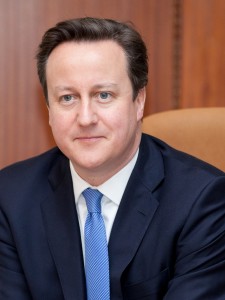
  • David Cameron – 2016 Statement at Press Conference with Japanese Prime Minister

    davidcameron

    Below is the text of the speech made by David Cameron, the Prime Minister, with Shinzo Abe, the Prime Minister of Japan, at Downing Street on 5 May 2016.

    It’s a real pleasure to welcome Prime Minister Abe back to the UK. And in this historic week for Leicester City I’d like to kick off by expressing just how much the football-watching public have taken to their Japanese striker Shinji Okazaki.

    He played a key role in their remarkable title win and I believe he’s only the second Japanese player to win the league. His ability mirrors that of the country he represents with such distinction.

    This visit gives us the opportunity to reflect on the strength of the bilateral relationship between our 2 countries, while at the same time looking to the future and our shared priorities. We are clear that we are stronger when we work together – both bilaterally and alongside our international partners. This morning we have discussed trade and investment between our 2 countries, laid some important groundwork for the G7 Summit which Japan will host later this month, and we’ve discussed how we can enhance our security co-operation.

    Let me just say a few words on each of these areas.

    Prosperity

    Japan is a country that matters enormously to the prosperity of the UK. We benefit more from Japanese investment than any other country in the world apart from the US. By the end of 2014 the total value of Japanese investment in the UK was £38 billion – that’s a huge figure. It represents jobs being created, companies thriving, and our manufacturing base expanding.

    Japanese firms see Britain as the gateway to Europe. That’s why more than 1,300 Japanese companies have a presence here in the UK, employing more than 140,000 people.

    Japanese and UK companies have also worked together to rebuild our now thriving car manufacturing industry, with £15 billion invested from Japan since 2012.

    And I was delighted recently to be in County Durham with the Chancellor last September for the opening of Hitachi’s rail factory, building trains to connect cities across the United Kingdom. And we will visit Hitachi’s London railway centre together later this afternoon.

    This is a strong foundation. But we both want to see more; more jobs, greater growth and increased prosperity for our 2 great countries. And we both agree that the way to that is through a comprehensive Japan-EU free trade agreement. This deal could be worth £5 billion a year to the UK economy – that’s £200 per household.

    Prime Minister Abe and I have agreed today to redouble our efforts to do everything we can to get it signed as quickly as possible, so we can all start reaping the benefits.

    G7

    As G7 partners we share a commitment to the fundamental values of freedom, democracy, the rule of law, and human rights. And this morning we touched on some of the big challenges that will be on the agenda at the G7 Summit, including the global economy and trade, the Middle East and Russia. On Syria we will discuss this evening the importance of all sides abiding by the Cessation of Hostilities. And we’ll discuss Ukraine, where I’m sure we both want to see the Minsk agreement implemented as soon as possible.

    We also discussed global health challenges such as the growing resistance to antibiotics. Thousands of people die every year as a result of this issue. Prime Minister Abe and I have agreed on the need for a strong and coherent global response, including providing financial incentives for the development of new antibiotics. And we discussed how we can use the G7 to advance the anti-corruption agenda that I will set out in more detail on May 12, including how Japan’s support will be vital in driving that forward.

    Security

    Finally, security co-operation.

    The closeness of our relationship is in part due to our shared experiences. We have both experienced the horror of seeing our citizens brutally murdered by Daesh – and likewise we share the will to see this evil organisation being defeated. Japan has been a vital partner in this battle against extremism, and our security co-operation since Prime Minister Abe last visited has gone from strength to strength.

    Our foreign and defence ministers meet annually to consult on top international security issues. And I welcome Japan’s increased involvement in NATO exercises, such as Joint Warrior off the UK coast. We’ll continue discussions on global security issues tonight at Chequers.

    So Prime Minister Abe, Shinzo, thank you for being here today and I look forward to continuing our talks.

  • David Cameron – 2016 Speech on the EU at Caterpillar Factory

    davidcameron

    Below is the text of the speech made by David Cameron, the Prime Minister, at the Caterpillar Factory in Peterborough on 28 April 2016.

    Thank you very much for the welcome, great to see so many of you here. I think this is probably the biggest one of these I’ve ever done so thank you for coming. It’s great to be here at Caterpillar. You are a huge employer in our country; 9,000 people. You’re a massive investor in training with something like 300 apprentices being hired every year. You’re a huge exporter from our country and something like 50% of what comes out of this plant goes into other European countries so you’re doing all the things that we want great British businesses to do. So it’s good to be here with you today. And it’s good to be here too with the former head of the Trades Union Congress, Sir Brendan Barber. It’s not often you find a Conservative prime minister and the leader of a trade union movement standing together, but we both think this issue about Britain and Europe is so important that we put aside our other disagreements, put aside party political arguments, in order to say very clearly we think Britain should remain within a reformed European Union.

    Now, as I’ve said, I think this is the biggest question for our country that we’ve faced in 20 or 30 years. It’s much bigger than a general election. When you vote in a general election if you think you’ve made a mistake 5 years later you can throw them out again. I obviously don’t like that bit, a bit uncomfortable, but nonetheless that’s what happens in a general election. This is a choice for a generation, possibly a choice for a lifetime. When you vote on June 23rd, you’re voting for the sort of country and the sort of relationship you want with the rest of Europe for your children and your grandchildren. It is incredibly important. Now I want to take as much time answering your questions as possible, but let me just tell you the 3 things that I think are crucial in this debate.

    First is, I believe Britain will be stronger if we stay inside the European Union. If you think of the things we need to get done in the world, whether it is standing up to Vladimir Putin, whether it’s fighting terrorism, whether it’s making sure Iran can’t get a nuclear weapon. We’re not weaker inside the European Union, we’re stronger. Working with our allies there’s strength in numbers to get things done. So I believe the bigger Britain choice, the patriotic choice, the way to get things done in the world choice to enhance the power of this great country will be stronger inside the European Union.

    Second thing is I think will be safer. There’s no doubt in my mind about the scale of the terrorist threat that we face today. We saw those terrible attacks in Brussels, in Paris. We’ve had attacks before in London. And I know from being your prime minister from the last 6 years that, of course, our safety depends on the work of our police force. It depends on our intelligence and security services. It depends on our relationship with the United States of America and other close allies. But it also depends on our relationship with other European Union countries. We now exchange information about criminals, about terrorists, about passengers on aeroplanes, vital information that helps to keep our country safe. And if we were to leave, we’d have to work out how to get back into all those things that we just left, so we are safer inside the European Union.

    But the third argument I think is the most important and the most crucial which is that we are better off as an economy, better off for jobs, better off for investment if we stay inside a reformed European Union. Why? Well, because the European Union and Britain together is a market of 500 million people. It’s the biggest single market anywhere on our planet. And we are in it. We have a say over it. And we can trade freely into it. As I said, I understand the 50% of what you make here goes into the European Union. Three million jobs in our country depend on trade with the European Union. Now I’m not saying that if we left the European Union all of those 3 million jobs would go, but the people who want us to leave can’t tell us what our trading relationship would be with the biggest market that we’re now a part of. One minute they say we’re going to be like Norway and have full access to the market. But then you discover if you have that position, you still get the free movement of people and you still pay into the European budget so there’s no point in that relationship. Then they say let’s have a trade relationship like Canada. Well that’s a good deal for Canada, but they’re thousands of miles away from the European continent. We’re just 20 miles away.

    And that trade deal doesn’t cover services. It doesn’t cover all of agriculture. It would even mean for some manufactured goods, like what you make here, there wouldn’t be automatic access and tariff-free access to the European Union. That would be bad for our country. So then I’ve given up saying they want a trade deal like Canada, but they can’t tell you what we’d get. And I say that is a risk too far. I don’t think we should risk jobs. I don’t think we should risk our economy. We shouldn’t risk the investment that a company like this brings into Britain. So I think the most important argument in this debate is the one about our economy.

    Now you’re going to hear lots of arguments. There’ve been lots of debates. And I want to take your questions. But I just want to leave you with one other last thought because I sit in this European Council with the 27 other member states and, yes, sometimes it can be a bit maddening. Sometimes you don’t get your way. Sometimes it can be frustrating, but however frustrated I get, I never forget that 70 years ago the countries of Europe that we sit round the table with were fighting and killing each other for the second time in a century. So for all its imperfections, we shouldn’t lose that idealism that we have found a way in Europe of settling our differences through discussion and negotiation rather than all the things that happened in the past.

    So I have no hesitation in saying to you after 6 years as your prime minister that we will be stronger, we’ll be safer, we’ll be better off inside the European Union. It is your decision. I’m your prime minister. Whatever you decide on June 23rd, I will carry out. But I have no hesitation in saying I think the right outcome is to vote to stay in. And I hope that’s what you’ll do. Thank you.

    Question

    Hello Prime Minister, at one stage, you wanted us to go in the euro but we stopped in the pound so surely that decision at that time was worked out right that we stopped in the pound. So surely if we come out the EU, could that be the same effect?

    Prime Minister

    Right, very good question. I never supported Britain joining the euro. And I never will. I think we should keep our own currency, the pound. We’re the fifth biggest economy in the world. We can sustain and work with our own currency, and it gives us certain flexibility. And what we have now if you like is a special status in the European Union. Britain is in the single market which is what we want for the trade and the jobs, but we’re not in the single currency and we don’t have to join the single currency. And through my negotiation, we made sure we can never be asked to bail out other eurozone countries. And crucially, one of the things I secured in the negotiation is that the eurozone countries, 18 of the 28, they can’t gang up and try and disadvantage countries inside the EU that have their own currency.

    Why does this matter so much for Britain? Well, because financial services are a big industry for us, and we want to make sure that, in Britain, we can do euro business and dollar business, and yen business, and all the rest of it, without the eurozone trying to take away our jobs. And we secured that, that they cannot discriminate against us. So in my view, we’ve got the best of both worlds: in the European Union; in the single market; out of the eurozone; and, crucially, out of the Schengen no-borders system. Some other countries in Europe have taken down their borders to ease the flow of people between countries. We’ve kept our borders; we are able to stop and search, and ask people questions at our borders, and we’ll maintain that throughout.

    So the people who say, you know, joining the eurozone would have been a bad idea, and so staying in Europe is a bad idea, I think they’ve got the wrong argument. We’ve got the best of both worlds; in the market for the jobs, out of the currency to give us our own flexibility. And it’s that best of both worlds we should maintain.

    Question

    Thank you. Good afternoon Prime Minister. Everyone who works here at Caterpillar is familiar with the word ‘accountable’. We’re all held accountable for delivering in our roles, as are you as the prime minister of this great country. Why, therefore, should I vote for an organisation which is fundamentally unaccountable?

    Prime Minister

    Well, I would argue it is accountable. It is accountable to the 28 prime ministers and presidents who sit in the European Council. And I think it’s wrong to think that we don’t ever get our way in Europe, we do. The single market, which I was talking about; the 500 million people that we can sell our goods and services to, that was a British idea, that was a British proposal. So I don’t accept that it’s not accountable.

    The European Union consists of these 28 countries. We are the sovereign ones, and if you don’t like what your prime minister’s doing or your government’s doing, you can get rid of them. So we’re all accountable, and the European Union has to account for itself by the things that we agree in that European Council.

    So it goes to this argument, as well, about sovereignty. The people who want us to leave, one of their arguments is if we left, we’d have greater sovereignty and a greater ability to write our own laws. Now, that’s true in a technical sense, but is it really true that we’d become more powerful; that we’d be able to get things done? And I think the answer to that is no. Let’s take Caterpillar, let’s take this great business, right? You’re making engines, for instance, which are governed to some extent by single market rules in Europe. If we were to leave, if you want to sell your engines to Europe you’ve still got to meet those rules. The only difference is, today I’m sat round the table helping to write those rules. I can listen to you here at Caterpillar and make sure the rules are written in a way that will help British business. If we’re outside the EU, you’ve got to meet all those rules, but you have absolutely no accountability for what they are.

    So I think we would be less sovereign; we’d be less in control of our destiny. We’d be subject to all these rules and regulations, but without a say on what they are. I think that would make us less powerful; less great, if you think of Great Britain; and less in charge of our own destiny. It’s the same in life. Just because an institution isn’t perfect, just because a relationship isn’t perfect, it doesn’t mean you walk away from it. It means you stay and you fight to get the outcome that you need, and that’s what we should do in Europe.

    Question

    Prime Minister. I believe that immigration is a good thing for the country, but uncontrolled immigration is damaging this country vastly. Only a few weeks ago I took – I had to take my boy to the hospital, to A&E. After an hour of waiting, a nurse came out begging people to leave A&E because there was too many people there. More than half of those people in there were from – not from the UK.

    My daughter, at school, was – she was sat at home crying because of her homework. Her homework she got 100.0%; she was upset because she knew some of them answers were wrong. I have a friend – I have 2 friends who work at that school as teachers and they have told me that the reason they cannot mark the work correctly is because they spend too much time with the non-speaking – non-English speaking children. If we stay part of the EU, how will you control immigration?

    Prime Minister

    Very good question. Alex, I think it’s a very good question. First of all, I agree with the premise of your question, which is we benefit as a country from people coming here to work hard and contribute, but we don’t benefit from uncontrolled immigration; people want to know we have a control over it. Now, half of our migration comes from outside the EU and we’ve taken steps to bring it under better control. We’ve set a cap on the number of people that can come for economic reasons; we’ve closed down dozens of bogus education colleges; and tightened up some of the rules. But there’s more we should do, I would completely accept that.

    When it comes to migration within Europe, there is the free movement of people; the ability that anyone in Britain has to go and live and work, and study, in another country, and people can come and study and work here in Britain. Now, what we’re going to do to control it better is to say if you come to Britain – and we’re putting these changes in now – and you don’t have a job, you can’t claim unemployment benefit. And after 6 months, if you haven’t got a job, you have to go home. If you come here and get a job, you do not get access in full to our welfare system, and tax credits and universal credit, and the top-ups and the rest of it. You don’t get full access for 4 years. You have to pay into the system before you get out of the system, and I think that is a very important change that I secured through this negotiation. But I do accept that we obviously need to make sure, as a country, that we continue to put money into our health service, into our schools, to make sure they are there for hard-working people who pay their taxes and work hard, like you do.

    But you do have to ask yourself, if we were to leave the European Union, what would that mean, not just for our economy, but what would it also mean for immigration? If we chose the Norway option and said we’re going to stay in the single market because it’s so important for our jobs, we’d have to accept free movement of people. In fact, Norway doesn’t even have the deal I’ve got to make sure people have to pay in before they get out on welfare. So that’s the choice. If you leave but want the access to the single market that’s good for Caterpillar, that’s good for jobs, you don’t have the control over the free movement of people. If you decide to leave the single market altogether and you try and do some trade deal, it could be years of uncertainty, years of lost jobs, years of lower incomes, years affecting wages and prices, as the former head of the TUC said today.

    So I think the right choice is to stay in; better control immigration from outside the EU; introduce our welfare changes inside the EU; and make sure we keep growing our economy and generating the jobs that pay for the hospitals and the schools that we need for our children.

    Let’s have Faisal Islam from Sky.

    Question

    Thanks Prime Minister. Could you respond to the idea from Bernard Jenkin that you have done a deal with the unions to water down the Trade Union Bill for the sake of this EU referendum?

    Prime Minister

    For the issue of the trade union legislation, which I now hope is going to pass through Parliament, in the House of Lords, Lord Burns and a cross-party group suggested an amendment and voted on it, and defeated the government. We’ve accepted that amendment, but the Trade Union Bill, which I think is a very important piece of legislation, will pass. Am I talking to the trade unions and are my team talking to the trade unions about how to campaign to help keep Britain in a reformed Europe? Yes, I am, because although we have many disagreements, including over the Trade Union Bill, we’re putting aside those disagreements and saying, on this issue, we should stand alongside each other and say to people in Britain, ‘If we want jobs, if we want investment, if we want a successful economy, we should stay in.’

    And the interesting thing is this, you can now add the TUC to the CBI, to the IMF, to the OECD, to President Obama, to just about every friendly government anywhere in the world or any reputable set of economists looking at this issue, that the best answer for Britain is to say in a reformed EU. Now, you can say that this is all some grand conspiracy. The establishment are all getting together. Well, it’s a pretty great conspiracy that can get a Tory leader standing next to the former leader of the TUC to say this is in our country’s interest. And it may just be possible that when we have all those people saying the same thing effectively, even though we have deep disagreements in other areas, it’s because we believe passionately this is the right answer for our country. For jobs, for investment, for livelihood and we worry about the leap in the dark and the uncertainty that would be involved in Britain leaving a reformed European Union.

    Question

    Thank you, Prime Minister, and welcome to our facility. As you can see, we’re so proud of it. I’ve worked here for 39 years. I’ve got a regional sort of concern, Lincolnshire. I live in South Holland and The Deepings, got a massive housing development programme over the next 20 years but I feel there’s a – a lack of infrastructure. Could you tell me what level of euro funding goes into that infrastructure?

    Prime Minister

    Right. Well, in terms of the – the money that the east of England gets from European grants I think it is something like, from memory, £400 million over – between the period of now to 2020. Some of that money can go into things like infrastructure or other projects like science and research and our universities. But the crucial thing we need to do is make sure that the decisions about housing are made more locally. And that’s why we’re saying to every local council, ‘Draw up your own local plan and when you’ve set out how you’re going to meet the demand for housing and when you’ve set out where you want the housing to be and where you don’t want the housing to be, you will then have far greater powers to say yes to things that fit with your plan and no to the things that don’t fit with your plan.’

    The next thing we’re doing which I think helps, is to make sure that councils keep the council tax that they raise but crucially all of the business rates that they raise. So you restore the link between a council encouraging industry and development and enterprise and business and people living in the area. They keep the money so are better able to spend it on the infrastructure and the services that the area needs.

    So I’m not arguing for a minute that Europe is absolutely vital for our infrastructure but I think it is vital for our economy. And the fact is if we leave, I think we’ll have a smaller economy, we’ll have lower taxes – tax revenues coming in and less ability to fund the vital infrastructure as well as the vital services that we need. And that’s not just my view. You’ve had in the recent weeks the Treasury, the OECD, the IMF, all saying the same thing. Our economy would take a hit if we leave. And if the economy takes a hit tax revenues take a hit. And if tax revenues take a hit you’ve got less money to spend on the things that we need.

    Question

    Prime Minister, do you believe it’ll be easier to change Europe from within or from without?

    Prime Minister

    Well, a very good question but I think the truth is absolutely it is easier to change from within. Indeed, if we leave, you lose your voice. I don’t believe as some say that if Britain leaves the European Union, the whole thing will collapse. I don’t think that will happen. I think what would happen is I think Europe will become more protectionist, more inward-looking, less engaged in the world, more of a political union, because the British voice wouldn’t be there. Our voice is about saying we should be trading with the rest of the world. We want Caterpillar to be able to sell products from here to countries all over the world. And Europe should be using its might of 500 million people to drive those trade deals all over the world, including the Far East because that’ll be good for us.

    If we go, that’s the end of reform in Europe. I think it would slip backwards and we would be left outside. And, as I said, in an answer to an earlier question, we might have the impression of greater sovereignty but we wouldn’t have the ability to get things done. Now, I know some people look at what’s happening in Europe today and they worry about it. You look at the crisis of migration because of the Syrian conflict and people flooding through Turkey and into the European continent. You look at the problems with the eurozone and think, ‘Look, their economies aren’t doing very well because of the euro. Wouldn’t we be better off if we separated ourselves from this?’

    Well, my answer is, no, we wouldn’t. Because we’d still be affected by those things. The migration crisis doesn’t go away because Britain leaves. The eurozone problems don’t end because we’ve exited the European Union. We’re still affected by those things. The thing that changes is we don’t have any say over how Europe is responding to those crises. Now, because Britain’s been there making a strong argument that you have to return people from the Greek Islands to Turkey to break the model of the business of the people smugglers and demonstrate they can’t keep bringing people to Europe. Because we were there making that argument, and that’s now happening, the migration crisis in the Eastern Mediterranean is getting better. And the same with the eurozone. If we weren’t in the room talking about how Europe can try and expand and improve its economies, we’re still affected by the eurozone crisis but we have no say.

    So we’re better off there. As I said, it’s not a perfect organisation and it can be incredibly frustrating but you maximise your influence by staying in and fighting for the things that you want rather than walking away.

    Question

    Thank you very much. You mentioned just a few months ago, you kept referring to the European referendum. Today you have a number of times mentioned the reformed European Union or Union membership. One, I’d like to understand why you’ve changed your wording slightly to reformed. I think – personally I think it’s because you recognise it needs reformation because of the strength of feeling. I welcome your comment on that. And secondly, after the 23rd what will you do to reform this membership?

    Prime Minister

    Yes. Sure. Why I say the reformed European Union is because I’ve always believed it needs reform and that is what my renegotiation was all about. Now, I will not stand here and say, ‘I’ve solved all of Europe’s problems or indeed all of Britain’s problems with Europe.’ It is still an imperfect organisation but there were a set of things I thought needed fixing from Britain’s point of view. And I think we’ve gone a long way from fixing them. It was too much of a political union and a sense that people were being pulled into a political union against their will. And it now says very clearly in this legal document that I have negotiated, that Britain will not be part of a political – further political union and integration. So I think that – that helps.

    The second thing is I think it was too much of a bureaucracy, too many rules being generated. So we have now got, for the first time, targets for cutting the amount of bureaucracy in Europe, to help businesses, to help farmers, to help those most affected. The third thing I think was wrong was there wasn’t enough emphasis on economic growth and generating possibilities for the future. And so I got in this document guarantees that we’re going to complete the single market, not just in goods such as you produce but in digital services, in energy and in services like legal services and financial services and the rest. And we’re going to sign more trade deals. It’s too slow at signing these trade deals. We want trade deals with India. We want trade deals with China. We want trade deals with other countries in the Far – Far East so we can sell our products to them and grow our economy.

    And the fourth thing I wanted changed was this issue about immigration that I think while this free movement of people is something that is part of the single market, you can’t be in the single market without having it. And of course many British people choose to work or live or retire in other European countries. I think this issue about welfare needed to be addressed. And so for the first time ever people coming from Europe to Britain they cannot get full access to our welfare system, the tax credits and all the rest of it. They cannot get that until they’ve worked here for 4 years. They’ve got to pay in just like everyone in Britain does. They’ve got to pay in before they get out. And I think that is a very important change because I think people really feel that, yes, if you come here and work hard, you’re making a contribution, you’re paying your taxes, you’re – you’re contributing to our country but you shouldn’t get out of the welfare system until you’ve paid in.

    So those were 4, I think, significant changes and that’s why I call it a reformed European Union. But is the job done? Should we go on with reform after 23rd June, if we vote to stay in? Yes, absolutely. And I think the right way to do this is make sure we continue to build on the special status that Britain has, not in the eurozone, not in the no-borders system, out of the political union. We shouldn’t be embarrassed about the fact that Britain is different. We are a very special country. You know, we’ve had our own successful political institutions. We haven’t been invaded for 1,000 years. We’ve helped to bring democracy and free trade and arguments about human rights, all over the world.

    So our membership isn’t like the French membership or the German membership or the Italian membership and I wouldn’t want to be in Europe if it was. Our membership is special. And I want to make it more special. But if we vote to leave on 23rd June, that’s it. No more special membership, we’d be out of the EU and I think probably then thinking how do we get back in to things like the single market and the cooperation over terrorism and the work we do to keep our defences strong. How do we get back into those things we just got out of? So I say stay in and fight for the special status and for the values that our country rightly holds dear.

    But time for a couple more. Let’s have – I think we’ve got some local newspapers and television.

    Question

    Emma Hutchinson, ITV News Anglia. Prime Minister if leaving the European Union was as risky as you say for the economy – could potentially cost 300,000 jobs in this region, could be bad news for businesses like this – haven’t you taken a huge gamble with people’s jobs, family finances, and businesses by having this referendum at all?

    Prime Minister

    I think it’s right for our country to make a decision about this. The last bunch of people who were able to vote on this were people back in 1975. And so I think you can’t hold a country in an organisation against its will. So what I decided was the right thing to do is not have a simple in-out referendum but to go and negotiate a better deal for Britain, sort out some of these problems that we have and then fulfil our manifesto commitment to let people choose in a referendum. I have great faith in the common sense and rationality and good sense of the British people that I think that being offered a choice of maintaining and enhancing our special status or leaving altogether, we’ll choose to stay in.

    But at the end of the day, these decisions are actually too important simply for your government to take on your behalf. This is about our relationship with Europe, our trade with Europe, our place in the world, the way we’re governed, the sort of country we are. We should determine all sorts of things in Parliament, representing you on your behalf. But when it comes to a question as fundamental as this, I think it’s right to hold this referendum and I’m very happy to accept the verdict and the judgement passed down by the British people.

    Question

    Andrew Sinclair BBC East. Welcome to Peterborough. The Leave campaign’s been talking today a lot about cost of EU red tape, most businesses in this region are small businesses. Do you accept that for them that EU regulation can be an expensive business?

    Prime Minister

    I accept that all regulation can cost money and we should be trying to reduce unnecessary regulation where possible. But I’d simply make 2 points: first of all, if you are a business that trades with Europe, or if you are a business that trades with a business that trades with a business that trades with Europe, you have to meet the regulations. And if we were to leave, you have to meet the regulations when you sell into Europe even though you have no say as to what those regulations are. And I fear, let’s take this great plant and great business and the small suppliers that supply into it, if we’re not there and you’ve got the Germans and the Italians and the French writing the rules about diesel engines and emissions and environmental constraints and all the rest of it. Wouldn’t they write those rules thinking let’s support our own manufacturers rather than British manufacturers? I fear they might. We need to be round that table. So, if you’re a small business in any way connected to Europe, you need to make sure we have a say over those rules.

    Second thing I’d say, is actually within Europe, because of my renegotiation, we are now setting targets for taking unnecessary regulations away from business. If we’re not there, I’ll tell you it wouldn’t be happening. This is very much a British initiative that we drove through because of our negotiations. And I was quite struck this morning when one of the people wanting us to leave the Europe Union was on the radio and asked, ‘Well which regulations is it you want to get rid of in Europe?’ He actually couldn’t come up with a good example. Sometimes we over-regulate in this country. So, I’m in favour of getting rid of unnecessary regulations whether it’s done by Britain, whether it’s done by the government, whether it’s done by the council, or whether it’s done by the European Union. That’s the right approach.

    Question

    Mr Prime Minister, you’ve mentioned on 2 occasions today about taking out the pot – you know, you can’t take out the pot what you don’t put in. How does that go on for the smaller member states of the EU because to the man on the street and to myself, we read in the papers, we hear on television it’s costing us X, Y, Z to be a member of the European Union, these smaller states are now coming in after we’ve joined, so the goalposts have moved, but we don’t see a lot coming in from them but we see a lot allegedly being taken out. For example, Greece, only this morning. It’s there for all to see, I’ve got news for you, you’re not going to get your money back. Nobody’s going to get their money back. That was on the television this morning, now let’s be honest about it –

    Prime Minister

    Luckily we never gave them any money so we don’t have to expect any back. That’s the good news.

    Speaker

    You never gave them any money but the debt could be written off.

    Prime Minister

    Those are very fair points, so let me answer, a very fair point. First of all, with bailing out the eurozone, one of the first things I did as Prime Minister was get us out of those eurozone bailout funds. So we are not bailing out other eurozone countries we’re not owed money by that. So we don’t have to worry about that and in my renegotiation I put that beyond doubt. It is now written into the rules, written into the law as it were, that we don’t bail out other countries.

    But you are right sir, we do pay into the European Union. We get money back for farming. We get money back for science and research. We get money back for regional development. But yes, we do put in more than we get out. I would argue that we benefit though because of the single market making our economy bigger, creating jobs, creating a bigger economy and more tax revenues, we get back much more overall than we put in. I think our membership fee is worthwhile, and the good news is that in a budget negotiation I have made sure that the European Union budget is on a downward trajectory, not an upward trajectory, so we know if we stay in what we have to pay and what we get out.

    But let me just say this, the fact that yes, some of these smaller, much poorer countries get much more out of the European Union than they put in, I don’t actually think that’s bad thing. Look at our continent and remember how recently it was that Balkan countries were fighting each other. Remember how recently it was that Spain and Portugal were dictatorships rather than democracies. Remember how recently Greece wasn’t a democracy. Remember how poor those counties were behind the Iron Curtain after decades of communism.

    And the point is this, the single market of 500 million people, it’s a single market that enables us to trade, to move, to work, to provide our services, but it’s also a single market in which we have agreed to help each other and to help these poorer countries raise their living standards. Now I would argue that is obviously good for them, but actually it’s good for us. If we can create a new middle class of customers in Poland or the Czech Republic or Slovakia, if we can see their housing industries grow, they are going to buy more Caterpillars, they are going to buy more of our goods. Our single market gets richer.

    So yes we pay in more than we get out and some others get more out than they pay in, but is this market of 500 million people in our interests? Yes. Is this organisation that has helped to keep the peace in Europe worthwhile for us to be a part of? Yes. Has joining the European Union for some of these former communist countries that don’t have our history of democracy been good for their societies, their democracies and their economies? Yes. Does that make all of us stronger as result on the continent that we share? Yes. Winston Churchill said, “We are not of Europe, but we are with Europe.” Britain is special. We are an amazing country. The fifth largest economy in the world. A country that’s given so much to the world. And my view is we will not be smaller by staying in, we will be bigger, and that is the patriotic big Britain case that I believe in and I hope you’ll back on June 23rd.

    Thank you very much indeed.