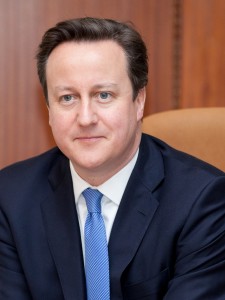
Tag: David Cameron

  • David Cameron – 2008 Living Within Our Means Speech

    davidcameron

    Below is the text of a speech made on May 19th 2008 by David Cameron.

    “For the past two and a half years, the changes I have led in this Party have been aimed in one direction: giving people a positive alternative to a failing government. I don’t want us to be elected on the back of a disintegrating Labour Party. I want us to be elected with a clear mandate to make the changes Britain needs.

    “So we’ve changed the way we select candidates. After the next election our Party will be more like the country we hope to lead. We’ve changed our policies and our politics: becoming once again the true champions for progressive ideals like tackling poverty, protecting the environment and kick-starting social mobility. We have taken clear positions and stuck to them:

    “Putting economic stability before tax cuts.

    Improving public services for everyone, not helping a few to opt out.

    Recognising that the progress people want to see is a better quality of life, not just higher GDP.

    “All this supports the overriding mission we have set for ourselves: to revive our society just as Margaret Thatcher revived our economy; to reverse Britain’s social breakdown, just as she reversed our economic breakdown. And we have set out how we will achieve that mission – by ending the era of top-down state control and big government. We want to respond to what should be a new post-bureaucratic age, by decentralising power, by giving people more opportunity and control over their lives, by making families stronger and society more responsible.

    ANGER WITH LABOUR

    “That is our positive alternative, the alternative to a Labour government that people are increasingly regarding with contempt. Whether it’s on the streets of Crewe and Nantwich, around the country in the run-up to the local elections, or in the emails and letters I get, I’ve noticed a new feeling of anger.

    “It’s not just because the Prime Minister can’t seem to stop treating people like fools – whether it’s on the true reason for last year’s cancelled election, or the true reason for last week’s 10p tax trick. It’s not just because in Britain today there are more people in severe poverty and nearly five million people on out-of-work benefits, because mortgage rates have gone up and the cost of living is going up and because all this shows that Labour have failed to deliver either the social justice or the economic efficiency they promised.

    “The anger today is about more than Labour’s economic incompetence. It’s about more than Labour’s failure to advance progressive ideals. The reason people are more and more angry with the government today is that while they see their taxes going up and up, there’s no corresponding improvement in the quality of their lives.

    “Of course our quality of life is not just about what government does – far from it. But there’s a real sense of unfairness that people are feeling today. They feel that Labour have broken the basic bargain between government and the people, the bargain that says: “We’ll take money off you in taxes, and you’ll get decent quality services in return.” That’s what I want to focus on today.

    WE NEED TO START LIVING WITHIN OUR MEANS

    “After a decade of reckless spending under Labour, Britain needs good housekeeping from the Conservatives. We need to start living within our means. Why? Because in the decades ahead there will be pressure to spend more on the essentials – whether that’s care for the older generation, equipment for our armed forces, or more prisons and police to keep us safe. At the same time, we have reached the limits of acceptable taxation and borrowing.

    “With the rising cost of living, taxpayers can’t take any more pain indeed they want a government that can give them the prospect of relief. And our economy can’t take any more pain without losing jobs to lower tax competitors.

    “So how are we going to square the circle? How are we going to spend more on the essentials without putting taxes up – and over time, creating the space for cutting tax, as we have promised to do? Our overall method and aim are clear: we will share the proceeds of economic growth. Sharing the proceeds of economic growth is what living with our means, actually means. Not spending everything we have. Not borrowing to spend beyond our means. But ensuring that, over time, the economy grows faster than the state, so spending falls as a share of national income and we can reduce taxes and borrowing.

    “Those who criticise sharing the proceeds of growth have sometimes not appreciated that if a government actually did this, either taxes, or borrowing, or both would have to fall over an economic cycle. I stress: have to fall.

    “Today we are setting out our strategy for delivering this commitment. We’ll do it by attacking the problem at its source: by attacking the three causes of a bigger state and rising public spending.

    “First, the cost of social failure. Family breakdown, unemployment, drug and alcohol addiction – these social problems rack up the biggest bills for government, so we’ve got to get them down.

    “Second, the cost of unreformed public services. Massive top-down state monopolies cost more and deliver less, so we need to improve the running of public services through more choice, competition and non-state collective provision.

    “And third, the cost of bureaucracy itself. All bureaucracies have an inbuilt tendency to grow, so we need to call a halt to the wasteful spending and inefficiency we’ve seen under Labour.

    “But that’s not about some one-off efficiency drive, it’s about a whole new method of government that’s careful, not casual, with public money.

    “That is our strategy. It learns the lessons from Labour’s failure to control public spending. It’s based on simple Conservative principles of good housekeeping. And it avoids easy answers in favour of commitments that we know we can deliver.

    LABOUR AND WASTE

    “The first and most obvious mistake Labour have made it when it comes to public spending and taxpayer value is their acceptance of government waste. It’s clear that we now have in power in this country a bunch of Labour politicians who are just shockingly casual about public money and how it’s spent.

    “£20 billion wasted on an NHS computer that still isn’t working properly.

    £2.3 billion spent refurbishing the offices of MOD civil servants.

    And in one year alone nearly £2 billion of tax credits lost due to fraud and error.

    “These are outrageous examples of a spendaholic culture in government a culture that is the public sector equivalent of the reckless, debt-fuelled spending spree that Gordon Brown’s policies have encouraged in the private sector. The level of government waste in our country today is evidence of an out-of-touch political elite who have forgotten whose money it is they’re spending. Ministers who get in their offices and think ‘great, now how can I spend lots of money.’ People who have become so accepting of government waste that they assume it’s just part of the job and that anyone who objects must be calling for “cuts.” But Labour’s mistakes on public spending go far deeper than their casual tolerance of government waste.

    LABOUR AND REFORM

    “I believe that a much more important factor than the waste is the superficiality of Gordon Brown’s political thinking.

    “Let me explain how I see it. Contrary to the fashionable view today, I think the Prime Minister has always been rather good at political communication. He was the one who wrote New Labour’s soundbites – “tough on crime, tough on the causes of crime”; “social justice combined with economic efficiency.” He even used to talk about “cutting the bills of social failure.”

    “But he has never developed a clear set of political ideas, or a clear political strategy, for achieving the aims expressed by the soundbites. Brown has been good at talking, lousy at delivering. He can tell you what he wants to achieve, but not how he’s going to achieve it. That’s why people are getting so angry now.

    “They were promised national renewal, and ended up with very little of substance being achieved at all.

    “And so we see today a government with absolutely no coherent plan for tackling our country’s deep-seated social problems – in particular the devastating rise in family breakdown and absolutely no coherent plan for reforming public services in order to make sure they deliver value for taxpayers’ money.

    “One minute it’s local accountability for policing, the next it’s a whole new set of top-down targets. One minute it’s a constitution for NHS independence, the next it’s a top-down plan for closing GP surgeries and replacing them with polyclinics. One minute it’s school reform…the next it’s putting LEAs back in the driving seat.

    “And with Ed Balls using his job to promote his leadership credentials to the Labour left, it’s just a non-stop series of moves to block and reverse school reform, and to increase state control of education.

    “The Prime Minister’s draft Queen’s Speech last week set out his legislative agenda more or less right up to the next election. That’s it. There’s nothing more to come.

    “Anyone looking for serious reform, especially in those crucial areas of school reform, welfare reform and strengthening families the areas that can make the biggest difference to our society now knows that as far as this Prime Minister is concerned, the cupboard is bare.

    CONSERVATIVE PRINCIPLES

    “Our positive alternative is based on three clear principles – principles of good housekeeping applied to the nation’s finances.

    “These principles matter because when it comes to these big questions of tax and spending, in many ways the nitty-gritty questions that are at the heart of politics people don’t just want some technocratic explanation of projected shares of GDP.

    “They want to know where you’re coming from. What your basic attitude is. Why it would make a difference to have a new set of ministers sitting in those offices making those decisions.

    “So here’s what we’re about. This is our attitude, and this is why we would be different.

    “First of all, we understand that you can’t get decent quality on the cheap. We will give public services the proper funding they need so that everyone in the country can have access to the services they need. As I’ve said before: no ifs, no buts, no opt-outs.

    “Second, we understand that when ministers and officials spend money, it is taxpayers’ money, not government money.

    “We will be careful with it, not casual. We will expect to be judged on a clear basis: if you’re taking people’s hard-earned money away from them you’d better be able to show that you’re spending it on what people want and that you can get better value for that money than they could.

    “And our third principle is the need for long-term tax reduction. As George and I have said repeatedly, we believe in low taxes – because we believe low taxes are both morally right and economically efficient. But as we have also said, we will never trick people into voting for us with promises of tax cuts that cannot responsibly be delivered, or that cannot be sustained.

    “We are the party of low taxes for the long term, not tax cut promises for the short term. That is why we are setting out our long-term strategy today. When it comes to tax and spending, it is tempting for politicians to make simplistic promises and to give easy answers to difficult questions. I know there are people who want us to do just that today, and I’d like to explain why I don’t think that would be right.

    NO EASY ANSWERS

    “We all know that the easiest thing in the world is for an opposition party to stand up at an event like this and blithely talk about all the efficiency savings we will make in government how we will streamline public spending, how we can close tax loopholes, how we can move towards a bright future of less spending and less tax with a few well-chosen cuts that miraculously deliver substantial savings without harming public service delivery at all.

    “It is a well-trodden path by opposition parties. I know – I’ve been there.

    “At the last election, we produced something called the James Review. A long list of all the government functions, quangos and bureaucrats a Conservative government would cut.

    “Well-intentioned – certainly. A Conservative government should always try to cut out waste and deliver value for money for taxpayers. It’s in our political DNA.

    “And the James Report was a serious and impressive piece of work. But was the overall approach credible? I’m not so sure. To make a long list of efficiency savings in advance of an election; to add them up to produce a great big total; to turn that total into debt reduction, spending increases elsewhere and a tax cut…?

    “People didn’t believe it, for the very good reason that controlling public spending is not about a one-off efficiency drive, it’s about a whole new culture of government.

    “There is a simple fact which political historians amongst you will know very well. The government “efficiency drive” is one of the oldest tricks in the book. The trouble is, it’s nearly always just that – a trick.

    “In fact it’s such a cliché, there was an episode of Yes Minister about it, called “The Economy Drive.” Ministers are summoned, officials instructed, the media prepared for sweeping savings in the running costs of government. And then, a few months down the line, the sheepish-looking ministers and officials come back and say “well actually, it wasn’t quite as straightforward as we’d hoped, Prime Minister.” Gordon Brown announced another one last week.

    “Let me make it clear: I believe that driving efficiency though the government machine should be a constant administrative effort. Every business has to improve its efficiency every year, or it won’t survive. That should be a constant principle of government too

    “But I do not believe in simplistic lists of cuts. In naïve over-estimations of potential savings. Or in cobbling together a big number in order to get a good headline. Making government more efficient and cutting out waste is absolutely part of our strategy for controlling public spending. But it is only a part.

    “To make it the only thing in our plan would simply not be credible. The scale of the public spending crunch that is coming down the line, the scale of people’s expectations for public services, and the imperative for competitive taxes all mean that we need to think far more deeply about the role of the state if we are to live within our means in the decades ahead.

    “It cannot and must not simply be about “efficiency savings.” And it must especially not be about the kind of short-term savings that in the end add to demands on the state because they undermine social value in the name of delivering economic value. Spending cuts that look efficient on a powerpoint chart but end up costing more money are just a false economy. Instead, living within our means is about taking three key steps.

    REDUCING DEMANDS ON THE STATE

    “The first way in which we will control public spending is to reduce the long-term demands on the state. We need to tackle the causes of the social problems that give rise to public spending in areas like welfare and crime. That means taking forward the work that began with Iain Duncan Smith’s magnificent Policy Group report, Breakthrough Britain.

    “The key areas for radical reform, and the early focus of our work in government, will be in school, reform, welfare reform, and strengthening families.

    “We have already published: Policy Green Papers on school reform and welfare reform, and some of our thinking on making Britain more family-friendly. And the next stage in our work on strengthening families will be published within the next few weeks. If we get these three things right: school reform, welfare reform and strengthening families, then I believe we will make serious progress in tackling these deep social problems that have caused so much pain, and cost so much money, for so long.

    “But we will also be developing policy beyond the immediate focus areas of schools, welfare and families to address the complex and interconnected problems Iain and his team identified in his report, From drugs to debt; from children in care to people with disabilities.

    PUBLIC SERVICE REFORM

    “The second way in which we will control public spending is by carrying out the work that was the great missed opportunity of the Blair and Brown years – proper public service reform. Unlike the Labour Party, there is no internal feud or ideological war preventing us from carrying out the reforms that everyone knows are needed.

    “As Nick Herbert set out in a superb speech last week, there is now a distinctive modern Conservative approach to public service reform, based on clear thinking about how we can give power over services to those who use them.

    “Where services are individually consumed we will transfer power over those services to individual people, giving them a choice between competing providers.

    “And where services are collectively consumed, we will transfer power over those services to the lowest practical tier of government, opening up provision to social enterprises, private companies and community organisations.

    “For us, public service reform is about choice and voice – bringing greater accountability to the provision of public services, so the power relationship is not top-down – from Whitehall to public services but side to side – a new relationship between the professionals who deliver public services and the public, who pay for them and use them.

    “So in education we will end the state monopoly and allow new schools to be set up by a wide range of expert organisations, giving parents real school choice for the first time. In the NHS we will get rid of the top-down political micromanagement and put the power in the hands of patients, who can choose the GP who they think will get the most out of the NHS on their behalf. And in prisons and probation we will empower the local managers – and pay them by results.

    EFFICIENCY AND TRANSPARENCY

    “The third component of our strategy is cut out waste and make government more efficient. That is one of the principal responsibilities of Francis Maude and his implementation team. This is a really significant commitment for us.

    “Normally, political parties would only devote resources to the things that directly help them win an election. But we don’t just want to win – we want to know exactly what we’ll do when we’ve won.

    “So Francis and his team will be looking at government efficiency right across the board: procurement, staffing, structures – everything you would expect from a modern, professional and businesslike operation.

    “We are using the best private sector expertise to find ways to save taxpayers’ money and improve service delivery. But I do not believe that it’s enough to just stand here and make promises about efficiency. I believe we need to create additional pressure on ourselves – and that’s why I believe transparency in public spending is an absolutely vital part of this.

    “If we can show people exactly how their money is being spent, that will leave no hiding place for waste and inefficiency. It will shame ministers and officials into spending public money wisely.

    “And in this post-bureaucratic age, the information revolution makes such detailed accountability possible for the first time. That’s why last year, we introduced a Bill in Parliament to force the government to list on a public, easily searchable website, every item of public spending over £25,000.

    “Unsurprisingly, Labour blocked it – but I can promise you that this will be one of the first innovations of a Conservative Government.

    “And I can also announce that we will shortly be launching an online whistleblower service, so that people who work in the public sector can tell our Implementation Team about the waste and inefficiency they would like us to change.

    CONCLUSION

    “So that is our three-part strategy for controlling public spending: reducing the long-term demands on the state; reforming public services, and making the public sector more efficient and transparent. Britain needs this strategy because under Labour, Britain is on the wrong path.

    “They have splashed the cash like there’s no tomorrow – but the trouble is, there is a tomorrow, and it’s got to be paid for.

    “Unless we make big changes, we’re heading for a future as a high-tax, uncompetitive backwater with soaring social costs and a falling quality of life. To avoid that future, while fulfilling the essential requirements of modern government, we will need to put into action those good Conservative principles of good housekeeping.

    “And then we can look forward to a very different future: a low tax, competitive economy, with a high quality of life and the opportunity for everyone to make something of their life. It used to be said that “good food costs less at Sainsbury’s.” Well I want good services to cost less with the Conservatives. That’s why it’s so vital that we have a serious plan for living within our means.

  • David Cameron – 2008 Speech on Primary Care

    davidcameron

    Below is the text of the speech made by David Cameron, the then Leader of the Opposition, to the King’s Fund on 21st April 2008.

    My thanks to the Kings Fund for hosting us today. I am here to talk about general practice and the polyclinic programme. But first I want to set out the context of my party’s overall approach to the NHS.

    The health service needs serious reform. That reform should be steady, purposeful and with a clear direction, avoiding unnecessary upheaval. Changes in lifestyles, in technology and medicine itself, in the expectations people have of the services they receive all this means we need a more decentralised, more patient-centred, less bureaucratic system. And at the same time, if we are to maintain public consent for all the extra spending the NHS receives we have to ensure better value for money than we’ve had in the past.

    But my point is that reform should be bottom-up, not top-down: wherever possible driven by the discretion of professionals responding to the needs and wishes of their patients.

    We need to change the essential power relationship in the NHS: from a vertical relationship where professionals are told what to do by politicians and managers above them with patients left just to take what they’re given to a horizontal relationship where professionals have the necessary autonomy and discretion to respond to the demands of patients and patients are in the driving seat because they have the ultimate power: the power to choose the service they want.

    How do we get there? One thing I’m sure of: we won’t get there through yet another massive structural reorganisation. For too long the NHS has been treated by Government like a surgeon treats a patient – laid out unconscious on the operating table, passively receiving major invasive surgery. Instead we should treat the NHS more like a walking, talking, conscious adult, in its right mind: in need of treatment, yes, but able to understand what’s going on and, most importantly, able to take significant responsibility itself. In a word, we politicians need to treat the NHS as if we were its GP, not its surgeon.

    Assaults on the NHS

    No one says Labour doesn’t care about the NHS. But it’s not enough to support an institution in principle. You’ve got to understand how it works. And to me the way Labour has treated the NHS over the last 10 years shows a severe lack of understanding.

    There have been reforms and counter-reforms. The abolition of the internal market under Frank Dobson. The return of the internal market under Alan Milburn, but with the addition of countless bureaucratic targets. Then the catastrophic loss of financial control under John Reid and Patricia Hewitt leading to the closure of community hospitals, maternity units and accident and emergency units.

    It is genuinely impossible, looking back, to trace any coherent direction in the path of Labour’s health policy over the last 10 years. The one constant has been a restless series of changes which, to the NHS itself, have felt like a series of frontal assaults. It all reflects Labour’s seduction by management consultants.

    It’s said in the private sector that no-one ever got fired for hiring IBM. The same seems to go for the NHS. You see it in all the constant upheavals: the PCGs and the PCTs, the SHAs and the StHAs, the fiasco of the junior doctors system which replaced recruitment by human beings with recruitment by a computer, and an incompetent computer at that; the billions – literally billions – of pounds of public money wasted.

    It’s all the product of Labour’s bureaucratic mindset, or what I call policy by PowerPoint: clever flowcharts and organograms which ignore the human relationships that are the most important aspect of healthcare.

    GP contract

    And this applies especially to primary care. Look at the mess the Government has made of the GP contract. First, they negotiated a deal which took the responsibility for organising extended opening hours and out-of-hours care away from GPs and gave it to Primary Care Trusts.Then, when the PCTs didn’t organise this extended access, the Government cried foul and blamed GPs for it.

    It is fundamentally dishonest for the Government to blame GPs for agreeing to a contract that ministers negotiated and urged GPs to accept. Nor is it GPs’ fault that they are being paid far more than they or the Government intended – it’s the Government’s fault for miscalculating doctors’ workload. And that’s what happens when you organise the health service using top-down bureaucratic methods dressed up to look good on a PowerPoint presentation.

    Private providers

    I often can’t help thinking that Labour have been blinded by the private sector – not just management consultants but private providers too. The ironic result is a smaller role for GPs – the original independent contractors to the NHS. PCTs are taking back control from GPs, and shifting contracts to private providers under preferential terms.

    This is a flawed strategy. It didn’t work in secondary care when the Government paid for block contracts with independent sector treatment centres at 11 per cent more than the equivalent cost in the NHS. And it won’t work if executed in the same way in primary care.

    Worst of both worlds

    So we have a flawed GP contract, and an uneven playing field for providers. Neither side of the purchaser-provider split is working properly. Indeed, the Government has spent 10 years oscillating between the rhetoric of local decision making on one hand and their instinct for central control on the other.

    Now, instead of the original system of doctors buying care directly for patients, Primary Care Trusts hold the purse strings. They call it Practice Based Commissioning. But in fact GPs neither hold real budgets nor have the ability to reinvest savings on behalf of their patients.

    As Julian Le Grand has put it, the Government was “trying to get the best of fundholding and the best of the health authority and probably ended up with the worst of both.” Put another way, we have ended up with neither a GP-led service nor an efficient central bureaucracy.

    The role of the GP

    So let me set out how I think general practice should work. I have a simple starting point. GPs should manage the entire relationship that a patient has with the NHS: meaning they should be responsible for providing the care that patients need or commissioning it from other providers or a mixture of the two.

    In a nutshell, GPs should control the budgets that NHS patients are entitled to. There is a good economic rationale for this. Budget-holding is a natural guarantee of efficiency, ensuring that money follows the patient and it is spent on frontline care rather than on bureaucracy. GPs – rather than remote managers – should be responsible for reconciling the available resources with clinical priorities and patient choice.

    And there is a good health rationale for GP budget-holding too: what’s called the continuity of care. The family doctor service is the way to ensure that – even though the patients may see many specialists – there is always one doctor in charge: the doctor closest to the patient. This is especially important when it comes to preventative action or the management of chronic conditions, which require significant patient involvement.

    Five years ago Gordon Brown said that “in healthcare the consumer is not sovereign” – meaning that patients should not be trusted or expected to manage their own care. Well I disagree. Because I believe in general practice. With the GP to advise the patient and to commission care on their behalf from a variety of providers, then in healthcare the consumer can be sovereign.

    Polyclinics

    All this brings me to the plan for polyclinics. Just at the very moment that patient sovereignty is becoming both possible and popular with technology and consumer expectations both in its favour, the Government is going in the other direction.

    The plan for a national network of polyclinics is the biggest upheaval in primary care since the creation of the NHS or even since the beginning of modern general practice in the 19th century. Because of course in 1948 GPs were left alone, as small independent practices operating under contract to the NHS.

    60 years later, Gordon Brown is attempting what Nye Bevan never managed to do: make GPs salaried employees of the state, and abolish small practices in favour of large multipurpose centres.

    Let me, in fairness, acknowledge the government’s rationale for polyclinics. I accept that the scheme is not simply designed to save money. And as I said in my Party Conference speech last year, it is often a very good thing for GPs to share premises with specialists like physios and pharmacists.

    In fact, many GP surgeries already provide these services, and they’re especially popular with young professionals. If you’ve got a back problem, say, and you also need some jabs for a business trip to India a polyclinic open till 8 in the evening may be just what you need. But frankly that’s not the sort of person who most relies on primary care.

    The Government says that in London, most patients will be within a mile and half of a polyclinic. The people who need GPs the most are the elderly, those with small children and those with long-term conditions. Those are the people least able to get to a polyclinic, and least comfortable in a large impersonal institution. They like to rely on the doctor they know, at the end of their street, often in a building not much bigger than a house. They have a human relationship with their GP that they simply won’t have with a member of staff at a polyclinic.

    So I don’t object to polyclinics in principle. I object to the principle of imposing them on local communities without public support and against the wishes of GPs themselves. Where they occur, they should occur naturally, as the voluntary combination of free agents – not as the latest structural re-organisation of the NHS. Lord Darzi, the health minister behind the polyclinics plan, has admitted that doctors will, effectively, be forced into polyclinics using the GP contract. It is quite wrong.

    If the Darzi plan is implemented a thousand GP surgeries are likely to close in London alone – that’s three quarters of the total. Another 600 local surgeries will close across the country. Labour has already tried to bring about the end of the district general hospital.

    Now they are trying to abolish the family doctor service. Communities which have lost their Post Office, their local shops, their local police station, are going to lose their doctor. So the Conservative Party will fight Labour’s plans to close GP surgeries. We pledge to save the family doctor service from Gordon Brown’s NHS cuts.

    Modernisation

    The Government presents this as modernisation. Well, as so often, Labour gives modernisation a bad name. I don’t believe that 21st century medicine requires the end of the family doctor service.

    A truly modern health service would enhance the small local GP surgery, not abolish it. The creation of an NHS national digital network means that small practices can connect to other services where there is additional need. For example, say more outpatient therapists and diagnostics are required. If GPs are given budget-holding responsibility to contract for those services, they can easily source the necessary providers. Improved provision of care in the community doesn’t require loss of small practices.

    GPs petition

    I want us to establish now the consensus we need for a primary care led health service in the future. So let me read to you the petition organised by the thinktank “2020health” and drawn up in consultation with Andrew Lansley and Mark Simmonds. It represents the values that GPs and patients have discussed with Andrew and his team over recent years.

    I quote:

    “We believe that General Practice is the foundation of the NHS.

    We are the first point of contact for the majority of patients, and we value the relationships we develop with our individual patients.

    We believe that GPs should remain independent contractors to the NHS, and support a level of remuneration commensurate with our responsibilities and the quality and outcomes we achieve.

    We want to be free from central Government interference and bureaucracy; able to control our own budgets; rewarded for working in socio-economically deprived areas; free to re-invest for our patients’ benefit and able to innovate in contracts with healthcare providers.

    We also believe we should be free to determine the opening hours, size and locations of our practices, in response to our patients’ needs, and object to being forced into polyclinics against our will.

    We want a structure of primary care that is truly accountable to patients, and is encouraged and rewarded for innovation, excellence and outcomes.”

    These are the values of General Practice which the next Conservative Government will defend. We want to work in partnership with GPs, not in conflict with them as this Government is doing. So I urge GPs to sign up to this petition and ensure that the next Conservative Government has the backing of the profession to modernise general practice in a way that works for the staff and patients of the NHS.

    Conclusion

    I said at the outset that I believe NHS reform should be gradual and organic – but that it should have a clear direction. This stands in contrast to the sudden, misdirected jerks that have characterized Labour’s health policy over the last 10 years.

    So in conclusion, let me set out the four basic steps that a Conservative Government will take. First, our commitment to a fully-funded health service: increased NHS spending year on year. Second, devolution of power to the front-line – and that especially means GPs. More power and responsibility for NHS professionals, and more choice and freedom for patients.

    Third, independence for the NHS as a whole. Politicians should be focusing on the health outcomes that the NHS achieves in exchange for taxpayers’ money – not trying to micromanage every decision. So we will formally make the NHS independent of Government control. And then last – the conclusion of these reforms – a transformation of the Department of Health itself. From the national manager of primary and acute care, to the agency responsible for public health. These are the steps that a Conservative Government will take to reform the NHS.

  • David Cameron – 2008 Speech to Community Security Trust

    davidcameron

    Below is the text of the speech made by the then Leader of the Opposition, David Cameron, to the Community Security Trust on 4th March 2008.

    I’d like to thank the Community Security Trust for inviting me to share this evening with you.

    It’s great to be among friends and to see some familiar faces.

    WHY THE CST MATTERS

    But tonight isn’t just about enjoyment.

    We are here for a profoundly serious reason.

    To raise money to protect the Jewish community.

    A community that comes under attack to a greater degree than any other faith or ethnic group in Britain.

    All minorities are to some degree at risk from bullies, thugs and racists.

    But Catholics can stand outside churches after Sunday mass…

    …Hindus and Sikhs and Buddhists can chat outside temples…

    …even Muslims, who certainly suffer from abuse and discrimination, can gather outside mosques after Friday prayers.

    It is only Jews who are advised not to linger outside synagogues before or after services.

    This is not paranoia.

    It is a precaution against very real threats.

    There is the dreadful hooliganism we saw in Brick Lane on Holocaust Memorial Day…

    ….when a group of Jewish visitors to the area was attacked with bricks by local youths.

    And there is the blood-chilling revelation, during a recent terrorist trial, that the same cell that was plotting to blow up Bluewater shopping centre also had in its possession a list of London synagogues.

    This dinner has a very clear purpose: to ensure that the CST can carry on protecting the people and events that we know are potential targets.

    Carry on monitoring those who would harm this community.

    Carry on raising awareness about the cancer of anti-semitism.

    The CST is highly regarded because it is combines vigilance with responsibility and performs its duty with dignity and restraint.

    It is seen by the police as integral to their work with the Jewish community.

    Britain is still a relatively safe place but, as the CST’s latest report shows, Jews in this country are coming under increasing attack.

    The police and security services do a great job but, inevitably, they have many priorities and limited resources.

    That’s why the Community Security Trust is so vital – in providing that extra layer of vigilance that could, in certain circumstances, make the difference between life and death.

    The young men and women who you see outside synagogues and community events – including those here tonight – do a fantastic job and they need your help so please support the CST as much as you possibly can.

    AUSCHWITZ

    Let me make one thing absolutely clear.

    I support school visits to Auschwitz. Always have. Always will.

    The point I was making is that the government press release about funding should make it clear that schools themselves have to make a contribution to the cost.

    It didn’t. It should have done.

    And let no-one be in any doubt – these visits will continue under a Conservative Government.

    BUILDING A SAFER AND STRONGER SOCIETY

    But tonight I want to talk more generally about how we can build a safer and stronger Britain…

    …and how we should deal with the very real threat posed by those who seek to undermine our society.

    I intend to examine three linked elements of that threat.

    The first is terrorism which is the most obvious and horrific manifestation.

    It demands an effective and unyielding security response.

    The second element is the extremist mindset that gives succour to terrorists.

    It requires a clear-headed and principled political response.

    And the third element is the fostering of community divisions which push people into mutually antagonistic blocs rather than treating them as part of a greater whole.

    It requires a generous and inclusive social response.

    FIGHTING TERRORISM

    Let me deal first with terrorism.

    Britain has learned since 9/11, and especially since 7/7, that it’s not just the Jewish community that is under threat from Islamic extremists.

    Every man, woman and child is a target for terrorists who are actively plotting indiscriminate slaughter on a massive scale.

    We should be frank about the nature of the threat we face.

    There are some people who still do not appreciate the new realities.

    They believe that the threat is no different from that posed to Britain by terrorism in the past, for example by the IRA.

    But in reaching that conclusion they are ignoring the evidence that is piling up from court case after court case.

    This terrorist threat is clearly different from those we have faced before.

    We are dealing with people who are prepared to do anything, kill any number, and use suicide attacks to further their aims.

    These people include a number of our own citizens.

    They are driven by an extreme perversion of Islam which holds that mass murder and terror are not only acceptable, but necessary.

    As a society our response to terrorism must be robust and unyielding.

    It must also be practical.

    We must invest in our own police and security services to ensure we are doing all we can to prevent any future atrocities.

    We must enforce our existing laws and strengthen them where necessary, so suspected terrorists, and those that incite them, are prosecuted, convicted, and imprisoned – or when appropriate, deported.

    I would go further.

    We have got to stop thinking of foreign, defence and security policy as separate issues.

    That is why I have appointed Pauline Neville-Jones to my Shadow Cabinet.

    As a former Chairman of the Joint Intelligence Committee, she brings here formidable experience in this field.

    She has proposed the establishment of a National Security Council – and her idea has already been copied by the Government.

    In the coming weeks she will be visiting Israel to learn first-hand how it tackles terrorism.

    There’s more we should do.

    With the huge number of asylum seekers and extensive people trafficking into the UK we need a dedicated border police.

    With some of the perverse judgements in our courts that seem to bend over backwards to accommodate terror suspects…

    …we need a new Bill of Rights, so that we can replace the Human Rights Act and better defend our security and our freedoms.

    I don’t believe in knee-jerk responses to the threat of terrorism.

    There’s nothing to be gained from enacting laws that are authoritarian and ineffective.

    But a future Conservative government will not hesitate to take whatever measures are necessary to protect British citizens from harm.

    DEFEATING THE EXTREMIST MINDSET

    The direct threat from terrorism is very real and very deadly but it is at least straightforward.

    There is a general consensus about the need to combat it and a raft of practical steps that can be taken.

    The second element of the threat we face is much harder to tackle.

    That is the extremist mindset that gives succour to terrorists by excusing their actions.

    The historian Michael Burleigh has written a brilliant new book I would urge you all to read.

    It’s called Blood and Rage: A Cultural History of Terrorism.

    In it, Professor Burleigh demonstrates how, time and time again, people who have resorted to terrorism have been assisted and sustained by apologists who seek to make excuses for them.

    In some cases, even to glorify them.

    We saw it in the 1970s when the Red Brigades were hailed as liberators by some Italian university professors.

    We saw it in the 1980s when parts of the Labour Party were prepared to appear on platforms with IRA front men.

    And we see it today when some people attempt to justify suicide bombers and call them ‘martyrs’.

    To us, it seems self-evident that there is a clear dividing line between those who set out to kill and maim innocent civilians and those who do not.

    But the extremist mindset constantly seeks to muddy the water, to blur the distinction and even to invert the reality.

    Last year I visited Birmingham Central Mosque.

    While there, I was told that the 7/7 bombers were innocent and that, in fact, MI5 may have carried out the atrocities.

    I was particularly shocked because the person who said this was not some teenage hothead…

    …he was the chairman of the Mosque.

    Conspiracy theories are a convenient way for those who sympathise with terrorist aims to dodge moral responsibility for terrorist acts.

    The same people claim that the twin towers were brought down by the CIA or Mossad.

    Let’s also be clear.

    Extremism is not confined to any particular religious or ethnic group.

    During protests against the conflict in Lebanon, we witnessed the nauseating sight of well-scrubbed, middle class English people…

    …marching through central London holding placards that read ‘We are all Hizbollah’.

    That is the extremist mindset in action.

    These are the same people who urge a boycott of Israeli goods and academics…

    …while saying nothing about China, Iran or Zimbabwe.

    Unless we challenge such attitudes and expose them for the morally-bankrupt nonsense they are…

    …they will spread through the body politic and become the received wisdom of millions.

    The task of fighting ignorance and injustice should not be left to organisations like the Community Security Trust alone.

    It is the job of government to provide leadership by taking a clear, unequivocal stand.

    Gordon Brown recently banned Yusef al-Qaradawi, the spiritual leader of the Muslim Brotherhood and a notorious preacher of hate, from Britain.

    A man who justifies suicide bombing and calls for homosexuals to be murdered has no place here.

    That’s why I asked raised the matter in the House of Commons and asked the Prime Minister to keep him out

    But at the same time I also called for him to exclude the head of Hezbollah’s notoriously anti-semitic TV station, Ibrahim Moussawi.

    Moussawi was recently banned by the Irish government but for some reason he has now been allowed into Britain.

    He’s here at the moment, on a speaking tour, spreading his vile message.

    The government cannot afford to split the difference with the extremists – excluding Qaradawi, letting in Moussawi.

    Terrorist apologists should be kept out. Full stop. Period.

    We also have to deal with our home-grown merchants of hate.

    Here again, the government has questions to answer.

    Hizb-ut-Tahrir is an extremist organisation that poisons the minds of young Muslims against Jews, Christians and other unbelievers.

    Some of those who have been through its ranks have ended up in Al Qaeda.

    In short, it is a conveyor belt to terrorism.

    Tony Blair declared in 2005 that it would be banned.

    That didn’t happen.

    Instead it is still active, recruiting on campuses and from London street gangs.

    There’s only one responsible course of action.

    It’s time to close down Hizb-ut-Tahrir.

    Another area of concern is the way that public money that is meant to be used to combat extremism has ended up in the hands of extremists.

    The government has allocated hundreds of thousands of pounds to local authorities to improve community cohesion.

    But there are worrying signs that ministers have taken their eyes off the ball.

    Tower Hamlets council has received extensive funding for such projects.

    But it has now been revealed that one of the organisations it has given thousands of pounds to is a front for the Muslim Brotherhood called the Cordoba Foundation.

    And what was the first thing this organisation did with the money?

    It organised a public debate with the title ‘Has Political Participation Failed British Muslims?’

    And who did they invite to speak?

    The leader of Hizb-ut-Tahrir.

    Even the most basic research would reveal that the Cordoba Foundation has close connections to people with extremist views, including Azzam Tamimi, the UK representative of Hamas.

    There are indications that this problem is more widespread.

    In the weeks ahead I will be making proposals to isolate extremists and make certain they cannot obtain public grants or get invited to sit on public bodies.

    That won’t just apply to Islamic extremists.

    We will be equally vigilant in ensuring that groups linked to the BNP or animal rights militants are excluded too.

    The message should be clear:

    To those who reject democracy.

    To those who preach hate.

    To those who encourage violence.

    You are not part of the mainstream.

    You will not get public funding.

    You are not welcome as part of our society.

    We will only defeat the extremist mindset if we understand and confront it.

    ENDING COMMUNITY DIVISION

    The third element of the threat we must overcome is divided communities.

    I believe that we need to place a renewed emphasis on social cohesion and the things that unite people rather than the things that divide them.

    Let’s be clear: there is no more contradiction between being a good Muslim and a proud Briton than there is in being a good Jew or a good Christian and loving your country.

    But we have to work at finding what we have in common and making this a home for all of us.

    It is this context that I’ve been saying for a long time that we’ve been handing a victory to our enemies – to those who want to divide and those who oppose liberal values – through the doctrine we have applied to community relations.

    Some call it group rights.

    Some call it state multiculturalism.

    We know what we’re talking about.

    It’s the idea that we should respect different cultures within Britain to the point of allowing them – indeed encouraging them – to live separate lives, apart from each other and apart from the mainstream.

    It involves setting ethnic groups against each other in a competition for public money and lavishing vast sums on translation services which could be better spent on teaching people how to speak English.

    It means treating groups of people as monolithic blocs rather than individual citizens.

    It means turning a blind eye to, or at least failing to intervene in, atrocious crimes like forced marriage.

    Of course we should respect different cultures.

    But we shouldn’t encourage them to live apart.

    As the Chief Rabbi has put it, state multiculturalism is best understood in the idea of Britain as a hotel…

    …with separate private spaces so separate cultures can live behind locked doors and be merely ‘serviced’ by the hotel management – in this case, the state.

    It is a wrong-headed doctrine that has fostered division and stopped us from strengthening our collective identity.

    The modern alternative to the ‘hotel’ of multiculturalism is not a castle of traditional patriotism – pulling up the drawbridge and forcing everyone into a parody of late Victorian Englishness.

    Instead, we need to think of our country, and again the Chief Rabbi has described it best, as a house we build together…

    …with the common foundation of the values of a liberal society, but perfectly capable of alterations and additions…

    …so long as these changes are compatible with the existing architecture.

    The problems of community cohesion are real and, in some places, deep-seated.

    They cannot be solved simply through top-down, quick-fix government action.

    State action is certainly necessary today, but it is not sufficient.

    It must also be the right kind of action, expressed in a calm, thoughtful and reasonable way.

    And it must respect the distinction between integration and assimilation.

    British people have always been more willing than most to accept difference.

    The principle we must promote is the right to equal treatment despite difference – that’s a unifying concept.

    It creates an atmosphere in which minorities can feel secure and respected…

    …which, in turn, creates confidence and willingness to extend respect to others.

    That is how we will banish division and build a united society.

    LIVINGSTONE

    I know this a non-political event.

    And, rightly, all parties back the CST.

    But I am the first Conservative in 10 years to address this dinner…

    …and as it is 2008, I hope you will allow me this one plea.

    There is one politician in Britain who not only does not “get” any of what I have said…

    …he has repeatedly acted in a completely arrogant, dangerous and divisive way.

    In the 1980s he invited IRA apologists to County Hall.

    Today he not only plays host to Qaradawi but publicly embraces him.

    And through all of this his attitude to British Jews has bordered on the dismissive and insulting.

    He’s not a minor politician.

    In fact, he is a rather powerful one.

    He is the mayor of this great city.

    And I hope that on May 1st people of all parties and none.

    Of all faiths and none.

    People who always vote and those who never vote.

    Will rise up as one, go to the polling station and throw Ken Livingstone out of office.

    CONCLUSION

    I think the Jewish community understands very well the importance of the matters I’ve raised tonight.

    You have set a magnificent example of how it is possible to participate fully in national life while honouring and conserving your own traditions.

    And, as a part of that, the Community Security Trust plays a key role in underpinning your security and peace of mind.

    This is a dangerous and difficult world.

    It contains very real threats.

    But I am determined that we will face those threats together.

    We’ll take them on and defeat them.

    And emerge a safer, stronger and more united society because of it.

  • David Cameron – 2008 Speech at Chatham House

    davidcameron

    Below is the text of the speech made by David Cameron, the then Leader of the Opposition, at Chatham House on 1st April 2008.

    Tomorrow, NATO Heads of Government will meet in Bucharest for the NATO Summit. When I first entered politics in 1988, this would have been almost unthinkable. Then, Bucharest lay behind the Iron Curtain. President Ceausescu was preparing to host what would turn out to be the Warsaw Pact’s final summit. NATO’s armies faced East to deter invasion. In Afghanistan, the Soviet Army was fighting the Mujahadeen, nearly a decade after their invasion. Months later, everything changed, as freedom rolled East across Europe, the threat of invasion disappeared and a brave new world was born that the experts predicted would be safer and more ordered than the old.

    I learned some powerful lessons from those heady days about our national security: how rapidly the global scene can change; never to take the conventional wisdom for granted; and to dare to hope that apparently immoveable structures and forces can change.

    As NATO’s leaders begin their summit tomorrow, they will have plenty on their agenda: the vital missions in Afghanistan and Kosovo, NATO’s enlargement, Its relations with Russia and with key institutions like the European Union, and the pressing need to fill gaps in Allies’ military capability.

    But underlying those important items lies a much bigger question: what is NATO for in the modern world? Next year, NATO will be sixty years old. This is a key opportunity.

    The opportunity, working with the United States, and a more Atlanticist President in France, for our generation – which grew up in freedom under NATO’s shield – to renew our Alliance for the twenty-first century. The opportunity to modernise it to protect us as effectively now as it did in the past. The opportunity to come together as Allies, to renew our commitment to defending, together, our values and way of life, and to championing that task with our peoples.

    That is the challenge and the responsibility that falls to Western leaders tomorrow at Bucharest – to set out the big vision for the Atlantic Alliance in today’s world.

    The case for NATO

    Let me make my position clear right at the outset. What I stand for, and what I believe. I am a liberal Conservative: liberal – because I believe civil rights, democracy, pluralism and the rule of law are the source of progress and a key component of lasting security. But Conservative too: because I recognize the complexities of human nature, am sceptical of grand utopian schemes to remake the world, and understand that you have to be hard-headed and practical in the pursuit of your values. And a crucial part of that liberal Conservative tradition is recognizing the importance of NATO.

    I believe that NATO remains as essential to Britain’s security, and to Western security, in the age of global terrorism as it was in the era of Soviet expansionism. The Conservative Party has always been a staunch supporter of NATO. We remain a NATO-first party. We believe in the primacy of NATO.

    Not for reasons of nostalgia or sentimentality. But because defending our nation’s security must come before everything else, and NATO remains the best guarantor of our safety, even though the circumstances which led to its formation have altered dramatically. Atlanticism is in my DNA and in the DNA of the Conservative Party.We have always believed in the cardinal importance of the relationship between Britain and the United States, a relationship which, in the security context, is anchored in NATO.

    The next Conservative Government will be a Government that makes the case strongly for NATO. A NATO that binds together the US, Canada and Europe. A NATO that is a key institutional bridge between the two sides of the Atlantic and provides a framework of stability in the historically troubled Balkans and in central and eastern Europe. A NATO that helps guard the liberal values of our societies. And a NATO whose continuing relevance can be seen in the queue of countries wishing to join. But we will also be the champion of a NATO that is fit for purpose today.

    A changed world

    The world has changed almost beyond recognition since NATO came into being. It now includes most members of the former Warsaw Pact, and finds itself engaged in the biggest combat operation in its history in, who could have imagined it, Afghanistan.

    We are living in a different age, in which – as the US Ambassador to NATO put it – ‘every school-kid on each side of the Atlantic can tell you what Al Qaeda is but few remember the Soviet Union. And one where we are once again asking ourselves whether the structures we built to take us through the Cold War – our NATO Alliance, the EU, the World Bank, the UN – are up to the 21st century challenges we face today.’

    NATO’s evolving role

    During the Cold War, NATO’s basic purpose was straightforward: to contain and counter the threat posed by the Soviet Union and its allies and to deter Soviet aggression against Western Europe. As the House of Commons Defence Select Committee put it in their recent report, this common threat ‘served as a glue, binding the Alliance together.’

    But when the Soviet Union collapsed, that single overarching purpose disappeared with it. In 1962, the former American Secretary of State, Dean Acheson, famously described Britain as a country that had lost an Empire but had yet to find a role.

    Some argue that NATO, with the welcome demise of the Soviet Empire, is in a similar predicament today. I think that’s unfair. I think that NATO does have a role today – a vital one. But I don’t think it’s been sufficiently clear about what that role is.

    This lack of clarity has brought two unwelcome consequences. First, a weakening in the solidity of the Alliance. And second, a decline in its popular support. The challenge for NATO leaders today is to articulate clearly the Alliance’s twenty-first century role, thereby both strengthening NATO and building support for its operations.

    The post 9/11 world – new threats, old principles

    So what is that new role for NATO?

    In recent years, the Alliance has transformed itself from a reactive defence alliance into one which, with the EU, has exported stability across central and eastern Europe. It has proved ready to use its military power to enforce peace in Bosnia and halt ethnic cleansing of European muslims in Kosovo.

    But it is true that September 11th 2001, although long in gestation, awoke the world to a new kind of threat. Just as the shot fired by Gavrilo Princip ushered in a new and dreadful era at the start of the last century, so this one was marked by its own brutal equivalent of Sarajevo 1914.

    Having emerged unscathed from the era of Mutually Assured Destruction, now we were entering a new age in which a fanatic in a cave in Afghanistan – far beyond the North Atlantic area – could orchestrate destruction and mass casualties on the streets of Western cities. NATO responded by invoking its mutual defence clause – Article 5, in which an attack on one is regarded as an attack on all – in a powerful symbolic gesture of solidarity with the United States.

    But it was not immediately obvious what practical contribution NATO could make in responding to this new kind of threat, and many predicted that NATO’s days as a valuable defence alliance were over.

    And yet with the passage of time, it has become clearer on both sides of the Atlantic that although the threats may be new, the principles we need to apply in responding to them are not.

    I would argue that there are four in particular: First, just as transatlantic unity was vital in defeating Nazism and then Soviet Communism, so we must stand together today in protecting our societies and the values we hold dear. Second, just as Europe needed a strong America engaged in the world then, so we need strong American involvement today. Third, just as we needed to make our European voice heard in Washington in those days, so we must help shape American policy today. And fourth, just as the US was entitled to look to its Allies to make a meaningful contribution then, so it is entitled to expect them to carry their fair share of the burden today, especially if they want to be listened to.

    Afghanistan

    All of these issues are evident in microcosm in NATO’s operation today in Afghanistan. Many criticisms are made of NATO’s efforts in Afghanistan. I have expressed for many months my serious concern about how that mission is progressing. But we should acknowledge up front how far NATO has had to come. In the Cold War, it never had to fight a war or operate out of its area. Now it is doing both.

    NATO is having to learn fast.

    The campaign in Afghanistan is teaching some hard lessons about what it takes to wage a 21st century counter-insurgency – a combined civil military effort in which soldiers operate alongside development workers, diplomats and police trainers.

    As the US Ambassador to NATO put it: ‘Whether flying helicopters across the desert, embedding trainers with the Afghans, conducting tribal shuras with village elders or running joint civil military Provincial Reconstruction Teams, most of our Allies are reinventing the way they do business.’

    It is often said that if NATO fails in Afghanistan, that is the end of NATO.

    To my mind, the danger is not that NATO would collapse. It is that the US would no longer regard it as having any utility. To echo General Macarthur – the Alliance would not die; it would gradually fade away. The threats and the dangers would remain: but we would have lost our framework for managing them.

    The blunt truth is that the NATO mission in Afghanistan has thrown up some fundamental problems which NATO leaders simply must face up to in Bucharest.

    These range from:

    – uncertainty about the Alliance’s objectives there and how these relate to its raison d’etre;

    – a dangerously unequal sharing of the burden in the dangerous south of the country;

    – the corrosive effect of national caveats on fighting ability and unity within the Alliance;

    – a chronic lack of key pieces of equipment such as helicopters, despite the hundreds that NATO has available on paper;

    – competing and un-coordinated chains of command, which Senator McCain and I spoke about when he was here;

    – and difficulty in working with other organisations such as the UN and EU, essential to delivering a comprehensive approach, a point I have discussed with Chancellor Merkel.

    NATO needs to tackle these problems not just to succeed in Afghanistan, but if it is to be an effective military Alliance in the years to come. Afghanistan is not the only state in danger of failing – not the only state which could provide a haven from which terrorists could plot and strike.

    We must hope that in such cases we shall be able to avert by other means the need for military action. But the reality is that future NATO operations are more likely to involve defending ourselves, as in Afghanistan, against extremist violence, than checking an onrush of tanks across the plains of Europe.

    When President Truman inaugurated the Alliance in 59 years ago tomorrow, he declared:

    ‘What we are about to do here is a neighbourly act. We are like a group of householders, living in the same locality, who decide to express their community of interests by entering into a formal association for their mutual self-protection’.

    That is as true today as it was then. NATO membership remains an insurance policy in an uncertain world, a world that is constantly changing and where, as we have seen, new dangers can emerge as suddenly as old ones can pass.

    So we must stay vigilant; and we must be ready to adapt to tackle these new threats.

    Let me set out some practical steps we might take.

    Modernising NATO

    If NATO is to be effective in the digital age we need to bring its bureaucratic machinery up to date. It needs to be able to take decisions more quickly. This is far from easy in an Alliance of 26 members where political decisions are rightly taken by unanimity, and whose cumbersome political structure is ill-suited to swift political military requirements of today. It is time for change.

    For example, we should look at devolving operational command to the NATO Commander on the ground. A number of former Defence Chiefs – including our own former Chief of the Defence Staff Lord Inge, General Shalikashvili, the ex-Chairman of the US Joint Chiefs and NATO Supreme Allied Commander, and General Naumann, the former head of NATO’s Military Committee – have suggested this. This would allow more decisions about military requirements to be made in the field.

    It could also be combined with a streamlining of the NATO chain of command. The aim should be to make it easier for the NATO Commander in the theatre of operations, like in Afghanistan, to deal directly with the Supreme Allied Commander without having to go through an intermediate headquarters.

    National Caveats

    Another issue requiring urgent attention is the abundance of national caveats, under which national governments impose restrictions on how their forces can be used on operations. National caveats are causing immense damage in Afghanistan – complicating the task of theatre commanders and breeding resentment amongst those Allies that are bearing the brunt of the fighting.

    As General McNeill, the US Commander of ISAF has said, national caveats ‘are frustrating in how they impinge on my ability to properly plan, resource and prosecute effective military operations’.

    The problem is not with a national caveat per se. The decision to deploy troops in combat is the most important decision a sovereign government can take, and it is inevitable that they should wish – and are sometimes constitutionally obliged – to be able to retain an ultimate say in how their troops are deployed.

    The problem is with the proliferation of national caveats that started in NATO’s Balkan operations and has got completely out of hand in Afghanistan. Last month the Times reported that examples of national caveats currently range from a ban on deploying out of area, to no night flying, to no flying in poor weather, no involvement in riot control and no venturing from bases without the maximum force protection or too far from the nearest hospital.

    This is no way to fight a war. Decisions in NATO are unanimous. No enterprise can be undertaken unless every member agrees. But once a government has agreed to send troops on an agreed enterprise, there has got to be a basic doctrine, that if you’re in, you’re in.

    The more flexible a country can be in the tasks its troops may perform, the greater their value to the operational commander – or, as the Polish Foreign Minister, Radek Sikorski, has said: ‘He who gives without caveats, gives twice’.

    A common operational fund

    But we have to be frank: the problems are not only about structure and process. We have to improve NATO’s military capability. The fact that of the 2.4 millions soldiers Europe has under arms, only 3-4% are deployable in expeditionary operations. The dramatic disparity on defence spending not just between the US and Europe, but within Europe itself. 80 % of defence research spending is by Britain and France.

    As President Sarkozy has said: ‘European security cannot rest on the shoulders of 3-4 countries’.Some of our NATO allies certainly need to spend more. The benefits of common defence imply that every ally carries a fair share of the burden. How could this be done better, beyond the familiar appeals and exhortation? I have two proposals.

    Under current arrangements, those who do the fighting also do the funding – bearing both the risks of casualties and the financial strain. This is neither fair nor sustainable in the long term. We have seen how it has led to large disparities in the funding of the current mission in Afghanistan.

    When Article 5 was invoked in the wake of 9/11, all NATO members agreed that international terrorism did not just threaten some of us, but all of us. And we all agreed to stand together in confronting that threat. Can it be right in an alliance which is underpinned by the principle of collective defence – all for one and one for all – that there can be such wide differences in how the costs for the funding of that protection fall?

    Or that those nations that make the biggest investment in modernising their capabilities and as a result deploy most frequently should end up carrying the greatest financial load? We need to look, as Lord Inge and others have argued, to abandon the current arrangement – known as ‘costs lie where they fall’ – and replace it with a common cost sharing formula for operations, to which all Allies contribute.

    Surely the time has come to set up a Common Operational Fund for expeditionary operations.

    Not only would this help offset the costs of those who are making a substantial military contribution to operations. It would also provide a way in which allies who wanted to participate but currently lack the funding to do so would be able to take part in missions. It would give everyone a chance to make a contribution.

    But money is only part of the answer. We also need to find ways of making more of NATO’s stock of equipment available for our common defence. For example, as Robert Kaplan has suggested, one area NATO could do more is at sea. Navies make port visits, police sea lanes and provide humanitarian access. The Norwegians, the Germans, the Spanish and others have been investing heavily in new ships, especially frigates. Kaplan argues that, with the US Navy concentrating increasingly on the Pacific, NATO could become the primary naval force to patrol the North Atlantic and the Mediterranean.

    That is the sort of imaginative proposal we should be looking at, as is the potential for NATO to become a ‘global enabler’ offering its command and control arrangements for future multilateral operations alongside friendly countries like Australia, Japan or Singapore.

    EU/NATO

    Which brings me to two related issues: the relationship between the EU, and specifically European Security and Defence Policy (ESDP), and NATO; and the question of how much further NATO should be ready to include new members.

    I warmly welcome both President Sarkozy’s intention to send a further 1000 French troops to Afghanistan, as I told him last week. I welcome too as his readiness for France to re-enter NATO’s integrated military structure.

    France is one of the Allies that can put real military capability on the table, and the more France is in a position to contribute to our joint endeavours the better. In the case of Afghanistan, I very much hope that Paris will remove outstanding French caveats and place the forces under NATO command.

    As far as the development of ESDP is concerned, I think we need to look very hard at what has actually occurred in the last 10 years since St Malo, and apply the lessons as we go forward from here.

    A Conservative Government would have three key principles that would govern our approach.

    First, what matters is that European nations that are members of NATO should make a greater military contribution to European and global security. That requires greater military capability, not new pillars or elaborate wiring diagrams in Brussels.

    Second, we must at all costs avoid the development of separate chains of command. But there is a real danger of that happening.

    Third, what we need in Brussels and in theatre is good and close working relations between the EU and NATO, and indeed between NATO and other players like the UN.

    ESDP to date has not produced a close and harmonious relationship between the two organisations. It has not delivered greater military capability.

    Part of the reason for that is a pre-occupation with process over substance, which has contributed to a feeling that the EU is more interested in bureaucratic empire building and less in making the hard choices – like spending more money – that would actually deliver greater military clout.

    At the same time, the friction it has engendered has made it more difficult for the EU and NATO to work together in those areas where the EU can deliver crucial contributions to operations on the ground, through the provision of development aid, police trainers, and so on.

    A Conservative Government would focus relentlessly on the practical things that need to change.

    NATO should be honing its fighting capabilities for future conflicts which are inevitable though unpredictable, and more likely to be outside Europe than in.

    The EU for its part should be concentrating on how to deliver more effectively on the ground the police trainers, the development workers, the customs officers and so on that are such a vital to the success of these modern missions.

    And the two institutions must work out how they can work seamlessly together in common cause, both in Brussels and in the field. If that is to happen, we need to resolve the dispute between Turkey and Greece and the Republic of Cyprus which is paralysing relations between NATO and the EU. That is something on which a Conservative Government would take a lead, just as we would argue powerfully for Turkey’s eventual membership of the EU.

    My basic position is clear: defence is too important to waste resources on politically inspired duplication of effort – doubling up on institutions while doubling down on capabilities.

    Enlargement, and the relationship with Russia

    The other subject that will occupy leaders’ attention at Bucharest is the question of NATO enlargement.

    As I indicated, the enlargement of NATO has helped to entrench European stability.

    It was far from certain that the collapse of the Soviet Union would result in great swathes of Europe making the transition from oppression to democracy with – on the whole – relative ease.

    The gradual incorporation of the new democracies into NATO underpinned that process, and paved the way for their later membership of the European Union. And, as with the EU, the process of qualifying to join NATO acted as a motor for reform.

    The forthcoming entry into the Alliance of Croatia, Albania and Macedonia is further evidence of that, and will help anchor the Western Balkans to modern Europe.

    I hope that other countries, such as Sweden, which could bring a lot to the Alliance and which already works closely with it will in due course feel able to join it as a member. Further afield, Georgia and Ukraine have expressed a wish to join NATO. Their mere aspiration has provoked outrage in Moscow, and threats that nuclear missiles will be re-targeted in their direction. I hope that the arrival of President Medvedev will make it possible to move on from this sort of bellicosity, and towards a more productive relationship between Russia and NATO, and Russia and the West more generally.

    Russia wants to be treated with respect. But bullying does not earn respect. If Ukraine and Georgia decide that they wish to join NATO, as democratic, sovereign governments, and if they meet NATO’s standards, then we should support them.

    Russia cannot have a veto over their decisions, any more than it can over NATO’s. Equally, Russia should understand – and be re-assured – that NATO and the West pose no threat to Russia. We understand Russia’s historic concern about its security.

    We must persuade Russia of our shared interests – in a stable Europe to which Russia can export her energy, in a stable world in which we confront shared threats – such as the threat of a nuclear armed Iran – together.

    Russia may be big. But she needs allies too. So we should be clear with Russia that if she wishes, the offer of a co-operative relationship is there, as President Bush has made clear on missile defence.

    That choice is Russia’s, not ours, to make.

    In the meantime, it is inevitable that the more strongly the chill wind of autocracy blows across the Russian steppe, the more those in its path will seek shelter in the Alliance’s protective embrace.

    Conclusion

    When President Truman inaugurated the Alliance in 1949, little could anyone have imagined the world that it would inhabit six decades later.

    A world of unparalleled opportunity, in which people are being lifted out of poverty faster than at any time in human history.

    A world in which the global balance is shifting Eastwards, and we must work together to persuade China that the higher her star rises, the greater her stake in global stability.

    A world in which the threats we face today range from terrorism to weapons of mass destruction, from climate change to our dependence on fossil fuels, from cyber-attack to nuclear proliferation.

    A world in which our protection no longer depends on static barracks in Hanover, but often on our ability to deploy the right mix of forces – military and political – to tackle extremism on the Hindu Kush.

    But Truman would surely recognise that the fundamental tenet on which the Alliance was founded – the belief that we are much stronger together than alone – is as valid today as it has ever been.

    So what are the tests for this summit at Bucharest?

    It must deliver what is needed in Afghanistan, including a clear expression of our strategy there that the public can understand.

    It must start to resolve the relationship between NATO and the EU.

    But as the Alliance approaches its 60th birthday, its nations are looking for more than that: they are looking for leadership.

    Leadership to fashion a modern mission statement for the Alliance for the 21st century, rooted in the mutual defence pact with which it began.

    Leadership to modernise the way the Alliance operates.

    Leadership to make the case for the Alliance to the new generation on both sides of the Atlantic.

  • David Cameron – 2008 Speech on Health Reform

    davidcameron

    Below is the text of a speech made by David Cameron on June 24th 2008 at the Royal College of Surgeons.

    “A few weeks ago, I said the aim of a Conservative Government is to be as radical in social reform as Margaret Thatcher was in economic reform. That’s why, in office, our reform plans will focus on three particular things.

    “The first is radical school reform – so our kids get the best education and learn the skills that will help them compete in the globalised economy. The second is welfare reform, so people move from long-term poverty to long-term employment. And the third is to strengthen families and make Britain the most family-friendly place in the world.

    “But I also said, in that same speech, that the NHS must come first. There’s a simple reason for this. It’s because health – be it that of your own or your loved ones – is everyone’s priority and so it should be for politics too. And as we celebrate the sixtieth anniversary of the NHS this summer, let me make it one hundred percent clear:

    “The fact we have a health service that takes care of everyone- whatever their needs, backgrounds and circumstances – is one of the greatest gifts we enjoy as British citizens and the Conservative Party will never – ever – take that for granted. We back the NHS. We will build it. And we will improve it for everyone.

    GREEN PAPER

    “And that’s what this Green Paper we’re launching today is all about. It sets out our ambition for the NHS – to improve our health outcomes, like cancer survival rates, so they are among the best in Europe. And it sets out how we will do that – by scrapping Labour’s bureaucratic, top-down process targets and replacing them with outcome measures , so that the professions can focus on the result itself, not how it is achieved. The ambition – the means. Let me briefly take each in turn.

    IMPROVING OUTCOMES

    “First, the ambition – to improve health outcomes so they are among the best in Europe. Now this may seem obvious – but it actually signals a major shift in the focus of the NHS. To understand that, we need to go back eight years.

    “Back then, Tony Blair sat on Sir David Frost’s sofa and committed the Labour government to matching European levels of health spending. Today, that pledge has been delivered. But despite all this extra money – all that extra spending – we still have some of the worst health outcomes in the whole of Europe. Right now, England’s near the bottom of the table when it comes to five-year cancer survival rates – far below countries like Sweden and Germany, and on a par with Slovenia and Poland. We have one of the worst records of diabetic control – especially among children. And it’s awful that you’re more likely to die from a stroke in England than you are in any other country in Western Europe.

    “So we’ve got a situation where we pump the same money into our health system as other countries, but on the thing that actually matters – a patient’s health and the results of their actual treatment – we’re doing worse. Seriously, if the NHS isn’t about improving the health of people – making them live longer, happier and more fulfilling lives – then what is it about?

    “This is so typical of Labour. So obsessed with the process that they’ve lost sight of the bigger, and more important, picture – making people better. We’ve made clear our commitment to increase spending on the NHS, year on year, so it gets the investment it needs.

    “But what this Green Paper sets out is how we’ll make sure that money delivers – by making our health outcomes among the best in Europe. And be in no doubt about what this will mean. If we improve the NHS so it meets the international average, we could save an extra 38,000 lives a year. If we improve the NHS so our results are comparable to the best countries in the world, we could save over 100,000 lives a year. That’s thousands of more people surviving cancer, surviving strokes and surviving lung disease. There really is no greater ambition for the NHS as it approaches its sixtieth birthday.

    HOW WE’LL DO IT

    “I know what you’re thinking – great ambition, but how are you going to deliver it? One thing I’m sure of: we won’t get there through yet another massive structural reorganisation. The past decade has witnessed a series of restless changes which, to the NHS itself, have felt like a series of frontal assaults – the latest of which is a national network of polyclinics imposed on local communities – and GPs – that don’t want them. Instead, we’ll offer steady, purposeful change with a clear direction.

    “So we will build on and improve the NHS we inherit. Foundation hospitals won’t go, they’ll stay – and we’ll improve them. Commissioning by GPs is right – and we’ll make it really mean something. Not Labour’s phoney – and imaginary – budget-holding, but actually giving GPs real control over their budgets so they can re-invest savings and negotiate contracts with service providers to get best deal for their patients.

    “Patient choice is essential – and we’ll make it actually work. Referral management centres were brought in to manage referrals between primary and secondary care. But too often they’ve overturned a patient’s choice of hospital and ordered them to get treatment elsewhere. Patient choice must really mean just that – so we’ll let patients choose any provider that meets NHS standards at delivers at NHS costs. Progressively, patiently, carefully, we will usher in a new era of quality and care.

    NEW ACCOUNTABILITY

    “But what this Green Paper is all about is how we can improve our health outcomes by ushering in a new era of patient-doctor accountability through an information revolution. If the last ten years has taught us anything, it’s that Labour has tested to destruction the idea that the NHS can be improved by more bureaucracy, more central control and more initiatives from the Department of Health.

    “This approach is embodied no better than in the endless top-down process targets they impose on doctors and hospitals. Superficially, some of these targets may look sensible. After all, no one wants to wait a long time to be seen in A&E. But because they push healthcare professionals to make decisions purely to ‘tick boxes’ rather than because they’re beneficial to the health of their patient, too often the result is worse patient care and a worse health outcome. So we get the perverse situation where patients are kept in ambulances or in trolley waiting areas just so hospitals can say they’ve meet the centrally-directed four-hour A&E waiting time limit.

    “This is crazy. Labour’s targets are all about chasing good headlines – and nothing to do with the clinical needs and the health of patients. So yes, to make sure our health outcomes are among the best in Europe, a Conservative Government will scrap all centrally-imposed process targets. But don’t for one minute believe the Labour lie that we’re giving up on quality – that we’re going to leave a vacuum of accountability.

    “We’ve got a new approach. In fact, it’s an approach so obvious – and so simple – you’ll be astonished it doesn’t already happen. In place of Labour’s self-defeating top-down targets, we will harness the power of information and publish the details of healthcare outcomes. So we’ll measure cancer survival rates, instead of recording the number of radiotherapy courses delivered per month in a particular oncology unit. We’ll measure how well patients are after treatment, instead of timing how long someone’s in an A&E bed. And we’ll measure how many people lead active lives whilst suffering from chronic lung disease, instead of recording how many records GPs have updated into information systems.

    “This is about concentrating not the ‘how’, but the ‘what’ about concentrating not on what politicians care about, but on those things that people really care about. How long will my Dad survive if he gets cancer? What are my chances of a good life if I have a stroke? What are my chances of surviving from heart disease? This is the kind of information people want and need. And this is the kind of information that will replace Labour’s bureaucratic, top-down and centralised idea of accountability – between minister and doctor with a post-bureaucratic, bottom-up and de-centralised one – between patient and doctor.

    “Just think about the change this will bring. No more five-minute chats in your GP’s surgery picking a hospital based on its waiting times and availability. But the power – the ability – to really compare and contrast different care providers on the things that really matter to you and are easily understandable – survival rates, after care service, patient satisfaction.

    “And with that patient choice and patient accountability, the rest will follow. For a start, we’ll start to get real value for money in the NHS. That’s because those who commission care – like primary care trusts and GPs – will be better able to decide how to get the best for their patients from the money available. And instead of sinking money into meeting top-down, politically motivated targets, care providers can actually focus on innovative approaches to getting the right outcomes for their patients and giving real value for money to the taxpayer. But more importantly than anything else, the quality of service will go up and we will achieve the sort of health outcomes enjoyed in the rest of Europe.

    “It goes without saying that by making outcome information readily available, we will introduce an element of healthy competition between different care providers. They’ll be able to see what works and what doesn’t – what different practices are doing to achieve result and how they can learn from them. This isn’t about creating a cut-throat business environment. It’s about understanding that everyone who works in the NHS is rightly proud of where they work and will do everything and anything to provide the best possible care.

    CONCLUSION

    “I’m now going to hand over to Andrew Lansley who will explain in greater detail the changes we are proposing. But let me end by saying this.

    “Few things matter more to our country than the NHS. I know the fear that all families feel when they think they won’t get the care they need. And I know the relief they feel when a kind, competent nurse or doctor is there for them. And in this, the NHS’s sixtieth year, I’m proud that people now look at the Conservative Party as the party of the NHS.

    “But I don’t just want us to be the party of the NHS – I want us to be the party of a better NHS. And that means being clear about our ambition – to save thousands of more lives a year. And it means being clear about how we’ll get there. No more pointless re-organisations – just building and improving. No more top-down process targets – but an information revolution to measure outcomes. No more talking about patient power – but actually giving it to them, through greater accountability. That’s the way we can create a health service that is truly the envy of the world.”

  • David Cameron – 2006 Conservative Party Conference Speech

    davidcameron

    Below is the text of the speech made by the then Leader of the Opposition, David Cameron, to the 2006 Conservative Party Conference.

    It’s a huge honour to be standing before you as leader of the Conservative Party.

    And first of all I want to thank you for the support you’ve given me in the past ten months.

    It’s been a time of great change.

    I’m already on my second leader of the Liberal Democrats.

    Before long I’ll be on to my second Labour Prime Minister.

    Soon I’ll be the longest-serving leader of a major British political party.

    I wanted this job for a very simple reason.

    I love this country.

    I have great ambitions for our future.

    And I want the Party I love…

    …to serve the country I love…

    …in helping Britain be the best that it can.

    We need to change in order to have that chance.

    You cannot shape the future if you’re stuck in the past.

    You knew that.

    And that’s why you voted for change.

    I believe we can all be proud of what we’ve achieved these past ten months.

    People looking at us with new interest.

    25,000 new members.

    And in our first electoral test, in the local elections, we won forty per cent of the vote.

    Let’s hear it for our fantastic local councillors who worked so hard and won so well.

    Tony Blair says it’s all style and no substance.

    In fact he wrote me a letter about it.

    Dear Kettle…

    You’re black.

    Signed, Pot.

    What a nerve that man has got.

    In the whole of the last year, there is only one substantial thing that the Labour Party has achieved for our country.

    Their education reforms.

    Right now, across the country, trust schools are being prepared with greater freedoms to teach children the way teachers and parents want.

    The only reason – the only reason – that’s happening is because the Conservative Party did the right thing and took the legislation through the House of Commons.

    I’m proud of that – proud of us, for putting the future of our children before party politics.

    Another sign of our changing fortunes is the impressive array of speakers who have come to join us at our conference this year.

    SENATOR McCAIN

    And I’d like to pay a special tribute to one in particular.

    He’s a man who knows about leadership.

    He’s endured hardship that’s unimaginable to many of us here.

    And he’s fought battles for principles that we all admire.

    Who knows what the future may hold?

    But John, I for one would be proud to see you – a great American and a great friend to Britain – as leader of the free world.

    COLLEAGUES

    I’d also like to pay tribute to my colleagues who have spoken already today.

    A year ago, David Davis and I were rivals.

    Today we’re partners.

    He has given me the most fantastic support over these past ten months.

    Ideas, energy, advice.

    He has not only helped bring this Party together…

    …he has helped take our Party in the right direction, and I want to thank him for all he’s done.

    And I’m proud to work with another man who is a brave politician, a wise counsellor and a great Conservative.

    A man who would be a Foreign Secretary that this country could be truly proud of: William Hague.

    Then there’s Francis.

    I know Francis likes to pretend that everything is doom and gloom.

    He’s always talking about the mountain we have to climb.

    He’s so gloomy, he makes Gordon Brown look like a ray of sunshine.

    But Francis, you’re doing a great job.

    LABOUR SPLITS AND BACKSTABBING

    Of course Francis has long told us to avoid the point-scoring and name-calling that can give politics such a bad name.

    He’s right.

    But we didn’t bargain on the Labour Party.

    First Gordon said he could never trust Tony again, then Tony called Gordon a blackmailer.

    Charles said Gordon was stupid, then John popped up and said no, Tony was stupid.

    Charles called Gordon a deluded control freak.

    And a member of the Cabinet said “it would be an absolute effing disaster” if Gordon got to No.10.

    That was just the husbands.

    When I look at these Labour ministers I ask myself how much time they’re worrying about their own jobs…

    …and how much time they’re worrying about NHS, about crime, about our troops in Iraq and Afghanistan.

    You only have to ask the question to know what the answer is.

    And there are months more of it still to come.

    Months of infighting, instability, indecision, jockeying for position…

    They said it would be a “stable and orderly transition.”

    Yeah, right.

    Like they said “24 hours to save the NHS”, “education education education.”

    These are the things they should be fighting for, but they’re too busy fighting each other.

    OUR RESPONSIBILITY

    So we have a great responsibility.

    To set out a clear, united and credible alternative.

    With some elections, you just know the result before a single vote has been cast.

    We were never going to win in 1997.

    People wanted change.

    I remember it well.

    I fought Stafford.

    And Stafford fought back.

    Labour were never going to win in 1983 when they offered Michael Foot as Prime Minister.

    Other elections are wide open.

    And the next election will be one of those.

    But we will not win, nor deserve to win, without a clear purpose and a proper plan.

    We must learn from Labour’s big mistake.

    When Tony Blair won his first election, he had only one clear purpose: to win a second term.

    Even now he says that the only legacy – the only legacy – that really matters to him is Labour winning a fourth term.

    Back in 1997, he had no proper plan.

    No real understanding of how to make change happen.

    He had good intentions.

    But he hadn’t worked out how to deliver them.

    So New Labour went round and round in circles.

    They abolished grant maintained schools – and now they’re trying to recreate them.

    They reversed our NHS reforms – and now they’re trying to bring them back.

    Road building – cancelled, then reinstated.

    They wasted time, wasted money, wasted the country’s goodwill.

    Only now, after nine years, does Tony Blair seem clear about his purpose.

    Well I’m sorry Mr Blair.

    That’s nine years too late.

    THIS WEEK

    We won’t make the same mistake.

    On Wednesday, the last day of our conference, I want to talk in detail about the important issues we face as a nation – and what our response will be.

    But today, on this first day of our conference, I’d like to set the scene for our discussions this week.

    I want to explain how we will arrive at the next election knowing exactly what we want to do, and how we’re going to do it.

    My argument is based on a simple analogy.

    Getting ready for the responsibility of government is like building a house together.

    Think of it in three stages.

    First you prepare the ground.

    Then you lay the foundations.

    And then, finally, brick by brick, you build your house.

    PREPARING THE GROUND

    These last ten months, we have been preparing the ground.

    Our Party’s history tells us the ground on which political success is built.

    It is the centre ground.

    Not the bog of political compromise.

    Not the ideological wilderness, out on the fringes of debate.

    But the solid ground where people are.

    The centre ground is where you find the concerns, the hopes and the dreams of most people and families in this country.

    In 1979, they wanted a government to tame the unions, rescue our economy and restore Britain’s pride.

    Margaret Thatcher offered precisely that alternative.

    And this Party can forever take pride in her magnificent achievements.

    Today, people want different things.

    The priorities are different.

    Safer streets.

    Schools that teach.

    A better quality of life.

    Better treatment for carers.

    That’s what people are talking about today.

    But for too long, we were having a different conversation.

    Instead of talking about the things that most people care about, we talked about what we cared about most.

    While parents worried about childcare, getting the kids to school, balancing work and family life – we were banging on about Europe.

    As they worried about standards in thousands of secondary schools, we obsessed about a handful more grammar schools.

    As rising expectations demanded a better NHS for everyone, we put our faith in opt-outs for a few.

    While people wanted, more than anything, stability and low mortgage rates, the first thing we talked about was tax cuts.

    For years, this country wanted – desperately needed – a sensible centre-right party to sort things out in a sensible way.

    Well, that’s what we are today.

    In these past ten months we have moved back to the ground on which this Party’s success has always been built.

    The centre ground of British politics.

    And that is where we will stay.

    LAYING THE FOUNDATIONS – SOCIAL RESPONSIBILITY

    But preparing the ground is just the first stage.

    Now we must show what we will build there.

    A strong government needs strong foundations.

    And I want us to lay those foundations this week.

    That’s not about individual policies.

    It is about a vision of the Britain we want to see.

    A Britain where we do not just ask what government can do.

    We ask what people can do, what society can do.

    A Britain where we stop thinking you can pass laws to make people good.

    And start realising that we are all in this together.

    Social responsibility – that is the essence of liberal Conservatism.

    That is the idea I want us to explain this week.

    That is what we stand for.

    That is what we’re fighting for.

    That is the Britain we want to build.

    Take fighting crime.

    It is not just a state responsibility.

    It is a social responsibility.

    Let’s not pretend that all we need is tough talk and tough laws to bring safety to our streets.

    Of course the state must play its part.

    That’s why we’re developing a programme of radical police reform.

    That’s why we want to build more prisons and reform the ones we’ve got, so they help reduce re-offending instead of encouraging it.

    And that’s why we’ll invest in drug rehabilitation, so we help addicts get clean and stay clean, instead of living a life of crime to feed their habit.

    But that is not the end of the story.

    It is just the start.

    We need parents to bring up their children with the right values.

    We need schools to be places of discipline and order.

    We need to stand up for civilised values in public places.

    We need to design crime out of the housing estates of the future.

    We’ve got to stop selling alcohol to children.

    We need the music industry to understand that profiting from violent and homophobic words and images is morally wrong and socially unacceptable.

    But more than this, we need people, families, communities, businesses to step up to the plate and understand that it’s not just about stopping the bad things…

    …it’s about actively doing the good things.

    Not waiting for the state to do it all, but taking responsibility, making a difference, saying loudly and proudly: this is my country, this is my community: I will play my part.

    That is social responsibility.

    That is our idea.

    So I want us to be the champions of a new spirit of social responsibility in this land.

    A new spirit of social responsibility that will succeed for Britain where Labour’s outdated state responsibility has failed.

    LABOUR’S APPROACH

    Think of any issue – not just crime – and then think of Labour’s response.

    This Government’s way of doing things – the old way of doing things – is so familiar, and so depressing.

    Ministers hold a summit.

    They announce an eye-catching initiative.

    A five-year plan.

    Gordon Brown generously finds the money for it.

    The money gets a headline, but no-one knows what to do with it.

    So they create a unit in the Cabinet Office.

    A task force is set up.

    Regional co-ordinators are appointed.

    Gordon Brown sets them targets – after all, it is his money.

    Pilot schemes are launched.

    The pilot schemes are rolled out across the country.

    They are evaluated.

    Then revised, re-organised and re-launched.

    And then finally, once the reality dawns that the only people to benefit are the lawyers, accountants and consultants of Labour’s quango army…

    …with a pathetic whimper – but no hint of an apology – the whole thing is just abandoned.

    We’ve seen too much of this in the past nine years.

    Headline after headline but absolutely no follow-through.

    It is a story of ignorance, incompetence, arrogance.

    A story of wasted billions – and disappointed millions.

    Somewhere out there, there is a place where Blair and Brown will never go.

    It’s dark.

    It’s depressing.

    It’s haunted by the failures of nine years of centralisation, gimmick and spin.

    It is the graveyard of initiatives, where you’ll find the e-University that died a death,

    the drugs czar that came and went…

    …the Individual Learning Accounts that collapsed in fraud and waste, the tax credits that were paid and reclaimed…

    …the Connexions service that flopped, the Strategic Health Authorities that were dropped…

    …the marching of yobs to the hole in the wall; the night courts that never happened at all.

    And still they keep coming, those hubristic monuments to big government, the living dead that walk the well-trodden path from Downing Street and the Treasury to New Labour’s graveyard of initiatives.

    The NHS computer: delayed, disorganised, a £20 billion shambles.

    Forced police mergers: the direct opposite of the community policing we need.

    And then the perfect example.

    ID cards.

    When a half-way competent government would be protecting our security by controlling our borders…

    …these Labour ministers are pressing ahead with their vast white elephant, their plastic poll tax, twenty Millennium Domes rolled into one giant catastrophe in the making.

    They’ve given up trying to find a good reason for it.

    Last week Tony Blair said that ID cards would help control immigration, when new immigrants won’t even have them.

    Does he even know what’s going on in his Government?

    ID cards are wrong, they’re a waste of money, and we will abolish them.

    These last nine years have been the story of a Government which instinctively believes, whatever it says, that everything is the state’s responsibility.

    We believe in social responsibility.

    Because there is such a thing as society, it’s just not the same thing as the state.

    THE BRITAIN WE WANT TO SEE

    So let us define this week the kind of Britain we want to see.

    And let us show how our idea – social responsibility…

    …not Labour’s idea – state responsibility…

    …is the right response to the challenges Britain faces.

    GLOBALISATION, WELL-BEING, THE ENVIRONMENT

    We know that in the age of globalisation, in the face of fast-moving economic change, people want their government to provide security.

    We know that the end of the traditional 9 to 5 job can make life tough for families, and people look to their government for answers.

    And we know that in the race against time to tackle climate change and protect the environment, people expect their government to show leadership.

    On all these challenges, Labour’s first response is to regulate business, hoping to offer protection.

    It may sound attractive.

    But there are unintended consequences.

    Well-intentioned regulation can make us less secure in the age of globalisation.

    Less able to provide the jobs, wealth and opportunity on which well-being depends.

    It can undermine the competitiveness of our companies, so it’s harder for them to invest in the new, green technologies of the future.

    So our response, based on our philosophy of social responsibility, is to say to business:

    Yes you should look after your workers, yes you should look after your community, yes you should look after our environment.

    And we must stand up to big business when it’s in the interests of Britain and the wider world.

    So next week our MEPs will vote to strengthen proposals to make companies replace dangerous chemicals with safe ones.

    But where Labour are casual about increasing regulation, we will be careful.

    We will ask:

    Are we making it easier to start a business?

    Easier to employ someone?

    Is the overall burden of regulation going down?

    Will the regulation that’s being put forward lead to real changes in behaviour, or just time-wasting and box-ticking?

    If only we had a government that was asking these questions today.

    We want companies to create their own solutions to social and environmental challenges, because those are the solutions most likely to last.

    So in a Conservative Britain, corporate responsibility will provide the best long-term answer to economic insecurity, well-being in the workplace, and environmental care.

    It is the same approach when you look at the other great challenges we face.

    PUBLIC SERVICES

    We know that in an age of amazing technological advance, instant information exchange, and empowered consumers who don’t have the deference of previous generations…

    …people expect more from our health service and our schools.

    And government has to respond to that.

    Labour’s response is the culture of targets, directives and central control, aimed at raising standards in our public services.

    They mean well.

    But the unintended consequence is to make these services less responsive to the people who use them, dashing expectations not meeting them.

    So our response, based on our philosophy of social responsibility, is to say to our nurses, doctors, teachers:

    Yes you should meet higher standards, yes you should give your patients and your pupils more.

    But we’re not going to tell you how to do it.

    You are professionals.

    We trust in your vocation

    So in a Conservative Britain, professional responsibility will provide the answer to rising expectations in the NHS and schools.

    POVERTY AND REGENERATION

    And just as people will no longer accept second best in public services, we know that in their communities they are fed up with squalor and poverty and crime…

    …and they look to their leaders to sort things out.

    Labour’s response has been a massive expansion of central government into local communities.

    The centralised Neighbourhood Renewal Unit, the insensitive Pathfinder programme, prescriptive top-down schemes for regeneration.

    You can see why Labour have done it.

    But the unintended consequence is to stifle the very spirit of community self-improvement that they are responding to.

    Our response, based on our philosophy of social responsibility, is to trust local leaders, not undermine them.

    So we will hand power and control to local councils and local people who have the solutions to poverty, to crime, to urban decay in their hands.

    We trust in your knowledge and commitment.

    So in a Conservative Britain, civic responsibility will provide the answer to improving the quality of life in the communities left behind.

    CHILDREN

    And then perhaps the greatest challenge of all.

    The challenge of bringing up children in a world that often seems fraught with risk and danger.

    There is nothing that matters more to me than the safety and happiness of my family.

    Of course it’s right that government should be on parents’ side.

    But Labour take it way too far.

    A national database of every child.

    Making childcare a state monopoly.

    Slapping ASBOs on children who haven’t even been born.

    Labour’s intentions may be good.

    But the unintended consequence is to create a culture of irresponsibility.

    They may have abandoned Clause 4 and the nationalisation of industry.

    But they are replacing it with the nationalisation of everyday life.

    The state can never be everywhere, policing the interactions of our daily lives – and it shouldn’t try.

    Real change will take years of patient hard work, and we will test every policy by asking: does it enhance parental responsibility?

    We need to understand that cultural change is worth any number of government initiatives.

    Who has done more to improve school food, Jamie Oliver, or the Department of Education?

    Put another way, we need more of Supernanny, less of the nanny state.

    So in a Conservative Britain, personal responsibility will provide the best answer to the risks and dangers of the modern world.

    Personal responsibility.

    Professional responsibility.

    Corporate responsibility.

    Civic responsibility.

    These are the four pillars of our social responsibility.

    That is the Britain we want to build.

    A Britain that is more green.

    More family-friendly.

    More local control over the things that matter.

    Less arrogant about politicians’ ability to do it all on their own.

    But more optimistic about what we can achieve if we all work together.

    We want an opportunity society, not an overpowering state.

    BUILDING OUR HOUSE

    This week, in our debates, we will lay the foundations of the house we are building together.

    The foundations must come first.

    How superficial, how insubstantial it would be, for us to make up policies to meet the pressures of the moment.

    Policy without principle is like a house without foundations.

    It will not stand the test of time.

    That is what our Policy Review is all about: getting it right for the long term.

    OPTIMISM ABOUT BRITAIN’S FUTURE

    If we do this, we can help achieve so much for this country.

    In a few years’ time, Britain could wake up to a bright new morning.

    We have everything to be optimistic about.

    You could not design a country with better natural advantages than we have.

    We speak the language of the world.

    We have links of history and culture with every continent on earth.

    We have institutions – our legal system, our armed forces, the BBC, our great universities – which set the standard that all other countries measure themselves by.

    Our artists, writers and musicians inspire people the world over.

    We are inventive, creative, irreverent and daring.

    In this young century, these old advantages give us the edge we need.

    CONCLUSION

    What a prospect for a great Party – to guide our nation at this time of opportunity.

    So let us stick to the plan.

    Let us build – carefully, thoughtfully and patiently, a new house together.

    Preparing the ground as we move to the centre, meeting the priorities of the modern world.

    Laying the foundations with our idea – social responsibility.

    And building on those foundations with the right policies for our long-term future.

    The nation’s hopes are in our hands.

    People’s hopes.

    Your hopes.

    My hopes.

    In eight days’ time I will be forty years old.

    I have so much to look forward to.

    My young family.

    They have so much to look forward to.

    The world I want for them is the world I want for every family and every community.

    If you want to know what I’m all about, I can explain it one word.

    That word is optimism.

    I am optimistic about human nature.

    That’s why I will trust people to do the right thing.

    Labour are pessimists.

    They think that without their guidance, people will do the wrong thing.

    That’s why they want to regulate and control.

    So let us show clearly which side we are on.

    Let optimism beat pessimism.

    Let sunshine win the day.

    And let everyone know that the Conservative Party is ready.

    Ready to serve.

    Ready to fight.

    Ready to win.

  • David Cameron – 2006 Speech to the Institute of Directors in Northern Ireland

    davidcameron

    Below is the text of the speech made by the then Leader of the Opposition, David Cameron, to the Institute of Directors in Northern Ireland on 26th October 2006.

    It’s a great pleasure for me to return to Belfast as the guest speaker at your annual lunch.

    As I said in Scotland recently, every part of the United Kingdom is precious to me and the party I lead.

    That applies equally, of course, to Northern Ireland.

    I’ll deal with the prospects for political progress briefly.

    But today I want to talk mainly about the importance of economic progress.

    Part of that involves economic liberalisation and achieving competitiveness in the global marketplace.

    And I’ll explain how I believe we can do that.

    By promoting deregulation.

    By introducing tax reform.

    And, particularly in the context of Northern Ireland, by increasing the size of the private sector as a percentage of the economy as a whole.

    But I’m going to argue that if economic progress is to bring social stability, economic liberalism – low taxes, deregulation, stable monetary policy – is not enough on its own. We need to add to it, with ideas for economic empowerment.

    We must recognise that the rising tide of the open economy does not always lift all boats and that, for some people, the bottom rungs of the ladder to prosperity are broken and need to be fixed.

    That means investment in training, skills, education and recognising the human and personal development that people need to help them out of poverty.

    This, in turn, needs a new approach to politics. Government alone cannot empower people or give them the tools for success.

    We need social responsibility. A new role for the voluntary sector, for social enterprise and, yes, for business.

    Political progress

    But first, the political situation.

    Following St Andrews and as we approach the first deadline in the Governments’ timetable, it’s worth telling you my position.

    My party supports devolution.

    We believe that government is better when it is closer to people and when decisions are taken locally.

    I’m in no doubt that a fully functioning Assembly will provide much greater degree of accountability for local decisions than can ever be the case under direct rule.

    Decisions about domestic rates or academic selection should be made here, not in Whitehall or a Westminster Committee Room.

    St Andrews was clearly a significant step forward towards the restoration of devolution.

    I wish Tony Blair well and hope that this initiative succeeds.

    But power-sharing will only work if every political party and every Minister in the Executive sticks to the same, basic democratic rules and gives full support to the police, the courts and the rule of law.

    So the reality is that Sinn Fein must deliver on policing.

    No more is being asked of them than that they play by the same democratic rules that are accepted by every other political party in the United Kingdom and the Republic of Ireland.

    Backing the police means more than just joining the Policing Board.

    It means reporting crime and co-operating with the police at all levels.

    It means encouraging people from your community to join the police.

    And it means passing on evidence of crime to the police – such as in the case of Robert McCartney.

    Sinn Fein must be clear about these things. But I hope Unionists will be equally clear – about their response.

    If Sinn Fein makes these moves – as St Andrews requires them to do – then, difficult as it undoubtedly will be for some, I believe that unionists would be absolutely right in re-establishing a power-sharing, devolved government.

    That means locally elected and accountable ministers from both main traditions working together for the good of Northern Ireland.

    It is a big step for Dr Paisley to sit down with Mr Adams. But in time it has to happen if devolution and power-sharing are to take place and work.

    And success also means a commitment to co-operation on matters of shared interest with the Republic of Ireland and throughout these islands as a whole.

    And it means presenting to the world a new, outward looking and optimistic face of Northern Ireland.

    Such a political settlement would set the seal on the transformation that’s taken place in Northern Ireland over the past fifteen years.

    My Party wants to make it happen – and while we are the Opposition, we are the loyal Opposition – and we will never play politics with the future of Northern Ireland.

    Economic progress

    Let me turn to the economy.

    Enormous progress has already been made – a great deal of it down to you in the business community.

    Everyone knows that, for Northern Ireland, economic success has been one of the dividends of political change.

    What is less clearly understood is that economic success has, in turn, driven forward that political change.

    Unemployment is lower than in most other regions of the country.

    One only has to look at the city centre here in Belfast to see the amount of new investment that’s coming in – here, and also in towns and cities across Northern Ireland.

    House prices are rising faster than virtually anywhere else in the United Kingdom.

    And of course without the threat from terrorism people are able to go about their daily business in a way that was unthinkable just over a decade ago.

    I accept that there are big problems that need tackling.

    The transport infrastructure needs modernising. Investment is required to upgrade water and sewage services.

    But on the whole there is reason for optimism about the progress that Northern Ireland has made.

    ECONOMIC LIBERALISATION

    Competitiveness in the global marketplace

    In order to sustain progress, we need to recognise the harsh realities of the competitive global economy. Business can locate anywhere. So government needs to get real about competitiveness.

    We need a Government that asks some straight forward questions.

    Are we making it easier, or harder, to set up a business?

    Are we making it easier, or harder, to employ people? Is the overall burden of tax, public spending and borrowing going up or down?

    Politicians need to understand the realities of life for the entrepreneur and wealth creator.

    Does it take an employer more time, or less time, to fill in their tax return?

    Is an employer spending more time, or less time, dealing with red tape?

    Are the costs of complying with legislation and regulation going up, or down?

    These are the real tests of an open economy. Those are the questions my government would ask. At the moment Labour cannot give positive answers to those questions.

    Unfortunately, under the current Government the United Kingdom has slipped from fourth to tenth in the world economic competitiveness league.

    With regulation up, tax up, interference up, the foot of government is pressing down on the windpipe of British business. We’ve got to take that foot off.

    Deregulation

    One way to do that is to make the economy competitive is to reduce the burdens that business faces.

    The CBI estimates that £50 billion of new regulations have been introduced since 1997.

    We need to tackle regulation at source. We need to look at the vast expansion of litigation under no win / no fee. We need to stop the gold plating of directives. And we need to go further, not having dozens of goals from an EU negotiation – but just one: to get out of the Social Chapter.

    Tax reform

    Let me say something about tax.

    Under the current Chancellor, business has been, quite simply, over-taxed. We used to have some of the lowest rates of business tax; now we have some of the highest.

    In the modern world, firms are competing not just within Northern Ireland…

    Or in an island of Ireland or UK context…

    But in a global market where the challenge from countries like China and India grows more formidable by the day.

    And in the modern world, it’s the lower-tax economies that will be the most competitive.

    You know better than me that we only have to look south, to the Republic of Ireland, to see the truth of that.

    Northern Ireland shares a land border with a country that currently enjoys a much lower rate of corporation tax than we do in the United Kingdom.

    People here are aware of this – and are calling for taxation measures to help.

    There’s widespread support for the idea that Northern Ireland should have a separate rate of corporation tax to the rest of the UK.

    And there’s the Northern Ireland Manufacturing Group’s campaign on industrial de-rating.

    Across the country, there are lots of calls for tax cuts.

    I hear them. I understand them.

    Last week, the Conservative Party’s Tax Commission published its report.

    The members of that Commission, led by Michael Forsyth, are men and women with a wealth of experience of industry, trade, finance and social policy.

    They are also independent minded.

    They have done what I asked and presented my Party with a menu of options for tax reform that deserve serious consideration.

    Tax breaks specific to Northern Ireland would have to be thought through in the context of overall Exchequer support for this part of the UK and the precedent that might be set for other parts of the United Kingdom.

    I will look seriously and with an open mind at any well-argued, carefully modelled case that business here puts forward.

    But we are clear about the framework of our tax policy.

    Sound money means that we shall always put stability ahead of tax cuts.

    So we will not be promising up-front, unfunded tax reductions at the next election.

    But we will share the proceeds of growth, so over time we will be able to reduce taxes.

    We will also rebalance our tax system.

    Green taxes on pollution will rise to pay for reductions in family taxes.

    The Tax Reform Commission’s report sets out some options for doing that.

    But tax reform isn’t just about reducing or rebalancing taxes.

    It’s also about making tax much more simple and transparent.

    Tax law in the UK has developed in a piecemeal fashion over a long period of time without any systematic or overall review.

    Tolley’s Tax Handbook of the British Tax Code was 4,555 pages in 1997.

    Nine years later it has doubled to over 9,800 pages.

    That’s 10 times longer than Tolstoy’s War and Peace. And I’ll tell you something else…it’s much less of a good read.

    A survey of British businesses carried out for the Tax Reform Commission found that more than three quarters of businesses thought the tax system had become more complex in the last five years.

    And the number saying the tax system had become less complex?

    Two per cent. They must be either incredibly clever or incredibly stupid.

    Rising complexity is at the root of the increasingly antagonistic relationship between government and business over tax avoidance.

    A simpler tax system would stop the endless game of cat and mouse.

    Complex taxes are harming our competitiveness and driving away investment.

    We believe that when it comes to business tax, by removing exemptions and broadening the base on which tax is charged, we could simplify the system and reduce headline rates.

    That will be our goal.

    Growing the private sector

    Within Northern Ireland, the private sector is performing well.

    Northern Irish companies are doing fantastic business the world over – Mivan, Lagan, Norbrook and FG Wilson to name a few.

    But I agree with those who say that the Northern Ireland economy needs re-balancing.

    Currently around two-thirds of it is dependent, directly or indirectly, on the public sector.

    That compares with about one third in the south-east of England.

    It makes the local economy particularly susceptible to a slowdown in the current growth in public expenditure.

    Only last month the First Trust Bank’s quarterly survey of the Northern Ireland economy concluded that ‘overall economic growth is likely to slacken in 2007’ and warned:

    ‘Businesses that are dependent upon the state sector should recognise that public expenditure growth in the years ahead will be slower than in the past’.

    That is not healthy.

    So there is a widespread consensus – that includes the Government – on the need to reduce the role of the state and the public sector, and to boost the private sector in delivering growth and prosperity.

    My aim is clear – to make the United Kingdom the best place to set up and do business.

    And, within the UK, to ensure that Northern Ireland is a full participant in this dynamic enterprise culture.

    ECONOMIC EMPOWERMENT

    Of course, economic prosperity benefits everyone but we should be honest in acknowledging that some people are not in a position to take advantage of it.

    That is why any policy of economic liberalisation must be accompanied by economic empowerment for those left behind.

    There is growing prosperity here, but also some of the most disadvantaged parts of the United Kingdom, suffering all the problems associated with social exclusion.

    I saw some of these at first hand when I visited the Shankill area last December.

    A place where very few people have even a single GCSE… where the opportunities for getting on and getting up are incredibly limited.

    While grammar schools in Northern Ireland produce the best exam results in the United Kingdom, there are still far too many children leaving school with few, or no, qualifications.

    Of course I oppose the Government’s attempts to change the status of schools without the approval of people locally. But we must also do more to encourage those in the most disadvantaged areas to see education as an opportunity, not an irrelevance.

    Reading is crucial, too.

    If you can’t read, it’s hard to play anything more than a walk on part in the economy.

    In Northern Ireland, just under a quarter of 11 year olds failed to achieve level 4 or better at Key Stage 2 English.

    Put simply, that means they don’t have command of the basics.

    Getting children to read competently when they leave primary school is the greatest single contribution we could make to transforming their opportunities in later life.

    Today, there are almost 20,000 young people in Northern Ireland who are not in work or in full time education.

    We can’t afford to write them off or leave it to the paramilitaries to give them some sense of purpose in their lives.

    So economic empowerment means fixing the broken rungs at the bottom of the ladder from poverty to wealth.

    There are 113,000 people in Northern Ireland on incapacity benefits, many of whom have the ability and the will to work – at least part-time – if the system only supported and encouraged them to do so.

    Human capital is the most important resource of the open economy.

    I see it as a key task of modern government to find ways of helping excluded groups back into the mainstream of our society.

    And more often than not it will not be the Government that has the answers – it will be social enterprises, voluntary groups, community organisations and, yes, business that has the answers.

    So yes we need to roll back the state in terms of rebalancing the economy, between the state sector and the private sector.

    But we also need to roll forward society in terms of all recognising our responsibility to help the disadvantaged and build a strong society.

    That is what I mean by social responsibility – recognising that government alone cannot tackle these problems.

    We should be looking at a new deal with the voluntary sector – longer term contracts and funding to deal with the toughest challenges.

    We should look at new ways to help those stuck in deprivation – perhaps easing the rules that say you lose benefit if you do more than 16 hours voluntary work. For many that is the path back to work – so why block it?

    And just as Enterprise Zones helped in the 1980s with a broken economy, why not create Social Action Zones, cutting burdens from business and charities that help crack deprivation in some of our poorest neighbourhoods.

    When I was growing up, when I first began working in politics, Northern Ireland only ever seemed to be associated with bad news.

    Today, Northern Ireland is changing – and for the better.

    There’s still some distance to travel and some issues to be resolved.

    But hopefully we’re getting there.

    I want to see Northern Ireland as a peaceful, stable and prosperous part of the country.

    I want to see a shared future for people of all traditions, based on reconciliation, democracy and the rule of law.

    And I look forward to working with you over the coming years to help make that a reality.

    I want politics in Northern Ireland to be about the real things – schools, hospitals, tax, not about timetables, deadlines and institutional arrangements.

    And I want the Conservative Party to be a part of that new politics.

    We’re moving in a new direction.

    Leading the debate. Pulling ahead of a tired Government. Developing policies for the future.

    In doing so, one thing is certain.

    My Party’s commitment to Northern Ireland, and to all its people, will be whole hearted and unshakeable.

  • David Cameron – 2006 Speech to King’s Fund

    davidcameron

    Below is the text of the speech made by the then Leader of the Opposition, David Cameron, to the King’s Fund on 9th November 2006.

    I’m hugely grateful to the King’s Fund for hosting this event today.

    It was here, in January, that I first explained the change in this Party’s attitude to the NHS.

    We are committed to improving the NHS for everyone, rather than helping a few to opt out.

    And we are committed to the NHS ideal, ruling out any move towards an insurance-based system.

    I’d also like to thank Niall Dickson for hosting this event today.

    Niall, and the King’s Fund, are fantastic champions of the NHS.

    You make a vital contribution to the debate – in all political parties and none – on how the NHS can be improved, and we are delighted to have the benefit of your expert advice.

    Today, I’d like to set out our vision for the NHS and for healthcare in this country.

    To spell out our commitment to the NHS, and to explain the five key components of our approach.

    Stephen Dorrell, who is leading the work of our Policy Group, will then set out the background to the interim report which his Group is publishing today.

    Stephen and his team have consulted widely with healthcare professionals and are contributing to the serious long-term thinking that we need if we are to deliver lasting improvements in the NHS in government.

    Our Policy Groups are dealing with many complex issues, and they are not in the business of offering up easy answers or rushed conclusions.

    After that, Andrew Lansley – our indefatigable Shadow Secretary of State for Health – will discuss the current state of the NHS, why we need more independence for the NHS, and how we might go about achieving it through an NHS Independence Bill.

    Our Commitment to the NHS

    So first, let me restate our commitment to the NHS.

    I believe that the creation of the NHS is one of the greatest achievements of the 20th century.

    It is founded on the noble but simple ideal that no person should ever have to worry about their healthcare.

    On that, there is a consensus across the parties.

    All parties support increased funding for the NHS.

    We do not differ with the Government over funding for the NHS – only about using those funds to provide the health service we need and deserve.

    The NHS must change for the better, and we must be prepared to argue for the changes that the NHS needs.

    I believe that we need a new direction for the NHS, and that new direction should be based on our idea of social responsibility.

    That means moving away from the idea that Government’s role is to micromanage the delivery of healthcare in Britain, and moving towards greater professional responsibility for those who work in the NHS.

    Five Key Components of Our Approach

    There are five key components of our approach to the NHS.

    First, to guarantee that the NHS has the money it needs.

    With a Conservative Government, real terms spending on public services will rise.

    And as our economy grows, one of the most important calls on the proceeds of growth will be the NHS.

    That is what we mean by sharing the proceeds of growth.

    The second key component of our approach will be to end the damage caused by pointless and disruptive reorganisations of the NHS.

    We will not mess around with existing local and regional structures: we will allow the current structures to settle down and bed in.

    The third element of our approach will be to work with the grain of the Government’s reforms where they are doing the right thing.

    So we will go further in increasing the power and independence of GPs and PCTs, putting them in the driving seat.

    We support foundation hospitals. We want to see all hospitals have greater freedom.

    Fourth, we will take the politics out of the management of the NHS, getting rid of centrally-imposed and politically motivated targets.

    Under Labour, politicians have interfered in professional judgments and diminished professional responsibility by second-guessing the experts.

    It has been described as the “death of discretion.”

    So we will allow professionals to make the important judgements about the best interests of their patients

    And the fifth key component of our approach will be to bring fair funding to the NHS.

    We will end political meddling over money – removing the scope for fiddling by distributing resources for reasons of political expediency rather than clinical need.

    That is why I am announcing today our intention to introduce an NHS Independence Bill.

    It will offer a statutory framework that will take politicians out of the day to day running of the NHS.

    Our plan is to publish a Bill in the New Year, and we hope that the Government will work with us on the details and help produce a Bill that commands support on all sides of the House of Commons.

    If implemented by Spring 2008, it would give the NHS the best possible 60th birthday present.

    So my message to the Government is clear: the NHS matters too much to be treated like a political football.

    Let’s work together to improve the NHS for everyone.

    Let’s give the NHS fair funding, and let’s give taxpayers better value for money by getting rid of the targets and bureaucracy and pen-pushing that’s all about politicians’ priorities, not the needs of patients.

    Accountability

    As we take the politics out of the NHS, we need to make sure that it becomes more accountable to patients: greater independence for NHS professionals will not mean a blank cheque.

    It will strengthen accountability, because professionals in the NHS will be more clearly accountable for the things they’re responsible for, and for raising standards.

    That’s how any professional organisation works, and with greater professional responsibility in the NHS will come greater professional accountability.

    Our plans will mean a change in the role of central government.

    It will remain accountable to the electorate for the total amount of money spent on the NHS, for setting the statutory framework for improving public health, and for decisions about the scope of what is offered by the NHS.

    Public Health

    But healthcare isn’t just about hospitals and GPs.

    There is an enormous job to be done in public health.

    In this area, we are committed to a strong role for the Department of Health.

    We want it to be much more active outside the NHS in promoting public health, as Andrew will describe.

    Conclusion

    We are committed to improving the NHS for everyone.

    We recognise the need for change in order to deliver those improvements.

    But instead of imposing change insensitively from above, we want to work with doctors, nurses, ancillary staff and administrators so we achieve sustainable, bottom-up improvement.

    That is the way to give taxpayers value for money, and the British people the world-class, publicly funded healthcare they want.

  • David Cameron – 2006 Speech to Ethnic Media Conference

    davidcameron

    Below is the text of the speech made by the then Leader of the Opposition, David Cameron, to the Ethnic Media Conference on 29th November 2006.

    Thank you for inviting me here today.

    I believe that this is an important event because the representation of black and minority ethnic communities in the media isn’t just an issue for people here.

    It’s relevant to everyone because it’s part of building a more cohesive country.

    We need fresh perspectives on our dynamic and changing society and that can only happen if the media…

    …which provides the means whereby we see and understand ourselves…

    …reflects change as well as reporting it.

    Conservative perspectives

    Encouraging change is actually a part of what I call social responsibility.

    Government on its own cannot solve the problems of and under-representation.

    We all have a role to play.

    Individuals.

    Families.

    Businesses.

    Local government.

    And the media.

    Expecting the Government to legislate problems away isn’t just problematic – it’s also a cop out.

    Every organisation should encourage ethnic minority participation, not because the state is breathing down its neck but because it’s the right thing to do.

    In that context, I’m acutely aware of my own responsibilities as leader of the Conservative Party.

    Like the media, politics is a vital part of our national life.

    That’s why we need to address the current under-representation of minorities and lack of diversity that exists in all parties, including my own.

    We should start by being honest.

    In the past, political parties did not always make people from black and minority ethnic communities feel particularly welcome in their ranks.

    Was there racism?

    Of course, it was an element.

    To a lesser extent, there still is – in all parties.

    The difference is that now we regard it as entirely unacceptable.

    Speaking personally, I’m intolerant of racism and am determined to root it out.

    But the biggest obstacle in the part to ethnic minority participation in the Conservative Party was something else.

    An assumption of virtue.

    We had a straightforward approach to these matters.

    In the past, the Conservative Party thought it was enough to remove formal barriers to entry and to provide equality of opportunity.

    We believed that we were operating a meritocracy.

    But we weren’t.

    The fact is that it’s not enough just to open the door to ethnic minorities.

    If people look in and a see an all-white room they are less likely to hang around.

    An unlocked door is not the same as a genuine invitation to come in.

    That’s why the Conservative Party needs positive action if we are to represent Britain as it is.

    This isn’t just morally right – it’s enlightened self-interest.

    If we don’t change we will be at a huge disadvantage.

    A mono-ethnic party cannot represent a multi-ethnic country.

    How can we understand the country we aspire to govern if the conversation inside the Conservative Party doesn’t reflect the conversation in the broader community?

    How will we will improve the representation of mixed communities if we ourselves do not have a broad range of candidates.

    Of course, MPs and councillors and others in elected office do their best to represent everyone but, inevitably, they will miss things.

    Better representation of black and minority communities is vital for all of us.

    We are all part of the same country, the same political system.

    In order to feel that, we need to show it.

    A system that locks out all the talent in ethnic minority communities is failing them – and failing everyone else as well.

    Conservative progress

    To be fair, we’ve already made quite a lot of progress.

    My generation of Conservatives has grown up in a multi-ethnic society and are comfortable with diversity in a way that older people, perhaps, were not.

    Inclusion is second nature to people my age.

    There’s no sense of ‘them’ and ‘us’.

    We care about ability not ethnicity.

    That’s why, before the last election, Adam Afriyie was selected as the Conservative candidate for Windsor..

    …and Shailesh Vara was selected as the Conservative candidate for North West Cambridgeshire.

    Two black and minority ethnic Tories chosen for two virtually all-white constituencies.

    Both Adam and Shailesh are now MPs and I know they will be joined on the Conservative benches by many more people from ethnic minority backgrounds.

    For example, Priti Patel and Wilfred Emmanuel-Jones have recently beaten stiff competition to be selected as Parliamentary candidates in Conservative-held seats.

    At a local level too, we’ve made strides.

    One of the most encouraging aspects of May’s council results was the election of a whole new generation of ethnic minority Tory councillors.

    In London boroughs like Hackney, Sutton, Ealing, Harrow, Croydon and Redbridge.

    And across the Country in Hertfordshire, Buckinghamshire, Walsall, Hyndburn, Worcester, Southend, Portsmouth, Northampton, Bradford, Wakefield, Coventry and Kirklees.

    They are helping us get into communities where Conservatives have been absent for too long

    Often, these are towns and areas where the BNP is active.

    I want our new councillors and council candidates to lead the fightback against racism and division.

    Conservative action

    We’ve taken big steps forward.

    But we’re not resting on our laurels.

    Instead we’re raising our game with a set of specific initiatives.

    That’s why today I can announce a new drive to broaden the base of the Conservative Party…

    …encouraging people from black and minority ethnic communities to get involved at all levels…

    …as members, activists, council candidates and parliamentary candidates.

    There will be three key components:

    1) Monitoring

    First, monitoring.

    I know that monitoring makes some uneasy.

    They say, “Look, my identity is British, not black or Asian or anything else so why should I be treated differently?”

    But if we fail to find how well we as a body are doing in terms of increasing representation of black and minority ethnic communities we have no way of remedying the situation.

    We need the facts.

    I’m launching a three pronged project to monitor the progress of people from ethnic minority background within the Conservative Party.

    There’ll be new programme of ethnic monitoring of council candidates to assess the Party’s ongoing success in attracting BME candidates for local council elections.

    All council groups will report to CCHQ on how many ethnic minority councillors and council candidates they have.

    Next, we’ll also monitor the progress of all Parliamentary candidates, from initial application to ultimate success.

    Last, Party headquarters itself will now record the numbers of people from ethnic minorities the Conservative Party employs to ensure fairness and transparency.

    2) Roadshow

    Second, Conservatives will hold a series of events in Britain’s major cities, run in partnership with Operation Black Vote, to encourage greater political participation amongst BME communities and, unashamedly, to recruit fresh talent to our ranks.

    It will feature high profile members of the Shadow Cabinet and other leading Conservatives.

    3) Internships

    Third, we are initiating a new bursary to fund an intern programme enabling 20 young people a year from BME communities across Britain to work for the Conservative Party either at Party headquarters or in Parliament.

    Moving beyond multiculturalism

    Taken together, these measures are a necessary part of equipping the Conservative Party to govern modern Britain.

    That’s especially important because I sense a change in the climate when it comes to race and ethnicity.

    A positive change.

    I think that Britain is ready for a grown up conversation on this subject.

    Inevitably, it’s a conversation that will be led by a younger generation of Britons that simply doesn’t have the hang ups and preoccupations of the past.

    For people growing up today, skin colour and racial origin are, in themselves, increasingly irrelevant to the way that people see themselves and each other.

    As a country, we’re comfortable with multiple identities.

    What is a problem, however, is the weakening of our common culture.

    That’s why the key issues of tomorrow will be cohesion, inclusion and identity.

    Racism, as traditionally understood, may be in decline but it’s now appearing in new and unexpected forms.

    For example, as Britain becomes more diverse there is a growing potential for inter-ethnic tensions, such as we witnessed in Handsworth.

    Until quite recently, it was seen as somehow impolite to point out that non-white people are capable of holding racist views too.

    Any serious conversation about tackling racism must move beyond old Marxist cliches about power relationships and focus on the fear and ignorance that is the real cause of racism.

    And, talking of old Marxist cliches, let me say a word about Ken Livingstone.

    I see that the Mayor of London has launched another attack on Trevor Phillips for daring to point out the possible downsides of the ideology of multiculturalism.

    Insulting Trevor by saying he should join the BNP isn’t a serious contribution to debate.

    It’s a discreditable attempt by an ageing far left politician to hang on to a narrative about race that is completely out of date…

    …rather than seeing people from ethnic minorities as full and equal citizens who would rather build a better life for themselves and their families than man the barricades at the behest of middle class white fantasists.

    Ken’s problem is that the critique of multiculturalism is coming from a growing number of intelligent and thoughtful young people – who are themselves from ethnic minority backgrounds.

    When I say ‘multiculturalism’ let’s be absolutely clear what I’m talking about.

    I’m not referring to the reality of our ethnically diverse society that we all celebrate and only embittered reactionaries like the BNP object to.

    I mean the doctrine that seeks to Balkanise people and communities according to race and background.

    A way of seeing the world that encourages us to concentrate on what divides us, what makes us different.

    Following the riots in a number of northern towns in 2001, the Cantle Report pointed out that some parts of Britain have become divided along ethnic grounds.

    Today we have communities where people from different racial backgrounds rarely meet, talk or go into each others’ homes.

    What’s worse is that official agencies and branches of government have sometimes colluded in, and even facilitated, this de facto apartheid.

    It’s been done in the name of multiculturalism.

    Grants have been doled out not on the basis of need but on the basis of race and religion.

    Schools and community centres – paid for by the taxpayer – have been allowed to become mono-ethnic strongholds.

    This has led to a strange paradox.

    People from ethnic minorities are today less likely than ever before to encounter old-fashioned racism but, instead, they’ve become emeshed in multicultural policies that racialise them anew.

    The principle of equality – that all people should be treated the same regardless of background, colour or creed – has become replaced with the principle of diversity, where all cultural identities must be given separate public recognition.

    However well intentioned, the effect is that people end up being treated differently which merely fuels discontent.

    It also promotes tribalism between different religious and ethnic groups.

    Ethnic and faith communities compete for public resources and recognition instead of uniting on the basis of shared interests.

    Multicultural policies provide a powerful incentive to proclaim one’s victim status.

    This leads to a grievance culture – a zero sum game that views every concession to one group as a slight to others.

    We saw this recently with the rows over the veil in schools and the cross at British Airways.

    It is a climate that promotes racism rather than defeats it.

    Building a united society

    I believe that it’s time to discard the failed policies of the past.

    We need to bring people together – and bring our society together.

    All of us – rich and poor, black and white, Hindu, Muslim, Sikh, Jew and Christian – have got far more that unites us than divides us.

    I’m not pretending we can simply wave a magic wand.

    Issues of social cohesion are incredibly complicated.

    They need sensitive handling.

    But with good will and common sense we can build a fair society.

    For my part, I intend to focus on the concrete things that can bring people together.

    Citizenship ceremonies.

    Teaching English to new arrivals.

    School exchanges.

    A national school leaver programme that brings young people together from all parts of the country.

    These are the things that can, over time, can make a difference.

    But before I get the chance to do these things in government, I will do what I can in terms of our party.

    Conclusion

    Much has been done.

    Much more will achieved in the future.

    There is no room for complacency.

    But I know one thing.

    When it comes to the full and equal participation of people from ethnic minorities in British society, the Conservative Party is no longer part of the problem.

    Quite the opposite.

    We are determined to be part of the solution – and we’d like your help.

  • David Cameron – 2005 Speech in Hereford

    davidcameron

    Below is the text of the speech made by the then Leader of the Opposition, David Cameron, in Hereford on 16th December 2005.

    This is an exciting time in British politics.

    Things are changing.

    MODERN COMPASSIONATE CONSERVATISM

    Two weeks ago, the Conservative Party voted for change.

    It voted for a modern, compassionate Conservatism.

    It voted to become a new, inclusive organisation, reflecting today’s Britain.

    So I’ve taken decisive steps to change the face of the Conservative Party.

    To end the scandal of women’s under-representation, and to increase the number of MPs from black and minority ethnic backgrounds and with disabilities.

    We will reflect the country we aspire to govern, and the sound of modern Britain is a complex harmony, not a male voice choir.

    Two weeks ago, the Conservative Party voted for positive politics.

    So I’ve shown how we will be a consistent and constructive opposition.

    We will back the Government when they do the right thing, and take a long-term approach to the challenges faced by Britain and the world.

    We will focus on the future, and engage people – young, old, those who are committed to politics and those who have given up on it- in the task of meeting the challenges faced by our country and our world.

    I believe that there are six big challenges we face, and that we must address them in an open-minded, creative and thoughtful way.

    These challenges are complex and interconnected. They can’t be dealt with under neat headings or in simple boxes.

    They require serious long-term thinking. They will never be tackled by “coming up with” policies to make newspaper headlines.

    We need to develop policies on the basis of hard work and hard thinking, drawing on the best and most creative ideas, wherever they come from.

    And so to investigate each of these six big challenges, and to develop the ideas that will form the basis of the next Conservative Manifesto…

    …I will be appointing Policy Groups, not stuffed with politicians but led by the best thinkers, with a passion for change and a desire to get to grips with these difficult challenges.

    I’ve already announced two of them.

    To address the Social Justice Challenge, Iain Duncan Smith and Debbie Scott, one of Britain’s leading social entrepreneurs…

    …will lead a Policy Group looking at how we empower individuals, communities and voluntary organisations and social enterprises…

    …to tackle entrenched problems like persistent poverty, family breakdown, lack of aspiration and drug addiction.

    To address the Quality of Life Challenge, John Gummer and Zac Goldsmith will lead a Policy Group looking at how to achieve strong but sustainable economic growth…

    …they will think radically about issues like transport, energy, housing and the urban environment.

    Over the next few weeks, I will be appointing similarly talented people to lead our work on meeting the challenges of…

    …Globalisation and Global Poverty…

    …National and International Security…

    ….Economic Competitiveness…

    …and Public Service Improvement.

    This is our agenda for the next four years.

    I want everyone who believes in positive politics and who has a passion for change to get involved in the work of these Policy Groups.

    I want our Policy Groups to be the national focus for debate, discussion and free thinking about these vital issues for the future of our country and our world.

    It’s essential for their success that their reach goes beyond the world of Westminster policy wonks.

    How can we begin to address the issues of social justice without hearing the voices of the black and minority ethnic communities…

    …who live, disproportionately, within the inner cities where these problems are greatest?

    How could a review of public services have any credibility without the input of the women who, in many cases, are at the front end of dealing with their children’s education, or their health?

    The processes of transforming the face and the agenda of our party go hand in hand.

    We will be drawing on the brightest and the best, men and women, within and without the Party, to help us understand the fundamental challenges facing Britain and to develop creative and radical solutions.

    We’re going to take our time to get things right, and to enable everyone’s voice to be heard.

    We’re going to be totally open and transparent. Everything the Policy Groups do will be published online.

    If good ideas are generated along the way…

    …that the Government, business, or anyone else wants to put into practice, that’s fantastic.

    We will have made positive change happen, which is our only aim.

    You can get involved today in the Policy Groups that have already been launched…

    …go to socialjusticechallenge.com or qualityoflifechallenge.com.

    The Policy Groups will report in eighteen months. I want those eighteen months to be the most exciting and creative eighteen months of political discussion this country has ever seen.

    VALUES

    Everything we do will be guided by the two core values at the heart of my kind of Conservatism: trusting people, and sharing responsibility.

    I believe that the more you trust people, the more power and responsibility you give them, the stronger they and society become.

    And I believe passionately that we’re all in this together – individuals, families, government, business, voluntary organisations.

    We have a shared responsibility for our shared future.

    Trusting people, and sharing responsibility.

    These are the values we need to meet the challenges of the modern world

    LABOUR HAVE FAILED 

    I believe these values reach far beyond the Conservative Party. Many Liberal Democrats share these values.

    And many Liberal Democrats share with us a clear analysis of why Labour have failed to live up to their promise.

    It’s because this Labour Government doesn’t live by the values we need to succeed in the twenty-first century.

    Instead of trusting people, Labour tell people what to do.

    Instead of sharing responsibility, Labour take responsibility away from people.

    You can see it in so many areas.

    They’ve over-regulated the economy, making it harder for employers to create jobs, wealth and opportunity.

    Their investment in public services has not been matched by nearly enough reform.

    So the professionals who deliver healthcare and education are held back by a top-down, centralised system run from Whitehall.

    Labour’s style of government shows how little they trust people, and how reluctant they are to share responsibility.

    The spinning, the centralising, the partisan point-scoring, the desire to control and bully. All this is anathema to liberals everywhere.

    As is Labour’s cavalier attitude to our most basic British values and democratic rights, like freedom of speech and due process of law.

    Labour are casual about civil liberties at a time when it’s vital they’re upheld, to show strength and resolution against those who threaten our way of life.

    And Labour have failed to deliver on one of the most important issues facing our country and the world: the environment and our quality of life.

    How can Britain show real international leadership on issues like climate change if our own record is poor?

    Our performance in recent years has fallen far short of the Government’s rhetorical commitments. Britain’s carbon emissions rose in five of the seven years from 1997 to 2004.

    WE CAN CHANGE THINGS TOGETHER

    There is a huge desire in this country to change all this.

    I can feel the longing for a Government with the right priorities and the right attitude.

    A modern, moderate, reasonable Government that takes a forward-looking, open-minded, long-term approach to the big challenges we face.

    That attractive option is now a real political prospect.

    If there was an election tomorrow, my Party would need to win a hundred and twenty six seats to win an overall majority.

    Of those seats, twenty are held by the Liberal Democrats, with the Conservatives second in every one.

    And in all but four of the rest – that’s a hundred and three seats – the Lib Dem vote is larger than the Labour majority.

    There is a new home for Liberal Democrat voters – and so a real prospect of a change of Government – because today we have a Conservative Party that:

    …believes passionately in green politics…

    …that is committed to decentralisation and localism…

    …that supports open markets and

    …that is prepared to stand up for civil liberties and the rule of law…

    …and which wants Britain to be a positive participant in the EU, as a champion of liberal values.

    COME AND JOIN US

    So I believe it’s time for Liberal Democrat voters, councillors and MPs that share these values and this agenda to come and join the new Conservative Party.

    If you join us, we can together build a modern, progressive, liberal, mainstream opposition to Labour.

    Improving public services by giving power to people, professionals and local communities.

    Improving the environment and our quality of life by turning green words into action.

    Strengthening our economy by freeing the creators of wealth, especially small businesses, to create the jobs and prosperity we need.

    And improving the way our country is run by respecting civil liberties and our basic democratic rights.

    NOW, MORE THAN EVER

    We can build this modern mainstream movement now, more than ever, because the obstacles that once stood in its way are no longer there.

    Issues that once divided Conservatives from Liberal Democrats are now issues where we both agree.

    Our attitude to devolution and the localisation of power. Liberal Democrats have always been passionate about the importance of local decision-making…

    …while Conservatives in the past seemed to stand for the centralisation of power.

    In the 1980s, Mrs Thatcher had to take tough action to rein in local authorities like Liverpool and Lambeth whose political extremism was wrecking people’s lives.

    Sometimes, this even tipped over into hostility – or the very least, a perceived hostility – towards local government in general.

    But those days are behind us now.

    So I say to Liberal Democrats everywhere: we, like you, are on the side of the local community, and want to give local people more power and control…

    …over how their services are run…

    …their neighbourhoods are policed…

    …and their priorities are delivered.

    Conservatives are now the largest party in local government.

    We control the Local Government Association.

    Conservative councils topped the Audit Commission’s league table this week.

    Our support for localism, borne of experience and strengthened by our values – trusting people and sharing responsibility – is sincere and lasting.

    The one piece of the devolution jigsaw that Conservatives don’t support and that Liberals still do is regional assemblies.

    But the idea is now discredited and unpopular – not least among liberal voters.

    Another dividing line has been the Iraq war.

    My Party and the Liberal Democrats were on different sides of that argument.

    But I say to Liberal Democrats everywhere: we’re on the same side now.

    We want to see the same things happen as quickly as possible:

    …democracy established…

    …security guaranteed…

    …and our troops coming home, as quickly as possible.

    And finally, the issue where Conservatives and Liberal Democrats are united as ever before: the environment.

    Chris Patten, John Gummer and Michael Howard were ground-breaking Conservative Environment Secretaries.

    But, during our years in opposition, the environment has never been given star billing.

    And too often, we’ve allowed the impression to develop that we Conservatives are supporters of economic growth at all costs…

    The impression that we put the needs of big business before the future of the planet…

    Or the impression that we always think in terms of four wheels good, anything else bad.

    Well as someone who regularly uses both four wheels and two…

    …and who believes in wealth creation but also that business has vital social and environmental responsibilities…

    …I say to Liberal Democrats everywhere: join me in my mission to put green politics at the top of the national and international agenda.

    CONCLUSION

    It’s an incredible honour and privilege to lead the Conservative Party…

    …and to have been given, through the result of the leadership contest, the authority to change the party so it reflects Britain today.

    Reaching out to people of all ages and in all parties – those who are committed to politics and those who’ve given up on it.

    And let me make one thing clear. I’m a liberal Conservative.

    I’m determined to tackle the challenges faced by our country and our world in a moderate, forward-looking, progressive way.

    And I hope, over the next weeks, months and years, that many Liberal Democrats will want to join us…

    …to build a modern, compassionate Conservative Party…

    …to help address the big challenges our society faces…

    …and to be a growing voice for change, optimism and hope.