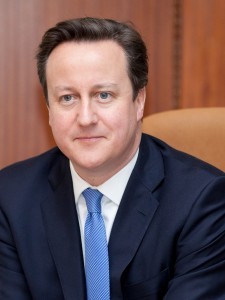
Tag: David Cameron

  • David Cameron – 2014 Speech to CeBIT

    davidcameron

    Below is the text of the speech made by David Cameron, the Prime Minister, to CeBIT in Hannover, Germany on 9th March 2014.

    What can I say – music, violins, a robot thespian – this is how I spend all my Sunday nights.

    It is a huge pleasure to be here and can I say to the Chancellor what an honour it is for the UK to co-host this event.

    Germany is a country with a proud history in technology from the Fraunhofer institutes in your towns to the tech start-ups in Berlin and of course this world-leading conference we are opening here today.

    As that advertisement we all grew up hearing said: “Vorsprung Durch Technik” and it is that spirit we are celebrating tonight.

    Progress through technology. And what remarkable progress we see.

    Today we can put in our pockets a computer more powerful than any computer in the world 20 years ago.

    Just a decade ago – Skype was a typo, a tweet was something you heard from a bird, a cloud was something you saw in the sky – not somewhere you stored your data.

    Companies that are starting in people’s garages and bedrooms one year are going stratospheric the next.

    This is a world on fast forward a world of permanent technological revolution and in this world, countries like the UK and Germany will only succeed if we have a relentless drive for new ideas and innovations.

    That’s why I am here today. And I have come here with a mission and a message.

    Mission: Promoting UK tech

    My mission here at CeBIT is to promote the extraordinary tech sector we have in the UK.

    4 years ago, we put in place a long-term economic plan to turn our country around – and innovation is right at the heart of that plan.

    Here is just a taste of what we’ve done.

    We got the London Stock Exchange to make it easier for fast-growing firms to list.

    We kept spending on science, despite the downturn.

    We introduced huge tax breaks on early stage investment, tax breaks on video games, a Patent Box so if you invent in the UK you only pay 10 per cent tax on those profits.

    Government IT has been revolutionised too.

    When we came to office, government was spending about £16 billion per year – that is 1 per cent of GDP on its IT, overwhelmingly to large suppliers. So we stripped out the waste and opened up our IT contracts to small firms.

    The G Cloud, from where we now procure services, is one of the world’s most innovative tender systems in the world.

    Above all, we have rolled out the red carpet to the world’s ideas people. Special visas for entrepreneurs, visas for Tech City, allowing universities to expand by 30,000 students next year and no restrictions at all the year after.

    We’re not stopping there. We’re putting coding on the curriculum in our schools for the first time putting £200 million into equipment for science teaching at our universities. And all this is working.

    Come over to Shoreditch in east London and you can see it – Tech City is teeming with start-ups and new ideas.

    It started less than three and a half years ago with 200 digital companies in that area of east London now there are 1,300.

    Come over to Cambridge or Edinburgh or Oxford and you find clusters of tech companies who are changing the way we live now. I had some of them on the plane over with me this afternoon.

    Touch Bionics – inventors of the world’s most advanced bionic hand.

    Raspberry Pi – the phenomenon which has sold over 2.5 million units and counting.

    Imagination – who provide the video and graphics for iPhones.

    This is the UK tech scene today. Dynamic. Relentlessly ambitious. Leading the way.

    It is our ambition to make the UK the most digital nation in the G8 and it is my mission to show the world that we’re getting there.

    Message: we want to work with you

    But I come here today with a message too, for our German friends:

    We want to take these strengths and combine them.

    We want to work with you to pool ideas, share data, innovate, to lead on the next big ideas.

    And I’ll tell you three areas where I see us collaborating more closely.

    First, 5G.

    With 4G, an 800 megabyte movie takes around 40 seconds to download; with 5G that would be cut to one second.

    This is a prize that researchers all over the world are going for and so I am delighted to announce a new collaboration, between the University of Dresden, King’s College University in London and the University of Surrey.

    Three world-leading universities working on 5G hand in hand – that is something to be truly excited about.

    Second, for our two countries to remain competitive, the European single market must keep pace with developments in the digital economy.

    So Germany and the UK have agreed to work together to improve the telecoms single market.

    We welcome the long-term ambition of the European Commission, but want to take steps that deliver benefits to businesses and consumers quickly, including the complete elimination of mobile roaming charges.

    The third area I think we can work more closely on is the Internet of Things.

    These are developments that could allow literally billions of everyday objects to talk to each other over the internet – using low-cost, low-power chips.

    And this has enormous potential to change our lives.

    Electricity meters that talk to the grid to get you the best deals.

    Health monitors that keep an eye on your heart rate.

    Water pipes that warn of a fall in pressure.

    And yes, even a fridge that can order you milk when it notices you are getting low.

    I see the Internet of Things as a huge transformative development a way of boosting productivity of keeping us healthier making transport more efficient reducing energy needs, tackling climate change.

    We are on the brink of a new industrial revolution and I want us – the UK and Germany – to lead it.

    Let me tell you how seriously we’re taking the Internet of Things in the UK.

    We’re getting the infrastructure in place, with our regulator, Ofcom, taking a flexible approach to the use of Spectrum.

    Indeed as our Spectrum Strategy will set out tomorrow, we aim to double the economic benefits of spectrum to UK companies and consumers from roughly £50 billion today, to £100 billion in 2025.

    We’ll do this by allowing new applications to come online, new kinds of mobile technologies to be used, more data usage to be enjoyed and greater broadcasting services to be made available.

    Beyond that we need the ideas to turn the Internet of Things from a slogan to a fact. So I have personally tasked the government’s Chief Scientific Adviser to explore what more we must do in this area.

    We’re making available £73 million of funding to put the boosters under research. And I can announce today that we are launching a new European Internet of Things grant fund – valued at up to £1 million for companies that are grabbing these new opportunities.

    But you know – the biggest thing the UK has to offer is our amazing companies. Like ARM the company whose chips are in 90 per cent of smart phones around the world. Or Neul who are here with us tonight – a brilliant new start-up in the same space. And the expertise we bring – in chip design, in software and services that is matched by the German expertise in producing industrial components. So this is a real and rare opportunity for us.

    Take British ingenuity in software, services and design add German excellence in engineering and industrial manufacturing and together we can lead in this new revolution.

    So to conclude today, let me extend those two invitations:

    One: come to the UK and see for yourself what a fantastic environment we have for tech companies.

    Two: let us join forces.

    Let us in this generation make progress through technology – and let’s do it together.

  • David Cameron – 2014 Speech on Ukraine

    davidcameron

    Below is the text of the speech made by David Cameron, the Prime Minister, on 6th March 2014.

    This meeting of European leaders takes place at a dangerous moment.

    The territorial integrity of an independent nation has been violated.

    The sovereignty of one of the EU’s neighbours has been blatantly swept aside.

    The aspirations of the Ukrainian people – to live in a country free from corruption and free to chart its own future – are being crushed.

    And Russia has acted in flagrant breach of international law.

    This matters to people in Britain because we depend on a world where countries obey the rules.

    It matters because this is happening in our own neighbourhood – on the European continent where in the last 70 years we have worked so hard to keep the peace.

    And it matters because we know from our history that turning a blind eye when nations are trampled over and their independence trashed stores up far greater problems in the long run.

    So we must stand up to aggression, uphold international law and support people who want a free, European future.

    We need to de-escalate the situation. We must be clear with the Russians about their actions. And we must back the Ukrainian people.

    Each part of this matters.

    So first, we must find a way to defuse the situation and to restore stability in Ukraine.

    Some progress was made yesterday in Paris to get the Russians and Ukrainians around the table together.

    But today’s vote of the Crimean Parliament to join Russia and the decision to bring forward an unconstitutional referendum to 10 days time are serious steps in the wrong direction.

    The Ukrainian government has been clear that such a referendum would be illegal.

    And today European leaders have backed their position.

    Illegal actions committed by Russia cannot pass without a response.

    And I made very clear today that it cannot be business as usual with Russia.

    So, we have agreed in respect of what has happened already:

    – to suspend negotiations on a more liberal visa regime for Russians

    – to stop work on a comprehensive new agreement on relations between Russia and the EU

    – and to pull out of all preparations for the G8 summit in Sochi in June

    And if Russia does not rapidly engage in direct talks with the Ukrainian government to find a solution to this crisis, we have been clear that we will go further.

    We have today tasked the European Commission to start work on additional measures, including travel bans and asset freezes.

    Of course the situation in Ukraine remains highly precarious – the slightest miscalculation could see it spiral out of control.

    And we have issued a very clear warning to President Putin that he must not destabilise the situation further.

    If Russia does not change course, the statement issued today now makes clear that there will be severe and far reaching consequences in areas such an energy, trade, and financial relations.

    We are determined to support the new Ukrainian government and to stand by the Ukrainian people.

    What they want is what people everywhere want – a strong economy, the rule of law, the right to choose their leaders and to hold them to account.

    In other words, a job, a voice and hope for a better future.

    The new Ukrainian government faces massive challenges.

    They will need to carry out far-reaching reform needed to stabilise and repair their economy.

    And as they do this, we are prepared to offer a powerful package of finance, trade and technical assistance.

    They will also need to tackle corruption.

    The EU has now frozen the assets of 18 individuals linked to the former regime. And Britain is ready to help the new Ukrainian government go after ill-gotten funds and to return them to the people.

    Today, we have deployed to Kiev a team from the National Crime Agency, supported by the Met and CPS to help with these efforts.

    At the same time, the new government must show that it is standing up for and representing all Ukrainians – whatever their ethnic background.

    It will be particularly important that the May elections are free and fair and enable all Ukrainians, including Russian speakers, to choose their leaders freely.

    We are facing the most serious crisis in Europe this century.

    Getting agreement from the elected leaders of 28 European nations is never easy.

    Britain has played an important part bringing countries together, setting out new measures that need to be taken and insisting on clear values: standing up to aggression and backing the rule of law.

    But we have sent a clear and united message to Russia that its actions are completely unacceptable and will incur consequences.

    We have given our backing to Prime Minister Yatsenyuk at this challenging time for him and his country.

    And we have stood up for the Ukrainian people and their entirely legitimate hope for a better future for them and their children.

    And we will continue to do so in the days and weeks ahead.

  • David Cameron – 2014 Speech on the Economy

    davidcameron

    Below is the text of the speech made by David Cameron, the Prime Minister, on 4th March 2014.

    We have a long-term economic plan to secure this country’s future: cut the deficit, cut taxes, create more jobs, cap welfare, reduce immigration and deliver the best schools and skills for young people.

    That’s our plan. And it’s working. You see that in the growth figures.

    In the 1.3 million new jobs, the 25 million people who will pay less income tax, the 400,000 more businesses and in the new apprenticeships being announced today.

    New, more rigorous, employer-led apprenticeships are being extended to 29 new occupations from law and high tech engineering to tourism and retail, giving thousands of young people the chance to develop new skills that will help secure their future.

    And we’re on track to have 2 million people start apprenticeships over the course of this Parliament.

    But I’ve not come here today to reel off statistics. I’m here to talk about what this plan is really all about, what it’s all for. Too often we’ve given the impression that we’re just about fixing problems rather than changing things for a purpose.

    But that completely misunderstands what we’re trying to do. This is more than some turnaround team of accountants rescuing a failing business.

    We want Britain to be a success in this modernised globalised world – we want to be a country that succeeds in what I call the global race.

    But it’s not just what we are doing that matters: it’s why.

    It’s all about values.

    And the most important value right now – after a difficult time for our country – is giving people a sense of economic security and peace of mind.

    Take our mission to cut the deficit. Of course, cutting the deficit matters for our economy.

    Higher deficits mean more debt and higher mortgage rates with more people living in fear of losing their homes.

    But there’s something even more fundamental here about our values.

    If we don’t get to grips with the deficit now we are passing a greater and greater burden of debt to our children.

    We are saying that more and more of their hard earned future income should be wasted on paying off the bill we leave them.

    Do we really want to be the ones who responded to a crisis by putting off to tomorrow what we had to do today?

    Can we really teach our children the importance of being responsible and at the same time shirk the most fundamental responsibility of all?

    Some of our opponents seem to think we can.

    They think we can carry on spending and borrowing more and more, whatever the consequences for our children.

    But I say no: racking up more and more debts for our children is irresponsible.

    It’s not fair. It’s not right. And I’m not prepared to do it.

    Imagine looking your children in the eye and trying to explain why we crippled their future with our debt. I couldn’t do that. And I’m sure you couldn’t either.

    We all want the same for our children: a secure future and a chance to make something of their lives. But they won’t get that future unless we cut the deficit now.

    So that’s the first part of the plan.

    What about the second: cutting taxes.

    This isn’t about some ideological commitment to a smaller state. It’s actually about our values. We believe in helping people keep more of the money they earn.

    It’s the right thing to do.

    Let’s be clear: there is no such thing as government money. It’s your money – taxpayer money.

    It’s not my money, not George Osborne’s money, not the government’s money – it’s your money.

    Hard-working people’s money.

    The money that belongs to people who get up in the morning, come rain or shine, and put in a shift on the factory floor or in the office.

    And there’s no question who spends that money best – it’s you, the taxpayer, not government.

    So it’s wrong for government to take a single penny more of your money than we absolutely need.

    There’s a bit of an attitude problem here that really makes me angry.

    Some people talk as if the sums of money the government spends are so big that it almost doesn’t matter about the odd pound or 2 here or there.

    That’s totally irresponsible.

    You wouldn’t take that approach to managing your money.

    And neither should we in government.

    That’s important at the best of times but it’s more important than ever when families are feeling the squeeze.

    Because every bit of government waste we can cut, every efficiency we can achieve, is money we can give back to you.

    A bit of extra cash that can help a Dad afford those trainers for his son or help a Mum celebrate her daughter’s birthday with a meal out.

    Having more money in our pockets is what gives everyone that sense of financial security and peace of mind.

    It’s what enables us to provide for our families and feel more confident about the future.

    The same is true about the third part of the plan – our mission to create more jobs.

    Take Demi Owoseje, whose small business restores old furniture.

    She’s been helped by our Start Up Loans scheme to develop a customer friendly website and branch into new areas like a rental range with customers now including Jimmy Choo.

    She’s started creating her first jobs so she’ll soon be helped by our Employment Allowance that will give her a £2,000 cashback on the jobs she creates.

    And from next year, she won’t have to pay a penny in National Insurance on anyone she hires who is under 21.

    But what really matters is not the help we’ve given Demi, but the help she’s giving others.

    Our opponents said we would see a million jobs disappear.

    But in fact, entrepreneurs like Demi, have helped to create 1.3 million more jobs today than there were in 2010.

    We see the new job numbers every month when the figures come out.

    But what matters far more than the numbers is the dignity people get from having a job.

    There is nothing like the pride of the first time you get a pay cheque.

    It gives you the chance of a more fulfilled life.

    It gives you the opportunity to be more independent.

    Most important of all, it gives you a sense of security and the peace of mind that you can support yourself and your family.

    That is what I want from this plan, more than anything: sustainable and well-paid jobs.

    We’re not going to get there by attacking business or putting their taxes up.

    We need to be in the business of helping business – so they create the jobs that we all depend on.

    And it’s working.

    We are seeing a revival of manufacturing exports and a growth in small businesses.

    More jobs created each month. And better paid jobs.

    Last week the Low Pay Commission recommended the minimum wage should increase to £6.50.

    That would be the first above inflation increase in 6 years.

    And it something that’s only affordable because of the difficult decisions we have taken with our long-term economic plan.

    Of course, the numbers matter but what matters even more is what it means for hard working people.

    It means that as we recover from the great recession hard working people on the minimum wage – who have suffered during the tough times – can know they will share in the recovery.

    So yes, I look forward to accepting this recommendation.

    Restoring the value of the minimum wage is a vital part of how we secure a recovery for all with economic security for every working family in Britain.

    Let me turn to those out of work.

    The fourth part of our plan is about capping welfare and reducing immigration.

    At the end of the so-called boom years, there were around 5 million people in our country of working age but on out-of-work benefits.

    Almost a million and a half people had spent most of the last decade out of work and the number of households where no-one had ever worked had nearly doubled.

    And this happened at the same time as the largest wave of migration in our country’s history.

    Now I don’t care whether you are the leader of the Labour Party or the leader of the church, this kind of failure is just wrong.

    It’s wrong to let our own people do nothing, with no purpose in their life, dependent on benefits.

    It’s wrong that we open our doors and communities to such rapid levels of immigration they can’t manage.

    And wrong that we ask British taxpayers to fund this situation with their hard-earned money.

    As I’ve said before immigration and welfare are 2 sides of the same coin – and we’ve got to fix them both.

    Let’s start with immigration.

    Last week figures show what a big task we still face.

    But things are starting to change.

    In just 5 years between 2005 and 2010, for every British person who fell out of work, almost 2 foreign nationals gained employment.

    But over the past year, almost 90 per cent of the increase in employment we’ve seen has been for UK nationals.

    We’ve cut migration from outside the EU to its lowest levels since 1998.

    We’re making it harder for migrants to come here and claim benefits or access public services within earning that entitlement first.

    And the idea of allowing new countries to join the EU with immediate unfettered access to our labour markets is never going to happen again.

    But it’s not just about controlling migration. The other side of the coin is welfare.

    Again it’s back to a fundamental question of values.

    Last week I went to a dinner in honour of D-Day Veterans.

    One of the Veterans told me about how he came back from the war, went to the labour exchange and couldn’t find a job.

    But then eventually he got offered a job at Ford in Dagenham.

    It was hard work but he was proud to do it.

    He said “I was able to work, they offered me a job and I had a responsibility to take it.”

    There wasn’t an option to say: “no thanks, I’ll take the benefits instead.”

    He looked me in the eye and said: “why can’t we go back to that?”

    I agree with him.

    I’ve always been clear that those who can’t work will always be supported.

    But those who can work have a responsibility to do so and the welfare system should never take that responsibility away.

    Why should some people work every hour God sends to try and make ends meet, only to see money taken out of their wages to support people who could work but who choose not to?

    That’s why if people turn down job offers their benefits will be cut.

    I want Britain to be a country where people are able to get on, stand on their own 2 feet and build a better life for themselves and their family.

    I want a Britain where we reward those who work hard, play by the rules and do the right thing.

    That’s what our long-term economic plan is all about.

    Not just making the numbers add up – but doing what’s fair and what’s right.

    You don’t create economic security with hand-outs. You do that with the dignity, independence and yes, the pay packet that comes with a job.

    And that takes me to the final part of the plan.

    Delivering the best schools and skills for young people.

    Nothing I have spoken about today is more important for our future than this.

    Education is the best inoculation against unemployment.

    It’s what gives our children the skills they need to compete, get a job and secure their future and it’s what gives our country the platform from which to innovate, create new products and take on the world.

    So an economic plan that doesn’t include delivering a first-class, world-class education system, is no economic plan at all.

    Now some people look at what we’re doing in education, and think we are driven by some deep-seated ideology.

    That’s total nonsense.

    We are driven by our values.

    Values like discipline – because we know no child can learn in chaos.

    Rigour – because we know dumbing down cheats our children of their future.

    Excellence for all – because we should be ambitious for every child, not just some.

    And a focus on the fundamentals – because there isn’t a job in the world where you don’t need to read or add up properly.

    But you know the most important value I bring to education?

    It’s faith in our teachers.

    Of course, we will never excuse failure and never shy away from difficult conversations about the quality of teaching in our country when it’s let children down.

    But if you look at our academy or free schools programme, there is a single thread running through it:

    Giving teachers the freedom to get on and teach, giving them control over how their schools are run and trusting them to get on with the job.

    But it’s not just about what happens at school – it’s about what happens after school too.

    I want all school leavers to have a rite of passage to further training or education.

    And that’s why apprenticeships like those being announced today are so important.

    Take Aiden Rogers who showed me round the Rolls Royce apprentice academy last year and who is here with us today.

    Aiden told me he was studying for a degree while also earning – and learning – his trade.

    He feels that being able to say “I started as an apprentice” is something that gives him “instant respect and credibility”.

    And he describes how his apprenticeship has given him the confidence to communicate ideas and the opportunity to apply everything he has learned in a hands-on industrial setting.

    As the winner of the EEF’s outstanding achievement award for a first year apprentice, Aiden is already aspiring to the day when he’s in a senior position. He’s getting the skills to give him every chance of that future.

    I want all our young people to have the skills and the opportunity to aspire to a great future.

    And that’s why delivering the best schools and skills are at the heart of our long-term economic plan.

    So yes, we are sorting out the economy and getting the numbers to add up.

    But we’re doing something much more than that.

    We are doing what’s right for our country.

    What’s right for our children.

    What’s right for our future.

    Because I want us to build a better Britain where we can look after future generations.

    Where people can meet their obligations and provide for their families.

    And where together we can secure a better, more independent future for all our people.

    That is my fundamental mission in politics: to deliver economic security and peace of mind for every family in Britain.

    And that is what our long-term economic plan is all about.

  • David Cameron – 2014 Statement on St. David’s Day

    davidcameron

    Below is the text of the statement made by David Cameron, the Prime Minister, on 1st March 2014.

    St David’s Day is a time to celebrate Wales’ rich and illustrious history, its beautiful language and its cultural heritage. Yet this year, we also look forward to a time where Wales will have the opportunity to showcase its credentials on a truly international stage.

    In September, the NATO Summit will be hosted in south Wales, providing everyone – from business leaders to school children – with a unique opportunity to present the very best of Wales to a global audience.

    I hope that everyone seizes this opportunity to show Wales as a great place to live, to visit and to do business in. I’m pleased to be flying the Welsh flag over Downing Street today and I wish everyone a very happy St David’s Day – Dydd Gŵyl Dewi Hapus i bawb.

  • David Cameron – 2014 Press Conference with Angela Merkel

    davidcameron

    Below is the text of the press conference between David Cameron, the Prime Minister, and Angela Merkel, the German Chancellor, at Downing Street on 27th February 2014.

    Prime Minister

    Good afternoon and welcome. I’m delighted to welcome Angela back to Downing Street today; we’ve just had some very good discussions over lunch. We are 2 centre-right leaders who share a determination to secure a better future for our peoples by building stronger, more competitive, more open and more flexible economies. And we want to work together to achieve this.

    Our trading relationship is now one of the fastest growing in the world, and German companies now invest more in Britain than anywhere else in Europe. It is a win-win relationship; together German companies employ almost 400,000 people here in Britain, and there are 1,000 British companies currently employing over 200,000 people in Germany. One in 5 BMWs now has an engine made in the United Kingdom – I don’t know whether the one you did drive up in Downing Street did, but I hope so – and we once again become an exporter of high quality cars.

    We also want to strengthen our cooperation in other areas, from research and science to high tech, and I’m delighted that in a couple of weeks we’ll be opening together one of the world’s largest digital trade fairs in Hanover.

    Now, our discussions today have focused mainly on the European Union. We both agree that Europe faces an existential economic challenge, and it needs to change if it is to succeed in the modern world. The overriding task of the European Union today is to help secure the prosperity and the wellbeing of its citizens. That requires a more open, outward-looking, flexible and competitive European Union. We want to work together with our fellow leaders to deliver that change.

    And we’ve already shown what is possible. Working together, we’ve cut the EU budget for the first time in its history, and we’ve got the European Commission to identify where they can cut EU red tape. Now we need to go further: we want to complete the single market so that our businesses can seize the potential of the world’s largest market to expand and create jobs; we want to do more trade deals with all the corners of the globe. It would be a massive prize to see a trade and investment partnership with the United States, and we’re both committed to putting our full weight and efforts behind this.

    We want to make sure that the driving mission of the next European Commission is to help generate growth. And this amounts to a substantial agenda for reform and change. And as Angela has said, there are further changes that will be needed for the Eurozone; those are changes that Britain supports. And there are changes that we need for Britain, to protect our interests in the single market and to secure the support of the British people for our continued membership.

    Now, I set out my vision for a reformed European Union in my speech at Bloomberg a year ago. Today, we’ve discussed further some of those ideas for reform; ideas like how to cut the excessive interference and meddling by European institutions in our national life. We also need to guarantee the interests of those in the single market, but not in the euro.

    The discussions that Angela and I have had today are part of an on-going conversation which will continue in Hanover in a fortnight’s time, and in the weeks and the months to come. It’s a discussion that must, of course, involve our fellow leaders; in a Europe of 28 countries it is hardly surprising that the process of finding and reaching agreement requires time, patience and hard work. I want Britain to be a positive player in a reformed European Union, and I know that Angela wants a strong Britain in that reformed European Union.

    Finally, we discussed the situation in Ukraine, a clear example of where it is right for the nations of the European Union to work closely together. We both support a united and democratic Ukraine, and we support the aspirations of the Ukrainian people to live in a truly democratic society under the rule of law, free from corruption and intimidation.

    We are particularly concerned by the situation in Crimea. Every country should respect the territorial integrity and sovereignty of the Ukraine. Russia has made that commitment and it’s important that Russia keeps its word. The world will be watching.

    This is not a zero-sum game. If the people of Ukraine want closer ties with Europe – greater trade, greater contacts – then of course we welcome that, but it is not about forcing the Ukrainian people to choose between Russia and Europe. It is in all our interests to have a stable and prosperous Ukraine that has strong relations with its neighbours, and that is what we should all, including Russia, work to achieve.

    It is important that I also say a few words about the situation in Northern Ireland. I’ve been clear that there was a dreadful mistake made by the PSNI in the John Downey case, and our thoughts should be with the families of those killed in Hyde Park in 1982. But it is important to set out the facts about what has happened. When we came to power in 2010, we inherited a process where letters were sent setting out the factual position on whether or not some individuals were wanted for questioning by the police.

    This process continued under this government. There was never any amnesty or guarantee of immunity for anyone, and there isn’t now. But I agree with the First Minister of Northern Ireland, that after the terrible error in the Downey case, it is right to get to the bottom of what happened. The case has already been referred to the police ombudsman but, as the First Minister has said, we should have a full, independent examination of the whole operation of this scheme.

    So I can announce today that we will appoint an independent judge, to produce a full public account of the operation of this administrative scheme, to determine whether any other letters were sent in error. The judge will have full access to government files and to government officials. This needs to happen quickly, so this review will report by the end of May, and we’ll publish the report.

    It’s right that we take swift action. But let us also remember that Northern Ireland has made great strides forward as a result of the peace process. It’s vital that we deal properly with the events of the past, but make sure this never undermines our determination to build a shared and prosperous future for the next generation so that we never again return to the horrors of the past.

    Thank you. Angela.

    Angela Merkel (via interpreter)

    Thank you very much, David, for your very gracious hospitality that you’ve offered to me and the members of my delegation here in Downing Street, Number 10. Let me say that it was a very great honour to address both houses of parliament.

    I set out my ideas about the German-British partnership very clearly in my remarks to Parliament, and obviously we had the opportunity of a lunch to further deepen certain issues. How do we envisage Europe for the next few years to come? And there is a lot of common ground here.

    You may well imagine that we did not get into technicalities here; we talked about the overriding goals, and those goals are: growth – we need growth; we need more jobs. That presupposes that those countries that are in the Eurozone do their homework; that this monetary union is stabilised by them in such a way that we turn this into a resilient architecture, one that does not immediately sit – one that wards off future crisis for the euro because that is what we all need for stable, growing economies. Stable, growing economies generate jobs, and this is too what we need.

    I’m very much looking forward to CeBit – the United Kingdom is our partner country in CeBit this year. We will be able then to show that our countries indeed lend a contribution to competitiveness, to our economies being fit for purpose in the global economy, and this is why I’m very much looking forward to your visit, David, in 2 weeks’ time.

    If the EU is to emerge stronger out of the crisis than it went in, it needs to do its homework, and the exact dimension of that homework is something that we need to design over the next few weeks. We talked about the March council and the agenda; climate and energy will loom large on that agenda. There is a lot of common ground here too between Britain and Germany.

    And we also talked about the international agenda here, in particular about Ukraine. The Ukrainian parliament today, with a large majority, voted Arseniy Yatsenyuk to be the new Prime Minister. I have great respect as regards the task the new Prime Minister will take over, and we wish him not only the necessary strength for his task – I think I can say for both of us that we shall do everything we can in order to support this government that has a tremendously difficult economic situation. Without reforms that economic situation cannot be solved.

    We are also pinning our hopes on cooperation with the IMF, and we hope that Russia will also support the cooperation with the IMF, where we are, after all, members.

    The issue of territorial integrity of Ukraine is of central importance to us. In my talks with the Russian President, however, I would like to say that I have seen that Russia is of the same view as we are on this matter. And this territorial integrity needs to be preserved; the Ukrainian government needs to resume its work, and all of Ukraine must see itself reflected in the work of this government.

    We know that there is a very large Russian majority in Ukraine, and they too need to find themselves reflected in this government – in the work of this government. This will be of tremendous importance for the good and future of Ukraine.

    Thank you yet again. It was beyond our ordinary, sort of, meetings; a very special event for me. And thank you very much for the support, David, you gave to me.

    Question

    Chancellor, can I just ask you first: you’re well aware by now of the kind of things, in terms of reform, the Prime Minister needs to keep his back benchers happy. Can you just tell us frankly whether you think there’s any chance of those kind of reforms being achievable? And in your speech you mentioned the question of freedom of movement; you seemed to suggest that you thought mistakes had been made on that. What mistakes and what do you think could be done to correct them in the future?

    Prime Minister, can I just add one thing? Sorry to – Prime Minister, can I just say one thing to you? Isn’t it time to admit that you’re not going to get what you want from the Chancellor?

    Prime Minister

    We had excellent discussions at lunchtime. Look, Angela and I both want to see change in Europe. We both believe that change is possible. And I believe that what I’m setting out, the sort of changes that Britain wants to see to build confidence in our membership of this organisation are possible and deliverable and doable [political content removed].

    On the specific issue about free movement, I’ve set out several times how I think this is being abused in terms of benefit tourism. You know, that needs to change; that’s one of the things I want to see change. And it’s something I’ve discussed with Angela; I also discussed with Mark Rutte in Holland, with Fredrik Reinfeldt in Sweden and many others. So I have great confidence the sorts of changes that we’re talking about are achievable and will be achieved over the coming – over the coming years. But – Angela, sorry, I jumped in there.

    Angela Merkel (via interpreter)

    Yes, well, when, a few months ago, we were discussing MFR from 2014 to 2020 – the European budget that is – even I did not quite know whether we would be able to get this through, because the obstacles seemed insurmountable. And that showed – the fact that we were able to surmount them – where there’s a will there’s a way. And I firmly believe that what we’re discussing here is feasible, is doable. I think it’s most important to first define political goals; it’s what David Cameron does, it’s what I do.

    Freedom of movement: I am a great champion of freedom of movement. I said this today. But if we were to see – and let me be very careful in my choice of words because there is a suit pending before the European Court of Justice, there will be a public hearing on this – if we were to see that freedom of movement has, as a consequence, that each and every one who’s seeking a job in Europe has the possibility to come to Germany, and will receive an equal amount of social benefits as someone who, for a long time, has been unemployed in Germany after 30 to 40 years of work, gets a certain level, obviously, of social benefits, then that would not be the interpretation of freedom of movement that I would have.

    So, that’s what we need to say: is immigration into social security possible? Is it there? No country in Europe will be able to withstand such an onslaught because we have very different social security systems; we can only have virtually the same level of social security if we try to generate growth and jobs, but not by having immigration into social systems. That is just as much of a headache for us in Germany as it is for the British people.

    Now, we have to look at it. Can we change our German laws to address this? Or do we need more of a specification as what we mean by freedom of movement. But if we say we want freedom of movement for jobs but no immigration into the social security systems in Europe then I think we need to come to a definition. And this is how we ought to proceed.

    And then, obviously, what Britain suggests is, obviously, also has something to do with the fact that we are members of the euro area; that Britain isn’t, and doesn’t want to become, a member of the euro area. If that is acceptable, one can find solutions for the different requests. If you look, for example, at the fact that we have a majority of the EU members as members in the euro area then we have totally different majorities, as we did with banking union, for example. We have to look very closely at how to deal with those countries that don’t have a say because they’re not members.

    You must not actually have them at a systematic disadvantage. All of these issues need to be addressed openly and candidly. I believe in this. It’s not a piece of cake. It’s going to be a lot of work. But we’ve already worked quite hard on other issues. If one wants Britain to remain in the European Union – which is what I want – if one at the same time wants a competitive union that generates growth, one can find common solutions.

    Question (via interpreter)

    Would it be important for you that Conservative members of the European Parliament were not in the same group as, for example, groups of Alternative für Deutschland? That they are not in the same…?

    Prime Minister

    The Conservative Party are members of the ECR group in the European Parliament; a very successful group. I’m very proud of the creation of the group, and they’ll remain members of that group. In terms of the parties that are going to join that, we have a sister party in Germany, the CDU/CSU. We’re not looking for a new sister party. So I don’t anticipate that situation arising at all. But as I said to Angela, if she wants to join our group, she’s always welcome.

    Question

    But you will not commit – the question was a different one. You will not commit your candidates –

    Prime Minister

    My candidates will always be members of the ECR, and we’re not looking for new German sister parties in that group.

    Angela Merkel (via interpreter)

    Quite frankly, we haven’t even started the election campaign, let alone have it behind us. I’m fighting for the CDU/CSU – for the CDU. I’m very pleased to hear David say – labelling us a sister party. We see the same for the Conservative Party here, and want our group to be strong, and a way that David helps me, I think is support.

    Question

    Prime Minister, could I just ask you one on Northern Ireland? Some people might want to know whether you think the process itself of handing out these letters – not what happened at the Old Bailey, but the process itself was a dreadful mistake or a necessary compromise for the peace process.

    And Chancellor Merkel, could I ask you, is it true you think of David Cameron as a naughty nephew who you’d like to help? And the biggest bit of help he might want is a categorical assurance that there will be a fundamental treaty ready for him to put to the British people by 2017; is that a realistic timetable? Can you give that assurance?

    Prime Minister

    Let me take the question on Northern Ireland. Look, the mistake – and it was a dreadful mistake – was for Mr Downey to be sent a letter being told he was not wanted for particular crimes when he still was. That was a dreadful mistake and that’s what I said in the House of Commons. But I think it’s such a dreadful mistake that we need to make absolutely sure that other letters weren’t sent in error, and that’s why there’s going to be not just the ombudsman inquiry but also the more general inquiry that I’ve announced and that Peter Robinson, I believe, will welcome. I think that’s important.

    In terms of the process – look, very difficult decisions were taken around the time of the Good Friday Agreement and around the time of the peace process, and as an incoming Prime Minister I don’t want to unpick or call into question all those difficult decisions that were made. I want to be a Prime Minister that helps deliver devolved institutions in Northern Ireland, continued peace and progress in Northern Ireland. But I want to be absolutely clear to people that these letters were not, and should be not, any form of amnesty and that’s what the – and that’s why this report is so important.

    Angela Merkel (via interpreter)

    Allow me, if I may, to point out how our cooperation actually works. We sit in a European Council 28 heads of government, and there’s unanimity as regards our voting. So a result will only be there if all of the 28 say yes. That means that we each stand up for our own interests. I do it, David does it and, incidentally, the 26 others too. That’s something we have to live with.

    Then the task is always weighing the pros and cons of a compromise that, by nature, we have to enter into. We, as representatives of our country – can we responsibly say the pros far outweigh the cons? And then I will accept it, David will accept it, Francois Hollande will accept it and all the others too.

    A lot of hot potatoes have been solved in this way, by us, and dealt with by us as – so our cooperation is part and parcel of the overall European cooperation. For me it’s a matter of course that David stands up for the UK’s interest, and for him it is a matter of course that I stand up for Germany’s interest, and the good thing is we’ve always found a solution in the end.

    Question (via interpreter)

    Today you were almost received like the queen of Europe; such a red carpet treatment is very rare for other European leaders. Were you surprised and how do you deal with the expectations that are linked to this, which the British [inaudible] into that?

    Angela Merkel (via interpreter)

    I was received in a country that already has a queen and can justly be proud of having a queen. I am very much looking forward, incidentally, to having tea with the Queen. I actually used a royal blue blazer in order to offset that against the red carpet.

    Prime Minister

    Thank you very much for coming and thank you, Angela.

  • David Cameron – 2014 Speech on Flooding

    davidcameron

    Below is the text of the speech made by David Cameron, the Prime Minister, on 11th February 2014.

    Thank you. Good afternoon and welcome. Britain is facing one of its wettest winters in 2 and a half centuries and some of the worst flooding in decades. In the past week, more than 800 properties have been affected.

    As we stand right now, there are still currently 16 severe flood warnings, meaning there is danger to life; 133 flood warnings, which means that more flooding is expected and that immediate action is required; and a further 225 flood alerts.

    There is absolutely no sign of this threat abating and with further rain and strong winds forecast throughout the week, things may well get worse before they get better.

    I’ve just got back from visiting some of the worst-affected areas in the South West and in the Thames Valley. I’ve seen our hardworking emergency services and Environment Agency staff working around the clock to help families and communities. Some of these staff have been on an emergency footing since the East Coast tidal surge in early December, the effects of which I saw for myself when I visited Norfolk before Christmas.

    And on behalf of the whole country, I want to thank our emergency services, all the Environment Agency staff, all the local authority workers and the many volunteers for what they’re doing in these most difficult and relentless circumstances.

    We’ve taken action across the board; when pumps were needed on the Somerset Levels, we sent pumps from the strategic reserve. When it was clear that additional manpower was needed, we deployed the military, assisting efforts at places like Stanmore Bank in Somerset and shoring up flood defences in Dorset. When it was clear that local resources would be stretched, we changed the rules so that local authorities could claim back 100% of the flood costs from central government.

    But more needs to be done, and my message to the country today is this: money is no object in this relief effort. Whatever money is needed for it will be spent. We will take whatever steps are necessary.

    So let me explain what that means in the days and weeks ahead. First, I will continue to lead the national response by chairing meetings of the government’s emergency committee, COBR. I’m cancelling my visit to the Middle East next week; I’m sending my apologies today to Prime Minister Netanyahu and President Abbas. But nothing is more important than dealing with these floods.

    Second, I’ve seen for myself that the gold and silver command system that we have is working well, where one individual takes charge to make sure that the police, fire brigade and other agencies like local authorities, work together as one unit. But it is clear that the military can play a further role. By the end of the day we will have deployed 1,600 servicemen and women and there are thousands more now available.

    I’ve asked Major General Patrick Saunders to coordinate the military effort. They will be working with our gold and silver commands to provide assistance and assurance to members of the public including by reinforcing sandbags and flood defences, getting medical assistance to the sick and infirm, and checking on and helping any other vulnerable people.

    I urge everyone in those affected areas to keep listening to the warnings and to keep working with the emergency services, the military and everyone who’s working to keep people safe.

    Third, let me turn to fixing some of the specifics. In the South West, people are understandably very concerned about their transport connections. Network Rail is working 18 hours a day to fix the train line at Dawlish. We announced earlier this week, support including financial support for more flights from Newquay to Gatwick and we’re discussing with the train operators how to make sure that we get a replacement bus service as good as possible over the days ahead.

    On the Somerset Levels, there have been more than 65 million cubic metres of floodwater. There is now around 3 million tonnes of water being pumped out every day; that’s the equivalent of 3 Wembley stadiums. And this capacity will be increased further by the new pumping strategy that I was hearing about today in Somerset that’s now being put in place. But again, like the train line at Dawlish, this is going to take time to fix. It’ll take time to get those levels down.

    Clearly the most serious developing situation is in the Thames Valley. Military deployment began with a building of a 60 metre wall at Datchet and today we’ve deployed a hundred-strong company of the 1st Battalion Royal Regiment of Fusiliers on the ground in Wraysbury in a community support role. We’ll be discussing at COBR tonight what further steps we can take to help those affected communities.

    Fourth, as the floodwaters recede, we will need to help people and businesses recover from this very difficult time. I’m setting up a new cabinet committee to oversee the recovery, and I’ll be chairing the first meeting on Thursday. We’ll be focussing on getting the insurance companies out there, so people can make their claims quickly, and the Association of British Insurers, the ABI, together with the CBI and other business organisations are meeting here in Downing Street as I speak to help us develop further measures to support businesses in affected areas.

    And in the days ahead, as homeowners, businesses, farmers, think about how to piece their lives back together again, we’ll be announcing a number of new schemes to help. For homeowners, support in the form of grants to build better flood protection as they repair their properties. For businesses, a tax deferral scheme for businesses affected by the floods, to give them longer to pay their taxes, and again grants to help them improve their flood defences. And for farmers, we will be establishing new funding that will release up to £10 million to help them recover from the devastation to their livelihoods. We’ll be setting out more detail about all of these schemes in the days to come.

    As I’ve said before, there are lessons to be learnt from this experience, and those lessons will be learnt, but right now my focus is on the operational response. Helping those people who need help and protecting those properties which need protecting. It will be a long haul, and it will require a stepped-up national effort with the whole country pulling together.

    One of the most inspiring things I’ve seen over the past few days has been the incredible spirit of volunteers in our communities. People I met like Sheila Mayne, who worked at the rescue centre in Dawlish serving tea to displaced families night and day during the evacuation; Storm Wallace, who organised community clear-ups of Chesil Beach through Facebook; and Jackie Breakspear and Amanda Broughton-South, the joint landladies of the Cove House Inn in Chiswell, who helped pull their community through an extraordinary storm as waves lashed against their pub.

    Amidst all of this, as is so often the case, in the toughest of times we are seeing the best of Britain. It will take time, but together we will deal with these floods, we’ll get our country back on its feet and we will build a more resilient country for the future. Thank you.

  • David Cameron – 2014 Speech on Scottish Independence

    davidcameron

    Below is the text of the speech made by David Cameron, the Prime Minister, on 7th February 2014 at the Lee Valley VeloPark.

    I want to thank Glasgow Caledonian for co-hosting this event.

    This is a fantastic, forward-looking university – and we are very grateful for your support today as we are to the Lee Valley VeloPark, for hosting us in this magnificent space.

    Less than 2 years ago, this Velodrome was a cauldron of excitement.

    Chris Hoy was ripping around at 40 miles per hour I was up there, I had a whole seat but believe me, I only used the edge.

    3 more golds – an incredible night.

    But for me, the best thing about the Olympics wasn’t the winning.

    It was the red, the white, the blue.

    It was the summer that patriotism came out of the shadows and into the sun.

    Everyone cheering as one for Team GB.

    And it’s Team GB I want to talk about today.

    Our United Kingdom.

    Last year, the date for the Scottish referendum was fixed.

    The countdown was set.

    And today, we have just over 7 months until that vote.

    Centuries of history hang in the balance; a question mark hangs over the future of our United Kingdom.

    If people vote yes in September, then Scotland will become an independent country.

    There will be no going back.

    As I have made clear, this is a decision that is squarely and solely for those in Scotland to make.

    I passionately believe it is in their interests to stay in the UK.

    That way Scotland has the space to take decisions, while still having the security that comes with being part of something bigger.

    From Holyrood they can decide what happens in every hospital, school and police station in Scotland and in the UK, Scotland is part of a major global player.

    These are the arguments we will keep on putting til September 18th.

    It is their choice, their vote.

    But my argument today is that while only 4 million people can vote in this referendum, all 63 million of us are profoundly affected.

    There are 63 million of us who could wake up on September 19th in a different country, with a different future ahead of it.

    That’s why this speech is addressed not so much to the people of Scotland, but to the people of England, Wales and Northern Ireland.

    Within these countries there are a whole range of different views about this referendum.

    There are those I’d call the ‘quiet patriots’: people who love the UK, love our flag and our history – but think there’s nothing much they can do to encourage Scotland to stay in the UK so they stay out of the debate.

    There are the ‘shoulder shruggers’: people who are ambivalent about the outcome, who think this doesn’t matter much to anyone South of the border.

    Their view is that if Scotland left the UK then yes, that would be sad, but we could just wave them a wistful goodbye and carry on as normal.

    And then there are those – a few – who think we’d be better off if Scotland did leave the UK, that this marriage of nations has run its course and needs a divorce.

    Today I want to take on all these views: the idea we’d be better off without Scotland, the idea that this makes no difference to the rest of the UK and the idea that however much we might care, we in England, Wales and Northern Ireland can have no voice in this debate because we don’t have a vote.

    All the above are wrong.

    We would be deeply diminished without Scotland.

    This matters to all our futures.

    And everyone in the UK can have a voice in this debate.

    I want to make this case by putting forward what, to me, are the 4 compelling reasons why the United Kingdom is stronger with Scotland in it:

    The first is our connections with each other.

    Over 3 centuries we’ve lived together, worked together – and frankly we’ve got together getting married, having children, moving back and forwards across borders.

    Such is the fusion of our bloodlines that my surname goes back to the West Highlands and by the way, I am as proud of my Scottish heritage as I am of my English heritage.

    The name Cameron might mean ‘crooked nose’ but the clan motto is “Let us unite” – and that’s exactly what we in these islands have done.

    Today 800,000 Scots live elsewhere in the UK and more than 400,000 people who were born in the rest of the UK now live in Scotland.

    And there are millions of people who do business over the border every single day, like the farmers in Lincolnshire who grow some of the barley that’s used in Scotch whisky.

    The United Kingdom is an intricate tapestry, millions of relationships woven tight over more than 3 centuries.

    That’s why, for millions of people, there is no contradiction in being proud of your Scottishness, Englishness, Britishness – sometimes all at once.

    Some say none of this would change with independence, that these connections would stay as strong as ever.

    But the fact is: all these connections – whether business or personal – are eased and strengthened by the institutional framework of the UK.

    When the Acts of Union were passed, the role of the state was limited to things like defence, taxes and property rights.

    Since then the state has transformed beyond recognition and our institutions have grown together like the roots of great trees, fusing together under the foundations of our daily lives.

    You don’t need a customs check when you travel over the border, you don’t have to get out your passport out at Carlisle, you don’t have to deal with totally different tax systems and regulations when you trade and you don’t have to trade in different currencies.

    Our human connections – our friendships, relationships, business partnerships – they are underpinned because we are all in the same United Kingdom and that is reason number 1 we are stronger together.

    The second is our prosperity.

    Some people look at the United Kingdom only in terms of debit and credit columns, tax and spend and how that gets split between our 4 nations.

    But that completely misses the bigger picture.

    This is a world that has been through massive economic storms where economic competition is heating up as never before, where we have to work harder than ever just to make a living.

    And in that world of uncertainty, we are quite simply stronger as a bigger entity – an open economy of 63 million people with the oldest and most successful single market in the world with one of the oldest and most successful currencies in the world.

    This stability is hugely attractive for investors.

    Last year we were the top destination for foreign direct investment in Europe.

    That is a stamp of approval on our stability – and I would not want to jeopardise that.

    But let me be clear.

    The central part of my economic argument for the UK is not about what we’d lose if we pulled apart – but what we could gain in this world if we stay together.

    This government has set out a long-term economic plan for Britain: getting behind enterprise, dealing with our debts, a plan to give the people of this country peace of mind and security for the future.

    And this isn’t just a plan, it’s a vision.

    The UK as the big European success story of this century moving from an island sinking under too much debt, too much borrowing and too much taxation to a country that’s dynamic, exporting, innovating, creating.

    Scotland is right at the heart of that vision.

    Why?

    I could give you a list of the Scottish strengths – their historic universities like Edinburgh, Aberdeen, Glasgow and St. Andrews; great industries: from food processing to financial services, from ship-building to science.

    But it’s not about Scotland’s strengths as some sort of bolt-on extra.

    It’s about what we, the constituent parts of the UK, can achieve together.

    The power of collaboration.

    It’s there in our past when the Scottish enlightenment met the industrial revolution: intellectual endeavour and commercial might combining to shape global economic ideas.

    And that power of collaboration is there today.

    Together we’re stronger at getting out there and selling our products to the world.

    Like Scotch whisky.

    Whether I’m in India or China, there’s barely a meeting where I don’t bang the drum for whisky abroad.

    Of course, the First Minister fights hard for those deals too but the clout we have as a United Kingdom gives us a much better chance of getting around the right tables, bashing down trade barriers, getting deals signed.

    The result – Scotch whisky adds £135 to the UK’s balance of payments every single second.

    And together we’re stronger to lead in the industries of the future.

    Like green energy.

    We have the wind and the waves of Scotland, decades of North Sea experience in Aberdeen and with the rest of the UK – a domestic energy market of tens of millions of people to drive and support these new industries.

    2 years ago we set up the Green Investment Bank.

    Based in Edinburgh, it’s invested across the UK, helping a Scottish distillery to fit sustainable biomass boilers, financing a new energy centre at Addenbrooke’s hospital in Cambridge.

    This is what happens when we collaborate.

    We’ve come through the great recession together.

    Our deficit down by a third.

    Our economy growing.

    Our exports to China doubled.

    And I believe we stand a much, much better chance of building a more prosperous future together.

    The third reason we’re stronger together is our place in the world.

    Together, we get a seat at the UN Security Council, real clout in NATO and Europe, the prestige to host events like the G8.

    Together we’ve got the finest armed forces on the planet.

    I think of the fighter pilots originally operating from RAF Lossiemouth who flew sorties over Libya, the legendary Scottish titles now part of the Royal Regiment of Scotland, like the Black Watch and the Highlanders.

    I think of the shipyards on the Forth and Clyde, where – alongside shipyards across the UK – they are building the Queen Elizabeth aircraft carrier launching this year to secure the seas and keep us safe.

    Now to some, all this might sound like national vanity.

    It’s the view that if the UK split up and our role in the world shrank, it wouldn’t matter so much.

    But this is a country that earns its living through international ties with millions of our citizens living abroad.

    When ships are ambushed on lawless seas – that hits our trade.

    When the middle class in China is set to grow by millions a year – that presents huge opportunities for jobs back home in the UK.

    This world shapes us – so our place in the world matters.

    And make no mistake: we matter more as a United Kingdom – politically, militarily, diplomatically – and culturally too.

    Our reach is about much more than military might – it’s about our music, film, TV, fashion.

    The UK is the soft power super power.

    You get teenagers in Tokyo and Sydney listening to Emeli Sandé.

    People in Kazakhstan and Taiwan watching BBC exports like Sherlock written by a Scot a hundred years ago, played by an Englishman today – and created for TV by a Scotsman.

    The World Service – transmitting to hundreds of millions.

    Famously Aung San Suu Kyi has said it helped her through her long years of detention, saying: “Everywhere I have been, the BBC has been with me.”

    And the BBC itself – founded by a Scotsman.

    My wife is an ambassador for the British Fashion Council and she sees – and raves about – the international impact of our fashion, helped along massively by Scottish designers like Christopher Kane and Jonathan Saunders.

    Sometimes, we can forget just how big our reputation is that the world over the letters “UK” stand for unique, brilliant, creative, eccentric, ingenious.

    We come as a brand – a powerful brand.

    Separating Scotland out of that brand would be like separating the waters of the River Tweed and the North Sea.

    If we lost Scotland, if the UK changed, we would rip the rug from under our own reputation.

    The plain fact is we matter more in the world together.

    These are all compelling practical reasons for the UK to stick together.

    But – pounds and pence and institutional questions; that’s not what it’s really about, for me.

    It’s about the slave who escaped his master after the American Revolution because he was offered liberty and land by the British crown.

    In gratitude, he re-named himself this: British Freedom.

    It’s about Lord Lovat on the beach on D-Day, the bagpipes playing as his brigade landed ashore.

    It’s about HMS Sheffield, HMS Glasgow, HMS Antrim, HMS Glamorgan grey ships ploughing through grey seas for 8,000 miles to the Falkland Islands – and for what?

    For freedom.

    Because this is a country that has never been cowed by bullies and dictators.

    This is a country that stands for something.

    And this, really, is why I’m standing here today:

    Our shared values.

    Freedom. Solidarity. Compassion.

    Not just overseas, but at home.

    In this country, we don’t walk on by when people are sick when people lose work when people get old.

    When you talk about an Englishman, a Welshman, a Scotsman, a Northern Irishman it might sound like the beginning of a bad joke but here it’s how we started our NHS, our welfare system, our state pension system.

    And these values aren’t trapped in the pages of a history book – they are alive.

    When the people of Benghazi were crying out for help when a girl in Pakistan was shot for wanting an education when children around the world are desperate for food we don’t walk on by.

    And let’s be clear.

    Our values are not just a source of pride for us, they are a source of hope for the world.

    In 1964, Nelson Mandela stood in the dock in the Pretoria Supreme Court.

    He was making the case for his life, against apartheid – and in that speech he invoked the example of Britain:

    He said: “I have great respect for British political institutions, and for the country’s system of justice. I regard the British Parliament as the most democratic institution in the world…”

    Our Parliament, our laws, our way of life – so often, down the centuries, the UK has given people hope.

    We’ve shown that democracy and prosperity can go hand in hand, that resolution is found not through the bullet, but the ballot box.

    Our values are of value to the world.

    In the darkest times in human history there has been, in the North Sea, a light that never goes out.

    And if this family of nations broke up, something very powerful and precious would go out forever.

    So there is a moral, economic, geopolitical, diplomatic and yes – let’s say it proudly – an emotional case for keeping the United Kingdom together.

    But still, however strongly we feel – we are a reticent nation.

    It can seem vulgar to fly the flag.

    Some people have even advised me to stay out of this issue – and not to get too sentimental about the UK.

    But frankly, I care far too much to stay out of it.

    This is personal.

    I have an old copy of Our Island Story, my favourite book as a child and I want to give it to my 3 children, and I want to be able to teach my youngest when she’s old enough to understand, that she is part of this great, world-beating story.

    And I passionately hope that my children will be able to teach their children the same; that the stamp on their passport is a mark of pride that together, these islands really do stand for something more than the sum of our parts, they stand for bigger ideals, nobler causes, greater values. Our great United Kingdom: brave, brilliant, buccaneering, generous, tolerant, proud – this is our country.

    And we built it together.

    Brick by brick: Scotland, England, Wales, Northern Ireland. Brick by brick.

    This is our home – and I could not bear to see that home torn apart.

    I love this country.

    I love the United Kingdom and all it stands for.

    And I will fight with all I have to keep us together.

    And so I want to be clear to everyone listening.

    There can be no complacency about the result of this referendum.

    The outcome is still up in the air and we have just 7 months to go.

    7 months to do all we can to keep our United Kingdom as one.

    7 months to save the most extraordinary country in history.

    And we must do whatever it takes.

    So to everyone in England, Wales and Northern Ireland – everyone, like me, who cares about the United Kingdom, I want to say this: you don’t have a vote, but you do have a voice.

    Those voting are our friends, neighbours and family.

    You do have an influence.

    Get on the phone, get together, email, tweet, speak. Let the message ring out from Manchester to Motherwell, from Pembrokeshire to Perth, from Belfast to Bute, from us to the people of Scotland – let the message be this:

    We want you to stay.

    Think of what we’ve done together – what we can do together – what we stand for together.

    Team GB.

    The winning team in world history.

    Let us stick together for a winning future too.
  • David Cameron – 2014 Speech at Chinese New Year

    davidcameron

    Below is the text of the speech made by David Cameron, the Prime Minister, at Chinese New Year Celebrations in Downing Street on 3rd February 2014.

    Good evening. A very warm welcome to everyone here tonight. It’s wonderful to be able to have another Chinese New Year party here at Number 10 Downing Street, and you’re all extraordinarily welcome.

    The purpose of tonight is to celebrate, and I think we have a number of good things to celebrate. We can celebrate the extraordinary success of modern China. I was so struck by this on the recent visit that I made and the very good meetings I had with the President and the Premier, the huge business delegation that I took. China is set once again to become the world’s largest economy, a position it has held for 18 of the last 20 centuries, so in many ways the order is being restored. And it’s worth remembering that in that extraordinary economic performance, more than 700 million people have been taken out of poverty; more people lifted out of poverty than in any other country at any other time in the world. So, there’s a huge amount to celebrate in this extraordinary success that is modern China.

    But I also think there’s a lot to celebrate in terms of our relationship with China. We’ve seen great strides in terms of our economic relationship since this government came to office; I think we have doubled trade between Britain and China. And one of the things that is so striking, and that I believe is at the heart of the British-Chinese relationship, is the openness of the British economy to Chinese investment. It’s great, for instance, that we can say there’s no limit on the number of Chinese students who can come and study in Britain. They need to have a degree place, and a basic English language qualification, and we welcome those students.

    But we also welcome the most extraordinary diverse range of Chinese investment into our economy, and not just in sectors that are easy to invest in, but also we welcome investment in infrastructure, investment in our nuclear industry, investment in our water industry. And I was very struck by what my new best friend Mr Wang of the Wanda Group said to me when he said that he thought that America was better to invest in than Europe, but the best of all was Britain. And I thought that was a great testament that he takes that view.

    I hugely enjoyed the visit that I made, and I hope it brought Chinese and British relations to a new level. There were many highlights to the trip; obviously the meetings with the President and the Premier, the visit to Chengdu for the Chengdu hot pot, but in many ways, one of the highlights for me was that extraordinary banquet we held in Shanghai with 600 Chinese businesses, and we were talking about business and investment and all the things that we could do together.

    And I thought it was important also to talk about the cultural relationship between Britain and China. And I’ll never forget the Director of the National Theatre talking about War Horse, and saying that War Horse was going to come to China and here was a small preview. And then Joey the horse came cantering into that extraordinary hall in Shanghai, and the gasp that went up from the audience about this incredibly impressive feat.

    The third thing we must celebrate tonight is what Chinese people bring to our country here in Britain. We don’t have a huge Chinese diaspora in our country, but we have a diaspora that contributes hugely more than the numbers suggest, contributing massively in business, in the arts, in culture, of course, in one of my favourite things which is Chinese food. But it’s really worth noting that when you look across all the different people who live in the UK, the Chinese in Britain are some of the most hardworking, some of the most best educated, some of the most law abiding, some of the most solid citizens of our country. Chinese teenagers – almost 78% of them – get 5 good GCSEs, and I wish that was the case for every child in our country. That is a full 20 points ahead of the average. So, we really welcome what Chinese people bring to our country here in Britain and the amazing contribution that you make.

    So, I hope you enjoy tonight, coming to Number 10 Downing Street, coming to celebrate Chinese New Year. ‘Xin Nian Kuai Le’ (Happy New Year).

  • David Cameron – 2014 Speech on the Holocaust Commission

    davidcameron

    Below is the text of the speech made by David Cameron, the Prime Minister, on 27th January 2014 in Downing Street, London.

    Can I just say an incredibly warm welcome to Number 10 Downing Street. I have to say, as Prime Minister in the last 3 and a half years I’ve had some extraordinary gatherings of people in this room, but I don’t think there’s been a more extraordinary gathering or a gathering I’ve been prouder to have than having you here tonight, on this Holocaust Day – a day when we remember the darkest hour of our human history, the Holocaust; a day when we decide to put away all and fight all forms of prejudice and hatred; a day when we think of the dreadful genocides that have taken place since the Holocaust. And it’s wonderful to welcome people here from Cambodia, from Rwanda, from Bosnia. It is an enormously proud day to have you in this room sharing these stories together.

    And the stories I’ve heard tonight are just unbelievable stories. People who escaped from the Warsaw Ghetto. People – someone was telling me who was in 2 ghettos, 2 slave labour camps, 2 concentration camps. People who came here as part of the Kindertransport. Someone who showed me their diary, which their grandfather had written in in July in 1939 in Prague, and wrote in that diary, ‘Wherever you go, be a great daughter to the country that gives you a home.’

    What I can say to the 50 Holocaust survivors here tonight: you have been incredible children, incredible lives you’ve lived; you’ve lived 10, 20 lives over for all those who died and all those who didn’t make it. And you are an amazing example to all of us. The bravery that you show by going into schools and colleges and communities and talking about the Holocaust and what happened is just so brave, it takes my breath away. I would have thought it would be so easy to want to forget, to stop thinking, to stop talking, but you showed incredible courage and bravery. And having 50 of you here tonight makes me incredibly proud to be Prime Minister of a nation with such extraordinary people in it. So, thank you from the bottom of my heart.

    Meeting you all makes me realise what a sacred task the Holocaust Commission has to carry out, and can I thank Mick Davis for chairing it, can I thank the Chief Rabbi, can I thank the survivors who are going to serve on it. We have the heads of some of our best museums. We have people from the worlds of television and film. We have politicians of all parties – we have Simon Hughes from the Liberal Democrats, Ed Balls from Labour, Michael Gove from the Conservatives – can I thank you all for the work you’re going to do. We’ve got fabulous historians, like Simon Sebag Montefiore. We’ve got so many people who are going to carry out this sacred and vital task.

    And it is so important because there will be a time when it won’t be possible for survivors to go into our schools and to talk about their experiences, and to make sure we learn the lessons of the dreadful events that happened. And so, the sacred task is to think, ‘How are we best going to remember, to commemorate and to educate future generations of children?’ In 50 years’ time, in 2064, when a young British Christian child or a young British Muslim child or a young British Jewish child wants to learn about the Holocaust, and we as a country want them to learn about the Holocaust, where are they going to go? Who’re they going to listen to? What images will they see? How can we make sure in 2064 that it is as vibrant and strong a memory as it is today, with all of you standing here in this room?

    That is the challenge that I have set them. It’s a vitally important task. I can’t think of a more talented group of people to carry it out, but please, as survivors, tell them what you think. Tell them what you want to be as part of this commemoration. You have spent so much time talking about your memories and reminding all of us how we must never forget. One lady I was talking to had already spoken to 6 schools today; I thought I’d had a tough day! That is an amazing thing to do, and you do this day in and day out.

    So, I promise you this: the Holocaust Commission chaired by Mick Davis with all those people on it, and this government ready to help, and politicians of all parties ready to help – we will not let you down. Tell us what you think we should do and let us make sure we commemorate these dreadful events, and make sure that here in Britain no one ever forgets what happened and we swear together: never again.

    Thank you.

  • David Cameron – 2014 Q&A at the Federation of Small Businesses

    davidcameron

    Below is the Q&A following the speech made by David Cameron, the Prime Minister, at the Federation of Small Businesses on 27th January 2014.

    Question

    Prime Minister, first of all thank you so much for coming today to the FSB’s first policy conference. Your clear commitment to engaging with us and with small firms is fantastic to see. We very much welcomed the announcement at the Autumn Statement of the support you’re giving for business rates, but day in, day out, our members are still telling us that that is the biggest problem that they face going forwards. With 7% of small firms paying more in rates than rent, will you finally tackle this by looking at how you could ensure a complete reform occurs?

    Answer

    Thank you. Well, first of all, thank you very much for the welcome.

    On business rates, let me just first of all state a truism, but it is important with all of this. Whatever tax we’re looking at that we don’t like – and frankly, I don’t really like any taxes – but whatever tax it is, there is one truism, which is: you can only get taxes down or keep taxes down if you’re prepared to make difficult decisions about spending. [Political content removed]

    On business rates, I completely recognise what you say. It is, I think, businesses’ – particularly small businesses’ – number one complaint. We tried to address it in the Autumn Statement with, I think, a reasonable package; by capping the increase at 2%, by the £1,000 rebate, particularly for the retail and restaurant premises on the high street that I think have been really hit by the internet shopping revolution; and obviously we’ve extended the small business relate – relief scheme.

    I think we do need to look at longer-term reform. It’s not going to be easy, because rates raise, whatever it is – around £24 billion – and I don’t think there is any one solution that is going to make everybody happy. But I think we’ve got to start addressing this issue and understanding – particularly this issue about internet retailing and high-street retailing. I’m passionate about our high-streets. I represent some lovely market towns in Oxfordshire. They’re doing pretty well, actually, because they’ve kept free parking – they haven’t made that mistake – and they’ve encouraged big retailers into the centre of town and made space available. But it’s going to be a growing issue, and I think it needs more work – I agree with you, sir.

    Question

    You’re asking us what you can do for us. I have one request, please. As regards the banks, could you please ask the credit rating system to be changed? For my personal business is actually doing really very well, but my own private, personal credit rating is poor because I’ve had a business failure in the past. In America they celebrate business failure – you’re not counted as a business unless you’ve had numerous failures behind you. In this country, as soon as you fail in a business, you have a poor personal credit rating – doesn’t matter how well your business is doing, you cannot get assistance financially.

    Answer

    I think it’s a very good point. I think it’s a cultural point here, which, as you say, in America, serial entrepreneurship, where not every step works out, is not seen as a disaster; it’s seen as a learning process, and that’s what brave entrepreneurs do. And I think we need to change the culture here, so we celebrate that sort of buccaneering style as well. I think that’s the first point.

    On the banks I think it has probably, along with the rating system, been the number one small business complaint. When I look at the overall figures now for gross lending to small businesses, there does seem to be some improvement, but I’m still hearing too many stories of people being asked for personal guarantees and putting their flat or their house on the line to get the loan. Whenever I get them, I follow them up, often individually with the bank concerned to get to the bottom of why these practices are still being followed.

    Your point about personal credit ratings – I’d like to take that one away. I’ve got my top team from the Number 10 policy unit sitting here. We’ve also got Lex Greenhill – Lex, where are you? Give us a wave. Thank you very much. Lex is sorting out the whole supply chain finance issue for us, which is often a very good way of small businesses helping small businesses to get credit and to get a finance when they’re part of a supply chain. So we’re working on the whole solution, but I take your point very much about personal credit ratings too.

    Question

    Prime Minister, you say you believe in a recovery for all. How do you respond to figures today showing 10 times as many jobs are being created in London as elsewhere? And just while I’m on the capital, how do you respond to Boris Johnson’s call to further reduce the top rate of tax?

    Answer

    Well first of all, on the issue of job figures, if you actually take the last 2 years – so, up to the present day – we’ve created – the last million jobs created, three quarters of them were created outside London. So, look, if I look across the country, do I want to see even more growth and even more jobs in our regions? Yes I do. We’ve got to work even harder to get a really balanced recovery? Yes, of course we have. But actually, employment has grown in every region of our country, and actually the second fastest‑growing region in terms of jobs outside London is Yorkshire and the Humberside.

    So we need to make sure that happens, and we have a plan for making that happen. That’s why we’re building the roads and railways; that’s why we’re investing in the super-fast broadband; that’s why we’re doing city deals with all of the major cities of our country, to make sure we scour Whitehall for every scheme and every extra bit of money to try and leverage in jobs and investment in those cities. So we’ve got a plan, we’ve got a programme; I think that plan and programme are working, but we really need to work at making sure this is a balanced recovery across our country.

    Question

    You mentioned something very lightly, which is immigration, and I’m just interested in your comments on what you’re doing with immigration, because public attitudes are tough, public attitudes are anxious, but they’re not anxious about skilled migration, they’re not anxious about business entrepreneurs, they’re not anxious about job creators. And I think with your narrative about the global race, I’m just interested in the comment you make, because you said it’s part of your economic plan, but if the public isn’t anxious about international students and these job creators, then don’t you think that your policies on the business side are actually at risk of damaging our economic growth and our recovery?

    Answer

    What I would say is I think public attitudes on immigration are sensible and well-informed. The British public recognises the fact that there has been very large, large-scale immigration over recent years, and politicians have not properly addressed this. In fact, in some circumstances, like the decision in 2004 to allow unfettered access to British markets of the 8 countries who then joined the European Union, actually made the situation worse. And the public, I don’t think, are being at all unreasonable in saying can we please have a government and can we have a Prime Minister who takes this issue seriously and puts in place a proper balanced and sensible immigration system? And that is exactly what I’m doing.

    And I make it part of my economic plan for this reason. Immigration policy on its own is not really worth very much. What you need is an immigration policy – proper controls on who’s allowed to come and work and live here – you need to combine that with a proper welfare policy, so it pays to work rather than stay on welfare, with a proper education policy, so we are training young people to be able to do the jobs that are becoming available. They are 3 sides of the same policy. So if we have proper immigration control, a proper skills and education policy, and welfare reform so that work pays, I believe we’ll see levels of migration fall, we’ll see net migration come back to the 10s of thousands, where it was in the 1980s, which also the benefit of immigration not being an issue in public life, which I would very much like that to be the case again.

    Now, taking your specific points on business and skills and education, I would challenge the point that the government has done anything that would disadvantage those areas. Actually, because we have dealt with the bogus colleges that weren’t really there to provide training courses; they were there as a back door for immigration – because we’ve closed down those bogus colleges, we’ve actually been able to say a very clear thing to our universities and to students from overseas, which is: there’s no limit on the number of students who can come to the UK; you just need a university place and an English language course. So our universities can get out and market themselves around the world, as well as providing great education for our young people.

    To business we said: of course we don’t want to disadvantage business by having an immigration policy that damages you. Yes, we’re going to put a cap in place on the number of economic migrants from outside the EU, because it doesn’t make sense to have that uncapped. But we’re going to make sure that things like inter-company transfers that we’re very flexible about. And so I haven’t actually had a stream of businesses coming to my door complaining about our immigration policy, and as soon as they hear it’s tied to reform of education and reform of welfare, they can see you’ve got a sensible, joined-up government, delivering the British people’s priorities.

    And as I say, I think the public’s attitudes on immigration – they’re not about race; they’re not about culture. It’s purely about numbers and pressure and making sure we grip this properly, and that’s exactly what I’m committed to doing.

    Question

    I’m delighted to say that you’re going to get out of the way and you’re going to stand up for us and celebrate what we do. In standing up for us, can I ask you to put more pressure on making broadband the fourth utility?

    Answer

    Yes. Well, it is. I mean, you’re absolutely – ‘the fourth utility’ is a great phrase for it. If you are a business in rural Britain, a high‑speed broadband connection is as important as a good train service or a good rail service or a good road. It is going to be the way that businesses communicate and succeed for the future. I represent a largely rural constituency. Amongst small businesses, rural businesses it is the issue. It’s not one of many issues; it’s absolutely the issue.

    Now, I think if we are fair to Broadband UK, British Telecom, the Departure for Culture, Media and Sport, the money’s going in, the deals are being signed. I think there are 10,000 businesses being signed up every week, but it is always difficult getting to that last 5, 10%. The money’s there to help us do that. We’re going to have to be very technically savvy. It’s good that we’ve hired the former head of British Telecom to come and be our Trade Minister because I can, every now and again, get a little bit of inside advice from him about how we get this to go faster. So we’re totally committed to it and we think we will have the best broadband network in Europe, but we’re going to have to be very creative for the last 5 or 10%.

    Question

    My own business is involved in business advice and employment law and I also chair the FSB’s Employment Policy Committee. The Chancellor’s comments on the National Minimum Wage evoked quite a bit of interest a few days ago and I wondered what your views are, particularly in terms of the concerns that relate to job creation or the problems that it will cause in particular sectors, like the care sector.

    Answer

    Well, you’ll be relieved to know my views are the same as the Chancellor’s. [Political content removed] I think the key is this: I think the National Minimum Wage has been a success. I think it’s been successful in part because of the role played by the Low Pay Commission, but I think it’s very important to listen to what they say about what is sustainable for the level of the minimum wage. The facts, though, are these: obviously, the minimum wage lost some of its value during the great recession when the Low Pay Commission didn’t advise putting it up or putting it up by very much and so we have seen an erosion in its value. Under this government it’s gone up by 10%, but if it had its value restored in full, we’d have a £7 minimum wage rather than a £6.30 minimum wage.

    Now, as I said the other day on a television or radio interview, I can’t remember which, I’d love to be Prime Minister of a country that could afford a £7 minimum wage; I think it would be a great step forward. But we have to let the Low Pay Commission do their work and we should listen to them about we don’t want to do things that will destroy jobs. The job creation of the record of this government is something I’m very, very proud of: 1.3 million more people in work, record numbers in work.

    So I hope it will be possible to start restoring the value of the minimum wage. I think we need to listen to the Low Pay Commission, but surely as the country becomes better off as our economy grows, we should be able to afford those increases. But it will be for the Low Pay Commission to advise the government and I think it would be good if, in our country, we don’t make the minimum wage a sort of political football and we try and listen to the Low Pay Commission and let them play the vital role of referee. That’s the key.

    One last thing. Of course, as well as seeing the minimum wage go up 10% under this government, because we’ve cut income tax, because you can now earn £10,000 before paying income tax, that is equivalent of another 10% on the minimum wage. So we’ve been focused on how to help low earners and I think that’s the right focus to have.

    Question

    If you’ll forgive me, I’m going to remind you of the second of my colleague’s questions. She asked you whether you agreed with Boris Johnson, as a tax‑cutting Tory, that you wanted to cut the top rate of tax to 40p.

    My question now, if I may, which is: you said this morning that immigration from Romania and Bulgaria was reasonable. How do you know and what you do mean by ‘reasonable’?

    Answer

    We’ve cut the top rate of tax from £0.50 to £0.45. I think it was the right step to take. I always knew it wouldn’t be particularly popular, but I thought it was the right thing to do, because I want to take steps in this country that are going to encourage investment, going to encourage jobs, going to encourage growth, going to encourage business to invest more [Political content removed]. It is an anti‑business, anti‑enterprise, anti‑growth measure and I would argue, just as what I think George Osborne and I did was right for the economy but politically difficult, [Political content removed]

    As for future rates of tax, they are, as the saying goes, a matter for the Chancellor in his budget and I think I will rest with that. But it is important always to think about – taxes are about how you raise the money. You should think about the revenue. I want rich people to pay more taxes. The way to get rich people to pay more tax is to get the economy moving, to get them investing, to get them spending, to get them buying, to get them employing and, actually, we’re seeing the rich paying more in income tax in every year under this government than in any year under the last government.

    Immigration, Romania and Bulgaria, the point I was making on the radio this morning is obviously 1st January has passed and that’s an important milestone. We extended the transitional controls from 5 years to 7 years; we’re not able to extend them further. There aren’t any official statistics. I haven’t been looking at unofficial statistics, but just from what I read and see and hear, as you have, I think that these numbers look, as I said this morning, reasonable.

    Question

    We’re an online marketplace for business loans and our technology means that businesses can typically get finance from our investors within 2 weeks, and you mentioned challenger banks. Obviously it’s great to hear that you’re advocating more competition within the sector, but it would also be good to hear what you think about alternative models within the wider landscape.

    Answer

    Yes. I’m very keen on these new models, a lot of which are using internet online technology, crowd sourcing in order to help people to fund their businesses. Obviously it’s been frustrating that the banks haven’t been lending more to small businesses. I think the big picture numbers now show a more helpful pattern in terms of gross lending, but I think these other ways of raising finance are incredibly encouraging.

    And we should do our bit to help with that. That’s what the Business Bank is about that the government has set up and funded, that’s what the Start‑Up Loans are about and I think we should be as flexible as we can to try and find new ways of encouraging people to invest. That’s what all our enterprise relief schemes are about. The EIS scheme is about getting money into small businesses.

    I keep asking investors, ‘Is there anything else we can do to make this work better?’ and people seem pretty happy with the way it’s working. But if people have got specific suggestions for how we help fund small business, how we help entrepreneurs, how we deal with the difficult stages afterwards – the so‑called ‘valley of death’ – Tim Luke and Daniel Korski from the Policy Unit are at the front; all ideas gratefully received.

    Question

    I own my own engineering company and I’d like to know do you have any plans to further assist manufacturing. I would say that manufacturing went into recession in 2006, before the bank crisis struck. Here we are 7 years later, nothing has been done about training in those years in the meantime, and the clothes you are wearing today were made on a machine, if someone’s not out there making those machines we’re going to have nothing. Manufacturing desperately needs help.

    Answer

    Right, okay. Well, look, the good news, sir, is that the last figures that we have for the British economy, manufacturing has been growing actually slightly faster than services and I think it’s welcome that we’re seeing a recovery in manufacturing, in construction as well as in our service industries. I think what we also need to see is that export growth and manufacturing obviously, as a very tradable sector, is always a vital part of that.

    What can the government do for manufacturing? I think there are 3 or 4 things that are vital. There’s obviously the tax regime that affects lots of businesses, so low corporate tax rates. We’ve got the Patent Box, so if you invent anything here in Britain and manufacture it here in Britain you pay 10% corporation tax. I think the apprenticeship schemes that we’re backing, record funding going into apprenticeship schemes. I think that’s particularly important for manufacturing and those sorts of skilled jobs. I think the transport network – we talked about broadband is vital for a lot of rural businesses; if you’re a manufacturing business we need to upgrade our ports, we need to upgrade our railways and our roads, all of which is happening.

    I think that the other piece of the jigsaw I’ve mentioned is these catapult centres that the business department is setting up, where we’re looking at specific industries, specific parts of manufacturing and thinking how can we help by, frankly, imitating the Germans and seeing where you can get the best out of our universities, the best out of our business brains, and put them together in catapult centres to try and literally catapult better technology into our manufacturing industries. So, for instance, the one that we’re doing with aerospace, which is funded with hundreds of millions of pounds, I think could be a real success in an area where Britain is still the number 2 in the world.

    So I’m very much committed to a manufacturing based recovery, to supporting manufacturers, I think sills, technology, taxes and transport were the ones I’d put at the top of the list, but if you’ve got other ones, my experts here in the front row, and you can have a go at them after I’ve gone.

    Question

    I started out when I was 12, I was one of very few number. Obviously I think now we can all say that the age of the entrepreneur really has arrived, and of course the enterprise loans are actually sitting here with Mike and Ben Dyer who are the only young entrepreneur delivery partners for the enterprise loans who are actually giving me a loan at the moment.

    So, I think we can certainly say that the age has arrived, the only thing that worries me slightly is – particularly within my industry of food and drink, high end retail – is that that the industry is so crowded, and retail has been so badly damaged through the recession, is that sustainable? Is it sustainable for 12,000 new businesses to be setting up when we go into a retail that 2 brands have to come out for us to go in?

    That’s the first point, and then the second one is to do with export, so sort of following on from that. We’ve been exporting – I’ve worked with UKTI for a number of years; I was at the November 2010 event as a speaker. And what we see is an inconsistency on what’s actually being talked about in terms of the support of trade and export. Very quick example, we exported to Mexico, we were told and advised by UK Trade & Investment we’d need a dairy certification. Products arrived into port and were held by customs; we had to pay nearly £8,000 for a new certification because dairy isn’t required.

    So I think there’s a little bit of an inconsistency there with what’s being sort of discussed and what’s actually being delivered. So I please ask you that you could talk to UK Trade & Investment to actually engage more with people who are on the forefront of export.

    Answer

    Okay. Well thank you very much and thank you for what you’ve done since the age of 12 to deliver this enterprise revolution. I mean, I really believe it is happening. When I see what’s happening with the start-up loans, with the enterprise allowance scheme, with the fact here are 400,000 more businesses today than there were 3 and a half years ago in our country, I think we are seeing real signs of an enterprise economy bursting through again.

    On UKTI, I think the performance has improved a lot over recent years, but one of the reasons for hiring a great business brain, in Livingston, is to really put him to work on turning around this organisation even more, and making sure it’s looking after small businesses in particular. I think a lot of big businesses already have the expertise in terms of export and how to get on in overseas markets, but small businesses really need that help and support.

    On your point on retail, I’m not sure I’ve got a really good answer to that. I mean, you know, we have a very competitive retail market. I mean, when Napoleon said we’re a nation of shopkeepers he meant it as an insult, I take it as a compliment, and I think we should want to have a competitive market where new people should break through. And that’s the business world we live in today. You know, you think about it, a few years ago a lot of these brands that have gone global or taking over the world didn’t even exist. You know, where was Skype 5 years ago? You know where were some of these businesses that have come from nowhere? So I think we should celebrate the fact that we have a lot of bursting‑through small businesses that are going to change their markets, because it’s that process of change that will create the jobs of the future.

    Question

    I’m afraid it’s a bit about the banks. It’s an ask for a little bit of help. We’ve been very lucky in 2 of my members, we’ve managed to get recompense from the banks for the mis-selling of swap rates. And these are microbusinesses, £120,000 worth of extra interest. They’ve now been given, eventually, their compensation package, which includes about a quarter of an inch of paper to go through. Inside there is a confidentiality clause; we can argue about that.

    But the big problem being is that the answer in short terms is, ‘Yes we got it wrong. Here’s your money back. Here’s the compensation we think we’ll give you. And if you don’t like it, you can reapply to us, but be aware that you might not get back what we’ve offered you in the first place.’ And I think that’s completely wrong. If the compensation isn’t enough, the person should be able to go back without fear of losing the initial claim – or we need something to do about that. And just to add insult to injury, the following day, they got a telephone call from that bank saying, ‘We got it wrong before but can we re-do your loan for you?’

    Answer

    Right. But I think that – that’s a good one to end on sir. Look, I think our banking system is strengthening. I think our banking system is being sorted out. But it’s going to take more time. And I think the 2 key elements that you’re pointing to are, 1, we need more competition. Banks have got to feel the pressure of competition, from the fact that business owners can take their custom somewhere else. They’ve got to feel the pressure that account holders can switch their account to another bank. That is now happening, and I think these challenger banks that you can now see – the Metro Banks, the Handelsbanks, the fact that TSB is out there again – that competition, we need that to change the culture and the practice in banking.

    The second area is regulation, and I think, frankly, we did inherit a bit of a mess in terms of regulation, and we’ve taken steps to sort that out by giving the Bank of England an absolutely clear role in terms of calling the time on excessive debt in our economy, which it didn’t do previously. But also having in the Financial Conduct Authority a tough and rigorous regulator on banking practice.

    And so this is not going to be easily fixed. I would just beware the sort of quack remedies that I think we’re being offered by the opposition, who come up with something that looks flashy for about a day, and then you realise hasn’t worked elsewhere in the world and is not right. I think under this government you can see the competition is hotting up. The new banks are arriving. There’s more work to be done as we nurse RBS back to health. And let’s let these new regulators get on with their job, and they may be able to look at cases like your – the one you mention, and make sure that we police these organisations better.

    Can I thank you very much indeed. I’m afraid I’m told that’s all I’ve got time for. Can I thank you very much for inviting me. Sorry it’s taken 40 years to get a prime minister along, but, as I said, we’ll try and speed up the next – the next arrival – of this prime minister, let me just be clear about that, in case there are any doubts about that one. But thank you very much for the warm welcome. Thank you for the suggestions.

    This is about not just a speech and a Q&A; it’s about a process of engagement. We desperately want small business, enterprise and entrepreneurship to succeed in our country. There’s some stuff we need to get out the way: the tax and regulation. There’s some big stuff we need to stand up for on small business. And there’s a bit more celebrating we need to do of successful enterprise and entrepreneurship, and people who create wealth and jobs in our economy. It is a vital piece of work. It’s an incredibly noble thing to do when people start out on their own. And when they create those businesses that become great employers of the future, it is a genuine public service, and we can’t say that often enough.

    Thank you very much indeed.