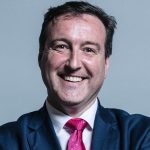
Tag: Christian Matheson

  • Christian Matheson – 2022 Speech on the Future of the UK

    Christian Matheson – 2022 Speech on the Future of the UK

    The speech made by Christian Matheson, the Labour MP for the City of Chester, in the House of Commons on 16 May 2022.

    Speaking in last year’s Queen’s Speech debate, I welcomed the Government’s commitment to bringing forward a ban on conversion therapy. A year on, we are no further forward—in fact, we seem to have gone backwards—but I hope to see progress this year.

    I hoped to see a “better business” Bill in the Queen’s Speech, to give us a cleaner, greener and fairer future. Businesses in my constituency are pushing me on this, as they understand how important it is to give businesses different priorities in law. I hoped to see something about that and am disappointed by its absence.

    Talking of better business, I am also extremely disappointed to see no progress on legislating to outlaw fire and rehire, of which P&O Ferries is the latest example. Ministers and Conservative Members said it was absolutely terrible but, when push comes to shove, there is no action to outlaw the practice. That is a huge omission from the Queen’s Speech.

    Instead, we get a promise to bring forward legislation to abolish the Northern Ireland protocol. Whose Northern Ireland protocol was it? It was the Prime Minister’s—he wrote it, he sold it to the British people—and now, once again, he is trying to renege on something he himself wrote. It demonstrates, yet again, that he is a Prime Minister who will say whatever he needs to say to get out of whatever position he is in at the time and then have no sense of responsibility for the promises he has made. I say to the House that this does affect us internationally. Who will do deals with us if he is going to bring forward legislation to break deals that he wrote himself and signed himself only two years ago?

    Of course, the biggest omission at the moment is of any kind of proposals on tackling the dreadful energy crisis we have. Millions of families up and down the country are facing soaring energy bills and ever increasing costs of living. The Government have demonstrated that they have no plan to fix this. Families are paying triple their energy bill, and they need a solution now.

    I was disappointed that the Government have not adopted a one-off windfall tax on the oil and gas giants, and let us just understand exactly why that is. It is because a windfall tax would affect not simply the oil and gas companies—incidentally, as we all know, they have said that with the level of profits they are getting, at several billion pounds a quarter, they would be quite happy to pay it—but the City investment funds and City hedge funds that the current Conservative party, along with Russian oligarchs of course, exists to serve. They are not in their places now, but the Education Secretary, the Secretary of State for Health and the Chancellor all have big City investment fund backgrounds. That is what they know, and that is who they are really defending when they refuse to have a windfall tax.

    Locally, in my area of Cheshire West and Chester, we are leading the way on alternative and clean energy provision. My hon. Friend the Member for Ellesmere Port and Neston (Justin Madders), who is in his place next to me, and I have been very supportive of HyNet. Actually, I pay tribute to the Government for that particular scheme; they have assisted us. I know that, in his constituency, the Vauxhall Ellesmere Port plant is looking forward to an all-electric future, leading the way on green jobs. That is thanks to him and, again giving credit where it is due, thanks to the Secretary of State. However, I have to say to the Government that any attempts to bring back fracking will be given short shrift in my constituency, and I am very concerned about that.

    On levelling up and transport, I was looking forward to some detail in the new transport Bill, and I will be keeping an eye on what the Government are proposing. At the moment, however, we need proper rail services. My hon. Friend the Member for Ellesmere Port and I are meeting the rail companies this week to try to restore direct services between Chester and London. At the moment, they have gone from 12 a day before the pandemic down to one, and now that has been doubled to two we are asked to be grateful for that. We are hopeful that we might get more services, but of course direct services are essential to economic growth. Instead, we have seen the cancellation of Northern Powerhouse Rail and the scrapping of the High Speed 2 eastern leg, which is a betrayal of the north. It is the same for buses. The Government have turned down a bid for more bus money from Cheshire West and Chester Council, even though Ministers described the bid as “excellent”. I hope the transport Bill will tackle the difficulties we are seeing with bus provision, and give more opportunity for places such as Chester to improve connectivity.

    Finally, it is absurd that the great heritage asset that is the city walls of Chester has to be paid for out of the highways budget, so that money that should be spent on roads, potholes and pavements is being diverted, understandably, to pay for that great heritage asset. We need a separate fund for the walls.

  • Christian Matheson – 2022 Speech on Referring Boris Johnson to the Committee of Privileges

    Christian Matheson – 2022 Speech on Referring Boris Johnson to the Committee of Privileges

    The speech made by Christian Matheson, the Labour MP for the City of Chester, in the House of Commons on 21 April 2022.

    There has been a lot of talk about apologies. I remind the House that the motion is not about whether the Prime Minister has apologised but whether he knowingly lied to the House. He has not apologised for that—he has not even admitted it. In fact, he has persistently and consistently said that “there was no party”, that there was no cake and that there was a party but there was no cake—I could go on. I welcome those apologies, but let us be clear about what the motion says.

    Earlier, the leader of the SNP, the right hon. Member for Ross, Skye and Lochaber (Ian Blackford), reflected the words of my right hon. and learned Friend the Member for Holborn and St Pancras (Keir Starmer) about the Prime Minister’s modus operandi: he leaves a trail of chaos in his wake and lets other people pick up and take responsibility for the problems that he has caused. The latest victim of that—I told him that I would mention this—is Mr Speaker and the office of the chair. Recently, when he had to chuck out the leader of the SNP for calling the Prime Minister a liar, he got huge amounts of public opprobrium, saying, “What on earth is Speaker Hoyle doing? Why is he chucking out the leader of the SNP when we know what the Prime Minister is up to?” The Prime Minister does not mind because somebody else takes the criticism for that. He is undermining not simply Mr Speaker but this House and, as hon. Members have said, our democratic system. The public cannot understand what on earth is going on when one person gets thrown out and the person who is the root of the problem is happy to stay there smirking on the Front Bench. That is his modus operandi, and it is dragging our democratic system down.

    We all make mistakes. I make mistakes, and I have had to correct the record. We have heard about apologies and about the Prime Minister being contrite, but I do not recall one occasion on which he has come back to the House and corrected the record. Not one. I think that there is an outstanding letter to him from the UK Statistics Authority about a misleading claim that he has yet to come back to correct. The bottom line is that the Prime Minister will say whatever is necessary at one point to get out of whatever situation he is in, with no sense of obligation to the truth or to whatever promise he has just made. I have scribbled down a list of five or 10 promises he has made and broken, but, as I do not want you to call me up, Madam Deputy Speaker, as we are talking specifically about the occasions when he denied there was a party, that list will have to wait for another occasion—but there will be another occasion.

    As I have said, the Prime Minister is damaging the UK’s reputation abroad. Outside this Chamber, our partners abroad—as well as our adversaries and enemies—can see that he is losing credibility and they cannot necessarily work with him because his word cannot be trusted. That damages the UK, and that is serious at a time of international crisis.

    I finish by quoting an article from The Guardian by Simon Kuper about the Oxford Union and a younger version of the Prime Minister who wrote an essay on Oxford politics for his sister’s book, “The Oxford Myth”:

    “His essay tackles the great question: how to set about becoming the next prime minister? Johnson advises student politicians to assemble ‘a disciplined and deluded collection of stooges’ to get out the vote.”

    Remember that this was just after he left university. The quote from the Prime Minister in his earlier days continues:

    “The tragedy of the stooge is that…he wants so much to believe that his relationship with the candidate is special that he shuts out the truth. The terrible art of the candidate is to coddle the self-deception of the stooge.”

    Those were the Prime Minister’s views then. They are apparently still the Prime Minister’s views today. The British people have made up their mind and for them the penny has dropped. I say to hon. Members on the Conservative Benches that it is time for the penny to drop for them as well. They need to search their feelings. They know it to be true. This is the manner of the Prime Minister and today is the time finally to put a line underneath that.

  • Christian Matheson – 2022 Speech on Human Rights in Colombia

    Christian Matheson – 2022 Speech on Human Rights in Colombia

    The speech made by Christian Matheson, the Labour MP for City of Chester, in Westminster Hall on 20 April 2022.

    It is a great pleasure to serve under your chairmanship, Ms McDonagh. Seven months would be me just getting warmed up. I congratulate my hon. Friend the Member for Liverpool, Wavertree (Paula Barker) on securing the debate and on her fantastic introduction.

    Like many, I suspect, my involvement and interest in Colombia started when I was a trade union official. As we have heard from colleagues, Colombia was the most dangerous place in the world to be a trade unionist 20 years ago, and my message for the Minister is that we must not take our eye off that ball.

    There are two harsh realities in Columbia. No. 1 is that the peace process does not enjoy universal support. It did not at the time; when ex-President Santos put it to the vote, it was narrowly rejected. There is still a large, residual resentment at the peace process and at the fact that the Government and the state made peace with FARC. We heard that in the intervention from my hon. Friend the Member for Rochdale (Tony Lloyd), who talked about the pressures to revert to the previous state of civil war, which was the longest-running civil war in the world at the time.

    That is one harsh reality. The other, for those who oppose the peace process in Colombia, is that it is the only show in town; it is the only way forward. Peace cannot be established and won just because a document was signed at Cartagena in 2016; it has to be a long and ongoing process. That is why it is so important to see colleagues here from Northern Ireland—my good friend the hon. Member for Strangford (Jim Shannon) and the hon. Member for Belfast South (Claire Hanna). I pay tribute to our representatives in the UK from Northern Ireland, including the right hon. Member for Lagan Valley (Sir Jeffrey M. Donaldson), who chairs the all-party parliamentary group on Colombia, and Lord Alderdice, and to all the parties in Northern Ireland, who are going—not have been—through a peace process, which is difficult at times for all of them. They demonstrate to the people of Colombia that peace must be invested in day after day, month after month and year after year. Peace cannot be achieved simply by signing a piece of paper—and then we all go home. Peace is difficult. It may not be as difficult as conflict, although some in the large cities of Colombia who have been insulated from the violence might be happy to go back to that situation. We have to continue to give that message and support the people of Colombia.

    One big problem the people of Colombia face is that the Government—the state—still do not control large areas of territory in Colombia. Chapter 1 of the peace agreement foresaw comprehensive rural reform, giving people a stake in their own land and life. It also gave them security to carry on their lives without the threat of paramilitaries from either side. That section on rural reform has fallen badly behind in areas where there is no state presence. One set of paramilitaries has been replaced by another. As my hon. Friend the Member for Liverpool, Wavertree said, they are narco-traffickers or former right-wing paramilitaries, or they sit in the middle bit of the Venn diagram and might be a mixture of them all.

    I am pleased to say that the number of armed combatants has fallen. The rough guess of the independent Bogotá think-tank Indepaz is that there are about 5,200 to 5,500 armed, organised paramilitaries, which is lower than the combined total of 50,000 20 years ago. If we include all the different armed groups, there are probably about 17,000 in total, so progress is certainly being made. However, as my hon. Friend said, the number of murders of social leaders and human rights defenders jumped in 2020 and remains stubbornly high.

    Four main sources keep count of the numbers of social leaders, human rights defenders and trade unionists murdered in Colombia: the UN High Commissioner for Human Rights; a Colombian Government agency, the human rights ombudsman, Defensoría; and two non-governmental organisations, Somos Defensores and Indepaz. Of those, even the organisation with the lowest confirmed count, the UN high commissioner, still finds that a social leader has been murdered in Colombia every 3.2 days since the peace accord came into effect in December 2016.

    A further consequence of the lack of peace and the failure to control territory is illegal deforestation and attacks on the environment. I pay tribute to British groups, such as the Earlham Institute and Kew Gardens, that are doing extremely important work with Colombians and Colombian academics in support of biodiversity programmes. However, deforestation continues, with a 36.9% increase in deforestation in Colombia’s Amazon basin between 2019 and 2020.

    The second chapter of the peace accord focuses on political participation and seeks to establish guarantees for people to petition the state or to practise opposition politics. Before and during the decades of the armed conflict, people with reformist or leftist views participated in politics at great personal risk. Thousands were killed, including much of the membership of a political party originally linked to the FARC, the Patriotic Union, in the ’80s and ’90s.

    Political participation guarantees still do not go much further than a few nominal changes in the law. My hon. Friend the Member for Liverpool, Wavertree mentioned the Kroc Institute’s monitoring report, which found that there is still stagnation on the commitments that would allow progress towards structural reforms of democracy, due to the absence of a political consensus for their substantial and comprehensive progress.

    Spending on the peace process in Colombia fell by 18% from 2020 to 2021 and the Colombian Comptroller General argues that that contributes to increasing the lags in the implementation of the comprehensive security system for political participation. Peace is expensive—we know that, and we also know that Colombia has spent a lot of money supporting Venezuelan refugees, and has also had to deal with the pandemic—but it is so fundamental to social progress in Colombia that it is not an area where budgets can be cut.

    Chapter 5 of the peace accord covers the processes that could deliver peace. It sets up a comprehensive system for truth, justice, reparations and non-recurrence. The Special Jurisdiction for Peace is a transitional justice tribunal that is prosecuting the most serious human rights abusers. Again, it does not enjoy full support, but something that enjoyed full support from one side or the other probably would not be the compromise that a peace deal would bring. A unit to search for the disappeared is working with victims and communities in an attempt to locate some of the 80,000 people who went missing during the years of the conflict. Again, that is similar to what happened in Northern Ireland.

    We cannot have peace without justice, we cannot have justice without peace, and we cannot have environmental protection without peace. All are absolutely essential, but let us not forget the trade unionists and civil society leaders who are being murdered.

  • Christian Matheson – 2022 Speech on Long Covid

    Christian Matheson – 2022 Speech on Long Covid

    The speech made by Christian Matheson, the Labour MP for the City of Chester, in the House of Commons on 31 March 2022.

    A couple of weeks ago, I attended with constituents the service at St Paul’s Cathedral that was organised by the cathedral, Sir Lloyd Dorfman and others to remember those who have died from coronavirus. Indeed, earlier today in business questions we heard from my hon. Friend the Member for Vauxhall (Florence Eshalomi) about the very striking memorial wall in her constituency along the banks of the Thames by St Thomas’s Hospital.

    I am really grateful to the Backbench Business Committee and the hon. Member for Oxford West and Abingdon (Layla Moran) for enabling us to remind ourselves of all the other victims of covid who are, in a sense, the lucky ones who have survived but who still need our attention. I declare an interest in that a member of my immediate family suffers from long covid. If the House will bear with me, I will not actually identify who it is. For 18 months, that member of my family has not really been able to get out of bed. In terms of work, they were doing well. They are young. Their career was progressing. They were being extremely well rated at work. Almost overnight, that came to a crashing halt.

    At first, when you suffer from covid, as I did at the same time as my family member, you hope and believe that although it is going to be awful and unpleasant, if you get through it, life will carry on. Then long covid starts to emerge and you do not get any better. I got better and my family member did not. It involved all the symptoms that my hon. Friend the Member for Oldham East and Saddleworth (Debbie Abrahams) described—huge tiredness, brain fog and aching limbs. At the time, the best source of advice that was available, and the best source of support, was my hon. Friend the Member for Denton and Reddish (Andrew Gwynne). There was nothing really available. People had not come to terms with the condition and with identifying what its causes were. I pay tribute to and thank him for his work and his support to my family.

    The employers of my family member were excellent, and still are. They have not been able to continue paying, but as far as they are concerned my family member is still on their books. They value the contribution that my family member has made—again, I am sorry to talk vaguely but I do not want to identify the person—and have said, “When you’re ready to come back, we’re ready to have you.” That is the kind of employment practice that we are looking for.

    To echo my hon. Friend the Member for North Tyneside (Mary Glindon), another member of my family has had to give up their job in order to be the carer. What we are looking for is some kind of hope—something to cling on to and to demonstrate progress. There has been progress. I welcome the Government’s investment of £18 million and the growing recognition of the post-viral chronic fatigue syndrome caused by coronavirus. Whenever there is a new light on this, even in scientific papers that I would not normally understand, we devour them to try to find an explanation, a cause, a hope of a cure or a treatment that will get us and my family member through this. Is it caused by scarring on the lungs? Is it caused by microclots? Is it caused by activating postural orthostatic tachycardia syndrome, which also bears some kind of relation to what is going on? The truth is that it could be any one of those in any number of individuals, but the absolute fatigue is the same.

    I remember my hon. Friend the Member for Denton and Reddish advising me, “If you’re feeling good, don’t do too much—don’t exert yourself.” I passed that advice on. It is also about the mental effect. When you are having a good day, you do not want to exert yourself because then you might be knocked out for the next three days, so that forces you to withdraw into yourself and not want to go out. You cannot even walk down to the shops or to the park because you are so terrified that you might then not make it through the next three days. It is about the hope and desire and almost desperation that when you have a good day and it is followed by another good day and then perhaps another, is this the beginning of the end, or even the end of the beginning? For so many, including my family member, it has not been that.

    I would ask for the same consideration that has been given to my family member to be given to others—for employers to recognise that the Government have recognised this as an issue and the medical establishment has recognised it as an issue. Employers need to treat their employees who have this illness as also being victims of the pandemic, because nobody has chosen to have it. My message to those, including constituents, who still persist in saying that covid-19 is nothing—that it is just like a cold or the flu—would be something along the lines of, “Get stuffed.” There are 140,000 names on the wall outside St Thomas’s, and there are maybe a couple of hundred thousand others who are still suffering today and are desperate to get over this terrible long-term affliction and have some hope of a better life to come. I am most grateful for this debate, and most grateful, again, to my hon. Friend the Member for Denton and Reddish for the support he has given to my family.

  • Christian Matheson – 2021 Speech on Foreign Aid Cuts

    Christian Matheson – 2021 Speech on Foreign Aid Cuts

    The speech made by Christian Matheson, the Labour MP for the City of Chester, in the House of Commons on 13 July 2021.

    The Prime Minister told the House earlier that there was common ground in the House. I think he is right, but I suspect, having listened to contributions from the Conservative Benches, that he is not standing on that common ground. I pay tribute to the right hon. Member for Sutton Coldfield (Mr Mitchell) for the courage that he and other Conservative Members have shown in standing up for this issue consistently, and also standing up for their manifesto, along with the rest of us. The Government have a good story to tell on this issue if they wanted to—on Gavi, for example, and on their support for education for women and girls. I wonder why they do not want to tell this story to the country. I think it is because too many of them are ashamed of it and because, as the right hon. Gentleman said, they are playing to a gallery but playing to the wrong gallery. It is a dangerous game that they are playing.

    The proposals before the House today are myopic and mean-minded. They are mean-minded because we can see that this is a trick—a fiscal trap. We were promised a straight up-and-down vote but we were not given one; instead we were given this little twisting mechanism. It is mean-minded, too, because, as we have heard, it will cost lives to make these cuts, and because they are already a cut to what would have been a smaller cake anyway. The money had already gone down and to cut it further is simply mean. With any of these programmes we cannot simply turn the taps on, then off and then back on again. The damage that will be done to British overseas aid programmes will carry on long after we restore the 0.7%, if, under this proposed mechanism, we ever do restore it.

    This cut will set programmes back. It will set research and development back, including for my constituents. I have a constituent who works in water purification and another who works in localised energy matters. These cuts will have an effect overseas, but let us be clear: they will have effects in this country as well, in terms of innovation and our ability to take technologies across the world. They will have effects in areas such as the polio eradication programme. As my right hon. Friend the Member for Leeds Central (Hilary Benn) has said, cuts of 95% will set that programme back. The cut is myopic, for the reasons already set out by my right hon. and learned Friend the Leader of the Opposition and the hon. Member for Tonbridge and Malling (Tom Tugendhat): it will damage British soft power, with the British Council telling me that it will lose 15% to 20% of staff and will be unable to carry out programmes in the countries where we need to be influencing; and it will affect our strategic position, as the Leader of the Opposition has said.

    Overseas aid is a moral issue, but if we cannot look at it like that, let us be clear: our adversaries, Russia and China, and our enemies, al-Qaeda and Islamic State, will fill the gap if we do not, and this will simply make matters worse in the long run. This is a short-sighted, short-termist cut. It is mean-minded. I pay tribute to the right hon. Member for Sutton Coldfield for his leadership, and I will not be accepting this motion tonight.

  • Christian Matheson – 2020 Speech on the Parliamentary Constituencies Bill

    Christian Matheson – 2020 Speech on the Parliamentary Constituencies Bill

    Below is the text of the speech made by Christian Matheson, the Labour MP for the City of Chester, in the House of Commons on 2 June 2020.

    Contrary to what we are hearing from Government Members, I warmly welcome the Bill and its main provision, which is the reversion back to 650 Members of Parliament—as, I think, do many colleagues on the Opposition Benches. It is a misrepresentation to suggest that we are opposing the Bill tonight. The Opposition are entirely within ​their right to put down a reasoned amendment that suggests areas where we would like to see improvement. We will not be opposing the Bill on Second Reading, although we do have concerns.

    I have to say that I am also a bit frustrated to hear Government Members saying that we need to get on with the process. We could have been getting on with the process two years ago, with the private Member’s Bill promoted by my hon. Friend the Member for Manchester, Gorton (Afzal Khan). It was the Government, with the lack of a money resolution, who held that process up, so we will have no more of that in the debate.

    I absolutely support the idea of an independent Boundary Commission that will work independently. We do have confidence in the Boundary Commission. What is not independent, however, is the instructions that are given to the Boundary Commission. That is where the manipulation by the governing party comes in, and that is why the Opposition are right to question the judgment being made tonight. The obvious example is the strict adherence to the numbers and the primacy of the numbers over every other consideration, such as communities of interest or geographical size. That strict adherence will give distorted constituencies, especially with a tight variant from the national average. We will lose community cohesion. We will have very large geographical areas that make it extremely difficult for hon. Members to represent them. That is why—I think the hon. Member for Newbury (Laura Farris) touched on this—there has to be some disparity in the numbers to take into account other factors.

    We talked about the December 2020 cut-off date being far too late and said that people will fall off the register. At this stage, I was going to talk about other areas where I believe the Conservative party, the governing party, has introduced measures of voter suppression to stop people from getting on to the register or voting. However, the Minister made a significant concession, almost, or recognition—she is not in her place now—about the possibility of having to use the 2019 snapshot, which is the most up-to-date, accurate snapshot we have. It has been published only this week, because that is how long it takes. I welcome what the Minister said, and I hope we can work with her on that.

    I am suspicious of anything that removes Parliament from these processes—from any process, frankly. Parliamentary scrutiny is absolutely essential. I do not like the idea of Parliament being sidelined, even when we are discussing matters concerning our boundaries, because these matters are central to our democracy. If Parliament had been removed from the issue of boundaries, then in my area we would now have the notorious Mersey Banks constituency—it was one of those constituencies where we would have had to go out of the constituency, through another, and back into it—because the proposals would not have been able to have been challenged in this House.

    I want to raise one final issue: the future of the Union. It is imperative that the Government do not allow us to get into a situation where Wales and Scotland, because of their geographical sizes and the rurality of some of their areas, take a bigger hit than England in terms of reduction in constituencies. The Union matters to me, and I believe that it matters to many Members in this House—it certainly matters to Members on the Labour Benches. If we have fewer Welsh MPs and fewer ​Scottish MPs, the strength of the Union will be damaged. That may be an unintended consequence, but it is a consequence that Ministers must bear in mind.

  • Christian Matheson – 2019 Speech on Football Regulation

    Below is the text of the speech made by Christian Matheson, the Labour MP for the City of Chester, in the House of Commons on 26 June 2019.

    I beg to move,

    That leave be given to bring in a Bill to establish an independent regulator of football clubs; and for connected purposes.

    On 9 March this year, supporters of Blackpool football club went to watch a home match for the first time after a four-year boycott of home fixtures. The reason for their protest was the mismanagement, as they saw it, of the club by its owners, Owen and Karl Oyston. It was more than simply mismanagement, though: the fans believed that the Oystons had been bleeding the club dry, not just failing to invest but taking large sums of money out. Indeed, a High Court judgment found that the Oystons had “illegitimately stripped” £26.77 million from the club.

    Previously, as Nick Harris reported in the Daily Mail, Mr Oyston senior was the highest paid person in English football in the 2010-11 season, when Blackpool were in the premier league, receiving an eye-watering £11 million, with only Wayne Rooney reportedly coming close to similar remuneration, yet there was nothing the supporters could do within the existing structures of the game to force a change of ownership and stop their club being ransacked. Unable to prevent the mismanagement by the Oystons, the supporters had to take things into their own hands, and eventually launched a boycott of home games to deny Blackpool’s owners their money. The supporters received support from fans of other clubs and from the national supporters’ organisations, but little support from the football authorities. To get to the point at which the club is now being sold, it has taken four years of their not doing the one thing that binds them together and defines them: watching the football team they love.

    If this was a one-off, I would feel sorry for Blackpool fans, pleased that they have almost won their campaign, and move on, but it is not a one-off. Coventry City fans are in an even worse situation. Who can forget the 1987 cup final, with players such as Micky Gynn, Brian Kilcline, Keith Houchen and Steve Ogrizovic, and manager John Sillett dancing on the Wembley turf with the FA cup? This once proud club is being driven into the ground by its owners, Sisu, which is an investment firm based offshore—its ultimate owners are not clear. Coventry City have had to find a ground-sharing option some 18 miles from Coventry, at Birmingham City, as the legal wrangle continues between Sisu, Wasps rugby union football club and Coventry City Council. Sisu is answerable to no one; indeed, according to the Coventry Telegraph, it made no public statement between 2016 and March this year.

    Further up the M6, Bolton Wanderers, another of the great names in English football, is now in administration, and is so badly managed that staff have not been paid and other clubs are assisting with payroll and even providing food banks to support employees. I recall going to the old Burnden Park in 1994 to watch Everton play against Bolton in the FA cup, and meeting the ​great Nat Lofthouse. How can the club of the Lion of Vienna now be resorting to food banks as it is run into the ground?

    This is not a recent phenomenon. In 1997, the owner of Brighton & Hove Albion closed the old Goldstone Ground, without making any alternative provision, so that he could sell off the site and make millions from property development. My own hometown club, formerly Chester City football club, was driven into the ground by a succession of owners who used it either as a tax-dodging scheme or in one case—it has been alleged—as a front for laundering ill-gotten gains from criminal activity. The club dissolved and was reborn as a fan-owned club, which has been challenging at times, but those challenges have never included deliberately running the club down and syphoning off cash.

    The concern for supporters is that they are only ever one bad owner away from these types of problems, and that they have nowhere to turn for help. The FA and the leagues have an owners and directors test, but this might be relevant only in the case of, for example, previous criminal convictions. A group like Sisu can turn up at Coventry and bleed the club dry, with no intention of investing in its future, and the FA can do nothing.

    I have given just a few examples of clubs with question marks over the way they are being or have been run. We can currently add to that list Notts County, Gateshead and Bury—last week, my hon. Friend the Member for Bury North (James Frith) petitioned the High Court on behalf of supporters in his constituency—and in the recent past Portsmouth, Hartlepool, Charlton Athletic and more. There are too many to be isolated cases, which suggests there is a broader problem that needs to be addressed.

    When I served on the Digital, Culture, Media and Sport Committee, I raised this issue with Greg Clarke, the chairman of the FA and a decent man who I believe genuinely wants to do his best for football. I asked him whether there was nothing the FA could do about unscrupulous owners; Mr Clarke replied that it can look into the backgrounds of potential owners—he was referring to the owners and directors test—but cannot do anything about a person who is simply bad at running a football club. The FA has devolved such matters to the leagues, but the leagues are membership organisations, and any rules or regulations have to be voted in by their own members—those very same club owners. The worst sanction is a points deduction for going into administration, but that is hardly relevant in the cases I have described.

    Football needs independent regulation—that is, regulation independent of the owners, who have a vested interest. The making of rules or regulations about football clubs, and decisions on their application, should not be the task of the professional football clubs or the people who own and manage them. That regulation could and should be done by the Football Association, in the interests of the game as a whole. A regulatory body under the auspices of the FA, adequately funded and suitably staffed, with effective regulations and the power to enforce them, could restore faith in the running of the game.

    Of course, there are ways in which the owners and directors test can be improved, but it will never be foolproof. Not all bad owners start out bad. A regulator ​should be there to educate, advise and support. Punishment and sanctions should be the last resort. The good owners should have nothing to fear; they should benefit from reflective improvements throughout the game. This Bill would bring into being an independent regulator with the powers to undertake independent and forensic audits of clubs’ directors and financial activities, where sufficient concern has been expressed about the management of the club, to report to the FA with recommendations for action, to address any deliberate financial mismanagement, or, of course, to decide that there is no case for further action.

    There would be limits. I remember, for example, going to The Valley in November 1998 to watch Everton play Charlton. As I arrived there, I was horrified to learn that the then Everton chairman, Peter Johnson, had just sold our totemic striker Duncan Ferguson to Newcastle, behind the back of the manager. I wanted Johnson out, but a bad decision such as that would not necessarily require independent scrutiny. I am concerned about consistent behaviour to run a club into the ground. Similarly, I recall one previous owner of Chester City, an American, who sacked the manager and started to pick the team himself. That is bad management, as referred to by Greg Clarke, but it is not destructive management, using the club for nefarious means, and is unlikely on its own to fall under the scope of the regulator described in the Bill.

    Ideally, it would be the Football Association that would undertake these activities, but in the absence of action an independent regulator is needed so that the scandals of Brighton, Blackpool, Coventry and Chester City are a thing of the past and supporters have somewhere to turn to in their desperation. Perhaps now the Football Association will take the opportunity to consider bringing forward proposals of its own to address this problem. I urge it to consider the suggestions of the Football Supporters’ Association, which I have consulted closely in preparing the Bill.

    Although the directors of a football club may be the legal owners, they are surely only the custodians on behalf of the whole family of supporters of each club. If they are unable to act in the best interests of the club ​and the team, and are seen to be acting in their own interests to the detriment of the club, that cannot be allowed.

    If I do not like Tesco, I can go to Sainsbury’s. If I am still unhappy, I can go to Asda, Waitrose, Aldi or Lidl, but we cannot do that with a football team. Football supporters have a profound sense of loyalty, identity and belonging to a club, which cannot be transferred at the first sign of trouble. In my case, I am the fourth generation of my family to support Everton, I was born into that tradition—you cannot manufacture it. Most supporters would say exactly the same of their club.

    Football is a great unifier, bringing the nation together—this applies equally to each of our four home nations—in great moments of unity, as well as being something that we can talk about to complete strangers and bond over in the pub or by the coffee machine. That is why, when we have so many other critical issues to consider in this House, this Bill is important. Football matters to so many people. At a time when our country is so divided, football, in common with all sports but perhaps more than any other sport, can bring our country together again. When fans such as those of Blackpool, Coventry or Bolton Wanderers are treated as abysmally as they have been, while their owners bleed the clubs dry, there has to be a mechanism for giving them an outlet to redress their grievances, because at the moment they have nowhere to go. I would prefer the Football Association to do this, and hope that it will do so, but if it cannot we must support the supporters with a tough and independent regulator. The Bill does that. I commend it to the House.