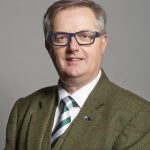
Tag: Brendan O’Hara

  • Brendan O’Hara – 2022 Speech on Blasphemy Laws and Allegations in Commonwealth Countries

    Brendan O’Hara – 2022 Speech on Blasphemy Laws and Allegations in Commonwealth Countries

    The speech made by Brendan O’Hara, the SNP MP for Argyll and Bute, in Westminster Hall on 11 October 2022.

    Thank you, Sir Charles. It is a pleasure to see you in the Chair for this morning’s debate, and I thank the hon. Member for Strangford (Jim Shannon) for securing it. I agree with him that it will come as a surprise to many people in the UK that 79 countries across the world still have blasphemy laws on their statute books, and that 26 of those are members of the Commonwealth; that is almost half of the membership. As we have heard, where blasphemy laws are in place, they are all too often used to target religious or non-religious minority groups. They are also commonly used to discriminate against ethnic minorities, to facilitate land seizures, or as a convenient way to settle personal disputes. Blasphemy laws are also often used as an excuse to legitimise extrajudicial violence, particularly when someone accused of blasphemy is acquitted through the courts or the police choose not to file charges. In those cases, blasphemy laws have given a cloak of legitimacy to the mob, which has used them as a green light or a call to arms to take matters into its own hands when it feels the judicial process is not delivering the answer it wants.

    We have seen far too many cases of mob violence against individuals or minority communities, including, as we have heard from the hon. Members for Congleton (Fiona Bruce) and for Strangford, the case of young Deborah Samuel in Sokoto in Nigeria in May. Because of comments she made on a student WhatsApp group, Deborah was declared a blasphemer. She was brutally beaten and stoned before being burned in a pile of tyres, while others recorded the whole sickening event on their mobile phones. Despite that evidence going viral around the world, only two students have been arrested for Deborah’s death, and they have been charged not with murder but with criminal conspiracy and disturbing the peace. It is an indication of the degree of support they enjoy that, following their arrest, the mob turned out again to demand their release from custody. Sadly, history tells us not to expect too much in the way of justice for Deborah, because the culture of impunity that usually accompanies such crimes will likely mean that the perpetrators of this awful murder face few or no consequences for their actions.

    As the hon. Member for Strangford said, two weeks after Deborah’s murder we were in Nigeria. We spoke to religious groups, secular groups, charities, non-governmental organisations and regional and federal Government. Nigeria is a deeply religious country that, in numerical terms, is almost evenly split between Christians and Muslims, but there are also those who follow traditional African religions and those who have no religious faith—humanists. In a country so divided along religious lines, Nigeria’s humanists need someone to defend their corner, particularly after the jailing of Mubarak Bala, the president of the Humanist Association of Nigeria, who was imprisoned for 24 years for blasphemy on his Facebook page. It is a remarkable and totally unjustifiable punishment for something that most of us would not even recognise as a crime or offence. Some of our delegation spent time with Mubarak’s wife and young child while we were in Abuja, and we promised them we would raise Mubarak’s case and the length of his sentence at every opportunity in this place. I would appreciate it if the Minister updated us with the latest from the Foreign, Commonwealth and Development Office, and told us what it is doing to help secure the release of Mubarak Bala.

    As we have heard from the hon. Members for Congleton and for Strangford, Nigeria is not the only senior member of the Commonwealth where blasphemy laws are being used, or where even the accusation of blasphemy can be fatal; the picture is similarly bleak in Pakistan. I am pleased that the hon. Member for Congleton raised the case of the American citizen Tahir Naseem, who in 2020 was shot dead inside a courtroom while standing trial for blasphemy. Tahir was from the Ahmadiyya Muslim community, the only religious community to be explicitly targeted by Pakistan’s laws on the grounds of its faith. Over the years, its members have been relentlessly harassed, denied their civil rights, murdered and officially declared non-Muslim. The murder of Tahir brought thousands out on to the street, not in protest but in support of his murderer, a teenager who had somehow managed to get a loaded gun through three separate security checks before shooting Tahir multiple times. Tahir was a US citizen, and the State Department was unequivocal in its condemnation, saying that he

    “had been lured to Pakistan from his home in Illinois by individuals who then used Pakistan’s blasphemy laws to entrap him.”

    As we have heard, arguably the most high profile case in recent years has been that of Asia Bibi, the Christian woman who in 2010 was arrested and given a death sentence following a dispute with her neighbour who claimed that she had insulted the Prophet. It took eight years for the Supreme Court to acquit her because of lack of evidence, but even then her family were forced into hiding, and a cleric put a bounty of half a million rupees on her head for anyone who would kill her. The Asia Bibi case shone a light on Pakistan’s blasphemy laws, but rather than opening up the debate on their use and purpose, those who dared to question their very existence were themselves deemed guilty of blasphemy, and Salman Taseer, the governor of Punjab province, and the country’s religious Minister, Shahbaz Bhatti, were both murdered after calling for blasphemy law reform in 2011.

    The stark reality is that, as Omar Waraich, head of south Asia at Amnesty International, pointed out, in blasphemy cases in Pakistan

    “an accusation becomes a death sentence, whether carried out by the state or by mobs of vigilantes.”

    The hon. Member for Strangford was therefore absolutely right to question how the continued existence and widespread use of blasphemy laws in so many Commonwealth countries can sit in an organisation whose own core values and principles say that it is there to support

    “tolerance, respect, understanding, moderation and religious freedom”.

    That blasphemy laws still exist in almost half the countries of the Commonwealth is of huge concern, but the manner in which they are being used as a tool of repression is deeply alarming, whether that is through the courts or the unofficial green light to the mob.

    Jim Shannon

    One of the problems, which the hon. Gentleman clearly referred to, is the fact that lawyers and even judges are often frightened to accept blasphemy cases. At the highest level of the law of the land, people are afraid. Does he agree?

    Brendan O’Hara

    There is ample evidence that lawyers and judges are intimidated by the rule of the mob. We have to be part of addressing that to find a solution. I have great sympathy for the argument that we should press for immediate abolition, but the reality on the ground is much more complex and nuanced. Like so much across the Commonwealth, blasphemy legislation is a direct product of British colonialism, because we put much of the blasphemy legislation in place many years ago. The legal precedent for blasphemy laws originated here. At the time it was thought convenient to put a range of other legislation in there, too, meaning that all too often blasphemy covers much more than what we would consider to be blaspheming. Rather than reaching for the wrecking ball, perhaps we have to use diplomacy, international law and solidarity with these persecuted people to bring about positive change. That should start with the Minister calling on all Commonwealth countries who currently have people imprisoned for blasphemy to release them immediately, starting with Mubarak Bala.

    The UK must play its part in offering asylum to the people, and their families, who have been accused of blasphemy and who are at grave risk of extrajudicial violence. The UK should encourage countries as they move to repeal, and we must ensure that they start to decouple all offences that are not blasphemous but that have historically been covered by blasphemy legislation. The UK should condemn unreservedly any legal system in which individuals can be accused, arrested, convicted or demonised on little or no evidence where it is clear that a personal vendetta is a motivating factor. As we work towards the eventual abandonment of all blasphemy legislation across the Commonwealth, the UK has to insist that, as an absolute minimum, no one can be convicted of blasphemy unless there is intent to cause offence, or insult can be proven, because right now people are being convicted of so-called crimes that they were totally unaware they had even committed.

    The widespread use of blasphemy laws and the awful human cost that that brings with it can have no place in an organisation that claims to have the promotion of

    “tolerance, respect, understanding, moderation and religious freedom”

    as its core values. While I share the desire to see these laws abolished immediately, given the complexity of the situation, getting rid of them can be best achieved by supporting, pressuring, cajoling, incentivising and calling out regimes that use blasphemy laws in this way.

  • Brendan O’Hara – 2022 Speech on the Heatwave

    Brendan O’Hara – 2022 Speech on the Heatwave

    The speech made by Brendan O’Hara, the SNP MP for Argyll and Bute, in the House of Commons on 20 July 2022.

    Thank you, Mr. Speaker, and

    I thank the Minister for prior sight of this statement.

    Let me begin by paying tribute to those in all the emergency services who, once again, have gone above and beyond to help their fellow citizens in a time of crisis. Let me also extend our sympathy to the people whose homes and businesses have been destroyed in the fires that raged across parts of England.

    We may not have known anything like this before, with record temperatures being set in three of the four nations of the UK and the symbolic 40°C barrier being broken in England, but, sadly, I predict that this—or something like it—is here to stay. We are all going to have to live with it, and Governments are going to have to prepare for it in the future. Climate scientists have been warning us for decades that this day was coming, and it would be disingenuous in the extreme for anyone to claim that it was a one-off freak event or dare to compare it with the summer of 1976. This is the climate emergency. This is exactly what we were told would happen if we did not change our ways. This is what COP26 was all about, and that is why those who are still part of the Tory leadership race cannot, and must not, renege on the commitment to achieving net zero in return for securing votes from the party’s base.

    Can the Minister tell me where is the plan to increase and bolster resilience so that the Government’s response to the guaranteed future heatwaves is more co-ordinated and strategic than what we have witnessed on this occasion? Given the melting roads, buckling rail tracks and dissolving runways, what plans are being considered to make our critical infrastructure more resilient to this type of heat? Finally, does the Minister agree with me—and, I suspect, the vast majority of the country—that the optics of the Prime Minister’s decision to party while parts of the UK literally burned showed a complete lack of self-awareness and a complete dereliction of duty?

  • Brendan O’Hara – 2022 Speech on Lord Lebedev Joining the House of Lords

    Brendan O’Hara – 2022 Speech on Lord Lebedev Joining the House of Lords

    The speech made by Brendan O’Hara, the SNP MP for Argyll and Bute, in the House of Commons on 29 March 2022.

    I shall heed the warning about moderation and good temper, which I am sure my SNP colleagues would say is in my DNA and runs through me like the writing in a stock of rock. Should I stray, I am sure that you would bring me back into line, Madam Deputy Speaker.

    I was fascinated by the start of the Minister’s speech and I tried to intervene, but he would not take my multiple attempts to do so. When he got to his feet, he began by questioning the appropriateness of the Opposition holding such a debate on this topic. Literally minutes before he questioned how appropriate it was, Lord Lebedev said:

    “There’s a war in Europe”—

    hon. Members will recognise the phrase—

    “Britain is facing the highest cost of living since the 1950s. And you choose to debate me based on no facts and pure innuendo.”

    That was precisely the Minister’s opening gambit, which prompts the question: did he write the Minister’s speech or did the Minister write his tweet?

    That assertion was absurd, because we have come to learn, often through painful experience in this place, that when this Government and this Prime Minister assure us that there is nothing to see, it is wise to keep looking. That is why we fully support the motion and why, when the House divides, we will vote for the Government to hand over all documents, all minutes of meetings and all electronic communications containing or relating to the advice that they received about the appointment of Evgeny Lebedev to the House of Lords.

    I reiterate in the strongest possible terms that today’s debate is absolutely not about being Russophobic, as the Minister would shamefully have us believe. He said that to try to throw up a smokescreen cover for his beleaguered Prime Minister, and it does the Prime Minister and this House no service whatever to try to suggest otherwise. As has been said many, many times in this Chamber, our fight is not with the ordinary Russian citizen, but with Putin, his political leadership in the Kremlin and his friends, including the oligarch billionaires who have plundered Russia’s wealth and resources and shipped them overseas, all too often to the UK and the City of London. Once they were in the UK, those billionaire oligarchs found many people in business and politics who, in return for their slice of the cake, were only too willing to facilitate the kleptocracy by hiding the oligarchs’ plunder for them while providing them with what they desired most: a cloak of respectability.

    The UK’s willingness to welcome vast amounts of Russian money with very few questions asked about the source of that wealth means that there are now many Russians with close links to Putin who are very well integrated into the UK and who simply, because of that enormous wealth, have attained significant influence among the UK’s business, social and political elites.

    Since this Prime Minister came into office in 2019, £2.3 million of Russian-linked cash has been funnelled directly into the Conservative party. That has happened to such an extent that even the Intelligence and Security Committee raised serious concerns about undue influence being sought and, indeed, gained by friends of President Putin with the UK governing party.

    That influence of dirty Russian money has not gone unnoticed abroad. Professor Sadiq Isah Radda, the most senior adviser to Nigeria’s President on all matters of anti-corruption, described London as

    “the most notorious safe haven for looted funds in the world today”.

    That is where we currently are in the world standings.

    In January this year, as Putin prepared to invade Ukraine, the Centre for American Progress warned the City of London that

    “uprooting Kremlin-linked oligarchs will be a challenge given the close ties between Russian money and the United Kingdom’s ruling Conservative party, the press, and its real estate and financial industry”.

    It was always going to be the case that when Putin finally did unleash his illegal war in Ukraine, the UK would be forced to look at our role and how we have facilitated his gangster regime.

    Stewart Hosie

    My hon. Friend will have noticed that the Minister described the motion as a misuse of powers, implied that it would impede the Prime Minister in his constitutional role and argued that it is about a witch hunt against a single person. Is the truth not that the motion is about allowing us to understand whether or not the process of appointment has been corrupted? As my hon. Friend has mentioned Russian money, can he throw some light on why the Minister has doubled down on those ridiculous arguments?

    Brendan O’Hara

    Perhaps the Minister could reply for himself. I have no idea why he would double down on those ridiculous arguments.

    My right hon. Friend is right that this is not about an individual. It is about a corruption of process, and that was always going to lead us to a re-examination of the Prime Minister’s decision to send Evgeny Lebedev to the House of Lords for philanthropy and services to the media, as he put it. As we have heard, Mr Lebedev is a Russian businessman who derives his enormous wealth from his father, Alexander Lebedev, a former London-based KGB spy turned oligarch who still has investments in illegally occupied Crimea. At the start of this month, The New York Times said of Evgeny:

    “Nobody is a better example of the cozy ties between Russians and the establishment than Mr. Lebedev.”

    Just how cosy that relationship is can be seen from the fact that the British Prime Minister personally campaigned for a peerage to turn plain old Evgeny into Baron Lebedev, of Hampton in the London Borough of Richmond upon Thames and of Siberia in the Russian Federation, for the rest of his life.

    I could go on about the absurdity of the House of Lords—the absurdity of a so-called democratic Parliament having an unelected upper Chamber into which family chieftains, high-ranking clerics of one denomination, failed and retired politicians and those with deep pockets who are prepared to bankroll a political party are thrust—but I will resist.

    Jerome Mayhew (Broadland) (Con)

    I make it clear that I have never met Lord Lebedev; I do not think I have ever been in the same room as him—but Dmitry Muratov has. He is editor-in-chief of Novaya Gazeta, an independent newspaper in Russia. The House will remember that he is also a Nobel peace laureate. He has said:

    “The narrative being peddled in parts of the British media about him and his family is not only misjudged but actively dangerous. I urge you to consider who benefits from such untruths being told about a family that is known to be vocally critical of the Kremlin.”

    Is the Scottish National party doing the same thing?

    Brendan O’Hara

    With the greatest respect, we most certainly are not. If this Government are so scared of shining a light that has to be shone, at this of all times, there will be accusations of a cover-up and a belief that there is something to be hidden—something that this Government do not want seen. The debate today is all about allowing transparency. That is what this House should be all about, but unfortunately the Government and Conservative Members seem to be terrified of it.

    Karl Turner (Kingston upon Hull East) (Lab)

    The hon. Gentleman is making an excellent speech. Is not the real concern that the Prime Minister seemingly ignored Security Service advice? That is the issue. We do not make criticism of appointing the person as a peer; the concern is that the Prime Minister ignored security advice and appointed him despite that advice.

    Brendan O’Hara

    The hon. Member is absolutely right. This is about why the Prime Minister chose to ignore the advice of the security services, but there is also a hugely important back story about what got us into the position where he did so, and the implications of that.

    Drew Hendry (Inverness, Nairn, Badenoch and Strathspey) (SNP)

    My point is a rather similar one: if there was no problem with Lebedev being appointed as a peer and if the guidance from the security services was benign, what is the problem with scrutiny of that advice, which would put to rest all the concerns that people have?

    Brendan O’Hara

    That is right. A theme appears to be emerging on this side of the House. All we want to do is see what was there. All we want is to be reassured that the advice of the security services was not ignored, and that the appointment of Lord Lebedev was above board and beyond reproach. I do not think that, in a democratic system, that is too much for the House to ask.

    As Putin’s army continues to commit its war crimes in Ukraine, we have to get to the bottom of how a man with such close connections to the Kremlin was parachuted into this Parliament. We have to establish exactly what advice was given to the Prime Minister by the security and intelligence services in the summer of 2020, and whether or not he chose to overrule that advice, or sought to alter it in any way, in order to get the outcome that he required.

    We know that this was not a straightforward appointment. It could not possibly have been, particularly since, almost a decade ago, the head of MI6, Sir John Sawers, made it clear that he did not consider it at all appropriate for Mr Lebedev, then the owner of the Evening Standard and The Independent, to join him at MI6 headquarters for lunch. Advisers to the Prime Minister would have known for years of those security service concerns, and one would have hoped that an aspiring politician—or an aspiring Prime Minister—might be wary of becoming too close to Mr Lebedev, but that was not the case. It would appear that in return for favourable headlines in the Evening Standard, Mr Lebedev gained access to the centre of power in the Conservative party, and, particularly after 2019, the centre of the UK Government itself.

    Surely Mr Lebedev’s very public utterings about the illegal annexation of Crimea should have set alarm bells ringing in the Conservative party. Did no one in the Conservative party hear or take notice of him calling on western Governments to “stop cold war rhetoric” when they condemned Russia for its aggression in Crimea? Did no one notice his justification that because Crimea had been Russian “for many years”, this was not something to get overly upset about? Did his claim in 2014 that Russia would not be making

    “any further incursions into any land”

    fall on deaf ears?

    The clues were all there, if people chose to look for them. On Syria, Mr Lebedev said that Putin had “shown leadership” in the conflict, and urged the west to accept his offer of a coalition. He followed that up by saying, “Let us keep Assad in power”, because it would be the least worst option, and he doubled down on that by saying:

    “On this point I am emphatically with Putin.”

    The list is endless. Where was the condemnation of the events surrounding the poisoning of Sergei Skripal, and how in the name of the wee man did our Prime Minister end up having an off-the-record talk with Lord Lebedev—or Evgeny Lebedev, as he was then—48 hours after the Skripal poisonings?

    Claire Coutinho (East Surrey) (Con)

    Will the hon. Gentleman at least concede that it was the Conservative Government who led a very robust international effort to respond to the Skripal poisonings, and that the Labour party was, at that time, led by someone who refused to condemn them?

    Brendan O’Hara

    The Skripal poisonings fit into this debate beautifully, because the fact is that an off-the-record meeting was held between the Prime Minister and Mr Lebedev within 48 hours, at the time of an international crisis, and we do not know why. [Interruption.] I am sorry; I thought that Members wished to intervene, but they are just chuntering.

    Mr Lebedev and the Prime Minister socialised. They are widely known to have socialised in Mr Lebedev’s castles in Italy and elsewhere, and in London regularly. Mr Lebedev was present in 2016 at the private dinner when the now Prime Minister decided he was going to back the Brexit campaign. I have no idea what Mr Lebedev’s view on Brexit is, but I do know that, in the year before, he wrote this in his newspaper:

    “I have no doubt, based on conversations with senior figures in Moscow, that the Kremlin wants to make an ally rather than an enemy of Britain. And I also believe that it is in Britain’s best interest not only to work constructively with Moscow, but to be an active, engaged player on the world stage.”

    I opened this speech by saying that when the Government tell us there is “nothing to see here”, we should keep looking. The danger here, however, is that there is almost too much to see to make sense of. We know that the Prime Minister has been absolutely compromised by his relationship with Lord Lebedev. The public have a right to know if the Prime Minister gave an individual a seat for life in this Parliament against the advice of the security services. Desperately not wanting that to be the case is no reason for Conservative Members to block the release of this material. If there is nothing untoward, the Government should publish the material and put the matter to bed for once and for all. Then we could let Baron Lebedev return to doing hee-haw in the other place, as he has done with aplomb since he arrived there 18 months ago.

  • Brendan O’Hara – 2020 Speech on Free School Meals

    Brendan O’Hara – 2020 Speech on Free School Meals

    The speech made by Brendan O’Hara, the SNP MP for Argyll and Bute, on 21 October 2020.

    It is a pleasure to speak in the debate this afternoon and to give the full support of the Scottish National party to this Opposition motion. We very much welcome this debate, particularly as just yesterday the Scottish Government announced a £10 million package of funding for local authorities to continue providing free school meals over the forthcoming school holidays, up to and including the Easter break of 2021. The Scottish Government did that, quite simply, because in the middle of a global pandemic and with an economic crisis looming, that was the right thing to do. As the Cabinet Secretary for Social Security, Shirley-Anne Somerville, said:

    “We are doing all we can to ensure the right support gets to the right people at the right time in the right way”.

    Part of getting the right support to the right people in the right way at the right time involves ensuring that those who are most exposed to the economic consequences ​of the pandemic know that their children will still at least have one hot meal every day, even if it is during the school holidays. I agree with the hon. Member for Stretford and Urmston (Kate Green) that it is remarkable that, in the 21st century, at a time like this, in one of the richest countries in the world, we are even having to debate this or to ask the Government to fund free school meals over the school holiday period to prevent 1.5 million of the poorest and most vulnerable children in England from going hungry.

    I, too, would like to pay tribute to the work done by Marcus Rashford to shine a light on this issue. As a hugely successful young professional athlete, it would have been so easy for him not to have done what he has, but it is a measure of him as a person that he has not forgotten where he came from and the struggle that his family and others had to endure every day growing up. In his public petition, he is asking the Government to keep going with the free school meal programme that was put in place over the summer holidays and did so much to help children from low-income families, who have been hardest hit by the pandemic. It is not a huge ask, but it has struck a chord across these islands, including several hundred of my constituents in Argyll and Bute, who, although not directly affected by this, have been struck by the sincerity and compassion of this young man.

    Sadly, that compassion was not replicated in the Government’s response to the petition reaching 300,000 signatures. Their spokesperson said:

    “It’s not for schools to regularly provide food to pupils during the school holidays. We believe the best way to support families outside of term time is through Universal Credit rather than government subsidising meals.”

    Of course, they said that when the Government had just announced that they were taking the £20 universal credit uplift away. That particularly dismissive, not to say callous, response exposes just how hollow the Chancellor’s promise was back in the summer to do “whatever it takes” to help people through this crisis. As we head into what will certainly be very difficult times this winter, with coronavirus cases on the rise, prompting fears of a second wave, taking away food from under- privileged children seems a perverse way of doing whatever it takes to help. Bizarrely, that same UK Government spokesperson said of the summer holiday school meal scheme:

    “This is a specific measure to reflect the unique circumstances of the pandemic”

    as if we had somehow come through it all, the pandemic had gone and everything had returned to normal. Is that really what the Government wanted to say? Is that the message that they wanted to get out? If so, it is palpable nonsense, as any health professional, self-employed worker, hospitality business owner, seasonal worker or someone who is about to lose their furlough will confirm—as will the parent and carer of every poor child in England whose income has fallen and are now reliant on food banks and for whom a free school meal had become almost a daily necessity.

    This is a political choice. There is no doubt that if this Government prioritised eradicating poverty, the money would be found in an instant, because poverty is not accidental. It is not inevitable. It is a political choice. Poverty is not something that happens by accident. ​Children going hungry in a country as rich as this is a consequence—a direct consequence—of political choices. A decade of austerity in which the poorest and weakest in our society were forced to carry the can and bear the brunt of a financial crisis that had nothing to do with them was a political choice, and so too is the decision to take away poor children’s food during an economic and health crisis. It is staggering.

    Wera Hobhouse

    I was going to ask the Secretary of State this. We all know how important healthy eating is—not just food on the table but healthy food on the table. During the covid crisis, the Government suspended the fruit and veg scheme, and it was only reinstated after some serious campaigning by the organisation Sustain. Does the hon. Member agree with me and Sustain that the fruit and veg scheme should be extended to all primary school children, so that they have the benefit of it?

    Brendan O’Hara

    That is not really a question for me—I am not and never would aspire to be the Secretary of State for Education—but I take on board the hon. Member’s point, because it is about political choices. That is why I am so pleased that the Scottish Government have chosen to use the limited powers they have to support 156,000 of our children and young people by committing £10 million to ensure that those children who need it will continue to get a free school meal during this holiday and every holiday up to Easter 2021. In addition, the Scottish Government have announced £20 million of funding to be made available to local councils to help tackle financial insecurity. That funding will be sufficiently flexible for councils to be able to provide support to people who, shamefully, have no recourse to public funds and would otherwise be destitute and have no access to mainstream benefits.

    Of course child poverty still exists in Scotland; no one could or would deny it. But the difference between what the UK Government are doing and what the SNP is doing in Holyrood is that the Scottish Government are doing what they can, with limited powers, to alleviate the worst effects of the Government’s policies, to try to improve the lives of Scotland’s poorest children. That was recognised by both the Joseph Rowntree Foundation and the United Nations special rapporteur on extreme poverty, who praised the Scottish Government for using what he described as their

    “newly devolved powers to establish a promising social security system guided by the principles of dignity”.

    Included in that new security system is the Scottish child payment, which will pay the equivalent of £10 a week per child to families with eligible children who are currently in receipt of low-income benefit. From November, the fund will be open to families with children under the age of six, recognising that, of all children in poverty, almost 60% live in a family where a child is under six years old. Although there is no cap to the number of children per family, it means, for a family with two children under six, £1,040 a year extra in their pockets. That is expected to alleviate the worst excesses of poverty for 194,000 children, and it is a significant investment by the Scottish Government.

    I understand that the Government intend to vote against the motion tonight. I hope the Whips have done their arithmetic, because I understand that at least one group of Conservatives will be voting with the Opposition ​this evening—the Scottish Conservatives. It was less than a month ago that the new leader, the hon. Member for Moray (Douglas Ross), declared that providing free school meals, breakfast and lunch to every primary school pupil in Scotland was to be his flagship policy in next year’s Scottish elections. He said:

    “I have seen myself the difference that providing free meals can make. I just want to make sure no-one falls through the cracks and by giving this to all primary school pupils we can make sure the offer is there for everyone.”

    Given his words, it is absolutely inconceivable that he and his colleagues would do anything other than vote for the motion tonight and provide the same level of support for the 1.5 million children in England who will benefit from school meals. That is why, despite being wholly devolved, we will be in the Lobby this evening alongside, I believe, every single Scottish MP when the House divides this evening.