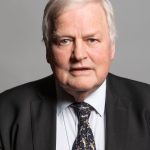
The speech made by Bob Stewart, the Conservative MP for Beckenham, in the House of Commons on 23 February 2021.
On 17 April 1984, Woman Police Constable Yvonne Fletcher of the Metropolitan police was fatally wounded by a gunman. He was hiding in the Libyan People’s Bureau, which was in St James’s Square in London. In this debate, I want to remember her by talking about her life and her tragic death, as well as making a request that she, even now, be considered for a posthumous gallantry award. I do not intend to speculate about who was responsible for pulling the trigger, as I believe there is now very little chance of bringing the murderers to justice, much as I would dearly like to see that happen.
Yvonne Fletcher was born on 15 June 1958. Her parents, Michael and Queenie Fletcher, lived in Semley, Wiltshire. Yvonne was the oldest of four daughters, and from the age of three, she told her parents that she wanted to join the police. It was her primary ambition in life. By the time she was 18 and a half, she tried, but she was 1½ inches too short to reach the height required; she needed to be 5 feet 4 inches, and she was 5 feet 2½ inches. Disappointedly, she applied for any police service that she could get into, which included the Royal Hong Kong police. Yvonne’s persistence paid off, and the Metropolitan police waived the height requirement in her case. She must have been very special for them to do that.
After training and a two-year probationary period, she was confirmed as a regular woman police constable. After being given her warrant, she spent most of her police service working from Bow Street police station. It was there that she became engaged to another police officer, Police Constable Michael Liddle. For some six years, Yvonne was based at Bow Street, where she was hugely respected and liked by her fellow officers. I gather she was called “Super Fletch”, and that was because, first, they liked her, and secondly, she was very good at her job.
On 17 April 1984, Yvonne was asked to reinforce a police operation monitoring a demonstration of mainly Libyan students who were protesting about the regime of Colonel Gaddafi. The main part of that demonstration was occurring in St James’s Square. A detachment of about 30 police officers was sent to St James’s Square, including Yvonne Fletcher, her fiancé Michael Liddle, and members of the police diplomatic protection group. The anti-Gaddafi protesters consisted of about 75 people, and their demonstration started at about 10 am. Many of the demonstrators were wearing masks to make sure that they could not be identified by photographers standing at the windows of the Libyan People’s Bureau. Gaddafi’s regime had a habit of murdering opponents, wherever they were in the world, so this precaution was very sensible.
The police had erected barriers. The demonstrators were behind them, and Yvonne and her colleagues were in front. The demonstrators carried anti-Gaddafi banners and chanted slogans against the dictator. I think that there was actually a pro-Gaddafi protest there as well. Suddenly, at 18 minutes past 10, automatic gunfire was discharged from two windows of the People’s Bureau. It was presumably directed at the anti-Gaddafi demonstration, but a round hit Yvonne Fletcher. I suspect that the gunman simply sprayed the area and did so without really looking out of the window, with their hands up so that they could not be identified. The bullet entered Yvonne’s back and tore through her body. She collapsed on the road. Several other people were wounded, although none was as badly hurt as Yvonne.
The police shepherded the demonstrators into Charles II Street, while several of Yvonne’s police colleagues tried to save her. I quote from an email that I received from PC John Murray, who was with her at the time. Forgive me for quoting directly, but he did email me last week. He said:
“Yvonne was shot from the bureau, and fell to the ground. I went over to her. I was only feet from her and cradled her head. The square quickly emptied, leaving three of us with Yvonne. We carried her into a nearby street and I went with her in the ambulance to hospital. In the ambulance there were other Libyan students who were bleeding from their wounds, but she seemed more concerned about them. ‘Keep safe. Be calm,’ she said.”
What incredible courage and conduct for a young woman of 24 or 25. What an example—to the Metropolitan police themselves and to every one of us. I am in awe of that, and I suspect that anyone listening is too.
At 10.40 am, Yvonne had been taken to Westminster Hospital. For some of the time going there, she was conscious but in huge pain. As she was being transferred from the ambulance on to the trolley in the hospital, the spent bullet that had travelled through her body fell out of her uniform. Yvonne was taken straight into the operating theatre, but it was too late; she died on the operating table at about midday.
Yvonne’s hat and four other officers’ helmets were left lying in the square during the ensuing siege of the bureau. At the time, I was a staff officer in the Ministry of Defence. In the days that followed, I remember—I suspect others do too—the images of the hats and helmets in St James’s Square being shown repeatedly in the media, on the television and in newspapers.
Ten days later, on 27 April, a police officer called Clive Mabry, acting against specific orders, ran in and retrieved Yvonne’s hat from in front of the bureau. Getting that hat back was hugely symbolic and doing that meant one heck of a lot to the policemen and policewomen. Typically for any uniformed organisation—I have been in one myself—Mabry was admonished, but praised too. He was fined seven days’ pay by the police for his indiscipline, as well as being given the freedom of the City of London for doing the right thing. The hat was placed on Yvonne’s coffin for her funeral, which took place later the same day in Salisbury Cathedral. Six hundred policemen attended that funeral.
Yvonne’s conduct exemplified the very highest standards of the Metropolitan police service. When she was mortally wounded, she seemed to care more about others who were with her in the ambulance than herself. What courage she displayed by saying to those trying to look after her that they should keep safe and stay calm. That was within minutes of her death. She did that when she must have been in the gravest of agony.
From my own experience of writing citations, may I suggest that a posthumous award of the George Medal could be considered, despite the passage of years, and because of Yvonne’s calm, courageous demeanour while she was grievously wounded, and dying? As so many of us remember, Police Constable Keith Palmer was murdered near here, in New Palace Yard, on 22 March 2017. He was awarded the George Medal posthumously. I believe there should be such an award for Yvonne Fletcher, who showed valour of a similar nature to that of Keith. Keith tried to stop the madman, although he was unarmed; it cost him his life. Yvonne was saying things and showing, in the way she behaved, how courageous she was.
Mr Mark Francois (Rayleigh and Wickford) (Con)
In view of my right hon. Friend’s elevation to the Privy Council, on which I congratulate him, I believe his recommendation carries even more weight. Some years ago, I was Veterans Minister at the Ministry of Defence. I was never a Minister in the Home Office; nevertheless, I pay tribute to Keith Palmer, and also to Yvonne Fletcher. For what it is worth, may I wholeheartedly endorse my right hon. Friend’s recommendation that her valour and conduct is wholly worthy of the award of the George Medal?
Bob Stewart
Thank you, on behalf of everyone who is campaigning. The more of us who say it, the better.
Jim Shannon (Strangford) (DUP)
Will the right hon. Gentleman give way?
Bob Stewart
I give way to my honourable friend—he is my hon. Friend, even though he is in the Opposition.
Jim Shannon
The right hon. Member for Beckenham (Bob Stewart) has a great part in every one of our hearts. I salute him, as an honourable and gallant Member.
I remind him as well that we in Northern Ireland have felt all too often the devastation of the death of our serving police officers. I know that the right hon. and gallant Gentleman will have known some of those officers who served and died for Queen and country. Does he agree that the message must be clear in every part of the United Kingdom of Great Britain and Northern Ireland that every life is precious, that there will be no tolerance of the murder of those who served, and that the maximum penalty can and will be applied on every occasion? I support entirely the campaign on behalf of Yvonne Fletcher. I wish the hon. Member well, and I hope that the Minister will respond in a positive fashion.
Bob Stewart
I thank the hon. Member. All I can say to that is that I entirely agree with him on the Police Service of Northern Ireland and its predecessor, the Royal Ulster Constabulary.
To make a little aside, when someone is killed in the military, they give out the Elizabeth Cross to the next of kin. I would have thought that that is quite a nice thing to consider doing for the police. It is just a thought, which has only just come into my brain at this moment, but the Elizabeth Cross really means something to the next of kin of people who have lost their lives serving in the military. I would have thought that for the police that would be quite a good idea, too.
The hon. Member for Ayr, Carrick and Cumnock (Allan Dorans), who was a serving officer in the Metropolitan police on the day that Yvonne was murdered, cannot be with us today. He has told me that he did not know Yvonne personally, but he did know that she was an exceptionally talented, passionate and caring young police officer who loved her job and the opportunity to help people—she was really good at that. He told me that he would provide full support for the posthumous award of a George medal.
As I prepared for this debate, I have personally spoken to 59 past and present members of the Metropolitan police about Yvonne Fletcher. Only one or two of those officers needed to be reminded who she was, and that is because they were not even born when this incident happened, but to a man and to a woman they were utterly supportive that such recognition should be given to their incredibly gallant late colleague. I entirely agree with them. Thank you, Madam Deputy Speaker—over to my friend the Minister.