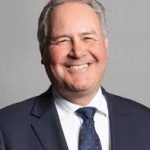
Tag: Bob Blackman

  • Bob Blackman – 2022 Speech on Holocaust Memorial Day

    Bob Blackman – 2022 Speech on Holocaust Memorial Day

    The speech made by Bob Blackman, the Conservative MP for Harrow East, in the House of Commons on 27 January 2022.

    It is a pleasure to follow the hon. Member for Enfield North (Feryal Clark), who remembered another genocide that took place in the world.

    It is fair to say that antisemitism is nothing new. We only have to look back to Shakespeare to see that antisemitism was rife during that period in our history. It has been prevalent in societies across the world for centuries and it is still prevalent today. I recalled earlier the attack on shopkeepers in Stamford Hill only yesterday. What makes the holocaust different is that it shows the ultimate destination of antisemitism: a systematic attempt to wipe out the Jewish race and anyone of Jewish religion—not just people who were openly Jewish, but anyone who had Judaism in their genealogy. I speak as someone in that position. I would not be here today if I had been alive in Germany in those times. That demonstrates the way in which people’s backgrounds were traced to see whether any relative or any person of Jewish blood was present. It was systematic, deliberate and intentional.

    I was at school with many Jewish children. No one spoke about the holocaust. Half of my class were Jewish, but no one ever spoke about the holocaust during those days. It was ignored, perhaps to be airbrushed from history forever, because it was such a tragedy. The relatives—fathers and mothers—of many of my friends had come from eastern Europe as refugees, but they never spoke about the holocaust either. When we were at school, we never got the opportunity to learn about its horrors and what people went through at that time.

    I remember my first visit to Yad Vashem. It was not the Yad Vashem we see today; it was a much smaller, more intimate formation in its early days, going back to 1992. It was a pivotal moment for me on my first visit to Israel, seeing Jerusalem, seeing Yad Vashem and seeing first-hand what had gone on during the holocaust. It had the first ever recordings of survivors—people who had sadly passed away, but who had recorded their testimony in advance—plus early photographs and other details of what had gone on in Germany and eastern Europe in particular during the holocaust.

    That made Yad Vashem more intimate, in many ways, than it is now. It is a much bigger operation now, with much more testimony and evidence of what happened, but when I heard the names of the children who had been murdered by the Nazis being recited, one name after another, it brought home to me how people could commit such systematic murder of children—wipe them off the face of the planet—and what a terrible experience it was.

    Andrew Gwynne (Denton and Reddish) (Lab)

    I have had the privilege of visiting Yad Vashem four or five times now, and I remember on one particular occasion going into the cave the hon. Gentleman describes, where the recordings of children’s names and ages just continue. By coincidence, there was a run of names, two boys and a girl, the same age that my two boys and my daughter were at that time. I broke down in tears, because that is where it really hits home: “This could be you. There but for the grace of God go we all. If politics turns nasty and turns against you, this is the end result.” That is why Yad Vashem and all holocaust memorials are so important.

    Bob Blackman

    I thank the hon. Gentleman. I freely admit—I am not ashamed to say it—that I cried. I cried for humanity, I cried for the people who had been lost and I cried for our whole being and how we could ever have allowed such a thing to happen.

    I declare my interest as co-chairman of the all-party parliamentary group on holocaust memorial. I look forward to the holocaust memorial and learning centre’s being built, so we can have our own facility where we can commemorate the lives of those who were lost, and commemorate those who survived. When I was first elected to the House in 2010, the first all-party group I joined was the APPG on combating antisemitism. It is right that, across the House and on both sides of the political divide, we stand against antisemitism.

    I have visited Auschwitz-Birkenau, and I believe I share the view of most students who have seen Auschwitz for only one day that it would be better if people could stay a little longer, just to appreciate even further the terrible crimes that were committed. The problem with that, of course, is funding, and the fact that lengthening the amount of time spent away might reduce the numbers who could go on such visits.

    The problem I see with the programme of Auschwitz-Birkenau visits is that students learn about what went on there and think that that was it. We must remember that it was not just Auschwitz-Birkenau: there was a network of death camps and forced labour camps right across eastern Europe and Germany, where Jews and others were forced into slave labour and then systematically exterminated.

    I have often wondered how a civilised nation such as Germany could get into a position to commit such inhumane acts. When we talk about 6 million Jews being killed, it is a number; it is hard to personalise that down to individual circumstances. It is hard to visualise the horror of the attempt to wipe out the Jewish race. We should remember that it did not take place over one or two years. It was a deliberate, long-term attempt by the Nazis to eliminate the Jewish race.

    We should also remember that the roots of the holocaust go back to the end of the great war. Germany was subjected to severe reparations. That led to incredible poverty in Germany, which then gave rise to the Nazis, who could say, “It’s the Jews’ fault you haven’t got any money. Let’s take it out on the Jews. If we take Jews out of their position, we can spread the wealth.” It was a deliberate policy of the Nazi party to spread this hatred and it should never, ever be allowed to be repeated. There needs to be a greater understanding and appreciation that, from the early 1930s onwards, this systematic approach led to the Shoah. We have to remember that.

    We must also remember that antisemitism was rife in this country at that time, and we should not think that it was not going on elsewhere either. That thought process and the demeaning of Jewish people was going on, and that is one reason why few people were allowed to escape from Germany and come here. Had they been allowed to do so, many people who lost their lives in the camps would have survived.

    I would like to take this opportunity to pay tribute once again to pay tribute to Karen Pollock and her brilliant team at the Holocaust Educational Trust, who do such wonderful work to educate people—young and old—about the horrors of the holocaust. Not everyone can go to Auschwitz-Birkenau and witness the crimes that took place. We talk, as other Members have, about the shoes, the spectacles and the clothing at Auschwitz-Birkenau, but the memory that I have above all else is walking across the park with the lakes. There is an eerie silence. There is no wildlife. No birds tweet, no animals cry and the reason why the wildlife know is that that is where the Nazis emptied the ashes from the crematorium. The wildlife know what happened there and so should we.

    One aspect of the Holocaust Educational Trust’s work that has become more important is the outreach programme. Last year, more than 600 schools partnered with the trust to enhance educational provision. That is important because it allows holocaust survivors to give their first-hand testimony, lead workshops and ensure that young people understand what happened and learn lessons.

    One of the most famous survivors was Gena Turgel, who lived in Stanmore in my constituency. In many ways, she was a pioneer of holocaust education, as she was going into schools and colleges way before any of the current structures were set up. She was born in Krakow and had eight brothers and sisters. She was only 16 when her home city was bombed on 1 September 1939.

    Here is the part of Gena Turgel’s story that I think is most pertinent. Her family had relatives in Chicago and they planned to leave for the United States, but they made their decision too late, as the Nazis had already invaded and closed all the entry and exit points, so her family had to move to just outside Krakow. In autumn 1941, she moved into the ghetto, and then moved after some of her family were shot by the SS in the ghetto. She was then forced into a labour camp, and in 1945 to Auschwitz-Birkenau, where she was sent with her mother on the death march from Auschwitz, leaving behind her sister, who they never saw again. They then arrived in a further labour camp, were forced on to trucks, and travelled under terrible conditions to Bergen-Belsen, where they arrived in February 1945. On 15 April 1945, the British Army liberated Bergen-Belsen and among the liberators was Norman Turgel, who became Gena’s husband. Gena passed away in 2018, but her record is in a book called, “I Light a Candle”, so her legacy lives on.

    Hermann Hirschberger was born in 1926 in Germany. He lived with his mother, father and older brother. He attended a local non-Jewish school, but when the Nazis said that Jewish children could not go to school any more, he was forced not to go. He was beaten up going from home to school and back again by people who were his friends when he was in school, because the Nazis had said that Jews were not allowed to exist. At 9 pm on 9 November 1938, the synagogues were burnt and businesses, homes and shops were smashed. Windows were smashed and homes and buildings were burnt to the ground. This is known as Kristallnacht, the night of broken glass.

    After that, Hermann’s parents realised that they had to escape, but they could not—they were not allowed to. However, Hermann was one of the first to come on the Kindertransport to this country, where he built his family. He never saw his parents again. Hermann and his brother had a long journey to get to the UK. They were taken to a hostel in Margate, where Hermann had his bar mitzvah, and remained there for about a year. They regularly wrote to their parents. Two days after war broke out, their parents wrote to say that they had received their permits—they would be allowed to leave. However, once war broke out, they were not allowed to leave. They were sent to a camp in the Pyrenees and eventually murdered in Auschwitz- Birkenau.

    In this country, Hermann and his brother were separated and then reunited. Hermann went on to marry and live in my constituency. He regularly spoke to schools about his life and what happened to Jewish people when they came to this country as refugees—by the way, it was not a happy experience for those people. We should own up to that and honour that memory.

    Of course, we honour Hermann’s memory, because sadly he died on 1 January 2020. I had the privilege of meeting him on many occasions and hearing about his experiences both in this country and before he arrived. The reality is that, as time goes on, survivors are, sadly, no longer with us, so it is important that we capture their testimony and every other aspect on video, in audio and in writing.

    I have had the unfortunate opportunity to witness at first hand the plight of the Rohingya and see what still happens in this world. We have a duty to ensure that people who have perpetrated murder are brought to justice and suffer for the war crimes that they have committed, and that we help and assist refugees.

    The theme this year is “One Day” when we put aside all our differences to remember what happened not only in the holocaust and in persecution by the Nazis but in the genocides that have followed. We hope that one day there will no longer be any genocide. Today, we learn about the past and empathise with others, but we must take action for a better future.

    I end with a quote by Iby Knill, a survivor of the holocaust, who said about the camps:

    “You didn’t think about yesterday, and tomorrow may not happen, it was only today that you had to cope with and you got through it as best you could.”

  • Bob Blackman – 2021 Speech on Equitable Life

    Bob Blackman – 2021 Speech on Equitable Life

    The speech made by Bob Blackman, the Conservative MP for Harrow East, in the House of Commons on 21 January 2021.

    I beg to move,

    That this House expresses grave concern regarding the Government’s continued inaction with respect to the injustice suffered by Equitable Life policyholders, the vast majority of whom have only received partial compensation compared to the confirmed losses directly attributed to regulatory failures despite the Government’s acceptance of the Parliamentary Ombudsman’s findings to compensate victims in full in relation to the maladministration of Equitable Life; notes the concern previously expressed by the Public Accounts Committee on the transparency and accuracy of the payments being made to victims; further notes the Government’s failure to fulfil the Committee’s request to publish an intelligible and transparent explanation to policyholders on how to verify the correctness of the compensation they have received; notes examples of grossly inaccurate payments, adjusted only when identified by policyholders, gathered by the Equitable Members Action Group (EMAG); notes the Government’s continued insistence that there have been no mistakes in the methodology for calculating payments to policyholders; and therefore calls on the Public Accounts Committee and the Public Administration and Constitutional Affairs Committee to establish a joint inquiry into the accuracy of the payments made to victims of the Equitable Life scandal.

    This debate has been delayed since 26 March 2020 because of the covid pandemic. I thank the Backbench Business Committee for finding the time for it, and the Leader of the House and Mr Speaker for allowing us to participate virtually in debates so that we can explore these issues in some detail. I declare my interest as co-chairman of the all-party parliamentary group for justice for Equitable Life policyholders. I co-chair the group with the hon. Member for Leeds North East (Fabian Hamilton), who sadly has a prior commitment and cannot be with us this afternoon. Our all-party group now has 289 members—almost a majority of the House—which demonstrates how important the issue is to all our constituents.

    I want to set out several things during the debate and to frame it appropriately. The Equitable Life case is absolutely unique. There have been other failures of pension schemes and of financial institutions—failures that unfortunately happened, and where, quite rightly, the Government have not chosen to bail out the organisations. But this failure was unique. Back in the 1980s, Equitable Life started what can only be described as a Ponzi scheme. I distance the current Equitable Life board from what was going on in the 1980s, but the company then deliberately set out to create a scheme whereby it promised bonuses that could not be achieved and could not be sustained in the long term.

    As a result, over 1 million people invested their money with Equitable Life, in the expectation that it was a safe and secure environment in which to hold their money. That led to a position in which it was all very well while the money was coming in, but when the money had to be paid out in such a way that the scheme was recognised as being unsustainable, action clearly had to be taken.

    The Equitable Life case is unique because, of course, it was a conspiracy between Equitable Life, the regulator and the Government of the day. Equitable Life was considered too big to fail because if it did, the Government would have had to pick up the costs. The scandal went on, and the House of Lords was involved in setting aside the position way back in 1999, as a result of which Equitable Life closed to new business in 2000.

    Some 10 and a half years ago, I was proud to stand and be elected on a manifesto—as was my hon. Friend the Minister—that promised full and proper compensation for the victims of the Equitable Life scam. Basically, people lost their livelihoods and the pension that they all looked forward to in their old age. It should be recognised that Equitable Life victims are typically retired nurses, teachers, civil servants and factory and shop workers, plus small business owners, who had no choice following the scandal but to set up a personal pension. The majority of those individuals had less than £20,000 in their pension pot.

    In 2010, we promised the victims proper and full compensation, neither of which has been delivered. Almost 1 million pension savers have received just 22% of the losses they suffered following maladministration. It is worth reminding the House that way back in 2008 the parliamentary ombudsman ruled that this was the most severe case of maladministration ever seen and that the victims’ loss was directly attributable to a decade of serious, serial regulatory maladministration. It is therefore right that we set out to compensate the individuals affected.

    So far, the Treasury has refused to disclose the full workings of the calculations of the payments that have been made. That can hardly be considered transparent. In 2010, we promised that victims’ losses amounted to £4.3 billion and that they would be provided with full compensation. The amount was later revised to £4.1 billion, but so far only £1.5 billion has been allocated for compensation. The Government allocated £620 million to those already receiving an annuity, leaving only £780 million to share among the 1 million other victims, plus £100 million of contingency. That has meant that the pension savers have received only 22.4% of the money that they lost as a consequence of a decade of failure by the Treasury and the financial regulators.

    Let us be clear about what else has happened. For some bizarre reason that I have never been able to fathom, those people who were classified as the pre-1992 trapped annuitants—the most vulnerable and the oldest victims of this scam—were excluded from the scheme. It is true that we were able, through lobbying and the good work of Ministers, to ensure that those victims received a one-off payment of £5,000, increased to £10,000 if they were on pension credit. That went some way towards compensating them.

    The reality is that to compensate the entirety of those pre-1992 victims would cost no more than £100 million. They were excluded because of the position on their having taken out their policy before 1 September 1992. The question of what happened between them taking out their policies and 1 September 1992 seems bizarre. The ruling seems to have been that they could not have known that this was a Ponzi scheme and they could not have known about the regulatory failure prior to 1 September 1992, so even though they were in ignorance, they should be excluded. In my view, that is an injustice that we need to put right.

    In addition, we seek to achieve full payment for the 895,000 traced pension saver victims, which would finally settle the unpaid debts covering their losses that were incurred through no fault of their own. That would cost £2.6 billion and could be phased over time. We also want equality of treatment for the pre-1992 trapped annuitants, which could easily be met with the underspend of the £1.5 billion already allocated.

    We need to see full transparency on the Treasury calculations. There remains serious doubt over the accuracy and reliability of the methodology that has been used by the Treasury to calculate moneys owed to qualifying Equitable Life policyholders as part of the compensation scheme that was established under the Equitable Life (Payments) Act 2010. The Treasury should disclose full details of how those calculations were made. The motion calls for the Public Accounts Committee and the Public Administration and Constitutional Affairs Committee to hold a joint inquiry into payment accuracy.

    The Equitable Members Action Group, which represents the Equitable Life victims, has uncovered cases where policyholders were significantly undercompensated for their losses due to errors in the Treasury’s calculations. In those instances, no attempt was made by the Treasury to contact the policyholders, and cases were only revealed following appeals made to the independent review panel. In all cases of appeal to the independent review panel, the appeal was upheld and the panel made recalculations that resulted in increased payments made to the policyholder. Not a single appeal has failed to be upheld. The most extreme case brought to our attention so far is that of a policyholder whose losses were calculated as £17, when they were actually £8,661. He won on appeal. EMAG is calling for a joint inquiry into the accuracy of the payments made to victims of the scandal, which is something we all wish to see.

    We are all living through an immensely challenging and unpredictable period due to covid and the current economic position. The virus has had a significant impact on people of all ages, but especially the elderly. Many Equitable Life victims are currently confined to their homes, increasingly vulnerable and worried for their futures, which makes the need for this issue to be settled all the more important. This, after all, is a debt of honour. Equitable Life victims were pushed to one side as a direct consequence of the timing of the 2008 financial crisis, which saw the UK’s banking corporations bailed out, while hard-working and responsible pension savers took the hit. The same must not happen again.

    Equitable Life victims did the right thing and saved prudently for their retirement. The Government should now do the right thing by them. The current crisis has shown that money can be found when the political will exists. As I said, this is a debt of honour that must finally be paid. The compensation payments would be spent on or shared down the generations, and in doing so would be recycled in the economy, supporting the economic recovery that we all need.

    I thank you, Madam Deputy Speaker, for allowing me to introduce the debate. I look forward to hearing contributions from Members on both sides of the House and to the response from my hon. Friend the Economic Secretary to the Treasury.

  • Bob Blackman – 2020 Speech on Holocaust Memorial Day

    Below is the text of the speech made by Bob Blackman, the Conservative MP for Harrow East, in the House of Commons on 23 January 2020.

    I am grateful, Mr Deputy Speaker, for the opportunity to speak in this deeply emotional debate. I congratulate the hon. Member for Warrington North (Charlotte Nichols) on her speech—on a personal level, but also in understanding the Jewish people and what they actually went through.

    Antisemitism is not new. It has been prevalent in society for centuries, and it is still prevalent with us today. But what makes the holocaust different is that it shows us the ultimate destination of antisemitism, with a systematic attempt to wipe out the Jewish race and anyone of Jewish religion—not just people who were openly Jewish, but anyone with Jewish genealogy somewhere in their DNA. The way in which people’s backgrounds were traced to see whether any relative or any person of their blood was Jewish was systematic, deliberate and intentional.

    I was at school with many Jewish children, and no one ever spoke about the holocaust. It was ignored—perhaps to be airbrushed from history forever because it was such a tragedy. The relatives—the fathers and mothers—of many of my friends had actually come from eastern Europe or Germany as refugees, but they never spoke about the holocaust. Whenever one went for dinner on Friday nights, it was never mentioned—I often wondered why. When we were at school, we never got the opportunity to learn about the horrors of the holocaust and what people went through.

    I remember my first visit to Yad Vashem. It was not the Yad Vashem that we see now—I have been there many times since—but the first formation of it. This was back in 1992, I think, on my first visit to Jerusalem. It was a much more intimate museum at that time. It commemorated things that had gone on. It had the first recordings of survivors—people who had sadly passed away, but recorded their testimony—and early photographs and other details of what had gone on in Germany and in eastern Europe, in particular, during the holocaust. That made Yad Vashem more intimate, in many ways, than it is now. When I heard the names of the children being recited, it brought home to me how people could systematically murder children—wipe them off the face of the planet—and what a terrible experience it was. I do not mind admitting that I cried. I cried for humanity, and I cried for the people who had lost their lives and their relatives.

    When I was elected to this place, the first all-party parliamentary group that I joined was the one on combating antisemitism, because it is right that we in this House stand up against it. I also do not mind admitting that when Holocaust Memorial Day was first mooted—it was when I was the leader of my party’s group on the London Borough of Brent Council—I was concerned that we were going to get into virtue-signalling. I am glad to say that I was wrong. It is right that we educate people, that we commemorate the liberation of Auschwitz and that we bring to bear greater understanding of the horrors that went on.

    I, too, have visited Auschwitz-Birkenau. My hon. Friend the Member for Shrewsbury and Atcham (Daniel Kawczynski) alluded to the concern that students see ​Auschwitz for one day, and it would be better if they could stay for longer. The problem with that is funding and the fact that lengthening the amount of time spent away might reduce the numbers who could go on such visits. The problem that I see with the programme of Auschwitz-Birkenau visits is that students learn about what went on there and think that that was it. We need to remember that there was a network of death camps—forced labour camps—across eastern Europe and Germany, where Jews and others were forced into slave labour and then systematically exterminated.

    I have often wondered how a civilised nation such as Germany could get into a position in which it would commit such inhumane acts. How could that possibly happen? When we talk about 6 million Jews being killed, it is a number, and it is hard to personalise that down to individual circumstances. It is difficult to visualise the horror of this attempt to wipe out the Jewish race. We have to remember that this did not just take place in one or two years. This was a deliberate attempt by the Nazis to eliminate the Jewish race.

    The roots of this are at the end of the great war, when Germany was subjected to severe reparations. That led to incredible poverty in Germany, which then gave rise to the Nazis, who could say, “It’s the Jews’ fault that you haven’t got any money. Let’s take it out on the Jews. If we take Jews out of their position, we can spread the wealth.” That was a deliberate policy, and it should never be allowed to be repeated. There needs to be a greater understanding and appreciation that, from the early 1930s onwards, this systematic approach led to the Shoah. We all have to remember that.

    We must also remember that antisemitism was rife in this country at that time. We should not think that it was only going on elsewhere. The thought process and the demeaning of Jewish people was going on in this country, and that is one reason why few people were allowed to escape from Germany to here. Had they been allowed to do so, many people who unfortunately lost their lives in camps would have survived.

    I pay tribute to Karen Pollock and her brilliant team at the Holocaust Educational Trust, who do such wonderful work to educate people—young and old—about the horrors of the holocaust. Not everyone can go to Auschwitz-Birkenau and witness evidence of the terrible crimes that were committed. We talk about the shoes, the spectacles and the clothing at Auschwitz-Birkenau. The memory that I have above all else is walking across the park with the lakes, where there is an eerie stillness. No birds tweet, and there is no sign of wildlife. There is nothing there because those ponds were where the Nazis put the ashes after emptying them from the gas chambers and incinerators. The wildlife know what happened, and so should we.

    One aspect of the Holocaust Educational Trust’s work that has become more important is the outreach programme. Last year, more than 600 schools partnered with the trust to enhance educational provision. That is important, because it allows holocaust survivors to give their first-hand testimony and lead workshops so that more and more young people can understand what happened and learn the lessons from it. It is important that we remember the survivors.​
    I echo the need for a holocaust education centre to be set up alongside this building. People visit this place as the cradle of democracy, and it is right that we have a holocaust education centre alongside our Parliamentary Education Centre so that people visiting London can see a proper record of what happened without having to travel to Jerusalem or other parts of the world. I co-chaired the all-party parliamentary group on holocaust memorial in the last Parliament. I pay tribute to my co-chair, Ian Austin, who called out antisemitism and did so much to ensure that people understood the evils of antisemitism and the need for an education centre.

    The testimony of survivors is most important. I want to place on record the details of those who sadly lost their lives last year and this year. Eve Glicksman and Henri Obstfeld both died last year, and Hermann Hirschberger MBE passed away on 1 January. One of the most famous holocaust survivors was Gena Turgel, who lived in Stanmore in my constituency. In many ways, she was a pioneer of holocaust education, as she was going into schools and colleges way before many of the current structures were set up. She was born in Krakow in Poland and had eight brothers and sisters. She was only 16 when her home city was bombed on 1 September 1939.

    Here is the part of Gena Turgel’s story that I think is most pertinent. Her family had relatives in Chicago, and they planned to leave for the United States, but they made their decision too late, as the Nazis had already invaded and closed all the entry and exit points, so her family had to move to just outside Krakow. In autumn 1941 she was moved to the ghetto in Krakow, and then moved after some of her family were shot by the SS in the ghetto. She was then forced into a labour camp, and in 1945 to Auschwitz-Birkenau, where she was sent with her mother on the death march from Auschwitz, leaving behind her sister, who they never saw again. They then arrived in a further labour camp, were forced on to trucks, and travelled under terrible conditions to Bergen-Belsen, where they arrived in February 1945. On 15 April 1945, the British Army liberated Bergen-Belsen and among the liberators was Norman Turgel, who became Gena’s husband just six months later. Gena passed away in 2018, but her record is in a book called “I Light a Candle”, so her legacy will live on.

    Hermann Hirschberger was born in 1926 in Germany. He lived with his mother, father and older brother. He attended a local non-Jewish school; in fact, there were only two Jewish students in his class and school. In 1936, Nazi laws ruled that Jewish children could no longer attend non-Jewish schools—that was part of the programme to eliminate and delegitimise Jewish people.

    Sir Peter Bottomley

    Those who have not ought to look at Adolf Eichmann’s story. He was appointed in 1932, and in 1933 he started dealing with what was thought of as “the Jewish problem”. The idea was to persecute, isolate, emigrate and then literally exterminate the Jews—it went all that time back.

    Bob Blackman

    I thank my hon. Friend for his intervention. It was clear that this was going on for a long time before the second world war broke out.

    Hermann and his brother had to walk to and from school, because German culture at that time prevented Jewish people from travelling on trams. Jewish people ​were not allowed to mix with other people on trams—this was the dehumanisation of Jewish people. Of course, on their way to and from school, Hermann and his brother were often verbally and physically attacked by students from the non-Jewish school. The people they called friends suddenly turned on them because they were Jewish.

    Then, at 9 pm on 9 November 1938, across Germany the synagogues were burnt, and businesses and homes and shops were smashed. Windows were smashed and homes and buildings were burnt to the ground. This is known as Kristallnacht, the night of broken glass.

    Hermann and his brother had not seen these crimes at first hand, but when they went to school the following morning, many of their teachers had been arrested and they were sent home. Hermann’s mother went to the bank where his father worked to warn him. However, two members of the Gestapo forced their way in and arrested his father at work. His father was then held for two days before being allowed home.

    After Kristallnacht, Hermann’s parents realised, as did many others in Germany, that they could no longer stay there safely. They tried to arrange for the family to leave but could not obtain visas for the whole family. However, they managed to arrange for Hermann and his brother to be sent to England on the Kindertransport, meaning that they were making a huge sacrifice—they knew they would probably never see their sons ever again.

    Fabian Hamilton

    I pay tribute to the hon. Gentleman for his work on fighting antisemitism, defending against it and ensuring that this curse can never happen again. Has he visited the amazing and incredible holocaust museum, Beth Shalom, in Ollerton in Nottinghamshire? It is absolutely incredible. It recreates the classrooms he has just talked about as well as the carriages of the Kindertransport. If he has not done so, I urge him to visit it.

    Bob Blackman

    I have not visited, but I will make it a priority to do so when it is convenient, because I believe that it is something we should go and witness for ourselves.

    Hermann and his brother had a long journey to get to the United Kingdom. They were then taken to a refugee hostel in Margate, where they remained for about a year, during which time Hermann had his bar mitzvah. They regularly wrote to their parents and two days before the war broke out, their parents wrote to them to say that they had just received their permits—they were going to be allowed to leave. However, once war had broken out, they were not allowed to leave. They were sent to a camp in the Pyrenees, from which they were still able to write to the brothers, but eventually they were deported to Auschwitz-Birkenau, where they were both murdered.

    In this country, Hermann and his brother were separated and sent off to different schools. Hermann was sent to work in Staffordshire while his brother worked in London, but eventually they were reunited. Hermann went on to marry and to live in London. He lived in my constituency, and he regularly spoke in schools about his experiences not only in Germany, but in this country, because we should remember that Jewish people coming as refugees to this country did not always have a happy experience. ​We should own up to that, and we should also say that we are not unique in offering service now to Jewish people. Sadly, Hermann died on 1 January 2020. I met him on many occasions and had the opportunity to hear of his experiences both in this country and before he arrived.

    I want to single out two other people. The first is Angela Ioannou, who is an ambassador for the Holocaust Educational Trust. She recently attended the Lord Merlyn-Rees annual lecture in Parliament, and has given an account of her views on how we can make sure that holocaust education continues to be rolled out. The other is Dr Alfred Weinberger, who was born 26 April 1900—he shares my birthday, if not my exact birth year. He was deported to the ghetto in 1943, and then on to Auschwitz-Birkenau, where he was killed.

    The reality is that the testimony of survivors and their experiences bring to life the horrors of the holocaust. We must set out our stall to make sure that such things never happen again. Members have mentioned other forms of systematic murder, but I have seen the plight of the Rohingya at first hand. The duty we owe is to ensure that those people who have perpetrated murder are brought to justice and suffer for the war crimes they have committed, and that we help and assist people who are refugees.

    I end by saying that the theme of this year is “stand together”, and I that think the whole House stands together united today in remembering the horrors of the holocaust and saying, with one voice, never again.