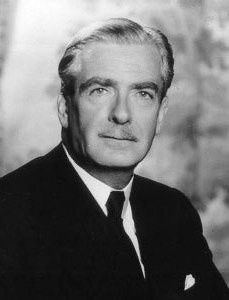
Tag: Anthony Eden

  • Anthony Eden – 1942 Speech on the Holocaust (First Mention in House of Commons)

    Anthony Eden – 1942 Speech on the Holocaust (First Mention in House of Commons)

    The speech made by Anthony Eden, the then Foreign Secretary, in the House of Commons on 17 December 1942.

    Mr. Silverman (by Private Notice) asked the Secretary of State for Foreign Affairs whether he has any statement to make regarding the plan of the German Government to deport all Jews from the occupied countries to Eastern Europe and there put them to death before the end of the year?

    The Secretary of State for Foreign Affairs (Mr. Eden) Yes, Sir, I regret to have to inform the House that reliable reports have recently reached His Majesty’s Government regarding the barbarous and inhuman treatment to which Jews are being subjected in. German-occupied Europe. They Have in particular received a note from the Polish Government, which was also communicated to other United Nations and which has received wide publicity in the Press. His Majesty’s Government in the United Kingdom have as a result been in consultation with the United States and Soviet Governments and with the other Allied Governments directly concerned, and I should like to take this opportunity to communicate to the House the text of the following declaration which is being made public to-day at this hour in London, Moscow and Washington:

    “The attention of the Governments of Belgium, Czechoslovakia, Greece, Luxemberg, the Netherlands, Norway, Poland, the United States of America, the United Kingdom of Great Britain and Northern Ireland, the Union of Soviet Socialist Republics and Yugoslavia, and of the French National Committee has been drawn to numerous reports from Europe that the German authorities, not content with denying to persons of Jewish race in all the territories over which their barbarous rule has been extended the most elementary human rights, are now carrying into effect Hitler’s oft repeated intention to exterminate the Jewish people in Europe. From all the occupied countries Jews are being transported, in conditions of appalling horror and brutality, to Eastern Europe. In Poland, which has been made the principal Nazi slaughterhouse, the ghettoes established by the German invaders are being systematically emptied of all Jews except a few highly skilled workers required for war industries. None of those taken away are ever heard of again. The able-bodied are slowly worked to death in labour camps. The infirm are left to die of exposure and starvation or are deliberately massacred in mass executions. The number of victims of these bloody cruelties is reckoned in many hundreds of thousands of entirely innocent men, women and children.

    The above mentioned Governments and the French National Committee condemn in the strongest possible terms this bestial policy of cold-blooded extermination. They declare that such events can only strengthen the resolve of all freedom loving peoples to overthrow the barbarous Hitlerite tyranny. They re-affirm their solemn resolution to ensure that those responsible for these crimes shall not escape retribution, and to press on with the necessary practical measures to this end.”

    Mr. Silverman While thanking the right hon. Gentleman for that statement, in which he has given eloquent expression to the conscience of humanity in this matter, might I ask him to clear up two points: First, whether the phrase, “those responsible” is to be understood to mean only those who gave the orders, or is it to include also anybody actively associated with the carrying-out of those orders? [An HON. MEMBER: “The whole German nation.”] Secondly, whether he is consulting with the United Nations Governments and with his own colleagues as to what constructive measures of relief are immediately practicable?

    Mr. Eden The hon. Gentleman and the House will understand that the declaration I have just read is an international declaration agreed to by all the Governments I mentioned at the outset. So far as the responsibility is concerned, I would certainly say it is the intention that all persons who can properly be held responsible for these crimes, whether they are the ringleaders or the actual perpetrators of the outrages, should be treated alike, and brought to book. As regards the second question, my hon. Friend knows the immense difficulties in the way of what he suggests, but he may be sure that we shall do all we can to alleviate these horrors, though I fear that what we can do at this stage must inevitably be slight.

    Mr. Sorensen Having regard to the widespread abhorrence of all people regarding these crimes, could attempts not be made to explore the possibility of co-operation with non-belligerent and neutral Governments to secure the emigration of Jews, say, to Sweden or to some other neutral country?

    Mr. Eden My hon. Friend will see that it is only too clear, from what I have said, what is going on in these territories occupied by Germany. Naturally I should be only too glad to see anything of the kind, but the hon. Member will understand the circumstances.

    Mr. Sorensen Am I to understand that the right hon. Gentleman is exploring that possibility?

    Mr. de Rothschild May I express to the right hon. Gentleman and this House the feelings of great emotion—the really grateful feeling that I am certain will permeate the Jewish subjects of His Majesty’s Government in this country and throughout the Empire at the eloquent and just denunciation which has just been made by the right hon. Gentleman? Among the Jewish subjects of His Majesty there are many to-day who have been in this country only for a generation or so. They will feel that, but for the grace of God, they themselves might be among the victims of the Nazi tyranny at the present time. They might be in those ghettoes, in those concentration camps, in those slaughter-houses. They will have many relations whom they mourn, and I feel sure they will be grateful to the right hon. Gentleman and to the United Nations for this declaration. I trust that this proclamation will, through the medium of the B.B.C., percolate throughout the German-infested countries and that it may give some faint hope and courage to the unfortunate victims of torment and insult and degradation. They have shown in their misery and their unhappiness great fortitude and great courage. I hope that when this news goes to them they will feel that they are supported and strengthened by the British Government and by the other United Nations and that they will be enabled to continue to signify that they still uphold the dignity of man.

    Sir Percy Hurd Can my right hon. Friend say whether Canada and the other Dominions were asked to share in this declaration?

    Mr. Eden In the first instance, this, as my hon. Friend will realise, is a declaration organised by the European countries who are suffering, and it was necessary that the three great Powers should get together quickly about the matter. We thought it right, and I am sure the House will think it right, that the principal victims should sign this paper as rapidly as possible. I think the whole House fully understands that, and I know that the Dominions Governments very fully understand it. Perhaps I should state that arrangements are being made for this statement to be broadcast throughout Europe from here, and, of course, it is being done from Moscow and Washington also. I may also say that all the information we have from the occupied countries is that the peoples there, despite their many sufferings, trials and tribulations, are doing everything in their power to give assistance and charity to their Jewish fellow subjects.

    Mr. Lipson May I associate myself with everything that has been said by my hon. Friends the Members for the Isle of Ely (Mr. de Rothschild) and Nelson and Colne (Mr. Silverman), and ask my right hon. Friend whether if this protest is broadcast to the German people, it will be made clear to them that this is not war but murder and that they must be held in some measure responsible, if they allow the German Government to carry out their horrible intentions?

    Mr. Eden Yes, Sir, that is precisely what was in the minds of His Majesty’s Government when we took steps to set this declaration in motion.

    Mr. Silverman Would the right hon. Gentleman consider in the broadcasts which are made not limiting the question of responsibility to the negative side of punishment but expressing the appreciation which we all feel for the numerous acts of courage done all over Europe by individuals who take enormous risks in order to render what help they can to those who are suffering; and would it not be right, in the broadcasts, to promise those individuals that what they are doing now will not be forgotten but will redound to their credit and benefit when the time comes?

    Mr. Eden Yes, Sir.

    Mr. McGovern May we take it from the right hon. Gentleman’s statement that any persons who can escape from any of these occupied territories will be welcomed and given every assistance in the territories of the United Nations?

    Mr. Eden Certainly we should like to do all we possibly can. There are, obviously, certain security formalities which have to be considered. It would clearly be the desire of the United Nations to do everything they could to provide wherever possible an asylum for these people, but the House will understand that there are immense geographical and other difficulties in the matter.

    Miss Rathbone Will this declaration be addressed also to the Governments and the peoples of Hitler’s unwilling allies, the other Axis countries, who might be able to do much to secure the rescue of these victims?

    Mr. Eden That has already been arranged.

    Mr. Cluse Is it possible, in your judgment, Mr. Speaker, for Members of the House to rise in their places and stand in silence in support of this protest against disgusting barbarism?

    Mr. Speaker That should be a spontaneous act by the House as a whole.

    Members of the House then stood in silence.

  • Anthony Eden – 1943 Statement on Death of Speaker Edward FitzRoy

    Anthony Eden – 1943 Statement on Death of Speaker Edward FitzRoy

    Below is the text of the statement made by Anthony Eden, the then Secretary of State for Foreign Affairs, in the House of Commons on 3 March 1943.

    The news which the House has just received will be felt, I think, as a tragic personal blow to each one of us. The Speaker was not only a great Speaker, but also he was a man whom every Member of the House had come to regard as a personal friend. In that light, perhaps, most of all we shall always remember him. This, as the House knows, is not the moment for the tributes which will in due course be paid, but I think I shall be expressing the feelings of every Member if now, on behalf of the House, I send a message of bur deepest and most heartfelt sympathy to Mrs. FitzRoy and to the family in the loss which, though it, is nearer to them than to us, is a loss which we the House of Commons feel also. [HON. MEMBERS: “Hear, hear.”]

    In the circumstances, I think the House will feel it appropriate that I should move, ​ “That this House do now adjourn till Tuesday next.”

  • Anthony Eden – 1943 Speech on David Lloyd George’s 80th Birthday

    Anthony Eden – 1943 Speech on David Lloyd George’s 80th Birthday

    Below is the text of the speech made by Anthony Eden, the then Conservative Leader of the House, in the House of Commons on 19 January 1943.

    The House will feel that we cannot this day pass to our ordinary Business without taking note of an event which marks for this House a historic and an intimately personal occasion. On behalf of every hon. Member of this House I offer to my right hon. Friend the Member for Carnarvon Boroughs (Mr. Lloyd George) our congratulations and our heartfelt wishes on his 80th birthday. This is no time to attempt a detailed review of his services. They are world wide, and they were rendered to mankind. To-day we salute him not only as the dominant statesman of his generation, not only as the man who led this country through a period of storm and stress like unto that through which we now strive, but, more than all these things, we salute him as a great House of Commons man. For over half-a-century he has been a champion in our midst. Neither his courage nor his resilience has ever failed him. He has needed both, because he has given hard blows and taken them. To-day we regard him with pride and with affection, and we, each one of us, hope that he will be spared for many years to teach us wisdom, to guide us and, if need be, to drive us along the path that we should tread.

    Hon. Members

    Hear, hear.

    Mr. Lloyd George

    I thank the right hon. Gentleman for his observations and for his felicitations. I thank him all the more because I was not given any notice ​ of his intention. It is very kind of him to have made these observations, and I thank him for them. I also thank my fellow Members of the House of Commons for the reception which they have afforded me to-day. Among all my recollections of the last 80 years there is none of which I am prouder than the fact that I have for 53 years been a Member of this honoured and this great Assembly. I thank the House of Commons and the right hon. Gentleman too.

  • Anthony Eden – 1937 Statement on Foreign Affairs

    anthonyeden

    Below is the text of the speech made by Anthony Eden, the then Secretary of State for Foreign Affairs, in the House of Commons on 21 October 1937.

    It is symptomatic of the state of the world to-day that our last Debate before our Summer holidays and the first opportunity for a debate on the resumption of our work should both be concerned with the foreign situation. During the period of our holiday, which I must confess seemed to me a singularly short one, the world has been far from observing the rules of August and September quietude in respect to which this House has set them so excellent an example.

    Indeed, internationally the holidays have been almost stormier than term time. I will not attempt to give the House this afternoon a full account of all the events in the international sphere which have so fully occupied the chancellories of Europe and the world during the past few months. It would unjustifiably tax the patience of hon. Members. At the same time, the House will no doubt wish to have on this first available occasion some account of the main events of the Recess and some appreciation of the present outlook. In two parts of the world far removed from each other—the south-western corner of Europe and the Far East—undeclared wars are at present raging. The House will not be surprised if I confine most of what I have to say this afternoon to these two parts of the world.

    I would like, for I think it is good to keep some kind of chronological sequence, to begin with events in the Mediterranean, which began to take place not very long after the House had adjourned for its summer holidays. We became confronted with what was something of a new phenomenon in the international situation. The commerce of the Mediterranean found itself confronted with a new menace. Merchant ships, neutral merchant ships, non-Spanish merchant ships were stopped and sunk, often without warning and with consequent heavy loss of life in the Mediterranean. Our own shipping, British shipping, began in consequence to suffer from what were in effect acts of piracy. That was a situation which could not be allowed to continue.

    I have seen it said that the action of His Majesty’s Government in conjunction with the French Government and the other Mediterranean Powers—now all the other Mediterranean Powers—has militated against the chances of victory of one side or the other in Spain. Whether that be so or not, it is a charge to which we are quite indifferent, for the action which we took had, of course, nothing whatever to do with whatever our sentiments might have been in respect of the Spanish conflict itself. Against such acts the only possible safeguard was the use of such overwhelming strength for the protection of trade routes in the Mediterranean as would effectively deter the pirates.

    There were, moreover, two conditions for such action—that it should be speedy, that it should be based on international authority. Hence the Nyon Conference. We and the French Government—the latter were the conveners of the Conference—were sincerely sorry that the Italian Government could not see its way to participate in the Conference for reasons which we need not go into now. That difficulty has since been resolved. Fortunately, however, a remarkable measure of unity manifested itself within the Conference, and within 48 hours all the necessary plans and details, both political and technical, had been agreed to by the members; and within actually less than a fortnight the decisions of the Conference, including the patrolling of the trade routes in the Mediterranean by an Anglo-French force totalling some 80 destroyers, were actually in operation. It is always dangerous to offer any prophecy in present world conditions, but it is at least true that from the Assembly of the Nyon Conference until to-day the acts of piracy against shipping in the Mediterranean have ceased.

    There is one additional comment I would like to make. The rapid progress realised by that Conference was only made possible by the marked degree of co-operation between the British and French delegations, both naval and political, and, no less important, by the ready spirit of comprehension shown by the other Mediterranean Powers present. His Majesty’s Government will not cease to be sincerely grateful for the part played by each one of the signatories of the Nyon Agreement.

    Now I must turn to the sphere of the international situation, which presented, and in a measure continues to present, a less satisfactory picture. The working of the Non-Intervention Agreement during this period continued to be so unsatisfactory that the French Foreign Minister, M. Delbos, not unnaturally preoccupied, as were His Majesty’s Government, by the situation, seized the occasion of a conversation with an Italian representative at Geneva to propose spontaneously Three Power conversations between the French and Italian Governments and ourselves in an attempt to improve the Spanish position in all its aspects. In the circumstances the House will appreciate that in view of the origin of the invitation there was no time for prior consultation with us, but we were prepared and are still prepared to fall in with any proposal that gives prospect of a speedy betterment of the situation. I have no doubt that M. Delbos then hoped that the improved international atmosphere created by Italy’s joining in the Nyon Agreement created an opportunity for his initiative.

    The House knows the later history and I am not going to recapitulate it here. The Italian Government declined the Three Power conversations, but suggested a reference back to the Non-Intervention Committee. Despite previous disappointments the French Government and ourselves decided to make one more effort, even though it might have to be the last, to refloat the Non-Intervention Committee, which had been virtually waterlogged for two months. At the same time we thought it only fair to make it plain that if the meeting could not achieve results within a limited period we should have to be free to resume our liberty of action. I want to make our position plain to the House. That statement was made, not because we had ceased to believe that the policy of nonintervention was still the only safe course for Europe in the Spanish conflict, but because no Government can continue to associate itself for an indefinite period with an international agreement which is being constantly violated.

    So we come to Tuesday’s meeting. I confess that this was my first personal experience of a meeting of the Non-Intervention Committee. I would add also that at its close I myself saw no alternative but that the meeting the next day should decide to report failure to the General Committee, with all the consequences that such a decision must inevitably entail. In this connection I understand that there have been certain reports that on the morning of yesterday His Majesty’s Government took some new decision to modify their attitude, to grant belligerent rights, or seek to grant them, at once, and attempt to withdraw volunteers afterwards. I believe it has even been said that we approached the French Government in that sense. Lest there should be any misunderstanding, not only at home but elsewhere, I think I should make it plain that there is no truth whatever in that story. But at the eleventh hour there came a new and very welcome contribution by the Italian Government. However chastened some of us may be by the international experience of the last few years, no one will, I hope, belittle the significance of this offer.

    There are two points to be borne in mind which I wish to emphasise to the House in connection with it. The first is this: the chief difficulty in connection with this problem of the withdrawal of volunteers had been the relation in time between the withdrawal of the foreigners and the granting of belligerent rights. On this issue both the Italian and the German Governments have substantially modified their attitude. Secondly, a stubborn difficulty had been the question of the proportionate withdrawals from both sides. Without proved figures it was virtually impossible to reach agreement on numbers, consequently on the basis for proportionate withdrawal. Here, too, the Italian Government have proposed a solution which should be acceptable—that we should undertake in advance to agree to proportions based on the figures of the Commission to be sent to Spain, whatever its figures may ultimately prove to be. His Majesty’s Government are themselves in complete accord with this view, and sincerely appreciate the contribution to international agreement which these two concessions and the acceptance of the British plan as a whole undoubtedly imply.

    I should be the last to indulge in exaggerated optimism. There are problems enough and to spare still outstanding. In any event, however, there was truth in the remark one of my colleagues on the Committee made to me as we left last night: “Yesterday there seemed to be no hope; to-day there are real chances of making progress.” Can we profit by them? The next few weeks will show, and I say “weeks” deliberately. His Majesty’s Government will spare no endeavour to see that progress, now once begun, proceeds rapidly and unchecked. With this in view the Committee will meet again tomorrow, when we hope to receive the replies of all Governments to the Italian Government’s new offer.

    But while I am speaking about Spain there are some general observations about that country and the Mediterranean situation which I would like to make to the House. The Government have always maintained, not, I know, with full approval from all quarters of the House always, that the right policy for this country in this dispute is non-intervention. This was the doctrine so often and eloquently preached to us, if I remember aright, by hon. Members opposite in the early days of the Russian Revolution. The fact that others may be intervening now does not detract from the truth of the doctrine. I am convinced that the people of this country are united and emphatic in not wishing the Government of this country to take sides in what should be a matter for the Spanish people. I am also convinced that our people wish the Government to do everything in their power, by example and by conference, not to let the principle of non-intervention he finally and irrevocably thrown over, if that can be contrived.

    In this Spanish conflict our determination is to concentrate on what is possible; by a combination of patience and persistence, even at the risk of criticism and misrepresentation, to localise this war; and to watch over British interests. Those seem to us our two principal tasks, and in this connection I repeat to-day what I said in North Wales a few days ago, that non-intervention in Spain must be sharply distinguished from indifference in respect to the territorial integrity of Spain or in respect of our Imperial communications through the Mediterranean. There will be no indifference on the part of the Government where it is clear that vital British interests are threatened. In matters of such delicacy and importance the House will agree that the utmost precision and clarity are called for. Let me, therefore, once again make it plain that our rearmament bears with it neither overt nor latent strains of revenge either in the Mediterranean or anywhere else. Such sentiments are wholly alien to the British character, and even were the Government of the day to harbour them, which it does not, the British people would never be willing to give effect to them. Our position in the Mediterranean is essentially this, that we mean to maintain a right of way on this main arterial road. We are justified in expecting that such a right should be unchallenged. We have never asked, and we do not ask to-day, that that right should be exclusive.

    The House has been encouraged to hope by the events of yesterday that a final step forward may be made in eliminating the Spanish question from the sphere of international conflict. His Majesty’s Government most ardently hope that this will prove to be the fact, for let us be frank about the consequences. The Government are conscious, as everyone else who has watched the international situation in the past year must have been conscious, that foreign intervention in Spain has been responsible for preventing all progress towards international peace. If they had wanted to see how plain this fact is, hon. Members opposite should have been at the League Assembly this year, where despite efforts which were made, notably by my right hon. Friend the Secretary of State for Scotland, and by M. Leon Blum for France, to obtain an agreed resolution, such agreement was found to be quite impossible. So it is with every aspect of international life. This is the cloud that obscures the prospects of improving the relations between the Mediterranean Powers. It would be futile to deny that until it is finally dissolved real progress will not be possible between them. If and when, however, the Spanish question, with all its attendant problems, both strategic and political, ceases to be the nerve centre of international politics, then it will be possible for the nations of the Mediterranean to seek in friendly conversations among themselves to restore those relations of traditional amity which have governed their intercourse in the past. In such conditions there is every reason why such conversations should succeed. That is the objective which we should all like to see realised. It is one in which our whole-hearted co-operation, whatever party be in power in this country, can always be counted upon, on the condition that this problem of intervention in Spain is resolved.

    I should like to make some comments, if the House will allow me, upon the other sphere of warfare, the tragic situation which has developed in the Far East. There events have been happening which, whatever their military outcome, must inevitably result in the impoverishment of both nations now engaged in the conflict, and in the loss for a while at least to the other nations of the world of the hopes that a rising standard of living in the Far East and an expanding market in that part of the world would result in increased opportunities for commerce and for prosperity for all. This country more deeply regrets these events not only because we have great commercial interests in the Far East but also because, just previous to the outbreak of this conflict, we were, as I think the House knows, actually engaged in conversations with the Japanese Government which might have led to a programme of international co-operation, including of course the co-operation of China, for the improvement of relations and the development of trade in the Far East. These conversations, of course, were interrupted at once on the outbreak of the conflict, and their resumption is clearly impossible in present conditions. At the same time I would like to give the House a condensed account of the efforts which we have made to seek a settlement of this conflict, and I shall have something to say upon its origins and responsibilities in a moment.

    As soon as we received news of the outbreak of fighting in North China we made repeated attempts to persuade the two Governments to enter into negotiations with a view to settling their differences before they assumed large proportions, and we made it clear that our good offices were available at any time to them for that purpose. Equally, when hostilities seemed to threaten in Shanghai, and after they had broken out, we went further than that, for we made an offer that if the Japanese forces in Shanghai were withdrawn and both Governments would withdraw their forces, we would undertake the protection of Japanese nationals in Shanghai jointly with other Powers. Other Powers accepted that offer and so did the Chinese in principle provided it were accepted by the Japanese Government. I think perhaps everybody in the Far East regrets that that offer was not universally accepted. In all these efforts we have kept in the closest touch with the Governments of other countries principally concerned, and especially, of course, with the Government of the United States. The views of these Governments and the action which they have taken, either with the Japanese or Chinese Governments, or both, have been substantially of a similar character.

    Here I would turn for a moment to League action and our part in it in connection with this dispute. On 12th September the Chinese Government came to the League of Nations and referred their dispute with Japan to the League under Articles X, XI, and XVII of the Covenant, and the Council, with the full consent and approval of the Chinese Government, referred the matter to a special advisory committee which has been responsible for following the situation in the Far East. That advisory committee met at Geneva and, very wisely, I think, came to the conclusion that a body composed of the Powers principally interested in the Far East would be most likely to find a way of composing the dispute. They, therefore, proposed that the parties to the Nine-Power Treaty signed in Washington soon after the War should Initiate consultations in accordance with Article VII of that Treaty. Such consultation was immediately initiated by cable and through the diplomatic channel by His Majesty’s Government and various other Governments, with the result that the Belgian Government, having first been assured that such a course would he generally approved, have issued invitations to all parties signatories to the Treaty to meet in conference at Brussels, and we meet there on 30th October. We hope to be able to announce in the course of a day or two the delegates who are to represent the Government of this country.

    At Geneva certain pronouncements were made both about the origin of this conflict, in what I thought was an admirably drafted document by the advisory committee, and also as to the air bombing which has taken place. I will add nothing more on either of those subjects to-day, except to say that, as our own representative at Geneva made abundantly clear, we fully endorse every word of those reports and everything that they say. We welcome the summoning of this conference, because in our view a meeting of the Powers principally concerned, in the capital of one of the signatories of this Nine-Power Treaty, is the best hope of finding a means of putting an end to this unhappy conflict. I would remind the House of the initiative that the League took in the matter and of the words in which that initiative was defined.

    The words are: The sub-committee would suggest that these members”— that is, the members who signed the Nine-Power Treaty should meet forthwith to decide upon the best and quickest means of giving effect to this invitation. The sub-committee would further express the hope that the States concerned will be able to associate with their work other States which have special interests in the Far East to seek a method of putting an end to the conflict by agreement. It will be seen from this that our mandate is a definite one. I would only to-day add this: naturally we are in consultation with other Governments interested and shall continue to be so up to the moment of the Conference, and I received a message to-day to say that the French Foreign Secretary will himself attend the Conference and I also learn that the Italian Government are to send a delegation while the United States Government are being represented by their Ambassador at large. But I would submit this to the House: to talk now about what is to be included in or excluded from the Brussels Conference in advance of the meeting would be most unwise. We have our definite agenda given us by the League, and I suggest to the House that the proper procedure for us to follow is, in consultation with other signatories to the Treaty who will be present, to do the utmost that lies in our power to discharge that Mandate. The paramount desire of everyone must be to see an end put to the slaughter, the suffering and the misery of which we are witnesses in China to-day. If the meeting of the Brussels Conference can achieve this—and I repeat that, in our view, it offers the best chance there is of achieving it—the Conference will render the greatest possible service. If it fails, then we enter into a new situation which we shall have to face.

    Mr. Herbert Morrison Refer it to the Non-Intervention Committee, I suppose!

    Mr. Eden The right hon. Gentleman will, no doubt, explain what policy he wishes to advocate. I can only say that His Majesty’s Government will enter that Conference with the determination to do everything in our power to assure the success of its labours.
    So, if the House will allow me I will make one or two observations upon the international situation in general before I conclude. I would like to quote first of all from an important statement which has recently been issued on the international situation and which I read with the greatest interest. The statement said: During the past two years there is good reason to believe that Europe has more than once been on the very brink of the precipice. The position was very critical when Germany reoccupied the Rhineland. It then said: It was publicly declared by Leon Mum to have been very critical in the first weeks of the Spanish war and, as this war has continued, the danger of its spreading into a European conflagration has never been absent. Those who read that statement—[An HON. MEMBER: “Read on.”]—That statement will be recognised by hon. Members opposite. I expect they would rather say that it is all our fault. If it goes on to say that it is all our fault, they may quite believe it, but surely they are the only people who will believe it. My purpose is not to quarrel with that statement but to say that I am in full agreement with it. Unfortunately it is true, but if it is true surely it throws all the greater responsibility upon us to see that we do nothing at this time that might result in pushing us over the brink of the very precipice in respect of which hon. Gentlemen are so eloquent.

    I cannot but have constantly in mind in these anxious days the phrase which was used by my right hon. Friend the Minister for the Coordination of Defence about the years that the locusts have eaten. It is impossible in the conduct of international affairs at this time, in a rearming world where, as President Roosevelt has graphically described, international law is no longer respected—it is impossible for foreign policy to be other than very closely related to the condition of our armaments. The experience of these years should be a grim warning to us and, more important, a grim warning to every future Government who hold office in this country. Now, at length, our growing strength in the field of armaments is beginning to appear, and its significance can scarcely be exaggerated. That is why I cordially welcome in this House the verdict of the recent Socialist party—Labour party—conference.

    Mr. McGovern A completely National Government.

    Mr. Eden It is easy for hon. Members to throw taunts about that conversion, but I, for one, will never do so because I am only too glad for that conversion, because of the steady influence I am convinced that verdict will have upon the present international situation. If it be the precursor of closer unity in other spheres, so much the better; even for what it stands for in itself it is an element for which the Government cannot be too grateful.

    Mr. Gallacher It will not stand long.

    Mr. Eden Whatever our party differences here, there are no Members in any part of the House who do not care deeply for the preservation of peace, and the verdict thus given, and the votes cast even before the unity arrived, are a real contribution in present conditions towards that result.
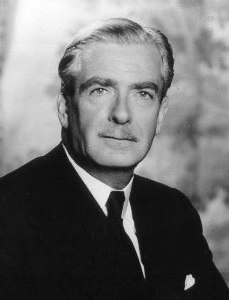
  • Anthony Eden – 1955 Speech on Re-Election of William Morrison as Speaker

    anthonyeden

    Below is the text of the speech made by Anthony Eden, the then Prime Minister, in the House of Commons on 7 June 1955.

    Mr. Speaker-Elect, in accordance with time-honoured custom in the House, it is my privilege to be the first to voice our congratulations to you on the signal honour, the greatest honour that the House corporately can bestow on any man, which has this afternoon been repeated in acknowledgment of your services. I do so with great pleasure, not only on my own behalf but on behalf of all my right hon. and hon. Friends on this side of the House. Perhaps I may also say that I do it with all the greater fervour as the first Englishman who has ventured to intrude at all in this afternoon’s ceremony.
    As the House does this act of congratulations to you, in truth we all feel that we are congratulating ourselves. As the last Parliament developed, we all felt to an increasing degree how much we owed to your guidance. Your ease of dignity, the clarity of your decision, the width of your experience, and certainly not least the native wit of Scotland placed us many times under an obligation to you. I am sure that the whole House feels fortunate indeed that you should be here and willing to preside once more over our proceedings.

    I think it was said that Mr. Speaker’s principal duties were to guard minority parties and even guard the rights of individual Members. About that I have no doubt that you will be zealous, even against the wishes of the Executive. That is as it should be. But there is something even wider than the rights of individual Members which you guard and cherish for us, and that is the character of the House. Each new Parliament develops its own personality. As we do that, as most certainly we shall, I believe that we shall have in mind that this new Parliament, like so many that have gone before it, in what it achieves and how it achieves it is showing leadership to all the free institutions throughout the world.

    It is perhaps at this time that special responsibility which we all value most and which I know, Mr. Speaker-Elect, you have so well understood in the past and will so cheerfully guard in the future. I feel every confidence that under your tolerant, wise and experienced guidance the House will receive all the help which it is in the power of the Chair to give. In all sincerity, we wish you good fortune and good health in the discharge of your duties.

  • Anthony Eden – 1955 Statement on Becoming Prime Minister

    anthonyeden

    Below is the text of the speech made by Anthony Eden in the House of Commons on 6 April 1955.

    I must, first, try to acknowledge the very generous words which have been used by the right hon. Gentleman the Leader of the Opposition and all those who have spoken in the House this afternoon—in well-deserved terms—about my right hon. Friend the Member for Woodford (Sir W. Churchill). The right hon. Gentleman the Member for Walthamstow, West (Mr. Attlee) rightly said that this is not the time for us to appraise my right hon. Friend’s work. For one thing, he is, fortunately, still among us; and we all know quite well that whenever he returns to us from his holiday he will still be the dominating figure among us.

    But while we admit that this is not the time for such an appraisal, perhaps the House would permit me a very few words on this subject, because for more than sixteen years we have been so intimately associated in political work, and, as it so happens, I have never spoken about this before. As I reflect over those years, and think of them in the terms of what we yet have to do, certain lessons seem to me to stand out for us in the message of what we have done.

    First, I think, in work, was my right hon. Friend’s absolute refusal, as his War Cabinet colleagues knew so well, to allow any obstacles, however formidable, to daunt his determination to engage upon some task. With that, courage; and the courage which expresses itself not only in the first enthusiastic burst of fervour but which is also enduring, perhaps the rarer gift of the two.

    Although my right hon. Friend has perhaps the widest and most varied interests in life of any man we are likely to know—and that is true—I still think that his great passion was the political life and that he brought to the service of it a most complete vision. No man I have ever known could so make one understand the range of a problem and, at the same time, go straight to its core. I believe that in statesmanship that will be the attribute which many who knew him would place first among his many gifts.

    Apart from these things, in spirit there was the magnanimity, most agreeable of virtues; and, let us be frank about it, not one which we politicians find it always easy to practise, although we should all like to do so. In part, perhaps, this was easier with him, because I think he always thought of problems not in abstract terms but in human values; and that was one of the things which endeared him to all this House.

    Finally, as has been so well said, there was the humour—the humour based on the incomparable command of the English language, which was so often our delight, not least at Question Time. I am sure that my right hon. Friend will be deeply moved by the things which right hon. and hon. Gentlemen have said of him this afternoon, for he loves this House—loves it in companionship and in conflict.

    The right hon. Gentleman the Leader of the Opposition and others have been kind in their welcome to me. I enjoyed very much the Melbourne reflections. The right hon. Gentleman, with his deep knowledge of history, will not, however, have forgotten that Melbourne, although always talking of leaving office, contrived to stay there for a very long time indeed. But I have no desire, I beg him to believe, to emulate that in its entirety. For the rest, I can only say to the right hon. Gentleman and to the Father of the House, too, that I have been deeply touched by what has been said this afternoon and that, for my part, I will do all I can to serve our country.

  • Anthony Eden – 1961 Maiden Speech in the House of Lords

    anthonyeden

    Below is the text of the maiden speech made by Anthony Eden in the House of Lords on 18 October 1961.

    My Lords, I hope that it will not be thought presumptuous in a newcomer if I say with what interest and pleasure I have listened to a number of the speeches in the debate in the last two days. My noble friend the Foreign Secretary, whose speech has just been referred to by the noble Lord opposite, gave us yesterday a survey of the international scene which I thought remarkable for its clarity and candour, two qualities eminently desirable in a Foreign Secretary. Also, I thought that, in the record he gave us of his stewardship, there was little that we could question. In fact, with his account I found myself almost always in close agreement.
    I also enjoyed yesterday, not for the first time in my political experience, a speech by the noble Lord, Lord Morrison of Lambeth, who seemed, as I recall, to be in characteristic form, and in a vein with which I am bound to admit I have not always been in agreement. Then to-day we have had the noble Marquess, Lord Lansdowne, who has given us a lucid report on the hazardous and useful journey which he made, and on the tragic circumstances which surrounded the last hours of Mr. Hammarskjoeld’s life and his lamentable death, as we all felt it to be.

    For the few moments during which I shall venture to detain your Lordships, I should like to come back to the European scene. It is about thirteen years ago that I stood where I am standing now, or a few paces to the left, to endorse, on behalf of the Opposition, the proposal made by the Labour Government of the day to take action on behalf of the Berlin Air-lift, a decision which I then thought, and still think, was both courageous and wise and, I agree with the noble Viscount the Leader of the Opposition, one for which the Labour Government were entitled to full credit.

    To-day, we once again discuss Berlin, as perhaps we could not have done, had the Labour Government not acted as they did then. But, of course, it is not only the fate of this great city with which we are concerned, any more than it was only the fate of that city with which we were concerned thirteen years ago, or only the fate of Danzig with which we were concerned in 1939. The Soviet purpose is to gain possession of West Berlin, either directly or through their satellite Government in East Germany; and to do this they will employ threats, cajoleries and blandishments, hoping to prise the Western Allies out of the city, or to scare them into making concessions which will further weaken their position.

    The Russians do not want war, as Hitler wanted war; but they want Berlin, or at any rate so large a measure of control in Berlin that it cannot live the kind of life which, by agreement, when the war was settled, it should live—its own life. Of course the Soviets have a great confidence in themselves, which could be dangerous to the world, and dangerous to them. It is based on a belief in their superior strength, and this may be exaggerated. The offer, already referred to, which was made in a speech yesterday at the Communist Congress in Moscow, of a respite in the settlement of the differences about Berlin and at the same time the announcement that they were to explode a 50-megaton bomb, is characteristic of a sense of overweening power. But for us, for the West, it remains an inescapable truth that if the Soviets, or their satellites were allowed to take over West Berlin, however much appearances might be saved, they would then be free to pass on to other demands, which would follow thick and fast and strong. And where should we then stop them?

    We must not burden our policy with make-believe. What is at issue is not the future of Berlin, but the unity of the will and purpose of the Western Alliance and its ability quietly but firmly to say “No” to unreasonable demands. We have done so before on occasions, and it has not always been without effect. We did so about Austria; we did so when the Western Powers created N.A.T.O.—also an achievement, so far as this country is concerned, of a previous Labour Government. To hold to the essentials of our positions in Berlin does not mean that we must refuse to talk—certainly not. But for discussion to be possible there must be something to negotiate, and so far all the Soviets have done is to grab and then show a willingness to talk about the next stage in their plan. That is not negotiation. It is to ask the West to ignore violent deeds and to enter into discussion as though they had not been done. I do not think that is possible. To accept such a course would be to connive at a progressive deterioration of international relations. At each backward step the West would be so much the weaker. That way lies disaster.

    This country, as my noble friend Lord Strang said last night, is not entirely a free agent in these matters. We have obligations. We played our part in the creation of N.A.T.O.; we played our part in bringing Western Germany into N.A.T.O., for which I accept, and do not regret, a personal responsibility. The N.A.T.O. partnership is the strongest political deterrent which exists to Communist world domination. But we must not think for a moment that the outcome of events in Berlin will be without its influence upon N.A.T.O. Germany’s N.A.T.O. partners have expressed opinions, as have Governments of all Parties in this country, about the future unity of Germany. They cannot go back on those decisions except by agreement.

    The hope in the minds of many in West Germany is that their country will one day have reunity. It is a perfectly legitimate hope and one that successive Governments in this country have many times endorsed. It would not be loyal to extinguish it; nor would it be wise. We must guard against a tendency to speak as though British Ministers were uncommitted in these matters; as though they could in some way arbitrate. That is not their position. If we did not stand by our N.A.T.O. partners we should commit an injustice and a blunder, because we could not then complain if West Germany were to seek other means to gain German unity. Another Rapallo is not an impossibility, and it had better not be our fault.

    For these reasons, my Lords, I submit that if there is to be a negotiated settlement, as I should like to see it. about the future of Berlin, it will have to contain some contribution from the Soviet side, of which hitherto, so far as I know, there has been no sign. The Soviets and their East German satellites have, in fact, already achieved a part of their purpose and have been scarcely challenged doing it. They have closed the mercy gate, which is a harsh deed. It is a deed contrary to the spirit, and I think the letter, of the Four-Power Agreement which we made at the end of the war. They are building a wall, a cruel wall, which in truth condemns them, because it is a prison wall, forbidding those behind it to reach physically to freedom. If I am right in my assumption that to build this wall is contrary to the international engagements we four Powers entered into, then this topic, I suggest, should be on the agenda when a Conference is held which includes the Soviet Power.

    The most important contribution the Soviets could make to-day, if they would, to a discussion would be to show a willingness to take decisions to allow East Germany a freer opportunity to lead her own life, and to put an end to that callous rampart they have just built. In other words, what we ask for is self-determination, which the Russians so often preach but forbid ruthlessly in the territories they control.

    The fact that such a settlement is so difficult for us to believe possible shows how far Moscow was challenged in taking forward positions to suit her policy. To stand firm over this issue of Berlin is not to invite war; it is the surest way to avert it. If we are firm, as I can see the Government have every intention of being firm, then we shall get negotiation. But we cannot accept a series of diktats, one after the other, nor the taint of being hostages, as I understand we have recently been described. The resumption of these atomic tests by Soviet Russia was intended to intimidate. There is no argument about that; they have told us so themselves. It was to shock the Western Powers into negotiation on Germany and on disarmament, presumably on Russian terms; and in this context Berlin and nuclear testing are closely linked. That is the reason why, though we will negotiate, and should, in certain conditions, the free world cannot yield to atomic blackmail and survive.

    Soviet Russia really ought not to object if we maintain the position that negotiations can take place only on the basis of existing engagements and mutual respect. Their literature is for ever complaining of the weakness which they allege the Government’s of France and Britain showed towards Hitler’s Germany in the years immediately before the war. They roundly condemn appeasement; they indict Munich in all their propaganda. It is surely rather illogical that they should now invite us to be appeasers in our turn, and bitterly revile the Governments of the West if, having learned their lesson, they are not prepared to negotiate a Munich over Berlin.

    When Her Majesty’s Government are considering whether or not there is a basis of negotiation, I should like to suggest to my noble friend a test which they might apply: it is whether the agreement for which they are working will serve only to relax tension for a while, or whether it is in the true interests of lasting peace. We must not perpetrate an injustice in order to get a little present ease; and the Government have to consider whether their decision gives peace, not just for an hour or a day or two, but in their children’s time. That is the difference between appeasement and peace. A long trail of concessions can only lead to war. I suggest to the Government four signposts as guides in these uncertain times though I admit how difficult they can be to follow: to stand by our Allies; to fulfil our obligations; to repudiate threats; and to probe for negotiation, while being beware of appeasement as I have tried to define it.

    My Lords, even as it is to-day the pressure upon Communist Powers is world-wide and continuous. Berlin is, at the moment, the focal point, but there are others. In Iran every method of intimidation and subversion, as it seems, is being unscrupulously employed. There the purpose is strategic and economic; the approach to the Persian Gulf, and the control of oil, to disrupt the economies of the other nations. In South-East Asia, particularly in South Vietnam, the area that strategically matters the most, fresh efforts are now apparently being made by extensive guerrilla activities to undermine the Government of the day; while in Tibet the conquerors are established, merciless and unchallenged.

    There is no reason to suppose that these pressures will subside. On the contrary, we must expect them to gather force as the Kremlin glories in the new power to intimidate, which its breach of the agreement to suspend nuclear testing is gaining for it. It may seem surprising that this action, which must to some extent imperil the future of the human race, has been so little condemned by what is usually called neutral opinion. I think the explanation is that its brutality—because it is brutal—was deliberate at that particular time in order to create fear, and in that it largely succeeded. The threat of nuclear war is for Moscow an instrument of policy.

    These events seem to me to show that the Free World is in a position of the utmost danger. I said a year ago that our peril was greater than at any time since 1939. Some thought that alarmist, though I do not think anybody would think so now. Yet we are still not realising the nature of the effort which is called for from us if we are to survive against a challenge of so much ruthlessness and power. Here I am not criticising any particular Government of any country, but posing the problem as it besets the Free World. Our methods do not yet match our needs. Admittedly, machinery is no substitute for will; but unless you have the machinery even the most purposeful will cannot achieve results.

    Many of your Lordships had experience during the war of the work of the Joint Chiefs-of-Staff. Without that organisation there would have been, as many noble Lords know, confusion and disarray; Allies playing their own hands in different parts of the world, often without understanding of the interests of others, sometimes regardless of them. That is exactly what has been happening often—only too often—between the politically free nations in the post-war world. We need a closer and more effective unity if we are sometimes to mould events and not only to pursue them.

    We have had two examples in the last few months of the consequence of not being prepared and agreed in advance for eventualities which were not very difficult to foresee. One was the building of the wall in Berlin, which I have just mentioned. The second has been recent events in the Congo, where opinion among the Western Powers seems to have been at odds and their actions uncoordinated, even within the United Nations. I do not want to argue about what the policy of the United Nations in the Congo should be, only to say this. While it seems to me a course of wisdom to encourage confederation in the Congo. I do not believe that it is defensible to try to impose federation by force.

    But however that may be, would not our policy in the Congo have been more influential if, even in the last few months, we and the United States and our other N.A.T.O. allies could have acted in unity? And should we not have had a better chance to do so if an international political General Staff had been at work to prepare joint plans in advance, as was done in war time, against a contingency which could be foreseen? I admit that to create such a political General Staff involves an act of will, overriding old jealousies and old prejudices which still exist between allies in the Free World, in what are nominally peace conditions. I therefore find it encouraging that this intention has received most support so far in the United States of America.

    In conclusion, my Lords, there is just one aspect of our affairs which, since I am now out of the stream of active politics, I think I can mention without being either patronising or partisan. There is another way in which this country can influence the international scene: by the image of its purpose which it creates in the minds of other people. I do not think we can, any of us, be altogether happy about that portrait just now. That is partly because of the theme of recurrent economic crises which have been endemic since the war and which, when they are temporarily surmounted, are so easily forgotten. Immediately after the war they seemed more readily acceptable. After the prodigous national effort that our country had made, and the unstinted expenditure of our resources, they seemed excusable. But now nothing would so much increase the authority of my noble friend the Foreign Secretary as the conviction in the world that we have put these recurrent spells of economic weakness behind us for good.

    I have no doubt that we can realise this, but only by a national effort in which every member of the community plays his part with a will to see the business through. This is something more important than the politics of any Party; it is our national survival as a great Power. If we can approach our economic problems in a spirit such as we have so often evoked in the past in the face of our country’s danger, selflessly, but with determination, we can solve them. We have to succeed, if our deliberations are to count for anything and if our country’s influence is to hold sway for justice and for peace.

  • Anthony Eden – 1965 Memorial Speech to Winston Churchill

    Below is the text of the speech made by Anthony Eden in the House of Lords (he was then the Earl of Avon) on 15 January 1965.

    My Lords, this is a day not only of national mourning but of mourning throughout the Free World. For Sir Winston’s service was to mankind, and for this his place will always be among the few immortals. Many of your Lordships knew Sir Winston well, and worked with him closely at one or other period of his career. But this afternoon, as has been apparent from almost every speech, our minds go back more especially to that period of the Second World War which he himself called our “finest hour”, and which was certainly his.

    It seems to me in every sense appropriate that this sad occasion should be so exceptionally signalised as in this Royal Message—and not only because of Sir Winston’s qualities of true greatness in leadership above all. These in themselves would be cause enough for the Message which we have received. But there is also another reason: that Churchill epitomised, at the same time as he led, the nation, at a time of brave and (why should it not be said?) splendid resistance against odds which might have seemed overwhelming. So, my Lords, as we mourn and honour Sir Winston, we reverence also all those who fell to bring victory to a cause for which he had dedicated himself and us. They are now together.

    My Lords, what follows is a suggestion to which I expect, of course, No immediate reply or comment, and which I make with some temerity, but from messages I have received I believe that it is not only my thought. It seems to me that the nation would feel glad if there could be a “Churchill Day”. This could be most appropriately connected, perhaps, with some date in that summer of 1940, when both Churchill’s leadership and this country’s will to resist, whatever the cost, expressed themselves so gloriously. They could then be enshrined together for as long as our calendar endures.

    I should like also to associate myself with the messages to Lady Churchill. No tribute, however penned or phrased, could out-measure what is deserved.

    My Lords, courage is never easy to define. Sometimes it is shown in the heat of battle; and that we all respect. But there is that rarer courage which can sustain repeated disappointment, unexpected failure, and even shattering defeat. Churchill had that, too; and he had need of it, as the noble Earl, Lord Attlee, will remember, not only for days but sometimes for weeks and for months. Looking back now at the war, victory may seem to have been certain. But it was not always certain; and when news is bad, it is very lonely at the top.

    Like one or two of those who are with us in this House this afternoon, I saw much of Sir Winston then—often many times a day, not only at official meetings but in such periods of comparative relaxation as there were, at meals and, as was his wont, late into the night. I grew to respect and love him, even though the argument might sometimes be sharp.

    My Lords, there is the granite type which feels little. Sir Winston was nothing of that at all. He felt deeply every blow of fortune and every gleam of hope. Alert, eager and questing as his temper was, he could hold on through all tides and tempests; and he had that gift, rare and difficult to discharge in statesmanship, of knowing when to reject “No” as an answer, recognising that the arguments against any positive action could always be trusted to marshal themselves. During those war years his mind was always projected to the next move, and in this he was aided by an energy which was something much more than zest for life. With that constitution, Sir Winston would have survived any strain in any age, but he loved best the present one in which he lived. I have heard it said in criticism that his opinions were of his own generation. Certainly they were. And that was his strength, because he was at the same time open-minded and comprehending as are very few men in this century. He saw clearly and further than most, and he spoke fearlessly and without favour of what he saw. He sensed the danger for his country with the instinct of the artist and the knowledge of the historian.

    As we cast our minds back this afternoon and pay tribute to his memory, there is, of course, nothing for which we in this Assembly shall remember him more than as a Parliamentarian. He called himself a “child of the House of Commons”. But he was, of course, much more than that. He had been brought up in a great Parliamentary age. I remember how he used to tell me how in those days speeches, even of Under-Secretaries, were fully reported in the Press. With awe, almost, he spoke of those days. And the great figures that dominated that period gave him an intimate sense of the power of Parliament which he never lost, just as he never forgot that Parliament put him where he was in 1940. It was a memory with him always.

    So, my Lords, as we say farewell to him now, we thank this, the greatest of all Parliamentarians whom we shall know; and we can best enshrine his work by devoting ourselves to the same thing, to those cherished thoughts, traditions and beliefs to which he held, through life, till death.

  • Anthony Eden – 1955 First Speech as Prime Minister

    Below is the text of the first speech of Anthony Eden in the House of Commons as Prime Minister made on 6th April 1955.

    I must, first, try to acknowledge the very generous words which have been used by the right hon. Gentleman the Leader of the Opposition and all those who have spoken in the House this afternoon – in well-deserved terms – about my right hon. Friend the Member for Woodford (Sir W. Churchill). The right hon. Gentleman the Member for Walthamstow, West (Mr. Attlee) rightly said that this is not the time for us to appraise my right hon. Friend’s work. For one thing, he is, fortunately, still among us; and we all know quite well that whenever he returns to us from his holiday he will still be the dominating figure among us.

    But while we admit that this is not the time for such an appraisal, perhaps the House would permit me a very few words on this subject, because for more than sixteen years we have been so intimately associated in political work, and, as it so happens, I have never spoken about this before. As I reflect over those years, and think of them in the terms of what we yet have to do, certain lessons seem to me to stand out for us in the message of what we have done.

    First, I think, in work, was my right hon. Friend’s absolute refusal, as his War Cabinet colleagues knew so well, to allow any obstacles, however formidable, to daunt his determination to engage upon some task. With that, courage; and the courage which expresses itself not only in the first enthusiastic burst of fervour but which is also enduring, perhaps the rarer gift of the two.

    Although my right hon. Friend has perhaps the widest and most varied interests in life of any man we are likely to know – and that is true – I still think that his great passion was the political life and that he brought to the service of it a most complete vision. No man I have ever known could so make one understand the range of a problem and, at the same time, go straight to its core. I believe that in statesmanship that will be the attribute which many who knew him would place first among his many gifts.

    Apart from these things, in spirit there was the magnanimity, most agreeable of virtues; and, let us be frank about it, not one which we politicians find it always easy to practise, although we should all like to do so. In part, perhaps, this was easier with him, because I think he always thought of problems not in abstract terms but in human values; and that was one of the things which endeared him to all this House.

    Finally, as has been so well said, there was the humour — the humour based on the incomparable command of the English language, which was so often our delight, not least at Question Time. I am sure that my right hon. Friend will be deeply moved by the things which right hon. and hon. Gentlemen have said of him this afternoon, for he loves this House — loves it in companionship and in conflict.

    The right hon. Gentleman the Leader of the Opposition and others have been kind in their welcome to me. I enjoyed very much the Melbourne reflections. The right hon. Gentleman, with his deep knowledge of history, will not, however, have forgotten that Melbourne, although always talking of leaving office, contrived to stay there for a very long time indeed. But I have no desire, I beg him to believe, to emulate that in its entirety. For the rest, I can only say to the right hon. Gentleman and to the Father of the House, too, that I have been deeply touched by what has been said this afternoon and that, for my part, I will do all I can to serve our country.

  • Anthony Eden – 1924 Maiden Speech

    anthonyeden

    Below is the text of the maiden speech in the House of Commons of Anthony Eden on 19th February 1924.

    May I, at the outset, ask for the usual courtesy and indulgence which is always extended to a maiden speech. The last speaker made great play of a little geographical tour, and he asked us from what quarter we expected an attack from the air. I do not know, but I do not think that is the point we want to discuss. Surely, the point is rather that we should prepare to defend ourselves against an attack from any quarter. There can be little doubt that this question is of exceptional interest in this House, and the reasons are not very far to seek. In the first place, it is not in the nature of things possible to provide hastily and at a moment’s notice for air defence; and, in the second place, the very heart of our country, the city of London, is especially vulnerable to attack from the air. For these reasons, I hope that the Government will not be tempted too much by sentiment, and will rather act, as we gather from the speech of the Under-Secretary, not in accordance with his principles, but in accordance with the programme he has inherited from other parties, and that the Government will, as a matter of insurance, protect this country from the danger of attacks from the air.

    The Under-Secretary asked what was meant by adequate protection, and he said he believed preparedness was not a good weapon. That may be, but unpreparedness is a very much worse weapon, and it is a double-edged one, likely to hurt us very seriously. The Under-Secretary quoted an old military maxim, and I will quote one which is that “Attack is the best possible form of defence.” [HON. MEMBERS “No, no!”] I expected hon. Members opposite would be a little surprised at that doctrine. I was not suggesting that we should drop our bombs on other countries, but simply that we should have the means at our disposal to answer any attack by an attack. It is a natural temptation to hon. Members opposite, some of whose views on defence were fairly well known during the years of the War, to adopt the attitude of that very useful animal the terrier, and roll on their backs and wave their paws in the air with a pathetic expression. But that is not the line on which we can hope to insure this country against attack from the air. I believe and hope that hon. Members opposite will carry out the programme which they have inherited, and will safeguard these shores, so far as they may, from the greatest peril of modern war.