Tag: 2024

  • PRESS RELEASE : North projects awarded funding to improve lowland peat soils  [February 2024]

    PRESS RELEASE : North projects awarded funding to improve lowland peat soils [February 2024]

    The press release issued by the Department for Environment, Food and Rural Affairs on 7 February 2024.

    The government has announced the recipients of awards to improve lowland peat soils, including over £1.3m to projects across the North.

    Peatlands are our largest terrestrial carbon store, however, as a result of centuries of drainage for agriculture, just 1% of England’s lowland peatlands remain in a near-natural state, and these drained peatlands account for 88% of all greenhouse gas emissions from England’s peat.

    The projects will use government funding to improve the management of water on lowland peat and enhance understanding of climate change impacts and flood risk.

    The projects in the North are:

    • Lancashire Wildlife Trust were awarded £327,500 for a wetter farming trial and a feasibility study.
    • Groundwork Cheshire, Lancashire and Merseyside were awarded £100,200 to investigate the feasibility of re-wetting areas of Lindow Moss.
    • National Trust, Cheshire, were awarded £65,000 to produce a wider costed water-management plan, including undertaking detailed surveys to understand the extent and nature of the peat soils.
    • Mersey Rivers Trust were awarded £55,000 to develop knowledge of the current condition of the lowland peat soils and explore whether wetter farming is a viable option.
    • Yorkshire Wildlife Trust were awarded £342,000 for a project focused on the technical and economic implications of raising water levels on 7 farms, enabling farmers to make informed decisions about long-term land use.
    • Reedness and Swinefleet Internal Drainage Board were awarded £264,000 for a connectivity and hydrological study at the Thorne, Crowle & Goole Moor Peatlands to ensure cross-beneficial needs for both peat restoration and flood management.
    • Vale of Pickering Internal Drainage Board were awarded £160,000 to develop a better understanding of the River Hertford catchment in terms of water management, with a view to how IDB operations need to change if re-wetting peatlands were pursued.     The four successful projects in the north west will use government funding to look to improve the management of water on lowland peat and enhance understanding of climate change impacts and flood risk.

    Philip Duffy, Chief Executive of the Environment Agency, said:

    I was incredibly encouraged by the number of exciting applications to the Lowland Agriculture Peat – Water Discovery Pilot. They represent a diverse array of applicants, from across the breadth of the lowland peat areas.

    Over the coming year, evidence from these local collaboration pilots will be the first step in understanding costs, benefits and risks from changing water management within lowland agriculture peat soils. The pilots will produce costed water-management plans, which will help us to balance our aims to reduce climate change impacts and flood risk, improve biodiversity and support sustainable agriculture.

    Helen Earnshaw, Peat Project Officer at Lancashire Wildlife Trust, added:

    We are really excited to have been awarded this funding which will help us expand our work looking at wetter farming practices on lowland agricultural peat.

    We know that many conventional farming practices need to change, but the farming community need to know what will and won’t work before they can make the shift to more sustainable farming techniques.

    This funding will allow us to undertake a farm-scale wetter farming trial, on a real working farm, providing vital data and evidence for both farmers and policymakers.

  • Wayne David – 2024 Speech on Freedom and Democracy in Iran

    Wayne David – 2024 Speech on Freedom and Democracy in Iran

    The speech made by Wayne David, the Labour MP for Caerphilly, in the House of Commons on 1 February 2024.

    I commend the hon. Member for Harrow East (Bob Blackman) for introducing this debate and the Backbench Business Committee for allowing the time for it.

    This debate is important and timely. Although we have had only a few contributions, they have been significant and important. The hon. Member mentioned the Ashraf 3 camp in Albania, and although it is not entirely clear what has happened there it is important to note his point that the Inter-Parliamentary Union, for which I am on the executive of the British group, will be sending a delegation to Albania. I will make a point of making sure, as best I can, that the delegation raises the matter in its visit.

    At the start of my contribution, I make the point that the authoritarian and theocratic regime in Iran presents and presides over a reprehensible repressive state. As has been said, there is little real democracy in today’s Iran. At the beginning of March, there will be elections to the Iranian Parliament and the Assembly of Experts. As has been the case in the past, the Council of Guardians will prevent candidates standing whom the Supreme Leader does not approve. We expect that those who are blocked will be moderate and reforming candidates.

    The elections will rightly attract a great deal of attention, not least because they are the first to be held since the widespread protests in Iran following the death of 22-year-old Mahsa Amini. As I am sure many Members are aware, her death in September 2022 occurred in police custody after she had been arrested for not complying with strict Islamic dress code. Following her death, there were widespread protests across Iran for a number of months. They were cruelly repressed by the regime, but it is important to remember and to pay tribute to the many thousands of women and girls who were brave enough to take part. Indeed, I was proud to speak in an event in this House organised by the Azadi Network. Speakers were from all parties in this House, and they demonstrated a real solidarity, which all parties have clearly expressed, and I stress that that is so important. It was the House of Commons saying to the Iranian people, “We are with you.”

    The protests were subject to appalling brutality in Iran, meted out by the Iranian authorities. It is estimated that at least 20,000 people were detained, including many children. It is estimated, too, that more than 500 people were killed, and many more were seriously injured. The violence did not stop with the end of the demonstrations: there have been many allegations of torture and appalling treatment of detainees, including reports of sexual and gender-based violence against women, men and children.

    As has been said, Amnesty International has reported that Iranian security forces are guilty of using the most terrible sexual violence against people who are merely peaceful protesters. It is important to note the comments made by the hon. Member for Strangford (Jim Shannon), who spoke eloquently about the lack of human rights and pointed out the lack of religious freedom in today’s Iran.

    If the Iranian regime is repressive at home, it is guilty of aggression abroad. In fact, it is among the world’s foremost state sponsors of terrorism. Iran, through its so-called proxies, is guilty of helping to initiate violence across much of the middle east. Iran has supplied huge support to Hamas in Gaza. It has supplied and supported Hezbollah in Lebanon and is still doing so. In Iraq—including in Kurdistan—and in Syria, Iranian sponsored militants have attacked US forces. On Sunday, an Iran-backed group was responsible for a drone attack on a US military base in Jordan that resulted in the death of three American soldiers and the injury of many other people.

    As we all know, the Houthis, who again are closely linked to the Iranian regime, have been conducting missile and drone attacks on international shipping in the Red sea. Of course, the US and the UK have been undertaking surgical strikes against Houthi targets in Yemen, and Labour is on record as supporting that proportionate action. Further afield, the Iranian regime has developed close links with Russia and has supplied a large number of drones that are being used in Ukraine, so there can be absolutely no doubt about the Iranian regime’s malign influence across the middle east and the world.

    On Tuesday, I raised Iran’s destructive activities across the globe with the Minister of State, Foreign, Commonwealth and Development Office, the right hon. Member for Sutton Coldfield (Mr Mitchell), at FCDO questions. He indicated that the Foreign Secretary was in the region that day and holding meetings on the very issue. He also said that the Government were

    “working extensively with Jordan, Egypt, Qatar, Israel, Saudi Arabia and America.”—[Official Report, 30 January 2024; Vol. 744, c. 710.]

    I would be appreciative if the Minister indicated in his reply how those meetings went and how the ongoing discussions will proceed on this important issue.

    We are aware that Iran is active in this country. As a number of hon. Members, including the hon. Member for Harrow East, said, the head of MI5 has previously referred to potential threats by Iran to kidnap or kill British or UK-based people. In 2015, the police discovered an Iranian-linked bomb factory in London. Since the beginning of 2022, Iranians have been responsible for at least 15 potential threats against British or UK-based individuals. That was recognised by a number of hon. Members in the Chamber.

    Earlier this week, The Times reported that a number of members of the Iranian diaspora who have spoken out against the Iranian regime have been warned by counter-terrorism police that they face an increased threat. It is also important to note that the Iranian authorities have been systematically targeting BBC Persian staff, intimidating their families in Iran as well as intimidating staff in this country. Since the protests in Iran in 2022, the BBC security team has reported that the risks to BBC Persian staff have “increased”. Because of those very real threats, I believe that the sanctions introduced, and the further ones announced, should be welcomed. I hope, however, that the Government will closely examine other ways in which pressure can be brought to bear on the appalling Iranian regime.

    One additional measure ought to be the total proscription of the Islamic Revolutionary Guard Corps. I understand that there is ongoing debate in Government about this, but if they do not bring forward appropriate measures that would lead to a total ban of the IRGC in this country, Labour will do so if it forms a Government. If the Government do that now, Labour will support it. I hope that the Government will respond in a truly positive way.

    This has been an important debate with excellent contributions. This issue should unite all of us who believe strongly in democracy, freedom and human rights in this country and throughout the world.

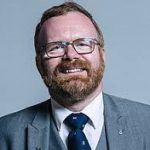
  • Martyn Day – 2024 Speech on Freedom and Democracy in Iran

    Martyn Day – 2024 Speech on Freedom and Democracy in Iran

    The speech made by Martyn Day, the SNP MP for Linlithgow and East Falkirk, in the House of Commons on 1 February 2024.

    I am grateful to the hon. Member for Harrow East (Bob Blackman) for securing this debate. The issue of freedom and democracy in Iran is a very important one, and I find myself commending him for his speech and agreeing with every point he made.

    As we have heard, the issue is really about a lack of democracy and a lack of freedom. Elections will of course be held on 1 March to Iran’s Parliament, but they can in no way can be considered free, fair or credible. It is more of a selection than an election, with the unelected, 12-strong Guardian Council having the power to approve candidates. With a track record of banning moderates and reformers from standing, it is no surprise that many candidates have already been disqualified. This body can also veto laws made by the Parliament.

    My litmus test for fair, free and credible democratic elections is: can any individual freely stand for election, can anyone vote in secret for any individual who is standing and can the sovereignty of the people be exercised by their representatives? Clearly, Iran fails on all those counts. The reality is that Iran is ruled as a totalitarian theocracy: it is not a democracy. Ultimate power rests in the hands of the country’s Supreme Leader, Ayatollah Ali Khamenei, and the unelected institutions under his control.

    Corruption persists across all levels, with powerful actors such as the Islamic Revolutionary Guards Corps operating beyond scrutiny. Media and civil society face restrictions hindering their role as independent watchdogs for ensuring transparency and accountability. The regime, as we have heard, is ruthlessly held in place by its intelligence and security force the IRGC and is supported by the wider apparatus of the state, including the judiciary, the Ministry of Intelligence, the police and others.

    Iranian authorities have extensively used Iran’s repressive machinery to censor discussion of these issues and persecute women, human rights defenders and anti-death penalty activists. Political activists who support democratic change have been particularly vulnerable to detention and death over many years, despite which the organised resistance, the People’s Mujaheddin Organisation of Iran—or MEK—have remained determined to establish a free democratic and secular republic, and I wish them every success with that struggle.

    The level of oppression and human rights abuses by the current regime in Iran is truly appalling and is getting worse. According to Freedom House, Iran has decreased its total global freedom status from a derisory 14 out of 100 in 2022 to 12 out of 100 last year. Freedom House gave Iran zero scores for most areas of fundamental rights including: the individual right to practice or express religion, faith or non-belief in public and private; free and independent media; the Government operating with openness and transparency; safeguards against corruption; the question of whether the freely elected head of Government and national legislative representatives determine the policies of the Government; and fair and free elections.

    The UN special rapporteur on the situation of human rights in the Islamic Republic of Iran expressed alarm at

    “the disproportionate number of executions of members of minority communities, in particular the Baluch and Kurdish minorities”,

    and I share this concern. Last year, at least 864 people were executed, the highest figure since 2017. Any use of the death penalty is unacceptable to me and I believe this substantial increase reflects the regime’s inability to suppress the protests that have arisen.

    Women lack equality and face discrimination in both law and practice. Examples include a woman’s testimony in court being given half the weight of a man’s and unequal compensation for victims’ families. Women also face disparities in inheritance rights. The regime fails to protect women and children from sex trafficking while Iranians and migrant workers, especially from Afghanistan, are subject to forced labour and debt bondage.

    The reality is that some 88 million Iranians are effectively living in what is a state prison, otherwise known as the Islamic Republic of Iran. But it does not have to be that way and I applaud the courage and determination of those who have stood up to the regime and protested for the rights that we take for granted, and have done so at great risk to themselves.

    The ongoing uprising began in September 2022 with the arrest of a Kurdish Iranian girl in Tehran by the Tehran morality police for not veiling, after which she was brutally beaten, fell into a coma and tragically lost her life while in custody. That brutal killing of Mahsa Amini prompted widespread protests across Iran, with thousands of people demanding regime change for a secular democratic republic. The ongoing uprising has resulted in over 800 unlawful deaths, including of minors and women. Additionally, around 30,000 Iranians face cruel treatment in jails, including torture and sexual violence, highlighting the dire situation in Iran.

    Ultimately, Iran’s future must be decided by its own people, but given that they have virtually no avenues for reform, the people have no option but to resist, to demonstrate, to defend themselves, and to seek alternative forms of opposition. Iran has been witnessing a massive popular uprising—a call for freedom and democracy largely led by women and young people. I have heard it described by some as a revolution, and I hope it is a successful one. It has clearly rattled the Tehran regime and I believe this is partly behind the regime promoting and encouraging conflict outwith its borders as it seeks to dampen the momentum of the protests inside Iran while simultaneously rallying the regime’s own forces behind the Supreme Leader’s fundamentalist agenda.

    As we have heard, Iran is the biggest state sponsor of terrorism. This exporting of international terrorism by Iran cannot and will not be tolerated, nor should be its support for Russia in the war with Ukraine, use of cyber-attacks, or hostage-taking diplomacy, and I condemn the involvement of Iranian officials in the killing of US servicemen. According to reports in The Times on Tuesday this week:

    “Tehran has already been accused by MI5 and police of more than a dozen assassination and kidnap plots in Britain against dissidents and media organisations in the past two years. Officials have previously expressed fears that, emboldened by the situation in the Middle East, Iran could ramp up its activity in the UK and present a wider terror threat.”

    Although I welcome the recent announcement of additional sanctions on senior Iranian officials, I wonder why we are not taking an even stronger approach. At a minimum, we should urgently proscribe the IRGC as a terrorist organisation. I have lost count of the number of times that I and others have called for that action. Proscription would be a tangible step in the UK in the furtherance of freedom and democracy in Iran. We should also support calls for the UN to dispatch international observers to visit Iran’s prisons and to meet those detained by the regime. We should all support the democratic aspirations of the Iranian people. I pay tribute to the work of the resistance units that emerged in late 2017 and have helped inspire Iranians to defy the prevailing tyranny.

    In conclusion, the SNP stands in full solidarity with Iranians journalists, women, men and young people calling for democratic change. The bravery of Iranian citizens standing up against brutality and dictatorship is beyond inspiring. I wish them every success in seeking a new democratic and secular republic in Iran. It will be better for them and the world when they succeed.

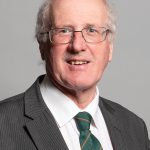
  • Jim Shannon – 2024 Speech on Freedom and Democracy in Iran

    Jim Shannon – 2024 Speech on Freedom and Democracy in Iran

    The speech made by Jim Shannon, the DUP MP for Strangford, in the House of Commons on 1 February 2024.

    I congratulate the hon. Member for Harrow East (Bob Blackman) on setting the scene. His passion and interest in this subject is renowned. In my short time in the House, I cannot remember a time when he did not lead or sponsor such debates. It seems that for various reasons, others who wished to speak have not been able to. It is unfortunate that the input of others has been curtailed, but that does not lessen the importance of the issue that the hon. Gentleman has raised. When it comes to Iran, we in this place have spoken up on many occasions; indeed, we did so yesterday in the free Iran group with Maryam Rajavi. The hon. Member for Southend West (Anna Firth) was at that meeting, and led and chaired it for a short period of time.

    This is a big issue—a massive issue. I declare an interest as chair of the all-party parliamentary group for international freedom of religion or belief, speaking up for those of Christian faith, those of other faiths and those of no faith. It is clear to me that that is not just about people’s right to express themselves religiously and the beliefs that they have, but about standing up for human rights. The issue of freedom and democracy in Iran, especially the freedom of religion or belief, continues to escalate—depressingly so. That is why this debate is so important. Violations of freedom of religion or belief happen frequently in Iran, and continue to escalate. The hon. Member for Harrow East is right to highlight the danger that Iran poses to peace in the middle east: it supplies the Houthis with aid and finance, supplies Hezbollah in Lebanon with finance and weapons, supplies Hamas in Gaza with aid, arms and finance, and supplies many terrorist groups in Syria in the same way. Of course, Iran also supplies drones to Russia to use against Ukraine, so it is an instigator of war and an opposer of peace in the middle east.

    As persecution and violations of religious freedom increase in frequency and impact, I and other members of the APPG have submitted several written questions to the Foreign, Commonwealth and Development Office. I am very pleased to see the Minister in his place, because he is always helpful in his responses. We have written to the FCDO with a large number of questions over a period of time, but unfortunately, responses have not been forthcoming. I ask the Minister to introduce some speed into the process, if possible, to secure an answer within the prescribed time: the FCDO said it would respond to our questions, and is duty bound to do so, but has not responded yet. The incidents we have highlighted and the FCDO’s response to them must be brought to Parliament’s attention, as well as the importance of developing better policies and sanctions against Iran for those actions and for its denial of freedoms and democracy.

    The one thing that has always bothered me when it comes to Iran is its violations against women and children. They have been attacked, brutalised, and scarred by acid attacks, they have no access to jobs, education or ownership of property, they do not have the right to marriage, and many other opportunities in society are denied them. Over Christmas, several Christians were arrested in Iran, with no response yet from the FCDO—again, we are waiting for a response. Iran finally released on temporary bail two journalists who covered the death in custody of Mahsa Amini, which led to the mass protests in 2022. We asked the FCDO whether the Minister would make an assessment of the implications of those releases for its policies, but as yet, there has been no response.

    Recently, the Iranian Government displaced Baha’i farmers by seizing farmland that they had been tending for several generations. The FCDO responded to my question on that topic by stating:

    “At the 78th UN General Assembly, we co-sponsored the Iran Human Rights Resolution, calling for Iran to eliminate, in law and in practice, all forms of discrimination on the basis of thought, conscience, religion or belief. We are committed to promoting religious freedom and will continue to work with partners to advocate for the rights of the Baha’i community in Iran.”

    Such action is commendable and appreciated. What actions have been taken to help implement that resolution?

    Again, I ask these questions because I know the Minister will respond; I also look forward to the response of the shadow Minister, the hon. Member for Caerphilly (Wayne David), and of the SNP spokesperson, the hon. Member for Linlithgow and East Falkirk (Martyn Day). The UK recently enacted new sanctions against Iranian individuals for human rights violations, including flogging as a punishment for exercising freedom of religion or belief. Roya Heshmati was flogged by police for not wearing a hijab in a picture posted on her social media— I have also posed a question to the FCDO on that topic. What sanctions have been imposed on those who inflict such persecution?

    Most importantly, potential violence and armed conflict with other countries may impact the rights of democracy and freedom, especially for religious minorities in Iran, so we must decide what policies are going to be enacted. Iranian-backed groups have attacked a US base in Jordan, and this brings about the increase of tensions between the west and Iran, despite Iran’s denial of its involvement in the attack—it got its proxies to carry out it out. As armed conflict and violence increase, the oppression of religious minorities increases tenfold. For someone to be a Shi’a, a Baha’i, a Christian or a member of an ethnic minority in Iran decreases their life expectancy.

    We must be ever mindful of the situation of religious minorities in Iran, but also of what the potential effect may be of UK actions against Iran through sanctions and changes in diplomatic relations. The hon. Member for Harrow East made a point about what we need to do and to do more of, and it is quite clear that the sanctions the Government are imposing are not effective. Because of that, we have to look at other methods, such as stronger sanctions or other ideas. Again, I would like to hear from the Minister, if possible, what thoughts he has about how we can hit Iran harder.

    Iran is continuing to arbitrarily detain human rights defender and 2023 Nobel peace prize recipient Narges Mohammadi, subjecting her to torture and other ill treatment by deliberately denying or severely delaying her access to adequate healthcare to coerce her into adhering to Iran’s abusive and degrading compulsory veiling laws. This places Narges Mohammadi’s health at great risk, particularly as she has serious heart and lung conditions. Jail is never good for someone’s health, and if they are in bad health, it is even worse.

    If Iran is willing to imprison and mistreat such an individual, what is to prevent it from doing so with ordinary individuals in Iran who have religious identities or beliefs different from those of the majority? Although we may not be able to force Iran to change its laws, we can place further requirements on their doing trade with the UK. When we look at trade last year, we see that the UK exported nearly £224 million of trade to Iran, and in return Iran sold back some £190 million. What regulations and policies are companies required to adhere to for such trade to occur? Are there any human rights and religious freedom requirements in place, or inspections of companies in Iran to ensure that they adhere to human rights working conditions and do not discriminate against religious minorities in hiring or in the workplace? These are the things I would like to see.

    I conclude with this: the need for Iran to raise its treatment of religious minorities and to provide citizens with democracy is becoming more and more necessary. That is why the hon. Gentleman’s debate today is so important, and we hope—we look to everyone for this, but ultimately to the Minister—that the response will be one that gives us heart. As you know, Mr Deputy Speaker, I speak today on behalf of my brothers and sisters in the faith in Iran, who do not have the opportunity to worship their God as I do. It is for that reason that I thought I had to be here to speak for them.

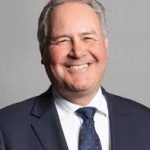
  • Bob Blackman – 2024 Speech on Freedom and Democracy in Iran

    Bob Blackman – 2024 Speech on Freedom and Democracy in Iran

    The speech made by Bob Blackman, the Conservative MP for Harrow East, in the House of Commons on 1 February 2024.

    I beg to move,

    That this House condemns unreservedly the actions of the government of Iran and the violent conduct of the police in suppressing protests in that country; is deeply concerned over Tehran’s growing use of terrorism, espionage, cyber attacks and hostage-taking diplomacy to restrict and eliminate the Iranian democratic opposition, the National Council of Resistance of Iran (NCRI), targeting in particular members of the organised opposition, PMOI (MEK), in Ashraf 3, Albania and NCRI gatherings since 2018; notes that the resistance is struggling for the establishment of a secular democratic republic; calls on European governments, especially the government of Albania, to counter Tehran’s illegal activities and uphold the rights of members of the Iranian opposition PMOI (MEK) at Ashraf-3 in accordance with the 1951 Geneva Refugee Convention, the European Convention of Human Rights and international law; is further concerned by reports of threats made to Iranian dissidents in the UK; urges the Government to include Iran’s Islamic Revolutionary Guard Corps on the list of proscribed terrorist organisations; and further calls upon the Government to work with international counterparts to ensure that further sanctions are placed on Iran without delay and Iran is held to account for its illegal activities at home and abroad.

    I thank the Speakers-collect and the Backbench Business Committee for the various arrangements that had to be made because of this afternoon’s emergency business.

    I am truly horrified by the current situation in Iran, which was sparked by the brutal murder of a young girl by the authorities while she was in police custody. Her crime—if we could call it a crime—was merely wearing her hijab in a manner that the Islamic Revolutionary Guard Corps determined to be too loose. I thank Mr Speaker in particular for allowing me on a number of occasions to debate this issue in the House. However, I wish this debate had taken place under different circumstances and that by now our Government had taken decisive action to proscribe the IRGC in its entirety.

    The urgency for this charge is now more relevant than ever. Not only does the human rights situation in Iran remain dire, but the uncertainty around the middle east, which is spreading further afield at a rapid rate, is predominantly driven by the funding and support from this exceptionally threatening, conniving and deceitful regime.

    Anna Firth (Southend West) (Con)

    My hon. Friend is making an excellent speech. Does he agree that the Iranian people are locked in a vital struggle for justice, democracy and particularly equality, and that that struggle must go on until the oppression of women in Iran and the use of sexual violence as a means of doing so stop?

    Bob Blackman

    I thank my hon. Friend—she must have looked at the next section of my speech. The IRGC literally runs and rules Iran, disregarding democracy, freedom of expression and basic human rights. The majority of people live in fear of speaking out or engaging in political matters in any form, with vigorous covert intelligence deployed to all parts of the country, seeking to sift out any potential opposition that might pose a threat to the regime.

    The authorities censor all media, jamming satellite TV channels and filtering and blocking social media platforms such as X, Facebook, Instagram, Twitter and YouTube. Further, the authorities shut off or disrupt the internet and mobile phone networks, particularly during protests, in order to suppress mobilisation and hide from civilians the sheer scale of the violations and privacy breaches committed by the security forces. In attempting to justify the infringements, the IRGC is even trying to push an internet user protection Bill through the Parliament in Iran. That legislation would further erode online freedoms and people’s access to the global internet.

    All opposition in Iran, whether it is independent political parties, trade unions, striking workers, protesters, civil society organisations or simply truth-sharing journalists, is brutally suppressed. There has never been a clearer example of an undemocratic self-claimed democracy. Political opposition frequently receives the harshest treatment from the regime, and Iran is the country responsible for the second highest number of executions each year, behind only China. Whatever people’s views on capital punishment, it cannot be acceptable that that position persists.

    The House will no doubt recall the uprising that took place in September 2022, sparking nationwide protests that continue even today. I take this opportunity to honour the bravery of those people. It cannot be easy for anyone to stand up and speak for basic rights when there is a high likelihood that they or their family will be brutally targeted as a result. Following the riots, the United Nations special rapporteur on the situation of human rights in Iran, Javaid Rehman, raised the alarm about the concerning trend of arbitrary arrests, detentions and executions targeting individuals for merely exercising their freedom of expression.

    Ian Paisley (North Antrim) (DUP)

    The hon. Member is making a brilliant speech. The dead hand of Iran is, unfortunately, everywhere; its influence and impact is incredible, and I would suggest that it is even in this place. There is an all-party parliamentary group whose secretariat is BIRD—the Bahrain Institute for Rights and Democracy. That is led by a man, Sayed Al-Wadaei, who was outed as a front leader for the promotion of Iranian foreign policy. In 2012, a man called Saeed Al-Shehabi was exposed by the London Evening Standard as part of a terrorist group with links to Iran. That organisation and those people are part of a secretariat to an APPG here, and that needs to be exposed and Members need to take action.

    Bob Blackman

    I thank the hon. Member for raising that point. That is now clearly on the record, and the House authorities will need to look at that particular issue.

    Recently released figures, which I am sure will have been generously tainted by the regime, show that 870 executions took place in 2023 alone. That is a 30% increase on the previous year, and many of those people were women and children. Tens of thousands of political prisoners, the overwhelming majority being peaceful, have been arrested in Iran—arrested for merely holding a sign or removing a headscarf. Once arrested, their treatment is utterly unfathomable. Amnesty International has recently reported that the atrocities such prisoners are subjected to include being beaten, raped, gang raped and psychologically abused; the list of horrors goes on. It is truly despicable, as my hon. Friend the Member for Southend West (Anna Firth) said.

    The plight of women remains intensely troubling. Women remain second-class citizens in Iran: they continue to receive intensified opposition from the regime; they face entrenched discrimination in both law and practice; and they are subject to domestic violence, child marriage, unequal divorce and custody rights, mandatory dress code, restricted nationality and travel rights, and unfair inheritance laws—to name but a few examples. Women in Iran have been jailed for merely singing in public or publishing their work on social media.

    Perhaps even more troublingly, Iran celebrates the greatest number of female executions, beating even China on that particular front. Armita Geravand was a 16-year-old schoolgirl, who was tragically killed through the brutality of the so-called Iranian morality police. Like Mahsa Amini, her only crime was refusing to wear her hijab. Sadly, such stories are not isolated in Iran, and I am sad to say that they will continue without significant intervention from international communities and the Iranian people.

    I am proud that in this House alone, we have an abundance of great women representing us; their contribution is vital and championed by us all. It is shocking that, in 2024, this is far from the case across many other parts of the globe.

    Anna Firth

    I am grateful to my hon. Friend for giving way yet again. He is making an absolutely brilliant, first-class speech, and shining a light on the despicable, brutal regime in Iran. Does he agree that that brutal regime is literally on an execution spree at the moment, having executed more than 350 protesters and dissidents since the conflict in Gaza began? That is a rate of execution of not far off 100 protesters per month. Does he agree that it is long overdue that the UK and our partners demand that the UN Human Rights Council dispatch an international fact-finding mission to Iran to visit the regime’s prisoners—to meet political prisoners and detained protesters—so that, globally, we can finally shine a light on what is happening in Iran? And, of course, he is right that the IRGC should be proscribed.

    Bob Blackman

    I thank my hon. Friend—that was almost a speech rather than an intervention!

    I have had the privilege on a number of occasions to visit Ashraf 3, which is home to some 2,700 Iranian refugees. The museum on the site exceptionally depicts the long struggle that people have endured, with brutal attacks and massacres occurring all too frequently. In Albania, the regime’s claws continue to menace the people. The IRGC has repeatedly targeted the Albanian Government through cyber-attacks, disinformation and terror attacks. I am saddened that, on occasion—most notably in June last year—the camp has been raided by the Albanian police forces. There have been reports of unjustified force and copious amounts of pepper spray being used. Unfortunately, one man died from the injuries that he suffered. I am almost certain that that attack was founded on false claims generated by the IRGC.

    The regime holds a power over Albania. Its continued attacks on cyber-systems are used as so-called warnings to the Government, blackmailing them with threats of continued attacks if they do not suppress the rights of camp members. I urge the Albanian Government to stand up to those threats. No country should infringe its morals for fear of such a corrupt and wicked enemy. This is a time for western allies to stick together and stand up to malicious terror acts. I am glad that our Inter-Parliamentary Union delegation will be going to Albania shortly, and I hope that they will raise this issue.

    The Albanian Prime Minister has said publicly that residents of Ashraf 3 should not engage in any political activity—even peaceful conversation. That is tantamount to denying the right to freedom of expression. I am saddened that that announcement came after a show of support for the camp by Albanian parliamentarians, showing that the dramatic shift in opinion must be down to the negotiations with the IRGC. I hope that the Minister will assure the House that he will offer support to our Albanian counterparts, encouraging them to stand up to the regime and protect the rights of those in that camp, who have already experienced too much brutality.

    This debate comes at a time when the world has never been so unsafe. We have a war raging in Europe, attacks by the Houthis in the Red sea, an illegal war in Gaza by the Hamas terror group, Hezbollah in Lebanon and war in Syria, as well as other dangerous militant groups. The one thing that links all those examples is the IRGC, which stands as the head of the snake, funding, training and supplying weaponry to all those organisations. Its outreach and capabilities are frankly frightening.

    The IRGC has been found to have supplied drones and weapons to Russia as Moscow and Tehran deepen their co-operation in a partnership that is likely to continue and intensify as they commonly seek to weaken the west. Furthermore, the IRGC provided significant direct funding and training to Hamas in the lead-up to the dreadful 7 October attacks. Most recently, the Houthis in Yemen have targeted shipping lanes in the Red sea. The Houthi militant group was set up by Iran and remains under its influence. Linked to those attacks, Iran announced that it had subsequently launched into low-earth orbit three satellites that the US believes can be used to more accurately target intercontinental ballistic missiles.

    The regime in Iran ignites a threat not only to the international community, but, perhaps most concerningly, to the domestic security of the UK. Individuals with Iranian links, or who have spoken out against the IRGC in this country, have frequently been targeted. Furthermore, MI5 announced last year that it had intercepted a significant number of Iran-backed terror attacks.

    Holly Lynch (Halifax) (Lab)

    The hon. Member is making an incredibly powerful speech, and I congratulate him on securing the debate. He is quite right: last year, we heard from the director general of MI5 and the head of counter-terrorism policing that they had intervened to disrupt up to 15 kidnapping and assassination attempts in the UK coming from Iran. That is why the argument for proscription is such a powerful one. It would not be merely symbolic; it would be about granting the security services and police forces in the UK additional powers to truly dismantle any foothold that the IRGC has in the UK that allows it to facilitate those assassination attempts, which we must close down. Does he agree that that is why proscription is so important?

    Bob Blackman

    I thank the hon. Lady for her intervention. The position here is that the Iranian Government are funding professional gangs to inflict attacks and violence on individuals in this country. They have neither mercy nor morals in how far they will go. A Spanish politician and vocal opponent of the Iranian regime was shot outside his home by a criminal gang employed by the IRGC. We must not allow such despicable attacks to occur on domestic soil. It is completely unacceptable that people in this country are being followed home or having to suppress their freedom of expression for fear of being targeted. I urge the Government to tackle this issue with urgency.

    The Iranian authorities have been targeting BBC Persian staff, who are predominantly based in the UK, and their families since 2009 in an attempt to intimidate them into stopping their work as journalists. The intimidation escalated in 2017 and has been at an unprecedented level since September 2022. BBC Persian staff frequently receive credible death threats, threats of horrific violence, thousands of abusive comments and increased threats to their personal safety on online platforms.

    With several colleagues, I was a target of the Iranian regime when we attended the annual gathering of the National Council of Resistance of Iran, with delegations from almost every major democracy, back in 2016. An Iranian diplomat tried to bomb the conference. He had the audacity to smuggle the bomb through security in diplomatic bags. Thankfully, the Belgian and French authorities apprehended the terrorist and no one was harmed. Had he succeeded, there would have been a world war.

    The Iranians assumed responsibility, and they forced the Belgian authorities to hand over this despicable so-called diplomat after they kidnapped two Belgian journalists and held them as hostages. If this does not highlight to the Government that we cannot engage in dialogue with the Iranian regime, I do not know what will. The key point is that the current policy on Iran is not working. Its influence is stretching across the middle east and further. It is time to look for an alternative solution, and I urge the Government to proscribe this merciless regime with utmost priority.

    I am aware that we have already sanctioned individuals, but we must go further. Until we start cracking down on the IRGC, it will continue to extort and suppress innocent people. Its military capacity is growing and, even if it does not already possess a nuclear capability—I have my doubts—its nuclear capability will also grow.

    The international community must wake up and protect countries such as Israel by killing the initial piece of the chain. Without funding and support from Iran, terrorists like Hamas will not be able to carry out their dreadful attacks. Iran will feel the pinch only if there is full proscription, and I reiterate my plea for the Government to do so. Hezbollah is already proscribed, and it is the birthchild of the IRGC. The IRGC must therefore be proscribed, too.

    I have heard the rumours that the Government are holding off such action in order to continue a line of dialogue, but there is no honest or trustworthy dialogue to be had with this terrorist regime. Instead, we must show Iran that such action is not and will not be tolerated. Fifty per cent. of the IRGC’s training efforts are on indoctrination, creating more ruthless, more radical and more committed generations. The dangers are only increasing, so we must act before it is too late.

    It is high time that we work together to banish this unlawful regime, to protect innocent protestors and to champion free democratic rights across the world—we often take those rights for granted. To oppose the Iranian regime is no longer a political calculation but a simple humanitarian choice. We must support the Iranian people and acknowledge the legitimacy of the Iranian opposition if we are ever to see a free and democratic Iran.

    I look forward to hearing from colleagues on both sides of the House. I know that several Members who wanted to take part in this debate have unfortunately had to leave, but I hope we will have excellent replies from my hon. Friend the Minister and, indeed, the shadow Minister.

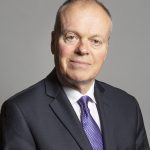
  • Clive Betts – 2024 Speech on Financial Distress in Local Authorities

    Clive Betts – 2024 Speech on Financial Distress in Local Authorities

    The speech made by Clive Betts, the Chair of the Levelling Up, Housing and Communities Select Committee, in the House of Commons on 1 February 2024.

    It is a great pleasure to make this statement on behalf of the Levelling Up, Housing and Communities Committee about its report “Financial distress in local authorities”. Let me first thank the Leader of the House for tabling the business motion that has allowed the statement to be made. Our Committee Clerk is excited about the fact that we have apparently set a procedural precedent today; I was certainly not aware of that, but I am now. Let me also thank the Backbench Business Committee for originally providing the time for the statement.

    Our inquiry looked into the extent of the funding gap in local authorities’ finances, and some of the main spending challenges that they face: social care, special educational needs and homelessness. The report brings attention to key issues ahead of the upcoming local government financial settlement. It makes recommendations not only for urgent action to resolve the immediate crisis, but larger reforms for the Government to consider after the next election.

    Everyone recognises that the financial crisis in local authorities across England is out of control. In recent months an alarming number of them have issued section 114 notices—admissions that their spending is exceeding their income—thus effectively declaring bankruptcy. In the last six years, eight authorities have issued such notices; in the previous 18 years, none did. It is no longer the case that a small number of individual councils with particular issues are in financial distress. We are now seeing widespread financial distress across large parts of local government, and the situation is only getting worse. The Committee has heard evidence from the Local Government Association that one fifth of councils may be in financial distress within the next year.

    At the heart of this crisis is a multi-billion-pound funding gap. The income available to local authorities from council tax, retained business rates and government grants has not kept pace with the increased demand for their services and the effect of inflation. As a result, the Local Government Association estimates that authorities face a funding gap of £4 billion over the next two years to maintain services at their current levels.

    Witnesses have told us that the current funding system is “broken” and “not fit for purpose”. Successive Governments since 2010 have reduced the level of central Government grants awarded to local authorities by about 50%. This has been partly offset by a 20% increase in council tax, which has therefore led to an overall reduction in local authority core spending power of 26% in real terms between 2010 and 2021.

    In the short term, local authorities need immediate additional funding. Our report recommends that the Government must include additional funding in the local government finance settlement for 2024-25 to fill the gap. Last week the Government announced £600 million of extra funding, and I give credit to the Minister, who has been assiduous in listening to the views of Members on this subject. However, although those measures are welcome, they are not sufficient.

    Our report recognises that the Government have recently begun consultations on other methods of increasing the funds available to local authorities. We have cautiously welcomed the fact that they are considering giving authorities additional capital flexibilities to fund day-to-day costs, but we have recommended that those additional flexibilities should be considered carefully and limited to extending flexibilities over invest-to-save activity. We do not want to store up problems for future years.

    Our report also recommends other ways in which the Government can improve funding for local authorities in the medium term. We have repeated the recommendation, which our Committee first made in 2021, that the Government must urgently reform council tax. This would involve undertaking a revaluation of properties and introducing additional council tax bands. Finally, we have once again called for the Government to implement the business rates reset and fair funding review, to which they committed themselves in 2016 but which they have yet to deliver, and to reintroduce multi-year settlements.

    Our inquiry asked witnesses what had caused the sharp rise in council expenditures. It identified three particular areas where costs have risen significantly: adults’ and children’s social care, special educational needs, and homelessness. On adults’ social care, the increasingly complex needs of a changing population continue to drive up costs, and long-term workforce shortages and inflationary pressures have made the position worse. As the Committee recommended back in 2022, the Government need to recognise that local authorities will need several billion pounds of additional funding each year to continue to deliver and improve adult social care, and should plan a sustainable mechanism to deliver this funding that does not simply rely on increasing council tax.

    On children’s social care, our inquiry found that councils are facing rising demand for residential care placements and a poorly functioning market for providing them. That has driven significant cost increases. Our report recommends an urgent comprehensive reform of the children’s social care system. As part of that, the Government should help local authorities consider greater collaboration so that between them they can deliver more children’s care services directly, instead of through private suppliers. Our inquiry also found that local authorities face significant financial pressures in providing services for children and young people with special educational needs and disabilities—SEND. The number of education, health and care plans has “skyrocketed” since they were introduced in 2014, which has significantly increased demand for more expensive forms of SEND provision and home-to-school transport. Funding is provided to local authorities through the dedicated schools grant, but it is not enough to meet the demand and does not cover home-to-school transport.

    The Government have already been forced to take temporary measures to prevent SEND costs from forcing a large number of councils into bankruptcy. In 2020, the Government introduced a “statutory override”, allowing local authorities to exclude any deficits on their DSG spending from their main revenue budgets. Local government faces a potential cliff edge of section 114 notices whenever the statutory override comes to an end. The question is: will the Treasury write off that extra borrowing when the time comes? Our report recommends, therefore, that in the short term the Government should provide additional funding for home-to-school transport. In the long term, there needs to be a fundamental reform of the EHCPs, based on a cross-Government review.

    Finally, our report makes it clear that rising homelessness has increased costs for councils. A big cause of the increase has been the Government’s decision to freeze local housing allowance rates in April 2020, so our report welcomes the Government’s recent announcement that they will increase local housing allowance rates from April 2024. However, it also raises concerns about the Government’s decision to then re-freeze the rates in 2026. Instead, we recommend that local housing allowance should be retained at at least the 30th percentile of local market rents. In the longer term, the best solution, as the Committee has recommended repeatedly, is to build more social housing, which will always be cheaper than paying for temporary accommodation.

    These problems require a long-term solution. That is why the Committee has made recommendations in this report for whichever Government are elected after the next election. The next Government, regardless of their political persuasion, must embark on a fundamental review of the systems of local authority funding and local taxation, both council tax and business rates. In doing so, they must be clear about what local authorities are for and how they can best co-ordinate with delivery of the Government’s wider objectives. We have recommended that the next Government should consider many options, which may include land value taxes and others, and wider fiscal devolution. They must also explore all options for reforming the funding and delivery of social care services, to address the underlying causes of the acute funding and delivery pressures currently faced by local authorities. It is my hope that the need we have identified for additional funding will be properly reflected in the local government financial settlement we will debate next week, and that our other recommendations will be carefully considered by this Government and whoever form the Government after the next election. I commend this report to the House.

  • Robin Millar – 2024 Speech on the United Kingdom Internal Market

    Robin Millar – 2024 Speech on the United Kingdom Internal Market

    The speech made by Robin Millar, the Conservative MP for Aberconwy, in the House of Commons on 1 February 2024.

    It is a privilege to speak in the debate and to follow the many hon. and right hon. Members who have spoken with great wisdom, knowledge and personal experience on these matters.

    It is informative to apply to article 6 of the Acts of Union the four tests for impact that were developed by Justice Colton—specifically, Northern Ireland’s compliance with certain EU standards; the bureaucracy and associated costs of complying with customs documentation and checks; the payment of tariffs for goods at risk; and the unfettered access enjoyed by Northern Ireland businesses to the EU single market. I question the representation of the Supreme Court judgment as set out in paragraph 14 of annex A to the Command Paper, but those were matters for the last debate, and there is not time to make my point.

    The Windsor framework removed many EU standards for GB-produced consumer goods destined for Northern Ireland. That does not change under the SI before us. The second test—on bureaucracy and compliance costs associated with customs—should concern us, as the protocol saw the diversion of £1.2 billion-worth of goods in supply chains from GB to the Republic. Indeed, logistics businesses testified to the Lords Windsor Framework Sub-Committee on the complexity of managing mixed loads, with two large haulage firms stating that groupage had been “forgotten” in the framework.

    Expert analysis has also suggested that 75% of output in non-exempted manufacturing sectors, including electronics, engineering and chemicals, comes from firms with turnover above £2 million, which will see their GB supply chains stuck in the red lane or diverted abroad. The Command Paper published yesterday contains a pledge—a UK internal market guarantee—that no more than 20% of goods will flow through the red lane. In practice, that creates a monitoring panel to report on any failures to hit the target and make recommendations to which the Government must respond. That is admirable but does not represent a material change to existing customs requirements under the protocol. It is also worth noting that, worryingly, that could be achieved simply by diverting supply chains away from GB towards the EU, as affected GB businesses cut Northern Ireland out of their distribution chains.

    The regulations before us create important easements for Northern Ireland to GB trade, including a guarantee that future divergence will not impact the ability of Northern Ireland traders to freely access GB markets. That is welcome, but the bulk of distribution has always pertained to GB-to-NI trade, not the reverse. As is also noted in the Command Paper, although technology may ease compliance costs in the medium to long-term, those costs will still exist. Shipping from London to Belfast will continue to require significantly more bureaucracy than shipping to York or Edinburgh. The third test, on tariffs, is not covered and does not apply.

    Finally, let me turn to Northern Ireland’s preferential access to the EU single market. I must emphasise that the clear trade-off that we have chosen to give Northern Ireland unregulated access to EU supply chains comes at the cost of complicating access to GB ones, despite the fact that Northern Ireland imports from GB are two and a half times those from the EU and six times those from Ireland. Whatever easements we offer, that has created a customs, judicial and legislative border across the kingdom, and it is hurting our businesses. The fact that Northern Ireland continues to have preferential access to the EU single market is unarguable, but it should not be misunderstood. Again, I find that final test informative.

    Nothing I say today is intended to diminish the achievement of the deal when it comes to material gain for Northern Ireland. Although I welcome the elements within the new deal, which undoubtedly offer increased safeguards for the Union, it does not change the fact of EU law’s application to Northern Ireland, additional bureaucracy for GB businesses attempting to access Northern Ireland, the existence of tariffs, or Northern Ireland’s de facto placement within the EU single market. Once again, the qualities and effectiveness of this deal will emerge over the months and years ahead, I am sure, and through the scrutiny that must come from this place. I will continue to offer my support in those months and years ahead.

  • Theresa Villiers – 2024 Speech on the United Kingdom Internal Market

    Theresa Villiers – 2024 Speech on the United Kingdom Internal Market

    The speech made by Theresa Villiers, the Conservative MP for Chipping Barnet, in the House of Commons on 1 February 2024.

    The important statutory instruments that we are discussing today are the latest in the process of implementing the result of the 2016 referendum to leave the European Union. They may not have attracted the same volume, attention or emotion as those endless meaningful votes in 2018 and 2019, but they are no less important. This has been a long and difficult process that has divided the nation, but the end goal of restoring our status as an independent, self-governing democracy has been a prize worth fighting for.

    For centuries, Members of this Parliament strived to ensure that we would be governed only by the laws made by our own elected representatives, and that is what Brexit seeks to deliver, but we all know that the job is not yet finished when it comes to Northern Ireland, so I pay tribute to the Secretary of State, the Minister and the DUP for their work and determination to tackle the problems with the Windsor framework and secure Northern Ireland’s place in the UK internal market. I very much welcome the advances being made towards the restoration of power sharing and devolved government, and I accept that the statutory instruments are an important part of enabling that to happen because of the significant changes they contain.

    Of course, I completely understand the DUP’s concerns regarding the Northern Ireland protocol and the Windsor framework. We must do all we can to minimise trade frictions between Britain and Northern Ireland. The agreement on the Windsor framework started that process—for example, by making the movement of medicines, food and items for retail sale much less problematic. I believe that further improvements will be delivered by the deal that we are looking at today, which will further reduce checks and inspections. My concern is that the central problem remains that Northern Ireland is subject to single market rules without having a vote on them. The instruments we are considering do not change that, although I welcome the important further clarity and safeguards offered on the Stormont brake.

    Dialogue with the EU has to continue so that ultimately we can move to a situation in which only items destined for export to the south are subject to EU rules and regulations in Northern Ireland. With pragmatism and advancing border technology, that should be possible. It is important that we continue to strive to bring that about, so that we can restore democratic control over making our laws in every part of our United Kingdom and Brexit is fully delivered for Northern Ireland, as it is for Great Britain.

    We also need assurances from Ministers that nothing in regulation 3 of the Windsor Framework (Constitutional Status of Northern Ireland) Regulations will prevent regulatory divergence between Britain and the EU. Of course, any responsible Minister must consider the impact of his or her decisions on the unity of the UK and its single market, but new screening obligations must not be allowed to create a chilling effect, which would stop us charting our own course with regard to how we regulate our economy. Taking back control of making our own laws was a key reason that people voted to leave the EU. We have yet to fully deliver that for Northern Ireland and, as I have said, we must go further on it in the future.

    Gavin Robinson (Belfast East) (DUP)

    I am grateful to the right hon. Lady for the conversations we have had on this specific point. She is right to highlight her concerns and to seek assurances from the Government, but she does accept that it is right to get assessments; that it is right that Governments should always be going through the process of assessing the impact of their decisions on every part of this United Kingdom; and that there is nothing wrong with transparency, with knowing any possible consequence, nor—if that potential consequence is negative—with all of us determinedly trying to ensure that it does not arise.

    Theresa Villiers

    I thank the hon. Gentleman for that intervention; the dialogue that he and I have had over recent days has done a lot to reassure me that this package is about transparency, not a block on divergence. I hope the Minister will confirm that in his closing remarks, because divergence is important. The regulatory reform made possible by exit is, I think, crucial for our future economic success. By making us more competitive, modernising regulation is a key means to boost growth, raise living standards and reduce taxes.

    In conclusion, it took courage and determination from Northern Ireland’s elected leaders to secure peace after three horrific decades of terrorist violence. Asking very different parties to sit in a permanent mandatory coalition was never going to be easy, not least because some of the divisions between them date back decades, or even centuries. That devolved government has worked for so much of the past quarter of a century is a testament to Northern Ireland’s leaders and their determination to make the ’98 settlement work—to make Northern Ireland work. I pay particular tribute to the DUP in that regard: for so often it is they who have found ways to fix problems and keep devolved government going, while always safeguarding Unionist principles.

    We in this House must recognise the significant problems caused by the Northern Ireland protocol and the Windsor framework—including, of course, what the courts have described as a “subjugation” of article 6 of the Act of Union of 1801—but, as we have heard today, we are making real progress on tackling these issues by setting out in the statutory instruments stronger legal protections for access to the GB market. I also think that the historical perspective, as set out in annexe A of the Command Paper, is something that everyone should read. We are making progress on remedying these problems.

    It was a privilege for me, as Secretary of State for just under four years, to play a part in Northern Ireland’s inspiring story, and I truly hope that a way can now be found for its devolved institutions to resume their work of taking Northern Ireland forward to further success and an even brighter future.

  • Hilary Benn – 2024 Speech on the United Kingdom Internal Market

    Hilary Benn – 2024 Speech on the United Kingdom Internal Market

    The speech made by Hilary Benn, the Shadow Secretary of State for Northern Ireland, in the House of Commons on 1 February 2024.

    I begin by agreeing with the Minister that businesses in Northern Ireland want to make the current and future arrangements work, that they want them to work well and that there is huge potential for the people of Northern Ireland in the economic benefits that its current and future circumstances provide it.

    I have some specific points about the regulations— I see the Minister clearly relishes responding to those. Paragraph 81 of the Command Paper states:

    “We are now changing arrangements…to ensure…that checks are eliminated save for those conducted by UK authorities needed for the protection of the UK’s internal market on a risk and intelligence basis.

    Will the Minister clarify which checks on goods moving from Great Britain to Northern Ireland will be got rid of? Is he referring to identity checks, checks on paperwork or something else? At the moment, about 10% of goods using what is called the green lane—which will become the UK internal market lane—are subject to some checks on paperwork. Will he clarify what will happen to them?

    I welcome the amendments to the UK Internal Market Act 2020 provided for in regulation 2. Proposed new section 45A would reaffirm Northern Ireland’s unfettered access to the rest of the internal market and ensure that no new NI-GB checks can be introduced. The regulation also makes provision for the Secretary of State to issue guidance to Departments on how they should carry out their duties under section 46 of the 2020 Act—namely, ensuring that they have special regard to, among other things, Northern Ireland’s status in the UK internal market when they formulate policy. Will the Minister confirm that guidance will soon be forthcoming and share any further details he can at this stage about what that will contain?

    I note the changes to the Definition of Qualifying Northern Ireland Goods (EU Exit) Regulations 2020 made by regulation 3, which are intended to prevent Northern Ireland from being used as a back door for EU goods moving into GB and to protect Northern Ireland’s agricultural sector. Ensuring that NI-registered agrifood operators fully benefit from unfettered access is a very positive step and I welcome it. Will the Minister tell the House whether the Government envisage any further changes to the definition of qualifying Northern Ireland goods? I also note the Government’s confirmation in the Command Paper that

    “there will be no Border Control Post at Cairnryan.”

    That is greatly to be welcomed, but can the Minister say anything further about how checks and formalities on non-qualifying goods that enter GB from Northern Ireland through Cairnryan will work in practice?

    Let me turn to some of the other commitments set out in the Command Paper. Will the Minister confirm when he expects the new body announced to promote trade within the UK, InterTrade UK, to become operational, and how it will be overseen?

    I welcome the Government’s determination, which has been brought up by a number of Members, to ensure the continued supply of veterinary medicines into Northern Ireland beyond the end of 2025, when the current grace period expires. We all hope that an agreement can be reached with our European partners as soon as possible. I share the view expressed by others in the debate that we had the same problem with human medicines and, in the end, the EU recognised that something had to be done about that. I hope very much that the EU will show the same spirit in approaching this question. The Command Paper, however, says:

    “we will if necessary deploy all available flexibilities to safeguard and sustain the supply of veterinary medicines”.

    Will the Minister tell the House what those flexibilities are and how they will be applied if we get to that point?

    In approving the regulations—which I hope we will do unanimously as we just did with the constitutional set—we will be taking another step closer, in this really important week, to the restoration of power sharing. The people of Northern Ireland, who have been without a Government for so long, may not, in all fairness, be studying the regulations in the way that we are doing today, but they very clearly understand why they are essential to getting their Government back. Once we have done our bit today, it will be over to the politicians of Northern Ireland, and I am sure that every single Member of the House wishes them the very best in the task that lies ahead of them.

  • Steve Baker – 2024 Statement on the United Kingdom Internal Market

    Steve Baker – 2024 Statement on the United Kingdom Internal Market

    The statement made by Steve Baker, the Minister of State at the Northern Ireland Office, in the House of Commons on 1 February 2024.

    I beg to move,

    That the draft Windsor Framework (UK Internal Market and Unfettered Access) Regulations 2024, which were laid before this House on 31 January, be approved.

    It is the view of the Government and, I believe, of the overwhelming number of right hon. and hon. Members across the House that the Union ought not be reduced to matters of the law or the constitution alone. Ours is a thriving economic, cultural and political Union whose health is insured, in no small part, by the free flow of trade across it. Enhancing that economic aspect of the Union is the purpose of this second set of regulations before the House today.

    The views of businesses and traders on the progress that we have made are also important in the context of today’s debate. I am pleased to confirm that the early reaction from business has been promising. The view of a collaboration of 14 key Northern Ireland industry bodies was clear yesterday in saying that they welcomed the agreement.

    The Government are clear that the old protocol created unacceptable barriers within our internal market, and I invite anyone to consider the full implementation of the old protocol against what we have achieved in the Windsor framework. The Windsor framework takes major steps forward, and I acknowledge that this is first and foremost an achievement of the Democratic Unionist party and also a great achievement of my right hon. Friend the Secretary of State.

    The framework restored the functioning of the UK internal market by ensuring the smooth flow of trade within the UK, and disapplied a range of EU laws, including ensuring that Northern Ireland benefits from the same VAT and alcohol taxes as the rest of the UK. Members of the House can also be encouraged by the smooth functioning of the framework since October 2023, when the first phase of arrangements came on stream, supporting trade between Great Britain and Northern Ireland. I should just say that colleagues did ask me how it was going. I said, “Have you seen any news on it?” Of course, no one has; it has been going very well, and I want to thank and congratulate all those officials here and in Northern Ireland who have made that possible.

    These regulations go further in that aim to strengthen our UK internal market now and in the long term. Following the agreement of the Windsor framework, the border target operating model sets out that we will begin phasing in checks and controls for Irish goods and non-qualifying goods moving from the island of Ireland to Great Britain from 31 January—indeed from yesterday. This is a powerful demonstration of Northern Ireland’s integral place in the UK’s internal market, and it rebuts incorrect claims that it is instead a member of the EU single market. The reality is that third country members of the EU single market will now have full third country processes applied, while Northern Ireland’s businesses will have full unfettered access to their most important market in Great Britain.

    Sir Jeffrey M. Donaldson (Lagan Valley) (DUP)

    The Minister is absolutely right. Perhaps the most powerful illustration of the change that we have secured is to consider what will happen now on the ferry route between Dublin and Holyhead as a result of these new arrangements. A Northern Ireland haulier using that service will board the ferry, travel to Holyhead, leave the ferry and travel straight out of the port and on to their destination, with no customs procedures and with full unfettered access. In contrast, a southern Irish haulier arriving at Holyhead will be subjected to full UK customs procedures at the port before they can proceed. Does he join me in welcoming Northern Ireland’s restoration fully within the UK internal market?

    Mr Baker

    Yes. The right hon. Gentleman is absolutely right in what he has just set out, and I do join him in that. It is a proud day for me, as it is for him, and I join other Members in congratulating him on his courage in bringing all of us this far.

    As a result of these regulations, we now have guarantees for Northern Ireland goods moving to the rest of the UK, via Dublin. This unfettered access is future-proofed, regardless of how rules evolve in either Northern Ireland or Great Britain. These regulations will more squarely focus the benefits of unfettered access on Northern Ireland traders. The regulations tackle avoidance of the rules and ensure that, for agri-food goods to benefit from unfettered access in avoiding sanitary and phytosanitary processes, they must be dispatched from registered Northern Ireland food and feed operators. We will also expressly affirm through these regulations that export procedures will not be applied to goods moving from Northern Ireland to other parts of the UK’s internal market.

    John Redwood (Wokingham) (Con)

    It has been said that maybe 80% of goods moving from GB to NI will be able to use the internal market lane. Why will 20% not be able to do so, and why would the UK Government, who I was told were in charge, not want to ensure that practically all goods use the internal market lane?

    Mr Baker

    With great respect to my right hon. Friend, with whom I have gone a very long way in this cause, he might like to revisit the text. The point is that the 80% of goods going on that route are staying in Northern Ireland; they are UK goods. The other 20% are goods that are going on to the European Union. That is the point: 80% is UK internal market trade, and 20% is trade going on to the European Union.

    Sir Jeffrey M. Donaldson rose—

    Sammy Wilson (East Antrim) (DUP)

    Will the Minister give way?

    Mr Baker

    I will. I cannot say that I am astonished; this is the important moment.

    Sammy Wilson

    Does the Minister accept that all the statistics show that it is not true that 20% of the trade that goes through Northern Ireland goes to the Irish Republic? In fact, it is about 0.1% to 0.4%. Much of that trade, which will go through the red lane, consists of goods going into Northern Ireland, either to warehouses or to manufacturers in Northern Ireland. They might never go near the Irish Republic. They might stay in Northern Ireland, go back to GB, or go to the rest of the world, yet such products will still be subject to checks going into Northern Ireland.

    Mr Baker

    I would not accept that. I am not in a position to set out the statistics, and I do not doubt that the statistics need some work applied to them. It pains me to say this, as I have always regarded the right hon. Gentleman as a great friend—he and I have walked a long way together on this and I have always regarded him as an ideological bedfellow, both on the Union and on Brexit—but as his group leader, the right hon. Member for Lagan Valley (Sir Jeffrey M. Donaldson), said earlier, we voted for, and fervently supported, the protocol Bill. We said that we were willing to have a red lane in order to safeguard the legitimate interests of our friends and partners—and family members, as the Irish ambassador Martin Fraser said. This was always a family dispute, and we were always going to get through it.

    Our friends in Ireland, and indeed in the EU, have legitimate interests, which we should have the humility to respect. Even if we had acted unilaterally as a single united Parliament, ridden roughshod over any international negotiation and just done what suited ourselves with the protocol Bill, we would have implemented the red lane. I am afraid that I will part company now with anyone who says otherwise. We would rightly have implemented the red lane, even acting unilaterally, out of respect for the legitimate interests of our friends and trading partners.

    Sir Jeffrey M. Donaldson

    Will the Minister join me in welcoming the announcement on Tuesday of agreement on a joint legal text that will significantly change the status of goods coming from the rest of the world into Great Britain and travelling on to Northern Ireland? The effect of that change, which is part of the arrangements and the published Command Paper, will be that some 4 million goods movements between Great Britain and Northern Ireland will now be moving out of the red lane and into the UK internal market system. That is this party delivering, and securing real change that ensures that more goods flow freely between Great Britain and Northern Ireland, save for those going into the EU or that are at risk of doing so because they are part of a manufacturing process for goods being sold to the EU.

    Mr Baker

    I strongly welcome that intervention. I thought that the right hon. Gentleman was going to mention the draft joint agreement on tariff rate quotas. For a while I was concerned that TRQs needed to be applied to Northern Ireland so that Northern Ireland could share fully in the benefits of free trade agreements with the rest of the world.

    I hope to return to this later, but in case I do not have the opportunity to do so, I want to say what an extraordinary situation Northern Ireland is now in. Northern Ireland is not in the single market. I draw everyone’s attention to page 4 of the Command Paper, which sets out checkmarks comparing Northern Ireland with Ireland, as a member of the EU, and with Norway, which is a member of the single market through the European economic area but is not in the customs union or the European Union. Northern Ireland really has the minimum of EU law compatible with unfettered—or privileged, perhaps—goods access to the EU market, and consistent with having an open, infra- structure-free border.

    I wonder at people who thought that we could leave the European Union and establish a hard border, or do absolutely nothing about the border. We were always going to leave the European Union and have special arrangements in relation to Northern Ireland. This is a moment of great feeling for me, because before the referendum vote, I and other colleagues set up a committee of Eurosceptics to consider how we might deal with these issues. I confess that we did not have the SPS and customs expertise to proceed. That then became the great story of this battle.

    If the United Kingdom had united in accepting the result of the referendum, if this Parliament had united in going forward with resolve to further our own interests as an independent nation state outside the EU, but crucially with the humility to respect the legitimate interests of our friends and partners, and if from the beginning we had had united resolve and clarity of vision, I do not doubt that in a spirit of friendship and good will—the kind that exists today between Ireland and us, and between the European Union and us, thanks to the work of the Secretary of State, the Prime Minister and others—we would have been, as we are now, in a totally transformed position to make our way forward as friends, respectful of their interests and resolved on ours.

    That is not what happened. The House does not need me to rehearse it. It has taken eight years of drama for us to arrive at this moment, when we have reduced EU law to this extent and put in place a red lane to protect the legitimate interests of Ireland and the EU. That is something that we should all be very proud of, after everything that we have faced and all the risks that could have put us in a far worse position.

    Paul Girvan (South Antrim) (DUP)

    I totally understand the need for a red lane to ensure that goods going into the Republic of Ireland are checked, but there is a business in Northern Ireland 98% of whose sales are into Northern Ireland. The stuff all comes to it in one container. Maybe 2% of that load might make its way into the Irish Republic as part of a service agreement with another dealer. I am talking about a major firm in my constituency that has an all-Ireland approach. That means that the red lane applies to every single item, even though 98% of its stuff is used in Northern Ireland, Scotland or England. It is a main distributor, and it will end up having to put all its goods through that. A job of work might need to be done to try to ameliorate its problems.

    Mr Baker

    The hon. Gentleman is right that a job of work will need to be done; I assure him that my right hon. Friend the Secretary of State has just said that of course it does. I am grateful that we will be doing that further work in a spirit of good will and co-operation through the joint committee with the European Union. If the hon. Gentleman drops an email to my Northern Ireland Office address, I shall be glad to visit the firm with him, bringing officials, and we will see whether we can move further to assist it. I need to find out more about its exact circumstances.

    My goodness, that was a long series of interventions. This legislation ensures that we can avoid any unnecessary gold-plating in the implementation of new arrangements through new statutory guidance on section 46 of the United Kingdom Internal Market Act 2020, setting out how public authorities should have special regard to Northern Ireland’s place in the UK’s internal market and customs territory, and the need to maintain the free flow of goods from NI to GB. We will take a power through the regulations to issue such statutory guidance, and public authorities will be required to have regard to it. Those changes to the law will help to ensure that public authorities take every proper effort to prevent new barriers to intra-UK trade. In doing so, they will maintain and strengthen the health of the UK internal market in the long term.

    Jim Shannon (Strangford) (DUP)

    One issue that greatly vexes those in my party is that farmers in my constituency, and in others, have said that vets now cost even more, as they have to source medicines and devices from an acceptable source. The Command Paper suggests that the issue has not been resolved but will be worked on. Is that a firm demand on the Government, or is it just another working group that will talk about things? My hon. Friend the Member for North Antrim (Ian Paisley) has been at the fore on this. We need a person on that committee to push things forward. If we have a solution through the committee, we need a timescale for delivery.

    Mr Baker

    We understand that point and we are listening to the hon. Gentleman and others. We are resolute that of course Northern Ireland must have proper access to veterinary medicines, and will be glad to work with him and others. He will appreciate what the priorities are and have been, and we will certainly continue to make pursuing veterinary medicines a high priority. I am personally resolute on the issue and look forward to pursuing it.

    The regulations must be seen in the context of the overall package agreed between the Government and the DUP. The passage of these regulations demonstrates the Government’s commitment to taking forward that whole package and to maintaining the participation and trust of the whole community in Northern Ireland’s political processes and the Stormont institutions going forward.

    If I may touch on what the hon. Member for Foyle (Colum Eastwood) said earlier, I, my right hon. Friend the Secretary of State and the whole Government are completely committed to the Belfast/Good Friday Agreement in all its dimensions. As I said to one nationalist politician—about a year ago now, if I recall—it is perfectly possible to be a Unionist and support the Belfast/Good Friday Agreement in all its dimensions, just as it is possible to be a nationalist or a republican and support the Belfast/Good Friday Agreement in all its dimensions. It is the beauty and the triumph of the agreement that we can all support it and move forward.

    I am trying to say this as gently as possible: I can understand a degree of discomfort from the hon. Gentleman, because this is a big breakthrough for Unionism. A Unionist Conservative Government have agreed to do Unionist things with the Democratic Unionist Party, and that is something I am very proud of. However, that does not in any way diminish our impartiality, or our commitment to governing or seeing to the government of Northern Ireland in a proper manner.

    Colum Eastwood (Foyle) (SDLP) rose—

    Mr Baker

    Before I give way to the hon. Gentleman, may I just say that I think, after the experience of the last eight years—perhaps the last 14—I need defer to no one in my vociferous commitment to democratic self-determination.

    Colum Eastwood

    The Minister says he supports the Good Friday agreement in all its parts. Does he support the bit that says that the Government should be rigorously impartial?

    Mr Baker

    Yes, I—[Interruption.] I do not quite hear the comment from the leader of the DUP.

    Sir Jeffrey M. Donaldson

    Not on the Union!

    Mr Baker

    It has long been said that this is the Conservative and Unionist party and we have long been understood to be a Unionist party. This agreement is entirely consistent with both our Unionism and our full respect for all dimensions of the Belfast/Good Friday Agreement. We will continue to govern in a spirit of good will and impartiality.

    Sir Robert Buckland (South Swindon) (Con)

    Will my hon. Friend give way?

    Mr Baker

    I will, but after I have given way to my right hon. and learned Friend, I will make progress and finish so that other colleagues can have their say.

    Sir Robert Buckland

    I have listened carefully to the interventions from the hon. Member for Foyle (Colum Eastwood) and the concerns that he and others will have about the scrapping of the legal obligation with regard to the all-island economy. Is the point not that while, as a UK Government, we have to uphold the rules that apply within our United Kingdom and the promotion of our own internal market, that does not detract from the access to the single market that Northern Ireland businesses will continue to enjoy? That is the compromise that has been reached here. Therefore there is not a binary either/or choice; the hon. Gentleman’s concerns can largely be met and continue to be met in a way that is fully in accordance with the Good Friday/Belfast Agreement.

    Mr Baker

    I agree with my right hon. and learned Friend, who demonstrates his expertise.

    I look forward as much as anyone to the re-establishment of the Assembly and the Executive, and along with that the re-establishment of the north-south institutions. They are much needed and I look forward to their work. I do not mind admitting that I find myself able to work constructively with politicians of all political parties in Northern Ireland, and I am glad to do so.

    Let me return, in concluding, to what is at stake in this process. I firmly believe that all parties in this House and all parties eligible to form part of an Executive want Northern Ireland to work. I have seen what unites political leaders in Northern Ireland: a real determination to make life better for their constituents—and, my goodness, on a wide range of fronts that is necessary—and to allow Northern Ireland to grasp the opportunities of the future—and what opportunities they are. I elaborated on some of the things Northern Ireland has before it right now. If we combine the institutional arrangements before Northern Ireland with the very substantial financial package to transform public services and deal with the public finances, and if Northern Irish politicians reach out and grasp the opportunity now before them, they can make Northern Ireland a beacon to the world—a beacon of prosperity and, I hope, of reconciliation. These regulations are part of that process and I commend them to everyone in the House.