Tag: 2023

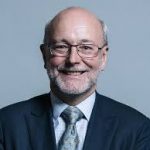
  • Peter Bottomley – 2023 Speech on Arts Council Funding for England

    Peter Bottomley – 2023 Speech on Arts Council Funding for England

    The speech made by Sir Peter Bottomley, the Father of the House and the Conservative MP for Worthing West, in Westminster Hall, the House of Commons on 18 January 2023.

    Mr Peter Bone (in the Chair)

    I will call the Father of the House next; I am grateful to him for being willing to wait until the end.

    Sir Peter Bottomley (Worthing West) (Con)

    That is because I am going to go back in time and it might bore other people, Mr Bone. The first chairman of the Arts Council I met was Sir Ernest Pooley, who succeeded John Maynard Keynes two years after I was born. Given that Arts Council England is for the encouragement of music and the arts, Pooley and Keynes would have been delighted at the competence with which it took our cultural institutions through the pandemic. The three rounds of emergency funding were executed in a way that nobody criticised. It was quite remarkable, and very effective.

    The most recent Arts Council England report available on its website is from 2020-21. The chairman, Sir Nicholas Serota, talks about the three outcomes and the four investment principles, none of which give any indication that the council might have conceived cutting off the ENO and the Coliseum at the knees. Tributes to those who have cared for, led and participated in the ENO and the Coliseum should be put on record. I will say again that Hazel and Vernon Ellis, together with the major public funders and private individuals and trusts, deserve to be recognised. One of those funders was the National Lottery through Arts Council England. I do not know whether those taking the decision that was announced recently were aware of the Arts Council England funding for the Coliseum and its restoration, so that Sir Oswald Stoll’s Frank Matcham theatre could be restored on the anniversary of its first opening.

    I think mistakes were made. I do not how much of it was to do with the Government, how much of it was to do with Arts Council England, and how much of it was to do with time pressures. The fact is that what was done clearly would not work and was not right, and it seems to me that the principle, both for Arts Council England and for the Government, is to say, “Is it necessary, is it right and will it work?” I will leave it to the Minister to explain not what has gone wrong but how he will put things right. I suggest that, afterwards, he writes to the Department for Levelling Up, Housing and Communities, saying that the Worthing Borough Council bid for the connected cultural mile from the railway station to the lido, going past the museum, should be approved.

  • Laura Farris – 2023 Speech on Arts Council Funding for England

    Laura Farris – 2023 Speech on Arts Council Funding for England

    The speech made by Laura Farris, the Conservative MP for Newbury, in Westminster Hall, the House of Commons on 18 January 2023.

    I congratulate my hon. Friend the Member for Bromley and Chislehurst (Sir Robert Neill) on securing this debate. I recognise all the things that he referred to in his opening remarks—a lack of transparency, accountability and engagement with the sector—in a decision that was reached on a treasured regional theatre in my constituency, the Watermill Theatre. It was truly a bolt from the blue for it to learn that there has been a 100% cut in its funding for the next three years.

    One thing that has been frustrating in the process since then is the fact that the Arts Council did not really substantiate its decision with reasons, and it was so reluctant to produce written reasons when we invited it to do so. I had to remind the council that it is a public body and susceptible to judicial review. When the decision came, it was impossible to discern why the Watermill did not meet the relevant criteria. It had met them all in every previous round of funding and was not alerted to the fact that any criteria had changed. The Arts Council was unable to explain why, if it was a regional decision based on levelling up, the other theatre in Newbury, which we also love, was successful when the Watermill was not. Eliciting the final decision was like getting blood out of a stone, and when it came it simply set out generalities, such as the assertion that the Watermill lacked ambition.

    The Watermill is an 18th-century watermill that has been converted into a theatre. I cannot improve on the description written in The Mail on Sunday, which said:

    “What a location! Forget the glitz of the West End: try walking up a country lane, past waddling ducks, to this lovely little theatre in a converted mill.”

    Its aesthetic beauty as a venue is absolutely treasured by our community, but we also treasure the quality and diversity of its productions. It is not just a standard repertory theatre that takes shows on tour: it produces its own work and pumps it around the country. It most recent touring production of “Spike” went from the Watermill to Blackpool, Glasgow, Cardiff and Darlington. It is also an artery theatre through which West End productions come and other productions flow on to international destinations, including Broadway.

    The theatre takes its commitment to diversity and improving access seriously. It is in the heart of a tiny village, so in 2022 it did a rural tour. “Camp Albion” took its productions to villages, which are often completely neglected in the consumption of the arts. Overall, the theatre reaches 20,000 people annually through its various community engagement programmes, including children with autism, deafness and many other special needs. It has a deep commitment to the Arts Council’s outcomes, which the council even acknowledged in its decision letter.

    We have been confronted with a deeply disappointing decision. We have found it incredibly difficult to know what mandate the Arts Council was working to, or why. I find it difficult to avoid the conclusion that this was capricious decision making, which undermines the status of the Arts Council as a guarantor of our national arts output. If the council is watching, I respectfully request that it reverse its decision because it has devastating consequences for the future of the Watermill Theatre in Newbury.

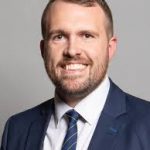
  • Jonathan Gullis – 2023 Speech on Arts Council Funding for England

    Jonathan Gullis – 2023 Speech on Arts Council Funding for England

    The speech made by Jonathan Gullis, the Conservative MP for Stoke-on-Trent North, in Westminster Hall, the House of Commons on 18 January 2023.

    It is a pleasure to serve under your chairmanship, Mr Bone.

    I congratulate my hon. Friend the Member for Bromley and Chislehurst (Sir Robert Neill) on securing this important debate. Culture is so important. I was delighted to spend time before the Christmas break at Springhead Primary School in Talke Pits, which worked closely with the Royal Shakespeare Company and the New Vic Theatre to stage a First Encounters production of Shakespeare’s “Twelfth Night”. Seeing kids as young as reception sat engrossed throughout that play, having learned about it in advance, was very special indeed. Mr Anderson, the headteacher, is doing a fine job.

    My mother always told me that I should learn to read the room, but perhaps I am about to go against that—although I am sure that will not shock many Members here. I want to congratulate Arts Council England on its investment in the great city of Stoke-on-Trent. This £6.8 million investment, from 2023 to 2026, has taken us from having one national portfolio organisation—the New Vic, which is actually in neighbouring Newcastle-under-Lyme—to now having eight such organisations. They include the fantastic Portland Inn Project, based in Stoke-on-Trent North, which will have a profoundly positive impact.

    Because of that investment, Stoke-on-Trent City Council, under its leader Councillor Abi Brown and Councillor Lorraine Beardmore, the relevant cabinet member, has been working tirelessly to look at how we can improve that partnership working further. Arts Council England has made Stoke-on-Trent a priority place and become a key member of the Stoke-on-Trent creative city partnership, which shows how the relationship continues to evolve. Indeed, it seems to have got the message that levelling up means making sure that places such as Stoke-on-Trent can celebrate their culture, history and heritage. We note that the levelling-up White Paper contained a Government promise that Stoke-on-Trent and Manchester would receive a special focus, to make the most of our cities’ industrial heritage.

    The city has responded to that with a clear vision and strategy to establish an international ceramics centre, which will tie together world-class collections, celebrate the growth of contemporary craft ceramics and expand on our fantastic advanced ceramics sector. At the heart of that vision is a plan for our main museum, the Potteries Museum and Art Gallery, based in Hanley, working with Staffordshire and Keele Universities, as well as Stoke Creates, to secure a £5 million investment from the Arts Council’s cultural development fund to create new spaces through a new research centre and to redesign the layout of the fantastic ceramics that we have to display. That work will build on the city council’s £4.7 million Spitfire Gallery development, which houses the city’s Mk XVI Spitfire. Obviously, the Spitfire was designed in Butt Lane—where I am proud to live as a resident—by Reginald J. Mitchell, a great local hero, without whose efforts we would not have won the battle of Britain. The plan also builds on the £1.5 million relocation of the archive service from Hanley library.

    We know that the decision is due in March. I am sure that Arts Council England is listening, and I am sure that the Minister will want to see Stoke-on-Trent get some more, because he has learned that once we get a taste of funding, we always want more. I look forward to more coming our way in Stoke-on-Trent. The clear notice from me is that a promise has been made and must now be delivered. We need major investment to continue to deliver new jobs and more high-skilled opportunities for people who want to study, understand and come to visit our great city, and to enable Stokies to be at the cultural heart of our great country.

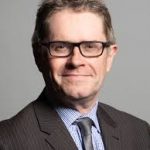
  • Kevin Brennan – 2023 Speech on Arts Council Funding for England

    Kevin Brennan – 2023 Speech on Arts Council Funding for England

    The speech made by Kevin Brennan, the Labour MP for Cardiff West, in Westminster Hall, the House of Commons on 18 January 2023.

    I echo many of the comments that have been made. I thank the right hon. Member for Bromley and Chislehurst (Sir Robert Neill)—

    Sir Robert Neill

    Just honourable.

    Kevin Brennan

    I thank the noble Gentleman, or whatever he is, for securing the debate. I also thank the former arts Minister, the hon. Member for Gosport (Dame Caroline Dinenage). She appeared many times before the Digital, Culture, Media and Sport Committee, and she was a very refreshing Minister to have in front of us. I thank her for the candid and supportive way in which she carried out her duties as a Minister and for the work she did during covid to keep many cultural institutions going. I also thank my hon. Friends, including my right hon. and learned Friend the Member for Camberwell and Peckham (Ms Harman), who has campaigned assiduously on this issue.

    I mentioned the Welsh National Opera earlier, because when this debate about Arts Council England started, it focused—understandably, perhaps—on the decisions around the English National Opera, but in some ways, what was done around the Welsh National Opera was even more invidious, or at least as invidious, because it signalled that this was not a rational, strategic decision-making process by Arts Council England. Like the hon. Member for Gosport, I would normally express support and admiration for the way that Arts Council England goes about things. However, rather than being a strategic, well-thought-through plan for the arts, it resembled more an emotional spasm of some sort, as a result of wanting to do something very quickly to meet the perceived needs of the Secretary of State at the time, the right hon. Member for Mid Bedfordshire (Ms Dorries). We are now told by the former Secretary of State, Ministers and Government Members that that was not what the Secretary of State wanted all along, which makes the whole affair all the more strange.

    One thing that is perhaps good about this whole incident is that it gives us an opportunity to highlight the fact that the Welsh National Opera is an opera company for Wales and England, despite its name. It is value for money because we have a proper national opera company with an international reputation that can serve both England and Wales, including, when it goes on tour, the parts of England that are not often well served by other cultural institutions. That is an integrated system for opera across England and Wales.

    Arts Council England decided to cut a third of the funding that it provides to the Welsh National Opera for its touring work in England. That includes many different parts of England, such as Liverpool; the west midlands, which is the part of Arts Council England that looks after the Welsh National Opera in terms of its administration; the west of England, in places such as Bristol; and Southampton, Oxford and elsewhere. It is right that these touring opera companies form an essential part of our regional theatres right across the country.

    When Arts Council England appeared before the Digital, Culture, Media and Sport Committee, I was interested to know what its decision-making process was, so I asked Darren Henley whether he had consulted the Arts Council of Wales prior to the decision being taken to cut the funding to the Welsh National Opera. He waffled for a bit, and I had to interrupt him to get him to answer the question, at which point he said:

    “They were aware just before the announcement was made, but we didn’t consult them in the announcement”.

    I put it to him and to Members here today that it is a dereliction of duty for a decision that has profound implications—as we know, it has resulted in Liverpool being denied any opera whatsoever—to be taken in that haphazard way.

    There are no SNP Members here, so I think we are all Unionists in this room. The hon. Member for Blackpool South (Scott Benton) was born in Newport, and he understands the importance of the Union. Arts Council England did not consult the Arts Council of Wales on a decision that has a profound implication for the future of that opera company and the whole system of opera around the country, and that undermines the whole so-called levelling-up agenda that we were told this decision making was about.

    I profoundly believe that creativity is a good thing in and of itself. I profoundly believe that this country’s greatest strength, or certainly one of its greatest, is its creative industries, and that we are one of the few countries in the world that is a net exporter. Our creative industries are a huge earner for our country and culturally enrich us all. Quite frankly, as a white, heterosexual male from a working-class background, I am sick of people speaking on my behalf, and talking about wokeism and all the rest of it. The arts and culture are profoundly important to enriching our lives, and we should all stand up for them, whatever our backgrounds.

    Let us hope that this was just an emotional spasm. I say to Arts Council England: please, get your act together and start thinking about these things. The arm’s length principle is important, but it does not mean being so arm’s length as to not even consult the Arts Council of Wales. That is not what the arm’s length principle is about, so Arts Council England should get its act back together, and let us return to some sense around this issue.

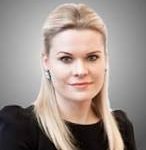
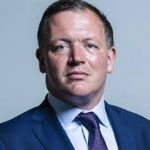
  • Damian Collins – 2023 Speech on Arts Council Funding for England

    Damian Collins – 2023 Speech on Arts Council Funding for England

    The speech made by Damian Collins, the Conservative MP for Folkestone and Hythe, in Westminster Hall, the House of Commons on 18 January 2023.

    I congratulate my hon. Friend the Member for Bromley and Chislehurst (Sir Robert Neill) on securing this important debate. He was right to remind us that when the Arts Council was established, its principal role was to promote art for art’s sake and to promote excellence, and through doing so to give people the opportunity to experience excellence in the whole range of arts, from figurative and decorative to performing arts, and provide people with the opportunity to develop their talents. That should be something that is accessible to the whole country, and that is why the Arts Council was created. It is also perfectly legitimate that the Arts Council, which is in receipt of a large amount of public money, should be challenged and scrutinised over how it allocates those funds and the strategies that it deploys.

    Scott Benton (Blackpool South) (Con)

    My hon. Friend may be aware that two leading arts commentators have published a pamphlet calling for the Arts Council to be abolished. Their reason was that it has been taken over by “highly-politicised staff” whose left-wing “woke agenda” is generally failing to support the arts. That came on the back of a case last year in which £3 million of taxpayers’ money was provided to a company that published posters stating that “straight white men” should “pass the power”. Does my hon. Friend agree that decisions such as this will raise legitimate questions among the general public about the level of oversight of some of these Arts Council decisions?

    Damian Collins

    My hon. Friend makes an important point. There should be a clear strategy for allocated funds. It is right that the Arts Council is an arm’s length body and free to make decisions based on artistic merit that some people will agree with and others will not.

    However, there is a clear strategy for how that benefits the whole nation, not parts of it. London receives a large amount of money because we have larger national institutions here. They demonstrate the benefit that they bring to the whole country, be that through touring exhibitions and performances or through the other cultural institutions around the country operated by the Tate, the V&A and so on.

    It is important that there is a clear strategy and the Arts Council is held to account for it, because anyone who is in receipt of public money should be held to account. It is right that the funding strategy works for the national portfolio organisations on a three-year settlement, because organisations need to be able to plan for the future. While we welcome the additional year’s money that has been granted to the ENO for the coming year—it means, as my hon. Friend the Member for Bromley and Chislehurst has said, that the 2023-24 season can go ahead—it gives no certainty beyond that and does not enable the ENO to make any further investment decisions. Even if the Arts Council had said, “We want the ENO to try to increase revenue from other sources,” that is not a compelling bid to take forward when the public money that the ENO relies on is no longer guaranteed. Who would match fund against public money that might not be there in just over a year’s time?

    There needs to be a degree of certainty. There will always be more demands on the Arts Council than it can fulfil, and there will always be people it has to let down, but that is why having a clear strategy, plan and understanding with the organisations that it funds is so important. It cannot be right to take a major national institution such as the ENO that has been funded in a certain way for many years and pull the rug out from under it with very little notice; I understand that the ENO had 24 hours’ notice of the decision.

    It would be perfectly legitimate for the Arts Council to say, “We must review the way opera is funded, and we want a strategy for that. We might want to look at how other revenue can support the opera, but we are going to do that during a transition period. What we are not going to do is create a cliff edge whereby the required funding is not there.” As hon. Members have said, not only has the decision had a direct impact on the ENO as an organisation, but the cuts have had a knock-on impact on arts and opera in the regions, which the Arts Council is there to support. That is the best evidence of the lack of a clear strategy. The Father of the House, my hon. Friend the Member for Worthing West (Sir Peter Bottomley), raised that in his intervention.

    The Coliseum is subsidised by the ENO to the tune of about £2 million a year. If the ENO cannot support the Coliseum as a building, who else will go into it? Who will pay those costs? Will we be left in the invidious position of using public money that should go into supporting performance arts to subsidise a building that nobody can use? That, again, demonstrates the lack of clear strategy. My constituency has organisations that benefit from national portfolio funding, not least Creative Folkestone. Less than 20% of its funding comes from the Arts Council; it has a diverse form of income, and that is right, but the extra money that it gets from the Arts Council enables it to do more, to do better things and plan for the future.

    At the end of this sorry saga, we need to get to a position where the ENO can plan for the future and invest in the future. If that is against a strategy to do more in the regions and more to reach diverse audiences, it needs a fair funding settlement to enable it to develop that strategy. We must recognise, too, that with major cultural institutions such as the ENO, what we see on the stage is, in some ways, the icing on the cake. There is a long tail of people who rely on that institution being there—the people who will develop their talents and may go on to work in other companies, the regional companies and tours that will be supported by that, and the people who are involved in costume design and set design—and a great variety of projects that are there to support people. My hon. Friend the Member for Gosport (Dame Caroline Dinenage) mentioned the fantastic Breathe project that the ENO ran. All those things are lost if the ENO has no secure future. While yesterday’s announcement is welcome, there has to be a longer-term plan, otherwise we will simply be back in this position in a few months’ time.

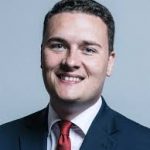
  • Wes Streeting – 2023 Comments on Sajid Javid’s Suggestion of Charging for Using NHS

    Wes Streeting – 2023 Comments on Sajid Javid’s Suggestion of Charging for Using NHS

    The comments made by Wes Streeting, the Shadow Secretary of State for Health and Social Care, on Twitter on 21 January 2023.

    Over my dead body.

    An NHS free at the point of use has been its central equitable principle for 75 years. Patients should never have to worry about the bill.

    It’s up to Labour, which founded the NHS, to grip the biggest crisis in its history and make it fit for the future.

  • Alex Cunningham – 2023 Comments on the Abolition of the TeesFlex Bus Service

    Alex Cunningham – 2023 Comments on the Abolition of the TeesFlex Bus Service

    The comments made by Alex Cunningham, the Labour MP for Stockton North, on Twitter on 23 January 2023.

    I’m hearing today that Mayor [Ben] Houchen is axing the TeesFlex bus service – I’d ask if it was true but he ignores my letters and has blocked me from social media.

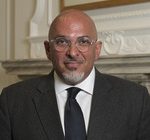
  • Nadhim Zahawi – 2023 Statement on his Tax Affairs

    Nadhim Zahawi – 2023 Statement on his Tax Affairs

    The statement made by Nadhim Zahawi, the Chair of the Conservative Party, on 22 January 2023.

    Twenty-two years ago, I co-founded a company called YouGov. When we set it up, I didn’t have the money or the expertise to go it alone, so I asked my father to help. In the process, he took founder shares in the business in exchange for some capital and his invaluable guidance.

    Twenty-one years later, when I was being appointed Chancellor of the Exchequer, questions were being raised about my tax affairs. I discussed this with the Cabinet Office at the time.

    Following discussions with HMRC, they agreed that my father was entitled to founder shares in YouGov, though they disagreed about the exact allocation. They concluded that this was a ‘careless and not deliberate’ error.

    So that I could focus on my life as a public servant, I chose to settle the matter and pay what they said was due, which was the right thing to do.

    Additionally, HMRC agreed with my accountants that I have never set up an offshore structure, including Balshore Investments, and that I am not the beneficiary of Balshore Investments.

    This matter was resolved prior to my appointments as Chancellor of the Duchy of Lancaster and subsequently chairman of the party I love so much. When I was appointed by the Prime Minister, all my tax affairs were up to date.

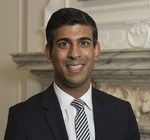
  • Rishi Sunak – 2023 Comments on Not Wearing a Seatbelt

    Rishi Sunak – 2023 Comments on Not Wearing a Seatbelt

    The comments made by Rishi Sunak, the Prime Minister, on 23 January 2023.

    Yes, I regret not wearing a seatbelt. It was a mistake and that is why I apologised straight away.

  • Daisy Cooper – 2023 Comments on the Personal Conduct of Nadhim Zahawi

    Daisy Cooper – 2023 Comments on the Personal Conduct of Nadhim Zahawi

    The comments made by Daisy Cooper, the Liberal Democrat MP for St Albans, on 23 January 2023.

    The gear-change from ‘nothing to see here’ to ordering a major ethics investigation in just a few days, puts Sunak’s own judgment in the spotlight once again.

    If Sunak won’t do the decent thing and sack Zahawi, the least he can do is suspend him for the duration of the investigation.