Tag: 2023

  • Alex Chalk – 2023 Statement on Ukraine

    Alex Chalk – 2023 Statement on Ukraine

    The statement made by Alex Chalk, the Minister for Defence Procurement, in the House of Commons on 26 January 2023.

    Equipping Ukraine to push Russia out of its territory is as important as equipping it to defend what it already has. Together, we will continue supporting Ukraine to move from resisting Russian forces to expelling them from Ukrainian soil. By bringing together allies and partners, we are ensuring that the surge of global military support is as strategic and as co-ordinated as possible.

    The new level of required combat power is achievable only by a combination of main battle tank squadrons beneath air and missile defence, operating alongside divisional artillery groups and further deep precision fires that enable the targeting of Russian logistics and command nodes in occupied territory.

    On 16 January, the Secretary of State for Defence announced in this House the UK’s latest package of military support for Ukraine. The United Kingdom is committed to providing the capabilities Ukraine requires to drive further international donations and to secure lasting peace. The UK, our allies and partners are responding decisively to provide military and humanitarian assistance to Ukraine. The UK has led the world with the gifting of modern main battle tanks to Ukraine, and we are engaging international partners through a co-ordinated military and diplomatic effort.

    The Secretary of State for Defence co-hosted a meeting of partners with his Estonian counterpart on 19 January to push forward international donations. The Tallinn pledge is an important declaration of commitment to Ukraine. The provision of tanks was also discussed at the meeting of the Ukraine defence contact group at Ramstein airbase on 20 January.

    We welcome the decision by Germany to send Leopard 2 tanks, and by the United States to send Abrams tanks, to Ukraine, and we are delighted that they have now joined the United Kingdom, France and Poland in equipping Ukraine with this important capability. Our united resolve can and will prove decisive. In 2023, we are more determined than ever. We will support Ukraine for as long as it takes.

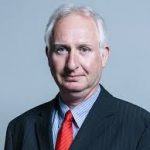
  • Daniel Zeichner – 2023 Speech on the Agricultural Transition Plan

    Daniel Zeichner – 2023 Speech on the Agricultural Transition Plan

    The speech made by Daniel Zeichner, the Shadow Minister for Food, Farming and Fisheries, in the House of Commons on 26 January 2023.

    I thank the Minister for advance sight of the statement. It provides detail following announcements made not to this House, Mr Deputy Speaker, but to the Oxford farming conference some weeks ago. It will be scrutinised closely as farmers rightly try to work out what it will mean for them. With intense cost pressures on fertiliser, fuel and labour supply, many people are hurting and worrying. At the same time, the reduction in basic payments moves inexorably onwards. For people on the margins, especially in the uplands, the withdrawal of that essential support will make life harder and harder. Next year, half of it will be gone and the value of the other half will be eroded substantially by inflation.

    So what is on offer today? Not nearly enough, I am afraid. There are more than 100 pages of complexity. There are lots of schemes, which are worthy in themselves, but in far too many cases, I fear they will be insufficiently attractive. There is a risk that take-up will be very low, as we have seen with the SFI so far, with just 224 paid out last year, compared with the over 80,000 receiving basic payments. I hope take-up improves—we want these schemes to work—but we have real doubts. Will the Minister tell us how much of the £1 billion already cut from farmers will go back to them this year through environmental land management schemes? How many people does he expect to take up the SFI in this calendar year? I welcome the reference to tenant farmers, but can he guarantee access to those schemes, because he will be aware of the issues highlighted in the Rock review?

    There are also real questions about the environmental benefit. In the absence of a whole-farm approach, there is real risk, particularly on countryside stewardship, that the Government will pour money out to people to do pretty much what they already do and then intensify alongside that. Will the Minister tell us today what measures of environmental improvement are in place to ensure that public goods are really being secured in return for public money? Crucially, what impact does this all have on our food security? Will he tell us today whether we produce more or less food in this country this year as a consequence of these changes?

    It is fully three years since we discussed the Agriculture Bill in Committee. I asked many of the same questions then and got vague answers. We will soon be halfway through the so-called transition. The Government have been good at cutting the funding to hard-pressed farmers, but frankly woeful at guaranteeing our food production here in the UK and enabling the switch to the more sustainable nature-friendly food production system we all want to see.

    Mark Spencer

    I honestly entered the Chamber with optimism. I thought today was the day we would get a positive Opposition able to join the people up and down the country who are being positive about this. I am sure the hon. Gentleman is disappointed we have had positive comments from non-governmental organisations and farming organisations, which seem to be welcoming the plans.

    Let us get to the points the hon. Gentleman made. He said we made announcements at Oxford, but what we announced at Oxford was the lifted payments for countryside stewardship. Today we are announcing the SFI, which is the other scheme. That is on the website now. There are six extra schemes in there, some of which—the low-input grassland and improved grassland schemes, for instance—are designed to help and support exactly those upland farmers he mentioned. There is also support through countryside stewardship to assist with the maintenance of stone walls, so there are lots of things for farmers to embrace.

    The hon. Gentleman asks: can we do both? Can we keep the nation fed and improve the environment? We have full confidence that we can. Looking at the data and at history, this country gets about 1% more efficient year on year in the way we produce food. That means that in 10 years’ time we can produce the same amount of food on 10% less land. I think we can do better than that. With investment in new technology, we can be more productive on the most productive land, and on the margins around those fields we can add true biodiversity and environmental output.

    Let me give a practical example. If we convince farmers not to cut their hedgerows in August or September, as was traditional, but encourage them to cut them in February, that would provide a huge pantry of berries for small birds to feed on throughout the winter. Combining that with support for wildflower strips next to the hedgerows would encourage the development of lacewings and ladybirds, which eat aphids, which are the pests farmers use pesticides on to stop the damage to their crops. That would be a win-win by working with, not against, nature. That is what we want to encourage farmers to do, and that is how we will deliver food security, environmental benefits and better biodiversity.

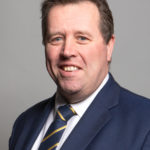
  • Mark Spencer – 2023 Statement on the Agricultural Transition Plan

    Mark Spencer – 2023 Statement on the Agricultural Transition Plan

    The speech made by Mark Spencer, the Minister for Food, Farming and Fisheries, in the House of Commons on 26 January 2023.

    With permission, Mr Deputy Speaker, in addition to the written ministerial statement tabled today, I would like to make a statement updating the House on the next steps that we are taking to shake off the damaging legacy of the bureaucratic EU common agricultural policy for good.

    We will learn from the past, and help farmers to build and maintain profitable and resilient businesses by spending public money in a way that helps us to secure the public good, so that they can continue to produce the food we need and help to improve the state of nature. That is the right and smart thing to do with public money, as we also develop the markets that will draw on finance from all sources. Today we are publishing detailed information about what we will pay for in our environmental land management schemes, and how farmers can get involved this year and beyond.

    Having kicked off our sustainable farming incentive last summer starting with soil health, today we are adding six more ways that farmers can be paid to take action in 2023, from protecting and enhancing the hedgerows that make up a vital network of habitats across our farmed landscapes, to making sure that we tackle pests, protect crops and support wildlife, so that more farms of all shapes and sizes can make doing their bit for the environment part of their business plan. Each year, we will add offers to the SFI, with the full set in place by 2025, so that farmers can choose more options for their businesses. That is vital for producing food, tackling the causes and impacts of climate change, and helping nature to recover.

    We are making it straightforward and simple to get involved. We know that farmers need to plan for the months and years ahead as early as possible, so today we are publishing information on the work we will be rewarding by 2025 through the sustainable farming incentive and countryside stewardship, and sharing information on the next round of landscape recovery projects. We remain as ambitious as ever, as we move ahead through our transition and work with farmers to design a much better way of doing things.

    All that will help us to build the resilience of our communities and to meet our environmental targets on air, water and waste, as well as nature, land and sea, guided by our commitments to reach net zero by 2050 and halt the loss of species in our country by 2030. We are also tackling the polluters who stubbornly refuse to help and threaten to undermine everyone else’s hard work. Our aim is to back the frontrunners who can have the greatest impact and inspire others, as well as helping everyone to bring up their baseline and improve it year on year, harnessing the power of innovation and technology to help our farmers give nature a helping hand so that we focus on bringing their businesses into the future.

    All the evidence we have, as well as plain common sense, tells us that making the shift towards a more sustainable, resilient food system is critical to feeding our growing population and meeting our commitments to halt the decline of nature by 2030 and reach net zero. That will fundamentally improve the lives of people across our country and around the world, and make sure that every generation has a better future. The UK will continue to lead the way. I am sure that the whole House will join me in recognising the vital importance of the solutions our fantastic farmers bring to the table. I commend this statement to the House.

  • Christine Jardine – 2023 Parliamentary Question on Blessings for Same-sex Couples in the Church of England

    Christine Jardine – 2023 Parliamentary Question on Blessings for Same-sex Couples in the Church of England

    The parliamentary question asked by Christine Jardine, the Liberal Democrat MP for Edinburgh West, in the House of Commons on 26 January 2023.

    Christine Jardine (Edinburgh West) (LD)

    Whether the Commissioners have held discussions with senior Church leaders on allowing clergy to conduct blessings for same-sex couples.

    Andrew Selous

    With you permission, Mr Speaker, following my response to the urgent question on Tuesday, the advice I was given then was by the Church legal office, and I was yesterday asked to make a small clarification. A simple majority in each of the three Houses of the General Synod could suffice to pass a measure and amending canon to change the definition of marriage in ecclesiastical law, but circumstances could also arise in which two-thirds majorities in the House of Bishops and the House of Clergy would be needed, and, as with all authorised forms of service, a two-thirds majority in each House would be required for the approval of the Synod as a form of service for the marriage of a same-sex couple. I apologise, Mr Speaker, but I was only informed yesterday. Given that I was answering questions today, I thought you would find it acceptable that I put that slight clarification on the record.

    In answer to the question from the hon. Member for Edinburgh West (Christine Jardine), it is the case that the General Synod of the Church of England can make its own decisions on these matters. Members of the Synod will have a chance to make their own views clearly known, having listened to the very forcible views expressed in this House on Tuesday. I repeat that the Church of England has apologised for past behaviours, and welcomes and values LGBTQI+ people unreservedly and joyfully.

    Christine Jardine

    I thank the hon. Member for that clarification and for his comments about welcoming the LGBTQI+ community joyfully. But can I ask him to clarify then why it is that a man and a woman who do not believe in God and do not regularly attend church are welcome to marry in the Church of England—indeed, the Church’s website says, “God’s blessing is the main attraction for many couples”—but a couple in a same-sex relationship, both of whom may have worshipped in the Church all their lives and live in the spirit of Christian faith, are denied the same right in the Church, even though similar denominations in Scotland offer that opportunity? Can the hon. Member inform the House whether the Commissioners have discussed that inequality with the Church of England?

    Andrew Selous

    The hon. Lady is right to raise this issue. These matters will be very livelily debated at the General Synod between 6 and 9 February. I can also tell her that each province in the global Anglican communion is autonomous. The majority of the provinces in the communion provide neither blessings nor marriages for same-sex couples: the Scottish Episcopal Church provides marriages, the Church in Wales provides blessings, and the Church of Ireland provides neither for same-sex couples, so the hon. Lady can see that there is a variety of practice within these islands. But I have heard what she has said and, more importantly, I will make sure that the General Synod is very well aware of her views and those of others in this House.

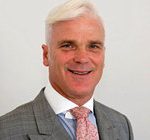
  • Desmond Swayne – 2023 Parliamentary Question on the Church of England’s Assets and their Historic Involvement with Slavery

    Desmond Swayne – 2023 Parliamentary Question on the Church of England’s Assets and their Historic Involvement with Slavery

    The parliamentary question asked by Desmond Swayne, the Conservative MP for New Forest West, in the House of Commons on 26 January 2023.

    Sir Desmond Swayne (New Forest West) (Con)

    Whether the commissioners have made an estimate of the proportion of the Church’s assets that may have a link to a historic involvement with slavery.

    The Second Church Estates Commissioner (Andrew Selous)

    The Church Commissioners have not tried to draw a direct line from historical investments to current assets, given the myriad inflows and outflows over 300 years. Our forensic accountants estimate that investments linked to the slaving activities of the South Sea Company were equivalent to several hundred million pounds in today’s money. That is deeply shameful to acknowledge, and while no amount of money will ever be enough to repair the horrors of the past, the Church Commissioners have decided to invest £100 million over the next nine years in a better future for all, particularly in those communities affected by historical slavery.

    Sir Desmond Swayne

    Can my hon. Friend assure me that the not disproportionate £100 million will be spent to reduce the shocking persistence of slavery in the present?

    Andrew Selous

    The £100-million fund will enable impact investment grant funding and research in response to the findings in the Church Commissioners’ report. An oversight group will be established to help the Church Commissioners shape and deliver that response. Today the Church Commissioners, as award-winning ethical investors, punch well above their weight in combating modern slavery and human rights violations all around the world.

    Jim Shannon (Strangford) (DUP)

    While we cannot and should never ignore the Church’s historical involvement with slavery, is it not better to focus on the missionary work that churches did over the years, with the spread of the Gospel and the best story ever told: that Jesus Christ came into the world to save sinners?

    Andrew Selous

    I do not think it is a question of either/or. When the chief executive of the Church Commissioners was on the “Today” programme recently explaining why we have done this, he was contacted later that day by a global majority heritage individual who had stayed away from the Church for 40 years and is now going to come back again. I say also to the hon. Gentleman that full churches do not tend to fall down.

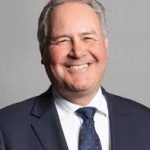
  • Bob Blackman – 2023 Parliamentary Question on the Maintenance of Churches and Cathedrals

    Bob Blackman – 2023 Parliamentary Question on the Maintenance of Churches and Cathedrals

    The parliamentary question asked by Bob Blackman, the Conservative MP for Harrow East, in the House of Commons on 26 January 2023.

    Bob Blackman (Harrow East) (Con)

    What assessment the Church of England has made of the steps needed to put the maintenance of churches and cathedrals on a sustainable basis.

    The Second Church Estates Commissioner (Andrew Selous)

    The Taylor review of cathedral and church building sustainability was published in 2017. There is an urgent need for dialogue with the Government about it, because without a bedrock of basic maintenance and repairs funding, there is a real risk to many of our amazing church and cathedral buildings. In passing, I note that such issues are always easier to address with a full church.

    Bob Blackman

    I thank my hon. Friend for that answer. My constituency is home to no fewer than 24 churches, including every branch of Christianity, but St Lawrence’s church in particular is in dire need of repair. It is a very well populated church, but it does need additional funds to restore it to its previous good keeping. Can my hon. Friend tell me what help will be given to St Lawrence’s church?

    Andrew Selous

    I have read up on St Lawrence, Little Stanmore: its baroque interior and internationally renowned organ—Handel was employed as a composer in residence —are real treasures. I will put my hon. Friend in touch with the national church buildings department, which advises parishes on grants and support for refurbishment. I can also tell him that the Willesden area council of the diocese of London is able to distribute grants of up to £20,000 for urgent repairs.

    John Cryer (Leyton and Wanstead) (Lab)

    As the hon. Member said, a large number of churches and cathedrals in this country are in serious danger, including a number in my constituency. He also mentioned discussions between the Government and the Church of England on securing the future of churches. Will he say if those discussions are imminent?

    Andrew Selous

    I am very grateful to the hon. Gentleman for raising that point, and I think the answer is that they need a bit of a boost, if I could put it that way. I would welcome his support, and indeed that of hon. Members on all sides, because I think all places of worship—and the Church of England does have an enormous number of grade I and grade II buildings—are important in all of our communities, and we do need a serious national conversation about how we keep them going for the future. Other countries fund them from the state. Personally, I do not think that is right, but I do think we need a dialogue with Government as to how we go forward in this area.

  • Dan Jarvis – 2023 Parliamentary Question on the Fan Led Review of Football Governance

    Dan Jarvis – 2023 Parliamentary Question on the Fan Led Review of Football Governance

    The parliamentary question asked by Dan Jarvis, the Labour MP for Barnsley Central, in the House of Commons on 26 January 2023.

    Dan Jarvis (Barnsley Central) (Lab)

    Whether she plans to implement the recommendations of the Fan-Led Review of Football Governance.

    The Secretary of State for Digital, Culture, Media and Sport (Michelle Donelan)

    When we published our response to the recommendations made by the independent Fan-Led Review of Football Governance, we were clear that football needs reform to ensure the game’s long-term sustainability and to safeguard clubs, and I have met the authorities to push for action now. We will publish a White Paper setting out our detailed position within the next couple of weeks. That will set out the direction of travel for significant reform within football.

    Dan Jarvis

    I do not know whether I need to declare an interest as a supporter of Barnsley football club, but I put that on the record anyway. Further to the point made just a moment ago, we are still waiting for progress between the Premier League and the English Football League on increased funding to the pyramid, which could, hopefully, avoid another Bury football club or Derby County scenario. The Minister and the Secretary of State have mentioned the White Paper, but given that it may be 18 months before any new regulator is operational, can the Secretary of State say what she will do in the interim to break the deadlock and ensure that football clubs are financially sustainable for the longer term?

    Michelle Donelan

    While we will publish the White Paper in two weeks’ time, it is clear that football does not need to wait for the Government to act. Both the Minister for Sport and I have had several meetings trying to push that along. I urge football to act now because it is in its interests, too, to safeguard clubs and to protect the interests of fans.

    Damian Collins (Folkestone and Hythe) (Con)

    I welcome the news that the Government’s White Paper will be published shortly. Does the Secretary of State agree that most football clubs that get into financial difficulties are already trading outside of the rules of the competitions they play in? If those rules were properly enforced, these problems would not occur, and that is why we need the regulator to ensure that transparency exists.

    Michelle Donelan

    As always, my hon. Friend talks a great deal of sense, and I completely agree with him. That is why this Government will be acting and standing up in the interests of clubs and fans to ensure that the regulator is in place to do just that, but of course the rules of the game could be enforced now.

    Mr Speaker

    I call the shadow Secretary of State.

    Lucy Powell (Manchester Central) (Lab/Co-op)

    Everton football club is reportedly up for sale, with its stadium half-built. With others up for sale, this looks set to be a record year for premier league clubs changing hands. Many others face financial problems and ownership uncertainties, all since the Fan-Led Review was published. Yet fans will have no say and new owners are not subject to robust independent checks. We still do not have the deal on financial distribution in the pyramid. Will the Secretary of State take responsibility for the clubs that go under or get themselves into trouble before the independent statutory regulator is finally implemented?

    Michelle Donelan

    This Government have proven time and again that we are on the side of the fans. We committed to the review in our manifesto. We stepped in during covid to protect clubs with a £600-million sport survival package. We stepped in again to prevent the super league —a competition that no fans wanted. Whenever fans have needed us, we have been in their corner. This will be a huge shake-up of football, and I will not apologise for taking the time to get it right. We will come forward with the White Paper in the next two weeks.

  • Mark Pawsey – 2023 Parliamentary Question on the Rugby Football Bicentenary Celebration

    Mark Pawsey – 2023 Parliamentary Question on the Rugby Football Bicentenary Celebration

    The parliamentary question asked by Mark Pawsey, the Conservative MP for Rugby, in the House of Commons on 26 January 2023.

    Mark Pawsey (Rugby) (Con)

    What steps her Department is taking to support the celebration of the bicentenary of rugby football in 2023.

    The Secretary of State for Digital, Culture, Media and Sport (Michelle Donelan)

    The Government are delighted that rugby union is celebrating 200 years in 2023. We are looking forward to working with my hon. Friend to mark that occasion, and I am delighted that the Minister for Sport, my right hon. Friend the Member for Pudsey (Stuart Andrew), plans to join some of those celebrations at Rugby School. Rugby continues to be one of our biggest participation sports, and the very best of the game will be showcased in the men’s world cup later this year. We also look forward to supporting the growth of the game, with England hosting the women’s world cup in 2025.

    Mark Pawsey

    Mr Speaker, you will know that my constituency is known around the world as the birthplace of the game, where it is played in both codes—both union and league. The game all started in 1823, when a Rugby schoolboy, William Webb Ellis, picked up and ran with the ball at a time when everybody else just kicked it. The bicentenary this year gives both the town and Rugby School the opportunity to celebrate with events and matches on The Close, including one with the parliamentary team from the Commons and the Lords. We are welcoming the Minister for Sport, and we look forward to seeing him at the celebrations with the first pass of the ball, which will be transported to rugby- playing countries around the world.

    Michelle Donelan

    The Minister is very much looking forward to joining the start of the global pass, which will see 200 passes take a rugby ball through the hands of fans across the globe. The programme of events will give plenty of opportunities for the people of Rugby and beyond to celebrate their role in the history of the sport.

    Mr Speaker

    Do not forget that the Minister for Sport is a rugby league man. At least now he can do both codes.

  • Sam Tarry – 2023 Parliamentary Question on Grassroots Club Rugby

    Sam Tarry – 2023 Parliamentary Question on Grassroots Club Rugby

    The parliamentary question asked by Sam Tarry, the Labour MP for Ilford South, in the House of Commons on 26 January 2023.

    Sam Tarry (Ilford South) (Lab)

    What recent steps her Department has taken with the Rugby Football Union to help support the recovery of grassroots club rugby following the covid-19 outbreak.

    The Parliamentary Under-Secretary of State for Digital, Culture, Media and Sport (Stuart Andrew)

    Supporting grassroots sports is a key Government priority. It brings communities together and makes people happier and healthier. Through the sport survival package, rugby union received £160 million to ensure the survival of clubs at all levels during the pandemic. That was specifically designed to help those grassroots clubs. In addition, Sport England offered £23 million to support rugby union during the pandemic.

    Sam Tarry

    Local rugby clubs play a vital role in encouraging a healthy lifestyle, bring communities together and provide young people with an opportunity to develop friendships and skills for life. As the Minister knows, the pandemic has proved ruinous for many clubs, with clubs local to me in Ilford, Dagenham, Barking, Romford, Chingford and Wanstead all facing either closure or significant difficulties. The president of my local club, Ilford Wanderers, told me:

    “We aren’t just losing players; we losing wholesale teams.”

    That has been compounded this week by the controversial changes to the amateur games rules for rugby union regarding safe tackle height, announced without consultation. I seek the Minister’s assurance that funding will be ongoing and he will work with the Rugby Football Union on financial support to save those community clubs and ensure that this fantastic game, in all its forms, continues for many generations to come.

    Stuart Andrew

    The hon. Gentleman is right to highlight the significant contribution that rugby union makes in many of our communities. I pay tribute to the many thousands of volunteers who give up their time to ensure that these clubs survive. We work constantly with the RFU and Sport England to ensure that the best assessment is made of support that is needed for the sector. I will continue to do that and raise the points that he highlighted.

    Andrew Bridgen (North West Leicestershire) (Ind)

    I welcome the news that more than 200 grassroots rugby, football and boxing organisations across England and Wales are to be awarded £5 million to put on local schemes. Does the Minister agree that, apart from the obvious health and wellbeing benefits, these schemes help to keep vulnerable young people out of antisocial behaviour and crime?

    Stuart Andrew

    My hon. Friend is right. The power of sport is significant and far-reaching: it helps with health and wellbeing and, as he rightly points out, can be a great avenue for helping people not to be tempted into areas of crime. That is why grassroots sports will be a key focus of our sports strategy.

    Tonia Antoniazzi (Gower) (Lab)

    We all love the game of rugby football union. In Wales this week, the Welsh Rugby Union was accused of sexism and misogyny. It is shocking and, unfortunately, reaches throughout the culture of Welsh rugby. Will the Minister and the Secretary of State reach out to the Welsh Government to provide their support and give the right guidance on setting up an independent regulator?

    Stuart Andrew

    Sexism, misogyny or any prejudice has no place whatever in any of our sports. As the hon. Member knows, sport is devolved, but I will reach out to colleagues in the Welsh Government and have a discussion about that. I am absolutely clear that our sports strategy will have inclusion at its heart.

    Stephen Crabb (Preseli Pembrokeshire) (Con)

    First, may I congratulate you, Mr Speaker, on last month becoming the new president of the Rugby Football League? I suspect that your form of the game will see a big influx of new players as the English Rugby Football Union seeks to rewrite the rules of the union game.

    Does the Minister agree that, given 75,000 players, coaches and supporters of the union game have already signed a petition rejecting the new rules, the RFU should think again, work more collaboratively with the grassroots across all the home nations and ensure that all steps taken to improve player safety are consistent and workable and do not lead to a player exodus?

    Stuart Andrew

    My right hon. Friend raises an important point that a number of colleagues have already raised with me. As he will be aware, national governing bodies such as the Rugby Football Union are responsible for the regulation of their sport and ensuring that appropriate measures are in place to protect participants from harm and serious injuries. I can assure him that we continue to work with sports bodies, including the RFU, to ensure that player safety is prioritised, and I will certainly raise the points he has raised in my next meeting with it.

  • Ian Levy – 2023 Parliamentary Question on the Accessibility of Cultural Attractions

    Ian Levy – 2023 Parliamentary Question on the Accessibility of Cultural Attractions

    The parliamentary question asked by Ian Levy, the Conservative MP for Blyth Valley, in the House of Commons on 26 January 2023.

    Ian Levy (Blyth Valley) (Con)

    What steps her Department is taking to increase the accessibility of cultural attractions.

    Angela Richardson (Guildford) (Con)

    What steps her Department is taking to increase the accessibility of cultural attractions.

    The Parliamentary Under-Secretary of State for Digital, Culture, Media and Sport (Stuart Andrew)

    My Department is committed to broadening the accessibility of our cultural heritage sites across the country. Arts Council England recently announced the 2023-26 national portfolio, which will significantly improve access to arts and culture. DCMS also works closely with David Stanley, the disability and access ambassador for arts and culture, to improve accessibility to the sector for those with disabilities.

    Ian Levy

    In recent months, projects in Blyth Valley have received upwards of £700,000 of funding from my right hon. Friend’s Department, including the refurbishment of the grade I listed Seaton Delaval Hall, Headway Arts in Blyth, and the replica of the Williams II sailing ship that discovered Antarctica in 1820—there is so much to see. On that point, I offer my right hon. Friend the opportunity to experience those projects at first hand, meet the people involved, and sample the excellent fish and chips on the north-east coastline.

    Stuart Andrew

    Heritage and culture play a vital role in many of our communities, including in the Blyth valley, showing that they are great places to live, work and visit. I am delighted that the Department and our outside bodies are funding projects there, including the £96,000 for Headway Arts. That is just what we want to see. Of course, I would be more than happy to visit my hon. Friend’s constituency. As I represent the home of the original Harry Ramsden’s, I would be interested to compare them with good old Yorkshire fish and chips.

    Mr Speaker

    Aren’t they closed Minister?

    Angela Richardson

    I am incredibly proud of the Yvonne Arnaud theatre in Guildford and the outreach work that it does in the wards of Stoke and Westborough, which have some of the highest rates of deprivation and the lowest health outcomes in Surrey. It does all that work outside the national portfolio organisation framework, with little support from the local authority. To truly level up accessibility to the arts for my constituents, what can the Department do to encourage local authorities to recognise and support arts organisations that sit outside the NPO framework?

    Stuart Andrew

    My hon. Friend is absolutely right to be proud of her theatre and all the work that it does despite being outside the portfolio. Our Department is absolutely committed to ensuring that all people have access to arts and culture regardless of where they live. Many local authorities invest in those sectors and respond in innovative ways, and have created many new models. I hope that her local authority will look at the huge benefits that others have enjoyed by accessing many of the partnerships that have brought about best practice in our country.

    Nick Smith (Blaenau Gwent) (Lab)

    Unboxed was a £120 million investment to celebrate the best of Britain. The Department reported in November that the figure for audience engagement was just over 18 million. That sounds a reasonable reach, but it turns out that a one- hour “Countryfile” TV special was doing the heavy lifting with 5 million viewers—nearly a third of the total. I understand that a wider evaluation is in hand, but does the Minister think that the festival made the impact that his Department intended it to, and can he ensure that this point is considered in the wider evaluation?

    Stuart Andrew

    The hon. Gentleman is right to question in the way that he has. Unboxed has had many successes, and it has brought about cultural and art experiences to places that would perhaps never usually enjoy them—I am thinking about the work that went on in Caernarfon in north Wales, for example. He is right that we are evaluating it, and this will be a part of the assessment that we make.

    Margaret Ferrier (Rutherglen and Hamilton West) (Ind)

    What steps will Ministers take to ensure that cultural attractions in tourist spots offer full disability awareness training for staff, covering not just physical disabilities but hidden disabilities, so that they can better accommodate their visitors?

    Stuart Andrew

    The hon. Lady is absolutely right: when we talk about access for all, we absolutely mean it. The disability unit in the Government has launched an enhanced and expanded programme of disability and access ambassadors to help us drive progress in increasing access. I am pleased that many of our establishments are working on that at speed.

    Mr Speaker

    I call the shadow Minister.

    Barbara Keeley (Worsley and Eccles South) (Lab)

    The accessibility of cultural organisations will be affected greatly by the Government’s tapering of orchestra tax relief and theatre tax relief from April. The Association of British Orchestras tells me that the 50% rate has enabled orchestras to survive at a time when box office and other earned income is falling. It has enabled concerts in non- traditional venues, reaching new audiences in underserved communities. However, the tapered rate will cost some national organisations as much as £3 million. Jobs will be lost, there will be cuts to productions, and outreach work, such as that we have heard about, will not be possible. Some orchestras and theatres will just not survive. Will the Minister ask the Chancellor to review urgently the reduction in orchestra and theatre tax reliefs?

    Stuart Andrew

    The hon. Lady is right to raise those important points. I assure her that both I and my ministerial colleagues in the Department have regular discussions with colleagues in the Treasury. We will continue to do so and raise the points she has highlighted.