Tag: 2023

  • PRESS RELEASE : New data laws debated in Parliament [April 2023]

    PRESS RELEASE : New data laws debated in Parliament [April 2023]

    The press release issued by the Department for Science, Innovation and Technology on 17 April 2023.

    New data regulations to be introduced to help fix everyday problems for the public.

    • Data Minister Julia Lopez will detail modern laws for a data-driven era as Data Protection and Digital Information Bill will be debated today
    • The bill will help fix problems for the public like reducing cookie pop-ups, tackling nuisance calls with bigger fines and improving trust in the way data is handled
    • Debate comes as UK hosts Global Cross-Border Privacy Rules Forum, bringing data experts together for four days of discussions and workshops on global approaches to privacy

    New data regulations that will reduce annoying cookie pop ups, crackdown on nuisance calls with bigger fines and contribute £4.7 billion to the UK economy over ten years will be debated in Parliament today.

    The Data Protection and Digital Information Bill sets out the UK’s common-sense led data laws and will give organisations greater flexibility to protect personal data, while maintaining high data protection standards.

    The Bill will increase fines for nuisance calls and texts from £500,000 to either £17.5 million or up to four per cent of global turnover, whichever is greater, to create tougher punishments for those who pester people with unwanted calls and messages.

    The reforms to UK data laws aim to reduce the number of consent pop-ups people see online, which repeatedly ask users to give permission for websites to collect data about their visits.

    Before the changes come into effect, the government will work with industry and the Information Commissioner’s Office to ensure technology to help people set their preferences automatically is effective and readily available. This will help web users to retain choice and control over how their data is used.

    The strengthened regime will seek to ensure data adequacy with the European Union’s General Data Protection Regulation (GDPR) and will modernise the Information Commissioner’s Office through the creation of a statutory board with a chair and chief executive to make sure it remains a world-leading, independent data regulator.

    The Bill will make it easier and quicker for people to verify their identity digitally, if they want to, by establishing a framework for the use of trusted and secure digital verification services, and will reduce the number of cookie pop-ups people see online.

    The legal changes will improve the UK’s ability to strike international data deals and make these partnerships more secure, allowing British businesses to seize billions of pounds of data trade as a reward of Brexit.

    Data Minister Julia Lopez is expected to tell the House today:

    This Bill will maintain the high standards of data protection that British people rightly expect.

    But it will also help the people who are using our data to make our lives healthier, safer, and more prosperous. That’s because we’ve co-designed it with those people, to ensure that our regulation reflects the way real people live their lives and run their businesses.

    The Parliamentary debate coincides with the Global Cross-Border Privacy Rules (CBPR) Forum in London. Over four days of workshops (Monday 17 – Thursday 20 April) the UK will lead global discussions between government officials, regulators and privacy experts, exploring how global privacy regimes can be more compatible and improve data transfers.

  • PRESS RELEASE : Government outlines action needed in coming years to decarbonise aviation [April 2023]

    PRESS RELEASE : Government outlines action needed in coming years to decarbonise aviation [April 2023]

    The press release issued by the Department for Transport on 17 April 2023.

    Plans to speed up the design, manufacture, and rollout of zero emission aircraft and infrastructure at UK airports.

    • Jet Zero Council meets at Farnborough Airport and publishes 2-year-plan to support wider target of decarbonising aviation sector by 2050
    • Transport Secretary delivers keynote speech at Sustainable Skies World Summit, highlighting ongoing work to produce new technology and cleaner fuels
    • over £1 million government funding for important research into speeding up the development of liquid hydrogen aviation technology
    • comes as the government welcomes the report by expert Philip New setting out the conditions for a successful UK SAF industry

    Ministers and aviation chiefs have revealed an action plan for the next 2 years in the race to reach Jet Zero by 2050, as the government continues with ambitious plans to decarbonise faster than any other G7 country, grow the economy, and support hundreds of thousands of well-paid green jobs.

    The Jet Zero Council – made up of industry, academic and government leaders – met today (17 April 2023) at Farnborough Airport. Through its 2-year plan, the council committed to continue working to speed up the design, manufacture, and rollout of zero emission aircraft and vital infrastructure at UK airports.

    The plan sets out how the council will help to accelerate the production of sustainable aviation fuels (SAF), by continuing to invest millions of pounds in first-of-a-kind SAF plants, supporting crucial scientific research on a larger scale, and helping to drive down production costs.

    Farnborough Airport also played host to the Sustainable Skies World Summit today, which gathers experts and leaders from the worlds of aviation, government, energy, and engineering. UK Transport Secretary Mark Harper delivered the global Summit’s keynote speech, where he stressed the importance of the partnership between government, industry and academia in the international challenge to reaching Jet Zero.

    The government has also welcomed the report Developing a UK SAF industry by Philip New, former CEO of the Energy Systems Catapult and BP Alternative Energy. The independent evaluation – commissioned by the Department for Transport – assesses what conditions are necessary to create a successful UK SAF industry.

    Transport Secretary Mark Harper said:

    This government is a determined partner to the aviation industry – helping accelerate new technology and fuels, modernise their operations, and work internationally to remove barriers to progress.

    Together, we can set aviation up for success, continue harnessing its huge social and economic benefits, and ensure it remains a core part of the UK’s sustainable economic future.

    Emma Gilthorpe, Jet Zero Council CEO, said:

    It’s fantastic for the Jet Zero Council to be meeting today at Sustainable Skies, maintaining the momentum built by government and industry on our vital journey to decarbonising aviation.

    The 2-year plan published today, building on recent government commitments to secure demand for SAF in the UK, will ensure we continue to accelerate progress and achieve the Jet Zero Council’s objectives of delivering 10% SAF in the UK fuel mix by 2030 and zero emission transatlantic flight within a generation.

    The Philip New report sets out a number of recommendations to help stimulate SAF production in the UK.

    The government response to the report details the extensive work that is already underway to meet many of the recommendations, whilst highlighting what additional action could be taken to drive further investment in UK SAF production.

    The UK’s Sustainable Aviation Fuels programme is one of the most comprehensive in the world. The Jet Zero Strategy sets out how we can achieve net zero emissions from UK aviation by 2050, importantly without directly limiting demand for aviation, and the £165 million Advanced Fuel Fund is also kickstarting production, with 5 projects already chosen to receive funding.

    Turning to potential barriers to investment, the government recognises that many investors are looking for longer-term revenue certainty that the SAF mandate will not provide.

    The government is therefore committing to work with the aviation industry on the best ways to decarbonise, including options for additional revenue certainty for a UK SAF industry.

    Secretary of State for Energy Security and Net Zero Grant Shapps said:

    Having launched the Jet Zero Strategy last summer, I am thrilled to now support the launch of today’s new 2-year action plan to future-proof the aviation industry and accelerate the delivery of new green jobs.

    Boosting investment in sustainable aviation fuels is at the heart of these plans today, marking a landmark step in spearheading the technologies that will keep passengers flying guilt-free.

    Business and Trade Minister Nusrat Ghani said:

    “There is no time to waste in creating a sustainable, decarbonised aviation sector fit for the future. By working in partnership with industry, we are determined to accelerate the development of innovative zero emission technology and secure the long-term success of our vital UK manufacturing sector and its global exports.”

    Developing new low or zero emission aircraft technology is an important part of the Jet Zero strategy. The government is co-investing, with industry, in innovative aerospace technology, through the Aerospace Technology Institute (ATI) Programme which has a £685 million R&D budget over the Spending Review period (2022/23 to 2024/25).

    Through this Programme, the Department for Business and Trade (DBT) has committed to fund the ‘UK Hydrogen Capability Network – Phase 0 Project’.

    Led by Aerospace Technology Institute (ATI) this 12-month study will work closely with industry to define the operating model for a group of open access research and development facilities designed to accelerate the development of liquid hydrogen propulsion aircraft technologies, capabilities and skills in the UK. It will also explore options for the supply of green liquid hydrogen.

    The study was inspired by the BEIS funded Fly Zero project, which published its conclusion in March 2022.

    This study brought together experts from across the UK to explore the design, technical and commercial challenges in realising zero-carbon emission commercial aviation by 2030. It concluded that green liquid hydrogen offers the greatest potential to power a new generation of zero-carbon emission aircraft and recommended further work to explore collaborative R&D facilities.

  • PRESS RELEASE : New Smart Data Council to drive forward savings for household bills [April 2023]

    PRESS RELEASE : New Smart Data Council to drive forward savings for household bills [April 2023]

    The press release issued by the Department for Business and Trade on 17 April 2023.

    New Smart Data project aimed at cutting bills for consumers.

    • The Council will look at how to cut the current loyalty penalty of £1,114
    • The next step in cementing the UK’s position as a global fintech leader

    A new Smart Data Council has been set up to help lower bills for consumers and small firms by making it easier to switch utility providers, the Department for Business and Trade has announced today.

    The loyalty penalty, the difference between what loyal and new consumers pay for the same service, currently sits at £1,114 a year for households across mobile, mortgages and broadband.

    The Council find ways to extend the benefits of Smart Data to new sectors, allowing consumers and businesses to find essential tariffs best suited to their needs, or reduce the loyalty penalty that customers face when trying to change providers.

    Smart Data involves the secure sharing of customer data with authorised third parties to help improve services for consumers. A wider adoption of Smart Data will make it easier for more consumers and small businesses to switch providers of some utilities, therefore supporting families to save money.

    The Council, featuring representatives from Citizen’s Advice, Innovate Finance and other stakeholders will be tasked with leading, developing and co-ordinating on new and innovative schemes that utilise the power of Smart Data.

    Business and Trade Minister Kevin Hollinrake said:

    Smart Data can be a real game changer for consumers across the UK, potentially saving people hundreds or even thousands of pounds a year.

    Our new Smart Data Council will build on the success of Open Banking and spearhead measures in sectors like SME finance, energy and telecoms, increasing competition and putting more money in the pockets of consumers and small firms.

    The newly formed council will aim to replicate the success of Open Banking in other sectors which could include telecoms and energy.

    Launched in 2018, Open Banking has been one of the early champions of Smart Data, and now supports over 7 million customers. In that time the data sharing services have boosted customer knowledge of their finances and enabled increased savings.

    The Council will be comprised of key government departments, regulators, industry, and consumer groups. The Council will direct coordination and drive collaboration and knowledge-sharing across the key decision makers and stakeholders.

    The inaugural meeting will take place on Tuesday 25th April 2023.

    Council Members:

    • The Department for Business and Trade
    • HM Treasury
    • The Department for Energy Security and Net Zero
    • The Department for Science, Innovation and Technology
    • The Information Commissioner’s Office
    • Ofcom
    • Ofgem
    • The Financial Conduct Authority
    • The Competition and Markets Authority
    • TechUK
    • Innovate Finance
    • Icebreaker One
    • Citizens Advice
    • The Coalition for a Digital Economy (COADEC)
    • Open Data Institute
    • Ctrl-Shift
    • Open Banking Implementation Entity (OBIE)
    • The Investing and Saving Alliance (TISA)
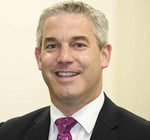
  • Steve Barclay – 2023 Letter to General Secretary of the Royal College of Nursing

    Steve Barclay – 2023 Letter to General Secretary of the Royal College of Nursing

    The letter sent by Steve Barclay, the Secretary of State for Health and Social Care, to the General Secretary of the Royal College of Nursing on 16 April 2023.

    Dear Pat,

    Thank you for your letter of 14 April.

    The offer that we arrived at together through negotiations in March, and which as the General Secretary of the Royal College of Nursing you recommended to your members, is a fair and reasonable settlement that acknowledges the dedication of NHS staff.

    It would mean that a nurse at the top of Band 5 would get over £5,000 in extra pay across last year and this year – including over £2,000 in bonus payments arriving as a lump sum in pay cheques by the summer.

    After you recommended the deal be accepted, I am disappointed that given the turnout, a rejection from less than half of your members was sufficient for a narrow rejection overall.

    This offer was of course negotiated with and put to all Agenda for Change trade unions. Unison’s members decisively accepted it on Friday, and other unions are yet to conclude their consultations. I hope that this fair and reasonable offer will secure their members’ support, and I will therefore await the collective outcome and extraordinary Staff Council meeting that will follow. As you know from when you and your colleagues negotiated this offer, the lump sum payments for 2022/23 are payable if the NHS Staff Council ratifies this offer.

    Given that you supported the offer we reached together, and that your ballot saw a very narrow result, I am also both disappointed and concerned that the Royal College of Nursing has chosen to announce 48 hours of continuous strike action without consultation of other Staff Council unions or waiting for the full Staff Council consultation to complete. The decision to refuse at this stage any exemptions for even the most urgent and life-threatening treatment during this action will, I fear, put patients at risk.

    We have so far worked together constructively, and I hope this can continue. The strike action you have called will cause significant disruption at a time when the NHS is already under extreme pressure. I urge you to reconsider your planned strike on 30 April – 2 May and, like the remainder of the Agenda for Change unions, wait until the collective outcome of the extraordinary Staff Council meeting.

    I would therefore welcome a meeting with you to discuss how we can avoid this escalatory action – recognising that the offer we negotiated with you and other unions stands, and I hope to see it implemented in the interests of all Agenda for Change staff once other consultations conclude.

    Yours ever,

    RT HON STEVE BARCLAY MP

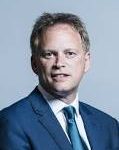
  • Grant Shapps – 2023 Comments on Energy Sources

    Grant Shapps – 2023 Comments on Energy Sources

    The comments made by Grant Shapps, the Secretary of State for Energy Security and Net Zero, on 16 April 2023.

    The UK has been at the very heart of global efforts to support Ukraine, defeat Putin and ensure neither him nor anyone like him can ever think they can hold the world to ransom over their energy again.

    This is the next vital step, uniting with other countries to show Putin that Russia isn’t welcome anymore, and in shoring up our global energy security by using a reliable international supply of nuclear fuel from safe, secure sources.

    But this is one side of the equation – the other is the need to invest in clean, cheap and secure energy sources, and our Powering Up Britain plan will do just that.

    We must stop being reliant on expensive and imported fossil fuels and focus on smarter energy solutions. The UK is already a world-leader when it comes to renewables, a fact recognised by the investors I have met in the Republic of Korea and Japan this week.

    In flying the flag for UK PLC, I want to be crystal clear that the expertise we have from having the four biggest wind farms off our shores is available to support countries looking to invest in their supplies – something that will benefit them, create green jobs and opportunities at home and boost energy security around the world.

    And I want us to work ever-closer together with countries like Republic of Korea and Japan as we invest more in nuclear technologies like Sizewell and Small Modular Reactors, opening up opportunities to invest in the UK and with it, the job opportunities in our local communities.

  • PRESS RELEASE : Foreign Secretary visits G7 Japan and Pacific Islands [April 2023]

    PRESS RELEASE : Foreign Secretary visits G7 Japan and Pacific Islands [April 2023]

    The press release issued by the Foreign Office on 16 April 2023.

    Foreign Secretary James Cleverly meeting G7 partners in Japan and visiting Pacific Islands to promote a free and open Indo-Pacific.

    • Foreign Secretary will meet G7 partners in Karuizawa, Japan this week
    • discussions will focus on accelerating support for Ukraine, ensuring a free and open Pacific region and promoting the government’s priority of increasing economic growth
    • visiting the Pacific Islands, Cleverly will listen to and offer support for regional priorities, in particular climate change

    Foreign Secretary, James Cleverly, arrives in Japan today (Sunday 16 April) for the G7 Foreign Ministers’ meeting ahead of a 4-day visit to the Pacific Islands and New Zealand. The combined visit will focus on promoting a free and open Indo-Pacific – as the region becomes the centre of growing geopolitical competition.

    At the 3-day G7 conference (16 to 18 April) in Karuizawa, Cleverly will meet G7 foreign ministers, including the Japanese Minister for Foreign Affairs Yoshimasa Hayashi, to discuss closer ties around security and defence. He will also discuss opportunities presented by the UK’s recent accession to the CPTPP trade agreement, which strengthens the UK’s global trading relationship with its partners in the region and will help drive growth across the country in line with the government’s 5 priorities.

    Cleverly will also announce that the UK will join the US, Japan and Australia as a member of the Blue Dot Network which will give a quality mark to infrastructure projects, promoting higher standards. It will operate globally, including in emerging markets, as a recognised symbol of quality and therefore will attract private sector investment and public support.

    The gap between infrastructure needs and finance has been growing and is forecast to reach US$15 trillion by 2040. This initiative aims to start narrowing that gap, promoting quality investment in projects across the world that are in desperate need of funding – from transport improvements to upgrading hospitals, schools and expanding access to reliable electricity.

    Cleverly will then travel to Papua New Guinea and Solomon Islands, before joining the New Zealand Foreign Minister Nanaia Mahuta for a joint programme in Samoa. They will then travel on to Wellington together for engagements on Saturday.

    During his visit to the Pacific islands, Cleverly will announce financial support and the deployment of UK expertise to the region, chiefly for regional priorities such as climate change. This includes £4.5 million of new funding to connect communities in Papua New Guinea and across the Pacific to clean energy sources – providing an alternative to common but expensive and polluting generators.

    Foreign Secretary James Cleverly said:

    With increasing competition in the region, it is more important than ever that we promote a free and open Indo-Pacific. It is critical to the UK, to our economy, our security and our values. Throughout my visit, I will build on commitments to our friends across the Pacific nations in their bid to promote peace and prosperity in the region.

    At the G7, the foreign ministers will also discuss the need to maintain collective support for Ukraine and how international support from the UK and other G7 partners can be used most strategically to help Ukrainian forces continue their progress on the battlefield and secure a lasting peace.

    The visit comes following the announcement that the UK will join the regional trading bloc – CPTPP (Comprehensive and Progressive Agreement for Trans-Pacific Partnership) – as its first European member. The bloc is one of the largest free trade areas in the world, home to more 500 million people and will be worth 15% of global GDP once the UK joins. It is estimated that joining will boost the UK economy by £1.8 billion in the long run.

    Joining CPTPP will also support further jobs and create opportunities for companies by giving British businesses improved access to the countries that will be gateway to the wider Indo-Pacific region, which is projected to make up the majority of global growth in the future.

    The Integrated Review Refresh published in March 2023 set out how the UK will prioritise the Indo-Pacific through a long-term strategic footing, making the region a permanent pillar of the UK’s international policy.

  • PRESS RELEASE : New nuclear fuel agreement alongside G7 seeks to isolate Putin’s Russia [April 2023]

    PRESS RELEASE : New nuclear fuel agreement alongside G7 seeks to isolate Putin’s Russia [April 2023]

    The press release issued by the Department for Energy Security and Net Zero on 16 April 2023.

    Agreement reached at the Nuclear Energy Forum at the G7 in Sapporo, Japan.

    An alliance between the UK, US, Canada, Japan and France, aimed at displacing Putin from the international nuclear energy market, has been announced in Sapporo, Japan today.

    The five nations will leverage the respective resources and capabilities of each country’s civil nuclear power sectors to undermine Russia’s grip on supply chains. This agreement will support the stable supply of fuels for the needs of today, as well as guarantee the safe and secure development and deployment of fuels for the advanced reactors of tomorrow.

    This agreement will be used as the basis for pushing Putin out of the nuclear fuel market entirely, and doing so as quickly as possible, to cut off another means for him to fund his barbaric attack on Ukraine and fundamentally leave Russia out in the cold.

    The agreement will also strengthen our respective nuclear energy sectors, which is key to boosting our domestic energy security and bringing down electricity bills for British families. Nuclear fuel is needed to operate nuclear power stations, that provide around 15% of the UK’s electricity supply with an aim for it to make up 25% of our electricity supply by 2050.

    Speaking at the G7 Energy Ministers’ Meeting in Sapporo, Mr Shapps said how this, alongside investment in cleaner, cheaper and more secure renewable energy sources, will be a key part of making the UK energy independent.

    Within days of the illegal invasion of Russia, the UK acted immediately to place sanctions on the country’s oil, devastating a lucrative revenue stream for the regime.

    Today’s agreement at the Nuclear Energy Forum at the G7 in Sapporo will build on this, acting as a springboard for these five countries to make swift progress, ensuring the secure supply of uranium fuel through the development of shared supply chains that isolate Russia. The Energy Security Secretary wants these countries to come together to address dependencies on Russian fuel as the world turns increasingly to nuclear as a source of low-carbon and secure energy.

    Energy Security Secretary Grant Shapps said:

    The UK has been at the very heart of global efforts to support Ukraine, defeat Putin and ensure neither him nor anyone like him can ever think they can hold the world to ransom over their energy again.

    This is the next vital step, uniting with other countries to show Putin that Russia isn’t welcome anymore, and in shoring up our global energy security by using a reliable international supply of nuclear fuel from safe, secure sources.

    But this is one side of the equation – the other is the need to invest in clean, cheap and secure energy sources, and our Powering Up Britain plan will do just that.

    We must stop being reliant on expensive and imported fossil fuels and focus on smarter energy solutions. The UK is already a world-leader when it comes to renewables, a fact recognised by the investors I have met in the Republic of Korea and Japan this week.

    In flying the flag for UK PLC, I want to be crystal clear that the expertise we have from having the four biggest wind farms off our shores is available to support countries looking to invest in their supplies – something that will benefit them, create green jobs and opportunities at home and boost energy security around the world.

    And I want us to work ever-closer together with countries like Republic of Korea and Japan as we invest more in nuclear technologies like Sizewell and Small Modular Reactors, opening up opportunities to invest in the UK and with it, the job opportunities in our local communities.

    The UK is already taking proactive steps in this space, including through the Nuclear Fuel Fund which launched in January. It will provide up to £75 million to ensure the UK has the fuel production capabilities needed to support a nuclear renaissance, backing the government’s ambition to secure up to 24GW of nuclear power by 2050.

    The UK has many decades of expertise in nuclear fuel production, which plays a vital role in supporting the energy security of the UK fleet and those of international partners.

    At the summit, all nations also agreed to accelerating the phase-out of unabated fossil fuels – with a particular focus on coal, by agreeing to work together to stop new unabated coal plants being constructed – a G7 first.

    This is backed by new collective targets for the use of offshore wind and solar energy – for the G7 to increase offshore wind capacity by 150GW and solar PV to 1,000 GW by 2030.  The UK will account for a quarter of the offshore wind target, which we are already on track to meet.  In addition, the UK has driven forward progress in the phasing out of petrol and diesel cars in the G7, with the group committing to 50 per cent zero emission vehicle sales in cars and vans by 2050.  The UK is already far ahead of this, having committed to phase out the sales of diesel and petrol cars by 2030, and all major manufacturers have committed to selling 100% ZEVs by 2035.

    Together, today’s G7 commitments deal a blow to Russia, demonstrating the international resolve to isolate Putin further internationally.  As more countries move away from fossil fuels and towards renewables, this will cut off a vital income stream for his regime once and for all.  It also means the greater use of cheaper, cleaner and more secure energy sources will boost energy independence, shield the UK and others from volatile international fossil fuel markets and – ultimately – cut the cost of supplying power to homes, and therefore people’s bills.

    The G7 comes at the end of a week in which Grant Shapps has been in Republic of Korea and Japan, meeting ministers and potential investors to fly the flag for UK PLC – becoming the first Cabinet Minister to visit those countries since negotiations closed on the UK’s accession to join the Comprehensive and Progressive Agreement for Trans-Pacific Partnership, of which Japan is a member.

    The Energy Security Secretary has also been highlighting how other countries can reap the benefits of the UK’s world-leading action in renewable technologies, hiring UK firms to support their efforts to achieve greater energy security and independence.

    This would also create even more green jobs and economic opportunities at home and put the country in prime position to make the most of CPTPP membership.

    The UK has cut emissions faster than any other G7 country – and last year were ranked alongside the US as one of the top four most attractive markets for renewable energy investment. Nearly 40 per cent of the UK’s power was generated from renewable sources last year.

  • PRESS RELEASE : Armed Forces personnel to feature in Coronation [April 2023]

    PRESS RELEASE : Armed Forces personnel to feature in Coronation [April 2023]

    The press release issued by the Ministry of Defence on 16 April 2023.

    Thousands of Armed Forces personnel to feature in the Coronation of Their Majesties King Charles III and Queen Camilla.

    More than 6,000 men and women of the United Kingdom’s Armed Forces will participate in the historic Coronation of Their Majesties King Charles III and Queen Camilla next month.

    In the largest military ceremonial operation for 70 years sailors, soldiers and aviators from across the UK and the breadth of the Commonwealth will take part in two magnificent processions accompanying Their Majesties to and from Westminster Abbey, where the Coronation Service takes place.

    Later in the day, military personnel will conduct a breath-taking Coronation flypast of more than 60 aircraft from the Royal Navy, British Army and Royal Air Force flying over The Mall in Central London.

    From military bases in all corners of the country and on His Majesty’s ships at sea, gun salutes will sound out to herald the moment when The King is crowned.

    Across the coming weeks, Armed Forces personnel around the country will be busy rehearsing for their role in a display of pageantry, professionalism and pride to honour their new Commander-in-Chief, The King.

    Prime Minister Rishi Sunak said:

    I am incredibly proud of our brilliant military personnel who are preparing to honour centuries of military tradition by taking to the streets, skies and seas to pay tribute to our new King and Queen and mark the Coronation next month.

    As they stand shoulder-to-shoulder with our Commonwealth friends and allies, I know the hard work of thousands of our servicemen and women during the past weeks and months will culminate in an incredible display that will amaze crowds at home and across the world.

    Defence Secretary Ben Wallace said:

    We can be enormously proud of the professionalism and precision of our Armed Forces as they honour His Majesty, their new Commander-in-Chief.

    From the Procession on The Mall, to the flypast over London, with gun salutes at sea and across the country, it will be a spectacular and fitting tribute and a privilege to take part in for all those involved and watching from afar.

    Admiral Sir Tony Radakin, Chief of the Defence Staff, said:

    The contribution of the Armed Forces to the Coronation symbolises unyielding service to King and Country. It reflects centuries of tradition, but is indicative of the integral role the Armed Forces play in modern Britain and the extraordinary ways we support the nation, whether deterring aggression and maintaining stability worldwide or strengthening our domestic resilience and prosperity.

    The soldiers, sailors and aviators participating in the Coronation are privileged to be part of this historic ceremony and all it represents. Thousands more servicemen and women will be watching at home and overseas, and are justly proud to wear The King’s Uniform on this special day.

    Nearly 400 Armed Forces personnel from at least 35 Commonwealth countries will also be on parade to mark the historic moment.

    Coronation flypast

    The final crescendo following a spectacular military procession will be a six-minute flypast through the skies of London.

    As they soar over The Mall in formation, aircraft from all three services will be watched on by members of the Royal Family on the balcony of Buckingham Palace.

    The Royal Air Force Aerobatic Team – the Red Arrows – will follow dozens of aircraft used by the Armed Forces on operations around the world. Featured amongst the aerial procession will be aircraft that have delivered support to Ukraine, policed NATO airspace, supported disaster relief, deterred drug trafficking and countered terrorism in the Middle East and Africa.

    Included will be 16 helicopters, the historic Spitfires of the RAF Battle of Britain Memorial Flight, the RAF’s brand-new P-8A Poseidon maritime patrol aircraft, Joint RAF and RN crewed state-of-the art F-35B Lightning II jets and transport aircraft from the RAF’s Air Mobility Force. It will feature the first flypast involvement of the RAF’s new Envoy IV CC1 aircraft.

    Coronation processions

    Around 5,000 Armed Forces personnel will accompany their Sovereign from Buckingham Palace to Westminster Abbey and back in two separate processions.

    The first, The King’s Procession, is the smaller in scale of the two and will feature just under 200 members, centred around The Sovereign’s Escort of The Household Cavalry Mounted Regiment.

    Travelling down The Mall to Trafalgar Square, where they’ll turn onto Whitehall before marching to Westminster Abbey, the Procession will cover 1.42 miles. Flanking them will be over 1,000 Forces route liners from all three services.

    The Coronation Procession will follow the same route back to Buckingham Palace from Westminster Abbey. Featuring nearly 4,000 personnel, this major military ceremonial operation will be the largest of its kind for a generation.

    The Coronation Procession will represent the diversity and traditions of the UK and Commonwealth Armed Forces. A full-spectrum display of unique and historic uniforms whose designs are in some cases hundreds of years old, flags from across the Commonwealth and 20 different bands – all marching in exact rhythm – will demonstrate the very best of the Armed Forces. They will guide Their Majesties back to Buckingham Palace, before conducting a Royal Salute.

    The Royal British Legion will provide a Guard of Honour of 100 Standard Bearers to line the procession route in Parliament Square on the day of the Coronation. The charity’s participation is in line with its support at previous significant Royal events. The Standard Bearers will represent the RBL and seven other associated Armed Forces charities; The Royal Naval Association, Royal Marines Association, Army Benevolent Fund, Air Forces Association, Royal Commonwealth and Ex Services League, Merchant Navy Association and SSAFA, the Armed Forces Charity.

    Gun salutes

    In all corners of the Union, including at firing stations in Edinburgh, Cardiff and Belfast, gun salutes will sound at the moment of The King’s Coronation to celebrate the historic moment.

    Featuring more than 400 personnel, across 13 locations and deployed Royal Navy ships, 21 rounds will fire to mark the Coronation with the exception of The Tower of London and Horse Guards Parade, where a 62 round salute and a six-gun salvo will fire respectively.

  • PRESS RELEASE : Prime Minister begins second week of Belfast (Good Friday) Agreement Commemorations [April 2023]

    PRESS RELEASE : Prime Minister begins second week of Belfast (Good Friday) Agreement Commemorations [April 2023]

    The press release issued by 10 Downing Street on 16 April 2023.

    • Prime Minister will enter second week of events to mark the 25th anniversary of the Belfast (Good Friday) Agreement.
    • He will pay tribute to the “courage, imagination and perseverance” of those who worked for peace and had the personal courage to keep going.
    • Inspiring young people born in or after 1998 will be welcomed to a Gala Dinner hosted by the Prime Minister in Northern Ireland on Wednesday evening.
    • The agreement’s architects, signatories and their families – as well as political leaders, international dignitaries and leading charities – will also attend.

    The Prime Minister will begin his second week of events to mark a quarter of a century since the Belfast (Good Friday) Agreement was signed.

    He will travel back to Belfast on Wednesday where he will acknowledge the “courage, imagination and perseverance” of those who engineered and supported the agreement, as part of the closing keynote speech at the Queen’s University’s ‘Agreement 25’ conference.

    As part of the Gala Dinner that evening, he will host the remarkable young people who have made a real change to their communities by demonstrating the spirit of the agreement. This younger generation of volunteers make an outstanding contribution to promoting reconciliation through integrated education, sport, the arts and community service.

    The Prime Minister will also meet with key architects of the agreement, along with Irish and US representatives where he will acknowledge the unique moment in our nation’s history.

    Next week’s visit will be the Prime Minister’s fifth to Northern Ireland since he has been in office, making it one of his most visited locations.

    The Prime Minister said:

    This week we continue to acknowledge the courage, imagination and perseverance of those who built the Belfast (Good Friday) Agreement. It gives me great pleasure to meet with some of the leading architects of peace and to commemorate those who are no longer with us.

    It is a tribute to the 1998 Agreement that we also see a younger generation of inspirational people across Northern Ireland today. Those who volunteer time and effort to actively make their communities stronger.

    So this week I will also pay tribute to young people who have continued to heal the wounds of a dark and difficult past, and those who came before them and set the groundwork for a better future.

    The agreement continues to enjoy huge international support and the days ahead will see a spotlight on the peace, prosperity and economic opportunity which have ensued from the commitment in 1998. This week will provide further opportunity to reflect and discuss the ongoing transformation and progress across communities in Northern Ireland.

    Queen’s University’s ‘Agreement 25’ conference will start on Monday and include speeches, panel discussions, plenary sessions and collaborative events from former and current political leaders.

    The Gala Dinner will round off the recent period of events to commemorate the anniversary and strengthen efforts to support our vision for a prosperous 25 years ahead.

    This follows President Biden’s visit to Belfast last week where the Prime Minister and the President celebrated the progress that Northern Ireland has made over the last quarter of a century and recommitted to building an even brighter future for Northern Ireland.

  • PRESS RELEASE : One week to go until UK Emergency Alerts test [April 2023]

    PRESS RELEASE : One week to go until UK Emergency Alerts test [April 2023]

    The press release issued by the Cabinet Office on 16 April 2023.

    With one week to go until the UK-wide test of the Emergency Alerts system, the text of the alert has today been released.

    • Text of the UK-wide test alert has now been released
    • The test alert will take place at 3pm Sunday 23 April
    • Will be received on mobile phones, along with sound and vibration for up to 10 seconds

    The test alert, which will take place at 3pm on Sunday 23 April, will see people receive a message on the home screen of their mobile phone, along with a sound and vibration for up to ten seconds. The message will say:

    This is a test of Emergency Alerts, a new UK government service that will warn you if there’s a life-threatening emergency nearby.

    In a real emergency, follow the instructions in the alert to keep yourself and others safe.

    Visit gov.uk/alerts for more information.

    This is a test. You do not need to take any action.

    For the test, the public does not need to take any action – the sound and vibration will stop automatically after ten seconds. All people need to do is swipe away the message or click ‘OK’ on their phone’s home screen – just like for a ‘low battery’ warning or notification – and continue to use their phone as normal.

    Best practice of Emergency Alerts in other countries have shown that they work more effectively when there is a real emergency if people have previously received a test, so they know what an alert looks and sounds like.

    Chancellor of the Duchy of Lancaster, Oliver Dowden MP, said:

    At 3pm next Sunday we’ll be doing a nationwide test of our new Emergency Alerts system.

    Getting this system operational means we have a vital tool to keep the public safe in life-threatening emergencies.  It could be the sound that saves your life.

    Emergency Alerts have already been used successfully in a number of other countries, including the US, Canada, the Netherlands and Japan, where it has been widely credited with saving lives, for example, during severe weather events. In the UK, alerts could be used to tell residents of villages being encroached by wildfires, or of severe flooding.

    Chief Fire Officer Alex Woodman, Lead for Local Resilience Forums at the National Fire Chiefs Council, commented:

    We must use every tool at our disposal to keep people safe, and we need everyone to play their part – and the new Emergency Alerts system is one way we can do this. For 10 seconds, the national test may be inconvenient for some, but it’s important, because the next time you hear it – your life, and the life-saving actions of our emergency services, could depend on it.

    The Government has worked together with the emergency services and partners, including the Football Association and London Marathon, to make sure the national test has minimum impact on major events taking place on the day.

    At every stage, the Government has worked with organisations and charities who represent vulnerable groups to make sure they are not adversely affected. Women and girls who are subject to domestic abuse and have concealed phones can opt-out of the national test either by turning off Emergency Alerts in their phone settings or by switching their phone off.

    Emma Pickering, Senior Operations Tech Abuse Manager at Refuge, said:

    Next week, the Government plans to send a test alert to all devices including tablets as well as phones. These alerts will come through as a loud siren even if devices are on silent, and could alert an abuser to a concealed device. Refuge’s Technology-Facilitated Abuse and Economic Empowerment Team have put together two videos on how to turn these alerts off, both on Android phones and on iPhones for anyone that is concerned that these alerts will put their safety at risk.

    We want to ensure as many survivors as possible know how to ensure these alerts are turned off on their hidden devices. We have more information on securing your devices – for example your location settings or privacy settings – on refugetechsafety.org.

    The Government has also worked with the transport sector and organisations such as Highways England to make sure drivers are aware of the alert and they follow the normal rules as when receiving any phone call or message; that they do not look or touch their phone until it is safe to do so.

    Emergency Alerts will transform the UK’s warning and informing capability; by working with mobile broadcasting technology it will provide a means to get urgent messages quickly to nearly 90 percent of mobile phones in a defined area when there is a risk to life, and provide clear instructions about how best to respond.

    The system will be used very rarely – only being sent where there is an immediate risk to people’s lives – so people may not receive an alert for months or years.