Tag: 2023

  • PRESS RELEASE : UK Statement on Nicaragua [April 2023]

    PRESS RELEASE : UK Statement on Nicaragua [April 2023]

    The press release issued by the Foreign Office on 19 April 2023.

    On the fifth anniversary of the April 2018 pro-democracy protests in Nicaragua, the UK calls upon the Nicaraguan Government to reinstate democracy, re-establish the rule of law, and restore respect for human rights.

    In the five years since the protests, the Nicaraguan Government has continued to disregard its national and international commitments to respect and uphold human rights and fundamental democratic and civic freedoms. Thousands of civil society organisations have been outlawed, independent media operators have been silenced, and hundreds of representatives of civil society, pro-democracy activists, journalists, and opposition officials and politicians have been imprisoned, stripped of their citizenship and had their assets seized.

    The UK shares deep international concern at the situation in Nicaragua. We call on President Ortega and the Nicaraguan Government to restore full respect for the human rights of all Nicaraguans and allow international human rights bodies including the Office of the High Commissioner for Human Rights and the Inter-American Commission on Human Rights to return to Nicaragua to carry out their legitimate mandates. We continue to call for the immediate and unconditional release of all political prisoners, and for those Nicaraguans who have been deprived of their nationality to have it restored, and for all those people who have been wrongfully stripped of their assets to have them returned.

  • PRESS RELEASE : Defence Secretary meets US defence and security leaders in Washington, DC [April 2023]

    PRESS RELEASE : Defence Secretary meets US defence and security leaders in Washington, DC [April 2023]

    The press release issued by the Ministry of Defence on 19 April 2023.

    UK Defence Secretary has concluded a planned visit to Washington, DC.

    Secretary of State for Defence Ben Wallace has concluded a planned visit to Washington, DC to conduct meetings with senior US defence and security leaders.

    He met with his counterpart, Defense Secretary Lloyd J Austin III, Chairman of the Joint Chiefs of Staff and General Mark Milley, to discuss a range of defence and security issues of mutual concern including support to Ukraine in its war against Russia, NATO, and the AUKUS trilateral security pact.

    Defence Secretary Ben Wallace said:

    It’s been an honour and a great pleasure to meet again with my friend Lloyd Austin III.

    The US is our closest ally and defence partner, with shared values that serve to promote open and free democracies across the world, alongside continued peace and security.

    We discussed ways to strengthen our defence cooperation, breaking down barriers and increasing our interoperability through the AUKUS trilateral agreement – and we turned our attention again to our unwavering support for Ukraine.

    The Defence Secretary also discussed the importance of the trilateral work under way to make the AUKUS agreement a generational success with the US House of Representatives Foreign Affairs Committee.

    Speaking during their meeting at the Pentagon, Defense Secretary Lloyd Austin III said:

    We have no closer partner or ally than the United Kingdom.

    AUKUS is an historic opportunity that shows how strong we can become when we work together.

    It shows our deep commitment to a free and open Indo Pacific and it is testament to our shared values and the long-term investments we are making in our forces.

    I am confident AUKUS will break down barriers and usher in a new era of US-UK defence co-operation.

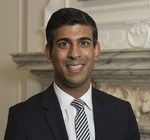
  • Rishi Sunak – 2023 Speech on “Fulfilling the promise of the Belfast (Good Friday) Agreement”

    Rishi Sunak – 2023 Speech on “Fulfilling the promise of the Belfast (Good Friday) Agreement”

    The speech made by Rishi Sunak, the Prime Minister, in Belfast on 19 April 2023.

    The Belfast (Good Friday) Agreement will always be remembered as one of the most extraordinary political achievements of our lifetimes.

    Because step by step, faltering at first, people on all sides began to do things that were once unthinkable, in the search for peace.

    But you don’t need me to tell you that because many of you in this room created it.

    It is humbling to be with you today.

    And with the people of Northern Ireland, who have endured so much.

    After three long decades where violence and terror were part of everyday life…

    …a generation has grown up in a place that is vastly more peaceful, more prosperous, and more at ease with itself.

    Of course, we meet here today in circumstances that are far from perfect.

    But my argument today is this: the Belfast (Good Friday) Agreement remains the best and only foundation for peace and prosperity.

    And if we can take inspiration and instruction from the way peace was achieved 25 years ago…

    …we can fulfil the true promise enshrined in that Agreement.

    The promise of: Stable devolved government. A prosperous economy. And a more united society.

    That’s the future for Northern Ireland we must build.
    Now to do that, we must first ask why.

    Why did peace talks succeed in 1998 when so many failed before?

    I believe that’s because people on all sides showed courage, imagination, and perseverance.

    First, those who worked for peace had the personal courage to keep going in spite of daily threats to them and their families.

    And the political courage to take risks in pursuit of a higher goal.

    John Hume, over his entire career, never relented in his insistence on non-violence.

    David Trimble took enormous risks to do what he thought was right for the union.

    And they were rightly honoured as the preeminent architects of peace, with a joint Nobel peace prize.

    Gerry Adams and Martin McGuiness persuaded Republicans to join a constitutional, power-sharing Assembly.

    And, encouraged by the intensive efforts of Mo Mowlam, the leaders of loyalism also lent their weight behind the deal.

    Female leaders from the Women for Peace and the Women’s Coalition worked so hard for peace.

    And Bertie Ahern showed the wisdom and statecraft to see the historic opportunity.

    At a critical moment, he recognised unionist concerns over the proposed North-South arrangements and stepped back.

    Trimble himself, in his last public appearance, at this university, just weeks before he passed away…

    … embraced his old counterpart and thanked Bertie for giving him the space to act.

    These acts of courage were more powerful than a thousand bombs and bullets.

    Because there is nothing glamorous about violence.

    There is nothing glorious about terror.

    Squalid acts are always justified with some false dream about what they will achieve.

    But they have never worked – and they never will.

    Instead, let us glorify moderation; romanticise respect; and make heroes of those with the courage to reject absolutes, not kill for them.

    Second, making peace required leaps of imagination.

    To conceive of a system for sharing power between traditions.

    To design an agreement with three strands of equal importance…

    To enshrine the principle of consent – so that Northern Ireland remains a part of the United Kingdom for as long as its people wish…

    …while protecting the aspirations of those who seek a different future through peaceful means.

    And for the first time…

    …the people of North and South were both given the opportunity to support this deal…

    …and they did so, in overwhelming majorities.

    And let us never forget the crucial work after 1998 to build a broader consensus – helped by the leadership of Dr Ian Paisley.

    Third, the peace took extraordinary perseverance.

    In the aftermath of the Shankill bomb and Greysteel massacre in 1993, many thought the peace process was over…

    …but just two months later John Major and Albert Reynolds delivered the Downing Street Declaration.

    George Mitchell persuaded all parties to sign up to the principles of democracy and non-violence, without which the talks could not have begun.

    In the difficult final hours, President Clinton’s timely interventions helped get the deal done.

    And whenever people walked away, Tony Blair sought to bring them back…

    …always committed, always attuned to the concerns of all parts of the community.

    Together with Bertie Ahern, he showed us what’s possible when the UK and Irish governments work together…

    …a partnership I know will continue alongside my friend, Leo Varadkar.

    And in the spirit of perseverance, it’s also fitting to recognise the contribution of the security forces.

    Like my predecessors, I acknowledge that at times they made mistakes.

    But we must also recognise their bravery, suffering, and sacrifice – and that of the police.

    Without their courageous service, there would have been no peace process at all.

    They created the conditions that ultimately allowed their own presence on the streets to be reduced or entirely withdrawn.

    So: courage, imagination, and perseverance.

    Those qualities brought an imperfect but enduring peace to a place taught to believe no such peace was possible.

    So to all those who led us to that peace…

    …including those here in this hall and those no longer with us…

    …let us take this moment to say to you:

    Thank you.
    For those of us, like me, who inherit this extraordinary, even intimidating legacy…

    …our challenge today is to fulfil the promise of the work that you began.

    To honour your legacy, we need to create a more stable devolved government in Northern Ireland.

    And that means getting the institutions up and running.

    I believe there are two tasks.

    First, to remove the biggest block to the institutions returning.

    That’s why, when I came into office, I made it a priority to fix the Northern Ireland Protocol.

    And we were deeply conscious of the lessons of history as we did so.

    That’s why our aims were to:

    Balance and respect the aspirations of all parts of the community.

    Protect the relationships between East and West as much as North and South.

    And persist through careful, detailed negotiation.

    And I pay tribute to Ursula von der Leyen who I am so pleased to see here today.

    The Windsor Framework is a breakthrough moment.

    It solves practical problems and, crucially, strengthens Northern Ireland’s place in our Union and our UK internal market.

    It gives the Assembly significant new powers – ready for when it sits again.

    And I am confident we can build broad support for it across all communities.

    So I share people’s frustration that the institutions are not back up and running.

    But that points to our second task.

    We must keep working to persuade all parts of the community that returning to the institutions is the best path.

    And we will do that.

    We will talk, we will listen, we will try to persuade – and we will not give up.

    And I want to speak directly for a moment to the representatives of unionism…

    …who include many diverse voices and whose concerns with the Protocol we have focused on addressing.

    I urge you to work with us to get Stormont up and running again.

    That’s the right thing to do on its own terms.

    And I’m convinced that it’s also the right thing to do for our union.

    I am a proud unionist.

    We believe passionately that Northern Ireland is stronger within the UK…

    …and the UK is stronger with Northern Ireland within it.

    But we must also build support beyond those of us who already identify as unionists.

    To do that, we have to show that devolved government within the United Kingdom works for Northern Ireland.

    The fact that the institutions have been down for nine of the last 25 years should be a source of profound concern.

    Over the long term that will not bolster the cause of unionism – I believe that deeply.

    So we need to get the institutions up and running – and keep them up and running.

    And let me also say to those who would seek to reform the institutions right now: I understand your frustrations.

    But history reminds us that nothing in Northern Ireland has ever been achieved by trying to get round one community or another.

    So any conversation about reform can only begin once the institutions are up and running again…

    …and if it attracts widespread consent.

    The Belfast (Good Friday) Agreement left us an extraordinary and precious legacy.

    When we look back in 25 years from now…

    …surely we should aspire for our legacy to be nothing less than this:

    That the institutions have been up and running for every single year.
    Because our focus must be on the future.

    Getting the institutions back up and running is our most pressing challenge to honour your legacy.

    But that’s only the beginning.

    Together we must fulfil the true promise of the 1998 Agreement.

    That future enshrined in the very words of the text – of “sustained economic growth”, and where we tackle the problems of “a divided society”.

    I will give everything to help deliver that vision.

    Because I talked earlier about learning the lessons from history.

    One thing I took from George Mitchell is the idea that the agreement itself is only 20% of the task – the rest is delivery.

    Once the Agreement was done, people asked of Tony Blair: Would he walk away?

    He didn’t.

    And neither will I.

    Because there is work to be done.

    So let me tell you what I’m going to do.

    First, economic growth.

    Progress has been remarkable – in April 1998, Northern Ireland had the highest unemployment rate in the UK.

    Today – it’s the second lowest.

    But we need to do more.

    In 25 years, when we look back, I want to see that Northern Ireland has changed.

    From an economy too reliant on the public sector…

    To a thriving, dynamic economy built around the power and innovation of private enterprise.

    I talk a lot about the idea of levelling up.

    About making sure young people feel they can fulfil their dreams and aspirations in the place they call home.

    That idea has particular resonance here in Northern Ireland.

    And we won’t achieve it without a cascade of new investment – to create jobs and opportunity.

    That journey has already begun.

    Last week, President Biden came – and told the world to invest here.

    He didn’t say that out of sentimentality.

    He said it because he can see the opportunity for American businesses.

    And because of the enormous potential of this place.

    The potential of the people – resilient, ingenious, determined.

    The potential of your businesses…

    …with world-class strengths in cyber, life sciences, financial services, and the creative industries.

    And one of Europe’s most thriving start-up scenes.

    I know that journey to prosperity won’t be easy – and we aren’t there yet.

    But this is my commitment to you:

    I will use the full force of the UK Government…

    …to help you make this one of the best places in the world…

    …to start and grow a business, create jobs…

    …train and learn new skills…

    …and attract investment.

    And just as we want to look back on a more prosperous, dynamic economy…

    …so in 25 years, I also want us to look back on a more integrated and contented society.

    Of course, we cannot simply wish away those social realities that have been present for decades.

    The tragic loss of Lyra McKee and the attack on DCI John Caldwell remind us how far we still have to go.

    But people are already voting with their feet in the choices they make for their children’s education and their social and sporting lives.

    A growing body of the electorate does not define themselves solely as Unionist or Nationalist, British or Irish.

    A growing portion of people sample life in a different part of these islands but still return.

    And a growing number of local communities are signalling that their patience with thuggery is over.

    But there’s yet more to do.

    In 25 years’, should not the poisonous grip of the paramilitaries…

    …those gangsters and drug dealers who wrap themselves in the fake cloak of legitimacy…

    …be broken once and for all?

    In 25 years’, should not a fragment of a peace wall be nothing more than a stop on the tourist trail?

    In 25 years’, should integrated education not be the norm rather than the exception?

    Of course, we won’t build that better future overnight. And it won’t be easy.

    Every time I visit Northern Ireland, I feel more optimistic and hopeful.

    Because to paraphrase the late David Trimble…

    …there may be hills ahead of us, but there are mountains behind.
    I want to close by reflecting on an extraordinary story.

    Just weeks before the agreement, two lifelong friends, Damien Trainor and Philip Allen, were murdered at Poyntzpass.

    One was a Protestant, the other Catholic.

    The people who murdered them may have hoped to sow chaos and division and derail the peace talks.

    They failed.

    Because the story of this remarkable friendship inspired one of the most decisive breakthroughs of the whole peace process…

    …the agreement to share power between equal first and deputy first ministers, in a co-premiership, with one from each community.

    As Mark Durkan, the SDLP’s lead negotiator, said at the time:

    “The stories of Philip and Damien’s special friendship…

    …could be a parable for the sort of society that we might create if we could reach agreement”.

    And he was right.

    That is the promise of the Belfast (Good Friday) Agreement.

    And together we can – and we must – fulfil it.

  • PRESS RELEASE : The violence must stop to give dialogue and peace a chance to succeed [April 2023]

    PRESS RELEASE : The violence must stop to give dialogue and peace a chance to succeed [April 2023]

    The press release issued by the Foreign Office on 19 April 2023.

    Statement by Ambassador Kariuki at the Security Council meeting on the situation in the Great Lakes region.

    Thank you, President. I will focus on the situation in eastern DRC and regional processes to end the conflict.

    The United Kingdom remains deeply concerned by intensifying violence and the deteriorating humanitarian situation in the Great Lakes region, particularly in eastern DRC. We strongly condemn the continuing violence by all armed groups, including the UN-sanctioned M23 armed group. In the limited areas from which they have withdrawn, the horrors perpetrated by M23 are gradually being exposed, with allegations of mass rapes and summary killings.

    The redeployment of resources to tackle M23 has also undermined the protection of civilians elsewhere. There have recently been horrifying accounts of executions and attacks on civilians by the Allied Democratic Forces (ADF) and CODECO. We call for comprehensive investigations into allegations of human rights and international humanitarian law abuses by armed groups and for those responsible to be held accountable. All support to these non-state armed actors must stop.

    President, we reiterate our full support for regional diplomatic efforts, including the Nairobi and Luanda processes, which promote de-escalation and aim to create the conditions for lasting peace in the region. We are making a financial contribution to the Nairobi process to this end. We urge all parties to respect commitments made under these processes, including the withdrawal of M23, to end of all support of armed groups, and to stop the use of incendiary hate speech. We welcome Special Envoy Xia’s support to these processes and encourage increased engagement as the conflict worsens.

    We welcome M23’s handing over of some locations to the EAC Regional Force, but any withdrawal must be complete and in line with the agreed process through the Luanda roadmap. We hope the forthcoming Angolan troop deployment will help reinforce this withdrawal.

    President, there is only one way out of this conflict. The violence must stop to give dialogue and peace a chance to succeed. The United Kingdom calls upon countries in the region, members of this Council, and Special Envoy Xia to intensify efforts to de-escalate the situation, improve regional cooperation, address security challenges, improve humanitarian access, and bring peace to the Great Lakes region.

    Thank you.

  • PRESS RELEASE : OSCE Alliance Conference on Combatting Trafficking in Persons – UK statement [April 2023]

    PRESS RELEASE : OSCE Alliance Conference on Combatting Trafficking in Persons – UK statement [April 2023]

    The press release issued by the Foreign Office on 19 April 2023.

    Martin Niblett, Head of FCDO Modern Slavery Team, says UK is committed to supporting a new Global Commission on Modern Slavery to inject political momentum at this critical time.

    Thank you very much, moderator, and thank you to the panellists for their insightful presentations. The UK does of course recognise the importance of national mechanisms to tackle the terrible crimes of modern slavery and human trafficking.

    We also recognise that this is a global challenge that demands a united global response. We have heard during the course of these two days that vulnerability to exploitation has dramatically increased over the last five years. The role of the COVID-19 pandemic, conflict and humanitarian crises, and the adverse effects of climate change are clear. I also want to highlight that Russia’s unprovoked assault on Ukraine is contributing to this increase.

    The UK and other OSCE participating states must continue to work with a range of partners to ensure that victims are provided with the support they need to begin rebuilding their lives and that those responsible are prosecuted.

    We have a complex and wide-ranging set of structures to address this issue. This conference is one of the most successful, demonstrating the importance of such global and national leadership to tackle this crime.

    But we recognise that at the highest level, this issue has lost political momentum in recent years. That is understandable given the challenges governments have faced including the Covid pandemic.

    So whilst we do not want to duplicate any existing structures there is room for a time-limited effort to inject new political momentum.

    That is why the UK is committed to supporting Theresa May in her work to establish a new Global Commission on Modern Slavery. Such a commission will inject political momentum at this critical time, and will support the global community to achieve our shared goal of eradicating modern slavery and human trafficking by 2030.

    We echo the comments made by Theresa May yesterday and urge all those participating States who have not already done so to evaluate how they can support this important new initiative.

    And finally, we would like to pay tribute to the Special Representative, and thank you for your leadership and tireless work over the past four years. We wish you all the best for the future.

  • PRESS RELEASE : Growing risks to security from biodiversity loss – UK statement to the OSCE [April 2023]

    PRESS RELEASE : Growing risks to security from biodiversity loss – UK statement to the OSCE [April 2023]

    The press release issued by the Foreign Office on 19 April 2023.

    Justin Addison (UK delegation to the OSCE) highlights the effect of biodiversity loss on peace and prosperity, exacerbated by Russia’s war of aggression against Ukraine.

    Thank you, Chair; good morning colleagues; and thank you to all the speakers for their presentations.

    As we have heard from the panellists and my fellow delegates biodiversity loss threatens not only the natural world but also the security and prosperity of all our societies. Of the challenges identified in the UK’s Integrated Review, climate change and biodiversity loss are recognised as the most serious multipliers of global threats such as food and water insecurity, displacement of people, conflict, and economic instability. And these multipliers are only set to worsen over the next decade.

    Nowhere is this threat more apparent than in Ukraine, where President Putin’s illegal invasion is devastating the country’s biodiversity. We heard Mr Fedorenko provide some details earlier about biodiversity loss in Ukraine. Ukraine is home to 35% of Europe’s biodiversity; many of its 70,000 species of fauna and flora are rare and endemic. Rather than preserving this rich ecosystem, Russia is destroying it.

    Deliberate shelling of the country’s forests, land and marine ecosystems, industrial facilities, and infrastructure has caused widespread and severe damage. Wanton destruction of wetlands threatens fish species and migratory birds. Forests are littered with destroyed military vehicles, whilst forest fires are leading to the loss of ancient woodlands. Overall, an estimated 900 protected natural areas have been affected. Many of these issues are transboundary, with the environmental impacts felt beyond Ukraine’s borders for decades to come.

    While the immediate focus of any conflict is rightly on human casualties, we are grateful to the OSCE, Ukraine’s government, and civil society for ensuring environmental impacts are not forgotten. We are pleased to support the OCEEA’s project to assess the environmental impacts of the war against Ukraine.

    More widely, the UK is committed to working with the OSCE and other international partners to champion delivery of the Kunming-Montreal Global Biodiversity Framework to halt and reverse biodiversity loss by 2030. And we will support delivery of the “30by30” target to protect at least 30% of all land and 30% of the ocean globally by 2030. We are also delivering on our commitment to double our International Climate Finance to £11.6 billion, including at least £3 billion on Nature.

    Mr Chair, the 2020s must be a decade of climate and nature action. Our common security and prosperity depend upon it.

  • PRESS RELEASE : Change of His Majesty’s Ambassador to Nepal [April 2023]

    PRESS RELEASE : Change of His Majesty’s Ambassador to Nepal [April 2023]

    The press release issued by the Foreign Office on 19 April 2023.

    Mr Rob Fenn has been appointed His Majesty’s Ambassador to Nepal in succession to Ms Nicola Pollitt who will be transferring to another Diplomatic Service appointment.

    Mr Fenn will take up his appointment during July 2023

    CURRICULUM VITAE

    Full name: Robert Dominic Russell Fenn

    Spouse: Julia Fenn

    Children: Two

    Year Role
    2018 to 2022 Jakarta, Deputy Head of Mission
    2014 to 2017 FCO, Head, Human Rights and Democracy Department, Multilateral Policy Directorate
    2009 to 2013 Bandar Seri Begawan, British High Commissioner
    2004 to 2008 Nicosia, Deputy High Commissioner
    2001 to 2004 FCO, Deputy Head, Southern European Department, Europe Directorate
    1997 to 2001 Rome, First Secretary, EU/Economy
    1993 to 1997 UK Permanent Representation to the United Nations New York, First Secretary
    1990 to 1993 FCO, Desk Officer, South Africa Desk, Africa Directorate
    1988 to 1990 Lagos, Second Secretary Political
    1985 to 1988 The Hague, Third Secretary Political
    1983 Joined the FCO


  • PRESS RELEASE : Chief of the Defence Staff Visits India to strengthen military ties [April 2023]

    PRESS RELEASE : Chief of the Defence Staff Visits India to strengthen military ties [April 2023]

    The press release issued by the Ministry of Defence on 19 April 2023.

    The visit provided an opportunity to boost military-to-military engagement and explore opportunities around the co-creation of future technologies.

    Chief of the Defence Staff Admiral Sir Tony Radakin held a series of high-level meetings during a visit to India this week, strengthening the strategic ties between both countries.

    Admiral Radakin began his three-day visit on Monday 17 April, paying homage to the fallen soldiers at the National War Memorial, ahead of his first meeting with his Indian counterpart, General Anil Chauhan.

    The two Chiefs reviewed progress on various pillars of the UK-India defence partnership and exchanged views to further expand ties in all the domains.

    The UK and India are natural partners in defence and share a strong and enduring relationship, including collaboration in research, development and training.

    Following the signing of an updated Memorandum of Understanding in 2019, discussions around industrial collaboration in the aerospace sector have been progressing, with the UK’s Minister for Defence Procurement visiting in February and the First Sea Lord also visiting in March.

    Defence Secretary Ben Wallace said:

    India is a valued defence partner for the UK and our relationship continues to flourish across our research and industrial sectors.

    Both our nations are committed to the stability and prosperity of the Indo-Pacific and we continue to train and operate alongside our Indian partners to promote security in the region.

    Admiral Radakin subsequently held discussions with other high-ranking Indian defence staff, including the Chief of the Naval Staff, Admiral Hari Kumar, Chief of the Army Staff, General Manoj Pande, and Defence Secretary, Giridhar Aramane.

    The meetings were an opportunity to boost military-to-military engagement and explore opportunities around the co-creation of future technologies.

    The visit also saw Admiral Radakin hosted by various defence establishments of the Indian Armed Forces, including the base of the Indian Army’s 50th Parachute Brigade, as well as the National Defence College and National Maritime Foundation.

    Chief of the Defence Staff, Admiral Sir Tony Radakin said:

    My visit to India reflects the United Kingdom’s belief that our security is indivisible from that of the wider world. As a global trading nation it matters to the UK that the Indo-Pacific is open and free, which is why the British Armed Forces is establishing the broadest and most integrated presence in the region of any European nation.

    India and the UK are natural partners in a world that is becoming more contested and volatile. We share many of the same democratic instincts and values and are both committed to the rule of law. We are respected military powers, both undergoing significant investment and modernisation, and exercising together across land, sea and air. But we can do more. I value the opportunity to meet with General Anil Chauhan to discuss how we can develop our partnership in a way that benefits our mutual security and prosperity.

    The Royal Navy, British Army, and Royal Air Force are all carrying out exercises with their Indian equivalents this year, developing interoperability and joint tactics.

    In recent weeks, HMS Lancaster visited Kochi to train alongside the Indian Navy as part of Exercise Konkan, while five Mirage 2000 fighters were flown by Indian air force pilots in the Royal Air Force’s largest aerial exercise in the UK – Exercise Cobra Warrior.

    Later this month, soldiers from the Indian Army will deploy to the UK to take part in Exercise Ajeya Warrior, training alongside the British Army.

    The visit by CDS also coincides with the visit of the Chief of the Air Staff, Air Chief Marshal Sir Mike Wigston. The visit of two of the most senior officers in the UK’s armed forces exemplifies the importance with which the UK holds its defence and security partnership with India.

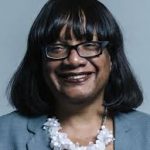
  • Diane Abbott – 2023 Statement of Apology

    Diane Abbott – 2023 Statement of Apology

    The statement made by Diane Abbott, the MP for Hackney North and Stoke Newington, on Twitter on 23 April 2023.

    I am writing regarding my letter that was recently published in the Observer.

    I wish to wholly and unreservedly withdraw my remarks and disassociate myself from them.

    The errors arose in an initial draft being sent. But there is no excuse, and I wish to apologise for any anguish caused.

    Racism takes many forms, and it is completely undeniable that Jewish people have suffered its monstrous effects, as have Irish people, Travellers and many others.

    Once again, I would like to apologise publicly for the remarks and any distress caused as a result of them.

  • PRESS RELEASE : Change of British High Commissioner to Kenya – Neil Wigan [April 2023]

    PRESS RELEASE : Change of British High Commissioner to Kenya – Neil Wigan [April 2023]

    The press release issued by the Foreign Office on 19 April 2023.

    Mr Neil Wigan OBE has been appointed British High Commissioner to the Republic of Kenya in succession to Ms Jane Marriott.

    Mr Neil Wigan OBE has been appointed British High Commissioner to the Republic of Kenya in succession to Ms Jane Marriott who will be transferring to another Diplomatic Service appointment. Mr Wigan will take up his appointment during July 2023.

    Curriculum vitae

    Full name: Mr Desmond Patrick Neil Wigan OBE

    Married with 2 children

    Date Role
    2019 to present Tel Aviv, His Majesty’s Ambassador
    2015 to 2018 FCO Director Africa
    2013 to 2015 Mogadishu, Her Majesty’s Ambassador
    2010 to 2013 Kinshasa, Her Majesty’s Ambassador
    2008 to 2010 Cabinet Office, Deputy Director, Foreign and Defence Policy Secretariat
    2006 to 2008 FCO, Head, Arab Israel and North Africa Group
    2002 to 2006 Tel Aviv, First Secretary and Head of Political Section
    2000 to 2002 FCO, Desk Officer, European Union Department (Internal)
    2000 Joined FCO