Tag: 2022

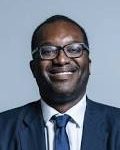
  • Kwasi Kwarteng – 2022 Statement on Storm Eunice

    Kwasi Kwarteng – 2022 Statement on Storm Eunice

    The statement made by Kwasi Kwarteng, the Secretary of State for Business, Energy and Industrial Strategy, in the House of Commons on 21 February 2022.

    With your permission, Madam Deputy Speaker, I would like to make a statement on the electricity disruptions as a result of Storm Eunice and set out exactly how we are working to ensure that power is restored to people’s homes as quickly as possible. Storm Eunice brought severe weather, including wind gusts of up to 122 mph. That is among the highest speeds ever recorded in England. The Met Office took the unprecedented step of issuing a double red weather warning for Friday. Ensuing hurricane-force winds have caused extensive damage to buildings and trees. They have also caused power outages and widespread travel delays. After a day of disruption caused by Storm Eunice on Friday, Storm Franklin made landfall last night. It must be remembered in this difficult time that four people have tragically lost their lives in incidents related to the storms. My thoughts, and I am sure the thoughts of the whole House, are with the families and friends who have lost loved ones.

    The Met Office estimates further strong gusts today, though not on the same scale as Storm Eunice. Some people, particularly in the south and east of England, have been without power for more than 72 hours. I want to reassure them that we have dedicated teams of engineers working night and day to get them reconnected as soon as possible. Continuing poor weather conditions have hampered those efforts, but I am pleased to say that, as of now, over 98% of those affected by the storms—more than 1.4 million customers—have had their power supply restored. However, as of 4 o’clock today, just under 30,000 households are still without power.

    Today, the Minister for Energy, Clean Growth and Climate Change, my right hon. Friend the Member for Chelsea and Fulham (Greg Hands), has been in Sevenoaks in Kent to see the impact of the storm and to observe repairs. This weekend, I spoke directly to leaders at Scottish and Southern Energy Networks, and today I had conversations with leading managers at UK Power Networks and Western Power Distribution. They have given me assurances that restoration is happening as quickly as possible. The UK has been particularly badly hit by storms this year, but I am pleased to say that overall, our network operators and our brave emergency services have learned lessons about how we can improve our response, and we will continue to learn those lessons.

    When I commissioned the review into our response to Storm Arwen in November, I made it clear that the very long delays some people faced to be reconnected were unacceptable. I am pleased to say that, where practical, network operators have already implemented improvements to their procedures. Additionally, operators are sharing resources and ensuring that engineers are sent to the worst affected areas. Welfare provisions are in place for those who are most in need, particularly the vulnerable members of our communities. Network operators are engaged with local partners to ensure that people are being supported. Catering units are travelling to badly hit areas, and smaller welfare units are providing hot water and other facilities to people who are adversely affected. I am extremely grateful to the network operators and the emergency responders who have been working very hard to keep people as comfortable as possible. I am aware that during Storm Arwen, the people experiencing the worst effects of the devastation had difficulty in communicating, and that people are still experiencing issues today. However, I am pleased to say that if they call their network operator by dialling 105 from their mobile, they should get a speedy response. That action will automatically route them to the right operator based on their physical location.

    I believe this is the first time that three named storms have come in such quick succession, day after day, since the storm-naming convention was introduced a little less than a decade ago. This is a difficult time for many, but I have been reassured that operators are working extremely hard to make sure people are reconnected as quickly as possible, and in the next couple of days at the latest. My Department and I will continue to provide support and apply pressure, where needed, to ensure people are reconnected in a timely way.

  • Ian Blackford – 2022 Speech on Covid-19

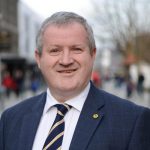
    Ian Blackford – 2022 Speech on Covid-19

    The speech made by Ian Blackford, the SNP’s Westminster Leader, in the House of Commons on 21 February 2022.

    This statement was billed as the Prime Minister’s moment of pride, but it is clear that this morning was a moment of panic for this Government. Disagreement across Whitehall and the lack of any serious engagement with the devolved nations show that these decisions are bereft of science or consultation. It appears that these dangerous choices are purely political and have been made up on the hoof—another symptom of a Government in turmoil.

    The illogical reality of UK finance means that these decisions, made for England by a failing Prime Minister, affect the money the devolved nations have to provide testing. It is unacceptable that the ability to protect—[Interruption.] I hear “Money!”, but we are talking about protecting the people of Scotland, something that this Prime Minister is turning his back on. It is unacceptable that the ability to protect our population can be imperilled on the basis of a political decision taken by a Prime Minister in crisis. His decisions directly affect whether Scotland has the funding required to keep its people safe. That is the ridiculous reality of devolution, but it is a reality that must be addressed.

    Will the Prime Minister now confirm what the residual funding for testing will be, to enable the Scottish Government to pick up the pieces of this chaotic withdrawal of support? It makes the case for Scotland to take the necessary measures to keep our people safe. We need the financial ability to make our own choices, and that only comes with independence. [Interruption.]

    Mr Speaker

    I will also hear the right hon. Gentleman in silence. I do not need the barracking. He certainly does not need it and I do not need it.

    Ian Blackford

    Thank you, Mr Speaker.

    PCR testing, the legal requirement to self-isolate and access to lateral flow testing have been instrumental in containing the virus. As we move forward to live with covid, these are the very safeguards that support a return to normal life. These short-sighted decisions have long-term implications. They also hamper vital surveillance efforts and impede the ability to respond to new variants. The reality is that we have a Prime Minister beset by chaos and mired in a police investigation for breaking his own covid laws.

    The Prime Minister indicated dissent.

    Ian Blackford

    He can shake his head, but that is the reality—a Prime Minister who has no moral authority to lead and is desperately seeking to appease his Back Benchers. We know that this reckless statement flies in the face of advice from scientists at the World Health Organisation. That is because this statement is not about protecting the public; it is about the Prime Minister scrambling to save his own skin.

  • Keir Starmer – 2022 Speech on Covid-19

    Keir Starmer – 2022 Speech on Covid-19

    The speech made by Keir Starmer, the Leader of the Opposition, in the House of Commons on 21 February 2022.

    May I start by sending my condolences to the family of Christopher Stalford? Christopher was a dedicated servant of the people of South Belfast and his loss will be deeply felt.

    I also send our best wishes to Her Majesty the Queen; as the Prime Minister said, the whole House wishes her a speedy recovery.

    I thank the Prime Minister for the advance copy of his statement and for the briefing earlier this afternoon.

    Huge efforts have been made over the past two years and we would not be where we are today without the heroism of our NHS and key workers, without those who pioneered and rolled out the vaccines and without the sacrifices that people made every day to follow the rules and protect our public health. We must honour the collective sacrifices of the British people and do everything possible to prevent a return to the loss and lockdowns that we have seen over the past two years.

    The Prime Minister promised to present a plan for living with covid, but all we have today is yet more chaos and disarray: not enough to prepare us for the new variants that may yet develop and an approach that seems to think that living with covid means simply ignoring it. This morning, he could not even persuade his own Health Secretary to agree to the plan, so what confidence can the public have that this is the right approach?

    Let me be clear: the Labour party does not want to see restrictions in place for a moment longer than necessary—[Interruption.] Mr Speaker, we have to take the public with us, and that requires clarity—[Interruption.]

    Mr Speaker

    Order. I call on Members to show some respect. Just as I expect the Prime Minister to be heard in silence, so, too, should the Leader of the Opposition. If you do not wish to be in here, there is plenty of room outside this Chamber. I suggest that you start using it, and I will be helping you on your way. Let us have silence.

    Keir Starmer

    We have to take the public with us, and that requires clarity about why decisions are being made. Will the Prime Minister publish the scientific evidence behind his decision to remove the legal requirement to self-isolate, including the impact on the clinically extremely vulnerable for whom lockdown has never ended?

    Having come this far, I know that the British people will continue to act responsibly and that they will do the right thing: testing and then isolating if positive. What I cannot understand is why the Prime Minister is taking away the tools that will help them to do that. Free tests cannot continue forever, but if you are 2-1 up with 10 minutes to go, you do not sub off one of your best defenders.

    The Prime Minister is also removing self-isolation support payments, which allow many people to isolate, and weakening sick pay. These are decisions that will hit the lowest paid and the most insecure workers the hardest, including care workers, who got us through the toughest parts of the pandemic. It is all very well advising workers to self-isolate, but that will not work unless all workers have the security of knowing that they can afford to do so.

    The Prime Minister mentioned surveillance and the ONS infection survey. This is crucial to ensuring that we can ramp up testing and vaccination if the virus returns, so can the Prime Minister confirm that he has put the funding in place to ensure that the ONS infection survey will not see reduced capacity and that it will be able to track the virus with the same degree of detail as it can today? We cannot turn off Britain’s radar before the war is won. “Ignorance is bliss” is not a responsible approach to a deadly virus. It actually risks undoing all the hard-won progress that the British people have achieved over the last two years.

    The Labour party has published a comprehensive plan for living well with covid. Our plan would see us learn the lessons of the past two years and be prepared for new variants. The Prime Minister’s approach will leave us vulnerable. Where is the plan to secure the UK’s supply of testing? Why are schools still not properly ventilated? There is no doubt that, as a nation, we need to move on from covid. People need to know that their liberties are returning and returning for good, but this is a half-baked announcement from a Government paralysed by chaos and incompetence. It is not a plan to live well with covid.

  • Boris Johnson – 2022 Statement on Covid-19

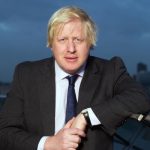
    Boris Johnson – 2022 Statement on Covid-19

    The statement made by Boris Johnson, the Prime Minister, in the House of Commons on 21 February 2022.

    With permission, Mr Speaker, I will make a statement on our strategy for living with covid. Before I begin, I know the whole House will join me in sending our best wishes to Her Majesty the Queen for a full and swift recovery.

    It is a reminder that this virus has not gone away but, because of the efforts we have made as a country over the past two years, we can now deal with it in a very different way by moving from Government restrictions to personal responsibility, so that we protect ourselves without losing our liberties, and by maintaining our contingency capabilities so that we can respond rapidly to any new variant.

    The UK was the first country in the world to administer an approved vaccine, and the first European nation to protect half its population with at least one dose. Having made the decision to refocus our NHS this winter on the campaign to get boosted now, we were the first major European nation to boost half our population, too. And it is because of the extraordinary success of this vaccination programme that we have been able to lift our restrictions earlier than other comparable countries—opening up last summer while others remained closed, and keeping things open this winter when others shut down again—making us one of the most open economies and societies in Europe, with the fastest growth anywhere in the G7 last year.

    While the pandemic is not over, we have now passed the peak of the omicron wave, with cases falling, hospitalisations in England now fewer than 10,000 and still falling, and the link between infection and severe disease substantially weakened. Over 71% of all adults in England are now boosted, including 93% of those aged 70 or over. Together with the treatments and scientific understanding of the virus we have built up, we now have sufficient levels of immunity to complete the transition from protecting people with Government interventions to relying on vaccines and treatments as our first line of defence.

    As we have throughout the past two years, we will continue to work closely with the devolved Administrations as they decide how to take forward their own plans. Today’s strategy shows how we will structure our approach in England around four principles. First, we will remove all remaining domestic restrictions in law. From this Thursday, 24 February, we will end the legal requirement to self-isolate following a positive test, and so we will also end self-isolation support payments, although covid provisions for statutory sick pay can still be claimed for a further month. We will end routine contact tracing, and no longer ask fully vaccinated close contacts and those under 18 to test daily for seven days. We will also remove the legal requirement for close contacts who are not fully vaccinated to self-isolate. Until 1 April, we will still advise people who test positive to stay at home, but after that we will encourage people with covid-19 symptoms to exercise personal responsibility, just as we encourage people who may have flu to be considerate to others.

    It is only because levels of immunity are so high and deaths are now, if anything, below where we would normally expect for this time of year that we can lift these restrictions. And it is only because we know omicron is less severe that testing for omicron on the colossal scale we have been doing is much less important and much less valuable in preventing serious illness. We should be proud that the UK has established the biggest testing programme per person of any large country in the world. This came at vast cost. The testing, tracing and isolation budget in 2020-21 exceeded the entire budget of the Home Office; it cost a further £15.7 billion in this financial year, and £2 billion in January alone, at the height of the omicron wave. We must now scale this back.

    From today, we are removing the guidance for staff and students in most education and childcare settings to undertake twice-weekly asymptomatic testing. And from 1 April, when winter is over and the virus will spread less easily, we will end free symptomatic and asymptomatic testing for the general public. We will continue to provide free symptomatic tests to the oldest age groups and those most vulnerable to covid. And in line with the practice in many other countries, we are working with retailers to ensure that everyone who wants to can buy a test. From 1 April, we will also no longer recommend the use of voluntary covid-status certification, although the NHS app will continue to allow people to indicate their vaccination status for international travel. The Government will also expire all temporary provisions in the Coronavirus Act 2020. Of the original 40, 20 have already expired and 16 will expire on 24 March. The last four, relating to innovations in public service, will expire six months later, after we have made those improvements permanent via other means.

    Secondly, we will continue to protect the most vulnerable with targeted vaccines and treatments. The UK Government have procured enough doses of vaccine to anticipate a wide range of possible Joint Committee on Vaccination and Immunisation recommendations. Today, we are taking further action to guard against a possible resurgence of the virus, accepting JCVI advice for a new spring booster offered to those aged 75 and over, to older care home residents, and to those over 12 who are immunosuppressed. The UK is also leading the way on antivirals and therapeutics, with our Antivirals Taskforce securing a supply of almost 5 million, which is more per head than any other country in Europe.

    Thirdly, the Scientific Advisory Group for Emergencies advises that there is considerable uncertainty about the future path of the pandemic, and there may of course be significant resurgences. SAGE is certain that there will be new variants, and it is very possible that those will be worse than omicron. So we will maintain our resilience to manage and respond to those risks, including our world-leading Office for National Statistics survey, which will allow us to continue tracking the virus in granular detail, with regional and age breakdowns helping us to spot surges as and where they happen. And our laboratory networks will help us understand the evolution of the virus and identify any changes in characteristics.

    We will prepare and maintain our capabilities to ramp up testing. We will continue to support other countries in developing their own surveillance capabilities, because a new variant can emerge anywhere. We will meet our commitment to donate 100 million vaccine doses by June, as our part of the agreement at the UK’s G7 summit to provide a billion doses to vaccinate the world over the next year.

    In all circumstances, our aim will be to manage and respond to future risks through more routine public health interventions, with pharmaceutical interventions as the first line of defence.

    Fourthly, we will build on the innovation that has defined the best of our response to the pandemic. The vaccines taskforce will continue to ensure that the UK has access to effective vaccines as they become available, and has already secured contracts with manufacturers trialling bi-valent vaccines, which would provide protection against covid variants. The therapeutics taskforce will continue to support seven national priority clinical trial platforms focused on prevention, novel treatments and treatments for long-covid. We are refreshing our biosecurity strategy to protect the UK against natural zoonosis and accidental laboratory leaks, as well as the potential for biological threats emanating from state and non-state actors.

    Building on the five-point plan that I set out at the UN and the agreements reached at the UK’s G7 last year, we are working with our international partners on future pandemic preparedness, including through a new pandemic treaty; an effective early warning system or global pandemic radar; and a mission to make safe and effective diagnostics, therapeutics and vaccines available within the first 100 days of a future pandemic threat being identified. We will host a global pandemic preparedness summit next month.

    Covid will not suddenly disappear, so those who would wait for a total end to this war before lifting the remaining regulations would be restricting the liberties of the British people for a long time to come. This Government do not believe that that is right or necessary. Restrictions take a heavy toll on our economy, our society, our mental wellbeing and the life chances of our children, and we do not need to pay that cost any longer. We have a population that is protected by the biggest vaccination programme in our history; we have the antivirals, the treatments and the scientific understanding of this virus; and we have the capabilities to respond rapidly to any resurgence or new variant.

    It is time that we got our confidence back. We do not need laws to compel people to be considerate to others. We can rely on our sense of responsibility towards one another, providing practical advice in the knowledge that people will follow it to avoid infecting loved ones and others. So let us learn to live with this virus and continue protecting ourselves without restricting our freedoms. In that spirit, I commend this statement to the House.

  • John Healey – 2022 Speech on Ukraine

    John Healey – 2022 Speech on Ukraine

    The speech made by John Healey, the Shadow Secretary of State for Defence, in the House of Commons on 21 February 2022.

    The Defence Secretary has been busy in recent weeks, so I welcome his statement today and thank him for keeping the Opposition parties updated on Ukraine during these grave escalations of Russian military threats on the Ukrainian border.

    This is the most serious security crisis Europe has faced since the cold war. The Ukrainian people, citizens of a proud, independent and democratic country, face an unprecedented threat from, as the Secretary of State has said, two thirds of Russia’s entire forces now built up on its borders. There is unified UK political support for Ukraine’s sovereignty and its territorial integrity in the face of that continuing Russian aggression.

    The Government also have Labour’s full support in helping Ukraine to defend itself and in pursuing diplomacy, even at this eleventh hour and even though President Putin has proved more interested in disinformation than diplomacy. We also fully support moves to reinforce the security of NATO allies, as the Labour leader and I told the Secretary General at NATO headquarters earlier this month.

    President Putin wants to divide and weaken the west, to turn back the clock and re-establish Russian control over neighbouring countries. The real threat to President Putin and his Russian elites is Ukraine as a successful democracy, choosing for itself its trading and security links with the west. An attack on Ukraine is an attack on democracy.

    We welcome the message from Munich at the weekend that any invasion will be met with massive sanctions in a swift, unified western response. The European Union, of course, will lead on sanctions legislation for most European allies, especially to clamp down on finances or critical technologies for Russia. How is the UK co-ordinating with the European Commission and European Council? What meetings have UK Ministers had to discuss that co-ordination?

    The other message from Munich at the weekend was that allies stand ready for further talks. The Defence Secretary has said this afternoon:

    “I am pleased with the efforts being made by a range of European leaders, including President Macron”.

    What diplomatic initiatives is our UK Prime Minister taking, befitting Britain as a leading member of the NATO alliance and a permanent member of the United Nations Security Council? With the most serious tensions and developments in the Donbas, why did the UK Government remove UK staff from the OSCE monitoring mission there, when those from all other European countries have stayed to do a job that is more vital now than ever?

    The Defence Secretary said, rightly, that we continue to “support Ukrainian defensive efforts”, including with lethal aid. What more will he now do, with NATO, to help Ukraine defend itself? Can he speed up action via the Ukraine naval agreement? How feasible is a no-fly zone? What consideration will he give to support for Ukrainian resistance?

    We cannot stand up to Russian aggression abroad while accepting Russian corruption at home. For too long, Britain has been the destination for the dirty money that keeps Putin in power. Where is the economic crime Bill, which was promised by the Government and then pulled? Where is the comprehensive reform of Companies House? Where is the law to register foreign agents? Where is the registration of overseas entities Bill? Where is the replacement for the outdated Computer Misuse Act 1990? Where are the new rules on political donations? Why does the Government’s Elections Bill make these problems worse by enabling political donations from donors based overseas?

    Whether or not President Putin invades Ukraine, Russia’s long-running pattern of aggression demands a NATO response. Will the Secretary of State report from his meeting last week with NATO Defence Ministers on how the alliance’s overall posture is set to change? Will he explain what action could be taken to better co-ordinate NATO with the joint expeditionary force—for instance, creating a regional readiness force?

    Finally, does not Ukraine expose the flaws in the Government’s integrated review of last year, with its first focus on the Indo-Pacific and its plan to cut the British Army by another 10,000 soldiers? Will the Secretary of State now halt any further Army cuts, and restore the highest defence priority to Europe, the north Atlantic and the Arctic?

  • Ben Wallace – 2022 Statement on Ukraine

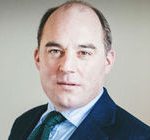
    Ben Wallace – 2022 Statement on Ukraine

    The statement made by Ben Wallace, the Secretary of State for Defence, in the House of Commons on 21 February 2022.

    With permission, Mr Speaker, I will update the House on the latest situation regarding Russia’s actions towards Ukraine. As I have already said, I apologise that the Opposition had such late sight of the statement.

    As of 09.00 hours today, there are now more than 110 battalion tactical groups massed around Ukraine’s borders with Russia and Belarus. In addition, in the Black Sea Fleet, there are two amphibious groups, nine cruise missile-equipped Russian ships and a further four cruise missile-capable vessels in the Caspian sea.

    In the last 48 hours, contrary to Kremlin assurances, we have seen a continued increase in troop numbers and a change in force disposition, moving from holding areas to potential launch locations. All the indicators point to increasing numbers and readiness of Russian forces, and, not surprisingly to many of us, the pledge to withdraw Russian troops from Belarus at the end of their joint military drills on 20 February was not carried out, and the exercise has now been extended until further notice.

    Complementing this troop build-up has been the proliferation of false flag operations, propaganda stunts, and Russian news outlets carrying fictitious allegations. These are not the actions of a Russian Government fulfilling their repeated declarations that they have no intention of invading Ukraine. In fact, over the last few weeks, we have seen the Russian “playbook” being implemented in a way that gives us strong cause for concern that President Putin is still committed to an invasion. I believe that he is in danger of setting himself on a tragic course of events, leading to a humanitarian crisis, instability, and widespread suffering—not just of Ukrainians, but of the Russian people.

    Like many of us, the Russians know the consequences of military interventions. The Soviet Union in Afghanistan and the first war in Chechnya are just two examples of where Russia saw too many young men returning home in zinc-lined coffins. The Government therefore urge President Putin—for the sake of his own people and even at this eleventh hour—to rule out the invasion of Ukraine and recommit to a diplomatic process for us to address the perceptions of the Kremlin.

    Over recent weeks, my right hon. Friend the Foreign Secretary and I have engaged numerous times with our international counterparts, including my own visit to Moscow to meet Defence Minister Shoigu and General Valery Gerasimov. We have made clear our determination to uphold the defensive principles of NATO and to defend the right of sovereign countries to make choices about their own security arrangements. As the Russian Government have signed up to, states have

    “an equal right to security. We reaffirm the inherent right of each and every participating state to be free to choose or change its security arrangements, including treaties of alliance.”

    That statement was signed by the Russians in 1975 in the Helsinki Final Act, in 1994 in the Budapest summit declaration, in 1999 at the Istanbul summit, and, most lately, in 2010 at the Astana summit. We urge Russia to stick to its commitments that it has openly made and signed up to over the years. My counterpart, Defence Minister Shoigu, repeated to me in person that Russia has no intention of invading Ukraine, but, while we take them at their word, we must judge them by their actions.

    At our meeting I also took the opportunity to address the proposals in Russia’s draft treaty, because, while this is not a return to normal UK-Russia relations, it is important that, as one of Europe’s biggest military powers, the UK maintains strong lines of communications with Russia in order to avoid miscalculation and the risk of inadvertent escalations. I also continue to speak regularly to my Ukrainian counterpart, Defence Minister Reznikov, as we continue to support the armed forces of Ukraine.

    Since 2015, the UK—alongside the likes of Sweden and Canada—has responded to Russia’s previous illegal occupation of Crimea with defence capacity building, including training and reform. As I announced to the House last month, we took the decision to also provide lethal aid to Ukraine. That now means that, alongside the United States, Canada, Estonia, Latvia, Lithuania and the Netherlands, the United Kingdom has not just spoken, but acted.

    I am pleased with the efforts being made by a range of European leaders, including President Macron, to find a way through. We must remain resolute in our commitment to NATO’s formal response to the Russian draft treaties, which all NATO members signed up to. Intimidation and aggression, however, must not be rewarded.

    We should be under no illusion: the Russian forces have now massed on Ukraine’s borders 65% of all their land combat power. The formations present and the action of the Russian state to date not only threaten the integrity of a sovereign state, but undermine international law and the democratic values in which all of us in Europe so strongly believe.

    The Foreign Office has now relocated the embassy further west in the country, and two weeks ago advised that all UK nationals should leave Ukraine via all means possible. The Ministry of Defence will continue to monitor Russian actions, support Ukrainian defensive efforts and contribute to NATO’s response measures. We continue to hope that President Putin will relent and pull back from an invasion, but we must prepare ourselves for the consequences if he does not. I will update the House, as I have done over the past few weeks, both in the Chamber and to colleagues online.

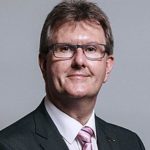
  • Jeffrey Donaldson – 2022 Statement on Death of Christopher Stalford

    Jeffrey Donaldson – 2022 Statement on Death of Christopher Stalford

    The statement made by Jeffrey Donaldson, the Leader of the DUP, on 20 February 2022.

    I am deeply saddened to learn of Christopher’s sudden death. He was not just an elected representative or a colleague, he was a friend.

    On behalf of the Party, I express my sympathies to Laura and the wider Stalford family on the loss of a husband, father, son and brother.

    I talked at length with Christopher on Friday night. He was passionate about Northern Ireland and wanted the best for his constituents. I was never to know how precious that conversation was to be.

    Most telling of all in that conversation was his pride in Laura and their children. He talked about his eldest child transferring to big school and the discussions that were ongoing in the home.

    Christopher was born to be a public representative. From his teenage years he was a regular contributor to politics both in the print and broadcast media. He was elected as a Belfast City Councillor in 2005 to represent the Laganbank area and then from 2014 represented the Balmoral area. Christopher was elected the High Sheriff of Belfast in 2010 and Deputy Lord Mayor of Belfast in 2013/14.

    In 2016, Christopher was elected to represent Belfast South in the Northern Ireland Assembly and from January 2020 served as the Principal Deputy Speaker of the Northern Ireland Assembly.

    Christopher believed in stretching himself to build a genuinely shared future. He was confident in his unionism and his identity and was always prepared to provide leadership to keep Northern Ireland moving in the right direction.

    The Stalford family will be in our prayers as they mourn Christopher’s passing.

  • Nadine Dorries – 2022 Comments on Huawei

    Nadine Dorries – 2022 Comments on Huawei

    The comments made by Nadine Dorries, the Secretary of State for Digital, Culture, Media and Sport, on 20 February 2022.

    The government is committed to ensuring the security and resilience of our phone and internet networks. Last year we brought in new laws to protect UK infrastructure from high-risk vendors and issue tough sanctions on providers which fall short of our high security standards. This consultation marks the next step in removing the risks posed by Huawei.

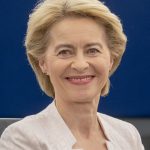
  • Ursula von der Leyen – 2022 Speech at the Munich Security Conference

    Ursula von der Leyen – 2022 Speech at the Munich Security Conference

    The speech made by Ursula von der Leyen, the President of the European Commission, on 19 February 2022.

    Ambassador Ischinger,

    Secretary-General, dear Jens,

    Ladies and Gentlemen,

    The very reason why our Union was created is to put an end to all European wars. Thus, the world has been watching in disbelief as we face the largest build-up of troops on European soil since the darkest days of the Cold War. Because the events of these days could reshape the entire international system. Ukraine has just celebrated 30 years of independence. There is an entire generation of Ukrainians born and bred in a free country. They are children of democracy. But now, they are confronted, on a daily basis, with external aggression and interference. Some of them have lost relatives or classmates in the Donbas war. They are faced again with the prospect of conscription, to fight a war that they do not want, but that Moscow might impose on them. This is what the Kremlin’s policies mean in practice: to instil fear, and call it security; to deny 44 million Ukrainians from deciding freely about their own future; to deny a free country’s right to independence and self-determination. And the consequences of this approach matter well beyond Ukraine.

    The Kremlin is not only trying to undermine the entire European security architecture, the Helsinki principles that have made all European countries safer, including Russia. It is also violating the UN Charter, where it states that countries ‘shall refrain from the threat or use of force against the territorial integrity or political independence of any state.’ We cannot let this stand.

    We are facing a blatant attempt to rewrite the rules of our international system. One only has to read the recent communiqué issued by Russian and Chinese leaders. They seek a ‘new era’, as they say, to replace the existing international order. They prefer the rule of the strongest to the rule of law, intimidation instead of self-determination, coercion instead of cooperation. We still hope that peace will prevail and that diplomacy will take us there.

    Allow me to address how Europe can support this work. First, we should be ready to respond. We – the EU and its transatlantic partners – have been preparing a robust package of financial and economic sanctions, including on energy and cutting-edge technology. If the Kremlin strikes, we can impose high costs and severe consequences on Moscow’s economic interests. The Kremlin’s dangerous thinking, which comes straight out of a dark past, may cost Russia a prosperous future.

    Second, diversification. A strong European Union cannot be so reliant on an energy supplier that threatens to start a war on our continent. Gazprom is deliberately trying to store and deliver as little as possible while prices and demand are skyrocketing. A strange behaviour for a company. We must diversify both our suppliers and our energy sources. This work is already underway. We have reached out to our partners and friends across the globe. And today, I can say that even in case of full disruption of gas supply by Russia we are on the safe side for this winter. And in the medium and long term, we are doubling-down on renewables. This will increase Europe’s strategic independence on energy.

    Third, supporting democracy in Ukraine. For seven years now, the Russian leadership has tried to destabilise Ukraine: Hybrid war, cyberattacks, disinformation – you name it. Yet, the country is now stronger than seven years ago. Because it has chosen the path of democracy and the friendship of other democracies. Think again about the youth of Ukraine, the post-Soviet generation. They know that their democracy is not perfect. But it is perfectible, and is getting stronger year after year. This is what makes it stand out from autocracy. Thriving democracies are the autocrats’ greatest fear. Because their propaganda fails, when citizens are empowered by the reporting of independent media and the free exchange of ideas. Because free citizens speak truth to power. Because trust and confidence are more sustainable than control and coercion. And this is exactly why Europe is supporting Ukraine’s path to democracy. It makes Ukraine a better place to live for its people and a better neighbour for both the European Union and Russia.

    My fourth and final point is about unity. Since the start of this Kremlin-made crisis, the European Union and the transatlantic community are fully aligned and united. We are supporting Ukraine to withstand the enormous pressure from Moscow. When the Russian government tried to divide us, over and over again, we have responded with one voice and a common message. This has been possible also thanks to you, dear Jens. You always pushed us to focus on what we have in common. You have shown that the European Union and NATO stand side by side. Not only because we share members and allies, but because we share values: freedom, democracy, independence. The very values that are at stake in this crisis.

    And this is why it makes me very proud and happy to announce that you are this year’s Kleist award winner. You have come a long way to reach this high office. When you were young, you were the head of the young socialists in Norway, an organisation that – at the time – was certainly not known as a supporter of NATO. Young Jens used his charm and leadership to turn the Young Norwegian Socialist around. As Prime Minister of Norway, you, Jens, had to deal with Russia on a regular basis. Actually, by then, Lavrov was already being Lavrov. And yet, you managed with skill to resolve a decades-long territorial dispute in the Barents Sea.

    Dear Jens,

    You have always been a man of dialogue and a believer in the transatlantic bond. In almost ten years at the helm of NATO, you always carried the flame of this unique alliance. Nobody worked harder than you for the transatlantic alliance. You have pushed relentlessly to strengthen our unity. This is why no one deserves this year´s Kleist award more than you do.

    Congratulations, dear Jens.

  • Boris Johnson – 2022 Speech at the Munich Security Conference

    Boris Johnson – 2022 Speech at the Munich Security Conference

    The speech made by Boris Johnson, the Prime Minister, on 19 February 2022.

    Ambassador Ischinger, Your Excellencies, Ladies and Gentlemen, it’s great to be here once again, after an absence of I think five years, at this very important security conference, which has helped to make this city a symbol of the unity of the West, of the strength of the Atlantic alliance and the vision of a Europe whole and free.

    And at this moment of extreme danger for the world, it has seldom been more vital to preserve our unity and resolve, and that was the theme of my discussion last night with fellow leaders, including President Biden, President Macron, Chancellor Scholz and Prime Minister Draghi, as well as the leaders of NATO and the EU.

    And as I said to President Putin during our last conversation, we in the UK still hope that diplomacy and dialogue may yet succeed.

    But we also have to be unflinchingly honest about the situation today.

    When over 130,000 Russian troops are gathering on the borders of Ukraine, and when more than 100 battalion tactical groups threaten that European country.

    We must be united against that threat because we should be in no doubt what is at stake here.

    If Ukraine is invaded and if Ukraine is overwhelmed, we will witness the destruction of a democratic state, a country that has been free for a generation, with a proud history of elections.

    And every time that Western ministers have visited Kyiv, we’ve assured the people of Ukraine and their leaders that we stand four-square behind their sovereignty and independence.

    How hollow, how meaningless, how insulting those words would seem if – at the very moment when their sovereignty and independence is imperilled – we simply look away.

    If Ukraine is invaded the shock will echo around the world and those echoes will be heard in East Asia and they will be heard in Taiwan.

    When I spoke to the Prime Ministers of Japan and Australia this week, they left me in no doubt that the economic and political shocks would be felt on the far side of the world.

    So let me be clear about the risk.

    The risk now is that people will draw the conclusion that aggression pays and that might is right.

    So we should not underestimate the gravity of this moment and what is at stake.

    As I speak to you today, we do not fully know what President Putin intends but the omens are grim and that is why we must stand strong together.

    The UK has worked with the European Union and the United States to put together the toughest and strongest package of sanctions, and I spoke recently to President Ursula von der Leyen to discuss the measures prepared by the EU, in the closest coordination with our own.

    And if Russia invades its neighbour, we will sanction Russian individuals and companies of strategic importance to the Russian state; and we will make it impossible for them to raise finance on the London capital markets; and we will open up the matryoshka dolls of Russian-owned companies and Russian-owned entities to find the ultimate beneficiaries within.

    And if President Putin believes that by these actions he can drive NATO back or intimidate NATO, he will find that the opposite is the case.

    Already the UK and our allies are strengthening the defences of the eastern flank of NATO.

    We are increasing the British contribution to Exercise COLD RESPONSE by sending our newest aircraft carrier, HMS Prince of Wales, and 3 Commando Brigade.

    We are doubling our presence in Estonia to nearly 2,000 troops; we have increased our presence in Poland to 600 troops by sending 350 Marines from 45 Commando; we have increased our presence in the skies over south-eastern Europe with another six Typhoons based in Cyprus; we are sending warships to the eastern Mediterranean and the Black Sea; and I have placed another 1,000 troops on stand-by to respond to any humanitarian emergency, which we all fear is increasingly likely.

    And while the most alarming and visible threat is the massing of Russian land forces on Ukraine’s borders, look at the naval build-up in the Black Sea, which threatens to blockade Ukraine; look at the massive cyber attacks and the incoming tide of disinformation.

    This crisis extends into every domain, which is why the UK is providing NATO with more land, sea and air forces, and it is because we feared a crisis like this, that we were already engaged in the biggest increase in defence investment for a generation, spread across conventional capabilities and the new technologies that are ever more important to our collective defence.

    And I’m proud to say that since Russia invaded Ukraine for the first time and annexed Crimea in 2014, we have been helping Ukraine, training 22,000 troops and, in recent months, in response to the threat, we have been among the nations to send defensive weaponry in the form of 2,000 anti-tank missiles.

    I’m glad that we have been joined in this by the United States, by Poland and by our Baltic allies, and that many other nations and the EU have, like the UK, helped to strengthen Ukraine’s economy.

    Britain will always stand up for freedom and democracy around the world, and when we say that our commitment to European security is immovable and unconditional, our deeds show that we mean our words.

    We are making the biggest contribution to NATO of any European ally because we understand the importance of collective security, and just as our European friends stood by us after the Russian state used a chemical weapon in Salisbury, so Britain will stand by you.

    But we must accept that even these measures by the UK and our allies: draconian sanctions, rinsing out dirty money, the intensification of NATO’s defences, fortifying our Ukrainian friends, they may not be enough to deter Russian aggression.

    It is therefore vital that we learn the lessons of 2014.

    Whatever happens in the next few days and weeks, we cannot allow European countries to be blackmailed by Russia, we cannot allow the threat of Russian aggression to change the security architecture of Europe, we cannot permit a new Yalta or a new division of our continent into spheres of influence.

    We must now wean ourselves off dependence on Putin’s oil and gas.

    I understand the costs and complexities of this effort and the fact this is easier said than done, so I am grateful for Chancellor Scholz’s assurances about Nord Stream 2, but the lessons of the last few years, and of Gazprom’s obvious manipulation of European gas supply, cannot be ignored.

    We must ensure that by making full use of alternative suppliers and technology, we make Russia’s threats redundant.

    That will be the work of the months and years to come, as well as the necessary and overdue steps that we in the UK must take to protect our own financial system.

    And now we need to prepare ourselves for the Russian playbook of deception that governs every operation of this kind.

    There will be a cascade of false claims about Ukraine, intended to spread confusion almost for its own sake,

    and even now there are plans being laid for staged events, spinning a web of falsehoods designed to present any Russian attack as a response to provocation.

    We’ve already witnessed a fake military withdrawal, combined with staged incidents that could provide a pretext for military action.

    We knew this was coming, we’ve seen it before – and no-one should be fooled.

    And we have to steel ourselves for the possibility of a protracted crisis, with Russia maintaining the pressure and searching for weaknesses over an extended period, and we must together refuse to be worn down.

    What Europe needs is strategic endurance, and we should focus our energies on preserving our unity and on deepening trans-Atlantic cooperation.

    But for that to work, we must also be prepared to devote the necessary resources to carry a greater share of the burden of preserving our continent’s security, and to demonstrate that we are in it for the long haul.

    For now, we should continue to do everything we can to pursue the path of peace and dialogue.

    There is a way forward, if President Putin is minded to take it: there is a discussion to be had about the threats that he claims to see because in reality as we all know, those threats are an illusion.

    They are the product of the Kremlin’s chronic but misguided view of NATO as a supposedly encircling and intimidating alliance.

    This is not NATO’s function: NATO is a peaceful and defensive alliance and we are willing to work with President Putin to demonstrate that point and to give him the reassurances that he may need.

    We could point out that until he invaded Ukraine for the first time in 2014, NATO did not permanently station any troops anywhere east of Germany and it was as recently as 2017 that the US, the UK and other NATO allies established the “enhanced forward presence” to protect Poland and the Baltic states.

    Even then, the total deployment of fewer than 5,000 troops posed no conceivable threat to Russia, and it is only in the last few weeks, in response to the current crisis, that we have dispatched reinforcements, though still in numbers that constitute no possible threat.

    Until 2014, European allies were cutting their defence budgets and shrinking their armed forces, perhaps faster than was safe or wise.

    And to the extent that this has changed it is because of the actions of President Putin and the tension he has created.

    If NATO forces are now closer to Russia’s border, it is in response to his decisions and the justified concerns they have provoked among our allies.

    And there are many things said about what may or may not have been said in the closed-door meetings of three decades ago, as the Berlin wall fell and Germany reunited.

    But there is no doubt that we all agreed legal obligations to protect the security of every country in Europe.

    And what happened in those amazing years was the dissolution of the Iron Curtain and the fulfilment of the vision of a Europe whole and free, it was one of the most incredible moments of my lifetime.

    As nations at the heart of our continent regained their liberty, and their sovereign right to control their own destiny and seek their own alliances.

    We will not abandon the hope and impulse of that era, made possible by the courage of millions of ordinary Europeans.

    That is why NATO opened its doors to 14 states after 1999, and we cannot allow our open door to be slammed shut.

    But if dialogue fails and if Russia chooses to use violence against an innocent and peaceful population in Ukraine, and to disregard the norms of civilised behaviour between states, and to disregard the Charter of the United Nations, then we at this conference should be in no doubt that it is in our collective interest that Russia should ultimately fail and be seen to fail.

    I believe that in preparing to invade Ukraine, a proud country whose armed forces now exceed 200,000 personnel, considerably more expert in combat today than in 2014, President Putin and his circle are gravely miscalculating.

    I fear that a lightning war would be followed by a long and hideous period of reprisals and revenge and insurgency, and Russian parents would mourn the loss of young Russian soldiers, who in their way are every bit as innocent as the Ukrainians now bracing themselves for attack.

    And if Ukraine is overrun by brute force, I fail to see how a country encompassing nearly a quarter of a million square miles – the biggest nation in Europe apart from Russia itself could then be held down and subjugated forever.

    After a generation of freedom, we’re now staring at a generation of bloodshed and misery.

    I believe that Russia would have absolutely nothing to gain from this catastrophic venture and everything to lose, and while there is still time, I urge the Kremlin to de-escalate, to disengage its forces from the frontier and to renew our dialogue.

    Every nation at this conference shares a vision of a secure and prosperous Europe of sovereign states, deciding their own destiny and living without fear or threat.

    And that vision of course extends to Russia, a nation whose cultural patrimony we revere, and whose sacrifice in the struggle against fascism was immeasurable.

    Russia has as much right as any other country to live in peace and security, and we should never cease to emphasise that Russia has nothing to fear from our vision, which threatens and marginalises no-one.

    And as we come together in unity and resolve, we must also show wisdom and moderation, because it is precisely by that unity that we show today that we have the best chance even now, at this 11th hour, of averting disaster and ensuring that good sense can still prevail.

    And it is that message of unity that we must send from this conference today.