Tag: 2022

  • Sadiq Khan – 2022 Comments on a Diverse Metropolitan Police

    Sadiq Khan – 2022 Comments on a Diverse Metropolitan Police

    The comments made by Sadiq Khan, the Mayor of London, on 22 April 2022.

    Keeping Londoners safe is my top priority, and I am working closely with the police to encourage Londoners from all backgrounds to join a bigger and better Met Police service.

    I am determined to increase the trust and confidence that all our communities have in the police, which is why it is so important that we have a service that reflects the diversity of the city it serves. I want the Met to represent us all and urge Londoners of all backgrounds to apply to become a police officer and help be the change you want to see. I’m really proud that we now have more police officers than at any other time in London’s history and by joining the police you can help to impact so many lives for the better.

  • Tommy Sheppard – 2022 Speech on Referring Boris Johnson to the Committee of Privileges

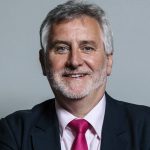
    Tommy Sheppard – 2022 Speech on Referring Boris Johnson to the Committee of Privileges

    The speech made by Tommy Sheppard, the SNP MP for Edinburgh East, in the House of Commons on 21 April 2022.

    We are all human. We are all fallible. We all make mistakes, but how we deal with those mistakes is a measure of our integrity and character. The British people have overwhelmingly judged the Prime Minister to have dealt with his mistakes disastrously. They overwhelmingly believe him to be a liar, and they have lost trust and confidence in him. That is a problem not just for this Government but for the British political system, and I caution some Conservative colleagues to be less cavalier in trying to dismiss those public concerns.

    The narrative coming from the Government seems to be that these breaches were just a consequence of living with the regulations. They were bound to happen, part of normal life, and they were happening in all sorts of places. “They have paid the fine; let’s move on—nothing to see here.” That will not wash. First, the overwhelming majority of people in this country did not breach the rules. They accepted the mandation put on their behaviour, often at great cost and personal consequence. I have hundreds of emails from constituents; I wanted to read some out, but there is not time. People were unable to be present when their children were born or when their parents were buried. They know, and are angry about, what was happening in No. 10 Downing Street while that was being done to them.

    The other reason why that will not wash is that many people have paid for their actions with much greater consequences than this Prime Minister. Many people have written to me asking why he has only been given a 50 quid fine while others are being fined up to £10,000 for breaches of the rules. Many in public office have already lost their jobs because of their transgressions, and they are right to sit back and wonder why the holder of this one office should be immune from that consequence.

    These people are suggesting that they did not really know that the rules were being broken at the time. That really does beggar belief. We heard from the hon. Member for Wycombe (Mr Baker) earlier. We know that he and his colleagues within the parliamentary Conservative party were waging a fierce and vicious argument about the consequences of these restrictions. The idea that people sitting in Government offices drinking and socialising after hours did not think that they were in breach of the rules that they themselves were making is risible and we should dismiss it.

    I think there is a simpler explanation for all of this. I genuinely believe that we have a Prime Minister whose conceit of himself is so great, and whose sense of entitlement so profound, that he genuinely did not think that the rules applied to him. That is why, when exposed—when found out at the end of last year—he did not come to the House and offer contrition; he did not come and say sorry. He came and he dissembled, and he misled, and he tried to do everything to cover up the breaches that had happened. That, to my mind, more than the attendance at a party, is what he stands charged with today. It is not the fact; it is what he tried to do to conceal his actions. That, in my view, is unforgivable.

    Janet Daby (Lewisham East) (Lab)

    The hon. Member is making an excellent speech, and I agree with everything he is saying. More than 170,000 people have died from covid in the United Kingdom. That means that it has affected so many friends and so many families, and there has been a devastating sense of remorse for people’s loss. If the Prime Minister were really showing his own great remorse for breaking rules that he had set, surely his actions would speak louder than his words and he would resign. Does the hon. Member agree?

    Tommy Sheppard

    I could not agree more. I think that the Prime Minister would have resigned if he had any integrity. I consider it remarkable that rather than his giving an apology and any demonstration of contrition when these events came to light, it was not until he was dragged kicking and screaming into the light of truth by the criminal justice system and the forces of law enforcement that we actually received the apology that we heard this week, and that is not enough.

    I want to spend one minute talking about the situation in Scotland. The hon. Member for Moray (Douglas Ross) leads the Scottish Conservatives. At the start of this year in the Scottish Parliament, he and his colleagues took, I believe, the right decision—they called on the Prime Minister to go—but somehow, miraculously, they have now been whipped into line by Central Office and changed their minds on that question. In commenting on that, I can do no better than quote Professor Adam Tomkins, a very senior Conservative and, until recently, a Conservative Member of the Scottish Parliament. He says that the hon. Member and his colleagues

    “have now reduced themselves—and made their former position of principle look not only empty but risible—by insisting that the prime minister is now somehow fit for office and that being fined by the police makes no difference… The Scottish Conservatives are in terminal decline, again. And, this time, it is their own fault.”

    That comes from within the Conservative party in Scotland itself.

    I know that many people throughout Britain will look with horror at the way in which this Government have traduced public service and denigrated many of the democratic institutions in their country, but people in Scotland look at it too and see it as further evidence of a British state that is in decline and does not represent their interests. They are increasingly attracted by the opportunity to create a new country, an independent country with a different constitution.

    Let me end by saying that I will vote for the motion, and I caution Conservative Members to do so as well. They are right—there is no room for personal attacks in this place or in politics—but let them understand this: actions do have consequences, and what goes around will come around. If the parliamentary Conservative party tries to sweep this under the carpet and tries to acquiesce in the actions of this Prime Minister any further, it will pay a very heavy political price.

  • Rushanari Ali – 2022 Speech on Referring Boris Johnson to the Committee of Privileges

    Rushanari Ali – 2022 Speech on Referring Boris Johnson to the Committee of Privileges

    The speech made by Rushanari Ali, the Labour MP for Bethnal Green and Bow, in the House of Commons on 21 April 2022.

    When we entered the pandemic, the Government, led by the Prime Minister, rightly called on the British people to do the right thing and protect each other by following the law and the rules. That is why this affair has been so devastating for so many of us, including my constituents. We all, in different ways, have had to make sacrifices. Some of us lost loved ones and have not been able to mourn them properly because of the restrictions. That applies to many of our constituents up and down the country. I know that from first-hand experience. In my family, we lost friends and relatives and were not able to see their family members or to attend services and support the bereaved.

    I want to highlight a few of the many cases raised by those who wrote to me about this affair. Craig wrote to me about his grandmother. He said:

    “My grandmother was my best friend. She was admitted to hospital on the day the first cases of Covid were identified in the UK. She died in hospital in early June 2020.

    She spent the vast majority of her time in hospital alone, confused, with no visitors. It was terrible for us all and the first Covid lockdown will be forever remembered as one of the worst times of my life.

    I and the rest of my family closely adhered to all lockdown advice and the new laws put in place. My nan’s funeral took place the week of the Prime Minister’s birthday party. We were only allowed a handful of people in the service, most of our family and friends forced to line the street outside the crematorium…I cried while writing this email to you, reliving these memories. I cannot allow the Prime Minister and this government to re-write the history of the pandemic and dismiss our collective trauma as ‘just a slice of cake’ or ‘no worse than a speeding ticket’. The nation should not be gaslit into thinking that the pandemic was not so bad.”

    Another constituent said:

    “My mother was taken to…hospital…for a blood test in April 2020, a week after lockdown began. The test showed that she needed treatment before she could come home, but…we were given the totally unexpected news that she only had days to live.

    This devastating news was made worse because my father (who was then almost 90 years of age) and my three sisters and I knew that the lockdown rules meant that we would not be able to see my mother again and that she would die (as she did, two days later) with no-one from her family with her.

    So, how do you think my father, my sisters and I felt when the news broke of the partying in No 10, whilst we were adhering to the rules so strictly? I now feel even more angry when I hear government ministers, who I would hope would have some standards of integrity, coming forward on an almost daily basis to say that it’s not an important matter, that the Prime Minister is not to blame, that he has apologised so that makes it all right…I hadn’t intended to write to you. What has led me to do so is Ministers comparing ‘Partygate’ to parking and speeding fines, and the fact that the Prime Minister is going to issue another full apology as though that will make it all right. For me, it doesn’t!”

    Another constituent said:

    “I just wanted to add my voice to those asking for the Prime Minister’s resignation. I buried my mum about a week before he attended that party that broke the law. We couldn’t even hug at the funeral, which was only allowed ten attendees. No political story has ever made me this furious. I feel like I’ve been scammed by my own government, taken for an absolute fool for obeying the very laws they set…If the Prime Minister can’t even uphold a standard so basic as the rule of law, what are we as a country?”

    The final story I want to share is of a health and social care worker. She said:

    “I know first-hand the impact Covid has had on vulnerable people and the front line…We should not be living in a country where there is one rule for the PM and government ministers and another one for everyone else.”

    Those are voices of pain amid so many messages, emails, cards and letters I received. They are voices of agony and sacrifice—so many cries of pain from the British people, who deserve better. The public rose magnificently to the task of tackling the pandemic. We need to ensure that the motion is supported today. I will support it, and I am glad that some Government Members will. I hope that others will hear the voices of people up and down the country, and will support it, too.

  • Clive Efford – 2022 Speech on Referring Boris Johnson to the Committee of Privileges

    Clive Efford – 2022 Speech on Referring Boris Johnson to the Committee of Privileges

    The speech made by Clive Efford, the Labour MP for Eltham, in the House of Commons on 21 April 2022.

    Several hon. Members have referred to the collateral damage that the Prime Minister leaves in his wake, as he has done throughout his career. For example, the Paymaster General, who is on the Front Bench today, said on 9 December during a statement on the Christmas party at No. 10 Downing Street:

    “The Prime Minister has been repeatedly assured since these allegations emerged that there was no party and that no covid rules were broken.”—[Official Report, 9 December 2021; Vol. 705, c. 561.]

    We now know that there were several parties, not just one, and that the rules were broken, because fines have been issued, one of which the Prime Minister has received. Part of the collateral damage, therefore, is that the Paymaster General came here to make a statement, based on the same information that allegedly was given to the Prime Minister, and misled the House. I accept that the Paymaster General did so inadvertently, but what has he done about that? The record needs correcting. Surely he should be investigating how he came to be misinformed and to misinform the House.

    This has happened on too many occasions for ignorance to be the defence. There is this idea that, throughout lockdown and all the occasions on which these parties took place and the rules were broken, none of the bright young things who had been invited ever thought that any one of those events might break covid rules. Is it conceivable that no one raised a single question about whether they might be breaking the rules? Some of those events were drinks events for people who were leaving. In our constituencies, people missed funerals and cancelled weddings and birthday parties. However, the people in No. 10 thought that it was okay to have leaving drinks. Where are they? What were they thinking? How out of touch with our constituents can they be to think that they can have a leaving drinks party and are more important than our constituents?

    Barbara Keeley (Worsley and Eccles South) (Lab)

    My hon. Friend is making a good speech, and that is a good point. I want to make a point about the impact of breaking the law, and how it hurt people and continues to do so. My constituent told me:

    “Boris Johnson broke the law partying with his colleagues while I watched my father die through a care home window. My father gave up on life because he could not have any proper connection with much-needed family during recovery from a stroke. I think he could still be alive today if I was able to break the law by having a close connection with him”,

    but, they say, they were not in the privileged position of the Prime Minister.

    Clive Efford

    What my hon. Friend read out speaks for itself. She has demonstrated, as have many others, through the cases they mentioned, that the problem starts at the top. The workers who organised the parties would not have done so if they thought that their bosses would be upset, would come down on them and say, “You are breaking the rules. Stop it.” We now know that on at least six occasions, the Prime Minister was present at these parties, so this problem comes right from the top.

    The Prime Minister’s defence has been different on many occasions. He started by saying that no rules were broken. He then said that there was a party, but that he was not present—but then he was. Then he said, “I wasn’t warned that it wasn’t a work do.” I did not see anything about a work do in the rules, but perhaps I missed that. The person who writes the rules cannot misunderstand them so fundamentally.

    Setting that aside, if the Prime Minister’s defence is, “I didn’t understand the rules; I needed them explained to me” and “I was misled at the outset about there having been a party, because people told me that there wasn’t one,” who misled him? What has happened to them? Are they still in their posts? Have they moved on? Have they signed non-disclosure agreements? Where are those people who misled the Prime Minister, which led him to him inadvertently misleading the House? We cannot have this both ways: either the Prime Minister knowingly came to this House and lied, or other people lied to him, which led to him misleading the House. Either way, we need to identify those people.

    The worst crime of all, however, is failing to feel the pain that our constituents felt throughout lockdown. No one who felt the agony and understood the pain that people were going through, as in the example that my hon. Friend read out, could have attended the events that happened in No. 10 Downing Street and other places. The question for Tory MPs today is this: do you stand by the people who felt that pain and vote today for—

    Madam Deputy Speaker (Dame Rosie Winterton)

    The hon. Gentleman knows that he must not use the word “you”.

    Clive Efford

    This applies to you too, Madam Deputy Speaker. Will Tory MPs stand by the people who felt that pain throughout the past two years? They deserve answers. As others have pointed out, this is about fundamental trust in our politics. When Tory MPs vote today, they should think about the damage that they are doing to the trust in our political process, because the public deserve better. They should think about that before they vote. This matter should go before the Privileges Committee. They know that, so they should vote for that.

  • Peter Aldous – 2022 Speech on Referring Boris Johnson to the Committee of Privileges

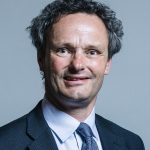
    Peter Aldous – 2022 Speech on Referring Boris Johnson to the Committee of Privileges

    The speech made by Peter Aldous, the Conservative MP for Waveney, in the House of Commons on 21 April 2022.

    I would like to make three brief observations.

    First, Mr Speaker was quite right to decide that there was an arguable case to be examined by the Committee of Privileges. That is the issue in front of us today, not whether the Prime Minister intentionally misled the House. That is for the Committee to decide. While in many respects this situation is completely unprecedented, there have been similar cases which confirm that such a referral is the right course to pursue: the 1947 case of Mr Garry Allighan; the 1977 case involving Reginald Maudling, John Cordle and Albert Roberts; and the 2005 case of Stephen Byers, which I shall comment on further shortly.

    The second point to decide is the timing of the consideration by the Committee of Privileges. The motion states that that should not begin in a substantive way until the inquiries conducted by the Metropolitan Police have been concluded. The amendment, which will not be moved, states that any vote should wait until the police investigations have been completed and Sue Gray’s report has been concluded. In many respects, we could go round and round in circles as to which of those courses is the right one to pursue. Thus, it is welcome that the amendment is not being moved.

    Finally, I return to the case of Mr Stephen Byers and the manner in which that equivalent debate, on 19 October 2005, took place. The then Leader of the House, Geoff Hoon, concluded the debate by stating:

    “The Government support the motion because it is necessary for the House to refer possible breaches of the rules to the Standards and Privileges Committee for investigation. The Government respect the privileges of the House and we will uphold them. They are crucial to the independence of Parliament and the strength of our democracy.”

    He concluded by saying:

    “I urge Members to refrain from treating the matter as a party political question.”—[Official Report, 19 October 2005; Vol. 437, c. 849.]

    The motion was passed without Division.

    I acknowledge that in this instance the stakes are much, much higher and that hon. Members from right across the Chamber quite rightly, as we have heard this morning, hold passionate views on this matter. But that approach, I would suggest, is the right one for us to pursue

  • Christian Matheson – 2022 Speech on Referring Boris Johnson to the Committee of Privileges

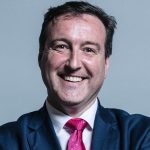
    Christian Matheson – 2022 Speech on Referring Boris Johnson to the Committee of Privileges

    The speech made by Christian Matheson, the Labour MP for the City of Chester, in the House of Commons on 21 April 2022.

    There has been a lot of talk about apologies. I remind the House that the motion is not about whether the Prime Minister has apologised but whether he knowingly lied to the House. He has not apologised for that—he has not even admitted it. In fact, he has persistently and consistently said that “there was no party”, that there was no cake and that there was a party but there was no cake—I could go on. I welcome those apologies, but let us be clear about what the motion says.

    Earlier, the leader of the SNP, the right hon. Member for Ross, Skye and Lochaber (Ian Blackford), reflected the words of my right hon. and learned Friend the Member for Holborn and St Pancras (Keir Starmer) about the Prime Minister’s modus operandi: he leaves a trail of chaos in his wake and lets other people pick up and take responsibility for the problems that he has caused. The latest victim of that—I told him that I would mention this—is Mr Speaker and the office of the chair. Recently, when he had to chuck out the leader of the SNP for calling the Prime Minister a liar, he got huge amounts of public opprobrium, saying, “What on earth is Speaker Hoyle doing? Why is he chucking out the leader of the SNP when we know what the Prime Minister is up to?” The Prime Minister does not mind because somebody else takes the criticism for that. He is undermining not simply Mr Speaker but this House and, as hon. Members have said, our democratic system. The public cannot understand what on earth is going on when one person gets thrown out and the person who is the root of the problem is happy to stay there smirking on the Front Bench. That is his modus operandi, and it is dragging our democratic system down.

    We all make mistakes. I make mistakes, and I have had to correct the record. We have heard about apologies and about the Prime Minister being contrite, but I do not recall one occasion on which he has come back to the House and corrected the record. Not one. I think that there is an outstanding letter to him from the UK Statistics Authority about a misleading claim that he has yet to come back to correct. The bottom line is that the Prime Minister will say whatever is necessary at one point to get out of whatever situation he is in, with no sense of obligation to the truth or to whatever promise he has just made. I have scribbled down a list of five or 10 promises he has made and broken, but, as I do not want you to call me up, Madam Deputy Speaker, as we are talking specifically about the occasions when he denied there was a party, that list will have to wait for another occasion—but there will be another occasion.

    As I have said, the Prime Minister is damaging the UK’s reputation abroad. Outside this Chamber, our partners abroad—as well as our adversaries and enemies—can see that he is losing credibility and they cannot necessarily work with him because his word cannot be trusted. That damages the UK, and that is serious at a time of international crisis.

    I finish by quoting an article from The Guardian by Simon Kuper about the Oxford Union and a younger version of the Prime Minister who wrote an essay on Oxford politics for his sister’s book, “The Oxford Myth”:

    “His essay tackles the great question: how to set about becoming the next prime minister? Johnson advises student politicians to assemble ‘a disciplined and deluded collection of stooges’ to get out the vote.”

    Remember that this was just after he left university. The quote from the Prime Minister in his earlier days continues:

    “The tragedy of the stooge is that…he wants so much to believe that his relationship with the candidate is special that he shuts out the truth. The terrible art of the candidate is to coddle the self-deception of the stooge.”

    Those were the Prime Minister’s views then. They are apparently still the Prime Minister’s views today. The British people have made up their mind and for them the penny has dropped. I say to hon. Members on the Conservative Benches that it is time for the penny to drop for them as well. They need to search their feelings. They know it to be true. This is the manner of the Prime Minister and today is the time finally to put a line underneath that.

  • Alexander Stafford – 2022 Speech on Referring Boris Johnson to the Committee of Privileges

    Alexander Stafford – 2022 Speech on Referring Boris Johnson to the Committee of Privileges

    The speech made by Alexander Stafford, the Conservative MP for Rother Valley, in the House of Commons on 21 April 2022.

    Much has already been said about the police’s investigation, as a result of which the Prime Minister was issued with a civil penalty. He paid it immediately and came to this House at the earliest opportunity to give a heartfelt apology. Not only that: it is clear that he and the Government do not oppose moving the matter to the Privileges Committee, which shows that his contrition is right and true.

    Let me be clear that the Prime Minister’s apology was the right thing to do. Each and every single Briton across the length and breadth of our beautiful country has made sacrifices during the pandemic. When my first daughter was born, my wife was seriously ill and, because of that, I could not see my daughter for five days. I made sacrifices. All my residents made sacrifices. Even the Prime Minister made sacrifices when he almost died from covid and, as we know, when his family members died, he could not attend their funerals.

    All politicians should be held to the highest standards, be that the Prime Minister, the Leader of the Opposition, the right hon. Member for Islington North (Jeremy Corbyn) or the Scottish First Minister, and all of them have been caught and photographed in covid-compromising positions. They should all be referred to the Privileges Committee to be investigated.

    The Prime Minister paid the fine, and rightly so. He has been unequivocal that he respects the outcome of the police’s investigation and that he will always take the appropriate steps. The central issue is whether he intentionally or knowingly—those are the vital words—misled the House. I point to an article published in The Times on Saturday 20 June 2020, the day after the event in question in Downing Street. It reads:

    “Boris Johnson celebrated his 56th birthday yesterday with a small gathering in the cabinet room. Rishi Sunak, the chancellor, and a group of aides sang him Happy Birthday before they tucked into a Union Jack cake. The celebrations provided a brief respite after another gruelling week”.

    The Prime Minister has said that it did not occur to him then or subsequently that a gathering in the Cabinet room just before a vital meeting on covid strategy—to save lives—could amount to a breach of the rules. That event in No. 10 was reported the next day in a national newspaper and did not then prove controversial. It is unfathomable that the Prime Minister’s team would have alerted journalists to the event and incriminated him if he believed that it was against the rules. That does not make sense. Nevertheless, the Prime Minister apologised and has been punished. Further, for transparency, he has welcomed the matter being moved to the Privileges Committee.

    I also want to briefly address an article yesterday in The Times, which reported that

    “Sir Keir Starmer had warned Tory backbenchers that they would pay a price for blocking an investigation”

    including personal attacks for supporting the Prime Minister. It is outrageous that the Leader of the Opposition came here on a day on which we talked about tolerance in politics to lay out such a threat of bullying against Members of this House. We all have our own minds. We may all disagree, but I and many colleagues have had death threats and to threaten people and to try to stoke that is incredibly dangerous.

    Jess Phillips (Birmingham, Yardley) (Lab)

    There were no threats of bullying made. What we are talking about is an electoral threat. I have had to take two death threats to the police that directly quoted words said in this place by the Prime Minister of our country. People have attacked my office on the basis of the words of our Prime Minister and, when that was raised with him, he said, “humbug”.

    Alexander Stafford

    We must be honest that we face death threats on both sides of the House—[Interruption.]. No, this is an important point. No one should get abuse in their job. My point is that only yesterday—a day when we were talking about debates—the article said:

    “Tory backbenchers…would pay a price”

    through personalised attacks. I am sorry that the hon. Member received death threats; she should not have done.

    Sara Britcliffe (Hyndburn) (Con)

    Is not the point that we all face abuse from being in this place—as one of the youngest Members in the Chamber, I fear every day for the bullying and harassment that I will receive—and that all targeted attacks do is stoke the flames so that we receive more abuse?

    Alexander Stafford

    Indeed, they do. We should all rise above that and treat each other with the courtesy that everyone needs in a place of work. Sadly, we have witnessed the violence that colleagues have been exposed to and, ultimately, the deaths of two colleagues.

    Going forward, the Prime Minister has clearly taken significant measures to improve how things are working in No. 10, and there are more changes to come. We have talked about Christian forgiveness. I am a Christian—a Catholic—and this is a Christian country. Forgiveness is at the core of what we believe. The Prime Minister has offered a heartfelt apology and his contrition. He has come to the House, and he is happy for the matter to go to the Privileges Committee; he does not oppose that. He has apologised. We need to look at that.

    It is now time to crack on with the priorities for our country. We have an obligation to deliver on our election promises, and I look forward to the Government focusing on important issues for my constituents in Rother Valley, including getting the Rwanda illegal immigration scheme up and running as soon as possible and winning the war against the fascist Putin. The Rwanda scheme will save lives, defeating Putin will save lives and, through covid, the Government have saved many lives in this country.

  • Liz Saville Roberts – 2022 Speech on Referring Boris Johnson to the Committee of Privileges

    Liz Saville Roberts – 2022 Speech on Referring Boris Johnson to the Committee of Privileges

    The speech made by Liz Saville Roberts, the Plaid Cymru MP for Dwyfor Meirionnydd, in the House of Commons on 21 April 2022.

    Before I start my main points, I want to mention a couple of things that I have been listening to. First, many of us on this side were aware that the Government were trying to kick the issue down the road with their abandoned amendment. We are two weeks away from the local elections, and their action begs the question of whether desperation to ensure that the way their MPs voted was not on the record was their motivator.

    Secondly, the Government’s approach is that they live in hope that the public’s memory is ruled by the news cycle and that the public interest will move on. I believe that they are fundamentally wrong in that assumption. Everybody who made a personal sacrifice during covid will remember their loss, pain and grief for the rest of their lives. It is engraved on our hearts. We are not going to forget. The Government may kick this down the road, but they are wrong if they assume that their safety is tied up with the news cycle. The Prime Minister’s behaviour will not be forgotten.

    Today we have a chance to correct the record, to reinstate credibility in our system and hold Conservative Members—and, indeed, all of us—to account, not only for their or our misdeeds but for our preparedness on occasion to defend the indefensible. Today is a chance for all Members, of all parties, to do the right thing, and our names should be on record when we want to do the right thing.

    Public trust in our democratic system is plummeting as we careen from one scandal to another, and the very reputation of our democracy, ourselves and the function that we are honoured with here is seemingly at stake.

    Some 73% of the British public are in favour of a Bill that would criminalise politicians who willingly lie to the British public. Plaid Cymru has been calling for stronger measures to ban politicians from lying in their public role, not just in the past few months, but for 15 years.

    We all know that we live in an age of public disenchantment. From that same poll, conducted by Compassion in Politics, we learnt that 47% of people have lost trust in UK politicians during the past 12 months. If we look back at the momentous events over the period, from the fall of Kabul to the pandemic to the Russian invasion of Ukraine and the cost of living crisis, what other conclusion can we draw than that we have failed in our duty to uphold the public’s trust?

    That sense of failure is not just a rhetorical gambit, a professional nicety or an optional extra for us here. From anti-vaxxers to the Putin regime, when we fail to confront mistruths, we create a truth vacuum in which division takes hold. When any “truth” is as good as any other, division along political lines comes to matter more than agreement on the common ground of facts. That matters.

    We work in an institution where we cannot call out the lies of another Member, regardless of their position of responsibility—lies that are broadcast around the country, recorded for posterity and therefore impressed on the memories of millions of people. We have no way of addressing that effectively.

    Although I defer to the Speaker’s judgment in this matter, partygate has demonstrated conclusively that our self-regulating system is no longer fit for purpose. The ministerial code has been proven not worth the paper it was written on. Gentlemen’s honourable agreements depend on the existence of honour. We must do better. If we cannot do better, because we make a mockery of the public’s concerns by shrugging our shoulders and accepting that it is merely part and parcel of modern politics, we must be compelled to do better.

    We as legislators must legislate to uphold our good names, and, by extension, the good name and efficacy of democracy itself. A first step would be a Bill; a second would be rebuilding our political model, much as Wales and our Co-operation Agreement has done, so that politics is built around what we share, rather than that which divides us. Honesty is the most important currency in politics. We have to restore it before we here are responsible in part for bankrupting our society.

  • Fiona Bruce – 2022 Speech on Digital Persecution

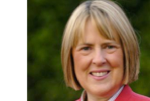
    Fiona Bruce – 2022 Speech on Digital Persecution

    The speech made by Fiona Bruce, the Conservative MP for Congleton, in the House of Commons on 21 April 2022.

    On 5 and 6 July in London, the largest international gathering hosted by the UK Government this year will take place—the 2022 international ministerial conference on freedom of religion or belief. Government representatives from over 50 countries have been invited, together with faith and civil society representatives, to discuss the concerning global trend of increasing restrictions on freedom of religion or belief, and also, it is hoped, to commit to practical steps to tackle that. A session including digital persecution should be at the cutting edge of that conference. My purpose in calling this debate is to highlight why.

    Each year, millions of people around the world are increasingly having their freedom of religion or belief restricted, and to devastating impact. A key reason is the increase in persecution by authoritarian regimes, including through the misuse of technology. Right across the world today, people are losing their jobs, education, homes, livelihoods, families, freedom, access to justice, and even life itself, simply on account of what they believe. People are being discriminated against, marginalised, beaten, threatened, tortured and killed, and too often by their own Governments—the very Governments with a duty to protect their freedom of religion or belief. The gross scale of this as a global issue is both under-recognised and under-addressed. One of the aims of this July’s conference in London is to change that.

    The Pew Research Centre indicates that 83% of the world’s population live in countries with high or very high restrictions on religion. The campaigning charity Open Doors, in its 2022 world watch list, states that the persecution of Christians has now reached the highest levels since the world watch list began nearly 30 years ago—that across 76 countries, more than 360 million Christians suffer high or very high levels of persecution and discrimination for their faith.

    Of course, persecution affects not only Christians but those of all faiths and none. In Nigeria last month, the humanist Mubarak Bala was sentenced to 24 years in prison, now on appeal. Recently, the plight of Jehovah’s Witnesses, Ahmadiyya Muslims and Baha’is across the world has been highlighted by the International Religious Freedom or Belief Alliance of 35 countries, which I have the privilege of chairing in 2022. Details can be found on the US State Department website.

    Why is freedom of religion or belief so important? We need to ask this question, and try to answer it, to set in context this debate on digital persecution and why addressing it is so critical. FORB is important for several reasons. It is important in itself, for us as individuals, because what we believe gives us a sense of worth, f purpose and meaning, and of dignity and identity. It goes to the heart of what makes us human.

    Respecting freedom of religion or belief is important because it is so closely connected to other human rights, such as free speech, the right to assemble, the right to work and even the right to life itself. When freedom of religion or belief is not respected by those in authority, all too often, other rights crumble, too. FORB is also important for communities, which are stronger, including economically, when they include everyone. Societies cannot fully develop when they oppress members of minorities.

    Freedom of religion or belief is one of the foundations of a stable and secure democratic society. Countries that respect FORB are less prone to violent extremism. Not to put too grand a point on it, promoting and defending freedom of religion or belief is an important element of promoting peace globally. Indeed, when President Franklin D. Roosevelt, one of the driving forces behind the establishment of the UN, envisioned a world of peaceful co-existence between nations, he stressed the importance of four freedoms: freedom of expression, freedom from want, freedom from fear and freedom of belief. How tragic it is that we reflect on this today as the very opposite is occurring less than a three-hour plane flight from here. Let us be under no illusions: freedom of religion or belief is very much a live issue in the plight of the Ukrainian people.

    Permit me to take a moment to refer to that. In Luhansk, a Russian rebel-held area of Ukraine taken by pro-Russian separatists in 2014, freedom of religion or belief is now severely restricted. Religious communities need to register to have permission to gather, following a restrictive law that makes it illegal for any religious community to congregate without such permission. As a result, all Baptists, Seventh Day Adventists, Pentecostals and other Protestant communities have been denied that permission. Such unregistered groups therefore meet to worship in a climate of fear. They are subject to surveillance and at risk of repeated raids, with their social welfare activities in their local communities banned and an increasing list of allegedly extremist books banned, including an edition of the gospel of John from the Bible.

    Jim Shannon (Strangford) (DUP)

    I congratulate the hon. Lady on all that she does in her role as the special envoy for freedom of religion or belief, and I express an interest as chair of the all-party parliamentary group for freedom of religion or belief. She is right to highlight the issues in Ukraine, which I am sorry to say also unfortunately include incidents of Baptist pastors who have disappeared and never been located—their whereabouts are unknown. Churches have been destroyed. People from my constituency are actively involved in Faith in Action Missions in eastern Ukraine. What they have expressed to me goes along with what she has said.

    We have to highlight these things in this House. It is not just the murder of innocents, but the persecution of Christians and those of other religious beliefs. Russia has to be held accountable in the highest court of the land for the genocidal campaign that it is carrying out against Ukrainians in Ukraine.

    Fiona Bruce

    The hon. Member, who is chair of the all-party parliamentary group for freedom of religion or belief, makes excellent points and I thank him for doing so. It is so important that we highlight that the Ukrainians’ right to freely practise their religions or beliefs, whatever they may be, is a key aspect of what the leadership of Ukraine and its people are fighting for today. We applaud and stand with them.

    Returning specifically to the subject of this debate, digital persecution, I want to put on record my appreciation and thanks to Open Doors for the recent conference it organised, partnered with the Universities of Birmingham and Roehampton, which invited papers on three core themes: surveillance, censorship and disinformation. I also want to thank many of those who contributed to that conference and to my speech today, and those who supplied papers. My speech is all too short to do justice to this issue, so I urge parliamentary colleagues and others listening to this debate to access the conference online—it was recorded by Open Doors—and to access the open source of papers by the contributors, including Professor Francis Davis of Birmingham University, Dr Ewelina Ochab, author Jeremy Peckham, Dr Pasquale Annicchino of the University of Foggia, Chung Ching Kwong of the University of Hamburg, Dr Daniel Aguirre of the University of Roehampton, Rahima Mahmut, UK director of the World Uyghur Congress, and others.

    Technology and its extensive communication capabilities can of course be used for good, as we all saw during the pandemic, but, as Open Doors states,

    “digital technology enhances state capacity for surveillance of religious minorities and censorship of their speech. It also greatly assists the spread of disinformation against religious minorities by state and non-state actors, which can have lethal consequences for those minorities.”

    Misuse of technology has played a crucial role in some of the most egregious atrocities perpetrated in recent years, including the persecution of the Uyghurs in Xinjiang, China, of the Rohingyas in Myanmar, and of the Yazidis in Iraq.

    Religious minorities are often subject to state surveillance, often because of their very status as minorities. This can be either targeted surveillance of specific individuals or groups, or mass surveillance of large groups of people. This may include CCTV, including facial and emotional recognition; device listening; spyware; state monitoring of social networks; tracking, proximity and location apps; and large-scale data harvesting. I shall explain some of that in a little more detail later.

    Examples of digital censorship include publication banning; disabling websites and applications; blocking websites, communications and social media posts, including state moderation and firewalls; punishing users who visit particular websites; hacking; cancelling of activities, platforms and public personae, often without reason or redress; and financial freezing.

    Disinformation is the communication of deliberately misleading or biased information, the manipulation of narrative or facts, and propaganda, which we are becoming increasingly aware of in Russia’s information war against Ukraine. Examples of disinformation include propaganda, including advertising; targeted fake news; discord bots strategically magnifying discord, including trolling algorithms; and network incitement of mob violence.

    During the last few minutes, I have given many examples of the misuse of technology and have used technical terms. Perhaps I have given too many examples for anyone to absorb unless they are already engaged in this subject, so I shall give just one example of how such misuse of technology works in practice—namely, the misuse of technology to oppress the Uyghurs in China, of whom an estimated 2 million, possibly even up to 3 million, are incarcerated in detention camps.

    At the conference, Rahima Mahmut’s evidence about the plight of the Uyghurs set a sombre and moving tone. She told us that the Chinese Government have invested huge sums of money in advanced surveillance technology, including facial recognition software, voice recognition software, DNA and data collection, constructing a huge network of cameras and physical checkpoints. All the information gathered on people is stored in what is called an integrated joint operations platform. The data is then used to classify Uyghurs by colour—blue, yellow or red—and therefore to classify their threat level. This has not only resulted in the mass criminalisation of the Uyghur population, but led them to question their own sense of self-worth and self-belief.

    How does this work? The integrated joint operations platform is used by police and officials. It is a mobile phone app used to collect data on individual Uyghurs for an assessment to be made about whether someone should be arrested. The extent and penetration of the personal data collected is deeply concerning. Data is collected on individuals as they move about in public places, including from CCTV, by voice recognition and even through their relationship with others who may have political or religious affiliations or convictions. The voice recognition software can not only monitor conversations from a mobile phone, but record a voice from 300 metres away while simultaneously blocking out the surrounding noise.

    The technology is now even used in schools to record what Uyghur children say in the classroom—even those as young as kindergarten children—so that, in effect, children are unwitting spies on their own parents. Key words are recorded and then detected by the app to flag concerns to the authorities and indicate dangerous or threatening tendencies. These include words such as “prayers” or “mosque”, or even “get together” or “gather”. As soon as a key word is picked up by the app, this will be fed into the integrated joint operations platform app as suspicious activity, together with all the other data being collected about an individual.

    Someone can also receive a colour for many reasons, such as simply eating in a restaurant where someone else with a red mark against their name is also eating. Once the information is gathered and reaches a certain level, an individual is flagged with a colour—red, yellow or blue—which indicates their threat level and how they will be treated, in particular as they move through the many checkpoints manned by police. Someone who is blue can pass through, though of course their colour can and may well change. If an individual is passing through a checkpoint with a yellow mark, an alarm goes off. If it is red, the police will automatically arrest the person immediately. In other words, the app—a computer—is triggering an arrest.

    Once arrested, individuals can then be interrogated by computer, too. Police can place an individual not in a normal chair for questioning, but in a tiger chair, in which the body is completely locked and highly stressed, resulting in inevitable physical responses. During questioning, a computer will then monitor heightened changes in heartbeat and muscle movement, and on that basis a computer can indicate that the person must be guilty. Imprisonment can then be meted out.

    An individual can be surveyed, detected, arrested, interrogated and imprisoned by technology, simply because the computer says so, and surveillance technology of this nature is being sold around the world. According to an Open Technology Fund report of 2019,

    “over 100 countries have purchased, imitated, or received training on information controls from China and Russia.”

    Andrew Lewer (Northampton South) (Con)

    I really want to thank my hon. Friend for bringing home the true horrific nature of this technology and the way it is being employed against the Uyghurs in China. Does she agree with me that it is important that the work she and the hon. Member for Strangford (Jim Shannon) do is constantly put at the forefront of the Government’s attention when we are discussing these issues, particularly when it comes to overseas development aid for countries that may be seeking to implement such measures themselves?

    Fiona Bruce

    I thank my hon. Friend for that point and for his active engagement with the all-party group for international freedom of religion or belief. It is heart-warming to note, particularly following the publication of the Truro review slightly more than two and a half years ago, how increasingly Government are engaging on this issue, and not just expressing concern, but taking practical steps.

    Let us look at a country other than China for a moment. Dr Daniel Aguirre of the University of Roehampton has explored the role of technologies in conflict and spoken about how in Myanmar, formerly Burma, the junta’s primary aim in the recent coup was to close or control digital communication, especially Facebook as the primary mode of internet communication for coup resistance. He has also detailed how the junta used misinformation to fuel ethnic tensions and violence.

    We hear from other sources that the military in Myanmar has used Facebook to spread propaganda against Muslims and the Rohingya ethnic minority and to justify attacks against their communities, and that disinformation has been used to discredit or malign Christians, rouse people’s anger against them, or force people to practise rituals against their beliefs. During the covid-19 pandemic, stories of religious minorities being the harbinger of the coronavirus were spread. In Myanmar, news of Christians directly receiving foreign aid was falsely perpetuated, encouraging the view that they should not receive Government aid.

    I referred previously to non-state actors—organisations other than Governments— misusing technology. An example is Daesh, the Islamic State terrorist organisation. It has used technology to recruit members and spread propaganda among minorities—in Iraq, for example, against the Yazidis, and in Africa to inflame and justify violence against communities there. It is deeply concerning that young people in particular can be attracted into terrorist groups in that way.

    A statement on “Use of Technology and Religious Freedom” made at the July 2019 Ministerial to Advance Religious Freedom—a precursor to the 2022 conference, which the UK is hosting this July—said that we need to

    “take seriously the need to counter the ability of terrorists to recruit and radicalise or inspire others to violence online while fully respecting freedom of expression.”

    Three years on, as the UK hosts this year’s Ministerial on Freedom of Religion or Belief, responding to this challenge remains at a concerning initial stage.

    Why is this? One reason is that the very complexity of the technicalities that I have endeavoured to describe has often inhibited human rights activists, including those who campaign on freedom of religion or belief—and I include myself in this—from tackling this subject. But we must do so because the implications of failing to do that are and, indeed, already have been, catastrophic.

    As Professor Francis Davis says,

    “digital persecution is a challenge to the FORB community specifically and the wider human rights community because it requires them to speak together and find a common language to engage with the new institutions of persecution…this…needs new analysis and new strategies of response.”

    Professor Davis adds that we need to develop new leaders who are both digitally native and freedom of religion or belief and human rights-savvy, representing a generational shift and meriting strategic investment by Government, foundations and tech companies’ corporate citizenship funds.

    I hope that the 2022 international ministerial conference on freedom of religion or belief in July will explore more deeply the concerns that I have only been able to touch on today and that we will commit to work together to address them. I hope that Governments, civil society activists, academics, members of the FORB community internationally and, even more importantly, technology experts and providers, including global social media companies, will work with us to address digital persecution.

    A comprehensive plan to address digital persecution must be developed in a systematic and structured way. Concerns about surveillance, censorship and disinformation must become a standard element of our response to persecution of freedom of religion or belief, rather than, as at present, an afterthought. As Ambassador Sam Brownback, my predecessor as chair of the International Religious Freedom or Belief Alliance, said:

    “We are entering a very serious time of digital authoritarianism. How we react to it will be key.”

    The Minister for Asia and the Middle East (Amanda Milling)

    I congratulate my hon. Friend the Member for Congleton (Fiona Bruce) on securing the debate, which, as she set out in her excellent speech, is an important one. I thank her for everything that she does as the Prime Minister’s special envoy for freedom of religion or belief.

    I make it absolutely clear that human rights must be protected both offline and online. New technologies and online communities provide a platform to strengthen democracies and human rights, but they also provide new tools for repression, persecution and censorship, which are putting open societies and democratic freedoms under pressure.

    The UK Government condemn all actions that violate human rights, whether offline or online. We share the concern of my hon. Friend and others about the growing use of digital technology to target human rights defenders and civil society. We are troubled to see the increasing levels of gender-based harassment and abuse online, and we are strongly opposed to Governments unlawfully shutting down or restricting access to the internet and social media.

    Everyone should be able to make the most of the positive opportunities that the online world offers. That is why the Government are pursuing a three-pronged approach to promote internet access and protect human rights online. First, we are pressing states to uphold their human rights obligations and working with them to spread digital access to excluded groups. Secondly, we are campaigning for media freedom and leading international efforts to promote digital democracy. Thirdly, we are working with international partners, including through the UN, to protect those whose rights are abused or violated online.

    On the first, we regularly raise issues of concern with other Governments, in public and in private. We have led international efforts to hold China to account for the human rights violations that we have heard about today.

    Mike Kane (Wythenshawe and Sale East) (Lab)

    I am very grateful to the Minister for giving way and I join her in congratulating the hon. Member for Congleton (Fiona Bruce) on securing the debate. Just before the pandemic, as part of the International Catholic Legislators Network, I had the great honour to meet Cardinal Zen, who has campaigned for religious freedom in China his whole life. We had to meet in secret, in a secret room, at a time we could not announce because we had to run the gauntlet of Chinese demonstrations and surveillance from a hotel across the road. This was in Portugal. That is the type of behaviour going on for people who want to practise their religion. It is not good enough and the Minister is right to set out the points she is making.

    Amanda Milling

    I am grateful for that intervention. As I will set out, we are leading efforts to hold China to account for human rights violations and I will set out some of the conversations that have been had.

    We were the first country to lead a joint statement on China’s human rights record at the UN. Last month, the Foreign Secretary expressed her deep concern, in an address to the UN Human Rights Council, about the violations occurring in Xinjiang and Tibet. We made clear our concerns about mass surveillance in Xinjiang, which my hon. Friend the Member for Congleton discussed, including in a joint statement alongside 42 other countries at the UN in October. We also raise our concerns directly with the Chinese authorities at the highest levels, and I personally raised these issues with the Chinese ambassador to London in December. Meanwhile, we continue to work with our international partners to address the human rights violations taking place across the People’s Republic of China. We have imposed sanctions on senior Chinese officials and introduced enhanced controls to block exports of technology that might facilitate human rights violations.

    The UK co-founded the Media Freedom Coalition in defence of journalists. The coalition has issued statements about the deteriorating media environments in Egypt, Belarus, Hong Kong, Myanmar and Russia, among others. We have committed £3 million over five years to the UNESCO global media defence fund, which has supported more than 1,700 journalists, including many of those who have received threats online. We also support media freedom through our development aid budget and have spent more than £400 million on that over the past five years. Last December, we joined the Freedom Online Coalition taskforce, which is committed to tackling the growing problem of internet exclusion and shutdowns. We also fund the #KeepltOn campaign, run by the digital advocacy non-governmental organisation Access Now. The campaign brings together a coalition of more than 240 organisations from 105 countries in a global effort to end internet restrictions and shutdowns.

    We also support projects that use the online world to foster open societies. Through our digital access programme, we are closing the gap for excluded groups, strengthening cyber security and spreading economic opportunities. Our most recent figures show that, in just one year, the programme benefited 2.3 million people in almost 300 communities in Indonesia, Brazil, Nigeria, Kenya and South Africa. Within the United Nations, we are working to build a coalition of states committed to promoting digital access, protecting human rights online and countering disinformation. We have co-sponsored UN resolutions to urge member states and social media companies to combat misinformation, antisemitism and all forms of hatred. We are also looking forward to hosting the freedom of religion or belief conference in July, which my hon. Friend mentioned. I thank her again for everything that she is doing to support the conference in her role as the special envoy. The impact of digital technologies on freedom of religion or belief and human rights more broadly will be on the agenda.

    In order to have influence abroad, we must set an example at home. We are committed to turning our Online Safety Bill into law to require tech companies to tackle illegal activity and content on their platforms, including hate crime, harassment and cyber-stalking.

    I am incredibly grateful to my hon. Friend for securing the debate. The online space and new digital technologies represent not only opportunities, but challenges for the protection of human rights. We have heard about some of the terrible abuses and violations perpetrated through digital means.

    Fiona Bruce

    The Minister speaks of terrible abuses and violations of human rights, including of freedom of religion or belief, and refers to a number of individuals who are being sanctioned. Will she be good enough to take back to the Foreign Office my concerns about the fact that Chen Quanguo in China—a man reportedly responsible for some of the most egregious infringements and violations of human rights against the Uyghurs there—has not yet been sanctioned by the UK?
  • Boris Johnson – 2022 Press Conference in India

    Boris Johnson – 2022 Press Conference in India

    The text of the press conference held by Boris Johnson, the Prime Minister, in India on 22 April 2022.

    My friend, Prime Minister Modi, Narendra, my khaas dost – is the phrase I wanted in Hindi

    We’ve had a fantastic two days in India

    And yesterday I became the first Conservative British Prime Minister to visit Gujarat, your birthplace of course, Narendra,

    but, as you just said, the ancestral home of around half of all British Indians.

    And I had an amazing reception – absolutely amazing– I felt like Sachin Tendulkar – my face was about as ubiquitous everywhere as Amitabh Bachchan.

    I was everywhere to be seen and it was fantastic.

    And this morning we’ve had wonderful talks and I think that they have strengthened our relationship in every way.

    In challenging times it is very important that we – the khaas dost – get closer together and I believe the partnership between Britain and India – one the oldest democracies – Britain is one of the oldest and India certainly the largest democracy is one of the defining friendships of our times.

    What we’re doing is taking forward an ambitious ten-year roadmap for British-Indian relations, that we agreed last year.

    It was great to see you at the G7.

    But since then, the threats of autocratic coercion have grown even further and it’s therefore vital that we deepen our co-operation,

    including our shared interest in keeping the Indo-Pacific open and free.

    So today we’ve agreed a new and expanded Defence and Security Partnership, a decades-long commitment that will not only forge tighter bonds between us, but support your goal, Narendra of “Make in India”.

    The UK is creating an India-specific Open General Export License, reducing bureaucracy and slashing delivering times for defence procurement.

    We’ve agreed to work together to meet new threats across land, sea, air, space and cyber, including partnering on new fighter jet technology, maritime technologies to detect and respond to threats in the oceans.

    We’re extending our partnership as science superpowers,

    And building on the collaboration between Oxford/Astra-Zeneca and the Serum Institute, which vaccinated more than a billion people against Covid, – including me – I have the Indian jab in my arm and the power of good it did me so thanks to India

    And that has helped India to become what Narendra has called the pharmacy to the world.

    Today we are embarking on joint initiatives on malaria vaccines,

    On antimicrobial resistance, and a digital partnership between the Indian National Health Authority and our NHS.

    We’re also taking big steps together on energy security, helping each other to reduce our dependence on imported hydrocarbons – and adopt cheaper, more sustainable home-grown alternatives.

    We have a new offer, a new plan to develop offshore wind from the Celtic Sea to Dhanushkodi we’ve got a new UK-India Hydrogen Science and Innovation Hub, and we’re taking forward the green grids solar power initiative that you and I began, Narendra, at COP26 in Glasgow, together with 80 other countries.

    It’s an incredible fact that the sun provides enough energy every day to power the world ten thousand times over, you have a lot of solar power here in India – the sun putting in a fantastic performance today and we have quite a lot in Britain as well.

    These partnerships form the superstructure of the Living Bridge that Narendra describes between our countries, and today that bridge is humming with goods and services and people and capital, whizzing back and forth east to west and sometimes it can be hard to tell whether something is British, or Indian or frankly Brindian.

    On Wednesday I went to the airport in a Range Rover – Indian-owned, but made in Britain.

    And when I arrived here on Thursday, I visited JCB,

    British-owned, but made in India. Exporting 60,000 every year around the word, 110 countries.

    Or take the example of the Norton Motorbike now being revived in Britain by an Indian company.

    I’m very pleased that this visit has not only deepened our economic partnership.

    We’ve agreed new deals worth £1 billion,

    and created more than 11,000 new jobs across the UK, in everything from electric buses to the robotic surgery of Smith and Nephew which I saw yesterday as well as in artificial intelligence, where India’s strengths are remarkable.

    And perhaps most significantly for the long term, we are making full use of the freedom that we now have to reach a Free Trade Agreement, a deal where you can lift those tariffs – you can, India, Narendra, on our machinery and apples – actually you’ve already done it on apples so thank you for the apples and we in turn, we can lift the tariffs on your rice and textiles.

    We’ve already closed four chapters, and today we’re announcing new measures to make it easier to export UK-made medical devices to India and ensure mutual recognition of UK higher education qualifications.

    And as the next round of talks begins here next week, we are telling our negotiators: get it done by Diwali in October. Get it done by Diwali.

    This could double our trade and investment by the end of the decade widening that living bridge into a multi-lane motorway – pulivating with beautiful jointly made electric vehicles and creating hundreds of thousands of new jobs in both our countries.

    So as India celebrates its 75th year of independence,

    I am filled with optimism about the years ahead and the depth of the friendship between our countries, and the security and prosperity that our partnership can deliver for our people for generations to come.