Tag: 2022

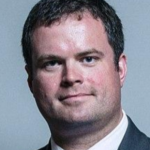
  • Kevin Foster – 2022 Statement on HM Passport Office Backlogs

    Kevin Foster – 2022 Statement on HM Passport Office Backlogs

    The statement made by Kevin Foster, the Parliamentary Under-Secretary of State for the Home Office, in the House of Commons on 27 April 2022.

    Prior to the pandemic, HM Passport Office routinely processed approximately 7 million passports each year. Over the last two years the necessary restrictions on international travel meant only 4 million people applied for a British passport in 2020 and 5 million in 2021. This left about 5 million unrenewed passports.

    In 2022 many of the customers who delayed their application are returning. We expect this year to deal with 9.5 million British passport applications and have been planning for this. Throughout the pandemic, HM Passport Office prepared to serve an unprecedented number of customers. Alongside technical solutions, staffing numbers have been increased by 500 since last April and we are in the process of recruiting a further 700. These preparations ensured passport applications could be processed in record numbers, last month seeing the highest total for any month on record, with HM Passport Office completing the processing of over 1 million applications, 13% higher than the previous record output.

    Inevitably, however, faced with this level of demand applications will take longer. Consequently, in April 2021 guidance was changed to clearly advise customers to allow up to 10 weeks to get their passport, in recognition that a surge would arrive as international travel returned. The vast majority of applications continue to be processed within 10 weeks; in fact, over 90% of applications were issued within 6 weeks between January and March 2022, despite the much-increased demand. HM Passport Office also provides an expedited service where an application from the UK has been with it for longer than 10 weeks; 42 applications have been expedited under these criteria since 31 March.

    With greater volumes of applications which are in the system for longer, levels of customer contact have inevitably risen. We recognise that difficulties in contacting HM Passport Office will cause concern for those wanting assurances about their applications. In response, the provider of the passport advice line, Teleperformance, has been urgently tasked to add additional staff as its current performance is unacceptable.

    To finish, the team at HMPO are dealing with record numbers of applications and delivering a record level of output to match this. Their hard work will enable millions of British citizens to enjoy a holiday abroad this summer, and I thank them for that.

    Yvette Cooper

    From listening to the Minister we would think that actually everything is all right, but my constituents fear their honeymoon may now be wrecked because their passports have not arrived even though they applied in plenty of time, and we have had cases of people cancelling jobs, parents trying to get a holiday for a sick child waiting since January, and huge and long delays by the Passport Office and the contractor, TNT. The message today on the one-week fast-track service is “System busy, please try again later”, and the online premium service has no appointments anywhere in the country. So people cannot get urgent travel such as to go to funerals or to urgent events.

    The Minister has said more passports are being processed, which is clearly welcome, but it is not enough. The increase in demand this year was totally predictable. In 2020 and 2021, the Home Office was asked what it was doing to plan, but people are already losing holidays, trips to see loved ones and thousands of pounds that they have spent in good faith because of the lack of planning at the Passport Office and at the Home Office, which is in danger of becoming a “Stay-at-Home Office” instead for people this summer. So what grip does the Minister have on this? Is it going to get better or worse over the next two months? How many passports have already been delayed by longer than the 10-week wait, and how many does the Minister think will be delayed by more than 10 weeks over the next month or two?

    On staffing, what is the percentage increase compared with before the pandemic? Is it true that the Minister tried to recruit 1,700 staff and got only 500? When will the fast-track services be reopened? What is his advice to a family who are planning to go on holiday in 10 weeks’ time, in July? Do they have any chance of getting their passport, or should they be trying to cancel right now? The problem is that there is a pattern here: delays in the Passport Office, in Ukraine visas, and in basic asylum cases. The Prime Minister said that the answer may be to privatise the Passport Office, but why do Home Office Ministers not just get a grip instead?

    Kevin Foster

    It is quite interesting to hear all the claims of how predictable all this was. I am struggling to remember the number of times anyone on the shadow Front Bench predicted any of this over the last year or two. I welcome their recently found interest in the Passport Office.

    To give some numbers, as of 1 April, there are over 4,000 staff in passport-production roles and, as I say, we are in the process of recruiting another 700. I would also make the point again that 90% of applications were completed within six weeks, and the service standard is 10 weeks. My advice to anyone who is looking to go on holiday this summer is exactly what I said the other day: get an application in now.

    We are making a range of efforts. Staff are working weekends; overtime is being incentivised. We are certainly confident that we will not need to change the 10-week target, but as I have said, this is a record level of demand and a record output, far in excess of what we have seen before. We will expedite the applications of those who have compelling and compassionate reasons to travel, such as funerals or family ill health.

    We know there are challenges. The teams are working hard to deal with them. [Interruption.] I hear comments about staying at home, but I have not heard a great deal of support from the Labour party for the work of the Minister for Government Efficiency in getting people back into the office, but I am sure that he will welcome the comments we have just heard.

    As we see on so many occasions, we are hearing lots of complaints from the Opposition but we are not hearing any solutions or plans. Having just heard from Captain Hindsight, it is no surprise that we are now hearing from Lieutenant Rearview.

    Mr David Jones (Clwyd West) (Con)

    My constituent, Mr Neil Jones, made an application for a passport at the end of February for his holiday, for which he is due to depart at the end of May. He sent his passport by ordinary pre-paid post—not by recorded delivery, unfortunately—and he was told by the Passport Office that it had never arrived. He then made a further application with a lost passport form, which has not been dealt with. He finds it almost impossible to speak to any representatives of the Passport Office, and he is under considerable stress as a consequence.

    My hon. Friend says that the Passport Office is doing its best and that he recognises the difficulties, but I heard this morning that the Prime Minister has threatened the Passport Office with privatisation. May I suggest to my hon. Friend that he should not shy away from that? If the work can be done more efficiently by the private sector, for goodness’ sake, enlist the private sector.

    Kevin Foster

    Just to be clear, a range of private contractors are already involved in the passport process. The bit that is not undertaken by a private contractor is the decision itself. The customer advice line is run by Teleperformance, a private company. As I have already described, its performance is unacceptable and we are engaged with it.

    There is already quite extensive use of the private sector in the process. To be fair, Thales and others have stepped up in the record output that we now require, which is far beyond what would have been expected in a month two or three years ago. The private sector is already being used in the vast majority of the processes in the Passport Office.


  • Lucy Powell – 2022 Speech on Channel 4 Privatisation

    Lucy Powell – 2022 Speech on Channel 4 Privatisation

    The speech made by Lucy Powell, the Labour MP for Manchester Central, in the House of Commons on 27 April 2022.

    The sell-off of Channel 4 is an important matter for Parliament, yet instead of a statement we had announcement by tweet during recess, and now we hear that a White Paper is to be published tomorrow, when we will not be here and there will not be an opportunity for statements. Where is the Secretary of State to defend her policy today? It is a pattern, and it is a disgrace. Nothing screams rudderless Government like fixating on the governance of Channel 4 while people’s energy bills are going through the roof. It did not even make the list of pretty bad ideas discussed at yesterday’s Cabinet.

    Why sell off Channel 4, and why now? Is it because there is an overwhelming clamour from the public? The Government still have not published the 60,000 consultation responses, but my understanding is that the vast majority were against any sale. Is it to help level up the country? Given that Channel 4 commissions half its budget outside London, creating a pipeline of talent across the nations and regions, and stimulating the creative economy in places such as Leeds, Glasgow and Bristol, of course it is not. Is it to create more British jobs in our world-leading creative industries? The Minister and I both know that the likely buyers are going to be the big US media companies, looking for a shop window for their own content. That will mean fewer British-made programmes for British audiences and fewer British jobs. Any UK bidder could lead to less competition, and of course they would be looking at economies of scale.

    Is it to support the independent production sector? Channel 4 is currently, uniquely, a publisher-broadcaster, allowing start-ups and independents to retain the value of their own programmes, helping them grow and export. No buyer is going to continue with that model. That is why the UK independent production sector is so overwhelmingly against the sell-off. Or is it to save the Treasury money? I know that the Secretary of State was a bit confused about this in front of the Select Committee, but Channel 4 does not cost the taxpayer a single penny. Indeed, its profits are all reinvested in British jobs and programming.

    The Secretary of State says the sell-off is needed to help Channel 4 compete with the likes of Netflix and Amazon. The truth is it will be gobbled up by them. She says the sell-off will generate a pot of up to £1 billion for her to dish out in grants, but Channel 4 already invests that amount here, commercially, each and every year. She says she will protect the essence of Channel 4 in a new remit, but I thought that was the straitjacket she wanted to free it from. The truth is that the sell-off just does not stack up, and the Secretary of State is running scared of Parliament. In fact, it is going to clog up Parliament for months to come because she has no mandate to do it and there is widespread opposition to it on her own Benches.

    I can only conclude that this is a deliberate distraction from partygate, a vendetta against Channel 4 news coverage, or another act of cultural vandalism. Channel 4 is a great British asset, owned by the public, that does not cost them a penny. It commissions award-winning British programmes owned by the small independent sector. That is why Margaret Thatcher invented it, and that is why the Government are wrong to sell it off.

  • Julia Lopez – 2022 Statement on Channel 4 Privatisation

    Julia Lopez – 2022 Statement on Channel 4 Privatisation

    The statement made by Julia Lopez, the Minister for Media, Data and Digital Infrastructure, in the House of Commons on 27 April 2022.

    Our TV and radio industry is one of our great success stories, and public service broadcasters such as Channel 4 are central to that success. Our PSBs sit at the heart of our broadcasting system, delivering distinctive, high-quality content and helping to develop skills, talent and growth across the entire country.

    However, the broadcasting world has changed beyond recognition in recent years. Rapid changes in technology and the rise of American streaming giants such as Netflix, Amazon Prime and Disney+, not to mention YouTube and social media platforms, have transformed audience habits. Viewers can watch what they want, when they want, on their laptop, phone, smart TV or Fire stick. As a result, while streaming services have enjoyed a 19% increase in subscribers in recent years, the share of total viewers for linear TV channels such as the BBC and ITV has fallen by more than 20%.

    The Government are determined to protect the role of PSBs in our nation’s economic, cultural and democratic life, and to make sure that they remain at the heart of our broadcasting system no matter what the future holds. Tomorrow, therefore, we will be publishing a White Paper that proposes major reforms to our decades-old broadcasting regulations—reforms that will put traditional broadcasters such as the BBC, ITV and Channel 4 on an even playing field with Netflix, Amazon Prime and others, and enable them to thrive in the streaming age. We will set out the full details of our proposals when the White Paper is published.

    It is important to understand that the sale of Channel 4 is just one part of that major piece of reform. Like the rest of the White Paper, it is a reflection of the transformation that broadcasting has undergone in the last few years and the need to make sure that our PSBs can keep pace with those changes.

    Channel 4 has done a fantastic job in fulfilling the original mission that it was set by the Thatcher Government: to spur independent production and deliver cutting-edge content. The independent production sector has exploded in the last few decades, growing from a £500 million industry in 1995 to an industry of approximately £3 billion in 2019. However, since it was structured to address the challenges of the 1980s, there are limits to Channel 4’s ability to adapt to the 2020s and beyond.

    Channel 4 now faces a new set of challenges. It faces huge competition for audience share and advertising spend from a wider range of players, many of whose deep pockets have been driving up production costs. Streamers such as Netflix spent £779 million on UK productions in 2020, more than twice as much as Channel 4. While other PSBs, such as the BBC and Channel 5, have the freedom to make and sell their own content, Channel 4 has no in-house studio and relies almost entirely on linear television advertising spend at a time when those revenues are rapidly shifting online.

    Under its current form of ownership, Channel 4 has few options to grow, invest and compete. The Government believe that it is time to unleash the broadcaster’s full potential and to open Channel 4 up to private ownership and investment—crucially, while protecting its public service broadcasting remit. We believe we can sell Channel 4 to a buyer who will fund emerging talent and independent and impartial news, and invest in every corner of the UK.

    We intend to use the proceeds of the sale to tackle today’s broadcasting challenges. As I said, our independent production sector is thriving. Only 7% of its revenue comes from Channel 4. The much bigger challenge we face is a shortage of skills. Our film and TV studios are booming. We need to give people the skills to fill the jobs in them, so we will reinvest the proceeds of a Channel 4 sale into levelling up the creative sector and giving people in left-behind areas the training and opportunity to work in the industry.

    The sale of Channel 4 will not just benefit the broadcaster; it will deliver a creative dividend for the entire country. As I said, the future of Channel 4 is just one part of our wider reform of the entire broadcasting sector, and I look forward to providing the House with the full details shortly.

  • Dominic Raab – 2022 Statement on Terrorism in Prisons

    Dominic Raab – 2022 Statement on Terrorism in Prisons

    The statement made by Dominic Raab, the Deputy Prime Minister, in the House of Commons on 27 April 2022.

    In accordance with section 36 of the Terrorism Act 2006, Jonathan Hall QC, the independent reviewer of terrorism legislation (IRTL), has prepared a report on terrorism in prisons which was laid before the House today.

    Today, I am publishing our response to the IRTL’s report, setting out how we are implementing the changes that he has recommended. This will also be published on gov.uk.

    I welcome the IRTL’s review of terrorism in prisons, and thank him for carrying out such a detailed and thorough review. His findings present an invaluable opportunity for us to assess progress and further strengthen our approach in prisons, covering areas including terrorist risk behaviour, governor accountability, separation centres, joint working and legislation.

    In his report, the IRTL acknowledges the significant improvements made to the counter-terrorism system since the horrific terrorist attacks in 2019-20 at Fishmongers’ Hall, Streatham, Reading and in HMP Whitemoor. We have already strengthened the law through the Terrorist Offenders (Restriction of Early Release) Act 2020 and the Counter-Terrorism and Sentencing Act 2021, putting an end to the automatic early release of terrorist offenders and introducing tougher sentences for the most serious terrorist offences. We have also invested in our ambitious step-up programme which provides a step change in our counter-terrorism capabilities through a raft of improvements including a joint intelligence hub to boost information sharing between security partners, a counter-terrorism assessment and rehabilitation centre to research, implement and evaluate rehabilitative interventions, and overhauling our counter-terrorism training offer to frontline staff.

    These measures are critical to strengthening our approach to fighting terrorism in prisons, but we are determined to go further. That is why I have accepted 12 of the IRTL’s recommendations, partially accepted another, and in some areas propose going beyond them.

    We will invest an additional £1.2 million over three years to create a new separation centre and high-risk casework team. The specialised team will ensure that decisions to place prisoners in separation centres are taken in an effective and targeted way, in order to avoid the dissemination of poisonous ideology, prevent terrorist recruitment, and more generally protect the public.

    We will also invest £6.1 million over three years to create a new close supervision centre unit with an extra 10 cells, increasing our capacity by 20%. These will hold some of the most violent men in the prison system who pose a significant risk of harm to our staff and other prisoners.

    We have collaborated widely in considering each of Jonathan Hall’s recommendations, and I am grateful to the Home Secretary and partners across the criminal justice system for supporting this work. We honour the victims, families and communities that have been traumatised by terror by doing all we can to prevent future atrocities.

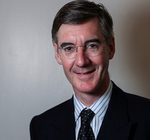
  • Jacob Rees-Mogg – 2022 Statement on the Efficiencies and Value for Money Committee

    Jacob Rees-Mogg – 2022 Statement on the Efficiencies and Value for Money Committee

    The statement made by Jacob Rees-Mogg, the Minister for Brexit Opportunities, in the House of Commons on 27 April 2022.

    The Efficiencies and Value for Money Committee, established at the request of the Prime Minister and chaired by the Chancellor, is meeting for the first time today.

    At the Committee, the Chancellor will launch his plan for protecting the taxpayer which will drive efficiency, effectiveness, and economy across Government. This efficiency drive will ensure that Government Departments justify their projects with clear value for money and will challenge departments that are not delivering.

    As part of this plan, the Government are developing a new counter-fraud body which will tackle economic crime across the public sector. The new authority will be funded with £25 million, as announced by the Chancellor in the spring statement. The authority will bolster the existing Government counter-fraud function, based in the Cabinet Office, to create the new Public Sector Fraud Authority (PSFA), which will jointly report to HM Treasury.

    The new authority will be staffed by fraud experts and backed by cross-Government data analytics tools. It will focus on increasing counter-fraud performance across the public sector. This data driven focus on countering fraud is in line with business best practice and will improve fraud prevention and the pursuit of fraudsters for both the opportunistic individual and organised economic crime.

    The efficiency drive will also include reviews that scrutinise the work and effectiveness of public bodies, aiming to identify a minimum of 5% savings for each organisation, and doubling the NHS efficiencies target.

    The full membership of the Efficiencies and Value for Money Committee, confirmed today, is the right hon. Steve Barclay MP (Chancellor of the Duchy of Lancaster), the right hon. Oliver Dowden CBE MP (Minister without Portfolio) and the right hon. Michael Ellis QC MP (Minister for the Cabinet Office and HM Paymaster General). The Committee is chaired by the Chancellor and is deputy co-chaired by Simon Clarke (Chief Secretary to the Treasury) and myself.

  • Vicky Ford – 2022 Speech at the UK-Nigeria 7th Economic and Development Forum

    Vicky Ford – 2022 Speech at the UK-Nigeria 7th Economic and Development Forum

    The speech made by Vicky Ford, the Minister for Africa, at Lancaster House in London on 27 April 2022.

    Good evening Your Excellency, Honourable Ministers, members of the Nigerian delegation, colleagues and friends. It is a great pleasure to host you tonight in this beautiful, historic setting.

    Thank you to Guinness Nigeria for supporting this event. I was fascinated to learn that Nigeria was home to the first Guinness brewery outside of Britain, and this is now the world’s second-largest market for Guinness. And as someone who was born and raised in Northern Ireland I’ve drunk a lot of Guinness. So well done Guinness. Do you have any on tap? It’s a fantastic example of the strong trading links between our countries!

    And tonight, we celebrate those links, and our shared commitment to boosting trade and investment between our countries. It was wonderful to see the benefits of our close collaboration first-hand when I visited Nigeria in February.

    I spent three busy days in Abuja and Lagos, meeting federal ministers, governors and business leaders.

    And we discussed the huge opportunities that Nigeria has to offer to the UK, as Africa’s largest economy.

    During my visit, I was delighted to announce a £74 million loan to First Bank, through British International Investment. That will help to support female entrepreneurs and small businesses in Nigeria.

    But we also marked the UK’s first investment of £10m to support low carbon energy investment. I know there are investors in low carbon energy in this room. We will continue to support Nigeria’s ambitions to transition to renewable energy, while working to turbocharge our digital partnership.

    In Lagos, I saw for myself the enormous potential in this area when I visited the UK-supported Digi-Girls project. This is enabling women and girls to access digital skills, and I also met with tech entrepreneurs and creative industry leaders, to learn more about those sectors. They are truly vibrant sectors in Nigeria.

    I am delighted to see in this room this evening the people who can take these opportunities to the next level.
    Through business partnerships we can take our trade and investment partnership to scale, make the energy transition happen, and create jobs in Nigeria and in the UK.

    It was great to meet Your Excellency this morning ahead of the Economic Development Forum, when we discussed these shared ambitions. Both of our Governments, and the UK team in Nigeria, stand shoulder to shoulder with business leaders in turning these ambitions into a reality.

    Thank you so much.

  • Liz Truss – 2022 Mansion House Speech

    Liz Truss – 2022 Mansion House Speech

    The speech made by Liz Truss, the Foreign Secretary, at the Mansion House in London on 27 April 2022.

    My Lord Mayor, Your Excellencies, Ladies and gentlemen.

    According to some, this was destined to be the era of authoritarianism.

    Three years ago Vladimir Putin said Western liberalism was dead.

    Last year President Xi argued that the west is declining.

    In April 2022 things look very different.

    Recent months have shown the deep resilience of the human spirit and of free societies

    Faced with appalling barbarism and war crimes, which we’d hoped had been consigned to history, the free world has united behind Ukraine in its brave fight for freedom and self-determination.

    Those who think they can win through oppression, coercion or invasion are being proved wrong by this new stand on global security – one that not only seeks to deter, but also ensures that aggressors fail.

    We cannot be complacent – the fate of Ukraine hangs in the balance.

    But let’s be clear – if Putin succeeds there will be untold further misery across Europe and terrible consequences across the globe.

    We would never feel safe again.

    So we must be prepared for the long haul. We’ve got to double down on our support for Ukraine. And we must also follow through on the unity shown in the crisis. We must reboot, recast and remodel our approach.

    My vision is a world where free nations are assertive and in the ascendant.

    Where freedom and democracy are strengthened through a network of economic and security partnerships.

    Where aggressors are contained and forced to take a better path.

    This is the long term prize: a new era of peace, security of prosperity.

    Let’s be honest. The architecture that was designed to guarantee peace and prosperity has failed Ukraine.

    The economic and security structures that were developed after the Second World War and the Cold War have been bent out of shape so far, they have enabled rather than contained aggression.

    Russia is able to block any effective action at the UN Security Council. Putin sees his veto as a green light to barbarism.

    He’s walked away from the NATO-Russia Founding Act and the Treaty on Conventional Armed Forces in Europe. He’s violated multiple measures on arms control.

    The G20 can’t function as an effective economic body while Russia remains at the table.

    The Soviet Union used to regularly use their UN veto, but, for all the many evils they inflicted, even they behaved with some kind of rationality on the world stage.

    They were able to stick to deals when they saw risks to strategic stability, as they did with the Anti-Ballistic Missile Treaty.

    They would de-escalate when they were confronted and called out, as with the Cuban Missile Crisis 60 years ago.

    And they had their eye on their global reputation.

    None of these factors apply to Putin.

    We are dealing with a desperate rogue operator with no interest in international norms.

    This is at a time when the world economy had never been more open to Russia.

    During the Cold War western allies fuelled each other’s prosperity, and we restricted flows of trade, investment and technology to the USSR.

    In the 1990s these constraints were removed but it didn’t lead to the expected gains in economic openness and democracy.

    We took progress for granted instead of applying the necessary carrots and sticks.

    And leaders like Putin spurned the opportunity to change because they feared losing control. Instead they took the money from oil and gas and used it to consolidate power and gain leverage abroad.

    Wandel durch handel – the assumption that economic integration drives political change – didn’t work.

    We now need a new approach, one that melds hard security and economic security, one that builds stronger global alliances and where free nations are more assertive and self-confident, one that recognises geopolitics is back.

    Britain has always stood up to bullies.

    We have always been risk takers.

    So we are prepared be bold, using our strength in security and diplomacy, our economic heft, and our will and agility to lead the way.

    We are already stepping up in Ukraine.

    The war in Ukraine is our war – it is everyone’s war because Ukraine’s victory is a strategic imperative for all of us.

    Heavy weapons, tanks, aeroplanes – digging deep into our inventories, ramping up production. We need to do all of this.

    Our sanctions have already seen Russia facing its first external debt default for a century. We need to go further.

    There must be nowhere for Putin to fund this appalling war. That means cutting off oil and gas imports once and for all.

    At the same time, we need to deliver support to the Ukrainian people. It means helping refugees, it means delivery of food, medicine, and other essentials, and it means keeping the economy afloat.

    It also means holding the Putin regime to account for the appalling crimes that have been committed.

    And, when the guns finally fall silent in Ukraine, it means making sure Kyiv has the resources it needs to maintain security, deter further attacks, and rebuild.

    That’s why we are working on our joint commission with Poland to ensure Ukraine is equipped with NATO-standard weapons.

    And it’s why we are determined to work with the US, with the EU and other allies on a new Marshall Plan for the country.

    Ukraine deserves nothing less than a landmark international effort to rebuild their towns and cities, regenerate their industries, and secure their freedom for the long term.

    We are doubling down.

    We will keep going further and faster to push Russia out of the whole of Ukraine.

    And this has to be a catalyst for wider change.

    We must also apply this tough stance to the threats that are emerging beyond Ukraine.

    Our new approach is based on three areas: military strength, economic security and deeper global alliances.

    Firstly, we need to strengthen our collective defence.

    In the words of President Zelenskyy: “Freedom must be better armed than tyranny.”

    Ahead of the NATO summit in Madrid, we need to lift our sights.

    We have long argued that NATO needs to be flexible, agile and integrated.

    The Eastern Flank must be strengthened, and we must support crucial states like Poland. That’s why we are increasing our troop presence and we’re deepening our defence cooperation.

    We also have to learn the lessons of Ukraine.

    The UK sent weapons and trained Ukrainian troops long before the war started.

    But the world should have done more to deter the invasion. We will never make that same mistake again.

    Some argue we shouldn’t provide heavy weapons for fear of provoking something worse.

    But my view, is that Inaction would be the greatest provocation. This is a time for courage not for caution.

    And we must ensure that, alongside Ukraine, the Western Balkans and countries like Moldova and Georgia have the resilience and the capabilities to maintain their sovereignty and freedom.

    NATO’s open door policy is sacrosanct.

    If Finland and Sweden choose to join in response to Russia’s aggression, we must integrate them as soon as possible.

    And we reject the false choice between stronger traditional defence and modern capabilities. We need to defend ourselves against attacks in space and cyberspace as well as by land, air and sea.

    We also reject the false choice between Euro-Atlantic security and Indo-Pacific security. In the modern world we need both.

    We need a global NATO.

    By that I don’t mean extending the membership to those from other regions.

    I mean that NATO must have a global outlook, ready to tackle global threats.

    We need to pre-empt threats in the Indo-Pacific, working with our allies like Japan and Australia to ensure the Pacific is protected.

    And we must ensure that democracies like Taiwan are able to defend themselves.

    All of this will require resources.

    We are correcting a generation of underinvestment.

    That’s why the Prime Minister has announced the biggest investment in our Armed Forces since the Cold War. We recognised Russia as the most acute threat in our Integrated Review, adopting the same vigilance as NATO’s Eastern Allies.

    Others are now also stepping up as well. But we all need to go further.

    Spending 2% on defence must be a floor, not a ceiling.

    There is no substitute for hard military power, backed by intelligence and diplomacy.

    Secondly, we need to recognise the growing role that the economy plays in security.

    In the UK we are now using all of our economic levers – trade, sanctions, investment and development policy – in a much more assertive way.

    We recognise that growth from cheap gas and money syphoned from kleptocracies is growth built on sand. It’s not the same as real, sustained growth from higher productivity and greater innovation.

    Free trade and free markets are the most powerful engine of human progress. We will always champion economic freedom.

    But free trade must be fair – and that means playing by the rules.

    For too long many have been naïve about the geopolitical power of economics. Aggressors treat it as a tool of foreign policy – using patronage, investment and debt as a means to exert control and coerce.

    They are ruthless in their approach. Our response won’t mirror their malign tactics, but we will match them in our resolve.

    It’s time to wise up.

    Access to the global economy must depend on playing by the rules.

    There can be no more free passes.

    We are showing this with the Russia-Ukraine conflict – Russia’s pass has been rescinded.

    We are hitting them with every element of economic policy.

    We have raised tariffs on Russian goods. We’ve cut them off from WTO terms. We’ve banned their ships from our ports, we’ve banned their planes from our airports.

    We have sanctioned more individuals and organisations than any other nation, hitting Russia’s banks, oligarchs, defence companies, Central Bank reserves, and oil and gas supplies.

    We’re cutting off the funding for Putin’s war effort.

    We are also cutting investment ties with Russia – banning all new outward investment and ending the investor visa.

    At the same time, we are removing all import tariffs for Ukraine, and we’re supporting the Ukrainian economy with loan guarantees, fiscal support and investment.

    We are showing that economic access is no longer a given. It has to be earned.

    Countries must play by the rules.

    And that includes China.

    Beijing has not condemned Russian aggression or its war crimes. Russian exports to China rose by almost a third in the first quarter of this year.

    They have sought to coerce Lithuania. They are commenting on who should or shouldn’t be a member of NATO. And they are rapidly building a military capable of projecting power deep into areas of European strategic interest.

    But China is not impervious.

    By talking about the rise of China as inevitable we are doing China’s work for it.

    In fact, their rise isn’t inevitable. They will not continue to rise if they don’t play by the rules.

    China needs trade with the G7. We represent half of the global economy. And we have choices.

    We have shown with Russia the kind of choices we’re prepared to make when international rules are violated.

    And we’ve shown that we’re prepared to prioritise security and respect for sovereignty over short-term economic gain. Not least because we know that the cost of not acting is higher.

    The fact is that most of the world does respect sovereignty. It is only a few pariahs and outliers that don’t.

    So we are working more closely with allies and friends – old and new.

    And the same assertive approach that can constrain our rivals, can be a powerful driver of prosperity and security.

    That’s why we’re building new trade links, including working on Free Trade Agreements with countries like India and Indonesia and joining the CPTPP.

    We’re sharing our expertise in science and tech, signing new partnerships around the world. And we’re providing a better offer on development, with investment to low-income countries that comes without malign strings attached.

    By being tough and united, by working together and expanding trade, we can deprive aggressors of their leverage and we can reduce strategic dependence.

    We can help each other to weather the storm of soaring food and energy prices. At the World Bank last week we secured $170 billion to help low income countries deal with these challenges.

    And we are getting ahead in other possible areas of strategic dependence.

    Whether it is minerals or rare earth metals, we are joining forces to prevent future problems before they emerge.

    This is how we will strengthen our shared economic security.

    That brings onto the final point, which is that our prosperity and security must be built on a network of strong partnerships.

    This is what I have described as the Network of Liberty.

    The fundamental principle is that no matter the challenges, we should not turn inward and pursue autarky.

    We should reach out and embrace new partnerships, what the Dutch and others have called “open autonomy.”

    In a world where malign actors are trying to undermine multilateral institutions, we know that bilateral and plurilateral groups will play a greater role.

    Partnerships like NATO, the G7 and the Commonwealth are vital.

    We should keep strengthening our NATO alliance with bonds around the world, like the UK-led Joint Expeditionary Force, the 5 Eyes, and the AUKUS partnership we have with the US and Australia.

    And we want to keep growing our ties with countries like Japan, India and Indonesia.

    We also should build on the strong core that we have in the G7.

    During the UK’s Presidency last year I was pleased to bring friends like Australia, Korea, India, South Africa and ASEAN to the table.

    The G7 should act as an economic NATO, collectively defending our prosperity.

    If the economy of a partner is being targeted by an aggressive regime we should act to support them. All for one and one for all.

    And to the 141 countries, from all continents, who voted to condemn Russia’s actions in the UN.

    I hear your voice.

    I share your outrage at Russia’s illegal war.

    I share your fundamental belief in sovereignty, in fair play and the rule of law.

    So let’s work together. Let’s forge deeper bonds. Let’s be better traders, investors, and partners than the aggressors.

    The UK is prepared to do things differently, to think differently, and to work differently with you to get things done.

    There is huge strength in collective action.

    And let me be clear, this also applies to alliances that the UK is not part of.

    We support the Indo-Pacific quad.

    We support an outward-looking EU and we’re working closely together on Ukraine.

    We support ASEAN, the African Union, and the US-Mexico-Canada trade agreement.

    We reject the old ideas of hierarchical systems, exclusive groups and spheres of influence.

    We want to see a network of partnerships stretching around the world, standing up for sovereignty and self-determination, and building shared prosperity.

    The UK will be an active and agile part of this network.

    Excellencies, ladies and gentlemen,

    Geopolitics is back.

    After the Cold War we all thought that peace, stability and prosperity would spread inexorably around the globe.

    We thought that we’d learned the lessons of history and that the march of progress would continue unchallenged.

    We were wrong. But this is no counsel of despair.

    In the face of rising aggression we do have the power to act, and we need to act now.

    We must be assertive. Aggressors are looking at what has happened in Ukraine. We need to make sure that they get the right message.

    Together we have tremendous strength. Let’s use it to forge a better, more secure world and a stronger global economy.

    This will take the energies of all the people in this room and beyond. It will be hard. But we have to step up and take responsibility.

    The aggressors are prepared to be bold – we must be bolder.

    That is how we will ensure that Ukraine’s sovereignty is restored.

    That is how we will ensure that aggression and coercion fail.

    That is how, across the globe, we will win this new era for peace, security and prosperity.

    Thank you.

  • Nadine Dorries – 2022 Comments on the Broadcasting Bill

    Nadine Dorries – 2022 Comments on the Broadcasting Bill

    The comments made by Nadine Dorries, the Secretary of State for Digital, Culture, Media and Sport, on 28 April 2022.

    The UK’s TV and radio industries are world-renowned for their creativity, driven by exceptional talent that is delivering groundbreaking public service programming.

    Set against the backdrop of the digital transformation of our viewing habits, today’s plans will revamp decades-old laws to help our public service broadcasters compete in the internet age and usher in a new golden age for British TV and radio. This will provide jobs and growth in the future along with the content we all love.

  • Chloe Smith – 2022 Comments on the British Sign Language Bill

    Chloe Smith – 2022 Comments on the British Sign Language Bill

    The comments made by Chloe Smith, the Minister for Disabled People, on 27 April 2022.

    Today is a momentous day and I truly hope it will transform the lives of D/deaf people across the country.

    The BSL Bill will help remove barriers faced by the D/deaf community in daily life and is a further welcome step towards a more inclusive and accessible society.

    I am so grateful to the efforts of Rosie Cooper MP and the wonderful campaigners who have brought the BSL Bill to the point of passing into law and I’m proud to have played a small part in its journey.

  • Therese Coffey – 2022 Statement on Completing the Move to Universal Credit

    Therese Coffey – 2022 Statement on Completing the Move to Universal Credit

    The statement made by Therese Coffey, the Secretary of State for Work and Pensions, in the House of Commons on 25 April 2022.

    In 2012, Parliament voted to end legacy benefits and replace them with a single modern benefit system, universal credit. The UC system stood up to the challenges of the pandemic and ensured that support was provided for a significant number of new claimants with varying needs across the country. As the rest of Government and society returns to business as usual, it is appropriate to resume the process to complete the move to UC by 2024.

    There are around 2.6 million households receiving legacy benefits and tax credits who need to move across to UC. The natural migration process, where claimants experience a change in circumstances and consequently move to UC, has largely continued throughout the last two years. The voluntary migration process has also been available throughout. We are taking steps to increase people’s awareness of the fact that they could be better off financially if they were receiving universal credit, including through the publication of our document “Completing the Move to Universal Credit” today on www.gov.uk. I will place copies in the Libraries of both Houses.

    In that document, we set out our analysis which estimates that 1.4 million (55%) of those on legacy benefits or tax credits would receive a higher entitlement on UC than on legacy benefits and would benefit from moving voluntarily, rather than waiting for a managed migration. This is particularly the case for tax credit claimants, with our analysis estimating that around two thirds of them would benefit. That is why we have included information on UC in this year’s renewal forms for current tax credit recipients. It is important for current recipients to satisfy themselves that they would be better off on UC using independent benefit calculators before moving voluntarily, as once the claim is made recipients cannot revert to tax credits or legacy benefits, nor receive any transitional protection payments. More information is included in the document.

    For those claimants who do not choose to move and have not migrated naturally, we will manage their migration to UC. Parliament committed to providing transitional financial protection to those who are moved on to UC through the managed migration process. While many households will be better off financially on UC, for those with a lower calculated award in UC than in their legacy benefits, transitional protection will be provided for eligible households. This means they will see no difference in their entitlement at the point they are moved to UC, provided there is no change in their circumstances during the migration process.

    Before the pandemic, the Department had started testing processes for managed migration in a pilot based in Harrogate. In 2020, the pilot was stopped to handle the significant increase in new claims for UC resulting from the pandemic. During this pilot there was proactive engagement with 80 people, 38 of whom were moved to UC. Thirty-five claimants were better off and only three people required transitional protection. The remainder of moves were not completed before the pilot was stopped. This pilot only involved claimants that the Department had an existing relationship with. No claimants on working tax credits were approached directly to commence a move to UC.

    The pilot provided valuable insights. First, while claimants will likely look for support from organisations they already know, such as a local authority, we are no longer assuming that all engagement needs to be managed by that organisation. Secondly, claimants can and will move autonomously, but some may need more support, particularly on digital access. The pandemic reinforced the importance of claimants being able to manage their own claims online and the strength of this system. Thirdly, claimants can successfully choose a date for their claim, factoring in other income and expenditure points during the month. Finally, the pilot allowed the Department to understand the processes and tools required to complete a managed move, such as those needed to calculate transitional protection.

    As I have said to the House previously, we are not resuming the Harrogate pilot. We have learned from that experience and our wider experience over the last two years. As we complete the move to UC, I am absolutely committed to making this a responsible and safe transition. Next month, we will be starting a multi-site approach across the country with a small number of claimants—approximately 500 initially—being brought into the mandatory migration process. We will continue to develop our processes and systems to scale the migration process and complete by 2024.

    We are resuming under existing regulations, although I intend to bring forward to Parliament amendments to the UC transitional provisions regulations, following their consideration by the Social Security Advisory Committee.

    Universal credit is a dynamic welfare system fit for the 21st century. As part of our levelling-up agenda to support the British public, we will continue to help people into work and to progress in work, taking advantage of the recent reduction in the taper rate and boost to work allowances.