Tag: 2022

  • Adam Afriyie – 2022 Comments on Vaping

    Adam Afriyie – 2022 Comments on Vaping

    The comments made by Adam Afriyie, the Conservative MP for Windsor, on 6 May 2022.

    Whilst I am a strong advocate for vaping as a means of harm reduction for adult smokers, it is clear that swift and decisive action should be taken against those pushing it on children.

  • John Redwood – 2022 Comments on Chancellor Increasing Taxes

    John Redwood – 2022 Comments on Chancellor Increasing Taxes

    The comments made by John Redwood, the Conservative MP for Wokingham, on Twitter on 6 May 2022.

    Why is the Chancellor making the U.K. the only advanced country respond to a global cost of living crisis by increasing taxes? Higher taxes make the squeeze worse. Higher taxes bring fewer jobs and less growth.

    Will the Chancellor now cut taxes? Has he read the Bank of England forecasts of rising unemployment and no growth ahead? This time on his current policies they may be right for a change.

  • Volodymyr Zelenskyy – 2022 Speech to Brave Ukraine Charity Event

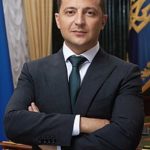
    Volodymyr Zelenskyy – 2022 Speech to Brave Ukraine Charity Event

    The speech made by Volodymyr Zelenskyy, the President of Ukraine, on 5 May 2022.

    Unbreakable people of the bravest country!

    Usually I address Ukrainians at this time and in the same way every night, when I summarize the events of the passing day. Every night – from the first day of this full-scale war of Russia against our state of Ukraine.

    Every night I report to the public on what has been done to protect the state. On what the Armed Forces of Ukraine managed to achieve. On how we help our people. And on what international negotiations took place.

    For example, today one of the notable news was the news of my conversation with you, Boris. Every time such negotiations take place, it is important for my country, for Ukraine. And no less important, I’m sure, for Britain. Because it is about steadfastness, courage and about the leadership that we demonstrate together – the Ukrainian and British nations. In defense of freedom. Our common freedom.

    Russian troops today, as every day during this war, have continued to bomb our cities and our people. For example, my traditional morning meeting with the military, with the leadership of the army, with government officials and diplomats was accompanied by the sound of an air-raid siren. This is our reality. Missile strikes every day.

    The day before yesterday – on the day when you, Boris, addressed our parliament, the Russian army launched 15 missile strikes at Ukraine. And this can be called a certain “Russian compliment” to your brilliant speech and our fruitful interstate cooperation. Because yesterday there were only 7 such strikes.

    Obviously, Russia is annoyed by our proximity – Ukraine and Britain. So this means that we are really strong in defending freedom in Europe.

    In general, during this war, the Russian army has used 2014 missiles against Ukraine already. 2682 appearances of Russian fighter jets in our skies have been recorded. Each of these “arrivals” is the death of our people, the destruction of our infrastructure.

    If we take only the medical infrastructure, to date, Russian troops have destroyed or damaged almost 400 health facilities. These are hospitals, maternity hospitals, outpatient clinics.

    In the temporarily occupied areas of Ukraine – in the east and south – the situation with access to medical services and medicines is just catastrophic. Even the simplest medications are missing.

    Russia has brought to Ukraine and Europe such problems that we could not have imagined a few months ago. This is in fact a complete lack of treatment for cancer patients. This is an extremely difficult or impossible access to insulin for diabetics. It’s the inability to perform surgery… It’s just a lack of antibiotics! These are the consequences of the Russian occupation for a part of our land, for a part of our people, which we must liberate from the invaders.

    And we will definitely do it. In particular, due to your support.

    Today the rescue operation from Mariupol was continued. With the assistance of the United Nations and the International Committee of the Red Cross. People are on their way to safe territory.

    More than 150 people from Azovstal and more than 300 people from Mariupol and its suburbs who were evacuated by the humanitarian corridor this week are already receiving all the help they need. Medical, document renewal, financial assistance, communication with relatives, friends and families.

    Currently, Russian shelling and assault of Azovstal do not stop. But civilians still need to be taken out – women, children. Many children who are still there. Just imagine this hell! And there are children! More than two months of constant shelling, bombing, constant death nearby…

    We expect an effective regime of silence. We are doing everything to find a solution to save our military. Heroes who defend Mariupol against the occupiers prevailing in the number of troops. There are different units there. They have many wounded. But they do not give up. They are holding positions.

    We do not give up either. Every day, the whole team is looking for an option that will ensure the safety of these people. And I am grateful to everyone who helps. To all those who offered mediation and are making efforts to save Ukrainians.

    Today I addressed the participants of the high-level donors’ conference held in Warsaw. It is also an element of our protection, an element of protection for the whole of Europe. Because it is not only on the battlefield that the fate of our state and the future of the continent is being decided now. But also in the economic field, in the field of readiness of world leaders to unite to rebuild Ukraine after this war and give stability and security to the center and east of Europe.

    We have the result. It has been announced that $ 6.5 billion has been raised at this conference. And this is good. But this is only part of what is really needed to restore normal life throughout the territory where Russia has brought the war.

    That is why we need a modern analogue of the Marshall Plan for Ukraine. Stronger participation of the free world and international institutions is needed. I spoke about this today at the conference.

    However, we call for the cooperation and support of each and everyone. Everyone for whom freedom matters. That is why United24 was launched today – a global initiative that will unite people from all over the world around the desire to help Ukraine. And I invite you to join this initiative!

    The initial component is a platform of the same name to raise funds to support our struggle. United24. Its main goal is to increase donations to Ukraine. Just a few clicks – and everyone can join the direction that they find most useful right now and for themselves.

    Because Ukraine needs up to $ 7 billion a month to cover the state budget deficit. In total, it has been calculated that already more than $ 600 billion is needed to rebuild what the Russian army destroyed. Just imagine this scale!

    That is why every manifestation of support, every sincere help to Ukraine is important. In particular, yours today.

    Ladies and Gentlemen!

    Friends!

    If everyone in the world – or at least the vast majority – were steadfast and courageous leaders as Ukraine, as Britain, I am sure we would have already ended this war and restored peace throughout our liberated territory for all our people.

    But we still have to fight. Fight. As you, Boris, said, addressing our Verkhovna Rada the day before yesterday, we are still writing one of the most victorious chapters in our history.

    And now we can assess the significance of this chapter, in particular, by the following fact: 11,672 of our defenders have already been awarded state awards for courage and effective defense of Ukraine. In a little over ten weeks. 11,672 people.

    And a few minutes before this address, I signed a decree awarding another 286 servicemen of the Armed Forces of Ukraine. It is on the shoulders of these brave warriors and their brothers-in-arms that Ukraine and, to be honest, the whole of Europe are now standing.

    And I thank you for your really effective support of this struggle.

    Bravery is rightly believed the first of human qualities as it guarantees all others.

    Thank you, Britain!

    Thank you, Boris!

    Thank you all!

    Glory to Ukraine!

  • Volodymyr Zelenskyy – 2022 Statement on the Situation in Ukraine (04/05/2022) – 70 days

    Volodymyr Zelenskyy – 2022 Statement on the Situation in Ukraine (04/05/2022) – 70 days

    The statement made by Volodymyr Zelenskyy, the President of Ukraine, on 4 May 2022.

    Ukrainians!

    Today I will start with a story about one person. About Oleksandr Makhov – a well-known journalist. I’m sure you’ve seen his reports on Ukraine and Dom TV channels. You may have seen his comments, his posts. He has always been like that – with his own position. Patriotic and sincere. And always without vanity. And he was always among the bravest, among the first. He always worked in the hottest spots. Tried to bring true material. Powerful material.

    In 2017, he was the first Ukrainian journalist to visit our station in Antarctica. When COVID came, he was not afraid. He has lived in Sanzhary for two weeks, where Ukrainians were brought to from China. From the first day of the full-scale war, he was on the frontline. Volunteer. ATO veteran. Warrior of the 95th assault brigade.

    Born in the Luhansk region. He had a special feeling of what this war means.

    Today he died in the Kharkiv region, in the battles near Izium. He was 36 years old. My sincere condolences to relatives and friends. Let his son Vladyslav know: Russia will bear responsibility for this death. We will definitely gain victory for Ukraine. I’m sure it was Oleksandr’s dream. And we will make it come true.

    Eternal memory to him and to all our heroes who gave lives for Ukraine!

    The second stage of our evacuation operation from Mariupol was completed today. 344 people were rescued – from the city and its suburbs. That’s how many people departed to Zaporizhzhia today. Our team is getting ready to meet them. Meet in the same way as more than 150 people whom we managed to take out of Azovstal. They all receive the necessary help. All of them will receive the most caring treatment from our state.

    I am grateful to all those who make the evacuation operation successful: Iryna Vereshchuk, Andriy Yermak, David Arakhamia, UN representatives, the International Committee of the Red Cross, and everyone who reached an agreement and provided silence and corridors for the people.

    We are negotiating and hope to continue rescuing people from Azovstal, from Mariupol. There are still civilians. Women, children.

    To save them, we need to continue the silence. The Ukrainian side is ready to provide it. It takes time to just lift people out of those basements, out of those underground shelters. In the current conditions, we cannot use special equipment to clear the debris. Everything is done manually. But we believe that everything will work out.

    I spoke today with UN Secretary-General António Guterres. About what has already happened. What we still have to do to save Mariupol residents and defenders of the city. There was not a day when I didn’t do it, when we didn’t do it. And I am grateful to everyone who helps.

    I spoke with Israeli Prime Minister Bennett. I congratulated him on the Independence Day of the State of Israel. We talked about the situation in the east of our country and especially in Mariupol. We also discussed the scandalous and completely unacceptable statements of the Russian Foreign Minister, which outraged the whole world.

    I spoke with Prime Minister of the Netherlands Mark Rutte. We agreed on the next diplomatic steps needed for peace. We discussed how to bring to justice all war criminals. Every Russian soldier and every commander who killed, tortured and tormented our people.

    Today, the Russian invaders launched another missile strike at our cities. At Dnipro, Mykolaiv, Odesa, Zaporizhzhia. At the cities of Donbas and other regions of our country. All these crimes will get proper answers. Both legal and quite practical – on the battlefield.

    I addressed the people of Denmark today on the occasion of Liberation Day. The Nazis were expelled from this country 77 years ago. Every year in May, all Europeans, all decent people on earth recall this feat – victory over the worst evil in human history. Victory in the war against Nazism.

    But to recall means not just to remember. This means remembering and really trying to never allow what the Nazis did to Europe again. It is the Ukrainians, together with our friends and partners – the anti-war coalition, as the anti-Hitler once was – that are repelling those who have forgotten exactly why people rejoiced in 1945. Because if everyone in Russia really remembered, this war simply would not have started now.

    Traditionally, before delivering the evening address, I signed a decree awarding our defenders. 35 servicemen of the 19th missile brigade of the Ground Forces of the Armed Forces of Ukraine were awarded state awards.

    I am grateful to all our heroes!

    To all who stood up for our state.

    Glory to Ukraine!

  • Boris Johnson – 2022 Speech at the Ukrainian Embassy in London

    Boris Johnson – 2022 Speech at the Ukrainian Embassy in London

    The speech made by Boris Johnson, the Prime Minister, at the Ukrainian Embassy in London on 5 May 2022.

    Thank you very much, what an honour to speak after my friend Volodymyr Zelenskyy, truly one of the most incredible leaders of modern times.

    What a blessing for Ukraine and for the world, and what a disaster for Putin that he should now be leading Ukraine in Kyiv.

    It is almost exactly 80 years ago, 1942, that the BBC first broadcast Shostakovich’s Leningrad symphony to the world. This was played by a half-starving orchestra during the siege of Leningrad, while it was being pounded by the Nazis, and that symphony became a symbol of resistance to fascism, and the power of the human spirit.

    I do not know whether Vladimir Putin is a Shostakovich buff or not, but is it not a tragic irony that a Russian leader, himself from Leningrad, should now be laying waste to cities in Ukraine as Volodymyr has just described.

    Starving civilians, bombarding their homes, driving them underground, forcing families to huddle together in cellars, or as we have seen, in that giant steel plant in Mariupol.

    But no matter what Putin tries to do to Ukraine’s people, what the exhibition that we are opening tonight shows, is that he will never break their spirit. He will never overcome those indomitable armed forces, who have already repelled the Russian army from the gates of Kyiv, and therefore achieved the greatest feat of arms of the 21st century.

    That is why I’m more certain than ever that Ukraine will win. Ukraine will be free, and a sovereign Ukraine will rise again.

    And it’s because this struggle is so clear cut, and without any moral ambiguity that I can see, a struggle between freedom and oppression, between democracy and tyranny, independence and imperialism, light and darkness, good and evil, that is why I think it speaks so deeply to us.

    That is why here in the UK, you can see blue and yellow flags flying everywhere, from town halls and church spires and front gardens and children’s playgrounds, and we in the United Kingdom, of every political party, all backgrounds, we are proud to be friends of Ukraine.

    When Russian troops were massing on the frontiers of Ukraine in January, we were among the first European countries to send anti-tank missiles. I want you to know, and I told Volodymyr this earlier on today in our conversation, we will continue to intensify this effort for as long as Ukraine wants and needs our help.

    And it is precisely because the Ukrainian people refused to surrender and precisely because they resisted so heroically that their suffering today is so severe.

    Putin has driven at least one Ukrainian in every four from their homes, including two thirds of all Ukrainian children.

    And just as we must help Ukraine to defend herself against aggression, so we must also do everything we can ease the terrible burden of suffering imposed on an innocent people.

    Let me conclude by saying: take part in today’s charity auction. Whether you are bidding for Volodymyr’s fleece – a snip at £50,000, I want much higher bids than that, or you are bidding for a tour of Kyiv with Mayor Klitschko, I have had a tour of Kyiv with Mayor Klitschko, it’s a beautiful city. Well worth it, dig deep.

    Support Ukraine tonight my friends so that that great ancient European capital Kyiv can never be threatened again, and that Ukraine can be whole and free once more.

  • Anneliese Dodds – 2022 Comments on Local Elections

    Anneliese Dodds – 2022 Comments on Local Elections

    The comments made by Anneliese Dodds, the Chair of the Labour Party, on 5 May 2022.

    We are proud of the positive campaign we have run, based on a practical plan to tackle the cost of living crisis and the crime blighting our communities. Because we believe Britain deserves better.

    It’s going to be a long night and there will be ups and downs – we hold the majority of the seats up for election in England, so never expected big gains.

    These results will show the progress we have made thanks to Keir’s leadership since the disastrous 2019 election result. Labour is a renewed and confident party, making headway in England, Scotland and Wales.

  • James Heappey – 2022 Speech at the Sir Henry Leach Memorial Lecture

    James Heappey – 2022 Speech at the Sir Henry Leach Memorial Lecture

    The speech made by James Heappey, the Minister for the Armed Forces, in London on 5 May 2022.

    Ladies and gentlemen, thank you very much indeed for inviting me to come and speak today. I know that there was at least one other who would have been invited in front of me and he sends his apologies, but that is the role of the deputy and I am grateful for the opportunity nonetheless, to come and enthuse about all that a retired soldier has learned about the importance of maritime power projection in my time as the Minister for the Armed Forces. And to be invited to do so as the Sir Henry Leach lecture is a real honour and particularly to have Sir Henry’s daughter and family in the room.

    It would be remiss I think, not to reflect on the fact that this is the 40th anniversary of the Falklands conflict. Sir Henry made his name both as a maritime commander during the Cold War, but also in the advice that he gave around to the use of maritime power in the Falklands. This is a good moment I think to reflect to the Falklands generation of veterans, that, although the news agenda is elsewhere, right now and I think we would probably have all thought when we were looking at the news grids back in and sort of October, November last year that the commemoration of the 40th anniversary of the Falklands would be very high profile and it’s not. And I don’t want anybody in the wider Royal Navy community to think that that is because our thoughts are not with those who, those eighty-five Royal Navy personnel, twenty-six Royal Marines and eighty Royal Fleet Auxiliary personnel who gave their lives in that conflict. It is an act of great sacrifice. And I think that where there is the parallel is that 40 years ago, the British public knew that the right thing to do was to sail an awfully long way to stand up for the rights and the freedom of Falkland Islanders, and to accept all of the risks that that brought with it. And what we’ve seen over the last three months is the British public are every bit as resolved to do the right thing, no matter what the risks may be to the United Kingdom. And so whilst the conversation is dominated by Ukraine, I just wanted to open this lecture by making sure that everybody in the Royal Navy community, in the Royal Marines community, knows that absolutely nobody in Her Majesty’s Government has forgotten that this is a very important anniversary and that our thoughts and admiration are with all who fought so valiantly on the sea and from the sea, in that conflict.

    Now, the other thing that I think Sir Henry would appreciate about the world in which we live today is that we have returned to a period of systemic competition. Now the IR foresaw that and the IR started to re-gear the British Armed Forces to be a set of armed forces that could persistently be present in parts of the world where we are challenged and to compete, but when it was in the IR, it was just words, it was just policy. What’s happened over the last year and particularly in the last three months, has brought that into very sharp focus. But I think what’s interesting is when you stop and think about it, in the maritime domain, everything has changed but yet nothing has changed. The UK’s geography hasn’t changed. We still sit, from the Russian perspective, at the left hand gate post of their routes into the North Atlantic. The Greenland, Iceland, UK gap hasn’t changed in its strategic importance. It is still hugely important that you have the ability to protect your fisheries and your oil and gas assets at sea, both in home waters and in the waters of overseas territories, in the waters of allies and partners. And of course, it’s hugely important that you can protect to defend your trade routes. Although a big difference since the end of the Cold War, is that the offshoring of manufacturing and the globalisation of supply chains has meant that those sea lines of communication are now even more important to Western economies than they were 30 or 40 years or so ago. So no change in that sense. Geography hasn’t changed, the resources of the ocean and of our seas and our requirements protect them hasn’t changed, and sea lines of communication for the purposes of trade, no change. But what has changed is the existence of undersea infrastructure and the threat that can be posed against that, that is material to our national security and the existence of our liberalised global economy. 97 per cent and rising of global data travels and cables under the seas and trade worth $10 trillion per day.

    So too, is there a renewed challenge to the rules based international system and with that, the governance and protection of rights on the global commons. And that is not just about how we do our business on the high seas but so too, and this was put into a very sharp focus when I was in the office of Commander of the 5th Fleet in Bahrain, where he was showing me the three pinch points in his patch – the Suez, the Bab-el-Mandeb and the Straits of Hormuz. And you realise that it doesn’t take much in the way of maritime power or even indeed in the Navy, missile power, in order to hold at risk and entire global order at certain points of geography around the world.

    The other thing that has really changed is the geopolitics of some of the key seas in our near abroad. During the Cold War, the Black Sea had just Turkey as a NATO member, and then Bulgaria, Romania, Ukraine, Russia, Georgia, as part of the Warsaw Pact, or the Soviet Union. Now it’s the complete inverse. Romania, Bulgaria have joined Turkey. Georgia is a NATO aspirant, Ukraine remains we think a NATO aspirant, we’ll see how that shifts. Also, Russia stands alone in the Black Sea, where previously it was the opposite way around for NATO. Exactly the same, I think that the geopolitics of the Baltic. In the Cold War, the Baltic was West Germany, Denmark and Norway, in NATO. Sweden and Finland, non-ally, but then the Soviet Union in St. Petersburg, and in Kaliningrad, and then Estonia, Latvia, Lithuania, Poland and East Germany, around the rest of the coast. Completely inverted if, as looks likely, Finland and Sweden decide to make a bid to join NATO. All of a sudden in the Baltic, St Petersburg’s and Kaliningrad stand alone around a coastline that would otherwise be NATO. That’s a massive geopolitical shift in two really important European seas. Then there is the change of climate and with that the opening up of a sea route in the high north, and how we will stand up for a rules based international system and freedom of navigation rights, between east and west, across Russia’s northern coast. So our interest in the maritime remains enormous, self-evidently so and as an island nation with global ambition, how could it be anything but. But our competition in our near abroad through NATO, in reacting to changing geopolitics and changing security situation in the Euro-Atlantic is a great challenge for the Navy, for the Fleet Commander and Charlie Stickland, Chief of Joint Operations, is here as well. How does NATO reassure its allies in seas that are now predominantly NATO coastlines, but where a belligerent Russia will seek to challenge. That requires naval resource, that requires a presence. That’s a resource and a presence that can be internationalised, but it requires a clear commitment from us to be there, and to stand up for the rights of our NATO partners in those seas.

    So too, however, must we not be fixed, I liken it to watching my son play under-tens football, where the style is very much to chase the ball. All 20 players on the pitch are within about 10 yards ball at any one time. And there’s a danger that just as last year, on the eve of HMS Queen Elizabeth and her Strike Group sailing, all of the conversation was about the Indo Pacific tilt and the opportunities there, there’s a danger that this year, we focus exclusively on sub hunting in the North Atlantic, standing up for our neighbour, for our allies and partners in the Baltic and the Black Sea, competing in the Mediterranean and then everything reverts to being about the Euro-Atlantic. But that would be a massive mistake because we have an obligation as a global trading nation and just because of the nature of modern competition between states, to also compete for influence, prosperity and to protect our friendships in sub-Saharan Africa, the Middle East, the Caribbean, South- East Asia, South Pacific and the Caribbean.

    And it was fortuitous that she was in the right place at the right time but in the South Pacific, take that as an example, about as far away from the UK as you could get but where the UK through the Commonwealth has partnerships and friendships that have lasted decades, but that we have been failing to meaningfully service for decades as well. In fact, we’ve be relying, I would argue, entirely on the Australians and New Zealanders to carry on flying the flag for the Commonwealth with countries in the South Pacific. Well, how fantastic that literally months after the offshore patrol vessels arrive in the Indo Pacific we have exactly the sorts of moments where the danger was that China would be the first to arrive in Tonga with aid and China becomes the person who helped Tonga in their hour of need. But instead, a Royal Navy offshore patrol vessel was two days sail away because she was forward present, ready to react whatever the situation was. And she was there alongside the Australians and New Zealanders reacting to that moment. I thought that was the most brilliant vindication of why we do forward presence, why we need to operate, why we need to be constantly recognising that we are in a competition, and that point of competition changes all the time from the humanitarian, to the opportunity to develop capability together and to share aligned inventories and ways of operating all the way through to the more hard edged competition that is the business of naval power.

    I think the case for naval power is clear, obviously, I’ve eulogised already about the threats from the sea and our opportunities around the world. But the challenge is what sort and how much of it. Now I was warned passionately, strongly, by every sailor I’ve spoken to – do not read anything into the Moskva because they will start telling you about the position that the radars were in at the time that it was hit and that therefore, crew error, so I won’t. I also phoned up Ben yesterday morning and alongside that warning, I said yeah, but why is everything constantly bigger? Why is a destroyer now the size of a cruiser and why is a frigate now the size a of destroyer? Why is the answer to everything in the naval world, what you need minister is bigger and more expensive. There followed naval architecture 101 around height of mast, beam and therefore length and tonnage. So I sort of get that these things are more complicated than a simple former soldier might have initially thought. But I do think there are some realities that we would be failing ourselves if we weren’t to challenge ourselves over. Missile technology, on land and at sea, appears to be a ascendant. Industrial base, particularly in the UK, but actually you could argue across the West compared to China, particularly, our industrial base is limited. And supply chains are increasingly challenging and raw materials increasingly expensive. So in those circumstances, surely there is a conversation to be had about a more disruptive approach to maritime power projection. Is the answer really ever bigger ships, ever bigger submarines? Now for what it’s worth, this isn’t me saying that we’ve made mistakes or the things we’re buying are not right. I think the UK’s current fleet and our planned acquisitions over the next decade or two are right. I think that the Carrier Strike Group deployment was a huge success and proof that projection of air power from the maritime remains a hugely persuasive hard tool power that can be projected anywhere in the world. And when you get to that amazing elysian field of interoperability with your key allies as we proved in the Mediterranean and in the Philippine Sea, then it can be a really, really persuasive reminder of those who seek to challenge the rules based international system, just how much power can be brought quickly to bear against them on a sovereign piece of territory that can self-propel anywhere in the world.

    But I’m interested in how we put alongside that Carrier Strike Group vision, and these amazing destroyers and frigates that we will buy over the next decades, a dispensable, dispersible, autonomous capability that makes the challenge for our adversaries was even harder, that poses them with real dilemmas. I also want to see the Royal Navy lead the way in lethality. I thought that Andrew’s predecessor Jerry Kyd, in his haul-down letter, wrote some really persuasive things about the importance of the lethality. And I think it is quite interesting when the US and the UK send ships into the Barents Sea it is the American DDGs that attract attention because of their lethality and their ability to project power from the maritime to the land domain. Our frigates clearly have an important role in protecting those destroyers so our presence was very necessary. But prickly, more lethal naval platforms that pose adversaries challenge at sea and from the sea to land, I think are conversations that we need be having ourselves and challenging ourselves to get right. I also think that we need to rediscover and all these people with beards who spend their life beneath the ocean or deep in bunkers at Northwood are effusive about this, but we’ve got to listen to them, that the submarine domain is less well understood than space. And we have to invest in the advantage that you can find beneath the oceans because I continue to believe that it is a place from which you can do all manner of stuff in a way that your adversaries don’t get a say in what so ever.

    But it’s how we operate too. And I think that our competition for relationships, for inventory with partners around the Gulf of Guinea, along the East African coast in the Caribbean, in the Arabian Gulf and in the South Pacific are opportunities to compete to maintain the UK sphere of influence and to push back against the growing Chinese influence, particularly in many parts of the world, but actually Russia is active in many parts of the world too with similar ambitions. And that doesn’t mean that we are there as a guarantor of their security. It is that we engage them as partners, as equals without creating debt dependency, without demanding basing rights in return. The deal that we do is that we have a set of values that we espouse, and we have a willingness to have a relationship as equals, that in my experience, when I have seen Royal Navy training teams around the world doing this with our partners in the Commonwealth and beyond, our people just instinctively get it and when they do, it is brilliant. It is powerful. It is wonderful. And it stands in stark contrast to the way that the Chinese do their business with chequebook and stick.

    And we mustn’t be dismissive. There’s a tendency because we did the Carrier Strike Group and it went so well with the Charles de Gaulle and with the Reagan to say that’s how we operate, a carrier Navy and that’s what matters. Of course we are. But there are a network of patrol boat navies with security challenges in the maritime domain of their own in seas around the world where the white ensign has a place and where British naval expertise is a currency that is hugely admired and where there’s an appetite to partner. So I’m every bit as excited about HMS Queen Elizabeth and Prince of Wales as I am HMS Spey, Tamar, Medway, Forth and Trent. And there will be a moment where those switch to be the Type 31s, but I hope that they don’t switch completely because in some parts of the world Type 31 is too big. It’s over roaring. When you turn up, you’re not being a partner, you’re being the boss. And so I hope that the Navy strikes a balance between putting Type 31 out in replacement to the batch two OPVs but also in addition to the batch two OPV. So the right platform with the right profile is in the right place, flying the flag for the UK. And for what it’s worth since the Secretary of State wasn’t available and the speech is mine, the thing that I really interested in is for those patrol boat navies, given the role that we have that is non-discretionary in home waters, how do we, the Royal Navy here in the UK, use a set of smaller simply maintained, highly exportable patrol vessels in our home waters that then have the RN seal of approval for which the export market – and the Secretary of State for International Trade nods enthusiastically – there are dozens of navies in the market to buy that sort of platform. And it would be great if we could operate it in home waters too. As the First Sea Lord said yesterday, all great minister, but it’s going to cost you but it’s a conversation to have.

    Ladies and gentlemen, over the last 18 months or so I had the huge pleasure of seeing the Royal Navy deployed on its Littoral Response Group experimentation deployment into the Mediterranean. I have had the pleasure of sitting in the ops room of a Type 45 destroyer where they have shown me the air picture that they saw as they sailed across the bottom of Crimea. I have stood on offshore patrol vessels in Curaçao, Cartagena and Dhaka. I have stood on minesweepers in Bahrain, I have been on a submarine on the first day of fresh air after its deployment with our continuous at sea deterrent. I’ve been in bunkers being briefed on the incredible spooky stuff that our SSNs is do day in day out. I have been briefed by frigate and destroyer crews that have been in the high north, the Black Sea, the Baltic and the North Atlantic. The Royal Navy is operating the world over with huge success. It is magnificent, it is ready to fight. The maritime contribution to our national security right now is inescapably important and I am so proud of the work that our men and women who wear dark blue at work are doing. I want them to be busier yet. I want them to continue to be Europe’s foremost Navy with a war-fighting capability that makes our adversaries take note. But so too, do I want to see the white ensign flying in all corners of the world as partners to nations big and small, reminding them that in the UK they have a real friend and from the sea we do things best, thank you.

  • Bank of England – 2022 Monetary Policy Statement for March 2022

    Bank of England – 2022 Monetary Policy Statement for March 2022

    The statement made by the Bank of England on 17 March 2022.

    The Bank of England condemns Russia’s unprovoked invasion and the suffering inflicted on Ukraine. The Bank is working closely with the UK Government to support its response in coordination with international authorities. The Bank’s Monetary Policy Committee (MPC) supports this condemnation and welcomes these actions.

    The MPC sets monetary policy to meet the 2% inflation target, and in a way that helps to sustain growth and employment. At its meeting ending on 16 March 2022, the MPC voted by a majority of 8-1 to increase Bank Rate by 0.25 percentage points, to 0.75%. One member preferred to maintain Bank Rate at 0.5%.

    In the MPC’s central projections in the February Monetary Policy Report, published before Russia’s invasion of Ukraine, UK GDP growth was expected to slow to subdued rates during the course of this year. This in large part reflected the adverse impact of the previous, already large, increases in global energy and tradable goods prices on UK real aggregate income and spending. As a result, a margin of spare capacity was projected to open up and the unemployment rate to rise to 5% by 2025. CPI inflation was expected to peak at around 7¼% in April 2022. Upward pressures on inflation were expected to dissipate over time and, conditioned on the rising market-implied path for Bank Rate expected at the time of the February Report and the MPC’s current forecasting convention for future energy prices, CPI inflation was projected to fall back to a little above the 2% target in two years’ time and to below the target by a greater margin in three years.

    Developments since the February Report are likely to accentuate both the peak in inflation and the adverse impact on activity by intensifying the squeeze on household incomes.

    Regarding inflation, the invasion of Ukraine by Russia has led to further large increases in energy and other commodity prices including food prices. It is also likely to exacerbate global supply chain disruptions, and has increased the uncertainty around the economic outlook significantly. Global inflationary pressures will strengthen considerably further over coming months, while growth in economies that are net energy importers, including the United Kingdom, is likely to slow.

    Turning to economic activity, UK GDP in January was stronger than expected in the February Report. Business confidence has held up and labour market activity data have remained robust. Consumer confidence has, however, fallen in response to the squeeze on real household disposable incomes. That impact on real aggregate income is now likely to be materially larger than implied by the projections in the February Report, consistent with a weaker outlook for growth and employment, all else equal.

    Twelve-month CPI inflation rose from 5.4% in December to 5.5% in January, which triggered the exchange of open letters between the Governor and the Chancellor of the Exchequer that is being published alongside this monetary policy announcement. Inflation is expected to increase further in coming months, to around 8% in 2022 Q2, and perhaps even higher later this year. The projected overshoot of inflation relative to the 2% target to an increasing extent reflects global energy prices, with some further material contribution from tradable goods prices. Service price inflation has also picked up, although to a lesser extent than other components, with core services prices returning to their pre-Covid trend. Underlying nominal earnings growth is estimated to have remained above pre-pandemic rates, and is still expected to strengthen over the coming year.

    If sustained, the latest rise in energy futures prices means that Ofgem’s utility price caps could again be substantially higher when they are reset in October 2022. This could temporarily push CPI inflation around the end of this year above the level projected for April, which was previously expected to be the peak. Further out, inflation is expected to fall back materially, as energy prices stop rising and as the squeeze on real incomes and demand puts significant downward pressure on domestically generated inflation. That judgement also reflects that monetary policy will act to ensure that longer-term inflation expectations are well anchored around the 2% target.

    The MPC’s remit is clear that the inflation target applies at all times, reflecting the primacy of price stability in the UK monetary policy framework. The framework also recognises that there will be occasions when inflation will depart from the target as a result of shocks and disturbances. The economy has recently been subject to a succession of very large shocks. Russia’s invasion of Ukraine is another such shock. In particular, should recent movements prove persistent, the very elevated levels of global energy and tradable goods prices, of which the United Kingdom is a net importer, will necessarily weigh further on UK real aggregate income and spending. This is something monetary policy is unable to prevent. The role of monetary policy is to ensure that, as this real economic adjustment occurs, it does so consistent with achieving the 2% inflation target sustainably in the medium term, while minimising undesirable volatility in output.

    Given the current tightness of the labour market, continuing signs of robust domestic cost and price pressures, and the risk that those pressures will persist, the Committee judges that an increase in Bank Rate of 0.25 percentage points is warranted at this meeting.

    Based on its current assessment of the economic situation, the Committee judges that some further modest tightening in monetary policy may be appropriate in the coming months, but there are risks on both sides of that judgement depending on how medium-term prospects for inflation evolve. The MPC will review developments in the light of incoming data and their implications for medium-term inflation, including the economic implications of recent geopolitical events, as part of its forthcoming forecast round ahead of the May 2022 Monetary Policy Report.

  • Bank of England – 2022 Monetary Policy Statement for May 2022

    Bank of England – 2022 Monetary Policy Statement for May 2022

    The statement made by the Bank of England on 5 May 2022.

    Monetary Policy Summary, May 2022

    The MPC sets monetary policy to meet the 2% inflation target, and in a way that helps to sustain growth and employment. At its meeting ending on 4 May 2022, the MPC voted by a majority of 6-3 to increase Bank Rate by 0.25 percentage points, to 1%. Those members in the minority preferred to increase Bank Rate by 0.5 percentage points, to 1.25%.

    Global inflationary pressures have intensified sharply following Russia’s invasion of Ukraine. This has led to a material deterioration in the outlook for world and UK growth. These developments have exacerbated greatly the combination of adverse supply shocks that the United Kingdom and other countries continue to face. Concerns about further supply chain disruption have also risen, both due to Russia’s invasion of Ukraine and to Covid-19 developments in China.

    UK GDP is estimated to have risen by 0.9% in 2022 Q1, stronger than expected in the February Monetary Policy Report. The unemployment rate fell to 3.8% in the three months to February, and is likely to fall slightly further in coming months, consistent with a continuing tightening in the labour market and with a margin of excess demand at present. Surveys of business activity have generally remained strong. There have, however, been signs from indicators of retail spending and consumer confidence that the squeeze on real disposable incomes is starting to weigh on the household sector. The level of GDP is expected to be broadly unchanged in Q2.

    Twelve-month CPI inflation rose to 7.0% in March, around 1 percentage point higher than expected in the February Report. The strength of inflation relative to the 2% target mainly reflects previous large increases in global energy and tradable goods prices, the latter of which is due to the shift in global demand towards durable goods and to supply chain disruptions.

    The Committee’s updated central projections for activity and inflation are set out in the accompanying May Monetary Policy Report. The projections are conditioned on a market-implied path for Bank Rate that rises to around 2½% by mid-2023, before falling to 2% at the end of the forecast period. Fiscal policy is assumed to evolve in line with announced Government policies. Wholesale energy prices are assumed to follow their respective futures curves for the first six months of the projections and remain constant beyond that, in contrast to futures curves, which are downward sloping over coming years. There are material risks around this assumption.

    In the May Report central projection, CPI inflation is expected to rise further over the remainder of the year, to just over 9% in 2022 Q2 and averaging slightly over 10% at its peak in 2022 Q4. The majority of that further increase reflects higher household energy prices following the large rise in the Ofgem price cap in April and projected additional large increase in October. The price cap mechanism means that it takes some time for increases in wholesale gas and electricity prices, and their respective futures curves, to be reflected in retail energy prices. Given the operation of the price cap, consumer price inflation is likely to peak later in the United Kingdom than in many other economies, and may therefore fall back later. The expected rise in CPI inflation also reflects higher food, core goods and services prices.

    Underlying nominal earnings growth has risen by more than projected in the February Report and is expected to strengthen in coming months, given the further tightening of the labour market and some upward pressure from higher price inflation. Companies generally expect to increase their selling prices strongly in the near term, following the sharp rises in their costs, with many reporting confidence that they will be able to rebuild at least some of their margins.

    Nonetheless, in the May Report central projection, UK GDP growth is expected to slow sharply over the first half of the forecast period. That predominantly reflects the significant adverse impact of the sharp rises in global energy and tradable goods prices on most UK households’ real incomes and many UK companies’ profit margins. Although the unemployment rate is likely to fall slightly further in the near term, it is expected to rise to 5½% in three years’ time given the sharp slowdown in demand growth. Excess supply builds to 2¼% by the end of the forecast period.

    With monetary policy acting to ensure that longer-term inflation expectations are anchored at the 2% target, upward pressure on CPI inflation is expected to dissipate over time. Global commodity prices are assumed to rise no further in the central projection, global bottlenecks ease over time, and the weakening in demand growth and building excess supply lead domestic inflationary pressures to subside.

    Conditioned on the rising market-implied path for Bank Rate and the MPC’s current forecasting convention for future energy prices, CPI inflation is projected to fall to a little above the 2% target in two years’ time, largely reflecting the waning influence of external factors, and to 1.3% in three years, well below the target and mainly reflecting weaker domestic pressures. The risks to the inflation projection are judged to be skewed to the upside at these points, given the risks of more persistent strength in nominal wage growth and domestic price setting than assumed.

    The MPC’s remit is clear that the inflation target applies at all times, reflecting the primacy of price stability in the UK monetary policy framework. The framework also recognises that there will be occasions when inflation will depart from the target as a result of shocks and disturbances. The economy has recently been subject to a succession of very large shocks. Russia’s invasion of Ukraine is another such shock. In particular, should recent movements prove persistent as the central projections assume, the very elevated levels of global energy and tradable goods prices, of which the United Kingdom is a net importer, will necessarily weigh further on most UK households’ real incomes and many UK companies’ profit margins. This is something monetary policy is unable to prevent. The role of monetary policy is to ensure that, as this real economic adjustment occurs, it does so in a manner consistent with achieving the 2% inflation target sustainably in the medium term, while minimising undesirable volatility in output.

    Recent developments have exacerbated materially both the near-term peak in CPI inflation, and the prospective negative impact on activity and medium-term inflationary pressures. Nevertheless, given the current tightness of the labour market, continuing signs of robust domestic cost and price pressures, and the risk that those pressures will persist, the Committee voted to increase Bank Rate by 0.25 percentage points at this meeting.

    Based on their updated assessment of the economic outlook, most members of the Committee judge that some degree of further tightening in monetary policy may still be appropriate in the coming months. There are risks on both sides of that judgement and a range of views among these members on the balance of risks. The MPC will continue to review developments in the light of incoming data and their implications for medium-term inflation.

    The Committee reaffirms its preference in most circumstances to use Bank Rate as its active policy tool when adjusting the stance of monetary policy. As Bank Rate is now being increased to 1%, and consistent with the MPC’s previous guidance, the Committee will consider beginning the process of selling UK government bonds held in the Asset Purchase Facility. The Committee reaffirms that the decision to commence sales will depend on economic circumstances including market conditions at the time, and that sales would be expected to be conducted in a gradual and predictable manner so as not to disrupt the functioning of financial markets. The Committee recognises the benefits of providing market participants with clarity on the framework for any potential sales programme. The Committee has therefore asked Bank staff to work on a strategy for UK government bond sales, and will provide an update at its August meeting. This will allow the Committee to make a decision at a subsequent meeting on whether to commence sales.

  • Jeremy Quin – 2022 Speech at the Defence Procurement, Research, Technology & Exportability (DPRTE) Conference

    Jeremy Quin – 2022 Speech at the Defence Procurement, Research, Technology & Exportability (DPRTE) Conference

    The speech made by Jeremy Quin, the Minister for Defence Procurement, on 5 May 2022.

    It’s a pleasure to be here in Farnborough this morning and I want to start by thanking all of you for everything you do for our forces.

    In my view the Defence sector is the jewel in the crown of our country’s economy – maintaining hundreds of thousands of jobs, developing rich skills bases and boosting our global influence.

    And while your immense contribution often goes unsung, the world has been reminded of that value in recent months as a result of Putin’s illegal and unprovoked war.

    The UK, as you all know, has been at the forefront of efforts to support Ukraine and, as the Prime Minister announced to the Ukrainian parliament on Monday, we will be delivering £300m more in military aid in the coming days, making us the biggest supplier in Europe.

    But delivering and maintaining this equipment has been a huge logistical feat and it wouldn’t be possible without an agile and resilient supply chain.

    Which is where all of you come in.

    Firms like yours have helped build, maintain and transport the thousands of anti-tank and anti-air missiles which have helped protect Ukrainian towns and cities.

    Of course, this is just one of a number of recent supply chain successes.

    You came to the fore during Op PITTING, providing the logistical backbone and equipment for the largest ever peacetime airlift.

    And you showed your mettle throughout the pandemic, from manufacturing ventilators to helping establish Nightingale hospitals.

    But you will be aware that the challenges we face in Defence procurement are growing quickly in this new era of constant competition and rapid technological advancement.

    The current cost of living crisis has placed the emphasis on value for money for the taxpayer as never before.

    And those reminders of the failures of Russian kit – tanks stuck in the mud for days, soldiers’ cheap handheld radios discarded – have underlined the need for resilience.

    That doesn’t just mean building equipment to last but ensuring we have access to the specialist parts required to maintain and repair those platforms at all times.

    More than anything though, we need to make the whole acquisition process simpler and quicker, so that we can spend less time hacking our way through red tape and more time delivering on what counts.

    So how can we respond to these multiple challenges?

    Well, a year ago we published DSIS, the Defence and Security Industrial Strategy, which set out to transform the way we do business while also attracting the best suppliers into our supply chains, including non-traditional and smaller firms.

    Today I want to take the opportunity to remind you of those key pillars of DSIS that we believe will help transform procurement.

    First, in this age of rapid technological advance, we are injecting pace and clarity into our processes so we can deliver capability at the speed of relevance.

    We are reforming the Single Source Contracts Regulations and the Defence and Security procurement rules – making them more flexible and more agile for buying the right capability.

    And we are giving industry more notice about the kit we’re going to need, so you have the time to upskill and invest in the right areas.

    Shipbuilding is a case in point – we’ve just announced a new strategy which will create jobs and boost skills with a 30-year pipeline of 150 government vessel procurements, backed by £1.7 billion a year specifically for Royal Navy shipbuilding.

    Meanwhile, we are rolling out a Category Management system which will take a pan-Defence approach to buying goods and services instead of MOD organisations operating on an individual level – cutting costs and delivery times.

    But we recognise the best way to improve procurement is by improving our relationships with those with whom we do business.

    That’s why we have also strengthened the Defence Suppliers Forum by broadening and deepening the industry membership.

    That’s why we are using our National Security Technology and Innovation Exchange to give industry and academia the world-class facilities they need to succeed.

    And that’s why we are making it easier for you to export, developing our government-to-government frameworks to better support Defence exports while unplugging bottlenecks in our own system.

    The second pillar of DSIS, a critical pillar, is innovation.

    This government is determined to reverse the long-term decline in R&D in this country.

    So we’re ring-fencing £6.6bn for Defence R&D to produce game-changing capabilities that help the UK become a global science superpower. We’re already seeing successes across every domain and in all corners of the UK.

    The Army BattleLab in Dorset is enabling Defence personnel to work with academic institutions and private sector companies to trial cutting-edge tech.

    The new AI centre in Newcastle – which I had the pleasure of opening a couple of months ago – has a team of scientists exploiting the latest developments in the use of Defence AI.

    While the National Cyber Force in Lancashire will strengthen our already significant capability in the digital domain.

    But to really succeed, we need to be tapping into the talents of our SMEs – the backbone of our economy. Last month’s inaugural report from the Joint Economic Data Hub showed that more than a fifth of Defence procurement spending is with SMEs.

    We believe we must up that contribution further if they are to help spearhead our innovation revolution.

    That’s why in January we published the SME Action Plan, which sets out plans to improve engagement with SMEs in the defence supply chain by speeding up technology pull-through and providing focused investment to support innovation.

    We’ve also created a specific SME working group within the Defence Suppliers Forum, which is increasing access to opportunities and improving how we measure and report SME engagement.

    And our Defence and Security Accelerator (DASA) is helping turn private sector innovation into military capability, with Defence Innovation Loans to SMEs to help commercialise their products.

    These relationships are being further strengthened at a local level through our new network of Regional Defence and Security Clusters which allow industry and government to share ideas and work together, thus promoting collaboration and commercialisation into the supply chain.

    And the pilot cluster in the Southwest is already proving a hit, with 140 organisations signed up, including 90 SMEs, 45 of which have never previously worked with Defence.

    Critically, getting innovation right will also help strengthen great British companies in the export markets, where the clamour for Defence services in an ever more competitive world is growing louder.

    The third pillar for DSIS that is critical to our procurement approach is social value.

    At the start of this speech, I mentioned the enormous benefits Defence brings to every part of the country.

    We need to ensure that with every Defence procurement we are asking the wider strategic question of what else we can gain as a country alongside excellent kit.

    We recognise that our onshore Defence industry has a strategic value in its own right.

    To ensure we get the most from our new model we have established a Social Value Centre of Expertise, which will drive added value for Defence and the wider economy by embedding social value in acquisition.

    So those are three DSIS pillars that are designed to make our procurement and supply chains faster, more innovative and more socially valuable. But given that today’s theme is about building back better together, let me finish by turning the tables on you.

    After all, I’m sure many of you in the room have enterprising and innovative solutions to some of the challenges I set out. And perhaps even more answers to those I have not.

    So, as you go off and make the most of today’s conference, please do consider how you would get more out of your partnership with government.

    What more can you do to collaborate on research and development with us?

    How can we encourage companies with niche skills who might not be part of the existing Defence supply chain to come on board?

    How could you contribute to a Defence and Security Cluster in your area?

    What more support would you like to see from government on exports?

    How do we keep manufacturing lines open through the lifespan of a platform so we can ramp up production when called upon?

    Those are just a few questions that we’re going to be grappling with in the coming years and I’d love to hear from you your answers.

    If recent events have taught us anything, it’s that success from battlefield to boardroom rests on us working together.

    So thank you for coming and listening today and I look forward to working together with you and to continue to keep together our country safe and secure.