Tag: 2022

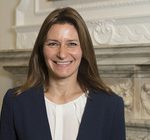
  • Liz Truss – 2022 Statement on the Northern Ireland Protocol

    Liz Truss – 2022 Statement on the Northern Ireland Protocol

    The statement made by Liz Truss, the Foreign Secretary, in the House of Commons on 17 May 2022.

    With permission, Mr Speaker, I would like to update the House on the Northern Ireland protocol and to lay out the next steps. Our first priority is to uphold the Belfast/Good Friday agreement in all its dimensions. That agreement put in place a new arrangement for the governance of Northern Ireland and these islands composed of three interlocking strands: a power-sharing Government at Stormont on the basis of consent and parity of esteem for all communities; intensified north-south co-operation on the island of Ireland; and enhanced arrangements for east-west co-operation. So much of the progress we have seen in Northern Ireland rests on this agreement, and for the agreement to continue to operate successfully, all three strands must function successfully. These arrangements are the foundation on which the modern, thriving Northern Ireland is built. It commands the support of parties across this House, and we will continue to work with all communities in Northern Ireland to protect it.

    As a Government, we want to see a First Minister and Deputy First Minister in place, and we want to work with them to make further progress. The basis for successful power sharing remains strong, as my right hon. Friend the Prime Minister laid out yesterday. However, the Belfast/Good Friday agreement is under strain, and, regrettably, the Northern Ireland Executive has not been fully functioning since early February. This is because the Northern Ireland protocol does not have the support necessary in one part of the community in Northern Ireland. I also note that all Northern Ireland’s political parties agree on the need for changes to the protocol.

    The practical problems are clear to see. As the House will know, the protocol has not yet been implemented in full, due to the operation of grace periods and easements. However, EU customs procedures for moving goods within the UK have already meant that companies are facing significant costs and paperwork. Some businesses have stopped this trade altogether. These challenges have been sharpened by the post-covid economic recovery. Rules on taxation mean that citizens in Northern Ireland are unable to benefit fully from the same advantages as the rest of the UK, such as the reduction in VAT on solar panels. Sanitary and phytosanitary rules mean that producers face onerous restrictions, including veterinary certification, in order to sell foodstuffs in shops in Northern Ireland.

    These practical problems have contributed to the sense that the east-west relationship has been undermined. Without resolving these and other issues, we will not be able to re-establish the Executive and preserve the hard-won progress sustained by the Belfast/Good Friday agreement. We need to restore the balance in the agreement.

    Our preference is to reach a negotiated outcome with the EU; we have worked tirelessly to that end and will continue to do so. I have had six months of negotiations with Vice-President Maroš Šefčovič, which follow a year of discussions undertaken by my predecessor. The UK has proposed what we believe to be a comprehensive and reasonable solution to deliver on the objectives of the protocol. This includes a trusted trader scheme to provide the EU with real-time commercial data, giving it confidence that goods intended for Northern Ireland are not entering the EU single market. We are already sharing over 1 million rows of goods movement data with the EU every week.

    Our proposed solution would meet both our and the EU’s original objectives for the protocol. It would address the frictions in east-west trade while protecting the EU single market and the Belfast/Good Friday agreement. The challenge is that this solution requires a change in the protocol itself, as its current drafting prevents it from being implemented, but the EU’s mandate does not allow the protocol to be changed. That is why its current proposals are unable to address the fundamental concerns. In fact, it is our assessment that they would go backward from the situation we have today with the standstill.

    As the Prime Minister said, our shared objective must be to find a solution that can command the broadest possible cross-community support for years to come and protect the Belfast/Good Friday agreement in all its dimensions. That is why I am announcing our intention to introduce legislation in the coming weeks to make changes in the protocol.

    Our preference remains a negotiated solution with the EU. In parallel with the legislation being introduced, we remain open to further talks if we can achieve the same outcome through a negotiated settlement. I have invited Vice-President Šefčovič to a meeting of the Withdrawal Agreement Joint Committee in London to discuss that as soon as possible.

    However, to respond to the very grave and serious situation in Northern Ireland, we are clear that there is a necessity to act to ensure that the institutions can be restored as soon as possible. The Government are clear that proceeding with the Bill is consistent with our obligations in international law and in support of our prior obligations in the Belfast/Good Friday agreement. Before any changes are made, we will consult businesses and people in Northern Ireland as our proposals are put forward.

    I want to be clear to the House that this is not about scrapping the protocol; our aim is to deliver on the protocol’s objectives. We will cement the provisions in the protocol that are working, including the common travel area, the single electricity market and north-south co-operation, while fixing those elements that are not, such as the movement of goods, goods regulation, VAT, subsidy control and governance.

    The Bill will put in place the necessary measures to lessen the burden on east-west trade and to ensure that the people of Northern Ireland are able to access the same benefits as the people of Great Britain. It will ensure that goods moving and staying within the UK are freed of unnecessary bureaucracy through our new green channel.

    That respects Northern Ireland’s place in the UK’s customs territory and protects the UK internal market. At the same time, it ensures that goods destined for the EU undergo the full checks and controls applied under EU law. That will be underpinned by the data-sharing arrangements that I have already set out. It will allow both east-west trade and the EU single market to be protected while removing customs paperwork for goods remaining in the United Kingdom.

    The Bill will remove regulatory barriers to goods made to UK standards being sold in Northern Ireland. Businesses will be able to choose between meeting UK or EU standards in a new dual regulatory regime. It will provide the Government with the ability to decide on tax and spend policies across the whole United Kingdom. It will address issues related to governance, bringing the protocol in line with international norms. At the same time, it will take new measures to protect the EU single market by implementing robust penalties for those who seek to abuse the new system, and it will continue to ensure that there is no hard border on the island of Ireland.

    I will publish more detail on these solutions in the coming weeks, and let me be crystal clear that, even as we do so, we will continue to engage with the EU. The Bill will contain an explicit power to give effect to a new, revised protocol if we can reach an accommodation that meets our goal of protecting the Belfast/Good Friday agreement. We remain open to a negotiated solution, but the urgency of the situation means we cannot afford to delay any longer. The UK has clear responsibilities as the sovereign Government of Northern Ireland to ensure parity of esteem and the protection of economic rights. We are clear that the EU will not be negatively impacted in any way, just as we have ensured the protection of the EU single market since the existence of the protocol.

    We must restore the primacy of the Belfast/Good Friday agreement in all of its dimensions as the basis for the restoration of the Executive, and we will do so through technical measures designed to achieve the stated objectives of the protocol, tailored to the reality of Northern Ireland. We will do so in a way that fundamentally respects both Unions—that of the United Kingdom and that of the EU—and we will live up to our commitments to all communities of Northern Ireland. As co-signatory and co-guarantor of the Good Friday/Belfast agreement, we will take the necessary decisions to preserve peace and stability. I commend this statement to the House.
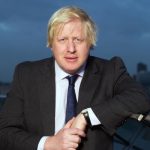

  • Boris Johnson – 2022 Speech at the Opening of the Cabinet Meeting

    Boris Johnson – 2022 Speech at the Opening of the Cabinet Meeting

    The comments made by Boris Johnson, the Prime Minister, on 17 May 2022.

    Good morning, everybody.

    Thank you very much.

    The crucial duty of our Government is to make our communities safer, which is what we are doing.

    That’s why we put, of the 20,000 police that we promised at the 2019 election, we’ve already put 13,576 on the streets.

    They are bringing down neighbourhood crime and that’s a great thing to see. But we’ve got more to do.

    We want to make sure our streets are safer and we will round up those county lines drugs gangs with Project ADDER, taking the criminals off the streets, stopping the deaths of young people from knife crime and gun crime.

    But what we’re also doing is making sure that we give everybody the confidence that we are on their side when it comes to the law and their experiences of crimes – particularly crimes of sexual and domestic violence – and we want to see more prosecutions for those who engage in such crimes.

    We want to see more rapists brought to justice.

    I’m pleased to see the facts. Several of you across the table have been working very, very hard and we are starting to see progress.

    This matters deeply to me. It matters to our government.

    It’s vital to every person, it’s vital to every woman and every girl in the country that we get this right and I want to see more progress on that.

    But there’s another reason why it’s so vital to bring down crime by making sure that our streets are safe, which is integral for our project for uniting and levelling up.

    It is only when you have safe streets and you have safe communities, that you get the confidence of business to invest and drive jobs and growth and that it is absolutely critical now as we deal with the aftermaths of COVID and we help people with their current costs and we take the economy through a difficult patch.

    That is why cutting crime is integral to our economic mission as well.

    Making our streets safer is absolutely vital.

    May I just say – on that point – that today I am very pleased to see that unemployment is now at the lowest level it has been since 1974 and to borrow a phrase from the Chancellor of the Exchequer…our plan for jobs is working.

    Crime crime crime is what we want to focus on.

    Making our streets safer.

    Thank you very much.

  • Sajid Javid – 2022 Statement at the Alzheimer’s Society Conference

    Sajid Javid – 2022 Statement at the Alzheimer’s Society Conference

    The statement made by Sajid Javid, the Secretary of State for Health and Social Care, on 17 May 2022.

    Thank you Gina – not just for your warm introduction, but for everything you do, raising awareness and supporting other people living with dementia. Thank you very much.

    And I’m also grateful to the Alzheimer’s Society for bringing us all together this afternoon.

    I can’t begin to reflect on what the future holds without acknowledging the challenges of the past two years. Whether it’s the people living with dementia, or those around them who love and care for them, I know dementia is difficult at the best of times. The pandemic made it doubly difficult.

    Dementia made some of the steps we needed to take to combat the pandemic a lot harder: like extra handwashing, or socially distancing. Or families and carers, who had very little respite.

    But I know it’s the emotional side that’s proved toughest over time. It runs deeper than the smiles and hugs we all missed.

    Many of you have tirelessly smashed the taboos around dementia – like the idea dementia is a hidden disease. Lots of you – people like Gina – are proof that people with dementia shouldn’t be hidden away from society.

    But sadly, the pandemic saw us all spend more time behind closed doors, physically separated from society and the people that we love.

    So I want to say a huge thank you to all of you, for your tremendous courage and resilience in the most extraordinary of circumstances.

    When I accepted this role nearly a year ago, I made it my priority to safely remove so many of the restrictions around Covid. Burdens that kept us apart through these difficult times. We’re now leading the world in learning to live with Covid, and I’m proud of how far we’ve come.

    Yet even with these brighter days ahead, I know it will take some time for us to recover from this collective trauma. And, of course, the challenges of conditions like dementia haven’t gone away.

    Over 900,000 people in the UK are believed to be living with dementia. In 2020, it was the leading cause of death (in England and Wales) after Covid-19.

    Yet even when we’re faced with such stark statistics, it’s important to remember how we got here.

    Economic growth, medical breakthroughs and vastly improved health and care services have seen life expectancy increase by more than a decade in our lifetimes. It’s one of the great triumphs of the 20th Century. We’re all living longer.

    If we’re to get the 21st Century right, we need those extra years to be spent in good health.

    And sadly that’s not the case for too many people. By 2025, 1 million people in the UK are expected to have dementia, and is expected to rise to 1.6 million by 2040.

    There has been some great progress in recent years.

    David Cameron used the rotating chairmanship of the G8 to convene the world’s first G8 dementia summit – which took the dementia challenge onto the global stage. And that passion for global action against dementia has continued in his current role as President of Alzheimer’s Research UK.

    And I do want to pay tribute to David, because I remember very well when I was in his Cabinet: he dedicated an entire cabinet session to dementia and invited Alzheimer’s UK to speak to us. They enrolled us all as ‘dementia friends’, and even all these years later now I’m Health and Social Care Secretary, I still reflect on what I learned back then.

    The Challenge on Dementia 2020 was another landmark piece of work, which saw a million care workers and a million NHS workers receive dementia awareness training. Over the 5 years of the strategy, the government invested some £420 million on dementia research.

    But the pandemic has stemmed the tide of progress. Despite the best efforts of the NHS, it became harder for some people to get a timely diagnosis, because the pandemic made it more difficult to access memory assessment services. I know the Alzheimer’s Society has estimated over 30,000 people didn’t receive a diagnosis because of the pandemic.

    Equally, we know from your brilliant research that tens of thousands of people are still missing out on a dementia diagnosis each year because they confuse key symptoms with getting old. As you say: “It’s not called getting old, it’s called getting ill”.

    So, while these broader demographic trends, combined with the rising prevalence of dementia, were always going to take us to a crossroads – a moment where we’d have to rethink how we do health and care in this country – the pandemic has brought us to these crossroads a lot more quickly. In fact, we’re there right now.

    I think one of the reasons why we haven’t made as much progress on dementia as we would like is because it’s going to take some pretty seismic shifts, both in terms of the architecture of health and care and our own approach.

    That’s hard to do. Reform takes time. And you need to take people with you. But it’s a journey we’ve already begun – and it’s a challenge this government is unafraid to take on.

    Our plans for Adult Social Care will help improve experiences for people with dementia and their families: with a far more generous means-testing, a cap on life-time costs to increase support and development for our phenomenal workforce.

    The new Health and Care Act – which received Royal Assent just a couple of weeks ago – puts Integrated Care Boards and Integrated Care Partnerships at the heart of our system. Joint working and joint budgets will be directed towards caring for people and keeping them well in the first place.

    You may also know that we asked Claire Fuller – a GP and Chief Executive of Surrey Heartlands – to conduct a stocktake of how primary care works within the new system. Now this is important, because we know that primary care is where the bulk of prevention can happen – and GPs play a crucial role in referring people with early signs of dementia. So I’m looking forward to hearing Dr Fuller’s views.

    We know that joined up care is better for people with dementia and their families. Implementing the proposals in our Integration White Paper will be another important part of what we need to do. The White Paper looks at everything from better data-sharing to multidisciplinary working across health and care, with the ambition of improving the experiences of those who use our vital services.

    All of this taken together means our future work on dementia is going to take place in a very different health and care context – one which is much more preventive, professional, and joined up.

    Not only that, but the combination of the demographic shifts we all know are coming, the setbacks of Covid-19, and the incredible opportunities afforded to us by pioneering research and new technology, mean we now need to do something dramatically different. We have no other choice but to step up and rise to this moment.

    So that’s been the spirit behind our new dementia strategy, which we began developing last summer. I’m grateful to everyone who’s played a part and continues to play a part in bringing it to life, including the Alzheimer’s Society. That work is still ongoing, but today I want to tell you a bit more about what it will look like.

    In short, I want it to be more ambitious than anything we’ve done before. To begin with: I want our Dementia Strategy to be a 10-year plan, not just 5. Because we can only get to grips with long-term challenges by thinking long-term.

    I’d like us to be as bold as we’ve been with our 10-year plan for cancer. It will be driven by the same four themes behind our reforms in health and care – what I call the ‘four P’s’: prevention, personalisation, performance and people.

    Let’s look at prevention for a moment.

    It’s estimated that as much as 40 percent of dementia is potentially preventable. 40 percent.

    We now know that what’s good for the heart is also good for the brain. Action on high blood pressure, physical inactivity, alcohol, obesity and healthy eating all have a part to play.

    So we’re going to be very ambitious on prevention, because I don’t accept that dementia is an inevitable part of ageing. It isn’t.

    We’re going to be equally ambitious on research.

    We’ve already committed £375 million into research on neurodegenerative diseases over the next five years – and I’ll work across government to boost this further.

    It means measuring ourselves against the leading countries globally and being unafraid to find new ways of working. It means being bold about finding new medicines and new treatments. It means being ambitious on new technology, like genomic sequencing and digital biomarkers. And it means continuing to smash taboos – just as you do so brilliantly, every single day.

    So I’m really excited about this – and I’m excited to work with all of you get it right. Because it’s no exaggeration to say that our future depends on it.

    We’re at the crossroads. All of us here today, we understand the challenges that lie ahead. When it comes to dementia, we know there have never been any quick fixes. We know there aren’t any easy wins.

    But we also know that when a visionary plan comes together, with powerful partners and proper funding – and we couple it with care and compassion – that combination can be unbeatable.

    That’s going to be the mission – and I’m grateful to have partners like you to share it with. Thank you.


  • Lucy Frazer – 2022 Speech to the Joint Chiefs of Global Tax Enforcement (J5) Summit

    Lucy Frazer – 2022 Speech to the Joint Chiefs of Global Tax Enforcement (J5) Summit

    The speech made by Lucy Frazer, the Financial Secretary to the Treasury, on 17 May 2022.

    Introduction

    A very good afternoon, everyone.

    It’s brilliant to see so many of you here in London… together in person for the first time, I believe, since Sydney 2020.

    I also want to extend a warm welcome to the Chiefs of Global Tax Enforcement and their teams of experts. And to the many delegates from international industry partners and the Wolfsburg Group who are joining throughout the week.

    On behalf of the UK government, let me say that we’re delighted to host this summit, and absolutely committed to our role as a founding member of the J5.

    It’s a ground-breaking alliance, which is doing things in ways that haven’t been tried before. And truly making ‘the world a smaller place for tax criminals’.

    Understanding the threat

    The UK, for its part, is taking action on tax crime hard and fast.

    Giving HM Revenue and Customs a range of new asset recovery and ‘proceeds of crime’ powers.

    Introducing a ground-breaking ‘failure to prevent’ piece of legislation, which means that HMRC now has several corporations under live criminal investigation.

    And adopting a tougher stance on offshore evasion.

    But tax fraud is a perennial and persistent threat to all our nations.

    And unity, transparency and collaboration will be essential if we’re to tackle it.

    Because, put simply, tax cheats flourish when we fail to work together.

    And every scrap of information left behind by fraudsters – in any one of our jurisdictions – is a potential lead in the fight against global tax crime.

    By joining forces, we undermine the global criminal community in ways we could not do alone.

    So, this conference isn’t just a great opportunity to celebrate everything we’ve already achieved together.

    It’s also a chance to share ideas and expertise. To renew our collective ambition. And to design and develop the next steps in this crucial fight.

    The speed of change

    I was appointed Financial Secretary to the Treasury last September, with international tax policy as an important part of my portfolio.

    Since then, I’ve learned a great deal.

    In particular, I’ve been struck by the furious speed at which tax fraud evolves.

    Fraud is becoming ever more complex and international. And in some ways that’s a compliment to all of the J5 partners.

    It’s not easy to commit tax fraud and get away with it.

    But as we’ve closed the net, criminals have upped their game.

    Evaders are using increasingly complex and diverse structures to avoid detection.

    Money launderers are using complex multi-jurisdictional transaction chains to hide transactions.

    And organised criminals are using and abusing complex corporate structures to mask the top-tier criminals masterminding the fraud.

    We’ve seen the movement of money and capital become increasingly fluid as historical, physical and geographical barriers to trade have slipped away.

    The rise of the ‘global citizen’ means that tax criminals may be based in one country, but have trusts and bank accounts scattered across many others.

    Of course, it’s not easy for a criminal to set up such an intricate web alone.

    And this is a crucial point.

    The UK’s HMRC team tell me they’re increasingly seeing criminals harnessing professional help, direction and support – particularly in cases involving offshore entities.

    In other words, it’s not just the role of the fraudster that’s evolving… it’s also that of the enabler.

    A crime with victims

    Of course, perhaps due to its complex nature. tax fraud is sometimes perceived as something of a victimless crime.

    But that’s simply not the case.

    The damage can be hard to visualise – especially when those directly involved in supply chain fraud or importing illicit goods are operating thousands of miles away, hidden behind complex webs of corporate structures or criminal enablers…

    But it’s all too stark for the retiree who discovers too late that their tax, national insurance or workplace pension contributions have been fraudulently redirected by a payroll company. And that they can no longer afford the life they have worked so hard to build.

    Or for the teenager trafficked to a foreign country to work in illicit factories manufacturing tobacco products, funded by the fraudulent activity of organised criminal gangs.

    The emotional and financial costs can be lifechanging.

    The impacts of tax crime can filter through into wider society.

    Associated profits are used to fund other sorts of crime in our communities, giving criminals the financial means to corrupt and exert their power at home.

    And while fraud is hugely damaging to its direct and indirect victims, it also ruins the lives of its perpetrators and their families. What a waste.

    International co-operation

    A big part of the solution, as I say, is international cooperation.

    We’ve already shown it can be done.

    Last year, here in London, we saw the G7 strike a game-changing agreement on global tax reform. Ensuring large multinationals pay tax of at least 15% on their profits. And reforming taxation rules to ensure a greater share of multinationals’ profit is taxed in the countries in which their customers are located.

    The J5 too has made some notable steps forward.

    I was particularly excited to hear about ‘The Challenge’ held last March – an event which brought together investigators, experts and data scientists to track down fraudsters using cryptocurrency to facilitate tax crimes.

    Very far from a ‘talking shop’, ‘The Challenge’ led to real action. Including the identification of a number of suspect companies in each J5 nation.

    Another example of the J5’s success is the arrest and charging of 10 individuals involved in a years-long, multimillion dollar investment and impersonation scheme.

    The defendants were able to defraud millions of dollars from individuals across the globe.

    They were operating across multiple countries, impersonating respected investment firms, producing fake documents and hiding behind fabricated identities.

    But it was thanks to collaboration between J5 members that we were able to piece together the jigsaw of evidence scattered around the globe.

    We cannot be complacent

    We should be proud of what we’ve achieved together. Of course we should.

    But this is no time to be complacent.

    During the pandemic, we saw an increase in fraudsters identifying and exploiting new and essential products developed in the fight against Covid-19.

    We must be alert not just to what criminals are doing now, but ahead of them in thinking what might be possible in the future.

    Here in the UK, we continue to take steps to tackle tax fraud and evasion.

    We’ve introduced an additional 20 measures since last year – and are forecast to raise an estimated £6.3 billion over the next 5 years.

    There’s also ‘Making Tax Digital’, our pioneering new way for businesses to keep their tax records in a modern, digital, fit-for-purpose system.

    It’s improving efficiency, accuracy and transparency in our tax system. And removing the opportunity for fraudsters to exploit systems built for a different age.

    The UK Government has also recently provided almost £300 million for HMRC to invest in additional support across all forms of compliance activity.

    We’ve invested in HMRC’s illicit finances capability, to tackle the enablers of serious fraud, focusing on the illicit financial transactions that underpin tax crime.

    This increased capacity for tackling tax crime at home can only bolster the data and technological capabilities we can share with our J5 partners.

    In addition, the UK continues to spearhead the Common Reporting Standard, which provides greater transparency through the automatic exchange of taxpayer account information.

    I’m delighted that more than 100 jurisdictions have signed up to the CRS.

    This means that fraudsters in these jurisdictions can no longer benefit from secrecy rules used to hide transactions that would otherwise be flagged as a cause for concern.

    Indeed, this significant increase in global transparency has seen HMRC bring in more than £500 million to date, directly through Automatic Exchange Agreements such as the Common Reporting Standard.

    It’s also encouraging to see new important developments that increase international tax transparency, and reduce the scope for hiding assets and profits, even more.

    The UK is the first major economy to commit to the OECD’s new Mandatory Disclosure Rules. These require disclosure of arrangements designed to avoid CRS reporting or hide the beneficial ownership of assets.

    The UK is also committed to the new OECD Model Rules for Digital Platforms that require the reporting of sales on internet platforms. And we welcome the development of the Crypto-Asset Reporting Framework, another significant new transparency initiative.

    Public-Private collaboration

    The State, of course, is integral to tackling tax crime. And we can do a lot.

    But for reforms to be successful and long-lasting, they need to be made in conjunction with the private sector.

    Governments can work to regulate or provide guidance, but it’s ultimately the private sector that determines who can access the financial system.

    The private sector also plays a huge role in funding the mechanisms used to fight economic crime. By investing in sophisticated new technologies that undertake transactional risking and protect consumers from fraud. As well as ensuring that their operating models comply with reporting requirements.

    For all those reasons, we‘ve invested in these partnerships – expanding our capability in intelligence flows, risk alerts and behavioural insight. And they are already paying dividends.

    Cooperation between HMRC and the private sector recently meant we were able to work together to prevent losses of more than £50 million following a systematic attack on our Self-Assessment taxation system.

    I know that cooperation is being replicated across the J5. And I’m really excited to see what’s achieved as a result.

    Conclusion

    Ladies and Gentlemen,

    Taxation relies on trust.

    Trust between a Government and its citizens that rates will be set fairly and transparently.

    And trust that individuals and businesses will be held accountable if they fail to pay what is due.

    Tax crime undermines that trust.

    But everything you do – that we do together – restores it.

    We can – and we must – continue doing everything we can… to collaborate, to innovate, and to eliminate the loopholes criminals seek to exploit.

    Henry Ford, the great American industrialist, once said that “Coming together is a beginning. Keeping together is progress. Working together is success.”

    Well, we’ve already ‘come together’… through the J5.

    This week will help us ‘keep together’… showing our joint commitment to make progress in the fight against global tax crime and showing tax criminals that our resolve is unwavering.

    And, in the months and years ahead, we must continue to ‘work together’.

    Because the importance of this… for our economies… for our societies… means we cannot do anything less.

    Thank you very much.

  • Luke Evans – 2022 Speech on the Future of the UK

    Luke Evans – 2022 Speech on the Future of the UK

    The speech made by Luke Evans, the Conservative MP for Bosworth, in the House of Commons on 16 May 2022.

    May I take this opportunity to say a great deal of thanks from my constituency to the Queen for her service over almost 70 years, as I may not get that chance going forward?

    The subject of today’s session is making Britain the best place to grow up and grow old. Two and a half years into my service as the MP for my constituency, I thought that it would be worth touching on a few things that are trying to move that plan forward.

    We have had millions of pounds for Hinckley Academy to make sure that we have education that supports our local children. We have had £19.9 million for Twycross zoo to create a conservation and education centre to breed the conservationists of the future. We have had £28 million for internet for Leicestershire, which means that 330 houses in Sketchley Brook in Burbage now have better, faster internet access. We have had £1.8 million to improve Hinckley high street and ensure that people go there and want to enjoy it, whether they are a child or an OAP. We are working on improving the A5, which is vital infrastructure for our constituency for people to get to their jobs: £20 million has been invested and we moved through decision point 1 in March. I am keen to see that go forward.

    Most importantly, £7 million has been put towards Hinckley hospital, with another community diagnostic centre coming and a plan that is ready to go. I am dead keen to make sure that there is no red tape in its way, because it puts Hinckley on the map and provides the service that we need for our community of children, adults and OAPs. That is what it is all about.

    In the three minutes that I have left, I want to focus on two subjects: planning and the Online Safety Bill. I have heard the Secretary of State for Levelling Up, Housing and Communities use the acronym BIDEN for the five crucial points of planning: beauty, infrastructure, democracy, environment and neighbourhoods. I put it to him that he has missed a trick there, because “INBED with Gove” would be a far better selling point. However, the principles are right: we need the right homes, in the right place, with the right infrastructure that is right for our environment. That is fundamental to our planning system, but the current system does not deliver it. My constituency typifies that, because under the Lib Dem borough council we do not have an up-to-date local plan, which means that every single day we are open to speculative development without that infrastructure, without those amenities and without that support.

    I am pleased that the Queen’s Speech is bringing forward planning change. That should concentrate on strengthening neighbourhood plans and localism in action, especially for those without an up-to-date local plan. The infrastructure levy is important for getting funding up front for the amenities that we need: the roads, the GP surgeries, and the schools. All those things need to be rectified, so I am glad that change is being introduced. Of course, there is also the question of building out. Developers getting the land is one thing, but using it is another. We need houses for young people and their families to aspire to, but we also need houses for our pensioners to retire or downsize to, and we need to provide support for them.

    I come at the Online Safety Bill through my work on body image. There are two fundamental things that I would like to see in the Bill. First, there needs to be a legally named person for the algorithm. We have safeguarding leads in schools, we have Caldicott guardians in health and we have GDPR controllers. On our social media and on the internet, the algorithm is fundamental, so naming someone who is accountable would mean that anyone in this House or in this country could hold the big companies to account. That is imperative in lifting the bonnet to see what is underneath and what is driving the content that all of us—children or adults—are served. Secondly, we should allow people to choose to be served verified authentic images. The technology exists. We are allowing people to choose anonymity, so why do we not do it with authenticated images? Those two little changes would really make sure that we grow up and grow old in the best of Britain.

  • Munira Wilson – 2022 Speech on the Future of the UK

    Munira Wilson – 2022 Speech on the Future of the UK

    The speech made by Munira Wilson, the Liberal Democrat MP for Twickenham, in the House of Commons on 16 May 2022.

    Throughout the pandemic, children and young people have paid a very high price in their liberty, learning loss and mental wellbeing. We had the hokey-cokey of school reopenings and exams inflicted on parents, pupils and teachers, but our young people have shown remarkable resilience and school staff rose to the challenge. Now is the time to recognise those challenges and sacrifices. Now is the time to address the widening attainment gap between the wealthiest and the poorest children. Now is the time to embrace new ways of teaching and learning, as well as to capitalise on new levels of parental engagement. I am afraid that Her Majesty’s Gracious Speech failed our children spectacularly. Only one sentence was dedicated to children or education—yet here we are with the most severe disruption to our schools for two years and crises in children’s mental health and special educational needs and disability.

    The Education Secretary has managed to secure parliamentary time for a schools Bill and he is using that precious time to tinker with school structures—what a waste. This technocratic Schools Bill tinkers around the edges of the management and governance of schools and is not what parents, pupils or employers are crying out for. They want a broader offer that equips our young people with broader life skills and experiences that nurture creativity, build resilience and teamwork, and boost their wellbeing.

    All of us, on both sides of the House, want to see children in school and are alarmed by the large numbers of children missing from school. I am concerned, however, that the Government’s zero-tolerance approach overlooks the needs of children who might be struggling with their mental health or special needs. We need to identify and tackle the root causes of school absence, rather than go for the “all stick and no carrot” approach.

    I hope that the Government will use the clauses in the Bill that relate to the funding formula to reverse the devaluation of the pupil premium. I am proud that that Liberal Democrat policy to support the poorest pupils was introduced when we were in the coalition Government, but it has been cut in real terms by £160 per primary child and £127 per secondary pupil over the past seven years since we left Government. With the attainment gap growing, the pupil premium must be restored to its original value if the Government really are serious about levelling up.

    Time and again in this place, I have highlighted the growing mental health crisis among children and young people. We know that unhappy children are less able to learn, thrive and perform well. Our teachers are overburdened and unable to cope with the immense challenges around pupil wellbeing, yet there was no reference in the Queen’s Speech to the urgent action that we need. I suggest that we need an urgent children and young people’s mental health recovery plan. The Secretary of State for Health and Social Care is here, and in the same way that he has focused on the elective care backlog, I implore him to come up with a similar plan on children’s mental health, because it is desperately needed. We would not ignore a child with a broken leg, yet too many children who are mentally unwell cannot cope without access to the help and support that they need. Liberal Democrats are calling for a dedicated, qualified mental health professional in every school.

    Finally, there was no reference to catch-up funding either. The Sutton Trust found that more than two thirds of primary heads are struggling to help children due to a lack of catch-up funding. Schools in my constituency are drawing on parental donations to support children with catch-up. This is a political choice. People may no longer want to talk about the pandemic, but its impact on our young people and our economy will be felt for decades if the right investment is not forthcoming.

    I call again on the Government to step up and provide the full £15 billion of catch-up funding that was recommended by their adviser, Sir Kevan Collins. The Education Policy Institute said that the cost to the economy of lost learning could run into the trillions—I repeat, the trillions—over the next 80 years, and that is based on OECD data. That is many times the return on investment of key infrastructure projects, if the full £15 billion catch-up funding is committed. Let us start treating our children—the future generation on whom we will all be reliant one day—as an investment and not as a cost. Sadly, the Queen’s Speech has largely ignored them.

  • Christian Matheson – 2022 Speech on the Future of the UK

    Christian Matheson – 2022 Speech on the Future of the UK

    The speech made by Christian Matheson, the Labour MP for the City of Chester, in the House of Commons on 16 May 2022.

    Speaking in last year’s Queen’s Speech debate, I welcomed the Government’s commitment to bringing forward a ban on conversion therapy. A year on, we are no further forward—in fact, we seem to have gone backwards—but I hope to see progress this year.

    I hoped to see a “better business” Bill in the Queen’s Speech, to give us a cleaner, greener and fairer future. Businesses in my constituency are pushing me on this, as they understand how important it is to give businesses different priorities in law. I hoped to see something about that and am disappointed by its absence.

    Talking of better business, I am also extremely disappointed to see no progress on legislating to outlaw fire and rehire, of which P&O Ferries is the latest example. Ministers and Conservative Members said it was absolutely terrible but, when push comes to shove, there is no action to outlaw the practice. That is a huge omission from the Queen’s Speech.

    Instead, we get a promise to bring forward legislation to abolish the Northern Ireland protocol. Whose Northern Ireland protocol was it? It was the Prime Minister’s—he wrote it, he sold it to the British people—and now, once again, he is trying to renege on something he himself wrote. It demonstrates, yet again, that he is a Prime Minister who will say whatever he needs to say to get out of whatever position he is in at the time and then have no sense of responsibility for the promises he has made. I say to the House that this does affect us internationally. Who will do deals with us if he is going to bring forward legislation to break deals that he wrote himself and signed himself only two years ago?

    Of course, the biggest omission at the moment is of any kind of proposals on tackling the dreadful energy crisis we have. Millions of families up and down the country are facing soaring energy bills and ever increasing costs of living. The Government have demonstrated that they have no plan to fix this. Families are paying triple their energy bill, and they need a solution now.

    I was disappointed that the Government have not adopted a one-off windfall tax on the oil and gas giants, and let us just understand exactly why that is. It is because a windfall tax would affect not simply the oil and gas companies—incidentally, as we all know, they have said that with the level of profits they are getting, at several billion pounds a quarter, they would be quite happy to pay it—but the City investment funds and City hedge funds that the current Conservative party, along with Russian oligarchs of course, exists to serve. They are not in their places now, but the Education Secretary, the Secretary of State for Health and the Chancellor all have big City investment fund backgrounds. That is what they know, and that is who they are really defending when they refuse to have a windfall tax.

    Locally, in my area of Cheshire West and Chester, we are leading the way on alternative and clean energy provision. My hon. Friend the Member for Ellesmere Port and Neston (Justin Madders), who is in his place next to me, and I have been very supportive of HyNet. Actually, I pay tribute to the Government for that particular scheme; they have assisted us. I know that, in his constituency, the Vauxhall Ellesmere Port plant is looking forward to an all-electric future, leading the way on green jobs. That is thanks to him and, again giving credit where it is due, thanks to the Secretary of State. However, I have to say to the Government that any attempts to bring back fracking will be given short shrift in my constituency, and I am very concerned about that.

    On levelling up and transport, I was looking forward to some detail in the new transport Bill, and I will be keeping an eye on what the Government are proposing. At the moment, however, we need proper rail services. My hon. Friend the Member for Ellesmere Port and I are meeting the rail companies this week to try to restore direct services between Chester and London. At the moment, they have gone from 12 a day before the pandemic down to one, and now that has been doubled to two we are asked to be grateful for that. We are hopeful that we might get more services, but of course direct services are essential to economic growth. Instead, we have seen the cancellation of Northern Powerhouse Rail and the scrapping of the High Speed 2 eastern leg, which is a betrayal of the north. It is the same for buses. The Government have turned down a bid for more bus money from Cheshire West and Chester Council, even though Ministers described the bid as “excellent”. I hope the transport Bill will tackle the difficulties we are seeing with bus provision, and give more opportunity for places such as Chester to improve connectivity.

    Finally, it is absurd that the great heritage asset that is the city walls of Chester has to be paid for out of the highways budget, so that money that should be spent on roads, potholes and pavements is being diverted, understandably, to pay for that great heritage asset. We need a separate fund for the walls.

  • Jo Gideon – 2022 Speech on the Future of the UK

    Jo Gideon – 2022 Speech on the Future of the UK

    The speech made by Jo Gideon, the Conservative MP for Stoke-on-Trent Central, in the House of Commons on 16 May 2022.

    Making Britain the best place to grow up and grow old is a big challenge. Ensuring where people are born and raised does not limit their quality of life and life expectancy is an even bigger challenge and one that lies at the heart of the Government’s levelling-up agenda.

    We all know the expression “You are what you eat.” In Britain, we are trapped in a junk food cycle that means we now consume more highly processed foods than any other European country except Malta and have higher levels of obesity, yet we have had decades—even centuries—of political barriers to good food policy. We often hear cries of “Nanny statism” or “Don’t tell us what to eat.” The latest Government announcements on delaying the ban on junk food advertising on television before 9 pm and delaying restricting “Buy one, get one free” promotions follow that regrettable trend. As a self-confessed chocoholic, I struggle to resist the temptation to boost my energy levels with a bar of chocolate rather than, so I know at first hand the irresistible pull of promotions and multi-purchase deals. I appreciate some hon. Members believe that attempts to tackle the bombardment of unhealthy food should be postponed so as not to increase the cost of living, but they are wrong. Research shows that promotions encourage people to buy 22% more unhealthy food and drink than intended, and to consume more of it, too. Marketing tactics have a real financial cost, as well as a negative health impact.

    Let us not forget that retailers have other choices. Instead of encouraging customers on tight budgets to spend more on non-essential foods through these offers, they could simply offer 50% discounts or, as some supermarkets have started to do, have a value range of products at affordable prices that covers the basic foods for a balanced diet.

    The political context has changed in recent months, and the Government’s focus is rightly on helping with the cost of living. Although that is a priority, it should not prevent the introduction of these important measures. Any delay will mean more children living with obesity and too many having reduced life chances through ill health. Our constituents will not thank us or forgive us for doing a U-turn on their health.

    Obesity is a national emergency. In England, about 68% of men, 60% of women and more than one in four children aged between two and 15 are obese or overweight. Although this is a nationwide issue, rates of obesity are disproportionately higher among people living in more deprived communities. The statistics for my city of Stoke-on-Trent are shocking: 76.1% of adults in Stoke-on-Trent are overweight or obese. That is the third highest figure of all local authorities in England.

    As the cost of living continues to squeeze household budgets, low-income families are forced to choose the cheapest calories, which are typically the least healthy. The Government must ensure that, when it comes to tackling food insecurity and the cost of living, they introduce policies that make nutritious diets affordable, easy and accessible to families on the lowest incomes

    There is a pressing need for a good food Bill to set out in law a long-term approach and clear targets for the food system, with better systems for independently monitoring policy. We talk about the need for a resilient food system in terms of supply chains and production, but we need to widen that narrative to one of a resilient population that is both financially resilient to price shocks and resilient in public health terms, such as to pandemics.

    We must not lurch from crisis to crisis. Action on the nation’s obesity emergency needs to start now. I support the right to good food as a fundamental pillar of the Government’s levelling-up agenda. I support a school food standard to ensure our young people have the fuel to learn. I support bringing cookery skills and an understanding of nutrition into the school curriculum at every key stage and through community organisations such as family hubs. I support measures to enable British farmers to produce the food we need, and to enable the food industry to innovate and adapt by incentivising the creation of healthier and more sustainable products. And I support better help within the NHS for people living with obesity, including social prescribing and fair access to bariatric services.

    Good health is a vital ingredient in maximising our quality of life and longevity. Proper nutrition is the foundation of good health. Investment in access to good food will pay dividends both in savings to the NHS and in increased productivity, which will boost the economy and deliver on the promise of levelling up health outcomes.

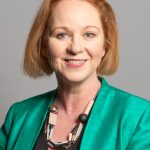
  • Judith Cummins – 2022 Speech on the Future of the UK

    Judith Cummins – 2022 Speech on the Future of the UK

    The speech made by Judith Cummins, the Labour MP for Bradford South, in the House of Commons on 16 May 2022.

    My constituents are facing a growing number of crises that continue to pile up day after day. I accept some of these difficulties are new, but most are not. Most of these difficulties have been brewing and festering for years. The Government’s failure to solve these problems or come up with solutions has pushed many services to breaking point and now families are being left to bear the brunt. Despite the fact that day after day cash-strapped families are trying to make ends meet by working extra hours, often in multiple jobs, what do those on the Government Benches tell them? Learn to cook, learn to budget, work more hours, get a better paid job—you’re responsible, you’re to blame, it’s you who are doing it wrong.

    However, what people need from the Government is help to navigate through the things that are out of their control. They need them to solve the long-term issues which continue to push down on people’s quality of living and eventually leave them out of options. It is one of those issues that I want to address today. It is an issue that is not in the Queen’s Speech, but really should be, because NHS dentistry and oral health inequality has been repeatedly unaddressed by this Government. Access to basic dentistry care in this country is often forgotten, but it is a vital part of the nation’s health.

    In 2016, an NHS Digital report found that just under half of dentists were thinking of leaving dentistry, so I warned the Government not to kick the can down the road and risk a crisis in dental care. I told the Government then that the most important measure they could implement, as highlighted by the British Dental Association, would be changes to the dental contract that incentivised prevention, but nothing was done.

    In 2017, the BDA told us that 58% of the UK’s NHS dentists were planning on turning away from NHS dentistry in the next five years. So again I warned the Government that we faced a national crisis. In 2019, The Times reported that 60% of dentists planned to leave the profession, or cut back NHS care in the next five years, with more than 1 million new patients turned away and some patients resorting to pulling out their own teeth. Yet again, nothing was done.

    In 2020, I told the Government that a majority of NHS dental practices across England believed they could only survive for 12 months or less. The Government said they would look at the workforce issue “more broadly” and “in the round”, but no action was forthcoming and 1,000 NHS dentists left the service. Earlier this year, hearing that almost 1,000 children under 10 in Bradford had to be admitted to hospital to have decayed teeth removed, I pleaded with the Government to finally deal with the issue that had been staring them in the face for years. Then, of course, to nobody’s surprise except this Government’s, last week, it was revealed that 2,000 dentists have quit the service in the last year.

    We urgently need to reform the dental contract. It is not good enough to be told time and again, year after year, that reform is imminent, because I have been asking for seven years now and still the Government have yet to deliver. If the Government need help with budgeting, I can point the Chancellor in the direction of one of his own MPs who might have a course he can take up, but I desperately do not want to be back here in 2023 still trying to open the Government’s eyes to the massive freight train coming towards them. I have sounded the alarm, other Members have sounded the alarm, and dentists and patients have sounded the alarm;. We are all waiting for the Government to act and reform the dental contract. Patients and our constituents cannot wait any longer.

  • Caroline Johnson – 2022 Speech on the Future of the UK

    Caroline Johnson – 2022 Speech on the Future of the UK

    The speech made by Caroline Johnson, the Conservative MP for Sleaford and North Hykeham, in the House of Commons on 16 May 2022.

    It is an honour to follow the hon. Member for Bradford West (Naz Shah), although I must disagree with her because I believe that this country is the best place to grow up and grow old—although that does not mean there is not work to do to make it even better, and I look forward to supporting the Queen’s Speech in that regard.

    To grow up and grow old well, you need a healthy pregnancy and a healthy birth, and I look forward to the women’s health strategy in that regard. Childhood needs to be filled with opportunity, and the schools Bill and the higher education Bill will provide us with that opportunity. We need to have better sport provision and better mental health services, again covered in the Queen’s Speech. We need to look at the impact of loneliness on social life, which now has a huge impact on elderly people. I was pleased to organise with my team a senior citizens’ fair last week in North Hykeham, where many people came along to hear about the clubs, activities and other support available for older people in the region.

    I want to touch on two things. The first is the impact of covid on the national health service. I refer to my entry in the Register of Members’ Financial Interests as a doctor. The impact of covid means that a lot of people are waiting for treatment. I was somewhat perturbed to read that we want to eliminate waits of a year by 2025, because a wait of a year is a long time and 2025 is not particularly soon for someone who is waiting and in pain. However, I am pleased that we have community diagnostic services opening around the country to help to improve this. I am particularly pleased that one is opening in Grantham and will serve many of my constituents, and that two new operating theatres are being built at Grantham and District Hospital, which will also improve elective activity in the area. There are going to be 17 million more tests in the next three years. We are going to have an increased capacity of 9 million extra treatments and procedures and an increase in elective activity of 30%.

    All that is very good. It is especially good to see the Government focusing on output and actions that benefit patients—treatments, tests and procedures; things that make them better—and not just inputs, as the Opposition do, of £X billion or £Y billion. I have noted in my career in hospital medicine that the amount of senior staff has increased, but demand, expectations and the number of administrative and managerial staff have increased, too. If we are to deliver for patients and not simply spend more money, we need to ensure that the extra money is spent only in those areas of clinical care that improve patient outcomes. In that regard, I support calls for more medical students and more nursing students. I would also support a relative increase in remuneration for nurses providing direct clinical care so that those roles are not disincentivised. I appreciate that the NHS is operationally independent, but I look for ministerial reassurance that we are linking all the extra money that we are taking from our constituents to improve clinical care and clinical delivery.

    The second thing I want to touch on is education and opportunity, which are inextricably linked. Conservative Members share the view that talent is uniformly distributed but opportunity, sadly, is not, and I welcome the Government’s commitment to levelling up in that regard. I am lucky that we have excellent schools in my constituency and that some have seen huge investment this week, including Carre’s Grammar School in Sleaford, which is receiving over £1 million to improve the structure of its buildings. That is fantastic news for all the successful schools involved in that bid.

    The schools Bill offers us an opportunity to look not only at how we educate children in maths, English and science, but at how we contribute to a positive childhood. The MacAlister report, due out very shortly, will help to guide us on safeguarding improvements. In doing so, I hope the Education Secretary will protect children’s lives and wellbeing by focusing on evidence. We often talk in the Select Committee about his focus on the evidence, so I hope that he will be looking at the evidence on how we can improve things for children, not just adding to the bureaucracy that teachers face.

    I would like to see curriculum measures to improve sport, particularly girls’ sport. Many teenage girls do less sport as they get older and throughout their secondary school experience. Children’s sport is crucial to physical development. It is crucial to bone health and preventing osteoporosis in the elderly even. It is important to fitness, to mental wellbeing and to improving academic outcomes as well. I look forward to the Government bringing forward their schools Bill, where I hope to see an increase in minimum participation and the encouraging of more sport as a priority. I look forward to voting for the Queen’s Speech when that opportunity arises.