Tag: 2022

  • Crispin Blunt – 2022 Speech on Achieving Economic Growth

    Crispin Blunt – 2022 Speech on Achieving Economic Growth

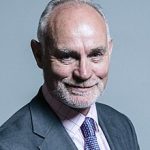
    The speech made by Crispin Blunt, the Conservative MP for Reigate, in the House of Commons on 18 May 2022.

    I draw the House’s attention to my entry in the Register of Members’ Financial Interests, and I rise to give general support to the Queen’s Speech. There are areas about which I am particularly enthusiastic, and there are one or two areas where I have to sound a note of warning for my Whips.

    I thought that the tone adopted by the hon. Member for Ealing Central and Acton (Dr Huq) and the hon. Member for Rhondda (Chris Bryant) was rather surprisingly wide of the mark. Their remarks were perhaps a little ungracious about the Gracious Speech. The hon. Gentleman said that the Queen’s Speech lacks content and does not really have a theme. I have here the explanatory notes for the Levelling-up and Regeneration Bill, given that we are talking about substance. He complained that there were Bills that would be no more than clauses in other Bills, but this Bill has 11 parts, all of which could be very substantial Bills in other cases. It recognises that the reputation of this Administration will very much depend on whether, by the next election, we have put in place the path to delivering levelling up and regeneration in practice, and that those parts of the country that lent us their vote in 2019 will convert that to a rather more permanent arrangement when they see this Administration beginning to deliver in a way that they have not seen for decades. This Bill provides a most important centre of the legislative programme and, by and large, it will have my full support.

    There are specific opportunities in the Queen’s Speech. For example, the genetic technology Bill, which has been championed by our absolutely marvellous science Minister—the Under-Secretary of State for Business, Energy and Industrial Strategy, my hon. Friend the Member for Mid Norfolk (George Freeman)—will open up potential opportunities for growth in our economy and investment in science and research. The United Kingdom should take the opportunities to establish global leadership in this space.

    I am a veteran, and although I did not serve in the Province in my time in the armed forces, I think that the Northern Ireland Troubles (Legacy and Reconciliation) Bill is the product of long consultation and wise reflection to try to find the right balance to deal with the difficult issues involved.

    The Social Security (Special Rules for End of Life) Bill is to be welcomed. It recognises the long periods in which people now have to live with the prospect of knowing that their lives are coming to an end, and will extend benefits from six months to 12.

    In general, I welcome the Public Order Bill, which will hold to account people who are intent on disrupting society. As for its content, however, I feel that we might have slightly missed an opportunity in imposing criminal sanctions on those people. Why not civil sanctions? If they are determined to go to the greatest trouble for the greatest number, and to impose costs on our public services and costs on people whose activities are disrupted in an unfair way—as regards the cause that protesters are trying to promote—I think that we should have explored civil sanctions rather more carefully. If people with resources are going to stick themselves to the road or tie themselves to the top of underground trains, so that the travel arrangements of others are disrupted, there is a specific opportunity to provide restoration to those who have been inconvenienced by them. As a great supporter of restorative justice, I think that we should try to widen the spread of that in the justice system, so that we hold people accountable for their actions against and damage to others.

    Obviously I welcome the inclusion in the Gracious Speech of the conversion therapy ban Bill. It is still being drafted and has not yet been presented to the House, but we hope to see it before we rise for the summer recess. I say gently to my right hon. Friend the Prime Minister that it may be easy to make a quip and laugh at the Leader of the Opposition’s expense about what a woman looks like, but perhaps he does not need to look very much further than Bridgend to see that the question can be just a little more complicated than a first glance might suggest. I therefore think that gender identity should be included within the scope of the conversion therapy ban Bill. I will certainly lend my support to colleagues on both sides of the House to work in the direction of ensuring that we have a proper conversion therapy ban that protects people in respect both of sexuality and of gender identity.

    I understand the purpose of the boycott Bill, which is described as legislation to

    “prevent public bodies engaging in boycotts that undermine community cohesion.”

    However, I think we need to be a little careful. I am afraid that in the last Session I supported an amendment on the subject tabled by my right hon. Friend the Member for Newark (Robert Jenrick); that was an error of judgment on my part, because I was not paying sufficient attention to the business, and I do not intend to repeat that mistake if the boycott measure comes back to the House. It is designed to take away people’s ability to make a statement of their beliefs about the policy of a nation that is in gross breach of international law. Obviously the nation is question is Israel, and obviously the community cohesion being thought about relates to antisemitism within communities. I fully appreciate the Government’s concerns about the matter, but if a nation is in gross breach of the fourth Geneva convention, has invaded and then settled an occupied territory, and is killing journalists in that territory who are observing what is going on, we might just want to reflect on what capacity or ability there is in our society to say, “We don’t think that’s right,” notwithstanding the obvious associated issues of antisemitism.

    Finally, on the Northern Ireland protocol Bill, the statement that we make in the Gracious Speech about our values as a society—the values of Britain post Brexit—is incredibly important. We need to be a nation that stands up for the rule of law and the rules-based international system to sustain our security and our role in the world. The enormous reputation of the City of London and of the commercial part of our justice system, in which companies from countries around the world come to have their disputes adjudicated under British law in British courts, is a huge credit to our country and our system. British law, in general, is trusted. I do not think that we should play quite so fast and loose with powers to overturn the protocol until we have explored every other conceivable option, including holding the European Union responsible for the consequences of an overly legalistic approach, which I think would be a better route.

  • Rupa Huq – 2022 Speech on Achieving Economic Growth

    Rupa Huq – 2022 Speech on Achieving Economic Growth

    The speech made by Rupa Huq, the Labour MP for Ealing Central and Acton, in the House of Commons on 18 May 2022.

    The Gracious Speech the other day was most memorable for being a Queen’s Speech without a Queen. It was also an agenda from a Government without clear direction, flailing around in their 12th year. As the Institute for Government said,

    “it reads like a manifesto aimed at the party base more than a realistic programme.”

    That is what we get when we have an Administration diverted from the real issues of the day by self-preservation. While 38 Bills is, on the face of it, a frenetic level of legislation—it is the most in almost a decade and four times that of the last Queen’s Speech—when we strip away the bits that are reheated leftovers that the Government could not get through the Lords last time and the bits and pieces that will scrap EU regulations, we see that, paradoxically, it is a very thin speech. It is a scattergun of afterthoughts, and it puts off all the really big decisions.

    When, the other day, the Prime Minister had a go at our hard-working civil service by saying that it had a mañana culture—I am told that the word translates as “tomorrow”—he seemed to identify that his own Government have been gripped with putting everything into a “too difficult for right now” box to be dealt with tomorrow. Although the words “cost of living crisis” were included in the speech’s text, it was missing any big, overarching ideas for dealing with the crippling of household finances when it comes to the weekly shop, leaving the lights on, heating the house or filling up the tank. The Government’s answer for when they might deal with any of the above, or the record inflation that we see today, is some ill-defined date in the future, but the problem is now.

    Take the flagship pledge to ban buy-one-get-one-free on junk food—again, kicked into the long grass. I do not know if that is because the Conservatives are not into the nanny state or whether it was nanny who told them to do it. Whatever it is, it just reeks of timidity. The whole thing is like a bad episode of “Neighbours”, where we have No. 10 and No. 11 at war with each other. They only thing they are agreed on is that if you break the law you can get away with it—you don’t have to resign.

    From the content of the Queen’s Speech, we would not know that we are in the midst of a European war, that we are coming out of a global pandemic with a spluttering economy edging perilously close to recession, or that we are in a climate crisis. Instead, what do we have? Ideological hobby horses and populist posturing. We have a higher education Bill consisting of student number controls and a lifelong loan entitlement—more dumbing down than levelling up. Then there is the freedom of speech Bill roundly condemned by everyone in the higher education sector. That is what you get when you have had enough of experts. There is a Bill to curb Insulate Britain, but nothing that would actually help to insulate Britain’s homes. With high streets increasingly boarded up and turning into cash deserts, it is shameful that food bank usage is rocketing but that in Acton banks are an extinct species. TSB has now gone in Ealing, which is going the same way.

    Faced with crises at home and abroad, what is the Government’s priority? It is to privatise the widely respected Channel 4, which costs us all not a penny. It is a solution to which there is no problem. The proposal is condemned by prominent Conservatives, such as the former Culture Secretary who is now the Chair of the Health and Social Care Committee, the right hon. Member for South West Surrey (Jeremy Hunt), and the right hon. Member for Ashford (Damian Green), a former deputy Prime Minister, who is no longer in his place, so even their own side do not like it. It was not even in the Conservative manifesto and it looks like revenge. Members might remember that that was promised when the Prime Minister did not turn up to the Channel 4 election debate and he was replaced with an ice sculpture.

    We now have a Bill for BO—the laughably titled Brexit opportunities Bill—with more dead ends and might-have-beens, and more re-writing of history all over. The Prime Minister trumpeted removing VAT on domestic energy during the referendum campaign. His exact words were:

    “When we vote leave, we will be able to scrap this unfair and damaging tax.”

    The country obliged, but six years on, in the middle of an energy price crisis, nothing. Then there is the manifesto pledge that Brexit would allow them to ban the import of foie gras, which is so cruel to ducklings and geese. Vanished, all because the Prime Minister is too chicken to do anything about it. [Hon. Members: “Groan!”] Only warm words, but no concrete proposals on trophy hunting. All our constituents write in in their hundreds about these things—but the proposals are gone. Two years on since the promise of an employment Bill—that sounded really good, didn’t it?—employment rights, flexible working and carers’ leave have also disappeared from the Queen’s Speech, despite the P&O scandal. BO seems, concerningly, a handy cover to euphemistically deregulate and scrap protections in a race to the bottom Singapore-on-Thames, which we know at least half the Cabinet salivates for.

    We now know that the plan is to leave the European Court of Human Rights, and repeal and dilute EU law bypassing Parliament. It is all very fitting for a Government with an aversion to being held to account—wasted time and populist headline chasing when we could be addressing the real crises of a country feeling the pinch. The Financial Times said it is

    “red meat over real reform”,

    a bunch of ill-considered, ill-timed, unnecessary and nakedly political measures: flogging off that great Thatcher legacy, Channel 4; waging a trade war with the EU; joining Russia—only Russia has done this before—in quitting the ECHR; and regulating street naming. I have knocked on loads of doors over the years every day in the run-up to elections, and no normal person on the doorstep wants any of that. Yet there is nothing to tackle the climate crisis, or to cut energy bills, or to make people more secure at work, or to turn around our struggling economy—none of the stuff that people desperately need.

    The rollercoaster nature of the Government is that they are prone to knee-jerkism and tearing up their own manifesto commitments rather than thinking through problems. On this occasion, this ostensible blizzard of Bills is ultimately a too-little-too-late Queen’s Speech without a Queen. I was pleased to see that Her Majesty was on Crossrail yesterday and has been enjoying the horses recently. HRH has been an able stand-in, but maybe we can all agree that Her Majesty will deliver many more addresses from the throne, starting, as soon as possible, with one from my right hon. and learned Friend the Member for Holborn and St Pancras (Keir Starmer), the Leader of the Opposition, when we re-take the reins. Bring it on!

  • Andrew Selous – 2022 Speech on Achieving Economic Growth

    Andrew Selous – 2022 Speech on Achieving Economic Growth

    The speech made by Andrew Selous, the Conservative MP for South West Bedfordshire, in the House of Commons on 18 May 2022.

    I am delighted to be called in this debate. I want to talk about three areas in my seven minutes: the economy, general practice, and skills and schools.

    Yesterday I was delighted to receive the very good news from the House of Commons Library that unemployment had fallen by 1,725 in the year to April in my constituency. Every one of those people is an individual, able to contribute to a household budget and help with the family finances. Sometimes I do not think we realise what a jobs miracle this country’s economy has been over the years. In the middle of the last decade, the United Kingdom was creating more jobs than the whole of the rest of the European Union put together. That is an amazing jobs creation record. The fact that the economy is still enabling those jobs to be produced after the covid shock and the Ukraine shock is quite incredible. I pay tribute to all businesses large and small, and to Government policy, for enabling that to happen.

    What is happening in Ukraine is having a consequence on people’s cost of living. One thinks of the storehouses in Odesa, full of grain that could go around the world to feed hungry people and that would help grain prices to come down and help us in the United Kingdom. However, because of the evil action of the Putin regime, that is not allowed to happen. Ukraine is also the world’s fourth largest producer of ammonia and fertiliser, which is having a huge impact on the problems that our farmers are facing.

    I am also acutely conscious that housing, particularly in my constituency and large parts of the south-east, is a mammoth part of people’s outgoings. There is a lot of talk at the moment, quite understandably, about increasing energy and food costs. In my part of the world, it is not unusual for people’s rent to be two thirds of their income. That is simply not sustainable. It is really tough for people on lower incomes in high housing cost areas. We need to confront that. I know that the Prime Minister and the Levelling Up, Housing and Communities Secretary get that, and in my view this issue at the heart of poverty issues in large parts of the south.

    As has been pointed out for years by the British architect Bill Dunster OBE, the architect of Portcullis House—if that does not put those of my colleagues who have offices there off him—it is possible to build zero-energy-bill homes that sell back more energy to the grid than they draw down. Those homes would not have gas and electricity bills, which would be fantastic for our greenhouse gas emission targets and the huge energy shock that is causing so much worry and concern for many of our constituents. I know that we are reducing carbon in new homes by 70%, but I would encourage the Government to go further and faster in this area.

    I note the £22 billion and the £83 billion in debt interest, but I was pleased to hear the Chancellor say yesterday:

    “we will do more to support the most vulnerable”.—[Official Report, 17 May 2022; Vol. 714, c. 585.]

    That is absolutely right, and I look forward to seeing the details, particularly for the disabled and pensioners. Given the Chancellor’s record in getting the country through covid, I know that he will not disappoint in that area.

    Richard Graham

    Does my hon. Friend agree that the statistic that emerged yesterday—that we have increased the number of people with disabilities in employment to 1.3 million, after setting a target of 1 million in 2017, which we have achieved within five years—is astonishing and the result of hard work by many people, including the applicants themselves?

    Andrew Selous

    I am so grateful to my hon. Friend for making that point. There is a wonderful Indian employer in my constituency who calls his disabled staff “differently abled”. That is a wonderful way to put it, because they have amazing gifts to bring. Often, employers will say that they are some of the most hard working and dedicated, which is why our disability confident campaign, which has clearly been successful, is so important, so I thank my hon. Friend for raising that point.

    Secondly, I am focusing in particular on the Levelling-up and Regeneration Bill and what it needs to do, and I want to raise the appalling difficulty that many of us on both sides of the House have in getting sufficient additional general practice capacity where there are huge new housing developments. We are a country that generally does public administration and planning well—for example, I rarely come across a child who does not have a school place—because we have brilliant civil servants and brilliant local authority officers. However, I must say that a major exception is general practice, where the system is not working well. I ask my Front-Bench colleagues please to note that and take it back across Government.

    There is an alphabet soup of different places to go to try to get a health hub or extra GP surgeries. One could try section 106 or the community infrastructure levy. One might be lucky with the housing infrastructure fund. Perhaps one’s local authority—or even Government capital from the Treasury to the Department of Health and Social Care—will come to the rescue. It is complicated and uncertain, and we are not serving our constituents well in ensuring that general practice capacity is available. I have 14,000 new houses being built, which will help with the housing issues that I mentioned, but that is more than 36,000 new residents coming to my area for which we must have the general practice capacity. I will keep campaigning on that issue until it is resolved.

    I turn to the Schools Bill. The Government are doing lots of good things in schools and skills, and never has that been more important. I am pleased to report to my hon. Friends on the Front Bench that the Church of England is particularly pleased with the Bill. Why is that significant? The Church of England and the Roman Catholic Church run a third of the schools in England, so it is a big stakeholder. The Bishop of Durham and Nigel Genders, our chief education officer, have said how pleased they are and that they have extremely good co-operation with the Secretary of State for Education, which they are delighted with. They think they can do a lot more together. I like what we are doing on lifetime skills. T-levels are really important. There is a little more work to do on apprenticeships, but what we are doing on employer representative bodies is absolutely right.

    I have a particular issue with computer numerical control operators in my area as engineering businesses are screaming to get hold of them. I am working closely with the Bedford College Group on that, which we must press through. Those jobs pay about £48,000 a year, so it is not right that we cannot get people to do them. The skills Minister—the Under-Secretary of State for Education, my hon. Friend the Member for Brentwood and Ongar (Alex Burghart)—is coming to Houghton Regis on 6 June and I look forward to his visit.

  • Sarah Olney – 2022 Speech on Achieving Economic Growth

    Sarah Olney – 2022 Speech on Achieving Economic Growth

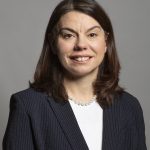
    The speech made by Sarah Olney, the Liberal Democrat MP for Richmond Park, in the House of Commons on 18 May 2022.

    It is a pleasure to speak in this Queen’s Speech debate, just as it was a pleasure to see Her Majesty yesterday at the opening of the Elizabeth line, our new railway line through London. As the right hon. Member for Ashford (Damian Green) has mentioned, it has overrun on both time and budget, but the small upside is that Her Majesty got to open the line that bears her name during her jubilee celebrations.

    The line itself, with its innovation and infrastructure, the opportunity it has provided for thousands of young people to develop their skills and the level of ambition it shows for economic growth in this country, is actually a much better tribute to Her Majesty than the speech delivered in Parliament in her name last week. We are here today to talk about how that speech achieves economic growth, and I am afraid to say that there was really very little in it at all. I think we all know and accept that economic growth, particularly at this time, is absolutely vital to support not just our small and medium-sized businesses, but all the organisations that support employment and entrepreneurship across this country.

    Yesterday, we saw the unemployment figures at their lowest levels since 1974. Conservative Members, not least the Prime Minister earlier today, have highlighted that that is a good thing, which it undoubtedly is. However, we also saw that, for the first time ever, there are more vacancies across the UK economy than there are people looking for work. I think we have to look at the serious implications of that, because it is going to be a real brake on growth. If we cannot fill those vacancies and businesses cannot get people into the skilled jobs they need to push forward, grow, create opportunities and provide economic growth, that is really going to hold this country back. So it is quite a serious issue as well as being some cause for celebration, as some people have said.

    One thing to highlight—everyone has been saying this—is that we are now facing 9% inflation. That means wage growth, but greater wage growth acceleration in the private sector than in the public sector, as I am seeing in my constituency. I was on a visit to Kingston Hospital the other day, and I was told that its biggest issue right now is being able to discharge patients out of hospital and back home. However, it cannot discharge patients because it cannot get them care packages, and it cannot get them care packages because people do not want to work in care for very low wages when they can get better wages working in hospitality or retail. So we need to concede that there is perhaps a dark side, as it were, to the unemployment figures, and that is really going to inhibit growth.

    Another thing we are beginning to see is that we are not trading to the extent of some of our partners across the world. According to the OBR, the UK has become a less trade-intensive economy. By the fourth quarter of 2021, UK exports remained around 12% below pre-pandemic levels, and trade as a share of GDP has fallen by around 12% since 2019—2.5% more than any other country in the G7. The Government pledged in the Queen’s Speech to

    “continue to champion international trade, delivering jobs across the country and growing the economy”,

    yet trade is declining and there is no determined plan for growth. They have talked about their free trade agreements with Australia and New Zealand, but we have highlighted on several occasions the potentially negative impact that they will have on British farming, and I do not think that the British Government are really listening to the concerns of farmers on this issue.

    In my constituency of Richmond Park, businesses are telling me about the multiple barriers they face to trade that are having a direct negative impact on their ability to grow. A very successful and popular restaurant in Richmond town centre called Don Fernando’s has closed after 32 years because of myriad issues, not least the high cost of importing the food and drink from Spain on which it relied to deliver its high-quality Spanish cuisine. A drinks company has had complications with customs checks, with a complete lack of support or advice from HMRC, which left its goods in quarantine for almost three months. Obviously, any kind of food and drinks trader cannot operate when facing such delays and with fresh food or drinks being kept for that length of time. The Government really need to get on board with some of the issues being thrown up by Brexit red tape and customs checks, and they really need to work hard to unlock some of these problems if they want to support our small and medium-sized enterprises.

    I want to highlight my disappointment that there was not more in the Queen’s Speech about insulation. We have talked a lot today about fuel prices, and that is a very real anxiety for many households across the country. We all know that one way of tackling that is to get to grips with some of our very poor housing stock, which obviously our low-income families are particularly impacted by. We need to see a great deal more from this Government to support households, particularly social housing tenants and their housing providers, to improve insulation and so improve energy efficiency in our housing. If we really got to grips with that now and launched a big drive right across the country, particularly for low-income families, think of the difference we could make when those fuel bills really begin to rack up in the autumn and winter. We could do that if we were really serious about it.

    This is about not just the fuel bills our constituents are facing now and are dreading in the winter, but the Government’s net zero commitment, because we want to reduce carbon emissions and households are a serious contributor to them. We really need to get to grips with that issue if we are to meet our net zero commitments. I was interested to find that there are 1,690 installer businesses that meet the requirements to participate in Government schemes. There is such a great opportunity here for improving innovation, entrepreneurship and skills training right across the country, and the Government need to put some serious money and some serious thought into that as soon as they possibly can.

    Finally, like other Members, I really welcome the mental health Bill, but I want to see a lot more from the Government to recognise the scale of the issue. The No. 1 problem in my constituency is access to health services of all kinds, and I am hearing concerns from constituents about dentistry, surgical procedures and GP appointments, but my experience is that the most critical issue is access to mental health services. The impact on our children of the pandemic and lockdown has been profound, and we are failing them if we do not get to grips with that impact. That impact is felt by our very youngest citizens, who were deprived of some of their early years of schooling and have so much socialisation and learning in a classroom to catch up on, and who face separation anxiety from their parents, as well as our teens and young adults, who have spent some of their critical socialising years in their bedrooms and are finding it difficult to reconnect with everyday society, especially as they move from school to whatever they are moving on to. They are finding it hard to move to university, training, further education or employment because they have missed out on some of that critical development.

    I want to see the Government do a great deal more. I have multiple cases of constituents waiting for treatment. I have a young girl aged just 12 who was referred to children and adolescent mental health services in March 2021. Thirteen months later, she is still awaiting treatment. Her parents are absolutely desperate. She has been hospitalised twice and repeatedly sent home from school due to suicide attempts. Schools are under increased pressure and are struggling to cope with complex mental health needs and the sharp rise in those presenting higher levels of risk. The Liberal Democrats are calling for a dedicated qualified mental health professional in every school to provide first-level support for young people and also to help teachers struggling to deal with this issue.

    There are multiple ways in which we need to respond to the challenges of our current economy and society, and I am afraid to say that the Queen’s Speech has failed in all these things. I urge the Government to do more on these issues.

  • Harriett Baldwin – 2022 Speech on Achieving Economic Growth

    Harriett Baldwin – 2022 Speech on Achieving Economic Growth

    The speech made by Harriett Baldwin, the Conservative MP for West Worcestershire, in the House of Commons on 18 May 2022.

    It was interesting to listen to the hon. Member for Rhondda (Chris Bryant). Although I will not be joining him in the Lobby this evening to vote down the entirety of the Queen’s Speech, including the economic crime and corporate transparency Bill, which is what he is choosing to do, I will say that he made his points forcefully and well. However, I endorse the Chief Secretary’s comments when he ran through the range of important Bills that are included in the Queen’s Speech.

    We were all shocked and taken aback today by the headline rate of inflation reaching 9%. It is a sobering moment, which many hon. Members have noted, so I start by saying that I think our Chancellor has been an unlucky Chancellor. He has had to face a pandemic, he has had to face war, and now, due to the consequences of that evil war, he has to face the inflation that is harming everyone in the United Kingdom in their pocket. None the less, I believe I am right in saying that my constituents feel very lucky that they have had this Chancellor throughout these difficult challenges, because he was so quick to provide help during the pandemic. The furlough scheme, the small business income support scheme and the culture recovery fund, to name just three, were gratefully received by constituents during the pandemic, and it is thanks to his plan for jobs that yesterday we saw the foundation of what we all want to achieve through economic growth: quite remarkably low unemployment in this country—the lowest since 1974.

    There were other remarkable things in yesterday’s jobs announcements, such as a record high number of vacancies. I think I am right in saying that it is the first time the number of vacancies has exceeded the number of jobseekers in this country. The plan for jobs has worked well, as has the help the Chancellor gave throughout the pandemic, so today, as we face this high inflation rate, we are in a position to say that we have a strong job market.

    It is also worth noting that this month marks the 25th anniversary of the independence of the Bank of England. I will strike a consensual note by saying that that was a really good policy decision. We must all reiterate the importance not only of the Bank of England’s independence, but of its achieving the 2% inflation mandate. It is incredibly important to our constituents that we have low inflation to form the foundation for achieving economic growth.

    It might surprise Opposition Members to hear this, but I think a windfall tax—

    Stephen Kinnock (Aberavon) (Lab)

    Is a great idea.

    Harriett Baldwin

    Well, I think a windfall tax that helps the lowest-income households is the right approach, and that is the approach that the Government are already following. There is already a windfall tax on the oil and gas sector: whereas most corporations in this country pay 19% corporation tax, those in the oil and gas sector pay 30% corporation tax and 10% windfall tax on top of that. There has been a windfall to the Chancellor from the price of oil and gas having risen so much, and he has rightly spent that windfall on people in the lowest-income households. Just this week, people in council tax bands A to D in my constituency will receive a £150 cash grant in their bank accounts. In a couple of months’ time, in July, there will be a hike in the national insurance threshold that will put a further £330 a year into the pockets of those who pay national insurance. We have also heard about the £200 to smooth the impact on household bills.

    I would urge every pensioner in this country on a low income to check whether they are entitled to pension credit. There are 850,000 pensioners in this country who are not claiming the pension credit they are entitled to. Can we all agree that we should encourage our constituents to claim that? It not only gives them extra cash, but means they get other benefits. There is the household support fund, which has been doubled to £1 billion. I would direct any of my constituents struggling with bills who reach out to me to ask about that fund. There is also the warm home discount, which has been increased and its eligibility has been widened. These measures are important and targeted at the lowest-income households, unlike a 5% across-the-board cut in VAT on fuel bills that would most benefit those who live in the biggest houses.

    In conclusion, it does not matter how much bad luck the world has thrown at us—I think the Chancellor has been unlucky—because by doing the right thing, we can make the luck that will be a strong foundation for achieving economic growth.

  • Chris Bryant – 2022 Speech on Achieving Economic Growth

    Chris Bryant – 2022 Speech on Achieving Economic Growth

    The speech made by Chris Bryant, the Labour MP for Rhondda, in the House of Commons on 18 May 2022.

    Five thousand one hundred and fifty-six people were admitted to hospital between September last year and February this year with malnutrition in England alone. That is more than in the whole of 2010. The number of people being admitted with scurvy has doubled in the past 10 years, and we are meant to be the sixth, or sometimes the fifth, wealthiest country in the world. We have inflation running at 9%, and for the poorest families it is at 10.9%, because more of their money is spent on food and on energy, where inflation is higher. They are getting a rougher deal than anybody else. That is my constituents.

    The Government answer so far is £200. They call it a gift, but it is not; it is a loan. It actually puts up next year’s bills by even more. We also have the more than £1,000 cut from universal credit. The hon. Member for Harwich and North Essex (Sir Bernard Jenkin) is absolutely right: of course we should be restoring the £20 a week on universal credit, and we have to do more for pensioners who are on fixed incomes as well.

    The Government have said, “Get a better paid job”—oh yes, it is easy, isn’t it, just getting a better paid job—or they have told us, “Get a different job”, or, “Get more hours.” Well, it is just not that simple, especially if someone has caring responsibilities. Incidentally, one of the cheapest deals that the Government get is free carers in the country. The Government say, “Shop more carefully for value brands.” Do Ministers honestly not understand how ordinary people do their shopping every week? That is what they have been doing for ages, and they are not deciding which brand; they are deciding whether to buy anything at all.

    Drive around on a bus all day just so that you do not have to pay the electricity bill—that seemed to be the Prime Minister’s answer just before the local elections. Now his new version is to cut the civil service by 91,000. Well, I guess there will be even fewer people sorting out the Passport Office. I do not know about anybody else’s, but my office is inundated with people saying, “I’ve got to go to a funeral”, or “I’ve got to go to a wedding”, or, “I’ve got a holiday that’s been planned and I won’t get any of the money back if I don’t have my passport by next Thursday, and I put the application in more than three months ago.” I am sorry, but cutting civil servants by 91,000 does not always go well. The one that really amuses me is the Prime Minister’s latest version, which is, “Let them eat foie gras.” We are allowed to have foie gras because apparently it is not Conservative to stop people maltreating animals so as to get a more exciting diet.

    I do not think this is a Gracious Speech. It is so flimsy, it barely counts as a gracious intervention, to be honest. It is so threadbare, it barely covers the Government’s dignity. It is nothing more than a letting out of air. It is a tired sigh, a long yawn, a tedious exhalation, a great big meh of a Queen’s Speech.

    There is no plan, no project, no leadership, no ideas, no programme for Government in here. Some of the so-called Bills are little more than glorified clauses. Great Governments give us really significant legislative programmes—measures such as the Reform Act, the abolition of slavery Act, the NHS Act, the minimum wage Act. What do we get here? The Harbours (Seafarers’ Remuneration) Bill. Of course it is good, but in relation to P&O this is the definition of slamming the door shut after the horse has bolted. Why is there not a proper Bill that would ban fire and rehire in its totality?

    There is a load of “Groundhog Day” Bills that were promised in last year’s Queen’s Speech and we are apparently meant to have completely forgotten, such as the High Speed Rail (Crewe—Manchester) Bill, which was promised last year but never happened, and the Product Security and Telecommunications Infrastructure Bill for 5G, which was also promised last year but never happened. I am really keen on the Bill to counter state threats, because we need to update the laws on espionage in this country, but that too was promised last year and never happened.

    Mark Fletcher (Bolsover) (Con)

    Will the hon. Gentleman give way?

    Chris Bryant

    I will not, because I am looking forward to hearing the hon. Gentleman’s speech later. I am sure it will be absolutely magnificent.

    There is also a mental health Bill that was promised last year and still has not come into being. A long overdue Bill is the Economic Crime and Corporate Transparency Bill. I have been arguing for such a Bill for a long time. In 2018, there was an opportunity to introduce all the measures that I guess we might have by the end of this legislative Session, but Companies House still says on its website, “Companies House does not verify the accuracy of the information filed.” So when we read that Boris Johnson Ltd was dissolved on 5 January 2021, we do not know whether that is true. We might like it to be true, but we do not know whether it is. Nor, for that matter, do we know for sure that Big Boris’s Bouncing Bonanza Ltd was dissolved on 1 February 2022. It is listed on Companies House, but we do not know whether it is true.

    Where is the Bill on seizing assets? It is great that we freeze assets of those who are sanctioned for their participation, involvement or engagement in Putin’s regime, but there is no provision to seize assets, which is what we really need to do and which other countries are doing.

    There are all the twaddle Bills—complete and utter twaddle. My favourite is the Human Rights Bill, which either will be compliant with the European convention on human rights, in which case it is completely and utterly useless, or will not comply with the European convention, in which case it will presage the UK departing both the convention and the Council of Europe and is therefore an act of self-harm.

    Then there is the Northern Ireland protocol Bill. I am really looking forward to the day when someone in the Government finds out who actually signed the Northern Ireland protocol. That is going to be a really good day. This is what I worry about: we have been preaching, quite rightly, to Vladimir Putin and President Xi about abiding by international law, yet barely a few years after we signed up to a treaty, we want to tear it up. The only person who is laughing about all this is President Putin.

    We have the Bill to privatise Channel 4, coming from a Culture Secretary who did not know that Channel 4 does not receive public funds, who did not know that Channel 5 has always been a private body, and who told the Salvation Army magazine The War Cry,

    “I am not an MP for any reason other than because God wants me to be… I am just a conduit for God”.

    I have to say I worry about people like that bringing in legislation.

    I do not think that this Queen’s Speech addresses any of the problems of my constituents. They are choosing between heating and eating, they worry about whether they will be able to pay the rent, they worry about their family—and we still have not addressed any of the issues in the NHS. I had cancer three years ago, and I was told that I probably had less than a year to live. I know how important early diagnosis is. At the beginning of covid, we had a 4.4 million backlog of people waiting for surgery; we now have a 6.1 million backlog, and still I see no answer to how they can get the treatment they need to save their lives. That is why I say this is a meh.

  • Bernard Jenkin – 2022 Speech on Achieving Economic Growth

    Bernard Jenkin – 2022 Speech on Achieving Economic Growth

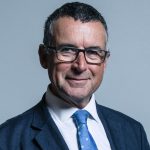
    The speech made by Bernard Jenkin, the Conservative MP for Harwich and North Essex, in the House of Commons on 18 May 2022.

    It is appropriate that I am following the quite passionate speech by the hon. Member for Nottingham East (Nadia Whittome) about the conversion therapy Bill. I broadly welcome the Queen’s Speech and the Government’s legislative programme. I was always in favour of some kind of legislation about conversion therapy, but the more I have looked at the issue, the less and less happy I am that there should be such a Bill, not because I am in favour of conversion therapy, but because I cannot see that legislation is either necessary or desirable. I am ready to be proved wrong, but I can think of no coercive behaviour that it would ban that is not already illegal. This Bill will be used to stoke exactly the kind of bitter disputes about transsexuality that we need to resolve before we legislate next in this field. Again, I am happy to be proved wrong—let us see the Bill—but we could have done with some pre-legislative scrutiny of such a Bill.

    Richard Graham (Gloucester) (Con)

    Although conversion therapy and, indeed, hedgehogs are both fascinating subjects, in terms of achieving economic growth, does my hon. Friend agree that what the Government are doing on levelling-up funds and bringing investment that can act as a catalyst for further investment in great small cities such as Gloucester will help to create jobs, footfall and retail—all the things that people in our country value—in order to have the opportunities to bring about that growth?

    Sir Bernard Jenkin

    I am most grateful to my hon. Friend for that intervention, but we should recognise that these issues of conversion therapy and transsexuality are very important to certain sections of society. They need to be addressed, but we need to be sure that we address them in the right way.

    Geraint Davies

    Will the hon. Gentleman give way?

    Sir Bernard Jenkin

    I will, but I do not want to give way too often because we are not time-limited.

    Geraint Davies

    Some years ago, I brought forward a Bill on the regulation of psychotherapists, which recommended banning conversion therapy. There was a conference that 100 conversion therapists attended, so this is a widespread and abhorrent practice. Does the hon. Gentleman agree that those who say that transsexuality should not be included seem to be those who think that people would go through the process of becoming a transwoman in order to rape another woman? There are a lot of male rapists out there. It seems to be a lot of effort for someone to have their head kicked in by other men. Transgender people should be included in the Bill.

    Sir Bernard Jenkin

    I had not intended to make a great speech about this subject. I note the point that the hon. Gentleman has made and I wish to move on.

    I welcome the forthcoming legislation to protect the Belfast/Good Friday agreement. I say to the right hon. Member for Leeds Central (Hilary Benn), who spoke a few moments ago, that perhaps we agree a great deal about the future of the Northern Ireland protocol. The question is whether we can make it happen unless we have some legislation coming down the track as well, because the EU has not changed its mandate.

    I want to concentrate today on much more immediate challenges. Covid supply chain disruption persists in many parts of the world, notably China, and now we have Russia’s dreadful war against Ukraine, which frankly has shattered the geopolitical order that we have become used to for decades. We all used to believe in what the Germans called, “Wandel durch Handel”—the mistaken faith that nations that trade together would never go to war with each other. President Putin has smashed that confidence.

    Business and Governments are reducing their exposure to dependency on all autocratic regimes. That is throwing globalisation into reverse, creating massive price increases and shortages. Poorer nations are acting to keep their food affordable for their own people. For example, India has just banned wheat exports, following Indonesia, which banned palm oil exports. We have an acute, growing and potentially far greater energy supply crisis in Europe. Europe cannot continue to rely on supply from Russia. This crisis requires a vast reorganisation of Europe’s energy supply and trading arrangements, and this massive adjustment will take years and is unprecedented. Only major food and energy producers in the world, such as Canada and the US, will avoid the worst kind of recession.

    At least the United Kingdom can produce some of our own gas and oil and can continue to expand renewables, but why are we pumping our surplus gas out to Europe this warm spring to fill EU storage capacity, when we should be filling our own? The Government shut it down, and we need to reopen our gas storage capacity as quickly as possible. I fervently hope that we can achieve net zero by 2050 without excessive cost. The Government are right to see gas as the essential transition fuel, but why import gas when we can produce our own more cheaply?

    Meanwhile, we must all recognise the cost of living crisis—yes, crisis. Even before today’s shock rise in CPI to 9%, the Commons Library had given me striking projections for the effect of this crisis on households. The full-year cost of just energy and food prices will rise by well over £1,000 a year for the lowest 20% of households by income and by £1,500 a year for pensioner households. A summer package to rescue the most vulnerable households is needed to avoid real financial distress and personal anguish and to support the economic demand of the most vulnerable households, or we will be creating possibly a worse recession than is already expected.

    I welcome the suggestion in The Times today that the Government are considering a package. The spring statement represented peacetime thinking. Like after the unforeseen covid crisis, the Treasury must adapt to this unexpected war in Europe and accept that this new global energy and economic crisis also requires a very substantial policy response. I have to say that is far greater than the £3 billion package that the Labour party has offered us, though I do not subscribe to the rest of its fiscal profligacy.

    I suggest that the £20 uplift in universal credit should immediately be restored. The abolition of VAT on domestic fuel would abolish a regressive tax that hurts the poorest households the most. We can do that now we are outside the EU. The Government should abolish the green levies on energy bills and fund them from the Exchequer, as recommended by Professor Dieter Helm. The Government should provide pensioners and poorer families with the confidence they can afford to stay warm. We should double the warm home discount and treble the winter fuel payment.

    This package would cost not £3 billion, but £13.5 billion from July in this current tax year, but that is still less than the recent tax increases we have seen, and it is about 0.6% of GDP and affordable. Now or later, we should also consider relief for middle-income households. The lower 40% of households will feel severe stress from energy and food costs alone. We could start reindexing tax thresholds, or more, and that would have the advantage of incentivising work and productivity.

    I have watched Governments—and Oppositions, I think we saw it today—blindsided by their own commitment to outdated thinking and policies of the past. There is no excuse for another such episode. My right hon. Friend the Chief Secretary is right to sound cautious, but we can see what is coming, and I am confident that this Government will act as they must.

  • Nadia Whittome – 2022 Speech on Achieving Economic Growth

    Nadia Whittome – 2022 Speech on Achieving Economic Growth

    The speech made by Nadia Whittome, the Labour MP for Nottingham East, in the House of Commons on 18 May 2022.

    This is a Queen’s Speech that provides mediocre answers to the wrong questions. The Government acknowledge that there is a cost of living crisis, but they do not want to do anything about it. They acknowledge that there is a housing crisis, but they are not willing to control rent so that people can afford to live in their homes. They acknowledge that energy is expensive. But do they want to talk about meaningful price caps? Do they want to talk about retrofitting or insulation? Did they vote in favour of a windfall tax to lower bills when they had the opportunity yesterday? No, no and no.

    This is a Government who tell us they want action on the climate crisis, and then, when a protest movement comes along to demand just that, introduce legislation to have them sent to jail. They want to invest, they tell us, in the future. But the Conservatives have been in power for 12 years and they have cut the public sector to shreds. Wages will be lower in 2025 than they were in 2008, when I was 12 years old. Since they came to power, the number of people on zero-hours contracts has risen more than fivefold. All of this happened on their watch—and are they going to reverse it? No.

    In 2010, the Trussell Trust handed out 48,000 food parcels. Last year, it handed out 2.1 million. Meanwhile, Britain gained a record number of billionaires, between them owning £597 billion—about triple the annual operating budget of the NHS. That is the dynamism of the market for you—the kind of dynamism that makes an elderly lady sit on the bus all day to keep warm because she cannot afford to heat her home. We need a publicly owned energy system that delivers cheap, green energy; an above-inflation rise in the minimum wage; at least the restoration of the £20 universal credit, but really a reversal of all the benefit cuts since 2010; and rent controls.

    Finally, I would like to address the disgrace of explicitly excluding trans people from the so-called ban on conversion therapy. Once again, the Government acknowledge that there is a problem, but will they extend the protection of the law to those who need it most—young trans people, half of whom have attempted suicide by the time they reach the age of 26? No. So transphobic parents will still be able to hire someone to psychologically abuse their child in an attempt to stop them being trans, and this practice will still be perfectly legal. What kind of message does that send to young trans people fighting to survive? We need a Government who are on the right side of history, but instead we have a Government of pound-shop authoritarians made on the playing fields of Eton and in the Daily Mail’s wildest dreams. They know there is a problem, but what they cannot do is recognise the truth—that the problem is them.

  • Chris Grayling – 2022 Speech on Achieving Economic Growth

    Chris Grayling – 2022 Speech on Achieving Economic Growth

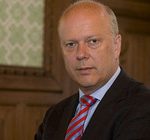
    The speech made by Chris Grayling, the Conservative MP for Epsom and Ewell, in the House of Commons on 18 May 2022.

    Thank you very much, Madam Deputy Speaker; I will endeavour to fulfil that.

    The right hon. Member for Leeds Central (Hilary Benn) is right about conciliation, but it is noticeable that the European Union is preventing the United Kingdom from participating in Horizon Europe, while allowing the Israelis to do so. That does not feel to me like an awful lot of good will from their side, and that is to be regretted.

    I rise to support the Queen’s Speech. As we focus on economic growth, these are extraordinary and difficult times for our economy. We have had in this country to deal with an unprecedented series of problems, and so have our Ministers—something the Opposition often forget as they throw brickbats at them.

    We now know from the World Health Organisation that the Government and the country handled the tragic circumstances of the pandemic pretty well. Many countries suffered and so did we, but we were far from being the bad performer that has been suggested. We also forget the continued impact of the pandemic in China, where there are severe lockdowns still. That is causing an economic ripple effect that contributes to the inflation problems we face. The sad reality is that when oil prices, food prices and the cost of household energy soar, those things are outside the control of any individual Government and there are few Governments that can wave a wand and solve them.

    I am pretty supportive of much of what this Government have done and how they have gone about dealing with the range of issues that have arisen, but I make one simple point to the Minister and his colleagues: we cannot achieve growth by over-taxing our economy. The decisions that have been taken on tax have been taken, but the direction of travel needs to change, and soon.

    We also need to step up our incentivisation of investment. If we are to deal with the huge energy challenges this country faces, we must do more. That means continuing our dramatic progress on wind and solar power; it means, I suspect, looking again at tidal energy and it means developing hydrogen. It must be said that we would be in a much more difficult position if this Government and the coalition Government before them had not placed such emphasis on renewables. That was clearly the right thing to do. However, we also need more domestic production of gas. There are those who say we should stop all fossil fuel projects now. I take completely the opposite view.

    As the world rightly moves away from coal, something needs to take its place. Countries that have been dependent on coal are not suddenly going to make a complete switch to renewables or zero-emission nuclear power stations overnight, so gas, which is the cleanest of the fossil fuels, must be a short-term priority for us. Indeed, it is the move away from coal in parts of Asia that started the gas price surge in the first place. It is pretty clear that the world does not at the moment have enough gas for the transition to net zero, particularly as we deal with the consequences of the war in Ukraine, so we will see prices continue to remain high unless we deal with supply issues.

    That is why it makes absolute sense—the Government are right to be supporting this—to have additional extraction of gas from the North sea. Frankly, we would be in dereliction of our duty if we did not look again at the potential to use shale gas to help us through. To those who say, “No more UK production”, I just say this: the emissions from a tanker of gas from Qatar are roughly twice those of a similar consignment from the North sea. I want to cut emissions. I also believe that we need a steady transition to net zero by 2050—but it is a transition. Burning fuel that generates twice the emissions makes no sense. Gas is a key part of our transition to net zero, and the more it can be produced in the UK, the lower our emissions will be. We also need to move rapidly on nuclear, and I welcome the Government’s commitment to that as well. We cannot achieve net zero without it.

    Let me turn to the environment and conservation. If I have a disappointment in this Queen’s Speech, it is that the legislation on conservation I was hoping for has slipped beyond this Session. I hope that my right hon. Friend the Minister for Brexit Opportunities and Government Efficiency, who is in his place will make sure that it comes back in the next Session. We urgently need to take forward the progress we have made but also to put in place a modernised framework for wildlife protection in this country. For example, it makes no sense to have expansive protections in place for newts, which are numerous here, but not for creatures such as the hedgehog that have declined so much. I have pushed for the hedgehog to have greater legal protection and I look forward to this happening in the next Session, at least. But there are steps that can be taken now. When the levelling-up Bill comes before the House, I will table an amendment, if the Government have not already acted, to require a full wildlife survey of every development site, and if vulnerable species are found, there should be a legal duty to relocate them to an appropriate habitat elsewhere. No more should we tolerate developers cutting down all the trees on the site and clearing all the foliage, turning it into a wasteland, before they have even applied for, let alone secured, planning consent. We need growth, and we need more houses, but a cavalier approach to local wildlife cannot be the consequence.

    In this Session I will continue to push Ministers to go further and faster on bottom trawling in marine protected areas. We have made a start in the first few areas, but there is much further to go. This is a really important of protecting our ecology. Having stronger environmental protections in our seas is one of the benefits that is deliverable now that we have left the European Union. It would not have been possible while we were still EU members.

    Turning to broader issues on conservation, I applaud Ministers for the work they are doing internationally, and particularly what Lord Goldsmith is doing to support the Congo Basin. The leadership of my right hon. Friend the Member for Reading West (Alok Sharma) on COP26 and its aftermath has been exemplary. One of the key moments of the coming Session will be the negotiations at the Convention on Biological Diversity summit this year. I want the UK to play a key role in delivering what is needed—a renewed international drive on species protection and habitat restoration. WWF estimates that the amount of degraded land internationally where deforestation followed by over-farming has taken place is the size of South America. If we are going to tackle climate change, protect endangered species and deal with a global food shortage, we need to start recovering this land, restoring it for wildlife in some areas or properly managed agriculture in others, with a particular focus on creating sustainable livelihoods for the people in those areas. Our Ministers need to make sure that we set a path towards those goals as we finish our year of COP presidency and take part in the CBD discussions.

    There is a lot to do in terms of a growing economy, the move towards net zero, and doing our bit internationally to secure a proper future for all our environments. I am glad to support a Government who, in my view, have made a good start, but there is still a lot to do.

  • Hilary Benn – 2022 Speech on Achieving Economic Growth

    Hilary Benn – 2022 Speech on Achieving Economic Growth

    The speech made by Hilary Benn, the Labour MP for Leeds Central, in the House of Commons on 18 May 2022.

    This morning, the Foreign Secretary said:

    “We are in a very, very difficult economic situation”.

    We all recognise that that is true. Although there are some things that no Government can control, I encourage Ministers to reflect a little more on some of the difficulties that they have brought upon themselves and British business.

    In his speech, the Chief Secretary to the Treasury somehow neglected to mention the fact that our goods trade with the European Union since January 2021 has had to contend with red tape, bureaucracy and costs, including transport costs, which the Government have dumped on British business via the deal that they concluded. We know that we have small and medium-sized companies that are struggling to export to the EU. The right hon. Member for Ashford (Damian Green) talked about the importance of the cultural sector, but we know that musicians and performing artists face visa applications and customs declarations, which they find incompatible with trying to tour in Europe.

    We know that farmers are suffering from a shortage of labour. On Monday, when I was in Kent—I am co-convenor of the UK Trade and Business Commission—I talked to a fruit farmer. He said that, last year, he could not pick 8% of his crop. What has he done this year? He is reducing the amount that he plants. What does that do for British food security? It has benefits for other countries that are growing more, but it is making it harder for British farmers to grow more here.

    While businesses are having to cope with all that cost, the Government have for the fourth time postponed checks on EU businesses exporting into the United Kingdom, so they face less of the checks and costs that the Government have just dumped on to British businesses. The Office for Budget Responsibility, as Members will know, says that the UK has,

    “missed out on much of the recovery in global trade”.

    According to Her Majesty’s Revenue and Customs, the number of UK businesses exporting goods to the EU fell by an astonishing 33% last year compared with the year before. That is mainly small businesses that have said, “We can’t be bothered with all of this. We’re giving up exporting.” How does that help economic recovery?

    Kevin Hollinrake

    The right hon. Gentleman is making a strong point, and I am not a remoaner in any shape or form, but of the Bank of England’s evidence to the Treasury Committee this week, the evidence from the Governor of the Bank of England, his written evidence or the minutes of the Monetary Policy Committee meetings on the labour shortages the UK faces, not a single one mentioned Brexit. Why does the right hon. Gentleman think that is? Is it not the case that we must confront the brutal facts if we are going to solve some of these problems?

    Hilary Benn

    I can only report what I was told by the farmer on Monday. He has relied over the years on workers who have come from eastern Europe, and he says, “They’re just not coming in the same numbers, and that’s why I can’t pick my crops.” That is the point I am making.

    Harriett Baldwin

    The right hon. Gentleman had the pleasure, as I did, of having lunch with some senators who were visiting here from France. I believe he was at the very conversation where they said how difficult it was for them too to find seasonal agricultural workers, because of the disruption caused by the pandemic.

    Hilary Benn

    Undoubtedly, disentangling the impact of the pandemic and other factors is continuing work; the Office for National Statistics makes that point when it publishes the statistics. However, there is no doubt at all that the change in the visa regime being operated by the Home Office now is having an impact on British farmers, and that was the point I was trying to make. I long for the day when these things—

    Matt Rodda (Reading East) (Lab)

    Will my right hon. Friend give way?

    Hilary Benn

    Very quickly, because of the time constraints.

    Matt Rodda

    My right hon. Friend is making an excellent point. I have been given the same feedback by small businesses. Does he agree that there is also a serious connection between the rising cost of food and the lack of labour for British farms, and that that particular area could be driving inflation?

    Hilary Benn

    There is no doubt that if we put more costs, bureaucracy, red tape and increased transport costs on businesses, prices will increase. That is one of the ways businesses cope. Those things need to be sorted out but, as long as there is no trust between the European Union and the United Kingdom, it is frankly not going to happen.

    The principal cause of that distrust is the stand-off over the Northern Ireland protocol, which is the other issue I want to raise. We have two problems. One is that the Northern Ireland Government is not functioning and the second is that the Northern Ireland protocol is not working. The Good Friday agreement and the power-sharing and peace it has brought cannot be jeopardised by trade problems caused by the protocol.

    It is extremely tempting to dwell on the miserable history of how we got here—how the Prime Minister moved from promising that he would never put a border in the Irish sea to promptly doing so when he became the occupant of No. 10, and then to describing it as “a great deal” for Northern Ireland—but, in all honesty, the Prime Minister’s failings and inconsistencies are not a reason to inflict damage on Northern Ireland or on the British economy when so many people are struggling.

    We all knew that leaving the European Union would create difficulties over Ireland. The only thing everyone agreed on—practically the only thing—was that there could be no return to a hard border. That is why the most important part of the protocol talked about goods at risk, and this is at the heart of the debate: goods at risk, having entered Northern Ireland, of going into the European Union, as opposed to goods that are going to stay in Northern Ireland. That was never defined, and the joint committee was given the task of dealing with it.

    We have a stand-off at the moment. In one way, that stand-off could just be extended and extended and the Government could continue to prolong the grace periods—unlawfully, as per the protocol—with the EU starting legal action and staying it while they try to negotiate. That is one way of dealing with it. In fairness, the EU moved on medicines, and I praise Maroš Šefčovič for that. He changed EU law to allow NHS patients in Northern Ireland to get NHS medicines, which is pretty obvious really.

    I said to Mr Šefčovič on Thursday, when he appeared before the Parliamentary Partnership Assembly, “Thanks for doing that, but if you can move on that, can you not move on other things as well?” We all know the list of remaining problem areas: seed potatoes, parcels, guide dogs, supermarket deliveries to shops, organic food and divergence on the use of titanium dioxide, an ingredient in cakes and ice cream that I was not previously aware of. The EU proposals would provide more checks and problems than the current stand-off, and it is important to recognise that.

    I say to the Government, as I said to the Foreign Secretary yesterday, that threatening to disapply the protocol will not work. In the end, it will result in retaliation. If retaliation results in further obstacles to trade or, heaven forbid, a trade war, that will make the cost of living crisis even worse. We have a real war in Europe going on; we do not need a trade war with our biggest trading partner.

    At the same time, the EU needs to understand that it has to move to help to bring this crisis to an end. If one takes those supermarkets that sell only to shops in Northern Ireland, what exactly is the risk to the integrity of the single market from a sandwich, a cake or a chicken—I speak as a vegetarian—that is bought in a supermarket in Strabane or Belfast? Can anyone point, in the 16 months the grace period has operated, to a single example where the integrity of the single market has been damaged? I am not aware of any. There is a problem with divergence, but I hope that a way of mutually recognising each other’s food production standards arrangements can come.

    In conclusion, this crisis arises from a practical problem and it requires a practical solution. That is what politics is meant to deliver. That is our job. We need patient diplomacy and negotiation that takes as its starting point the purpose of the rules—they are there for a purpose—rather than the rules themselves and applies that to the unique and particular circumstances of Northern Ireland. Could we have less squabbling and more cool heads? Could we have less escalation and more conciliation? My message to both sides in the partnership council is a simple one: “You’ve got the power to deal with this. Sort it out.”