
Tag: 2022

  • Sarah Jones – 2022 Speech on the Public Order Bill

    Sarah Jones – 2022 Speech on the Public Order Bill

    The speech made by Sarah Jones, the Labour MP for Croydon Central, in the House of Commons on 23 May 2022.

    It is a pleasure to follow all the contributions that have been made today.

    As you know, Madam Deputy Speaker, and as many of my hon. Friends have said, we were disappointed with this Queen’s Speech. It was a missed opportunity to tackle the cost of living crisis, to tackle climate change and to attack the very real problems of crime. The long-awaited victims Bill has yet to make its way to the Chamber but, if the Government were serious about governing in the interests of the people, that Bill might have been at the top of their agenda. There was nothing in the Queen’s Speech to turn around the collapse in prosecutions or the rise in crime, nothing to tackle violence against women and girls, and nothing to prevent neighbourhood crime.

    This is a Government with no guiding principle, searching for anything to show a sense of purpose where there is none. What are this Government for? What good have the last 12 years brought us? That is a question for another time, but the hotch-potch of Bills in this Queen’s Speech tells its own story.

    The Public Order Bill largely rehashes what we saw in the Police, Crime, Sentencing and Courts Act 2022, which—as my hon. Friend the Member for Coventry South (Zarah Sultana) and others have pointed out—was rejected by the other place. Moreover, it arrives before the protest clauses in that Act have come into effect, which in itself seems slightly peculiar. Perhaps introducing the statutory instruments to put those clauses into law would have made more sense, but I am not sure that sense is a guiding principle of this Government.

    The problem that the Bill seeks to solve is the need to ensure that vital public infrastructure is not seriously disrupted to the detriment of the community and our national life, while also ensuring that the rights of free speech and public protest are protected. The Opposition believe that it manages to deliver neither of those things. A starting point must be to ask: what are the basics that the police need to equip them with the tools that they need to manage protests in the minority of cases that lead to lawlessness or violence? Let me tell the House about the basic pillars.

    Paul Bristow

    Will the hon. Lady give way?

    Hon. Members

    No! Keep going.

    Sarah Jones

    I hear heckling. I will keep going for a minute. Perhaps the hon. Gentleman will listen to my pillars, and then see if he still wants to intervene.

    First, we need the police numbers to be able to deal with protests. The policy of the Conservative party, which was to cut more than 20,000 officers, thousands more police community support officers and thousands of police staff, did precisely the opposite. Specifically, there are not enough protester removal teams across the country, as the inspectorate pointed out in its report on policing protests. Why not do something about that? Secondly—this too was highlighted in the report—the police across the board need effective training in the law and in policing protests so that they can use existing legislative processes. The inspectorate said:

    “Non-specialist officers receive limited training in protest policing.”

    According to the Police Foundation, over the seven years up to 2017-18, 33 forces reduced their budgeted spending on training in real terms by a greater percentage than their overall reduction in spending. Forty per cent. of police officers say that they did not receive the necessary training to do their job. Why not do something about that?

    Thirdly, we need to give the specialist teams the tools that they need to be effective at prevention and de-escalation. I recently visited the brilliant mounted police branch team in the Met. The mounted police are an important part of the policing of protests and other events such as football matches, but they too have been cut across the country, not just in the Met. Why not do something about that?

    Finally, when the police do press charges, they want to be sure that those charges will be followed through. There is no deterrent in a system that never sees cases go to court, but we are told by the police and by the inspectorate that the Crown Prosecution Service often has to drop cases because of huge court delays. Why not do something about that?

    The Government have taken away the tools that the police need to manage protest. How can they claim to take this issue seriously?

    Paul Bristow

    I have been listening carefully to the hon. Member, and she is making an interesting speech, but would she agree with some of her own Back Benchers on this? For example, the hon. Member for Coventry South (Zarah Sultana) said that the Police, Crime, Sentencing and Courts Bill would marginalise Roma and Traveller communities out of existence, and the hon. Member for Cynon Valley (Beth Winter) said that this Public Order Bill was a threat to religious gatherings. Does the hon. Member agree with those two points?

    Sarah Jones

    The hon. Gentleman is talking about the Police, Crime, Sentencing and Courts Act 2022, which we on this side of the House opposed, in part because of its punitive measures against the Traveller community—so absolutely, yes.

    We think that this Bill does not strike the right balance on protests and that it is not the most effective way to stop significant disruption of our national infrastructure. The right to protest is a fundamental right and a hard-won democratic freedom that we are deeply proud of. We will always defend the right to speak, to protest and to gather, but there is a careful balance to be struck between those rights of protest and the rights of others to go about their daily lives. Much of the debate today has been about that balance.

    We heard from the hon. Member for Cities of London and Westminster (Nickie Aiken) about the disruption caused in her constituency. We heard from the hon. Member for Ashfield (Lee Anderson) about attending the miners’ strike. We heard from my right hon. Friend the Member for Hayes and Harlington (John McDonnell) about the expansion of Heathrow and the desperate plight of people in his constituency. We heard from the hon. Member for North East Bedfordshire (Richard Fuller) about how we can ensure that protest is not used as a cover for criminal activity. We heard from my hon. Friend the Member for Battersea (Marsha De Cordova) about the importance of protests in the context of rights for people with disabilities. This is a genuine debate, and it is the right one to have. We know that the Prime Minister values the right to protest, as he said that he would lie down in front of the bulldozers to stop a third runway at Heathrow airport.

    But some protests tip the balance in the wrong direction. Protest is not an unqualified right. Campaigners who block people from reaching relatives in hospital, marches that close down entire towns and oil protests that prevent people from crucial travel raise a valid concern, which is why we have tabled a reasoned amendment to the Bill. Our approach, rather than seeking to restrict people’s rights beyond the point of reasonableness, is to establish a swifter process for seeking an injunction to prevent disruption to vital national infrastructure. That would be a more effective prevention tool and, as my right hon. Friend the Member for Normanton, Pontefract and Castleford (Yvette Cooper) said earlier, it would have the advantage of giving judicial oversight, which would safeguard rights.

    If protesters are causing a huge amount of disruption to the supply of essential goods and services such as oil or medical supplies, an injunction is more likely to prevent further disruption than more offences to criminalise the conduct after the event. Injunctions are more straightforward for the police. They have more safeguards, as they are court-granted, and they are future-proofed for when protesters change tactics. We would include emergency health services in vital national infrastructure, and we would also ensure proper training, guidance and monitoring on the response to disruptive protests, in line with the inspectorate’s recommendations, so that we could use the existing legislation effectively.

    Lee Anderson

    The hon. Lady is making a powerful speech and some good points. She talks passionately about protesters, and sometimes there is a case and sometimes there is not. Will she cast her mind back to the Black Lives Matter riots on Whitehall over a year ago, during lockdown when those gatherings were illegal? At least two of her own MPs were there, encouraging those yobbos who were burning flags and attacking the police. Does she agree that that behaviour by her own MPs was wrong?

    Sarah Jones

    I am not sure that today is the right day to be talking about people who have broken lockdown rules. Perhaps the hon. Member has not seen some of the pictures that the rest of us have been looking at this afternoon.

    We believe that some of the provisions in this Bill effectively replicate laws already in place that the police can and already do use. There is already an offence of wilfully obstructing the highway. There is already an offence of criminal damage or conspiracy to cause criminal damage. There is already an offence of aggravated trespass. There is already an offence of public nuisance. More than 20 people were arrested for criminal damage and aggravated trespass at Just Stop Oil protests in Surrey. Injunctions were granted at Kingsbury oil terminal following more than 100 arrests, and there were arrests for breaching those injunctions, which are punishable by up to two years in prison—nine people were charged. When Extinction Rebellion dumped tonnes of fertiliser outside newspaper offices, five people were arrested. Earlier this year, six Extinction Rebellion activists were charged with criminal damage in Cambridge. In February this year, five Insulate Britain campaigners were jailed for breaching their injunctions. In November, we saw nine Insulate Britain activists jailed for breaching injunctions to prevent road blockades.

    Removing people who are locking on can take a long time and require specialist teams, but a new offence of locking on will not make the process of removing protesters any faster. The Government should look at the HMICFRS report and focus on improving training and guidance, and they should look to injunctions.

    I cannot but attack the issue of stop and search and SDPOs. This Bill gives the police wide-ranging powers to stop and search anyone in the vicinity of a protest, such as shoppers passing a protest against a library closure. The Home Secretary said the inspectorate supports these new powers, but the inspectorate’s comments were very qualified and talked of, for example, the powers’ potential “chilling effect”.

    Many of my hon. and right hon. Friends talked of the serious problem of disproportionality, as did the hon. Member for North East Bedfordshire, and talked of how these powers were initially rejected by the Home Office because of their impact. Members who have spent many years campaigning on these issues, like my right hon. Friend the Member for Hackney North and Stoke Newington (Ms Abbott), pointed to the risk of these deeply concerning provisions increasing disproportionality, bringing peaceful protesters unnecessarily into the criminal justice system and undermining public trust in the police who are trying to do their job.

    Our national infrastructure needs protecting. We hear the anger, irritation and upset when critical appointments are missed, when children cannot get to school and when laws are broken. As our reasoned amendment makes clear, we would support some amended aspects of the Bill, but we cannot accept the Bill as it currently stands. The proposals on suspicion-less stop and search, and applying similar orders to protesters as we do to terrorists and violent criminals, are unhelpful and will not work. The police already have an array of powers to deal with such protests, and injunctions would be a better tool to use. We will not and cannot stand by as the Government try to ram through yet another unthought-through Bill in search of a purpose.

    I urge all reasonable Members to support Labour’s reasoned amendment, and I urge the Government to focus instead on their woeful record on crime.
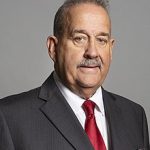

  • Mick Whitley – 2022 Speech on the Public Order Bill

    Mick Whitley – 2022 Speech on the Public Order Bill

    The speech made by Mick Whitley, the Labour MP for Birkenhead, in the House of Commons on 23 May 2022.

    It says everything we need to know about this Government’s priorities that their first Bill since the Queen’s Speech does not seek to address an out-of-control cost of living crisis, ensure that justice is done for the 1.3 million victims of crime who were forced out of the criminal justice system last year, or indeed deliver any of the people’s priorities. Instead, Conservative Members, who have so often styled themselves as the champions of individual liberty, have lined up today to defend this latest assault on our basic rights of peaceful protest and public assembly.

    The Home Secretary has resurrected and repackaged some of the most draconian provisions of the Police, Crime, Sentencing and Courts Bill, which were rightly thrown out by colleagues in the other place earlier this year, and has returned them to this House, but the issues remain the same. The Bill is unworkable, disproportionate and deeply illiberal. The Home Secretary wants to silence the voices of protesters outside this House, but we must ensure that they are heard loud and clear today. We must kill this Bill.

    It is not just about a single piece of legislation, but about the direction of this Government as a whole, and the creeping authoritarianism that increasingly characterises their every step. After years of being told that we had to free ourselves from the supposed despotism of the European Union, we now find ourselves subject to the whims of an Administration far more oppressive and contemptuous of dissent than any ever found in Brussels. From the Police, Crime, Sentencing and Courts Act and the Nationality and Borders Act to the Bill before us today, Ministers have come to this House month after month armed with legislation that seems more suited to Viktor Orbán’s Hungary than to a robust liberal democracy.

    The right to protest, the right to boycott and even the right to strike seem set for the Tory chopping block. We are forced to contemplate with horror a future in which the rights and freedoms for which earlier generations fought and died have been trampled underfoot. We must not allow that to happen. I plead with colleagues on the Government Benches—there are not many of them here, by the way—and especially with those hon. Members who bemoaned mask madness as a symptom of Government tyranny, but who remain conveniently silent on this issue of actual importance, to join me in the No Lobby today.

    Finally, I want to speak out about those environmental campaigners whose actions have repeatedly been invoked as justification for these draconian measures. I have no intention of justifying their tactics or some of their campaigns, which have caused significant disruption and even misery to working-class communities, but I find it interesting that a handful of activists blockading an oil refinery can set the wheels of Government spinning so quickly, while the imminent prospect of breaching the 1.5° global warming threshold musters, at best, empty rhetoric and unrealisable targets from those on the Government Benches.

    As the northern hemisphere approaches a summer that is likely to be characterised by record-breaking heatwaves and power outages, I wonder how history will judge a Government who prioritise criminalising climate protesters over tackling the unfolding climate catastrophe.

  • Zarah Sultana – 2022 Speech on the Public Order Bill

    Zarah Sultana – 2022 Speech on the Public Order Bill

    The speech made by Zarah Sultana, the Labour MP for Coventry South, in the House of Commons on 23 May 2022.

    When this Tory Government were elected in December 2019, pundits asked about their agenda. They wondered what their central driving force would be. Of course, the Government had their line: they spoke about being a “people’s Government” and about “levelling up”. Today, that shallow façade has been totally discredited, with the Government overseeing the biggest fall in living standards since records began, hitting the poorest hardest through policies such as the scrapping of the universal credit uplift and a real-terms cut to pensions and social security. This Bill demonstrates yet again what the Government are really about, because there has been a clear thread running through their legislation. It is not about “levelling up” or “building back better”, or whatever empty slogan they are using today; it is a growing and unmistakable authoritarianism. That is clearly seen in the Bill that we are debating.

    Government Members might complain but look at what they are doing, from the Overseas Operations (Service Personnel and Veterans) Act 2021 and its attempt to effectively decriminalise torture; to the spy cops Act—the Covert Human Intelligence Sources (Criminal Conduct) Act 2021—giving state agents the licence to torture and commit sexual violence; and the Elections Act 2022, with its attack on the independence of the Electoral Commission and the attempt to rig elections, with millions of disproportionately poor and marginalised people at risk of losing their vote.

    There is also the Judicial Review and Courts Act 2022, which human rights lawyers described as an “alarming” attack on our basic rights and which abolishes vital safeguards for our freedoms, and the Nationality and Borders Act 2022, which breaks Britain’s 71-year commitment to the refugee convention, deporting victims of war and torture to Rwanda.

    Paul Bristow

    Will the hon. Member give way?

    Zarah Sultana

    No. Many people have told you that, so please just stay sitting down.

    The Northern Ireland Troubles (Legacy and Reconciliation) Bill, which is set for its Second Reading in the House tomorrow, has been described by one human rights organisation as an “exercise in denying justice.” [Interruption.] Stop heckling me and just listen—how about that? Thank you very much.

    Madam Deputy Speaker (Dame Rosie Winterton)

    Order. It is important that hon. Members do not address one another directly in that way, but I do think that the hon. Lady has said that she is not going to take an intervention at this stage.

    Zarah Sultana

    Thank you, Madam Deputy Speaker.

    We also see this in the Police, Crime, Sentencing and Courts Act 2022 and today’s Bill. The first bans “noisy” protest and risks criminalising Gypsy, Roma and Traveller communities out of existence; and the Government are trying to push the second through before that Act is even put into effect, repackaging measures that have already been rejected by Members in the other place.

    The Bill will introduce so-called serious disruption prevention orders, which can be used to ban individuals protesting and can even apply to those who have never, ever committed a crime. As the human rights group Liberty states, it amounts to

    “a staggering escalation of the Government’s clampdown on dissent.”

    It will massively extend police powers to undertake stop and search at protests, including—as many hon. Members have mentioned—without suspicion of any wrongdoing. Police officers themselves seem quite alarmed about that. As one officer says,

    “a little inconvenience is more acceptable than a police state”.

    As we know, black people are already 14 times more likely to be stopped and searched without reasonable grounds. We can be sure that this new power will be disproportionately used against black and other ethnic minority citizens, including with the predictable effect of deterring people from raising their voice against injustice.

    It does not stop there. The Bill’s vague and ambiguous language means that anyone walking around with a bike lock, a roll of tape or any number of everyday objects could be found guilty of the new offence of an intention to lock on, and could face an unlimited fine. These are just some of the measures in the Bill that are clearly aimed at climate campaigners. No one will be happier than the fossil fuel industry and the companies that fund the Conservative party. The Government are attacking our freedoms in order to criminalise those who stand up for a liveable planet for us all.

    Conservative Members like to talk about freedom and liberty and make out that they are the champions of democracy and human rights, but a Government committed to freedom do not try to let their soldiers commit torture. They do not let state agents commit sexual violence. They do not deliberately make it harder for citizens to vote. They do not deport refugees to detention camps 4,000 miles away. They do not try to privatise a broadcaster just because of its rigorous coverage. A Government committed to freedom certainly do not crack down on protest and dissent, but that is exactly what this Government are trying to do. We have a name for a Government who do those kinds of things: an authoritarian Government. That is what this Tory Government are, and we all have a duty to oppose them.

  • Beth Winter – 2022 Speech on the Public Order Bill

    Beth Winter – 2022 Speech on the Public Order Bill

    The speech made by Beth Winter, the Labour MP for Cynon Valley, in the House of Commons on 23 May 2022.

    The Bill is a draconian piece of legislation that undermines our democracy. It is the sort of Bill I would expect from an extreme and authoritarian Administration anticipating opposition, and perhaps even fearing for their continued existence. As Members across the House have said, the provisions are not necessary. Existing laws are sufficient. The provisions would leave the UK in breach of international human rights law, would clearly restrict fundamental human rights, and severely compromise the UK’s ability to promote open societies and respect for human rights internationally. They have rightly been condemned by Members from across the House today.

    Paul Bristow

    Will the hon. Lady give way?

    Beth Winter

    No, I will not give way because of time. Causing obstruction at a site of key national infrastructure was something the Prime Minister proposed doing at Heathrow a few years ago, when he threatened to lie down in front of bulldozers. That was, of course, before he became Prime Minister. I wonder what his actions would be now. The offence of locking on, or being equipped for locking on, is far too broadly drafted and far too wide-ranging—purposefully so, I would argue, in order to restrict individuals’ willingness to protest. Those measures must be thrown out.

    The “stop and search without suspicion” measures are an over-extension of police powers. Given our knowledge of the racial bias in the application of stop and search, the measures are a green light from the Government to create further racial tensions in policing. Those measures must also be thrown out.

    The serious disruption prevention orders risk depriving people of the fundamental human rights of assembly and movement. As commentators and colleagues in the House have said, they are like the protest powers in Russia or Belarus, but even more extreme. They, too, must be thrown out.

    I take issue with some of the comments and approaches of Conservative Members. The Conservative Benches are empty now, unfortunately, which I think says a lot about the Conservatives’ position. Their comments have been very selective and subjective, and a lot of the language used has been extremely offensive. The measures in the Bill are extremely broad and far reaching. For example, the protest banning orders are extremely broad in scope and allow the police to put restrictions on processions and assemblies beyond those mentioned in recent debates. They can include religious festivals and activities, community gatherings, football matches, vigils, remembrance ceremonies, and trade union disputes and pickets. These are absolutely terrifying proposals.

    The powers in the Bill will be extended to Wales, but have the Welsh Government been consulted? I doubt it, given past experience. This is how the Government normally act towards our devolved, democratically elected Governments. They change the laws affecting Wales, but do not ask Wales its views. The Welsh Government were clearly opposed to the measures on protest in the Police, Crime, Sentencing and Courts Bill. I believe that they will make clear their opposition to this Bill. Furthermore, there is concrete evidence that the Welsh police are not supportive or likely to make use of such powers, given what was said by four constables at a recent session of the Welsh Affairs Committee.

    Paul Bristow

    Will the hon. Lady give way?

    Beth Winter

    No, I will not. I believe that Welsh MPs will reject the Bill tonight. I will wrap up with one final point. This Conservative legislation has been presented as a necessary measure to deal with climate protesters. We are facing a climate catastrophe, and the Government should be addressing its root causes now. The overwhelming majority of climate protesters are using democratic rights that we have fought over for many, many years. Among those protesters, I include myself, my parents and my children, as we have been on many a protest in our lives, locking arms, so we would probably be criminalised and called eco-hooligans, which is how the hon. Member for Ashfield (Lee Anderson) shamefully described protesters earlier.

    Paul Bristow

    Will the hon. Member give way?

    Beth Winter

    No, I will not. As I said at the outset, there are sufficient laws in existence to deal with protests.

    I believe that there is another reason for the Bill: the current cost of living crisis will drive such poverty and polarisation that the Government are concerned that their economic policies mean that public protest is increasingly likely. Rip-off energy bills—like the poll tax—pushing people into poverty and debt will lead to more protests on our streets. Is the Prime Minister readying himself for his Thatcher moment, confronting those on a low income in Trafalgar Square? How proportional will that be? I hope that we do not see such violence from this Government, but I fear that that is what the Bill is about.

    Hundreds of civil organisations, legal academics, cross-party parliamentarians and UN special rapporteurs condemned the Police, Crime, Sentencing and Courts Act 2022 and they will do the same with this Bill. I urge Members to listen to them and to us and to do the right thing today: vote against this absolutely rotten Bill on Second Reading. Throw it out.

  • Marsha De Cordova – 2022 Speech on the Public Order Bill

    Marsha De Cordova – 2022 Speech on the Public Order Bill

    The speech made by Marsha De Cordova, the Labour MP for Battersea, in the House of Commons on 23 May 2022.

    It is a pleasure to follow my hon. Friend the Member for Stockton North (Alex Cunningham) and to speak in this Second Reading debate. The provisions in this Bill pose a significant risk to the UK’s adherence to its domestic and international human rights obligations, and the Bill is unlikely to be compliant with the European convention on human rights, particularly article 10 on freedom of expression and article 11 on freedom of assembly and association.

    Equivalent measures to the protest-banning orders were previously roundly rejected by the police and Her Majesty’s inspectorate of constabulary and fire and rescue services on the basis that such measures would neither be compatible with human rights legislation nor create an effective deterrent. Many organisations, including Justice, have said that the Bill would give the police carte blanche to target protestors. Similar laws can be found in Russia and Belarus. Is this the country we have become?

    That is why I support the amendment in the name of my right hon. and learned Friend the Leader of the Opposition. It is disturbing that the Government have put forward this Bill as their first piece of legislation in the Queen’s Speech, and when the ink is not even dry on their Police, Crime, Sentencing and Courts Act 2022. We have not even been able to assess that Act’s impact on people and communities. It beggars belief that the Government have brought forward this Bill during a cost of living emergency, when they should be focusing on tackling the crisis facing so many of our constituents. Moreover, the Bill’s provisions are more egregious than those in the Government’s amendments to the Police, Crime, Sentencing and Courts Act 2022 that were flatly and rightly rejected in the other place.

    My speech will focus on the Bill’s equality impacts, especially in relation to protest. Before entering this House, I spent most of my life as an advocate and campaigner, and I know from first-hand experience the power that protest can have. My freedoms today are directly linked to the organising and protests that happened on our streets, from the suffragettes who chained themselves to Parliament to secure votes for women, to disabled people who locked their wheelchairs to traffic lights to fight the discriminatory cuts to social security, and the Black Lives Matter protests.

    Protesting is one of the most effective ways for people from underserved and under-represented groups to organise and deliver change for our communities. Such people often do not have access to the seats of powers. They face significant barriers to democratic and civic participation. Clamping down on protest will not only have an impact on the types of issues that our communities will be able to voice their concerns about but shut down key avenues of mobilising the public to support and preserve our rights.

    I urge Government Members, and the Policing Minister in particular, to watch “Then Barbara Met Alan”, which highlights the fight for civil rights for disabled people and the role that protests played in securing the imperfect Disability Discrimination Act 2005. But for those protests and disabled people protesting and making sacrifices, many of the rights that we fight to maintain today would not have been secured.

    This Bill will criminalise protest tactics and drag people into the criminal justice system, and we know that people from our communities will suffer the most. Our communities are already over-policed and targeted by the authorities. I am especially worried about the provision on protest-specific stop-and-search powers. Those powers are a form of structural oppression that will continue to hurt and harm our black, Asian and ethnic minority communities. Their expansion will only entrench racial disproportionality in the criminal justice system and further erode trust in public institutions.

    Last week, the Home Secretary announced that she was lifting restrictions placed on police stop-and-search powers in areas where police anticipate violent crimes by easing conditions on the use of section 60 orders under the Criminal Justice and Public Order Act 1994. The Bill will amend section 1 of the Police and Criminal Evidence Act 1984 to expand the types of offences that allow a police officer to stop and search a person or a vehicle. It will also extend suspicionless stop-and-search powers to the protest context; police officers will be able to stop and search a person or a vehicle without suspicion if they reasonably believe that certain protest-related offences will be committed in that area.

    Despite ongoing revelations regarding the misuse and racist application of stop-and-search powers, the Government decided to roll them out further. I therefore hope that when the Minister sums up, he will address disproportionality. I am sorry, but the equality impact assessment is flawed. It does not address the Bill’s disproportionate impact on our black and ethnic minority communities, and on black men in particular. Overwhelming evidence, including the Home Office’s own data, provided to human rights and civil liberty organisations, details the inherent disproportionality in the use of police stop and search. We know from the Independent Office for Police Conduct’s report that, in the year to March 2021, black people were seven times more likely to be stopped and searched than white people; Asian people were 2.5 times more likely to be stopped and searched.

    We know that stop and search powers are ineffective. According to the Home Affairs Committee, between March and May 2020, more than 80% of the 21,950 stop and searches resulted in no further action. That is counterproductive. The decision to ease section 60 and the new powers in the Bill do not consider the trauma that structural oppression causes to our black and ethnic minority communities, and in particular to our black boys.

    The Bill will also create the offence of intentional obstruction of a suspicionless, protest-specific stop and search. It might be used to target legal observers, or community-led protest marshals, who play a vital role in protecting the rights of groups by keeping them safe and explaining many complicated and technical laws. They are there in an observer or advisory capacity. The lack of that crucial function will impact many groups, and disabled people and people from ethnic minority backgrounds in particular.

    We do not need the Bill. It will not solve the problems that it seeks to address. All it will do is increase the criminalisation of people from our under-represented and under-served communities. The Government are not interested in protecting people or serving those who need them most; they want only to protect themselves, to hold on to power by playing with people’s lives, and to manipulate the public to deflect from their failures. They are doing that at people’s expense. If they cared, they would have brought forward the victims’ Bill and ensured justice for the 1.3 million victims who gave up on the justice system last year. I will stand up for the people and, along with Opposition colleagues, I will vote against the Bill.

  • Alex Cunningham – 2022 Speech on the Public Order Bill

    Alex Cunningham – 2022 Speech on the Public Order Bill

    The speech made by Alex Cunningham, the Labour MP for Stockton North, in the House of Commons on 23 May 2022.

    This is the first Bill of the Queen’s Speech and it is stark proof that the Government are out of steam and out of ideas. It is a sad day for democracy, as was best illustrated by some of the contributions that we heard from the Government Benches. Instead of the ambitious reforms that our country needs and deserves at a time when the cost of living is spiralling out of control for many of our constituents, the Government have served up these reheated proposals that contribute little, if anything, to the law. We on Teesside do not have a problem with protests, but we do have a huge problem with the massive increase in violent crime and antisocial behaviour. We also have a big problem with health inequalities and the fact that unemployment in our area remains over 30% higher than the national average. Dissatisfied by her attacks on our historical right to peacefully protest in the Police, Crime, Sentencing and Courts Act 2022, which has yet to come into force, the Home Secretary is trying to have a second bite of the cherry. However, if she thinks it is so important to restrict protests, why has she not introduced any of the statutory instruments to implement the measures in the Act before bringing forward yet another Bill this year? The hon. Member for North East Bedfordshire (Richard Fuller) also questioned that. It is just more evidence that she is more interested in headlines than real practical policies.

    We on these Benches believe that the vital infrastructure and services on which we all rely must be protected from serious disruption and that protests must not put others at risk, but the police and courts already have powers to deal with such dangerous and disruptive protests, including the use of injunctions and existing criminal offences such as the obstruction of a highway and criminal damage, among others. It is worth noting that these existing powers have already been used to arrest people and to prosecute cases of obstructing infrastructure and locking on during the Insulate Britain blockade of the M25 and the Just Stop Oil blockade of Kingsbury refinery.

    This Bill’s assortment of new offences will do nothing to actually safeguard vital national infrastructure and ensure that it is protected from serious disruption, and we know that the most effective measures for preventing such disruption already exist, and that is with injunctions. We do, however, recognise that there can be a real problem with delays in seeking injunctions, and a lack of preparation, planning and co-ordination between different private and public authorities. So why is the Home Secretary not focusing on this issue, and including provisions for co-operation between the police and public and private authorities to improve resilience and prevent serious disruption? That is what we would do.

    We have already heard the Home Secretary blow and bluster at the Dispatch Box after the Police, Crime, Sentencing and Courts Act was passed, deploying all manner of dodgy statements about the Opposition’s approach to law and order. She could have had our full co-operation with that Bill—there were some very good proposals in it—but she chose to play silly political games by introducing other measures that served to shackle our people and diminish their rights. She knew all too well the game she was playing, but so did the public, who recognise that the Tory Government, rather than getting on with fixing crime, prefer to muck about with the rights to protest.

    This new Bill introduces powers that are far too widely drawn and that could criminalise protesters and even passers-by. All of us who work here will have seen many enthusiastic protests outside in Parliament Square. It is what we expect while working in this the seat of democracy. Many of us, more likely those on this side, have enjoyed many a protest. My favourite goes back 50 years to when students were demanding a better deal from Ted Heath’s Government. It was very noisy, but very successful. The morning chant was simple: “Heath out, Heath out!” No one was more surprised than me when the chant changed later to “Heath’s out, Heath’s out!” because that was the day he called the general election.

    If Parliament Square were designated as an area for suspicionless stop and search, which the Bill introduces, could Members of Parliament and our staff coming to work on the estate be stopped and searched by police? It seems far-fetched, but that may be a logical conclusion of the measures in the Bill. I would be grateful if the Minister shared his thoughts on his staff potentially being caught by these measures as they head into the office. As Justice has said, this Bill will

    “criminalise a breathtakingly wide range of peaceful behaviour”.

    As well as rapid injunctions to protect infrastructure against serious disruption, we would create a fast-track buffer zone outside schools and vaccine clinics to protect children and those accessing medical care from dangerous anti-vaxxers. What we have opposed and will continue to oppose is the criminalisation of peaceful protesters and passers-by. The Home Secretary has said this Bill is necessary to prevent “mob rule”, but would she call those protesting against the Russian invasion of Ukraine a mob? Is that the term she would use to describe the thousands of women who have gathered together for vigils to demand action on violence against women and girls? It is gatherings such as those on which her Bill will impact, not just potentially dangerous and disruptive ones. Why introduce a new offence of locking on when it is effectively covered by existing offences such as criminal damage, public nuisance and obstructing a road? Why introduce SDPOs when the Home Office’s own response was initially to reject them on the grounds that they would stop individuals exercising their right to protest?

    It is time for the Home Secretary to stop playing petty political games, and time for the Government to stop wasting legislative time on the Home Secretary’s hunt for headlines and to bring forward legislation that will actually address the many issues facing our constituents.

  • Rishi Sunak – 2022 Comments on Downing Street Parties

    Rishi Sunak – 2022 Comments on Downing Street Parties

    The comments made by Rishi Sunak, the Chancellor of the Exchequer, on 25 May 2022.

    I’m grateful to Sue Gray for her report and I sincerely repeat my apologies for the event I received a fine for.

    The Prime Minister has apologised and lessons have been learned. I hope we can now move forward and continue delivering for the British people.

  • Rupa Huq – 2022 Speech on the Public Order Bill

    Rupa Huq – 2022 Speech on the Public Order Bill

    The speech made by Rupa Huq, the Labour MP for Ealing Central and Acton, in the House of Commons on 23 May 2022.

    Here we go again: illiberal legislation on public order and regulating protest boomeranging back in here after the other place flung it out last time. I do not deny that there can be value in appropriate sentences and tighter enforcement in the face of serious disorder—for example, pitch invasions are increasingly common and unwelcome nowadays—but we have to be proportionate about these things.

    In 2019, it did seem a bit bizarre when we saw Extinction Rebellion on top of tube trains, when that is one of the most green forms of transport. It probably did not make any new fans there, and ditto when the A40 in Acton was blocked. We all prize living in a liberal democracy, but if curbs are disproportionate and the exercise is about curtailing everyday freedoms primarily to win favour with the red tops and to play to their party base and the gallery, then we do have a problem.

    These things are always a balance, but we have to tread carefully when it comes to limiting protest. Not that long ago, the Government were going softly, softly on stop and search. We even saw the police dancing with protesters, but the Bill goes for the eye-catching and draconian, such as creating the offence of locking on, where someone is potentially subject to 51 weeks in prison and an unlimited fine for intentionally attaching themselves, someone else or an object to another person, to an object or to land in a manner capable of causing “serious disruption”. It is so vague that it could apply to people linking arms. That is not to mention, as has already been said, that the most famous lockers-on in history were the suffragettes. It is just outside here where Viscount Falkland’s foot spur is missing, because in 1909 people locked on to it. That is part of our history and it is never to be replaced.

    We have to beware of being heavy-handed and being led by moral panic with these things. The European Court of Human Rights has held that the freedom to take part in peaceful assembly is of such importance that it cannot be restricted in any way, as long as the person concerned does not commit any reprehensible acts. Concerningly, there is such widespread discretion in the Bill that the police have carte blanche. These laws are not dissimilar to what they have in Russia and Belarus.

    If we think about the memorable protests of recent years, yes there has been Extinction Rebellion, but there have also been the school strikes. I do not condone bunking off school, but Greta Thunberg and her lot and the UK equivalent did put the lie to the youth being apolitical and apathetic. We have had Black Lives Matter and what happened to Colston, but I would argue that the sea change should have been the heavy-handed policing of the vigil for Sarah Everard. It was a shocking incident, and the policing was disgusting. In the immediate aftermath, we had a little bit of hand-wringing and concern, but the content of the Bill is a huge disappointment.

    Unlike with the average road, where there is a minimal risk of disruption or it being blocked when we get in our car, women going about their lawful business every day in this country find that their route is blocked. What I am talking about specifically is women seeking an entirely legal abortion. It could be for any manner of reasons, and it is probably one of the most stressful and distressing moments in someone’s life. There is a one in four chance—this is from the Home Office’s own figures—that the clinic they attend will be subject to protests or vigils from anti-abortion protesters.

    I have raised this issue with a number of different Home Office Ministers. I presented a ten-minute rule Bill in 2020 with massive cross-party support—from Members of seven different parties—so I know the will of the House is there. Even the Home Secretary, in answer to my oral question in February, was positively glowing, and I know she sees a lot of merit in it—but here is a Bill to curb protests and there is absolutely nothing on protests outside clinics. At least four more clinics have been affected since my 2020 Bill and, if we add it up, the issue affects 100,000 women a year, yet the Government say that there is not enough impact to warrant intervention. We know that psychological distress and damage is being done to those women and that precious police time is eaten up—Members should ask the police in Ealing.

    In Ealing, we are lucky to have a pioneering council that put through a public spaces protection order to end more than 20 years of harassment at the Marie Stopes clinic. The street is now transformed, with no more gruesome foetus dolls or women being told that they are going to hell for a completely legal medical procedure. We are lucky in Ealing, but it should not be about luck. It was an act of last resort by our council, and only two other local authorities have followed—Richmond and Manchester. It is a fundamental part of the rule of law that people get equal protection under the law wherever they are, so why are people covered only in those three places?

    BBC Newsnight had a feature on the subject last week. There is a huge file of evidence at the clinic in Bournemouth, but the council does not want to act, or shows no sign of acting. It is enormously onerous for councils that do want to push through the legislation, because of the burden of proof and officer time, so with everything else on their plates, it is not a priority for most of them. We are in a bizarre situation where, pending the outcome of a Supreme Court challenge, women seeking abortion in Northern Ireland could soon have greater universal protections from harassment than those in England and Wales.

    At the same time, the Bill criminalises a huge range of peaceful non-disruptive behaviour and goes far and beyond what most people would ever deem necessary by supplementing powers that are already there. I give the Minister advance warning that I will be seeking to amend the Bill to protect women from this most distressing and unpleasant form of protest. Canada, Australia and several states of the US already have such legislation; it is not a crazy idea. We need a national approach. People will still be able to protest if they do not like abortion laws in this country, but the appropriate place to do that would be here, rather than around defenceless women in their hour of need. Every woman should have the same protection as people in Ealing.

    Mr Holden

    Will the hon. Lady give way?

    Dr Huq

    No, because other people still want to speak. The so-called hon. Gentleman has eaten up everyone’s time and my hon. Friends will not get in because of him.

    Give or take a bit of tinkering with wordings and clauses, this Bill is essentially a regurgitation of the failed Police, Crime, Sentencing and Courts Act 2022. It replicates all the underlying principles and measures that their lordships previously debated and comprehensively rejected. There is no imagination in it to deal with real problems, so for that reason, I and all Opposition Members will vote against the Bill tonight.

  • Andy McDonald – 2022 Speech on the Public Order Bill

    Andy McDonald – 2022 Speech on the Public Order Bill

    The speech made by Andy McDonald, the Labour MP for Middlesbrough, in the House of Commons on 23 May 2022.

    It is an absolute pleasure to follow my hon. Friend the Member for Salford and Eccles (Rebecca Long Bailey).

    The Public Order Bill is the latest in a line of Bills that this Government have decided to introduce, which can only be described as some of the most reactionary and authoritarian legislation in living memory. Instead of bringing forward measures to support people, following a global pandemic that has ripped through our communities, with many now in the dreadful situation of having to choose between heating their homes and eating, and with 40% of households expected to be in fuel poverty, Ministers are using parliamentary time to criminalise our basic right as citizens to protest peacefully—or even noisily and irritatingly.

    The Bill follows a raft of recent laws passed at the very end of the last Session that were designed to stifle our liberties. We had the Elections Act 2022, containing measures cynically designed to prevent people from voting. We had the Nationality and Borders Act 2022, which gives the Home Secretary powers to strip dual citizens of their British citizenship without notice, and—in contravention of the UK’s international obligations—criminalises many of those seeking asylum, who now risk being shipped off to Rwanda thanks to her cruel and inhumane scheme. We also had the Police, Crime, Sentencing and Courts Act 2022, banning noisy protests and criminalising Gypsy, Roma and Traveller communities.

    Thanks to the work of those in the other place, the Government’s attempt to pass provisions that, if implemented, would leave the UK in breach of international human rights law was scuppered. It is therefore very concerning that the Government have immediately opted to introduce them again in this Session through this Public Order Bill.

    The headline measure banning people from locking on—attaching themselves to other persons or objects—is a dangerous assault on non-violent protest. To begin with, as has been pointed out, the Bill does not even properly define “attach”, so it is unclear what it means. Could linking arms with other protesters count? Could using balloons that need to be tethered to the ground fall under these provisions? On top of that, the Bill does not define what would constitute “reasonable excuse”. Would exercising the fundamental right to protest count?

    Would the following example count, which I wish to bring to the Home Secretary’s attention, as set out in an early-day motion from 13 years ago, one of whose main signatories was the right hon. Member for Maidenhead (Mrs May)? It begins:

    “That this House commemorates the 100th anniversary on 27 April 2009 of the day that Margery Humes, Theresa Garnet, Sylvia Russell and Bertha Quinn, suffragettes from the Women’s Social and Political Union, chained themselves to statues in St. Stephen’s Hall to protest for the right of women to vote”,

    and

    “pays tribute to those and all other heroic women who fought for the rights of women during a time when society, and Parliament, thought them undeserving of equal rights”.

    How can the Home Secretary countenance enacting legislation that would undoubtedly make protests such as that, which took place just a stone’s throw away from this Chamber, carry a maximum penalty of six months in prison, an unlimited fine, or both? What is more, the Bill would make it an offence merely to be in possession of equipment to lock on. A person would not have to lock on to commit a crime; just being equipped to lock on would be an offence punishable with an unlimited fine.

    The right to protest was fought for by generations. When Parliament is not acting in the interests of the people, whom it purports to represent, the right to protest is paramount to keep this place in check. Were it not for those suffragettes, the securing of women’s rights would have been much delayed, which might have delayed the progress that enabled the Home Secretary or the former Prime Minister to be in this place. I cannot help but see the terrible irony in the Home Secretary’s introducing legislation that would criminalise the very means by which courageous suffragettes won women the right to take part in the political sphere. If it was right for the suffragettes to take that action, as the former Prime Minister advocated, why is it not right for other protesters holding this place to account?

    Mr Holden

    Legislation passed in 2007 turned trespass in this place into criminal trespass, so what the hon. Gentleman is talking about could not take place because of legislation passed under the last Labour Government. It is already a criminal offence, so the suggestion that the Bill does something different and criminalises something that was not already illegal does not hold water, does it?

    Andy McDonald

    The hon. Gentleman understates the significance of that process, which fundamentally changed our constitution and which was deemed to be illegal at the time.

    What is so different between, on the one hand, the suffragettes, and on the other, protesters such as the esteemed international climate lawyer Farhana Yamin sticking her hands to the pavement outside the London headquarters of Shell to highlight the fact that the Paris agreement, which she helped to negotiate in 2015, was not delivering; or the Palestine solidarity activists locking on to one another outside the London headquarters of Elbit Systems, Israel’s largest arms manufacturer, whose subsidiary IMI Systems may well be responsible for supplying the bullet used to murder Shireen Abu Akleh? Just like the Government in 1909 withholding the right to vote from women, this Government’s failure to tackle the climate change crisis with enough urgency is an outrage that demands outcry. Much has been said of Insulate Britain and the objections to certain of its tactics. Government Members should contemplate why it is necessary for people to take such measures when we see our planet dying. If they want to shut up Insulate Britain, there is something very simple that they could do, and that is to insulate Britain and get on with it. In a healthy democracy, these uproars of objection would not be criminalised, but taken on board by a Government serving in the interests of the people.

    The attempt to pass the Bill is a very dark day for democracy, and it is incumbent on us all to oppose it in its entirety. I encourage everyone who can do so to attend the TUC rally in this city, which is titled so aptly: “We demand better”.

  • Richard Fuller – 2022 Speech on the Public Order Bill

    Richard Fuller – 2022 Speech on the Public Order Bill

    The speech made by Richard Fuller, the Conservative MP for North East Bedfordshire, in the House of Commons on 23 May 2022.

    It is a pleasure to follow the hon. Member for Brighton, Pavilion (Caroline Lucas). She certainly put out the most certain bet that she has been on more protests than most other people in this House and she is honourable for doing so. She said that the contributions to the debate from the Government Benches had promoted divisiveness. I do not agree with her—people have been trying to express their point of view—but, standing alone, perhaps I shall be a sole voice in expressing some reservations about the intent behind some of the measures in the Bill.

    I was grateful to hear some of the contributions by the Home Secretary, particularly her willingness to look at the Bill’s focus. I would like to take that up with the Policing Minister, who has been able to explain to me some of the more detailed provisions of previous Bills.

    At some points in the debate, it has not been clear whether Members have been focusing on the Bill in the context of protest, climate change or criminal damage. The Bill is at its best when it focuses on those who would use protest as a cover to cause damage or create unreasonable disruption. It starts to lose its way when it strays away from that into an area where all democratic Governments need to be careful, which is how a Government of the day pass legislation that has an effect on protest.

    My first concern of principle, then, relates to imprecision, in respect of which I shall mention a couple of clauses. Before I started to speak, I wrote down that I had concerns about why, with the Government having only recently taken a large Bill through Parliament, we had the provisions sort of re-presented today in this Bill. The right hon. Member for Normanton, Pontefract and Castleford (Yvette Cooper), who spoke for the Opposition, had a point about why these measures have come back to the House so soon and whether we have had time to see the impact of the measures passed previously. Again, I can see the rationale for the Bill when it is tight to its intent; when it goes broader than that, I have significant questions.

    One reason I am a Conservative is that I believe in freedom of speech—the right of people to express themselves freely. Indeed, as a Government we are emphasising that in a number of other pieces of legislation we are bringing forward. In questions to the Secretary of State for Education earlier, we highlighted the importance of free speech in schools and the need not to have ideological perspectives. We are talking about it in universities, too. As I thought in respect of the Police, Crime, Sentencing and Courts Bill, the Government are at risk of being in conflict with their freedom of speech priorities in proposing a Bill that focuses on some of the restrictions on protests.

    Another point that came up in respect of the previous Bill and does with this one, too, is the risk that it puts on police officers being seen as political because of their decisions, given the very broad framework that is set out and the fact that it is hard to explain to someone who is being noisy or disruptive why they are being selected rather than others. I do not expect the Policing Minister to address that today, but it would be helpful to learn a bit more about that in my conversations with him.

    I think all Members present will recognise my final concern of principle. It is surely true that our politics have become far more divisive over the past decade. Whatever the reasons for that may be—perhaps it is a matter of political decisions or of social media—when people feel very divided on politics it is important that we keep open to them as many avenues as we possibly can for them to express dissent or an opinion or to say where something is wrong. That is an important context for the Policing Minister and the Government to consider as they think about the application of the Bill.

    Let me turn to some points about the Bill’s provisions. I talked earlier about it being imprecise and straying from areas in which it is strong—its focus on the use of protest as cover for criminal damage—and unfortunately clauses 1 and 2 are where that level of imprecision starts. They are worded far too openly. Everyone here seems to know what attaching on means. Is that the phrase? I cannot remember exactly what it is.

    Mr Holden

    Locking on.

    Richard Fuller

    I thank my hon. Friend. I have no clue what locking on is. I do not know. Some colleagues have made the point. What does one have to attach oneself? I have no idea and there is nothing in the Bill to explain to me what locking on may be. It would be helpful for the Government to produce further provisions on that. It is disappointing that the Government are then extremely precise in clauses 3, 4 and 5 about some of the measures they wish to introduce. Precision is clearly not unavailable to them; it is a matter of choice where they have applied it.

    A number of Members have spoken to clause 7, which introduces powers on stop and search. Some people have rightly made the point about the disproportionality of stop and search, which has been an important issue for me in my time in Parliament. My right hon. Friend the Member for South Holland and The Deepings (Sir John Hayes), who is no longer in his place, made his point by saying, “But what about the number of knives and the number of offences that have been caught?” First, that does not answer the question of disproportionality, which is the fundamental reason why many of us have concerns about the use of stop and search. Secondly, that argument is completely inappropriate when stop and search is applied to people going on a protest, because it is about not the other aspects of serious crime or serious drug dealing that we talk about, but people expressing their points of view. I say to the Government, “Please, if you are going to look at the extension of stop and search, think carefully before putting that provision in this legislation.”

    Stewart Hosie

    The issue is not just the extension of stop and search but many of the extensions in the Bill. I was struck that, if Lord Hain—then Peter Hain—could be convicted of criminal conspiracy for leading direct action events in the 1970s, which he was as part of the anti-apartheid movement, why do we need this panoply of illiberal measures now? The law was more than capable of dealing with many of the same issues 40 or 50 years ago.

    Richard Fuller

    The right hon. Gentleman is entitled to his point of view about the broader panoply; my point is specifically about stop and search. I hate the fact that a black man, perhaps with his son, who walks in the streets of London or in my constituency in Bedfordshire is 14 times more likely to be stopped, and very often for no good reason. He may then have to explain to his son or daughter why that has happened. Until we as a population start to find some balance about whether stop and search is useful or not and focus on what it means to the next generation, we will be letting down our young people.

    Clause 7(7) is chilling:

    “A constable may, in the exercise of the powers conferred by subsection (6), stop any person or vehicle and make any search the constable thinks fit whether or not the constable has any grounds for suspecting that the person or vehicle is carrying a prohibited object.”

    That is on the way to a demonstration. We can do better than that.

    What is serious disruption? It has been mentioned by many Members. It is a lynchpin in the Bill for many aspects of what may happen, but it is not defined in the Bill. Does the Policing Minister intend to come forward with some more precise language about what constitutes a serious disruption, so that we do not put undue pressure on police officers to work it out for themselves in the heat of the moment when people are going on demonstrations? One Opposition Member—I cannot remember which—said that a large demonstration is very likely to cause serious disruption by dint of being a large demonstration. If there is a protest of hundreds of thousands of people going through a city, there is likely to be serious disruption. If we are not going to define “serious disruption”, we will be at risk of having some of these powers misapplied.

    Mr Holden

    Surely, large protests such as the ones we saw over the Iraq war or the hunting ban, would have engaged with the police at an earlier stage to facilitate a proper, lawful and peaceful protest. What the Government are trying to target are those small, sporadic numbers of people who are causing deliberate harm to specific areas of key infrastructure. Does my hon. Friend understand the difference between those two cases?

    Richard Fuller

    I do; that was why I said that the Bill is at its best when it focuses on those things. I am just saying to the Minister that we should have more precise definitions in the Bill.

    Clause 14(4) lists the prohibitions that may be imposed on someone subject to a serious disruption prevention order. Let me tell the Minister what this reminds me of. Earlier in my time as Member of Parliament for Bedford, I had a constituent who was under a control order. Control orders were brought in for people who our intelligence services said were terrorists or were at high risk of causing a major terrorist incident. Some of the provisions in clause 14(4) remind me very much of the control order provisions that my constituent was under. I ask the Minister please to look at whether that level of intervention on the activities of an individual, who has merely gone about protesting in a way that, yes, may have caused disruption and, yes, may have been subject to the provisions of this Bill, is truly what we should be seeing in a free society.