Tag: 2022

  • Volodymyr Zelenskyy – 2022 Speech to the “In solidarity with the Ukrainian People” Conference

    Volodymyr Zelenskyy – 2022 Speech to the “In solidarity with the Ukrainian People” Conference

    The speech made by Volodymyr Zelenskyy, the President of Ukraine, on 13 December 2022.

    Thank you very much!

    Dear President Macron!

    Mrs. President von der Leyen!

    President Cassis!

    Prime Minister Støre!

    Prime Minister Hun Sen!

    Prime Minister Bettel!

    Prime Minister Fiala!

    Dear heads of international institutions!

    Prime Minister Shmyhal!

    Dear Olena!

    All attendees, ministers, ambassadors!

    I am glad that we are united by such a new format – such a Conference. Because this means that we are united by the ability to defeat Russian energy terror.

    I remember how you, Emmanuel, called me on November 1 and offered to organize such a format. There have already been massive missile strikes against our energy sector. The constant terror of Iranian drones has already begun. Russia has opened a new front against us, trying to provoke a humanitarian catastrophe of the scale of our entire country. Russia needs a blackout in Ukraine to use it as an alleged defeat of Europe and all our democratic resistance.

    In response, we established a new format of cooperation and do everything for the sake of the country, for the sake of Ukrainians, against blackouts, against energy terror.

    What do we have for today?

    Ukraine withstood hundreds of Russian strikes of varying intensity at our energy sector. But now most of our power plants are unfortunately damaged or destroyed by shelling. All hydroelectric power plants, all thermal power plants… God forbid, but imagine what this would mean in your countries.

    One of the Russian strikes provoked the shutdown of all the nuclear units of our nuclear power plants, automation was activated – fortunately, without incident.

    At least one and a half billion euros are needed only for the superficial quick restoration of Ukrainian energy facilities destroyed by Russian strikes.

    Every time, after every Russian strike, we try to restore the technical ability to generate and supply electricity. Nevertheless, every day our energy workers have to disconnect millions of Ukrainians from the supply due to a critical shortage of electricity in the general energy system.

    Right now, about 12 million people in almost all regions and the capital are disconnected from the supply. Unfortunately, this is a typical situation for us. And we expect new Russian strikes every day, which can dramatically increase the number of shutdowns.

    That is why generators and uninterruptible power sources have now become as necessary in Ukraine as armored vehicles and bulletproof vests. This is the only way to protect ordinary people and the social order in the conditions of the Russian bid for blackout. In fact, a decentralized energy generation system parallel to the main one is currently being built in Ukraine. It is being built very quickly, in all regions, by many subjects.

    But still, it cannot meet all the needs of Ukraine.

    Yes, thousands of Ukrainian enterprises, small and medium-sized businesses, social facilities continue to work thanks to generators.

    Yes, hospitals function on generators, hundreds of thousands of jobs have already been saved thanks to generators, the Internet and communications are insured against outages.

    More than 5,000 Points of Invincibility have been opened across the country – special facilities where people can warm up, charge equipment and use communications.

    And I am grateful to all our partners who are already helping Ukraine with the appropriate equipment to maintain such a level of energy sustainability of our state and society.

    But still, the key task is to preserve the main energy system of Ukraine, to guarantee its stable operation despite any Russian efforts to make Ukraine the darkest place in Europe.

    That is why such a format is needed.

    Here and now we have to agree on specific things that will not only help Ukraine endure the winter. They will also prove as clearly as possible to any anti-democratic and anti-European forces, and primarily to Russia, that Europe has learned to prevent catastrophe and protect its people.

    Ladies and Gentlemen!

    I will be as specific as possible now.

    First. We need several categories of equipment – these are transformers, equipment for restoring high-voltage networks, gas turbine and gas piston power units. Ukrainian representatives who are present at the Conference can inform you about all the technical characteristics of this request.

    Second. At least until the end of this heating season in Ukraine, we need emergency support from the European energy system. That is, the supply of electricity from the countries of the European Union to Ukraine. The volume is up to two gigawatts.

    For this to become possible, a decision of ENTSO-E to increase import capacity is necessary. Again, all the technical details of such a decision will be presented by our government officials who are present at the Conference.

    Such electricity supply support could cost around 800 million euros in current prices. This is significant. But significantly less than a blackout in Ukraine could cost us all. Therefore, I urge you to make one of the concrete results of this Conference the approval of all decisions for such support of Ukraine with the supply of electricity from EU countries.

    Third. By analogy with the observation missions of the IAEA, which have been agreed to be sent to all nuclear power plants of Ukraine, we call on the European Union to send special missions to the objects of critical energy infrastructure, which are involved in the energy supply of Ukraine and on which the stability of our entire region directly depends. Such EU missions could become a reliable factor in stabilizing the situation and proper international control.

    Fourth. Due to the destruction of power plants by terrorists, we are forced to use more gas this winter than expected. As a result, we need support in the purchase of about two billion cubic meters of gas. It is also a necessary element of our stability that needs your leadership.

    Fifth. Another practical result of this Conference could be an agreement on the financing of the project, which Emmanuel has already started talking about, on the purchase of LED lamps for Ukraine. This may not seem significant to someone. But 50 million such lamps will save about one gigawatt of electricity. Given that the average deficit in our power system is about two and a half gigawatts, this project could also help significantly.

    And sixth. We need a special permanent mechanism for coordinating efforts – the Paris Mechanism. This will make it possible to provide timely and effective responses to every challenge of Russian energy terror. Unfortunately, we do not yet have such a modern air defense system that can shoot down Russian missiles and drones one hundred percent, however we can create such a decision-making system that can one hundred percent make Russia’s terrorist tactics meaningless.

    When the energy stability of Ukraine is guaranteed for the entire winter period, when it is guaranteed that there will be no new waves of mass migration from our country to your countries, it will also be guaranteed that no strikes, no blackouts, no search for weapons somewhere out there in Iran or elsewhere will help Russia.

    Russia will have to think about how to stop aggression. Finally stop.

    Energy is one of the keys to this. I believe that this key will be in our hands, in your hands.

    Thank you for your attention!

    Once again, thank you, Mr. President, Emmanuel, for organizing this Conference. I count on very specific decisions.

    Thank you!

    Glory to Ukraine!

  • Volodymyr Zelenskyy – 2022 Speech to G7 Leaders

    Volodymyr Zelenskyy – 2022 Speech to G7 Leaders

    The speech made by Volodymyr Zelenskyy, the President of Ukraine, on 12 December 2022.

    I thank you, Mr. Chancellor, for your words of support and for convening this summit.

    For the opportunity to thank all of you, dear friends, for not losing Ukraine this year! Just as for not losing Europe and the world based on fair rules.

    Millions of our people are fighting and working for the sake of freedom. It is thanks to your support that Ukrainian invincibility has gained so much strength.

    Today I want to acknowledge the leadership of each of you as well as the solidarity of the entire Group of Seven.

    I am grateful to the United States and all Americans for the large-scale military and economic support as well as the support with sanctions. The US has united the free world and established a solid foundation of our security solidarity. Thank you, Mr. President! Our phone call yesterday was substantive, thank you very much.

    I am grateful to Canada and all Canadians for making every Ukrainian feel the sheer power of our friendship. Thank you for solidarity in understanding that Russian aggression is a no local event, but a truly global threat – a threat to everyone on Earth. Thank you, Mr. Prime Minister!

    I am grateful to Japan and every Japanese for the strong leadership in Asia for the sake of protecting the freedom and basic norms of international law, as well as for the solidarity over the point that no threats brought by the Russian war should ruin the lives of our nation and all other nations of this planet. Thank you, Mr. Prime Minister!

    I am grateful to the United Kingdom and all of His Majesty’s subjects for being the first in Europe to provide Ukraine with lethal weapons, for solidarity in building a powerful army, and for the unwavering belief in the victory over evil. Thank you, Mr. Prime Minister!

    I am grateful to France and all the French people for reinforcing our artillery and for supporting Ukraine both nationally and at the level of local communities. I am grateful for your solidarity in the vision of the European future – free and equal for all the nations of our continent. Thank you, Mr. President!

    I am grateful to Italy and all Italians for the timely and unhesitating provision of security and financial support. I am grateful to you for solidarity in respect for human dignity, because Russia wants to deprive all free nations of their dignity, and not only in Europe. Thank you, Madam Prime Minister!

    I am grateful to Germany and every German for the wonderful IRISes and for everything that helps us save people and maintain social stability despite Russia’s terror. No matter how Russia would blackmail us, we are confident about German solidarity in condemning the genocidal policy of Russia remaining strong. Thank you, Mr. Chancellor!

    Mr. Michel! Mrs. Ursula! I thank the European Union, you personally and every EU country for uniting our community in an unprecedented way and gradually providing Europe with even more strength and confidence that freedom in Europe will not yield to any tyranny. This year, Ukraine gained the status of the EU candidate and received the much-needed economic assistance and support with sanctions from Europe. I believe we will continue to cherish this solidarity of values.

    Dear colleagues!

    I am asking you to preserve this level of solidarity for the next year. Russia continues its aggression – and therefore, the support for Ukraine must be continued. Next year just as it was this year. But we must also take long-awaited steps to accelerate the coming of peace. Let me name those steps. There are three of them.

    The first is a new force.

    Unfortunately, Russia still has the advantage in artillery and missiles. This is a fact. These capabilities of the occupying army are the ones to fuel the Kremlin’s arrogance. But we can overcome this.

    Ukraine needs modern tanks – and I ask you to provide this defensive capability to us. It can be done right now.

    Ukraine needs constant artillery support with guns and shells. It will not allow escalation from the Russian’s side.

    We need more rocket artillery and more long-range missiles. The more effective we are with such weapons, the shorter the Russian aggression will be.

    The second is a new resilience.

    We must maintain financial, energy and social stability next year. Should we not lose in these aspects, we will win in everything else.

    The reliable protection of the Ukrainian energy sector from Russian missiles and Iranian drones will be the protection of the whole of Europe, because with these strikes Russia provokes a humanitarian and migration catastrophe not only for Ukraine, but for the whole EU.

    I call upon you to increase the assistance to Ukraine in the field of gas. The terror against our power plants forced us to use more gas than expected. This is why we need additional support over this particular winter. We are talking about the volume of about two billion cubic meters of gas – that has to be procured additionally.

    We must be more active with reconstruction. It will clearly demonstrate the true capabilities of the democratic system to the whole world.

    The third is a new diplomacy.

    Ukraine has always led the negotiation process and did everything to stop Russian aggression. Now we feel the opportunity to use diplomacy to bring the liberation of all our people and all our territories closer.

    At the G20 summit in Indonesia, I proposed the Ukrainian Peace Formula – 10 clear points that are quite realistic to implement. For the sake of peace, peace in Ukraine, in Europe, and in the world. You are all aware of those 10 points. I am grateful to you for supporting this initiative.

    I propose to convene a special summit – Global Peace Formula Summit – to determine how and when we can implement the points of the Ukrainian Peace Formula. I invite you, as well as other conscientious countries, to show your leadership in the implementation of the Peace Formula as a whole or some specific points in particular.

    I propose Russia to take a concrete and meaningful step towards a diplomatic settlement, which is being mentioned by Moscow so regularly.

    Very soon we’ll have holidays celebrated by billions of people. Christmas – according to the Gregorian calendar or the New Year and Christmas – according to the Julian calendar. This is the time for normal people to think about peace, not aggression. I suggest Russia to at least try to prove that it is capable of abandoning the aggression.

    It would be right to start the withdrawal of Russian troops from the internationally recognized territory of Ukraine this Christmas. If Russia withdraws its troops from Ukraine, it will ensure a lasting cessation of hostilities.

    I hope that you will support our call. Because it is in a global interest. This is part of our Peace Formula. The occupier must leave. It will certainly happen. I see no reason why Russia should not do it now – at Christmas.

    The answer from Moscow will show what they really want – further confrontation with the world of finally cessation of the aggression. The one who brought the war upon us has to take it away.

    In any case, no matter what Russia responds, it is we, the free world, who should keep the initiative just as it was throughout this year – since February 24th.

    I thank you for your attention! I thank Germany for this very effective chairmanship and I believe that Japan’s chairmanship will be absolutely effective as well.

    Thank you once again for your historic support!

    Glory to Ukraine!


  • PRESS RELEASE : Volodymyr Zelenskyy had a telephone conversation with Joseph Biden [December 2022]

    PRESS RELEASE : Volodymyr Zelenskyy had a telephone conversation with Joseph Biden [December 2022]

    The press release issued by the President of Ukraine on 12 December 2022.

    President of Ukraine Volodymyr Zelenskyy had a telephone conversation with President of the United States of America Joseph Biden.

    The Head of State expressed his gratitude to the U.S. counterpart for another package of defense aid announced last Friday. As well as for consistent support of the sovereignty and territorial integrity of Ukraine, for leadership in consolidating international efforts to counter Russian aggression.

    Volodymyr Zelenskyy emphasized that Ukraine wants to achieve peace and drew attention to the importance of consolidating international efforts to reach this goal. It was for this purpose that during the G-20 summit, the President of Ukraine presented the Peace Formula, which provides for 10 critically important steps, the implementation of which will make it possible to stop the war.

    Volodymyr Zelenskyy outlined the vision of the Ukrainian side regarding further work in this important direction, and came forward with the initiative to convene a Global Peace Summit.

    Volodymyr Zelenskyy expressed his gratitude for the unprecedented defense and financial assistance provided by the United States to Ukraine. It helps not only to succeed on the battlefield, but also to maintain the stability of our nation’s economy.

    The Head of State informed about the consequences of the Russian missile terror, which led to the destruction of about 50% of the Ukrainian energy infrastructure.

    In this regard, Volodymyr Zelenskyy praised the aid allocated by the United States for the reconstruction of Ukraine’s energy system. He expressed hope for further deepening of cooperation in this area.

    The President also emphasized the importance of capable air defense. Volodymyr Zelenskyy called on President Biden to do everything possible to help protect the civilian population of Ukraine and its critical infrastructure. This is especially important right now, when the winter period has begun in Ukraine.

    The President of Ukraine thanked the U.S. Leader for confirming his readiness to support Ukraine as long as necessary, as well as for the clear and consistent commitment of the United States to the principle of sovereignty and territorial integrity of our state within internationally recognized borders.

  • Geraint Davies – 2022 Speech on the Australia and New Zealand Trade Bill

    Geraint Davies – 2022 Speech on the Australia and New Zealand Trade Bill

    The speech made by Geraint Davies, the Labour MP for Swansea West, in the House of Commons on 12 December 2022.

    It is a great pleasure to follow the hon. Member for Arfon (Hywel Williams), who has underlined what this debate is about. The Government are in the dock for selling out British interests, in particular farming interests, at a time when Parliament has basically been blindfolded in the process, unable to see the mandate or the negotiations, or to properly ratify the outcome.

    What we have before us is an array of amendments to address the impact of these deals, which have already been signed, on all our sectors—in particular on agriculture, procurement and the NHS. Those are fundamentally important sectors. The amendments, which I support, have been tabled because it is still unclear how much damage has been done by these deals. They were done in haste and rushed through the door, which put us in a weak bargaining position. Any concession was simply just given. We do not know the detail of how much harm has been done. The former Secretary of State for Environment, Food and Rural Affairs said that we gave far too much for far too little, which I would call the understatement of the year. The Government’s projection is that GDP will grow by 0.1% in 15 years, but we do not really know the details.

    What we do know though, to take the perspective of a Welsh sheep farmer—we heard from the hon. Member for Arfon—is that Australian sheep farms are on average 100 times the size of Welsh ones. We know too that in New Zealand and Australia they only focus on three or four main breeds of sheep. There are also economies of scale—New Zealand focuses on ensuring that nearly all sheep give birth to twins, as opposed to three lambs, which might kill the mother, or one, which would be less productive. We also know that their shelf life and mechanisation of food processing are far in advance of ours.

    We know, therefore, that our farmers face a major threat, at a time when exports to the EU have been stifled by unnecessary barriers as a result of a botched Brexit deal, thanks to which we have seen a 15% reduction in overall trade. So it does not look too good; and what is more, the Government have signed up to giving Australia and New Zealand unlimited access in 15 years, in terms of beef and lamb. What precedent does that set for food exports when we do a deal with Brazil, for example?

    With the war in Ukraine, we are now in a world where people are quite rightly concerned about food security, yet we are basically undermining our domestic production, at a time when Russia has increased its overall agricultural production by 15% since invading Crimea and facing sanctions. Basically, we are saying that we will turn our back on the EU and do a deal with Australia, undermining our own farmers. Is that a good idea? Surely, we need to be producing more healthy food locally, at a time when one in four people in Britain is in food poverty.

    As it happens, I take a particular interest both in food, as a member of the Environment, Food and Rural Affairs Committee, and in trade, as the rapporteur for the Council of Europe, charged with ensuring that democracy, human rights, the rule of law and sustainability are embedded in agreements, but none of those are embedded in the Australia and New Zealand agreements. On democracy, there is no facility for the mandate, the negotiations, or ratification to be properly looked at, hence all these amendments. On due diligence, there is none when it comes to climate change, human rights and so on, where we can find best practice. For example, the EU deal with New Zealand refers to the rights of indigenous people, the Maori people, and various issues about due diligence in supply chains. Our deal does not have those things because it was rushed forward.

    Trading further afield is more environmentally damaging, at a time when we should be concerned about climate change. We also know that Australia is the worst carbon emitter in the world, at 17.5 tonnes per person, compared with the 4.8 tonnes claimed for Britain in terms of production—for consumption, it is 8 tonnes per person. I hope we will have an opportunity to superimpose a carbon border tax in due course and that this deal will not rule that out.

    Sir Mark Hendrick

    I have recently returned from visiting Singapore on behalf of the International Trade Committee, where it was mentioned to us that Singapore has done a green economy agreement with Australia, which looks at emissions as part and parcel of that trade package. Given what my hon. Friend has said about Australian emissions, could he perhaps comment on that?

    Geraint Davies

    My comment would be that Britain should be taking a lead, as it claims to, on mitigating climate change. The way to do that is to take best practice, from Singapore or anywhere else, and hardwire that into current and future agreements. That has not been done, because our economic, climate and other interests have been thrown to one side in order to just tick a box and say that we have got a trade agreement.

    Lloyd Russell-Moyle

    My hon. Friend mentioned carbon border adjustments. Is it not the truth that both Europe and America are now leading on these discussions, because they understand that trade deals without proper carbon and border adjustments are just ways of exporting jobs out of countries—degrading those countries, their workers and the environment in one fell swoop?

    Geraint Davies

    I am certainly a big supporter of what the EU is doing on carbon border adjustments, for instance ensuring that we have a level playing field for steel made in south Wales, which emits half the carbon of Chinese steel, and that there is an incentive to invest in green production domestically. The EU has taken a lead and we need to catch up. The United States is subsidising green industry and, as my hon. Friend will know, there is a tension between the two different strategies when it comes to ensuring a sustainable and greener future for all.

    Turning to procurement, clearly it is not exactly a new idea that big multinational corporations will use unelected, private, often secretly held tribunals to try to fine democratically elected Governments who want to pass laws to protect the environment and public health. We saw that in investor-state dispute settlements. Most obviously, at the moment, we have got the Energy Charter treaty, which binds countries for 20 years to being sued if they try to pass laws to help the environment.

    People will know that Germany, France, Poland, Spain and others are trying to withdraw from that treaty, although we have not heard much for the United Kingdom—because of its fossil fuel interests, I assume. My question is: why, when we know those companies will be quick on the draw in taking us to court and suing us, do we allow them a way in on procurement, so that when they do not get the business with the NHS, they can suddenly sue us? That concern is covered in new clause 1, which I very much support.

    Finally, it is obvious that, out of the carnage of the botched Brexit deal, while obviously we want deals with Australia and New Zealand, the haste with which we have approached these deals has left us in a situation where they get all the benefits and we face a prospective loss. That is absolutely disgraceful maladministration from the Government, and I support the amendments to try to mitigate some of the harm done by their hopeless negotiation.

  • Hywel Williams – 2022 Speech on the Australia and New Zealand Trade Bill

    Hywel Williams – 2022 Speech on the Australia and New Zealand Trade Bill

    The speech made by Hywel Williams, the Plaid Cymru MP for Arfon, in the House of Commons on 12 December 2022.

    It is a pleasure to follow the hon. Member for Strangford (Jim Shannon) for once. It is a unique experience.

    New clause 15, standing in my name and in the names of my hon. Friend the Member for Ceredigion (Ben Lake) and my right hon. Friend the Member for Dwyfor Meirionnydd (Liz Saville Roberts), would require an assessment of the impact of the procurement chapters on different sectors of the Welsh economy. It is worth noting that the Senedd’s Economy, Trade, and Rural Affairs Committee has called for future trade deals to include impact assessments for the sectors and sub-sectors in Wales, which is important.

    The assessments published so far for both the Australia and New Zealand free trade agreements are light on Welsh-specific detail, particularly regarding the potential sub-sectoral and regional impacts within Wales. Understanding the full impact of FTAs on the Welsh economy is necessary to assess what support businesses and organisations will need from the Welsh and UK Governments to prepare for implementation. The better the economic information available to Westminster and Senedd Ministers, the more effectively this can be done. As has been said, farming is not a five-minute occupation; it takes 10, 15 and 20 years.

    I urge the UK Government to commit to publishing cumulative assessments, updated every time a new FTA is signed, showing the impact of post-Brexit trade policy on Wales’s economy and on the UK economy. That is particularly important for our agriculture and semi-processed food sectors. As a result of the agreement with Australia, the agriculture and semi-processed food sectors across the UK are expected to see a reduction in gross value added of £94 million and £225 million, respectively. The New Zealand agreement is expected to lead to a reduction of £48 million and £97 million, respectively.

    Welsh farming unions have warned that both FTAs have set a damaging precedent for unfettered access to agricultural produce. We need to understand how individual procurement agreements and individual FTAs impact different sectors, and how those sectors are affected in the long term by post-Brexit trade policy. Many in those industries believe that Ministers were dashing heedlessly for glossy headlines and failing to fight for the interests of the Welsh and the UK economies, as we have heard. Rather than plugging the Brexit-sized hole in trade, these tiny trade deals will be a body blow to Welsh agriculture and food production. In general, they are not of great interest across the UK, but they are of huge interest to Welsh agriculture and food reproduction.

    Today’s debate narrowly relates to the procurement chapters of both FTAs. It looks like the control that we supposedly took back from the EU goes no further than the Minister. Had Parliament and the devolved legislatures been able to properly scrutinise these deals, the former Environment Minister, the right hon. Member for Camborne and Redruth (George Eustice), might not have been on his feet just a month ago criticising the Australia FTA for giving away too much for too little in return. Plaid MPs have met both the Australian and New Zealand ambassadors. Without divulging anything improperly, I would say that both were very pleased with the deal that they secured, and more than a little surprised by the UK’s generosity.

    The right hon. Member for Warley (John Spellar), who is not in his place and is very much in favour of Brexit, talked about the value of free trade. He would profit, as would many people, from reading the proceedings of the Exiting the European Union Committee, on which I served for a while. We had before us Mr Pascal Lamy, who was twice Trade Commissioner for the EU, and also head of the World Trade Organisation. He said that all trade, in theory, is free, and that tariff and non-tariff barriers are there partly as bargaining chips. If we abandon those bargaining chips, as appears to have happened to a great extent in these two FTAs, we have nothing to offer in return. What do we get? Happy ambassadors from countries that have profited enormously and our own sectors, such as agriculture and food production, dismayed because so little has been secured.

    We believe that MPs and the devolved Administrations should have full votes on the objectives of each future trade deal, and access to negotiating texts for that very reason—to ensure that the people of Wales, Scotland and parts of England and Northern Ireland are getting a good deal. Giving the Welsh Government a say is vital if we want trade deals that enhance rather than undermine our local economies. For example, had the Welsh Government been able to amend the FTAs, we would have likely seen a push for geographical indications in the UK-New Zealand FTA. That would have proved extremely valuable for Welsh lamb and Welsh beef, as I am sure the trade body Hybu Cig Cymru would confirm.

    I add my support to new clause 6 tabled by the hon. Member for Inverness, Nairn, Badenoch and Strathspey (Drew Hendry). NFU Cymru has argued forcefully that the use of geographical indicators would have allowed Wales to differentiate our products in the world market, thus accessing a premium and increased profitability. I add our support to amendments 3 to 5, tabled by the Scottish National party. Both the Welsh and Scottish Governments have expressed their grave concerns about the use of concurrent powers in this legislation.

    On Second Reading, the former Secretary of State for International Trade, the right hon. Member for Berwick-upon-Tweed (Anne-Marie Trevelyan) told this House that discussions were taking place with the Welsh Government on their request for the Bill to be amended to include concurrent-plus powers. Therefore, I would appreciate it if the Minister updated the House on what progress has been made in those discussions with the Welsh Government.

  • Jim Shannon – 2022 Speech on the Australia and New Zealand Trade Bill

    Jim Shannon – 2022 Speech on the Australia and New Zealand Trade Bill

    The speech made by Jim Shannon, the DUP MP for Strangford, in the House of Commons on 12 December 2022.

    I was not expecting to be called at this point, Mr Deputy Speaker. I was just removing a mint from my mouth.

    Lloyd Russell-Moyle

    Did you think I was going to go on for longer?

    Jim Shannon

    Yes, I would expect the hon. Gentleman to do that—but what a pleasure it is to follow the hon. Gentleman, who brings knowledge to these debates and, probably, to every debate. Let me also to say how pleased I am to be able to throw some of my thoughts and those of my party into this debate.

    As a proud Brexiteer—that is no secret—I am pleased to see the opportunities that can and will come from Brexit, and we in Northern Ireland hope that we too will benefit from them. We await the Government’s endorsement of the Northern Ireland Protocol Bill, which will give us the same opportunities as everyone else, but that is for a future debate rather than this one.

    The potential of the Australian and New Zealand trade agreements is exciting for me and many others. The agricultural and fishing sectors are vital for my constituency, so my request to the Minister will be to provide the support to enable our agricultural sector to be protected. We in Northern Ireland are fortunate, in that we export food and drink products worth some £5.4 billion, and we export some 65% of that produce to the EU and across the world. We are already the epitome of what the Government are trying to achieve through this deal, and we are doing that right across the whole world. Lakeland Dairies is a good example. It is already moving to sell its produce in the far east, the middle east, Africa, south America and the USA, so it is very much to the fore. We also have Mash Direct, a buoyant company that is seeking markets overseas, and Willowbrook Foods and Rich Sauces, which likewise have farmers who feed into them. So we have a strong agri-sector in my constituency. The Minister knows that already; I am not telling him anything he does not know. He is always very astute and does his research so he will know what I am referring to, but I seek that wee bit of reassurance that my agri-sector in Strangford will be in a position to have those protections, and that we can be part of that export push that the Government clearly want to bring about.

    The Bill is the outworking of the groundwork to enable us to begin to reach the trading successes that are so needed for all our countries. It is clear that we must make changes to our domestic procurement law, as the hon. Member for Brighton, Kemptown (Lloyd Russell-Moyle) said, in order to implement the public procurement chapters of each agreement. Further, the Bill will enable the UK Government and the devolved authorities to make the regulations to implement the changes in domestic procurement law required to implement the UK free trade agreements with Australia and New Zealand. It will also change domestic law to reflect any specific amendments that may come from the Northern Ireland Assembly and other bodies that are required under the agreement with Australia, and apply those provisions to suppliers from the UK and other countries. I should probably have declared an interest at the beginning, Mr Deputy Speaker. I am a member of the Ulster Farmers Union, and I am also a farmer. I live in an area outside Greyabbey where almost all my neighbours are milk farmers and dairymen, and they want to see the potential to sell their products further afield through their company, Lakeland Dairies.

    In an intervention on the shadow Minister, I talked about the need for reassurance that the regional Administrations would not be ignored if their viewpoints were in conflict with the central Administration here in Westminster, although hopefully that will not happen. Can the Minister tell me how the process can be handled in such a way that the protection we in Northern Ireland are seeking to achieve can be one that the Government can respond to in a positive fashion? I genuinely understand that the Government are trying to do that, but I just need to see that in Hansard, if he does not mind, to give reassurance to the farmers back home.

    I was also pleased to see a specific role for the devolved Administrations to be a part of this process. If the Government could only sort out the Northern Ireland Protocol Bill as a priority, perhaps Northern Ireland could be a part of this trade deal in totality. As things stand, our farmers would be precluded from state aid help that would allow them to compete with New Zealand sheep farmers. I understand that this is a debate for another day, but it would be helpful if the Minister could give us some reassurance on that. There is no doubt among Unionists as a whole that the Northern Ireland Protocol Bill should be the No. 1 priority for this House, and I am disappointed to see in today’s press that the Prime Minister is putting it on the back burner and perhaps not bringing it before the House of Lords until February or March of next year. We need to have a strong focus on the Northern Ireland Protocol Bill.

    People in Northern Ireland receive no Government aid towards their heating bills—that is not sorted either. We cannot help people to heat their homes and stay alive if we do not do it centrally from Westminster. We must stop playing with the health of our elderly and vulnerable. If we have not addressed the concerns of the agriculture sector in Northern Ireland, I can understand why other things have not been addressed either.

    My colleagues have expressed the key concern of trading differentials in food production. My hon. Friend the Member for Upper Bann (Carla Lockhart) highlighted the issues of land being deforested for cattle production, and of systems that rely on the transporting of live animals. Will the Minister provide clarity on the protections we need?

    UK producers, including those in Northern Ireland, must not be disadvantaged or penalised for abiding by better, more costly standards. It is a privilege for us in Northern Ireland to have the best conditions, rules and regulations for the quality of our products and produce because, when we send them across the world, they can meet the conditions of any country anywhere in the world, including the EU and anywhere else.

    Such trade deals are essential as we move away from Europe, which is crumbling, and look towards alliances with global markets that are happy to live with a give-and-take mentality for our mutual benefit, rather than the one-way system whereby our needs were secondary to those of the EU as a whole.

    Northern Ireland has premium beef, cattle, pigs, poultry and sheep produce. The dairy sector in my constituency is the envy of many other parts of Northern Ireland. The cereal farmers and potato producers around Comber are among the best. Northern Ireland’s food and drink sector is worth some £5.4 billion. It is the region’s largest manufacturer, and its exports are important.

    Our farmers and producers aim for the highest targets, and they have delivered. My farmers in my Strangford constituency, and my fishermen in Portavogie in my constituency and in Ardglass and Kilkeel in South Down, and across Northern Ireland, are dedicated to traceability and are passionate about quality. That needs to be encouraged, and I think the Minister wants to encourage it. I look forward to his winding-up speech and, even at this stage, I ask for reassurance that the fears of my farming community in Strangford, and of farming communities across Northern Ireland, will not become a reality. The farmers back home want to know they are part of what the UK Government are pushing.

  • Sarah Green – 2022 Speech on the Australia and New Zealand Trade Bill

    Sarah Green – 2022 Speech on the Australia and New Zealand Trade Bill

    The speech made by Sarah Green, the Liberal Democrat MP for Chesham and Amersham, in the House of Commons on 12 December 2022.

    The trade deals between our country and Australia and New Zealand are historic. They are the first deals that this Government have negotiated outside of the European Union. They will have significant consequences for our farmers, exporters and a number of key industries and, importantly, they chart the course for the UK’s journey as an independent trading partner and negotiator. It is disappointing, then, that today’s debate is the most extensive opportunity many of us will have to feed into such agreements.

    The provisions of the Bill apply to just one of the 32 chapters of the UK-Australia agreement, and one of the 33 in the New Zealand agreement. That means that the impact of the Bill and the amendments tabled by Members is restricted and does not go nearly as far as we might like. It is no secret that these deals are a disaster for British farming. That is why the Liberal Democrats have proposed new clauses 7 and 8, which would require the Government to report on the impact of these chapters on British farmers and on environmental standards, food standards, animal welfare and biodiversity.

    Our farmers have been sold out by a Government willing to sacrifice far more than they should have to get new deals across the line. It is farmers who will be forced to pay the cost of the Government’s shiny new deals, with a combined hit to the agricultural, forestry and fishing sector of £142 million and to the semi-processed food sector of £322 million. The costs of producing sheepmeat are 65% lower in Australia and 63% lower in New Zealand than in the UK. While the Minister, the hon. Member for Mid Worcestershire (Nigel Huddleston), has reassured us that his Department is confident that the UK market will not experience an influx of the import of such meat as a result of these agreements, the risk remains that the complete removal of tariffs will allow UK markets to be filled with this cheaply produced meat.

    Tim Farron

    Does my hon. Friend agree that it is obvious that one reason why Australia and New Zealand can compete with us unfairly and more cheaply is that, with no offence to those two great countries—they are friends of ours—their animal welfare and environmental standards are significantly lower than the United Kingdom’s? It is not right to give their farmers an advantage over our farmers by virtue of their having lower quality standards.

    Sarah Green

    I agree. This country’s high environmental and animal welfare standards, which we are rightly proud of, mean that if such an outcome were to happen, British farmers would simply be unable to keep up. It is hardly surprising that the chief executive of the Meat Industry Association of New Zealand hailed the FTA as delivering

    “a major boost for sheep and beef farmers and exporters”.

    The Australian farming industry has similarly celebrated its deal. By contrast, the UK’s NFU is clear that the deals will benefit those in the southern hemisphere far more than farmers here at home. Even a former Secretary of State, the right hon. Member for Camborne and Redruth (George Eustice), has commented that these deals are “not very good” for Britain.

    Our farmers are an essential part of our economy and our society. They are key to delivering food security and to maintaining environmental and animal welfare protections. The Government have already botched the transition to the environmental land management scheme and have now, with these first two free trade agreements, made it clear that protecting farmers’ interests is not a priority.

    Current commitments to evaluate the impact of the deals as a whole will not show the full impact on the farming industry. The Government must provide an agriculture-specific evaluation, so that they can identify the damage done, and intervene to support farmers in other ways as soon as possible.

    Turning to the impact on business, the Bill has been welcomed by UK business organisations including the British Chambers of Commerce. I welcome the inclusion of a chapter dedicated to small and medium-sized enterprises in both deals, but this is a challenging time to run a small business. Increased bills and operating costs combined with reductions in consumer demand have left business owners struggling to pay suppliers and forced to reduce staff numbers and hours. When I surveyed small business owners in Chesham and Amersham earlier this year, I found that almost a quarter of those impacted were being forced to consider shutting up shop entirely.

    Recent changes to our trade landscape have made it particularly difficult for small exporters to stay in business. HMRC found that between 2020 and 2021, the number of UK firms classing themselves as exporters fell by 15%. That decline was most acute in the south-east of England, where the number of exporters fell by 23%. That will not be a surprise for business owners in Chesham and Amersham, several of whom have told me that the difficulties they have experienced exporting to Europe have forced them to give up on exporting altogether. It is clear that efforts to increase our exports are much needed, yet securing tariff-free trade alone will not do that. It must be accompanied by a concerted effort by the Government to ensure that new exporters and those looking to expand their horizons can access the new markets.

    Although the Government have promised guidance, their recent efforts to support exporters have left much to be desired. The quality of advice on trading with Europe in recent years has been so low that it has left even experienced international exporters tearing their hair out. A repeat of that failure would seriously limit access to the benefits of the deals promised to exporters. Detailed guidance and expert advice is essential.

    In particular, clear steps must be taken to assist SMEs seeking to participate in procurement processes in Australia and New Zealand. The procurement chapters covered by the Bill offer a real opportunity for our small businesses. However, there is concern over the difficulties encountered by SMEs accessing public procurement in the UK and how that might translate to their attempts to take advantage of access to procurement overseas. That was illustrated eloquently by Lucy Monks of the Federation of Small Businesses during the Bill Committee, and I hope that the Government will take heed. Boosting trade is about not just creating opportunities, but ensuring that those opportunities are open and accessible to a range of businesses of all sizes.

    Reviewing the Bill’s impact on SMEs would allow the Government to monitor the extent to which promised benefits are successfully translating to real business gains and to reassess the support on offer if they are falling short. That is covered by new clause 9, which has been proposed by the Liberal Democrats.

    The central concern about the Bill is its extremely narrow scope. Back in July, the previous Secretary of State promised us that it would provide Members with an opportunity to scrutinise the Australia deal in detail, yet the impact of the deals goes far beyond the chapters covered by this Bill. The Government have stated that the deals’

    “impacts cannot be disaggregated by individual chapters”,

    so the Bill is clearly not the opportunity for scrutiny that we were promised. It is not only the Bill’s scope that is limiting, but the timing of this debate, which takes place after the end of the period set out under the Constitutional Reform and Governance Act 2010 for both deals, meaning that we have no practical ability to object to them or amend them.

    The Government conceded far too much to get the deals facilitated by this Bill over the line as quickly as possible. I note that the current Secretary of State has committed to taking a different approach to future deals by prioritising quality over speed. I hope that she might also consider forging a new path on scrutiny and ensuring that hon. Members have a proper say on future deals.

  • Richard Thomson – 2022 Speech on the Australia and New Zealand Trade Bill

    Richard Thomson – 2022 Speech on the Australia and New Zealand Trade Bill

    The speech made by Richard Thomson, the SNP MP for Gordon, in the House of Commons on 12 December 2022.

    I rise to speak in support of new clauses 4, 5 and 6 and amendments 2, 3, 4, 5 and 17 in the name of my colleague, my hon. Friend the Member for Inverness, Nairn, Badenoch and Strathspey (Drew Hendry).

    The top line for us at this stage of proceedings is that we cannot support this Bill with the agricultural terms of the trade agreements left unamended, particularly as the Scottish Government have responsibility for agriculture in Scotland but have had no direct role in negotiations and remain deeply concerned by the impact that both of these agreements could have on the Scottish farming sector as well as food and drink.

    These deals are being rushed through at an horrendous time for UK farmers. Farmers are already battling with skyrocketing fertiliser prices, animal feed prices jumping by on average 30%, the avian flu outbreak, the Brexit labour shortages, and the rising diesel costs, to name but a few of the issues at present. Therefore, we would think that at this point, rather than rushing on at breakneck speed, there would be opportunity to take the time to get this right—to make sure it is carefully calibrated and is in the interests of farmers and the food and drink industry, and indeed all industries across the totality of the UK economy.

    Anthony Mangnall (Totnes) (Con) rose—

    Richard Thomson

    If the hon. Member can explain why there is such indecent haste I will be delighted to yield.

    Anthony Mangnall

    I apologise for interrupting the hon. Gentleman, but perhaps he might tell us what the perfect amount of time is for a trade deal to be signed?

    Richard Thomson

    I am not sure there is a perfect amount of time, but we can certainly spot a duff deal when it is being rushed through.

    Anthony Mangnall rose—

    Richard Thomson

    If the hon. Gentleman will be patient and remain seated I can perhaps go through some of the shortcomings that have arisen, because we were helped enormously in coming to an assessment—

    Hywel Williams (Arfon) (PC)

    Will the hon. Gentleman give way?

    Richard Thomson

    Of course.

    Hywel Williams

    Perhaps the hon. Gentleman would like to inform the hon. Member for Totnes (Anthony Mangnall) that the Canada trade deal took seven years and that the much-heralded trade deal with the United States is still awaiting further progress.

    Richard Thomson

    The hon. Gentleman has communicated that most deftly. The House can see why there was such a rush because we were done a very valuable service the other week by the right hon. Member for Camborne and Redruth (George Eustice), who blew the gaff comprehensively when he revealed that at some point in early summer 2021 the then Trade Secretary took a decision to set an arbitrary target to conclude the trade deal by the G7. I am sure the hon. Member for Totnes (Anthony Mangnall) can see straightaway the problems in trying to conclude any trade deal on such an arbitrary timeline and that the outcomes from doing so would be suboptimal even if it were not for the revelation that was about to follow.

    Anthony Mangnall

    Since the hon. Gentleman has challenged me, I see no problem in setting timelines if we can achieve them, and in fact what the Government have managed to do is start negotiations with the comprehensive and progressive agreement for trans-pacific partnership, do a trade deal with Japan on digital partnerships, do a digital partnership with Singapore, undertake the Australia and New Zealand deals, look at where we can do a trade deal with India, and start negotiating with Canada. If we set ourselves some objectives, that sets a standard for what we can achieve.

    Richard Thomson

    If only that were actually the case—[Interruption.] When it comes to achieving good outcomes, the problem here is that this was not done from a position of strength; it was done from a position of considerable weakness, as we will go on to hear. Perhaps the hon. Gentleman was not in the House to hear what the right hon. Member for Camborne and Redruth said, but allow me to elucidate and then he might elect to put the shovel down for a moment. He said that

    “at one point the then Trade Secretary asked her Australian opposite number what he would need in order…to conclude an agreement by…G7. Of course, the Australian negotiator…set out the Australian terms, which eventually shaped the deal. We must never repeat that mistake.”—[Official Report, 14 November 2022; Vol. 722, c. 425.]

    I accept that there has been a duality in much of what the right hon. Member has said at different times. I wonder whether the hon. Member for Totnes is also to reveal such a duality.

    Anthony Mangnall indicated dissent.

    Richard Thomson

    No, he is not. Somehow, I did not think that he would.

    Clearly, there is nothing quite so liberating as a loss of ministerial responsibility. The right hon. Member went on to tell the House that

    “the Australia trade deal is not actually a very good deal for the UK”,

    that

    “the UK gave away far too much for…too little in return”

    and that, further, in his view,

    “the best clause in our treaty with Australia is that final clause, because it gives any UK Government present or future an unbridled right to terminate and renegotiate the FTA at any time with just six months’ notice.”—[Official Report, 14 November 2022; Vol. 722, c. 424-5.]

    The SNP happens to agree that that is probably the best clause in the Bill as it stands—

    Drew Hendry (Inverness, Nairn, Badenoch and Strathspey) (SNP)

    It is the only good clause in the Bill.

    Richard Thomson

    I hear my hon. Friend say that it is the only good clause; we are not looking to amend it.

    Clearly, the right hon. Member’s views in 2022 are significantly more closely aligned with reality than those that he was obliged to defend publicly in 2021 and those which the current crop of Trade Ministers are clearly obliged to defend now.

    Drew Hendry

    My hon. Friend is doing a much better job than the previous guy did in his role [Laughter.] Is it not a fact that while Government Members try to defend this awful deal, not only have they lost the support of a former Minister who once supported the deal and now, freed from office, thinks it is awful, but, actually, their own Prime Minister thinks that this is a bad deal as well?

    Richard Thomson

    I thank my hon. Friend for that. It is quite clear that the objective was to get chalk on the board rather than to get any trade deal in place that might actually improve on or even equal or replicate that which was there. The thing is, the Government did not need to travel far to get the feedback that this was not a good deal. Scottish sheep and beef farmers could have told them that it was not a good deal; indeed, they tried to do so from the outset. They knew fine well that these deals would undercut UK farmers while delivering next to no benefits for the agrifood sector at large. It was clearly far more important for the then Prime Minister to be seen to be getting Brexit done and forging on with deals—whether they were any good or not—than to secure positive outcomes for consumers and producers in this country.

    As there is clearly nothing quite so liberating as the loss of ministerial office, there is evidently nothing quite so constraining as the gaining of ministerial office. While I am glad to congratulate my constituency neighbour, the Under-Secretary of State for International Trade, the hon. Member for West Aberdeenshire and Kincardine (Andrew Bowie), on his elevation to his new post—this is the first chance we have had for exchanges across the Floor since he took that role—I will take him back to comments he made on the BBC’s “Debate Night” programme in March 2021. I am sure that he is already pulling that out of the memory banks. In response to a question from the audience, he said that young people are not reaping the benefits of Brexit. Surely that is a candidate for understatement of the year. I think we can now add the Scottish food, drink and agrifood sector to that, for whom there are absolutely no benefits.

    Richard Foord (Tiverton and Honiton) (LD)

    Will the hon. Member give way?

    John Spellar

    Will the hon. Gentleman give way?

    Richard Thomson

    I am spoilt for choice. I think I heard the hon. Member for Tiverton and Honiton (Richard Foord) first. I will then come to the right hon. Member for Warley (John Spellar).

    Richard Foord

    I thank the hon. Member for giving way. Mary Quicke from my part of Devon has become an export mentor, but she has indicated that exporting cheese to the Indo-Pacific is becoming more difficult. She said that

    “we’ve had cheese that’s taken four weeks to leave here, with a vet’s certificate to Japan and then it sits at customs at Tokyo for three weeks.”

    Given that it is now more difficult for cheese sellers to sell to the UK’s biggest market in the EU, does he agree that that is a disgrace?

    Richard Thomson

    Absolutely. As I was listening to the hon. Gentleman’s intervention, I was working out what my punchline was going to be, and I see that he already had it there. It certainly is a disgrace that those barriers have been put in place to hinder the exports of what I am sure is fine produce indeed.

    John Spellar

    Surely it is not as simple as the hon. Gentleman is making out. Did we not have a substantial trade deficit in agricultural products with the countries of the EU as well?

    Richard Thomson

    There may have been a deficit in totality, but I hope the right hon. Gentleman is not trying to contend that the situation has been made any easier by the trade environment we now find ourselves untimely ripped into.

    We have to ask, “To what end?” Even the UK Government’s own analysis shows that the trade deal with New Zealand will deliver a mere 0.03% benefit in GDP to the UK over 15 years and the Australian deal 0.08%, all the while the UK-EU trade and co-operation agreement will lead to a contraction of UK GDP by 4.9% over 15 years.

    A number of safeguards could have been put in place in the agricultural chapters to protect farmers: no full liberalisation irrespective of time period; lower quota terms; percentage controls on the ratio of frozen to fresh carcases to protect the high quality Scottish fresh meat trade; clauses that work out beef and lamb tonnage quotas in a carcase-specific way, so premium cuts are protected; seasonality clauses; clauses to ensure the exports and imports of high value meat are properly valued; and trigger safeguards that could have been applied to protect the domestic market against any surge in imports in a particular year.

    On new clause 5, it is important that an assessment is carried out on the impact of implementation of the procurement chapters on hill farmers and crofters in Scotland. Many in the hill farming and crofting communities are highly economically marginal. They have a huge economic importance in terms of supporting their areas, but the economics can be precarious at the best of times and they will certainly not be made any easier by the terms of this trade deal. The risk of undercutting standards through the deal means that meat is likely to end up costing less in the UK if it is shipped in from Australia or New Zealand, rather than if it is produced at home.

    Analysis by Quality Meat Scotland has concluded that New Zealand beef farmgate prices are anywhere between 25% and 30% lower than Scottish farmgate prices, and 10% lower than their Scottish counterparts for lamb, undercutting on price. Matters relating to food standards fall within the competency of the devolved Administrations, but they have absolutely no power to exclude imported products on the basis of how they have been produced or on the undercutting of standards that feed into the undercutting of prices.

    Donald MacKinnon, the chair of the Scottish Crofting Federation, speaking of the 15-year-long transition period, said:

    “This is about changes that can happen over a much longer period of time. Agriculture does not operate on year-to-year, short lifecycles. We operate in generational terms in our businesses, and 15 years is a relatively short period of time in that sense. So it is not that we are concerned that the negative impacts are going to happen straightaway. This is about the long-term future of our industry. That is what my members are concerned about.”

    Jonnie Hall, director of policy, National Farmers Union of Scotland, said:

    “Ultimately, an awful lot of procurement contracts will be negotiated on price, given that there will be a written understanding, at least, that the standards in them will be of an equitable value, if that is the right expression. It is the competing on price piece that will probably be of more concern to Scottish producers than anything else, because we operate under different agricultural production systems and our cost structures are therefore different…it may be that New Zealand and Australian produce is more attractive simply in terms of value for money—I will call it that, but the word ‘value’ is not right.”

    It is notable that the EU managed to secure the same market access into New Zealand for its exporters as the UK, but at a much lower cost to its domestic producers.

    The Secretary of State has said that she is a huge believer in British farming and the role it plays in our national life, and has written about her fears of the impact that opening up our markets will have on domestic producers. We firmly believe that she should allay those fears by renegotiating the agricultural chapters of these deals with the new Australian Administration and the New Zealand Government. We should ensure that we monitor very closely the impact it has on our agricultural communities. While renegotiating, she might also want to consider the fact that Australia is one of the few countries in the world that maintains an effective absolute ban on the importation of UK beef. The Secretary of State has said that she does not believe the Department for Environment, Food and Rural Affairs raised concerns with the World Trade Organisation via the Department for International Trade on this issue. That should certainly happen, and it should certainly have been addressed in the trade deal to make sure that this barrier was lifted.

    Amendment 3 is a measure designed to protect devolution and make sure that it is respected not only in law, but in spirit. Sadly, it is wholly in keeping that, even in such a narrowly focused Bill as this, the approach taken by the UK Government undermines the precepts of devolution. The Scottish Government have consistently and successfully implemented international obligations on procurement since 2006, when they first transposed EU directives into Scottish law. The Scottish Government, unlike the UK Government at certain points over the last few years, have never wavered in their commitment to upholding international law. It is our firm belief that the powers in this Bill should not be exercisable by UK Ministers in relation to Scotland without a requirement to secure the consent of Scottish Ministers. That is also the belief of the cross-party Economy and Fair Work Committee in the Scottish Parliament.

    The Scottish Government have said in their legislative consent memorandum that they do not intend to lodge a legislative consent motion for the Bill as introduced, based on two concerns: first, UK Ministers would be able to make secondary legislation in devolved areas without a requirement to first seek consent from Scottish Ministers; and, secondly, the delegated power allows for implementation of the agreements as amended in the future without the Scottish Parliament knowing what any future amendments might be at the point of giving consent. Of course, the Scottish Government will continue to try to engage constructively with the UK Government to find an approach to this Bill that is acceptable, and we encourage the relevant UK Departments to do the same. However, it should never have got to the point where the Scottish Government are having to ask for these basic requirements to be respected at such a late stage in the negotiation and ratification of these deals.

    It is a matter of great regret that the devolved Administrations with responsibility for agriculture, wherever they are in the UK, have had no direct role in the negotiation of these deals, and that absolutely has to change when we are negotiating future trade deals to replace those left behind.

    Lloyd Russell-Moyle

    Is it not the case that in most countries that have federal, confederal or other such arrangements with devolved nations, those nations are involved and embedded in the negotiating teams? Does that not show the arrogance, in relation to co-operative relations across the Union, of this Conservative party, which seems determined to fulfil the hon. Member’s party’s wish, which is to annoy people in Scotland so much that they want independence?

    Richard Thomson

    That is certainly an interesting take, and entirely understandable, but I would far rather be making the arguments for Scottish independence on their merit, rather than on how much we and all the devolved Administrations are being vexed by a high-handed UK Government who are over-mighty and overreaching in this respect.

    We have already been forced against our will in Scotland to trade outside of the EU and to be tied to a UK Government who seem hellbent on agreeing trade agreements at almost fire-sale prices just so they can pretend that Brexit is working. That is a thoroughly invidious position to be in, but it is the position we find ourselves in, for the moment at least, and we are determined to do all we can to try to mitigate the damage on this before we go back to the issue of principle that the hon. Member has raised. Make no mistake: the impact of these agreements will be felt throughout Scotland, and to that end it is vital that not just the Scottish Government but all devolved Administrations can have a full role, with their input being listened to, respected and acted on in future negotiations.

    The Bill did not have to be like this. It was entirely possible to take a longer period of time to reach a more considered view. For those absolutely hellbent on leaving the European Union, there were better ways of doing it than the unmitigated car crash that has followed from the way successive iterations of Conservative Governments have gone about it. They seem to have spent more time negotiating among themselves than negotiating with those who matter. There are better ways of doing this, and there are better outcomes that can yet be agreed. I strongly urge the UK Government to repent, go back and try to achieve something better. It is within their grasp if they have the will to do so.
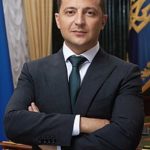
  • Gareth Thomas – 2022 Speech on the Australia and New Zealand Trade Bill

    Gareth Thomas – 2022 Speech on the Australia and New Zealand Trade Bill

    The speech made by Gareth Thomas, the Labour MP for Harrow West, in the House of Commons on 12 December 2022.

    We made it clear on Second Reading that we want real and meaningful increases in trade, particularly with two of this country’s greatest friends and allies, Australia and New Zealand—both led so ably by progressive Labour Administrations. We therefore made it clear that we would not oppose the Bill. After all, trade is fundamental to this country; it is part of what being British means and it will be a vital weapon in our armoury to tackle the economic crisis that this country faces, which the incompetence of the governing party has so greatly deepened.

    We also made it clear, as others have done on both sides of the House, that there are significant concerns about the consequences of the slapdash way in which these deals, especially the Australia deal, were negotiated by Ministers. I am told that Canada is already using the precedent of the Australia deal to press for similar access for its farmers. These amendments are needed to mitigate some of the impact of those mistakes that Ministers made to try to make the best of a bad job.

    I am afraid that in Committee there was little attempt to acknowledge, or indeed apologise for, those failings. Nothing since suggests that Ministers at the Department for International Trade have learned the right lessons. Indeed, the recent detailed comments by the former Secretary of State for Environment, Food and Rural Affairs, the right hon. Member for Camborne and Redruth (George Eustice)—now freed from the burdens of office and therefore the requirement to cover up for his colleagues—confirmed the widely held view that the Australia deal was bad for Britain. He reinforced the need for significant reforms to how deals are delivered. The current Prime Minister also thought that this was a one-sided deal. Therefore, our amendments and new clauses would help ensure that the procurement chapters, at least, of both deals could be implemented only following serious consultation with all parts of the UK, proper impact assessments, and further detailed and specific scrutiny by this House.

    On new clause 1, the Public Bill Committee and the International Trade Committee heard detailed concerns from one of Britain’s leading procurement experts that the Australia deal would worsen the protection for British firms seeking to win Government contracts in Australia, and that major infrastructure or other high-profile British national projects could be disrupted if an Australian firm, unsuccessfully bidding for a contract, went to court to try to overturn the decision using the legal uncertainties that, he argued, are being written into our contract law by this procurement chapter. He also stated that the potential benefits for British businesses of these procurement chapters were likely to be somewhat less than Ministers had claimed.

    Lloyd Russell-Moyle (Brighton, Kemptown) (Lab/Co-op)

    My hon. Friend is making a very good point—a point that the Secretary of State for International Trade unfortunately did not seem to be fully up on when we questioned her last week. She has now promised to investigate this area. Is it not a good example of how, not necessarily the legal risk, but the uncertainty will lead multinational companies to divert their trade through regimes that are certain? Britain will therefore lose out as long as there is uncertainty, even if that is not a reality.

    Gareth Thomas

    My hon. Friend makes an important point. Equally significantly, Professor Sanchez-Graells, in his evidence to the Bill Committee and to the Select Committee, suggested that the protections for British businesses trying to win Government procurement contracts across CPTPP—comprehensive and progressive agreement for trans-Pacific partnership—countries would be damaged if Ministers continued to negotiate similar provisions to those that are in the Australia procurement chapter. We examined his detailed concerns in Committee. The absence of a cogent and compelling rebuttal from the then Minister was striking. To be fair, shortly after the end of the Committee stage, a further letter from the outgoing Minister of State was sent to me, and a copy was placed in the Library. I shared a copy of that letter with Professor Sanchez-Graells, who reiterated his concerns, noting the lack of clear counter arguments for the assertions in that letter. Indeed, there were not any worked-though, real-life examples of the sort that I raised directly with the Minister in Committee to explain why the concerns articulated by Professor Sanchez-Graells are misplaced.

    Given that this Bill is specifically about procurement, and given that Professor Sanchez-Graells was one of only two witnesses asked to comment on procurement by either the Bill Committee, the other place’s International Agreements Committee or this House’s own International Trade Committee, it was a little surprising that there was not better preparation by the Department for consideration of his arguments. I do recognise that the Department was in a degree of chaos at the time, with Ministers coming and going, but one can only hope that the Minister replying to this debate has a little more to offer.

    Geraint Davies (Swansea West) (Lab/Co-op)

    Does my hon. Friend agree that this underlines the fact that there is not enough scrutiny and democracy in the process, and that this House should have the opportunity to look at the mandate for future deals and to scrutinise the negotiations as well as the ratifications, so that we do not get a deal that offers a hopeless 0.1% GDP growth over 15 years?

    Gareth Thomas

    Not surprisingly, my hon. Friend leaps ahead of me; I will come on to the issue of parliamentary scrutiny in just a moment.

    My last point on the case for new clause 1 is that such an impact assessment would also allow us to explore the extent to which small and medium-sized enterprises were able to take advantage of this trade deal. We know that SMEs need the most support to take advantage of free trade agreements and, given the cuts to the tradeshow access programme, for example, we know that SMEs are likely to face real challenges in exporting. New clause 1 cannot change the way Ministers negotiate future procurement chapters, but it would at least require an honest and detailed assessment of the impact of those chapters on British businesses.

    On new clause 2, the neglect of British farmers by the Conservative party has been extraordinary. Once upon a time, the Conservatives professed to care about rural communities. Now, as you will know, Mr Deputy Speaker, there are many deficiencies in public transport in many of our rural communities—yet this deal, negotiated by the right hon. Member for South West Norfolk (Elizabeth Truss), with the current Minister of State at the Department for International Trade, the right hon. Member for Chelsea and Fulham (Greg Hands) as her willing lieutenant, still managed to find a bus to throw British farmers under.

    We

    “gave away far too much for far too little in return.”—[Official Report, 14 November 2022; Vol. 722, c. 424.],

    the right hon. Member for Camborne and Redruth said. He also stated:

    “We cannot risk another outcome such as Australia where the value of the UK agri-food market access offer was nearly double what we got in return.”

    There was clearly a ministerial decision taken to ignore the concerns, views and lived experience of British farmers and their representatives in the National Farmers Union.

    Sir Mark Hendrick (Preston) (Lab/Co-op)

    As a member of the International Trade Committee, may I reiterate that point? It was clear to me and many other members of the Committee, as the negotiations went on under two previous International Trade Secretaries, that it was going to be the first deal negotiated from scratch and that therefore there was an attempt to use it as a tick-box exercise, to add to those roll-over deals that were already agreed, and there was haste to get the deal done so they could say for the first time that a separate deal had been done that was not a roll-over.

    Gareth Thomas

    My hon. Friend makes his point well, and I hope he is able to catch Mr Deputy Speaker’s eye later on so that he can draw it out further.

    New clause 2 cannot, I am afraid, put right the disregard of those on the Government Front Bench thus far for the vital role that British farmers play in the economic and social fabric of our country, but we can at least learn from that desperate rush to get any deal with Australia, regardless of the price. I hope Ministers will take this opportunity to acknowledge the mistakes made during the negotiations and will back this new clause. If not, I will seek the permission of the House and put it to a vote. I have said I hope Ministers will acknowledge mistakes, but we do not expect any apologies. After all, there have been so many apologies from the Government over the last few months that their worth has devalued more quickly than sterling under the last Chancellor.

    New clause 12 and the consequential amendments 6 to 16 are designed to address some of the cross-party concern about the obvious failures on parliamentary scrutiny that my hon. Friend the Member for Swansea West (Geraint Davies) alluded to. In the usual Conservative tradition, having made such enormous errors in her leadership of the negotiations with Australia, there was only one option for the then Secretary of State: she was promoted. Indeed, in the lucky dip that was this summer’s Tory leadership contest, she won the chance to be Prime Minister for the month and, consistent with her achievements on trade, delivered economic chaos, higher mortgage bills and a return to deep austerity.

    The following Secretary of State, the right hon. Member for Berwick-upon-Tweed (Anne-Marie Trevelyan), swiftly fell out with her colleagues—a scenario almost too difficult to imagine. Tories falling out with each other? Who on earth would have seen that happening? Instead of the world-leading scrutiny process we were once promised for new free-trade agreements, she adopted a new one: invisibility. On at least eight separate occasions, the previous Secretary of State failed to front up at the International Trade Committee to answer important questions about the new deal. She seemed somewhat keener to tour the TV studios questioning the work ethic of her then ministerial team.

    There is, I have to say, a striking consensus outside the House—across business groups of every economic sector, and among trade experts, charities and non-governmental organisations working on trade—that the CRaG process is not fit for purpose post Brexit, and that one of the key lessons from the Australian FTA negotiations is the need for better parliamentary scrutiny. We cannot deliver that better scrutiny for all FTAs today—not least given the narrow context of this legislation—but we can certainly make sure that Parliament considers further the regulations that implement the procurement chapters of the deals. A super-affirmative provision would give Parliament an additional layer of scrutiny for trade deal regulations under the Bill before those regulations can come into force. I hope, again, that Ministers will have the grace to accept the amendment and will not force me to divide the House.

    New clause 10 underlines our concern that trade agreements must work for the NHS and not undermine or make even more difficult the task of repairing a great public service after 12 years of callous mismanagement by this Government. On procurement specifically, the last thing that anyone would want in a trade agreement is carelessly drafted provisions that enable a dispute about whether an overseas-owned building firm lost a redevelopment contract fairly, for example, to delay much-needed investment in new NHS hospitals, or vital funds that could have been spent on new doctors and nurses having to be used to compensate overseas firms for not winning a procurement contract. If the independent expert from whom the Select Committee and the Bill Committee heard evidence is correct, the drafting of the procurement chapter in the Australia trade deal—and, I understand, this is also likely to be so in the CPTPP—creates legal uncertainty in the remedies available to overseas businesses bidding for UK Government contracts. It is possible, then, that major public services such as the NHS could see delays to the rebuilding of hospitals and/or money that could have been spent on recruiting doctors and nurses being wasted on compensation for overseas firms that have lost out in a procurement competition.

    Take the Queen Elizabeth Hospital in King’s Lynn, for example, which urgently needs replacing. Its roof must be monitored daily, four out of seven operating theatres have had to be shut, and the roof is held up by 3,600 props. That is, I suggest, one powerful example of the neglect and mismanagement of the NHS under the Conservative party. Imagine if funding were committed to and tenders issued for such a rebuilding project, only for building work to be held up because of the legal uncertainties in the Australia deal on remedies for firms that lost out unfairly in procurement processes. Surely, a proper understanding of the impact of trade deals on our public services is essential. If there is nothing to worry about, Ministers should not find it difficult to commit to providing such assessments, should they?

    On new clause 11, it is clear that these trade deals are not going to deliver the sustained boost to economic growth that this country desperately needs. Yet in the land of make-believe that the Conservative party now inhabits, the Australia deal was sold to us as the start of a brave and amazing post-Brexit era for British trade. The deal does not look like global Britain; it looks to the world like gullible Britain. On the upside, unlike the Conservative party’s trade deal with Europe, the Australia and New Zealand trade deals did not lead to the value of the pound dropping, but the tendency of Ministers in the Department for International Trade to exaggerate the benefits of the deals they sign underlines the need for a full review of the lessons learned from each negotiation.

    We all remember talk of an “oven-ready” trade deal with the EU—it turned out to be anything but. Then there was the promise of 77 of Britain’s most iconic food and drink products, from Shetland wool and Whitstable oysters to Carmarthen ham, getting immediate protection in Japan as a result of the UK-Japan deal. That has yet to happen. We have had the promise of billions more in procurement contracts for British business, but there is little evidence that that will happen.

    Geraint Davies

    My hon. Friend knows that a large of amount of New Zealand and Australian trade is historically in left-hand-drive cars that were made by Japanese companies based in Britain. Those companies are leaving the UK, and the EU has now got a trade deal with Japan and will have one with Australia and New Zealand. It is therefore likely that those Japanese companies will produce left-hand-drive cars and sell them to New Zealand and Australia, but not via Britain. In other words, the deal will prove negative rather than marginally positive.

    Gareth Thomas

    I hope my hon. Friend accepts that the case I am making for providing serious and detailed impact assessments for future trade deals will help to ensure that his point gets proper consideration in future.

    I hope that new clauses 13 and 14 remind Ministers of the significance of trade for working people and of the need for trade to play its part in helping to tackle climate change and accelerate progress towards net zero. When the Australia deal was negotiated, two Conservative Governments, both with distinctly underwhelming records on climate and workers’ rights, were in the negotiating room. In this country, the Conservative party has consistently sought to exclude representatives of working people in the trade unions from all significant consultation on trade deals. The trade deals that we as a country sign should raise standards, support better employment and help to tackle climate change instead of, as the Conservative party seems to want, heralding a race to the bottom.

    We have tabled amendment 1 to stimulate serious and sustained detailed consultation with all the nations and regions of the United Kingdom on the details of the chapters of the trade deals. It is a reminder to Ministers of the need to step up and improve further their discussions with the devolved Administrations and with the regions of England about the impact of deals on specific communities and economic sectors. My hon. Friend the Member for Llanelli (Dame Nia Griffith) gave the example in Committee of farmers in Wales, where 85% of the beef and 60% to 65% of the sheepmeat produced are consumed in the UK. There is genuine concern about the impact of a huge hike in tariff-free quotas of meat from Australia and New Zealand on our farmers’ ability to sell into our markets, with all the obvious implications for rural communities, family farms and economic, social and cultural life.

    There are similar concerns across the regions of England, in Scotland and in Northern Ireland. The Select Committee on International Trade heard evidence that the Department cannot yet model fully the impact of trade deals on the nations and regions of the UK. That is all the more reason for better consultation before new trade regulations come into force.

    John Spellar (Warley) (Lab)

    On livestock and meat, is not it the case that a sizeable amount of our imports comes not from Australia or New Zealand—and they would not under the agreement—but from the EU and South America?

    Gareth Thomas

    Absolutely, but we have conceded that the deals are important and that they must be supported, and we want more trade with Australia and New Zealand. I gently say to my right hon. Friend that it is right to ensure that the deals work much better than they appear set to do at the moment. I hope that our amendments will help to achieve that.

    Jim Shannon (Strangford) (DUP)

    I support the hon. Gentleman’s point in relation to Northern Ireland. We export some 65% of our agriculture produce to the EU and across the world. Ever mindful of that, we seek the same assurance from the Minister—perhaps it will come at the end of the debate—that those in Northern Ireland will not be penalised in any way. I support what the hon. Gentleman is saying.

    Gareth Thomas

    I am grateful to the hon. Gentleman for his comments and support, and I look forward to the Minister attempting to answer his concerns as well as ours.

    Free trade agreements were supposed to be one of those freedoms that would bring us prosperity after Brexit, but, in truth, this is not about Brexit; it is about the competence and ability of this Government, and about the honesty and transparency of Ministers. If they believe in any of those qualities, Government Members will adopt these amendments without Division. If they do not, we will have even more proof that this Government do not even believe in themselves.

  • Helen Whately – 2022 Speech on Moles and Skin Tags – Testing for Cancer

    Helen Whately – 2022 Speech on Moles and Skin Tags – Testing for Cancer

    The speech made by Helen Whately, the Minister of State at the Department for Health and Social Care, in the House of Commons on 12 December 2022.

    I commend my hon. Friend the Member for Isle of Wight (Bob Seely) for securing this debate, and on telling us Zoe’s story so powerfully. It is a truly heartbreaking story of a young mum of just 26 with so much life ahead of her. It was harder still to hear because Zoe did the right thing and asked her GP about her mole, yet her skin cancer was not diagnosed until so late that she died just 55 days later. I pay tribute to Zoe’s family, including her mum, Eileen, who have campaigned to stop other people going through what they have gone through, and to Zoe herself. When I looked earlier this evening, more than 34,000 people had signed the petition.

    Like Zoe’s family, as cancer Minister I want to stop people going through what they have been through. I want us to get better at preventing, diagnosing and treating cancer. Although we cannot remove the risk of skin cancer in its entirety, we can raise awareness of the things that increase the risk and help people take steps to protect themselves. Most skin cancers are caused by exposure to the sun. Getting sunburnt increases the risk—especially getting sunburnt as a child—as does using sunbeds. Those who have fair skin are at greater risk. As my hon. Friend told us, the lovely sunshine of the island he represents has its downsides, as does the healthy outdoor life that he describes.

    As well as raising awareness of risks, we need to raise awareness of early signs and symptoms, and then what to do. We in Government are doing that. For instance, the NHS “Help Us, Help You” campaign has used TV advertising, social media and regional press to get the message out to people to get worrying signs checked out. We know that some people delay getting a check. That campaign has particularly sought to overcome those fears. If you are worried, it is always better to get checked out. Most people will get the all-clear, but the sooner you get a check, the better, because an early diagnosis improves the chances of successful treatment.

    I know that Zoe did the right thing and asked her GP, which brings me to the importance of accurate diagnosis. For Zoe’s specific case there has been a full investigation locally, and I know the findings have been acted on. Specifically, teledermatology is now offered by all GPs on the Isle of Wight, and is increasingly available across the NHS. It involves a specialist medical photographer taking a detailed photograph of a skin lesion to check it for signs of cancer. That is a step on the path to more tests to confirm whether someone has cancer or is given the all-clear that no further tests are needed.

    On the role of teledermatology, almost £1.5 million of our elective recovery funding has been allocated to seven cancer alliances to pilot self-referral for cancer symptoms, including skin cancer symptoms. I heard my hon. Friend’s argument for Zoe’s law to require all moles or skin tags removed to be tested for melanoma. I also heard him saying that he was not expecting an answer here and now, which I appreciate. I can assure him that I will take his argument away, look into it and then write to him with a full response on his proposal. I will also take away the suggestion from him and from other hon. Members about looking at the broader education of other people who might be able to spot something that might be an early sign of skin cancer. I recognise that people may not be able to see their back or the back of their head, for instance. Indeed, there may be opportunities to look at wider education. For sure, raising awareness overall of skin cancers and of what a person should do if they have a sign or a symptom will indeed mean that more people will know what to look out for.

    Jim Shannon

    I commend the Minister for her very positive answer and for what she said in relation to the nine centres across the United Kingdom, which is where the hotspots are. In an intervention on the hon. Member for Isle of Wight (Bob Seely), I referred to a pilot scheme in my trust area, the South Eastern Health And Social Care Trust, which seems to be having some good results. I always believe that the exchange of ideas is good for us all. It helps us to see what is being done here and it might help the Minister to know what we are doing back home.

    Helen Whately

    I thank the hon. Member for his intervention. I will look into the scheme in his area that he mentioned. One of the good things about the NHS is that all sorts of fantastic things are going on in pockets across the United Kingdom. One of the best things that we can do is find out what is working somewhere, and then spread that best practice more widely, so, indeed, I will look into what he suggests.

    We are now seeing the most incredible advances in how we diagnose cancer as well as how we treat it. An example of this is the NHS-Galleri trial, which looks for blood markers to identify cancer risk. It can identify signs of more than 50 cancers and the trial has 140,000 participants. We should in no way limit our sights as to what can be achieved in the here and now. The crucial thing here and now is early diagnosis, which much improves the prospects for successful treatment. Zoe’s family wants those who do have cancer to get an early diagnosis so that they have the chance to survive and live their lives as, sadly, Zoe did not. That is something that I want, too. I want fewer people to get cancer, those who do have cancer to be diagnosed earlier, and, in turn, to be treated successfully so that they can live their lives to the full.