Tag: 2022

  • Grant Shapps – 2022 Statement on TFL Funding Extension

    Grant Shapps – 2022 Statement on TFL Funding Extension

    The statement made by Grant Shapps, the Secretary of State for Transport, in the House of Commons on 27 June 2022.

    Following my statement to the House on 25 February, I am updating the House on a short extension of the current Transport for London (TfL) funding settlement that was due to expire on 24 June 2022, by 19 days, to 13 July. This has been agreed by the Mayor of London.

    Since the start of the pandemic, we have supported the transport network in London with nearly £5 billion funding through extraordinary funding settlements for Transport for London. We have recognised the reliance of London’s transport network on fare revenue, and Government continue our commitment to mitigating loss of fare revenue because of the pandemic.

    This extension to the current funding settlement is necessary in part due to the unsatisfactory progress made by TfL on its conditions, including pensions. Resolving these issues is an integral part of setting TfL on the path to financial sustainability, and Government stand ready to engage constructively to reach a resolution. This extension ensures that they receive due attention, as well as allowing time for both sides to consider a longer-term capital settlement.

    Government are committed to supporting London’s transport network as we have since the start of the pandemic, and is in discussions with TfL on a longer-term settlement. By rolling over the provisions of the existing agreement, the extension provides continued support to Transport for London and certainty to Londoners while we work with Transport for London on their emergency funding needs.

    Support to Transport for London has always been on the condition that Transport for London reaches financial sustainability as soon as possible and with a target date of April 2023. Government continue to press the Mayor of London and Transport for London to take the decisions needed to put the organisation on a sustainable footing. I will update the House at my earliest opportunity on the details of any longer-term capital settlement.

  • Sajid Javid – 2022 Update on Covid-19 (June 2022)

    Sajid Javid – 2022 Update on Covid-19 (June 2022)

    The statement made by Sajid Javid, the Secretary of State for Health and Social Care, in the House of Commons on 27 June 2022.

    As part of our continued commitment to open up travel, on 23 June, the Government extended the International NHS covid pass letter service to allow children aged five to 11 years to get an International NHS covid pass following a positive NHS PCR test or equivalent within the past 180 days—recovery status. Prior to 23 June, children aged five to 11 could only access an international NHS covid pass if they had received a full primary course of covid-19 vaccination.

    Extending access to the International NHS covid pass to children aged five to 11 with recovery status will save families the cost of testing in countries where this is required for foreign travel and ensures that young children are able to provide proof of their covid-19 status on a par with the rest of the population. The UK has no covid certification requirements and this is to support outbound travel to a variety of countries that still have requirements.

    A person with parental responsibility for the child—such as the parent or guardian—will be able to request the letter online via the NHS website or by calling 119. The letter will only be sent to the address on the child’s GP record.

    This service is now available for children aged five to 11 resident in England and Wales. A letter based on recovery status is not available in the Isle of Man. In Northern Ireland, parents or guardians of children aged five to 11 have been able to request a digital or printed covid certificate on behalf of a dependant since January 2022. The COVIDCert NI app was updated in March 2022, to allow all those under 16 to upload the certificate—requested on their behalf—to display on the app. Anyone under 16 who tested positive for covid through an NHS PCR test prior to 1 May is able to request a recovery certificate in Scotland by phoning the covid status helpline on: 0808 196 8565.

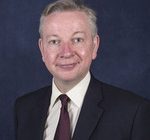
  • Michael Gove – 2022 Comments on Andy Haldane’s Appointment as Chair of Levelling Up Advisory Council

    Michael Gove – 2022 Comments on Andy Haldane’s Appointment as Chair of Levelling Up Advisory Council

    The comments made by Michael Gove, the Secretary of State for Levelling Up, on 27 June 2022.

    For Levelling Up to succeed we need scrutiny, challenge and transparency to ensure we deliver on our missions to spread opportunity and prosperity to every corner of the country.

    I am delighted Andy Haldane has agreed to chair the Levelling Up Advisory Council. His vision and experience were crucial to putting missions at the heart of the Levelling Up White Paper and as Chair I know he will continue to drive forward this vital work.

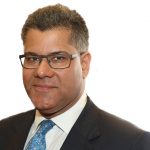
  • Alok Sharma – 2022 Speech at the Commonwealth Business Forum in Rwanda

    Alok Sharma – 2022 Speech at the Commonwealth Business Forum in Rwanda

    The speech made by Alok Sharma in Kigali, Rwanda, on 23 June 2022.

    Thank you for the introduction.

    I am delighted to be here today.

    Over the past two and a half years, I have spoken at numerous conferences and summits around the world.

    Virtually and, of course, physically, I have delivered many, many hundreds of speeches.

    In doing so, I’ve shared stages with representatives from government, from business, and from civil society.

    You’ve just heard from FIFA. I think someone was lucky enough to get a ball too.

    You will soon hear from Google, the Norwegian-African Business Association.

    And each organisation is working to shape a future in which we can deliver prosperity, but without sacrificing the planet.

    For me, it is truly encouraging to see such broad agreement on the need for climate action.

    And I do believe that we have hit that inflection point where governments, business and civil society are broadly united in wanting to tackle climate change,

    And deliver both an environmental and economic dividend.

    And I am pleased therefore that Rwanda and its role as Commonwealth Chair in office is using this session to consider how we deliver economic prosperity without sacrificing the planet.

    And it is a key question that our family of Commonwealth nations needs to address, and address urgently,

    How we can achieve collective prosperity, economic sustainability and societal resilience, all at the same time.

    That, my friends, is the ball that I am kicking to you.

    And if we are to achieve these goals, working through the international system, it’s going to be absolutely critical

    I mean, just look at COP26. Some of you who are with us today were also with us in November

    Back then, under the UK’s stewardship, almost 200 countries forged the historic Glasgow Climate Pact.

    Despite challenging global geopolitics even then we were able to bring nations together.

    Because each of us recognised that it was in our collective self-interest to act on climate.

    The Glasgow Climate Pact forges a path to a clean global future.

    It keeps alive the possibility of limiting the rise in global temperature to 1.5 degrees.

    And it told a watching world that leaders – including many of the leaders who are here at this conference – it told the world that leaders could and would rise above their differences, and unite against that common challenge.

    The Pact calls on countries to phase-down unabated coal power and phase-out inefficient fossil fuel subsidies.

    It contains big commitments on climate mitigation, on adaptation and on finance.

    And it also sets out a way forward on the crucial issue of loss and damage.

    It was for me an extraordinary privilege to play my part as Shepherd-in-Chief at that event.

    Of course, we have to acknowledge that the world has changed since then.

    We meet today against the backdrop of multiple global crises.

    Indeed, the Managing Director of the International Monetary Fund, Kristalina Georgieva, has described our situation as “the most universally complex policy environment of our lifetime”.

    Therefore, climate is understandably no longer on the front pages.

    But the current crises should increase, not diminish, our determination to deliver on what the world agreed in Glasgow.

    Even as we deal with the immediate challenges facing us, all the evidence, including the latest findings from various UN reports, makes clear that the chronic threat of climate change is getting worse.

    My friends I have to say this to you, climate change does not recognise borders – look in your own countries and see what’s happening – and the Commonwealth is no exception to facing the harsh impacts of global warming.

    Last year we saw wildfires rage in Australia.

    This year, India and Pakistan have experienced unbearable temperatures.

    A billion people exposed to extreme heat in some of the hottest months since records began.

    And in South Africa where I have just come from, floods have swept the province of KwaZulu-Natal, destroying buildings and claiming lives.

    At the same time, Vladimir Putin’s illegal, brutal and unprovoked war against Ukraine has amplified that climate and environmental security are interlinked with energy and national security.

    And that is why the UK is so focused on using the remaining months of our COP26 presidency to turn commitments into action.

    What it needs, friends, is for us to focus on implementation.

    Every country must respond to the Glasgow Climate Pact’s call to revisit and strengthen their 2030 emissions reduction targets this year.

    And we need countries to submit those emissions reduction targets by the UNFCCC’s deadline, on September 23rd including their long term strategies.

    We are continuing to push for practical progress on mitigation, on finance, on adaptation, and on loss and damage.

    We continue to press for further progress in critical sectors and on clean technologies.

    And I remain especially focused on the most climate vulnerable countries and communities, many of whom are represented here.

    Because, for these nations in particular, the situation is devastatingly clear.

    As Prime Minister Mia Motley of Barbados told us in Glasgow, for her country, “a two degrees rise is a death sentence”.

    For many, tackling climate change is literally that, it’s the difference between life, and death.

    So to deliver on effective climate action we are going to continue to push forward for more funding through Just Energy Transition Partnerships.

    We’re going to be working on increasing finance for adaptation, including ensuring the private sector is mobilising finance as well.

    And it means listening to the consistent calls from climate vulnerable countries to improve access to finance as well.

    If I just say to you that in Africa, Africa is responsible for less than 3% of global emissions and yet on this continent there are very many countries that are on the front line of climate change.

    And therefore we know that change is necessary.

    We know that change is in our collective self-interest.

    And we know that change will not happen unless we act, and unless we act now.

    And so it is time for world leaders, the leaders here at this conference to demonstrate that they are delivering on the commitments they have made.

    Together, we can, and we must, make this a year of delivery, to keep 1.5 degrees alive, and to deliver prosperity, without sacrificing the planet.

    Thank you.

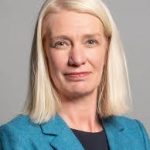
  • Amanda Milling – 2022 Comments on Visit to Israel, the Occupied Palestinian Territories and Jordan

    Amanda Milling – 2022 Comments on Visit to Israel, the Occupied Palestinian Territories and Jordan

    The comments made by Amanda Milling, the Minister for Asia and the Middle East, on 27 June 2022.

    I was delighted to make my first official visit to Israel, the Occupied Palestinian Territories and Jordan as Minister for the Middle East.

    I covered a lot of ground in a short space of time in Israel where the relationship has never been stronger. From fascinating examples of Israeli tech and innovation, to the upcoming UK-Israel Bilateral Roadmap, to peacebuilding projects and efforts to promote the two-state solution.

    Visiting the Occupied Palestinian Territories was a fantastic opportunity to meet a whole range of Palestinians to discuss the UK-Palestinian bilateral relationship and understand the impact of the occupation. I was particularly pleased to meet with Palestinian civil society to reassure them of the UK’s unwavering support for media freedom and human rights defenders.

    Last year we celebrated 100 years of friendship between the UK and Jordan, a friendship that the UK is fully committed to sustaining and developing into its second century. I expressed my gratitude for the Kingdom’s extraordinary and generous role in supporting refugees from regional conflicts, and announced two major new UK-funded programmes totalling £95m designed to support both vulnerable Jordanians and refugees.

    I look forward to visiting the region again soon.

  • Jonathan Rockey – 2022 Comments on Male Pupils Wearing Skirts

    Jonathan Rockey – 2022 Comments on Male Pupils Wearing Skirts

    The comments made on 27 June 2022 by Jonathan Rockey, the Headteacher of Wymondham High School Academy in Norfolk, following the confirmation that boys would not be allowed to wear shorts, but could wear skirts.

    We had a huge response to the questions and that was much appreciated. Like any consultation, there will be differing views and the academy and governors always consider these. We take all feedback seriously.

    Many parents were supportive of us considering a ‘summer uniform’, which we will consider for 2023-24. In the short term, we have enabled pupils to remove their blazers during hot weather.

    Changing everything about our uniform in one go, especially with the current financial concerns, would not be sensible so we are able to stage changes over a period of time.

    We will, from September, have a gender neutral dress code across the Academy, which is something we are very proud of.

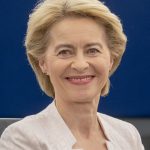
  • Ursula von der Leyen – 2022 Speech on Ukraine, Moldova and Georgia Joining the European Union

    Ursula von der Leyen – 2022 Speech on Ukraine, Moldova and Georgia Joining the European Union

    The speech made by Ursula von der Leyen, the President of the European Commission, at the European Parliamentary Plenary in Brussels on 22 June 2022.

    Thank you, Madam President, dear Roberta,

    Cher Charles,

    Honourable Members,

    From the early days of the Maidan on, Ukraine has bravely resisted against Russia’s aggression. It went through repression and uprising. It went through territorial annexation, and now outright war. It is the only country where people got shot because they wrapped themselves in a European flag. Ukraine has gone through hell and high water for one simple reason: Its desire to join the European Union.

    The European Commission answered to this desire explicitly. The opinion we presented last week recognises Ukraine’s aspirations. It acknowledges the immense progress that Ukraine’s democracy has achieved since the Maidan protests of 2014. Our opinion stems from a careful and thorough assessment of the reality on the ground. And this evidence tells us that Ukraine deserves a European perspective, and also the candidate status on the understanding that the country will carry out a number of further, important reforms.

    Ukraine has proven, already before the war, that it is on the right trajectory. In the last few years Ukraine has reformed more than in the last decades. Thanks to the Association Agreement of 2016, Ukraine has already implemented roughly 70% of EU rules, norms and standards. It is already involved in many important EU programmes like Horizon Europe and Erasmus. Ukraine is a robust parliamentary democracy, it has a well-functioning public administration, which every day is passing the ultimate stress test of war. It has free and fair elections and a vibrant civil society, that holds the government to account. Year after year, small businesses and, in particular, young entrepreneurs have conquered new space in the country´s economy – and fought back against the power of oligarchs. Ukraine punches well above its weight when it comes to innovative start-ups and the digital economy. And all of this progress has been achieved because the people of Ukraine have Europe in their hearts and their minds.

    But we also know that there is important work ahead. Take the fight against corruption. Ukraine has already taken important steps in the right direction. It has set up the necessary anti-corruption bodies. But now these institutions have to come to life. They need teeth, and the right people in senior posts.

    Or take the excessive influence of oligarchs on the economy. Ukraine has adopted a bold law to break the oligarchs’ grip on Ukraine’s economic, political and public life. In fact, it is the only country in the Eastern Partnership that has done so. Now it is about turning the law into positive and enduring change. I discussed this and other issues with President Zelenskyy and Prime Minister Shmyhal during my recent visit to Kyiv. And I know that the people of Ukraine want to continue on the path of modernisation, the path of democracy, the path that leads to Europe.

    Honourable Members,

    After the fall of the Berlin wall, Jacques Delors said: ‘History is once again on the march in Europe. But it is for us to give history a meaning.’

    Jacques Delors was referring to the need to open up our Union to all European countries. And his words are still true today. History is on the march. And I am not just talking about Putin’s war of aggression. I am talking about the wind of change that once again blows across our continent. With their applications, Ukraine, Moldova and Georgia are telling us that they want change. They want more democracy, more freedoms and stronger reforms. They are telling us that they want Europe. We have a responsibility towards them, but we also have a responsibility towards ourselves to make the right choice. So let me speak briefly about our assessment for Moldova. Moldova has taken decisive steps towards Europe, too. With a clear mandate from its citizens. It is on a real pro-reform, anti-corruption and European path for the first time since independence. And this is why it deserves the European perspective and candidate status, again on the understanding that the country will carry out a number of further, important reforms. In particular, its economy and public administration require major efforts. But provided that the country’s leaders stay the course, we believe the country has the potential to live up to the requirements.

    Georgia shares the same aspirations and potential as Ukraine and Moldova. Its application has strengths, in particular the market orientation of its economy, with a strong private sector. To succeed however, the country must now come together politically. It must design a clear path towards structural reform and towards the European Union. A path that concretely sets out the necessary reforms, brings civil society on board and benefits from broad political support. This is why we recommend to Council to grant Georgia the European perspective, but to come back and assess how the country meets a number of conditions before granting it candidate status.

    Honourable Members,

    How far Ukraine, Moldova and Georgia will come and how quickly they proceed will depend first and foremost on their actions and their progress. It is a merits-based approach. But how we respond to their passion and their progress is our choice, and ours only. This Parliament has already spoken, loud and clear. I would like to thank you again for that. It is now up to the European Council to decide, and live up to the historic responsibility we are confronted with.

    The history of our Union is one of young democracies getting stronger together. It is the history of Germany’s rebirth after the war. It is Greece, Spain and Portugal moving fast from dictatorship to democracy in the mid-1970s. It is the democratic uprising that brought down the Iron Curtain. It is the long path of reconciliation in the Western Balkans. A path that must lead all the six Western Balkan countries to join our Union. And the next chapter is being written today by the brave people of Ukraine, and by all of us, who must accompany them on their European path. Again, this is Europe’s moment. And we must seize it.

    Long live Europe.

  • Ursula von der Leyen – 2022 Comments at Press Conference with President Michel and President Macron

    Ursula von der Leyen – 2022 Comments at Press Conference with President Michel and President Macron

    The opening remarks made by Ursula von der Leyen, the President of the European Commission, on 24 June 2022.

    Today, we had the opportunity to hold an in-depth discussion on the economy during the Euro Summit. The euro area is forecast to continue growing both in 2022 and 2023 although by less than we anticipated before the war. Obviously, the war in Ukraine is having a heavy impact, both on growth and on inflation. We have seen Russia’s disruptive action on gas. And we are seeing price increases beyond energy, on food and elsewhere in the economy. Therefore, we discussed how to mitigate the economic and social impacts, especially on the most vulnerable of our societies.

    This starts with being adequately prepared to deal with potential further disruptions in deliveries of Russian gas to Europe. We are working hard on this. We have reviewed all the national emergency plans to help make sure everyone is ready for further disruptions. And we are working on a common European emergency demand reduction plan with industry, but also with the 27 Member States. We do this because we have learnt our lesson from COVID-19. There we have seen that, when we act together as 27, when we avoid fragmentation, we are strong and we have an enormous impact. I will present this plan in July to the Leaders. There will not be a return to cheap fossil fuels, I think. And therefore, alongside temporary and targeted support to vulnerable families and businesses, it is essential to help our economies and societies adapt to the new conditions. The root cause of our problem is our dependence on fossil fuels, which we must get rid of.

    This is basically the essence of REPowerEU. We are providing through REPowerEU resources of round about EUR 300 billion to do three things: The first pillar is to diversify our energy supply. The second pillar is to increase the energy efficiency. And the third pillar is the supply of our own green renewable energy. We are already seeing results. If I may give you an example for the first pillar, the diversification away from Russian gas: We see that the US LNG deliveries to the European Union are up by 75% this year compared to last year. We have just signed a Memorandum of Understanding with Israel, Egypt and the European Union to make sure that there is natural gas from Israel, liquefied in Egypt and then brought via LNG to the European Union. The Norwegian pipeline gas is up by 15%; Azerbaijan is up by 90%. So there is a lot on the move to really diversify away from the Russian gas to other trustworthy suppliers. Looking at the renewables, I think that there is one interesting figure: The European Union was and is the second largest market globally in terms of increased capacity of renewables in 2021, and will be in 2022. So you also see the big move forward of heavy investment in renewables. That is the energy of the future. That is the way to go.

    A second topic that we have been discussing is, in parallel, that we are working on the review of the economic governance. We know that debts and deficits have soared in all Member States after COVID-19. And at the same time, investment needs are very large for a successful transition to a green, digital and resilient EU society and economy. Therefore, we need to design rules that in a way reconcile these higher investment needs – they are necessary – and at the same time to safeguard sound fiscal finances. One goes with the other: that is fiscal sustainability and growth.

    And let me also end, dear Emmanuel, by congratulating you on an extremely successful French Presidency. The work you have done was colossal. I witnessed every day how intensive your team – and I really want to thank you and your team – has been working on progress in the European Union. It really made a difference. We should keep in mind that when you started, there was a lot on your plate, but you had no clue that there was a war coming. In record time, we delivered together six packages of heavy sanctions. And I think that it was a hallmark and a very defining moment to see the determination of the European Union and the speed at which we can move forward. We have, in this time, welcomed 7.5 million refugees from Ukraine. 3 million are still here. And you and your team, as Presidency, made it possible that we very quickly granted temporary protection, that is access to the labour market, to the education system, to the social security system. All this thanks to the French Presidency.

    I thank you personally for the enormous progress that we have made on the European Green Deal – and here, specifically the huge package of Fit for 55. Dozens of proposals have now been pushed forward. And this is a real step forward. The same goes, and I know that this is very close to your heart, for the DSA and the DMA, so putting the online world in order as well as we have it in the offline world, to protect our citizens and to keep up the competitiveness of our businesses in the online world. This has been – the DSA and the DMA – negotiated with ambition and adopted in record time. You really delivered. There was the Conference on the Future of Europe.

    But I am personally very proud on one specific file that you have concluded during the French Presidency, and this is Women on Boards. It took ten long years; it was stuck for ten years. The French Presidency made it possible that it reappeared and was negotiated and adopted in record time. So not only did you put an end to an injustice for women, but also to an enormous loss of earnings for companies. It is a real big step forward that we have now this agreement on Women on Boards.

    Last but not least, and I would not miss to mention it, we have made good progress on the Pact on Migration and Asylum, especially on the voluntary solidarity mechanism and on the governance of Schengen. Important files. They were difficult to manage, you really pushed it forward. I stop here, but as you can see, dear Emmanuel, I think that France can be very proud of this Presidency. It was outstanding. Many thanks for that.

  • Sajid Javid – 2022 Speech on Suicide Prevention

    Sajid Javid – 2022 Speech on Suicide Prevention

    The speech made by Sajid Javid, the Secretary of State for Health and Social Care, on 24 June 2022.

    Last Monday would have been my brother Tariq’s birthday. I say it would have been because Tariq is no longer with us. He took his own life.

    And on that Monday it was the first thing I thought about when I opened my eyes and the last thing I thought about when I closed my eyes. Nothing can prepare for you for the loss of a loved one.

    But I want to use this privileged role that I have as Secretary of State to do right by his memory, but also the memories of thousands of others each year who have left us before their time, by preventing more people from going down the same devastating path.

    Almost everyone in this country has been touched by suicide in some way.

    The Samaritans – doing amazing work – answer a call for help every 10 seconds and tragically, around every 90 minutes someone dies from suicide in the UK. When we look across the last decade and look at Government initiatives like the previous Suicide Prevention Strategy no matter how well intentioned, the trends have broadly been going in the wrong direction.

    We must treat suicides with the same urgency that we treat any other major killer and take determined action that reflects the changes and progress that we all want to see in society.

    So we will be publishing a new 10-year mental health plan. At the moment we have a call for evidence asking for people’s views and shortly afterwards we will be publishing a new 10-year suicide prevention plan.

    I want to hear views from far and wide to help shape this work and the roundtable that I chaired here earlier this morning was so illuminating to help us do just that.

    I heard heart-breaking tales of love and loss but also inspirational stories of the work being done to divert people from this painful path including of course the work of Papyrus here.

    I am determined to make a difference on this issue and I wanted to take this opportunity to come and speak to you all, and talk about some of the principles that will drive this future work.

    The first is encouraging those people who are at the greatest risk to come forward and to get the help they need. Talking about our innermost feelings can be uncomfortable and upsetting of course. But it is so important.

    I am 52 years old, the same age as Tariq was when he left us.

    Men in their 40s and 50s they make up a disproportionately high proportion of male suicides, around 40%. We can achieve so much if we encourage people to talk about how they feel and they come forward and ask for help.

    Thanks to the trailblazing courage of campaigners in the public eye and thousands of quiet conversations in homes, schools and workplaces more and more people across the country are being open about their mental health.

    We must keep these conversations going as we live with Covid and look at how we can bring in groups of people together traditionally more reluctant to come forward.

    Last week I heard about a survey published showing that 75% of construction workers said that they regularly discussed emotions with colleagues. Yet there were some people who derided this, some newspapers who said this was evidence of a stereotypically male-dominated industry that had supposedly lost its way. I found the data shocking too.

    I want it to be 100%. Not 75%. Because too many people suffer in silence, based on outdated ideas of what it means to be a man.

    Mental health must not be only talked about in whispers. We must shout about it. Because keeping quiet can kill.

    Traditionally, the construction trade has a suicide rate that is three times higher than the national male average rate and so the fact that people who work there are talking more is a cause for celebration, not castigation.

    To build on this progress, I want to see more local areas doing outreach activities in places that men are likely to attend.

    I’ve heard wonderful stories of a Tyne and Wear gym that gives men a safe space to share their feelings, a group of barbers who are trained to recognise symptoms of mental ill health, and there is a Talk Club, where a talking and listening club has been established and hosted at football clubs for their supporters.

    We know, from all the research that’s already out there, that it’s easier to talk about your feelings when you’re pursuing your passion.

    When we recently awarded over £5 million of funding to the voluntary sector as part of our Suicide Prevention Grant we backed a number of organisations that work specifically with men.

    As we take forward our plans for suicide prevention we will also keep focusing on those communities where suicide is the greatest risk so for instance, the LGBT community which makes up a third of people who access an organisation called SHOUT, a suicide prevention hotline.

    This work goes hand-in-hand with our mission to tackle disparities across the country and transform local communities.

    Men in the lowest socioeconomic groups, who live in some of the most deprived areas are up to ten times more at risk of suicide than those in the highest socioeconomic groups, in other words those living in the most affluent areas.

    There are regional disparities too.

    For instance, you are twice as likely to die in the North East by suicide, than you are in London. It’s fantastic that we have charities from across the UK here today many I met in the roundtable we just had and my Department is working with many of you here today to get to the bottom of these disparities and work out how we can put them right.

    One of the golden threads running through all my work in this role has been a commitment to tackling disparities of all kinds that have been overlooked and ignored for far too long.

    A relentless focus on suicide prevention will help us to break the cycle of devastation and deprivation in some of our most deprived communities and so too, focusing on transforming communities can lift so many of the strains on our health and happiness what the economist and Nobel Prize winner Sir Angus Deaton recently called the ‘deaths of despair’ that sit behind so many of the tragic stories in this country.

    As well as looking at those communities at greatest risk we must also look at the risk factors that lead to suicides across all communities and this is the second area of what I wanted to talk about today.

    We know that the causes of suicide are complex and intertwined but the data does show that there are some areas where we can have a big impact.

    For example, there is a project in Kent that found that 30% of all suspected suicides in a two year period were linked to domestic abuse.

    Our new Plan will look at risks like domestic abuse and gambling these weren’t looked at in the previous strategy.
    It will also place a greater focus on the online world which has created new challenges when it comes to suicide prevention.

    Now we have made real progress in some areas like working with manufacturers and online platforms to limit access to methods of suicide online. But there are also areas where we’ve found it harder to keep up with the proliferation of digital content for example when it comes to pro-suicide related content.

    Research has found that suicide-related internet use was relevant to a a quarter of suicide deaths in those aged under 20 and Google searches for suicide methods from UK browsers have risen by over 50% in two years.

    Just think about that. When we use the internet we use google and search for suicide rates has gone up by 50% in two years.

    When I was Home Secretary I spoke at the launch of the Online Harms White Paper. I talked about how we cannot allow leaders of some of the tech companies to simply look the other way and deny their share of responsibility for content on their platforms. Because if you run a business, of any kind, you have a duty to protect your customers.

    I believe this strongly then as Home Secretary when I was thinking about sexual abuse but is just as important now.

    Although the Internet contains a wealth of helpful content for those who are struggling too many people, especially those who are young or vulnerable they are also exposed to abhorrent and unacceptable content that promotes suicide and self-harm.

    I will be convening a roundtable with social media platforms and search engines to encourage them to take more action and the Online Safety Bill that we have already brought before Parliament which will give us a once in a generation opportunity to tackle this issue.

    I will also work jointly across Government to look at both upcoming and current legislation to make sure it meets the rapidly evolving challenges that we face.

    Because when it comes to the encouragement of suicide and related harmful behavior we are currently relying on legislation that was primarily created long before the digital age and there is currently no specific offence that covers those who encourage or assist others to self-harm, or in my view of course a grave and heinous offence.

    We have already announced that we will be creating a new offence of encouraging or assisting self-harm and I will work with my colleagues to see what else we can do where we might be falling short.

    Our Suicide Prevention Plan will set out more about how we will do this.

    We know that debt and economic uncertainty can be a factor too. We saw from the recession in 2008 which tragically led to a rise in suicide rates over the following years especially among men.

    I know that people are facing real strains over the cost of living. There is a huge cost of living challenge now for so many people.

    We protected millions of jobs during the pandemic through man incentives and we are now providing economic security at a time of great uncertainty.

    During Covid-19 the suicide rate mercifully remained stable, despite the monumental impact on people’s lives.

    But the next few months are critical and we must do everything in our power to make sure that we support the most vulnerable as they deal with these financial pressures.

    Our public servants of course have a hugely important role to play here. They interact with people when they are at their most vulnerable and they deal with issues like debt and gambling that can be major risk factors.

    I want to ensure that all front line Government employees and workers who interact with people in these situations have suicide prevention training and I’m also going to be working with the Speaker of the House of Commons to encourage access to suicide prevention training for all MPs and their staff.

    I’ve been hosting surgeries in my own constituency for over 12 years, and often people come to see me when they feel they have nowhere else to turn.

    As a result, I think it is really important MPs and their staff who have a unique window into the lives of many people in distress in their local area that they get this training. To recognise the signs of suicidal behaviour, and signpost options for support we can help them to intervene before it’s too late.

    I am determined to focus not just on those who are at risk of suicide, but of course also their loved ones too. The sudden and unexpected circumstances of death from suicide can bring huge trauma. And I know the toll of losing a loved one and we need to be better at supporting those who are left behind. Not only because it is the right thing to do but because those who are bereaved from suicide are themselves at greater risk of suicide.

    The evidence suggests that for every suicide, 135 people are directly affected and so we need to do everything we can to break this cycle of grief and suffering. Through putting in place for example the NHS Long Term Plan, every local area now has services for suicide bereavement support. By the end of this year, those services will proactively communicate with bereaved families within days of a death to offer their support. Removing the onus from the bereaved at their time of grief.

    Third, we must keep improving services to help people who are struggling with their mental health.

    The NHS is offering care and support to more people with mental health conditions than ever before with record levels of investment and more comprehensive round-the-clock support.

    After all, your suicidal thoughts don’t keep office hours.

    They are more likely to emerge when people are alone or perhaps late at night and we hear from our charity partners that their helplines are often busiest between the hours of 9pm and midnight.

    All mental health providers now have 24/7 urgent mental health helplines in place that, together, are managing over 200,000 calls each month. My aim is that by 2023/24, anyone in the country can dial NHS 111 to reach their local mental health team at any time of day, 24/7 which would make England one of the first countries in the world to offer this service.

    We are also making greater use of talking therapies which were pioneered in England and have now been emulated across the world.

    Over a million people have accessed talking therapy in the past year and we’re expanding this access even further. The vast majority of these people who have accessed these therapies have done so through self-referral meaning they can get the help they need more quickly and so the median waiting time to start treatment is now only two weeks.

    But despite this progress we must keep working to drive up service levels and address any unevenness in provision across the board. As part of this, I want to see an improvement in the quality of safety plans.

    These are practical tools to help someone to navigate suicidal feelings and urges for example, removing objects that could be used for suicide or self-harm.

    At the moment, there’s a stark variation in the standard and quality of these plans. I’m pleased to announce today that we will be working with experts in the sector to publish some standalone, best practice guidance on safety plans showing what good looks like, and how we can save lives.

    These urgent services work extraordinarily hard to help people at the greatest risk. But sadly, some two thirds of people who take their own life are not in contact with mental health services at all.

    I was just reminded of this a couple of hours ago when I spoke to a bereaved parent.

    Of course, we want to get this number down but it reinforces the importance of the communities we need around.

    A report for the Adolescent Mental Health programme finds that, and I quote, “in cohesive neighbourhoods defined as a place where people know their neighbours adolescent wellbeing and mental health are stronger”.

    We all know the power to make a positive impact on the mental health of people around us and the answers can often lie within the communities where we live.

    There are two central pillars of my overall NHS reform programme that I think are crucial here, prevention and personalisation. One wonderful initiative that intersects both of these areas is social prescribing where we draw on all parts of the local community that shape our health and happiness.

    This work will benefit the whole community but especially those at risk of suicide reconnecting those who feel lonely or isolated with the world around them.

    I talked earlier about how we need to do more to reach middle aged men, who are at greatest risk. Men of that age typically find it harder to build social connections than women and I’ve been really inspired by groups like Men in Shedswhich give men a place to meet like-minded people and share their concerns.

    Through tailored opportunities for social prescribing and personalised support we can help those who are traditionally reluctant to come forward and give them the help and support that they need.

    There have now been almost a million referrals to social prescribing services in this country with now some record 2,500 social prescribing workers in place who have all been encouraged to do e-learning on suicide awareness.

    I’ve set a target of four million people to benefit from personalised care, like this, by March 2024 and I want to get more people into community-led schemes to tackle the social and economic drivers of their distress.

    Finally, we will make the most of the kind of new technologies that helped this country through the pandemic.
    This was a time when our mental health system just like others across the world, was put under huge strain.

    But it was also a time when we saw new ways of accessing care that we can take forward now as we enter this next chapter.

    We must make greater use of the apps and online services that can provide new pathways for care and help us to give more people the kind of access they need more quickly.

    We must apply this approach to data too. During the Covid crisis, our decisions, my decisions were underpinned by real-time data that gave us an up-to-date picture of the situation on the ground.

    But there are currently too many gaps when it comes to data around suicide prevention that means we don’t currently have a clear picture in certain areas for example, any link between suicide and ethnicity.

    By bringing data together, we can identify concerning trends and respond at a much faster pace. We’ve been working with OHID – the division in my department- to trial a national suspected suicide surveillance system.

    This allows us to look at patterns of risk like data on new and emerging methods of suicide and on suicide rates across different population groups to provide more sophisticated real time information that will allow us to make better decisions.

    These trials have already shown to be a great success and I’m pleased to confirm today that we will now be rolling this initiative out nationally and it’ll be operational from early next year.

    Last week, during London Tech Week I also launched our Data Strategy which shows how we will use the intrinsic value within data to tackle the twin challenges of recovery and reform.

    I called the strategy, I named it Data Saves Lives and there are few greater opportunities to save lives than this vital work on suicide prevention.

    This issue is deeply personal to me, and I feel a heavy sense of duty to use my time in this role to make a difference.

    The dark cloud of suicide means that too much potential has gone unfilled and that there are too many families that have been left incomplete.

    I’m determined to work with you to tackle this source of grief and heartbreak so that fewer people get the news that will one day perhaps turn their lives upside down.

    Thank you all very much.
  • Liz Truss – 2022 Comments on Support for Afghanistan Following Earthquake

    Liz Truss – 2022 Comments on Support for Afghanistan Following Earthquake

    The comments made by Liz Truss, the Foreign Secretary, on 24 June 2022.

    The recent earthquake is a tragedy for the people of Afghanistan. The scale of need was already severe before the earthquake struck, with more than half of the population requiring humanitarian assistance.

    UK support will enable lifesaving supplies to be provided on the ground. Our aid budget for Afghanistan is one of the UK’s largest bilateral programmes and we will continue to work urgently with our international partners to respond to the unfolding humanitarian crisis.