Tag: 2022

  • Anne-Marie Trevelyan – 2022 Statement on Steel Safeguards

    Anne-Marie Trevelyan – 2022 Statement on Steel Safeguards

    The statement made by Anne-Marie Trevelyan, the Secretary of State for International Trade, in the House of Commons on 29 June 2022.

    With permission, Mr Speaker, I will make a statement on the Government’s final decision regarding the UK’s steel safeguards.

    A strategic steel industry is of the utmost importance to the UK, especially given the uncertain geopolitical and economic waters that we are all charting. Trade remedies are one of the ways that Government can protect their businesses. Trade remedies tackle issues of dumping, unfair Government subsidies or, as in the case of safeguards, give businesses time to adjust to unforeseen increases in imports.

    When we left the EU, the UK rolled over the relevant trade remedies that were already in place. That included safeguards on 19 different categories of steel imported into the UK from the rest of the world. Last year, the Trade Remedies Authority reviewed those measures and recommended keeping the safeguard on 10 categories of steel and removing it on nine. On 30 June 2021, the Government announced that they would extend the safeguard, as recommended by the TRA, on 10 product categories of steel for three years and remove it on four of the remaining nine, but that they would extend the safeguard for one year on five categories of steel to allow further time to review them.

    In March this year, we passed legislation to allow the Government to take responsibility for the conduct of transitional reviews and reconsiderations of any transitional review. In March, I called in the reconsideration of the steel safeguards with the new authority. The TRA has since completed additional analysis for my consideration. I have considered its report and findings and have concluded that there would be serious injury, or the threat of serious injury, to UK steel producers if the safeguards on the five additional categories of steel were to be removed at this time.

    Given the broader national interest and significance of this strategic UK industry and the global disruptions to energy markets and supply chains that the UK faces, we have concluded that it is in the UK’s economic interest to maintain these safeguards to reduce the risk of material harm if they are not maintained. I am therefore extending the measure on the five steel categories for a further two years until 30 June 2024, alongside the other 10 categories. That means that the safeguard will remain in place on all 15 categories, updated from 1 July to reflect recent trade flows.

    The Government wish to make it clear to Parliament that the decision to extend the safeguards on the five product categories departs from our international legal obligations under the relevant World Trade Organisation agreement as it relates to the five product categories. However, from time to time, issues may arise in which the national interest requires action to be taken that may be in tension with normal rules or procedures.

    The Government have therefore actively engaged with interested parties—including those outside the UK—on the future of the UK safeguard, and have listened to the concerns raised, including the needs of the many thousands of people employed throughout our downstream steel industry, who play a vital role in the economic life of the UK. Throughout the investigation, downstream users of steel have raised concerns about difficulties in sourcing some steel products in the UK, particularly those classified under category 12. I have listened to those concerns and am acting to protect this vital part of the economy by increasing the tariff rate quota on category 12A to ensure that it better reflects trade flows.

    The Government have also decided to suspend the safeguard measure for steel goods coming from Ukraine for the next two years. The Government are clear that we will do everything in our power to support Ukraine’s brave fight against Russia’s unprovoked and illegal invasion and to ensure long-term security, prosperity and the maintenance of the world order from which we all benefit. The Government have already removed all tariffs under the UK-Ukraine free trade agreement to zero to support Ukraine’s economy. This decision means that Ukrainian steel will not be subject to the additional safeguard quotas and duty.

    These are unusual times. The aftershocks of the gravest pandemic have combined with the biggest war in Europe since 1945, the spike in energy costs is creating huge stresses on manufacturing, global steel markets are facing persistent overcapacity, and the TRA’s findings provide clear evidence of serious injury or the threat of serious injury to our UK producers. The Government have a duty to use our democratic mandate to the greatest possible effect to protect the interests of the British people and provide leadership in these challenging times. On balance, we have therefore decided that it is in the vital public interest that the Government act to protect the steel sector, which is why we have taken these steps.

    We believe that our approach is in the public interest. The decision has been taken collectively and with reference to the ministerial code, noting the conflict that I have outlined. It has been a finely balanced decision. Steel is a vital industry for the UK and is in constant use in our everyday lives, but the global position for steel production is challenging. The use of unfair subsidies contributes to global overcapacity, putting domestic industries at risk around the world, so the measures that I am announcing today will further support our steel industry and those who work in it. They come on the back of the Government’s having secured an expansive removal of section 232 tariffs on imports of UK steel and aluminium products into the USA, which came into effect earlier this month. The tariff-free volumes that we have secured mean that UK steel and aluminium exports to the US can return to levels not seen since before 2018.

    It is important to remember that safeguards are a temporary, short-term measure. We will continue to work with international partners, alongside other Departments, to support our domestic steel sector for the long term. I hope that the House will support the Government’s stance in defending our strategically important steel sector. I commend this statement to the House.

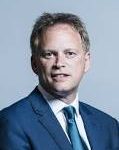
  • Grant Shapps – 2022 Statement on the European Train Control System

    Grant Shapps – 2022 Statement on the European Train Control System

    The statement made by Grant Shapps, the Secretary of State for Transport, in the House of Commons on 29 June 2022.

    I am pleased to announce over £1billion investment in the East Coast Digital Programme, which aims to introduce the European Train Control System (ETCS) to the Southern section of the East Coast Mainline.

    European Train Control System, also known as digital signalling, brings signalling onto a screen in the train’s cab. This provides drivers with continuous real time information, for example maximum allowable speeds, and removes the need for line-side signals. Trackside sensors are retained to track the train on the network and support adaptive decision making, through assessing and understanding that particular train’s characteristics such as speed and braking distance. This investment will fund the fitment of trains and lineside technology on the stretch of line from London King’s Cross to Stoke Tunnel, just North of Peterborough, as well as the integration of this technology into the network and its operating companies.

    This will be the first deployment of European Train Control System on a mixed-use mainline in the UK rail network, increasing punctuality and reliability for both passenger and freight services across the whole line. Trains will be able to run closer together safely, enabling more services to run on the same stretch of track. Fewer signalling failures and faster recovery from any delays will make the service more reliable for the customer.

    This programme of work presents a unique opportunity to enable a positive step-change in technology on the network, with a move away from systems of signalling that emerged from Victorian times, and towards a high-performing digital alternative. As the rail sector continues to recover from the pandemic, it is vitally important that capacity and reliability are both increased in a financially viable way as demand returns.

    This large upfront investment in the rail sector also presents an opportunity for savings in the long run, as maintenance of these assets is more affordable across the whole life of the signals. Furthermore, this programme will create approximately 5,000 highly skilled jobs in the rail industry.

    Initial enabler projects have already begun, including the fitment of trains and some infrastructure on the Northern City Line, with works to continue through the 2020s.

    This major investment is symbolic of this Government’s ongoing commitment to modernising our railways, making them fit for the 21st century. Deployment of this innovative technology for the first time on a mixed-use mainline in the UK will deliver improvements for the user, support the creation of a financially sustainable railway and also grow and level up the economy by delivering an upgrade to this vital economic artery which stretches along the spine of this country.

  • Grant Shapps – 2022 Statement on the Road Safety Investigation Branch

    Grant Shapps – 2022 Statement on the Road Safety Investigation Branch

    The statement made by Grant Shapps, the Secretary of State for Transport, in the House of Commons on 29 June 2022.

    I wish to inform the House that my Department has today published its response to the Government consultation on establishing a Road Collision Investigation Branch.

    This Government are committed to improving road safety and reducing the number of people who are killed or seriously injured on our roads each year. I am pleased to announce that the Government intend to bring forward new measures to enable the creation of the branch, which, following discussions with stakeholders, will be named the Road Safety Investigation Branch.

    This independent, safety-focused branch will learn the lessons from road collisions and other incidents, including those involving self-driving vehicles, by carrying out independent investigations and making recommendations to prevent future incidents, make our roads even safer and save lives across the country. The branch will also provide vital insight into safety trends related to new and evolving technologies, which will help to ensure road safety policy keeps pace with new developments.

    We expect to include measures to enable creation of the branch in the forthcoming Transport Bill.

  • Sajid Javid – 2022 Statement on a Plan for Digital Health and Social Care

    Sajid Javid – 2022 Statement on a Plan for Digital Health and Social Care

    The statement made by Sajid Javid, the Secretary of State for Health and Social Care, in the House of Commons on 29 June 2022.

    I would like to inform the House that “A Plan for Digital Health and Social Care” has been published today. This document sets out how we will build a more digitised, more efficient and more personalised health and care system.

    Earlier this year, I made a speech setting out my four priorities for reform in health: prevention, personalisation, people and performance. We cannot deliver the change We need to see, unless we embrace the opportunities from digital technologies.

    We are now embarking on a transformative programme of reforms that will make sure the NHS is set up to meet the challenges of 2048, not of 1948, when it was first established, and also to make the vital changes that are so urgently required in social care.

    On 13 June we published a strategy for a data-enabled health and social care sector, “Data Saves Lives”, which draws on lessons learned about the power of data from the response to the covid-19 pandemic. Data Saves Lives includes a range of commitments that will help connect systems and details how we will use data flowing through the digitised health and social care system to continually improve services while maintaining the highest standards of privacy and ethics.

    The long-term sustainability of health and social care is dependent on having the right digital foundations in place, and so digital transformation is crucial in achieving and delivering these reforms.

    This plan sets how the delivery of health and social care will change, taking forward what we have learnt from the pandemic, and from tech pioneers across the world. The aim is something that we can all get behind: a health and social care system that will be much faster and more effective, and delivers more personalised care.

    Digital is not, and will not, be the only means of access to health and social care services, but through it we can ensure that the needs and preferences of individuals are reflected in the services we provide.

    Health and social care organisations and partners from industry can use the plan to help shape their strategies to digitally transform services for their populations.

    The NHS app will be at the heart of these plans. We saw during the pandemic how people grasped the opportunity to have healthcare at their fingertips.

    I am determined to make this app the front door to NHS services, and this plan shows how we will add an array of new features over the coming months and years, with new functionality and more value for patients every single month. My vision is one in which the app is an assistant in your pocket and a permanent feature of how we do healthcare in this country.

    With digitised services and a connected system that supports integration and harnesses the power of data, technology can create a transformed health and social care system that is more responsive to the needs and preferences of all people, identifies and reduces health disparities and delivers improved outcomes for everyone.

    We have already made huge progress. Over 28 million people now have the NHS app in their pocket, over 40 million people have an NHS login, and most NHS trusts have an electronic patient record system in place. This is on top of unprecedented investment in the digitisation of adult social care, including £150 million of funding for digital adoption that we announced in our recent White Paper.

    This plan sets out the next chapter of this story of digital transformation. It sets out a vision of how we will build a more connected and much more efficient system.

    The opportunities offered by digital transformation are huge, with benefits over the next decade running to billions of pounds in efficiencies, economic growth and private investment.

    That plan includes a raft of other initiatives, £2 billion of funding to support electronic patient records to be in all NHS trusts, and help over 500,000 people to use digital tools to manage their long-term health conditions in their own homes.

    Just as we are putting the right technology in place, we also need to make sure that people are confident and supported in using it. The plan also shows how we will relentlessly focus on digital skills, leadership and culture as well as building patient trust, at all levels, so we can make transformation durable right across the board.

    This agenda matters more than it did when this pandemic began. I am determined to use the power of technology and the skills, leadership and culture that underpins it, to drive a new era of digital transformation. So that our health and care system, and our country, will thrive long into the future, delivering vast benefits for patients.

    I will deposit a copy of the plan in the Libraries of both Houses.

  • Nadine Dorries – 2022 Statement on Newsquest and Archant Merger

    Nadine Dorries – 2022 Statement on Newsquest and Archant Merger

    The statement made by Nadine Dorries, the Secretary of State for Digital, Culture, Media and Sport, in the House of Commons on 29 June 2022.

    On 18 March 2022, local news publisher Newsquest Media Group Ltd acquired Archant Community Media Ltd.

    On 26 April the Department for Digital, Culture, Media and Sport wrote to Newsquest Media Group Ltd and Archant proprietor, RCapital, to inform them that I was “minded to” issue an intervention notice. I outlined that public interest grounds specified in section 58 of the Enterprise Act 2002 may be relevant to the transaction—in particular, the need for, to the extent that it is reasonable and practicable, a sufficient plurality of views in newspapers in each market for newspapers in the United Kingdom or a part of the United Kingdom.

    In line with the statutory guidance on media mergers, the “minded to” letter invited further representations in writing from the parties. I have now come to a final decision, which needs to be made on a quasi-judicial basis, on whether to issue an intervention notice.

    In light of the new information provided to me by the parties to the merger, I have decided not to intervene in the merger. The information provided by the parties addressed my concerns regarding the potential grounds for a public interest intervention, including the need, to the extent that it is reasonable and practicable, for a sufficient plurality of views in newspapers in each market for newspapers in the United Kingdom or a part of the United Kingdom.

    Officials have written to Newsquest and RCapital to inform them that, without prejudice to my ability to intervene if new or additional information comes to my attention, I do not intend to intervene in the merger on media public interest grounds.

  • Nigel Huddleston – 2022 Statement on Short-term Holiday Letting in England Inquiry

    Nigel Huddleston – 2022 Statement on Short-term Holiday Letting in England Inquiry

    The statement made by Nigel Huddleston, the Parliamentary Under-Secretary of State for Digital, Culture, Media and Sport, in the House of Commons on 29 June 2022.

    The Government are today publishing a call for evidence looking at short-term and holiday letting in England. This call for evidence will improve the evidence base on the tourism sector, gathering views and information on a range of issues related to short-term lets. This will improve the Government’s understanding of the benefits and challenges of the increase in short-term and holiday letting in England in recent years, and will help us to determine whether there are options the Government should pursue through a formal consultation, in line with commitments set out in the tourism recovery plan which was published in June 2021.

    The guest accommodation sector has changed significantly over the last 15 years, both within England and across the world. In particular, there has been a major expansion in the number and range of accommodation suppliers operating in the market, driven by the growth of online platforms. While such platforms provide a new route to market for many forms of guest accommodation, it is the increase in short-term letting of residential premises through them that is perhaps the most notable development.

    The sharing economy has brought many benefits, both to the tourism sector and the wider economy, but also to individual homeowners by creating an additional income stream, and to consumers by broadening the range of available accommodation. However the Government also recognise that the rise in short-term and holiday letting has prompted a range of concerns. These include the impact on the housing market and local communities, particularly in tourism hotspots, and a sense that new entrants in the market are not being held to the same health and safety standards as traditional operators of guest accommodation such as hotels and bed and breakfasts. Many other countries and cities have introduced measures in recent years in response to some of these issues. As the tourism sector recovers from covid-19, the Government believe that now is the right time to assess the picture in England.

    The call for evidence will allow us to collect information on this important issue, and if necessary develop proportionate, evidence-based policy options for a possible future consultation. I am also cognisant of commitments in the levelling-up White Paper to explore proposals for introducing a national landlord register in England, and my Department will continue to work closely with the Department for Levelling Up, Housing and Communities to ensure the Government are joined up in identifying the right solutions for each sector.

    The Government are keen to hear from all interested parties, including hosts, guest accommodation businesses, online peer-to-peer platforms, enforcement agencies and tourism representative bodies. I will place a copy of the call for evidence in the Libraries of both Houses.

  • Trudy Harrison – 2022 Speech on Hammersmith Bridge

    Trudy Harrison – 2022 Speech on Hammersmith Bridge

    The speech made by Trudy Harrison, the Parliamentary Under-Secretary of State for Transport, in the House of Commons on 28 June 2022.

    I congratulate the hon. Member for Putney (Fleur Anderson) on championing Hammersmith bridge once again, and on securing the debate. I also note the contributions by the hon. Members for Hammersmith (Andy Slaughter), and for Richmond Park (Sarah Olney). I have listened carefully to them, and I appreciate that the subject is of keen interest to their constituents. I understand the impact of the bridge’s closure to motor vehicles on many of the people in constituencies around Putney, and throughout south and west London.

    As the hon. Member for Putney is aware, the bridge is owned by the London Borough of Hammersmith and Fulham and, as such, the borough has the responsibility for maintaining the bridge. The decisions on its repair lie with the borough. The bridge is a unique wrought iron structure, and has served generations of Londoners for nearly 200 years. It is deeply concerning that the bridge has had to close, first to motor vehicles in 2019 and then to all users in 2020. Of course the safety of those using the bridge was and remains the greatest priority. That is why my Department has done everything in its power to assist the London Borough of Hammersmith and Fulham and Transport for London with the project, and to facilitate the full reopening of the bridge to all users, including motor vehicles.

    I turn to the progress that has been made and some of ways that we have assisted. In 2019, we established the Hammersmith bridge taskforce, led by Baroness Vere of Norbiton, and it has met several times. The taskforce brings together all the key stakeholders whose input is required to deliver successful outcomes for pedestrians, cyclists, river traffic, and, eventually, motorists. The taskforce has been instrumental in organising stakeholders to work together in developing a clear course of action to enable the bridge to open.

    The hon. Member for Richmond Park (Sarah Olney) asked about the prior information notice that was issued by Hammersmith and Fulham. That PIN was issued on 25 May, with a deadline of 10 June. It was then extended to 15 June. Meetings with interested parties are taking place over the next few weeks to gauge interest and to seek feedback on the proposals. This is a crucial step in the process, and in developing an understanding of the market’s appetite and of the options being considered by the London Borough of Hammersmith and Fulham.

    On the timelines, since the establishment of the Hammersmith bridge taskforce, the project has made significant progress. Thanks to Government funding—some £4 million was provided on 31 October 2020—the bridge was able to reopen on 17 July 2021, albeit on a limited and controlled basis, to pedestrians, cyclists and river traffic. The next stage of the project—reopening the bridge to motor vehicles—is under development by the London Borough of Hammersmith and Fulham. Providing a schedule for full reopening is part of the development process. Whether to impose tolls is a decision for the London Borough of Hammersmith and Fulham. We expect the borough to engage with residents as it deems appropriate, so that it can understand any implications, as the hon. Member for Richmond Park set out.

    Sarah Olney

    Can the Minister bring any influence to bear on her colleague in the other place, Baroness Vere, so that she reconvenes a taskforce that will enable the whole issue of tolls to be properly, widely and publicly discussed with the relevant stakeholders?

    Trudy Harrison

    I will now set out exactly what is happening. Much good progress is being made. Following the complete closure of the bridge in 2020, the Department for Transport provided £4 million of taxpayers’ money, which enabled a comprehensive investigation of the overall structure and condition of the bridge. Through that investment, we had pretty much world-leading engineers working to develop a complete picture of the issues facing the bridge. Those works determined that the bridge was in a better condition, thankfully, than first thought, and that led directly to the bridge reopening, albeit on a temporary and controlled basis to pedestrians, cyclists and river traffic.

    Andy Slaughter

    I am in a state of despair, listening to the Minister. The cost of reopening this bridge could be £160 million. Hopefully, it will be less, but it is of that order. It is about the same as building a whole new Thames bridge, and it is fantasy for the Minister to say, “The Government are providing £4 million,” and “The Government have done this or that.” All the initiative so far has been taken by Hammersmith and Fulham Council—whether that is on the memorandum of understanding, on the proposals for the cheaper Foster COWI bridge, or on the stabilisation work—to get the bridge open permanently again to pedestrians. This is a strategic route through London. The Government must step up to the plate. I know that this is not in the Minister’s brief, but please could she take this issue seriously? It is affecting hundreds of thousands of people all across London and the south-east.

    Trudy Harrison

    I reject the characterisation of my Department as not taking this seriously. The hon. Gentleman will know that when one is potentially spending more than £100 million on a new bridge, much consideration and engineering knowledge will need to go into things such as a review by the Case for Continued Safe Operation Board. The board monitors the condition of the bridge, and has enabled it to stay open to pedestrians, cyclists and river traffic. I am relieved to say that since that reopening, no further closures on safety grounds have been necessary.

    The commitment to this project did not stop at the initial £4 million investment—not at all. In the TfL extraordinary funding and financing settlement of June 2021, we committed to sharing the cost of reopening the bridge. We have committed to that funding with the London Borough of Hammersmith and Fulham and TfL. We reiterated that commitment in a subsequent settlement, agreed in February 2022. That commitment ensures that the Government will fund up to one third of the cost of opening the bridge to pedestrians, cyclists, river traffic and—depending on those costs—buses and motor vehicles as well.

    The first part of that commitment has already been delivered. Earlier this year, the Department approved the full business case from LBHF for the stabilisation works on the bridge. Those works will ensure that the bridge will remain open to pedestrians, cyclists, and river traffic permanently, with no risk of further temporary closures due to unsafe conditions.

    The approval of the business case was a condition of the Government’s releasing their third of the funding for stabilisation. I am pleased to say that in May this year, my Department provided the borough with almost £3 million to allow the works to progress unimpeded by financial concerns. That brings the total investment to date to nearly £7 million.

    It is thanks to the excellent work and diligence of my Department, TfL and the London Borough of Hammersmith and Fulham that the works are already well under way. At long last, the residents of this part of London can see tangible progress being made. The borough is now managing the works, and will be providing my Department with regular updates on progress.

    The next stage is to strengthen the core and renovate other structurally significant parts of the bridge. The strengthening phase of engineering works will build on stabilisation works; on its completion, the bridge can open to all users, including buses and motor vehicles. LBHF is required to submit a further business case to my Department and to TfL; in that business case, we would expect to see that the proposed method of strengthening is viable, offers value for money and minimises disruption to current users of the bridge. That is essential. The business case will also set out the final cost estimate for strengthening the bridge and, once approved, will allow my Department to release its third of the funding.

    Fleur Anderson rose—

    Trudy Harrison

    Sorry; unfortunately, I cannot give way due to time. All three parties will work together over the coming months to ensure that an HM Treasury Green Book-compliant business case is developed and submitted for approval as soon as possible.

    In closing, I re-emphasise that reopening Hammersmith Bridge to all users is and remains a Government priority. Restoring full access to this vital south-west London artery will improve the lives of thousands of residents, commuters and businesses who have, as we have heard this evening, been long deprived of a convenient route across the Thames. I also restate my Department’s commitment to funding up to one third of the cost, on approval of an appropriate business case.

    I thank hon. Members for their contributions, and for their dedication in highlighting the issues that the continued closure of the bridge causes for their constituencies and others in the surrounding area. I reassure them that we are working tirelessly to deliver the full opening of the bridge.

  • Fleur Anderson – 2022 Speech on Hammersmith Bridge

    Fleur Anderson – 2022 Speech on Hammersmith Bridge

    The speech made by Fleur Anderson, the Labour MP for Putney, in the House of Commons on 28 June 2022.

    Thank you for calling me, Mr Deputy Speaker, and I thank the Members who are present for this important Adjournment debate.

    Here I am again, and talking about Hammersmith bridge again. It has been closed to vehicles for three long years, and that closure is still having a huge impact on the everyday lives of residents in Putney, Roehampton and Southfields, and much more widely across south-west London.

    I last held an Adjournment debate on the closure—and, hopefully, the reopening one day—of the bridge in April 2021, and I have raised it in the House several times since then. Since that debate there have been welcome stabilisation works to make the bridge safer, and it has reopened to pedestrians above and river traffic below. However, I am here again because there has still been no agreement on the building of a temporary vehicle bridge, on any date by which the restoration of the bridge will be complete, or on when—and residents are crying out “When?”—the bridge will fully reopen. I hope to hear much better news from the Minister this time than last time, and I know that plenty of people in Putney and across south-west London are listening to the debate and also want those answers.

    The Government have been dragging their feet, and the taskforce has had no task and no force. Responding to my last debate, the then Parliamentary Under-Secretary of State for Transport, the hon. Member for Redditch (Rachel Maclean), simply said:

    “The buck stops with Hammersmith and Fulham.”—[Official Report, 14 April 2021; Vol. 692, c. 442.]

    That was a very disappointing end to the debate. I will be describing all that Hammersmith and Fulham Council is doing now, because it is the council that is responsible for the bridge, and explaining why it is the Government who need to do more.

    It is Hammersmith and Fulham Council that made the assessment of the danger in the first place, has made the business case for the stabilisation works and funded those works up front, and has drawn up the memorandum of understanding between the council, the Government and Transport for London, the three parties that will be responsible for the funding. However, Transport for London does not have the funds to restore the bridge because of reduced fees and other payments as a result of covid, so it comes down to the Government. What have the Government done, what will the Government do, and when will the bridge reopen?

    Let me first say something about the impact of the closure. It has resulted in between 500 and 4,000 vehicles a day coming through Putney High Street. Local residents complain constantly of increased travel times for journeys by bus and car, of increased congestion and pollution and of accidents on the roads, especially involving children near the schools on the most affected roads.

    We want more safe cycle routes in Putney, and in Wandsworth we have one of the highest “propensity to cycle” ratings. However, the increased traffic and traffic jams make cycling more dangerous and put people off cycling. In meetings that I have held with potential cyclists, most people say they feel that Putney Hill, Putney High Street and Putney Bridge are very dangerous roads. That in turn means worse air quality, because if there are fewer cyclists on the road there are more vehicles, which add to the congestion. As you will know, Mr Deputy Speaker, each year more than 4,000 Londoners die prematurely as a result of air pollution, and more than 500,000 people in London boroughs suffer from asthma and are vulnerable to toxic air.

    Recently, for Clean Air Day, I undertook readings using an ultra-fine particle counter—lent to me by Imperial College—along Putney High Street and the Lower and Upper Richmond Roads, the main diversion routes from the bridge. The readings were exceptionally high, even from inside homes along those roads. Residents have shown me the black soot that builds up in their homes, and companies tell me about the impact that the poor air quality is having on their business.

    The Putney Society is concerned about this as well, and it has sent me the following statement about the impact of the bridge closure:

    “Congestion is at an all time high with roads leading towards Putney Bridge clogged up before 7 am in the morning, with traffic jams continuing well into the evening. Prior to the Bridge closure in 2019 Putney already suffered from one of the most polluted High Streets in the country. And despite positive measures such as the introduction of cleaner buses and the ULEZ zone, our pollution levels continue to exceed UK legal limits, in part because of additional traffic resulting from the Bridge closure. Around 60 constituents die prematurely each year because of this pollution, and we now face the prospect of this continuing for several more years until Hammersmith Bridge is fully repaired.”

    The statement continues:

    “The extra traffic has affected thousands of people. Aside from the impact of pollution on residents’ health, children and students have suffered disrupted journeys to their school or college; workers, especially those travelling from Roehampton, have faced significantly lengthened bus journeys and businesses have had delayed deliveries. And the most vulnerable people, who require access to healthcare, whether appointments or vital emergency treatment, face delays in getting an ambulance or reaching nearby hospitals. Why? Because ambulances can no longer take a short hop across the Bridge to Barnes or beyond but now spend much, much longer in traffic”.

    Andy Slaughter (Hammersmith) (Lab)

    My hon. Friend is making an excellent speech, particularly in drawing attention to the fact that the closure of Hammersmith bridge is having a sub-regional and regional effect. It is much wider than just the immediate locality. Does she find it surprising that the Government have dragged their feet all the way along the line on this, first by asking Hammersmith to find all the funding, then £64 million and now a third of the cost, which is more than double what they would propose for similar schemes? Does she agree that until the Government are prepared to take their responsibilities in this matter seriously, we are not going to see progress?

    Fleur Anderson

    I absolutely agree with my hon. Friend. We have just had a debate on Government failure, and this is Government failure 101. Not keeping a major transport route open in our capital city and letting it stay closed for so many years—and who knows how much longer—is a Government failure. They need to step up with the funding, and I will be outlining more information about that.

    Hammersmith bridge is a very unusual bridge, and this is why it requires special attention from the Government. It is a grade II listed structure and part of Great Britain’s engineering heritage. It is also one of the world’s oldest suspension bridges, and only five years younger than the Brooklyn bridge in New York. It is unique, having been built out of cast iron, wrought iron and wood. No Government, surely, would allow the Brooklyn bridge to stay closed, so why let Hammersmith bridge do so? It has suffered from over seven decades of deterioration and corrosion. This corrosion, along with the fact that the bridge was designed for the needs of the 19th century, is what makes Hammersmith bridge one of the most expensive bridges in Britain to repair. When warnings of its possible imminent collapse forced its closure, I perfectly understood that the engineers faced huge challenges.

    Transport for London has estimated that the repair bill could be between £141 million and £161 million. By comparison, the cost of repairing other Thames bridges is far smaller. For example, Chiswick bridge cost £9 million to repair, and Albert bridge cost £9.7 million. In those cases, Transport for London largely funded the works, paying between 85% and 100% of the costs. The responsible council was not left to foot the bill in the way that Hammersmith and Fulham Council is being asked to do. The bridge is a special case, both historically and financially, and it needs a different funding package from the Government.

    Overall, there needs to be a change in bridge policy in London. Lambeth Council has five bridges, but is responsible for none of them. Southwark bridge and London bridge are managed by a trust. Two railway bridges are managed by Network Rail, but Hungerford railway bridge is managed by Westminster. The policy is all over the place. I think it might be time to look at the inequity of bridge responsibilities in London, because it is clear that the system is failing us over Hammersmith bridge. But we are where we are, and there is currently an agreement that the Government, Transport for London and Hammersmith and Fulham Council will fund it.

    The Mayor of London has repeatedly sought to meet the Transport Secretary to discuss this and a range of London transport funding issues, but these requests have all been refused. Twenty meetings with Transport for London have been cancelled by the Department for Transport or the Treasury since the last TfL funding deal was agreed. The last time the Transport Secretary and the Mayor of London spoke and discussed Transport for London funding was on 30 May 2021. That is shocking to hear, as Londoners are being let down by this Government. We need them to work with the Mayor, and I hope to hear more of that from the Minister later. We are talking about a national transport route, and the Government must lead the way in funding and reopening it. If a toll is going to be made necessary because the Government will not fund the bridge, has the impact on Putney residents been factored into that business case?

    What has Hammersmith and Fulham Council done? Can we say that the buck stops with it? Last November, the council submitted a full business case to the Department for Transport for the stabilisation works, at a cost of £8.9 million, which was £21 million less than the TfL stabilisation plan, so this is a major saving to the taxpayer. To speed up the repair programme, the council decided in December to make the cash available up front, rather than wait for the DFT and TfL governance processes to sign off their shares, as that process is simply too cumbersome. That enabled works to begin several months early. The DFT did not sign off on its one-third share until 22 March this year, many months later, showing that the Government are dragging their feet. The phase 1 stabilisation programme was able to get under way on site in February. It will stop the risk of collapse and prevent future closures to pedestrians, cyclists and river traffic, which I, of course, welcome. On 7 March, Hammersmith and Fulham Council signed off a further £3.5 million investment so that it could crack on with all the essential expert studies required to obtain Government and TfL funding through the full business case. That includes essential concept design work, geotechnical studies, crowd loading assessments and traffic modelling. I understand that the council and the DFT officials are working together on completing the business case, but when will that be done? Will funding be ready to go as soon as that is completed and approved, so that we do not have any more delays?

    The latest investment of £3.5 million by the council to deliver those essential studies has again been paid for by the council up front, rather than having to wait for the DFT and TfL governance processes to kick in. This signing off of money, at its own risk for the council, in order to expedite bridge works is a situation that the council says cannot continue. I understand that the impasse is now the memorandum of understanding, which would confirm the one shares payable for the council, the DFT and TfL, but that it has not been signed. The latest draft version was sent by the council to the DFT on 14 September 2021, but it has not yet received a response from Ministers or their officials. So I hope that I will not hear, “The buck stops with Hammersmith and Fulham Council” from the Minister again. The Government need to recognise the huge impact of this closure on people in Putney and beyond, and they need to take far more proactive and urgent action.

    I shall finish with some questions for the Minister. When is the next meeting of the taskforce? When will Secretary of State sign the memorandum of understanding to enable the next phase of the works to continue as fast as possible? What is the hold-up on that? Has an assessment of the impact of a proposed toll, or of any other financial proposals, on routes through Putney been carried out? Would the Government consider underwriting the full works? When will the building of the temporary bridge start? How long will it take? Is there a deadline from Ministers for the completion of this project, as we would certainly like to see that there is and that it is as soon as possible? I ask again, and I will keep asking, what have the Government done, what will they do and when will Hammersmith bridge reopen?

    Mr Deputy Speaker (Mr Nigel Evans)

    Sarah Olney has asked permission from the mover of the motion and the Minister to make a short contribution in this debate. Both have agreed and I have been informed.

    Sarah Olney (Richmond Park) (LD)

    Thank you very much, Mr Deputy Speaker. I thank the hon. Member for Putney (Fleur Anderson) for securing this debate and I thank the Minister and you for allowing me to contribute briefly to it. As I am sure everybody knows, the closure of Hammersmith bridge has had an enormous impact on my constituents. I wish to raise two issues, following on from the excellent speech of the hon. Member for Putney outlining the situation. The first is that on 25 May 2022, the London Borough of Hammersmith and Fulham issued a prior information notice, announcing its intention to seek external funding for its third of the cost of strengthening Hammersmith bridge. As the hon. Lady asked, does that mean tolls? We are desperately seeking further information on that important point from the Department. I am not against tolls. If they are required to get the bridge open, there may be public support for that in Richmond Park, but it needs detailed consideration by all parties, including the London Borough of Richmond upon Thames. Any tolls would weigh heavily on my residents, and we need a full exploration of all the factors. For instance, would tolls mean that people continue to use Putney and Chiswick bridges and avoid Hammersmith bridge and the tolls? Tolls are not unknown on London bridges, but not within the lifetime of anyone here.

    My residents would also want to know who will have to pay the tolls. Might there be exceptions for Richmond residents, or will the exceptions just be for buses and emergency vehicles? We need more information. I urge Baroness Vere, the Minister responsible, to reconvene the taskforce so that the issues can be urgently discussed by local stakeholders, including the London Borough of Richmond upon Thames.

    The hon. Member for Hammersmith (Andy Slaughter) made the point about the strategic issue involved. In Richmond, planning permission for housing developments, school place planning and healthcare planning are being affected. Will my residents have access in the long term to services, including schools and healthcare, on the north side of the Thames? It is really urgent. We know that jointly Transport for London, the Department for Transport and the London Borough of Hammersmith and Fulham are committed to reopening the bridge, but without the funding to do so, their commitment is not worth very much. When it comes to five and 10-year planning for education and healthcare, we do not know whether services on the north side of the Thames will be accessible to people in Barnes. That is a real issue for parents who are thinking about schooling for their children. Will they be able to cross the bridge and access schools in Hammersmith and further afield? I thank the hon. Lady for bringing the debate to the House, and you, Mr Deputy Speaker, for allowing me to contribute.

  • Lyn Brown – 2022 Speech on Community Payback

    Lyn Brown – 2022 Speech on Community Payback

    The speech made by Lyn Brown, the Labour MP for West Ham, in the House of Commons on 28 June 2022.

    This debate is about how we provide security for our communities and justice for victims. It is also about getting real about why so many crimes are happening, why so many victims are being harmed and why the wounds are not being helped to heal. We know about how the Tory austerity cuts to our courts helped to create a massive backlog even before the pandemic. We know how victims are waiting years for justice and how so many are dropping out of the system because they cannot have cases hanging over their heads any longer. We also know how suspects waiting month after month in custody or on bail just creates the conditions for further crime.

    We are talking about community sentences and the role that they can play in providing justice, in repairing the damage that crime causes to our communities and in stopping reoffending by dealing with some of its causes. My hon. Friend the Member for Lewisham West and Penge (Ellie Reeves) laid out the facts: the number and percentage of community sentences in our justice system have declined in the past 10 years—even before the pandemic. The Ministry of Justice’s own research shows that community sentences are associated with lower reoffending than short prison sentences, which are often the alternative, and that community sentences cost 10 times less than a prison place. When our prisons are as underfunded, dangerous, overcrowded and devoid of rehabilitation as so many are today, that is no bad thing. Community sentences are a win-win, as they have lower reoffending rates and they are cheaper.

    Andrew Gwynne

    My hon. Friend is making an excellent speech. There is another bonus because, when community sentences are done correctly, they provide payback—the clue is in the name—to communities affected by crime and they provide a form of restorative justice to victims of crime. A price cannot be put on that. It is justice in action, is it not?

    Ms Brown

    My hon. Friend is absolutely right. Community sentences work because they include punishment while maintaining a link to the community and enabling progress on the problems that drive crime in the first place. The link to the community is perhaps the most important thing, because it helps people to maintain the hope that is necessary to change their life. Community payback orders can give people experience of work that helps their neighbourhood to thrive. The work can and should be hard, but it should also be rewarding, which can, in and of itself, create a motivation for further change.

    What are the barriers to making this kind of sentence work well? A lack of investment in the probation service is part of the problem. When I was a shadow probation Minister, I frequently heard of probation staff taking on huge, extraordinary numbers of cases. Good, valued probation staff are not just an early warning system for when an individual is going off the rails; they are agents of hope, healing and personal change. That can only happen if professionals are given the time and resources to develop the real relationships that are essential if we are to turn lives around. It is about understanding the needs, vulnerabilities and risks of the people they are supervising. We need probation staff who organise unpaid work to have good links with employers, councils, colleges and local charities. They need a range of opportunities to be available so they can tailor the service to a person’s skills and needs. Most of all, they need the necessary time and trust to inform the courts of the most effective, most appropriate and fairest type of sentence.

    Grahame Morris

    My hon. Friend hits the nail on the head. The Minister suggested that Opposition Members do not appreciate the work of probation officers, so will my hon. Friend please set the record straight? We really do appreciate the work of probation officers, and we acknowledge the hiatus caused by the privatisation of the probation service. I hope the Government will recognise the value of probation officers in the current pay talks.

    Ms Brown

    My hon. Friend is absolutely right. If we are to turn around people’s lives, and if we are to make a dent in the crime on our streets, we have to resource those who are working with people who often have immensely disorganised lives, who may have a history of trauma and who might need a proper intervention by social services or the probation service to enable them to put their life straight. All too often, the only contact we have with the probation service is to criticise it for not recognising that somebody is about to go off the rails or has already gone off the rails and for not having a close enough eye.

    The reality is that our probation service needs the resources to work properly with the people in its care, as well as resources for healthcare, drug rehabilitation, alcohol dependency and so on to use as tools in its work.

    Andy Carter

    The hon. Lady is making an interesting speech. There are, of course, two elements to unpaid work—the punitive element and rehabilitation—so two levels of sentencing are imposed: rehabilitation activity requirements and unpaid work. It is important not to confuse the two, because unpaid work is usually the punitive element. She talks a lot about needs, which sit in the rehabilitation activity requirement.

    Ms Brown

    I genuinely think it is about seeing it in the whole. If I am doing unpaid work to clean up a graveyard, I can look back and see a graveyard that is in better nick because of my work and somebody could commend me for that work, which begins to build confidence and self-worth. Although there is the punitive element of taking hours away from my life and making me do a job that I do not particularly want to do because it is a bit nasty and a bit scuzzy, there will be appreciation from others and from me for a job well done. The two cannot be separated, so we should acknowledge and accept both bits with open arms and say that this is what we want to do, because it changes lives.

    Good, valued probation staff are not just an early warning system; they are agents of hope and healing. I worry that unpaid work can be seen as a box-ticking exercise, and it is no surprise that courts and victims sometimes do not have confidence that it is a genuine form of justice. I am worried that the probation system, with its regional structures, is too remote from our local communities. There is not necessarily the transparency and accountability to create genuine confidence in what is happening.

    I worked in local government for years before I came to this House, and I saw time and again how money and power can be sucked away from the local when there is a regional structure. Sometimes our regional structures are a bit too far away from the delivery on the ground. There are fabulous local and public organisations working in Newham that I would trust to do the job of putting people to work in a way that pays back the community and creates opportunities for offenders, but those organisations are too often shut out of these contracts because they are a bit too small, a bit too local and a bit too distant from the decision makers, whether in Westminster or Islington. It sometimes means the best are not employed to do the work that we all know could happen.

    To illustrate what I have been trying to say, I will finish by talking about the group that is failed most by the criminal justice system. Women overwhelmingly end up before the courts for non-violent and non-sexual offences. In 2020, 72% of women sentenced to prison had committed a non-violent offence. These offences are usually driven by the legacy of abuse, trauma and exploitation, and we know from the Government’s own research that 60% of women entering prison have suffered domestic abuse, almost half have an alcohol problem and almost a third have a drug problem.

    Let me be clear. Women do commit crimes and we have to respond by creating a justice system that supports them to escape the abuses, traumas and addictions that have put them where they are. Community sentences can be an important tool for women offenders. They can help women to face up to and deal with their addictions. They include unpaid work that builds a woman’s skills, confidence and ambition. We have to face reality: if we do not give a community sentence, the alternative is a short prison sentence, which can make the problems that drive women’s offending so much worse.

    Let me give an example. Many women who commit crimes are in a desperate situation due to homelessness. They then go into prison and, if they had a tenancy, they lose it. When they are out of prison, as many as two thirds do not have a safe home to go to. Most prison sentences for women are very short—70% are for less than a year. In the system in which we are working, that, frankly, does not give professionals enough time to respond to individual needs and provide the necessary treatments that will enable a woman to make a success of her life once she is released. For instance, it is not possible in that time, in the big structures in which we are working, to get a woman on to drug rehabilitation and alcohol dependency courses and provide the facilities and resources that she needs to turn her life around.

    Alexander Stafford

    I am trying to follow the hon. Lady’s logic. Is she saying that every woman—I know this is about women, rather than men—who commits relatively minor crimes such as shoplifting, mugging or assault, which still have victims, should not be sent to jail? I do not think we should screen people out because they are male or female. If someone commits a crime, they should go to jail, if that is appropriate. If the argument is that sentences are too short, let us make them longer so that there is chance to be rehabilitated in jail where the criminals belong.

    Ms Brown

    Let me help the hon. Gentleman. The Government have a female offender strategy, and what I am speaking about is not outwith the philosophy and principles in his Government’s strategy. It is massively understood that there are many and complex reasons why women find themselves in a situation where they can be imprisoned for between three and six months. Many such women will have responsibility for children. Their incarceration destroys the home for that child. It destroys their having a stable place to be. It often means that the child, although there may be no such predisposition previously, has that trauma to carry with them, which can have lifelong consequences.

    If the hon. Gentleman believes that payback is a reasonable way of dealing with this, let us think about non-violent offenders and how we can use payback and community orders to reduce crime. The thing about payback orders is that they work. I want to see fewer victims. Therefore, I want to see less crime, so how do I get less crime? We are saying that payback orders can get us to a situation where there is less crime because reoffending rates are not as high as they otherwise would be.

    There is a constant churn in prisons, with staff desperately trying to establish relationships but then losing them again. Let us imagine that a staff member meets somebody they could finally support in changing their life. Let us imagine that staff member making promises to that person when they know that those promises cannot be kept because the person will be moving on again in a few weeks. It is simply impossible.

    Justice that happens within women’s communities can avoid that terrible, wrenching disruption and provide long-term support, enabling women to stay closer to their support networks. Almost 60% of the women in prison have children. Research shows that they have a greater risk of becoming involved with the criminal justice system if their parent is placed into prison. It is no wonder that the rates of self-harm in women’s prisons have gone up over the past decade. Many offenders, but particularly women offenders, are trapped in terrible cycles of harm, abuse, crime and punishment. It is a revolving door of reoffending, and that reoffending, effectively, creates more victims.

    I believe that community payback is the kind of innovation that we need. Local partnership working between victims, courts, charities, businesses, probation and other public services is exactly the kind of joined-up local working that, sadly, Conservative Governments have eroded over the years through austerity and the decline in community sentencing. It can be absolutely no surprise that we are all paying the price of increased reoffending, increased crime and more victims, and our communities are being denied justice on a catastrophic scale.

  • Kit Malthouse – 2022 Speech on Community Payback

    Kit Malthouse – 2022 Speech on Community Payback

    The speech made by Kit Malthouse, the Minister for Crime and Policing, in the House of Commons on 28 June 2022.

    I rise both perplexed and pleased to respond. First, I am perplexed because, in seven years in this House, I do not think I have heard quite such a series of distortions of events, or indeed such a naked use of a global pandemic to derive political advantage. I know that when the hon. Member for Lewisham West and Penge (Ellie Reeves) goes to tweet or Facebook the clips of her being outraged in this debate, she will point out—to her, no doubt, small number of viewers in Lewisham West and Penge—that the pandemic had an impact on the whole of the country, not least the criminal justice system.

    I am also perplexed at the sudden reversal in the Labour party’s view of community payback. It was only a year ago that the former shadow Home Secretary, the right hon. Member for Hackney North and Stoke Newington (Ms Abbott), said that community payback

    “has nothing to do with tackling crime”.

    She accused us, in promoting community payback, of “stigmatising” certain sections of the community. She called our desire to have more community payback teams out in the community, doing exactly the kind of work that the hon. Member for Lewisham West and Penge now seems to celebrate, a “distasteful gimmick”, as did, at the same time, the now shadow Foreign Secretary, the right hon. Member for Tottenham (Mr Lammy). So while I welcome the hon. Lady’s conversion, it is the cause of some confusion. Perhaps we are in happier, more Blairite times in the Labour party now, under new leadership, although how long that will last I do not know.

    Having said that, I am pleased to celebrate the work that has been done on community payback, particularly over the last year as it has roared back into life, and to take the opportunity to pay tribute to the outstanding work of our operational staff across England and Wales, who, in spite of a huge number of challenges, have continued to deliver projects day in and day out.

    The community payback requirement is of course delivered in groups, sometimes indoors—painting and decorating schools for example—and covid-19 had a severe impact on our ability to deliver. I am afraid that resulted in a backlog of cases where hours have not been met 12 months after sentencing, which is a stipulation of the requirement. However, we are committed to ensuring that all eligible offenders who did not complete their community payback because of covid-19 will be required to meet their hours.

    The hon. Member for Lewisham West and Penge, on whom I wanted to intervene, seemed to indicate that hours had been written off from community sentences. She may not be aware of this, but we are not able to write off community sentence hours as that is entirely a judicial decision. We have undertaken to present every single case where somebody goes over their 12-month requirement period back in front of a judge for them to take a decision—to extend the time limit, we hope, but at the very least for those people to complete their hours.

    Andy Carter (Warrington South) (Con)

    My hon. Friend is absolutely right. I sat as a magistrate in a breach court in Merseyside last week, hearing from the probation service on cases that it had not been possible to complete in a certain period of time, and the periods for delivery of that community payback were being extended. A point was made from the Opposition Benches that in Greater Manchester some payback cases were not being completed; of course where that is happening, the probation service can and does bring breach cases to court for magistrates to resentence or revoke the order.

    Kit Malthouse

    I salute my hon. Friend for doing his civic duty as a magistrate and he is right that these decisions are effectively for the independent judiciary and we are very limited in what we can do in terms of flexibility. My hon. Friend also rightly highlights that we regularly take those who fail to complete their community service requirement in front of judges for alternative sentencing or for reaffirmation of the sentence. I hope my hon. Friend made the right decision when sitting as a magistrate; I am sure he will have done.

    In stark contrast, our brethren in Scotland decided, other than in certain cases, to write off 35% of the hours accumulated because of the covid-19 backlog. We in this part of the United Kingdom took a completely different decision, recognising the importance of sentencing both to victims and for rehabilitation and punitive purposes, so we are persisting. That does however mean that we have a backlog, but also that we had to develop some necessary solutions to make sure sentences were delivered despite social distancing regulations.

    The independent working projects, which the hon. Member for Lewisham West and Penge mentioned, were introduced as a temporary delivery method in response to covid-19 restrictions and have enabled us to maximise delivery during the pandemic and as the probation service recovers from the impact of the pandemic. All the products created by offenders during these projects were for the benefit of the community or for local charities. They have included a range of robust and practical tasks such as producing hats and scarves for Ukrainian refugees and making face masks and personal protective equipment during the pandemic. I am sure the hon. Lady would not see those jobs as any less valuable than cleaning up a churchyard. Those projects are still being deployed in a limited and targeted way to support our recovery and will be phased out by the autumn.

    We cannot shy away from the fact that the probation service and community payback were, like the rest of the country, deeply impacted by the pandemic. As a result we have built up a backlog of cases and we need to make sure those and future cases are all delivered within 12 months. We are boosting our delivery capacity and maximising our efficiency, and to do that we are investing an additional £93 million in community payback over the next three years.

    Grahame Morris (Easington) (Lab)

    On probation, I attended the justice unions parliamentary group yesterday and subsequently had discussions with members of Napo, the probation officers’ union. They were at pains to point out the huge caseload many of their members are carrying and the difficulties that presents in terms of assessing cases and identifying those suitable for community service and community payback.

    Kit Malthouse

    The hon. Gentleman is right that the probation service has a heavy caseload, and that is why we are in the process of recruiting significant numbers of new probation officers; there were 1,500, I think, last year with more to come in the year ahead. We have been given significant investment by the Government to expand that capability and I am very aware of the caseload pressures across the country. It is therefore even more important that we should be given the flexibility to enable people to complete their sentences within the 12 months so as not to add to the burden by having to represent those cases in front of magistrates if the deadline is not met.

    This significant investment will enable us to increase the delivery of community payback from the pre-covid benchmark of around 5 million hours a year to an unprecedented 8 million hours a year. These hours will be put to good use, with a particular focus on more outdoor projects that improve local areas, allow the public to see justice being done and build confidence in community sentences. We will be delivering more placements that restore pride in communities and add value to the work of local charities, building on the success of projects like one in south Yorkshire which saw offenders undertake 2,500 hours of work to transform a derelict building into a community centre for disadvantaged young people. The ramp-up will be facilitated by the recruitment of about 500 additional community payback staff who will bolster resources in every probation region. In January, we launched a national recruitment campaign and successful candidates are now commencing in post.

    Alexander Stafford

    I thank my right hon. Friend for mentioning south Yorkshire. He will know that, in March, a group of offenders came to Rother Valley under this scheme to help clear up Maltby. Does my right hon. Friend agree that we need more of these schemes across Rother Valley and Yorkshire so that people can see the value of community payback, and that it is often better to have people out working in communities rather than serving shorter sentences in prison?

    Kit Malthouse

    I completely agree and am pleased to hear about the projects in my hon. Friend’s constituency. As he will know, I have urged all Members across the House to nominate schemes in their constituencies to be fulfilled and I need everybody’s help to get us to the target of 8 million hours. If we all pull together I hope we will make sure that not just my hon. Friend’s constituency but every part of the country is looking spick and span.

    This investment is also enabling us to establish new national partnerships with major organisations and charities, which are also joining this coalition to get to 8 million hours, bringing forward high-quality local projects and initiatives to be replicated in communities across England and Wales. This includes our groundbreaking partnership with the Canal & River Trust, which sees offenders clearing litter, tidying towpaths and maintaining beauty spots along 2,000 miles of waterways. The work of offenders on community payback has delivered at Perry Barr in Birmingham, clearing a towpath near the site of this summer’s Commonwealth games, which is testament to the impact such projects can have on local places and people.

    Stephanie Peacock

    The Minister talked about the number of hours completed and has spoken a lot about the impact of the covid pandemic but the fall in the number of hours completed began in 2017; what is his answer to that?

    Kit Malthouse

    There was a decline between ’17-18 and ’18-19, but the hon. Lady will remember that the last three years of decline were covered by a lockdown; the lockdown began in the first quarter. And while there was a decline it is worth pointing out that there was also a very significant decline in the previous year because this is an activity which, as I have said, takes place in groups and we were not allowed to meet in groups. I know it is not often the case that the word fairness is used in our antagonistic form of democratic debate, but it would be unfair of Opposition parties to decry the work of the probation service and community payback supervisors and say that they should have been doing that group work during the pandemic.

    Stephanie Peacock

    Will the Minister give way?

    Kit Malthouse

    No, I want to make some progress. [Interruption.] I will give way in a moment, but I have just given way to the hon. Lady.

    Stephanie Peacock rose—

    Kit Malthouse

    All right, go ahead.

    Stephanie Peacock

    It is disingenuous of the Minister to call me unfair. He clearly misheard my intervention; I was talking about 2017 but he is talking about 2020. Will he answer the question about 2017?

    Kit Malthouse

    As I have said, the baseline was at or around 5 million hours a year for quite a period. It fluctuated from year to year because of a number of factors, not just the delivery but also whether magistrates were giving community sentences in volume, which is not something we can influence. But I am more than happy to write to the hon. Lady with the hours as we see them. [Interruption.] I do not have them to hand, but I am more than happy to write to her about those hours. Look, the number fluctuated at about 5 million-odd, and we want to get it to 8 million. We have been given £93 million and 500 more supervisors have been recruited to get us there. I hope that Opposition Members will acknowledge that community payback was impacted, and had to be, by the pandemic. I know that the Labour party would not seek to make political advantage out of the impact of that awful disease when we had to bear in mind the safety of Ministry of Justice staff.

    The Opposition have submitted their own proposals on improving local engagement and participation, which the hon. Member for Lewisham West and Penge referred to. However, I am afraid that her quango-tastic response to the issue is both unnecessary and, I am afraid, overcomplicated. In reality, community payback is already delivering for local communities, and the Government are only strengthening our engagement with key stakeholders. We recognise that local engagement is an integral part of the community payback offer, and the probation service already works closely with local authorities, police and crime commissioners and voluntary organisations to identify demanding placements that benefit communities. We also encourage members of the public to take part and nominate community payback projects in their areas via an easy-to-use form on the gov.uk website. I urge you, Madam Deputy Speaker, to make some nominations in your own constituency.

    Furthermore, we have just introduced a new statutory duty via the Police, Crime, Sentencing and Courts Act 2022 that requires the probation service to consult with key community stakeholders on the delivery of community payback in local areas. The duty will encourage greater collaboration with key partners such as PCCs and ensure that projects benefit communities and are responsive to local needs. The new statutory duty will cement and formalise existing relationships and create a consistent consultation process across England and Wales. That in turn will guarantee that local people have a say in the types of projects delivered in their areas, ensuring that our placements are responsive to the community’s needs.

    The impact of such collaboration was evident during the community payback spring clean week, which was delivered in support of Keep Britain Tidy’s campaign in March. Between 25 March and 1 April, community payback teams were mobilised across England and Wales to deliver clean-up projects that visibly improved local areas and green spaces. More than 1,500 offenders collected 2,200 bags of litter, removed eyesore graffiti and cleared vegetation from public spaces. They delivered 10,000 hours of hard and productive work at about 300 projects. The initiative was widely supported by many hon. Members and PCCs who visited projects. The spring clean week is a superb example of the impact that meaningful and robust community payback can have on local areas.

    Andrew Gwynne

    I want to take the Minister back to the 8 million hours of community payback that he set out. We all support more hours of community payback, particularly on meaningful projects such as some of those that he has just listed. He skirted over the fundamental problem, though, which is that in June 2011, 185,265 community sentences were handed down—13% of all sentences—but by June 2021 that had fallen to 72,021, which was just 7% of all sentences. He said that there is little that he can do to make the courts award community sentences, but, if he is to make those 8 million hours a reality, he will have to do something to encourage them. What is he doing to ensure that more community sentences, where appropriate, are given out to perpetrators of crime?

    Kit Malthouse

    The hon. Gentleman is quite right that the decision on a sentence is a matter for the magistrate or for the judge at the time. It is for them to decide what is a fitting punishment and, indeed, what is likely to deter the offender from reoffending. The fall that he pointed to will be entirely down to judicial discretion.

    We can do a certain amount of marketing to judges and sentencers. In promoting my own pet project of alcohol abstinence and monitoring orders—the new sobriety tags that have been brought in—I have been attending judicial training courses to explain to sentencers how the sentence works and its effectiveness. In the end, a judge or magistrate wants to know that a sentence is effective, and if we can demonstrate through our work that it is effective, punitive and satisfies the public interest, and the local community sees value in that sentence, I am sure that magistrates and judges will step forward with much greater enthusiasm and help us to fulfil that 8 million hours target. The hon. Gentleman identifies the interesting point—no doubt it will be embarked on with the Under-Secretary of State for Justice, my hon. Friend the Member for South Suffolk (James Cartlidge)—of explaining to those who give out sentences the growing importance of this work across the whole of the country.

    I hope that all hon. Members in the Chamber will become my Twitter followers. One of the great pleasures of my day is to tweet my “payback of the day”. Pretty much every day, I put out “before” and “after” pictures of a project taking place somewhere across the country showing the fantastic work that offenders have done. We seem to specialise in cemeteries—a lot of work is going into cleaning them and smartening them up. Some of the transformations have been extraordinary. I visited a project in Eastleigh, near my constituency, and what struck me was the value that the offenders themselves saw in the work. Local residents had been over to congratulate them, thank them and understand what they were doing—the offenders all wear high-vis that has “community payback” written the back—and the offenders felt a sense of pride. They had been working in a churchyard, making it look very smart and tidy, and in fact a couple of them said that they were interested in a career in landscape gardening as a result.

    Across the House, we agree on the value of community payback. I hope it is agreed that the service suffered during the pandemic because of the nature of this group-based work, but that the staff at the probation service and the community payback supervisors were innovative in inventing solutions to help us deal with the backlog. Nevertheless, we all need to put our shoulder to the wheel to get us from 5 million hours to that target of 8 million hours, by which time I hope there will not be an area of the country that is not clean, scrubbed and free of graffiti and litter.

    While I realise that the hon. Member for Lewisham West and Penge is trying to use the debate to confer some kind of political advantage, I know that she recognises—she is generally a fair-minded individual—that the staff were struggling during the pandemic, as were so many services. Now that her party has happily reversed its position, we share the view that the community payback is an incredibly valuable part of our criminal justice system, and I hope that we will all work together to promote it. I look forward to receiving a nomination from her for a scheme that she would like to see done in her constituency. Perhaps she and I could visit it together and congratulate the offenders on their work.

    As for the hon. Lady’s overall claim that somehow the Conservatives have gone soft on crime and are no longer the party of crime and order, I gently remind her that she voted against the Police, Crime, Sentencing and Courts Act and its measures to put rapists and other serious offenders behind bars and to deal with a variety of other criminals. Until the Labour party becomes more action and less talk, I am afraid that it will not be able to aspire to the crown, which we currently proudly hold, of being the primary defender of law and order in this country.