Tag: 2022

  • Jim Shannon – 2022 Speech on a Strategy for International Development

    Jim Shannon – 2022 Speech on a Strategy for International Development

    The speech made by Jim Shannon, the DUP MP for Strangford, in the House of Commons on 6 July 2022.

    It is an absolute pleasure, as always, to follow the hon. Member for Putney (Fleur Anderson). I always enjoy listening to her, because many of the things that she has a deep interest in are things that I am interested in as well—as are others in this Chamber, but for me especially it is a real pleasure. I always enjoy her recollections of where she has been in the world, the organisations she has worked with and the things she has done, and I want to say a big thank you to her for that as well. The points she has shared with us reinforce the demands and interests that we all have, but they also encourage us to work that wee bit harder to deliver some of the good things she has mentioned.

    It is a pleasure to follow the new hon. Member for Tiverton and Honiton (Richard Foord) and to have heard his maiden speech. I wish him well in this House. I know that it can be quite daunting when someone first comes here—I know it was when I came here—and the maiden speech is a big occasion for us all. I wish him every success and every happiness as he works for his constituents in Tiverton and Honiton. He has already got the bit between his teeth as he starts trying to sort out the high school in Tiverton.

    I also thank all the Members who have spoken in the debate so far, and I look forward to hearing those who will speak after me, including the shadow Minister, the hon. Member for Birmingham, Edgbaston (Preet Kaur Gill), and the Under-Secretary of State for Foreign, Commonwealth and Development Affairs, the hon. Member for Chelmsford (Vicky Ford).

    It is no surprise that an effective international development strategy requires proper funding. That is what every one of us has said today. I have spoken in the past about my concerns over cuts to the foreign aid budget and the importance of ensuring that people are not made to suffer as a result of our—I say this gently—poorly judged priorities. The Government have in the past committed themselves to 0.7%, and I support that. I wish to see it in place. I wish it was, but it is not at the moment. The Government have indicated a wish to return to that come 2023-24, but in the meantime, many people in many countries across the world, including Ethiopia, Somalia and many other African countries, are suffering as a result. As a country that prides itself on offering help to nations in times of need and on helping other nations to become increasingly prosperous, we need the financial backing to turn our talk into action. The hon. Member for Oxford West and Abingdon (Layla Moran), who spoke for the Liberal Democrats, referred to the importance of giving people opportunities. Others have also referred to that, and I am going to speak about young women and girls in particular.

    Today an international ministerial conference on freedom of religion or belief has been taking place in London, as the hon. Member for Putney mentioned. Indeed, she and I were sitting together at the prayer breakfast just yesterday morning in Westminster Hall, and it was a really good occasion. I know the Minister is also deeply committed to that issue, and I am very pleased to have a Minister in place who is. That encourages me personally, and it also encourages many of the people who come to me about these issues. Hopefully the international conference will drive further commitment to ensuring freedom of religion or belief for all. I hope it will be just one example of the FCDO turning ideas and discussions into tangible benefits for the world’s needy people. I have spoken at a couple of the fringe events here in Westminster in the last couple of days, at the QEII centre and here in the House, and I am conscious that promoting freedom of religion or belief needs to go hand in hand with human rights issues. I see them as inseparable—they must be worked on together. For me, that is quite simple to understand.

    I declare an interest as the chair of the all-party parliamentary group for international freedom of religion or belief, and I want to ask the Minister a question and put it on record. It relates to the special envoy, who is, as we all know, the hon. Member for Congleton (Fiona Bruce). She is helped by David Burrowes. I know that the Government and the Prime Minister have committed resources for that purpose, but I want to ask the Minister—I know the civil servants are taking note—if it is possible to have that position ringfenced for the future. The hon. Lady’s role is important, because it changes lives in places across the world where freedom of religion or belief is a key issue and where human rights issues are so important. That will be the thrust of my short comments in this debate. I will reflect on some of the priorities in the FCDO’s strategy for international development, how they relate to freedom of religion or belief and why it is important to give them sufficient financial backing.

    As I said, freedom of religion or belief is a bellwether human right. Where it is protected, other human rights are likely to be protected. Where it is violated, other human rights are also likely to be violated. As such, international development cannot be assessed in isolation from its wider impact, as the human rights situation on the ground inevitably affects the successful delivery of international development.

    I am therefore glad that one of the priorities in the FCDO’s strategy for international development focuses on women and girls, and particularly on ending violence against them. As a grandfather of five, soon to be six, including three wee girls, I understand in a small way what it means to have wee girls I want to look after and protect. I want to see the same protection in this strategy, and I am pleased the Minister has said the same on the record.

    I often say that the hon. Member for Rotherham (Sarah Champion) is a real spokesperson on these global issues. Whenever she speaks, I make it my business to come and listen, because hers are always words of wisdom and encouragement, for which I commend her. I am encouraged that the Government will restore spending to previous levels in 2023 but, as inflation and prices rise across the world, will 0.7% be enough to address demand?

    As chair of the all-party parliamentary group for international freedom of religion or belief, I am frequently reminded of the dire situation that so many women and girls face around the world. It is always hard to listen to such things, and I find it incredibly difficult. The Aid to the Church in Need report “Hear Her Cries” was released earlier this year. It documents the horrific persecution faced by women and girls around the world because of their religion or belief, and the double vulnerability they suffer due to their gender. Women and girls from religious minorities in many regions are targeted for abduction, forced conversion and forced marriage, which are violations of their human rights and human dignity. Human dignity is not too much to ask for, and I hope the report is given proper attention.

    I will have the opportunity to go to Pakistan with the APPG in the first week of October. The last time we were there, we met a number of officials in positions of power and described to them our concern that Christian and Hindu girls as young as 12, 13 and 14 were being abducted and abused, which annoys me greatly. I would like to hear more about how the strategy will support them.

    The strategy includes a priority to provide life-saving humanitarian assistance. Others have mentioned Afghanistan, a country whose people have been struck by terror since the Taliban’s takeover. I make it clear that these things are happening because of the Taliban’s takeover. I gently say to the Government and the Minister that people have nothing. They are starving. How can we get aid to them by bypassing the Taliban, or however it can happen? I do not have the answers, but I ask the question.

    Humanitarian assistance for Afghanistan is clearly a necessity, but more must be done to ensure that aid reaches the most vulnerable. I have an observation, not a criticism. The Government published a list of groups in Afghanistan that are deemed to be at most risk, to which vulnerable religious and belief groups were eventually added. It is good that they were added, and it is important to see how we can help. Mechanisms must be in place to ensure that the most vulnerable are reached. Of course, no limit should ever be put on humanitarian aid, but programmes must not be complacent in their trust that aid reaches the most vulnerable. We are visiting Pakistan in the first week of October. I see the shadow Minister, the hon. Member for Birmingham, Edgbaston, in her place. She is the vice-chair of the all-party group and I know she has a deep interest in these issues. The hon. Member for Rotherham also intends to travel with us, so her vast knowledge and ability will add to our having a particularly beneficial deputation.

    Finally, I would like to caution against the strategy’s designation of climate change and biodiversity as the UK’s No. 1 international priority. One cannot deny the impact of climate on already vulnerable communities, and more must be done to safeguard against climate-driven disruption. The hon. Member for Putney referred knowledgeably to the importance of WaterAid, as she often does. Some of my constituents are involved in its projects, and I may mention one of them. However, climate change should not become the FCDO’s scapegoat as the main driver of other human rights violations. I work with many church groups in my constituency, and with NGOs and missionary groups, to deliver education, health, farming, self-sustainability and employment to Swaziland, Zimbabwe and Malawi. Those are just some of the projects that we do through those missionary groups in Strangford. As I said in an intervention, I am ever mindful of the knowledge of many of those missionary and church groups and NGOs on the ground in those countries. Sometimes a closer working relationship with them would be incredibly beneficial, and I would like to see that. I know that in Swaziland there is a dearth of clean water available, so that is one project on which we could be working with some of the NGOs, church groups and missionary groups. It might be possible to address that issue.

    At the end of May, I visited Nigeria with the all-party group. I know that the Minister knows that, because we briefed her on the trip and she showed an incredible interest in this issue. Along with other Members of this House, I saw the threat to freedom of religion or belief in Nigeria and the fear people faced, be it in the north-east of Nigeria, the central belt—the Bible belt, they call it—or the area where there was a terrible attack in which 50 people were killed in a Roman Catholic chapel on the Sunday just as we returned. There is a real threat to freedom of religion in Nigeria.

    The Government all too often attribute much of the violence in Nigeria to disputes over natural resources and competition over land exacerbated by climate change and population growth, but I would ask that that not be overemphasised to the exclusion of the freedom of religion or belief that is at the heart of this issue. We were there and we became very aware of that. The Buhari Government’s indifference and a culture of impunity allows FORB to be violated regularly, which is why Nigeria is in the top six in the world watch list. The abduction and forced marriage of Christian schoolgirl Leah Sharibu took place six years ago—it is hard to believe it was that far back—and it cannot be blamed on global warming. Nor can the 24-year term of imprisonment of the humanist Mubarak Bala, who posted on Facebook and was charged with blasphemy.

    As I said, when we look at FORB issues, we speak up for those with Christian belief, those with other belief and those with no belief. We do that because we believe, as I clearly do, that my God loves everybody, and I believe we must speak up for others. So when we were there in Nigeria we made representations to the Nigerian Government. The friend and colleague of the hon. Member for Dundee West (Chris Law), the hon. Member for Argyll and Bute (Brendan O’Hara), was there as well. He took this case on board and we are indebted to him, and we hope that we may make some progress on the blasphemy issue. We also had discussions with some of the representatives of Leah Sharibu, that wee Christian girl who never renounced her Christianity and stood firm. We hope that at some time in the future we may see something happening on that. The multifaceted human rights issues in Nigeria cannot be ignored, and attention to climate change should not be at the expense of recognising other fundamental human rights violations.

    I want to pose another question to the Minister, which others have also raised and which it is important to put on the record: I cannot get my head around why China is receiving any aid whatsoever. I am flabbergasted. [Interruption.] I know the Minister will answer that. [Interruption.] Well, the night is young. [Interruption.] I am joking. [Interruption.] I have made my point and will now move on to my last paragraph.

    To conclude, I commend the FCDO’s efforts in international development and the knock-on impact in safeguarding FORB—freedom of religion or belief—issues for all in the future. However, I urge the Government to see the broader international development picture and ensure that their spending matches their priorities.

  • Keir Starmer – 2022 Comments on ‘Beergate’ in Durham

    Keir Starmer – 2022 Comments on ‘Beergate’ in Durham

    The comments made by Keir Starmer, the Leader of the Opposition, on 8 July 2022.

    I’ve always said no rules were broken when I was in Durham.

    The police have completed their investigation and agreed: there is no case to answer.

    For me, this was always a matter of principle. Honesty and integrity matter. You will always get that from me.

  • Fleur Anderson – 2022 Speech on a Strategy for International Development

    Fleur Anderson – 2022 Speech on a Strategy for International Development

    The speech made by Fleur Anderson, the Labour MP for Putney, in the House of Commons on 6 July 2022.

    Thank you, Mr Speaker, for calling me to speak in this important debate. It is an absolute pleasure to follow the hon. Member for Tiverton and Honiton (Richard Foord). I spent many childhood summers in Cullompton, so I know what a beautiful constituency he represents. I can see already that he will be a strong advocate for his constituents, local schools—he spotted a lobbying opportunity in his maiden speech—and farmers. He displayed an internationalist outlook, which I certainly welcome, as I am sure we all do. I am delighted that he chose to speak in this debate for his maiden speech; I think that shows real acuity. What a day, here in Parliament, on which to give his maiden speech! I look forward to following him in many speeches to come.

    I campaigned, along with hundreds of thousands of people across the country, for the move to 0.7%. Many are in this Chamber now, but they are also in towns, villages and cities across the country. That decision had cross-party support and was one we could all be proud of—proud to be British, and proud to achieve 0.7% of GDP on development spending. The fact that it was cut is deeply disappointing to me, to Opposition Members and to people across the country, including many of my constituents who write to me. It is very disappointing that the 0.7% target has not been reinstated in these estimates. Achieving 0.7% was the right thing to do. It was the wrong thing to do—it is a false economy—to cut it to 0.5%. That diminishes our position in the world and has damaged many successful poverty-reducing, conflict-cutting and climate change-tackling programmes. There is a £4.6 billion black hole and 1,000 programmes have been or will be cut. It would be welcome if the Minister could confirm whether that is correct.

    I want to focus not only on how much and which programmes have been cut, but on how the remaining money is spent. I am concerned about the merger of the Foreign and Commonwealth Office and the Department for International Development, and the fact that so much money in this strategy will be under the remit of ambassadors. I have spoken to many ambassadors and they have not had the training to spend development funds. They have been trained to be excellent diplomats and we are really proud of them. They do a great job for us around the world, but development expertise is very, very different. Will the Minister confirm that the training programme for ambassadors has changed as a result, right from selection through to achieving their positions? It needs to change dramatically if the money is to be spent in a way that achieves our aims.

    Then we come to our aims. What are the aims of the international strategy? I have serious concerns that they are not clear, that they break our promises to achieve the sustainable development goals and that they are not to cut poverty.

    Anyone who has followed any of my speeches will not be surprised by the two areas on which I will focus today, but I have not plucked them out of thin air. I have worked in development around the world for 25 years. I have worked for Christian Aid, Oxfam, CAFOD—the Catholic Agency for Overseas Development—and Water Aid. I did a round of the development agencies, which meant that I had the privilege of visiting many countries and seeing programmes that are funded by the British public around the world. Two key areas that can achieve poverty eradication are: tackling conflict, focusing especially on genocide prevention; and tackling climate change, focusing especially on water sanitation and hygiene.

    Commitments have been made across the House and we have said many times in debates that we want to prevent genocide. We have stood here and said, “Never again,” and I am sure we all agree that this crime of crimes must be prevented. That has been highlighted this week by the international ministerial conference on freedom of religion or belief, which is being hosted by our Government and is happening now in London.

    Religious persecution and the targeting of people because of their ethnicity go hand in hand, but to achieve the aim of “Never again” in relation to genocide, we need genocide prevention strategies across all the countries in which we work to predict when early steps towards genocide are being taken, to prevent genocide through peace building and to fund social and economic actions and targeted intervention to prevent it. There is a list of continuing genocides around the world and of areas where there are moves towards genocide. Our projects and programmes can make all the difference. They will not be glamorous or hit the headlines, but they will save lives in their millions.

    The Foreign Secretary’s promise to restore the humanitarian and women and girls’ development budgets has been broken because of the aid cuts. Compared with the spend in 2020, the cuts include the Ethiopian budget by 90% and the Syrian budget by 64%. Yemen, one of the poorest countries in the world, has had a cut of 40% and Sudan has had a 74% cut. There is an unprecedented famine in the horn of Africa, yet the cuts to humanitarian budgets continue regardless.

    Last year, the British Government made famine prevention their flagship humanitarian agenda when they held the G7 presidency, and the UK played a lead role in convening discussions on famine prevention in the UN Security Council. That is—or should be—a key feature of the international development strategy, but there is a perception that the UK risks being somewhat missing in action on humanitarian aid because of the cuts. For example, in 2017, when 16 million people in the horn of Africa were facing severe hunger, the UK provided £861 million as part of the global response. That helped to avert widespread famine. The work that was done then has helped to reduce the number of people who are facing famine, even now, in the next period of crisis. Despite that, however, 23 million people in 2022 are facing famine as a result of drought, conflict and covid, but the UK has provided—bear in mind that the figure was £861 million in 2017—£72 million to support people in Ethiopia, Kenya, Somalia and South Sudan. This is the worst famine in that area in 40 years, yet we have dramatically cut our support. That is not what the British people want from the aid budget.

    Sarah Champion

    My hon. Friend makes a powerful point and she knows at first hand the importance of our contribution to the international and aid sector, particularly on famine prevention. My Committee has just published its report on food security, and there is so much more that the Government could do to take a strategic leadership view. However, the countries that my hon. Friend mentioned, where famine is running wild, seem to be completely off the Government’s radar and hidden. One can only assume that unless we raise the profile of those countries, this will just keep going.

    Fleur Anderson

    I thank my hon. Friend for raising that issue. This debate has been really important in enabling us to talk about the issues, because these cuts seem to be happening quietly and in secret. If British people knew about the cuts to famine prevention and the other things going on, they would not be happy. These are not our values; these are not British values.

    The House will hear no argument from me against championing women and girls, which is in the development strategy, but the budgets for women and girls are being cut and are not being prioritised. The Government are not putting their money where their mouth is. CARE International estimates that £1.9 billion was cut from women and girls projects in 2021. I would welcome any assurance from the Minister that that is not correct and that the budgets for women and girls are being protected. I would like to hear that in her response.

    The international development strategy should have poverty reduction as a target, but it does not. Instead, it talks about people being “more prosperous”. It could be said that that is just semantics—putting a positive spin on poverty by talking about prosperity instead. However, I am very concerned, as other hon. Members clearly are, that it shows a move away from poverty reduction, tackling inequality, support for the most marginalised and inclusive growth, with a focus instead on macroeconomic prosperity and the hope that it will trickle down. We know that that will not work and that it risks fuelling inequality and instability. It is a move away from achieving the sustainable development goals on the interconnected issues of poverty, inequality, climate change, inclusive societies, access to health and education, and water and sanitation.

    Water and sanitation is all but missing from the international development strategy. WASH—water, sanitation and hygiene—is the foundation on which any development strategy should be based. There is a lot of talk in the strategy about trade, but trade cannot increase if farmers cannot water their livestock or crops. Farmers just cannot achieve very much with no water: they face ill health and poor hygiene, or have to fetch water instead of farming and being a trading actor. It is truly frightening that the Government have cut funding for WASH by two thirds between 2018 and 2021.

    Water Aid is one of the most popular and well-supported aid agencies in this country. I am not just saying that because I used to work for it; I chose to work for it because I know the importance of water and sanitation. Its popularity demonstrates how obvious it is to British people and to anyone who has travelled to any of the countries we are talking about that without clean water, sanitation and hygiene, we just cannot get the other benefits to progress for girls, for trade, for autonomy and for villages and towns. WASH is a no-regrets solution: it is really good value for money, and it fast-forwards progress in gender equality, global health, climate change and so many other areas.

    Let us take gender equality as an example. The focus of the development strategy is quite rightly on women and girls, but without access to WASH, millions of women and girls will miss out on school or the chance to work and will be at greater risk of poor health, violence and abuse. Every day, approximately 800 million women and girls are on their period, yet one third do not have access to clean water, female-friendly and decent toilets, hygiene facilities and sanitary materials to manage menstruation with dignity. I have met many, many girls who miss a week of school a month, and many teachers who despair. They want to do their best, but they cannot.

    Women are responsible for about 60% of household water collection needs globally. Achieving universal basic water services would free up more than 77 million working days for women each year between 2021 and 2040. The gains could be huge, so I ask the Minister: what proportion of the reinstated ODA budget for women and girls will go to programmes addressing period poverty and shame? Given its importance to the education, economic empowerment and safety of women and girls globally, will the Minister restore the UK’s ODA funding for WASH?

    Global health and WASH are inseparable too. The World Health Organisation estimates that one newborn baby dies every minute from infections related to a lack of clean water and hygiene. This is such a basic problem, so heartbreaking and so easily solved. More than half the healthcare centres in the world’s 46 least developed countries lack clean water or decent toilets, which is causing preventable deaths and accelerating the spread of antimicrobial resistance as health workers are forced to use antibiotics in lieu of good hygiene. If any of our local hospitals had no running water, they would close—they would not be open—but that is the situation of half the healthcare facilities in the world’s poorest countries. The Lancet estimates that 1.27 million people died of drug-resistant infections in 2019 alone, a number that will just continue to increase as antimicrobial resistance develops, and that will affect us in this country as well: we are interconnected.

    The FCDO’s own analysis in December 2021 rightly recognised the importance of WASH in maternal and child health, pandemic preparedness, and building climate-resilient health systems. However, the FCDO is not putting its money where its mouth is. The financing gap preventing universal access to WASH in healthcare facilities is just $601 million annually to 2030. That is small change for all the G7 nations, working together, and the UK should be leading the way in advocating its provision. I therefore want to hear from the Minister what the Government are doing to increase access to WASH in healthcare facilities in the world’s least developed countries, and whether she agrees that it must be better financed.

    I also have a little shopping list of aid programmes which I know are changing, but about which I should like some further information. These are just examples of the problems that will come as a result of the disintegration—the Government seem to be disintegrating around us as we speak, but there is also this disintegration —of what used to be the DFID budget.

    The right hon. Member for Sutton Coldfield (Mr Mitchell) raised an important issue: why are we still funding China to such a great extent, and what are those funds for? As for Sudan, has the peace programme been entirely cut? We built up that programme over many years, and we have been funding it for so long; are there any plans to reinstate it?

    In Lebanon, the UK Government had been funding a very successful landmine programme to clear cluster munitions for many years. The Lebanese Government were given a five-year extension allowing them to clear their munitions by 2026, they said they were on track for 2025—and then what happened? We cut the programme. They were so close to achieving landmine eradication. They had come so far, and we had worked so well with them, and the Lebanese military, to achieve that. Farmers could have their land back, they could grow and they could trade, but they cannot achieve any of those goals in the international development strategy without that programme, so why did we cut it?

    The next item on my little shopping list is the BBC World Service, the jewel in our crown. We have built up, over so many years, a trusted service. I saw its impact in Kenya, where I was living, during the post-election violence. It was the only source of information then. It is so well trusted across the world. It is a source of huge soft power for us, and I hope to hear from the Minister that it will not be subject to any of the cuts.

    The final item is climate finance. On 20 June, the Secretary of State for Business, Energy and Industrial Strategy said that the BEIS was surrendering climate finance underspend to the Ukraine aid budget. Climate finance underspend is climate finance which has been budgeted for, for which there are plans, which has not been spent yet, but which will be spent on very important climate projects. I do not begrudge any aid going to Ukraine, but I do want to know where the money is coming from. If we are just robbing Peter to pay Paul, what is the point of this strategy? It is not very strategic at all.

    A development strategy that does not prioritise poverty reduction, conflict and genocide prevention, and WASH is not one that the British people would want to support. It breaks our promises to the world’s most vulnerable people, and it further weakens our standing on the world stage.

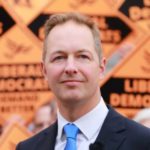
  • Richard Foord – 2022 Maiden Speech in the House of Commons

    Richard Foord – 2022 Maiden Speech in the House of Commons

    The maiden speech made by Richard Foord, the Liberal Democrat MP for Tiverton and Honiton, in the House of Commons on 6 July 2022.

    Thank you, Mr Speaker, for calling me to speak.

    In the past, I worked with the conflict, stability and security fund, so I know how important it is that international development funding of the sort that we are discussing is used well by the UK.

    I must admit that, in this new job of mine, I am still learning my way around the maze of corridors, anterooms and stairways—only once so far have I ended up in the scullery. The Tiverton and Honiton constituency, which I am fortunate to represent, is made up of several other significant towns—Axminster, Seaton, Cullompton and Colyton, which brands itself a rebel town—and nearly 100 villages. It stretches from the fringes of Exmoor at Bampton to the Jurassic coast at Branscombe. I look forward to hosting you, Mr Speaker, in Honiton, where we will get to go to Allhallows Museum and see the Honiton lace that your ceremonial robe is made of.

    I pay tribute to two of my predecessors as MP for the part of Devon that I will do my very best to represent. One was an MP who took up office in 2010, and the other first came to this place as MP for Tiverton in 1835; they are Neil Parish and Lord Palmerston. In his maiden speech made over a decade ago, Neil Parish said that he wanted to see fairer funding for schools. I know that he tried in earnest to seek that additional schools funding, but we are still waiting for action on that. I think here specifically about Tiverton High School. After the by-election, I was pleased to see the former Secretary of State for Education tweet that he had heard local concerns about that school. Now that he is Chancellor of the Exchequer, he should know that my constituents are still looking for action rather than tweets.

    Neil Parish was a strong voice for farmers not just in Devon, but across the country. He led a rebellion of Conservative MPs on the Government’s Agriculture Bill and aimed to prohibit the import of food produced to lower animal health standards and lower welfare standards than those that we use in the UK. Farmers in Devon and elsewhere are struggling to deal with the rising price of fuel, feed and fertiliser. I pledge to continue to work with bodies such as the National Farmers Union to stand up for farmers and ensure that they have a champion here in Westminster.

    Every time I walk up the staircase to my office here, I find myself eyeballed by a bust of the former Foreign Secretary and former Prime Minister, Lord Palmerston. Palmerston was the MP for Tiverton for 30 years, and he went on a journey—one recently experienced by a few of my constituents at last month’s by-election. He started out a Conservative but later became a Liberal. I honestly think that is what we are hearing across the country: a groundswell of opinion from people who feel taken for granted. Just yesterday, we saw two senior members of the Cabinet quit, citing a lack of integrity, and I think that it is time for those remaining members of the Cabinet to heed the message from voters in Tiverton and Honiton at our by-election last month and show the Prime Minister the door.

    Lord Palmerston was also Prime Minister, at the end of the Crimean war. He spoke about Russian foreign policy in this place 160 years ago:

    “The policy and practice of the Russian Government in regard to Turkey and Persia has always been to push forward its encroachments as fast and as far as the apathy or want of firmness of other Governments would allow it to go but always to stop and retire when it has met with decided resistance.”

    I am much less fatalistic about Russia’s expansionist ways. With a different leader at a different time, I do not suppose that Russia would be bound to invade its neighbour. But the UK is right to support Ukraine for many reasons. For me, the most important relates to the way Ukraine gave up its status as a country in possession of nuclear weapons, in part because of the assurances it received at the time from countries, including the UK, as part of the Budapest memorandum. Under the memorandum, we offered assurances to Ukraine in relation to its security. While they were not security guarantees, I see the support the UK is showing Ukraine as consistent with what we pledged back in 1994.

    I suggest that the UK should show the same solidarity and ability to work with European neighbours that Britain showed during the Crimean war. Liberal democracy must be defended and preserved, regardless of who Palmerston’s latest successor might be.

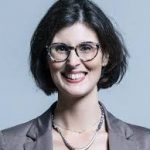
  • Layla Moran – 2022 Speech on a Strategy for International Development

    Layla Moran – 2022 Speech on a Strategy for International Development

    The speech made by Layla Moran, the Liberal Democrat for Oxford West and Abingdon, in the House of Commons on 6 July 2022.

    I start by thanking the hon. Member for Rotherham (Sarah Champion) for securing this incredibly important debate. Notwithstanding whatever state the Government may be in now—the latest apparently being that they cannot find MPs to fill the roles of all the Ministers who have resigned—this incredibly important debate shows that Parliament continues to work, even if the Government do not.

    Last week, we debated the Government’s thoroughly un-British plan to go back on their word and break their promise over the Northern Ireland protocol. Today we must remind ourselves that this is another promise, made right at the beginning of the Prime Minister’s premiership, that has been broken. I found the remarks of the Prime Minister interesting when he said, clearly in relation to the right hon. Member for Tamworth (Christopher Pincher), that some people do not change. I am afraid that is what we have seen in this Prime Minister as well, because he has not, and the decisions that this Government have made are wrecking our reputation, not just domestically, but internationally, too, whether that is the diplomatic service, the BBC World Service, the British Council, or, as has rightly been the focus of the debate today, the international development budget.

    The Liberal Democrats are particularly proud that we brought forward the Bill that enshrined 0.7% in law, but it was a cross-party, settled matter among MPs across the whole House. It was in all our manifestos, and we collectively promised it. That promise to the British people was broken by this Government when they reneged on 0.7%, and shame on them. Perhaps the good that will come from the eventual, inevitable fall of this Prime Minister is that decency and honesty might be restored to this Government. I hope therefore that the first act of the new incoming Administration might be to restore the aid budget immediately.

    Today I want to focus on this Government’s current mishandling of the aid budget. The cut to the budget has hit and continues to hit those countries who need it most, including Ethiopia. The House may not know, but I lived in Ethiopia. We moved there when I was five, and we were there until I was eight. It was in the early ’80s, and people may remember the famine. We were there because my father had been given the job of economic adviser to the European mission out there, and my earliest memories of life at all are going with him to aid projects, where I would meet little children of my age who were emaciated, did not have clean water and were not able to go to school. It is a success story of aid that many of those children down the line, and their children, would have had better prospects than perhaps the young children I met.

    In the context of the war in Ethiopia, the aid budget has been slashed from £325 million in 2020-21 to £30 million in 2024-25—less than a tenth. In Bangladesh, the budget will have halved from £200 million in 2020-21 to just £100 million in 2024-25. Those cuts are not a proud record of global leadership in international development; they are an international disgrace that is affecting the most vulnerable now more than ever.

    Since the Government reneged on their promise, we have found ourselves with a war in Ukraine, which means that the 400 million people worldwide who rely on Ukrainian food supplies cannot get them. That ongoing military crisis—the blockade of ports, the destruction of agricultural machinery and the shells strewn across fields—is preventing grain from leaving what is rightly named the breadbasket of the world. That crisis will lead to people dying and to further instability.

    I also lived in Egypt for a while; we moved there right after the revolution. The reason that the Arab spring happened was the price of tomatoes and bread. That kind of poverty and economic instability lead to political instability. To the points that have been made on both sides of the House I would say that if we are intent on helping people so that they do not have to flee and come to our shores as refugees, the best investment that we can make is to give money to partners abroad that can help them to have the best possible life where they want to be—in their cultures, in their homes, in those countries. Of course we want 0.7% to be restored, and the Ukraine crisis is why it should be restored now. In the light of that crisis, we need to step up to the plate—to the global catastrophe in front of us.

    There may be hope. The latest Office for Budget Responsibility forecast reveals that a return of 0.7% is on the cards, because the fiscal tests of the old Chancellor are due to be met in 2023-24—less than a year away. Now that that decision has been made, however, it does not give me hope that the Treasury will acknowledge that 0.7% will return, because every time it has been pressed, it has refused to say whether it will allow it in the autumn. By its own tests, it should be in this autumn’s Budget that we return to 0.7%, but as has been mentioned, that promise was made by the last Chancellor. As of today, we have a new Chancellor; perhaps he will do the right thing and restore 0.7%.

    International development was a proud thing for this country to hang its hat on, which matched our proud reputation as a development superpower. If the Government were serious about global Britain—Great Britain—they would lean into that reputation. It had its own Department and Secretary of State with a dedicated seat at the Cabinet table and at the National Security Council. The United Kingdom is a centre for excellence for international development and we are home to institutions that deliver world-leading research and development technical expertise and project co-ordination.

    Yet the international development strategy makes it clear how far we have already fallen. After reading it, it was interesting and instructive to do a little word search. If the point of international aid is to alleviate poverty—the Government’s stated aim—why was it mentioned only nine times? Investment, however, particularly linked to trade, was mentioned 48 times. That tells us everything that we need to know about the Government’s priorities.

    When the Government announced their plan to merge the Department for International Development and the Foreign and Commonwealth Office into the Foreign, Commonwealth and Development Office, Members on both sides of the House joined forces with the sector to raise concerns about what that would mean for effectiveness. I am sorry to say that that fear has come true.

    The strategy prioritises bilateral aid over multilateral aid. This is fundamentally counter to the liberal ideal of working within international structures to solve the world’s problems. It should be “and”, not “or”—not multilateral or bilateral, but both. Multilaterals, including the United Nations, are very often the first to be able to get there on the ground with dedicated teams. In times of urgent humanitarian crises, it is very often specialist teams from such multilateral organisations that can deliver the big asks needed for rebuilding, so I am deeply concerned about how this policy will impact on the UK’s ability to respond to emerging disasters, in particular.

    If we are serious about tackling poverty, inequality and vulnerability across the world, it is also essential that trade is distributed where it is most needed—not where it is most likely to benefit us; that is wrong. Trade is an important part of why we do aid, but it should never be the whole reason. Trade is important, of course, and so is aid, but tying one to the other, as is the direction of travel, is the wrong approach. I remain highly concerned by this Government’s approach, which may be leading us down a dark path towards tied aid. If people want a story about what that looked like, they should look at the corruption surrounding the Pergau dam. If we say, “Well, we legislated against that”, look what the Government are doing with their own legislation: they just throw it out the window when they think it is the right time.

    Jim Shannon

    I wholeheartedly agree with what the hon. Lady says. I am very conscious that in many of the countries my constituents have relationships with—Zimbabwe, Swaziland and Malawi, to give just three examples—there are NGOs and church groups on the ground, and they understand where the real needs are. Sometimes, it is better to feed in to the knowledge of the people on the ground about where the real needs are to ensure that aid gets through. Would that be an example of what the Government should be trying to do?

    Layla Moran

    I thank the hon. Member very much for his intervention. I have seen this in the Ukraine crisis with a charity I know that operates in Moldova. The smaller charities are often very nimble and can use their knowledge straightaway on the ground. However, this needs to be “and”, not “or”. They cannot do it all; they have to do it in partnership with the multilaterals. Taking from one and not feeding into the other is the wrong approach.

    In my view, the international development strategy emphasises short-term quick wins and overlooks the deeper causes of poverty and vulnerability. I will pick one specific example about women and girls, who are purportedly a priority in this strategy. The strategy claims that the Government

    “intend to restore funding for this vital work.”

    I ask the Minister to clarify what exactly she and the Government mean by “restore”, and to what level. This is not just about funding for schools. If we do not fund period poverty plans, sexual health plans and water plans, we find that women and girls are the first ones to start making up the gap.

    There should not just be a snappy headline with the three Es of education, empowerment and ending violence against women and girls. Those are pointless unless they are followed up behind by things that are actually going to make a difference. I pay tribute again to the hon. Member for Rotherham and her Committee, because her use of privilege to make public the equalities report showed that the Government knew that their cuts were going to affect women, girls and minorities the most—and yet they have the brass neck to suggest in this strategy that it is their priority. This is the typical doublespeak we have come to rely on from this Government. To see what the Government are actually doing, look at what they say they are doing best. By and large, people will probably find that it is the thing the Government are doing worst.

    Sarah Champion

    The hon. Member is making an incredibly powerful speech. She has worked so hard in this area, and I commend her for it. Does she agree that the development strategy is not a strategy? We do not know what the strategy is. This is a collection of buzzwords with a few statistics put in, but where is the underpinning vision, which is meant to be the SDGs and reducing and removing poverty? It just does not exist.

    Layla Moran

    The hon. Member is absolutely right: it is the strategy that is completely missing from the Government.

    This is not just about the money. We are debating the estimates and the money, so that is the right thing to focus on, but what determines whether money is being spent effectively is knowing what we want to achieve with that money. I will tell hon. Members what the Liberal Democrat vision is: the eradication of poverty, human rights for all, and a bolstering, not a deterioration, of the international rules-based order. Under our plans, the 0.7% target would be restored and a completely different approach to foreign policy delivered. I am sorry to say that the Government seem to be doing the exact opposite.

  • Gareth Thomas – 2022 Speech on a Strategy for International Development

    Gareth Thomas – 2022 Speech on a Strategy for International Development

    The speech made by Gareth Thomas, the Labour MP for Harrow West, in the House of Commons on 6 July 2022.

    It is a pleasure to follow the hon. Member for West Worcestershire (Harriett Baldwin), and I will come on to her point about soft power in a moment. I join others in congratulating the Chair of the Select Committee, my hon. Friend the Member for Rotherham (Sarah Champion), on securing the debate. I also join them in stressing just how wrong-headed the abolition of the Department for International Development was, as was the decision to cut development funding to just 0.5% of our national income, which was an act of self-harm just as much as it was an act of harm to the developing world.

    Beyond our moral responsibility, as one of the richest nations in the world, to help the very poorest in the world, there is surely also a strong national, domestic set of reasons for rethinking our approach to international development, which covid and refugees risking their lives to cross the channel have helped to underscore. I entirely understand the argument that our constituents’ needs must always come first, particularly in the middle of a cost of living crisis, but whether or not to give aid to countries overseas is not a binary choice. I would also gently say in passing that the choice would be even easier if the Treasury had not wasted billions of pounds on covid loans that should never have been given.

    As the hon. Member for West Worcestershire said, it is in Britain’s national interests to build up our soft power, just as it is important to have real military power to call on in the very worst of times. Soft power comes from our global trade and business links; from the work of our universities; from our cultural institutions, such as the BBC, other parts of the media and the British Council; from the quality of the work our diplomats do in the Foreign Office; and, crucially, from the quality of the development support and leadership we provide.

    If aid is used well in other countries, that helps our country too. For example, better police forces in other countries help to limit the potential impact of overseas criminality here. Better health services in developing countries help to prevent the spread of disease—think Ebola—to UK shores. Better opportunities for higher standards of living in developing countries help to reduce people’s reasons for taking perilous trips to start new lives in countries such as ours. And better governance, as well as efforts to support peace and build stable countries, helps to prevent conflicts and reduce the numbers of refugees needing to travel to more stable countries.

    Then there are the even more intangible benefits of development assistance and other examples of soft power. If we are seen to help the world’s poorest for the best of reasons in countries that are not as rich as ours, doors open for other parts of our Government and for players in the business world, on whom our economic success depends. So there is a strong moral case for aid, but the self-interested case for aid is also powerful.

    I gently say to Ministers that it is a mistake to have axed the Department for International Development. By the time I joined the Department as a Minister in 2003, it was already world leading. It was held in considerable regard across the developing world and on the world’s great stages at the United Nations and the G8. As my right hon. Friend the Member for Leeds Central (Hilary Benn) said much more eloquently than I can, the talent of the Department’s officials was stunning and striking. I digress briefly to acknowledge the passing recently of one excellent official I worked with, Danny Graymore, who did some remarkable work on access to medicines. He was rightly recognised for his service to our country and to development.

    The calibre of the Department’s Secretaries of State was beyond question. We had the remarkable Clare Short, the excellent noble Lady Valerie Amos, my right hon. Friend the Member for Leeds Central and Douglas Alexander. The Department had clear and obvious support from Prime Ministers and Chancellors of the Exchequer, certainly from 1997 to 2010 and, to be fair, in the first years of the Conservative party’s time in government. I say in passing that I hope I managed not to do too much damage to the Department’s reputation while I was there.

    Between 1997 and 2010, Britain helped to lift almost 50 million people out of poverty and initiated a huge programme of debt relief. My right hon. Friend the Member for Birmingham, Hodge Hill (Liam Byrne) made a powerful point about the need for a new programme of debt relief; if only there was someone in this Government with the imagination to lead such an effort.

    Navendu Mishra (Stockport) (Lab)

    My hon. Friend is making an excellent speech. Several whistleblowers have revealed that there was chaos and a failure of leadership at the newly formed Foreign, Commonwealth and Development Office when the merger between the Foreign Office and DFID took place, and particularly during the fall of Kabul in Afghanistan. The leadership was distracted by the merger, senior DFID staff were unable to access FCDO systems, and that meant that support on the ground for our staff members was poor. Does my hon. Friend agree that this Government prioritise a political response rather than humanitarian support for people on the ground?

    Gareth Thomas

    My hon. Friend makes an excellent point, and it will be good to hear the Minister’s response to that. I will certainly make some brief remarks about Afghanistan and the plight of the people there.

    I was just mentioning the difference that the Department for International Development made and could potentially make again. We helped to get 40 million more children into school in the 13 years the Department was run by the Labour party. Polio was on the verge of being eradicated thanks to the vaccination programmes we funded across the world, particularly in countries such as India and Pakistan. Having initiated the strategy, I am particularly proud that more than 3 million more people were able to access life-preserving HIV and AIDS drugs in countries such as Malawi and Zambia, as you will remember only too well, Madam Deputy Speaker.

    We improved water and sanitation services for more than 1.5 million people. We invested in better maternity and family planning services in countries such as Nepal. When earthquakes and other disasters struck, we led the way in improving the humanitarian conditions of those hit—in Sri Lanka after the tsunami, for example, or in Pakistan after the earthquake in Kashmir.

    Other major countries, including the US, Germany, France, Japan and Norway, have separate Departments providing aid on the one hand and doing the hard yards on diplomacy on the other. The skillsets required of our diplomats and our development experts are very different. Development experts are focused on ensuring our aid goes where it needs to go to make a real difference, while our diplomats are rightly push a range of UK Government priorities to their counterparts.

    The relentless focus the Department for International Development placed on its poverty reduction mission put it centre stage. The fact that that aid did not appear conditional on backing Britain all the time made our presence and our money even more welcome and, as a result, made the access and influence of our diplomats that little bit greater. It is striking that Ministers have offered little rigorous rationale for the merger. Frankly, the sooner both that and the cut in aid are reversed, the better.

    I want to challenge the Minister gently on why governance is no longer part of the priorities for our aid spending. I think of the funding we provided before 2010 to help developing countries invest in better statistics collection services. That may not sound particularly important in the context of huge hunger or education needs, but without the ability to collect statistics about what is happening on the ground in a country we cannot make good decisions about the allocation of resources, work out where to send the next tranche of money to make a real difference or hold politicians and Governments to account. We need governance efforts in these countries that help to target corruption by funding the equivalent of the National Audit Office or the Public Accounts Committee; to support independent media to hold politicians to account; to bring to light the examples of corruption and to get rid of people from politics who are serving their own interests rather than the interests of the people; and to help to train high-quality civil servants so that instead of relying on NGOs or overseas aid, they can run things in their country for themselves. At my most naive, I want a world where aid and NGOs are not needed, but for that ambition to come just a little bit closer, we need to help countries to build effective Parliaments and effective Governments with great civil servants so that they can provide services to every community in every corner of their country. We should seek to back good governance and prioritise that as part of our aid strategy going forward.

    Other speakers have mentioned the cuts in funding to the global multilateral system. I echo the comments about support for the global fund. I hope the Minister will be able to give Members in all parts of the House an assurance that that will be appropriately backed at the coming pledging conference. We are seeing cuts in funding to the global multilateral system at a time when there is so much need, and when we need honest brokers in the UN system to co-ordinate humanitarian relief and tackle the provision of support for hunger and poverty. That has never been more needed than now. It is a hugely retrograde step to cut by so much the funding to the World Bank, the African Development Bank, the United Nations Development Programme, and so on. Indeed, when Ministers made those decisions, they went against their own review of multilaterals, which found that funding through multilaterals delivers more bang for our collective buck and reduces administrative costs to the taxpayer.

    I want to make some specific points about countries that are of interest to my constituents. We have cut our bilateral funding to Pakistan by some 57% from about £463 million in 2016 to about £200 million a couple of years ago. Even two and a half years ago, Pakistan had the second highest numbers of refugees in the world, placing huge pressure on the country and the systems in place there. Given what happened in Afghanistan just 10 months ago, the pressures on Pakistan are even greater, with powerful challenges in terms of food insecurity, getting good-quality education, economic empowerment, and good family planning and other health services. It would be good to hear a clear rationale from the Minister for such a huge cut in funding.

    Nepal and Sri Lanka are also, for different reasons, facing huge challenges in making progress towards the SDGs. Due to climate change, too many people in Nepal have had to leave the country for much of the year to go to India or other countries to seek work. It is therefore crucial to do as much as we can to help economic empowerment in Nepal. My right hon. Friend the Member for Birmingham, Hodge Hill (Liam Byrne) briefly alluded to Sri Lanka, with which a huge number of my constituents have very close connections. If ever there was a country that has made the case for a greater programme of debt relief—I echo his point, too, about China as the lender of last resort—it is Sri Lanka. There are huge human rights and governance concerns in Sri Lanka, as my Tamil and Muslim constituents know only too well, but it is striking that all the peoples of Sri Lanka are suffering hunger, loss of jobs, and real wage insecurity. I wonder whether, in the short term, the Department needs to be doing more to help the people of Sri Lanka.

    Lastly, on Africa, the move away from aid being used for poverty reduction is perhaps the most striking thing in the tilt towards the Indo-Pacific. In my Front-Bench role, I have been struck by how a series of businesses have argued that Africa is where Asia was 10 to 15 years ago. Some countries have very fast developing economies, and some countries are making huge efforts on the quality of their governance. It therefore surely makes even less sense to be withdrawing aid and withdrawing our influence in Africa when our business community is beginning to look with such interest at its prospects in Africa. I am not advocating for tied aid—absolutely not—but the more we resume strong soft power and strong influence in Africa, the more down the line we can help our businesses win contracts in Africa and help to create jobs, too.

    I end by urging the next Government to rethink their approach to the abolition of the Department for International Development. It needs re-establishing quickly, and we need to move quickly back to 0.7% of our national income being spent on aid.

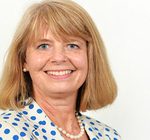
  • Harriett Baldwin – 2022 Speech on a Strategy for International Development

    Harriett Baldwin – 2022 Speech on a Strategy for International Development

    The speech made by Harriett Baldwin, the Conservative MP for West Worcestershire, in the House of Commons on 6 July 2022.

    I congratulate the hon. Member for Rotherham (Sarah Champion), the Chair of the International Development Committee, on securing this important debate. It is an honour to follow the right hon. Member for Birmingham, Hodge Hill (Liam Byrne). He discussed a lot of wise history and important points, and I hope we will hear an answer on them when the Minister gets to the Dispatch Box. I wish to commend her and say how incredibly energetically she works on this agenda. I salute her indefatigability and the results she has delivered. In addition, let me point out that I, too, am one of those who regrets that we reduced our promise from 0.7% to 0.5%; I was one of the 26 rebels who voted against that. However, I am going to try in this speech not to dwell on the past, particularly since my right hon. Friend the Member for Sutton Coldfield (Mr Mitchell) and the right hon. Member for Leeds Central (Hilary Benn) covered that matter so well.

    I want instead to talk more positively about the strategy the Foreign Secretary has set out. I welcome the fact that it continues to include an emphasis on girls’ education and educating every child with 12 years of quality education. That is incredibly powerful in terms of international development, and I want to dwell in particular on soft power. We must raise our game on soft power from its already high level because we are at a pivotal time in history. On 24 February, when Putin began the evil invasion of Ukraine, we shifted into a new and historic era with the forces of evil and authoritarianism on the advance against the forces of liberal democracy, which we have for too long taken for granted. We now realise that we have to stand up for our freedoms; freedoms are not free, and we need to think about how we can best make the case for those freedoms.

    I have the privilege of chairing the British group in the Inter-Parliamentary Union. In that role I was leading the delegation to the assembly in Indonesia in March and we wanted to put out a strong statement condemning Russia’s invasion of Ukraine. We might think that that would be relatively uncontroversial, particularly since the UN had carried the motion so strongly, but in fact it is proving to be quite a battle: it is a battle for ideas and for soft power.

    Soft power is an area where the UK has great assets and strengths, and we must increase our emphasis on that and the energy we put into those strengths. The BBC is one of those soft power assets and we spend a lot of our official development assistance budget on making sure we communicate in languages like Yoruba and Tigrinya that are widely heard around the world. That plays an important part in getting accurate information to countries that are being fed disinformation from Russia, particularly disinformation about the battlefront that that we have heard about today: energy, the price of energy and the price of food. Given the stresses that that is putting on our economy, we can imagine how much stress it is putting on some of the very poorest countries in the world. As we heard last week when Ukrainian MPs visited us here in Parliament, that is being weaponised by Russia to attack Ukraine. In some of the poorest countries the message is going around that their energy and food prices have gone up so much because of the Ukrainians. We must up our game in counteracting that messaging by having a strong communications strategy and making sure we are using the incredible soft power we have through the BBC.

    The British Council is another soft power asset. Next week I am leading a delegation to Kosovo, a country which, because it is in the Balkans, is on the soft power frontline. I learned to my dismay yesterday that the British Council is thinking of closing its office in Pristina and moving the delivery of its important courses to Belgrade in Serbia. I urge the Minister to ask her officials to look into that for her because we must ensure that our valuable soft power tools such as the British Council and the BBC—in so many foreign languages—are able to counteract some of the terrible messaging we are hearing in what is now a war between the good of liberal democracy and the evil of authoritarianism.

    On this point about the soft power battle, may I particularly highlight for praise the decision that the Foreign Secretary took to rename the Commonwealth Development Corporation, one of Britain’s greatest hidden soft power assets, as British International Investment? I say three cheers for that decision. British International Investment does what it says on the tin. It is a much better name than the CDC, which, frankly, even sounds Chinese. British International Investment has that UK branding, and I urge the Minister to look further at branding everything that we do through this budget as coming from the UK. The former Secretary of State stamped a Union Jack on our food aid with the words, “Gift of the British people” in countries where, perhaps, the level of literacy in English is not particularly high. I like the way that the Australians stamp a kangaroo on all of their food aid. Can we do more to show that this aid is coming from us? We are in an information versus disinformation battleground at the moment. As others have said so eloquently, we are going into a period where food insecurity—famine—is on the march again, particularly across the Horn of Africa.

    The UK can also play an important role in using our hard power to get the grain out of Odesa. But let us make sure that, when that grain arrives and when we are able to give food aid, it is clear that this is coming from the western nations.

    May I digress slightly to ask the Minister to update me on where we have got with clean cookstoves? Many women in poor countries spend much of the day going out to cut down trees to make it into charcoal only to go home and poison themselves and their family cooking with this very carbon-intensive fuel. I know that the UK is leading the world in research into clean cookstoves.

    I shall conclude my brief remarks by highlighting some of the excellent things that British International Investment has been doing to lift countries out of poverty through long-term private sector development. No country has ever left a dependency without a thriving private sector. Companies that have been invested in by British International Investment employ nearly 1 million people in around 64 of the world’s poorest countries. That is the kind of practical and sensible intervention that really makes a difference. I am so glad that it is now labelled, “from the British Government”.

    I am so pleased that £479 million of investment has gone into climate finance. There is so much more that can be done on this. Countries with very little electricity distribution can benefit from clean energy and clean energy investment, which will make so much more sense economically than other sources of energy.

    Let me reiterate the key point of my speech: from here, how do we make the best of what we have, and how do we make the best of our international strategy to maximise the UK’s soft power assets? Let us keep doing the good things that we are doing, and let us move towards 0.7% as quickly and as judicially as we can. In the meantime, three cheers for the rebranding of the CDC.

  • Liam Byrne – 2022 Speech on a Strategy for International Development

    Liam Byrne – 2022 Speech on a Strategy for International Development

    The speech made by Liam Byrne, the Labour MP for Birmingham Hodge Hill, in the House of Commons on 6 July 2022.

    Let me declare my interest, at the outset of this debate, as the chair of the international parliamentary network on the World Bank and the International Monetary Fund. I congratulate the Chair of the Select Committee, my hon. Friend the Member for Rotherham (Sarah Champion), on bringing this debate to the House. Her timing, as ever, is impeccable. All of us here in this Chamber are watching the disintegration of the Government in real time, so in a way this debate is important because it is taking place at a hyphen moment between an Administration that are biting the dust and the construction of the new Administration that will no doubt take shape over the days and weeks to come. Like everyone who has spoken in this debate, I very much hope that the new Administration will look hard at the arguments we have made today and seek to reverse the appalling policy, the appalling cut and the appalling breach of trust represented by the slash in our aid budget.

    I want to supply three thoughts for today’s debate. The first is that at the heart of it is the simple truth that when the world needed us to step up, we stepped back. We stepped away from our obligations, we stepped away from our duties and we stepped away from our promises. Those promises were enshrined when we signed up to SDG2 and made a commitment to end hunger. Not only has breaking our promise to help to supply the finance for that destroyed trust in our country around the world, but people will die this year as a result of that broken promise.

    Many people here today have said that that decision could not have come at a worse time. The right hon. Member for Sutton Coldfield (Mr Mitchell) was among those who made that point, and he is absolutely right. We now have a crisis of food, fragility and finance that means that 200 million people around the world are facing a food emergency. We know that 60% of workers are still not earning what they did before the covid crisis, but we now have millions of people living almost in famine conditions and 200 million people who will face famine later this year unless things change. Things will change over the course of this year, but they will change for the worse.

    Just a week or two ago, I was with the Foreign Affairs Committee in New York and we were privileged to see the NATO Secretary-General. He is fighting tooth and nail for the deal to try to get tens of millions of tonnes of grain out of Ukraine and Russia and, crucially, tens of millions of tonnes of fertiliser out of Russia. If we fail in that task, the spike in food prices that we have seen over the last year will get worse. Even more seriously, if we do not get the fertiliser out in the next few months, we will jeopardise not just the wheat harvest for next year but the rice harvest for next year. We will begin to see up to 1 billion people face a food crisis if we do not make progress on that deal. People were already in a bad position because of covid, and they are in a bad position because of inflation, but it has now deteriorated substantially because of the crisis in Ukraine.

    Governments around the world are out of headroom on taking the fiscal measures needed to alleviate this coming crisis. More and more developing countries now denominate their debt in dollars rather than domestic currency, which means they are super-exposed to rising interest rates in the United States. Average interest rates on lower-income debt are up by about 77 basis points this year, and we now know that something like 12 countries around the world are already on the brink of debt distress. We already see unrest in some countries in Africa, and we see the consequences of the debt crisis in Sri Lanka. Things will become far worse this year unless we get our act together.

    Of course, the problem is most acute in countries that are fragile and where there is violence. Frankly, countries and agencies such as Russia and the Wagner Group are already perpetrating barbaric human rights abuses in Mali, Libya, Syria and another 18 countries around the world. This crisis of food fragility and finance will not sort itself out, which is precisely why this is such an appalling time for the Government to make their aid cut.

    My second point is a particular interest of mine, which is that the Government’s negligence is all the worse because they are not using the new tools they have been given. Last year, under Kristalina Georgieva’s leadership of the International Monetary Fund, the global community took the collective decision to mint $650 billion-worth of special drawing rights. Overwhelmingly because of the quota system, those special drawing rights go to richer countries like us. In fact, the special drawing rights coming to G7 countries total about $196 billion, which is about a third of the special drawing rights that have been issued.

    Where are those special drawing rights? Where is the deployment of that resource to tackle this crisis of food fragility and finance? Right now, those SDRs are gathering dust in the vaults of central banks and treasuries around the world. They are just sitting there. We have failed to mobilise that resource in the way we promised when we signed off on the commitment to issue the special drawing rights in the first place.

    The UK is a big shareholder that helped to found the International Monetary Fund, so we have been given £19 billion of special drawing rights. We have made commitments to share back about 20%. Why is 20% the magic number? We have just been given £19 billion. This is a slightly technical issue, but our SDRs go into something called the exchange equalisation account, which was set up in 1979 and underpins currency stability in this country. It has been restocked with £74 billion over the last 10 years to a level that the Treasury deems to be capital adequate, about £154 billion or $185 billion in total.

    We have restocked the exchange equalisation account and then, from left field, comes another £19 billion that we did not forecast and that we do not need because we have already restocked the account. Why have we suddenly decided to share just 20% of it? There is no logic for that percentage.

    The Government have so much grip on this topic that, when I asked the Foreign Secretary at last week’s Foreign Affairs Committee how much had actually come in through the special drawing rights, she did not know. She literally did not know that Her Majesty’s Government had just been handed £19 billion, which is twice the aid budget. I then prosecuted the argument and asked, “What is your target for sharing? How much are we supposed to share back?” She answered, “I don’t know.” I asked the Prime Minister the same question this week, and he did not know either. They could perhaps be forgiven if the numbers were not so big and if the crisis were not so serious, but this is absolutely crazy. We have a global crisis and the Government are simply not in control. They do not have a grip on sharing back and rechannelling some of the biggest assets and resources available to us.

    The point about multilateralism, which my right hon. Friend the Member for Leeds Central (Hilary Benn) and my hon. Friend the Member for Rotherham (Sarah Champion) mentioned, is fundamental. Last week’s G7 communiqué made a very clear statement that G7 leaders want to step up the mobilisation of $100 billion, but the truth is that, of the G7 countries, we have made a commitment, Japan has made a commitment and the French have made a commitment. Congress has blocked the President of the United States sharing $21 billion, and we do not yet have information from the IMF on the others—I checked yesterday. So we are miles away from mobilising the $100 billion that was promised at the G7, and people are going to starve this year unless we get a grip. So my call on the Government today is to give us a good explanation for why we should not be sharing three quarters of the special drawing rights we have been given; why we are not leading a global effort to get to that $100 billion target; and why we are not insisting on more flexibility, such as giving the SDRs to multilateral development banks, such as the African Development Bank, which could be making such an impact on the ground. We need to be saying to the IMF that countries do not need to participate in a conditionality programme with the IMF in order to receive some of this money. I discussed that with the Secretary-General of the UN and we both agree on it. We are not going to lead the mobilisation of this effort if the politicians in charge at the helm are, frankly, in such a shambolic state. So my message to the Minister and the new Administration is: please get a grip of this enormous new resource that we have been given.

    My final point is, in part, inspired by what my neighbour the right hon. Member for Sutton Coldfield (Mr Mitchell) said about China. For some years now, we have been having a debate in this country and among our allies about the influence of China and this vexed, significant issue of debt diplomacy. If we look at the countries that did not support the UN resolution on Russia, we see that, on average, they owe five times more debt to China than the countries that supported the resolution. As for whether that is a coincidence, you be the judge. The point is that the debt in many of these countries is about to fall over and the G20 common framework process, which we have held up as the great saviour of debt sustainability, has been so successful that precisely zero countries have engaged in it. So it ain’t working and we need a different approach. We could be restructuring developing country debt using IMF and World Bank resources. The World Bank has just committed $170 billion to an emergency programme that we could be using to restructure the debt of vulnerable countries around the world—right now we are simply not doing that. If we do not want to live in a world where China is the lender of last resort to countries around the world, let us use the Bretton Woods institutions that we set up in 1944 to avoid that dilemma.

    In the midst of a big war, in 1941, the Atlantic charter was signed, and its story is extraordinary. Our Prime Minister at the time, Mr Churchill, was on the other side of the Atlantic with President Roosevelt and the draft of the charter was sent to Downing Street. Clement Attlee was in the Chair and he convened the Cabinet at two o’clock in the morning in order to review the draft and make one vital change. He added article 5, which said that one of our war aims would be that the victors would

    “desire to bring about the fullest collaboration between all nations in the economic field with the object of securing, for all, improved labor standards, economic advancement, and social security”.

    Three years later, at Bretton Woods, President Roosevelt, welcomed delegates from 44 countries from around the world with these words:

    “the economic health of every country is a proper matter of concern to all its neighbors, near and distant.”

    As we begin to think about what the new world looks like, those are wise words to guide us.

  • Pauline Latham – 2022 Speech on a Strategy for International Development

    Pauline Latham – 2022 Speech on a Strategy for International Development

    The speech made by Pauline Latham, the Conservative MP for Mid Derbyshire, in the House of Commons on 6 July 2022.

    It is a pleasure to follow the right hon. Member for Leeds Central (Hilary Benn), who is always an entertaining and informative speaker. When I first came to this place in 2010, I was elected to the International Development Committee, which I have served on ever since. I believe that the Committee has done very good work over those years and I am sure that it will continue to do that good work, as it still exists, about which there was some doubt when DFID was taken over by the Foreign Office. It is really important that the International Development Committee exists, because Members who sit on the Foreign Affairs Committee have little interest in the money that is spent on the poorest of the poor. The scrutiny of the International Development Committee is needed to ensure that the money is being spent as well as it possibly can be. I am horrified by what my right hon. Friend the Member for Sutton Coldfield (Mr Mitchell) said about the money that is still being spent in China. There seems to be no sense in that, so I hope that the Minister will address the point in her closing remarks.

    I am a bit disappointed, because this is an important debate but there are few Members in the Chamber. That is quite surprising, because there are now quite a lot of Back Benchers; one would think that a few more might come and join us. However, I am very pleased to speak in the debate and glad that we have a whole debate to focus specifically on the FCDO’s international aid work. It was of significant concern to me and others, including the Chair of our Committee, the hon. Member for Rotherham (Sarah Champion), when the two Departments “merged”—that was what it was called, but actually I think it was a takeover. We were told that there would not be sufficient focus on the international development angle, so the scrutiny of this House is very welcome.

    It would be impossible to discuss the departmental estimates for international development without mentioning our 0.7% spending target, a subject that my right hon. Friend the Member for Sutton Coldfield covered extensively. The target was long campaigned for by many hon. Members, including me, and I am deeply disappointed that it has been reduced to 0.5% by the Government. I understand why, but we are talking about the poorest of the poor, who need our help. Obviously, the economy has been hit by the pandemic, but as the right hon. Member for Leeds Central said, the same pandemic has caused terrible strife all around the world, not just here in the United Kingdom. As a result of the cut, some of the people who most need our assistance will no longer receive it. The sustainable development goals, which we have signed up to, say that we should be helping the poorest of the poor—and there are so many people in the world who are incredibly poor.

    My right hon. Friend the Member for Sutton Coldfield mentioned that the Chancellor had said that we would go back to 0.7% in two years. My right hon. Friend himself believes that we should make it 0.6% next year and 0.7% the year after. There is logic in that, but I think that he was referring to the previous Chancellor, the right hon. Member for Richmond (Yorks) (Rishi Sunak). We do not know what the current Chancellor wants, so our Committee needs to press him by inviting the Foreign Secretary before us and asking her what will happen. It is important that we, and the people we are trying to help, know what we will be doing.

    Matt Rodda (Reading East) (Lab)

    The hon. Lady is making an excellent speech about very important matters. As she says, there are a significant number of very poor people in the world and we have a duty to support them. Will she address the issue of the Government mis-badging some forms of spending, for example by counting defence spending or other departmental spending towards the aid target? That seems to me to be a mistake and to be unfair on the very poorest people in the world.

    Mrs Latham

    That is a very important point that our Select Committee absolutely needs to scrutinise, because it would be illegal to badge that spending wrongly. We have a duty to ensure that our taxpayers know that our spending is transparent and in the right place. It is really important that we do not mis-badge it, because otherwise we will lose the trust of a lot of countries around the world.

    As the right hon. Member for Leeds Central said, we know that there will be more and more migration because of climate change. People are not going to stay in a country that is drought-ridden. They cannot feed their cattle. They cannot be the nomads they were before, going off to find fresh pastures and then coming back in a circle, as the nomadic tribes in Kenya used to do. People cannot do that if they have no food for their cattle. For that important reason we need to tackle climate change, but I fear that the reduction to 0.5% means we will have less opportunity to do so, and that means there will be more migration. Indeed, I believe there will be more and more migration, not just for drought and climate change reasons but for reasons of conflict. So many people are fleeing their countries, either because of civil war or because of attempts to annihilate certain populations. They have to escape, because that is the general public’s normal response to terrifying situations.

    However, I do not intend to focus on the overall aid budget in my short speech. Instead, I want to comment briefly on the important issue of neglected tropical diseases, including malaria. They are called neglected tropical diseases because people forget about them. A couple of weeks ago, I, too, was in Rwanda for the Kigali summit, which aimed to tackle the problems of malaria and neglected tropical diseases, and which was a very successful event. Governments, the private sector and philanthropists all pledged to help to accelerate the global fight to beat these deadly diseases, with commitments made at the summit totalling more than $4 billion.

    However, there is much more to be done. In 2020 alone, an estimated 627,000 people died of malaria—a staggering number. More than 1.7 billion people required treatment and care for neglected tropical diseases over the course of that year. Often, the impact of covid-19 was to disrupt community care and preventive programmes, meaning that the number of people receiving treatment for NTDs fell by 33% in 2020. There is a simple and cheap cure for many of these diseases, and we must not lose sight of that.

    While I was in Rwanda, I attended a programme run by the UK-funded National Institute for Health and Care Research about podoconiosis, a neglected tropical disease that causes dreadful pain and suffering, generally among farmers and those who spend a lot of time in contact with irritant soils without wearing shoes. The microbe gets into their bodies and causes them terrible problems. NTDs such as podoconiosis are widespread in huge parts of the world, and funds for research and prevention are needed not only from a humanitarian and ethical perspective, but from an economic one. For those people’s communities and families, these diseases can lead to long-term poverty, hunger and starvation because they can prevent people from working. For example, podoconiosis patients lose 45% of their productive working days to the disease. Research on treatment and prevention can keep people economically active, and able to maintain their lifestyles and their jobs.

    Investment in tackling NTDs—that is just one small example—and malaria has huge positive knock-on effects throughout the local economy. The UK funding is providing real benefit for podoconiosis patients through research into treatment options, genetic research, education and more, enabling sufferers to live healthier, happier and more productive lives. I urge the Minister to consider people who suffer from the disease, because it is horrendous.

    The UK has a strong legacy of investment in the elimination and control of NTDs—it is supporting the Rwandan Government’s ambition to eliminate podoconiosis by 2024—and it is critical that we maintain that legacy. This is an example of the UK helping the world’s poorest to live happy, healthy, economically active lives. That helps the economy and the education of women and girls, giving them the good future that many do not have at the moment. That programme in Rwanda has been funded, but others have been hit by the international development funding cuts. For example, the Ascend programme countries still need support to reach their elimination goals.

    I encourage the Minister to consider the forthcoming year’s spending and to invest as much as we can in NTDs, and in particular in preventing malaria. That is doable; we can eliminate malaria, and it is so important that we contribute significantly to that. The shift in spending under the international development strategy away from multilateral programmes and towards bilateral funding threatens many of the programmes that aim to combat NTDs and malaria. I would therefore be delighted if the Minister could today confirm an ambitious commitment to the forthcoming seventh replenishment of the Global Fund to Fight AIDS, Tuberculosis and Malaria and neglected tropical diseases.

  • Hilary Benn – 2022 Speech on a Strategy for International Development

    Hilary Benn – 2022 Speech on a Strategy for International Development

    The speech made by Hilary Benn, the Labour MP for Leeds Central, in the House of Commons on 6 July 2022.

    I had the great privilege of serving for nearly four years as the International Development Secretary, and I worked with many people— including the right hon. Member for Sutton Coldfield (Mr Mitchell), who it is a great pleasure to follow because he was a terrific Development Secretary—who were passionate about the betterment of human kind. I was able to work with some absolutely wonderful, determined and passionate civil servants at DFID. I must be frank that it was a job that changed the way in which I think about the world, see it and seek to understand it.

    We meet here today to look at the wreckage that has resulted from the Government’s reversal of many things that were achieved by the creation of DFID, under Governments of both parties, and I for one am greatly saddened. I think the Prime Minister’s decision to abolish DFID, to break his word and to cut the aid budget was a terrible mistake. It has had material consequences for girls’ education, safe motherhood and access to contraception, as well as for children’s education. The precious opportunity that going to school gives us opens a window on the world and gives us the knowledge, confidence and aspiration to make our way in our lives.

    Many of DFID’s programmes, which were funded by the generosity of the British taxpayer, have had to cope with the consequence of sudden cuts. To take one example, UK aid to the Democratic Republic of the Congo has been cut by about 60%. Picking up the point just made by the right hon. Gentleman, that is a country where 27 million people are experiencing, to use the jargon, acute food insecurity. The funding cut from girls’ education—how on earth did that happen?—has now been restored this year, following the Foreign Secretary’s appearance before the International Development Committee, but it will only be the same in cash terms as it was in 2019, so it will in fact be a real-terms reduction.

    The process of making those cuts has had a huge impact on our relationship with partner countries, multilateral institutions, non-governmental organisations and other aid organisations. It is a terrible self-inflicted wound that is not just about the money, because Britain had a reputation in the world of development. We had respect, we were listened to and we had great influence in debates about peace and security. I do not wish to appear to be dwelling on glories of the past and I recognise that times change—I will come in a moment to the challenges facing the world—but when we undermine our role as a world leader in development, it is really important that we are honest about what has been lost.

    I have read the Government’s new strategy for international development, which was published in May. It talks about providing a “better offer”—whatever that is—and “honest and reliable investment” as if the cuts to our development budget had happened in a completely parallel universe. Whatever else might be said about what has occurred, what Ministers have done has shown that we are not a reliable partner. So, when Samantha Power, the administrator of the United States Agency for International Development wants to pick up the phone to talk to Britain, who does she ring in the FCDO? What does that mean for our relationship with other countries? The right hon. Gentleman and I, and others in the Chamber who served in DFID, know that building consistent relationships with other people and creating trust is essential if we are to solve problems, and trust can easily be lost, as the Prime Minister is in the process of finding out.

    I am afraid it is the casualness with which that happened that angers me more than anything else. I was sitting in the Chamber when the Prime Minister stood at the Dispatch Box and uttered the words that DFID was like

    “some giant cashpoint in the sky.”—[Official Report, 16 June 2020; Vol. 677, c. 670.]

    The right hon. Gentleman winces, and rightly so. I listened to that and thought, “This man clearly has no understanding whatsoever of what DFID is and what it has achieved.” While all that has been happening, not a single other G7 country has cut its aid budget—not one—even though they face the same pressures from covid and from the international economic situation and rising prices. Indeed, France and Germany are moving further towards 0.7%. Notwithstanding the rather clever tests that the former Chancellor set on when we will return to 0.7%, I am not sure whether we will see that any time soon.

    Having said all of that—and feeling slightly better for having done so—I will address the rest of my remarks to the challenges that confront the world, because that is what we will have to address with the resources now available to the FCDO. The events of the last decade have reminded us of a very important truth. We may think that we have overcome the crises of the past, we may hope that they may never be repeated and we may believe that, because things are as they are today, they will ever be thus, but, sadly, that is not true. The global crash of 2008-09 was the worst since the crash and subsequent depression of the 1930s. The collapse of the Soviet Union was not the end of history; it was a semicolon, as the terrible war in Ukraine is currently demonstrating.

    We have achieved incredible things with the gifts that the earth gives us. Look around at every single thing that human beings have built, created or made, from computers to skyscrapers and from vaccines to placing a rover on the surface of the planet Mars: every single one of them has come from things that are either on the earth or lie beneath it. That shows the extraordinary capacity of human beings to interact with what we have and to build and create. What we have done—the development that we have wrought in our own country and in others—would astonish our forebears and ancestors, but, if we thought that the process could be never-ending and that we could continue without consequence, the crisis in the natural world and the climate crisis have taught us that that is not the case, either.

    I make that argument not to depress colleagues. On the contrary, I believe that we can overcome those challenges and build something better precisely because human beings have shown their ability to achieve extraordinary things, but we need the process of politics, international relationships, persuasion, encouragement, leadership, ideas, innovation and a lot of determination to be able to do that. When I look at my constituency in Leeds, I see big differences in life expectancy, health, wealth, opportunity and income between those who have and those who do not. The absolute poverty is, of course, very different to that which we are discussing in our debate today, but the challenge to overcome it is exactly the same. We face it as a country and we face it as a world.

    I look also at the consequences of the threats to peace and security and how war causes millions to flee. We know that most people will seek to find somewhere safe. Although a lot of them will dream of being able to return home, sometimes that will not be possible. In our human response to those who seek shelter, wherever that happens in the world, we always need to ask ourselves one really important question. If it was us, how would we like to be treated, to be welcomed? When I read that some people who are seeking asylum in this country may have ankle tags fitted, or that some people who are seeking asylum in this country may be put on a plane to a country 5,000 miles away where they know no one and do not speak the language, I think that that, too, is a mistake.

    Layla Moran

    Does the right hon. Gentleman agree that the answer is not to detain them indefinitely in places like Campsfield House, which closed under this Government in 2018 but which they intend to reopen? That would be a retrograde step and shows that their plans are simply not working. It is the wrong approach and it should not reopen.

    Hilary Benn

    The right approach is to consider an asylum application and to make a swift decision. As the right hon. Member for Sutton Coldfield pointed out, the large majority of those seeking to come to the country are found to have a perfectly valid claim for asylum.

    If we do not meet the challenges of war, insecurity, economic development, climate change and damage to the natural world, then people will not stay in the place where they were born and raised. They will do what human beings have done since the dawn of time, which is to move. When the history of this century is written, I think there will be a really big chapter on global migration. Whether it is fleeing in search of food or a better life, getting away from war and persecution, or moving because it has stopped raining where they were living—I have met people who have done precisely that—people will move. All these issues are interconnected—all of them. They cannot be dealt with separately. So, when we argue that Britain should have a strong voice in the world on all these matters, we are making the argument not just because it is morally right but because it is in our self-interest.

    There are those, particularly populists, who seek to pretend otherwise. These are the people who pursue narrow nationalism and seek to gain power by sowing division. All I say to them is that if they think we can shut the doors, close the curtains, get into bed, pull up the bed covers and hope that the rest of the world and the rest of the future will go away, they are profoundly mistaken. There are no fences strong enough and no walls high enough that will resist an onward tide of human beings who are on the move. I say that, because the very condition of humankind at the beginning of the 21st century is defined by our interdependence. We depend one upon another. We share a very small and very fragile planet, and we have to co-operate and work together to succeed.

    I am not arguing for a separate approach to development, because from my experience I regard security, foreign policy, defence, trade and responding to humanitarian catastrophes as part of a continuum—and of course, development is not something that we bring like some benevolent former colonial power to the partner countries with which we work. Development is something that people, communities, societies and countries do for themselves, and our job is to assist them in that process. If a Government want to get all their children into school but do not have the cash to make it possible, then of course they welcome help from countries like ours to employ the teachers, build the schools, buy the textbooks and put in the desks. We know from our experience—this is another truth—that, in 1,000 years of history, we have made just about every mistake that is possible. I sometimes felt slightly embarrassed about talking to Ministers from developing countries, because I was conscious of that history, and I would say, “I don’t want it to take you as long as it took us to progress from where we were to where we are today”.

    We have learned that we can make progress through a process of political, social and economic development, which has transformed the lives of our citizens. We know what the essential building blocks are: peace; good health; the right to go to school; the rule of law; intolerance of corruption; trade; economic opportunity and justice; and sustainability when it comes to the natural world and the climate. All those can help to enable people to improve their lives.

    In a world where there is so much change and uncertainty, where what we rely on today may not be relied on tomorrow, it is really important that Britain is seen as a reliable, trusted, consistent and honest partner. I am afraid that the events of the past two years, which are reflected in the estimates before the House, have done that aim great harm. That is why I look forward to the day when that harm is undone.