Tag: 2022

  • Liz Twist – 2022 Speech on a Fashion Supply Chain Code

    Liz Twist – 2022 Speech on a Fashion Supply Chain Code

    The speech made by Liz Twist, the Labour MP for Blaydon, in the House of Commons on 13 July 2022.

    I beg to move,

    That leave be given to bring in a Bill to provide for a Code of Practice to be followed by retailers of fashion clothing, footwear and accessories in their relationships with their suppliers; to set up an Adjudicator with the role of enforcing that Code of Practice and encouraging compliance with it; and for connected purposes.

    The covid-19 pandemic saw major disruption within the retail sector. As shops shut, retailers cancelled orders from suppliers, refused to pay for goods already in production or in process, delayed payments by long periods and demanded reductions in price for clothes that had already been shipped. Meanwhile, issues of worker exploitation and covid-unsafe working environments made their way into the headlines. In June 2020, workers in Leicester garment factories were found to have been paid as little as £3 an hour and were alleged to have been trafficked, to have been forced to go to work despite testing positive for covid-19 and to have been involved in furlough fraud.

    The revelations about working conditions were not confined to the UK: 2020 saw millions of workers—largely women—made destitute in Bangladesh, Cambodia, Myanmar, Pakistan, Sri Lanka and Vietnam as suppliers were forced to lay off workers and were unable to pay living wages. Indeed, the garment sector has been identified by the United Nations International Labour Organisation as one of the hardest hit by covid’s disruption of trade. It estimates that 86 million garment workers worldwide are now in extreme hardship and unable to pay their rent, feed their families or send their children to school.

    These problems are not new, but they are connected. They illustrate much wider problems in the garment production system. For decades, UK retailers have imposed purchasing practices on their suppliers that have at times amounted to illegal breaches of contract and can be abusive. The volatility facing suppliers as a result of these practices, and the need to meet their fixed costs, have led to the problem being passed down to workers in the form of wage reductions and mass unemployment. This problem was reported on in 2019 by the Environmental Audit Committee, which identified a

    “race to the bottom culture”

    in the fashion industry that

    “creates an environment for precarious employment.”

    The covid-19 pandemic shed fresh light on the power imbalance between buyers, suppliers and workers in the ready-made garment chain that drives these unfair practices. For example, in December 2021, retailers were still paying the same price for garments that they had been paying in March 2020, despite costs associated with the rising prices of inputs and covid-19 mitigation. These practices amount to an example of gross market failure and poor contract enforcement, which has become the mechanism by which a desire for cheap and flexible supply translates to poor working conditions and insecure employment. Many contracts do not have clauses enabling such practices, but supplier dependency on their consumers has created a climate of fear that has prevented suppliers from taking retailers to court.

    So far, engagement with this issue by the Government has amounted to affirmation of their commitment to review issues of non-compliance with labour rights legislation. This demonstrates a misunderstanding of the relationship between abusive purchasing practices and labour law violations. Enforcement of labour laws will not prevent the conditions that drive their evasion. When suppliers feel that they cannot meet the demands of retailers without violating statutory minimums, their poor treatment of workers will be driven underground. Furthermore, the failure of retailers to make long-term commitments to purchase from suppliers precludes the possibility of establishing better working conditions in the future. There is an upshot to this predicament. Although the UK Government may be limited in their ability to intervene in the enforcement of worker protections overseas, introducing a fashion watchdog to regulate the purchasing practices of domestic retailers would reduce supplier incentives to evade labour laws both here in the UK and in supplier countries, creating a better foundation for establishing good working conditions across the globe.

    Sadly, UK retailers are considered to be among the worst in the world according to analysis by Bangladeshi suppliers. According to evidence submitted by the charity Traidcraft Exchange to the Environmental Audit Committee, by June 2020 more than 80 UK retailers had cancelled orders worth more than £750 million owed to suppliers in Bangladesh alone. The decisions of individual companies have a significant impact. For example, as of June 2020, Primark had cancelled more than £98 million-worth of orders that had previously been placed with more than 100 Bangladeshi suppliers, impacting hundreds of thousands of workers. I am glad to say that Primark later committed to pay for outstanding orders.

    We also saw in Traidcraft Exchange’s evidence that, in the worst cases, suppliers received an email cancelling an order with no possibility of a follow-up or resolution. In this manner Peacocks, part of the Edinburgh Woollen Mill Group, sent emails advising its suppliers that products already landed in the UK would not be paid for, and cancelling more than $4 million-worth of orders from Bangladeshi suppliers. One supplier wrote to their trade association:

    “They are holding the goods at the destination port to pressure us to give huge discount. These unethical buyers don’t care of our people starving and struggling…we are communicating with them every day and request them to release the goods, but they never reply.”

    And workers have been struggling and starving.

    In Bangladesh, where the garment trade produces 85% of export earnings and employs 4 million workers, an estimated 50% of factory owners and managers say they have been subjected to one or more abusive purchasing practices. During March and April 2020, at least 25% of workers in Bangladesh lost their job.

    A recent survey of female garment workers in Cambodia—where 1 million people are employed in the sector—by the University of Nottingham and Royal Holloway found that 85% had been suspended from work by October 2020 and that average take-home pay had fallen by 20%. This disruption drove the problem of food insecurity and exacerbated an existing crisis of over-indebtedness among garment workers.

    The victims of these practices are not only workers but small and sustainable businesses that are unable to compete in such an unfair environment. Paragraph 135 of the EAC’s report says,

    “We heard concerns about the extra costs and barriers that the UK’s sustainable fashion businesses face. Innovators are faced with competition from businesses who are focused on reducing costs and maximising profits regardless of the environmental or social costs.”

    To end these abusive purchasing practices and regulate the relationship between retailers and suppliers, the Department for Business, Energy and Industrial Strategy should set out a timetable for establishing a garment trade adjudicator. This fashion watchdog would prevent fashion brands from cancelling orders without compensation or making last-minute changes, thereby levelling the playing field for fashion retailers and suppliers, and creating an environment in which suppliers are not compelled to evade labour law enforcement.

    This proposal should be modelled on the Groceries Code Adjudicator, which was established in 2013. The evidence suggests that this adjudicator’s enforcement of a fair purchasing code has drastically reduced the prevalence of abusive purchasing practices that were once widespread in the sector. In the annual supplier survey conducted to assess the effectiveness of this regulator, 79% of suppliers experienced a breach of the statutory fair purchasing code in 2014, reducing to 29% of suppliers in 2021.

    The Government need to consult on what is included in the statutory code. It should include the principle of fair dealing to enable suppliers to act with certainty, and it should replicate the characteristics of the Groceries Code Adjudicator. These measures are necessary to break the climate of fear that has thus far prevented suppliers from challenging retailers.

    Question put and agreed to.

    Ordered,

    That Liz Twist, Peter Aldous, Sir Stephen Timms, Mr Barry Sheerman, Mrs Pauline Latham, Kate Green, Catherine McKinnell, Daisy Cooper and Mary Kelly Foy present the Bill.

    Liz Twist accordingly presented the Bill.

  • Wes Streeting – 2022 Speech on Ambulance Services and National Heatwave

    Wes Streeting – 2022 Speech on Ambulance Services and National Heatwave

    The speech made by Wes Streeting, the Shadow Secretary of State for Health and Social Care, in the House of Commons on 13 July 2022.

    Thank you, Mr Speaker, for granting this urgent question, but what a disgrace that the Secretary of State is not here. Our NHS is going through the biggest crisis in its history, every ambulance service is on the highest level of alert, patients are forced to wait hours in pain and discomfort, and he is yet to say a word about any of it. The Home Secretary was not at the Home Affairs Committee this morning, and the Health and Social Care Secretary is not here this afternoon. This is not even a Government in office, let alone in power.

    One person who is still in office, however, is the Minister. Her boss resigned saying he could not put loyalty above integrity any longer. Well, the Minister obviously made a different choice. Can she say whether any further meetings of Cobra are scheduled beyond the meeting held on Monday? As we saw during the pandemic, public health emergencies require clear communication from Government. Can she tell the House what the consequences of a national heatwave emergency would be for schools, public transport services and other public services, and what guidance will be provided to the general public? What assessment has she made of the suitability of care homes to protect residents from the extreme heat, and what contingencies are in place should further measures be necessary?

    Every ambulance service is now on the highest level of alert, so what is the Secretary of State doing about it? The Minister talks about targeted help for ambulance services—she is going to be hitting the phones this week; presumably the Secretary of State is too busy—but, as I think she acknowledged, this is a crisis across the health service. Last month, a crew in the west midlands waited 26 hours outside A&E because clinical staff were not available to hand over to. What are the Government doing to provide additional support to A&Es during this heatwave? These pressures are not new. Average waiting times for stroke and heart attack victims are one hour. Patients in the north-east were told to phone a friend or call a cab rather than rely on emergency services. Is it not the case that, although extreme weather is of course putting further pressure on our emergency services, it is 12 years of Conservative underfunding that has left them unable to cope?

    In conclusion, if people such as the Home Secretary and the Health Secretary cannot be bothered to turn up to do their jobs and are not interested in the business of running this country because they are too busy making endorsements for fantasy candidates with far-fetched promises, perhaps it is time they step aside so that Labour can give Britain the fresh start it needs.

    Maria Caulfield

    Can I say how disappointed I am at the shadow Secretary of State’s response? If he is not happy that a female Minister with over 20 years’ experience in the NHS is able to answer a question on NHS waiting times, I find that very disappointing.

    As I said in the debate a few weeks ago, I do not want to bring politics into health because I think it is too important, but if the shadow Secretary of State wants to play politics, I will give him politics. If we look at Wales, where Labour runs the NHS service, we see that the ambulance service and A&E departments are facing exactly the same pressures. Only 51% of red calls in Wales are being seen in eight minutes; the target is 65%. If he looks at the call time for strokes, he will see that only 17% of those people are being seen in time. Those numbers are falling month on month, whereas in England our responses are improving month on month. On the four-hour wait in A&E in Wales, 34.9% of people have been seen within four hours.

    Wes Streeting indicated dissent.

    Maria Caulfield

    The hon. Gentleman shakes his head, but he stood at the Dispatch Box just now and said that Labour would do better. It is not doing better in Labour-run Wales; it actually has either similar response times or worse response times.

    I have set out a plan. It is clear that the hon. Gentleman has not read the heatwave plan for England, which was published earlier this year, because he would have the answers there. We are making sure that all NHS trusts are prepared. I am happy to work with each and every Member across this House to make sure that the ambulance service, our A&Es and hospital trusts have the support that they need, but if all he wants to do is play politics, I think that is extremely sad.

  • Maria Caulfield – 2022 Statement on Ambulance Services and National Heatwave

    Maria Caulfield – 2022 Statement on Ambulance Services and National Heatwave

    The statement made by Maria Caulfield, the Minister of State at the Department for Health and Social Care, in the House of Commons on 13 July 2022.

    Our ambulance service performs heroics every single day, and I put on the record my thanks to every single one of its staff for their dedication and hard work. We have a duty to support this vital service and give it the resources it needs.

    The latest figures from the NHS in England show that ambulance service response time performance has improved month on month, and that ambulance hours lost are also improving month on month. However, we fully acknowledge the rising pressures facing the service, and there are three significant factors influencing the situation. First, bed occupancy is currently around 93%, which we would normally see during winter. Secondly, there are high rates of hospital covid admissions—whether “with covid” or “because of covid”—and that puts pressure on A&Es’ ability to admit patients. Thirdly, void beds are running at roughly 1,200, partly due to a 16% increase in the length of stays. Delayed discharges are another significant influence, but they remain flat. We also have record numbers of calls to the ambulance service—100,000 more compared with May last year. There is therefore significant pressure on the system.

    We also have to be mindful of the weather in the coming days. We do have a heatwave plan for England, which was published earlier this year—I am sure the hon. Gentleman has read it—and we also have the hot weather plans that NHS trusts have put in place. In addition, we are providing sector-specific guidance setting out the best way to protect people who may be at risk. We are also supporting the service more widely to make sure it has the resilience it needs. We have allocated £150 million of extra funding for the ambulance service this year, and we are boosting the workforce too. The number of national 999 call handlers had risen to nearly 2,300 at the start of June, which is a considerable increase on the previous September, and we are on track to train 3,000 paramedic graduates a year nationally every year until 2024. On top of this, we have invested £50 million in NHS 111 to help give extra capacity to the service.

    I will be meeting all 11 ambulance trusts over the coming days to make sure that they have the capacity and the resilience they need not just to deal with the pressures now, including with the warm weather, but to prepare for the forthcoming winter pressures that we know are inevitable. This is an important issue that I take extremely seriously, and I will keep the House updated as the situation develops.

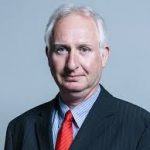
  • Daniel Zeichner – 2022 Statement on the Conduct of Iain Duncan Smith

    Daniel Zeichner – 2022 Statement on the Conduct of Iain Duncan Smith

    The point of order made by Daniel Zeichner, the Labour MP for Cambridge, in the House of Commons on 13 July 2022.

    On a point of order, Madam Deputy Speaker. During the debate on Report of the Higher Education (Freedom of Speech) Bill on 13 June, the right hon. Member for Chingford and Woodford Green (Sir Iain Duncan Smith) made a series of charges about Jesus College Cambridge, which is in my constituency. I have informed the right hon. Member of my intention to raise this point of order.

    The College is rightly concerned about the reputational damage that is done when Members of this House make such accusations, particularly when there is little opportunity for those being criticised to defend themselves. It is particularly galling, in that the college had written to the right hon. Member more than a year ago to correct previous misrepresentations. The college insists that intellectual independence is always safeguarded, and points out that the financial contributions in question had in fact been promoted and supported by the then Conservative Government. It is very happy to meet any Member who has concerns, to ensure that these often complex historical situations are properly understood. I seek your advice, Madam Deputy Speaker, on how such misrepresentations may be prevented in future.

    Madam Deputy Speaker

    I am grateful to the hon. Member for giving notice of his point of order and also for confirming that he told the right hon. Member for Chingford and Woodford Green (Sir Iain Duncan Smith) that he intended to raise the issue. The Chair is not responsible for the content of Members’ contributions. Also, freedom of speech is essential to our effective functioning and I am sure the hon. Member will appreciate that it is important that Members are able to set out their views, even if those views are questioned or opposed. I appreciate that he was keen to put on record his views and the response of the college, and he has obviously done that.

  • Diana Johnson – 2022 Statement on the Conduct of Priti Patel

    Diana Johnson – 2022 Statement on the Conduct of Priti Patel

    The statement made by Diana Johnson, the Labour MP for Kingston upon Hull North, in the House of Commons on 13 July 2022.

    On a point of order, Madam Deputy Speaker. The Home Secretary was due to meet the Home Affairs Committee this morning—we arranged this in April—for an evidence session on, among other things, the new Commissioner of the Metropolitan Police, problems at the Passport Office, small boat crossings in the channel and the Government’s Rwanda policy, and the lack of progress in prosecuting and convicting those who commit rape and other sexual violence against women and girls. Shortly before 5 pm yesterday, the Home Secretary wrote to me to say that she was withdrawing from the evidence session. That is tantamount to providing no notice at all, and it deprives the Committee of the chance to scrutinise the conduct of her Department before the summer recess. We have requested her presence next Wednesday, but as yet have received no response.

    The Home Secretary told us that she could not come because of changes in her ministerial team and other “wider unprecedented changes” that had occurred since she had agreed to give evidence. I think that that is a very weak excuse to avoid scrutiny of the Home Office at this time. It was only ever the Home Secretary and the permanent secretary who were to appear before the Committee. In fact, the Home Secretary issued a statement last week in which she said that she had not resigned because the role of Home Secretary demanded that the holder of the office should be

    “focused on the business of government and our national security.”

    What steps can a Committee of this House take, Madam Deputy Speaker, when a Minister refuses to be scrutinised, and demonstrates such discourtesy to this House?

    Stephen Kinnock (Aberavon) (Lab)

    Further to that excellent point of order, Madam Deputy Speaker. You will, I am sure, agree that Select Committees play a crucial role in this place in holding the Government to account, and our ability to do so depends on those Committees. We are seeing chaos in the Passport Office, a broken asylum system and an unworkable Rwanda plan. Crime is up, prosecutions are down, and confidence in the police at a record low. Can you please advise us, Madam Deputy Speaker, on what can be done to ensure that the Home Secretary does indeed attend the Select Committee next Wednesday?

    Madam Deputy Speaker

    I am grateful to the right hon. Member for Kingston upon Hull North (Dame Diana Johnson), the Chair of the Home Affairs Committee, for giving notice of her point of order. I am also grateful to the shadow Home Office Minister.

    Mr Speaker has said repeatedly that Select Committee work is important, and that Ministers should do their best to facilitate it through timely appearances at evidence sessions. I share—as, I am sure, does Mr Speaker—the right hon. Lady’s frustration that her Committee’s evidence session has been cancelled at such short notice. I do not know the reasons that the Home Secretary has provided for the cancellation, so I will refrain from saying more now, other than that I hope, and I am sure Mr Speaker would hope, that the Home Secretary will very quickly provide an alternative date that is acceptable to the Committee, and that, again, I hope that those on the Treasury Bench will feed these points back through the relevant channels.

  • Valerie Vaz – 2022 Statement on the Conduct of Eddie Hughes and Wendy Morton

    Valerie Vaz – 2022 Statement on the Conduct of Eddie Hughes and Wendy Morton

    The statement made by Valerie Vaz, the Labour MP for Walsall South, in the House of Commons on 13 July 2022.

    On a point of order, Madam Deputy Speaker. It relates to hon. Members visiting my constituency. Could you please advise me on how I should deal with a breach of protocol, in that I was informed by two hon. Members, the hon. Members for Walsall North (Eddie Hughes) and for Aldridge-Brownhills (Wendy Morton), that they would be visiting my constituency within a few hours of their visits? I have given notice that I would be making this point of order today.

    On 4 February, the hon. Member for Aldridge-Brownhills told me, on the day, that she would be visiting Walsall College. On 25 April, I was informed by text. On 1 May, I was informed on the day of her visit that the hon. Member would be in my constituency. On 6 November 2020, 1 January 2021, 11 April 2022 and 1 July 2022, the hon. Member for Walsall North informed me that he would be visiting my constituency on the day in question. Both hon. Members are former Whips and should know the rules.

    I should be grateful, Madam Deputy Speaker, if you could confirm that according to the protocol set out in “Rules of behaviour and courtesies in the House of Commons”, advance notice is required of visits to the constituency of another Member. May I also ask you to make a statement to confirm the rule that “advance notice” is not notice given on the day itself?

    Madam Deputy Speaker (Dame Rosie Winterton)

    I am grateful to the right hon. Member for giving notice of her point of order, and also for notifying the Members concerned that she intended to raise this matter. The most recent edition of the “courtesies” booklet to which she referred states that if a Member intends to visit the constituency of another Member,

    “All reasonable efforts should be taken to notify the other Member”,

    although that obviously does not apply to a purely private visit. Not to take such action is considered very discourteous. Although the booklet does not specify a minimum notice period, I agree that receiving notice on the day of a visit does not reflect the intention of the guidance. I think we all know that it is highly unlikely that a visit would be organised on the day, so these visits are very likely to have been arranged beforehand.

    I trust the Members concerned, in this instance, to resolve the issue without my assistance, but I am happy to clarify the general point. I would expect all Members to make efforts to respect not just the letter of the guidance but its spirit, and to give notice at least in advance of the day of the visit itself. I hope that this will be passed back through the relevant channels, in all parts of the House, to ensure that it is made very clear to right hon. and hon. Members. I think we will leave it at that.

  • Amanda Milling – 2022 Statement on Sri Lanka

    Amanda Milling – 2022 Statement on Sri Lanka

    The statement made by Amanda Milling, the Minister for Asia and the Middle East, in the House of Commons on 13 July 2022.

    We are closely monitoring the fast-moving and fluid political, economic and security situation in Sri Lanka. The Minister of State with responsibility for south Asia, Lord Ahmad, has engaged directly with our high commissioner and team on the ground. We encourage all sides to find a peaceful, democratic and inclusive approach to resolving the current political and economic challenges. Sri Lanka’s political and economic challenges should be resolved through an inclusive and cross-party process. Any transition of power should be peaceful, constitutional and democratic. I call on all parties to exercise restraint and refrain from violence.

    Siobhain McDonagh

    A state of emergency has been declared in Sri Lanka by Prime Minister Ranil Wickremesinghe after President Rajapaksa fled the country last night. That follows weeks of protests on the island, with inflation running at more than 50%, rocketing the price of everyday goods. The health system is on the verge of collapse due to a lack of medicine. There is no fuel for essential transport services and medical vehicles. There have been power cuts, school closures and we woke this morning to protestors overtaking the Prime Minister’s office, tear gas fired by police, a curfew imposed on the capital and the national TV broadcast suspended.

    This is a crisis in democracy decades in the making. The world turned away when the Rajapaksa Government cluster bombed their own people committing genocide, murdered their journalists and enriched a small group led by one family. Their malign, dynastic control has stripped the country bare, leaving behind a broken nation on the brink of economic collapse. Sri Lanka is unable to buy essential goods from abroad and for the first time in its history it failed to make a payment on its foreign debt, a consequence of swingeing populist tax cuts at a time of economic instability—Tory leadership candidates beware.

    An International Monetary Fund bailout is essential, but does the Minister agree that any financial assistance must go hand in hand with democratic and human rights reforms, in particular for the Tamil community which continues to fight for truth, justice and accountability as a result of the human rights abuses perpetrated at the end of the civil war by the outgoing Rajapaksa regime?

    Amanda Milling

    I am grateful to the hon. Lady for her question. As I say, we have been monitoring this very fast-moving and fluid political, economic and security situation. As she did, we urge a peaceful and democratic transition in line with the constitution and the rule of law. The Minister with responsibility for south Asia has been thoroughly engaged with the team on the ground in the high commission. I stress that he visited Sri Lanka earlier this year and met a range of civil society groups specifically to discuss the human rights situation. At that time, he met Ministers, including the President and the Foreign Minister, and urged them to take steps to improve human rights, and to deliver justice and accountability following the conflict. I reassure the House that we are closely monitoring the situation on the ground, which is very fast moving and fluid.

    Dr Matthew Offord (Hendon) (Con)

    I find it a pity that some people are seeking to use this urgent question to criticise the current Government in Sri Lanka. [Interruption.] The hon. Member for Mitcham and Morden (Siobhain McDonagh) can chunter from a sedentary position, but the elephant in the room is not the governance of Sri Lanka; it is the decision in 2019 to become an organic country within 10 years. That has led to food shortages and overseas remittances not being returned. The problem in Sri Lanka is that there is no food for people to eat. The UK Government need to assist Sri Lanka and agencies to ensure that food, fuel and other supplies are provided. We need to come to a Commonwealth country in its time of great crisis, not make silly political statements.

    Amanda Milling

    I am grateful to my hon. Friend for his question. As I say, we are monitoring the situation very closely. In answer to one of the points both he and the hon. Member for Mitcham and Morden (Siobhain McDonagh) made, economic support from the UK is forthcoming through multilateral institutions such as the IMF and the World Bank. The UK is the joint fifth-largest shareholder in the IMF and is a major contributor to the UN and the World Bank.

    Mr Speaker

    I now call the shadow Minister, Catherine West.

    Catherine West (Hornsey and Wood Green) (Lab)

    Thank you, Mr Speaker. I welcome the urgent question on this emerging situation, tabled by my hon. Friend the Member for Mitcham and Morden (Siobhain McDonagh), who is a longstanding and consistent friend of Sri Lanka.

    As we speak, Sri Lanka is convulsed by political and economic crisis. Months of mounting economic difficulties and political mismanagement have led to a chronic shortage of basic goods and medicines, and large numbers of people on the streets demanding systemic change to the political system. Reports now indicate that President Rajapaksa has fled to the Maldives in a military jet, rather than resigning and facing the consequences, leaving the country in political paralysis and the announcement of a state of emergency.

    I sincerely hope that a new Government with popular support can be swiftly formed. From past evidence, we know that the Sri Lankan people have experienced extrajudicial killings and human rights abuses. The fear is that the chaos and the latest announcement may lead to increases in community tensions, reprisals or further examples of human rights abuses. It is a member of the Commonwealth family and that would be completely unacceptable. I am unimpressed by the Minister’s response to date and by the fact that, although this urgent question was tabled for her boss, the Foreign Secretary, we instead have a response from another Minister—a pattern that is emerging in Parliament this week. It is clear that the Sri Lankan people will need our help quickly—not only in the days and weeks ahead as they grapple with chronic shortages and political instability, but in the months and years beyond—to secure a brighter and more stable future.

    I have two brief questions. First, the Minister will know that I wrote to her on 29 June asking for a response to the emerging situation. This is not new—it has been bubbling away for two or three weeks—and yet I have not had a response to my inquiry. Will she give the House the courtesy of a reply and confirm that, on her return to the office, she will have officers draft a response that reflects the updated situation overnight?

    Secondly, will the Minister outline the more immediate support offered to Sri Lanka, the engagement with partners in the region, including India, and whether the Government will now redouble their efforts to bring to justice those implicated in human rights abuses in Sri Lanka? We have this unique opportunity not only to support an ally, a friend and a member of the Commonwealth during their time of need, but to help to bring peace, justice and a brighter and more sustainable future to the Sri Lankan people.

    Mr Speaker

    Order. I remind Members—I have said this before—that if they go over time, I will cut them off. Please stick to the allocated time. We grant urgent questions on those grounds.

    Amanda Milling

    I am grateful to the hon. Lady for welcoming me to the Dispatch Box to answer this question. Frankly, I answer many questions on behalf of the Foreign Office, so it is not very unusual to find me at the Dispatch Box for an urgent question.

    I am more than happy to respond to the hon. Lady’s letter after the debate. I will not go over many of the things that I have said before. I will say that there are a number of stories relating to the situation on the ground, and I do not want to speculate. The situation is fast-moving and fluid, and we are monitoring it very closely. The Minister responsible for South Asia, Lord Ahmad, has been working very closely on this matter and does raise human rights issues.

    Dr Andrew Murrison (South West Wiltshire) (Con)

    Clearly, the dire economic situation forced by ex-President Rajapaksa and his outfit lies at the heart of what is going on in Sri Lanka. Given Sri Lanka’s indebtedness to China and the prospect of cheap fuel from Russia, does the Minister agree that the risk is that Sri Lanka stands every chance of falling within the maw of malign jurisdictions? Will she therefore do everything in her power to ensure that the International Monetary Fund is engaged to try to sort this out, particularly given that part of the issue would appear to be uncosted, unfunded, populist and inflationary tax cuts from 2019 that I am sure the IMF will take a very severe view of?

    Amanda Milling

    I reassure my right hon. Friend that UK economic support is forthcoming through multilateral institutions such as the IMF.

    Madam Deputy Speaker (Dame Rosie Winterton)

    I call the SNP spokesperson.

    Alyn Smith (Stirling) (SNP)

    Sri Lanka is a wonderful place with wonderful people, and I am sure that all our hearts go out to them during this terrible crisis, which, as Members have said, has been a long time in the making. A concerted international effort is needed to get through the immediate humanitarian crisis. The UN humanitarian needs and priorities plan has called for $47.2 million in short-term emergency aid. I appreciate that the Minister might not give us a number today, but will she confirm that the UK will contribute to that?

    The President has fled, but he cannot flee accountability. Does the Minister agree that the President and all his officials who are complicit in acts of humanitarian abuses will and must be held accountable, and will the UK contribute to those efforts?

    On the wider point, this situation was triggered by economics, as we have heard, with inflation at 54% last month and likely to be 70% this month. That is a terrible cost of living crisis for ordinary Sri Lankans, and it was triggered in part by unmanageable debt. The UK is in an important position in the IMF and the World Bank. This does not just apply to Sri Lanka; I fear that other countries are having trouble with unmanageable debt. What talks has the Minister had on that?

    Amanda Milling

    On humanitarian support, I reassure the hon. Member that we remain very concerned about the impact of the economic and political situation on the humanitarian crisis. We are working with the United Nations and its agencies in co-ordinating their humanitarian needs and priorities plan.

    On accountability, as Sri Lanka enters a new political settlement, the UK will maintain its advocacy of the importance of justice and accountability for alleged war crimes and human rights violations during the war. That remains crucial to building on peacebuilding efforts, supported through the United Nations Human Rights Council process, and for social cohesion.

    Ed Davey (Kingston and Surbiton) (LD)

    I congratulate the hon. Member for Mitcham and Morden (Siobhain McDonagh) on securing this urgent question. I agree that this horrible, appalling situation for the people of Sri Lanka has been brought about by the corruption of the Rajapaksa Government, their populist, unfunded tax cuts, their sky-rocketing defence expenditure, their draconian police powers and their cronyism and corruption, the likes of which we have rarely seen. I therefore urge the Minister to work with international partners for a full economic and political solution to support the democrats in Sri Lanka. Can that start with an economic package, with the IMF and others, so that we can give immediate support, and can that be followed by a political package that includes an international arrest warrant for President Rajapaksa and his cronies? Can that also include a demand for political freedom and respect for the rights and human rights of everyone on the island of Sri Lanka, including the Tamil and Muslim minorities?

    Amanda Milling

    I reiterate that the political and economic challenges should be resolved through an inclusive and cross-party process. We encourage all sides to find a peaceful, democratic and inclusive approach, and we work with our international partners on this matter. I have set out the economic support that we have provided through multilateral institutions such as the IMF, the World Bank and the UN.

    Valerie Vaz (Walsall South) (Lab)

    There is a large diaspora of Sri Lankan people who live here and who are desperately worried about their family back in Sri Lanka. The Minister has made no mention of the Prime Minister’s involvement. At the end of this urgent question, will she ask the Prime Minister to pick up the phone to the Prime Minister of Sri Lanka and ask him to stop firing at innocent people?

    Amanda Milling

    I completely understand the point that the right hon. Lady is making about the fact that there is a diaspora here who are concerned about their families. I reassure the House that the Minister responsible for South Asia, Lord Ahmad, is in regular dialogue with the high commission and the team on the ground in order to keep an up-to-date view of the situation, which, after all, is incredibly fluid and fast-moving.

    Sir Stephen Timms (East Ham) (Lab)

    When David Cameron was Prime Minister, he visited Sri Lanka in 2013. After that, the UK, with Sri Lanka, jointly moved a resolution at the United Nations Human Rights Council setting out a mechanism for resolving the legacy of the issues that we have heard about. Sri Lanka has largely ignored its obligations under that resolution since then, and it has not even paid lip service to them in the past three years. Will it be a requirement of the medium-term support that will be needed for Sri Lanka that it comes back into compliance with its obligations under the decisions of the UNHRC?

    Amanda Milling

    Through our leadership in the UN Human Rights Council process, we have been encouraging Sri Lanka to respect democratic and international human rights standards as it makes its political transition. In March this year, the UK Government and our core group of partners led an ambitious new resolution on Sri Lanka at the UNHRC.

    Barry Gardiner (Brent North) (Lab)

    Thousands of Tamils in my constituency are deeply concerned. They look back to 2013, when the coalition Government supported the move to hold the Commonwealth Heads of Government meeting in Sri Lanka; and they look back to the measures that the UK Government took, as part of the European Union, to reinstate the generalised scheme of preferences plus, and to give trade preferences back to Sri Lanka. The Opposition advised against it all at the time, saying that the Government in Sri Lanka were no more than a kleptocracy. That has now been proven. The Minister needs to outline the measures that she will take to support a new, strong, inclusive and democratic Government in that state.

    Amanda Milling

    I think I have been clear throughout that we encourage all sides to find that peaceful, democratic and inclusive approach to resolving the situation. I stress to the House that the Minister for South Asia has been doing exactly that. He has been calling for that approach, but also engaging on the ground with the high commission and through all his ministerial contacts.

    Stella Creasy (Walthamstow) (Lab/Co-op)

    Madam Deputy Speaker, I am sure that you, and indeed the Minister, would agree that dismissing any woman’s urgent question in this House as “silly” is disrespectful to the subject matter in hand, because we all recognise how serious the situation is.

    Dr Offord

    How dare you?

    Stella Creasy

    The hon. Member may chunter from a sedentary position, but the women are talking now. We are talking about human rights because many of us recognise that, as the United Nations has told us, potentially more than 100,000 Tamils were killed during the 26-year genocide. The Minister will know that the Office of the UN High Commissioner for Human Rights has been investigating the matter. Further to the question that my right hon. Friend the Member for East Ham (Sir Stephen Timms) asked, there is due to be a report and further criticism after the resolution at the United Nations. Can the Minister tell us whether she has had any talks with the United Nations about whether the timetable will vary? When might our constituents finally see justice for the Tamil communities?

    Amanda Milling

    Given the situation on the ground, it is a very serious matter. We are seeing deeply concerning scenes, so I am more than happy to be at the Dispatch Box answering this question. As I have said throughout, we are concerned about the human rights environment in Sri Lanka. Our concerns are wide-ranging, from the harassment of civil society groups to the range of civilian functions being brought under military control, the increased anti-Muslim sentiment and the reversal of progress on post-conflict accountability and reconciliation. I reassure the House that we lead the way with the UNHRC process and that we encourage Sri Lanka to respect democratic and international human rights standards.

    Matt Rodda (Reading East) (Lab)

    As we have heard today, Sri Lanka is a Commonwealth country, and there are very deep community ties to many towns and cities across the UK; I pay tribute to the local Sri Lankan community in Berkshire. The Minister has committed to writing to my hon. Friend the Member for Hornsey and Wood Green (Catherine West). In her response, will she set out, in some detail, what the UK will do to support the IMF process; the bilateral aid of any type that we can offer; and our action on potential human rights matters?

    Amanda Milling

    I will, of course, write to the hon. Member for Hornsey and Wood Green (Catherine West) after this urgent question. What I would say is that we are well within the timeframe for responding to the letter itself.

    Sarah Olney (Richmond Park) (LD)

    The human rights abuses of the Sri Lankan police force have been well documented. It has been clear from their response to the widespread protests that their unacceptable treatment of people in Sri Lanka, particularly the Tamil community, and their draconian powers have been a key contributor to the current unrest. The UK Government have been funding police training in Sri Lanka, despite clear evidence of these abuses. Can the Minister confirm whether the police and security forces involved in the response to the protests have received funding from the UK Government? Will she commit to ending that funding as soon as possible?

    Amanda Milling

    The UK’s police training in Sri Lanka has focused on the role of women in the police service and on improving responses to sexual and gender-based violence. Police Scotland has confirmed that it will not seek to participate in any future programmes in Sri Lanka.

    Sam Tarry (Ilford South) (Lab)

    Does the Minister agree that the UK Government must play a role in the peaceful transition to a democratically elected Government in Sri Lanka who are inclusive and who allow for the self-determination of all peoples on the island of Sri Lanka? Will the UK Government make representations to the effect that the new Sri Lankan Government must be formed with a new constitution that is pluralist and ensures long-term stability, prosperity and self-determination for all communities on the island? Crucially, once that Government have been formed, they must ratify the Rome statute so that accountability for the mass atrocities and the alleged genocide can finally be agreed.

    Amanda Milling

    As I have said a number of times, we encourage all sides to find a peaceful, democratic and inclusive approach. We urge that the transition be in line with the constitution and the rule of law.

    Margaret Ferrier (Rutherglen and Hamilton West) (Ind)

    It has been reported that doctors in Sri Lanka have had to resort to using social media to source critical medicine and equipment. Will the UK Government provide any support for the nation’s medical community to help ensure that Sri Lankans can access urgent medical treatment when it is needed?

    Amanda Milling

    I would like to reassure the hon. Lady that we are providing humanitarian support for those in Sri Lanka.

    Jim Shannon (Strangford) (DUP)

    I thank the Minister for her response. What aid can the Government make available to those who rely on tourism for their income and who are now starving? That seems to be the story at the moment. What contact has been made to ascertain whether non-governmental organisations or churches can help? I know of many church groups in my constituency that have the capacity to distribute aid to those who are not involved in the unrest but who are watching their children starve because of what is happening on the streets of Sri Lanka.

    Amanda Milling

    I reassure the hon. Gentleman that the Minister for South Asia met a number of civil society groups and NGOs earlier in the year, when he visited Sri Lanka.

    Gareth Thomas (Harrow West) (Lab/Co-op)

    What the Minister may not know is that Tory MP after Tory MP has taken trips funded by the Rajapaksa Government to this very troubled island. As a result, there has always been a striking lack of criticism of the Rajapaksa Government on human rights and governance. I do hope that the Minister will be able to tell the House that the Foreign Office had absolutely no involvement at all in the escape of Mr Rajapaksa from Sri Lanka. Can she also reassure the House that if the people of Sri Lanka want him back to face trial for corruption and poor governance, Britain will play its role in helping to get him back from the Maldives?

    Amanda Milling

    I am really disappointed by the nature of that question. I am here at the Dispatch Box because what we want is a peaceful, democratic and inclusive approach; we talked earlier about people who are worried about their family in Sri Lanka. We have been calling for restraint and for refraining from violence, so I am just not going to accept that question.


  • Troika and EU Joint Statement on Sudan – 13 July 2022

    Troika and EU Joint Statement on Sudan – 13 July 2022

    The joint statement made by the Troika (UK, US and Norway) and the EU on 13 July 2022.

    The members of the Troika (Norway, the United Kingdom and the United States) and the European Union extend our warm wishes to the Sudanese people at the conclusion of Eid al-Adha.

    Eight months after the military takeover we note the announcement by Sovereign Council Chair General Burhan that the military forces will cease participation in political talks. We acknowledge the stated intention of the military forces, upon agreement among civilian parties to form a transitional government, to withdraw from the political scene. The military and security forces should be held to this commitment. They must also end violence against civilians and hold to account those responsible for unlawful killings and other human rights violations and abuses.

    We encourage all political actors committed to the democratic transition to engage swiftly in an inclusive dialogue to form a civilian-led transitional government. This process must deliver an agreement that defines: a clear timeline for free and fair elections; procedures for selecting a transitional prime minister and other key officials; and a dispute resolution mechanism to help avoid future political crises.

    A transitional government must be civilian-led, and have broad-based, nation-wide support. There must also be full clarity on, and oversight of, the military’s role and responsibilities. Such matters cannot be defined unilaterally by the military; they require dialogue and transparency to help avoid future disputes.

    We commend the tripartite initiative of the United Nations, African Union, and Intergovernmental Authority on Development to facilitate such an inclusive dialogue and support their continued efforts.

    Nearly three years since Sudan began its transition to democracy, we deeply regret the continued loss of life, and reversal of important economic and political progress. We commend the devotion of the Sudanese people to a more peaceful and just future and honour the sacrifices of those who have lost their lives in support of democracy. The Troika and the European Union look forward to supporting a transitional civilian government that enjoys popular support, reflecting the hope and aspirations we share with the Sudanese people.

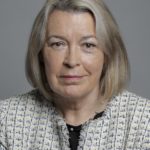
  • Barbara Keeley – 2022 Speech on the Online Safety Bill

    Barbara Keeley – 2022 Speech on the Online Safety Bill

    The speech made by Barbara Keeley, the Labour MP for Worsley and Eccles South, in the House of Commons on 12 July 2022.

    I rise to speak to this small group of amendments on behalf of the Opposition. Despite everything that is going on at the moment, we must remember that this Bill has the potential to change lives for the better. It is an important piece of legislation, and we cannot miss the opportunity to get it right. I would like to join my hon. Friend the Member for Pontypridd (Alex Davies-Jones) in welcoming the Under-Secretary of State for Digital, Culture, Media and Sport, the hon. Member for Folkestone and Hythe (Damian Collins) to his role. His work as Chair of the Joint Committee on this Bill was an important part of the pre-legislative scrutiny process, and I look forward to working in collaboration with him to ensure that this legislation does as it should in keeping us all safe online. I welcome the support of the former Minister, the hon. Member for Croydon South (Chris Philp), on giving access to data to academic researchers and on looking at the changes needed to deal with the harm caused by the way in which algorithmic prompts work. It was a pity he was not persuaded by the amendments in Committee, but better late than never.

    Earlier we debated new clause 14, which will reduce the amount of illegal content and fraudulent advertising that is identified and acted upon. In our view, this new clause undermines and weakens the safety mechanisms that members of the Joint Committee and the Public Bill Committee worked so hard to get right. I hope the Government will reconsider this part of the Bill when it goes through its stages in the House of Lords. Even without new clause 14, though, there are problems with the provisions around fraudulent advertising. Having said that, we were pleased that the Government conceded to our calls in Committee to ensure that major search engines and social media sites would be subject to the same duties to prevent fraudulent advertising from appearing on their sites.

    However, there are other changes that we need to see if the Bill is to be successful in reducing the soaring rates of online fraud and changing the UK’s reputation as the

    “scam capital of the world”,

    according to Which? The Government voted against other amendments tabled in Committee by me and my hon. Friend the Member for Pontypridd that would have tackled the reasons why people become subject to online fraud. Our amendments would have ensured that customers had better protection against scams and a clearer understanding of which search results were paid-for ads. In rejecting our amendments, the Government have missed an opportunity to tackle the many forms of scamming that people experience online.

    One of those forms of scamming is in the world of online ticketing. In my role as shadow Minister for the Arts and Civil Society, I have worked on this issue and been informed by the expertise of my hon. Friend the Member for Washington and Sunderland West (Mrs Hodgson), who chairs the all-party parliamentary group on ticket abuse. I would like to thank her and those who have worked with the APPG on the anti-ticket touting campaign for their insights. Ticket reselling websites have a well-documented history of breaching consumer protection laws. These breaches include cases of fraud such as the sale of non-existent tickets. If our amendment had been passed, secondary ticketing websites such as Viagogo would have had to be members of a regulatory body responsible for secondary ticketing such as the Society of Ticket Agents and Retailers, and they would have had to comply with established standards.

    I have used ticket touting as an example, but the repercussions of this change go wider to include scamming by holiday websites, debt services and fraudulent passport renewal companies. Our amendments, together with amendments 205 to 210, which were tabled by the hon. Members for Ochil and South Perthshire (John Nicolson) and for Aberdeen North (Kirsty Blackman), would improve protection against scams and close loopholes in the definitions of fraudulent advertising. I hope the Minister recognises how many more scams these clauses would prevent if the amendments were accepted.

    Part 5 of the Bill includes provisions that relate to pornographic content, which we have already heard about in this debate. For too long, we have seen a proliferation of websites with illegal and harmful content rife with representations of sexual violence, incest, rape and exploitation, and I thank my right hon. Friend the Member for Kingston upon Hull North (Dame Diana Johnson) for the examples she has just given us. We welcomed the important changes made to the Bill before the Committee stage, which meant that all pornographic content, not just user-generated content, would now be included within the duties in part 5.

    Other Members have tabled important amendments to this part of the Bill. New clause 33 and new schedule 1, tabled by the hon. Members for Ochil and South Perthshire and for Aberdeen North, will ensure parity between online and offline content standards for pornography. New clause 33 is important in specifying that content that fails to obtain an R18 certificate has to be removed, just as happens in the offline world under the Video Recordings Act 1984. My right hon. Friend the Member for Kingston upon Hull North tabled amendment 33 and new clause 7, which place new duties on user-generated commercial pornography sites to verify the age and obtain consent of people featured in pornographic content, and to remove content should that consent be withdrawn. These are safeguards that should have been put in place by pornography platforms from the very start.

    I would like to raise our concern about how quickly these duties can be brought into force. Clause 196 lays out that the only clauses in part 5 to be enacted once the Bill receives Royal Assent will be those covering the definitions—clauses 66 and 67(4)—and not those covering the duties. Children cannot wait another three years for protections from harm, having been promised this five years ago under part 3 of the Digital Economy Act 2017, which was never implemented. I hope the Minister appreciates the need for speed in regulating this particularly high harm part of the internet.

    Part 11 clarifies companies’ liability and outlines the type of information offences contained in the Bill. It is important that liability is at the heart of discussions about the practical applications of the Bill, because we know that big internet companies have got away with doing nothing for far too long. However, the current focus on information offences means that criminal liability for repeated and systematic failures resulting in serious harm to users remains a crucial omission from the Bill.

    My hon. Friend the Member for Pontypridd was vocal in making the point, but it needs to be made again, that we are very concerned about the volume of last-minute amendments tabled by the Government, and particularly their last-ditch attempt at power grabbing through amendment 144. The Secretary of State should not have the ability to decide what constitutes a priority offence without appropriate scrutiny, and our amendments would bring appropriate parliamentary oversight.

    Amendment 31, in my name and in the name of my hon. Friend, would require that any changes to clauses 53 or 54, on harmful content, are debated on the Floor of the House rather than in a Delegated Legislation Committee. Without this change, the Secretary of State of the day will have the power to make decisions about priority content quietly through secondary legislation, which could have real-life consequences. Any changes to priority content are worthy of proper debate. If the Minister is serious about proper scrutiny of the online safety regime, he should carefully consider amendment 31. I urge hon. Members to support the amendment.

    Finally, part 12 includes clarifications and definitions. The hon. Members for Ochil and South Perthshire and for Aberdeen North tabled amendment 158, which would expand the definition of content in the Bill. This is an important future-proofing measure.

    As I mentioned, we are concerned about the delays to the implementation of certain duties set out in part 12. We are now in a situation in which many children who need protection will no longer even be children by the time this legislation and its protections come into effect. Current uncertainty about the running of Government will compound the concerns of many charities and children’s advocacy groups. I hope the Minister will agree that we cannot risk further delays.

    At its core, the Online Safety Bill should be about reducing harm, and we are all aligned on that aim. I am disappointed that the Government have reversed some of the effectiveness of the scrutiny in Committee by now amending the Bill to such a degree. I hope the Minister considers our amendments in the collaborative spirit in which they are intended, and recognises their potential to make this Bill stronger and more effective for all.

  • James Morris – 2022 Statement on the Patient Safety Commissioner for England

    James Morris – 2022 Statement on the Patient Safety Commissioner for England

    The statement made by James Morris, the Parliamentary Under-Secretary of State for Health and Social Care, in the House of Commons on 12 July 2022.

    In July 2021, the Government published their formal response to the recommendations by the Independent Medicines and Medical Devices Safety review led by Baroness Cumberlege setting out an ambitious programme of change. As part of our response, we committed to appoint a Patient Safety Commissioner with a remit covering medicines and medical devices.

    I am pleased to announce the appointment of Dr Henrietta Hughes OBE FRCGP SFFMLM as the first ever Patient Safety Commissioner for England. This appointment was made following an open competition, in line with the Governance Code for Public Appointments, and following a pre-appointment scrutiny hearing with the Health and Social Care Committee. Dr Hughes will continue working as a GP and remain Chair of Childhood First.

    The First Do No Harm report, led by Baroness Cumberlege highlighted the need to avoid harm and protect patients. The Patient Safety Commissioner will add to and enhance existing work to improve patient safety in relation to medicines and medical devices by being a champion for patients and helping us to learn more about what we can do to put patients first. The Commissioner’s core duties are to promote the safety of patients, and promote the importance of the views of patients and other members of the public. The Commissioner will act independently, and a memorandum of understanding will be agreed to ensure the Commissioner’s independence is safeguarded.