Tag: 2022

  • Kevin Hollinrake – 2022 Speech on the Supply of Drugs to Children

    Kevin Hollinrake – 2022 Speech on the Supply of Drugs to Children

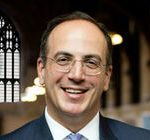
    The speech made by Kevin Hollinrake, the Conservative MP for Thirsk and Malton, in the House of Commons on 19 July 2022.

    I beg to move,

    That leave be given to bring in a Bill to make the offence of supplying or offering to supply a controlled drug aggravated when the person to whom the drug is supplied or offered is under 16; and for connected purposes.

    As John F. Kennedy once said:

    “Children are the world’s most valuable resource and its best hope for the future.”

    Society recognises our special duty to protect children, and to ensure that those who bring them harm feel the full force of the law. The Supply of Drugs to Children Under 16 (Aggravated Offence) Bill, or Leah’s law, intends to change the law to make clear that no person under the age of 16 can consent to taking illegal substances, and to ask our judges to impose tougher sentences on those who supply drugs to our children. That will have the dual effect of keeping young people safe and acting as a deterrent to those who callously target children.

    To outline why this change is long overdue, let me explain the tragic background to the Bill. In May 2019, 15-year-old Leah Heyes from Northallerton was sold MDMA by two friends. She took the substance in a car park and died shortly after, tearing the life of her family and community apart. The unimaginable was exacerbated by the fact that the young adults who sold Leah the drugs received custodial sentences of 21 and 12 months respectively. The two ended up serving a paltry six months each.

    At 15, Leah was, in the eyes of the law, just a child when her life was cruelly cut short. Quite rightly, society and the law offer greater protections and special consideration to children. As we know, it is illegal to sell alcohol or cigarettes to, or to have sex with, somebody under the age of 16, and somebody under that age cannot consent to sex. Even beauty salons that allowed under-18s to use sunbeds would be committing a specific offence against children. When it comes to the supply of drugs, one would think that we would offer our children greater protection against those who seek to exploit their innocence, but we do not.

    It is an offence under section 4 of the Misuse of Drugs Act 1971 to supply a controlled drug to any person, but that blanket approach to sentencing does not protect those who need it most. There is clear disregard shown, and a callousness, in knowingly deciding to put a child’s life in danger, yet when it comes to dealing drugs, there is not a greater penalty applied for doing that. Although there are statutory aggravating factors—for example, when an offender uses a child to deliver drugs, or supplies drugs on or in the vicinity of school premises during or close to school hours—those do not apply when someone sells drugs to children such as Leah; it is a huge gap in the law.

    Although the tragedy of drug-related death is not limited to children, adults are seen by law as having legitimate agency and the capability to make their own choices. In other areas, however, the law recognises that children do not have that capability. Given the added peer pressure in this age of social media, children are particularly impressionable and vulnerable targets. It cannot be right to class a child’s agency as being the same as an adult’s when it comes to something as damaging as drugs. We know that county lines drug gangs target young people, who in turn go on to supply drugs to their peers. Profits pile up for the dealers, and the cycle continues.

    Although case law has established law that targeting vulnerable individuals or children in order to supply them with drugs could be examples of aggravating features, that approach is not mandated by a specific piece of legislation, and that is what Leah’s law would do. This would not be an unconventional approach to drugs sentencing. Certain states in Australia recognise the differentiation, and in Tasmania, New South Wales and South Australia, there are specific offences for the supply of drugs to under-16s.

    Since Leah’s death, her mother, Kerry Roberts, has tirelessly championed the case for Leah’s law—that is why I am standing before the House now. Kerry is watching today, and I thank her for raising awareness of the issue. She does not want her daughter’s death to be in vain, and for that the whole House will have nothing but admiration. Although Kerry is not my constituent, drug-related crime among young people affects each and every one of us in Parliament, and I fully intend to help her campaign succeed. If we ensure that just one person thinks twice about selling drugs to an under-16-year-old, save just one child’s life, or create just one better start in life, it would make the Bill, and all Kerry’s crucial work, worth while.

    I do appreciate that the Government are carrying out a great deal of work on restricting drug supply and working with charities and agencies, but the reality is that the global fight against drugs is a massive undertaking and this will take many, many years to solve. We must deter these perpetrators from preying on our children. We can start to tackle this issue on behalf of all the families whose lives have been devastated by drug crime. It speaks volumes that the Leah’s law petition garnered 10,276 signatures, but it is disappointing that the Government’s response thus far is that they are not going to act on this. I did, however, have a very constructive meeting with the Minister, so I hope that position will change soon.

    It is simple; I am asking the Government to think again and support my Bill to make it a specific offence to supply drugs to those aged under 16, ensuring that this crime carries a harsher sentence. I will continue to work with Leah’s mother and with Ministers to make this campaign a reality.

  • Peter Kyle – 2022 Speech on the Northern Ireland Protocol Bill

    Peter Kyle – 2022 Speech on the Northern Ireland Protocol Bill

    The speech made by Peter Kyle, the Labour MP for Hove, in the House of Commons on 19 July 2022.

    It is a pleasure to speak under your chairmanship once again, Mr Evans.

    I shall start by responding to a point made by the right hon. Member for East Antrim (Sammy Wilson). To clarify, the Labour party and I voted against the protocol when it was before the House. In fact, we walked through the Lobbies together on this issue. I am surprised he does not remember such a memorable occasion—it is quite a rarity, it must be admitted. I hope that when he comes to speak, he will correct the record, because we have a good relationship. It is one that I value and that I hope will continue.

    Sammy Wilson

    For the record, will the hon. Gentleman tell us the stance of his party on the protocol today?

    Peter Kyle

    First, I am slightly disappointed that the right hon. Gentleman did not take the opportunity to correct the record from his previous intervention.

    My stance and that of the Labour party on the protocol is very clear: it needs to evolve, to change and to be improved, and that should be done by all lawful means. This Bill is not lawful. Of course, the right hon. Member for Maidenhead (Mrs May), the former Prime Minister, said on the Floor of the House just a few days ago that in her opinion it was unlawful. We heard from a former Attorney General in the last day of debate that he felt it was unlawful.

    For that reason, the Labour party believes that although we voted against the protocol in the first place, now that it is in domestic statute and part of an international treaty, the responsible thing to do is to negotiate a way forward. What we cannot do is repeat the debates of previous days. We need to stick to the clauses before us. Today, we are talking about—

    Ian Paisley

    Will the hon. Gentleman give way?

    Peter Kyle

    Of course I will give way, but I will not rehearse the debates of the previous two days.

    Ian Paisley

    I appreciate the hon. Gentleman’s giving way. The issue of lawfulness, which he put on the agenda today, has to be addressed. The Northern Ireland Affairs Committee is the only Committee to have taken evidence on the lawfulness, or otherwise, of the protocol under international law. For the record, it was stated:

    “no, it does not violate international law. It does not violate the protocol.”

    I have heard people who should know better saying that it does, but I am afraid they are wrong. They are obviously not international lawyers. The evidence given to this House by the emeritus professor of public international law at the University of Edinburgh, who advises the Government and the Opposition, says that it does not break the law. Why does the hon. Gentleman persist with this inaccurate point?

    Peter Kyle

    Again, I will not repeat the debate from the first day of Committee, when all those issues were explored in detail. It is a shame to hear the hon. Gentleman say that of the former Prime Minister, the right hon. Member for Maidenhead, whom I know he respects. She said in the House that she asked herself three questions:

    “First, do I consider it to be legal… Secondly, will it achieve its aims? Thirdly, does it…maintain the standing of the United Kingdom in the eyes of the world? My answer to all three questions is no.”—[Official Report, 27 June 2022; Vol. 717, c. 63.]

    Stephen Farry

    Will the hon. Gentleman give way?

    Peter Kyle

    I am going to move on, because we need to stick to the clauses before us. I will give way once, but I promise, Mr Evans, that I will then crack on with the business before us.

    Stephen Farry

    Hopefully it will be a very helpful intervention. Does the shadow Secretary of State agree that it is important for Members to reflect fully on the evidence that was given to the Northern Ireland Affairs Committee? The last time the hon. Member for North Antrim (Ian Paisley) made reference to it, at least one of the people who gave evidence expressed concern, along with other international lawyers, that what was said did not fully reflect the subtlety of the arguments put before the Committee, which were not as simplistic as the hon. Gentleman said.

    Peter Kyle

    I am very grateful for that intervention. For the record, I think that all the interventions I receive here are helpful. They are certainly in the spirit of the debate that this place exists for. I believe that the hon. Gentleman is right, and I am grateful to him for setting the record straight so that we can move forward.

    Today, we are considering clauses 7 to 11, which deal with the dual regulatory regime the Government want to set up for Northern Ireland. Amendment 28 would require a Minister to carry out an economic impact assessment and a consultation before making any regulations for a dual regulatory regime. Some parts of the Bill indicate that the Government have been listening to problems that businesses and consumers in Northern Ireland are facing. In those areas, the Labour party is clear that the EU must show more flexibility to deliver the progress that businesses in Northern Ireland need.

    However, in proceeding with the dual regulatory regime, the Government demonstrate that they are ignoring the voices of most businesses. We saw that in the Government’s press release about Second Reading. It revealed, alarmingly, that the Government had only just begun

    “a series of structured engagements with the business community, to discuss and gather views on the detailed implementation of the Bill.”

    That had happened in recent days—not recent weeks, months or years, but in recent days. Businesses I know that are taking part in the process have asked for a commitment from the Government that they will publish the results in a report. I hope that the Minister will give that assurance from the Dispatch Box today.

    Instead of taking the time to develop a policy that works for businesses, the Foreign Secretary is doing what the Government have done from the start: they have been so preoccupied negotiating with the various factions in their own party that they neglect to engage meaningfully with the stakeholders and partners who are the only ones able to unlock the progress our country needs.

    Declan Billington, the chief executive of John Thompson and Sons animal feed manufacturers and co-chair of the Northern Ireland Food and Drink Association, said, when asked for his assessment of the proposals,

    “I cannot actually answer the question because when I say, ‘Lift the bonnet under the bill and show me the detailed policies that we can engage with,’ I hear conversations about co-design and, therefore, I cannot benchmark.”

    This is absurd. Instead of coming up with serious proposals, the Government are simply asking businesses to do the hard graft for them. In a damning assessment, the trade expert Sam Lowe described the proposed dual regulatory regime as

    “a solution looking for a problem: it is near-impossible to find a business in Northern Ireland advocating for it.”

    There are many reasons businesses are not calling for a dual regulatory system. High on the list is the shift in the burden of responsibility for ensuring that goods do not enter the EU off the Government agencies and on to the 75,000 individual Northern Ireland businesses. That might work for retailers, but exporters and businesses with highly integrated all-island supply chains see it as an almost existential threat. Again, the Government have been clear that their preferred outcome for the protocol is a negotiated solution. Such unserious proposals undermine the common ground in other areas.

    The dissent in Tory ranks complicates the situation further. Several prominent Conservatives, including the Attorney General, have said that they want the dual regulatory regime to be scrapped in favour of mutual enforcement down the line. The irony of asking for mutual enforcement is that it requires absolute trust between the UK and the EU. It would take serious negotiation and deep good faith to achieve it. It is pure fantasy to think that we can get there with this Bill, which unilaterally rewrites the agreement we have.

    Hilary Benn

    Will my hon. Friend give way?

    Peter Kyle

    It would be a pleasure.

    Hilary Benn

    The dual regulatory regime raises more questions than it answers. If I understand the Government’s position correctly, a firm can decide to operate under one regime or the other. Say, for the sake of argument, that UK regulation banned a particular ingredient for a food product, but it was not banned by the EU. Is it my hon. Friend’s understanding of the Government’s proposals that it would be legal for a firm in Northern Ireland to sell that product with the banned ingredient in the rest of the UK, so long as the company claimed it was operating under EU rules?

    Peter Kyle

    I am always very grateful to my right hon. Friend for his interventions in these debates; they always add a great deal. He has, with his forensic mind, picked a situation that shows one of the many absurdities thrown up by this Bill. It will, in practice, mean a huge amount of complexity for businesses across Northern Ireland and elsewhere. Some businesses will find it impossible to answer the questions he has raised, and will be deterred from trading on current terms, simply because they are worried about infractions from one of the markets or the other, or indeed about how the two interact. That is an area that I will move on to.

    I listened with great interest to the exchanges with Northern Ireland Members a few moments ago about the dairy trade, and to the interventions by the hon. Member for North Antrim (Ian Paisley). I am straying into the same territory now as I quote the representative body for the dairy sector. I encourage all Members to read the written evidence that the Dairy Council for Northern Ireland submitted to the Northern Ireland Affairs Committee just last week. This is a hugely important industry for Northern Ireland. There are over 3,200 dairy farming businesses there, which contribute at least £1.5 billion a year to the economy. It is very good to know that the hon. Member and his family are part of that success for Northern Ireland.

    In the words of the Dairy Council,

    “The NI Protocol Bill represents a threat to the IoI”—

    the island of Ireland—

    dairy value chain through the proposal for a Dual Regulatory Regime…which will open the potential for products used on dairy farms in the production of milk to be imported from GB without having to adhere to EU standards.

    The IoI dairy value chain operates on the basis that NI and RoI milk are produced to the same EU standards”.

    It also stated:

    “Annually around 800m litres of milk, about one third of total NI production, moves to RoI for processing. NI does not have sufficient processing capacity to process all the milk produced in NI, so anything that damages or limits the dairy value chain would have serious consequences for the NI dairy sector.”

    At present, Northern Ireland vets issue certification that the Republic of Ireland vets accept for each consignment of milk.

    Ian Paisley

    Will the hon. Member give way?

    Peter Kyle

    After I have made this point, I will, because I am always interested in the hon. Member’s views on this issue.

    What the Government are proposing would impose additional layers of bureaucracy to prove that every step of the milk processing complied with EU standards. This would be disastrous for the dairy industry; it would require segregation of milk at every stage and push the sector into negative growth in Northern Ireland.

    Ian Paisley

    On that technical point, as the hon. Member will accept, the protocol is an example of red tape being used to tie up commerce. Given what he has just said, does he accept that a commercial opportunity is being set aside, and farmers are not being allowed to take it?

    Peter Kyle

    The hon. Member talks about what I said, but all I did was quote the words of the Dairy Council for Northern Ireland; I was not expressing my views. When I talk about an industry in Northern Ireland, I of course try extremely hard to listen to the people on the frontline who represent that industry. Of course I take into consideration his experience, and the frontline experiences of his family.

    My amendment 28 says, “Let’s listen to those on the frontline and get the Government to do an assessment before we do something that could have radical consequences for the sector.” I understand that the hon. Member has first-hand experience of talking to people, and of living in a family of people, who are affected by this. Expert opinion fed to me contradicts that view. What is the logical conclusion? Before we move forward with a set of regulations that could ride roughshod over the dairy industry in Northern Ireland, let us take the time to make an assessment. We should have an impact assessment, lay it before the House, and debate it before we pass a law that could radically impact the industry.

    Sammy Wilson

    The hon. Member has to be very careful in listening to bodies that claim to be representative of an industry; those at the top of the body very often have their own agenda. Let us look at the logic of his argument. A third of Northern Ireland’s milk goes for processing in the Irish Republic. In other words, some businesses in the Irish Republic are dependent on an awful lot of milk, which they cannot produce in their country, from Northern Ireland. If we have a system of dual regulation that ensures that the milk is as safe tomorrow as it was yesterday, and as safe after the Bill goes through as it was before the Bill, does he not think that businesses and Government in the Irish Republic will accept that Northern Ireland milk is essential for those industries, and so would not seek to put a barrier in its way?

    Peter Kyle

    The point I am making is quite clear. There is a difference of opinion here, and I think it is unwise to reject out of hand the representative body for the dairy sector in Northern Ireland. Let us engage with that. I have been very respectful of the right hon. Gentleman’s view, but I make the point that that was the second intervention from him, and I did ask him to correct the record in relation to his previous intervention, when he said something that was categorically untrue about my voting in the past. I hope that when he makes his next intervention he will do the right and honourable thing, which is to correct the record unequivocally and recognise that I voted in the polar opposite way to the way that he said I did.

    The best way for us to resolve these issues is to have an independent assessment of the impact on different sectors that might be negatively affected—or certainly affected—by the legislation. It would be irresponsible not to, because there is such a difference of opinion.

    Stephen Farry

    Talking of putting things on the record, would the shadow Secretary of State join me in standing up for the credibility of Mike Johnston, who leads the Dairy Council for Northern Ireland? I stress that no one here has any evidence whatsoever that he has any motivation other than standing up for the interests of his industry.

    Peter Kyle

    I am certainly very grateful for the intervention, and to the witness for giving the benefit of his insight, wisdom and experience to a Select Committee of the House—insight gained from his membership of his organisation. All submissions to this place are welcome, and must be received in the spirit in which they were given to the House. However, it is the role of Government to deliver, and I urge the Government and Ministers to deliver in the way that has the least chance of negatively impacting a sector as important as the dairy sector in Northern Ireland. We are talking about the dairy sector, but it is just one of many sectors that could be negatively impacted if the Government get the implementation of the Bill wrong.

    The Dairy Council for Northern Ireland estimates that processing all the milk that Northern Ireland produces would take three years and up to £250 million of investment. Let us be clear that we are debating a proposal that would cripple a part of the economy that supplies basic consumer goods and is working well. The proposals would take a wrecking ball to this key sector in the middle of a cost of living crisis, wreaking havoc on businesses and driving up prices. It would be a different debate if the Government were saying that they are introducing a dual regulatory regime because they do not want Northern Ireland to have dual market access any more, and this was the first step towards that, but that is not what Ministers are saying.

    On Second Reading, the Foreign Secretary said that this regime

    “cuts the processes that drive up cost for business”—[Official Report, 27 June 2022; Vol. 717, c. 40-41]

    and allows business to choose which market they want to use. That is the exact opposite of what businesses are saying that a dual regulatory regime would achieve in practice. It is self-explanatory that moving to a dual regime would lead to more administration. The clue is in the name: dual regulation, under a dual regime, means double the number of processes that a business could encounter.

    Sir Jeffrey M. Donaldson

    I fear the shadow Secretary of State is approaching this on the premise that the dual regulatory system will be compulsory. As I understand the Government’s proposal, it is for each business—and sector, indeed, if it so wishes—to decide whether it wants to opt in or opt out of this system. Businesses and sectors could decide to opt into the UK system only or the EU system only, or both. The idea that every business and sector will have to adopt both sets of regulations is simply not true.

    Peter Kyle

    I am grateful for the intervention. I make two simple points: first, I used the word “could” encounter, not “would” or “be compelled” to encounter. Secondly, let us take a business that might be operating in both markets. It would be forced to undertake the bureaucracy required by both markets. He says that is optional. Of course it is, but it is not optimal if a business that is operating perfectly contently and successfully—perhaps even growing, and creating more wealth, opportunity and jobs in Northern Ireland—wants to withdraw from one of the markets just to avoid the paperwork. It would not be forced; I understand that. It would be voluntary, but let us not kid ourselves that withdrawing from one of the markets simply to avoid bureaucracy or red tape would not have any impact on jobs, prosperity and wealth in Northern Ireland.

    Sir Jeffrey M. Donaldson

    Northern Ireland does not operate in a vacuum. A business in my constituency is no different from a business in the hon. Gentleman’s constituency. If a business in his constituency wants to sell goods in the EU single market, is the hon. Gentleman suggesting that that business can apply British standards, even if they are different from EU standards, and sell those goods in the EU without complying with EU standards? Of course not. Businesses in Northern Ireland have to make commercial decisions. If they want to sell goods to the EU, they must comply with EU standards. If they want to sell goods in the UK, they must comply with British standards. That is the way the commercial world works. That is the way it is regulated. Let us not pretend that we are creating a new regime here for Northern Ireland businesses, and that if we want to sell goods both in the UK and the EU, we need only one set of standards. That is not the case.

    Peter Kyle

    I am not quite sure where to start with that intervention. The right hon. Gentleman suggests we take the instance of my community in Hove and Portslade, on the sunny Sussex coastline. If businesses there are exporting to the EU, then of course they have to do all the additional red tape that has been imposed by the particular Brexit deal negotiated by this Government, but they do not have to do so if they are selling locally. This is the problem we have at the moment: we are suggesting a dual regime for the domestic Northern Ireland market, so it is not the same. Those who trade within Sussex—there is such fantastic produce grown, compiled, sold and retailed there—would not expect to have two regulatory regimes forced on them in Sussex. I do not think we should conflate exporters with those who produce for the domestic market. That is the problem we face in Northern Ireland; producers there are certainly being forced, in that situation, to make a choice. I am not suggesting that anybody is being forced to trade under both regimes. They can unilaterally decide to withdraw from one of the markets and perhaps downscale their business. But let us move on.

    Hilary Benn

    I am very grateful to my hon. Friend for giving way; he is being most generous. The argument has been put by the Minister and others in the Chamber that businesses in Northern Ireland would be entirely free to choose whether they use one regulatory system or the other, but according to the explanatory notes, clause 11

    “allows a Minister to prescribe whether the dual regime should no longer apply to a specific class of regulated goods. It also provides a power for a Minister of the Crown to modify the different regulatory routes available in Northern Ireland.”

    In other words, the Government are taking for themselves the power to turn off the choice that they advocated that businesses should have, as an argument for voting for the proposals.

    Peter Kyle

    Again, my right hon. Friend makes a fundamental point about the weakness of the Bill. It is basically a one-sentence Bill. Paragraph (a) in clause 1 states that the Bill

    “provides that certain specified provision of the Northern Ireland Protocol does not have effect in the United Kingdom”.

    That is the heart of the Bill. The rest of the Bill is, as he says, powers for Ministers to act as they will into the future. That is a fundamental problem. We have heard time and again throughout the passage of the Bill that it repatriates the most enormous powers not to British traders and not to the regions of Britain and Northern Ireland, but to Ministers directly. It creates huge uncertainty. As I said earlier, businesses recognise that they cannot prepare, because they do not know how Ministers will implement the powers they have into the future. At the moment, all they are saying is that they want those powers to make use of as they see fit.

    Let us move on. If goods in Northern Ireland can be made to GB standards or EU standards, a Northern Ireland manufacturer with a presence in both markets could find themselves having to make goods to both standards because of customer demands. That will all have to be administered by a combination of Westminster and Stormont. There is also the issue of allowing businesses to continue to have market choice. According to the Northern Ireland Business Brexit Working Group, the biggest issue with a dual regulatory regime is that it causes significant reputational risks to Northern Ireland exports sold into the EU market, which could damage access. Our amendment 28 is simple. It would require the following:

    “Before making regulations under this section, a Minister of the Crown must carry out an economic impact assessment of the proposed regulations, and conduct a consultation on the proposed regulations with any stakeholders whom the Minister of the Crown considers appropriate.”

    A report on those exercises would then have to be laid before Parliament. It should not be controversial to ask the Government to do that before proceeding with proposals which could have such a devastating impact on businesses in Northern Ireland.

  • Michael Ellis – 2022 Speech on the Northern Ireland Protocol Bill

    Michael Ellis – 2022 Speech on the Northern Ireland Protocol Bill

    The speech made by Michael Ellis, the Paymaster General, in the House of Commons on 19 July 2022.

    I begin by thanking hon. Members for their participation in the debate so far. I remind them that, while the Northern Ireland protocol was agreed with the best of intentions, it is causing real problems for people and businesses in Northern Ireland, and this legislation will fix the practical problems that the protocol has created.

    On the clauses under scrutiny today, clause 7 makes it clear that businesses will have a choice which regulatory route to follow when supplying goods to the market in Northern Ireland. It introduces a dual regulatory regime in Northern Ireland for regulated classes of goods to which any provision of annexe 2 to the protocol applies. That will create a new option to meet UK rules, compared with the existing protocol arrangements, whereby goods are required to comply with the relevant EU rules. Where the relevant requirements allow, it will also be possible for the same product to simultaneously comply with both UK and EU sets of requirements. Current traders have no choice but to meet EU rules when supplying goods in or to Northern Ireland. This obviously deters some companies, especially those trading exclusively within the United Kingdom. We have seen numerous examples of that already. It deters them from serving Northern Ireland due to the costs and administrative burdens of meeting this EU law such as retesting, re-marking and relabelling of goods, all of which are expensive, as well as the appointment of a representative to undertake administrative duties. All that bureaucracy comes at a cost, which is unnecessary for goods that are to remain on the UK’s market.

    The dual regulatory regime provides businesses across the United Kingdom with choice. If a Northern Ireland business trades north-south in the island of Ireland, it can continue to follow EU rules if it wishes and sell its products in the EU and across the UK, because the Government have a commitment to unfettered access. However, if the model of a business is UK-focused, it can choose to follow UK rules and avoid the additional cost and burden currently applied to intra-UK trade.

    Theresa Villiers (Chipping Barnet) (Con)

    My right hon. and learned Friend is right to highlight the significant frictions on trade within the UK that the protocol has caused. That has led the courts to conclude that there is a partial suspension of the 1801 articles of the Act of Union. Will the Bill fix that problem and ensure that the Act of Union remains fully on our statute book?

    Michael Ellis

    My right hon. Friend makes a powerful and valid point. The Bill will ameliorate a plethora of problems that have been caused by the protocol.

    As my right hon. Friend knows, by providing an alternative UK rules route to market in Northern Ireland, clause 7 protects the integrity of the UK’s internal market. Clause 8 ensures that the protocol no longer prevents a dual regime such as that introduced by clause 7. It makes provision to exclude EU law where it would prevent goods made to UK rules from being placed on the market in Northern Ireland in accordance with clause 7. It means that goods made to UK rules can be supplied in Northern Ireland in accordance with clause 7 to enable the functioning of this dual regulatory regime.

    Clause 9 provides a Minister with the powers to make provisions through secondary legislation to ensure the effective working of the dual regulatory routes in Northern Ireland. The dual regulatory regime will need to take into account the results of engagement with business, which we have already undertaken and will undertake much more of, and it will need to be able to evolve over time as UK and EU regulatory regimes change. The default dual regulatory regime may also need to be amended to ensure that it works effectively for different types of goods—for example, should it be required to ensure that specific highly regulated goods regimes can function effectively. So clause 9 is needed to ensure that goods are compliant throughout the supply chain for traders operating under this dual regulatory regime, whichever route is chosen, and it will therefore safeguard the interests of consumer safety and biosecurity arrangements and maintain appropriate public health standards. The clause is essential to ensure the effective working of the dual regulatory routes and protects the integrity of the UK’s internal markets as well as the EU’s single market.

    Nigel Mills (Amber Valley) (Con)

    Will my right hon. and learned Friend confirm what the default position will be if a business has not made an election? Will it operate under EU law unless it positively chooses to use UK regulations? What will the process be for making this choice? Will someone have to file a document with an authority to say that they intend to use UK regulations when they make goods in Northern Ireland? Will there be a public register? Will it be an entirely private choice for a business? Will no one know publicly what they are doing?

    Michael Ellis

    The first thing to state clearly is that no business will be forced to do anything. They will not be obliged to choose one over the other. It will be up to businesses to do that. One power we will give to Ministers in due course, when the Bill has passed, is to make regulations that will fit in most neatly with businesses’ wishes and desires.

    Nigel Mills

    Will my right hon. and learned Friend give way?

    Michael Ellis

    If I may, I will make a little more progress.

    Clause 9 provides a Minister with the powers to make provisions through secondary legislation to ensure the effective working of the dual regulatory routes in Northern Ireland.

    I will move on to clause 10, conscious as I am of the Second Deputy Chairman’s admonition about speed. The clause defines the types of regulatory activity covered by the dual regulatory regime established in the Bill. This provides clarity on interpretation of the Bill’s provisions in relation to the dual regulatory regime and makes the scope of that regime clear.

    Clause 10(4) provides that a Minister of the Crown may, by regulations, make provision about the meaning of “regulation of goods” in this Bill, and that includes changing the effect of other provisions of the clause. We want to ensure that the sale of goods made to UK rules in Northern Ireland is not prohibited due to a particular aspect of regulation falling outside the meaning of “regulation of goods” in clause 7. So the power ensures that goods will be able to benefit from the dual regulatory regime.

    Ian Paisley

    This issue is very important because, before January 2021, goods travelling from GB to Northern Ireland had to fulfil four criteria to be loaded on to a lorry and transported to shops or outlets in Northern Ireland. Since January 2021 there are 15 compliance points, including heavy paperwork responsibilities. Is the point not that those matters will now be removed and we will be back to where we were in 2021—with frictionless trade in the UK?

    Michael Ellis

    The hon. Gentleman makes a powerful and succinct point.

    Clause 11 gives Ministers appropriate powers to ensure that the regulatory regime in Northern Ireland operates for goods in any given sector, ranging from ball bearings and ice cream to lamp posts, gas cookers and children’s toys—myriad different items, but also intermediate goods such as chemicals. All are regulated in different fashions. We want to ensure that they can all operate effectively. So the powers in clause 11, which I know are controversial in the eyes of some hon. Members, allow a Minister to prescribe a single regulatory route for specific sectors, including a UK-only route with no application of EU law, for example. This can also apply to part or all of a category of goods or to some or all of a regulatory route. We consider the clause vital in ensuring that the dual regulatory regime can be tailored to the needs of industry and ensure the smooth running of the new regime for all sectors.

    Hilary Benn (Leeds Central) (Lab)

    Will the Minister give way?

    Michael Ellis

    I will give way, but I am just about to come on to the amendments, so the right hon. Gentleman may wish to wait.

    Hilary Benn

    It is on the point that the Minister just raised. If I heard him correctly, he just said that the Government were taking a power to prescribe which regulatory route should be chosen. Earlier, he said that it would be entirely a matter for businesses to determine which they chose. Just so the House is clear, the Minister is saying that it is a free choice unless the Government decide that it is not a free choice.

    Michael Ellis

    No. Businesses will not be obliged to follow any particular route. They will not be forced to follow either UK or EU regulations. It is a choice, and I should be able to expand on that later.

    Amendments 44 and 45 are in the name of the hon. Member for North Down (Stephen Farry). As I have said before, the Government are engaging broadly on the issues created by the protocol with stakeholder groups across business and civic society in Northern Ireland, in the rest of the UK and internationally. I have been to Belfast in recent weeks to discuss this with some industries. We will give plenty of notice to those affected. The clauses need to provide stakeholders with certainty that the Government will swiftly deliver the solutions that we have outlined to the problems that the protocol is causing.

    Our preference remains to reach a negotiated outcome with the EU. I emphasise that our door remains open. We need a lasting solution to these issues to restore stability in Northern Ireland and a working Northern Ireland Assembly based on the consent of the communities. Her Majesty’s Government have made proposals that would address the issues with the protocol. So far, I am sorry to say, the European Union has not been willing to agree to those, but there is no reason why it could not do so. We hope that it changes its mind. We are always open to discussions, and we want a shared solution—I cannot be clearer than that. However, amendments 44 and 45 risk tying the Government’s hands behind their back. On consent, I respectfully point out that the Northern Ireland Assembly is not sitting at the moment. It is exactly because of the breakdown of the institutions in Northern Ireland that this Bill is needed. We need to see the restoration of the institutions as quickly as possible. Further to that, I confirmed previously to the House that we hope the institutions will be restored soon and that it will be possible for the Northern Ireland Executive to bring forward, for example, a legislative consent motion. I therefore ask the hon. Member for North Down to withdraw the amendments.

    Claire Hanna (Belfast South) (SDLP)

    We have been spun the narrative that this is about the consent and the engagement of Northern Ireland. Although, of course, businesses are up for ways to ease the frictions imposed by Brexit, these provisions are far in excess of anything that anybody has asked for.

    On the specific issue of restoring the Assembly, it is very vague as to what it will take for the Democratic Unionist party to go back in. Has the Minister any understanding of what the bottom line is for those people who walk around with scarves around their faces and create the protests that the Northern Ireland Office seems so engaged in? Do we think that they will happily accept green and red lanes, or will that be the next problem?

    Michael Ellis

    May I put it this way? The Sewel convention applies to this Bill, as it does to all Bills of the UK Parliament which intersect with devolved competence. I respectfully point out that the Northern Ireland Assembly is not sitting at the moment. It is exactly because of the breakdown of the institutions in Northern Ireland that we are where we are right now and this Bill is actually needed. We need to see the restoration of the institutions as soon as possible. I hope that goes some way towards answering the hon. Lady’s question.

    Claire Hanna

    Will the Minister give way?

    Michael Ellis

    Forgive me, but I must make some progress. I am sure that there will be another opportunity to intervene.

    Let me turn to amendment 36, in the name of the right hon. Member for Tottenham (Mr Lammy). I addressed this point previously, so I shall be brief. It would potentially circumscribe the ability to design dual regulatory routes under clause 9 to preserve the unity of the UK’s internal market. Given that there are more than 200 pieces of goods regulation applied by the protocol, those powers are needed to ensure that the regime can function effectively in practice for each class of goods. The dual regulatory regime is necessary to remedy disruption to GB-NI trade, which will only worsen as the EU and UK rules diverge over the course of time. The arrangements will also need to be updated over time to reflect changes in UK and EU regulations, so Ministers will need appropriate discretion to make policy decisions in doing so. The right hon. Gentleman may well not agree with me, but I ask him to withdraw his amendment.

    I turn to amendment 28, also tabled by the right hon. Member for Tottenham, who I do not think is in his place. The Government have engaged broadly on the issues created by the protocol with stakeholder groups across business and civic society in Northern Ireland, as well in the rest of the UK and internationally. As the House will know, the Bill provides specific powers to establish a new regime in Northern Ireland, which addresses the issues with the current operation of the protocol. We are engaging with stakeholders on the detail of how those powers are to be used and will give plenty of notice to those affected.

    The Government have already begun a detailed programme of engagement to inform the specific design of the regime in Northern Ireland that will be created by this Bill. Furthermore, clause 9 is designed to provide stakeholders in Northern Ireland with certainty that the Government will deliver the solutions that we have outlined to the problems the protocol is causing. It is essential that this power can be used quickly if needed. Although in normal cases the Government will engage with stakeholder groups in Northern Ireland, and already are engaging with them, there may be occasions when the urgency of a situation means that the Government need to act swiftly. The amendment risks tying the Government’s hands behind their back.

    Sammy Wilson (East Antrim) (DUP)

    Does the Minister note that, while the Opposition are now asking for an economic assessment of the protocol Bill, they did not seek any such economic assessment before they voted for the protocol? Even when the economic consequences were evident, they then still pursued the path of supporting the protocol. It does seem a bit hypocritical to ask for an economic assessment of this Bill while ignoring the economic impact of the protocol, which they support.

    Michael Ellis

    The right hon. Gentleman makes a powerful point, and it is one with which I tend to agree.

    The full details of the new regime will be set out in and alongside regulations made under the Bill, and that includes economic impacts where appropriate. The regulations will be the product of engagement with business. We are going to talk to people to ensure that the detail of the new regime is as smooth and as operable as possible. That is what we are getting on with now. The House will have the opportunity to scrutinise these regulations in the usual fashion, under the normal parliamentary procedures. An additional requirement for the Government to lay an assessment and a report each time, which is what this amendment asks for, would clearly not be necessary. That is why I ask the right hon. Member not to press the amendment.

    Let me move on to new clause 13 in the name the hon. Member for Foyle (Colum Eastwood). I argue that this new clause is unnecessary. The hon. Gentleman’s new clause would create a statutory obligation for the UK Government to publish, at least quarterly, what steps are being taken by Her Majesty’s Government to promote, uphold, support and facilitate dual access to the British market and European markets. The Government already publish a host of information on trade, and it is not necessary, in my submission, to duplicate existing publications on a quarterly basis and lay them before Parliament. The dual regulatory regime provides businesses across the UK with choice. If a Northern Ireland-based business trades north-south on the island of Ireland, then they can continue, as now, to follow EU rules and sell their products in the EU and across the UK, because of the Government’s commitment to unfettered access. But if their business model is UK-focused, they can choose to follow UK rules and benefit from the opportunities afforded there. I therefore urge the hon. Gentleman not to press his new clause.

    Finally, let me turn to new clauses 14 and 15 in the name of the hon. Member for Foyle. These new clauses are, in some aspects, unnecessary, and, in other aspects, inappropriate. As the hon. Gentleman knows, article 14(b) of the protocol already requires the specialised committee to

    “examine proposals concerning the implementation and application of this Protocol from the North-South Ministerial Council and North-South Implementation bodies set up under the 1998 Agreement”.

    That is an entirely appropriate and valuable role. The hon. Gentleman’s new clauses, by contrast, would create a statutory obligation for the UK Government to “support” proposals relating to the regulation of goods made by the North-South Ministerial Council and other North-South Implementation bodies.

    That would cede control over the UK Government’s stance in the Joint Committee to a council on which the Irish Government—the Government of an EU member state—sits. The hon. Member can surely see that this would be wholly inappropriate. In any case, as part of our “New Decade, New Approach” commitments, the Government already ensure that representatives from the Northern Ireland Executive are invited to meetings of the Joint Committee, which discusses Northern Ireland specific matters, and these are also attended by the Irish Government.

    Claire Hanna

    Does the Minister agree that the North-South Ministerial Council and other architecture of the Good Friday agreement provide solutions to addressing some of the issues around democratic deficit and input of civic society? Does he acknowledge that the North-South Ministerial Council is not currently operating because strand one and strand two of the agreement are being held to ransom by the DUP?

    Michael Ellis

    I do not accept the characterisation of the hon. Lady’s point.

    The aspects of new clauses 14 and 15 obliging the Government to lay reports before Parliament are also unnecessary. The Government have already committed to—and do—lay written ministerial statements in Parliament before and after each meeting of the Joint Committee. We also provide explanatory memorandums on matters to be discussed at Joint Committee meetings. I therefore urge the hon. Member for Foyle not to press new clauses 14 and 15.

    My hon. Friend the Member for Amber Valley (Nigel Mills) asked in an intervention about businesses having a choice. Businesses will, of course, have a choice by default. He asked about processes. We are engaging with businesses. We may need to tailor regulatory routes in some cases, but businesses will have a choice by default.

    To conclude, the Bill on which this honourable House is spending up to 18 hours in Committee provides a comprehensive and durable solution to the existing problems with the Northern Ireland protocol by giving businesses a choice over which regulatory route to follow when placing goods on the market in Northern Ireland. I therefore recommend that the clauses under consideration stand part of the Bill.

  • Stephen Farry – 2022 Statement on the Northern Ireland Protocol Bill

    Stephen Farry – 2022 Statement on the Northern Ireland Protocol Bill

    The statement made by Stephen Farry, the Alliance MP for North Down, in the House of Commons on 19 July 2022.

    I beg to move amendment 44, in clause 7, page 5, line 5 insert—

    “(1A) This section applies only if the following conditions have been met.

    (1B) The first condition is that a Minister of the Crown has consulted appropriately with representatives of Northern Ireland business organisations on the option to choose between dual routes.

    (1C) The second condition is that a Minister of the Crown has reached an agreement with the European Union on the option to choose between dual routes.

    (1D) The third condition is that the Northern Ireland Assembly has approved by resolution the option to choose between dual routes.”

    This amendment would impose conditions before the option to choose between dual routes could be implemented.

    The Second Deputy Chairman of Ways and Means (Mr Nigel Evans)

    With this it will be convenient to discuss the following:

    Clause stand part.

    Amendment 45, in clause 8, page 5, line 24, at end insert—

    “only if the conditions in subsection 7(1A) to (1D) have been met.”

    This amendment is linked to Amendment 44.

    Clause 8 stand part.

    Amendment 36, in clause 9, page 5, line 27, leave out “the Minister considers appropriate” and insert “is necessary”.

    This amendment changes the threshold for giving a Minister power to make regulations under this Clause. The threshold is amended to make it objective rather than subjective.

    Amendment 28, page 5, line 34, at end insert—

    “(3) Before making regulations under this section, a Minister of the Crown must carry out an economic impact assessment of the proposed regulations, and conduct a consultation on the proposed regulations with any stakeholders whom the Minister of the Crown considers appropriate.

    (4) The Minister of the Crown making regulations under this section must lay before each House of Parliament with a copy or draft of the regulations a copy of the relevant economic impact assessment and a report of the relevant consultation.”

    This amendment would require an economic impact assessment to be carried out before a Minister could make any provisions for the dual regulatory regime.

    Clause 9 stand part.

    Clauses 10 and 11 stand part.

    New clause 13—Report on dual access—

    “A Minister of the Crown must, at least once in every three months from the day on which this Act is passed, lay before each House of Parliament a report stating what, if any, steps are being taken by Her Majesty’s Government to promote, uphold, support and facilitate dual access to the British market and European markets for Northern Ireland businesses either as a consequence of the exercise of the powers conferred by this Act or by alternative means.”

    This new clause requires a Minister of the Crown to lay a report before each House of Parliament stating what, if any, steps the Government is taking to promote, uphold, support and facilitate access to both British and European markets for Northern Ireland businesses, pursuant to the powers conferred by this Act and any other powers.

    New clause 14—UK-EU Joint Committee: duty to give primary regard to North-South proposals—

    “A Minister of the Crown must respect, reflect and support in UK-EU Joint Committee meeting proposals relating to the regulation of goods made by the North-South Ministerial Council and other North-South Implementation bodies to the Specialised Committee on the implementation of the Protocol on Ireland and Northern Ireland pursuant to Article 14(b) of the Northern Ireland Protocol.”

    This new clause seeks to require a Minister of the Crown representing the United Kingdom in UK-EU Joint Committee meetings to respect, reflect and support proposals made by the Strand Two Belfast/Good Friday Agreement bodies acting in their capacity as set out in Article 14(b) of the Northern Ireland Protocol.

    New clause 15—UK-EU Joint Committee: report to Parliament—

    “(1) When the UK-EU Joint Committee has discussed regulation of goods in connection with the Northern Ireland Protocol, a Minister of the Crown must lay a report before each House of Parliament detailing those discussions within 21 days of the meeting of the UK-EU Joint Committee at which those matters were discussed.

    (2) Each such report must include information on how UK representatives adhered to and sought agreement with representatives of the European Union on relevant proposals—

    (a) agreed by the Northern Ireland Executive or endorsed by the Northern Ireland Assembly, or both, and promoted by the First Minister and deputy First Minister acting jointly, or

    (b) agreed by the North-South Ministerial Council or North-South Implementation bodies and made to the Specialised Committee, pursuant to Article 14 (b) of the Northern Ireland Protocol.”

    This new clause would require a Minister of the Crown to report to each House of Parliament on meetings between the UK and EU in the Joint Committee within 21 days of each meeting and to include information on the regard afforded to any submissions from the Strand One and Strand Two institutions of the Belfast/Good Friday Agreement by UK and EU respectively.

    Stephen Farry

    Earlier in the debate on this Bill, we discussed solutions on which I think it is fair to say that there was some common ground, such as the idea of red and green channels. The problem was the means of getting there: threats or unilateral action from the Government, versus building trust and using negotiation. Never mind the means, however; dual regulation is fundamentally a very bad idea. The business community in Northern Ireland has expressed significant concerns about this aspect of the Bill. Notably, this includes the Dairy Council for Northern Ireland, the Northern Ireland Meat Exporters Association, the Northern Ireland Food and Drink Association, and Manufacturing Northern Ireland.

    There are many motivations behind the Bill. However, the claim that it responds to the wishes of the people of Northern Ireland or the interests of the business community in Northern Ireland does not stand up to scrutiny. I remain very critical of the so-called engagement process from both the Foreign and Commonwealth and Development Office and the Northern Ireland Office. They have sought an echo chamber to reinforce their own agenda rather than consulting widely.

    Ian Paisley (North Antrim) (DUP)

    I thank the hon. Member for tabling amendments so that the issue can be debated properly and thoroughly, but this is where I start to disagree with him. One of the conditions laid down in amendment 44 is

    “that a Minister of the Crown has reached an agreement with the European Union on the option to choose between dual routes.”

    Does he seriously suggest that a Minister of the Crown—of Her Majesty’s Government—must seek the permission of the European Union on how we should trade within the boundaries of the United Kingdom of Great Britain and Northern Ireland? That is effectively what is being asked for.

    Stephen Farry

    Indeed. Unfortunately this is the outworkings of Brexit, which the hon. Member pursued. We have a protocol in place to manage the fall-out from that decision, and a whole host of implications will flow from it. I am very sceptical, as indeed is the business community, about the notion of dual routes, but if that were to be conceded in relation to any one set of products or commodities, it would have to be by negotiation with the European Union. If not, that flow of trade would not have recognition and it would not work for the business sector in question.

    On consultation, I want to highlight the current run of propaganda videos coming from the Northern Ireland Office. We are joined by the new Secretary of State, whom I welcome to his place. Those videos focus very heavily on haulage, which of course does have some particular concerns, but that comes at the expense of other interest groups in the business community where there is a very different narrative. Of course businesses recognise the need for some modifications to the protocol, but more and more say that the protocol is working for them and they do not want those aspects to be compromised, undermined or ditched. Those are the voices that the Government are not listening to, never mind seeking to promote.

    Jim Shannon (Strangford) (DUP)

    On the programme “Countryfile” on Sunday night, a farmer from my constituency, Sam McChesney, outlined very clearly that the Northern Ireland protocol is affecting him, and his lamb and beef. He cannot sell beef cattle across the water to the mainland in the way that he once did. He said that he wants to see changes to the nitty-gritty of the bureaucracy, red tape and small print that is affecting his business, and that if this continues as it is, he will not be in business. Will the hon. Member take a deep breath and think about what Sam McChesney said, and then he will think the same as us and ask for the changes that he wants to see?

    Stephen Farry

    I advise the hon. Gentleman to reflect on some of the things that the Ulster Farmers Union has been saying about this aspect of the Bill. He should listen to what the Northern Ireland Meat Exporters Association is saying—so if the gentleman he mentions is exporting meat, that is what his trade body is saying. Of course there should be no obstacle for anyone in Northern Ireland selling into Great Britain, but we are in danger of losing the ability for meat producers in Northern Ireland to sell into the Republic of Ireland and onwards into the European Union. [Interruption.] I will come to that in a moment, if the hon. Gentleman wishes to have some degree of patience.

    We will also talk about the interests of the dairy sector in Northern Ireland. If the hon. Gentleman wants to reflect the views of his constituents, he will be aware that one of the major employers in his constituency is Lakeland Dairies, which, along with the wider dairy sector, is extremely exercised about this aspect of the Bill.

    Jim Shannon

    I have met the chief executive of Lakeland Dairies on a number of occasions, and I do so regularly, because it is a major employer in my constituency. He says that he can work with this process, and if changes to the Bill come through, he can also work with that. There are factories south of the border and north of the border. Lakeland Dairies wants a workable system and says that it can work with this. I am not sure who the hon. Member is talking to, but I talk to the chief executive regularly and he tells me that he can deal with the system and with the issues as they come forward.

    Stephen Farry

    We will talk about the dairy sector in much greater detail shortly. Indeed, it has given significant evidence to Committees in this Parliament. Whenever we talk about the dairy sector, it is important to bear in mind that this idea of the hon. Gentleman’s that we will end up with segregated production, north versus south, is not feasible. If that was to be introduced, the lead-in time would potentially be two to three years, and the costs would be between £200 million and £250 million, so the notion that this is an easy option is a major fallacy. Indeed, the notion that we want to spend extra money to reorientate an industry that works quite successfully at the moment is for the birds.

    Colum Eastwood (Foyle) (SDLP)

    I am grateful to the hon. Member for giving way. Does he agree with me and with Mike Johnston, the chief executive of the Dairy Council for Northern Ireland, that the Bill risks making rural areas poorer by cutting off £600 million of trade?

    Stephen Farry

    Indeed, and the dairy sector in Northern Ireland is absolutely clear. The provisions in this Bill are an existential threat to their business model, and we will come shortly to the consequences of that.

    Sammy Wilson (East Antrim) (DUP)

    I thank the hon. Member for giving way; he has been quite generous, but it is important that we scrutinise the amendment. Will he explain to me how the dairy sector, or whatever other sector wished to trade with the Irish Republic, would be disadvantaged if it agreed to dual regulation—in other words, if it complied with EU regulations for the products that it wished to trade with the Irish Republic? Is the EU going to say, “We will not accept your goods, even though you’ve accepted all our regulations, you’re applying those regulations and your goods are safe to enter the EU”?

    Stephen Farry

    I strongly encourage the right hon. Gentleman to engage with the Dairy Council and listen directly to what it is saying. The issues and complications are manifold in this respect. They come, first of all, from the inputs to the dairy sector—we are talking about the grain, the veterinary medicines—

    Ian Paisley

    Will the hon. Gentleman give way on that point?

    Stephen Farry

    Let me finish the first point and then someone else can come in.

    If those inputs are not compliant with EU regulations, the raw milk that is then produced cannot be accepted or certified by Department of Agriculture, Environment and Rural Affairs vets as complying with annex 2 to the protocol, which sets out the various regulations that apply in that regard. Therefore, raw milk from Northern Ireland will not and cannot be accepted for processing in the rest of Ireland. A third of the milk produced in Northern Ireland currently goes south for processing, and that will be dropped.

    Ian Paisley

    I thank the hon. Member for giving way. I should just put on the record that I represent one of the largest farming constituencies in Northern Ireland; I was previously the Chairman of the Northern Ireland Agriculture and Rural Development Committee in Stormont; I have been one of the longest serving members of the British Veterinary Association in Northern Ireland; and, for the record, my son-in-law is one of Northern Ireland’s largest dairy farmers, so I have some knowledge of the agricultural sector.

    The hon. Member has touched on the issue of veterinary products for Northern Ireland. Is it not the case that the European Union has strategically blocked the sales and advantage that would come to Northern Ireland as a result of Brexit, because it does not want Northern Ireland agriculture to be a success? Northern Ireland agricultural businesses are in direct competition with businesses in the Irish Republic, and up to 40% to 50% of all agri-medicines for veterinary products, agricultural use and pet use will be blocked at the end of this year, because the European Union wants to block it. The EU is not interested in talking or making a deal with Britain on this matter. In fact, the representative agency, the National Office of Animal Health, has said that more time is no longer required. We need this Bill to solve these matters with regard to veterinary science.

    The Second Deputy Chairman of Ways and Means (Mr Nigel Evans)

    Order. I want to establish right from the outset that interventions should be brief by their very nature, not speeches in themselves. Mr Paisley, that was longer than some of the speeches I have made in this place.

    Stephen Farry

    I will briefly respond, and then hopefully I will make some progress. What the hon. Member has said is utter nonsense. The notion that there is some sort of conspiracy or plot to undermine the Northern Ireland agriculture sector is for the birds. The threat actually comes from this Bill and from Brexit. It does not come from the protocol; it comes from the notion of scrapping some provisions in the protocol, which are working on behalf of the sector. The sector is diverse and some people may have a different perspective on it, but I urge Members to listen to the representative business organisations that reflect the views of their members. The Dairy Council is adamant and very vocal in this regard.

    Tony Lloyd (Rochdale) (Lab)

    The hon. Member is making a very good speech. It is not the EU that wants to change the rules; rather, we hear from some contenders for the Conservative leadership that they want to change the rules. They want to strip away regulation, as indeed do some members of the DUP. Is that not a concern for the agricultural sector?

    Stephen Farry

    Absolutely; I concur very much with what the hon. Member says. Regulation sometimes has a negative connotation, but it is there to protect everyone’s interests and it is there for often very good and valid reasons. It is noticeable that we do not have the Foreign Secretary with us today—or indeed for any stage of the Bill, apart from the first hour—even though she has been very keen to promote it, for whatever agenda she has.

    Jim Shannon

    It is because it is right.

    Stephen Farry

    If I can make some progress, clause 7 essentially introduces a dual regulatory system for regulated classes of goods to which any provision of annexe 2 to the Northern Ireland protocol applies, including manufactured goods, medicines and agri-food. It envisages businesses having a choice over the regulatory route between UK requirements and EU requirements, or both.

    On the surface, that sounds benign, but it is in fact unworkable. To be clear, there is an implicit element of acceptance that there will be different regulatory regimes, and maybe standards, in the concept of a red-green lane for Northern Ireland customer final destination goods that pose no threat to the single market. It is important to acknowledge that subtlety, but we are focusing in this debate on dual regulation that covers ingredients, components and goods that may enter the single market via further processing or as a final good. More and more businesses in Northern Ireland are exporting to the Republic of Ireland and the rest of the European Union. Since Brexit, this trade has grown significantly. That is market forces in operation, reacting to changing conditions. There is nothing malign about it whatsoever.

    If this dual regulation were implemented, it would have major consequences. It would create chaos in many sectors of the Northern Ireland economy and increase the risk of economic crime, including smuggling. Even the Bill itself entails uncertainty for investment decisions, never mind the implications of its full application. It would mean Northern Ireland losing access to the single market for goods, both in practice, as companies in the Republic of Ireland or the rest of the EU would see Northern Ireland products as risky, and as a matter of law.

    Such moves would threaten the comparative advantage that Northern Ireland goods currently have from unfettered access to both the Great Britain market and the EU single market. More widely, they raise the question as to how and where the interface between the UK economic zone and the EU single market will be managed. There is a commonality of consequences from the Government unilaterally trying to impose dual regulation, alongside similar measures to disapply article 5 of the protocol and annexe 2 to the protocol, and also the marginalisation of the European Court of Justice, which we will talk about tomorrow.

    No doubt the Government and others will argue that GB and EU regulations will in practice be the same, just as they argued that their version of the management of movements between GB and Northern Ireland would protect the EU single market, but this neglects the fundamental point, which relates to the legal regime, in which there has to be either dynamic alignment or mutual recognition. That can be created and maintained only via negotiation, with an agreed means of enforcement. Many sectors of the Northern Ireland economy have both supply chains and sales that operate on both an east-west and a north-south basis. That can only be managed with one set of regulations.

    Let us explore one particular sector in depth, the dairy sector, which a number of Members have already drawn me on. The dairy sector is heavily integrated across the island of Ireland. That reflects specialisation and economies of scale. It is an entirely sensible set of arrangements. Every year, about 800 million litres of raw milk, about a third of the entire output, goes to the Republic of Ireland for processing. There is full traceability of that milk. The milk is then often mixed with raw milk from south of the border. It can be mixed, as both Northern Ireland and Republic of Ireland milk is produced to the common EU standards and, crucially, recognised as such. It then goes in to final products, or sometimes into intermediate products that come back to Northern Ireland for final processing, for example at Lakeland Dairies in the neighbouring constituency of Strangford.

    Ian Paisley

    Can the hon. Member perhaps explain how the mixing of that milk will be changed by this Bill?

    Stephen Farry

    The mixing of the milk will not happen, because milk from Northern Ireland will not be accepted for mixing, because—

    Ian Paisley

    That is unreasonable.

    Stephen Farry

    It is not unreasonable. It is basically common sense, because the milk cannot be certified as being in compliance with EU regulations, and therefore it will not be accepted.

    Ian Paisley

    But it’s coming from the same cows, being milked by the same machines.

    Stephen Farry

    The hon. Member may say it is coming from the same cows and the same machines. The issue here is that—

    Ian Paisley

    This is just nonsense—this is bureaucracy at its worst.

    The Second Deputy Chairman

    Order. The same noise is coming from the same mouth, as well—let us stop that, please.

    Stephen Farry

    The hon. Gentleman tempts me to refer to the time when his father famously said that the people of Northern Ireland may well be British,

    “but our cows are Irish”,

    which recognised the integration of animal health and agriculture on the island of Ireland. It was certainly a wise comment from the hon. Gentleman’s father.

    Final products go right across these islands, into the European Union and further afield. The Bill is a threat to the sector in that it would allow products to enter Northern Ireland that are not produced to EU standards. The biggest issue relates to grain, around 400,000 tonnes of which are imported in Northern Ireland annually, but seeds and veterinary medicines may also cause complications. Even if the imported grain, seeds and veterinary medicines are in practice produced to the same standards as the European Union, that still misses the point in terms of the legal regime.

    According to the Dairy Council, if any of those inputs were used in the production of milk, it would mean that the raw milk could not be supplied to customers in the EU, as Department of Agriculture, Environment and Rural Affairs vets would not be able to sign the necessary certificates to demonstrate that the milk had been produced in accordance with EU regulations and standards. Such an outcome would pose an existential threat to the Northern Ireland dairy industry.

    The notion of trying to segregate inputs such as grain or milk produced to different standards or under different legal regimes is simply not realistic. Segregation would involve separate production, storage and cleaning. Tankers may collect milk from five to 10 farms into one tanker. The sector is already very efficient and works to very tight margins of 3% to 4%. It cannot absorb the additional costs of managing such segregation, and to do so would anyway make no sense. Indeed, it would involve substantially more paperwork and red tape, something I understood Brexit was designed to cut back on.

    Sir Jeffrey M. Donaldson (Lagan Valley) (DUP)

    I have listened intently to the hon. Member and I am left confused by what he has to say. As I understand it, the dual regulatory system is a voluntary one, so what is to stop the co-operatives, which dairy farmers are part of, voluntarily agreeing to follow EU regulations under this system and abide by EU rules? The farmers are sending the milk in tankers to be processed in Monaghan, so it is processed within EU territory. What happens between the milk’s leaving the farm and its arriving at the processing centre in Monaghan that makes that milk incompatible with EU standards?

    Stephen Farry

    I think perhaps the right hon. Member was not listening fully. The point relates to the inputs in terms of grain, seeds and veterinary medicines. That is where the particular issue is. My point is that, if people decide not to do that, the scale of the segregation that would be involved in trying to accommodate that choice would lead to costs that the sector simply cannot afford.

    Sir Jeffrey M. Donaldson

    Will the hon. Gentleman give way?

    Stephen Farry

    I have already given way to many DUP Members.

    Sir Jeffrey M. Donaldson

    I can answer his point.

    Stephen Farry

    No doubt the right hon. Gentleman will have a chance to speak shortly.

    The outcomes here will pose an existential threat to the Northern Ireland dairy sector. We are talking about potentially 800 million litres of milk that need to be accommodated somehow. The cows, of course, still need to be milked, and that begs the question as to where the surplus milk will go; that could pose considerable environmental challenges. It is simply not sustainable for farmers to retain animals that no longer have an economic purpose, so we could face a brutal cull of healthy cows. It would cost between £200 million and £250 million to create alternative processing capacity in Northern Ireland, and could take three years. Even if it made any sense to do so, by then the markets for Northern Ireland products would be long gone.

    It is worth stressing that the island of Ireland has always been treated as a single unit for animal health. That makes huge sense, but dual regulation undermines it; there has not been dual regulation in the recent past. The same dynamic that applies to the dairy sector also applies to other aspects of agrifood, such as Northern Ireland’s very successful meat exporting industry. Any dual regulation in relation to feedstuffs and medicines undermines the ability to access the European Union in accordance with EU regulations.

    Again, it is not realistic to segregate certain fields or farms for domestic Northern Ireland or Great Britain markets from those for EU markets, because—this may address the point by the right hon. Member for Lagan Valley (Sir Jeffrey M. Donaldson)—we will not have a situation where one farm says, “We’re only going to do Northern Ireland and Great Britain forever.”, and one says, “We are going to do the European Union.”

    Sir Jeffrey M. Donaldson

    Why not?

    Stephen Farry

    Because in a free market situation, businesses want to maximise their sales. No business wants to shut off one half of a market when it does not need to.

    Overall, the Northern Ireland Food and Drink Association estimates that agrifood provides £4.9 billion in terms of value added to the Northern Ireland economy and supports more than 100,000 jobs. Agrifood may be a small aspect of the economy across the United Kingdom, but it is massive in Northern Ireland, and it is worth noting that, if this Bill destroys the business model for many, there will be few alternatives for employment in many rural areas.

    The same dynamic applies to manufacturing. Very few manufacturers seek to service a domestic market only. Any components in goods that are manufactured or processed in Northern Ireland that do not comply with the relevant parts of EU law will not be certified for export into the EU either for further processing or for final sale. Dual regulation may make things easier for suppliers in Great Britain supplying Northern Ireland. However, the needs of Great Britain’s suppliers would be better addressed via improved information and guidance, and of course the delivery of sustainable solutions around the red and green channel and a sanitary and phytosanitary agreement—or, even better, a full UK-EU veterinary agreement.

    There are strong reservations, through to outright opposition, to this proposal for dual regulation within the Northern Ireland business community, and I urge hon. Members to listen to them. The amendment therefore provides significant safeguards against dual regulation in broad terms, but also the potential to facilitate dual regulation for any set of products or sectors where it makes sense. Consultation with the Northern Ireland business community is vital, as it has the expertise and on-the-ground knowledge. Agreement with the EU is necessary, as without a proper legal regime it would not work and indeed would be self-defeating. So is the agreement of the Northern Ireland Assembly, since this is notionally for the good of Northern Ireland and the Assembly represents a much more balanced perspective of the political views of the people of Northern Ireland.


  • Grant Shapps – 2022 Statement on the Transpennine Route Upgrade

    Grant Shapps – 2022 Statement on the Transpennine Route Upgrade

    The statement made by Grant Shapps, the Secretary of State for Transport, in the House of Commons on 19 July 2022.

    Today, 19 July 2022, the Government have made available £959 million of additional funding to continue to progress the delivery of the ambitious Transpennine Route Upgrade.

    This funding is a significant milestone, and another step towards upgrading the key East-West rail artery across the North of England to further this Government’s levelling up and decarbonisation objectives.

    In addition to progressing the design of aspects of the upgrade, this funding will enable further on-the-ground delivery of electrification and journey time improvement works, mostly west of Leeds. One of the first tangible benefits will be enabling electric trains to run between Manchester and Stalybridge by the middle of the decade. We are also developing scope that will enable the Transpennine Route Upgrade to become the first phase of Northern Powerhouse Rail, including plans to unlock freight flows and take thousands of lorries off our roads.

    We are also more than trebling the investment in the Transpennine Route Upgrade from £2.9 billion to between £9.0 billion and £11.5 billion. This additional investment will enable the roll out of digital signalling technology, electrification of the full route and the provision of additional tracks for commercial and freight services, giving rail users more reliable, more punctual, more comfortable and greener rail journeys.

    To date, the Government have approved over £2 billion of funding for the upgrade. The further £959 million of funding reiterates this Government’s commitment to transforming rail connectivity across the north, as part of the Integrated Rail Plan.

  • Grant Shapps – 2022 Statement on the Government’s Jet Zero Strategy

    Grant Shapps – 2022 Statement on the Government’s Jet Zero Strategy

    The statement made by Grant Shapps, the Secretary of State for Transport, in the House of Commons on 19 July 2022.

    Today I am launching the jet zero strategy—setting out this Government’s approach for achieving net zero aviation by 2050.

    It builds on the Government’s net zero strategy, as well as the transport decarbonisation plan, which outlines the commitments and actions needed to decarbonise the entire transport system.

    The jet zero strategy sets a trajectory for the sector to reach net zero by 2050—or jet zero, as we define it. Its delivery will see UK aviation emissions reduce even further than the levels called for by our climate advisors, with a pathway that should see emissions never again reach the pre-pandemic levels of 2019.

    To deliver this outcome, alongside our jet zero target we aim for domestic aviation and airports to be net zero and zero emission respectively by 2040.

    It is a strategy that will both decarbonise the sector and allow people to keep flying. Pre pandemic, aviation contributed at least £22 billion to our economy and 230,000 direct jobs across the country. It is crucial that we support the rapid development of technologies that maintain the benefits of air travel while maximising the opportunities that decarbonisation brings to the UK.

    Those opportunities include the domestic production of sustainable aviation fuels, which could support up to 5,200 jobs by 2035 and help regenerate industrial sites across the country, notably in areas outside London, such as the north-east, contributing to levelling up the UK and improving our fuel security. We have today set out a new commitment of having at least five commercial SAF plants under construction by 2025, and we have also confirmed that the Government will mandate at least 10% SAF to be blended into conventional aviation fuels by the end of the decade—one of the most ambitious targets globally.

    Bolstering that effort means investing in pioneering projects. This is why today we are also launching the advanced fuels fund with a £165 million competition, building on previous funding such as the £15 million green fuels, green skies competition, to stimulate the start-up of commercial SAF production facilities in the UK. Alongside this, we have also announced that we are progressing to the next phase of our £1 million competition to deliver the first ever net zero transatlantic flight powered by 100% SAF.

    The goal of reaching net zero aviation emissions by 2050 sets a clear objective, but meeting our ambition requires us to drive forward the multiple solutions necessary for its delivery. Therefore, our approach to implementing this strategy is founded on three key principles:

    International Leadership—this strategy restates our commitment to taking a leading role in tackling international aviation emissions through the International Civil Aviation Organization (ICAO).

    Delivered in Partnership—the Government will need to work collaboratively with all partners, from the aviation industry to the public, through our pioneering jet zero council, as well as other initiatives.

    Maximising Opportunities—the jet zero transition presents unique opportunities to create new jobs, industries and technologies across the entire UK sector, decarbonise air travel, and level up the economy.

    These principles will influence our activity to make sure we pursue the right options and will guide our progress on six clear policy measures launched in the strategy today.

    We intend to improve the efficiency of our existing aviation system, from aircraft to airports and airspace. For example, we will improve fuel efficiency by 2% every year, providing a further £3.7 million in 2022-23 to support airports to modernise their airspace.

    There will be increased support for sustainable aviation fuels, by creating secure and growing UK SAF demand through a SAF mandate that will require at least 10% of jet fuel to be made from sustainable sources by 2030.

    This strategy outlines our ambition to expedite the development of zero-emission aircraft, with the aspiration of having zero-emission routes connecting places across the UK by 2030.

    We will invest in greenhouse gas removal technologies to drive decarbonisation and offset any residual emissions, and enhance the UK emissions trading scheme.

    And lastly, we will increase our understanding of the non-CO2 impacts of aviation, the effects of which remain uncertain.

    As we act in each of these areas, we will give ourselves the headroom to evolve. The Government are committed to reviewing the strategy every five years, and, if necessary, adapting our approach based on the progress we make.

    The UK is setting an example of the ambition needed to tackle climate change, and the launch of today’s plan provides a clear path to building a sustainable aviation sector for generations to come.

    The jet zero strategy will future-proof the aviation industry, securing the economic benefits of new green jobs and industries, and delivering the technologies and fuels that will keep passengers flying in a decarbonised world.

  • Dominic Raab – 2022 Statement on Pay for Prison Staff

    Dominic Raab – 2022 Statement on Pay for Prison Staff

    The statement made by Dominic Raab, the Deputy Prime Minister, in the House of Commons on 19 July 2022.

    I am today confirming the Government’s decision on pay awards for prison staff. Throughout the pandemic and beyond, our officers (alongside all Prison Service staff) have gone above and beyond to protect the public and give prisoners the best possible chance at a new start. Their efforts are hugely appreciated.

    We have carefully considered the Prison Service Pay Review Body’s (PSPRB) recommendations on the 2022-23 pay award, given the economic context, and I am announcing that we are accepting in full the recommendations made by the review body for all prison staff between operational support grade and governing governor for implementation in this financial year. For clarity, this means accepting all recommendations from the Prison Service Pay Review Body, excluding recommendation 4.

    This will deliver a pay rise of at least a 4% base pay increase for all prison staff between operational support grade and governors (bands 2-11). This pay award will be paid this autumn and will be backdated to 1 April 2022.

    In addition, a number of targeted pay rises will be made for our lowest paid staff.

    Band 2 operational support grades on modernised terms and conditions will receive an increase of £1,500 (recommendation 3). This fully replaces the market supplements for those band 2 staff who currently receive them.

    Band 3 prison officers will receive a base pay increase of £2,500 (£3,000 for operational staff when the linked unsocial hours payment is included) from September 2022 (recommendation 5), offset against market supplement payments for those that receive them.

    This reflects my commitment to supporting the recruitment and retention of prison staff and recognises the essential contribution they make every day.

    Pay awards this year strike a careful balance between recognising the vital importance of public sector workers, while delivering value for the taxpayer, not increasing the country’s debt further, and being careful not to drive even higher prices in the future. Sustained higher levels of inflation would have a far bigger impact on people’s real incomes in the long run than the proportionate and balanced pay increases recommended by the independent pay review bodies now. These pay awards should be viewed in parallel with the £37 billion package of support the Government have provided for the cost of living, targeted at those most in need.

    I will not be accepting the PSPRB’s recommendation for a 5% pay increase for prison group directors (band 12), recommendation 4. Such an increase would be inconsistent with the approach taken for other senior roles across the public sector. However, I am pleased to announce that prison group directors will still receive a 3% pay rise, to ensure parity and fairness with their contemporaries in the civil service.

    Most overall pay awards in the public sector are similar to those in the private sector. Survey data suggests median private sector pay settlement, which is the metric most comparable to these pay review body decisions, was 4% in the three months to May. Median full-time salaries are higher in the public sector, and public sector workers also benefit from some of the most generous pensions available.

    I would like to thank the Prison Service Pay Review Body for its valuable advice and response to the Government’s evidence.

    The report has been laid before Parliament today, and a copy can be found as an attachment online. I am grateful to the chair and members of the review body for its report.

    Attachments can be viewed online at: http://www.parliament.uk/business/publications/written-questions-answers-statements/written-statement/Commons/2022-07-19/HCWS232/

  • Dominic Raab – 2022 Statement on the Pay Award for the Judiciary

    Dominic Raab – 2022 Statement on the Pay Award for the Judiciary

    The statement made by Dominic Raab, the Deputy Prime Minister, in the House of Commons on 19 July 2022.

    I am today announcing the Government’s decision on pay for the judiciary.

    The Government received the Senior Salary Review Body’s (SSRB) report on 28 June 2022. This will be presented to Parliament and published on www.gov.uk.

    The Government value the independent expertise and insight of the SSRB and have considered the advice in the report.

    The recommendation made by the SSRB for the judiciary is for a pay award of 3.5% for all judicial office holders within the remit group for 2022-23, applied equally to all salary groups.

    I intend to reject the SSRB’s recommendation and propose a 3% pay award for all judicial office holders within the remit group for 2022-23. This ensures that the judiciary are not receiving a pay award in excess of what is on offer to court staff and senior civil servants.

    This increase, together with the Government delivering on their commitment to introduce a new judicial pension scheme, demonstrates the value the Government place on our independent judiciary.

  • Anne-Marie Trevelyan – 2022 Statement on the Canada Trade Negotiations

    Anne-Marie Trevelyan – 2022 Statement on the Canada Trade Negotiations

    The statement made by Anne-Marie Trevelyan, the Secretary of State for International Trade, in the House of Commons on 19 July 2022.

    The second round of UK-Canada Free Trade Agreement negotiations began on 20 June and concluded on 24 June. Owing to concurrent negotiations with India and CPTPP, a limited number of sessions will be held outside of this week, including goods market access, scheduled for mid-July.

    The negotiations were hosted by Canada and conducted in a hybrid fashion; 40 UK officials travelled to Ottawa for in-person discussions and a further 145 attended virtually from the United Kingdom. Technical discussions were held across 34 policy areas over 52 separate sessions.

    During this round, the UK set out its policy positions, having tabled text for the majority of chapters. Discussions were constructive, reflecting a determination from both sides to make progress, although we are only in the early stages of negotiations.

    The negotiations continue to reflect our shared ambition to secure a progressive deal which looks to build on the UK-Canada Trade Continuity Agreement, and strengthens our existing trading relationship, already worth over £21 billion in 2021.

    The third round of negotiations is due to take place in September 2022.

    We remain clear that any deal the Government strike must be in the best interests of the British people and the economy.

    The Government will keep Parliament updated as these negotiations progress.

  • Priti Patel – 2022 Statement on Pay and Allowances for PCCs and PFCCs

    Priti Patel – 2022 Statement on Pay and Allowances for PCCs and PFCCs

    The statement made by Priti Patel, the Home Secretary, in the House of Commons on 19 July 2022.

    The Senior Salaries Review Body published its report today. The SSRB considered the pay and allowances for Police and Crime Commissioners and Police, Fire and Crime Commissioners in England and Wales. The Government value the independent and expert advice of the SSRB. We thank the Chair and members for their thoughtful commentary and observations.

    The SSRB’s report recommends:

    PCCs should move to three pay groups, in line with the proposals for chief constables.

    With effect from 1 May 2022, PCC pay should be increased to:

    Group 1: £108,800

    Group 2: £94,300

    Group 3: £83,200

    PCC pay increases in future years in line with the SSRB-recommended annual pay increase for chief police officers between formal SSRB reviews in line with the electoral cycle.

    A pay supplement of 7.5% for PCCs taking on the additional responsibility for fire and rescue governance.

    A loss-of-office payment for PCCs in line with that available to Members of Parliament.

    That home security for PCCs is treated as a business expense and not a personal benefit.

    PCCs and PFCCs play an important role in reducing crime and protecting the public, providing their communities with the opportunity to have a direct say in policing in their area through their locally elected and accountable PCC or PFCC.

    It would be inappropriate for me to make significant or structural changes to PCC remuneration. I believe these issues should be considered when the future structure of chief police officer pay is settled. Therefore, we have chosen not to accept in full the SSRB’s recommendations.

    The Government have decided that with effect from 1 May 2022, the current PCC salary pay bands will be increased by £1,900, in line with the award for all police officers.