Tag: 2022

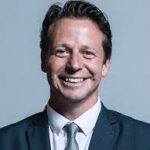
  • Nigel Huddleston – 2022 Speech on UK House Legacy Day

    Nigel Huddleston – 2022 Speech on UK House Legacy Day

    The speech made by Nigel Huddleston, the Minister for Sport, on 8 August 2022.

    Thank you. I’m absolutely delighted to be here today, at UK House, to join you all, on Legacy Day, to reflect on, not just what has been a truly fantastic Games, but on the array of future opportunities it presents to the region and the rest of the country.

    We’ve seen 10 incredible days of sport, cultural and business events, and it’s amazing to see the West Midlands front and centre on the world stage, something that will hopefully continue for a long time to come.

    Firstly, I wanted to offer my thanks to everyone involved in staging this incredible event and in working so hard to ensure it leaves behind a lasting legacy. Putting on the Games and harnessing the myriad benefits it can bring to the region and the UK has been a true partnership.

    It is only through collective effort that the Games has been the success that it has. My thanks to each and every one of you who has engaged in the event and the opportunities it has brought about. And a particular thanks to Andy for the vital role that he personally played in helping to secure this fantastic event.

    And let me say that this collective effort has resulted in what truly has been a Games of amazing achievements.

    The fastest Games ever delivered, four and a half years rather than the standard seven.

    An ambition to be the most sustainable Games yet, and first to strive to be carbon neutral.

    The most inclusive Games ever, with the largest ever integrated parasport programme and for the first time, more women’s medal events than men’s.

    But, beyond the event itself, I also want to reflect on the vast array of legacy opportunities that have been created, and that will continue to be created long after the closing ceremony has concluded.

    As a government, we’ve been resolutely focused on ensuring that Birmingham 2022 leaves a lasting legacy for the host city and region, and the whole of the UK.

    £778 million of public money has been invested to deliver the Games itself. This core £778 million, as well as providing for an amazing legacy itself, has enabled a further £85 million of additional funding to be unlocked from a wide range of organisations.

    The legacy of the Games ranges far and wide, with the ‘Games for Everyone’ vision embedded from the start.

    The Games has supported communities to access its opportunities and benefits, with equality, diversity and inclusion embedded in everything that partners have done.

    There has been significant new infrastructure with a new aquatics centre at Sandwell and the redevelopment of the Alexander Stadium that local communities will be able to benefit from, long after the Games is over. Plus the regeneration of Perry Barr has created 1,400 new homes.

    In addition, the Legacy programme for the Games has delivered:

    A £10 million Jobs and Skills Academy that’s made sure local residents have the skills they need to capitalise on the opportunities driven by the Games.

    More than £35 million invested by Sport England in delivering a physical activity and wellbeing legacy, supporting those who are least active to engage with sport and physical activity.

    A youth and schools engagement programme, ensuring that we’re engaging children and young people across the country in the story and excitement of the Games and the Commonwealth.

    A 6 month free-to-access Cultural Programme across the West Midlands, supported by £12 million investment from Arts Council England, the Heritage Fund and Spirit of 2012, as well as other partners.

    Ambitious sustainability commitments including, as I’ve already mentioned, an ambition to be the most sustainable Games yet and the ‘first ever carbon neutral Games’.

    And on top of this, £350 million worth of procurement opportunities, the majority of which were secured right here by firms from the West Midlands.

    And of course, the £24 million investment that we, along with the Combined Authority, have made into the Business and Tourism Programme.

    Here, at UK House, over the last 11 days, we’ve seen the power of this investment, bringing together business leaders from across the world, showcasing the West Midlands, as a place to live, work, visit and do business.

    This programme is a vital part of harnessing the positive profile generated by the Games to boost the global reputation of Birmingham, the West Midlands and the UK as a leading destination for tourism, trade and investment.

    In partnership with the West Midlands Combined Authority, the West Midlands Growth Company, the Department for International Trade and Visit Britain, as well as sponsors in our audience today, we’ve seen it deliver some incredible in opportunities.

    The opportunity to connect with Commonwealth nations and territories and other key global markets.

    The opportunity to re-establish a resilient and sustainable tourism sector in the West Midlands and, more widely, to contribute to the recovery of UK tourism as we emerge from Covid-19.

    And the opportunity to demonstrate to the world that the West Midlands and the UK are innovative, dynamic and investor-friendly.

    But this is far from the end for the Business and Tourism programme, in fact it’s only just the beginning. Building on the profile and momentum of these fantastic past two weeks we’ve rightly set ourselves some lofty ambitions. By 2027 we’re aiming to:

    Generate more than £700 million of investment, including more than £370 million in the West Midlands

    Attract 39,000 new visitors, including 12,000 to the West Midlands

    Create 1,000 new jobs, with up to 600 of these based in the West Midlands

    The drive and commitment of the Mayor and colleagues at the Combined Authority, West Midlands Growth Company, the Department for International Trade and Visit Britain has been a crucial part of ensuring the success of the programme. My thanks to them for all that they have contributed over many months and years.

    In many ways, the Business and Tourism Programme, as a partnership between national, regional and local government and with the private sector, represents devolution in action. Working together, as more than the sum of our parts, to achieve extraordinary things and level up our places.

    And on behalf of the Government, I look forward to working with the West Midlands as we explore opportunities to build on the success of the Games.

    The Games have been a fantastic experience and we’ve achieved so much.

    But as I’ve always said, this is about much more than the event itself. It’s about capitalising on the momentum of the Games to unlock the enduring benefits it can bring for the West Midlands region and its communities, and the UK as a whole.

    I look forward to seeing the fruits of our collective efforts materialise over many months and years to come. Thank you.

  • PRESS RELEASE : OIM accepts landmark first request to examine proposed law change

    PRESS RELEASE : OIM accepts landmark first request to examine proposed law change

    The press release issued by the Office for the Internal Market on 8 August 2022.

    The UK government has consulted on banning the sale of peat in England. The proposed ban, designed to address environmental concerns surrounding the use of peat in horticulture, would not apply in Wales, Scotland or Northern Ireland.

    The UK government has requested that the Office for the Internal Market (OIM) – which sits within the Competition and Markets Authority (CMA) – report on how the proposed ban may impact the effective operation of the Internal Market.

    The OIM has considered this request in line with the criteria set out in the UK Internal Market Act and the principles stated in its operational guidance and has accepted the request. It will aim to provide its analysis by February 2023.

    OIM Panel Chair, Murdoch MacLennan said:

    “This request is a significant development for the UK Internal Market and for the OIM. Since the OIM was launched less than a year ago, we have taken important steps to ensure we are ready to perform this new role and our decision to accept this request is another milestone.

    We’ll now examine any potential economic impacts the proposed ban could have on the UK Internal Market and provide our report within 6 months.”

    The OIM was launched in September 2021 and published its Overview of the UK Internal Market report in March of this year.

  • PRESS RELEASE : UK first – Welsh Senedd gives green light for 20mph legislation

    PRESS RELEASE : UK first – Welsh Senedd gives green light for 20mph legislation

    The press release issued by the Welsh Government on 12 July 2022.

    Legislation to lower the default national speed limit on residential roads and busy pedestrian streets from 30mph to 20mph has been approved by the Senedd today.

    Wales becomes the first UK nation to make the move – helping to save lives, develop safer communities, improve the quality of life and encourage more people to make more sustainable and active travel choices.

    The new slower speed limits are currently being trialled in eight communities across Wales and will be rolled out nationally in September 2023.

    The new legislation will not apply a blanket speed limit on all roads, it will simply make the default limit 20mph, leaving local authorities, who know their area best, to engage with the local community to decide which roads should remain at 30mph.

    Currently, just 2.5% of Welsh roads have a speed limit of 20mph, but from next year this is expected to increase to approximately 35%, helping to create safer roads and communities across Wales.

    Speaking after the vote, Minister for Climate Change, Julie James said:

    “I am delighted that the move to 20mph has received cross-party support across the Welsh Parliament today.

    The evidence is clear, decreasing speeds not only reduces accidents and saves lives, but helps improve people’s quality of life – making our streets and communities a safer and more welcoming place for cyclists and pedestrians, whilst helping reduce our environmental impact.

    We know this move won’t be easy – it’s as much about changing hearts and minds as it is about enforcement – but over time 20mph will become the norm, just like the restrictions we’ve introduced before on carrier bag charges and organ donation.

    Once again Wales is leading the way for other UK nations to follow.”

  • PRESS RELEASE : New actions to protect Welsh-speaking communities

    PRESS RELEASE : New actions to protect Welsh-speaking communities

    The press release issued by the Welsh Government on 3 August 2022.

    The Minister for Education and Welsh Language will today provide a preview of the actions which are part of the Welsh Government’s plans to safeguard communities where Welsh is the main language and where there are large numbers of second homes.

    The interventions include encouraging homeowners to give local people a fair chance when selling their property. The Minister will also announce a new Commission for Welsh-speaking Communities, Comisiwn Cymunedau Cymraeg, which will bring together experts to make policy recommendations to protect and strengthen Cymraeg as a community language.

    The Minister will discuss these actions today at the National Eisteddfod in Tregaron, ahead of the publication of the final Welsh Language Community Housing Plan (WLCHP) in the autumn.

    The Minister will share details of the proposed schemes including a voluntary ‘fair chance scheme’, to help sellers make decisions about how they sell property, by allowing properties to be marketed locally only, for a fixed period. The Welsh Government will also work with organisations such as estate agents to address the housing needs of those communities.

    The WLCHP will also include support for social enterprises and community housing co-operatives, as well as steps to protect Welsh place names.

    As part of the Programme for Government and Co-operation Agreement commitments to tackle the negative impact second homes and a lack of affordable housing can have, the Welsh Government has extended the discretionary powers for local authorities to increase council tax on second and long-term empty homes by up to 300%.

    Last month, the Welsh Government and Plaid Cymru announced further plans for new planning laws, a licensing scheme for visitor accommodation and proposals to change land transaction tax in areas with large numbers of second homes, as part of their Co-operation Agreement.

    Jeremy Miles said:

    “For the Welsh language to thrive, we need sustainable communities and good job opportunities in the areas where it is widely spoken.

    Through our Welsh Language Communities Housing Plan, and the Commission for Welsh-speaking Communities we’re announcing today, we and our partners will work together with communities where Welsh is the main language and help them develop plans which protect their identity and our language.

    This isn’t about imposing solutions, so everything we do will be in line with local communities’ aspirations.

    The Commission will help us develop future policies to sustain the language in those communities traditionally considered its heartlands. This isn’t about setting up a new body, it’s a group of experts in a range of fields who will give us a completely candid view about how the economy, policy decisions and demographics are affecting the Welsh language.

    I’ve said many times that the Cymraeg belongs to us all, as does the responsibility for its future. We’ll have to be brave and tackle things together that might be difficult. I’m sure that some of the things the Commission will tell us will be challenging, but that’s important – that’s what will help us find the most effective answers!”

    Dr Simon Brooks, who previously published Second homes: developing new policies in Wales for the Welsh Government, will chair the Commission.

    The members of the Commission are:

    Talat Chaudhri
    Lowri Cunnington Wynn
    Cynog Dafis
    Meinir Ebbsworth
    Delyth Evans
    Dafydd Gruffydd
    Myfanwy Jones
    Shan Lloyd Williams
    Cris Tomos
    Rhys Tudur

    Dr Brooks said:

    “As a Commission, we’ll examine the linguistic reality of Welsh-speaking communities today in order to make policy recommendations which will help safeguard them for future generations.

    The Commission will produce a comprehensive report, bridging policy areas from education to the economy. By looking at these together, we want to help develop answers to the challenges facing our Welsh-speaking communities as a whole. Cymraeg belongs to us all and developing Welsh-speaking communities is crucial to its future as a living language.”

  • PRESS RELEASE : Rural areas and poorer people suffering from ‘sub-par, unreliable broadband’ – Senedd Committee

    PRESS RELEASE : Rural areas and poorer people suffering from ‘sub-par, unreliable broadband’ – Senedd Committee

    The press release issued by the Welsh Government on 1 August 2022.

    The Senedd’s Climate Change, Environment and Infrastructure Committee is warning that people in Wales are being left behind with ‘sub-par, unreliable broadband’ that risks ‘excluding people from modern life’ due to barriers in receiving high-quality superfast internet.

    The Committee’s latest report examined broadband connectivity in Wales and found that, despite improvements over the last few years, many people are still unable to access adequate internet speeds.

    Although superfast broadband availability in Wales is now at 96%, figures from Ofcom show that take-up in Wales is only around 63%.

    Mountainous Wales

    The report found that the provision of superfast broadband across Wales was uneven, with urban areas being the first to benefit from better connectivity but many rural areas still being unable to access a decent internet connection.

    Ofcom estimates that around 15,000 premises cannot get a broadband service of at least 10Mbps download speed and 1Mbps upload speed from fixed or fixed wireless networks in Wales.

    The UK Government’s Project Gigabit is a £5bn project designed to address this issue across the UK with the ‘Gigabit Broadband Voucher Scheme’ created to support rural areas with the installation costs of high-speed broadband.

    But because of the mountainous Welsh topography there is a higher proportion of difficult-to-reach properties in Wales compared to other parts of the UK.

    And according to Lee Waters MS, the Deputy Minister for Climate Change who gave evidence to the Committee, “UK funding has failed to reflect the true cost of deploying in the Welsh landscape”. To address this issue, and despite it being a non-devolved area, the Welsh Government provided top-up funding to the UK Government scheme to “plug the gap” in Wales.

    But from 31 March 2022, the Welsh Government stopped topping-up the gigabit voucher scheme, which has led the Committee to call for the UK Government to raise the amount of support available for individuals and businesses to address the particular needs in Wales.

    The report warned that without meaningful engagement between governments there is nothing to prevent the UK administration creating a scheme that again does not meet the needs of Wales.

    Connections and Cost

    Since March 2020, households that cannot get a download speed of 10 Mbps and an upload speed of 1 Mbps, can request an upgraded connection from BT under the Universal Service Obligation (USO).

    This obliges BT to improve the connection for free if the installation cost is estimated to be below £3,400 for the customer. But if the cost exceeds the £3,400 cap, the customer must pay the excess.

    The Committee expressed serious concerns that this would simply be unaffordable to many people -particularly in the middle of a cost-of-living crisis – and urged the Welsh Government to discuss raising the level of the cap with the UK Government.

    And according to Ofcom, there are an estimated 7,000 ‘hard to reach’ locations where, even with the USO, access to a stable broadband connection wouldn’t be guaranteed.

    Inclusion and Affordability

    The Committee also heard that one of the many reasons for the lack of take-up of superfast broadband by people was cost. Many internet providers offer ‘social tariff’ packages which are only available to people receiving government benefits which allows them to access cheaper internet deals.

    But the report highlights the worrying fact that only 1.2% of those eligible for a ‘social tariff’ had accessed the scheme, potentially leaving thousands of low-income households paying over the odds for their broadband.

    The Committee proposes that action should be taken to increase the number of households enrolling on ‘social tariffs’ by making the process clearer and simpler. Lack of awareness of ‘social tariffs’ was noted as a significant issue with the Committee proposing that their promotion must be improved and consideration should even be given to the automatic enrolment of those eligible.

    In light of the severe cost-of-living crisis, the report warns that there is a risk that superfast broadband access will become a luxury that many will not be able to afford.

    LLyr Gruffydd MS, Chair of the Climate Change, Environment and Infrastructure Committee, said:

    “It is extremely disappointing to hear of many people in Wales still unable to access superfast broadband. Especially since the pandemic, more and more of our lives are lived online, and it’s simply unfair that many in rural areas are expected to put-up with sub-par, unreliable broadband. Everyone in Wales, not just those in urban areas, should be able to access a high-speed internet connection – this shouldn’t be a luxury.

    Many of the issues we examined are non-devolved so we urge the Welsh Government to take on board our recommendations and present the solutions in this report to the UK Government – or the failures we see in this report will be repeated.

    “With living costs rising sharply, the UK Government must urgently look at raising the Universal Service Obligation cap and improving the take-up of broadband services offering a ‘social tariff’. If things don’t change, we will undoubtedly see more people excluded from modern life.”

  • PRESS RELEASE : We must do better to prevent drowning deaths – Senedd report

    PRESS RELEASE : We must do better to prevent drowning deaths – Senedd report

    The press release issued by the Welsh Government on 2 August 2022.

    Clearer leadership is needed from the Welsh Government to prevent drowning deaths in Wales, according to a Senedd report.

    The Petitions Committee has investigated water safety and drowning prevention in Wales after a campaign by Leeanne Bartley from Ruthin saw over 11,000 people sign her petition.

    Leeanne’s son, Mark Allen, died after jumping into cold water at Gorton Reservoir, Manchester, in June 2018. Since then, she has campaigned tirelessly for better water safety measures in Wales and across the UK, including the petitions calling for rescue equipment to be mandatory.

    The report found that drowning prevention measures are hindered by a lack of coordination from the Welsh Government. In fact, the issue of water safety does not fall under one specific minister’s responsibility and straddles various Government departments.

    The Committee has recommended a package of measures to increase awareness of the dangers posed by water and to improve water safety – including allocating a specific minister to lead this work. That would help campaigners deliver one consistent educational message across all of Wales – which experts say is crucial for preventing drowning deaths.

    During the seven months the Committee was investigating the issue, at least three young people died from drowning in Wales. It shows that action is needed urgently, says Committee Chair Jack Sargeant MS:

    “During our inquiry, we heard from the petitioner and other families who have lost loved ones to drowning. We’ve heard about the devastating impact such a tragedy has had on their lives, but also of their steely determination to raise awareness and prevent future loss of life through drowning.

    “Their work is already saving lives – but with clear leadership and coordination from Welsh Government, these campaigns can reach even more people and ultimately, prevent deaths.

    “We must do better as a country, and I hope this report will give a boost to all those working hard to do so.”

    The inquiry heard evidence from Chris Cousens, Chair of Water Safety Wales. He said:

    “Around 50 people a year lose their lives to water-related fatalities in Wales every year. The rate of accidental drowning per head of population here in Wales is around double that of the UK as a whole. The number of accidental drowning deaths, sadly, is also higher than the number of deaths in fires, for example, motorcycle accidents and cycling—three other very high-profile causes of accidental deaths.”

    Water Safety Wales brings together individuals and organisations with an interest in water safety and drowning prevention. It worked with the Welsh Government to develop the Wales Drowning Prevention Strategy 2020-2026, with the aim to reduce the number of water-related deaths in Wales reduced to zero.

    However, it was noted in the inquiry that this partnership with the Welsh Government needs to be formalised and funding arrangements secured to enable Water Safety Wales to deliver this important work.

    The Committee heard about the challenges of installing, maintaining and using throw lines effectively and recognised that they are one of a range of safety measures to consider to mitigate the risks identified in water, and can in some circumstances give a false sense of security.

    Leeanne Bartley says she welcomes the report and its recommendations:

    “The report is even more than we could have asked for when we started the petition – I’m so thankful to the Senedd for hearing our story and listening to us and the other families that have been affected by drowning deaths.

    “But there is still work to be done and I will carry on campaigning – I hope Welsh Government takes these recommendations on board and continues to work with us on water safety.”

  • Kemi Badenoch – 2022 Comments on Housing

    Kemi Badenoch – 2022 Comments on Housing

    The comments made by Kemi Badenoch as part of her leadership bid, published by the Telegraph as part of a longer article on 16 July 2022.

    We need new homes in the right places. We need them to spread prosperity, give the next generation a stake in the future and allow families to grow. We also need to recognise that pressure on housing comes from increased migration and from families breaking up. Solving these interlinked questions needs honesty and rigour.

    On housing, we’ll never get the homes we need where we need them if we insist on ever-higher inflexible top-down housing targets. We need to bring people with us by delivering infrastructure first and insisting new homes are built to a higher standard and look more beautiful. We need to break the stranglehold of the identikit cartel of land banking house builders.

    But we need to consider the demand side of housing, not just the supply side. People – rightly – recognise that building more homes while doing nothing to bring immigration down is like running up the down escalator. We’ll never get to where we need to with that approach, and we won’t persuade people to accept more homes if it is being done due to immigration failures. If we can bring immigration down to a sustainable level, we can then protect green spaces for our children and precious agricultural land.

  • PRESS RELEASE : Executive needed now to hire more doctors – Gildernew

    PRESS RELEASE : Executive needed now to hire more doctors – Gildernew

    The press release issued by Sinn Fein on 5 August 2022.

    Sinn Féin MLA Colm Gildernew has said news that a County Down GP surgery may be forced to close due to a lack of doctors is ‘deeply concerning’ for patients.

    And the party’s health spokesperson said it’s why we need an Executive up and running to start recruiting more doctors to tackle shortages and help ensure people can see their GP.

    Colm Gildernew said:

    “It’s deeply concerning that Priory GP surgery may be forced to close its doors in February 2023 due a lack of doctors.

    “This news will come as a particular blow to the patients who depend on this surgery, particularly vulnerable and elderly people who now face uncertainty on the future of services.

    “The Department of Health must now step in and explore solutions to retain this essential service at the heart of the community.

    “We need to tackle the problems facing our health service and ensure people can see a GP when they need one by getting the Executive up and running today to invest an extra £1 billion in our health service to recruit more doctors to tackle shortages and lengthy waiting lists.

    “The people suffering from the DUP’s boycott of the Assembly and Executive are those patients stuck on a waiting list and those struggling to see their doctor.

    “We are ready to get around the table with others today to do the job we are elected to do, that means making health a priority and working to fix the problems in our health service.”

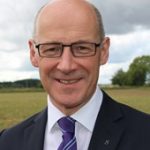
  • John Swinney – 2022 Letter to Nadhim Zahawi on Public Sector Pay

    John Swinney – 2022 Letter to Nadhim Zahawi on Public Sector Pay

    The letter sent by John Swinney, the Scottish Deputy First Minister, to Nadhim Zahawi, the Chancellor of the Exchequer, on 31 July 2022.

    Rt Hon Nadhim Zahawi MP
    Chancellor of the Exchequer
    HM Treasury
    1 Horse Guards Road
    London
    SW1A 2HQ

    31 July 2022

    Dear Nadhim,

    I write to notify you that I have taken on responsibility for the Finance and Economy portfolio whilst the Cabinet Secretary, Kate Forbes, is on maternity leave.

    I look forward to working with you and, while I appreciate there may be some limitations on the business of the UK Government pending conclusion of the Conservative leadership process, I am open to engagement with you through this period. I also appreciate the value of the on-going dialogue between our respective officials.

    There is one urgent issue I would wish to take the opportunity to raise given its importance to the delivery of public services in Scotland. Further to the joint letter from devolved administration finance ministers to you on 15 July, and in light of the UK Government’s subsequent announcements regarding public sector pay, I am concerned that no associated funding is being provided to meet these additional costs.

    Last year’s UK Spending Review, which as you know determines the majority of the Scottish Budget, did not take account of the levels of pay uplift now proposed or indeed the wider effects of inflation. The associated reduction in spending power across public-sector budgets is deeply worrying for our public services and our capacity to respond to the cost of living crisis, which will undoubtedly bring renewed challenges through the coming autumn and winter period. Given our fixed budgets, our restricted borrowing powers and the inability to change tax policy in year, the lack of additional funding for public sector pay deals via the Barnett Formula means the Scottish Government could only replicate these pay deals for public workers in Scotland with deep cuts to public services.

    I would urge you to consider appropriate funding for public sector pay, and would welcome early discussions with you on this matter.

    John Swinney

  • PRESS RELEASE : More funding needed for pay deals

    PRESS RELEASE : More funding needed for pay deals

    The press released issued by the Scottish Government on 1 August 2022.

    The UK Government has been urged to provide additional funding for public sector pay deals or the Scottish Government may be unable to fund equivalent offers without cuts to public services, according to Deputy First Minister John Swinney.

    In a letter to the Chancellor of the Exchequer Nadhim Zahawi, Mr Swinney outlines concerns that last year’s UK Spending Review, which determined the majority of the current Scottish Budget, did not take into account the level of pay increase recently proposed by the independent pay review bodies.

    Mr Swinney also warned that the UK Spending Review did not consider the wider effects of rising inflation and that without any further funding, the Scottish Government may only be able to propose similar pay rises by reducing budgets elsewhere which would have a knock-on impact on the public sector’s ability to respond more widely to the cost of living crisis.