Tag: 2022

  • Geoffrey Clifton-Brown – 2022 Speech on Ukraine

    Geoffrey Clifton-Brown – 2022 Speech on Ukraine

    The speech made by Geoffrey Clifton-Brown, the Conservative MP for The Cotswolds, in the House of Commons on 22 September 2022.

    Thank you, Madam Deputy Speaker. I will try to adhere to your three-minute rule.

    The message should go out from this debate to Volodymyr Zelensky and the Ukrainian people that we salute their bravery. They have suffered grievously. In just seven months, the world has seen one of the biggest refugee catastrophes since the second world war, with more than 7 million people displaced within Ukraine, 7 million people displaced to the rest of Europe, and more than 14,000 people dead or wounded. Hundreds of people have suffered war crimes of torture and sexual crimes, as the hon. Member for Bath (Wera Hobhouse) made clear, and hundreds of innocent children have been kidnapped, as my hon. Friend the Member for Huntingdon (Mr Djanogly) said.

    Quite simply, we have to help the Ukrainian people to win this conflict, because if they do not succeed in driving the Russians out of Ukraine, no country in Europe will be safe. I therefore congratulate my Government on the support and help that they are giving to Ukraine, as the Minister for the Armed Forces outlined in his comprehensive statement today. I am delighted that the new Prime Minister has made it very clear that we will stick by Ukraine for as long as it takes. Contrary to what some speakers today have said, I do not think that there will necessarily be a quick end to the conflict. All sorts of twists and turns could happen. As other hon. Members have said, although we hope that Vladimir Putin’s threat of using a tactical nuclear weapon is just that, we cannot be sure.

    We are absolutely right to give help. I understand that the British people are suffering grievously with the cost of living because of the price of energy and food, but as their politicians we must point out to them that if we do not continue to support Ukraine throughout this conflict, they will suffer even more.

    The issue I really want to talk about is grain, which we have not heard anything about in this debate. At long last, with the United Kingdom’s diplomatic help, the United Nations has negotiated for some grain shipments to cross the Black sea and go out through the Dardanelles to some of the most vulnerable and poorest people in Africa. We must make sure that that programme continues: it is vital for some of the poorest people in the world, and we must do all we can to prevent the Russians from stopping it.

    To all my constituents who have so generously hosted the Ukrainian people—I have met some of them—I say, “Please continue. I know it is difficult in some cases, but please continue your generosity.” To the British people, I say, “Please bear with the privations caused by this war. It will be difficult this winter, but our Government will do what they can. I am sure that right will eventually come through and the Russians will be driven out of Ukraine.”

  • Wera Hobhouse – 2022 Speech on Ukraine

    Wera Hobhouse – 2022 Speech on Ukraine

    The speech made by Wera Hobhouse, the Liberal Democrat MP for Bath, in the House of Commons on 22 September 2022.

    I wholeheartedly join the cross-party support for Ukraine. I will mention an issue that has been touched on but debated less this afternoon.

    Women are casualties of war and conflict, but they are very often overlooked. Women, including those who fight alongside men, suffer in a uniquely gendered way. Ukrainian women have displayed incredible strength in defending their country and their families both on and off the battlefield. As more Ukrainian territory is liberated, more terrible stories emerge of atrocities committed against women. By June, the UN human rights monitoring team had received reports of 124 alleged incidents of sexual violence. The Secretary-General’s special representative has warned that the number of reports is rising fast.

    Wartime sexual violence is one of the oldest crimes known to people. It has long-term implications for individuals and communities long after war has ended. The Government recognise the problem of wartime sexual violence, but that must be fully matched with support for women on the ground. Too often, wartime sexual violence is viewed as inevitable, as part of war. That is totally unacceptable. The sexualised threats faced by women and girls must be confronted head on and prosecuted like any other war crime. I am grateful for the recommendation from the hon. Member for Rutland and Melton (Alicia Kearns).

    The Government, along with the international community, need to aid Ukraine to ensure that there is a robust response to gender-based violence. That must include post-rape care, access to abortion and mental health support. Our human response demands that we make sexual, reproductive and maternal healthcare a priority. Perpetrators must be vigorously investigated and adequately punished, and the UK must help by providing support for Ukraine to do that.

    The majority of people fleeing Ukraine are women and children. The response from communities in bordering countries and in the UK has been incredibly powerful, but we should not be blind to the ongoing risks for women and girls. Female refugees have always faced disproportionate risk, especially if they are travelling alone. Many of my constituents have contacted me on behalf of Ukrainians who are stuck in dangerous places waiting for visas. While they wait, their funds run low and they are at greater risk of trafficking and abuse.

    Refugees are safest when they have options. They need full legal protection and the right papers, and they need to be totally aware of their rights. The Government must equal the outpouring of compassion that has been shown by the British public and allow Ukrainian refugees to come to the UK without unacceptable bureaucratic delays. Otherwise, we are driving vulnerable women and girls into the arms of opportunistic abusers. It is a matter of basic safety. As the war continues and shows no signs of being resolved, the British Government must do better at protecting women and girls. I am sure that many colleagues across the House share my admiration for the courage of the women of Ukraine; we must match it with action.

    Although we hope that the war will be over soon, it probably will not. Just as important as speeding up the process now is making sure that support for our Ukrainian refugees is sustained. What are the Government’s plans for six months’ time and beyond? How will we help families to find long-term accommodation, jobs and financial support? We should not underestimate the substantial trauma that women and children will have suffered, especially if they have experienced sexual violence. Support services will need funding beyond this year to rebuild lives in the long term. The Government will have to show a lot of stamina in providing not just military help, but humanitarian help to deal with the human tragedy beyond the here and now.

  • PRESS RELEASE : Joint statement on the situation in Yemen [September 2022]

    PRESS RELEASE : Joint statement on the situation in Yemen [September 2022]

    The press release issued by the Foreign Office on 24 September 2022.

    On 20 September 2022, ministers and representatives of the Governments of the Kingdom of Saudi Arabia, United Arab Emirates, United States of America and United Kingdom, hereafter referred to as the Quad, met to discuss the situation in Yemen.

    The Quad reaffirmed its strong commitment to the unity, sovereignty, independence, and territorial integrity of Yemen, and its commitment to stand by the people of Yemen through efforts to reach an end to the conflict and the ongoing humanitarian crisis.

    The Quad welcomed the tangible benefits delivered by the truce for the Yemeni people since it commenced on 2 April 2022. They welcomed the continuing implementation of agreed confidence building measures and leadership of the Government of Yemen, including facilitating the flow of fuel into Hudaydah Port despite the Houthis’ order that delayed the established process for clearing ships, and the resumption of flights in and out of Sana’a airport. They called for the implementation of the outstanding measures, including the opening by the Houthis of the main roads around Taiz and an agreement on a joint mechanism for the payment of civil servant salaries. They condemned the Houthis’ large scale military reinforcement and all attacks that threatened to derail the truce including, inter alia, the recent Houthi attacks on Taiz. They also condemned the recent Houthi military parade in Hudaydah, in violation of the Hudaydah Agreement.

    They emphasised the need to consolidate and build on this progress, which requires compromise by all parties. The Quad therefore fully supported the efforts of the UN Special Envoy, Hans Grundberg, to extend and expand the truce on 2 October 2022, in addition to the full implementation of all terms of the truce. The Quad agreed that a permanent ceasefire and a durable political settlement must be the ultimate objectives of the Yemeni-led and Yemeni-owned political process, under UN auspices, and that such a settlement must be based on the agreed references and relevant UN Security Council resolutions.

    The Quad reaffirmed their support to the Presidential Leadership Council (PLC), stressed the importance of PLC cohesion, and welcomed the PLC’s commitment to improving basic services and economic stability.

    The Quad agreed to meet regularly, to discuss both Yemen and broader regional security issues.

  • PRESS RELEASE : Stoptober launches to give smokers the confidence to quit [September 2022]

    PRESS RELEASE : Stoptober launches to give smokers the confidence to quit [September 2022]

    The press release issued by the Department for Health and Social Care on 24 September 2022.

    • Launch of Stoptober encourages thousands of smokers to quit the habit this October
    • Smoking remains the single biggest cause of preventable illness and death in England
    • People are five times more likely to quit for good if they can make it to at least 28 days smoke free
    • A new film has been released featuring recent ex-smoker and Strictly Come Dancing star James Jordan exploring how quitters can gain the confidence to quit for good this Stoptober

    Smokers in England are being urged to stub out the habit as part of the annual Stoptober public health campaign launching next month, as latest statistics show smoking costs the NHS £2.4bn a year while causing at least 15 types of cancers, including lung cancer and acute myeloid leukaemia.

    Stoptober – now in its 11th year – aims to empower people to give up smoking during October, as evidence shows people are five times more likely to quit for good if they can make it to at least 28 days smoke free.

    Research shows that self-confidence is a major factor in successful attempts at quitting smoking. This year’s campaign will encourage people to take simple steps to help build their confidence and get the support they need from family and friends, as well as professional help, to stop smoking for good.

    Despite smoking rates declining, there are nearly six million adults in England who still smoke, and smoking remains the single biggest cause of preventable illness and death in England. According to estimates by Action on Smoking and Health, the annual costs of smoking to productivity are £13.2 billion; treating illnesses associated with smoking also costs the NHS £2.4bn a year, with the wider cost to society in England being approximately £17bn a year.

    To help launch the campaign and encourage smokers to drop the habit, a film has been released today (Saturday 24 September) featuring former Strictly Come Dancing professional dancer James Jordan, who opens up about his recent journey to quit the habit, having smoked for 27 years. He speaks to ex-smoker and NHS psychiatrist, Dr Max Pemberton, and stop smoking professional, Louise Ross, about the importance of self-confidence when quitting smoking, as well as getting the right support.

    Former Strictly Come Dancing professional dancer James Jordan said:

    I consider myself a confident person in most areas of my life, but have always faltered with smoking, so thought I wouldn’t be able to quit. I smoked for 27 years. My quitting journey has shown me that I am more capable than I thought, thanks to the support of my own family and friends and the professional help I sought.

    Quitting smoking can improve your health, quality of life and save you money. I am so glad I took this step and had the chance to speak to the brilliant experts to give myself and others the confidence that quitting smoking, even if you’ve been smoking for decades, is possible.

    Most smokers say they want to quit, and latest statistics show more than a third of smokers (36.6%) tried to quit in the last 12 months.

    Emeritus Professor Behaviour Scientist at UCL Prof. Robert West said:

    What is really interesting is just how much of an impact self-efficacy, that sense of self-belief and confidence, has on quitting success. That confidence is something we can really help to influence. It really does show the power of the mind – self-belief when combined with other quitting aids such as vapes or NRT effectively equip people in giving up.

    What people considering quitting this Stoptober should also bear in mind is that even if you’ve tried to quit before and not managed it, that doesn’t mean it won’t work this time. You will have learnt something from your previous attempts: think of each quit attempt as a stepping stone to becoming smoke free for life.”

    Stopping smoking brings multiple benefits to health, some immediate and others that build over time. These include being able to breathe and move around more easily, a reduced risk of several cancers and financial benefits. Analysis from HM Revenue and Customs shows the average smoker is able to save around £2,000 a year when they quit.

    Stoptober offers a range of free quitting tools including the NHS Quit Smoking app, Facebook online communities, daily emails and SMS, an online Personal Quit Plan, as well as advice on stop smoking aids, vaping to quit smoking and free expert support from local Stop Smoking Services.

    Public Health and Mental Health Minister Dr Caroline Johnson said:

    Smoking is extremely addictive and can have devastating health impacts in the long term. As a paediatrician, I have seen first-hand that smoking addiction usually begins in childhood, and once started it is very difficult to quit.

    We are determined to support people to stub out the habit, so it is fantastic to see the return of Stoptober, equipping smokers with the tools and confidence they need to go smoke free.

    Deputy Chief Medical Officer for England Dr Jeanelle de Gruchy said:

    Smoking is a major cause of ill health, cancer and disability in England.

    Quitting smoking is one of the best things you can do for your health, please give it a go this Stoptober.

    NHS psychiatrist Dr Max Pemberton said:

    As a doctor and an ex-smoker myself, I always urge my patients to quit smoking wherever possible as we know all too well how every cigarette smoked damages the lungs. I also know first-hand how much healthier and full of life I am after quitting now that my lungs have had a chance to clear.

    What is of particular interest to me as a psychiatrist is how much of an impact individual confidence has on attempting to quit. I want to help everyone feel confident in their own ability to quit, feeling that they can access the vast amount of support out there, so they are set to give quitting smoking a shot this Stoptober.

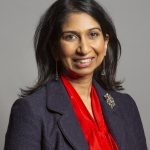
  • Suella Braverman – 2022 Letter to Police Leaders

    Suella Braverman – 2022 Letter to Police Leaders

    The letter sent by Suella Braverman, the Home Secretary, to police leaders on 24 September 2022.

    Letter [in .pdf format]

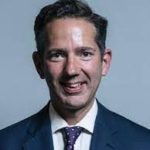
  • Jeremy Quin – 2022 Comments on County Lines Programme

    Jeremy Quin – 2022 Comments on County Lines Programme

    The comments made by Jeremy Quin, the Home Office Minister, on 24 September 2022.

    I want victims of exploitation to know that we are on their side – and that there is a way out, a brighter future available.

    Since 2019, the government’s county lines programme has shut down 2,400 lines, made over 8,000 arrests and engaged more than 9,500 individuals through safeguarding interventions.

    These services will be relentless in their focus to carve out safe routes home for young people in danger and tear them away from the grip of these merciless county lines gangs, opening up their futures once more.

  • PRESS RELEASE : New support for victims of county lines exploitation [September 2022]

    PRESS RELEASE : New support for victims of county lines exploitation [September 2022]

    The press release issued by the Home Office on 24 September 2022.

    Hundreds of victims of county lines exploitation will be helped to escape drug gangs following the expansion of support services in four priority locations – London, West Midlands, Merseyside and Greater Manchester – where young people are often targeted.

    The Home Office has today (24 September) allocated up to £5 million to better support young people and their families for the next three years, and help free them from the grasp of vicious county lines gangs.

    A one-to-one specialist support service for young people under 25, delivered by not-for-profit organisation Catch22, will safely make contact with young people who have been referred by safeguarding partners, such as the police and children’s services, and work with them to exit their involvement in county lines activity.

    If under 25s are identified outside of their hometowns, a rescue service will be deployed to bring them home safely, offering a pivotal moment for them to engage with caseworkers and protect their futures.

    The service will also offer mental health support and counselling to the young people and their families, to help deal with the trauma of their experiences.

    They will operate across the four largest exporting areas for county lines activity, aligning with the police forces that are part of the government’s county lines programme.

    Home Office Minister, Jeremy Quin, said:

    I want victims of exploitation to know that we are on their side – and that there is a way out, a brighter future available.

    Since 2019, the government’s county lines programme has shut down 2,400 lines, made over 8,000 arrests and engaged more than 9,500 individuals through safeguarding interventions.

    These services will be relentless in their focus to carve out safe routes home for young people in danger and tear them away from the grip of these merciless county lines gangs, opening up their futures once more.

    As part of the package of support, funding will also be allocated to continue the delivery of the national confidential and anonymous helpline ‘SafeCall’, delivered across England and Wales by Missing People – including bespoke support for parents and carers. Since it was established in late 2017, the helpline has supported 480 young victims of county lines exploitation and their families.

    Chief Executive Officer at Catch22, Naomi Hulston, said:

    For children and young people who are victims of county lines activity, the impact on their lives – and the lives of those around them – is devastating. We know that grooming techniques are becoming more advanced and that escaping the clutches of these perpetrators can be incredibly difficult. That’s why as part of this service we’ll not only be bringing young people home safely, we’ll be supporting them to make sure they can process their experiences and are protected from any future harm.

    Director of Policy and Development at Missing People, Susannah Drury, said:

    SafeCall provides confidential, anonymous support to young victims of county lines exploitation and their families – helping them get safe, stay safe and deal with the challenges they face. Our expert team is available 9am to 11pm, 7 days a week to provide support via our free helpline – text or call 116000. Missing People is proud to be providing the SafeCall service across England and Wales to help young victims and their families through crisis and trauma.

    County lines activity refers to drug trafficking operations which often sees children or vulnerable adults groomed to run drugs from one city to other parts of the country, usually coupled with extreme violence and coercive behaviour.

  • PRESS RELEASE : Joint statement from senior officials meeting on Libya [September 2022]

    PRESS RELEASE : Joint statement from senior officials meeting on Libya [September 2022]

    The press release issued by the Foreign Office on 23 September 2022.

    Senior officials representing France, Germany, Italy, the United Kingdom, and the United States met on September 22 on the margins of the United Nations (UN) General Assembly in New York to review the ongoing crisis in Libya. They expressed their support for Special Representative of the Secretary-General Abdoulaye Bathily as he takes up his mandate to advance political stability and reconciliation among Libyans. The officials affirmed their full support for UN mediation aimed at producing a constitutional basis to enable free, fair, and inclusive presidential and parliamentary elections throughout Libya in the shortest possible time. The officials also discussed the importance of fulfilling Libyan aspirations for the transparent management of oil revenues and agreeing on a unified executive with a mandate focused on preparing for elections. Participants strongly rejected any use of violence and reiterated their support for full implementation of the October 23, 2020 ceasefire agreement.

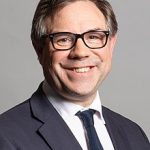
  • Jonathan Djangoly – 2022 Speech on Ukraine

    Jonathan Djangoly – 2022 Speech on Ukraine

    The speech made by Jonathan Djangoly, the Conservative MP for Huntingdon, in the House of Commons on 22 September 2022.

    I, too, was very pleased to join the all-party trip to Kyiv a week ago. It will soon be represented in my entry in the Register of Members’ Financial Interests.

    If a deal involving peace for land had ever been possible, it is clear now that Ukrainians will not start to negotiate until all their land is free from Russia—and that includes Donbas and Crimea. That was the firm view of every politician, soldier and citizen I had the opportunity to meet in Ukraine. One can see why, as the vile outcome of Russian occupation is revealed in territory retaken by the heroic actions of the Ukrainian military. Sadly, the horrors of Bucha are not an isolated horrific incident. Indeed, it is becoming clear that looting, torture, murder, rape and intimidation is standard practice for the Russian occupiers. Horribly, Russia has deported tens of thousands of Ukrainian children, including 2,300 orphans to Russia. These crimes must never be forgotten or overlooked. I was very pleased to hear how UK prosecutors have been helping local agencies with evidence collection and advice.

    This war is about more than just helping a freedom-loving people fight against a bullying aggressor. As others have said, Russian aggression has been used time and time again under Putin, right from the invasion of Georgia in 2008. There is nothing to show that unless stopped Russia would stop at Ukraine. To that extent Ukrainians are also fighting the war on behalf of all of us who refuse to accept a Europe where barbarity and violence call the shots. With that in mind, we should now consider Russia a state sponsor of terrorism and, as such, it would be equitable for frozen Russian state and state-linked assets, including frozen sanctioned individual assets, to be seized for payment to Ukraine for its reconstruction. That would require legislation similar to that passed by Canada in June.

    John Howell (Henley) (Con)

    Is my hon. Friend aware that we have just heard the news that a young woman was killed in Moscow by the Russian police for participating in anti-war demonstrations? Will he condemn that?

    Mr Djanogly

    I certainly will condemn that and the many other deaths in Russia that we are hearing about all the time.

    The question recently came up as to whether individual oligarchs should be able to buy their way out of sanctions. I am doubtful that that could work without the international sanctions system being holed under the water line. However, if any deal is considered, it has to be co-ordinated and approved by Ukraine, not just the sanctioning country, and the restitution money involved should go to Ukraine. In that way, any decisions on the release of assets would be properly co-ordinated.

    Over recent months, there have been many pictures of Russian tourists swanning around Europe as though nothing was happening in Ukraine. That should stop and we should now ban Russian visas to the UK other than for exceptional circumstances. Certainly, at the very least, we should not allow into the UK any member of Putin’s United Russia party. Sanctions are a slow-burn approach, but they are increasingly effective. However, there are so-called holes in the bucket—Turkey comes to mind and there are others. Will the Minister advise what efforts are being made to isolate such countries?

    Battlefield victories are accentuating the size of the challenges yet to be faced. First, militarily speaking, Russia still maintains a powerful and vicious threat. Putin is an unpredictable enemy who is wounded and concerned to protect his Crimea legacy to Russia. He may yet become even less principled over civilian rights. Indeed, only yesterday he upped the ante by calling up Russia’s reserves.

    Secondly, retaking occupied territory is one thing but holding it is another. Police, courts, schools and civil society all have to be re-established. War crimes and collaborators have to be prosecuted. Infrastructure has to be rebuilt. The cost and administrative challenges involved are enormous and urgent.

    Thirdly, the military requirements are changing. In the early days of the war, basic equipment for soldiers and defensive weapons, such as anti-tank missiles, were the priority. Then, longer-range artillery to break down Russian defences was—and still is—required to enable offensive operations. Following reoccupation, the priorities then changed again and the need for anti-missile defence systems is now coming to the fore, as was highlighted very much during our visit.

    If Ukraine is to encourage its more than 10 million internally displaced citizens and millions of foreign-based refugees to return to their homes in Ukraine, security from air attack becomes key to restoring confidence. That point was very much reinforced by Russian retaliation against lost ground, taking the cowardly form of missile attacks against civilian targets. Electricity and water infrastructure has already been bombed and the cold winter is approaching.

    The challenges are immense, but one thing is for sure and came across very strongly during my time in Kyiv—namely, Ukrainian recognition of British support and the gratitude that was shown by everyone we met. Ukrainians feel that the UK is in this battle with them for the long term, that we were the first to speak up for them in the international community, and that we then backed that up with money, arms and valuable advice. The Government and virtually all Members of all parties in this House are to be commended for their support. History is on our side.

    I was left with the strong impression that out of this war, out of this horror and barbarity, will develop an immensely strong and lasting relationship between our two countries. In the meantime, we must redouble our efforts to ensure a speedy victory for Ukraine as soon as possible and enable its restoration towards the modern democratic country that I know it has the potential to be.
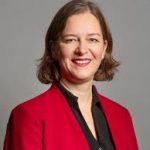
  • Fleur Anderson – 2022 Speech on Ukraine

    Fleur Anderson – 2022 Speech on Ukraine

    The speech made by Fleur Anderson, the Labour MP for Putney, in the House of Commons on 22 September 2022.

    I visited Kyiv two weeks ago as a member of the first cross-party delegation of MPs since the war began, which has been mentioned by other Members—many of us are here today. We were a group of seven MPs from four parties. It was a long journey there and back, as there are no flights, but we were absolutely determined to go together to show solidarity and support for the Ukrainian Government, for the armed forces, for the sovereignty of Ukraine and for the people of Ukraine. I congratulate the Ukrainian armed forces on their victories of the past 10 days—it was an exciting weekend to be there as they were announced.

    I am proud of the welcome given by people in Putney, Southfields and Roehampton, and by so many families across this country, to people from Ukraine, many of whom I have met. However, I echo the concerns of other Members about what will happen at the six-month cliff edge of support for those families to whom we are saying, “We would like to be able to support you, but we just can’t.” What will happen to those Ukrainians who want to stay and cannot go back yet, but who do not have a guarantor or the necessary credit history to secure private accommodation? It will really undermine all the good words that we say in this House and the good support that we are providing for Ukrainians if we do not provide the longer-term welcome that is needed.

    As we have reflected in the past week on Her Majesty’s reign, we have seen the striking contrast between the transition away from the British empire during her reign and Putin’s aggressive, dominating, barbaric empire-building, which has Ukraine in its sights right now but could extend much further, including to the Balkans, where there is an election in Bosnia in just 10 days’ time. It is vital to stand up to the aggression of Putin and his regime, and to join with our allies in supporting Ukraine and looking to build a peaceful future together, at the same time as supporting the de-occupation.

    As a delegation of MPs, we met President Zelensky and his head of office, with the Minister for Defence and deputy Ministers, with MPs, human rights activists and soldiers, and with the staff of the Depaul aid agency, who are providing psychological counselling and aid.

    The reports coming from Bucha, Mariupol and the de-occupied regions are shocking: torture, mass graves and rape used as a weapon of war—war crimes by the Russian army. As co-chair of the all-party parliamentary group on prevention of genocide and crimes against humanity, I know that we mean “never again” when we say it in this House every year and when we remember past atrocities, but now is the time to put flesh on those words and to act against atrocities that we know are happening now. That is why we are proud, as the British people, to be supporting the people of Ukraine. Perhaps it is the only issue that unites us across the House, but we have been unequivocal supporters of Ukraine from the outset.

    The increase in energy prices may be a factor in what people are calling potential “Ukraine fatigue”, but I know that the British people understand that the link with that increase is another reason why we must support Ukraine and stop Putin blackmailing us over energy. We need to end the war decisively and as soon as possible, so that it does not cost even more.

    The needs are clear: the need for air defences; for military equipment support; for heating system support as a back-up during the winter; for the return of prisoners and the forcibly adopted Ukrainian children—a scandal that I do not have time to say more about, but one that is really shocking; for support for rebuilding and reparations; and for justice and, especially, a special international tribunal to try Putin for the crime of aggression. The International Criminal Court is a parallel process, but it will not deliver justice fast enough. Britain can therefore lead in calling for that international special tribunal.

    Finally, support for civil society humanitarian aid and long-term peacebuilding should be built into the process. It is not enough to have military, diplomatic and legal support; we must have that fourth essential element of civil society. That is how whole-Government support for Ukraine can be delivered. Kyiv is a beautiful city and Ukraine is a beautiful country. I want to return to a free and victorious Ukraine that will not fear future aggression. We can see that when we stand together.