Tag: 2022

  • Chris Stephens – 2022 Speech on Scottish Independence and the Scottish Economy

    Chris Stephens – 2022 Speech on Scottish Independence and the Scottish Economy

    The speech made by Chris Stephens, the SNP MP for Glasgow South West, in the House of Commons on 2 November 2022.

    It is a pleasure to follow my hon. Friend the Member for Edinburgh East (Tommy Sheppard); I will, of course, touch on similar themes in my contribution.

    Saturday 29 October would have been the 100th birthday of my grandmother, who was an SNP voter and independence supporter. I am proud to be a third-generation SNP voter and to represent a constituency that had the second highest number of individual yes voters in Scotland, topped only by Dundee West. Let me assure the House that the competition will be on next time.

    Martin Docherty-Hughes

    We’ll beat you!

    Chris Stephens

    If West Dunbartonshire wants to rise to the challenge, we would more than welcome that.

    It is important that this point is recognised: listening to some of the contributions today, we might think that not one constituency in Scotland had voted for Scottish independence, but of course many constituencies did vote for that proposition. What has been fascinating in this debate is that not one speaker arguing against independence or a referendum has told us what conditions they believe would apply for there to be a referendum. I find that deeply fascinating: they say that in their view there is not enough support, but will not tell us what would be required for there to be a referendum. Deeply fascinating indeed. I must say that a number of contributions have been strange. I thought that the hon. Member for Aberconwy (Robin Millar) had left the Chamber, but I can see that he is sitting behind the deputy governor general—I use that particular title as a term of endearment—the Under-Secretary of State for Scotland, the hon. Member for Berwickshire, Roxburgh and Selkirk (John Lamont). The hon. Member for Aberconwy talked about the ships that are hosting Ukrainian refugees. I have been on one ship, and it had really good conditions. I can tell him that I have had zero complaints about the conditions on that ship, but every single week I get complaints about the conditions and the overcrowding of Home Office accommodation for asylum seekers. Why is that the case? It is because the Home Office has argued that it does not need to comply with Scottish housing standards, that it does not need to comply with local authority standards. It is quite curious that the hon. Member mentioned that example, when the reality is that it is the conditions that the Home Office applies that cause real deep resentment for those seeking sanctuary in this country.

    I was also fascinated by the Secretary of State’s contribution about our Union dividend. What has been the largest growing area of the economy over the past 12 years? It is the number of food banks in this country. That is not a Union dividend. We need to reflect on the fact that far too many citizens across these islands are having to depend on food aid, including working people. We have just advertised for a larder project in Cardonald, and we know that many of the users will be working people, which is why we will be opening them in the evenings so that people can utilise their services. The number of food banks in this country is no Union dividend at all.

    Let me explain why those of us who have been trying to prosecute the case for Scottish independence are still doing so. Days after the referendum, David Cameron stood up and talked about English votes for English laws and basically said that Scotland had had its fun. That was very much resented by a number of people. It was the nasty campaign, the negative campaign, and, yes, the fearful campaign against Scottish independence that ensured we would still be debating this issue. There was never a positive case put forward during that campaign by those who wished Scotland to remain in the United Kingdom.

    I want to spend the minutes I have left to touch on the issue of workers’ rights, which my good and hon. Friend the Member for Edinburgh East (Tommy Sheppard) addressed in his speech. It is a key part of the Scottish Government’s paper, which, curiously, no one has criticised. We really need to get away from this obsession that the current Government have of always being on the side of the bosses, and always being on the side of making sure that their view of insecure work should be the model going forward. I want to see an independent Scotland saying that there will be no zero-hour contracts in our country. I want to see trade unions have the ability to go on strike without fear of being taken to court on cheap charges. I want to see trade unions being given the right to use online and secure workplace balloting. If it was good enough for the Conservative party to use workplace voting and online voting to select a Prime Minister who crashed the economy then surely it is good enough for trade unions.

    We need to change the world at work and to bring dignity and fairness to the workplace. Unfortunately, this place will never articulate a way of doing so, which is why I will continue to argue for Scottish independence and for votes for the Scottish National party.
  • Chris Heaton-Harris – 2022 Statement on Elections in Northern Ireland

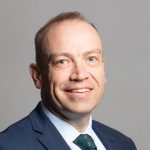
    Chris Heaton-Harris – 2022 Statement on Elections in Northern Ireland

    The statement made by Chris Heaton-Harris, the Secretary of State for Northern Ireland, on 4 November 2022.

    At midnight on 28 October, I came under a duty to call an Assembly election. Since then, my engagement with the political parties has continued. I have had valuable conversations with people across Northern Ireland, including business and community representatives. I have listened to their sincere concerns about the impact and cost of an election at this time.

    I can now confirm that no Assembly election will take place in December, or ahead of the festive season. Current legislation requires me to name a date for an election to take place within 12 weeks of 28 October and next week, I will make a statement in Parliament to lay out my next steps.

    My objective, what the people of Northern Ireland deserve, is the restoration of a strong devolved government. My duty is to create the right environment for the parties in Northern Ireland to work together to restore the devolved institutions and deliver on crucial issues impacting Northern Ireland’s people.

    I do not take this duty lightly, nor do I overlook the very real concerns people have around their cost of living.

  • PRESS RELEASE : New Business Secretary announces £95 million funding for super-materials of the future to boost UK growth [November 2022]

    PRESS RELEASE : New Business Secretary announces £95 million funding for super-materials of the future to boost UK growth [November 2022]

    The press release issued by the Department for Business, Energy and Industrial Strategy on 4 November 2022.

    • “R&D investment is way to turbocharge Britain’s growth” says new Business Secretary, as £95 million government funding announced to support research and development of advanced materials, critical to sectors including health and energy
    • funded projects include 3D bioprinting for use in tissue engineering, robots for plastic recycling and casing for nuclear reactors
    • funding cements UK’s standing as world-leader in advanced materials, with advanced materials-related activity contributing an estimated £14.4 billion in gross value added to the UK economy, equivalent to around £72,000 per employee (25% above the UK average)

    Business Secretary Grant Shapps has today (Thursday 3 November) announced a £95 million boost to develop the super-materials of the future, supporting research and innovation in advanced materials at the Henry Royce Institute, headquartered in Manchester.

    The Business Secretary visited the Royce Institute today, in what was his first official trip since assuming the role at the Department for Business, Energy and Industrial Strategy, allowing him to emphasise his strong belief that R&D investment is an important way in which to turbocharge UK economic growth, as well as celebrating Manchester’s position as an industrial powerhouse in the north of England.

    The significant cash injection, awarded via the Engineering and Physical Sciences Research Council (EPSRC), cements the UK’s position as world-leader in advanced materials, and follows an initial £258 million government investment made over the course of 5 years.

    Advanced materials (including biomaterials, smart materials and nano-engineered materials) possess unique properties enabling superior performance to their traditional counterparts, and are critical in a wide range of industries including health, transport, energy, electronics and utilities.

    Activities supported by Royce and backed by government funding, have included 3D bioprinting for healthcare uses such as tissue engineering in regenerative medicine, turning waste materials into sustainable plastics, and new materials to enable quantum technologies.

    One project also brought together academia and industry to advance knowledge of how Zirconium alloy insulation can improve the safety and cost-efficiency of highly radioactive fuel used in nuclear reactors as well as reducing their carbon emissions. This technology could be essential to the success of Britain’s future nuclear fleet, which the government aims to ramp up in order to boost energy security and slash bills.

    Another project is revolutionising the way the UK’s 35,000 tonnes of annually imported titanium, 90% of which is turned into waste during manufacturing, can be reused to create lightweight alloys used for more efficient vehicles, cutting waste and reducing emissions.

    The funding announced this week will advance the Institute’s work to support early-stage research in these materials by providing financial backing, access to research facilities, and opportunities for collaboration between businesses and researchers.

    Speaking during a visit to the Institute, based at The University of Manchester, the Business Secretary said:

    R&D investment is a critical way to turbocharge Britain’s growth. Growing an economy fit for the future means harnessing the full potential of advanced materials, making science fiction a reality by supporting projects from regenerative medicine to robots developing new recycling capabilities, right across the country – including here in the heart of Manchester.

    Today’s £95 million investment will do just that, bringing together the brightest minds across our businesses and institutions to help future-proof sectors from healthcare to nuclear energy.

    The Royce was formed in 2015 with a £235 million government investment through EPSRC. To date, the Royce has worked with 295 UK SMEs and industry users and facilitated 350 collaborations between academia and industry.

    Its mission is to support the growth of globally recognised excellence in UK materials research, accelerating their use in commercial settings and delivering positive, real-world impacts for our society and economy.

    Examples of projects supported so far include:

    • new fuel cladding for fuel in advanced reactors to improve safety, cost and efficiency
    • developing materials needed for quantum computing
    • using waste materials from the shellfish industries to develop bioplastics
    • an innovative method for manufacturing titanium that greatly uses machining waste
    • using computer simulations and robots to accelerate materials discovery in clean energy, sustainable materials and healthcare applications
    • the use of 3D bioprinting techniques in the development and manufacture of bioengineered systems and devices for application in Tissue Engineering, Regenerative Medicine, Drug Development and other more traditional areas of healthcare

    Advanced Materials and Manufacturing were identified in the government’s Innovation Strategy as 1 of 7 technology families in which the UK has globally competitive R&D and industrial strength.

    EPSRC Executive Chair Professor Dame Lynn Gladden said:

    Advanced materials are crucial to driving growth across our key industries, from energy and transport to health, and ensuring they are sustainable for the future.

    This funding will build on the success of the Henry Royce Institute so far, to unleash the potential of this transformative technology for the benefit of the economy and the environment.

    Professor David Knowles, Royce CEO said:

    Royce and its Partners across the UK, along with the advanced materials community, is very pleased to be able to confirm this Phase ll EPSRC funding.

    Innovation in advanced materials underpins a wider range of our industrial sectors and is fundamental to our economic growth.

    Our Partnership offers a unique combination of materials science expertise, state-of-the-art laboratories and fantastic collaboration spaces for the advanced materials community.

    As we enter our Phase ll operations we are focused now, more than ever, on working with the community to identify the key challenges and opportunities ahead of us, and supporting the translation of innovative research into the viable products and systems needed to ensure a sustainable future for us all.

    Based at the University of Manchester, Royce works across the UK’s regions with academic and industry partners including Johnson Matthey, Rolls-Royce, Siemens and Tata Steel, to stimulate innovation and the development of strong local economies able to compete globally.

    Stephen Phipson CBE, Chief Executive of MakeUK said:

    This is a welcome announcement which recognises the world class research which takes place at this facility.

    If we are to maintain the UK’s position as a leader in research and development together with advanced manufacturing and materials then facilities like this should be at the forefront of industrial strategy.

    UK businesses dependent on production or processing of materials, in which advanced materials play a significant role, employ a workforce of 2.5 million (source).

  • PRESS RELEASE : Prince William Unveils Kenya’s Roam And Mukuru Clean Stoves As Finalists For Earthshot Prize [November 2022]

    PRESS RELEASE : Prince William Unveils Kenya’s Roam And Mukuru Clean Stoves As Finalists For Earthshot Prize [November 2022]

    The press release issued by the Foreign Office on 4 November 2022.

    • British High Commissioner Jane Marriott praises Roam and Mukuru Clean Stoves for their innovative solutions to help repair and regenerate the planet – another example of Kenya’s pioneering commitment to green, clean energy.
    • The UK-Kenya Climate partnership has driven investment in clean air projects, including helping Roam secure £6.6m worth of investment.
    • The Prince and Princess of Wales will attend the awards in Boston on December 2 to honour the Finalists and celebrate the five 2022 Earthshot Prize Winners.

    November 4, 2022 — Today, Prince William and The Earthshot Prize revealed that Roam and Mukuru Clean Stoves, both Kenyan companies, have been selected as Finalists for the second Earthshot Prize. Together, the Finalists are an accomplished group of entrepreneurs and innovators spearheading fifteen groundbreaking solutions to the biggest environmental challenges our planet faces.

    The fifteen Finalists will be in the running to receive a £1 million award at the second-annual Earthshot Prize awards ceremony. The Prize takes inspiration from President John F. Kennedy’s ‘Moonshot,’ which united millions of people around an organising goal to put man on the moon and catalysed the development of new technology in the 1960s.

    Prince William said:

    The innovators, leaders, and visionaries that make up our 2022 Earthshot Finalists prove there are many reasons to be optimistic about the future of our planet. They are directing their time, energy, and talent towards bold solutions with the power to not only solve our planet’s greatest environmental challenges, but to create healthier, more prosperous, and more sustainable communities for generations to come.

    I am so excited to celebrate these fifteen Finalists and see the five Winners of The Earthshot Prize announced in Boston – the hometown of President John F. Kennedy, who shared The Earthshot Prize’s belief that seemingly impossible goals are within reach if we only harness the limitless power of innovation, human ingenuity, and urgent optimism.

    The UK-Kenya Climate partnership has driven investment in clean air projects, including helping Roam secure £6.6m worth of investment to expand their operation.

    British High Commissioner to Kenya, Jane Marriott, said:

    As Kenya continues to be a pioneer of green, clean energy, it comes as no surprise that Prince William and The Earthshot Prize are honouring Roam and Mukuru Clean Stoves – two of Kenya’s most innovative companies – bringing the total to three Earthshot finalists in two years. Both are an example of Kenya’s renewed commitment to clean air, and inspiring positive climate action. Both organisations empower women to lead – and make a living by making a difference. The UK is proud to have supported Roam to secure investment to grow their innovative operation. We look forward to taking the UK-Kenya Climate Partnership further at COP27 in Egypt.

    Mukuru Clean Stoves is a female-led start-up providing cleaner-burning stoves to women in Kenya to reduce unhealthy indoor pollution and provide a safer way to cook. Today, 200,000 people in Kenya use Mukuru Clean Stoves, saving $10 million in fuel costs, saving lives, and saving time. Mukuru is empowering women to make a living by making a difference.

    Charlot Magayi, founder of Mukuru Clean Stoves, said:

    Mukuru Clean Stoves began as a solution to a problem that I had felt personally in my own life. Today, we have an opportunity to transform the lives of millions, with cheaper, safer and more sustainable cookstoves and fuels. It is a privilege to be recognised by The Earthshot Prize as we embark on the next step in our journey.

    Roam is an organisation building lower emission vehicles, making clean transportation accessible and affordable for urban cities on the African continent. . The company builds motorcycles and buses tailored to the market with affordability and reliability at the forefront. 40% of Roam’s employees are female, and estimate that by switching from petrol to electricity, drivers can cut running costs by 75%.

    Filip Lovstrom, Chief Executive Officer and Co-Founder of Roam, said:

    In Kenya, motorcycle taxis so called Boda Boda’s are the best way to get around and many rely on them for a living. However, they are also among the highest CO2 emitting vehicles on the market. The company builds motorcycles and buses tailored to the market with affordability and reliability at the forefront. We want to help the environment, and drivers’ pockets. We are honoured to be recognised alongside so many other brilliant solutions.

    This is Kenya’s third Earthshot finalist in two years. In 2021, Kenyan company Sanergy was a finalist in the ‘Build a Waste-Free World’ category. They were already the largest waste recycling factory in Eastern Central Africa and they now serve three more cities in Kenya. A successful new investment round will allow international expansion. The Earthshot Prize Global Alliance Members, Deloitte and Arup have supported with training, advice and project design.

  • PRESS RELEASE : Creative businesses across the UK receive funding boost and government backing to spur future growth [November 2022]

    PRESS RELEASE : Creative businesses across the UK receive funding boost and government backing to spur future growth [November 2022]

    The press release issued by the Department for Digital, Culture, Media and Sport on 4 November 2022.

    • £950,000 sector-wide careers programme to help more young people from underrepresented backgrounds break into creative industries
    • Seventeen of UK’s leading start-up creative studios awarded grants of up to £25,000 to develop the next generation of video games

    Creative businesses with the potential to become booming businesses in six English regions are to benefit from a new £17.5 million funding pot to help expand their operations, attract additional investment and create jobs.

    It comes on the day a £950,00 careers programme for the sector is launched in England and some of the UK’s brightest creative entrepreneurs are told they will be backed by the government to develop the next generation of global smash-hit video games.

    The creative industries are one of the major UK economic success stories in recent years. They have grown at twice the rate of the wider economy since 2010 – generating approximately £115.9 billion for the economy and providing more than two million jobs.

    Data from the Association for UK Interactive Entertainment (Ukie) estimates the value of the UK consumer games market reached a record £7.16 billion in 2021.

    Today’s plans will build on this stellar success and make sure the next generation of creative talent succeeds, companies continue to scale-up and those that need support have access to it.

    Creative Industries Minister Julia Lopez said:

    From product design and video games to music and film, the creative industries are a stellar UK success story.

    Today’s plans will help get more creative businesses off the ground so they can spread jobs and wealth and help more people, including those from underrepresented backgrounds, break into these world-class sectors.

    Create Growth Programme

    Companies in six regions will receive support through the Create Growth Programme to help get themselves investment ready. The regions are Greater Manchester; the West of England and Cornwall and the Isles of Scilly; Norfolk, Suffolk and Cambridgeshire; Leicestershire, Derbyshire and Lincolnshire; Kent, Essex and East and West Sussex; and the North East of England.

    Each of the six regions have been awarded £1.275 million in grant funding from the Department for Digital, Culture, Media and Sport (DCMS) to develop a targeted programme of business support. Regions will also benefit from a number of investor building activities such as networking and pitching events to attract investment and exchange ideas.

    Businesses across the six regions will also be able to apply to a new £7 million investment fund to fuel their expansion. Companies applying for finance will need to demonstrate their potential to grow rapidly and become sustainable through private investment. The investment fund and investor building activities will be delivered by the UK’s innovation agency, Innovate UK.

    Creative Careers Programme

    To develop the next generation of talent, the Government has chosen ScreenSkills, the screen industry’s skills body, to lead the delivery of a £950,000 Creative Careers Programme. This programme, targeted in 53 priority areas across the country including Barking and Dagenham, Wolverhampton, Rotherham, Slough and Swindon, will help young people from underrepresented backgrounds break into the creative industries.

    The programme will provide specialist guidance to 11 to 18-year-olds on careers and help pay for industry-led digital and in-person events, lesson plans, a dedicated careers website with careers information and resources, and training for careers advisors. This will help ensure more young people from a diverse range of backgrounds can take advantage of the fantastic careers opportunities in these sectors.

    UK Games Fund

    Also announced today are seventeen start-up video games studios which have been given grants of up to £25,000 to realise their ideas for innovative new projects as part of the UK Games Fund. The cash injection is for firms across the country with great ideas but lacking in development funding.

    The fund, which was established in 2015, has received increased government funding of more than £8 million for 2022 to 2025. It aims to help high-potential companies raise new funding, spur economic growth and create new jobs.

    Games spanning formats from virtual reality to mobile and themes from space exploration to eco-education, with developers based across the country – from Cardiff to Paisley and Brighton to Yorkshire – will benefit from the scheme’s latest funding round.

  • PRESS RELEASE : The UK Kept 1.5 degrees Alive, A New COP26 Presidency Report Show [November 2022]

    PRESS RELEASE : The UK Kept 1.5 degrees Alive, A New COP26 Presidency Report Show [November 2022]

    The press release issued by the Cabinet Office on 4 November 2022.

    • UK government launches COP26 Presidency outcomes document, celebrating the successes of the Glasgow summit and the UK’s COP Presidency year
    • The report details the progress made to tackle emissions, mobilise finance and help those impacted by climate change and calls for further action ahead of COP27 in Egypt next week
    • The launch will take place at Lancaster House with COP26 President Alok Sharma and Prime Minister Rishi Sunak

    COP26 President Alok Sharma will today [Friday 4 November] launch the UK’s COP26 Presidency Outcomes Document, as he joins the Prime Minister to host around 80 global business CEOs for an event at Lancaster House.

    The new report, which comes as the UK prepares to hand over to Egypt next week, highlights progress made over the three years since the UK took on the Presidency of the COP. It also acknowledges that more needs to be done at COP27 and beyond to implement the commitments made at COP26.

    Under the UK’s stewardship and during a global pandemic, COP26 brought together nearly 200 countries to forge the historic Glasgow Climate Pact. The Glasgow Climate Pact remains the blueprint for accelerating climate action this critical decade to keep 1.5°C in reach.

    The report details key achievements across the UK Presidency’s four overarching goals of mitigation, adaptation, loss and damage, and finance and collaboration. Highlights include:
    – Keeping 1.5 degrees alive: Over 90% of the world’s GDP, up from 30% when the UK took on the COP Presidency, is now covered by net zero commitments. More than 153 countries have now put forward new 2030 climate plans, known as nationally determined contributions.

    • Increasing funding and launching UN work for dealing with climate impacts: record levels of finance to help countries adapt to the effects of climate change have been pledged to the Adaptation Fund and the Least Developed Country Fund under the UK Presidency. In addition at COP26, countries agreed to double 2019 levels of adaptation finance by 2025, the first quantified adaptation finance target.
    • Accelerating unprecedented low-carbon transitions of industries such as transport and energy, with commitments covering power, coal, methane, fossil fuel financing, forests and land, transport and sectors, including the first ever agreement to coal phase down in a UN climate decision.
    • Finalising the Paris Rulebook after 6 years of negotiations, which sets out the instructions and products needed to fully implement the Paris Agreement on climate change. These guidelines build confidence and transparency as countries deliver on their commitments to meet the goals of the Paris Agreement.

    This progress has been achieved against the backdrop of an incredibly challenging geopolitical context, driven by Putin’s illegal invasion of Ukraine which has demonstrated the integral link between climate change, energy security and the vulnerability caused by our dependence on fossil fuels.

    The UK’s Presidency has continued to drive action throughout this, working with countries, civil society organisations, and local communities to ensure that the commitments made in Glasgow are delivered to keep 1.5 alive.

    Alok Sharma, COP26 President, said:

    “The last three years have been a unique privilege and I have been inspired by the urgency and the ambition I have heard around the world.

    “The decade ahead can be one where we pull back from the precipice of climate catastrophe and unlock a just and sustainable path to prosperity for billions of people around the world.

    “To do this we must fully deliver on the promises made at COP26 and in the Glasgow Climate Pact.”

    Mr Sharma will host members of the UN-backed international campaign Race to Zero at Lancaster House to consider how global business take forward the legacy of the COP26 UK Presidency and deliver on the Glasgow Climate Pact, in his final engagement as COP President before COP27.

    Before the reception at Lancaster House, the COP President will join His Majesty The King and the Prime Minister at Buckingham Palace to mark the end of the UK’s COP26 Presidency and the beginning of Egypt’s Presidency of COP27.

  • Anne-Marie Trevelyan – 2022 Statement on North Korea Missile Tests

    Anne-Marie Trevelyan – 2022 Statement on North Korea Missile Tests

    The statement made by Anne-Marie Trevelyan, the Minister of State at the Foreign Office, on 3 November 2022.

    The UK condemns the launch of an Intercontinental ballistic missile and two short range ballistic missiles by North Korea on 3 November, all in clear breach of UN Security Council Resolutions. This is deeply damaging for regional security and stability. We are also concerned about reports of a further launch today.

    The DPRK must abandon its illegal nuclear and ballistic weapons programme, return to dialogue, and prioritise the well-being of its people. Until then, UN sanctions must be fully enforced.

  • James Cleverly – 2022 Statement on the International Atomic Energy Agency Report

    James Cleverly – 2022 Statement on the International Atomic Energy Agency Report

    The statement made by James Cleverly, the Foreign Secretary, on 3 November 2022.

    Russia has a history of making false claims to provide cover for its own actions; the world can see through this attempt to use false allegations as a pretext for escalation. Russia needs to de-escalate, starting by ceasing its assault on Ukraine and withdrawing its forces.

    I welcome the transparent approach Ukraine has taken by inviting the IAEA to put Russia’s claims under independent scrutiny. Their findings show there is no evidence of undeclared nuclear activities by Ukraine.

    The UK remains committed to supporting Ukraine’s efforts to defend its territory for as long as it takes.

  • Tommy Sheppard – 2022 Speech on Scottish Independence and the Scottish Economy

    Tommy Sheppard – 2022 Speech on Scottish Independence and the Scottish Economy

    The speech made by Tommy Sheppard, the SNP MP for Edinburgh East, in the House of Commons on 2 November 2022.

    I start with the red wall Tories. Our absent friends in the north are surely on a sticky wicket. For years, and for decades in some cases, they burrowed away in once solid Labour fiefdoms, angry at what was happening to their communities. They created a false narrative that these problems were the result of wanton neglect by their political opponents, rather than the inevitable consequence of being on the periphery of a capitalist economy that is overcentralised and under-regulated. But they broke through in 2019, and they came here. Tribunes of the people, champions of their communities, they came to this Palace to press their case, and they ended up supporting a Government of spivs and millionaires who are turbocharging the very problems they complain about. Well, their tenure will soon be coming to an end,

    If I lived in those working-class communities, I would be equally despondent at the alternative on offer. Today’s Labour party, as a Government in waiting, surely has the least ambition it has ever had in its 122-year history. A party that says hardly anything about how it wants to change things, that is terrified of suggesting that the wealthiest in our community should pay more tax, that is terrified of supporting the trade unions that founded it in their struggle for a living wage, that is committed to expanding dangerous and expensive nuclear energy and that is, most of all, committed to the United Kingdom remaining isolated from the European mainstream. What a choice.

    Mr Deputy Speaker, you may wonder at the relevance of that for Scottish independence. Well, it is quite simple, because people in my constituency and elsewhere in Scotland look at this duopoly oscillating about a mean point of inequality while never seeking to fundamentally change it, and they ask themselves, “Is this the best that can be done?” People are increasingly saying, “No, we can do better than this. And we can do better than this if we take the power to ourselves and become an independent country.”

    If those on the other side of this debate understand nothing else, understand this: the debate about contemporary Scottish independence is a debate not about identity but about political power. It is about having the agency to change the world around us and to play our part in a world that aims to be a better place. That is why we argue the case for Scottish independence, and we believe in changing the world with a new vision of how things could be, of a society in which the barometer of success is the wellbeing of the people rather than the profits of City corporations, where we have growth in our economy to afford human leisure rather than human exploitation and, most of all, where our natural resources are marshalled into a sustainable future for our country and the world. That is what we aspire to, yet if you listened to our detractors, you would think it was far from that.

    I congratulate the shadow Secretary of State, the hon. Member for Edinburgh South (Ian Murray), on the public launch today of Project Fear 2.0. If we are to take him at his word, a Scottish Government on day one of independence would have five times the economic deficit problem that this Government currently have to deal with and our currency would, at the point of introduction, crash by 30%. Oh my God, who would want even to consider such a scenario? But of course these things are not facts and they are not evidence—they are conjecture and supposition. He makes his case, and in the flurry of the campaign rhetoric he makes it well, but that does not make it true.

    Let me use the GERS figures as one example, on which the hon. Gentleman placed a lot of emphasis. He may be interested to know that the Institute for Fiscal Studies, no less—not a fan of independence—says that by next year the structural deficit in the Scottish economy will be the same, more or less, as the structural deficit in the UK economy as a whole. It is not a factor of five more—

    Ian Murray rose—

    Tommy Sheppard

    I am sorry, but I am short on time and I am going to annoy Mr Deputy Speaker if I take interventions, so I will decline to give way.

    As I was saying, we are not talking about a factor of five. Of course, the most important thing about the GERS figures is that they are not a statement of account of Scotland as an independent nation; they are a statement of what a regional economy looks like within the United Kingdom. Any sensible person would look at that structural deficit and those figures and take that as evidence against the Union, not in favour of it. It is because we can do so much better that we aspire to independence.

    As others have remarked, it is unbelievable, is it not, that a country such as Scotland, which is blessed with enormous resources of renewable energy, a talented and skilled workforce and a thriving tourism, hospitality and cultural sector, which is leading the world in new technologies from biosciences to gaming, and which has our world-class academia—a country with all that going for it—can be described as a basket case when it comes to self-government and people suggest it cannot possibly afford it? Of course it can.

    This debate is called “Scottish independence and Scottish economy” for a reason. It is because we know and understand that we will not get a majority of people in Scotland to vote to become a self-governing country if we cannot argue that that will make things materially better for them and their communities in the medium to long run. We know that that is the case; we have to connect those things together. I had a whole list of things I was going to go through that show how independence can make things better. I do not have time to mention them all, so I will select a few. These are the arguments and themes that are now being published in these Scottish Government documents that the motion refers to. I advise colleagues to take the time to read some of them. They are part of an ongoing debate that points out the consequences of independence for ordinary people and their livelihoods.

    Let us take, for example, fair rights at work, which is apposite because today is the day when the TUC is petitioning and lobbying this Parliament. An independent Scottish Government will make sure that there is a living wage for people in their place of work; that this disgusting separation whereby young people can be exploited at extremely low wages is removed and people are paid that living wage from the point at which they enter the workforce; and that the trade union legislation is repealed and people have the right to organise. We know that we want to do that because we know that all the evidence shows that if the balance in the workplace changes and becomes fairer, that leads to a more prosperous and more equal economy. That is why we want to do it, but we cannot do it without the powers that come from independence.

    Let us consider taxation policy. The Scottish Government do have the power at the margins to vary income tax, but no Government without any control whatsoever over the movement of labour or capital can possibly change the taxation system in any meaningful way. We want to see those with the broadest shoulders make their fair contribution. We want to see a much more progressive situation. We want to see business taxes that support small and medium-sized enterprises and help them to thrive, but at the same time it should be understood that the opportunity to make money comes with the obligation to put something back into the social infrastructure and communities that enabled someone to do so in the first place. This we cannot do without the powers of independence.

    Energy has been talked about a lot. Why on earth is it that, in a country that is self-sufficient in renewable energy, people will not be able to afford to pay their electricity bills this winter? It is a scandal beyond recognition. We need to scrap Ofgem and break the link between electricity prices and Putin’s gas supply prices. We need to make sure that in a country capable of generating 100% renewable energy from the wind and water, the benefits go to the people who live there and not to the global corporations. This we cannot do without the powers of independence.

    I could go on, but I will draw to a close. Those are the reasons why we ask people in Scotland to consider the alternatives. We do not need to have the duopoly of despair being offered in the United Kingdom. We can take matters into our own hands and create a new and better country.

    My final point is this. Who gets to choose on this matter? That is the fundamental question and political principle that this House has to confront. In his opening remarks, the Secretary of State, like a broken record, made much of a campaign that happened nearly 10 years ago and a result that happened in 2014, when things were remarkably different from now. The 2014 referendum on Scottish independence might have settled the matter; people might have said, “That’s fine. We accept it and move on.” It was not us here who did not accept it, but the people of Scotland who put us here to prosecute this case. It is their right, and only their right, to reconsider that matter at a time of their choosing. That is why last year, 10 years after the day they did it the first time round, they elected a Scottish Parliament with more Members committed to independence than there were in 2011. That mandate has been disrespected and refused by this Government. That is why we are now arguing in the Supreme Court. It does not play well in Scotland because every time we deny the voice of the people, we only fuel their ambition to make it louder.

  • Anum Qaisar – 2022 Speech on Scottish Independence and the Scottish Economy

    Anum Qaisar – 2022 Speech on Scottish Independence and the Scottish Economy

    The speech made by Anum Qaisar, the SNP MP for Airdrie and Shotts, in the House of Commons on 2 November 2022.

    I have to say that I was shocked by the previous speaker’s contribution. In 2014, I campaigned for an independent Scotland as a member of the Labour party. I joined the SNP after the referendum; my final straw was when Labour joined the Tories in September 2014 to vote for air strikes in Iraq. Independence is not about the SNP or Nicola Sturgeon; it is about self- determination for the people of Scotland.

    From covid contract scandals to people making their rich mates Lords, there is so much that is broken about Westminster and how this place protects the rich. This year, Shell has paid zero windfall tax in the UK despite making record global profits of nearly £26 billion. BP made £7.1 billion between July and September, which is more than double its profits in the same period last year. At the same time, I have constituents who are struggling to heat the food they are getting from food banks. Not only can they no longer afford to buy food; they have to eat food cold because using microwaves, ovens or stoves is simply too expensive. This is not simply a national disgrace; it is immoral, it is evil and it is corporate greed, backed by Downing Street, where people take more and more for themselves and line their own pockets and could not care less about the ordinary person.

    This year in the multiple Tory leadership elections we have had—who knows, we might have some more—the Tory candidates completely relinquished the fact that they were in government, that they were making the decisions and that they sat at the Cabinet table and have sat there for years. That lot have had 12 years in Downing Street and they have spent the last decade systematically dismantling the social security system and othering some of the most vulnerable in our communities. We have heard a Tory MP in this very Chamber say:

    “We have generation after generation who cannot cook properly—they cannot cook a meal from scratch—and they cannot budget.”—[Official Report, 11 May 2022; Vol. 714, c. 185.]

    That is revolting. Poverty is deepening, and it is sickening that the people of Scotland do not vote for the Tories yet will be subjected to austerity 2.0. The UK economy and the financial mismanagement from Westminster are simply not working for Scotland. The Tories are delivering low productivity, stagnant wages, high inequality and high poverty rates.

    We could use the full powers of independence to build an inclusive, fair, wellbeing economy that works for everyone in Scotland. With independence we can develop an immigration policy that aligns with the values of the people of Scotland. Westminster is broken and this is not limited to the Tories. My immigrant grandfather always voted for the Labour party, yet recently we heard its leader saying that there was essentially little difference on immigration between the two parties. That is shameful. It is not something to be proud of. It is a disgrace. I am so proud—[Interruption.] I am not going to listen to the hon. Member for Edinburgh South (Ian Murray); he has had his time to speak, but that is exactly what his leader said.

    I am so proud of the rejection from these Benches of the hostile, xenophobic anti-refugee and anti-immigrant policies from the Conservative side of the House. There are already stark differences on asylum policy between both Governments. The Tory Government want to send people who are fleeing war and persecution to Rwanda, while the Scottish Government’s new Scots refugee integration strategy is pushing a trauma-informed approach to ensure that the voices of those seeking asylum are placed at the heart of policy. No human being is illegal. To quote Warsan Shire:

    “you have to understand,

    that no one puts their children in a boat

    unless the water is safer than the land”.

    It is the creeping normalisation of othering from the Tories that is so chilling. I cannot believe that the Home Secretary had the audacity to stand at the Dispatch Box and use the word “invasion”. Forget the context; it is just the fact that she used the word “invasion” that is shameful. We also heard a Tory MP in this Chamber say:

    “I do not wake up every day worrying about the welfare of people who have entered our country illegally”.—[Official Report, 31 October 2022; Vol. 721, c. 660.]

    I feel compassion and concern for those who are fleeing war just as much as I feel compassion and concern for those living in poverty. These are not binary choices, yet this is straight out of the right-wing playbook. Whether people are working class, an immigrant, gay, lesbian or a trade unionist, this is what the Tories do: they pit communities against one another. They tell people that they are poor because they are not working hard enough, that they cannot find work because refugees are not actually fleeing war, that immigrants want to steal their jobs and benefits, or that it is the fault of pesky trade unionists.

    The Tories’ national minimum wage is not a real living wage. The differing rates for young people are wholly unjust and discriminatory, and they do not account for young people’s needs, responsibilities and living costs. This is in contrast to the SNP, which proposes a single rate that better reflects the cost of living, with no lower rates for younger workers. Scotland’s gender, disability and ethnicity pay gaps would be addressed, in part, by introducing greater transparency on pay reporting. In an independent Scotland, I look forward to the unfair Trade Union Act 2016 being repealed.

    We need an independent Scotland, as Scotland simply cannot afford to be part of the UK any more. Scotland is a country in its own right. It is not a colony or a region. Independence will give Scotland the ability to get rid of nuclear weapons from the Clyde, independence will give Scotland the ability to tackle the climate emergency, and an independent Scotland will always get the Government she votes for.