Tag: 2022

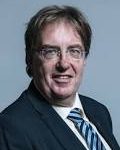
  • Bob Stewart – 2022 Speech on the West Balkans and the Council of Europe

    Bob Stewart – 2022 Speech on the West Balkans and the Council of Europe

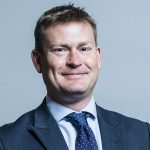
    The speech made by Bob Stewart, the Conservative MP for Beckenham, in the House of Commons on 16 November 2022.

    Without doubt, the crucible and cockpit for all crisis in the western Balkans is Bosnia. This country has 3.2 million people, ethnically south Slav in nature, but split into three basic religions. Muslims make up 51%, and they are often called Bosniaks. Eastern Orthodox people represent 31%—often called Bosnian Serbs. Roman Catholics represent about 15%—normally called Bosnian Croats.

    In 1992, the Bosnian Serbs attacked their neighbours, seizing large tracts of land, which they ethnically cleansed of non-Serbs. As the war went on, the Croats and Muslims also carried out their version of ethnic cleansing. An estimated 2 million people were driven from their homes. In September 1992, the United Nations authorised the deployment to Bosnia of a protection force, UNPROFOR. The UN troops were often called peace- keepers, but actually that was not their role. There was no peace to keep in Bosnia and UNPROFOR did not have the mandate to enforce it either.

    Although several British Army observers, medics and liaison staff were already on the ground in Sarajevo and elsewhere, Britain’s main contribution to UNPROFOR was a battle group based on the 1st Battalion, the Cheshire Regiment and a reconnaissance squadron of the 9th/12th Lancers. Around 2,400 troops deployed under Operation Grapple, which is what it was called, in November 1992, and I led it.

    Our military has been directly involved in Bosnia since then, and 59 service personnel have lost their lives trying to help the country, among them my escort driver, Lance Corporal Wayne Edwards, and my interpreter, Dobrila Kalaba, who was deployed by us although technically not in the Army. Both were shot in the head, and I was shot in the leg. It did not seem to make much difference to me—I am still here—but I am very sad about the other two. Unsurprisingly, therefore, I have a deep personal connection to Bosnia, which I retain to this day.

    The war, which started in 1992 when I was first there, continued until the massacre of Srebrenica in July 1995 and ended with the Dayton peace accords in 1996. That stopped the fighting and established a triumvirate of uneasy power sharing between the three major sides: Bosnian Serbs, Bosnian Croats and Bosniaks. Dayton was supposed to last only a few years until politics could be adjusted to make Bosnia a somewhat democratic and viable state, but the Dayton arrangements have become the status quo, and they are simply cracking at the seams.

    The Bosnian Serbs in so-called Republika Srpska are seriously threatening to break away, and the Bosnian Croats are also making similar growling noises. If that happens, almost all authorities on the region believe we could easily see the renewal of civil warfare in Bosnia. Between 1992 and 1996, approximately 200,000 people were killed in that war and, as I have mentioned, 2 million people were displaced. That tragedy must not be repeated.

    I believe that we, the British, are in a good position to influence what goes on in Bosnia. Our reputation there is quite high as a result of the actions of our soldiers over the years, as well as the continued interest that we hold in the country—witness the fact that Sir Stuart Peach is the representative there, and a good one too. In my experience, the one thing Bosnians respect is good, motivated and professional soldiers on the ground, who know what they are doing. I do not suppose that it will come as a surprise to colleagues that I believe that we could go in there again.

    Currently, we have very few military forces on the ground there and we do not contribute to the so-called EUFOR, the European Union Force in Bosnia and Herzegovina, which is utterly and completely useless and does nothing but wander around the country, but we have a few staff officers at the nascent NATO headquarters recently established there. It would be a hugely significant signal if we were to send a British battle group to Bosnia under NATO command. I suggest that should happen, and soon.

    My interest in Bosnia has not waned over the years. I have been there twice this year and will return again on 8 December. As my friend, the hon. Member for Rochdale (Tony Lloyd), has already mentioned, it is a tragedy that 170,000 people left Bosnia last year. They were mainly youngsters. Consider that 170,000 as a percentage of the population of 3.4 million. They are heavily bleeding the people who could be the future of Bosnia. Those people would not be leaving if they believed they had a future, so we, the British, who have invested so much in the country and have paid a blood price, should do all in our power to help that country of decent people sort itself out.

  • Tony Lloyd – 2022 Speech on the West Balkans and the Council of Europe

    Tony Lloyd – 2022 Speech on the West Balkans and the Council of Europe

    The speech made by Tony Lloyd, the Labour MP for Rochdale, in the House of Commons on 16 November 2022.

    It is a pleasure to serve under your chairmanship, Ms Nokes. I congratulate my hon. Friend the Member for Henley (John Howell) —I use that term advisedly—on opening the debate. His stewardship of the UK delegation to the Parliamentary Assembly of the Council of Europe is exemplary, and I join him in his endorsement of the roles of those who help us here in the UK Parliament.

    If we look at the west Balkans as a region—the hon. Member for Henley is right to say that we need to take a strategic view of the whole region—some things are common. Not everywhere has all of these features, but nevertheless one of the depressing things is to travel anywhere in the western Balkans and talk to young people, most of whom will say that their ambition is to leave. They do not generally want to leave for the UK, by the way; they normally want to go to Germany. The fact that young people have no hope or faith in the future is such a mark of what is going wrong. There are those of us who heard that message not so long ago in Bosnia-Herzegovina, but it is a common view across the region. It matters to us as the UK in narrow, national terms, but it matters to us in any case if we hold the view that a well-ordered world is in the interests of the United Kingdom. There are issues such as combating corruption and ensuring that the rule of law is underpinned by judges who are free of the taint of corruption. Those things matter and it is in our interest to ensure that we are part of a process that brings them together.

    In the relatively short time I have, let me make one central point. At the moment, a battle is taking place that can be defined in national terms, or by groupings of nations. That is whether the Council of Europe and the European Union pull together and challenge the baleful influence of Moscow and, to a lesser extent, the growing presence of China in the western Balkans. Certainly, the influence of Moscow is almost entirely that of disruptor, through their friends in Belgrade as well as directly.

    That matters because a disrupted western Balkans can descend into the kind of events that we have seen in the past. It is very difficult. Nobody would have predicted the violence that took place in the Balkans in the past, not many years before the region was plunged into chaos. I do not want to be overly dramatic, but when Mr Dodik talks about independence or secession for Republika Srpska in Bosnia and Herzegovina we have the basis of a major challenge. An independent Republika Srpska’s armed force could lead to all manner of things, the like of which we should not contemplate. We have an interest, in any case, in the good governance of the region. That catastrophic view would not apply in most other countries of the region, I am glad to say, but we do have to challenge, both intellectually and practically, the role that Moscow and Belgrade seek to play in the region. That is one point I want to establish.

    Many good things are taking place. Going back not that long ago, few people would have predicted that Albania would be a serious candidate for European Union membership, or North Macedonia, yet both those countries should be on a faster track into the European Union. It is always difficult, post Brexit, for UK politicians, even ones like me who were opposed to Brexit, to make the case for the European Union to take action. We need our friends in the EU to recognise that an EU that pretends to have the door open but in practice slams it pretty firmly shut is playing into the hands of the disruptors in the region, and those who already have the kind of despair I described among the younger generation and simply want to leave their countries.

    There are some practical things we need to do. We need to work together, the Council of Europe with the European Union. That must underwrite everything that we do. There is no room for competition between the two bodies; we should be joined in everything that we do. That is fundamental, because it is about providing stability and the practical support that the hon. Member for Henley described. It is also about providing something else: the sense that there is a direction of travel that takes people to a better future.

    In the end, the big prize is to say to the younger generation, which includes some very talented people, that their future is in their own countries in the region, to build that better west Balkans. If we can begin that process with sincerity and practicality, we can make a material difference. I know the region a little from over the years, but there are people in this room who know it a lot better than I do and I want to listen to what they have to say.

    I will say this, though: the western Balkans matters to the United Kingdom. Perhaps it is not our principal area of activity at the moment, but one of the real tragedies of how we all operate is that today’s crisis is Ukraine, yesterday’s was Afghanistan and the day before it was wherever. The western Balkans was once that crisis that we thought was so important, and all our energies were directed there. As a Minister, I lived through the crisis in Kosovo, and we cannot go back to those days. The region is too important for us, so we have to make sure it is on all our agendas, not simply for today, but for the indefinite future. I thank the hon. Member for Henley once again for introducing the debate. It is an important debate that we need to remain fixed on.

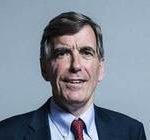
  • John Howell – 2022 Speech on the West Balkans and the Council of Europe

    John Howell – 2022 Speech on the West Balkans and the Council of Europe

    The speech made by John Howell, the Conservative MP for Henley, in Westminster Hall, House of Commons on 16 November 2022.

    I beg to move,

    That this House has considered the West Balkans and the Council of Europe.

    It is a pleasure to serve under your chairmanship, Ms Nokes, and a great pleasure to move the motion. I want to begin by saying that I have recently returned from a visit to Bosnia-Herzegovina, where I observed the presidential and parliamentary elections on behalf of the Council of Europe. It left me with a deep impression of a troubled state where nothing gets done. I will come back to that in due course.

    First, I wish to thank three people: George Papandreou, the former Prime Minister of Greece, who has produced a solid paper on the Europeanisation of the western Balkans. I am grateful for his sharing of the information that he collected, even though his paper remains too European Union-centric in its overall thrust. The second person I want to thank is Sandy Moss, our permanent representative in Strasbourg. Thirdly, I thank the Parliamentary Assembly of the Council of Europe secretariat in London, which does so much for us, and particularly the work of Nick Wright, its leader who is with us today.

    The western Balkans covers a number of countries, including Albania, Bosnia- Herzegovina, North Macedonia, Serbia and Kosovo. Most of those countries are members of the Council of Europe and have also applied to join the EU.

    Margaret Ferrier (Rutherglen and Hamilton West) (Ind)

    I know the hon. Gentleman is a member of PACE and I thank him for the updates on his work there. Does he agree that the Council of Europe has a key role to play in normalising bilateral relations in dispute resolution in the region?

    John Howell

    I thank the hon. Lady very much for her question. That is a large part of what my speech is about. The Council of Europe has a pivotal role in the area in being able to take forward the sort of agenda that she has outlined. I am grateful to her for raising that.

    The granting of candidate status to Moldova and Ukraine has not gone down well with the western Balkans states. We can all understand why. It has been seen for what it is: a political act that has left the western Balkans high and dry. It is seen as being driven by political expediency in view of the dreadful war in Ukraine. It has left a growing disenchantment with membership of the EU and with the EU itself, which will do nothing to increase peace in the region or provide stability, despite the agreed commitment to the shared values of human rights, democracy and the rule of law—the three principal values of the Council of Europe. That should have given the Council of Europe the inside track in working with the western Balkans to establish those values as the norm.

    Despite calls over the years for the Council to take the initiative in the region, very little has been done. I will return to that. A catalysing activity for the region is the war in Ukraine. The influence of Russia in the region is enormous. As a starter, it has big strategic influence in energy, banking and real estate. Some of the countries support the sanctions that have been imposed on Russia. Albania, Kosovo, Montenegro and North Macedonia have done so. Bosnia-Herzegovina and Serbia have not. Serbia has signed a new three-year gas contract with Russia. We should note, too, that Russia is Serbia’s biggest supplier of arms—all sobering thoughts in a European context. The influence of Russia can therefore be seen to be felt very widely across the whole region.

    In addition, two other players have a key role. Turkey’s activities have by and large been benign and focused on enhancing co-operation.

    Dr Rupa Huq (Ealing Central and Acton) (Ind)

    The hon. Gentleman is making an excellent and timely speech, and I praise his stewardship in leading parliamentarians on the Council of Europe. His mention of Turkey reminded me that there are elections in that country next year. Does he agree that the Organisation for Security and Co-operation in Europe also does sterling democracy-extending work in the Balkans and more widely in election monitoring? He mentioned Bosnia—he and I were observing the elections in Sarajevo last month—but such work extends to America, where I was election observing. The organisation also had border scrutineers in Ukraine during the lead-up to war. Does he further agree that its work has been vital?

    John Howell

    I thank the hon. Lady for her comments, and it was a great pleasure to see her in Bosnia-Herzegovina where she was representing the OSCE. That was very much a joint mission to observe the elections, and I agree that the OSCE has a lot to offer, but today I shall concentrate on the relationship with the Council of Europe and what the Council can do, which perhaps has a longer-lasting effect in the region.

    Turkey can play a role for good in the region and it has done much good work, but the second country that has a role to play there is Iran, whose activities cannot be described as beneficial. Iran, for example, is widely believed to be behind the attempted vote rigging that occurred in Bosnia-Herzegovina when the hon. Lady and I were there observing the recent elections. That vote rigging attempt was stopped, but it showed what Iran can do.

    What can the Council of Europe do in the western Balkans? One of the key elements on which the Council should be concentrating is the rule of law, which is a principle that embeds all others. Furthermore, there are two broad areas where the Council has the edge over the EU, the first of which is developing and enhancing civil society across the region.

    Without civil society, there can be no enduring and fundamental championing of the rule of law. We need a civil society that can be taken seriously and not just be one of those complainers. It needs to be active in promoting aspects of society such as good human rights. That is just the sort of area that the Council is trying to establish in Russia, although it faces great difficulties, but it should be much easier to achieve that in the western Balkans. That means programmes providing assistance and watertight governance, and ensuring that the systems—the Governments—accept the role that civil society can play.

    Secondly, there is the broad area of concentrating on bringing the systems used by Governments more in line with the rule of law across Europe. Where are the extensive training programmes for the judiciary and its independence? I am aware of the Regional Rule of Law Forum for South East Europe, hosted by the AIRE—Advice on Individual Rights in Europe—Centre and Civil Rights Defenders, which has brought together some of the judges of the Court of Human Rights and the Venice Commission to establish best practice, but we need much more of that.

    Where is the work with the Administrations to enable them to be willing to invite civil society into the reform process? Where is the work to increase the political will to do something about these issues, which will either increase democracy or provide a conflict with it that needs to be resolved? Where, too, is the ancillary but essential work of ensuring that the media are free?

    Those are activities in which the EU is not, I am afraid, 100% active, but where the Council of Europe should be and could be. That requires a Council of Europe secretary-general who is prepared to roll up her sleeves and get out into the countries to sort out those programmes. Sadly, that is one component of the Council that is currently lacking. Instead, it has put three countries —Albania, Bosnia-Herzegovina, and Serbia—under monitoring procedures by the Parliamentary Assembly of the Council of Europe, while Montenegro and Macedonia have just come out of monitoring.

    Margaret Ferrier

    The hon. Gentleman mentioned that he recently observed elections in Bosnia and spoke at the Council of Europe about the aftermath of the Dayton agreement. Does he feel that the worsening situation in Bosnia-Herzegovina can be remedied?

    John Howell

    The hon. Lady seems to have read my speech, because she is anticipating some of the points that I will make later. I made that point at the Council of Europe and I am happy to make it later if she does not mind waiting a few more minutes until I get to that part of my speech.

    Kosovo has been caught up in internal Council of Europe committee meetings and wrangling for a long time. Monitoring can play a great part in helping countries move forward with their reforms, including established countries such as France, the Netherlands and even the UK—I am the monitoring rapporteur for Turkey—but the amount that can be done through monitoring, as opposed to active programmes, is limited. It is not a big stick to tell the countries what they have done wrong; it is much more about bringing PACE’s substantial resources to bear to help the country put right weaknesses that might have occurred in its human rights, rule of law or democracy.

    How, for example, does PACE monitoring deal with political instability? If anyone thinks that political instability does not arise in that region, they should just look at two countries. We as a delegation are actively helping Kosovo to overcome the difficulties that it faces and become a full member of the Council of Europe, against Serbia’s objections which, of course, are backed by Russia.

    Bosnia-Herzegovina contains Srebrenica—the site of a massacre of more than 8,000 Bosniak Muslim men and boys, which has been classed in the international courts as genocide. It might be thought that there is little to argue about, but Serbs do not accept that it was genocide, and Bosnia-Herzegovina has a mixed population.

    Reconciliation, which is crucial for peace and security, requires an end to conflicting narratives about the past and a more vigorous prosecution of war crimes. That too is where civil society and the Council of Europe can play a key role. The council must not allow such disputes to fester while we put programmes in place, and we need good conflict resolution activity. If I were secretary-general of PACE—this is not a bid for election, although I am happy to entertain offers—I would seek to develop that area. It requires people with special skill and faith that the countries can come right.

    The hon. Member for Ealing Central and Acton (Dr Huq) will agree that the general elections we observed in Bosnia and Herzegovina were generally well run and free. The polling booths, although sometimes a little eccentric—one was in someone’s front room—were generally well run. The only incident, to which I have already referred, occurred when those running a polling station turned up to open it with bags of polling forms that had already been completed.

    A major problem, however, was that only three or four people were allowed in the polling booths at any one time. The queues stretched right out into the open air at times, because it took an average of 30 minutes for someone to vote because there were four very large, folded voting papers to read before they could identify their preferred candidates. It took that time to manage the paperwork. That is largely a result of the solution produced by the Dayton accord, which created an unsustainable constitutional system for the country. Sure, people were no longer voting with a gun pointed at them, but that cannot be the answer for the future. It cannot go on like that. Having three Presidents means that nothing ever gets decided. With a strong Muslim community, the country is divided into separate constitutional entities, all of which are threatening—at one time or another—to resign the country, such as the Republika Srpska. The high representative has already said that the country is

    “facing the greatest existential threat of the post-war period”,

    and its links with Russia are strong. It is a crazy and unsustainable situation. I congratulate Bosnia-Herzegovina on setting up such a large election-monitoring activity with both the OSCE and the Council of Europe, and other western organisations.

    I have mentioned Kosovo. We as a delegation are actively supporting Kosovo, and have already offered to help it to become a full member of the Council of Europe. It can take its seats, but not vote, thanks to the work that we as a delegation did to encourage that as the first step for membership. I understand that our enthusiasm for Kosovo is the position of the UK Government as well.

    It is difficult to comment on Albania without a comment on its Prime Minister. I have met Edi Rama, and did not find him to be the most conducive man for accepting the activities of the Council of Europe. We are aware of the number of Albanians, certainly the number of Albanian single men, who are coming across the channel, but Albania needs to make lots of progress on reforms to the judiciary and against corruption.

    The big problem with Serbia is normalising its relationship with Kosovo and aligning its foreign policy away from Russia to a western, normal perspective. These both mean a lot of work, and a great deal of rethinking. It is interesting that the EU sees the help of the Council of Europe as crucial for enlarging the EU to include the western Balkans. It is essential for the UK too, but we should not try to do it alone at this stage. The UK should use my delegation to put pressure on the Council of Europe to take a more active role in the region and step up to the plate. It is not a question of money either; the Council of Europe Development Bank is able to help with the investment. We need a strategic approach, looking at the region as a whole. The question of migrants is a big factor in this, but we must move away from the narrow confines of nationalism and xenophobia, and the Council of Europe can play a major role in that.

  • PRESS RELEASE : Fight against international wildlife crime stepped up [November 2022]

    PRESS RELEASE : Fight against international wildlife crime stepped up [November 2022]

    The press release issued by the Department for Environment, Food and Rural Affairs on 18 November 2022.

    • UK Government pushing for further protections for endangered species including pangolin and sharks on the global stage
    • Move comes just weeks ahead of crucial UN Convention on Biological Diversity

    The fight against international wildlife crime received a boost today with the announcement of new funding for the International Consortium’s Vision 2030, a long-term vision of working towards a world free of wildlife crime.

    The government is pledging £4m of new funding for the International Consortium on Combatting Wildlife Crime (ICCWC). The announcement has been made at the Convention on International Trade in Endangered Species of Wild Fauna and Flora (CITES) in Panama, where the UK government is pushing to secure stronger protections for some of the world’s most threatened species such as pangolins and requiem sharks. Ongoing pressures, including legal and illegal international trade, continue to threaten their survival.

    CITES is an international agreement between governments that protects over 38,000 wild plant and animal species from the impacts of international trade. Wildlife crime undermines efforts to ensure that international trade is legal and sustainable. Since 2010, the ICCWC, with their collective expertise and extensive experience, has been delivering essential work to eradicate this vile trade.

    The new funding will go towards the next phase of ICCWC programming and will help fight wildlife crime by increasing the detection, disruption and detention of criminals. Transnational criminal networks profit from illegal trade, causing serious security implications for many countries and regions.

    Environment Secretary Thérèse Coffey said:

    We want to keep protecting our most endangered plants and animals. This £4 million of funding going to the ICCWC will help tackle criminals and stop this vile trade.

    The UK is showing global leadership on conservation and proposing stronger protections for a range of rare species at this summit such as pangolins and sharks. We will also be driving global efforts to secure a post-2020 global biodiversity framework at the UN Convention on Biological Diversity in Montreal next month.

    The UK is demonstrating global leadership on conservation and sustainable use at CITES CoP 19, advocating for:

    • Better protection of 54 species of shark to help shield them from overexploitation in the fin trade.
    • Strengthening commitments to protect pangolins, the most trafficked mammal in the world, through cooperation and demand reduction measures.
    • Improving CITES implementation for agarwood to assist in conservation efforts.
    • Upholding the ban on international commercial trade in ivory and rhino horn, managing ivory stockpiles, and ending trade in live African elephants to non-range states.
    • Enhancing CITES’ role in relation to reducing the risk of zoonotic disease emergence, tackling the illegal trade in CITES species, better engagement of indigenous people and local communities.

    Welcoming the additional funding as an endorsement of ICCWC’s work, CITES Secretary-General, Ivonne Higuero, said:

    We’re grateful to the United Kingdom of Great Britain and Northern Ireland for this important contribution to support the efforts of CITES Parties to combat wildlife crime. It is a vote of confidence in the coordinated work being done by ICCWC partners to put an end to this scourge affecting our planet and its people.

    The 19th meeting of the Conference of the Parties has acknowledged and welcomed the excellent work with Parties conducted under the Consortium and the development of the ICCWC Vision 2030. This funding means more Parties will be assisted by the Consortium to further strengthen their capabilities in the decade to come.

    Poaching and the illegal wildlife trade (IWT) has been estimated to be worth up to £17 billion a year. It fuels corruption, creates instability, impacts economic development and deprives some of the world’s poorest communities of sustainable livelihoods. For some of the most endangered species – like pangolins, succulents and turtles – the illegal wildlife trade is the gravest threat to their future.

    This funding will provide for a range of training courses, tools, services and capacity building activities, designed to strengthen criminal justice systems and support co-operation among countries exposed to the threats of wildlife trafficking.

  • David Rutley – 2022 Speech on the 60th Anniversary of Diplomatic Relations with Algeria

    David Rutley – 2022 Speech on the 60th Anniversary of Diplomatic Relations with Algeria

    The speech made by David Rutley, the Parliamentary Under-Secretary of State for Foreign, Commonwealth and Development Affairs, in the House of Commons on 16 November 2022.

    I congratulate my hon. Friend the Member for Rother Valley (Alexander Stafford) on securing this debate and I commend him for his very considered words on the history between the UK and Algeria. I recognise the work he does as the chair of the all-party parliamentary group on Algeria. In his speech, he talked about masterpieces of culture. I congratulate him and reflect on his masterpiece of a speech, which was incredibly well crafted, going back some distance in history further than I will attempt to do today—I will stick to the last 60 years.

    The UK has been a firm friend to the people of Algeria since it gained independence in 1962, and remains so. As with all friendships, our countries have shared successes and difficult times, but the strength of our diplomatic relationship has held true. Most recently, we appreciated the solidarity shown by Algerian Prime Minister Benabderrahmane in attending the state funeral of Her late Majesty the Queen.

    It has been 60 years since Prime Minister Harold Macmillan and President Ben Bella exchanged messages, establishing diplomatic relations between the UK and the newly independent Algeria. Prime Minister Macmillan shared hopes of reconstruction there, following a long and difficult struggle for independence. That hope came to fruition just two years later, when British and Algerian business entered into a joint venture on energy. The UK purchased Algeria’s very first delivery of liquefied natural gas and assisted in building a key pipeline. We were impressed by Algeria’s economic and social development during the 1970s. We also appreciated its strength of purpose on diplomatic issues during the 1980s, when Algeria’s mediation was sought by many in the region and beyond in the resolution of disputes and conflicts. As my hon. Friend noted, Her Majesty the Queen visited Algeria in 1980, where she was received by the then President Bendjedid and visited victims of the Chlef earthquake in hospital.

    As we all know, the 1990s was a challenging decade for Algeria, but it emerged from that period. Oil prices rose and a new President came to power. Our relations with Algeria entered into a period of reinvigorated engagement at the turn of the millennium, in particular on security issues, with the UK recognising Algeria’s counter-terrorism experience and expertise. When we left the European Union, Algeria welcomed the opportunity to deepen our trade relationship and today our countries co-operate on a range of projects. Algeria is one of the key players in Africa and the international community, a respected and trusted security partner and a committed multilateralist.

    As we mark six decades of diplomatic relations between our countries, we want to further strengthen and deepen our co-operation and relationship. My noble Friend Lord Ahmad of Wimbledon, the Minister with responsibility for north Africa and the middle east, visited Algeria in June, where he met counterparts and discussed the importance of our partnership on education, trade and climate, in particular. My right hon. Friend the Foreign Secretary looks forward to hosting Foreign Minister Lamamra for the next edition of our strategic dialogue. We hope to soon agree dates for the dialogue to take place early next year.

    On security, Algeria plays an important role in the region. We welcome and look forward to strengthening our co-operation across shared interests, including defence, counter-terrorism and migration, and tackling the global challenges of human trafficking and organised crime.

    On trade, we launched our developing countries trading scheme earlier this year, from which Algerian exporters can directly benefit, and we welcome Algeria’s new investment law aimed at improving the business environment for international partnerships. We hope to take forward our shared commitment for a UK-Algeria trade taskforce to further strengthen trade and investment ties. We also stand ready to share the UK’s expertise on finance, including reforms, infrastructure and green finance.

    Human rights are a clear priority for the UK. We welcome Algeria’s interest in assuming a role on the United Nations Human Rights Council, and we hope to work constructively in that area. For example, during a recent visit that my hon. Friend and constituency neighbour the Member for Congleton (Fiona Bruce) made to Algeria as the Prime Minister’s hard-working special envoy for freedom of religion or belief, we welcomed the constructive dialogue about ensuring the rights of religious minorities to practise their beliefs. Like her, I look forward to continuing that important dialogue, as the hon. Member for Strangford (Jim Shannon) urged in his contribution to this important debate.

    The UK has much to offer on energy and renewable technology. We want to supercharge our partnership with Algeria, which has great potential for solar energy in particular.

    As my hon. Friend the Member for Rother Valley says, education is a growing part of our relationship and helps us to build links, particularly between young people. We were delighted when President Tebboune announced in July that English would be taught from primary school onwards. We are proud that the UK is a popular destination for young Algerians to pursue higher education overseas. It is clear that sharing a language will bring our countries closer and enhance our cultural and business links.

    Algeria is clearly a land of potential for its people, for its partners and for the world. Not only is it the largest and most developed country in Africa, but it has huge political and diplomatic capital in Africa, Asia, Latin America and beyond, as well as playing a key role in multilateral institutions. For all those reasons, we look forward to continuing to build on our historic relationship with the Algerian Government and people, working together to realise an even brighter and better future for the next 60 years and beyond.

  • Alexander Stafford – 2022 Speech on the 60th Anniversary of Diplomatic Relations with Algeria

    Alexander Stafford – 2022 Speech on the 60th Anniversary of Diplomatic Relations with Algeria

    The speech made by Alexander Stafford, the Conservative MP for Rother Valley, in the House of Commons on 16 November 2022.

    As chair of the all-party parliamentary group on Algeria, I feel privileged to have the honour of sponsoring this debate to mark the 60th anniversary of the establishment of ties between the United Kingdom and the People’s Democratic Republic of Algeria. The past 60 years since Algeria’s independence have been marked by close and cordial ties between our two countries, which, although very different on the surface, are in fact bound together by common history and shared objectives. As chair of the all-party group, I have engaged with Algerian businesses, British companies in Algeria, trade groups, the British ambassador in Algeria and, frequently, the two Algerian ambassadors in London. As a result, I have built close ties with the country, although—alas—I have not yet visited.

    Throughout my time working on Algeria, I have chosen to characterise Anglo-Algerian relations as being composed of four main pillars of mutual co-operation and interest: energy, trade, security and culture, which encompasses history, tourism and heritage. Algeria aligns with a number of diverse issues that are of great relevance to me. Hon. Members will be aware that energy, business and history have long been my interests, alongside promoting British expertise in those areas globally. The UK’s position as a finance hub, a tech hub, a home to world-class universities and a leader in many economic sectors puts us in a unique position to share our technologies and expertise with Algeria and help it to unlock its huge potential. Our recent presidency of COP26 and our green-tech capabilities will enable us to help Algeria to pursue its energy transformation.

    Why is now the perfect time for a debate on British-Algerian relations? As the title of the debate indicates, 60 years of warm diplomatic ties are worth celebrating, but there is more to it than that.

    Fiona Bruce (Congleton) (Con)

    I thank my hon. Friend for calling this important debate. Last month, I had the pleasant privilege of visiting Algeria in my role as the Prime Minister’s special envoy for freedom of religion or belief and chair of the International Religious Freedom or Belief Alliance—the first such visit of the alliance. I was genuinely pleased at the welcome that I received at meetings in the Ministry of Religious Affairs and the Ministry of Interior, both of which confirmed that they were willing to continue such dialogue, to which I look forward. Does he agree that it is important to continue such conversations wherever opportunities are made available?

    Alexander Stafford

    I thank my hon. Friend for her intervention and I am glad that she had such a successful and fruitful visit to Algeria. I hope that one day in the not-too-distant future, I, too, will visit that beautiful country. I completely agree that now more than ever, there is a huge appetite on both sides for a deeper and closer relationship, catalysed by Britain’s post-Brexit freedom to trade with whomever we wish, and by Algeria’s concerted effort to put its colonial legacy in the past once and for all and to control its own destiny and relevance to the UK.

    Jim Shannon (Strangford) (DUP)

    First, I congratulate the hon. Gentleman on bringing forward the debate. Although it is important to provide high levels of support to British nationals in Algeria and to maintain good relations with the Algerian Government, there are—I say this respectfully—ongoing concerns about the treatment of minority religions in Algeria, one of which is Christianity, as I know he understands well. Christians are vulnerable to prosecution for blasphemy and there has been a systematic closing of 13 Protestant churches. Does he therefore agree that to maintain our diplomatic relations, the Algerian Government need to make religious persecution a priority and allow people to practise their faith in freedom and peace? Let us welcome the good things, but do more.

    Alexander Stafford

    It is an honour to be intervened on by the hon. Gentleman. This is my seventh or eighth Adjournment debate and he has never intervened in one, so it is a pleasure to be intervened on today. On his point about Christianity and the freedom of religion, it is important that everyone can practise their religion wherever and whenever they choose. In fact, I had a conversation with the previous Algerian ambassador to London about that very matter not long ago. I will touch on Christianity later in my speech.

    It is important to recognise that we cannot understand Algeria or become its close partner without looking at its history and how it was formed as a country. Many Britons may be aware of Algeria only as a north African Arab nation with a recent French influence. That is undoubtedly true, but it boasts a heritage dating back thousands of years. In antiquity, it was the home of the famed Numidians, who were succeeded by the great Phoenicians, who founded nearby Carthage, as we all know. After a slow decline marked by the Punic wars among other things, Algeria fell under the control of the Romans after they defeated the Numidian king, Jugurtha.

    In my potted history of the great country of Algeria, I will emphasise its great Roman heritage, which formed Algeria as the country that it is today. In 46 BC, Julius Caesar annexed Algeria to the Roman empire and the regional capital was chosen to be Cherchell. Emperor Trajan’s strategy of reinforcing Rome’s Algerian territories resulted in the great fortress at Lambaesis and the development of towns such as Timgad and Djémila. Timgad is upheld as a marvel of Roman town planning, with a beautifully preserved UNESCO world heritage site often described as Africa’s Pompeii. The city was a home for retired soldiers, with the inscription in the forum reading “Lavare, Venari, Ludere”, translated as “Hunting, bathing and playing”, which surely sums up the good life for everyone, especially those who had given service to the empire.

    As a result of Roman development, Algeria was regarded as a particularly productive part of the empire, becoming a main provider of agricultural surpluses to other distant territories. Later, Emperor Caracalla represented why the Roman model was so successful: he was of Punic and Arab ancestry, with few actual ties to Rome, yet he was thoroughly Roman in citizenship, attitude and way of life.

    At this juncture, Christianity enters the picture. The Christian faith has a long history in Algeria, and was present there long before Islam. By the 4th century, many Algerian Christians followed Donatism, a local church steeped in the ethnic and social values of the region and more popular in the inland, poorer towns. It was so named after its leader, the local Berber bishop, Donatus. St Augustine, the Berber Bishop of Hippo Regius, wrote a treatise against the Donatists. St Augustine’s legacy can still be seen today at Annaba.

    Augustine’s importance as a Church father cannot be underestimated, given his huge impact on foundational Christian doctrine and theology, particularly in his seminal text “The City of God”, a philosophical treatise vindicating Christianity in the face of the sacking of Rome by the pagan Visigoths. It is widely regarded as a masterpiece of western culture, yet it is absolutely fascinating to me that Augustine is clearly a son of Algeria. So Algeria, even back in Roman times, helped shape the face of western Europe.

    Obviously, St Augustine is not the only famous Roman name to be associated with Algeria. Constantine the Great gave his name to the city of Constantine, which exists today under the same name as Algeria’s third biggest city. It is one of the biggest cities in the world and known as the city of hanging bridges. Emperor Constantine reportedly said that it was the only place in the world where man is higher than an eagle.

    Other Members will know that my historical muse is Justinian the Great, and I always find that in debates in Parliament there can never be enough Justinian. Justinian’s story itself is inextricably linked with Algeria, because in 533 AD Justinian sought to restore Roman control over all its territories and sent the general Belisarius from Constantinople to north Africa with 16,000 men. Within a year, the victorious Belisarius had destroyed the Vandal kingdom and restored Roman rule, using this as a launchpad to reconquer Italy and much of the western Roman empire. Justinian’s reconquest of the Roman west is clearly one of the greatest achievements of any empire, and this campaign was conducted by one of the most brilliant generals in history. It is incredible, once again, that Algeria was central to this seminal episode in history, and all that began in north Africa.

    Algeria has had a diverse and varied list of rulers, however. The Arabs arrived in the mid-7th century, bringing Islam and Arabic to Algeria. The Arabs were without a doubt the most impactful of all of Algeria’s invaders, very much forming the character of the country as it is today. This Islamic cultural presence was continued by the Ottomans, who ruled Algeria from 1516 to the French arrival in 1830.

    The 130-year period of French rule had a profound influence on Algeria, which can still be seen today in language, customs and ties. The traumatic events of Algeria’s war of independence live long, even now, in the memory of Algerians, and 1 million pieds-noirs fled to France amid the turmoil and horrors perpetrated by various groups on all sides, such as the OAS. The Évian accords in 1962 granted Algeria its independence, but meant that the French Republic shrunk greatly in area, population and importance.

    Algeria then, unfortunately, fell victim to a repeat of the violence and brutality of the war of independence in the Algerian civil war of 1991 to 2002, in which the Algerian Government fought Islamist rebel groups. A hard-won victory by the Algerian Government has left ongoing insurgency fears in the country and an interventionist state security apparatus.

    However, Algeria is looking to fashion modern, equal relationships that will be both mutually beneficial and respectful. Accordingly, the United Kingdom has only ever had positive relations with Algeria. Britain has been nothing but friendly to Algeria throughout history, building links based on friendship and equality, particularly in the past 60 years of Algerian independence. There is ample evidence of Anglo-Algerian harmony down the years. Official relations between Algeria and the United Kingdom date back to John Tipton’s appointment as first British consul in Algiers in 1580.

    The 1682 treaty of peace and trade heralded a prosperous relationship built on commerce, and the British enjoyed privileged treatment in Algiers compared with other foreigners. After the French invasion of Algeria, the British consul served as intermediary in negotiations between the French and the Ottoman Algerian ruler, and in 1833 this very Parliament here in Westminster rejected the French claim to occupy Algeria—it was always on Algeria’s side. A number of British Army officers expressed admiration for Algerian resistance to French occupation, and Colonel James Scott even joined Algerian hero Emir Abdelkader. British travellers from the time published accounts praising Algeria as a good place to settle due to its climate and people. They were joined by visits from high-ranking British dignitaries, including King Edward VII and Queen Alexandra, who made a private visit to Algiers in 1905.

    After Algeria’s independence in 1962, relations between Algeria and the United Kingdom became deeper and stronger. The UK was Algeria’s first client to import liquefied natural gas in 1964, and British companies were crucial in supplying equipment, machinery, and technological expertise for Algeria’s industrial expansion. Her late Majesty Queen Elizabeth II visited Algeria in October 1980 on a historic visit, where she was received by the President and visited the Roman ruins at Tipaza. Likewise, in 2006 President Bouteflika made the first visit by an Algerian head of state to the UK since independence. In 2013, David Cameron was the first, although I hope not the last, British Prime Minister to visit Algeria.

    Algeria and the United Kingdom share not only a deep history but impressive cultural ties. For example, the UK has been the second most popular destination, after France, for Algerian students wishing to go to university, and efforts are being made to expand that pathway father. British universities have also had successful study abroad exchange programmes with Algerian universities. Algeria has provided some of the world’s best footballers to play in the English league, namely Riyad Mahrez and Saïd Benrahma. The books “The Praetorians” and “The Centurions” by Jean Lartéguy, which focus on Algeria, have proved hugely popular in translation in the Anglophone world. The film, “The Battle of Algiers” was critically acclaimed and ranked as one of the best films of all time, including in Britain. That shows the cultural impact Algeria is having. Even more excitingly, the ambassador has told me that preparations are well under way for an Anglo-Algerian film focusing on the life of Algerian hero, Emir Abdelkader, which I hope will introduce that most important historical figure to an Anglophone audience.

    Against that encouraging backdrop, what is the future of British-Algerian relations? Currently, a consultation mechanism exists in the UK-Algeria joint committee on bilateral relations, which was established in 2006 to provide an appropriate framework for discussing political, economic, educational and cultural relations, and international issues of common interest. Furthermore, a strategic partnership in the area of security was launched in 2013.

    Navendu Mishra (Stockport) (Lab)

    Britain and Algeria go back a very long time and I congratulate the hon. Gentleman on securing this important debate. The United Nations recognises the Polisario Front as the legitimate representative of the Sahrawi people, and Algeria has a long history of supporting the Sahrawi people and the Polisario Front. Will the hon. Gentleman join me in placing on record our recognition of the work of Algeria when it comes to the issue of the Western Sahara and the Polisario Front?

    Alexander Stafford

    The hon. Gentleman is right to say that we have a great link with Algeria. Obviously it is not up to Britain to decide who Algeria has diplomatic relations with, or not, but it is clear that in any process we must have lots of dialogue and talk to all sides.

    Let me return to the four pillars of co-operation that I referred to at the beginning of my speech. Energy is currently by far and away the greatest area of British-Algerian co-operation. Several British companies are investing in Algeria in the energy field, and are considered among the most important foreign investors, including BP. Oil and gas are a critical part of Britain’s transition to net zero, and fossil fuel companies have a huge role to play in research and innovation for renewables. In the wake of Putin’s illegal war in Ukraine, it is more important than ever that we have a reliable supplier of energy and, with my renewables background, I see a mutual opportunity for Britain and Algeria in the green energy space.

    Algeria will need to pivot towards renewables over the coming decades. Promising steps have already been taken in harnessing the solar power potential of the vast Sahara desert. I believe that there is a central role for the export of British skills, technology and expertise in renewable energy to Algeria, particularly in solar panels, wind turbines and hydrogen. We must seize that opportunity for the benefit of UK plc.

    Simultaneously, Algeria will reap the rewards of its natural geographic advantage—it is the biggest country in Africa, with lots of space and sun—to ensure that its energy industry and wider economy is just as prosperous with renewables as it is with fossil fuels. In the build-up to COP26 in Glasgow, I was pleased to see the now Foreign Secretary visit Algiers in March 2020 and sign a declaration of intent of co-operation in the field of environmental protection, sustainable development and renewable energies.

    Jim Shannon

    There was a story in the press over the weekend about green energy in relation to Morocco, with the possibility of some of it being exported to the United Kingdom using a channel under the sea. Does the hon. Gentleman know about that? Is there a possibility of Algeria and Morocco doing a deal with the United Kingdom?

    Alexander Stafford

    I thank the hon. Member for intervening again in my debate; it is always a privilege to hear from him. That sounds like an interesting idea. As I said, in our post-Brexit world, we need to explore all options, especially when it comes to the decarbonisation of our energy fields.

    Britain and British energy companies must work with Algeria to implement the Algerian renewable energy strategy, an investment of US $100 billion by 2030 that will result in the country producing a third of all its domestic energy from renewable sources. There is definitely room for more to be done beyond energy, however, with rich opportunities to deepen ties in agriculture, infrastructure, pharmaceutical, mining and rare earths, cyber and digital. The aforementioned 2020 declaration of intent of co-operation established an investment taskforce to allow businesses to continue operating freely after the end of the UK’s transition period with the EU, and committed to co-operating across a range of areas including political, economic, security and cultural relations.

    It is hugely important that we have focused on education, too. That has led to an agreement for the first British school to open in Algeria and for the promotion of the English language. Likewise, I hope that many more high-skilled and talented Algerian students will come to study in British universities.

    Security co-operation is critical in an ever more dangerous world, There are three elements to the partnership. The first is, of course, counter-terrorism, with Britain and Algeria continuing to fight Islamic terror wherever it may spring up. The second element is regional stability as Algeria acts as a vital bulwark against chaos in neighbouring Libya and across the Maghreb as well as in the Sahel to the south and the wider middle east. Similarly, a peaceful resolution to the deadlock in the Western Sahara requires Algeria’s leadership and collegiality. The third element is in stemming the flow of illegal migration and human trafficking to Europe’s shores. With small boats crossing the channel on a daily basis, Algeria has an important role to play in disrupting trafficking networks in north Africa, sub-Saharan Africa and the middle east.

    Finally, and as I have spoken about at great length, there is great scope for increasing exchange in tourism, culture, history and heritage issues. Algeria boasts some of the richest history and the most impressive sights. I would like to see lots of Britons visiting Algeria in the manner that they happily and regularly visit neighbouring countries such as Egypt, Morocco and Tunisia, especially for the ancient sites.

    As I draw to a close, I reiterate that I firmly believe that the region is a vital new frontier for Britain as we leave the EU and look to build stronger, exciting new trade partnerships around the world. Algeria is the largest country in Africa by area, and it is highly developed, with a young, dynamic, educated populace. It stands at the gateway to Africa: a continent launching the Africa free trade zone and upgrading a road from Algiers to Lagos. Algeria is enjoying substantial GDP growth and provides free healthcare and education to its citizens, including free higher education.

    Algeria is diversifying its economy by prioritising entrepreneurship, start-ups and renewable energy. I particularly welcome the new incentives being introduced and the new frameworks being set up by the Algerian Government to encourage foreign investment. Algeria is also looking for modern, equal relationships and wishes to build alliances in Europe to navigate a way forward through a volatile petrochemicals market. It also desires to lift opportunities for the Algerian people to new heights.

    Of course, there are challenges, just as there are in any relationship, but on the 60th anniversary of the establishment of ties between the United Kingdom and Algeria, the future has never looked brighter for our relationship on all fronts, and the hunger for a deeper and closer partnership from both sides is impossible to ignore. Thus, I ask the Minister to bear Algeria in mind as the United Kingdom uses its new, exciting status as a sovereign trading nation, because I am certain that a good friend and ally is on our doorstep, waiting to welcome a successful British-Algerian future.
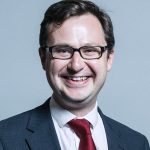
  • Alex Norris – 2022 Speech on Protecting the Rights and Safety of Teenagers

    Alex Norris – 2022 Speech on Protecting the Rights and Safety of Teenagers

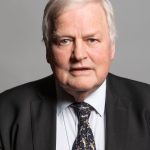
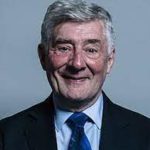
    The speech made by Alex Norris, the Labour MP for Nottingham North, in the House of Commons on 16 November 2022.

    I beg to move,

    That leave be given to bring in a Bill to place a duty on the Secretary of State to promote the safety and wellbeing of teenagers; to make provision to prevent crime against teenagers; and for connected purposes.

    There is nothing more important than ensuring that our young people have the best opportunities to thrive and that all are able to access such opportunities. Every instance where we fail to do this, we let those young people down and often start a spiral of wasted potential and greater societal need down the road.

    Recent reports warn that social care, education, family support and children’s mental health services are not working for thousands of vulnerable teenagers, diminishing their life chances, putting some teenagers at risk of grooming, exploitation and serious violence, and costing taxpayers billions. For the young people we fail the most, the implications are stark.

    Government statistics reveal that, in 2021-22, more than 16,000 cases of child sexual exploitation were identified in social care assessments, as were 11,600 cases involving gangs and more than 10,000 cases of child criminal exploitation. Sadly, these numbers are likely to be the tip of the iceberg, because those involved in gang activity and criminal exploitation are disproportionately young, vulnerable and, crucially, unknown to services. This leads to estimates that as many as 200,000 children in England aged 11 to 17 could be vulnerable to serious violence.

    Let us be clear that the blame for this lies at the feet of those cowards who seek to exploit children for their own individual gain, but the responsibility for tackling and preventing it is with us in this place, with our devolved Assemblies, with our elected Mayors and combined authorities and with our town halls. We must collectively find the answer.

    There is significant concern that the pressures on overstretched services and on the public purse due to a lack of early intervention and a combination of the pandemic and the cost of living crisis are increasing the risks to teenagers. It has been reported that many of these problems have become more extreme since the pandemic, including the ages of those running gangs becoming even younger. This creates a great challenge for the system, one mirrored in slavery cases more broadly, where the boundary between the exploiter and the exploited is blurred and, in many cases, exists in the same person.

    We must recognise that what we are talking about in many cases is slavery. The Government were right to introduce anti-slavery legislation, but we must make sure it keeps pace with the challenges we face. According to the Children’s Society, 22,000 children have entered the national referral mechanism since the Modern Slavery Act 2015 was introduced. That is a staggering scale, but it has led to just 186 prosecutions where children were the victims, and only half of those led to a conviction.

    This is part of an overwhelming body of evidence, including the final report of the Commission on Young Lives, published earlier this month and from which I drew earlier in my speech. Just last Friday, the National Audit Office added the stark findings that the number of nine to 17-year-olds in care has jumped by more than a quarter since 2014, that there has been a 142% increase in referrals to secondary mental health services over the last five years and that 81% of children who are cautioned or sentenced have been persistently absent from school. We know what creates vulnerability but, at the moment, we are not doing enough to tackle that vulnerability.

    The impact on young people is not only borne out by the crime statistics. It also affects how safe our young people feel, and not feeling safe has an impact on them and the decisions they make. Girlguiding does the largest survey of girls and young women, and the most recent iteration of its annual girls’ attitudes survey found that more than half of 11 to 21-year-old girls and young women do not feel safe when they are outside on their own, that nearly one in five does not feel safe at school, and that more than a quarter do not feel safe online.

    The Government-funded organisation that identifies what works in tackling violence, the Youth Endowment Fund, published its first annual report on children, violence and vulnerability this week, and it showed that 39% of 13 to 17-year-olds have been a victim or a witness of violence, increasing to 46% of those in receipt of free school meals and to 60% of those with a social worker. We are failing our young people if we allow such a situation to persist unchecked. Behind each of those statistics is a young person, their family, their hopes and dreams, and a huge societal failing.

    Unfortunately, the Government’s response on the safety and wellbeing of teenagers is often unfocused and lacks co-ordination. No Department has a lead responsibility for promoting the safety and wellbeing of teenagers, and although several Departments have welcome funded programmes of activity that relate to teenagers, they are not co-ordinated and do not tackle the needs of vulnerable teenagers in a holistic and systemic way. This lack of focus and co-ordination nationally is reflected locally, with many teenagers falling through the gaps between school, children’s services, the NHS and the police. We know that there is a paucity of preventive help in most communities, meaning that teenagers will often need to fall into crisis before they can access help.

    So the system is not working as it ought to, it needs fixing and this Bill is an attempt to kick-start that process. A Bill such as this could do that in four areas: by identifying a lead Department for vulnerable teenagers with clear accountability; by placing a duty on the Secretary of State to promote the safety of teenagers across government; by placing a duty on the Secretary of State to prevent crime against teenagers; and by placing a duty to promote wellbeing. The Bill would therefore ensure that there is clear responsibility and accountability in government for the welfare, safety and wellbeing of teenagers, rather than the unco-ordinated approach that has characterised the response so far. This need for national-level strategic intervention is called for by the National Audit Office and the Children’s Society. It really ought to be a fundamental requirement of government, but it currently is not. So let us put that right and ensure that, in future, essential action is being taken.

    I am pleased to say that this Bill has the support of the former Children’s Commissioner for England, Anne Longfield. Anne is a relentless campaigner for young people and I know she is widely respected across this House. She is chairing the Commission on Young Lives, which is seeking to find solutions for our system to protect and support young people at risk of violence, exploitation and crime, and it has been a privilege to work with her closely on this. I urge the Government to take heed of the provisions in this Bill and the spirit in which I raise them today. When the system is not working, we must fix it and deliver better outcomes for our young people. I believe we can achieve that with this Bill and finally bring to our public policy a clear, laser-like focus on the safety of teenagers and the prevention of crime against them.

    Question put and agreed to.

    Ordered,

    That Alex Norris, Karen Bradley, Ms Lyn Brown, Vicky Foxcroft, Sarah Owen, Lloyd Russell-Moyle, Jim Shannon, Cat Smith and Nadia Whittome present the Bill.

  • Janet Daby – 2022 Parliamentary Question on Damp in Properties

    Janet Daby – 2022 Parliamentary Question on Damp in Properties

    The parliamentary question asked by Janet Daby, the Labour MP for Lewisham East, in the House of Commons on 16 November 2022.

    Janet Daby (Lewisham East) (Lab)

    Last month, a 52-year-old gentleman contacted me, crying down the phone. He said that, in his previous accommodation, he had developed breathing problems due to the damp, rot and mould in that home, that there was no heating in his present home and that he was worried and scared. What will the Secretary of State’s Department do to invest in social housing, enforce capacity and provide legal aid to help to end this scandal once and for all?

    Michael Gove

    I am very sorry to hear about that individual case. I would be grateful if the hon. Lady let me and my office know about that and the landlord responsible, and we will seek to follow it up. On her broader point, I hope that the regulator and the ombudsman together can help to ensure that individuals like her constituent have their concerns addressed. However, if more needs to be done, my Department will do what we can to review that.

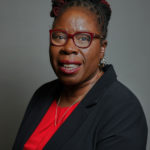
  • Paulette Hamilton – 2022 Parliamentary Question on Damp in Properties

    Paulette Hamilton – 2022 Parliamentary Question on Damp in Properties

    The parliamentary question asked by Paulette Hamilton, the Labour MP for Birmingham Erdington, in the House of Commons on 16 November 2022.

    Mrs Paulette Hamilton (Birmingham, Erdington) (Lab)

    The death of Awaab Ishak was a tragedy that shone a light on the issues in the sector. A family in my constituency contacted me as they had been living in temporary accommodation for more than four years. The property was absolutely full of mould; when it was inspected, it was so bad that there were mushrooms growing in the bathroom. It was ridiculous. The Government’s consultation on the decent homes standard has closed. Will the Secretary of State commit to bringing in new legally enforceable standards to ensure that everyone has a decent place to live? How will that be monitored?

    Michael Gove

    I know that the hon. Lady, with her background as an NHS professional, will have come across the consequences of poor housing throughout a lifetime dedicated to public service. She is right: we need to make sure that there is effective monitoring of improvements by RSLs. That is what the new regulator is supposed to ensure and achieve. If, for any reason, we need to provide it with more teeth or do more, I look forward to working with her in that regard.

  • Justin Madders – 2022 Parliamentary Question on Damp in Properties

    Justin Madders – 2022 Parliamentary Question on Damp in Properties

    The parliamentary question asked by Justin Madders, the Labour MP for Ellesmere Port and Neston, in the House of Commons on 16 November 2022.

    Justin Madders (Ellesmere Port and Neston) (Lab)

    Like every other Member here, I get weekly concerns from constituents about mould in properties. Sometimes we are able to help them and we get there. It takes a long time and unfortunately problems often come back. Sometimes people come to see me who I helped when I was a councillor almost a decade ago and the problems have re-emerged, so there is something far deeper going on here—it is not just about trying to put these things right. The issue is across the whole sector. Every housing association in my constituency has these problems. There are issues of capacity, funding and accountability. I do not think these associations are accountable to the communities they represent. Can the Secretary of State say something about what he can do about that?

    Michael Gove

    The hon. Member raises at least three very important questions. First, in fairness to everyone, many RSLs have inherited housing stock—particularly that built in the ’60s and ’70s—that was simply not fit for purpose when it was constructed and is well beyond its natural life span as anything approaching decent accommodation. He is absolutely right that they have inherited significant problems. Secondly, we need to make sure that housing associations and RSLs are more accountable generally. One thing that our reforms seek to do is to ensure that the tenant voice is louder and more clearly heard. However, there can be an open debate into the future about how we improve stock overall and ensure better democratic accountability.