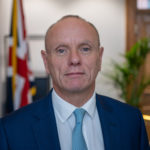
Tag: 2022

  • Nick Gibb – 2022 Speech on Male Primary School Teachers

    Nick Gibb – 2022 Speech on Male Primary School Teachers

    The speech made by Nick Gibb, the Minister of State at the Department for Education, in Westminster Hall, the House of Commons on 16 November 2022.

    It is a pleasure to speak forth under your very capable chairmanship, Sir Gary. I congratulate my hon. Friend the Member for Mansfield (Ben Bradley) on securing this important debate on increasing the number of male primary school teachers in the run-up to International Men’s Day. I thank him for his contributions on this topic during a recent debate on apprenticeships and training. I know that education is a priority in his work, both in his previous role on the Education Committee and in supporting Mansfield and Ashfield as an education investment area. I echo the comments of my hon. Friend the Member for North Swindon (Justin Tomlinson): my hon. Friend the Member for Mansfield is undoubtedly a sad loss for the teaching profession, but we are very happy to have him here in the House of Commons representing his constituents as ably as he does.

    My hon. Friend the Member for North Swindon referred to the PFA wanting to find a way to help ex-professional footballers to be encouraged into teaching. He will know that I want to do more to improve sport in schools. He and I have had many conversations over the years. I will certainly take up his offer to arrange a meeting; I would enjoy that very much indeed.

    The Government are committed to providing world-class education and training. We know that accomplished teachers, regardless of gender or background, provide positive role models and shape the lives of young people. That is why the Department aims to attract and retain highly skilled and talented individuals from all backgrounds and to support them throughout their careers.

    The Department’s current recruitment marketing campaign on teaching, “Every lesson shapes a life”—with its brilliant marketing and advertisements on television and radio to recruit people into teaching—is deliberately targeted at various audiences, including recent graduates and potential career changers. That targeting is regardless of background. The marketing takes every effort to ensure that all the advertising is fully reflective of the target audiences, including men. If hon. Members see those adverts, they will see precisely how that marketing does that very effectively.

    As my hon. Friend the Member for Mansfield will be aware, despite the challenges of a competitive recruitment market, the Department’s target for the number of trainees starting postgraduate initial teacher training primary courses has been exceeded in four of the last five years. In 2021-22, 136% of the postgraduate initial teacher training target was achieved in primary.

    Too often, we hear schools and universities saying that they know a good teacher when they see one. The Department is committed to dismantling the stereotype of what a good teacher looks like and supporting people into the teaching profession regardless of their background. Although it remains true that men make up a smaller proportion of the teaching workforce, the number of male teachers in primary schools has gradually increased since 2010. There has been an increase of more than 7,000 male teachers in state-funded nursery and primary schools, from 28,180 in 2010 to 35,202 in 2021. My hon. Friend the Member for Mansfield cited that in percentage terms, but clearly it is still a very small proportion of the total workforce.

    Jim Shannon

    That shows a trend that, unfortunately, we do not have in Northern Ireland. I know that that is not the Minister’s responsibility, but I am keen to know whether he has been able to ascertain why the trend is for an increase here on the mainland, because if there is something that the Department for Education is doing here to improve the situation, I would very much like, as I said in my speech, to use the pluses from this debate for us back home. If the Minister could share any information on that, I would be much obliged to him.

    Nick Gibb

    What is interesting about that intervention is that the problem, the issue, that we have in this country is reflected in Northern Ireland, where of course education policy is devolved, so this is not specifically related to education policy; it is a deeper, societal issue and requires considerable consideration. I will come to those points shortly.

    Male teachers are more likely to work in secondary schools than nursery and primary schools: 14% of nursery and primary school teachers are male—that is up from 12% in 2010—but 35% of secondary school teachers are male, although that is down slightly, from 37.8% in 2010. Let us look at the picture as a whole: 28% of all male teachers teach in state-funded nursery and primary schools, whereas 65% of male teachers teach in secondary schools and 6% of male teachers teach in special schools and pupil referral units. The hon. Member for Strangford (Jim Shannon), in his speech, cited similar proportions in Northern Ireland.

    Male teachers do progress to leadership positions at a higher rate. As of November 2021, in state-funded nursery and primary schools, 26% of headteachers were male, compared with 14% of all nursery and primary teachers. There is also data to suggest that men progress faster. For example, in 2020 the median new female primary headteacher had been qualified for 19 years or fewer, compared with 16 years or fewer for the median male primary headteacher—whatever a median male primary headteacher is. People know the point I am making in terms of averages.

    The Department is committed to making teaching and teacher recruitment as inclusive as possible. That includes recruitment campaigns designed to attract a diverse pool of candidates to teacher training, including men into primary teaching. All candidates have access to tailored support to help find the best route into teaching for them. Although we are seeing increasing representation in some areas—for example, recruitment into initial teacher training is increasingly racially diverse—the Department recognises that some groups, including men, are still under-represented compared with the working-age population. I know that that view is shared by my hon. Friend the Member for Rugby (Mark Pawsey) and his daughter, who is herself a primary school teacher. This is particularly evident in the teaching workforce in primary schools.

    The Department is committed to using all our new sources of data and insight, including the new in-house recruitment services, to identify barriers to accomplished people becoming teachers and staying in teaching. From initial attraction, to recruitment, development and progression into leadership, the new services and support are designed to deliver a high-quality and diverse workforce, for the benefit of pupils across the country. Excellent teaching of course starts with recruiting excellent people, from all backgrounds, and the Department does work hard to create diverse recruitment campaigns, as I mentioned, that attract brilliant students, recent graduates and career changers into teaching. Through the new Get Into Teaching website, prospective trainees can access tailored support and advice from expert, one-to-one teacher training advisers, a contact centre and a national programme of events. The Get School Experience digital service also helps potential candidates find and arrange experience in the classroom before deciding whether to become a teacher.

    To transform the application process, we successfully rolled out the new initial teacher training application service in England in 2021. The Apply for teacher training service has removed recruitment barriers and is better supporting a wider range of excellent applicants to apply for teaching. The new Apply for teacher training service gives the Department more data and gives us greater insight into the behaviour of male candidates and all candidates, and of schools and universities that offer initial teacher training. That helps us to identify and address barriers for under-represented groups, including men.

    If there is one area in which we can help to address the concerns raised by my hon. Friend the Member for Mansfield, it is through understanding why certain candidates are refused an initial teacher training place and what causes any particular candidate to drop out of the application process. We will learn a lot through the new website and I can commit to my hon. Friend that, as a consequence of this debate, I will also monitor any differential data that relates to the sex of the candidate going through the application process.

    The Department is committed to tackling barriers to becoming a teacher, including reforming the routes to teaching. That includes a review of the postgraduate teaching apprenticeship, to create a more efficient and streamlined route. As well as that, we are providing a seamless journey into teaching for the best candidates. We have increased the starting salary to £28,000, seeking to ensure that the teaching profession is increasingly competitive, and we have the ultimate goal of getting to a starting salary of £30,000 in the following year.

    At the recruitment stage, we have targeted our financial incentives where we know they are most needed. That is why we have put in place a range of measures for trainees from 2023, including bursaries worth up to £27,000 and scholarships worth up to £29,000, to encourage talented trainees to apply for those subjects with the greatest need for new teachers.

    In conclusion, I thank my hon. Friend the Member for Mansfield for his interest in and passion for the recruitment and retention of the highest quality teachers, and his particular interest in increasing the number of male teachers in primary schools. Recruitment of primary school teachers remains strong, with the Department exceeding primary recruitment targets in four of the last five years. That said, the Department is taking action to increase teacher recruitment and retention and to boost teacher quality through several high priority programmes, including the early career framework, which I have not touched on today.

    At the recruitment stage, the Department has made progress in encouraging applications from the highest quality candidates through our marketing campaign and the transformation of our recruitment services. Meanwhile, our world-class teacher development programmes are designed to support all teachers in the early stage of and throughout their careers, right through to executive leadership. I am very happy to continue these discussions with my hon. Friend in the months ahead.

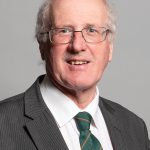
  • Stephen Morgan – 2022 Speech on Male Primary School Teachers

    Stephen Morgan – 2022 Speech on Male Primary School Teachers

    The speech made by Stephen Morgan, the Labour MP for Portsmouth South, in Westminster Hall, the House of Commons on 16 November 2022.

    It is a pleasure to serve under your chairmanship, Sir Gary. I want to start by thanking the hon. Member for Mansfield (Ben Bradley) for securing this debate on an issue that I know he cares passionately about. It is also an important issue to consider at a time when there are challenges facing the workforce in our nations’ schools, where we see a crisis in the recruitment and retention of teachers and school support staff. It is clear from the contributions from Members on both sides of the House that we all agree that male primary school teachers play a vital role in children’s and young people’s development.

    The hon. Member for Mansfield spoke about ideas for practical action to remove or overcome barriers to teaching. He shared the views of parents and carers and mentioned the value of positive role models in schools. In their interventions, Members made helpful points about career progression, from coaching to teaching, and about making primary school teaching a more attractive profession. As ever, the hon. Member for Strangford (Jim Shannon) made helpful points from his perspective in Northern Ireland, sharing figures and trends in the workforce and making helpful points around peer pressure and why that might be a barrier to more men coming forward to work in our nations’ primary schools.

    Despite the strength of feeling across the House today about how much male primary school teachers have to offer in terms of equipping our next generation for the future, the Government have sat on their hands and failed to tackle the areas where they have fallen short. In response to a written parliamentary question from the hon. Member for Mansfield in October, they responded that they wanted to

    “attract and retain diverse, talented teachers from all backgrounds, and this includes recruiting male teachers.”

    The Labour party agrees with that approach, but why does the Government’s own data continue to show that males are under-represented in the primary school teaching workforce in England?

    As we heard earlier, the most recent data states that just 15.5% of state-funded primary school teachers in England are male—around 34,000 out of a total workforce of 220,000. We also know that, for over four years now, that proportion has remained at the same level, and Ministers have failed to take action to improve it. Despite the stagnation, the latest Department for Education data indicates that recruitment of male primary school teachers shows no sign of improvement, with just 2,367 male primary school teachers recruited in 2021-22—a mere 16% of the total. That is in stark contrast to the more than 12,000 women, or 83%, who were recruited as primary school teachers during the same period. All children need positive male role models who come from a diverse range of backgrounds, and that includes male primary school teachers, yet the Government’s mismanagement of education is driving teachers away from classrooms.

    I look forward to the Minister’s response on a number of points. What action is he taking to address the current levels of under-representation of male state-funded primary school teachers in England, including, specifically, on retention? What action is he taking to boost the recruitment of male primary school teachers in England and to tackle the stigma around male primary school teachers? Ministers cannot go on pointing to the wider economic fallout for their failure to recruit the diverse, representative teacher workforce in England that we need. It is the actions of the last 12 years of this tired Government that have got us into this mess. Labour is ambitious for our children’s futures and we will deliver the well-rounded education—

    Justin Tomlinson

    Will the hon. Member give way?

    Stephen Morgan

    I am just going to carry on. We will deliver the well-rounded education that our children need and deserve to ensure that they are ready for work and ready for life. If Conservative Ministers will not deliver that for our children, the next Labour Government will.

  • Jim Shannon – 2022 Speech on Male Primary School Teachers

    Jim Shannon – 2022 Speech on Male Primary School Teachers

    The speech made by Jim Shannon, the DUP MP for Strangford, in Westminster Hall, the House of Commons on 16 November 2022.

    It is a pleasure to serve under your chairmanship, Sir Gary. Thank you for calling me to speak—it is not often I am called straight after the Member who moves the motion, but it is a real pleasure. I thank the hon. Member for Mansfield (Ben Bradley) for leading the debate. He leads on many things in Westminster Hall. I have been there to support him when he has spoken on other subjects in education and I wanted to continue to do that.

    There is no doubt that this conversation needs to be had. For some time now, the trends and statistics across the whole United Kingdom of Great Britain and Northern Ireland have shown that male teacher figures have either dropped or lulled. Whatever the reasons for that, and there are many reasons indeed, we must do more to encourage men—especially young graduates—to get into the world of teaching. We must also play a key role in destigmatising those reasons as to why men are put off and discouraged from getting into the profession.

    In previous debates to which the Minister has responded, I have tried to bring a Northern Ireland perspective. That perspective in relation to male teachers will replicate the very point made by the hon. Member for Mansfield in his speech and by others in their interventions. Male teachers are under-represented in the primary school teaching workforce in England, Scotland, Wales and Northern Ireland. The stats for Northern Ireland are just as bad as those cited by the hon. Member for Mansfield. Back home, just short of 23% of all teachers are male; in primary schools, only 15% are male.

    In the ’60s and ’70s, I went to a boarding school—it was many moons ago, so I will see how far back I can go on that—where we had only one female teacher. The rest were all male teachers. I suspect that the trends have changed and, where it might once have been male dominated, it is now very clearly female dominated. My three boys went to Grey Abbey Primary School. Before the new principal joined 15 or 20 years ago, it was a female-only school: all the teachers were female; the principal was female. That has not changed very much over the past few years.

    The figures for Northern Ireland have decreased over the past decade. The most recent figures for Northern Ireland, from ’21-’22, show that there are some 4,800 male teachers in Northern Ireland, compared with 16,160 women. The percentages are quite clear—it is about 23%. That shows a trend. How do we address that? That is what the hon. Member for Mansfield was asking. We have to look at that.

    I appreciate that this debate is about primary school teachers, but I would just add, to show the extent of the problem—the hon. Gentleman might already know this—that we do not one male nursery teacher anywhere in Northern Ireland. I am quite perturbed by that as well. I understand that trend when it comes to nurseries; there is a perception that it is always girls working in nurseries, and the facts show that it is. Those statistics alarm us greatly. To address them, we must look at the reasons why this is the case not just in Northern Ireland but across the whole of this great nation.

    One of the main issues is peer pressure. Men are often socialised to believe that teaching is a female-led job that requires extensive care and nurturing. That is wrong, but it may be a feeling that we have and an issue in society that needs to change. If we are going to make that change, we need to make teaching as attractive to males as it is to females. Despite all that, men statistically tend to end up in higher authority roles—for example, as senior teaching staff or school principals. I do not know whether that is to do with their age or whatever it may be, but there are certainly trends there that need to be looked at. That has been seen as a faulty or illegitimate argument that plays into “anti-gender role” rhetoric. None of this should not come at the expense of decent classroom teaching; merit and effort should mean more than just gender.

    It saddens me that there have been narratives of males seeking employment in teaching to display their dominant characteristics. People say that, and that might filter through society. That is wrong, but if it does in any way knock people out of kilter, we have to address it. It further marginalises men who want to be teachers and to support and encourage our young people as they go through their education. Those narratives are simply not the case and are simply not right.

    Male teachers are capable of being role models—the hon. Member for Mansfield set that out very well. Society is not broken, but young boys need a male figure in their lives to focus on, and male teachers are capable of being role models to both boys and girls. It is good for children to see that male teachers can be kind and encouraging. The hon. Gentleman referred to them as being caring, and they are. Compassion and understanding are not exclusive to one gender. There has been an assumption that male teachers can play a crucial role in a young child’s development, especially if they come from a family with only a single parent or mother.

    I am not being critical, Sir Gary—it is not my form—but I just want to make this point, which was brought to my attention through my engagement with things we are involved with in my office and from talking to teachers. Fatherless children have been shown on some occasions to stray and to get involved in addiction issues, whether it be drugs or alcohol. As the hon. Gentleman referred to, having a male figure in their life can—not on all occasions—help to maintain an element of stability and give a child a role model outside the home, so that they feel less pressurised.

    A former Secretary of State for Education initiated a £30,000 grant for a project run by the Fatherhood Institute that aims to break down the barriers that dissuade men from starting childcare careers and to tackle the myth that men are less suited to caring roles. As I said, compassion and understanding transcend all genders across society. I was interested in the comments made by the hon. Member for Rugby (Mark Pawsey) about his daughter. Those were my thoughts too coming into this debate. He illustrated the point well through his daughter’s comments, and I wholeheartedly agree with him.

    Mark Pawsey

    My daughter thinks the staffroom is a better place from having a mixture of genders in it. Male and female teachers can engage with each other in the workplace. The perspective of a male teacher may be slightly different from that of a female teacher, and the opportunity to share those experiences in the staffroom is important.

    Jim Shannon

    I absolutely agree. The hon. Gentleman is fortunate to have such a wise daughter, who seems to understand the position of a teacher in school with great wisdom and knowledge. I wholeheartedly agree that that mixture and blend would be better for us all.

    I always respect the fact that the rules are different here, as they might be in other regions across the United Kingdom of Great Britain and Northern Ireland, but we have a UK-wide problem. I understand that the Minister does not have to answer for Northern Ireland, but whatever he answers will be the template for all of us across the four regions, because the issues are the same. The dearth of male teachers in primary schools is the same, but how do we address it?

    I encourage the Minister to take the lead for all of us. I will certainly be sending the Hansard copy of the debate to my Minister back home and probably to some of the schools as well to let them know what we are doing. I ask the Secretary of State for Education to engage in an in-depth discussion with his counterparts in all the regions about further action on encouraging and incentivising more male teachers. If we can do it here, we can do it everywhere. What we can learn here can be replicated back home. What we have done back home might be of help as well.

    Back home, teaching courses have a decent number of male students, but there is clearly a barrier—I am not entirely sure why—that stops them fulfilling teaching roles in schools. We must fix that. If someone has a desire to teach and to be in education, that desire needs to be encouraged in whatever way it can to get males working in primary schools. We must ensure that the blockades are removed to help increase the numbers of male teachers.

    Again, I congratulate the hon. Member for Mansfield on securing this debate. It is a very worthy one, and I look forward to the speech by the shadow Minister, the hon. Member for Portsmouth South (Stephen Morgan), who always brings knowledge to these debates, and particularly to the Minister’s speech.

  • Ben Bradley – 2022 Speech on Male Primary School Teachers

    Ben Bradley – 2022 Speech on Male Primary School Teachers

    The speech made by Ben Bradley, the Conservative MP for Mansfield, in Westminster Hall, the House of Commons on 16 November 2022.

    I beg to move,

    That this House has considered increasing the number of male primary school teachers.

    It is a pleasure to serve under your chairmanship, Sir Gary. I am grateful for the opportunity to raise what I think is a really important issue, and I am sure we will have plenty of time between us to discuss some of its merits—perhaps we will not need the full 90 minutes.

    I want to start by setting the scene and explaining why I have secured this debate on recruiting more male teachers into primary schools and, indeed, teaching more generally—we are short across the board. Having the debate this week is important in the build-up to International Men’s Day this weekend, and I will touch on the impact of the issue on our young people and young boys, and on their mental health and stability.

    Of course, there are many challenges facing our schools, not least the financial squeeze that all organisations are feeling from inflation and rising costs. Don’t get me started on the curriculum, teacher recruitment and retention, and empowering teachers on Ofsted—I am sure the Minister and I could debate those things all day, which would be very enjoyable. As I will explain, increasing the number of male primary school teachers is socially and culturally important.

    I declare an interest: before I accidentally became a politician, I had always planned to be a teacher, and I had considered teaching in primary schools. I never quite got there before I fell into some local issues—bin-related drama, as it happens; people get very passionate about wheelie bins—that led to me becoming a district councillor, and the rest is history. Despite not having ended up in teaching, children’s welfare and primary education remain really important to me personally, not least because I have primary-age children myself. I have committed much of my time over the past five years in this place to policy that is in one way or another related to supporting children.

    Another issue that is really important to me—and, I think, to our society—is equality. I have been perhaps the most vocal critic of our equalities legislation, which is almost always misused and misunderstood. The Equality Act 2010 is often explained as protecting characteristics such as being female, BME or LGBT, but that is not the case. It protects biological sex, race and sexuality, among others—both male and female equally; white, black and anything else equally; and gay and straight absolutely equally. It is, after all, the Equality Act.

    The intention behind the law is that the exact same legislation that is cited in order to support young women into science, technology, engineering and maths subjects, where they are historically under-represented, and into university—even though today’s figures show they are over-represented—should also be used to support young men where they are under-represented in professions such as nursing or, indeed, primary teaching.

    Justin Tomlinson (North Swindon) (Con)

    My hon. Friend is a great loss to teaching, but he also has a great passion for sport. I recently met representatives of the Professional Footballers Association, which helps thousands of men and women transition from their footballing careers into other careers. Surely this is a big opportunity for the Department for Education to work with them, particularly—given the thrust of this debate—to help get more male teachers into primary schools.

    Ben Bradley

    I thank my hon. Friend, who makes a really important point. We had a debate in this place only a few weeks ago about more flexible routes into teaching, and that sounds like a brilliant one. We also touched on routes from early years education into primary teaching. If someone is able and qualified to teach and support five-year-olds in an early years setting, surely they could do the same for six-year-olds in a primary setting. Some of the barriers make it very difficult, but my hon. Friend has mentioned what sounds like a fantastic scheme, which is perhaps an example of how taking positive action under the Equality Act could increase the number of male primary school teachers.

    The law exists to enable us to tackle this issue, but it is almost never interpreted in that way. In a recent debate on access to teaching, which took place in this very room, the previous Minister, my hon. Friend the Member for Stoke-on-Trent North (Jonathan Gullis), informed me that there are no schemes or planned schemes to support young men to get into primary teaching. The point of my speech, and of securing the debate, is quite simply to ask why, because we have the opportunity to address this issue. That is why we are here, but what is the problem?

    I have some figures that Members might find surprising, as it feels like the issue has gone under the radar. I know it is the subject of conversations outside the school gates among parents of primary-age children, because I am one and I have had such conversations with a number of parents at my own children’s school, but the figures might surprise a wider audience. Only 14% of primary and nursery teachers are male—significantly less than one in five. That is actually a slight rise from 12% in 2010, but the total teaching workforce has become more female-dominated in that time: more than 75% of teachers are now female, up from 74% a decade ago. Out of nearly 17,000 primary schools in England, 3,240 have no male teachers on the payroll whatever—not one. At an average of just under 300 pupils per school, that is nearly 1 million children with no male role model in their education setting.

    Mark Pawsey (Rugby) (Con)

    My daughter is in her second year of training for qualified teacher status, having done her PGCE. I asked her whether she agreed with my hon. Friend’s premise that more men should be encouraged into what is a largely female workforce. She made the point that he just made: many of our young people are growing up without a male role model in their lives. She pointed out that it is really good for children to see men in a caregiving role, which is essentially the role in a primary school. She made one or two other observations, which I may share with him later.

    Ben Bradley

    That is exactly right. If we are striving make public services representative of our communities and society, primary education should be at the very heart of that. It is hugely important to teach young people about relationships and provide role models. I thank my hon. Friend for that point, and I will come on to it in more detail.

    This is a particular problem in my region in the east midlands. A study for the Institute for Social and Economic Research in May found that nearly a third of all state-funded primary and secondary schools in the east midlands do not have a single male classroom teacher. That is the highest proportion in the country. In London, the figure is 12.5%, which is still a lot of schools, but in the east midlands 30% of schools do not have a single male teacher. That means that one in three children have no male role model in the classroom—not even in the building—whom they can seek out.

    Not only are men less likely to become teachers in the first place, but those who do are far less likely to remain in the profession than their female counterparts. We have been unable to recruit and retain male teachers. I know it is a problem with female teachers too, but it particularly so with male teachers. The stats I have just shared make that issue particularly clear.

    Lots of action has been taken to address inequality in teaching. There has rightly been lots of action to get more women into leadership roles in education, and to make teaching more racially diverse. Indeed, the teaching population is more ethnically diverse than the country as a whole. As I said, those imbalances are tackled under the Equality Act, yet although one in three children in my region has no male teacher at all and only one in four teachers are male—it is even lower in primary school at just 14%—there are no schemes, and as the previous Minister said, no planned schemes, to try to redress the balance under the Act, which is intended to support men and women and protect them equally. It is not working; it is not being used properly.

    Members might be thinking, “All right, the figures are skewed. We can see that there aren’t many male primary school teachers—not many blokes in the profession. Why does that matter?” Well, I will tell them why. It touches on a point that my hon. Friend the Member for Rugby (Mark Pawsey) made. Having male primary school teachers is really important for a number of societal, psychological and social reasons. First, male and female teachers contribute to children’s gender knowledge in a balanced way. They contribute to their understanding at a very young age of what male and female are and what they mean, and of what those roles might be. That may seem a small thing, but for an ever-increasing number of young people who do not have a male role model at home, and who often do not have male role models they can learn from and emulate in their personal lives, having them at school is important.

    In an increasingly difficult and often frustrating society where discussing gender can sometimes be incredibly unclear and misleading—certainly complicated by mixed and politically charged messages about what being male means and what gender is—a simple balanced interaction with male and female positive role models is important. At a time when masculinity and being a man can be portrayed very negatively, and young men increasingly find it hard to figure out what their role in life and in our society might be, leading to all sorts of mental health problems, which I am sure we will discuss over the course of this week in the build-up to International Men’s Day, it has never been more important for them to have a consistent, respectable male role model they trust in their life. I would make the same case in support of men in youth work, for example, which can do so much for the relationships, trust and security of young people in our communities.

    For the most disadvantaged and vulnerable children, the presence of male teachers might be vital, allowing them to observe men who are non-violent, for example, and whose interactions with women are respectful and positive. This is particularly important for children from dysfunctional backgrounds—households with domestic abuse, or other family environments that are not healthy. If the only consistent male figure in someone’s life is actually a bad role model who is teaching bad behaviours, how is that person to know or learn any different?

    Today, some 2.5 million children grow up without a dad at home, which has an impact. Moreover, there were estimates in 2020 that some 30,000 or more children are exposed to domestic abuse at home every month, whereby the man in their life and in their home sets a poor example and relationships are dysfunctional. Male teachers—safe, trusted, respectable role models—are absolutely vital for those children.

    I am consistently saying “children”, rather than “boys”, because I mean all children. Good male role models are important not just for boys but for girls, and for exactly the same reasons. They are equally important in helping children to understand how men and women treat each other, or should treat each other. For children to have trusted adult males they can rely on in their lives is important for them to understand, as I have said, some of the issues around gender, and roles and responsibilities, and also to tackle the problems caused by poor examples and poor role models, if children have those at home, and show them a different path.

    I think this is a self-perpetuating cycle, whereby limited visibility of male teachers means that men are less likely to go into teaching. Again, I draw the comparison with nursing, as stereotypes abound in that space, too. The stereotype is that primary school teaching is a women’s job, and that men teach design technology and physical education; similarly, men are doctors and women are nurses. That is all outdated and old-fashioned; it is absolute nonsense, of course.

    However, there is still an outdated and ill-informed prevailing view that primary teachers are women; that should not be the case, but when we look at the statistics we see that it is largely the case. That view often means that men do not apply for primary teaching jobs. I might as well keep adding in nursing, because there is a similar challenge in that profession. These are areas where the Equality Act is absolutely clear that measures could and indeed should be taken to tackle a clear imbalance and disparity between characteristics, whereby one group is massively under-represented. That is precisely what the Act is intended to tackle, yet we heard here in Westminster Hall just a month or so ago that there are no schemes or plans for schemes to try to tackle that imbalance.

    Quite simply, I ask the Minister: why not? When we put so much energy and resource into teacher recruitment and retention, which is hugely important for our schools, why not? We offer huge financial incentives for people to teach key subjects, but this issue is key, too. A lack of male role models will have a negative impact on the lives of young people, leaving an increasing number of young men with mental health problems, unable to work out who they are and what their role in society is, and leaving young women in particular and young people in general with unhealthy views about what relationships with men should look like.

    In my view, a lack of men in teaching is actually more important in society—for its fabric and for the wellbeing of our young people—than a lack of maths teachers, but we incentivise maths teachers. We are not incentivising male teachers and healthy relationships. Why? Is there a logical reason or is it, as I suspect, something else? I have already spoken about the Equality Act. My experience of it is that there is a deep-seated fear within parts of Whitehall, which thinks that if they use the Equality Act to do something that supports men, they will get slated on Twitter. That is probably true. When I have had these types of conversations and raised these points, I get slated on Twitter as well, but it is important to recognise that Twitter quite regularly spouts a load of nonsense and we cannot be governed by Twitter.

    I firmly believe that the wider public will be fully supportive of what I am saying here in Westminster Hall today and the premise behind it. We need more male teachers, in primary schools in particular and in schools in general.

    Mark Pawsey

    My hon. Friend makes some very interesting points about financial incentives. I think that it is accepted that salaries and careers in secondary education are generally more highly remunerated than in primary education, which does not provide an incentive for male teachers to go into primary teaching. Often in a relationship, males are seen as the main breadwinner, and while none of us would want there to be a particular financial incentive for male teachers, the attractiveness of primary school teaching really needs to be looked at.

    Ben Bradley

    My hon. Friend is absolutely right about the wider recruitment and retention challenge as a whole, and trying to get more people into teaching, and primary school teaching. As I have touched on, we debated some of the avenues that we might take to support more people, and people with a wider range of backgrounds and experiences, by providing easier routes. Earlier, my hon. Friend the Member for North Swindon (Justin Tomlinson) mentioned the transition from coaching, for example, into teaching, or a transition from early years into teaching. There are different ways in which we can support people through schemes such as that to incentivise male teachers. Perhaps the football example is a good one. We can imagine that lots of men in their 30s who are ending a career in sport, or who have been coaching and looking after young people in a coaching environment, could easily transition into a teaching-type role.

    Justin Tomlinson

    It goes even further than that, because the majority of those men are aged between 18 and 24—they have not quite fulfilled their dream of premier league stardom. The PFA is desperate to sit down with the Department for Education to talk about this; it is already working with the Department for Digital, Culture, Media and Sport. I hope my hon. Friend will join me in encouraging the Minister to sit down with the PFA.

    Ben Bradley

    I absolutely support that—I would love to have that conversation. That is a prime example of the kind of scheme that is supported by the Equality Act and everything I have described. It is exactly the kind of thing that we could and should do to try to incentivise people in a massively male-dominated space to transition into teaching. That is a perfect example of what I am talking about; I thank my hon. Friend bringing it up.

    Aside from setting up that conversation, which would be really helpful, what can the Minister do to ensure that the importance of this is recognised, barriers are removed and the tools we use to tackle these inequalities in other areas are also used for this? All the data, anecdotal evidence and common sense should tell us that this issue is really important. I hope that that can be recognised in policy. I thank colleagues for engaging in the debate and I look forward to the Minister’s response.

  • Mike Freer – 2022 Speech on Family Law Terminology

    Mike Freer – 2022 Speech on Family Law Terminology

    The speech made by Mike Freer, the Parliamentary Under-Secretary of State for Justice, in the House of Commons on 16 November 2022.

    As ever, it is a joy to serve with you in the Chair, Ms Nokes. I thank my hon. Friend the Member for Stroud (Siobhan Baillie) for securing a debate on this important topic. It is a topic on which I know she has campaigned for quite some time and with vigour. I tried to find the blog she wrote some years ago, but I suspect I may have to dig a bit deeper to find it. If she has a copy to hand, I would be very interested in reading it.

    As parliamentarians, we are all aware of the power of language to influence, to make others reflect and to be a force for good. The focus of the family court must always be on acting in the best interests of the child, as well as on creating stability and reducing conflict for families. The language used by professionals, and in the systems, processes and guidance that make up the family court, can set the tone for how families and individuals interact with it and with each other, both in and out of court. Our choice of language makes it clear what we value the most, and it can act as a reminder that children are at the heart of the family justice system.

    As my hon. Friend the Member for Stroud mentioned, the Family Solutions Group, which is a collection of multidisciplinary experts looking at how to improve the family justice system for children and families, noted in 2022 that the

    “language for separating families has evolved out of an adversarial legal system: it is accusatory and divisive. It is also potentially harmful, increasing conflict through battle metaphors while parents compete for justice and control of their children.”

    The Government have recognised that the language used in the family court needs to move away from pitting parents or couples against each other. Instead, the emphasis should be on clear and simply terminology that recognises children as children, not as cases, and that encourages individuals to reach joint agreements. We should be moving away from arguments about custody and residence, and towards what is the best outcome for the child, instead of perpetuating the idea that there are winners and losers in the family court. We should be encouraging resolutions and agreements.

    Reducing conflict between separating parents is a priority for the Government. I will set out the actions we have taken to support them and their children before turning to some specific measures to improve the language used in the system. We are introducing measures to reduce the number of disputes that come to court in the first place so that we reduce the time that children are left to deal with uncertainty and minimise exposure to the court system for young people.

    My hon. Friend mentioned the family mediation voucher scheme, which was launched in March and is designed to remove the barriers that parents face in accessing mediation. Family mediators are trained to support separating parents to move past their conflicts and resolve issues in a non-adversarial way. Mediation can often be a quicker means of reaching an agreement. We hope that by offering separating parents the opportunity to mediate, we can reduce the period of uncertainty and distress for children by avoiding more lengthy court proceedings.

    More than 11,800 couples have now accessed the mediation voucher scheme and received £500 towards the cost of their mediation. A Family Mediation Council survey of the first 2,800 cases suggests that 65% of separated parents reached whole or partial agreements in their mediation, which means that they no longer needed to attend court. Clearly, an amicable agreement will always be in the best interests of the children.

    Where court is unavoidable, we are working to ensure that disputes are resolved as quickly as possible, and that the processes are as understandable and stress-free as possible, especially for children. For instance, we have adopted a more investigative approach to proceedings. In February, we launched the first integrated domestic abuse courts pilot in Dorset and north Wales, delivering on a 2019 manifesto commitment. This new approach to child arrangement cases seeks to reduce conflict, protect victims and survivors and enhance the voice of the child by gathering more information during the early stages of the process, which allows courts to narrow down issues, and minimises the time spent pitting parties against each other in a courtroom setting. The new pilot also includes the option for children to meet judges or have direct access to a judge in their case who can give them direct feedback in simple, plain language on the recommendation decisions about their lives. Of course, that puts a human face to the process.

    The Government introduced the Divorce, Dissolution and Separation Act 2020 to allow no-fault divorce and end the pointless blame game when a marriage or civil partnership has irretrievably broken down. Instead, it allows couples to focus on resolving more important priorities, such as how best to co-parent any children. The Act also aimed to help couples to reach amicable decisions by introducing joint applications for divorce, which was not previously possible. Joint applications replace the adversarial concept that divorce is something done by one party to the other. We have also made changes to the language of divorce to reduce language that automatically pits individuals against each other. We have removed terms such as “petitioner” from the process. Those are simple changes, but they set the tone for how individuals engage with each other in court.

    My hon. Friend stressed the importance of language and terminology. The Government used the Children and Families Act 2014 to remove the concept of winners and losers from cases involving children. It removed terms such as “residence” and “contact”, and replaced them with more child-focused language such as “child arrangements”.

    Technology also plays a significant role in how people access and understand the family justice system. The Government are creating a more modern and straight- forward justice system that is accessible to all. His Majesty’s Courts and Tribunals Service’s reform programme has been running since 2016, and aims to move court applications across all jurisdictions online. That commitment includes providing online systems and resources that are written in plain English. Although there are times that legal language is required, all HMCTS forms and gov.uk resources go through a plain English review to make sure they are clear and accurate. We are committed to making not only the family courts accessible but the wider justice system. So far, divorce, probate and public law proceedings have moved online, and private law cases also have an option for online applications. We are continuing to work on providing more resources for child arrangements, finance applications, adoption and certain protective orders.

    Finally, I want to champion the work of the Family Justice Young People’s Board, and set out how it contributes to improving how the family justice system is using language and terminology. The young people’s board is a group of over 50 children and young people, aged between seven and 25 years old, with either direct experience of the family justice system or with an interest in children’s rights and the family courts. It works directly with the Ministry of Justice and other partners across the family justice system to share their experiences and unique viewpoints, helping to bring a vital perspective to our work. The board has been working to demystify the family justice system for children and young people, both in private and public law proceedings.

    Working with the Children and Family Court Advisory and Support Service, the Family Justice Young People’s Board have produced several resources and guides for children that aim to break down family court terminology, as well as more complex procedural processes that children will experience in court. I encourage everyone to read their “Mind Your Language!” guide on the words for professionals to avoid using in proceedings, such as terminology that is too complex. I also recommend their first book, “In Our Shoes”, for the moving first-person testimonies it provides from children and young people going through the family justice system.

    To conclude, the Government are committed to improving the experience of the family courts for children, and are taking action to make the family justice system a less adversarial experience for those who go through it. We are doing that by supporting parents to resolve their issues without the need to come to court, by improving the language and terminology used in the systems and that underpin family court, and by ensuring that at all levels the voices of children and young people who experience family justice are heard.

    I reiterate the points that my hon. Friend the Member for Stroud made; family justice system reform remains a top priority for the Government, and I can reconfirm that it remains a priority for the Lord Chancellor. The projects on law reform and reducing court backlogs are a key priority for the whole Department. As my hon. Friend stressed, if we can get people out of the courtroom, it releases court time for more complex cases. The FSG remains a key partner of the Department, and the family division sits as an observer of the family justice board. The Department is entirely aligned with the objectives of my hon. Friend and the points she raised have firmly landed. I look forward to working with her in the future.

  • PRESS RELEASE : Joint Statement from United States and the Great Lakes Special Envoys of Belgium, France and the UK [November 2022]

    PRESS RELEASE : Joint Statement from United States and the Great Lakes Special Envoys of Belgium, France and the UK [November 2022]

    The press release issued by the Foreign Office on 18 November 2022.

    The UK Special Envoy for the African Great Lakes, Alison Thorpe, joins the United States and the Special Envoys of Belgium and France to issue a statement about the security situation in eastern DRC.

    The United States along with the Great Lakes Special Envoys of Belgium, France and the UK  condemn in the strongest terms the continuing advance of the UN-sanctioned March 23 Movement (M23) illegal armed group in the Democratic Republic of the Congo (DRC). The resumption of violence since 20 October, including in and around the towns of Rutshuru, Kiwanja, Rumangabo and Kibumba, undermines peace efforts and has caused further insecurity and significant human suffering. We call on the M23 to immediately withdraw, end any acts violating international law, and to cease hostilities.

    We reiterate our support for regional diplomatic efforts, including the Nairobi and Luanda processes, that promote de-escalation and create the conditions for lasting peace in DRC.  We encourage renewed dialogue through these mechanisms and for Congolese non-state armed groups to participate in the Nairobi process. All support to non-state armed actors must stop, including external support to M23. We call on countries in the region to use all means available to them to urge an immediate cessation of hostilities and immediate resumption of consultations on concrete steps to deescalate current tensions.

    We reaffirm our commitment to the sovereignty and territorial integrity of countries in the Great Lakes region.

  • PRESS RELEASE : Statement by the AUKUS Partners to the IAEA Board of Governors [November 2022]

    PRESS RELEASE : Statement by the AUKUS Partners to the IAEA Board of Governors [November 2022]

    The press release issued by the Foreign Office on 18 November 2022.

    UK Ambassador to the IAEA, Corinne Kitsell, gave a statement on behalf of Australia, the UK and the US on their co-operation on AUKUS nuclear naval propulsion.

    Chair,

    I have the honour of speaking on behalf of Australia, the United Kingdom, and the United States on our effort through the AUKUS partnership to determine the optimal pathway for Australia to acquire conventionally armed, nuclear-powered submarines.

    Chair,

    We are now more than one year into our 18-month initial consultation period, and we are pleased with the progress made so far.

    Since the September Board meeting, senior officials and technical experts have held further trilateral discussions in our capitals. We have also continued to hold productive technical consultations with the IAEA’s AUKUS taskforce and the IAEA

    Secretariat in Vienna as we work to formulate a safeguards approach that will meet the IAEA’s technical objectives. These consultations are regular and ongoing, and they reflect the depth of the AUKUS partners’ commitment to the nuclear non-proliferation regime.

    We remain resolutely committed to setting the highest possible non-proliferation standards in relation to our co-operation on the AUKUS endeavour, and we will continue to keep Member States fully updated on our trilateral consultations with the IAEA.

    Chair,

    Sadly, there have been continued calls by some countries for the Agency to suspend engagement with us until a separate mechanism is established to discuss all aspects of AUKUS cooperation on nuclear-powered submarines.

    All Member States have the right to confidential discussions with the IAEA Secretariat, and it is vital that the Agency remains the impartial and independent technical authority on the implementation of safeguards agreements. At the September Board, the Director General reiterated his satisfaction with AUKUS partners’ level of engagement to date, and reaffirmed the mandate of the IAEA to engage with Member States on safeguards matters. To reconfirm what we have set out at the Board on previous occasions, Australia’s proposed naval nuclear propulsion activities will occur within the framework of Australia’s Comprehensive Safeguards Agreement (CSA) and Additional Protocol, providing the firm legal basis on which the IAEA, through the Director General and the Secretariat, is engaging with Australia and AUKUS partners.

    Chair,

    We would like to briefly address the unfounded criticism that certain members continue to repeat at this Board. As an example, one distinguished delegate yesterday identified nine items on which they claim the Director General is required to – and has purportedly failed to – report with respect to AUKUS. In his September report, the Director General explicitly stated that Australia has “complied with its reporting obligations under its CSA and AP, including those required under Modified Code 3.1 of the Subsidiary Arrangements to its CSA.”

    The Director General also confirmed that further reporting by Australia at this time would be premature because Australia has “informed the Agency that…no activities listed in Annex I of the AP had either been conducted or were planned; no transfers of equipment/material listed in Annex II of the AP had either taken place or were planned; and no decision had been taken to construct or otherwise acquire any nuclear reactor or other nuclear facility in connection with AUKUS.”

    Given we have repeatedly responded to these unfounded allegations in previous meetings, we will not again refute them line by line. However, we would like to make one point clear: Australia and the AUKUS partners are fully compliant with their respective safeguards obligations. Any assertions to the contrary are without any factual or legal foundation.

    Chair,

    We will continue our engagement with the Agency over the coming months, and we anticipate there will be further reports from the Director General in the future upon which we look forward to further discussions. We will continue to update the Board in future, as appropriate.

    Thank you, Chair.

  • PRESS RELEASE : Royal Air Force completes world-first sustainable fuel military transporter flight [November 2022]

    PRESS RELEASE : Royal Air Force completes world-first sustainable fuel military transporter flight [November 2022]

    The press release issued by the Ministry of Defence on 18 November 2022.

    • First time an aircraft has flown in the UK using 100% sustainable aviation fuel on all engines
    • Potential to reduce lifecycle carbon emissions by up to 80% while improving operational effectiveness
    • Another key step by the RAF towards achieving Net Zero by 2040

    An RAF Voyager – the military variant of an Airbus A330 – took to the skies over Oxfordshire powered entirely by 100% sustainable aviation fuel (SAF), paving the way for a range of possibilities for the future of flying military and civilian aircraft.

    The flight, which took place on Wednesday, was a joint endeavour between the RAF, DE&S and industry partners Airbus, AirTanker and Rolls-Royce, with the fuel supplied by Air bp.

    Sustainable aviation fuel – which is made from waste-based sustainable feedstocks, such as used cooking oil – reduces lifecycle carbon emissions on average by up to 80% compared to the conventional jet fuel it replaces, lessens the RAF’s reliance on global supply chains, and improves operational resilience.

    Defence Minister Baroness Goldie said:

    The Royal Air Force has flown the UK’s first military air transport flight using 100% sustainable aviation fuel on one of their operational Voyager aircraft. They should be rightly proud of this achievement; it is a breakthrough moment for the RAF and an exciting development for the MOD.

    Through the RAF’s pioneering spirit, expertise and partnership with UK industry, British science and engineering is leading the way in improving operational resilience and developing future operating capability in a climate-changed world.

    Different approaches will suit different platforms and environments. As such, a range of alternative fuel options are being looked at to ensure the UK is at the forefront of this developing technology.

    This success follows last November’s small aircraft UK flight powered by 15 litres of synthetic gasoline – another world-first led by the RAF. Synthetic fuel is made from water and carbon dioxide, which is then put under pressure and an electric current run through it.

    Wednesday’s 90-minute flight from RAF Brize Norton, flown by a combined RAF, Rolls-Royce and Airbus flight test crew, replicated an air-to-air refuelling sortie and was witnessed by senior RAF and industry representatives. It demonstrated the RAF’s potential for its future operational capability, ensuring the ability to contribute to UK defence wherever and whenever required.

    Chief of the Air Staff, Air Chief Marshal Sir Mike Wigston said:

    Climate change is a transnational challenge that threatens our resilience, our security and our collective prosperity. That is why I have set the RAF the ambitious challenge of becoming the world’s first net-zero Air Force by 2040. The way we power our aircraft will be key to meeting that challenge and the RAF is already thinking about how we will operate beyond fossil fuels.

    This exciting trial flight of a Voyager from RAF Brize Norton powered entirely by Sustainable Aviation Fuel is an important milestone on that journey, and marks another technological first for the RAF alongside our industry partners.

    Engineers from Airbus’ Commercial Aircraft and Defence and Space divisions have been working with the RAF, Rolls-Royce and Airtanker testing the aircraft’s performance and handling on the ground and in the air in preparation for the final flight with both engines powered by 100% SAF.

    Aviation Minister at the Department for Transport, Baroness Vere said:

    Our Jet Zero Strategy made clear that sustainable aviation fuels are key to greener flight for both military and civilian aviation.

    This is a win for the planet and a testament to British ingenuity. We have launched the £165 million Advanced Fuels Fund to kickstart a homegrown SAF industry, as well as challenging the sector to deliver the first net zero transatlantic flight next year.

    This breakthrough test flight is just one of the ways the RAF is actively working to reduce lifecycle carbon emissions produced by flying its aircraft. Other innovations have included a world-first, record breaking microlight flight using synthetic fuel, flying an electric aircraft at RAF Cranwell and creating fuel from genetically modified bacteria.

    While continuing to fulfil the priority focus of protecting the nation, the sustainable aviation fuel could mark a step-change towards the RAF’s goal to be Net Zero by 2040. Working towards the Government’s Net Zero 2050 goal and Jet Zero Strategy, the RAF also plans for their first Net Zero airbase by 2025.

    In addition to supporting the use of Sustainable Aviation Fuel in the Armed Forces, the Royal Air Force Commander in Chief HM King Charles III has also supported an increase in its adoption in the private sector though the Sustainable Markets Initiative. The SMI is a network of global CEOs from across all industries, working together to accelerate a sustainable future in line with its mandate. Part of the SMI’s work is raising awareness of SAF amongst the business community and encourage greater SAF uptake in corporate travel in addition to increased purchase agreements to encourage demand from the public and private sectors.

  • PRESS RELEASE : Scottish Secretary responds to Chancellor’s Autumn Statement [November 2022]

    PRESS RELEASE : Scottish Secretary responds to Chancellor’s Autumn Statement [November 2022]

    The press release issued by the Secretary of State for Scotland on 18 November 2022.

    Scottish Secretary Alister Jack has responded to the Chancellor’s Autumn Statement where the UK Government pledged to restore stability to the economy, protect high-quality public services and build long-term prosperity for the United Kingdom.

    Jeremy Hunt outlined a targeted package of support for the most vulnerable, alongside measures to get debt and government borrowing down.

    The plan he set out is designed to fight against inflation in the face of unprecedented global pressures brought about by the pandemic and the war in Ukraine.

    Scottish Secretary Alister Jack said:

    We are facing complex global challenges, and the Chancellor has had to take some difficult decisions. By reducing our borrowing, tackling the root causes of inflation and putting our public finances on a stable footing, we will create the economic stability we need for our long-term prosperity.

    As we promised, we have put in place extra support for those who need it most, with support on energy bills and increases in pensions, benefits and the National Living Wage.

    The Scottish Government will receive an additional £1.5 billion, to help support public services in Scotland. We are also putting extra money into two key projects in Scotland. Catapult will help grow our offshore energy capability, and a feasibility study to upgrade the A75 will pave the way for much improved connectivity between Scotland, Northern Ireland and England.

    As a result of today’s tax and spending decisions, the Scottish Government will receive around an additional £1.5 billion over 2023-24 and 2024-25.

    Delivering for the people of Scotland, the Chancellor has reconfirmed the UK Government’s commitment to work with the Scottish Government on options to improve the A75, in line with the findings from the Union Connectivity Review.

    He also confirmed that funding for the UK’s 9 Catapult innovation centres will increase by 35% compared to the last funding cycle, this includes the offshore renewable catapult in Glasgow.

    To protect the most vulnerable from the worst of cost-of-living pressures, the Chancellor announced a package of targeted support worth [£26bn], which includes continued support for rising energy bills. More than eight million households on means-tested benefits will receive a one-off payment of £900 in instalments, with £300 to pensioners and £150 for people on disability benefits.

    The Energy Price Guarantee, which is protecting households throughout this winter by capping typical energy bills at £2,500, will continue to provide support from April 2023 with the cap rising to £3,000. With prices forecast to remain elevated throughout next year, this equates to an average of £500 support for households in 2023-24.

    Working age benefits will rise by 10.1%, boosting the finances of millions of the poorest people in the UK, and the Triple Lock will be protected, meaning pensioners will also get an inflation-matching rise in the State Pension and the Pension Credit.

    The National Living Wage will be increased by 9.7% to £10.42 an hour, giving a full-time worker in Scotland a pay rise of over £1,600 a year, benefitting 160,000 of the lowest paid workers.

    The Scottish Government is receiving additional funding at the Autumn Statement for the current Spending Review period to 2024-25, but will be expected to live within these new budgets and support our mission of fiscal discipline. To improve public finances, from 2025-26 onwards day to day spending will increase by 1% with capital spending held flat in cash terms. This means overall departmental and devolved administration budgets will continue to rise in real terms, although more slowly, increasing by 0.5% each year to 2027-28.

    To raise further funds, the Chancellor has introduced tax rises of £25 billion by 2027-28. Based around the principle of fairness, all taxpayers will be asked to contribute but those with the broadest shoulders will be asked to contribute a greater share.

    The threshold at which higher earners start to pay the 45p rate will be reduced from £150,000 to £125,140, while Income Tax, Inheritance Tax and National Insurance thresholds will be frozen for a further two years until April 2028. The Dividend Allowance will be reduced from £2,000 to £1,000 next year, and £500 from April 2024 and the Annual Exempt Amount in capital gains tax will be reduce from £12,300 to £6,000 next year and then to £3,000 from April 2024.

    The most profitable with the broadest shoulders will also be asked to bear more of the burden. The threshold for employer National Insurance contributions will be fixed until April 2028, but the Employment Allowance will continue protect 40% of businesses from paying any NICS at all.

    In addition, the government is implementing the reforms developed by the OECD and agreed internationally to ensure multinational corporations pay their fair share of tax. And as confirmed last month, the main rate of Corporation Tax will increase to 25% from April 2023.

    To ensure businesses making extraordinary profits as a result of high energy prices also pay their fair share, from 1 January 2023 the Energy Profits Levy on oil and gas companies will increase from 25% to 35%, with the levy remaining in place until the end of March 2028, and a new, temporary 45% levy will be introduced for electricity generators. Together these measures will raise over £55 billion from this year until 2027-28.

    To ensure fiscal discipline while providing support for the most vulnerable, the Chancellor has introduced two new fiscal rules, that the UK’s national debt must fall as a share of GDP by the fifth year of a rolling five-year period, and that public sector borrowing in the same year must be below 3% of GDP. Overall, the Autumn Statement improves public finances by [£55 billion] by 2027-28, and the OBR forecasts both of these rules to be met a year early in 2026-27.

  • Siobhan Baillie – 2022 Speech on Family Law Terminology

    Siobhan Baillie – 2022 Speech on Family Law Terminology

    The speech made by Siobhan Baillie, the Conservative MP for Stroud, in Westminster Hall, the House of Common, on 16 November 2022.

    I beg to move,

    That this House has considered the terminology used in family law.

    It is a pleasure to serve under your chairmanship, Ms Nokes, not least as I know you are a huge champion of families, and when you looked after relationship work in the Department for Work and Pensions under previous ministerial briefs, you understood the importance of this field of work.

    Who does not love a good on-screen relationship drama? Lovers falling out, marriages breaking down and dramatic affairs of the heart are the stock-in-trade of film, soaps and the media. But when children are caught in the middle of storylines, we routinely hear, “I’ll see you in court”, “I’m going for custody of little Johnny and little Sarah”, or the possessive—“She’s my daughter”—and divorce is described as a battle to be won. This language is hugely unhelpful to families who are going through the heartache of separation.

    I was a family law solicitor before I came into this place, and I saw the fallout of unnecessarily divisive battles. I am often found shouting at the telly when they get the terminology wrong. My love of “Coronation Street” and “Eastenders” probably needs to be outed here—I am going to write to the producers about the report and the debate today. Language really matters in family law.

    In real life, every year around 280,000 children see their parents separate. It surprises many that the term “custody” should have stopped being used 30-odd years ago when the Children Act 1989 came in, but it surprises nobody that the language of war used for separating families is damaging to all involved, with approximately 40% of all separating parents bringing issues about their children to the family court. For too long we have allowed thousands of children to be caught up in an adversarial court system.

    The language of the legal system is accusatory and divisive. Parents are described as Smith v. Smith; barristers will talk about “my opponent”; we refer to “the applicant” and “the respondent”; and we have “dispute resolution” rather than problem solving. The most important humans in a child’s life are therefore immediately pitched against each other at a time when co-operation is most needed.

    Many years ago while working for the relationship experts OnePlusOne, I wrote an article that explained—there is lots of evidence—that destructive and acrimonious conflict between parents puts children at greater risk of emotional problems such as depression and anxiety. Children may develop behavioural difficulties and become aggressive and difficult. Parents do not want that. For the majority of mums and dads, separation is extremely painful and a decision not taken lightly. The wellbeing of their children is their main concern, and often the first concern when they come in to speak to lawyers.

    Jim Shannon (Strangford) (DUP)

    In the time I have had the privilege of knowing the hon. Lady, she has addressed these issues with a deep interest and knowledge, and I thank her for that. In children and family courts, children often hear big and complicated words without knowing their meaning, but they know the emotional impact—for example, custody in prison, being in pain, separation, being alone and perhaps even violence. Does she agree that the justice system could and must look at the courts’ choice of words, their impact on young children’s development and the fear they instil about the environment those children are growing up in and the changes that they might face?

    Siobhan Baillie

    I thank the hon. Member for Strangford for what was, as usual, a thoughtful intervention. He is absolutely right. The language we all use, whether it is in the media or in the legal system and court documents, can be changed. It will not be easy—we all use terminology that is outdated and that we have been told is wrong, and we get it wrong sometimes—but it can be changed, and we have to work towards that.

    With that in mind, I encourage everyone to look at the “Language Matters” report by the Family Solutions Group. The FSG was set up by the eminent Mr Justice Cobb in 2020. It is an excellent and constructive multidisciplinary group of experts working with separated parents and children. There is a lot of emotion in this area, but it is trying to find solutions and I recommend that everyone look at its work.

    Let us be honest: the courts system that we are working in is stretched to breaking point. Over 66,000 new cases started in the family courts in April to June 2021, which is up 14% on the same quarter the year before. The case numbers are increasing. The pressure on courts in the pandemic was a tipping point because so many hearings were cancelled. Delays in cases involving children are always counter to a child’s best interests, yet despite the best efforts of the Government, the judiciary and lawyers, from 2011 to 2021 the mean duration of disputes and cases involving children increased from over 31 weeks to 41 weeks—up by a third. It is now commonplace for hearings to be cancelled at short notice, and the number of litigants in person are rising exponentially. That gives the judiciary an impossible task in many cases.

    Let us imagine how hard it is for emotionally charged parents to go through a confusing court system on their own. When I was practising, people would save up to have one hour of my time. That is all they could afford—hundreds of pounds. They would get as much as they possibly could from me and head into the court system on their own, often terrified and desperate to do a good job. We come back to language in the courts system. The FSG report sets out the archaic language that is familiar to me, the judiciary and lawyers, but court bundles, pleadings and section 7 statements are alien to most people.

    In essence, the court should be the last resort for parents, but sadly it is often seen as the first port of call. However, our system can be changed so that parents who do not have legal issues to resolve do not go anywhere near a judge, particularly for child arrangements. Many cases are not about law but about communication or relationship issues, responsibilities, schools, hobbies or the scheduling of a child’s time once they are in two homes. If there is no safety, or if there are domestic violence or protection issues, parents would be best served by being supported to reach agreements as early as possible outside the court system.

    I have said for years that I estimate that about a third of private law children cases should not be in court, but I defer to the brilliant judge Sir Andrew MacFarlane, the president of the family division, who I heard on a Radio 4 programme the other day. He estimated that about 20% of families could be helped outside court. If we invested in helping 20% to 30% of families stay out of litigation, we would not only help the children of those families but free up court time for the families that need it most. In the case of Re B, His Honour Judge Wildblood said:

    “Do not bring your private law litigation to family Court here unless it is genuinely necessary for you to do so.”

    Sally-Ann Hart (Hastings and Rye) (Con)

    As a former magistrate in the family proceedings court, I completely agree that when people come for contact arrangements with their children, very often the magistrates are acting in the role of mediator and helping them to come to a decision in the court. Does my hon. Friend agree that that is not the place for parents to go to have other people sort out their child arrangements for them?

    Siobhan Baillie

    I agree. It is not a good use of magistrates’ time, either. This is not easy for parents—nobody should suggest that they rush to court, because often that is not the case. At the moment, parents think that court is the only place to go to get disputes resolved. That change in society and culture would help to free up the court’s time, which is incredibly important to my hon. Friend and other magistrates. His Honour Judge Wildblood went on to say this, directed at parents and lawyers:

    “If you do bring unnecessary cases to this Court, you will be criticised, and sanctions may be imposed on you. There are many other ways to settle disagreements, such as mediation.”

    I am looking to the Minister to help me and other parliamentarians to change the family law system to, in turn, help the Ministry of Justice to achieve its goals to ensure that people can access justice and court time in a timely way when they really need it.

    Alex Cunningham (Stockton North) (Lab)

    I agree with what the hon. Lady is saying. The problem is that there are insufficient resources in mediation services, but if we invested in them, we could make savings further down the road within the court system and the Ministry of Justice. Is that something she would encourage?

    Siobhan Baillie

    It is absolutely fantastic to hear the hon. Gentleman talk about mediation. There has actually been a lot of investment in mediation. The demand went up an awful lot when we had a voucher system, which we may hear about from the Minister. Where demand has gone up, we need to meet that demand, because those parents will end up in court if we cannot get them into mediation services. It is absolutely great to hear the hon. Gentleman champion mediation in that way, and we will look to the Minister to hear more about the options.

    I am asking for a few things today. Will the Minister confirm that the Ministry of Justice’s much-needed focus on family law reform is continuing, now that the Lord Chancellor is back in his post? It went quiet for a bit, and the Lord Chancellor previously did an awful lot on this issue. What has happened to the demand reduction plan? I know the Department was looking at that very carefully, and it was designing the plan to keep families out of court wherever possible. Does the Minister agree that the FSG should receive a formal response from the Government to its “What About Me?” and “Language Matters” reports?

    Can the Minister please confirm that the Ministry of Justice is working across Departments to embed support for separating families in services such as family hubs, and to learn from the Department for Work and Pensions’ successful reducing parental conflict programmes? Will the Government confirm that they will investigate extending family law projects and pilot schemes? We know that they are working really well and teaching us better practice for cases involving children, so we would like to see more of them. Finally, will the Minister get representatives of the FSG to meet officials in the Department in order to discuss their proposals?

    I genuinely believe that changing the options available to parents, re-educating society about the impact of litigation on children and changing the legal language of separation will help millions of parents and, importantly, the life chances of children. I hope we can work together to make that happen.