Tag: 2022

  • Louise Haigh – 2022 Speech on Rail Cancellations

    Louise Haigh – 2022 Speech on Rail Cancellations

    The speech made by Louise Haigh, the Shadow Rail Minister, in the House of Commons on 1 December 2022.

    I thank you, Madam Deputy Speaker, and Mr Speaker for granting this important urgent question. Rail services across the north are once again in meltdown. Today, almost 40 services have been cancelled on TransPennine Express alone—and those are just the published figures, because they were cancelled overnight. People are cut off from jobs and opportunities, investors I spoke to this morning in Manchester are thinking twice about investing in the north, and businesses are unable to recruit because their potential employees simply cannot rely on the train to get to work. The damage that this fiasco is doing is enormous, and in just 11 days, major timetable changes are due to come into force. I do not say it lightly, but if this were happening elsewhere in the country, the Government would have taken far greater action by now. Instead, they have—not just for weeks, but for months and years—forced the north to settle for a sub-standard service and to accept delays, cancellations and overcrowding.

    Not only did Ministers allow that, but they actually rewarded the abject failure of the operators. Six years ago, TransPennine Express had exactly the same issues it faces today. Then, as now, it blamed staff shortages and rest day working. It said six years ago that it would recruit drivers and improve resilience, but here we are again, in crisis—and the public are paying the price. Have the Government sanctioned operators or demanded improvement? No. They continue to reward failing operators such as Avanti West Coast by extending their contracts. Yesterday, it was revealed that they signed off a decision for Avanti to hand over £12 million in taxpayers’ cash as dividends to its shareholders.

    Enough is enough. We cannot continue like this. It is time for Ministers to take action. Will they put operators on a binding remedial plan to fully restore services or face penalties and withdrawal of the contract? Will they claw back the taxpayers’ money that Ministers have allowed to flow out in dividends? Can the Minister confirm whether the Secretary of State is preventing an offer on rest day working between operators and unions? Enough is enough. We cannot continue like this.

    Huw Merriman

    I agree with the hon. Lady: we cannot continue like this. That is why we have set in place a series of talks and negotiations aimed at changing working practices so that train operators are not reliant on seeking the approval of workforce to run a seven-day operation. That just does not work for anyone—management, workforce or, indeed, passengers—because the train operators are then required to seek the voluntary assistance of workforce to work on certain days. The hon. Lady says that we cannot carry on like this and that enough is enough, so I hope that she will join me in pushing for reforms.

    With regard to Network Rail reforms, a 4% plus 4% offer has been put on the table. That can be self-funded and allow workforce to move to better, more modern working jobs with more interaction with and assistance for passengers, and a better experience for workforce and the passenger. Yet we have been unable to reach an agreement. The hon. Lady refers to timetable changes. Those are vital for us to increase the number of Avanti services again, but if we have industrial action in December, it will be even more challenging to put them in place.

    I join the hon. Lady in saying that enough is enough and that we need change. This Government are seeking to implement change, but as Opposition Members will know, that cannot be dealt with unilaterally. It requires the agreement of the unions to modernise and change working practices. That will give train operators the ability to roster on a seven-day working basis and to see training go through on a much swifter basis. We will then have the workforce in place and the resilience. I call on the hon. Lady to not just talk about the fact that we need change, but to work with us and to influence the unions to get that change delivered.
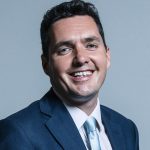

  • Huw Merriman – 2022 Statement on Rail Cancellations

    Huw Merriman – 2022 Statement on Rail Cancellations

    The statement made by Huw Merriman, the Minister of State at the Department for Transport, in the House of Commons on 1 December 2022.

    I thank the hon. Lady for her urgent question, which gives me the opportunity to set out the Government’s disappointment with the experience of many passengers, not just across the north, but in other parts of the country. We recognise that current performance is not acceptable and is having a significant effect on passengers and the northern economy.

    I will focus on two operators to set the scene. The first is TransPennine Express services. TPE services have been impacted by a number of factors, including higher than average sickness levels among train crew, the withdrawal of driver rest day working, which is the option for drivers to work their non-working days as overtime, the withdrawal of conductor rest day working and other overtime working, and strike action on Sundays and some Saturdays since mid-February under a formal RMT union dispute.

    TransPennine Express had a formal rest day working agreement with ASLEF that was due to expire in December 2021. The rates of pay under that agreement were 1.75 times the basic pay with a minimum of 10 hours paid, the most generous such agreement in the industry. In December 2021, TPE approached ASLEF seeking to extend the existing agreement. Rest day working forms no part of the terms and conditions, so either side is free to refuse or enter into the agreement when it expires.

    On this occasion, local ASLEF officials refused to extend the agreement and sought to negotiate different terms. In the absence of a new agreement, drivers withdrew their rest day working when the existing agreement ended, and further offers have not materialised into an agreement. TPE is undertaking an intensive programme of crew training to eliminate a backlog of pandemic-induced route knowledge loss and delayed traction training, and to prepare the business for timetable changes such as the Manchester recovery taskforce December 2022 change.

    Turning briefly to Avanti, the primary cause of recent problems with Avanti train services has been a shortage of fully trained drivers. It is a long-standing practice for train companies to use a degree of overtime to run the timetable, to the mutual benefit of staff and the operators. Avanti was heavily reliant on drivers volunteering to work additional days because of delays in training during covid. When volunteering suddenly all but ceased, Avanti was no longer able to operate its timetable. However, nearly 100 additional drivers will have entered formal service this year between April and December, and Avanti West Coast has begun to restore services, focusing on its key Manchester and Birmingham routes.

    I will end by saying that we need train services that are reliable and resilient to modern-day life. While the companies have taken positive steps to get more trains moving, they must do more to deliver certainty of service to their passengers. We will fully hold them to account for things that are within their control, and we look for others to be held to account on matters that are outside of the train operators’ control.

  • Nadia Whittome – 2022 Parliamentary Question on Voter ID and Turnout Levels

    Nadia Whittome – 2022 Parliamentary Question on Voter ID and Turnout Levels

    The parliamentary question asked by Nadia Whittome, the Labour MP for Nottingham East, in the House of Commons on 1 December 2022.

    Nadia Whittome (Nottingham East) (Lab)

    Whether the Committee has held discussions with the commission on the potential impact of the introduction of voter identification on young people’s ability to vote.

    Cat Smith (Lancaster and Fleetwood)

    The Electoral Commission has not identified young people as a group that is more likely to need additional support to navigate the ID requirements. Its research found that 2% of 18 to 24-year-olds said that they do not have an acceptable photo ID, which is in line with the average for all age groups. In January, the commission will begin public awareness work to ensure that all voters are aware of the ID requirement, and that those without ID know how to apply for the free voter authority certificate.

    Nadia Whittome

    The regulations listing documents that will be accepted as voter ID were not in the Elections Bill, but, instead, were in secondary legislation. If MPs had had the opportunity to scrutinise that, many of us would have opposed the clear discrimination that sees a far more limited range of acceptable ID for younger voters compared with older voters. Has the Electoral Commission a view on whether such a limited range is appropriate and were its views sought in the process of compiling a final list?

    Cat Smith

    The list of acceptable ID was included in the Elections Bill. There is of course secondary legislation before the House on 12 December and I encourage my hon. Friend to take part in the debate on the Floor of the House. The commission did provide feedback on the Bill’s content, including on the list of accepted ID, but it is for the Government to decide which forms of ID are on that list.

    Alexander Stafford (Rother Valley) (Con)

    Obviously voter ID is an important topic, but can the commission ensure that nobody loses out and that this will not take a single penny out of the pockets of people who cannot afford to buy ID?

    Cat Smith

    The commission has consistently made the case before the roll-out of voter ID requirements that, should they be rolled out, there should be a free voter authority certificate available via local authorities. The legislation to make provision for that was laid before the House recently and will be debated on the Floor of the House on 12 December.

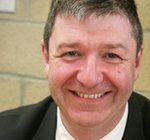
  • Alistair Carmichael – 2022 Parliamentary Question on Voter ID and Turnout Levels

    Alistair Carmichael – 2022 Parliamentary Question on Voter ID and Turnout Levels

    The parliamentary question asked by Alistair Carmichael, the Liberal Democrat MP for Orkney and Shetland, in the House of Commons on 1 December 2022.

    Mr Alistair Carmichael (Orkney and Shetland) (LD)

    Whether the Committee has held recent discussions with the commission on the potential impact of different forms of voter identification on levels of voter turnout.

    Cat Smith (Lancaster and Fleetwood)

    The Government piloted different models of voter ID at elections in 2018 and 2019. In its independent evaluations, the commission found no evidence that turnout was significantly affected by the models piloted. However, it was unable to draw definitive conclusions, particularly about the likely impact at a national poll with higher levels of turnout.

    Mr Carmichael

    Things have moved on since then. We now have the detailed proposals from the Government and we can see a number of concerns—in particular, the massive imbalance between the ID available for younger people as opposed to that available for older people. We also know from published correspondence that the commission has warned the Government that the introduction of voter ID will be neither secure nor workable by 2023. In all these circumstances, what more can the Committee and the commission do to ensure that good sense is heard in time and that the Government are not simply allowed to railroad this through?

    Cat Smith

    I can reassure the right hon. Gentleman that the Committee has heard the points that he has made, but it is for the Government and not the commission to comment on the reasoning behind the inclusion or exclusion of any particular form of ID. The commission has emphasised that voting at polling stations must remain accessible for all voters regardless of age and for voters who do not already have acceptable photo ID.

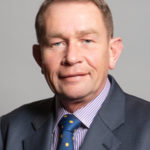
  • Philip Hollobone – 2022 Parliamentary Question on Road Investment Strategy 2

    Philip Hollobone – 2022 Parliamentary Question on Road Investment Strategy 2

    The parliamentary question asked by Philip Hollobone, the Conservative MP for Kettering, in the House of Commons on 1 December 2022.

    Mr Philip Hollobone (Kettering) (Con)

    What plans the commission has to consider the report from the National Audit Office on road investment strategy 2.

    Mr Richard Bacon (South Norfolk)

    The National Audit Office’s report on road enhancements has recently been published and it is excellent. The Public Accounts Commission itself, in line with its statutory duty, has no plans to examine the report, but many of the NAO’s reports are taken up by the Public Accounts Committee and while, of course, it is a matter for the PAC to determine its own programme, I will draw the interest of my hon. Friend to the Chair of the PAC.

    Mr Hollobone

    Delays to projects in road investment strategy 2 primarily because of development consent difficulties have meant that fewer road projects have been delivered than planned and at a higher cost. Should the commission study the report, may I urge my hon. Friend to examine the potential negative impact on the next road investment strategy—RIS 3—of future road projects being shelved because of hold-ups and cost pressures in RIS 2?

    Mr Bacon

    In its September 2020 delivery plan, National Highways expected that it would spend £5.5 billion in the third road strategy on projects approved since 2020. Since then, this has increased to £11.5 billion largely because of project and planning delays. Taxpayers may well feel scandalised that they are paying more money and getting fewer road enhancements. I know that my hon. Friend has a particular interest in the proposed junction 10a of the A14 east of Kettering and I urge him to consider pressing his case with Ministers as I know he was doing as recently as last week.

  • Sarah Green – 2022 Parliamentary Question on Arts Council Funding

    Sarah Green – 2022 Parliamentary Question on Arts Council Funding

    The parliamentary question asked by Sarah Green, the Liberal Democrat MP for Chesham and Amersham, in the House of Commons on 1 December 2022.

    Sarah Green (Chesham and Amersham) (LD)

    What assessment she has made of the potential impact of Arts Council England funding decisions on leading cultural institutions.

    The Parliamentary Under-Secretary of State for Digital, Culture, Media and Sport (Stuart Andrew)

    Decisions about which organisations to fund and at what level were taken by the Arts Council, an arm’s length body from Government. The Arts Council remains committed to supporting the core cultural institutions. For example, three institutions that receive the most funding in the portfolio are the Royal Opera House, the National Theatre and the Southbank Centre. Many high-profile, established organisations such as the Royal Shakespeare Company and Opera North will continue to receive funding.

    Sarah Green

    I thank the Minister for his answer. Arts Council England’s decision to stop funding English National Opera in London and to effectively demand that it relocates to Manchester will leave hundreds of talented artists and professionals either out of work or forced to uproot their lives. Some of them live in my constituency and are understandably devastated by the decision that they now face, but they also feel blindsided, given that they had very little warning. Will the Minister tell me whether the artists directly impacted by the removal of ENO funding were consulted in advance of the decision? If not, why not?

    Stuart Andrew

    I know that the Arts Council has taken a considerable amount of time to look at the unprecedented number of applications—more than 1,700—that were received and that it has assessed them very carefully. It is making sure that £12.6 million is available in transition funding for those that will be leaving. The time has been increased from three months to seven months, so that there is support for them for up to 12 months. We would certainly encourage the Arts Council and the English National Opera to continue the dialogue that they are having.

    Mr Speaker

    I call the Chair of the Digital, Culture, Media and Sport Committee.

    Julian Knight (Solihull) (Con)

    On a similar theme, levelling up is undoubtedly a noble ambition, and the Arts Council funding has been too London-centric for too long¸ partly due to the subsidies to the Royal Opera House, which, if the Minister ever visits there, he will see is a bit like the Starship Enterprise, in terms of facilities. In correcting the imbalance, however, does he agree that the Arts Council needs to be careful about not potentially wrecking established institutions such as English National Opera, which was given very little notice of funding cuts? As a result, it is threatening legal action. A soft landing is needed. Does he agree that he needs to speak to the Arts Council to ensure that, when it makes such decisions in future, it has a plan in place to ensure that those institutions are at least protected and have a way in which to cope with the decision?

    Stuart Andrew

    I reiterate that the Arts Council is an arm’s length organisation. We have had several meetings to hear about the long processes that it has undertaken to consider each of the awards that it has made. We pushed it to increase the transition period of funding, recognising the difficulty that that may present to other people. We hope that both Arts Council England and English National Opera will work together—we certainly encourage them to—on the possibilities for the future of the organisation.

    Mr Speaker

    I call the shadow Minister.

    Barbara Keeley (Worsley and Eccles South) (Lab)

    We all support the fairer distribution of arts funding and the principle that communities outside London should get a fairer share so that everybody everywhere can enjoy the arts, but levelling up should not be about pitting arts organisations against one another. What we have seen is an attempt to address regional disparity by shifting some funding to the regions, but doing so from a funding pot that has been shrinking since 2010. Does the Minister agree that these very short timeframes and the lack of consultation on these cuts to funding could have a very damaging impact on the ecosystem of the arts?

    Stuart Andrew

    Well, I have to say that London will still be getting the lion’s share of funding from the Arts Council. I make no apology for what we are seeing in areas such as Blackburn, which had never received any funding: four projects there are now receiving funding. Why cannot talented artists in Blackburn get the same access to those opportunities as artists in London? I do not understand the problem.

  • Rupa Huq – 2022 Parliamentary Question on Arts Council Funding

    Rupa Huq – 2022 Parliamentary Question on Arts Council Funding

    The parliamentary question asked by Rupa Huq, the Independent MP for Ealing Central and Acton, in the House of Commons on 1 December 2022.

    Dr Rupa Huq (Ealing Central and Acton) (Ind)

    What steps she is taking to support the tourism sector and visitor economy.

    The Parliamentary Under-Secretary of State for Digital, Culture, Media and Sport (Stuart Andrew)

    The UK was one of the first countries to remove the barriers to both domestic and international visitors, and set out a post-covid tourism recovery plan in summer 2021. An inter-ministerial group for the visitor economy was formed this year, and will meet again in December to discuss cross-departmental policy priorities in support of this important sector.

    Dr Huq

    With the axe looming over the English National Opera and the Donmar Warehouse—both national attractions that have helped the tourism the Minister has described to be a multibillion-pound industry for so many years—and local newbies such as the Ealing Project venue and ActOne cinema facing a tough environment with the post-covid footfall downturn and looming bills, could the Government, now that they are in reset mode, reconsider the impact of Arts Council cuts on London so that we can get tourism flowing through our capital again, from centre to suburb?

    Stuart Andrew

    The Arts Council is an arm’s length body; it makes the decisions and has done so very carefully. It is working with various organisations that will be leaving the funding. However, it is right that we share the funding around the rest of the country; I make no apology for that. I want people not just to come to London to visit our wonderful facilities here, but to go around the whole country and experience what a great country we have to offer for tourism.

    Mrs Pauline Latham (Mid Derbyshire) (Con)

    I welcome what the Minister said about spreading the money around the country. I invite him to come to the Derwent valley mills world heritage site, which is key to the whole of the spine that goes through Derbyshire. It is in disrepair and we need to get tourism back on track for Belper in particular. I would also like him to come to adjacent sites where we have “the clusters”, which are very ancient roads, to see how he can help with some funding.

    Stuart Andrew

    It would be great to go from Qatar to Derbyshire and I would be more than happy to accept my hon. Friend’s invitation. She is right to talk about the many opportunities that we need to look at, including, particularly, the offer in the rest of the country for tourism from not just this country, but around the globe. One of my priorities is to get more people to come to London, of course, but then to visit other great counties such as Yorkshire, as I am sure you would agree, Mr Speaker.

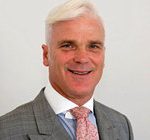
  • Desmond Swayne – 2022 Parliamentary Question on Matt Hancock and the Conservative Whip

    Desmond Swayne – 2022 Parliamentary Question on Matt Hancock and the Conservative Whip

    The parliamentary question asked by Desmond Swayne, the Conservative MP for New Forest West, in the House of Commons on 1 December 2022.

    Sir Desmond Swayne (New Forest West) (Con)

    What steps her Department is taking to support the film and television industry.

    The Secretary of State for Digital, Culture, Media and Sport (Michelle Donelan)

    As set out in our broadcasting White Paper earlier this year and when I visited Pinewood and Shepperton studios last week, the Government are taking action to support British broadcasters and our world-leading film and television industries. That includes ensuring that public service content is easy to find on a wide range of TV platforms; delivering our £21 million UK global screen fund; and continuing to support our screen sector tax reliefs, which provide nearly £1 billion of support to more than 1,000 projects.

    Sir Desmond Swayne

    Given the sheer spunk of the contribution that my right hon. Friend the Member for West Suffolk (Matt Hancock) has made to television, it would be churlish not to restore the Whip, wouldn’t it?

    Michelle Donelan

    As my right hon. Friend knows, that is not a decision for me, but we can always depend on the right hon. Member for West Suffolk to attack a challenge with gusto, and I was not surprised at all to see him taking on all sorts of animal parts during the show. It has become a little bit of a thing for my predecessors to join that show, but I hope I can provide reassurance that I have no intention of ever doing so.

    Mr Speaker

    Never say never.

    Kevin Brennan (Cardiff West) (Lab)

    Of course, a very important part of our film and television industry is the music that goes with it and the composers who provide that music. At this juncture, it would be wrong of me to not recognise and send sympathy to the family of Christine McVie, one of Britain’s greatest ever songwriters, who sadly passed away yesterday. [Hon. Members: “Hear, hear.”]

    I was glad to hear what the Minister of State aid about AI earlier, because that will affect film and TV composers, as well as other people within the industry. Will she ensure that in undertaking the AI review, the Government listen very carefully to the views of songwriters and composers who work in the film and television industry during their consultation?

    Michelle Donelan

    I echo the hon. Member’s sympathies. Of course, we will listen to all relevant voices, and I am happy for the hon. Member to meet with either myself or the Minister of State, who is responsible for this.

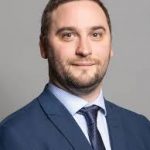
  • Christian Wakeford – 2022 Parliamentary Question on Football Governance

    Christian Wakeford – 2022 Parliamentary Question on Football Governance

    The parliamentary question asked by Christian Wakeford, the Labour MP for Bury South, in the House of Commons on 1 December 2022.

    Christian Wakeford (Bury South) (Lab)

    Whether she plans to implement the recommendations of the fan-led review of football governance.

    The Secretary of State for Digital, Culture, Media and Sport (Michelle Donelan)

    The Government published their response to the recommendations of the independent fan-led review of football governance in April 2022. We do recognise the need for football fans to be at the heart of the game and for the reforms to ensure that the game is successful and sustainable in the long term. Football clubs are at the core of local communities and, for too long, fans have been an afterthought for some club owners.

    Christian Wakeford

    Football’s coming home, but it seems that a football regulator is not. Without a football regulator, there will be no say for fans and no financial or fit-and-proper assessment of new owners, with more clubs like Bury being at risk. Almost a year on from the fan-led review, the Government are no further on in implementing any of the changes. In that time, we have seen the sale of Chelsea and the near collapse of Derby. Why are the Government dragging their feet?

    Michelle Donelan

    It is important that I praise the work of my hon. Friend the Member for Chatham and Aylesford (Tracey Crouch), who got the fans’ voice right at the heart of her report. I and the Minister responsible for sport have met multiple football supporters’ groups and will continue to do so. The White Paper will be published imminently.

    Kevin Foster (Torbay) (Con)

    At last week’s annual general meeting of the Torquay United Supporters Trust, there was much debate about how the World cup in Qatar and the discussions around it have yet again focused attention on the governance of the game of football. Does my right hon. Friend agree that it is absolutely vital that we make changes to ensure fans get a voice, that there is real engagement with their clubs, and that we do not see more of the incidents we have seen across this country, where clubs have been moved from their historic locations into other communities due to disputes over stadium ownership?

    Michelle Donelan

    We on the Government Benches understand how important it is to get this right, and we will get it right. We will put fans’ voices right at the heart of what we do, and ensure that whatever we do has the teeth to ensure change.

    Jeff Smith (Manchester, Withington) (Lab)

    In the years since the fan-led review was published, Southend United faced a winding-up petition and a transfer embargo after financial failings; Derby County was in administration; Chelsea could only carry on because of special exemptions when its owner was sanctioned; and the Mayor of the West Midlands wrote to the Football League to express his worries that Birmingham City’s future is in jeopardy under its current ownership. Which clubs will face trouble next year, the year after, or each year until the Government stop delaying the introduction of an independent regulator? The Prime Minister committed to implementing all the recommendations of the review, so why do they not just get on with it? After the next election, a Labour Government will.

    Michelle Donelan

    After the next election, a Conservative Government will continue to get on with the job, as we have always been doing. The Government recognise the importance of acting decisively, but also of getting this policy right; we have been considering it and consulting very carefully. Of course, in the meantime, those in football can take forward some of the reforms themselves, including financial redistribution, which we continue to urge them to do. The report will be imminent.

  • Gary Sambrook – 2022 Parliamentary Question on Grassroots Participation in Sport

    Gary Sambrook – 2022 Parliamentary Question on Grassroots Participation in Sport

    The parliamentary question asked by Gary Sambrook, the Conservative MP for Birmingham Northfield, in the House of Commons on 1 December 2022.

    Gary Sambrook (Birmingham, Northfield) (Con)

    What steps her Department is taking to encourage grassroots participation in sport.

    The Secretary of State for Digital, Culture, Media and Sport (Michelle Donelan)

    Grassroots sports bind our communities together and make people happier as well as healthier. Since 2019, Sport England has invested over £200,000 in my hon. Friend’s constituency, including £40,000 during the pandemic. In October, I announced £35 million of Commonwealth games physical activity legacy funding, opening up sporting opportunities across the west midlands. The Government are continuing to invest directly in grassroots sports facilities. I am sure that I can meet my hon. Friend to discuss this further.

    Gary Sambrook

    I recently met Matt and Alan from Northfield Town football club, who have ambitious plans for a new all-weather football pitch and female facilities for changing rooms and toilets. How can we support Northfield Town football club to make the new facilities a reality?

    Michelle Donelan

    Government investment, along with that from the Football Association and the Premier League, is delivered through the Football Foundation. Since 2019, the foundation has invested about £8 million in more than 300 projects in the Birmingham area, targeted based on local football facility plans. I am sure that the foundation would be keen to hear from Northfield Town about its ambitions. We will facilitate that via my office.