Tag: 2021

  • Angela Rayner – 2021 Comments on Natalie Elphicke

    Angela Rayner – 2021 Comments on Natalie Elphicke

    The comments made by Angela Rayner, the Deputy Leader of the Labour Party, on 12 July 2021.

    While the country was commiserating our great team, Tory MPs were sneering at an inspirational player who stepped up to feed hungry kids when they voted to leave them without food.

    Whether it’s their failure to support the vulnerable, or booing our boys after they have done our whole country proud, the Nasty Party is back.

    The question every Conservative MP needs to answer is – did they call out these appalling comments? And after his failure to support our players in their stance against racism, Boris Johnson must publicly condemn these disgraceful messages. Whose side is he on, the lion hearts on the pitch or the Tory MPs who attack them.

  • Kate Green – 2021 Comments on Exams in 2022

    Kate Green – 2021 Comments on Exams in 2022

    The comments made by Kate Green, the Shadow Secretary of State for Education, on 12 July 2021.

    Time and again the Conservatives have delayed action on exams creating two years of chaos and uncertainty. Schools, colleges and pupils must know how they’ll be assessed by the return to school in September not weeks into the autumn term.

    The Conservatives’ proposals include nothing on levelling the playing field for pupils who’ve missed most school, while their “feeble” catch-up plan will leave 11 out of 12 school pupils without any support next year.

    Ministers have again demanded school and college staff to work into the holiday all while they’re managing the end of the school year and getting preparations in place to keep kids in school come September. Ministers cannot continue to pass the buck but must set out comprehensive plans which match Labour’s ambition for our children’s futures.

  • Tulip Siddiq – 2021 Comments on Free School Meal Provision

    Tulip Siddiq – 2021 Comments on Free School Meal Provision

    The comments made by Tulip Siddiq, the Shadow Minister for Children, on 13 July 2021.

    Feeding hungry children cannot be a part-time activity, yet this Conservative Government is again stripping away the support that millions of families rely on.

    Ministers have had to be shamed into providing food for hungry children throughout the pandemic and it is a disgrace that we are having to do this all over again.

    Ensuring no child goes hungry is at the heart of Labour’s Children’s Recovery Plan, which includes guaranteeing free school meals support over all school holidays during the pandemic.

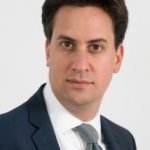
  • Ed Miliband – 2021 Comments on Lifting Covid Restrictions

    Ed Miliband – 2021 Comments on Lifting Covid Restrictions

    The comments made by Ed Miliband, the Shadow Business Secretary, on 13 July 2021.

    Once again, businesses have been left to scramble with confusing and contradictory advice, with Ministers ducking doing the right thing and loading responsibility onto Britain’s firms.

    Ministers are passing the buck to businesses and individuals with vague and unclear advice, encouraging but not mandating the use of masks as well as the NHS Covid Pass, with no details about how this would work, and the sectors and businesses in scope. Inexplicably they are also ending the provision of free workplace testing.

    Ministers should continue to mandate the use of masks, continue to provide lateral flow testing for workplaces, and give workers the right to continue working from home if they can. And they must also urgently consult with businesses and trade unions about vital new guidance to keep employees safe.

  • Jo Stevens – 2021 Comments on Football Ticket Prices

    Jo Stevens – 2021 Comments on Football Ticket Prices

    The comments made by Jo Stevens, the Shadow Secretary of State for Digital, Culture, Media and Sport, on 10 July 2021.

    England’s success in this tournament has made us all proud and shown again how much joy football can bring.

    Sadly ticket prices have been outrageous, pricing out genuine fans.

    As we bid for 2030, we must make it affordable to watch the World Cup on home soil for the first time since 1966. Let’s bring football home.

  • Keir Starmer – 2021 Comments on Eve of England Football Match

    Keir Starmer – 2021 Comments on Eve of England Football Match

    The comments made by Keir Starmer, the Leader of the Opposition, on 10 July 2021.

    To Gareth Southgate and our England heroes, I want to say thank you.

    On and off the field, you’ve shown the best of England during this tournament.

    You’ve been as fearless as the three lions on our crest. You’ve lit up this tournament. And in spite of those who tried to undermine you, you’ve used your platform to stand up for our shared values as a country.

    In doing so, you have become role models not just to a generation of young people, but to an entire nation.

    I want you to know that as you line up at Wembley today, the whole of England will be bursting with pride watching you.

    We still believe. Bring it home.

  • Ranil Jayawardena – 2021 Statement on Free Trade Agreement with Iceland, Liechtenstein and Norway

    Ranil Jayawardena – 2021 Statement on Free Trade Agreement with Iceland, Liechtenstein and Norway

    The statement made by Ranil Jayawardena, the Parliamentary Under-Secretary of State for International Trade, in the House of Commons on 8 July 2021.

    Today, Norway’s Trade Minister Iselin Nybø, Iceland’s Foreign Minister Gudlaugur Thór Thórdarson, Liechtenstein’s Foreign Minister Dominique Hasler, and I are signing the United Kingdom-Iceland, Liechtenstein, and Norway Free Trade Agreement (FTA) in London. This is another trade deal that the United Kingdom has struck as an independent trading nation, in which our partners have gone further and faster than they have with anyone else in a number of areas, demonstrating what is possible between trusted trading partners.

    It is the first time these three European countries have included dedicated chapters on small businesses and digital trade in any trade deal, including some of the most liberalising and modern digital trade provisions in the world, which simplify customs procedures, cutting red tape and making it easier than ever for our businesses to export across borders. Electronic documents, contracts and signatures will result in less paperwork, saving British firms time and money. Their offer to the United Kingdom on services and investment goes beyond what they have offered other FTA partners to date. Innovative FinTech firms will be able to provide financial services into Norway, Iceland and Liechtenstein, without having to provide that service elsewhere first, helping the United Kingdom to maintain its status as a financial services hub.

    The agreement contains robust commitments on trade and sustainable development, demonstrating our shared global leadership on pressing issues such as climate change and protects our “right to regulate”, supporting us in meeting our ambitious domestic climate targets, including net zero for the United Kingdom.

    Building on our current goods agreement, this agreement will cut more Norwegian tariffs on high-quality British food and farm products and could help support British fish processing industries from Grimsby to Grampian with further reductions on our tariffs on certain white fish, shrimps and prawns. The agreement could help support businesses in every corner of our country, helping to grow a trading relationship already worth £21.6 billion in 2020.*1

    This deal will deliver more opportunities for key British sectors especially those providing financial, legal, and other professional services. It will allow businesses in all sectors to send their staff on business visits or to provide services contracts to these countries, as well as the ability to transfer them for longer term projects. It means those with professional qualifications will have clear routes for the recognition of their qualifications for regulated professions. In addition, the agreement opens up new opportunities for British businesses to bid for a wider range of Government contracts in these countries.

    HM Government is committed to transparency and the effective scrutiny of our trade negotiations. Following today’s signature of the FTA, I can announce that the Department for International Trade and the Foreign, Commonwealth and Development Office will be formally presenting the signed treaty text and related documents to Parliament before the summer recess for scrutiny under the Constitutional Reform and Governance (CRaG) Act procedure. Laying ahead of summer recess ensures that the House has the maximum amount of time to scrutinise the detail of our trade deal.

    Alongside the treaty text, we will lay an explanatory memorandum. An impact assessment of our trade deal, and a parliamentary report providing an overview of the deal, will also be placed in the Libraries of both Houses at the same time. All of the documents will be published on gov.uk in parallel.

    *1 ONS, UK total trade: all countries, non-seasonally adjusted: October to December 2020

  • Nick Gibb – 2021 Statement on the National Funding Formula Reforms

    Nick Gibb – 2021 Statement on the National Funding Formula Reforms

    The statement made by Nick Gibb, the Minister for School Standards, in the House of Commons on 8 July 2021.

    Today, the Government are publishing a consultation document on the schools national funding formula (NFF), entitled “Fair School Funding For All: Completing Our Reforms To The National Funding Formula”. This is an important step in our work to ensure that every school and academy trust has the right resources so that they can continue to drive up academic standards, as the school system recovers from the impact of the pandemic.

    We are delivering the biggest increase in education funding in a decade, with additional funding of £2.6 billion in 2020-21, £4.8 billion in 2021-22 and £7.1 billion in 2022-23, compared to 2019-20: in total, over £14 billion across the three years.

    We know it is critical that this investment is distributed fairly between all areas of the country and all schools. We have already taken significant steps to make the school funding system fairer.

    The introduction of the schools NFF in 2018-19 means that funding is now distributed more fairly across the country. This was a major step forward from the postcode lottery of the previous funding system, in which historical funding levels, rather than current needs, drove the distribution of funding. A majority of local authorities have moved their funding formulae towards the NFF since its introduction in 2018-19, and 73 local authorities of 150 are now mirroring the NFF funding factors almost exactly.

    As we set out when we introduced the NFF, our long-term goal is that every school’s final funding allocation is determined by the same, national formula, and is no longer subject to further adjustment by local authorities. The current consultation presents our proposals for how such an NFF, directly applied to schools’ budgets, should operate. It also sets out the next steps to ensure a smooth transition towards this goal.

    This reform will bring several benefits for schools. It will ensure a fair funding system, with funding for every school matched to a consistent assessment of need. It will make the funding system simpler and more transparent for all involved. It will also help to underpin our ambition for all schools to be part of a strong multi-academy trust, so that all schools within each trust will be funded on a consistent basis, regardless of which local authority they are located in. This will provide academy trusts with the predictability needed to make the best use of resources to further raise academic standards.

    The Government are mindful that completing the reforms of the NFF represents a significant further change for the school system. In the consultation, we present proposals to move local funding formulae progressively closer to the NFF to achieve greater fairness and consistency in funding. This will provide the opportunity to consider the impact of each step before making the next move. We are determined to complete these reforms and secure the benefits that they will bring, but we want to move carefully towards this end goal over the coming years, working with schools, academy trusts, local authorities and sector organisations to ensure that the transition is a smooth one.

    The consultation will be open for 12 weeks, concluding on 30 September 2021. We plan to publish more detailed proposals in a second stage consultation over the winter following feedback to the first consultation.

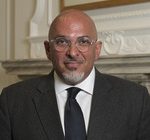
  • Nadhim Zahawi – 2021 Statement on Life Sciences Vision

    Nadhim Zahawi – 2021 Statement on Life Sciences Vision

    The statement made by Nadhim Zahawi, the Vaccines Minister, in the House of Commons on 7 July 2021.

    My noble Friend, the Parliamentary Under-Secretary of State (Minister for Innovation) (Lord Bethell), has made the following written statement:

    In “Build Back Better: our plan for growth”, the Government committed to publishing a series of sector visions that back the sectors and technologies that will shape the UK’s future. I am delighted to announce the publication of the first of these, on life sciences.

    The “Life Sciences Vision” sets our ambitious plans, jointly developed by Government, the NHS and the sector, to maintain the UK’s position as a global life sciences leader. It builds on the successes of the science and research response to the covid-19 pandemic, especially in vaccines and research, and benefits from new regulatory freedoms and opportunities now that we have left the European Union.

    The policy content of the vision focuses on three areas:

    1) science and research, capitalising on the UK’s deep industrial and academic expertise, and realising the significant potential of genomics and health data to consolidate the UK’s status as a world leader in research;

    2) NHS as an innovation partner, ensuring the NHS is using the latest and most innovative science and technology; and

    3) business environment, making sure the incentives are right for life science companies to start, grow and invest in the UK.

    The vision also highlights seven core disease and technology areas where there is an opportunity for the Government, industry, the NHS, medical research charities and academia to work together to meaningfully improve treatment options. These key disease areas are: cancer, dementia, mental health, obesity, ageing, respiratory disease and vaccines.

    The pandemic shows the importance of a flourishing life sciences sector to resilience and economic growth across the nations and regions of the UK. This vision will plot the course for the UK to maintain its global leadership in this important sector.

    In developing this vision, we have undertaken extensive engagement with stakeholders representing small and large businesses, charities, patient interest groups, and businesses representative organisations around the country, as well as the NHS and the devolved Administrations. We will continue to do so as we begin to develop our implementation plans.

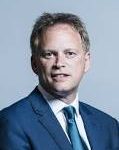
  • Grant Shapps – 2021 Statement on Supporting the Bus Sector

    Grant Shapps – 2021 Statement on Supporting the Bus Sector

    The statement made by Grant Shapps, the Secretary of State for Transport, in the House of Commons on 6 July 2021.

    During the pandemic, the Government have provided unprecedented levels of financial assistance to the bus sector through the coronavirus bus service support grant (CBSSG), supporting bus operators and local transport authorities in England outside of London, with up to £1.4 billion in funding since March 2020. With patronage falling and social distancing limiting passengers onboard, CBSSG has funded up to 100% of pre-covid service levels, ensuring key workers have continued to be able to travel easily and safely. Critically, as restrictions are lifted and passengers return, the bus sector is important in helping the economic recovery.

    I appreciate that this presents bus operators with a fundamental financial challenge. To encourage passengers back, local bus services should be as available as they were prior to the pandemic. Without support, however, it may not be possible for operators to maintain the services they have provided up until now.

    I can therefore announce that a further £226.5 million in financial support in the form of recovery funding has been made available for the bus sector. Funding operators and local authorities from 1 September until the end of the current financial year, this will succeed CBSSG which ends on 31 August. In addition to helping maintain services, recovery funding will support the key aims of the national bus strategy of encouraging local authorities and operators to work together to deliver better bus services. In return for receiving funding, operators will be asked to commit to co-operating with the process for establishing enhanced partnerships or franchising.

    With the publication of the national bus strategy in March, the Government set out bold ambitions to address the long-term challenge of providing quick, reliable, simple and affordable bus travel. Local authorities have been asked to develop ambitious bus service improvement plans by this October, outlining what will be done at a local level to make travelling by bus as attractive as possible. The Prime Minister has announced £5 billion for buses and cycling to deliver the strategy and provide vital investment for the sector.