The report issued by the House of Commons Committee on Standards on 8 July 2021.
Tag: 2021
-
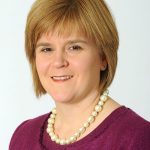
Nicola Sturgeon – 2021 Statement on Covid-19
The statement made by Nicola Sturgeon, the Scottish First Minister, on 3 August 2021.
Thank you Presiding Officer.
In updating Parliament today on the Government’s decisions about further easing of Covid restrictions, I will confirm that from next Monday, Scotland will move beyond the current level 0 restrictions, and I will set out the basis for that decision.
However, in line with the cautious approach we have taken throughout this pandemic, I will also set out a number of mitigation measures that will remain in place.
I will then outline changes to the requirement for self-isolation of close contacts of positive Covid cases.
And finally, I will summarise the key points from new guidance being published today on arrangements for the start of the new school year.
However, let me start by summarising today’s statistics.
The total number of positive cases reported yesterday was 1,016 – which is 8.1% of all tests.
There are 406 people receiving hospital care – one fewer than yesterday.
And 61 people are receiving intensive care, which is one more than yesterday.
Sadly, nine further deaths were reported over the past 24 hours, taking the total number of registered deaths, under this daily definition, to 7,952.
And as always, I want to convey my sincere condolences to everyone who has lost a loved one.
I can also report that 4,014,212 people have now received a first dose of vaccine.
And 3,231,331 have now had both doses of vaccine.
So all of these figures are broadly in line with the trend that has been evident for the past four weeks.
The number of new cases in Scotland reached a peak in early July.
At that time, more than 400 new cases per 100,000 of the population were being recorded each week.
That has now fallen by two thirds – from 425 per 100,000 at the peak to 144 now based on our most recent figures.
And although as we can see today this fluctuates on a daily basis, the average proportion of tests that are positive has also fallen – from more than 10%, to now less than 6%.
Thankfully, the number of people in hospital with Covid is also falling – in the past two weeks it has reduced from 529 patients to 406.
And the number of people in intensive care also now seems be declining, albeit gradually, as well.
So all of this is good news. And I think it demonstrates the value of taking a careful and steady approach to easing restrictions.
Another reason for this progress is, of course, the continued success of the vaccination programme.
All over 18-year-olds have now had the opportunity to receive at least one dose of the vaccine.
And all over 40-year-olds have been offered both doses. These were key milestones for moving beyond level 0.
These milestones have been met. And take-up of vaccination has been exceptional by any previous standard, or indeed by comparison with our expectations.
90% of over 18 year olds have now had at least one dose of the vaccine, and 72% of all 18 year olds have had both doses.
93% of over 40 year olds have had both doses of the vaccine. And indeed for those over 60, take-up for both doses is as close to 100% as could reasonably be hoped for.
There is of course still more to do, and I want to stress this point, especially amongst 18- to 29-year-olds. Take-up in that age group has been good, relative to our initial expectations, but we want it to be better.
That is why, for example, we are deploying walk-in and mobile vaccination centres across the country.
I can also confirm that preparatory work is underway for the next phases of vaccination.
Invitations for vaccines are now going out to 12- to 17-year-olds with specific health conditions that make them more vulnerable to Covid. And this follows recent advice from the Joint Committee on Vaccination and Immunisation. And we expect to have offered first doses to this group by the end of August.
In addition, I can advise Parliament that we are hoping to receive in the next few days updated advice from the JCVI on possible vaccination of others in the younger age groups.
And we stand ready to implement any recommendations as soon as possible.
And we are also preparing to deliver booster jags during the autumn for those already vaccinated, if that is indeed recommended.
The vaccination programme, therefore, is likely to continue for some time to come. It may become a feature of life. But it has already saved many lives, and achieved a huge amount of success. And I am grateful to everybody who has and continues to help deliver it.
Presiding Officer, Ii is the combination of the steady decline in cases, the success of vaccination helping to weaken the link between cases and serious illness, and of course our understanding of the social, health and economic harms that continued restrictions cause – all underpinned by our obligation to ensure that any restrictions that remain in place are lawful, in other words that they are both necessary and proportionate – that forms the basis for our decision today to move beyond level 0.
The move beyond level 0 will entail the lifting of most of the remaining legally imposed restrictions – most notably on physical distancing and limits to the size of social gatherings.
It also means that from 9 August, no venues will be legally required to close.
This change is significant and it is hard-earned. The sacrifices everyone has made over the past year and a half can never be overstated.
However, while this move will restore a substantial degree of normality, it is important to be clear that it does not signal the end of the pandemic or a return to life exactly as we knew it before Covid struck.
Declaring freedom from, or victory over, this virus is in my view premature.
The harm the virus can do, including through the impact of long Covid, shouldn’t be underestimated. And its ability to mutate may yet pose us real challenges.
So even as we make this move, care and caution will still be required. Which is why I now want to focus on the protections and guidance that will remain in place after 9 August.
Firstly, it will continue to be the law, subject to existing exemptions, that face coverings must be worn in all the same indoor settings as is the case now.
We will keep this under review, but my expectation is that face coverings are likely to be mandated in law for some time to come.
Second, Test & Protect will continue to contact-trace positive cases.
To assist with this, there will be an ongoing requirement for indoor hospitality and similar venues to collect the contact details of customers.
And while – as I will set out shortly – there will be a change in the approach to self-isolation for close contacts of positive cases, anyone who is required to self-isolate will, if eligible, continue to have access to support.
Thirdly, we will continue to work closely with local incident management teams on appropriate outbreak control measures, including the use of localised restrictions in future if necessary.
We will also continue to use travel restrictions, as and when necessary, to restrict the spread of outbreaks and protect against the risk of importation of new variants.
Fourthly, we will continue to advise home working where possible for now. I know most businesses are not planning a wholesale return to the office, but recognise that a return for some staff will be beneficial to them and to employers. But it is vital that this gradual approach continues.
We will also encourage employers to consider for the longer term, as indeed the Scottish Government is doing, a hybrid model of home and office working – which may, of course, have benefits beyond the need to control a virus.
Fifth, while we expect to see the careful return of large scale events, we will for a limited period, keep in place the processes through which organisers of outdoor events of more than 5,000 and indoor events of more than 2,000 will have to apply for permission. And this will allow us and local authorities simply to be assured of the arrangements in place to reduce the risk of large scale gatherings.
And last – but by no means least – we will continue to issue clear guidance to assist individuals and businesses to reduce the risk of transmission as much as possible.
Rigorous hygiene, including regular hand washing, will continue to be essential.
Good ventilation will also be important. I will set out shortly our intention to strengthen guidance on ventilation in schools, but we will also work across the public and private sectors to ensure an approach to improved ventilation.
And even though the law will not stipulate physical distancing from Monday, we will continue to advise the public that – especially indoors – keeping a safe distance from people in other households and avoiding crowded places will minimise risk.
We will also engage with businesses – and issue guidance as necessary – to ensure that safe environments for staff and customers are provided, and that all reasonable steps are taken to reduce the risk of outbreaks.
Presiding Officer, I can also confirm that we continue to consider very carefully the possible, albeit limited, use of Covid status certification for access to certain higher risk venues in future.
We are currently developing an app to make access to Covid status certificates – which will include vaccination details – easier for international travel. This will be launched next month.
The app will have functionality to support the use of such certificates for domestic settings should we decide that this is appropriate.
However, I want to assure Parliament that we do not underestimate the ethical, equity and human rights issues associated with Covid status certification, and we will keep members updated and consulted on our thinking on this issue.
The decisions I am confirming today reflect the fact that – principally due to vaccines – we are now in a different stage of this pandemic.
Vaccination has weakened the link between case numbers and serious health harms, and that means it is no longer appropriate or necessary – and therefore not necessarily even lawful – for us to rely as heavily as we did previously on blanket rules and regulations.
That’s something that will be welcome for many, but a source of anxiety for some.
The Chief Medical Officer will be writing to those who have been at the highest risk from Covid – who might previously have been asked to shield – to provide advice and information, and to give assurance that they too can return to a much greater degree of normality. The needs and concerns of this group will not be ignored, now or in future.
I want now to turn to the change that we propose to the current rules on self-isolation – to ensure that they remain reasonable and proportionate.
Let me be clear at the outset that those who have symptoms of, or who test positive for, Covid will still be required to self-isolate as now.
However, from 9 August, an adult who is identified as a close contact of someone who has tested positive for will no longer be required automatically to self-isolate for 10 days.
Instead, if someone is double-vaccinated – with at least two weeks since the second dose – and if they have no symptoms, they should get a PCR test as soon as possible. And if the PCR test is negative, self-isolation can then be ended.
And as PCR results come back quickly – frequently within 24 hours – this will greatly reduce the amount of time that many people will need to spend in self-isolation.
We are proposing a similar change for people aged 17 or under – most of whom, of course, are not yet eligible for vaccination.
If a young person aged 5 to 17 is identified as a close contact, they will need to take a PCR test – but they can end their self-isolation if they test negative. Children under the age of five will be encouraged but not required to take PCR tests.
In addition, Test and Protect will implement revised guidance for under 18s, including in schools.
This means that the blanket isolation of whole classes will no longer be routine. Instead a more targeted approach will identify close contacts at highest risk of infection.
So fewer young people will be asked to self-isolate, and most will be asked to self-isolate for a much shorter period of time.
Obviously his is especially important as we approach the start of the new school year. So let me turn to the wider arrangements for the return of schools. And updated guidance is being published today.
As a consequence of the new approach to self-isolation – which is important to minimise disruption to education – and in line with advice from our Expert Advisory Sub-Group on Education, we have decided to retain, for the first six weeks of the new academic term, most of the other mitigations that are currently in place in schools.
This also reflects the unique environment of schools, where large numbers of unvaccinated children and young people mix with adult staff.
So for up to six weeks – subject then to review – there will be a continued requirement for staff to keep at least a metre distance from each other and from children and young people while on the school estate.
And we’ve also decided, after careful consideration, to retain the current requirements for face coverings in schools for staff and for children aged 12 or over. That includes asking young people and staff in secondary schools to wear face coverings during lessons, and while inside school buildings.
I am acutely aware that many, many young people find this difficult – and it will be kept under review. But for now, we consider this an important protection for them, and for others in the school.
The Expert Advisory Sub-Group has also emphasised the importance of good ventilation, and we are therefore strengthening guidance in this regard.
Many local authorities have already taken steps to improve ventilation in the school estate, and this work has highlighted the value of CO2 monitors.
These devices are useful in assessing how well ventilated a space is, and therefore how likely it is that the virus could be present.
The new guidance, published today, makes clear that all schools and daycare services for children must have access to CO2 monitoring – through either fixed or mobile devices – and that these should be used to assess the quality of ventilation in schools and childcare settings, and identify any necessary improvements.
These assessments will be ongoing obviously over the coming weeks, but we expect them to be completed – and necessary improvements identified – by the October half term.
And I can also confirm today that we are making available to local authorities an additional £10 million to support this work.
Ventilation is one of the most important ways in which the risk of Covid transmission can be reduced – and so improving it will be vital, now and in the future, to ensure that schools and childcare centres are as safe as possible.
Finally, local authorities and schools will ask all secondary pupils, and all school staff, to take a lateral flow test one or two days before returning after the holidays, and then to take tests twice a week after that.
This continues to be an important additional way in which Covid can be identified, even in people who do not have symptoms.
We are also working with the further and higher education sector on plans for the year ahead. Specific guidance on operating beyond Level 0 for universities and colleges has now been published. In addition, students will be encouraged to take a PCR test before any move to term-time accommodation, and then to test twice a week after that.
Presiding Officer, the last year and a half has been – and this inevitably will be an understatement – it has been difficult and stressful for children and young people, parents, and all staff working in education settings. I am so grateful to them for the understanding and cooperation shown. The new school and academic year will still bring challenges, I think there is little doubt of that. But I hope it will also bring fewer disruptions, and also allow a much more normal learning environment for young people.
Presiding officer, today’s decisions are – in my view, and I hope those listening will agree – positive. They are possible only because of vaccination and the prolonged sacrifices of people across the country. Once again, I want to convey my deep appreciation of that to everyone across the nation.
The last year has reminded all of us just how precious some of the simplest things in life really are, and many of us I suspect will resolve not to take them quite so much for granted in future.
Undoubtedly, the best way of doing that in the short term is to continue to be careful, cautious and sensible, even as legal restrictions are lifted. The government will continue to provide guidance to help get that balance right.
We all hope – I know I certainly do – that the restrictions we lift next Monday will never again have to be re-imposed. But no-one can guarantee that.
This virus remains a threat – and as we enter winter, it may well pose challenges for us again.
So as we have done throughout, the government will seek to take whatever action is necessary to keep the country safe.
But as has also been the case throughout, we all have a part to play in keeping the virus under control.
And as always, although counter-intuitive perhaps, it is when we lift restrictions – and inevitably give the virus more opportunities to spread – that it becomes even more important for us to remember the basic actions that can reduce risk.
So I want to end by stressing again what all of us can do to help ensure that this next step forward is a sustainable one.
The first and most important thing is to get vaccinated. If you haven’t done so already – particularly if you are in these younger age groups, looking forward to resuming a more normal social life – then please do so. You can register through the NHS Inform website, or by going to a drop-in centre.
Second, please test yourself regularly. Free lateral flow tests are available by post through NHS inform, or collection from test sites and local pharmacies.
If you test positive through one of these – or if you have symptoms of the virus – you should still self-isolate and get a PCR test.
Third, stick to the rules which remain in place – for example, on face coverings. And keep being sensible about the things we know can help to keep ourselves and each other safe.
Meet outdoors as much as possible – especially for as long as we have reasonable weather. If you are meeting indoors, open windows – the better ventilated a room is, the safer it will be.
Remember that keeping some distance from people in other households and avoiding crowded indoor places – even if no longer legally mandated – these are still sensible precautions.
And continue to wash your hands and surfaces as much as possible.
In short, enjoy being able to do more and meet up more. We’ve all waited a long time for that. But please protect yourself as you do so, principally through vaccination, and continue to take the greatest of care.
If we all do that, we will increase our chances of keeping the virus under control. We will protect ourselves and our loved ones.
And we will safely and securely return to the ways of life that we all value so much.
-

Amanda Solloway – 2021 Speech on UK Research and Innovation
The speech made by Amanda Solloway, the Science Minister, on 6 August 2021.
Thank you for inviting me to speak to you today.
Imperial College has an impressive history as a research-intensive institution and an exciting future. I’m thrilled about the opportunity to visit your White City campus and to see what you’ve been building there – I’ve been told I’ll see ‘levelling up’ in action! And of course the work you’ve been doing to make your research available open access has been an inspiration to the whole sector – not just in the UK but abroad.
This government places science, research and innovation at the heart of our plans to build back better from coronavirus. We fully recognise that it has been only through the ingenuity, creativity and courage of our scientists and inventors that we have found a way out of the pandemic. We will learn from this as we forge a better life for ourselves in the years ahead.
So, it is crystal clear to me, to this government, that we can only realise our ambitions by helping brilliant people to flourish and reach their full potential.
And a big part of this means changing the culture of research and innovation.
It was therefore a huge pleasure to publish the UK’s first ever R&D People & Culture strategy last month.
I am genuinely thrilled that the UK government is, for the first time, taking clear and ambitious steps towards tackling some of the longstanding issues that we know we face in research and development (R&D), for example by valuing technical skills, by addressing bullying and harassment, by fixing our PhD training offer, and by embracing diversity in all forms. By working together to follow the path set out in the strategy, we will achieve something amazing.
We’ll grow a stronger, more vibrant and more engaged workforce.
We’ll become the very best place in the world to be a researcher or innovator.
And we’ll lead the future by creating it.
But today I want home in on one specific aspect of research culture, and that is open research.
It has been true for a long time that our research sector has a particular and unequivocal drive towards openness. We have a duty to make the findings of publicly funded research openly available, to make them as useful and impactful as possible to all potential users, for the benefit of everyone.
It was Professor Dame Janet Finch who famously wrote the following words about open access:
The principle that the results of research that has been publicly funded should be freely accessible in the public domain is a compelling one, and fundamentally unanswerable.
This was in 2012.
Nine years later, this principle remains unanswerable – even as global threats evolve.
Just take the COVID-19 pandemic.
In just one month, researchers sequenced the viral genome and shared it freely online as an open-access publication in the Lancet. Researchers from around the world went on to build incredible new data-sharing tools, opening up rich new data sources on epidemiology or policy, and posting countless new findings onto preprint servers.
Many journals took the necessary step to make all their papers relating to COVID-19 freely available.
By sharing research as openly and quickly as possible, and learning quickly from negative results and any unsupportable conclusions, we delivered the vaccines and treatments that are our surest way to stopping this deadly pandemic in its tracks.
This should be an example to all of us of what’s possible when research culture changes, and when behaviour changes. And what can be done when open research practices are widely adopted, with no excuses. But this isn’t a new imperative. Open research is an agenda where the UK has long been in the global lead. When it comes to the UK’s position on this agenda – I’m a believer!
And we should recognise that we have made good progress. Significant amounts of publicly funded research have been made free to read and reuse.
Studies show that at least 28% of articles are now free to read – increasing to perhaps half of all articles by some measures. And a recent study of 1,207 universities found that some made as much as 80 to 90% of their research free to read in 2017 – with 40 of the best-performing 50 in Europe being UK universities.
Other nations have been inspired by our courage and our conviction. From the Australian Research Council to Horizon Europe, many other governments, agencies and programmes have introduced open access policies of their own.
And I am thrilled that we were able to get a strong G7 commitment to open science this summer as part of the UK G7 Presidency, with agreement to incentivise open science practices; and promote the efficient and secure processing and sharing of research data across borders that is as open as possible, and as secure as necessary. Publishers, on the whole, have been responding to the incentives – and should be praised for showing leadership and not shying from the challenge we have set. Read-and-publish deals have been struck with Springer Nature, Wiley and the Microbiology Society. The pioneering open access publisher PLOS is piloting a new pricing scheme to eliminate author charges. And the ground-breaking Open Library of Humanities is now supported by over 300 institutions, making research across its 28 titles openly fully available to a wider audience.
Of course, there will be hurdles to overcome as everyone adapts. But the prize of open research is more valuable than any one stakeholder or business model.
The truth is that we must all go further.
There are still far too many articles that end up locked away behind paywalls – being cut off from an unimaginable range of useful applications in industry, in healthcare, or in wider society.
And when articles do become openly available, this is too often after a year or two has passed, when the embargo has finally been lifted and when in all likelihood the boat has sailed, the opportunity has passed, and the research field has moved on.
And there is a further wealth of research in the humanities and social sciences which winds up published in scholarly monographs, often with eye-watering price tags, and available only on the bookshelves of a small number of university libraries – not reaching the audiences it should.
When the most up-to-date record of human progress is locked away behind a paywall – and where those in need of publicly funded knowledge are told to cough up or lose out – you know that the situation has to change.
What I’m talking about here is work which is paid for by us all, in taxes. Work that we make a choice to invest in for our collective benefit.
And it’s work which is quality-assured by researchers themselves, through the network of volunteer peer reviewers.
Arguably, it is the ultimate public good.
In the digital age, where a “paper” is but a microscopically small yet infinitely reproducible string of ones and zeros, we should all see the tantalising opportunity in front of us, to share freely the fruits of knowledge far and wide.
So that is why I am delighted to announce that UKRI is launching its new open access policy. This is a policy that will achieve the government’s ambition, set out in the R&D Roadmap, of full and immediate open access for research articles – so from the day of publication, the results of UKRI-funded research are available for all. This policy will ensure that the results of UKRI-funded research are made as freely available as possible – not just for reading, but for reusing and recombining with other results, and creating the shared repository of human knowledge that will unlock the potential of even more people, in the UK and abroad, to learn, to discover, and find innovative new solutions to our most pressing problems.
And while it seems obvious that this is a necessary move by UKRI, it is not a decision that they have taken lightly. They have consulted and engaged on this policy for well over a year, talking to countless stakeholders and receiving over 350 inputs to their consultation. UKRI have gathered new evidence and engaged closely with other funders such as Wellcome to learn from their experiences and find common approaches.
And I am particularly pleased that the UK has, from the start, been a central player in the major international collaboration, Plan S – a plan to deliver full and immediate open access to the world’s research output. As a global science superpower, it is right for the UK to be at the heart of the global push for open research.
I also know that full and careful consideration has been given to the details in the UK context. I have listened to the arguments and met with many stakeholders myself.
My conclusion is that UKRI are to be applauded for taking this decisive step.
Of course, opening up the findings of research won’t change culture on its own. The open research agenda is about more than what’s written on the pages of journals and books.
The open research agenda is also about improving the very fabric of research, changing the way it’s undertaken as well as the way it’s communicated. This means opening up new possibilities for more creative and imaginative ways of undertaking and sharing research. And increasing transparency and sharing across the research process. As much as possible, we need to apply the principles of transparency and free access to more than just scientific publications. Open research encompasses all aspects of the research process, and research artefacts such as data, code and materials.
That is why it’s so important that we see the continuing emergence of new initiatives like Octopus: an experimental new platform for scientific research to be made available as separate elements – the problem statement, the methods, the data, and so on – all linked together, and all openly available.
Octopus has the potential to significantly disrupt the way that research is communicated, improving research culture. I’m delighted to announce that Octopus will receive £650,000 in funding from Research England’s Emerging Priorities Fund over the next three years, to help develop this prototype into a reality.
And while technology is important, it is critical that we get the incentives right, as we are indeed doing. Open research is already a key feature of the current Research Excellence Framework, as it will be in the next.
And the Global Research Council of the world’s research funders recently agreed that open research should be considered a dimension of research excellence and should be incentivised in assessment criteria.
This is something that funders take very seriously, and it is an area which will be key to delivering the vision set out in the People and Culture Strategy that I launched last week.
Let me conclude. The UK has a proud history at the forefront of research communication.
The Royal Society can proudly lay claim to inventing both the academic journal and the system of peer review that underpins it, way back in 1665.
It’s not hard to imagine our forefathers, themselves striving to build back better from the devastating impact of the bubonic plague, becoming energised by the new scientific discoveries published by the Royal Society – and bringing the Age of Enlightenment blinking into life all over Europe.
And fast forward to 1989, as particle physicists at CERN smashed electrons and positrons together in a huge underground ring, British scientist Tim Berners-Lee invented the World Wide Web – a new tool for connecting scientific knowledge in online web pages, and an invention which has defined the modern age.
And it was Stevan Harnad, a cognitive scientist from Southampton University, who prominently questioned the very purpose of the printing press in this new scientific digital age, sparking development of the EPrints research repository platform and the world’s first utterance of the term “open access”.
It was then my predecessor David Willetts who recognised the public interest in open research, and kindled those sparks of the early adopters into a flame, with Janet Finch’s report giving research funders the mandate to take those early steps towards a policy.
So, as we strive to build back better from the pandemic of today, now we can take our own step forward.
By unequivocally opening up the UK’s publicly funded research for free and open use and reuse, we will usher in a new scientific digital age – one where the unnecessary constraints on knowledge are cast off.
Today’s announcements are our own watershed moment in our history as a scientific nation.
Together we will develop a new culture of openness and collaboration, as an essential part of building the research culture we need to embrace the challenges and opportunities ahead.
Thank you.
-

Sadiq Khan – 2021 Comments on 10th Anniversary of Disorder in London
The comments made by Sadiq Khan, the Mayor of London, on 6 August 2021.
Our city has been through a lot since the disorder of summer 2011, and there is no escaping the reality that some of the complex and entrenched causes of the riots – inequality, poverty, lack of opportunity and the need for better relations between our police and London’s diverse communities – remain.
It’s crucial we tackle these challenges head on by advocating for increased funding and support to help regenerate the most deprived parts of our city. I have also made delivering better opportunities for young people in those disadvantaged neighbourhoods a cornerstone of my Mayoralty.
Young people need constructive things to do, that is why I’ve already invested in positive opportunities for more than 110,000 young Londoners, supporting them into education, training, culture and sports and diverting them away from criminal gangs and violence. I have also developed an Action Plan, in consultation with communities, to improve trust and confidence in the Metropolitan police to address concerns about the disproportionate use of certain police powers, particularly those affecting Black Londoners. But it’s clear we need to do much more.
As Mayor, I am committed to securing a better future for all Londoners and ensuring that nobody is left behind. That’s why I launched London’s biggest regeneration fund which has so far invested more than £75 million to 138 innovative regeneration projects with a strong emphasis on business support and making a difference on the ground in local communities – particularly those most impacted by the disorder.
-

Iain Stewart – 2021 Comments on the Turing Scheme
The comments made by Iain Stewart, the UK Government Minister for Scotland, on 6 August 2021.
Living, studying and working abroad is an invaluable way to broaden the mind, learn new skills and experience different cultures. It’s great that this scheme will give Scottish students from all backgrounds the opportunity to take up placements right across the globe.
The UK Government is working hard to create a truly Global Britain, in which the benefits of enhanced relationships with nations around the world are felt in every part of the country. The Turing Scheme is a major step forward in reaching this goal.
-
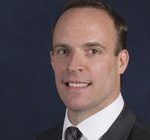
Dominic Raab – 2021 Joint Statement on MV Mercer Street Attack
The joint statement issued by the G7 Foreign Ministers and the High Representative of the European Union on 6 August 2021.
We, the G7 Foreign Ministers of Canada, France, Germany, Italy, Japan, the United Kingdom and the United States of America and the High Representative of the European Union stand united in our commitment to maritime security and the protection of commercial shipping. We condemn the unlawful attack committed on a merchant vessel off the coast of Oman on 29 July, which killed a British and a Romanian national. This was a deliberate and targeted attack, and a clear violation of international law. All available evidence clearly points to Iran. There is no justification for this attack.
Vessels must be allowed to navigate freely in accordance with international law. We will continue to do our utmost to protect all shipping, upon which the global economy depends, so that it is able to operate freely and without being threatened by irresponsible and violent acts.
Iran’s behaviour, alongside its support to proxy forces and non-state armed actors, threatens international peace and security. We call on Iran to stop all activities inconsistent with relevant UN Security Council resolutions, and call on all parties to play a constructive role in fostering regional stability and peace.
-

Keir Starmer – 2021 Comments on Boris Johnson and Coal Mine Statement
The comments made by Keir Starmer, the Leader of the Opposition, on 6 August 2021.
The Prime Minister has shown his true colours yet again.
For Boris Johnson to laugh when talking about the closure of the coal mines is a slap in the face for communities still suffering from the devastating effects of Margaret Thatcher’s callous actions.
I’m proud to have always stood with our coalfield communities. I represented the miners in court as the Tories tried to close the pits. These communities contributed so much to the success of our country, and then were abandoned.
The Tories didn’t care then, and they don’t care now.
For Boris Johnson to treat the pain and suffering caused to our coalfield communities as a punchline shows just how out of touch with working people he is.
The Prime Minister must apologise immediately.
-

Led By Donkeys – 2021 Statement on Sainsbury’s Pulling Advertising on GB News
The statement made by Led By Donkeys on 6 August 2021.
Just got word that Sainsburys has pulled its advertising from GB News and Nigel Farage’s show. Amazing job everyone. After a couple of billboards, an advance at their HQ, more than 2.5 million views on films, and escalating pressure, Sainsbury’s did the right thing. Huge thanks to everyone who contacted Sainsburys, to the volunteers at Stop Funding Hate who’ve been monitoring the channel and to the staff at the supermarket as well for pushing for this change.
-

Michelle Donelan – 2021 Comments on Turing Scheme
The comments made by Michelle Donelan, the Universities Minister, on 4 August 2021.
Our schools, colleges and universities have worked tirelessly to make this programme a success, and I am grateful to them and their global partners who have truly embraced this opportunity for international collaboration.
I look forward to seeing the innovation and expertise our students, pupils and vocational learners bring back to this country from their journeys to every corner of the globe – from Canada to Japan, and Australia to the United States.
-
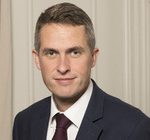
Gavin Williamson – 2021 Comments on Turing Scheme
The comments made by Gavin Williamson, the Secretary of State for Education, on 4 August 2021.
The chance to work and learn in a country far from home is a once-in-a-lifetime opportunity – which broadens minds, sharpens skills and improves outcomes.
But until now it has been an opportunity disproportionately enjoyed by those from the most privileged backgrounds. The Turing Scheme has welcomed a breadth of successful applications from schools and colleges across the country, reflecting our determination that the benefits of Global Britain are shared by all.
By strengthening our partnerships with the finest institutions across the globe, the Turing Scheme delivers on the Government’s post-Brexit vision, and helps a new generation grasp opportunities beyond Europe’s borders.