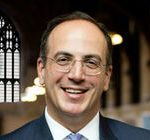
The statement made by Dominic Raab, the Foreign Secretary, on 27 August 2021.
My deepest condolences are with Harry Dunn’s family on the second anniversary of Harry’s tragic death. I will continue to support the family in their search for justice.

The statement made by Dominic Raab, the Foreign Secretary, on 27 August 2021.
My deepest condolences are with Harry Dunn’s family on the second anniversary of Harry’s tragic death. I will continue to support the family in their search for justice.

The comments made by George Eustice, the Secretary of State for the Environment, Food and Rural Affairs, on 27 August 2021.
The Environment Bill is at the vanguard of our work to implement the most ambitious environmental programme of any country on earth.
We have been clear about the need, and our intention, to halt the decline of our natural environment, and so we are strengthening our world-leading target to put this beyond doubt. It will be a challenging task, but halting this decline is a crucial part of our commitment to be the first generation to leave our environment in a better state.
Our new package of measures on storm overflows will help crack down on the pollution in our rivers, waterways and coastlines, to better tackle the harm that they cause.

The statement made by Dominic Raab, the Foreign Secretary, on 27 August 2021.
I was deeply saddened to learn that two British nationals and the child of another British national were killed by yesterday’s terror attack, with two more injured.
These were innocent people and it is a tragedy that as they sought to bring their loved ones to safety in the UK they were murdered by cowardly terrorists.
Yesterday’s despicable attack underlines the dangers facing those in Afghanistan and reinforces why we are doing all we can to get people out. We are offering consular support to their families.
We will not turn our backs on those who look to us in their hour of need, and we will never be cowed by terrorists.

The article written by Sajid Javid, the Health and Social Care Secretary, in The Times on 28 August 2021. The text of the article was released by HM Government.
From everything we’ve seen of our extraordinary vaccine rollout, one fact stands out above all others: the more people who get both doses of a COVID-19 vaccine, the easier and faster our return to normal life will be. The vaccines have given us a wall of defence against COVID-19 that, jab-by-jab, is getting stronger every day and the latest stats show that they have saved at least 100,000 lives in England alone.
When we began the vaccination programme, we asked the JCVI — the independent expert group of clinicians who advise the government on vaccines — to advise us on the order for vaccinations that would save the most lives and protect the most people from severe COVID-19. Their message was clear: start with the oldest and most vulnerable and work your way down.
Now we have protected the most vulnerable, the JCVI took the step earlier this month to advise that vaccines should be offered to 16- and 17-years-olds, bringing us in line with countries like Sweden, while recommending jabs for 12 to 15 year olds with specific underlying health conditions, or those that are household contacts of someone who is immunosuppressed. Right now they are investigating whether vaccinations could be given to all 12- to 15-year olds, as many other countries, including France, Germany and Italy have already started doing. While we await those findings, one thing is already crystal clear: the main consideration for any decision on vaccinating our young people will always be the risks and the benefits to children themselves.
For months now, the Delta variant has been sweeping its way across the world. We’ve seen how mutations surface and thrive among unvaccinated people. We know that more the population is protected by a vaccine, the more protection society as a whole will have from Covid-19. It is because of this simple principle, that offering all teenagers the jab would solidify our wall of protection and reduce the amount of infections, decreasing the risk of new variants emerging. If the expert clinicians recommend vaccinating 12 to 15 years olds, I and the fantastic NHS and public health teams are doing everything to make sure we’re ready with the same sense of urgency we’ve had at every point in this programme.
We have all see the effort that has gone into the vaccination programme, including the different places we could all go and get the vaccine, bringing together all the volunteers and vaccinators, and having a simple way of booking appointments and proving that you have had the jab. All of this took time to bring together. Last year, before the critical milestone of the first vaccine being approved by our medicines regulator and recommended for deployment by the JCVI, the wheels of government and the health service had been in motion for months. Blueprints and plans were being put in place for the most ambitious peacetime mobilisation of volunteers and health workers in our history to administer jabs across the country.
Looking ahead to the next stage of the vaccine programme today is no different. I have asked the NHS to be ready to roll out jabs to this age group – pending final advice from the JCVI.
The legwork is being put in across the government, between my Department and the Department of Education, ahead of any decision on both this age group and on the potential for booster vaccines for adults. Discussions have already begun with school vaccination teams to make sure, if the light turns green, they’re ready.
As a parent myself, I know that people who wouldn’t think twice about getting the jab for themselves will naturally have more questions when it comes to vaccinating their kids. There is no greater priority for a parent than the safety of their child and, you can rest assured: there is no greater priority for me and for the government. We have seen on a daily basis just how safe and just how effective our vaccines are, as we’ve given first doses to over 88% of 16 and overs, and the medicines regulator has approved the use of the Pfizer and Moderna vaccines for children aged 12 and above.
In any vaccination programme aimed at a young age group like this, parents and guardians will have a critical role to play – offering the kind of counsel you can only get from a parent or guardian. And if 12 to 15 year olds are offered the vaccine, parental or carer consent will be sought, just as we do with other school immunisation programmes.
Jabs at school are fortunately nothing new, and I, like so many others, remember well getting my tetanus, diphtheria and polio jabs at school – which is now a three in one jab – in a packed school hall. Our health service is steeped in experience of vaccination programmes at schools, with a proud tradition that long pre-dates the pandemic. Health leaders are already scoping out what a potential school programme of vaccinations of COVID-19 could look like, when combined with locations like local vaccination sites.
At the same time, the NHS is already agreeing partnerships with providers to recruit and train school aged immunisation teams, hosting online sessions with providers and local authorities to keep them abreast of contingency plans, and publishing a series of training materials in earnest.
It has been really fantastic to see that teenagers have been some of the most enthusiastic advocates of COVID-19 vaccines. In recent weeks, 16- and 17- years olds have been coming out in their droves to do their bit, travelling with schoolmates and family members to get the jab at sites like walk-in centres and GPs.
Anyone with teenagers at home will know just how well clued up they are. They know their stuff and get the huge benefits of being vaccinated. They know it can protect them and protect the adults around them.
So much of this enthusiasm comes from the fact they’ve seen the chaos COVID-19 can bring first-hand. We should not underestimate the size of the huge sacrifices they’ve had to make. Young people have endured months of sustained disruption to their learning, forced to adjust to learning at a kitchen table with many tired parents moonlighting as substitute teachers. It has also been an isolating experience for a great many teens, being denied the kind of formative experiences you can only get when you pass through the school gates.
While we await the advice of our scientific experts, we are doing what responsible government’s do and preparing for as many eventualities as possible. Whatever the advice says, I have no doubt we’ll continue to see the same sense of public spirit and shared responsibility that young people have exemplified at every point of this pandemic.
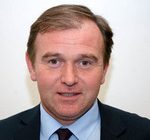

The statement made by Keir Starmer, the Leader of the Opposition, on 27 August 2021.
After the despicable acts of violence we witnessed on Thursday, the end of the evacuation from Kabul Airport marks a sad and dark day for many people in Afghanistan.
Amid the chaos, there have been many acts of courage. The Ambassador staying at his post to process every case he could. Paratroopers lifting people from the crush. Afghan soldiers who continue to serve alongside us to the end.
Soldiers and airmen, diplomats and embassy staff, working side by side with many Afghans have struggled tirelessly and bravely under immense pressure to get as many people to safety as possible. Their efforts must be widely recognised and honoured.
It has been a remarkable effort in unimaginably difficult circumstances with many acts of courage and heroism.
However, with the withdrawal we face the heart-breaking reality that people have been left behind, including many to whom we owe so much. The British Government must take its fair share of the responsibility and has serious questions to answer about how, despite having 18 months to prepare, their failure to plan and inability to influence others has contributed to this tragic political failure.
But first, although we no longer have a military presence in Afghanistan, we cannot and will not walk away from our obligations to the Afghan people. We must urgently help the thousands who we have left behind, some of whom are eligible for relocation under the ARAP scheme. There are MPs all over the UK who have constituents still pleading for their help. The Government must work quickly to deliver a strategy to get those people out and work with the UN and partners to quickly deliver essential aid directly to those in need.
We must then confront the new reality and challenges of Taliban control. Britain and our allies must use every lever we have to try and hold the Taliban to account. Before Parliament returns, the Prime Minister should set out in detail the G7 roadmap he has promised, including a plan to control Afghan financial assets, and a strategy to ensure Afghanistan does not become a haven for terror and a threat to our security once again.

The comments made by Sadiq Khan, the Mayor of London, on 26 August 2021.
It has been devastating to watch the crisis unfold in Afghanistan and I’m determined to do everything in my power to support those escaping the country.
London has a proud history of providing sanctuary to those in need and by working together we can help these refugees find a welcoming home in our city.
That’s why I’m inviting borough councils to use my Right to Buy-back fund to acquire homes for refugees, as well as Londoners in housing need, and am urging housing associations to bid for funding to secure homes for these families. I will continue to call on Ministers to provide the further support needed to help them secure their long-term future in our city.

The comments made by Michael Ellis, the Attorney General, on 26 August 2021.
The ULS scheme allows anyone, including victims of crime, to ask for a review of certain sentences they believe are too low. In 2020, this meant that over 60 criminals had their sentences increased and many more victims and their families had a second chance at justice.
In the vast majority of cases judges get it right, but the scheme remains an important tool to ensure that cases can be reviewed where there may have been a gross error in the sentencing decision. It’s not just about increasing sentences, the scheme also provides an important avenue for my office to ask the Court of Appeal for guidance, to help shape the sentencing framework and ensure more consistent sentencing for complex cases.

The comments made by Victoria Prentis, the Fisheries Minister, on 26 August 2021.
It was a pleasure to visit Norway and meet with Minister Ingebrigtsen to build on the strong partnership that exists between our nations on fisheries, trade and energy.
While we agree on many issues, there are fisheries management issues where we have differences. However, the strength of our relationship means that we can discuss areas of disagreement maturely and constructively.
The UK and Norway have much in common as independent coastal states, and with increased investment in our vibrant aquaculture industries we are both key producers of sustainable seafood.

The comments made by Sajid Javid, the Secretary of State for Health and Social Care, on 26 August 2021.
The UK’s phenomenal vaccination programme has made a life-changing difference to tens of millions of people across the country, and we’re quickly closing in on 100,000 lives being saved in England alone.
With 82,100 hospitalisations prevented in over-65s and almost 24 million infections prevented across England, the vaccines are continuing to keep all of us safe. It’s also hugely encouraging to see over 62,000 pregnant women taking up the offer and ensuring they and their babies are protected from this dangerous disease.
The vaccines are free and available at hundreds of locations around the UK – please get your jabs to secure this protection for yourself and your loved ones and help us reclaim our lost freedoms.

The comments made by Seema Malhotra, the Shadow Minister for Business and Consumers, on 26 August 2021.
The chaos hitting supply chains is of the Conservatives’ making. Their failure to keep their promise to cut red tape for businesses, which are struggling with more paperwork and higher costs, combined with worker shortages, has created a perfect storm.
Whether it’s production grinding to a halt in our car factories, shelves emptying in supermarkets, or restaurants running out of food and drink, businesses are ringing the alarm and saying these problems are only going to get worse.
Ministers must listen to businesses and unions who are calling for them to show leadership and put in place short-term solutions to deal with this acute crisis. But they must also end their chronic dismissal of these concerns, having accused the industry of ‘crying wolf’ over driver shortages, and take action to deliver on the promise of post-Brexit Britain.