Tag: 2021

  • Priti Patel – 2021 Comments on M25 Climate Protesters

    Priti Patel – 2021 Comments on M25 Climate Protesters

    The comments made by Priti Patel, the Home Secretary, on 22 September 2021.

    This injunction is an important step in stopping these activists putting lives needlessly at risk on our busy roads.

    Peaceful protest is a cornerstone of our democracy and there will always be space for people to make their voices heard. It cannot be at the expense of public safety.

    The police have our full support in cracking down on this reckless behaviour.

  • Grant Shapps – 2021 Comments on M25 Climate Protesters

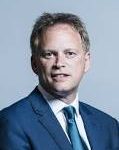
    Grant Shapps – 2021 Comments on M25 Climate Protesters

    The comments made by Grant Shapps, the Secretary of State for Transport, on 22 September 2021.

    We will not let these demonstrators wreak havoc on our roads, disrupt thousands of people’s journeys and put lives in danger. Not only are they creating more traffic and pollution, they are alienating the public from their own cause.

    Today, we’re taking action, bringing in further measures to stop those taking part in these self-defeating protests, while we continue the work we’re already carrying out to clean up our air and reach net zero.

  • Chris Philp – 2021 Comments on Football Index

    Chris Philp – 2021 Comments on Football Index

    The comments made by Chris Philp, the Gambling Minister, on 22 September 2021.

    I’m extremely conscious of how devastating the collapse of Football Index has been on its many customers, which is why we moved quickly to launch this independent review.

    We have been clear that we must learn lessons to make sure a situation like this does not happen again. I’m encouraged to see the Gambling Commission and the FCA are taking concrete steps on an action plan on how they will better work together.

    We will ensure that the findings from this review feed directly into our ongoing Gambling Act Review which is looking at ways we can improve regulation of the gambling industry.

  • Alister Jack – 2021 Comments on Scottish GDP Figures

    Alister Jack – 2021 Comments on Scottish GDP Figures

    The comments made by Alister Jack, the Secretary of State for Scotland, on 22 September 2021.

    Today’s figures underline that there are challenges ahead, and that our focus must remain on a sustainable recovery.

    Our Plan For Jobs is helping people in all parts of the United Kingdom get back to work and we’ve invested £1.5 billion in growth deals across Scotland, while communities all over the country will see great benefits from our new Levelling Up and Community Renewal Funds.

    This all comes on top of the UK Government’s unprecedented package of support which has seen an additional £14.5billion funding provided to the Scottish Government.

    Thanks to the UK Government funded vaccine programme, including the new booster vaccine and rollout of jabs for 12-15 year olds, we will build back better, stronger and greener for the benefit of generations to come.

  • James Cleverly – 2021 Comments on UK and Kuwait Agreement

    James Cleverly – 2021 Comments on UK and Kuwait Agreement

    The comments made by James Cleverly, the Minister for the Middle East, on 22 September 2021.

    The breadth of today’s discussions demonstrated the UK and Kuwait’s long-standing partnership, including trade, technology, security and military training.

    The Joint Steering Group ensures that our two countries are prepared to tackle any shared future challenges, and benefit from emerging opportunities, together.

  • Chris Philp – 2021 Speech at the AI Summit

    Chris Philp – 2021 Speech at the AI Summit

    The speech made by Chris Philp, the Minister of State at the Department of Digital, Culture, Media and Sport on 22 September 2021.

    Good morning and thank you for inviting me to the AI summit.

    This is the first event I have spoken at since being appointed as Minister with responsibility for Technology last week. As one of very few MPs or Ministers to have a science background, having studied Physics at Oxford, I have always taken an interest in the intersection between technology and business. In fact, when I was 21 I co-founded a distribution business that we later floated on AIM and, two takeovers later, is now part of Tesco. That business was substantially tech enabled. It used predictive stock ordering to reduce inventory to minimal levels while enabling next day delivery at high fulfilment rates. You would consider what we did then extremely rudimentary, but back in the year 2000 we felt quite pleased with what we did. So anyway, I’m very happy to be here with you today.

    I’m especially happy to be here because the UK’s tech industry as a whole is an extraordinary success story. We saw figures earlier this week that in the first half of 2021 1,400 private UK tech firms collectively raised £13.5 billion, by far the highest in Europe – and over double the amount raised in second-placed Germany.

    So the UK is in an admirable position, with a rich legacy of spearheading many of the greatest leaps in AI over the decades; we have advanced scholarships at universities and research centres across the country; and, in London, the most vibrant startup scene outside of San Francisco – with companies like Deepmind, Benevolent AI and Improbable pushing the envelope of what’s possible in AI in their respective fields.

    The UK saw 20 tech firms reach Unicorn status in the first half of this year, including Tractable and Zego. We have ten privately owned tech firms valued at over $10 billion. And in your field, Exscientia, which uses AI to discover new drugs, raised nearly a quarter of a billion dollars this year. From Alan Turing to Demis Hassabis, the UK has always led.

    The Government is completely committed to maintaining and building the UK’s leading tech position, including in AI. The UK is the clear European leader in AI and third globally behind only the USA and China – and I know we can catch them up. So let me say today: we want AI innovators to locate and scale up in the UK. We want you to succeed in the UK. We want the UK to lead the world in this field. It is a critical national priority.

    It is critical because AI is a profound technology. It is the future. Your field has the potential to – in fact it will – infuse every aspect of our personal and business lives in ways we cannot currently imagine. As Andrew Ng has argued, AI will fulfil a similar role in the coming century to the one that electricity and then regular computing played in the last century – a meta-enabler which underpins activity in a huge range of fields, including those without initially obvious applicability.

    So it’s important for Government to engage with technology, which of course includes AI technologies, because of how inextricably linked they are with each and every one of our lives – something the pandemic has made clear.

    And this AI Summit is timely, because as many of you will have seen, and as the Secretary of State trailed on Monday, the Government has launched its ambitious National AI Strategy today.

    For the first time, the Government has set out its strategic vision for how we remain a pre-eminent AI nation. Building on the investments we’ve made through the AI Sector Deal and since, and the kinds of successes we’ve seen this week in terms of our startups, we want to ensure the UK remains an AI superpower for years and decades to come.

    A number of important steps have already been taken. In the last seven years the Government has invested £2.3 billion supporting AI. This has included a quarter of a billion pounds to develop the use of AI in the NHS, the same amount again for the Centre for Connected and Autonomous vehicles and £100 million to fund 1,000 AI PhDs. The British Business Bank has already invested £372 million in UK AI companies. And this is just the start.

    Undoubtedly the investments we’ve made to date have kept us at the forefront of AI – only behind the USA and China – far ahead of the chasing pack of other countries. But we have more to do to keep and build our position.

    Many of you who have had a glimpse of the AI Strategy will see how neatly it links up with other Government Strategies.

    It wouldn’t have been possible without the independent AI Council, who pivoted their expertise first to helping Government understand the potential for AI to help with the initial crisis during the pandemic, and then to setting out their vision for how AI could help us rebuild our economy. I thank them for their work.

    It wouldn’t have been possible without detailed analysis, consultation and collaboration across the whole of Government.

    And it wouldn’t have been possible without the help of many of you. In fact, since the publication of the AI Council’s Roadmap, the Office for AI – who led on developing the Strategy – has spoken to literally hundreds of organisations and individuals to capture the collective vision of the ecosystem.

    So what’s in the Strategy?

    Let me tell you: this is an ambitious and inclusive strategy. It aims to build on our leadership in delivering responsible AI, to point to how we drive growth across every sector while ensuring that the benefits and the opportunities are spread across society.

    The Strategy is structured around three pillars:

    Investing in and planning for the long term needs of the AI ecosystem to continue our leadership as a science and AI superpower;
    Supporting the transition to an AI-enabled economy, capturing the benefits of innovation in the UK, and ensuring AI benefits all sectors and regions;

    Ensuring the UK gets the national and international governance of AI technologies right to encourage innovation, investment, and protect the public and our fundamental values.

    But just as this Strategy is being published, we want you to know we’re serious about delivering it.

    That’s why we commit to delivering from day 1:

    We’ll support our future skills and diversity needs through Turing Fellowships, Centres for Doctoral Training and Postgraduate Industrial Masters and Conversion Courses and visa routes – such as the Global Talent visa and the High Potential Individual Route and the Scale-Up route to make sure the brightest and the best can come here easily; Support the National Centre for Computing Education to ensure programmes for children in AI are accessible and reach the widest demographic; Publish a report into the UK’s future computation capacity needs to support AI research, development and commercialisation. Continue to support academic R&D into AI and its commercialisation and work to ensure better access to the big data needed to support AI projects.

    We’ll also support the Levelling Up agenda by launching a joint Office for AI & UKRI programme aimed at developing AI in sectors beyond London and the South East; Launch a Defence AI Strategy later this year and the new Defence AI Centre through the Ministry of Defence; Work with teams across government to identify where using AI can provide a catalytic contribution to strategic challenges, and consider how Innovation Missions can include AI capabilities to promote ambitious mission-based cooperation.

    And finally we’ll: Pilot an AI Standards Hub to coordinate UK engagement in AI standardisation globally – so UK startups and data scientists can feed into their development; Undertake an analysis of algorithmic transparency with a view to publishing a cross-government standard; and Update guidance on AI ethics and safety in the public sector.

    One of the most crucial areas we will work on is setting out our pro-innovation policy position on how we’ll get AI governance and regulation right, within the next few months. So far we’ve been pragmatic in delivering guidance for the public sector, working with the World Economic Forum, Alan Turing Institute, ICO and others, but this work will be a wider vision that gives greater clarity to businesses about how we think AI should benefit society. We will seek to give certainty, support innovation and deployment, reassure the public and set a standard that could be adopted globally. We will seek to keep regulatory intervention to a minimum, generally seeking to use existing structures and to approach the issue with the permissive mindset that we want to make AI innovation easy and straightforward, while avoiding any public harm where there is evidence it exists.

    We’ll also be looking at how we continue to support the most advanced research in AI – whether in a university, a startup or large company. We’ll launch a UKRI National AI Research & Innovation Programme to support the transformation of the UK’s capability in AI and better coordinate and join up their activities;

    Finally, we’ll examine, together with employers and providers, what skills are needed to enable employees to use AI in a business setting, and work with the Department for Education to explore how skills provision can meet those needs.

    The conversations that Government has had with the tech and AI ecosystem haven’t ended, and indeed this Strategy isn’t the end of the conversation on AI, as you have now heard. It’s the beginning of a new conversation. It started with the AI review and Sector Deal, and has continued with the AI Council and all of you as we developed the Strategy.

    Now, our strategic vision is set out, and we’ll continue to engage with you as we work hard to implement and deliver it.

    To finish: I’ll echo a sentiment I touched on earlier – AI is a truly transformative technology, with the power to not only help us to recover as a country economically, but the potential to dramatically improve lives and livelihoods across the UK, and make us a global leader in tackling the biggest challenges humanity faces. To make us a true AI and science superpower.

    And to echo my colleague, the Secretary of State in the foreword of the Strategy, AI is here now. It is improving our lives now. We want to make sure the UK can lead the world in ensuring AI works for people and delivers on its potential. And with this Strategy, I believe we can do that.

    Enjoy the AI summit!
  • South Norfolk Council – 2021 Statement on Alleged Allegations Concerning Emma Hodds

    South Norfolk Council – 2021 Statement on Alleged Allegations Concerning Emma Hodds

    The statement made by South Norfolk Council, in conjunction with Broadland District Council, on 14 September 2021.

    Individuals and teams received awards for their incredible achievements, including their work, on the front line, in the fight against Covid-19.This work included protecting our most vulnerable residents.

    The non-public event was attended by 400 members of staff and was a huge success.

  • Ed Miliband – 2021 Comments on CO2 Production

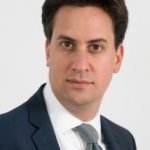
    Ed Miliband – 2021 Comments on CO2 Production

    The comments made by Ed Miliband, the Shadow Business Secretary, on 22 September 2021.

    We welcome that this short-term deal has been struck, but the Government must urgently engage with unions and the wider manufacturing industry, and explain the contingency plans in place in case issues are not resolved in three weeks.

    Crucially, the Government cannot keep blaming surging gas prices and supply chain chaos on external forces. It is a decade of Conservative missteps that has left the UK so exposed and vulnerable, without the diverse, resilient energy system we need to protect us from global volatility. It is businesses, consumers and families that are now paying the price.

    A Conservative cost of living crisis is brewing, with rising energy prices and food costs looming under the shadow of a cut to Universal Credit and tax rises on working families. This Government says it is on the side of working people and businesses, yet their failures are causing huge industrial disruption and they are doubling down on decisions that will plunge half a million more households into fuel poverty. It’s completely indefensible.

  • Daniel Zeichner – 2021 Comments on WHO Clean Air Announcement

    Daniel Zeichner – 2021 Comments on WHO Clean Air Announcement

    The comments made by Daniel Zeichner, the Shadow Environment Secretary, on 22 September 2021.

    Inaction and delay from the Conservatives has allowed catastrophic levels of air pollution to build up across the country, with toxic air estimated to cause around 40,000 premature deaths a year.

    In Government, Labour would introduce a new Clean Air Act to protect our environment, help decarbonise the economy and ensure we all have safe air to breathe.

    This is a health emergency for children across the country. Ministers must accept their defeat in the House of Lords vote on the Environment Bill or we will see this country fall even further behind the World Health Organisation clean air standards.

  • Emily Thornberry – 2021 Speech on Brexit Opportunities

    Emily Thornberry – 2021 Speech on Brexit Opportunities

    The speech made by Emily Thornberry, the Shadow Paymaster General, in the House of Commons on 16 September 2021.

    Let me begin by welcoming the Paymaster General to his new role. I thank him for advance sight of his statement. In fact, I imagine he had about as much advance sight of it as I did—11.40? However, I sympathise with him, not just for being thrown into this particular deep end, but for the title that was given to him for today’s statement.

    Before I go into that, let me say that the proposals that the Paymaster General has mentioned will demand careful consideration once we have been able to examine the detail. For example, he mentioned the recent Department for Digital, Culture, Media and Sport proposals for reform of the data regime. If they are anything to go by, every measure in that package will need to be carefully considered, not just on its own merits but for the implications for our trading relationship with Europe. There was also reference in the statement to GMOs, research and development, vehicle standards and artificial intelligence, and all kinds of other things may be hidden in the huge category of law that has yet to be reviewed. We will come back to this, I have no doubt.

    Let me return to the title of the statement: “Brexit: Opportunities”. That is the title, yet the country faces continuing shortages of staff and supplies, exacerbated by the Government’s Brexit deal, while businesses across the country face mounting losses in trade with Europe directly caused by the Government’s Brexit deal, and the people of Northern Ireland remain stuck in limbo as the Government refuse to implement the Brexit deal that they negotiated. Into all that, along comes the new Paymaster General to talk about all the wonderful opportunities that await us because of the marvellous Brexit deal, which is working so well at present. If he will excuse the unkind metaphor on the first day of his new job, it is a bit like the Pudding Lane baker strolling around the great fire of London asking people running for their lives if they have any orders for Christmas.

    On the issue of opportunities, I will happily have a debate with the Paymaster General, whenever he wants to have one, about how the Government are wasting the opportunities of Brexit when it comes to the lack of ambition and innovation in both the roll-over trade deals they agreed last year and the new negotiations that they have begun since. I will happily have a debate, too, whenever he wants to have one, on the merits of the Government’s strategy to downgrade trade with Europe in favour of trade with Asia, on the fantastical basis that we can make up all the losses our exporters are facing in their trade with the EU through the gains that we will make through trade with the Asia-Pacific. The flagship policy of that strategy is the UK’s accession to the Trans-Pacific Partnership, which, according to the Government’s own figures, will produce a £1.7 billion increase in UK exports to those Asia-Pacific countries over a 15-year period. That is roughly a third of what we exported to Luxembourg last year alone—the covid-affected year.

    I will happily debate that strategy with the Paymaster General on another day, but what I want to focus on today, and what I urge him to focus on in the new role he has been given, is not the imagined opportunities of Brexit that might happen in the next year, two years or five years, but the real practicalities that need sorting out today—the holes that need fixing in our deal with Europe to support British businesses through this period of economic recovery and resolve the impasse in Northern Ireland.

    Can the Paymaster General tell us where we stand on the Government’s efforts to secure mutual recognition of professional qualifications and regulatory equivalence for financial services, so that our key growth industries in the professional and financial sectors can get back to doing business in Europe with the speed and simplicity that they enjoyed before Brexit? Can he tell us where the Government stand in their efforts to seek mutual recognition of conformity assessments to remove the double testing of products that is costing our key industries both time and money? Can he tell us not just what the latest plan is to kick the can down the road in Northern Ireland, but how we are going to reach a sustainable and permanent solution?

    On that note, may I ask the Paymaster General to clear up one specific mystery, which relates to the Cabinet Office? In March last year, without publicity and without an open consultation, the Cabinet Office and the Department for Environment, Food and Rural Affairs paid McKinsey consultants £1 million for eight weeks’ work to provide

    “the most effective solutions to ensure food security and choice is maintained for consumers in Northern Ireland”

    after checks on GB-NI goods were introduced. My question to the Paymaster General is this: if the best brains at McKinsey were given two months and £1 million by the Government to examine that problem and come up with a solution, what is the answer that they provided? Is the reality that they, like the Government, have no better alternative solution than a veterinary agreement—the solution that businesses want, the solution that the EU says would work, the solution that every Opposition party in this House supports, but the solution that Ministers are refusing to consider?

    That brings me to my final question—the great unanswered question when it comes to Brexit practicalities, which I hope the Paymaster General will not try to evade as so many of his predecessors have. When Lord Frost was asked on 24 June why he would not pursue the option, even in the short term, of a veterinary agreement with the European Union to resolve many of the problems at the border, he said:

    “We’re very ambitious about TPP membership, so…it might turn out to be quite short term. That’s the problem.”

    Can the Paymaster General answer two questions? First, why do the Government believe—

    Madam Deputy Speaker (Dame Eleanor Laing)

    Order. Just before the right hon. Lady asks any more questions, let me say that she has significantly exceeded her time. I know that we are in a bit of flux, so I will allow her to finish, but I hope that she and others will note that keeping to time is important as a courtesy to others.

    Emily Thornberry

    Thank you, Madam Deputy Speaker.

    The questions I want to ask are these. First, why do the Government believe that signing a veterinary agreement with the EU is incompatible with their ambitions to join the Trans-Pacific Partnership? Secondly, if the answer is that joining the comprehensive and progressive agreement for trans-Pacific partnership requires them to diverge from EU standards in relation to food safety, which is the only logical explanation for the comments that Lord Frost has made, can the Paymaster General tell us which specific standards they plan to diverge from?

    I urge the Paymaster General, in his first appearance in his new position, to come out of the fantasy world that his predecessors have been living in together with Lord Frost and join us in the real world, together with Britain’s business community—the world of delays and shortages, red tape and bureaucracy, lost business and lost trade. It is a world that demands sensible answers and practical action from the Cabinet Office, not just another Minister addicted to dogma and wishful thinking.