Tag: 2021

  • Grant Shapps – 2021 Statement on Motor Vehicle Driving Licences

    Grant Shapps – 2021 Statement on Motor Vehicle Driving Licences

    The statement made by Grant Shapps, the Secretary of State for Transport, in the House of Commons on 18 October 2021.

    The need to tackle the HGV driver shortage is a top priority for my Department and the Government are committed to finding solutions to mitigate the effect and take urgent action. With 25 proactive actions taken by my Department to resolve the long-term HGV driver shortage in recent weeks, we are already seeing results, with a 300% increase in the number of HGV provisional licence applications. This is a real achievement, but it is important that we continue to build on this success.

    The haulage sector has been experiencing a chronic shortage of HGV drivers worldwide for some time. In Great Britain the issue has been further exacerbated by the coronavirus pandemic, which meant that driver testing had to be suspended for much of 2020, delaying entry to the industry of potential drivers. In addition, there are longer-term issues surrounding attracting and retaining drivers to the industry such as: antisocial hours, poor diversity, relatively low pay and poor driver facilities.

    The Department for Transport and other Government Departments have been working alongside the haulage industry to ensure that we attract, recruit, train and test drivers who want to enter the profession, including increasing capacity for testing candidate drivers through measures taken by the Driver and Vehicle Standards Agency and prioritising licence applications within the Driver and Vehicle Licensing Agency.

    Streamlining the HGV driving licence regime is an important step in getting drivers tested and into jobs quickly, relieving the pressure on the haulage industry from the driver shortage. On 10 September 2021, following public consultation, I announced a number of measures to simplify the HGV licencing regime and bring forward legislation that would remove the current staged process for getting an HGV licence in Great Britain.

    It will mean that drivers will not need to hold a Category C—rigid lorry—licence before applying for a Category C + E—articulated lorry—licence, removing a stage in the process for those drivers who wish to acquire a category C + E licence. This measure will be addressed through a draft affirmative statutory instrument which is laid before Parliament today.

    This legislation will help to make the process from learner to qualified driver quicker by removing certain steps and allow it to respond more rapidly to the acute need for drivers at the heavier end of the vehicle spectrum. High driving standards will be maintained through existing pre-test training and gaining on-road driving experience.

    To make rapid progress on this, we are seeking to make use of the urgent procedure under paragraph 14(6) of Schedule 8 to the European Union (Withdrawal) Act 2018. As Secretary of State for Transport, I am of the opinion that, by reason of urgency, the requirements for the statutory instrument to be made after being published in draft together with a scrutiny statement should not apply.

    Forgoing the 28-day publication period will allow earlier laying of the legislation than would have otherwise been possible and strengthen the steps we have already taken to increase testing capacity and ease supply chain issues as quickly as possible. Arrangements will be in place to ensure that the changes made by the legislation are operationally effective as soon as the legislation is in force.

    Tackling the causes and effects of the HGV driver shortage is a top priority for my Department and the driving licence regime and its legislation must support our efforts. This as part of 25 measures we have taken so far, will help us to reduce the impact of this shortage on the people of Britain.

  • Rachel Maclean – 2021 Statement on Anti-Slavery Day

    Rachel Maclean – 2021 Statement on Anti-Slavery Day

    The statement made by Rachel Maclean, the Parliamentary Under-Secretary of State at the Home Department, in the House of Commons on 18 October 2021.

    Modern slavery is an abhorrent crime. Tens of millions of victims around the world are coerced, deceived, and forced into a life of abuse, servitude, and inhumane treatment.

    This happens in the UK as well; to British citizens and to those trafficked from abroad. Today, on the UK’s Anti-Slavery Day, we pause to reflect on the trauma that victims suffer, the cruelty of those that exploit them and the bravery of survivors attempting to rebuild their lives.

    This Government are committed to eradicating modern slavery. Over the past year we have continued to work towards this aim with our partners in the Devolved Administrations, in law enforcement and across the criminal justice system, with local government and our health and welfare sectors, with our international partners, with business, civil society, and academia.

    Together we have continued to identify and provide support to thousands of victims of modern slavery through our contract with the Salvation Army. The number of law enforcement investigations has continued to increase. Conviction rates for cases prosecuted through the courts have also increased.

    The Independent Child Trafficking Guardian Service now covers in total two thirds of all local authorities across England and Wales; a key milestone to better support child victims delivered through our National Referral Mechanism Transformation Programme.

    The HO has invested a further £1.4 million this year to support the police modern slavery response, bringing the total investment to £15 million since 2016. This funding has helped to drive the increase in modern slavery investigations and operations.

    And during our G7 presidency, G7 members agreed to joint action on forced labour in global supply chains and reaffirmed their commitment to upholding human rights and international labour standards. Modern slavery and human trafficking is a global problem and we continue to provide global leadership to tackle it.

    We are committed to driving greater transparency in supply chains to ensure the private and public sectors use their leverage to tackle the risks of modern slavery in the goods and services they procure and provide. In March this year we launched the Government registry of modern slavery statements on www.gov.uk to enhance transparency. Statements covering over 21,000 organisations have now been added to the registry.

    This Government continue to lead by example. We have continued to progress work on public procurement that we committed to in the world’s first Government modern slavery statement that we published in March 2020. And we will soon publish further detail of the actions Government Departments have taken to prevent modern slavery in their supply chains.

    We have continued to fund the Modern Slavery Policy and Evidence Centre to improve the evidence base on modern slavery and to help inform our policy response. And the Government have recently launched the Modern Slavery Prevention Fund to test and develop innovative approaches to preventing modern slavery in the first place, aiming to stop this harm before it starts.

    Tomorrow, our landmark Nationality and Borders Bill will progress to Committee stage in the House of Commons, and the modern slavery measures in this Bill will seek to bring clarity for decision makers and victims, and maintain our commitment to ensuring victims of modern slavery are identified and supported as early as possible.

    These actions demonstrate the Government’s relentless commitment to addressing this crime. We will soon provide further detail in our annual report on modern slavery.

    But we are not complacent. The nature of modern slavery continues to evolve. We have committed to publish a new Government strategy for modern slavery next year to ensure we continue to lead the way with our partners in bringing an end to this crime.
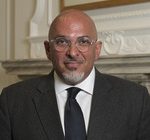
  • Nadhim Zahawi – 2021 Statement on Qualifications and Assessments

    Nadhim Zahawi – 2021 Statement on Qualifications and Assessments

    The statement made by Nadhim Zahawi, the Secretary of State for Education, in the House of Commons on 18 October 2021.

    My noble Friend, the Parliamentary Under-Secretary of State (Minister for the School System) at the Department for Education (Baroness Barran), made the following written statement on 11 October 2021:

    In April, the Department for Education committed to our intention that exams and assessments would go ahead in 2022. On 12 July, recognising that students taking exams in 2022 have had considerable disruption to their education, Ofqual and the Department published joint consultations outlining detailed proposals for:

    changes to the assessment of GCSEs, AS and A-levels in 2022; and arrangements for vocational and technical and other general qualifications in academic year 2021-22.

    The Department and Ofqual confirmed the permitted scope of adaptations for vocational and technical qualifications (VTQs) included in performance tables, Functional Skills Qualifications and T-levels in an announcement on 6 August following analysis of responses to the VTQ consultation. Depending on the purpose of the qualification, a range of adaptations for VTQs and other general qualifications have been or will be used including, but not limited to:

    a reduction in the number of internal assessments, while ensuring all content is taught

    longer and there are more assessment windows;

    social distancing adaptations—for example, professional discussion in place of certain practical activities;

    greater flexibility in invigilation rules—for example, to allow subject teachers to invigilate their own subject.

    On 30 September, the Department and Ofqual published the decision document outlining the decisions taken by the Department and Ofqual following analysis of responses to the consultation on changes to the assessment of GCSEs, AS and A-levels in 2022.

    The Department and Ofqual engaged with a wide range of sector representatives during the consultation period. The proposals that were set out in the consultation received a high degree of support and we have therefore confirmed a package of measures that includes four elements:

    a choice of topics in GCSE English literature, history, ancient history, and choice of topic or content in GCSE geography;

    the provision of advance information on exams in those subjects at GCSE, AS and A-level where there is no choice of content;

    changes to the requirements for the delivery of practical activities in science subjects, and assessment in art and design;

    the provision of support materials in the exam in GCSE maths, physics and combined science.

    We have confirmed that DfE’s policy intention is for advance information to be published by exam boards in early February 2022 to support student revision. The Government retain the flexibility to deploy advance information at an earlier point if there is significant further disruption to education.

    The changes for both general and vocational and technical qualifications will be for one year only.

    Ofqual also set out its approach to grading for general qualifications, confirming that 2022 will be a transition year to reflect that we are in a pandemic recovery period and students taking exams in 2022 have experienced disruption to their education. Ofqual set out its plans for grading to be based around a profile that reflects a mid-point between 2021 and 2019 grades in 2022. In 2023, Ofqual plans to return to results that are in line with those in pre-pandemic years.

    While it is our firm intention that exams will go ahead next year, supported by the permitted adaptations, we understand that contingency arrangements are also needed in the unlikely event that exams cannot go ahead fairly or safely. The Department and Ofqual plan for teacher assessed grades to be used in the event that exams cannot take place, and we have jointly launched a consultation on improvements to the 2021 process for GCSE, AS and A-levels and confirmed the contingency arrangements that will apply to vocational and technical qualifications. The consultation closes on 13 October and we will announce final decisions as soon as possible.

    Finally, we have confirmed that in 2022 results days will return to their normal timing, on 18 August for AS/A-level and 25 August for GCSEs. Vocational and technical qualifications used to progress in a similar way to GCSEs and A-levels will be awarded on or before the same days, and other VTQ results will continue to be awarded throughout the year.

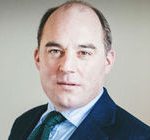
  • Ben Wallace – 2021 Statement on Closure of Service Police Legacy Investigations in Iraq

    Ben Wallace – 2021 Statement on Closure of Service Police Legacy Investigations in Iraq

    The statement made by Ben Wallace, the Secretary of State for Defence, in the House of Commons on 18 October 2021.

    In February 2017, the then Secretary of State for Defence announced that the Iraq Historic Allegations Team (IHAT) would close and any remaining Iraq legacy investigations would be reintegrated into the service police system. Service Police Legacy Investigations (SPLI), led by a senior Royal Navy Police officer, took over these remaining investigations at the beginning of July 2017.

    I can today announce that the SPLI completed its investigative caseload in December 2020 and, following the completion of administrative functions, officially closed its doors on 30 September 2021.

    In total, SPLI assessed 1,291 allegations, of which 178 were pursued through 55 separate investigations. The SPLI complied fully with the requirements of the Armed Forces Act 2006—in referring cases to or consulting the Service Prosecuting Authority (SPA)—and with the High Court’s direction to work closely with the SPA to ensure cases were completed as promptly as possible while maintaining the necessary rigour. None of the IHAT or SPLI investigations have resulted in any prosecutions.

    One significant challenge throughout the investigations was the issue of the credibility of allegations made against UK service personnel. While we accept that some allegations were credible, this does not detract from the fact we know, from the investigations and from the Al-Sweady public inquiry, that some were not. We know that Phil Shiner, formerly of Public Interest Lawyers, obtained Iraqi clients improperly—through the use of financial incentives—and acted with a lack of integrity. In 2017, the Solicitors Disciplinary Tribunal found allegations of misconduct when representing claims against British soldiers—including dishonesty—proven to the criminal standard of proof and he was struck off the Roll of Solicitors.

    The vast majority of the more than 140,000 members of our armed forces who served in Iraq did so honourably. Many sadly suffered injuries or death, with devastating consequences for them and their families.

    However, not all allegations and claims were spurious, otherwise investigations would not have proceeded beyond initial examination and no claims for compensation would have been paid. It is sadly clear, from all the investigations the UK conducted, that some shocking and shameful incidents did happen in Iraq. We recognise that there were four convictions of UK military personnel for offences in Iraq, including offences of assault and inhuman treatment. The Government’s position is clear—we deplore and condemn all such incidents.

    It is also clear that in some cases the original Royal Military Police investigations— conducted in arduous, battlefield conditions, with limited resources and under strict force protection measures—did not manage to secure all the required evidence, with the result that opportunities to hold those responsible to account may now have been lost. I apologise unreservedly to all those who suffered treatment at the hands of UK forces which was unacceptable.

    The closure of SPLI marks the completion of the remaining investigations stemming from operations in Iraq. However, we are aware that further serious allegations may arise in the future, and that where credible these would have to be investigated in line with our obligations under international and domestic law.

    Looking ahead, any historical criminal allegations will be referred to the Defence Serious Crime Unit. This was recommended in the Lyons/Murphy Review of the Service Justice System, and is further supported by Sir Richard Henriques, a retired judge who I appointed to conduct a review of how allegations on operations are raised and investigated. His review will help ensure we have the best possible framework, skills and processes in place, should this be necessary in the future.

    The completion of the SPLI investigations brings us closer to the end of a decade of extensive litigation and large-scale investigations. While the Iraq fatality inspector continues to look at a small number of remaining cases, we can start to draw a line under the legacy of our operations in Iraq and to focus on the future.

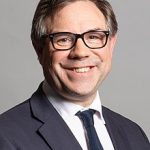
  • Jeremy Quin – 2021 Statement on the Armoured Cavalry Programme: Ajax Update

    Jeremy Quin – 2021 Statement on the Armoured Cavalry Programme: Ajax Update

    The statement made by Jeremy Quin, the Minister for Defence Procurement, in the House of Commons on 18 October 2021.

    I wish to provide a further update to Parliament on the Ajax equipment project being delivered as part of the armoured cavalry programme.

    Health and Safety

    The review by the MOD’s Director of Health, Safety and Environmental Protection on the health and safety aspects of the noise and vibration concerns raised on Ajax is now in its final stages. The report runs through the chronology of the Ajax programme and key decisions made regarding safety in order to ensure a clear understanding of the current background and is being subjected to a formal Maxwellisation process. I look forward to the report being finalised. I will publish it in full.

    Update on Personnel

    The health of our service personnel is our top priority. At 30 September 2021, the total number of people exposed to noise and vibration from Ajax was 310, of whom 11 are civilians and 10 are now veterans. All 310 individuals have now been contacted and offered assessments for noise and vibration.

    On noise, at 30 September 2021, 270 people have been assessed and 40 people have declined assessment or have so far been unavailable to attend. Of the 270 individuals who have been assessed, 231 have returned to duty having maintained or returned to pre-exposure levels of hearing. Of the 231, as an extra precaution, 166 people are receiving enhanced hearing surveillance. Of the remaining 39 people who have been assessed, 34 remain under specialist outpatient care at the Queen Elizabeth Hospital, Birmingham/Royal Centre for Defence Medicine; most of these are under-going a period of hearing rest prior to reassessment, at which point we expect a significant number to return to full duties. There are a remaining five individuals who have been medically downgraded—potentially requiring a change of duties within the armed forces—or discharged, either for reasons unrelated to hearing or with hearing loss as a major or minor cause. In the case of hearing loss being identified, Ajax may or may not be confirmed as a contributory factor. I am withholding a more precise breakdown of those downgraded or discharged because individuals could be identified resulting in a potential breach in medical confidentiality.

    Vibration injuries is a highly specialised area, requiring a graduated assessment process. All 310 individuals exposed have been offered a vibration assessment, with around 125 having so far declined assessment. The process is ongoing but, at 30 September, 45 individuals have been referred for specialist assessment of symptoms which could be associated hand-transmitted vibration, nine individuals have been referred for specialist assessment of symptoms which could be associated with whole body vibration and nine individuals have been referred for both. None of the individuals exposed to Ajax have had a change in medical grading or been medically discharged due to vibration.

    I will continue to update the House on the number of personnel affected by noise and vibration, including if any trends become apparent once the data has been further analysed.

    Programmatic Issues

    I have made clear that Ajax requires a full-time, dedicated senior responsible owner. I am pleased to report that we have now appointed David Marsh, who took up the role on 1 October with the endorsement of the infrastructure and projects authority. As the new SRO, he is now in the process of reviewing the armoured cavalry programme to determine what actions need to be taken to put the programme back on a sound footing.

    On 6 September, following authorisation by the Ajax safety panel, the independent Millbrook trials recommenced. As planned, and following a further meeting of the safety panel, these trials continued at Bovington to provide a wider range of surfaces on which to test the vehicle. These trials involved General Dynamics crew and real-time monitoring of noise and vibration. Trials have been conducted on the turreted AJAX variant and on the ARES variant, both of which were Capability Drop 1 vehicles. The trials were run at the Millbrook Proving Ground and at Bovington. This has generated hundreds of gigabytes of data which is currently being processed. Subject to safety panel authorisation, trials of a second ARES Capability Drop 1 vehicle will commence shortly at the Millbrook Proving Ground. On 7 October the safety panel also authorised military personnel to conduct essential maintenance on the vehicle and marshalled movement.

    Since my last statement data has continued to be gathered and analysed to determine the root cause of vibration in the vehicles. In parallel design modifications have been developed to reduce the vibration experienced by the crew. Testing continues to determine the effectiveness of the modifications and whether they would help ensure the vehicle meets the Army’s requirement.

    Investigations into excess noise also continue. An in-line attenuator has been designed and we are now validating its effectiveness to address the noise transmitted through the communications headsets.

    The focus for the MOD and General Dynamics remains on delivering long-term solutions for noise and vibration to ensure Ajax meets the Army’s need. Until then, it is not possible to determine a realistic timescale for declaration of initial operating capability or the later introduction of Ajax vehicles into operational service with the Army. We will not accept a vehicle that is not fit for purpose.

    Ajax is an important capability for the Army and we are committed to working with General Dynamics for its delivery. We have a robust, firm price contract with General Dynamics under which they are required to provide the vehicles as set out in the contract for the agreed price of £5.5 billion.

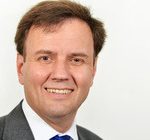
  • Greg Hands – 2021 Statement on Investment in Green Projects

    Greg Hands – 2021 Statement on Investment in Green Projects

    The statement made by Greg Hands, the Minister of State at the Department for Business, Energy and Industrial Strategy, in the House of Commons on 18 October 2021.

    A year on from the publication of the ten point plan the Government can confirm more than £5.8 billion of investment in green projects has been secured, along with at least 56,000 jobs in the UK’s clean industries.

    This major green investment boost helps to drive forward the Government’s ambitions to make the UK a global leader in green technology and finance. It includes more than £650 million in advancing offshore wind this year alone, supporting almost 3,600 jobs across the Humber and North-East, and over £900 million in accelerating the shift to zero emissions vehicles. As part of this Envision AESC will invest over £400 million in battery manufacturing, for example, as part of a £1 billion project with Nissan and Sunderland Council to create a flagship electric vehicle hub. ENI Spa has invested more than £400 million in offshore wind.

    This week’s global investment summit in London is expected to attract almost 200 leading industry figures from around the world to invest in the best of UK green business and innovation. Securing private investment for clean technology is a core part of the Government’s strategy to meet our world-leading emissions reductions targets over the next decade and achieve net zero by 2050. Our upcoming net zero strategy, to be published this week, builds on the Ten Point Plan, setting out how we will deliver on our net zero commitments, giving businesses the certainty they need to invest.

    Further progress since the ten point plan includes:

    Securing around £1.5 billion of investment into our offshore wind industry, supported by the Government’s £160 million scheme to upgrade ports and infrastructure. Renewables now represent almost 40% of the UK’s total electricity generation.

    Kicking off the biggest-ever round of our flagship renewable energy scheme for low carbon electricity—contracts for difference—with £200 million for offshore wind projects and £24 million for floating offshore wind.

    Publishing the hydrogen strategy to grow the UK hydrogen economy, consulting on design of the £240 million net zero hydrogen fund, and announcing funding of seven real-world hydrogen transport pilots.

    Committing £20 million to increase on-street charge points for electric vehicles and providing £50 million to support charge point installations.

    Publishing our transport decarbonisation plan and national bus strategy, as well as supporting Coventry to become UK’s first all-electric bus city and consulting on world-leading pledge to end the sale of all new, polluting road vehicles by 2040 and net zero aviation emissions by 2050. This is on top of more than 300 new walking and cycling schemes.

    Providing £1 billion to upgrade schools, hospitals, and council buildings with energy efficiency measures and committing £222 million to upgrade socially rented homes. Local Authorities through the Green Homes Grant scheme have also started installing upgrades to around 50,000 low-income households.

    Announcing £19.5 million of grant funding for UK projects developing novel carbon capture technology and we have kicked off the process to decide the first carbon capture cluster locations in our industrial heartlands.

    Launching the floods investment programme that is on track to better protect 336,000 properties.

    Awarding 90 projects under the second round of the Green Recovery Challenge Fund, totalling £80 million of investment, and launched several schemes under the Nature for Climate Fund to expand our pipeline of tree planting projects in England.

    Launching the £1 billion Net Zero Innovation Portfolio, providing funding for low-carbon technologies and systems across the areas of the ten point plan.

    Launching our landmark North sea transition deal and industrial decarbonisation strategy.

  • Liz Truss – 2021 Statement on the UK’s Relationship with Gibraltar

    Liz Truss – 2021 Statement on the UK’s Relationship with Gibraltar

    The statement made by Liz Truss, the Foreign Secretary, in the House of Commons on 18 October 2021.

    On 31 December 2020, the UK Government, together with the Government of Gibraltar, agreed a political framework with the Kingdom of Spain on how a future agreement between the UK and the European Union (EU) in respect of Gibraltar would function in the interests of all parties.

    This represented the first stage of the two-part process whereby the EU would examine a request from Spain, in agreement with the UK, to initiate the procedure for the negotiation of a separate UK-EU agreement in respect of Gibraltar.

    On 5 October 2021, the EU concluded its internal processes necessary to begin the UK-EU negotiations. While the EU mandate has not been published we understand it has been amended from the Commission’s draft mandate published on 20 July 2021. Importantly it now references the role of the European Border and Coastguard Agency (Frontex) in delivering the fluid movement of people between Gibraltar and the Schengen area. Both the UK Government and Government of Gibraltar have been clear that the operation of frontline Schengen external border checks on the territory of Gibraltar by Spanish officials would not be acceptable.

    There remain, however, a number of areas where the opening EU position directly conflicts with the political framework agreed between the UK and Spain. These issues will need to be addressed in the UK-EU negotiations to ensure that the pragmatic and careful balance of the political framework is maintained. The UK is committed to working constructively to address these issues with the objective of concluding a treaty in line with the political framework. Formal negotiations began in Brussels on 11 October and further detailed conversations will follow in the coming weeks.

    The UK Government continue to work side-by-side with the Government of Gibraltar. We agreed our joint approach to negotiations at the UK-Gibraltar Joint Ministerial Council held in Gibraltar on 29 March 2021. At the core is a shared aim to secure future prosperity for Gibraltar and the surrounding region. This can be delivered through a treaty which brings confidence, legal certainty and stability to the lives and livelihoods of the people of Gibraltar and neighbouring communities.

    While fully committed to seeking a treaty based on the political framework, the UK Government and Government of Gibraltar are working closely to ensure robust plans are in place for all eventualities, including if there is no negotiated outcome. Although confident an agreement can be reached, it is only prudent to prepare for all eventualities. The UK will stand fully behind Gibraltar, its people and its economy in any scenario.

    We remain steadfast in our support for Gibraltar and will not agree to anything that compromises UK sovereignty.

  • Graham Brady – 2021 Speech in the House of Commons on David Amess

    Graham Brady – 2021 Speech in the House of Commons on David Amess

    The speech made by Graham Brady, the Conservative MP for Altrincham and Sale West, in the House of Commons on 18 October 2021.

    I will be brief because I know that many others want to pay their respects and tributes. It is right that I, as the chairman of the 1922 Committee, should pay tribute to David, who was a dedicated and effective Back-Bench Member of Parliament, but I also want to say a few words today because I had the privilege of his friendship for the past 24 years. I am deeply touched by the tributes that have been paid from across the House, including the moving tributes from the Prime Minister and from the Leader of the Opposition. I am also pleased to follow the chairman of the parliamentary Labour party, the hon. Member for Leyton and Wanstead (John Cryer), and my constituency neighbour the hon. Member for Wythenshawe and Sale East (Mike Kane), who was one of the first people to get in touch with me on Friday to offer his condolences. That was much appreciated.

    We have all had so many messages of condolence from constituents and others since we heard the terrible news. I think that people across the country could sense the goodness, the kindness and the decency of the man we have lost. It is wonderful that we have heard tributes to David’s great achievements in politics, but it is also wonderful that so many references have been made, right from the start, to the joy that he brought into all our lives and those of so many others. He clearly enjoyed the House of Commons and politics, and he loved meeting people. I hope that that is something that will stay with us.

    My recollection of David, over the past few years especially, is of seeing him coming towards me in Portcullis House and seeing his infectious smile. I knew that he was looking forward to starting a conversation. He would say, “What are they doing now, Graham? Why are they doing this?” I will miss that. Like others, I will still be looking out for him.

    Finally, on a serious point, this is the most open and accessible Parliament of any major country in the world, and the right tribute to David must be that it remains so, and that while we take sensible precautions, we stay open and continue to connect with our constituents as he did so brilliantly.

  • Kim Leadbeater – 2021 Speech in the House of Commons on David Amess

    Kim Leadbeater – 2021 Speech in the House of Commons on David Amess

    The speech made by Kim Leadbeater, the Labour MP for Batley and Spen, in the House of Commons on 18 October 2021.

    I spent a lot of time over the weekend thinking about what to say if I were called today—and indeed whether to say anything at all, because I did not know David personally. It has been a traumatic few days for many people, and none more so than David’s family and friends; it is they who remain at the forefront of my mind this afternoon. Sadly, I know from my own all too similar experience that in reality there is nothing that anyone can say to make things all right for them—but nor is it any use to stay silent, so I welcome this opportunity to pay tribute to someone who was clearly a well-respected and much-loved colleague to many people in this place.

    For reasons that I would never wish on any other Member of this House, or indeed anyone, I have a unique perspective on what those closest to David are going through. I send them love, support and solidarity from me, my parents, our family and the people of Batley and Spen.

    I have blocked out much of what happened when Jo was murdered, but I remember very clearly the moment when I took the phone call saying that she had been attacked. I remember physically trembling, and the visceral pain that overtook me. It breaks my heart to think that another family have had to experience that phone call and the nightmare that follows. It is a rollercoaster of deep trauma that no one should have to experience. I also know that David’s family will still be in utter shock, as I know many Members are, but I hope that at some point they will be able to hear at least some of the beautiful and very funny tributes that have been paid to him today, and that that will provide a morsel of comfort amid their pain.

    I cannot talk about David on a personal level—as I say, I did not know him—but from what I have heard, he strikes me as the sort of MP I might well have come across in the coming months and ended up going for a cuppa with, to hear his thoughts on his work on a children’s Parliament, on animal welfare or on getting more support for people with learning disabilities. We would have been two Back-Bench MPs from different parties and different parts of the country discussing issues close to our hearts, and I imagine it would have been a lot of fun. Sadly, that day will never come.

    I know that wider discussions will now take place about the safety of MPs, the awful abuse and intimidation that we face, the nature of political discourse and how we can deal with the evils of terrorism. It is quite right that they do, but today is about David and his family, along with his staff, his colleagues and the community he served so well; the service he gave; and the support we should show all of them in the coming days, weeks and months. It is up to us to make sure that we do that, because I know more than most that they will need it, and the powerful difference that it will make to them.

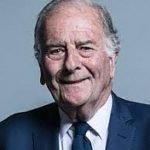
  • Roger Gale – 2021 Speech in the House of Commons on David Amess

    Roger Gale – 2021 Speech in the House of Commons on David Amess

    The speech made by Roger Gale, the Conservative MP for North Thanet, in the House of Commons on 18 October 2021.

    We have heard magnificent tributes from the Prime Minister, from the Leader of the Opposition, from David’s Essex colleagues and from many Opposition Members. I think we are all grateful for that, and the tone of the House is as it can be at its best.

    I want to spend just a couple of minutes speaking on behalf of the remnants of the class of ’83. Of the 100 of us who came in, sadly only two remain with continuous service, along with another three who have come back after leaving the House briefly. We had all hoped and expected that in the fullness of time, once my hon. Friend the Member for Worthing West (Sir Peter Bottomley) had surrendered his position, by which time David would have been a very old man—[Laughter]—he would have become the Father of the House. He would have made a magnificent successor to my hon. Friend. Sadly and cruelly, that has been denied us.

    The many of us on both sides of the House who had the privilege of working with David on his campaigns—on foxhunting, when campaigning on it was unfashionable; on the reunification of Cyprus; on Iran; on pensions for expat UK citizens; and on a whole range of other issues—know just how doughty a campaigner he was. That is clearly why he was so loved in his constituency.

    Mr Speaker said at the weekend that David’s death had left a void in this House. He was absolutely right, and there is another void: in David’s family home. I hope that David’s wife Julia and his children will take comfort from the fact that across this House there is clearly nothing but affection for his memory. That must speak volumes for the man whose life we celebrate today.