Tag: 2021

  • Jack Dromey – 2021 Comments about Covid Contracts

    Jack Dromey – 2021 Comments about Covid Contracts

    The comments made by Jack Dromey, the Shadow Paymaster General, on 19 November 2021.

    These emergency rules have led to billions of pounds of taxpayers’ money being handed out on dodgy contracts and opened the door for the shocking levels of lobbying that the Owen Paterson case exposed. The Government must act now to revoke these emergency rules, clean up how public contracts are awarded and put an end to this scandal.

  • Matt Kelly – 2021 Statement about the Conduct of Jack Doyle

    Matt Kelly – 2021 Statement about the Conduct of Jack Doyle

    The statement made by Matt Kelly, the Editor-in-Chief of the New European, on 19 November 2021.

    I was called last night (Thursday) at 10.30pm by a man who identified himself as being from Downing Street Communications office, but whose name I didn’t catch. His opening gambit was: Boris Johnson is going to sue The New European for defamation.

    I won’t go into the rest of the conversation in detail, but suffice to say I made it clear to him that this was not a threat that troubled me greatly and we stood by our story.

    After a few minutes, the caller eventually told me: ‘You just crack on then mate’ and put the phone down.

    I texted him, asking him to repeat his threat of legal action and to send across the Downing Street denial. I also asked him – twice – to identify himself, which he refused to do.

    For a public official to cold-call a newspaper and threaten them with a law suit from a sitting PM, and not to even identify himself, was, I thought, odd. I tried the Downing Street press office to verify the caller’s identity, but they didn’t come back to me. I went to bed.

    The next morning, I established that the phone number of the caller belonged to Jack Doyle, the Downing Street Director of Communications.

    I now understand Downing Street denies they threatened legal action, to which all I can say is I stand by our story, and our story about the story. If Boris Johnson changes his mind again and decides to sue, we’ll see him in court.

    Should the veracity of this account be challenged, I do, of course, have the texts.

  • Sally Greengross – 2021 Speech on Dementia

    Sally Greengross – 2021 Speech on Dementia

    The speech made by Baroness Sally Greengross in the House of Lords on 16 November 2021.

    My Lords, since 2015 dementia has been the leading cause of death in the UK, and there are currently 850,000 people who are living with the condition in this country. Of course, there are many different types of dementia, which all have very different symptoms and progress at different rates. We know that in the coming years the number of people living with some form of dementia is projected to increase significantly. This will place an even greater strain on our health and care system.

    Research into dementia is critical. It may help prevent the occurrence of these conditions and will certainly allow people living with them a better quality of life. Dementia does not just affect those who have the condition; it also has a profound impact on family, carers and loved ones. Many of us in this Chamber will have experienced seeing someone we care about getting dementia and wanting to do anything we could to ease the suffering for them and those who support them. I declare my interest in the register as chief executive of the International Longevity Centre UK, which is currently working on a project analysing the impact of dementia on the high street and the retail sector. The growing number of people living with dementia will impact on the whole of society and have a significant economic impact as well.

    In the 2019 general election, the Conservative Party made a commitment to bringing forward a dementia moonshot and

    “doubling research funding into dementia”

    over the next decade. Figures from the National Institute for Health Research show that this would increase government investment in dementia research from £83 million a year to £166 million, although I gather the Government’s figures differ from this. I am sure the Minister will respond on this point.

    The Government have confirmed on many occasions that they intend to uphold the promise to double dementia research funding over the next decade. However, to date, they have announced no details of this. In early 2021, the All-Party Group on Dementia, which I co- chair with Debbie Abrahams MP, held an inquiry into the state of dementia research in the UK and investigated how this funding could best be used to support work in this field. The inquiry found that funding for dementia research was lower than that for other medical conditions; for example, funding was three times higher for cancer research than for dementia. However, the UK has to date been a world leader in dementia research, with only the United States spending more on research into these conditions.

    The pandemic has taken a serious toll on dementia research, with many programmes having to be paused or even abandoned during 2020. One serious issue has been the reliance on charity funding, which in this country makes up 51% of dementia research funding. As we know, the economic conditions we now face due to the pandemic have considerably reduced charities’ ability to fundraise. The other factor has been the impact of Covid-19 on people already living with dementia. In the first 12 months of the pandemic, it is believed that 34,000 people who died of Covid-19 also had some form of dementia. One area that needs greater research is the impact of Covid-19 on those with dementia, as there is some evidence that the symptoms differed in Covid-19 patients who did not have dementia, and the Covid-19 mortality rate for those with dementia was considerably higher. Due to the need for social distancing to stop the spread of the disease, much of this or other ongoing dementia research could not take place.

    There is evidence that there are at least 12 modifiable risks that can help reduce dementia. While research has shown that there are actions we can take individually and as a population to prevent some forms of dementia, very little is being done in the way of public education and awareness.

    The other area of research that surveys show has strong public support is improving early detection. Some medications available on the market can slow the progress of some dementias, at least for a small amount of time, and early detection provides the best opportunity for these treatments to work. There is also some evidence that social prescribing, particularly exposure to art and music—particularly music, I think—can play a positive role in delaying the progress, or improving the quality of life, for those who have received an early diagnosis of dementia.

    A few years ago, I had the privilege of going to an orchestral performance conducted by a gentleman who had had dementia for over 20 years. He had not been able to speak for many years, yet he often hummed tunes, and a group of music students were able to transcribe his music and perform it in a big concert hall. Seeing this man with dementia come alive, as he conducted the orchestra playing his music, was a very moving experience for me and taught me the importance of social prescribing. This is simply one area where we can learn so much more.

    One of the concerning findings of this inquiry was the lack of evidence-based care approaches when supporting people with dementia. The Wellbeing and Health for People Living with Dementia project, funded by the National Institute for Health Research, starkly demonstrated this lack of evidence-based care. In a review of 170 training manuals for person-centred care in dementia, researchers found that only four provided evidence that methods had worked when tested in a research setting.

    The all-party report made a number of important recommendations, including: that a priority for new dementia research funding should include investment in novel methods for early diagnosis, such as blood and other biomarkers; confirm appropriate funding for the UK Dementia Research Institute for at least the next 10 years; and build on the success of the multidisciplinary approach of the Alzheimer’s Society’s centres of excellence model and further expand this by introducing three new centres that will focus on some of the biggest challenges in dementia research. It also recommended that the Government should establish a specific fund of £40 million to support both clinical and pre-clinical postdoctoral research positions and talent retention in dementia research, and that the Government should develop a Longitude Prize for dementia, which would support the development of novel technologies. It also recommended that Join Dementia Research become an opt-out model and that data gaps in this programme should be addressed by integrating it with electronic patient records. Lastly, it recommended that the new Office for Health Promotion should launch public information campaigns which would explain how the public can take steps to reduce their dementia risk.

    Finally, I acknowledge the Government’s recent announcement that they will spend £95 million on the delivery of their Life Sciences Vision and £2.3 billion to transform NHS diagnostic services. Can the Minister please clarify how this funding will benefit those people living with dementia and the dementia research community as a whole?

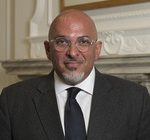
  • Nadhim Zahawi – 2021 Comments on School Uniforms

    Nadhim Zahawi – 2021 Comments on School Uniforms

    The comments made by Nadhim Zahawi, the Secretary of State for Education, on 19 November 2021.

    School uniform provides a sense of identity and community for children and young people, and should be a real source of pride. But it must never be a burden for parents or a barrier to pupils accessing education.

    This new binding guidance will help to make uniforms far more affordable for families by driving costs down as we work hard to level up the country.

  • Priti Patel – 2021 Comments on Banning Hamas

    Priti Patel – 2021 Comments on Banning Hamas

    The comments made by Priti Patel, the Home Secretary, on 19 November 2021.

    Today the UK Government has laid an order in Parliament to proscribe Hamas in its entirety – including its political wing.

    Hamas has significant terrorist capability, including access to extensive and sophisticated weaponry as well as terrorist training facilities, and it has long been involved in significant terrorist violence.

    Hamas commits, participates, prepares for and promotes and encourages terrorism. If we tolerate extremism, it will erode the rock of security.

  • Boris Johnson – 2021 Comments on Scrapping HS2 East Link

    Boris Johnson – 2021 Comments on Scrapping HS2 East Link

    The comments made by Boris Johnson, the Prime Minister, on 18 November 2021.

    We’re trebling capacity between Liverpool and Manchester. And, of course, there are going to be people who, you know, always want everything at once. And there are lots of people who’ll say, ‘look, what we should do is carve huge new railways through virgin territory, smashing through unspoilt countryside and villages, and do it all at once’.

    The problem with that is those extra high-speed lines take decades and they don’t deliver the commuter benefits that I’m talking about. We will eventually do them.

    ….

    This is the biggest investment in rail, at least for 100 years, and it’s a fantastic thing. What it does is it delivers the types of commuter service that people have been expecting, people have got entitled to, in the south-east of the country. And it will deliver that. And it will deliver better services for places that weren’t on the original plan. Huddersfield, Wakefield, Leicester – all sorts of places will benefit from what we’re doing in ways that hadn’t been foreseen. In virtually every case you will find that journey times are shorter and capacity is going up. This is a much, much better plan.

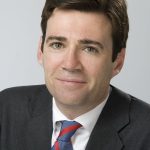
  • Andy Burnham – 2021 Comments on Government Announcement of Scrapping Rail Projects

    Andy Burnham – 2021 Comments on Government Announcement of Scrapping Rail Projects

    The comments made by Andy Burnham, the Mayor of Greater Manchester, on 18 November 2021.

    We’ve been given a second class plan here. And that’s been the story of our lives. We’ve always had put up with second best as northern people, ourselves and our residents.

    And I guess what we’re saying is we’re not having it. Because we were told that we were going to be levelled up, and we were told it was going to be different. And different to me means coming to the front of the queue, and not always being told that the money’s run out and has been spent somewhere else. But that, I’m afraid, is implicit in what’s been announced today.

    And this is not politics. This is about the future of the north of England for the next 100 or 200 years. That is the significance of the decisions that are being announced today. And we are not prepared to consign our grandchildren, great grandchildren and beyond to being second class citizens still when it comes to transport in this country.

    We have got to fight for better for them and we have to do it together. We have to stand together as one north. If Bradford loses, Leeds loses out, Liverpool loses out and then we lose out as well.

  • Robert Largan – 2021 Speech on Disposable Barbecues on Moorland

    Robert Largan – 2021 Speech on Disposable Barbecues on Moorland

    The speech made by Robert Largan, the Conservative MP for High Peak, in the House of Commons on 17 November 2021.

    I beg to move,

    That leave be given to bring in a Bill to prohibit the use of disposable barbecues on open moorland; to give local authorities the power to prohibit the sale of disposable barbecues in their area; and for connected purposes.

    This year alone, at least two wildfires have been caused by disposable barbecues in High Peak, destroying hectares of farmland and environmentally significant peatland. In 2019, a fire in Marsden Moor near Huddersfield raged for four days and damaged more than 700 hectares of moorland. A similar fire in April 2021 caused an estimated £200,000 worth of damage. Alongside that crude financial cost lies an environmental one. This is damage that will take hundreds if not thousands of years to repair, with peat accumulating at a rate of only about 1 mm per year. Distressed sheep farmers have conveyed to me the pain that they have experienced in being forced to clear up the charred remains of their own livestock.

    Every year, from spring to summer, communities across the country live in fear of wildfires that are entirely avoidable. A local gamekeeper once told me that there were three main causes of wildfires—men, women and children—but more specifically, a large number of fires are caused simply by people not disposing of their barbecue properly, leaving it unattended on the ground where its residual heat or a stray spark is enough to start a fire.

    The aims of this Bill are simple. They are to reduce the risk of wildfires and protect our beautiful countryside, to protect local communities faced with the threat of wildfires, to protect hard-pressed farmers’ livelihoods, and to protect carbon-capturing peatland, which is so vital in our fight back against climate change. That last point is particularly important, especially given the recent climate change agreement in Glasgow. The Glasgow agreement is an important step forward: 65 countries have committed themselves to phasing out the use of coal power, some of the world’s largest car manufacturers have agreed to make all new car sales zero-emission by 2040, and the leaders responsible for 90% of the world’s forests have pledged to end deforestation by 2030.

    However, when we speak of international co-operation, we should not forget the importance of nature-based solutions to climate change. Peatland restoration is an essential part of that. Wet, healthy peat soils absorb and trap carbon dioxide. It is estimated that, worldwide, peatland contains more than 550 gigatonnes of carbon—more than is stored in all the world’s forests put together. Since it regulates the flow of groundwater, restoring peatland also reduces the risk of flooding, improves water quality and enhances biodiversity.

    Since being elected, I have actively campaigned for the restoration of our local peat moors. I asked my very first question in this House on this subject and I am proud to have secured a significant increase in funding for this vital work. I wholeheartedly welcome the Government’s England peat action plan to restore, sustainably manage and protect peatland, as well as the increase in the nature for climate fund to £750 million by 2024-25, with the aim of restoring 35,000 hectares of peatland across England.

    I have seen first-hand the fantastic work that funding makes possible. On Rushup Edge and Brown Knoll, one of the highest hills in the Peak District, the Moors for the Future Partnership has been hard at work restoring peatland. Recently, I took the farming Minister, my hon. Friend the Member for Banbury (Victoria Prentis), to meet Hope Valley Farmers and to see the work on Brown Knoll. I am encouraged by the leadership that the Government have shown in this issue.

    That work is meaningless, however, if we are to continue to allow a reckless few to destroy this precious resource by wildfire. I did not come into politics to tell people how to live their lives, and this Bill certainly does not set out to do that, but, as a conservative, I firmly believe that we hold a duty to future generations not only to conserve what we have today, but to provide them with an inheritance greater than our own.

    While this Bill represents only a modest change to the law, it would be a mistake to overlook its significance. The aims of the Bill are not new, but build on work that a range of organisations have already undertaken. The New Forest and Peak District National Park Authorities, for example, have already banned the use of disposable barbecues within their boundaries and called for local retailers to stop their sale. I have had considerable success in convincing retailers to remove them from sale within High Peak; I pay tribute to responsible businesses such as Morrisons, which has removed them from sale in its Buxton store, while the Co-operative Group has also removed displays of disposable barbecues in 130 of its stores that border national parks.

    The National Fire Chiefs Council, Greater Manchester Fire and Rescue Service, the Moorland Association, the Moors for the Future Partnership and the National Trust, among others, have all warned of the danger that disposable barbecues present and have called for tougher regulations on their use. This Bill provides just that.

    While the countryside code already sets out an expectation that visitors should only barbecue where it has been deemed safe to do so, there is no law to enforce that guidance. Without one, there is widespread confusion and ignorance, sowing the seeds for future wildfires. The Bill seeks to clarify the law, banning the use of disposable barbecues on open moorland.

    I am incredibly grateful to colleagues on both sides of this House for the positive, cross-party support that the Bill has received. I have worked hard with a range of partners to ensure that it is fit for purpose, and I will keep working in a bipartisan spirit to do so. I am aware that, as a ten-minute rule Bill, there is little chance of this Bill progressing into law at this stage. None the less, I seriously urge the Government to listen to the concerns raised in the Bill, to act on disposable barbecues and to redouble their efforts to promote, and to educate people on, the countryside code. To prevent wildfires, to protect farmers’ livelihoods and to build up our existing defences against climate change, this Bill offers a small but significant way forward. With that in mind, I humbly request that the Bill be given due consideration and be passed into law.


  • Robin Walker – 2021 Statement on Education Staff Wellbeing

    Robin Walker – 2021 Statement on Education Staff Wellbeing

    The statement made by Robin Walker, the Minister for School Standards, in the House of Commons on 17 November 2021.

    We recognise the incredible efforts of schools and colleges to maintain the safety and wellbeing of staff, students and pupils and we are grateful to them for what they are doing.

    Supporting the wellbeing and mental health of staff is a crucial element of our commitment to help create a supportive culture in schools and colleges. We have worked in partnership with the education sector and mental health experts to inform and deliver the commitments announced in May 2020 to protect and promote staff mental health and wellbeing.

    I am today announcing a new £760,000 mental health support scheme for school leaders to be delivered by the charity Education Support from this autumn until March 2023. The programme will provide one-to-one counselling and peer support to around 2,000 school leaders, helping those at deputy head level and above with their mental wellbeing.

    It builds on the pilot involving over 350 school leaders which was launched in response to the challenges brought about by the pandemic. Eligible school leaders will be able to access the programme from today through the Education Support website.

    Along with this announcement, this week, we are launching the education staff wellbeing charter for schools to sign up to. The charter sets out commitments from the Government, Ofsted, schools and colleges to promote and protect the mental health of the education workforce.

    Through the charter, the Department pledges to work with the sector to drive down unnecessary workload, improve access to wellbeing resources, and champion flexible working, among a range of actions to support staff wellbeing. We are now encouraging all state funded schools and colleges to sign up to the charter to create a united approach to supporting staff wellbeing.

  • Priti Patel – 2021 Statement on the Amesbury Inquiry

    Priti Patel – 2021 Statement on the Amesbury Inquiry

    The statement made by Priti Patel, the Home Secretary, in the House of Commons on 18 November 2021.

    I am announcing today the Government’s decision to establish an inquiry under the Inquiries Act 2005, to investigate the death of Dawn Sturgess in Amesbury on 8 July 2018, after she was exposed to the nerve agent Novichok.

    The inquiry will be chaired by the hon. Baroness Heather Hallett DBE.

    Baroness Hallett is a Cross-Bench life peer who was nominated by the Lord Chief Justice to lead the investigation and inquest into Dawn Sturgess’s death. In accordance with section 3(1) of the Act, this inquiry will be undertaken by Baroness Hallett alone as Chair.

    The Government are establishing an inquiry after careful consideration of advice from Baroness Hallett that this is necessary to permit all relevant evidence to be heard. This is an important step in ensuring that the family of Dawn Sturgess get the answers they need.

    The current inquest will be adjourned after the establishment of the inquiry.

    I will place a copy of the terms of reference for the inquiry in the Libraries of both Houses.

    The inquiry’s investigations will be a matter for the Chair. As the sponsoring Department, the Home Office will provide support and ensure that the inquiry has the resources that it needs.